
Table of Contents
TL;DR: Azolla is Kenya’s “Green Gold” for 2026, offering a protein-rich feed substitute that cuts livestock costs by 40%. It requires a simple fresh-water pond, partial shade, and organic manure to produce daily harvests year-round. With a setup cost under KES 15,000, you can achieve ROI in just 3 months by replacing expensive commercial feeds.
What exactly is Azolla and why is it dominating Kenyan agribusiness in 2026?
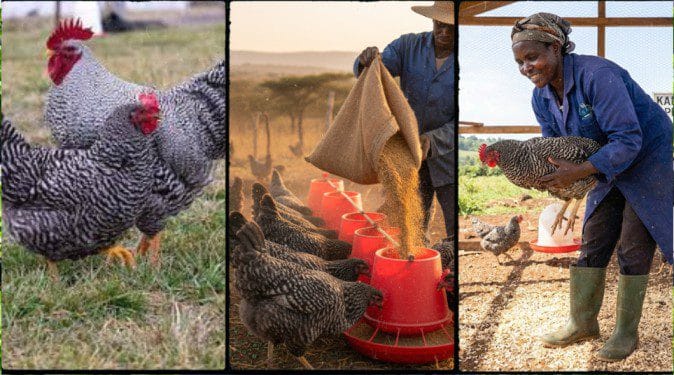
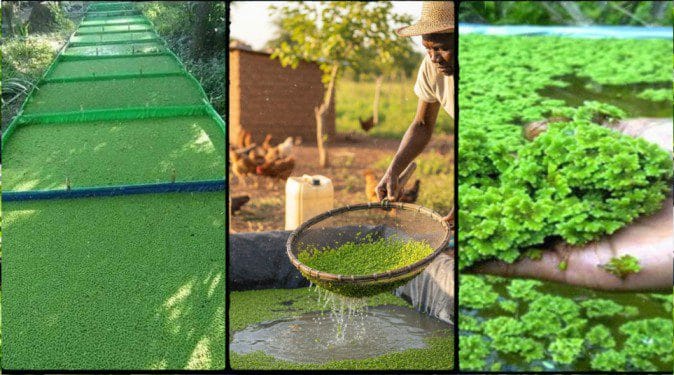
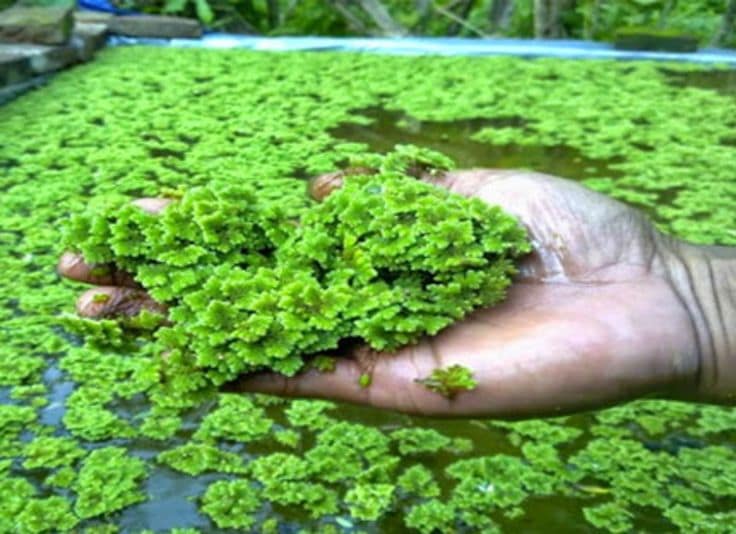
Azolla is a free-floating aquatic fern that doubles its biomass every 2–3 days through vegetative reproduction. In 2026, Kenyan farmers prioritize it because it contains 25–30% crude protein, acting as a direct substitute for expensive soya and fishmeal. It is the only feed source that grows exponentially with zero chemical inputs, making it immune to rising fertilizer prices.
Read Also: Top 5 Profitable Dairy Cow Breeds for Successful Farming in Kenya (2026 Guide)
The skyrocketing cost of commercial feeds has pushed Kenyan farmers to the brink of unprofitability. Azolla pinnata offers a vital lifeline, serving as a sustainable, on-farm feed production factory that operates 365 days a year. It is not just a plant; it is a biological machine that fixes atmospheric nitrogen efficiently.
Poultry farmers in Kiambu and dairy farmers in Meru are leading this shift towards self-reliance. By integrating Azolla, they significantly reduce reliance on store-bought pellets which have seen price hikes of 15% this year alone. This independence is critical as global grain prices fluctuate unpredictably due to climate instability.
Beyond feed, Azolla acts as a potent bio-fertilizer for horticultural crops. When composted, it releases nitrogen slowly, improving soil structure and water retention in your shamba. It creates a closed-loop system where livestock waste feeds the Azolla, and Azolla feeds the livestock.
“Expert Tip:* Do not rely on Azolla as 100% of the diet for any animal. For chickens, mix it at a 20:80 ratio with commercial mash to prevent loose droppings while maximizing savings.”
What are the step-by-step requirements for constructing a high-yield Azolla pond?
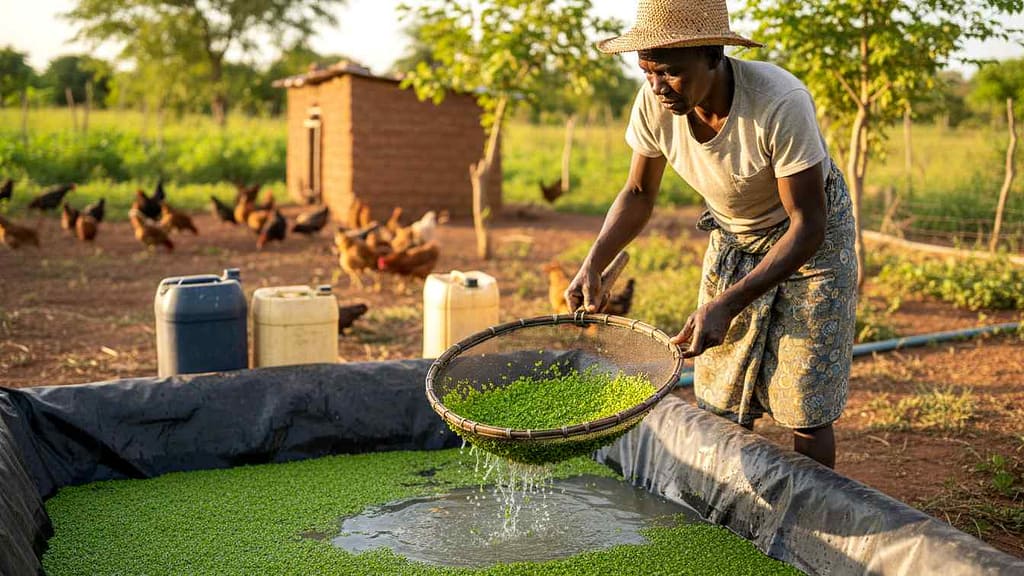
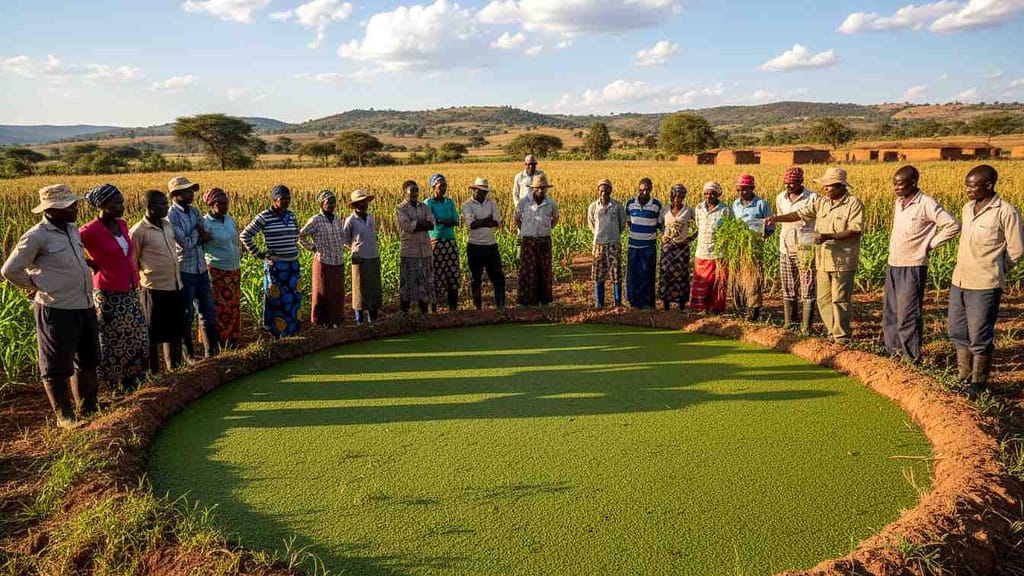
You need a flat, partially shaded area and a pit measuring at least 2m x 3m with a uniform depth of 20-30cm. Essential materials include a 0.5mm Dam Liner (UV treated), sieved fertile soil, and organic manure (cow or poultry) to create the nutrient base. Avoid direct sunlight, which turns the fern reddish-brown and significantly lowers protein content.
The foundation of a successful Azolla farm is the pond structure and its location. You do not need expensive concrete; a simple earthen pit lined with a UV-treated liner is sufficient for years of service. Grekkon Limited supplies high-quality liners that are guaranteed to last over 5 years under Kenyan conditions.
Size matters for ensuring daily harvest consistency for your specific herd size. A standard 6m² pond can produce approximately 1kg of fresh Azolla daily, which is enough to supplement about 50 chickens. If you have 100 chickens, you need roughly two such ponds to supplement their diet effectively without depleting the culture.
Read Also: How to Grow Clover Seed for High-Quality Livestock Fodder in Kenya (2026 Guide)
Location selection is critical for natural temperature control and light management. Azolla thrives in temperatures between 20°C and 30°C, requiring dappled sunlight rather than harsh noon glare. If your area is too hot, like in Kilifi, you must install a 70% shade net to prevent evaporation and scorching.
“Expert Tip:* Place your pond near a water source but away from large trees with falling leaves. Decaying leaves from trees will alter the pH balance and can kill your culture overnight by releasing tannins.”
How do you introduce and manage the Azolla culture for rapid multiplication?
Start by adding 10-15kg of sieved soil and 2kg of manure mixed into a slurry per 6m² pond. Fill water to 15cm depth and let it settle for 24 hours before introducing 1kg of pure Azolla culture. Agitate the water gently every day to aerate and allow the fern to carpet the surface within 7–10 days.
The “seeding” phase determines the long-term health and growth rate of your colony. Buy clean culture from a reputable source like KALRO or certified farmers in Kirinyaga to ensure purity. Wild Azolla often carries pests or invasive snails that can destroy your controlled crop within weeks.
Nutrient maintenance is a mandatory weekly task for high yields. Every 7 days, add 1kg of fresh cow dung and 20g of Super Phosphate (optional) to maintain vigorous growth and green color. This “feeding” ensures the protein content remains high for your livestock rather than just producing fibrous material.
Water level management is non-negotiable for root health. Maintain a depth of at least 10cm so the roots act as floating anchors but don’t dig into the mud at the bottom. If roots touch the soil, the plant becomes fibrous, tough, and difficult for poultry to digest.
What are the proven harvesting techniques to maximize regrowth?
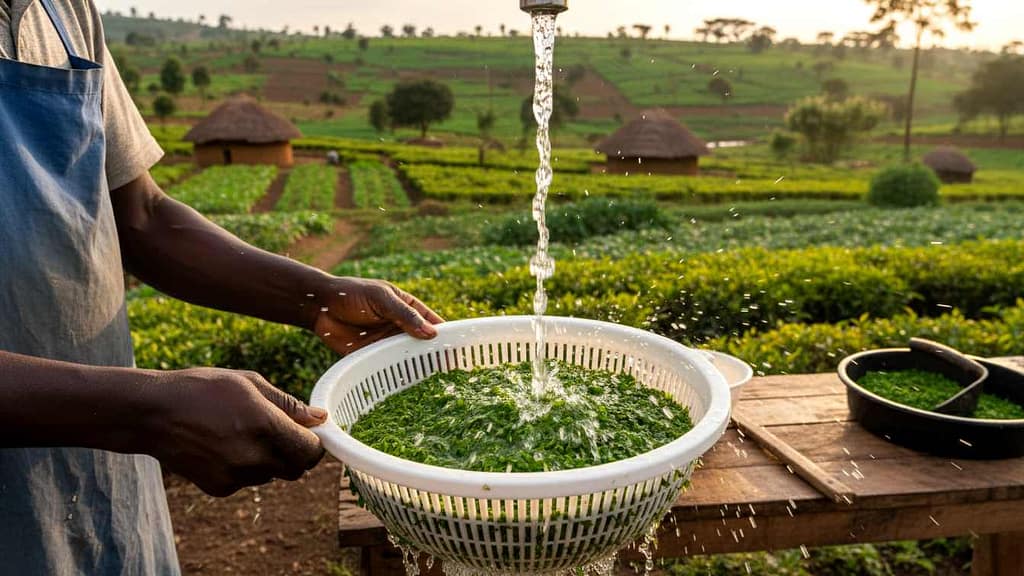
Harvest daily to prevent overcrowding, which causes the lower layers to rot and degrade water quality. Use a plastic sieve or tray with holes to scoop the fern, removing about 25% of the biomass each day. Wash the harvested Azolla in a bucket of fresh water to remove manure smell before feeding it to livestock.
Consistency in harvesting triggers faster reproduction and keeps the colony young. If you leave the pond fully covered for too long, the Azolla competes for resources and dies off rapidly. Treat it like a grass lawn; the more you trim (harvest), the faster it grows back.
Hygiene during harvest is vital for animal health and acceptance. Fresh Azolla naturally carries the smell of the pond’s manure slurry which can deter picky eaters. Rinsing it thoroughly ensures your dairy cows or pigs accept the feed without hesitation or digestive upset.
Store excess harvest by drying it in the shade to preserve vitamins. Sun-drying kills the nutrients and bleaches the plant, so use air-drying on a mesh rack away from direct rays. Dried Azolla can be stored for months and mixed into mash during dry seasons when fresh grass is scarce.
Module A: Regional Comparative Analysis (2026)
Azolla farming is versatile, but Kenya’s diverse climate demands specific strategies for Meru, Uasin Gishu, and Kilifi. Farming methods must adapt to altitude, humidity, and temperature variance.
Meru County (The Ideal Balance): Meru’s moderate climate is perfect for Azolla production year-round. The soil is volcanic and rich, but often naturally acidic which can hinder growth. Farmers here must test soil pH before adding it to ponds; if pH is below 5.5, add agricultural lime to neutralize it. Water availability from rivers is good, but sediment filters are necessary to keep pond water clear.
Uasin Gishu (The Highland Challenge): This is Kenya’s breadbasket, but cold nights (below 10°C) significantly slow Azolla growth. Farmers in Eldoret must use greenhouse tunnels or clear plastic covers at night to retain heat. The cold season (June-July) requires doubling the Super Phosphate input to stress the plant into survival mode, which paradoxically keeps it growing, albeit slower.
Kilifi County (Coastal Heat): The challenge here is high salinity and intense heat which causes evaporation. Azolla dies quickly in saline water, so coastal farmers must use harvested rainwater or fresh piped water. 75-90% shade nets are mandatory to prevent water temperatures from exceeding 30°C during the day. Evaporation rates are high, so top-ups are needed every two days to maintain depth.
Machakos County (Arid Adaptation): Water conservation is the primary concern in this semi-arid region. Ponds must be deeper (40cm) to keep water cool, and sunken pits are preferred over raised beds. Farmers here successfully use Kitui bentonite clay to seal ponds if liners are too expensive, though liners remain superior.
*Personal Expert Tip:* In Uasin Gishu, place black plastic sheets at the bottom of the pond *under* the liner. This insulation layer helps retain ground heat during chilly nights, boosting morning growth rates.
Module B: 12-Month Farming Calendar (Kenyan Seasonality)
January – February (Hot & Dry): Maintain water levels daily as evaporation is at its peak. Increase shade coverage to 75% to protect the crop from scorching. Harvest early morning (6 AM) to reduce plant stress before the sun hits. Prices for commercial feed peak here; maximize Azolla use to save money.
March – April (Long Rains): Prepare for overflow by checking drainage systems. Install drainage pipes at the 15cm mark to prevent ponds from flooding and washing away your culture. Rainwater dilutes nutrients, so increase manure dosage by 20% to compensate. Collect rainwater now for use in drier months.
May (Post-Rain Growth): Ideal growth period with moderate temperatures and humidity. Biomass doubles every 2 days, allowing for maximum harvest. Harvest aggressively and dry excess stock now for the coming cold season. This is the best time to expand pond numbers or sell culture.
June – July (Cold Season): Growth slows significantly due to low temperatures. Do not over-harvest; leave 80% coverage to trap heat within the water body. Feed livestock the dried Azolla stored in May to supplement lower fresh yields. Cover ponds at night if temperatures drop below 10°C.
August – September (Cool & Dry): Temperatures rise slightly, reactivating dormant spores. Resume normal harvesting schedules as growth rates normalize. Clean the pond bottom; remove sludge (accumulated manure) and replace 30% of the water to prevent toxicity.
October – November (Short Rains): Monitor closely for pests like water lily aphids. Rain washes insects into ponds, which can devastate the crop. Scoop out pests manually or use neem oil spray (very lightly) if infestation is severe. Ensure drainage systems are clear again to handle sudden storms.
December (Festive Demand): Poultry demand peaks for the holiday season. Use Azolla to fatten broilers cheaply before sale to maximize profits. Reduce commercial feed to maximize profit margins during the Christmas rush when prices are high. Plan pond maintenance for January.
Module C: Deep-Dive Financials (2026 Economy)
In 2026, fuel prices have driven transport costs up, making every bag of commercial feed 30% more expensive than in 2024. Azolla eliminates this logistics cost entirely by localizing production.
The “Fuel-Free” Logistics Advantage
While large tractors aren’t used for Azolla, the hidden cost of farming is transport logistics. Delivering a 70kg bag of layers mash to a remote farm in Narok incurs heavy fuel surcharges. Azolla is produced in situ (on-site), meaning your “transport cost” is effectively zero. The only input is manure, which is already available on your farm.
Setup Costs vs. Savings (10m² Project – 2 Ponds)
| Item | Cost (KES) | Notes |
|---|---|---|
| Dam Liner (0.5mm, 15m²) | 4,500 | Grekkon or local agrovet |
| Labor (Excavation) | 2,000 | 2 casuals for 1 day |
| Azolla Culture (2kg) | 2,000 | From KALRO or local farmer |
| Super Phosphate / Manure | 500 | Initial booster pack |
| Shade Net (Optional) | 1,500 | Required for hot areas |
| TOTAL SETUP | 10,500 | One-time investment |
Break-Even Analysis for Poultry
A 10m² setup yields ~1.5kg of Azolla daily, totaling 45kg per month.
Commercial Feed Price (2026): KES 100 per kg.
Value of Azolla Produced: 45kg x KES 100 = KES 4,500 saved monthly.
ROI Period: KES 10,500 (Setup) ÷ KES 4,500 (Savings) = 2.3 Months.
After month 3, you are saving KES 54,000 annually essentially for free. This capital can be reinvested into expanding your flock or improving housing.
Projected Savings for Dairy Farmers
Replacing 2kg of dairy meal with 2kg of dry Azolla saves KES 120 per cow per day. For a small herd of 3 cows, this equates to KES 10,800 saved monthly. The impact on milk quality also allows for better pricing at local cooperatives.
What are the common mistakes that kill Azolla colonies overnight?
The top killer is high phosphate toxicity from using raw chicken manure. Always compost manure for 2 weeks before adding it. Other mistakes include allowing full sun exposure (scorching), letting the pond dry out, and failing to harvest, which leads to a “mattress effect” where layers rot and suffocate.
Many beginners fail because they treat Azolla like a hardy weed rather than a sensitive crop. It is highly sensitive to pH changes in the water. If your water turns acidic (pH < 5.5), the roots turn black, detach, and the plant dies.
Read Also: Dairy Farming in Kenya: Complete Beginner’s Guide, Costs, Profits and Best Breeds
Over-fertilization is another common trap for eager farmers. Farmers often think “more manure = more growth,” but this is incorrect. Too much manure causes an algae bloom, which turns the water green and suffocates the Azolla by stealing oxygen.
Ignorance of pests is also a frequent cause of colony collapse. The Azolla Snout Beetle is a tiny pest that eats the leaves rapidly. If you see brown patches with holes, submerge the Azolla under water for 2 hours (weigh it down with a net) to drown the beetles.
How can you process and package Azolla for extra income?
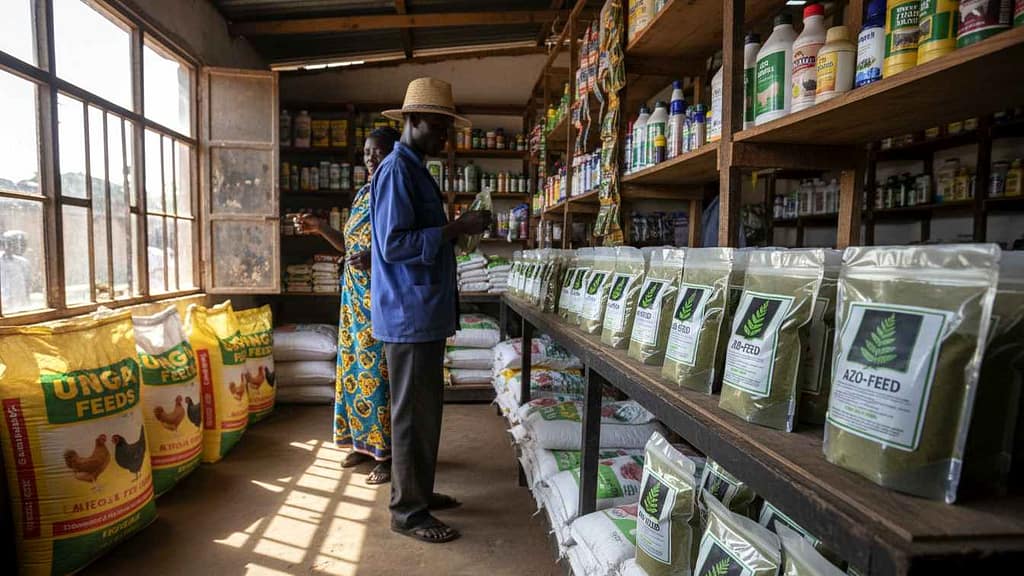
Value addition involves drying Azolla to 10% moisture content and grinding it into a powder. This “Green Protein Meal” can be packaged in 1kg bags and sold to urban poultry farmers. You can also pelletize it by mixing 30% dried Azolla dust with maize bran, creating a complete budget feed.
Smart farmers don’t just feed Azolla; they sell it to neighbors. In 2026, the market for organic feed supplements is booming across counties. Fresh culture sells for KES 500 – 1,000 per kg to new farmers starting their own ponds.
Drying preserves the value and allows for transport. Build a solar dryer (a simple wooden frame with UV plastic) to dry Azolla hygienically. Open sun drying destroys vitamins, but solar drying retains the green color and vital nutrients.
Packaging brands your product and builds trust. Use clear KES 50 polyethylene bags with a printed sticker: “Premium Azolla Meal – 28% Protein.” Sell this to agrovets in your local town center, appealing to kienyeji chicken farmers who want yellow yolks.
Module D: Supply Chain & Value Addition
The Azolla value chain is short and profitable. Unlike maize which goes through millers and retailers, Azolla is often “Farm-to-Farm,” keeping margins high.
1. Processing: Invest in a small hand-operated pelletizer (approx KES 15,000). Mix dried Azolla powder with silver cyprinid (omena) dust and maize germ. This creates a high-value pellet that stores for 6 months without spoiling.
2. Branding: Target the “Organic” niche aggressively. Poultry farmers selling “Organic Eggs” need organic feed to substantiate their claims. Your Azolla meal is the certified organic input they are missing. Market it on Facebook groups like “Digital Farmers Kenya.”
3. Distribution: Use matatu courier services for delivery. Since dried Azolla is light, shipping 5kg to a customer in Nakuru is cheap and fast. Fresh culture requires faster, damp transport options to ensure viability.
“Personal Expert Tip:* Create “Starter Kits” for sale to beginners. Bundle 1kg of culture, 1 meter of dam liner, and a printed 1-page guide. Sell the kit for KES 3,000 as a complete “business in a box” solution.”
Conclusion
Azolla farming in Kenya in 2026 is no longer an experiment; it is a necessity for profitability. Whether you are in the heat of Kilifi or the highlands of Meru, this fern offers a shield against the rising costs of agribusiness. By building a simple pond, managing your water quality, and treating Azolla as a high-value crop, you unlock a permanent source of protein.
Start small with a single 2m x 3m pond today. Master the art of water management before expanding. Before you know it, you will be expanding to cut your feed bill by half and selling surplus to neighbors. The “Green Gold” revolution is here—don’t be left buying expensive sacks when you can grow your own feed.
Troubleshooting FAQ (People Also Ask)
Q: Can I use borehole water for Azolla?
A: Only if it is fresh and not saline. Salty borehole water will kill Azolla in 48 hours. Taste it; if it’s salty to you, it’s poison to the plant.
Q: Why is my Azolla turning red?
A: Reddening indicates stress. It’s either too cold (<10°C), too hot (>30°C), or lacks phosphorus. Check the temperature first, then add a handful of Super Phosphate.
Q: Can humans eat Azolla?
A: Yes, but it’s not common in Kenya yet. It is edible and high in protein, usually fried with eggs, but ensure the water source is 100% clean and free of pathogens.
Q: Where can I buy Azolla seeds in Kenya?
A: Azolla doesn’t reproduce by “seeds” commercially; you buy a live “culture” (wet plants). Check Jiji.co.ke or contact Agri-SeedCo agents for local suppliers.
Q: How much Azolla can I feed my cow?
A: You can feed up to 2kg of fresh Azolla per day. It increases milk yield by 10-15% due to the high protein and calcium content improving digestion.
Q: Does Azolla attract mosquitoes?
A: Yes, this is perfect for urban farmers. Residents in Nairobi use old bathtubs or split water tanks. The yield is lower, but sufficient for 5-10 backyard chickens.
Q: How do I transport Azolla culture?
A: Keep it moist, not submerged in water. Pack it in a wet gunny bag or a plastic container with air holes. It can survive 24 hours in transit if kept cool.
Q: Is Azolla invasive?
A: It can be if uncontrolled. Never dump excess Azolla into local rivers or lakes (like Lake Naivasha) as it can clog waterways. Always compost the excess material.
Q: Can I use goat manure?
A: Yes, goat manure is excellent. It releases nutrients slower than chicken manure, providing a steady food supply for the fern without spiking ammonia levels.