
Table of Contents
TL;DR: Barred Plymouth Rock chickens are the superior dual-purpose breed for Kenyan smallholders in 2026, offering high disease resistance and premium “improved kienyeji” meat prices. With a maturity rate of 4.5 months and egg production of up to 240 eggs annually, they outperform indigenous breeds in profitability. This guide details sourcing, feeding, and financial planning for maximum ROI in the current economic climate.
What makes the Barred Plymouth Rock the ideal breed for Kenyan farmers in 2026?
The Barred Plymouth Rock excels in Kenya due to its dual-purpose utility and exceptional hardiness against local climate fluctuations. Unlike broilers, they scavenge well, reducing feed costs by up to 30%. In 2026, their distinct black-and-white “zebra” plumage commands a higher market price because consumers associate it with authentic, high-quality indigenous taste.
The agricultural landscape in Kenya is constantly shifting towards sustainable, low-input livestock. Smallholder crop farmers are increasingly integrating poultry to diversify income streams against climate shocks. The Barred Plymouth Rock fits this integrated model perfectly.
Read Also: Poultry Farming in Kenya 2026: Complete Guide to Profitable Improved Kienyeji Chicken
This breed is not a delicate exotic bird that requires expensive climate-controlled housing. They are robust foragers that thrive in the semi-free-range systems common in rural Kenya. This hardiness significantly lowers the barrier to entry for beginner farmers in counties like Bungoma and Meru.
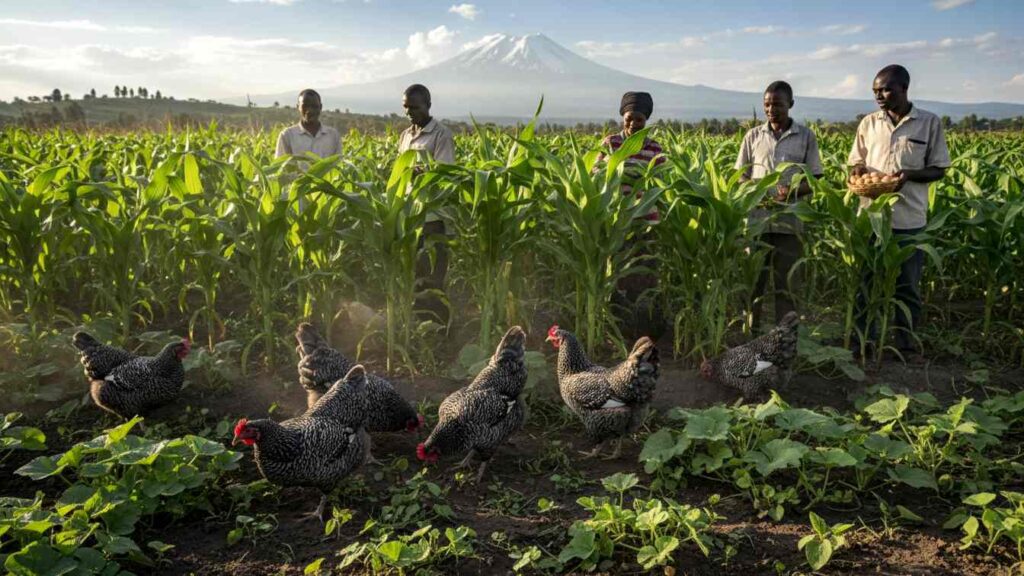
Furthermore, the 2026 market trend heavily favors “organic” and “kienyeji” labeled produce over industrial options. The Barred Rock produces meat that is firmer, darker, and tastier than commercial broilers. Their eggs are brown, large, and fetch a premium price in Nairobi and Mombasa markets, often retailing for KES 20-25 each.
Farmers are also drawn to the breed’s docile temperament, which makes them easy to manage for families with children. Unlike the aggressive Leghorn, the Barred Rock is calm and rarely flies over standard fencing. This reduces losses from straying birds and minimizes conflicts with neighbors in peri-urban settings.
How does the Barred Plymouth Rock compare across different Kenyan counties?
Direct Answer: Regional success varies based on feed availability and market proximity. Kiambu offers the highest egg prices but suffers from high production costs due to land scarcity. Kakamega provides cheaper organic feed inputs like termites but faces lower local meat prices. Machakos requires higher water infrastructure investment but offers low disease pressure due to drier conditions.
Module A: Regional Comparative Analysis
To understand true profitability, we must analyze how this breed performs in three distinct agricultural zones. Kenya’s diverse climate affects feed conversion ratios, disease management, and ultimate profit margins. A strategy that works in the highlands may fail in the arid plains.
1. Kiambu County (Peri-Urban High Intensity)
Farmers in Kiambu benefit immensely from their proximity to Nairobi’s premium consumer markets. You can sell a mature cock for KES 1,800 and a tray of eggs for KES 450+ directly to households. However, land sizes are typically small, necessitating a semi-intensive system.
Feed costs here are the highest in the country due to stiff competition for resources. Farmers must rely heavily on commercial feeds from brands like Unga Farm Care or Pembe Feeds. The high humidity and population density also require strict coccidiosis management protocols to prevent outbreaks.
The key to success in this region is vertical integration. Farmers here should focus on selling dressed meat rather than live birds to maximize margins per square foot. High-value customers in estates like Runda and Karen are the target demographic.
2. Kakamega County (Western Breadbasket)
In Kakamega, the abundance of green matter and insects supports a true free-range system. Farmers can substitute up to 40% of commercial feed with lucerne, maize germ, and naturally occurring termites. This drastically lowers the break-even point compared to central Kenya.
The primary challenge here is market access and lower disposable income among local buyers. While production costs are low, the sale price for a bird might hover around KES 1,200. Value addition, such as transporting dressed chicken to urban centers like Kisumu or Eldoret, is key here.
Read Also: Hass Avocado in Kenya: Price, Seedlings, Varieties & Where to Buy
Disease pressure in Western Kenya is unique due to the high rainfall. Farmers must be vigilant against internal parasites and worms. Regular deworming using products like Ascarex is mandatory for flocks raised on free range.
3. Machakos County (Semi-Arid Opportunity)
Machakos presents a unique and growing opportunity for poultry farmers in 2026. The dry climate reduces the prevalence of respiratory diseases and bacterial infections that plague wetter counties. Barred Rocks are surprisingly heat-tolerant but require constant, cool water access.
Farmers here must invest in hydroponic fodder systems to supplement dry grazing during drought months. The market is growing rapidly due to the expansion of the Nairobi metro area towards Athi River. Prices are stabilizing near Kiambu rates as the middle class moves outward.
Water storage is the critical success factor in this region. A farmer with a reliable 5,000-liter tank can outperform competitors during the dry season. The dry heat also ensures poultry manure dries fast, creating excellent fertilizer for mango and orange farming.
Where are the best places to buy Barred Plymouth Rock chicks online in Kenya?
For purebred quality, prioritize government bodies like KALRO Naivasha or established large-scale hatcheries like Kenchic (seasonal availability). For online ease, verified breeders on
Jiji.co.ke and specific Facebook groups like “Improved Kienyeji Farmers Kenya” are viable, provided you visit the farm first. Avoid sending money via M-Pesa before seeing the chicks to prevent fraud.
Sourcing quality genetics is the single biggest determinant of success in poultry farming. In 2026, the market is unfortunately flooded with “fake” improved breeds that are merely crossbreeds with poor performance. You must verify the parent stock before committing your capital.
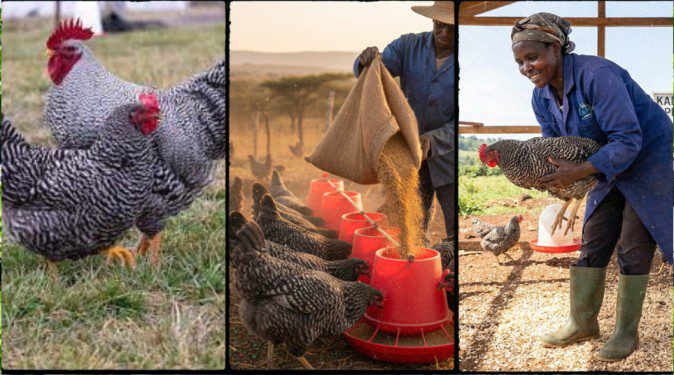
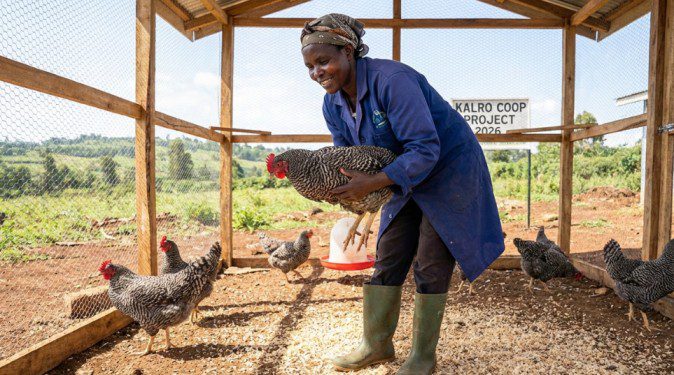
KALRO (Kenya Agricultural and Livestock Research Organization) remains the gold standard for indigenous genetics. Their Naivasha Non-Ruminant Research Centre supplies pure lines that are disease-free. Booking often requires weeks in advance due to high national demand.
For private sector options, check established entities like KukuChic or Mugo Farmers. They often have robust distribution networks that can deliver to major towns. When using online marketplaces, look for sellers with “Verified” badges and extensive reviews to filter out scammers.
Read Also: 10 Most Profitable Farming Ventures in Kenya for 2026
Facebook groups have become a vibrant marketplace, but they carry risks. Groups such as “Poultry Farmers Kenya” often have reputable breeders. Always ask for recent photos of the parent stock and the incubator setup before engaging.
” Expert Tip: Never buy chicks from a seller who refuses a farm visit. A legitimate breeder will be proud to show you their biosecurity measures and parent stock health.
When buying online, demand a video call to see the active chicks. Listen for the sound of the flock; healthy chicks chirp actively, while sick ones are silent and huddled. This simple check can save you from buying a batch of mortality-prone birds.
What does a 12-Month Farming Calendar look like for this breed?
A successful year revolves around rainfall patterns and holiday sales peaks. January to March focuses on heat stress management and brooding new stock. April to June (Long Rains) requires intensive disease control against wet-weather ailments. October to December is the “Golden Quarter” where sales of mature birds peak for the festive season, often commanding 40% higher prices.
Module B: 12-Month Farming Calendar
Aligning your production cycle with Kenya’s seasons ensures you have product when prices are highest. This calendar assumes a crop farmer integrating poultry to maximize resource use.
Quarter 1: January – March (Hot & Dry)
This is the best time to brood chicks as the ambient temperature is naturally high. Heating costs for the brooder (charcoal or electricity) are significantly reduced. Focus on Newcastle Disease vaccination in February as winds can carry the virus.
Water stress is high during these months. Ensure you have backup water storage (tanks) to last at least two weeks. Scavenging resources (grass/bugs) will be low, so budget for 100% commercial feeding or silage use to maintain growth rates.
Prepare your marketing strategy for Easter now. Birds hatched in late December or January will be hitting market weight around April. Secure orders from catering units early.
Quarter 2: April – June (Long Rains)
The rains bring severe disease challenges, specifically Coccidiosis and Fowl Typhoid. Keep the poultry house bedding dry by turning it daily and adding fresh wood shavings. Supplement the diet with locally available greens which are now abundant in the fields.
Start marketing your birds aggressively now. Pre-selling to hotels or caterers secures your revenue before the market floods. This is the primary growth phase for birds hatched in Q1.
Quarter 3: July – September (Cold Season)
Growth rates slow down due to the cold; birds burn energy just to stay warm. Increase the energy content of the feed (more maize germ) to compensate. Use heavy curtains on the chicken coop to prevent cold drafts at night.
This is the lean season for crop farming, so chicken sales can provide critical cash flow. Cull non-performing layers or excess roosters now to reduce feed bills. This liquidity helps purchase seeds and fertilizer for the short rains.
Quarter 4: October – December (Short Rains & Festive)
This is the profit realization period for Kenyan farmers. Demand for “Kienyeji” chicken peaks for Christmas and Jamhuri Day celebrations. Prices can jump by 40% compared to mid-year rates.
Ensure you have mature birds (4.5 to 5 months old) ready by December 10th. If you are selling eggs, package them attractively for the holiday baking rush. This is also the time to deep clean the coop post-sale for the next January cycle.
How much does it cost to raise 100 Barred Plymouth Rock chickens to maturity?
Direct Answer: To raise 100 birds to point-of-lay (5 months) costs approximately KES 55,000 to KES 70,000 in a semi-intensive system. This includes chicks, feed, vaccines, and brooding. The primary cost driver is feed, accounting for 70% of expenses. Revenue from selling 100 mature birds can exceed KES 150,000, yielding a net profit of over KES 80,000 per cycle.
Module C: Deep-Dive Financials
Farming is a business, not a hobby. Below is a breakdown for a beginner farmer starting with 100 day-old chicks in 2026. We assume a realistic 5% mortality rate, meaning 95 birds reach maturity.
Break-Even Analysis
Your largest expense is undoubtedly feed. A Barred Rock eats roughly 8-10kg of feed to reach full maturity (5 months). Commercial feed averages KES 70 per kg, but mixing your own can reduce this to KES 50.
Cost Calculation (100 Birds):
Chicks: 100 x KES 120 = KES 12,000
Feed (Starter/Grower): 900kg x KES 70 = KES 63,000
Vaccines/Meds: KES 3,000
Brooding Energy: KES 2,500
Total Operational Cost: ~KES 80,500
Revenue Projection:
Sale of 50 Roosters @ KES 1,600 = KES 80,000
Sale of 45 Hens (or asset value) @ KES 1,300 = KES 58,500
Manure Sales (20 bags @ 300) = KES 6,000
Total Asset Value: KES 144,500
Net Profit (First Cycle): ~KES 64,000
| Expense Category | Estimated Cost (KES) | Notes for 2026 |
|---|---|---|
| Day Old Chicks (100) | 12,000 | Buy from KALRO or Kenchic agents. |
| Chick Mash (Month 1-2) | 14,000 | Critical for early frame development. |
| Growers Mash (Month 3-5) | 38,000 | Can be supplemented with greens/kitchen waste. |
| Vaccines & Vitamins | 3,500 | Newcastle, Gumboro, Fowl Pox mandatory. |
| Brooding (Heat/Charcoal) | 2,500 | Dependent on location/season. |
| Miscellaneous | 5,000 | Transport, sawdust, disinfectant. |
| TOTAL INPUT | 75,000 | ~750 KES per bird production cost. |
Note: If you keep the hens for eggs, they will consume ~120g of feed daily. With a 70% laying rate, 45 hens produce ~31 eggs/day. At KES 20/egg, daily revenue is KES 620 vs. feed cost of KES 380, giving a daily profit of KES 240.
What are the best feeding strategies for maximum weight gain?
Direct Answer: To maximize weight, implement a phase-feeding program. Start with high-protein (20%) Chick Mash for 8 weeks. Switch to Growers Mash (16% protein) until week 18. Supplement with black soldier fly larvae or omena to boost protein intake naturally. Fermenting grains before feeding can also improve digestibility and nutrient absorption by 15%.
Module D: Feeding & Nutrition Mastery
Feeding is where most farmers lose money. The goal is not just to fill the bird’s crop, but to provide precise nutrition for each growth stage. In 2026, the cost of commercial feed is a major concern, driving the need for alternative formulations.
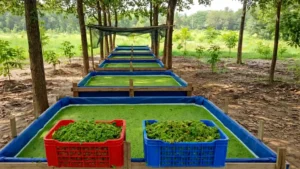
Hydroponic Fodder: Growing barley or maize fodder hydroponically is a game-changer. It takes 7 days to grow and provides a rich source of vitamins and enzymes. A 1kg tray of seeds produces 8kg of fodder, drastically reducing the reliance on dry store-bought pellets.
Azolla Cultivation: This aquatic fern is gaining popularity in counties like Kisumu and Siaya. It is rich in protein and grows rapidly in small ponds. Mixing Azolla with maize bran creates a highly nutritious, low-cost feed that Barred Rocks love.
Read Also: Azolla Farming in Kenya: Cheap Animal Feed and Higher Profits in 2026
Commercial vs. Home Mix:
Commercial feeds from Sigma Feeds ensure balanced nutrition but reduce margins. Home mixing requires precision. You need a source of carbohydrates (Maize/Sorghum), Protein (Soya/Omena), and minerals (DCP/Lime). If you mix incorrectly, you risk stunted growth.
How do you manage the supply chain and add value to your produce?
Direct Answer: Do not just sell live birds to brokers; you lose 30% of your margin. Slaughter, dress, and package birds for direct sale to households or restaurants. Utilize the manure as nitrogen-rich fertilizer for your crops (kale, spinach), creating a circular economy that eliminates fertilizer costs.
Module E: Supply Chain & Value Addition
The “middleman” is the enemy of smallholder profit. In 2026, digital platforms allow you to bypass brokers. Use WhatsApp groups to market directly to neighbors and local estates, offering home delivery for a premium fee.
Meat Processing
Selling a live chicken fetches KES 1,200. A dressed, packaged chicken with giblets can sell for KES 1,500. Invest in a simple chest freezer and quality packaging materials.
Ensure hygiene is impeccable during slaughter. Use clear vacuum bags and a printed sticker with your farm name and slaughter date. This branding builds trust and encourages repeat customers who value food safety.
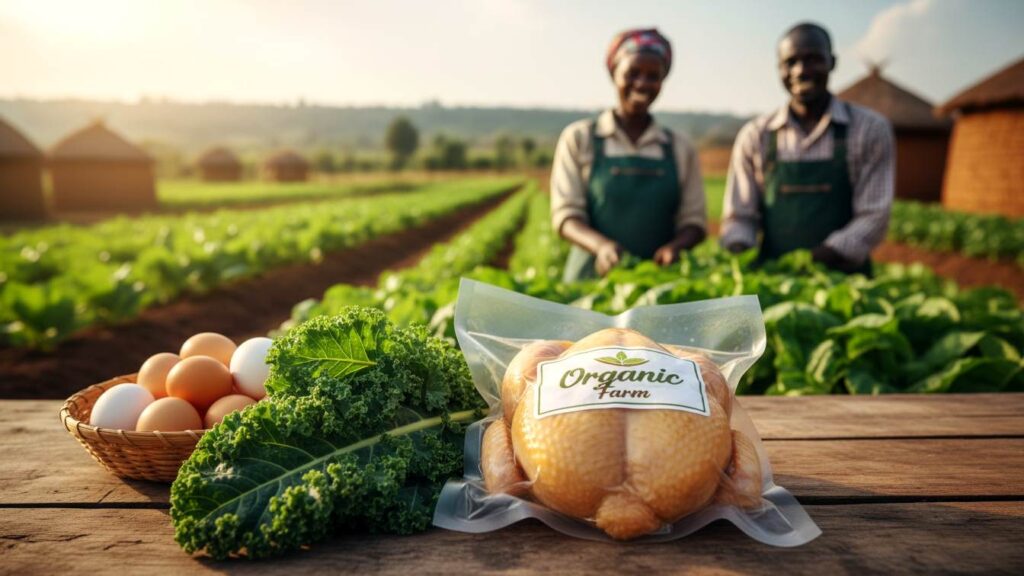
Manure Management (Crop Integration)
For a crop farmer, chicken manure is “black gold.” It is high in Nitrogen, Phosphorus, and Potassium. Compost the manure for 3 weeks before applying it to crops to avoid “burning” the plants.
100 chickens produce enough manure to fertilize a quarter-acre of Sukuma Wiki comfortably. This saves you thousands in DAP/CAN fertilizer costs annually and improves soil structure. The synergy between crops and poultry is the hallmark of a sustainable Kenyan farm.
What is the best housing structure for Barred Plymouth Rocks?
Direct Answer: The housing must be well-ventilated but draft-free. For 100 birds, you need a structure of roughly 200 square feet (2 sq. ft per bird). Orient the house East-West to prevent direct sunlight from overheating the birds. Use raised structures with wire mesh windows and concrete floors for easy cleaning.
Ventilation is critical in Kenya. Ammonia buildup from droppings causes respiratory issues. Ensure the long side of the coop faces the wind direction but is protected by curtains at night to regulate temperature.
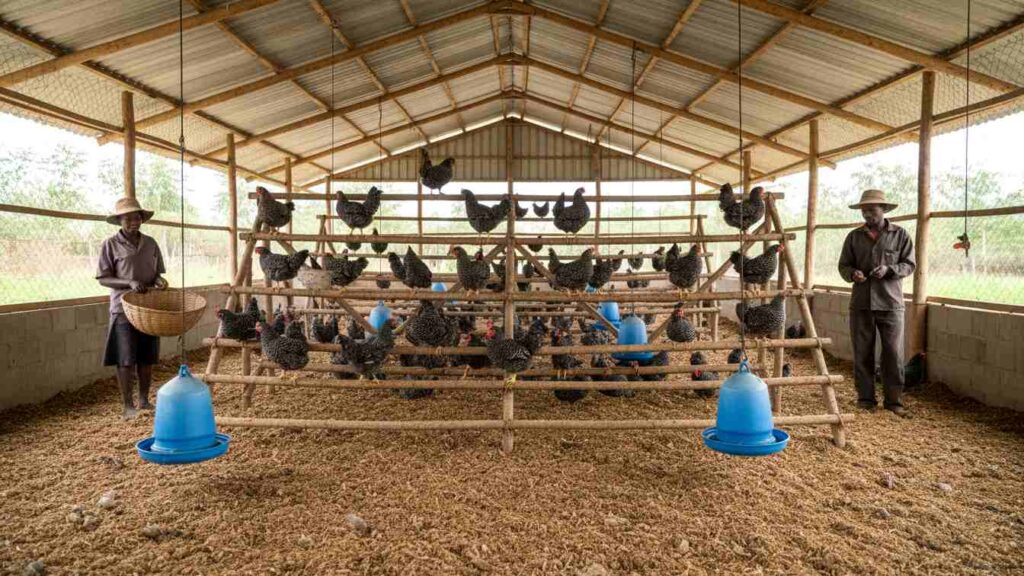
Perches are mandatory for this breed. Barred Rocks are heavy birds but they have a natural instinct to roost. Install wooden perches 2 feet off the ground using rounded timber. This keeps them active and reduces contact with wet bedding, preventing breast blisters.
Deep litter systems are preferred over cages for Barred Rocks. Use wood shavings or dry grass at a depth of 4-6 inches. This bedding absorbs moisture and eventually breaks down into rich compost, which is a valuable by-product.
How do you prevent common poultry diseases in 2026?
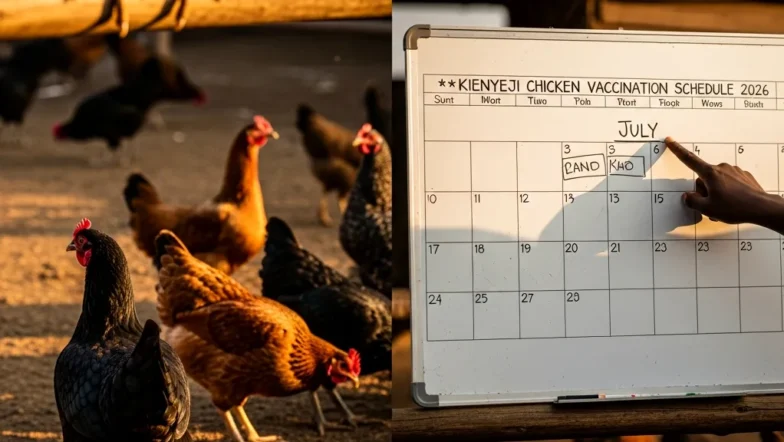
Direct Answer: Prevention is cheaper than cure. Follow a strict vaccination schedule: Marek’s (Day 1), Gumboro (Day 10 & 18), Newcastle (Day 21 & every 3 months), and Fowl Pox (Week 6). Maintain biosecurity by using footbaths with disinfectant at the coop entrance and restricting visitors.
In 2026, biosecurity is your primary defense against evolving viral strains. Wild birds are carriers of influenza and other pathogens. Use small wire mesh (chicken wire) to keep sparrows and weavers out of the feed and water areas.
Coccidiosis is the silent killer in wet seasons. If you see blood in droppings or ruffled feathers, treat immediately with Amprolium or Sulfa-based drugs. However, keeping litter dry is the best prevention; wet litter is a breeding ground for coccidia.
Indigenous herbal remedies are also gaining traction as supplementary treatments. Aloe vera extract in drinking water helps boost immunity. Crushed chili pepper is often used by organic farmers to stimulate digestion and ward off respiratory infections.
What are the specific feeding requirements for maximum egg production?
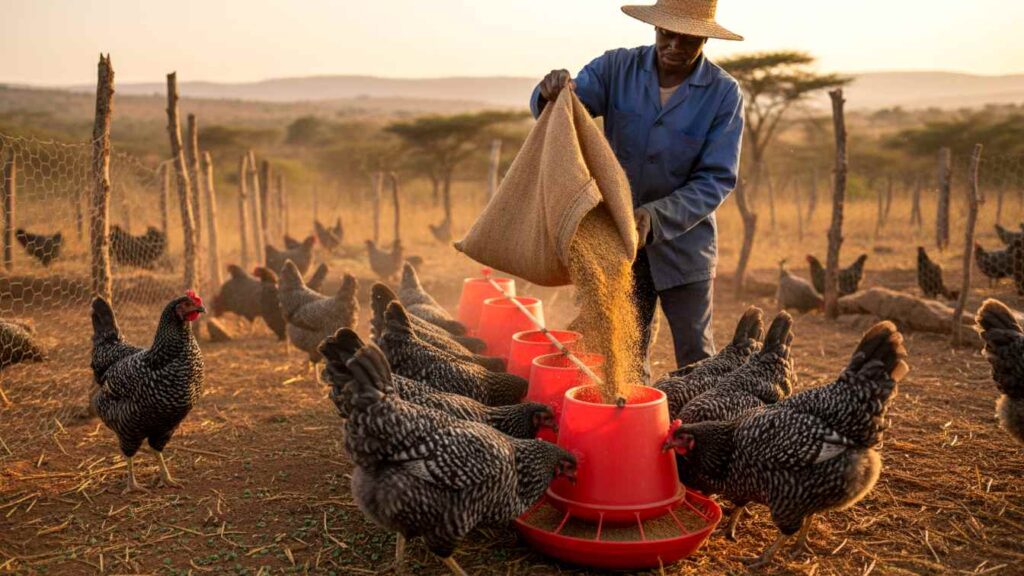
Direct Answer: Layers need 16-18% protein and high calcium. Transition from Growers Mash to Layers Mash at week 18. Supplement with crushed oyster shells or limestone for strong eggshells. Provide fresh greens (skuma, lucerne) daily to deepen the yolk color to the yellow/orange that Kenyan consumers prefer.
Water is often overlooked but is crucial for egg production. A laying hen drinks twice as much water as a non-layer. If water runs out for even 2 hours, egg production can drop for days as the bird experiences stress.
Read Also: How to Start Bulb Onion Farming in Kenya: Complete 2026 Guide, Costs & Profit Per Acre
Providers: Companies like Unga Farm Care and Sigma Feeds have consistent quality. For supplements, contact Simlaw Seeds for Lucerne seeds to grow your own fodder, ensuring a cheap and continuous supply of vitamins.
Conclusion: The 2026 Outlook
As we navigate 2026, the Barred Plymouth Rock stands out as the smart, resilient choice for Kenyan smallholders. The volatility of maize prices makes the pure broiler model risky for independent farmers who cannot absorb feed price shocks. The Barred Rock’s ability to utilize local feed resources and produce two income streams (meat and eggs) offers a vital safety net.
The market is shifting away from frozen, imported chicken toward fresh, traceable, local meat. You are not just farming chickens; you are providing a premium protein source that the growing Kenyan middle class is willing to pay for. Whether you are in Nyeri, Kisii, or Kitui, this breed offers a pathway to sustainable agricultural income.
Ready to Start Your Poultry Empire?
Don’t wait for the “perfect” time. Start small with 50 birds, learn the ropes, and scale up.
Frequently Asked Questions (FAQ)
Farmers Also Ask
1. Is Barred Plymouth Rock better than Kuroiler for Kenyan farmers?
It depends on your goal. Kuroilers grow faster and are larger scavengers, making them better for meat-only focus. Barred Plymouth Rocks are better layers and have a higher survival rate in colder regions. If you want a balance of eggs and meat, go with Barred Rock. If you want quick meat sales, go Kuroiler.
2. How many eggs does a Barred Plymouth Rock lay per year?
A healthy, well-fed Barred Rock hen lays between 200 to 240 eggs per year. Production peaks in the first year and drops by about 15% in the second year. They continue laying well into their third year, unlike commercial layers which are often culled after 18 months.
3. Can I use M-Pesa to buy chicks online safely?
Yes, but exercise extreme caution. Only pay via M-Pesa Buy Goods (Till Number) registered to a company, never to a personal number. Verify the breeder on Google Maps or Facebook groups. If a deal looks too good (e.g., chicks for 50 KES), it is likely a scam.
4. What is the best way to stop chickens from eating their own eggs?
Egg eating is caused by calcium deficiency or boredom. Immediately increase calcium in the diet (oyster shells). Darken the nesting boxes so hens cannot see the eggs clearly. Collect eggs frequently (3 times a day) to remove the temptation.
5. Do Barred Plymouth Rock chickens go broody?
Yes, they have a moderate tendency to go broody (sit on eggs to hatch them). This is great if you want to expand your flock naturally without an incubator. However, if you want eggs for sale, you must discourage broodiness by removing the hen from the nest immediately.
6. How much space do I need for 500 chickens?
For 500 birds in a deep litter system, you need roughly 1,000 square feet (2 sq. ft per bird). If you are using a free-range system, the coop can be smaller (500 sq. ft), but you need at least 0.25 acres of fenced outside run to prevent overgrazing.
7. Can I feed my chickens purely on kitchen waste?
No. Kitchen waste is a supplement, not a complete diet. It lacks the balanced protein and energy required for growth and egg production. A diet of only waste will result in stunted growth, no eggs, and nutritional diseases. Limit waste to 15% of the diet.
8. Where can I find a market for my chicken manure?
Approach local vegetable farmers, especially those growing spinach, kale, or tomatoes. You can also sell to tree nurseries. Pack the manure in 50kg bags; the current market rate is between KES 200 and KES 400 per bag depending on the region.
9. What vaccines are mandatory in Kenya for 2026?
The “Must-Have” vaccines are Marek’s Disease (usually done at the hatchery), Newcastle Disease, Gumboro (IBD), and Fowl Pox. In some areas, Fowl Typhoid vaccination is also recommended. Consult your local vet for a localized schedule.
10. How do I differentiate a male from a female Barred Rock chick?
This is difficult at day-old without professional vent sexing. However, as they grow (3-4 weeks), males usually have lighter colored barring (more white than black) and their combs turn red and grow faster than females. Females are generally darker with more distinct black bars.