
Table of Contents
Beekeeping (Apiculture) is currently rated as the highest ROI agribusiness in Kenya for 2026 due to minimal land requirements and soaring demand for organic honey and beeswax. With a properly managed 10-hive apiary, farmers can expect to break even within 18 months while contributing to ecosystem restoration. This guide covers the transition from traditional logs to Langstroth hives, detailed financial projections in KES, and regional suitability.
Why is commercial beekeeping becoming the most strategic agribusiness investment in Kenya for 2026?
Commercial apiculture in Kenya offers a unique “low-input, high-output” model that requires less than 10% of the labor needed for dairy or poultry farming. With the 2026 market price for pure organic honey hitting KES 1,000 per kg, beekeeping allows utilization of non-arable land (ASALs) and integrates seamlessly with fruit farming. It is the only venture where your livestock feeds itself by foraging up to 3km away.
The agricultural landscape in Kenya is shifting rapidly towards climate-resilient ventures. Beekeeping stands out because it does not require fertile soil or daily irrigation, making it perfect for the 80% of Kenya classified as Arid and Semi-Arid Lands (ASALs). Unlike crops that fail during drought, bees can migrate or be fed supplementary sugar syrup to survive harsh seasons.
Furthermore, the demand for hive by-products has exploded locally and internationally. While most beginners focus solely on honey, the real “gold” in 2026 lies in beeswax, propolis, and royal jelly, which are heavily sought after by the cosmetic and pharmaceutical industries. Kenyan honey, particularly from the Acacia-rich belts, is gaining a reputation similar to New Zealand’s Manuka honey for its distinct medicinal properties.
Successful adoption of modern technology is also driving this growth. The shift from traditional log hives (which yield 5-10kg) to Langstroth and Kenya Top Bar (KTB) hives (yielding 20-30kg+) has revolutionized output. Organizations like KALRO (Kenya Agricultural and Livestock Research Organization) and private entities like Savannah Honey are actively providing improved queen bees that are less aggressive and more productive.
Which Kenyan counties offer the best environmental conditions for commercial apiaries?
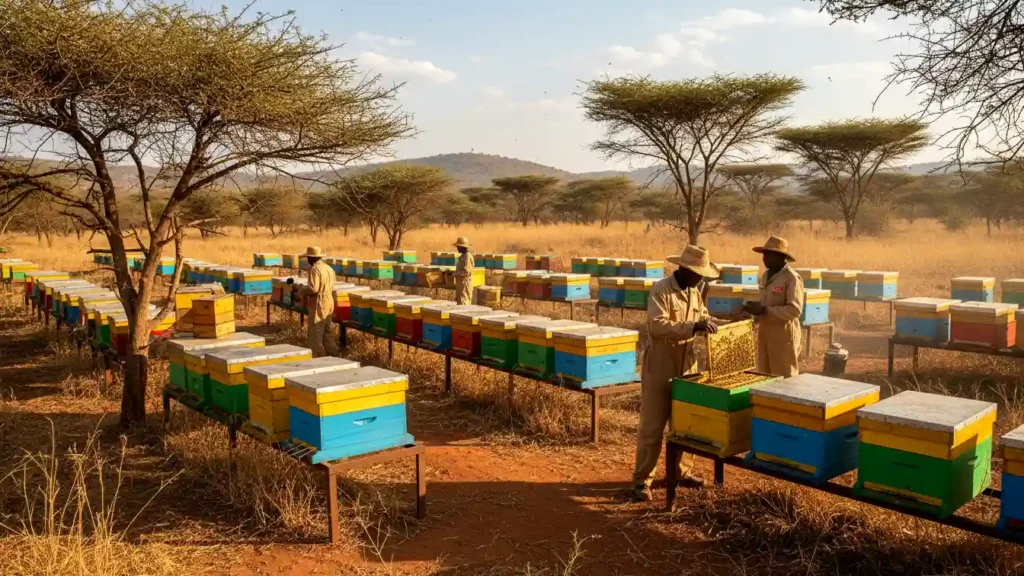
The most productive counties for honey volume are currently Baringo, West Pokot, and Kitui due to vast indigenous vegetation and high temperatures. However, Meru, Nyeri, and Kiambu offer high-value opportunities for pollination services integrated with macadamia and avocado farming. Coastal regions like Kilifi produce distinct mangrove honey, though humidity management is critical there.
Module A: Regional Comparative Analysis
Choosing the right location is 80% of the battle in apiculture. Kenya’s diverse ecology creates distinct “honey zones” with varying flavor profiles and management requirements. Here is a deep dive into three distinct zones for 2026.
1. The Arid Belt: Kitui & Makueni
Kitui remains the undisputed capital of traditional Kenyan honey, but commercialization is rapidly modernizing the sector. The climate here is hot and dry, dominated by Acacia and Commiphora species, which produce clear, slow-crystallizing honey. The primary challenge here is water availability; farmers must provide reliable water stations for bees within 500 meters of the apiary.
In 2026, land prices in Kitui are still relatively affordable compared to the highlands, allowing for massive scaling. A farmer here should focus on Langstroth hives with proper ventilation modifications to prevent melting combs. The yield per hive is generally higher here due to the prolonged blooming periods of indigenous trees.
2. The Rift Valley Hub: Baringo & West Pokot
Baringo has a deep cultural history of beekeeping, but the region is transitioning from “honey gathering” to “honey farming.” The flora is incredibly diverse, offering multi-floral honey that is rich in trace minerals. This region is ideal for organic certification because there is minimal use of synthetic pesticides in the surrounding rangelands.
Read Also: Mango Farming in Kenya: Spacing, Seedlings, Yields and Profit per Acre in 2026
However, logistics can be a hurdle. Roads in interior Baringo can be impassable during the rainy season, complicating market access. Farmers in this region are increasingly forming cooperatives to aggregate produce and sell in bulk to Nairobi-based packers. Security can be a sporadic issue, so apiaries should be sited near homesteads or in secure community zones.
3. The Highland Integration: Meru & Kiambu
In Meru and Kiambu, beekeeping takes on a different financial model: pollination revenue. With the boom in export-grade Avocados and Macadamias, farmers are renting hives to orchards. The honey here is often darker, crystallizes faster (due to crops like Rape seed or Coffee), and has a robust flavor.
The challenge in these high-density agricultural zones is pesticide poisoning. Farmers must maintain strict communication with neighbors to lock hives during spraying schedules. Cold temperatures in July also require hive insulation to prevent colony loss, a cost factor not present in Kitui or Baringo.
What is the optimal monthly management schedule for a Kenyan bee farm in 2026?
Kenya’s beekeeping calendar follows the bimodal rainfall pattern: the Long Rains (March-May) and Short Rains (October-December). The primary honey flow usually occurs after the rains when flowers bloom, typically May-June and November-December. Critical famine periods (January-February and July-September) require supplementary feeding to prevent absconding.
Module B: 12-Month Farming Calendar
Success in beekeeping depends on anticipating the bees’ needs before they signal distress. This calendar is adjusted for the projected climate patterns of 2026.
January – February (Dry Season / Famine Period)
This is a critical maintenance phase. Forage is scarce, and the colony is at risk of absconding (leaving the hive).
Action: Inspect hives for Wax Moth infestation. Provide supplementary feeding using a 1:1 sugar-water ratio or growing bee-friendly flora like Sunflower or Basil. Ensure water troughs are full and clean.
Goal: Survival and maintaining colony strength.
March – April (Long Rains / Build Up)
As rains begin, vegetation regenerates. The queen increases egg-laying rates in response to incoming pollen.
Action: Stop sugar feeding as natural nectar becomes available. Perform “splitting” of strong colonies to create new hives and prevent overcrowding. Install Queen Excluders to ensure honey supers remain brood-free.
Goal: Population explosion to prepare for the nectar flow.
May – June (Main Nectar Flow / Honey Season)
The shamba is buzzing; flowers are in full bloom. Bees are working maximum hours.
Action: Add “Supers” (additional boxes) to Langstroth hives to provide space for honey storage. Minimize hive disturbances to let bees work. Monitor for swarming signs (queen cells at the bottom of frames).
Goal: Maximizing honey storage.
July – September (Cold Season / Minor Harvest)
In the Highlands, this is the cold season.
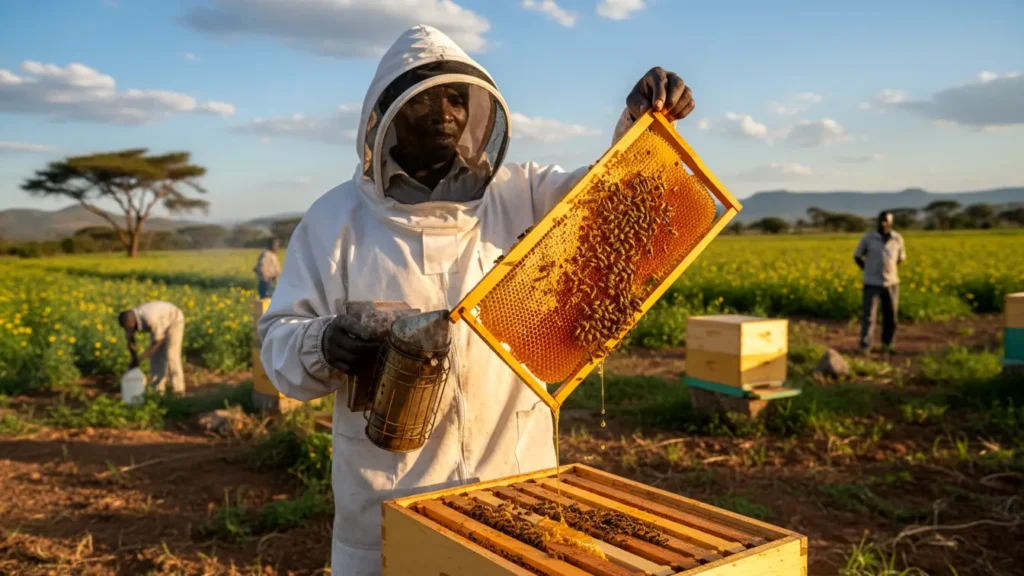
Action: Harvest the first crop of honey (May/June flow). Reduce hive entrances to help bees maintain internal temperature and defend against robber bees. Insulate hives in high-altitude areas like Limuru or Nyeri.
Goal: Harvest and winterization (temperature management).
October – November (Short Rains / Second Build Up)
Similar to March, the short rains trigger a second bloom.
Action: Inspect for pests like the Small Hive Beetle. Re-queen colonies that performed poorly during the first season. Check vegetation availability; plant fast-blooming creepers if necessary.
Goal: Preparation for the December harvest.
December (The “Christmas” Harvest)
The major harvest season for most of Kenya, especially in ASAL regions.
Action: Harvest ripe (capped) honey. Process beeswax immediately to prevent moth damage. Market products for the festive season when demand is highest.
Goal: Revenue generation and sales.
How much capital is required to start a 10-hive apiary and when is the break-even point?
Starting a 10-hive commercial unit using modern Langstroth hives in 2026 requires an investment of approximately KES 130,000 to KES 160,000. This covers hives, protective gear, a basic centrifuge, and installation. A well-managed apiary can break even by the second major harvest (Month 12-14), with net profits stabilizing around KES 200,000+ annually thereafter.
Module C: Deep-Dive Financials
Below is a realistic budget for a beginner setting up a semi-commercial unit. We assume the use of Langstroth Hives because they offer 3x the yield of traditional log hives and allow for easier inspection without destroying the brood.
Read Also: Maize Farming in Kenya: High Yield Production Guide, Best Practices and Profit Tips 2026
“The mistake most beginners make is buying cheap, uncured wood hives. These warp in the sun, creating gaps that allow pests to enter. Always buy hives made from seasoned Cypress or Pine.”
Cost Breakdown: 10-Hive Apiary (2026 Estimates)
| Item Category | Specific Item | Unit Cost (KES) | Quantity | Total Cost (KES) |
|---|---|---|---|---|
| Housing | Complete Langstroth Hive (3 boxes, frames, lid) | 6,500 | 10 | 65,000 |
| Housing | Metal Hive Stands (Ant-proof) | 1,200 | 10 | 12,000 |
| Livestock | Colony Catching / Starter Nucs | 2,500 | 10 | 25,000 |
| Gear | Full Bee Suit (Heavy Duty) & Gloves | 4,500 | 2 | 9,000 |
| Tools | Smoker (Stainless Steel) | 2,500 | 1 | 2,500 |
| Tools | Hive Tool & Bee Brush | 1,000 | 1 | 1,000 |
| Processing | Manual Centrifuge (3-Frame) | 25,000 | 1 | 25,000 |
| Misc | Misc (Wire, Wax sheets, Transport) | 10,000 | 1 | 10,000 |
| TOTAL | CAPEX | 149,500 |
Revenue Projections (Conservative)
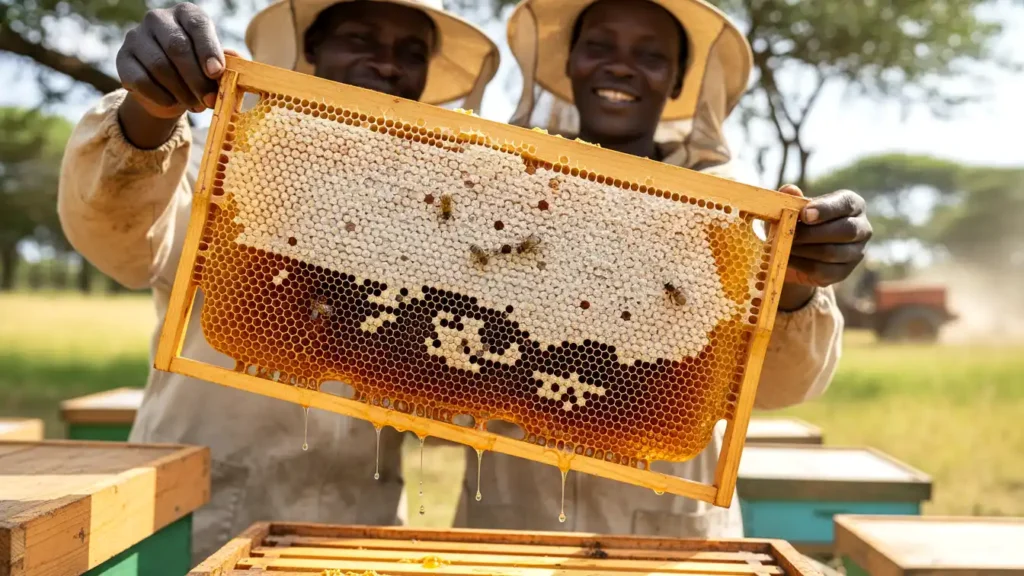
Honey: A mature Langstroth hive produces 20kg to 30kg per year (split between two harvests).
10 Hives x 25kg (avg) = 250kg Honey.
Market Price (Retail): KES 800 – 1,000 per kg.
Revenue from Honey: KES 200,000 – 250,000.
Beeswax: Often overlooked, wax sells for KES 600 – 800 per kg.
Ratio is approx 1kg wax for every 10kg honey.
25kg Wax x KES 700 = KES 17,500.
Propolis: Highly valuable medicinal resin.
Approx 200g per hive/year = 2kg total.
Price: KES 2,000/kg (Raw).
Revenue from Propolis: KES 4,000.
Total Year 2 Revenue: KES 221,500 – 271,500.
ROI: The initial capital is recovered in the first full production year. Years 3-10 are maintenance-only, yielding profit margins of 85%+.
What are the primary threats to colony health and how can they be managed effectively?
The most significant threats to Kenyan hives are the Varroa Mite, Wax Moth, and the Honey Badger. Effective management involves maintaining strong colonies that can self-police pests and using physical barriers like grease on hive legs for ants. Chemical interventions should be avoided to maintain organic certification; instead, use biological controls and regular hive inspections.
Module D: Pests, Diseases, and Predator Control
Even the best apiary can fail if pests are not managed. In Kenya, predators range from microscopic mites to large mammals. Understanding these threats is crucial for protecting your investment.
Read Also: Hass Avocado in Kenya: Price, Seedlings, Varieties & Where to Buy
1. The Wax Moth
This is the silent killer of weak colonies. The moth lays eggs in the hive, and the larvae burrow through the comb, eating wax and destroying the structure.
Prevention: Keep colonies strong, as a populous hive will kick out moths. Store empty combs in a freezer or treat them with sulphur fumes.
Warning: Never leave empty hives open in the field; they become breeding grounds.
2. The Honey Badger
Found commonly in Laikipia and Tsavo, badgers can destroy an entire apiary in one night. They are strong enough to knock over hives and rip them open.
Defense: Suspend hives from trees using wires (hanging apiary) or build sturdy metal cages around the stands. A standard fence is often insufficient against a determined badger.
3. Ants (Safari Ants)
Safari ants (Siafu) can wipe out a colony in hours by consuming the brood.
Defense: This is why metal stands are mandatory. Apply grease or old engine oil to the legs of the stand. Ensure no grass touches the hive bottom, acting as a bridge for ants.
How can farmers maximize profits through processing and value-added bee products?
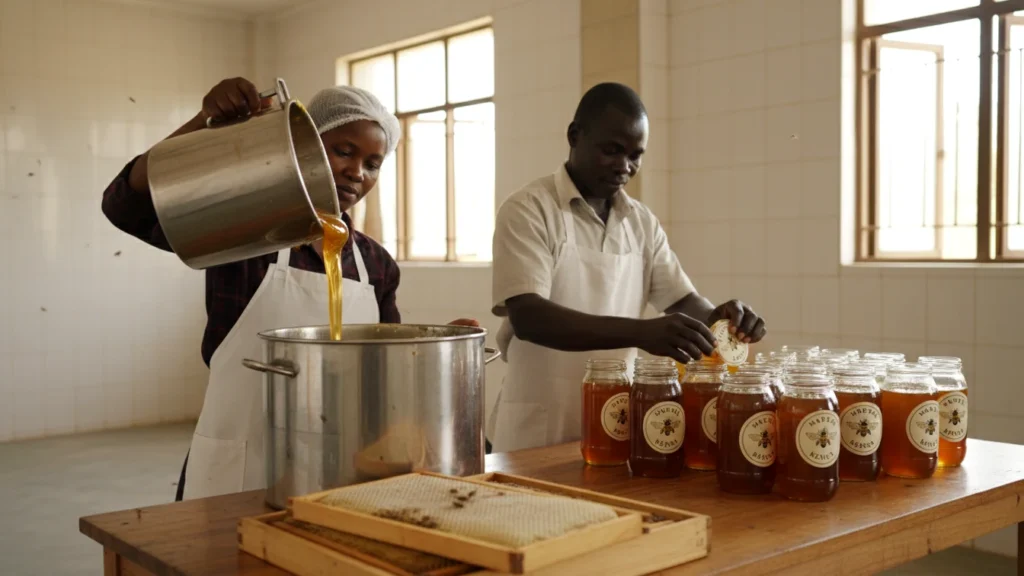
To move from a subsistence farmer to an agribusiness entrepreneur, you must process and brand. Selling raw honey in jerrycans yields the lowest margin. Packaging in standardized 500g glass jars with KEBS labels increases value by 40%. Furthermore, processing beeswax into candles, balms, or reusable food wraps can double the income per hive compared to selling raw wax.
Module E: Supply Chain & Value Addition
The “money” in beekeeping is not just in the extraction; it is in the presentation. The Kenyan consumer in 2026 is health-conscious and wary of adulterated “sugar honey.” Building trust through professional packaging is mandatory.
1. Extraction Hygiene
Honey absorbs moisture and odors. Extraction must happen in a sealed, dry room (humidity under 18%). Using a Stainless Steel Centrifuge is superior to the traditional “crushing” method because it preserves the comb, allowing bees to refill it faster. Crushing combs forces bees to consume 8kg of honey just to produce 1kg of wax to rebuild, significantly slowing your next harvest.
2. Filtration and Settling
Do not boil honey. Heating above 45°C kills the enzymes that give honey its medicinal value. Instead, use a double stainless steel sieve to remove bee legs and wax particles. Let the honey “settle” in a food-grade bucket for 48 hours so air bubbles rise to the top before bottling.
3. Packaging & Compliance
Plastic bottles are cheap but degrade the perception of quality. Glass jars are the gold standard for premium honey. To sell in supermarkets like Naivas or Carrefour, you need a KEBS (Kenya Bureau of Standards) Diamond Mark.
Tip: Start by selling to neighbors, colleagues, and local organic markets to build capital for certification.
4. The Propolis & Pollen Niche
Advanced farmers collect Propolis (bee glue). It is a powerful natural antibiotic. By dissolving raw propolis in food-grade alcohol, you create “Propolis Tincture,” which sells for KES 500 per 30ml bottle—a massive markup. Bee Pollen is another superfood, harvested using “pollen traps” at the hive entrance, popular among athletes in Nairobi.
What are the specific equipment requirements for modern beekeeping in Kenya?
Beyond the hive, the three non-negotiables are a Smoker (to calm bees), a Hive Tool (to pry open propolis-sealed frames), and a Full Bee Suit (not just a veil). Do not improvise with burning rubber or plastic in smokers; use burlap, cow dung, or dried grass. For scaling, invest in a refractometer to measure honey moisture content (must be below 20% to prevent fermentation).
When sourcing equipment, rely on established fabricators. African Beekeepers Ltd and Agri-SeedCo often stock quality hardware. For those in Central Kenya, Mugo Farmers often have local fabrication contacts.
“Important Note on Suits: Kenyan African bees (Apis mellifera scutellata) are notoriously aggressive. Ensure your suit has double-layer mesh or heavy canvas. Thin cotton suits used in Europe will not protect you against a determined Kenyan swarm.”
Where to Buy Bees in Kenya and Best Flowers to Plant for High Honey Yields
For bees, buy colonies and equipment from reputable Kenyan beekeeping companies instead of random middlemen. Trusted suppliers such as African Beekeepers Ltd, Savannah Honey Africa, Modern Bee Farmers, Urban Beekeepers, Yatta Beekeepers and Apiken sell Langstroth or Kenya Top Bar hives, starter colonies, protective gear and offer training so you begin with healthy bees and proper apiary setup.
To keep your bees productive, plant a mix of flowering trees, shrubs and crops that provide nectar and pollen almost all year. Good bee forage for Kenyan conditions includes sunflowers, kales, strawberries, clover, lucerne, calliandra, grevillea, avocado, citrus, mango and bee friendly shrubs like wild roses and hawthorn, all of which boost honey flow and support strong colonies even in dry periods.
Conclusion: The 2026 Agribusiness Outlook
As we navigate 2026, beekeeping is no longer a “retirement hobby” but a frontline defense against climate change and a pillar of rural wealth creation. With erratic rainfall patterns affecting maize and beans, the drought resilience of the honeybee offers a safety net for Kenyan farmers.
The trend is moving toward Smart Beekeeping—using sensors to monitor hive weight and humidity via smartphone apps, reducing the need for physical inspections. However, the fundamentals remain the same: respect the bee, maintain the forage, and ensure hygiene in processing.
Read Also: SunCulture Solar Water Pump Prices in Kenya 2026: Cost and Profit Guide
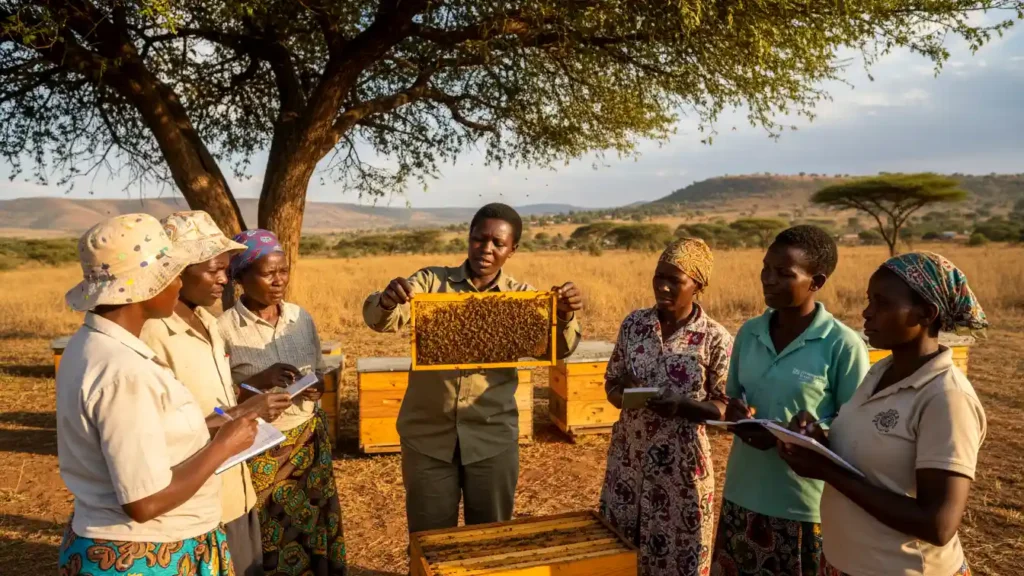
Your Action Plan: Do not start with 50 hives. Start with 3 to 5 this season. Learn the behavior of the colony. Join a local cooperative like the National Beekeeping Institute alumni groups to access bulk markets. The nectar is there; you just need to position your buckets.
“Call to Action: Visit your local KALRO center or contact Simlaw Seeds (often stock bee flora seeds) to begin your journey. Plant your bee fodder now to ensure a bumper harvest in December.”
Farmers Also Ask FAQ
How much land do I need for beekeeping?
You need very little land for the hives themselves—a 10-hive apiary fits in a 10m x 10m space. However, bees forage up to 3km radius. You don’t need to own the 3km; you just need to ensure the surrounding area has vegetation. You can keep bees on a small plot, provided it’s fenced off from livestock and away from public footpaths.
What is the difference between Langstroth and KTB hives?
The Langstroth is a vertical hive with rectangular frames that allow for centrifugal extraction (reusing combs). It yields more honey but is more expensive. The Kenya Top Bar (KTB) is a horizontal hive with bars (no full frames). You crush the comb to harvest, meaning you get more wax but less honey. KTB is cheaper to start but less profitable long-term for honey production.
How do I stop bees from absconding (leaving the hive)?
Absconding is usually caused by lack of food (famine), lack of water, or pests (ants/moths). To prevent it: 1) Feed sugar syrup during dry months. 2) Grease hive legs to stop ants. 3) Ensure the hive is shaded from the scorching afternoon sun. 4) Do not disturb them too often.
Is there a market for bee venom in Kenya?
Yes, but it is a niche, advanced market. Bee venom is used in apitherapy and cosmetics. Collecting it requires specialized electric collectors that stimulate bees to sting a glass plate without dying. In 2026, this is mostly done by large commercial outfits, but specialized buyers in Nairobi are beginning to source it.
How do I get a KEBS mark for my honey?
You must submit samples of your honey to KEBS laboratories for analysis (checking moisture, sucrose content, and insolubles). You also need a food hygiene certificate for your packing facility. Once your sample passes and your facility is inspected, you are issued a standardization mark permit.
Can I keep bees if I have children or livestock?
Yes, but safety is paramount. Fence off the apiary with a live fence (like Kai Apple) or wire mesh to keep cows and kids out. Place hives at least 100 meters away from the main house or cow shed. Work on the bees only in the late evening when they are calmer and fewer people are active.
What are the main diseases affecting bees in Kenya in 2026?
The main threats are Varroa Mites (parasites that weaken bees) and American Foulbrood (bacterial). Wax Moths are a pest, not a disease, but cause the most damage to stored combs. Good hive hygiene and strong colonies are the best defense. Chemical treatments should be a last resort to avoid contaminating honey.
How often should I inspect my hives?
Inspect every 2 weeks during the nectar flow season (to check for fullness and swarming) and once a month during the dry season (to check for pests). inspecting too often stresses the bees and interrupts their work. Always inspect on a sunny, calm day.
Can I make money solely from pollination services?
Yes. Farmers in Murang’a and Kiambu charge between KES 3,000 and KES 5,000 per hive per season to place hives in avocado or melon farms. This is becoming a lucrative passive income stream where the honey becomes the secondary bonus.
Where can I buy queen bees in Kenya?
You can purchase mated queen bees from KALRO Njejoro, Savannah Honey, or certified breeders listed by the National Beekeeping Institute. Introducing a new, productive queen to an old colony is the fastest way to improve a lazy or aggressive hive’s performance.