
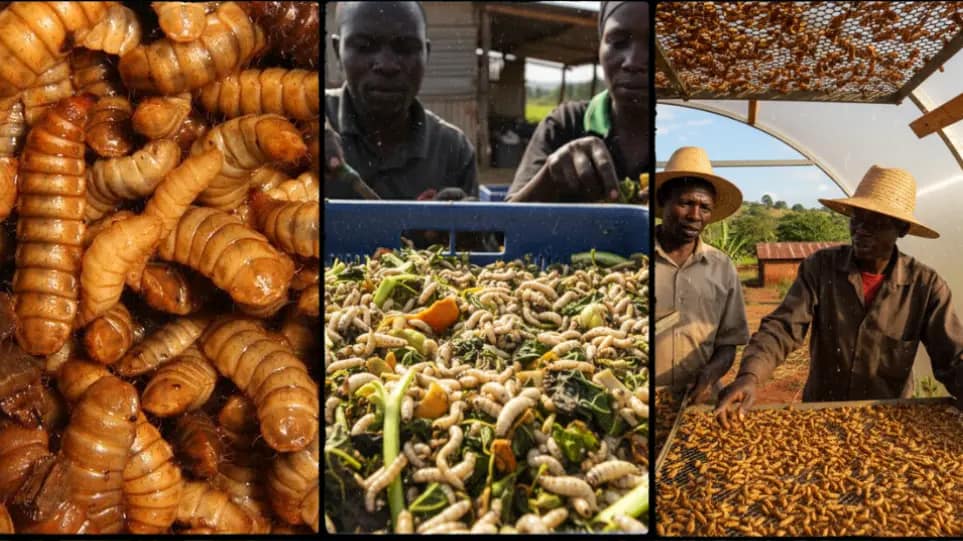

Black Soldier Fly (BSF) farming has rapidly evolved into Kenya’s most lucrative organic waste management and alternative protein business for 2026. By converting market waste into high-protein larval biomass, farmers can offset poultry and pig feed costs by half while generating a secondary income stream from organic frass fertilizer. This detailed analysis explores the financial viability and technical requirements for establishing a profitable operation in the current economic landscape.
Table of Contents
The rise of commercial insect farming in Kenya is driven by the escalating cost of traditional protein sources like Omena (silver cyprinid) and soya bean meal. With climate change impacting fish stocks in Lake Victoria, livestock farmers are desperately seeking sustainable alternatives. BSF larvae provide a solution by offering a protein content of 42% to 45% and a fat content highly beneficial for animal energy reserves.
Beyond protein, the BSF industry contributes significantly to environmental sanitation in urban centers like Nairobi and Mombasa. These ravenous larvae can reduce the mass of organic waste by up to 60% within 14 days. This bioconversion capability positions BSF farming not just as an agribusiness, but as a critical service in municipal waste management strategies.
What are the technical requirements for setting up a BSF farm in 2026?
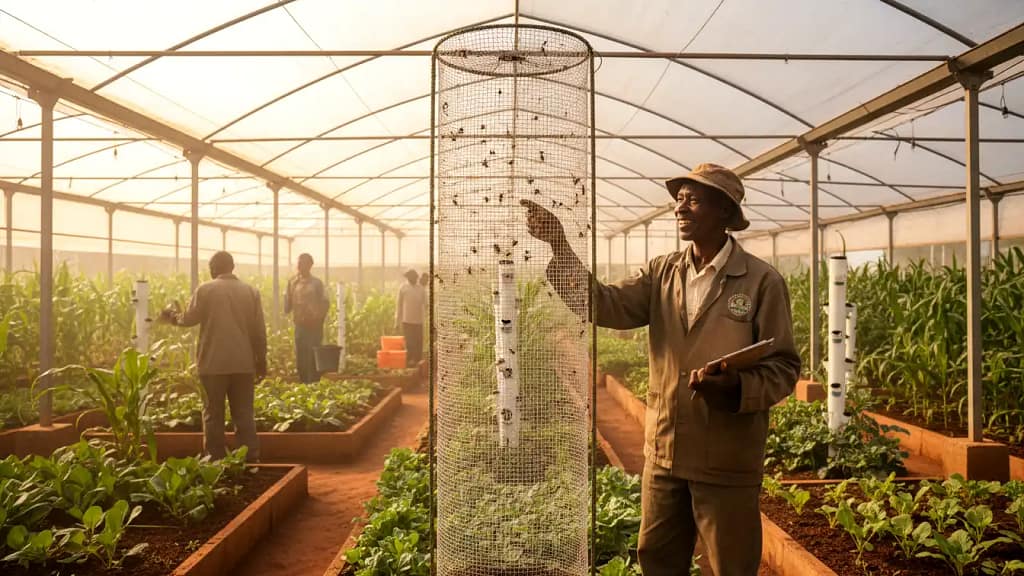
In 2026, a viable BSF unit requires a vertically oriented “Love Cage” for breeding, maintaining temperatures between 27°C and 30°C with 70% humidity. You need distinct zones for incubation (hatching), larval feeding (bioconversion), and prepupal migration, supported by a consistent supply of nitrogen-rich organic waste like fruit peelings or market leftovers.
To succeed in Black Soldier Fly farming, understanding the insect’s biology is more critical than expensive infrastructure. The primary focus for Kenyan farmers must be the genetic vitality of the starter colony. In 2026, domesticated strains from research bodies like ICIPE (International Centre of Insect Physiology and Ecology) outperform wild-caught specimens, offering 20% faster growth rates and higher egg output.
The “Love Cage” is the heart of your operation, where adult flies mate and lay eggs. Unlike houseflies, adult BSF do not eat; they only drink water and live for about 5-8 days solely to reproduce. Farmers in cooler regions like Limuru or Kericho must install solar heating or greenhouse cladding to maintain the critical mating temperature of 27°C, otherwise, egg production stalls.
Read Also: Azolla Farming in Kenya: Cheap Animal Feed and Higher Profits in 2026
Larval housing has shifted from concrete pits to stackable crate systems in 2026. Using perforated plastic crates allows for better aeration and vertical farming, maximizing production per square meter. This method reduces the footprint required for a commercial unit, allowing urban farmers in places like Ruiru to produce tons of larvae on a small 50×100 plot.
Environmental Control Systems
Temperature regulation is the single biggest determinant of success in Kenya’s central highlands. While coastal areas enjoy natural warmth, farmers in Nyeri or Meru must invest in passive solar heating systems. A simple double-layer greenhouse plastic can trap sufficient heat during the day to keep the colony active through the cooler nights.
Humidity control is equally vital, specifically for the hatching phase. Eggs require 70% relative humidity to hatch successfully; if the air is too dry, the eggs desiccate and fail. Many successful farmers use automated misting systems or simple manual knapsack sprayers to keep the “Love Cage” environment moist but not wet.
Lighting plays a surprising role in the mating ritual of the Black Soldier Fly. Adults rely on natural sunlight spectrums to trigger mating behavior. If operating indoors or in heavily shaded areas, farmers must install specialized LED lights that mimic natural sunlight to stimulate the flies.
How does the BSF lifecycle impact production schedules?
The BSF lifecycle spans approximately 45 days, divided into egg (4 days), larva (14-18 days), pupa (14 days), and adult (5-8 days). Production schedules are dictated by the larval stage, where biomass increases 5,000-fold, requiring farmers to harvest larvae at the “cream stage” (Day 16-18) before they turn into prepupae and develop a tough, indigestible exoskeleton.
Efficient management of the lifecycle distinguishes profitable agribusinesses from hobbyists. The critical window is the 14-day larval feeding frenzy where the insects consume organic waste. In 2026, smart farmers stagger their batch cycles so that a new crate is harvested every single day, ensuring a consistent supply of protein for their livestock or customers.
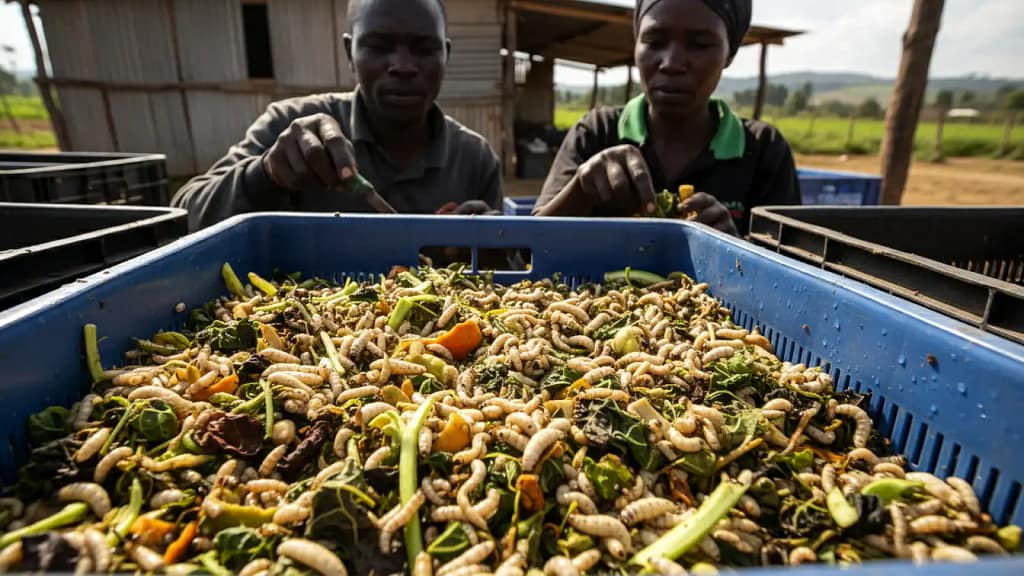
Feeding protocols have also been refined over the last few years. Research shows that feeding larvae on a homogenized “smoothie” of waste—crushed market vegetables mixed with brewery waste—accelerates growth compared to whole vegetables. This pre-processing step reduces the time to harvest by up to 3 days, significantly increasing annual turnover.
Read Also: How to Grow Clover Seed for High-Quality Livestock Fodder in Kenya (2026 Guide)
Timing the harvest is vital for nutritional value. You must harvest “cream” larvae just before they darken into prepupae. Once they turn black (prepupa stage), they stop eating and use stored energy to metamorphose, which reduces their protein content and makes them harder for chickens and fish to digest due to increased chitin levels.
The Four Stages of Management
1. Egg Collection (Days 1-4): Farmers place “eggies”—stacks of wood or cardboard flutes—inside the Love Cage. Females lay eggs in the crevices, which are collected daily to prevent hatching in the cage. These eggs are moved to a dedicated nursery container with high-quality starter feed like wheat bran.
2. Larval Fattening (Days 5-18): This is the biomass explosion phase where waste processing occurs. Young larvae are transferred from the nursery to larger crates filled with organic waste. They are voracious eaters, churning the substrate and generating significant metabolic heat.
3. Prepupal Migration (Days 19-25): As larvae mature, they darken and seek dry, dark places to pupate. In self-harvesting systems, ramps allow these “blacks” to crawl out of the wet waste into collection buckets automatically. This natural instinct saves labor costs associated with manual sieving.
Where to Buy Black Soldier Fly (BSF) Farming Inputs in Kenya
For verified 2026 genetics, purchase starter kits and eggs from ICIPE, Jomo Kenyatta University of Agriculture and Technology (JKUAT), or certified private breeders like Insectipro. Avoid buying wild-caught larvae from unverified roadside sellers, as these often carry pathogens or possess inferior genetic traits that result in slow colony expansion.
Sourcing quality inputs is the foundation of a disease-free colony. In 2026, the market has formalized, with digital platforms like Digifarm and Mkulima Young listing certified BSF breeders. However, direct procurement from established institutions ensures you receive the “ICIPE Strain,” known for its robustness in Kenyan climates.
Top Sources for 2026
- ICIPE (Nairobi/Mbita): The gold standard for starter colonies in East Africa. They sell 5-day old larvae and eggs, but booking is often required weeks in advance due to high demand.
- Insectipro (Limuru): Africa’s largest commercial insect farm providing industrial-scale starter kits. They also offer comprehensive training manuals and site visits for new farmers.
- Zihanga Limited: A reputable supplier known for supplying ready-to-lay pupae. They specialize in modular cage systems suitable for smallholder farmers in urban settings.
- JKUAT Enterprises (Juja): The university offers training and starter kits. Their strain is well-adapted to the local central Kenya climate and is competitively priced.
Buyer’s Caution Verification List
When purchasing your initial stock, you must perform a visual inspection to avoid scams. Healthy larvae should be active, creamy-white, and dry to the touch, not wet or slimy. A putrid, rotting smell indicates anaerobic bacteria or housefly contamination, which can crash your new colony.
Verify egg purity carefully before payment. Pure BSF eggs are yellowish and are typically sold by the gram, with approximately 20,000 eggs per gram. Ensure the clusters are not mixed with waste or housefly eggs, which are white and oval-shaped.
“Expert Tip: Never start your colony with wild-caught flies if you aim for commercial scale. The genetic inconsistency leads to ‘crash cycles’ where the colony suddenly fails to reproduce. Invest in ICIPE-certified starter stock.”
Which Kenyan counties offer the best environment for BSF farming?
Kisumu, Mombasa, and Kilifi naturally offer the ideal warm and humid conditions (27°C-30°C) requiring zero energy costs for heating. However, Kiambu and Nairobi remain the commercial hubs due to immense volumes of organic market waste and proximity to poultry and pig farmers who are the primary buyers of the larvae.
1. Kisumu County (The Natural Hub)
Kisumu is biologically perfect for BSF farming due to its consistently high temperatures. Farmers here do not need greenhouses or artificial heating, drastically lowering CAPEX. The availability of “Omena” dust and fish offal from Lake Victoria provides a high-protein substrate that produces superior, larger larvae compared to vegetable-fed colonies.
2. Kiambu County (The Commercial Hub)
While Kiambu is cooler and requires greenhouse structures for breeding, it dominates in market potential. It is the center of Kenya’s pig and poultry industry. The sheer volume of organic waste generated in markets like Githurai and Wangige ensures free or cheap substrate is always available, offsetting the heating costs.
3. Nairobi County (The Urban Farming Leader)
Nairobi caters to the urban waste management niche. Space is a constraint, so farmers here utilize vertical crate systems. The proximity to high-end pet food markets (selling dried larvae for aquarium fish and dogs) and organic fertilizer buyers creates a high-value niche market that rural counties often lack.
4. Machakos & Kajiado (The Emerging Frontiers)
These semi-arid counties are seeing a rise in BSF farming due to the abundance of affordable land. The warm daytime temperatures are beneficial, though night temperatures can drop significantly. Farmers here typically use semi-permanent structures and focus on supplying the growing aquaculture sectors in neighboring counties.
What does a 12-month BSF production calendar look like?
BSF farming is a continuous, year-round cycle not bound by rain seasons. However, production peaks during warmer months (Jan-Mar, Oct-Dec) when breeding is most active. In cooler months (June-July), supplemental heating is mandatory to prevent colony collapse, and hatching times may extend by 3-5 days.
Read Also: 10 Most Profitable Farming Ventures in Kenya for 2026
A successful farm operates on a staggered daily cycle rather than seasonal batches. In 2026, climate control allows for flat-line production, but farmers must anticipate external factors like waste availability during rainy seasons when transport becomes difficult.
Quarter 1 (Jan – Mar): Peak Production
Temperatures are high; breeding is aggressive. This is the time to maximize egg collection and dry surplus larvae for storage. Waste from mango and avocado seasons provides high-sugar substrates that boost larval energy levels.
Quarter 2 (Apr – Jun): Maintenance & Heating Prep
As the long rains begin, humidity rises. Watch out for mold in the substrate. By June, temperatures drop in the highlands. Install heat lamps or composite heaps inside the greenhouse to maintain ambient temperature above 25°C.
Quarter 3 (Jul – Sep): The Cold Challenge
July is the hardest month for BSF in central Kenya. Metabolism slows down. Feeding rates drop. Farmers should increase the density of larvae in crates to generate metabolic heat. Focus on selling stored dried larvae from Q1 rather than expecting rapid fresh growth.
Quarter 4 (Oct – Dec): Market Rush
Short rains bring fresh vegetation waste. Poultry demand peaks for the December holidays. Ramp up production in October to have mature larvae ready for fattening chickens and pigs for the Christmas market.
What are the startup costs and profit margins for BSF in 2026?
A commercial BSF unit processing 1 ton of waste daily requires a CAPEX of roughly KES 150,000 – 250,000. This covers a greenhouse structure, 500+ crates, shredder, and starter colony. Operational costs are low, primarily labor and transport. Break-even typically occurs at month 5-6, with net margins averaging KES 80,000+ monthly for optimized units.
The financial beauty of BSF lies in the dual revenue stream: selling larvae as protein feed and selling the residue (frass) as high-grade organic fertilizer. In 2026, the cost of commercial soya and fishmeal has risen, making BSF larvae (at KES 80-100/kg fresh) a highly attractive alternative for farmers.
Detailed 2026 Financial Snapshot (SME Level)
This breakdown assumes a standard commercial unit situated on a 50×100 plot, capable of processing approximately 1 ton of wet waste per day.
| Cost Item | Estimated Cost (KES) | Notes |
|---|---|---|
| Housing (Greenhouse 8m x 15m) | 80,000 – 120,000 | Includes timber, UV plastic, shelves. |
| Breeding Cages & Crates | 40,000 | 5 Love cages, 200 plastic crates. |
| Equipment (Shredder/Scales) | 35,000 | Essential for processing waste. |
| Starter Stock (Eggs/Pupae) | 15,000 | Sufficient for rapid multiplication. |
| Protective Gear (PPE) | 5,000 | Gumboots, gloves, masks. |
| Licensing & Permits | 10,000 | NEMA/County waste handling permits. |
| Total Startup Capital | ~225,000 | One-off investment |
Monthly Profit & Loss Projection
Revenue Streams:
- Fresh Larvae Sales: 800kg @ KES 90/kg = KES 72,000
- Frass Fertilizer Sales: 400kg @ KES 30/kg = KES 12,000
- Starter Colony Sales: Selling eggs/pupae to new farmers = KES 10,000
- Total Monthly Revenue: KES 94,000
Operational Expenses (OpEx):
- Labor (1 Casual): KES 12,000
- Waste Transport: KES 10,000
- Packaging & Marketing: KES 5,000
- Utilities (Water/Power): KES 3,000
- Total Monthly OpEx: KES 30,000
Net Monthly Profit: KES 64,000
“Note: These figures assume free waste sourcing from markets (only paying transport). If you must buy waste, margins shrink. Profitability increases significantly if you use the larvae to feed your own animals rather than selling them.“
How can farmers add value to BSF larvae for higher returns?
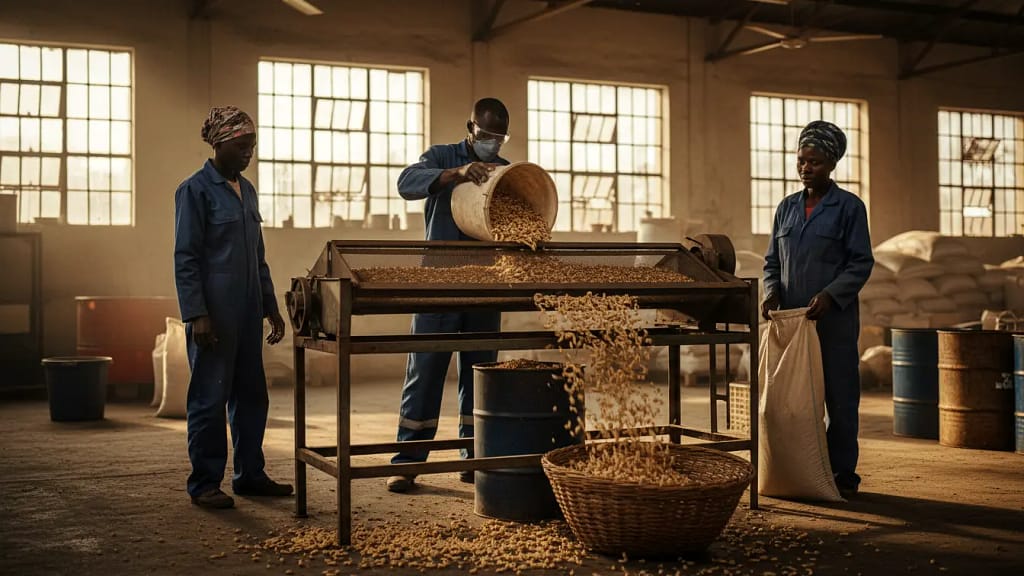
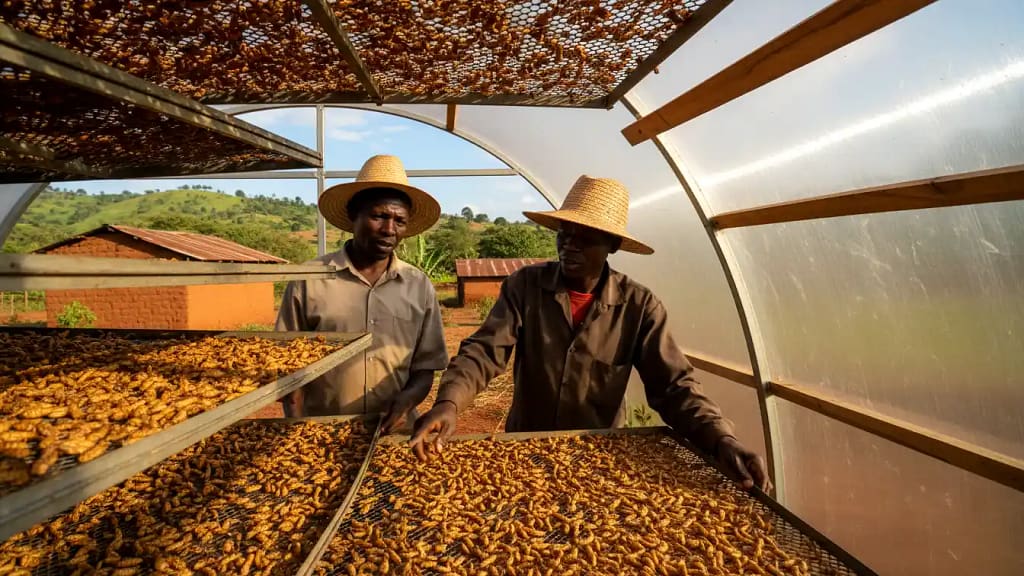
Value addition involves drying larvae to extend shelf life and increase protein concentration to 40-50%. Using a solar dryer or roasting equipment converts perishable fresh larvae into a product that sells for KES 200 – 300 per kg. Additionally, packaging sifted frass in branded 50kg bags creates a premium organic fertilizer product.
Read Also: Poultry Farming in Kenya 2026: Complete Guide to Profitable Improved Kienyeji Chicken
Raw, fresh larvae have a shelf life of only a few days and must be fed immediately. To access distant markets or stock feed shops, farmers in 2026 are turning to drying technologies. Solar drying is the most cost-effective method for SMEs, utilizing Kenya’s abundant sun to reduce moisture content to below 10% without fuel costs.
Dried Larvae (Maguguma): This product competes directly with Omena (silver cyprinid). With Omena prices volatile and often exceeding KES 300/kg, dried BSF offers a stable, pathogen-free alternative. It is easy to transport via courier services like Wells Fargo or matatu parcels to farmers in remote areas.
The “Frass” Fertilizer Opportunity
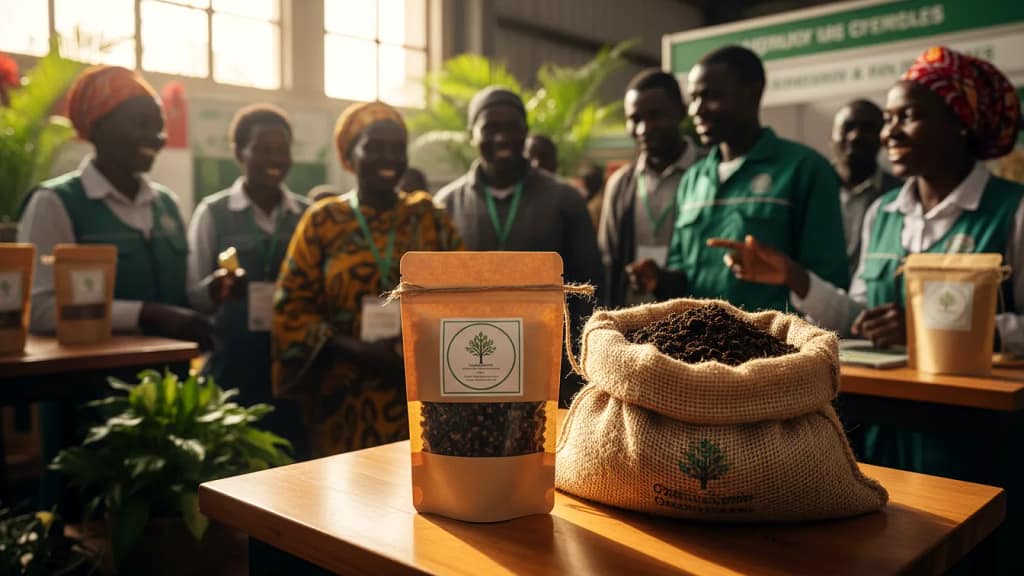
Often overlooked, the residue left after larvae feed is a potent organic fertilizer rich in chitin. Chitin triggers plant immune systems, making crops more resistant to pests and diseases. Packaging this as “Insect Frass Organic Fertilizer” and selling it to horticultural farmers growing export crops (avocados, french beans) provides a steady income that covers most operational costs.
Advanced processing involves pelletizing the frass for easier application. Pelletized frass releases nutrients slowly into the soil, preventing leaching. This product fetches a premium price in agro-vet shops compared to raw manure, often selling for KES 50 per kg or more.
What are the regulatory and challenges facing BSF farmers?
The main challenges in 2026 include inconsistent waste supply, pest infestations (mites), and strict NEMA regulations on waste handling. Compliance with KEBS standards for animal feed safety is mandatory for commercial sellers, requiring regular lab testing for heavy metals and pathogens to ensure the larvae are safe for food chain entry.
Securing a consistent supply of waste is the Achilles’ heel of many BSF projects. Relying solely on one market can be risky if the municipality closes it for cleaning or strikes occur. Successful farmers diversify their sources, establishing contracts with hotels, schools, and breweries to ensure a steady influx of substrate.
Pest management is another technical hurdle. Predatory mites can infest the colony, competing for food and irritating the adult flies. Implementing strict hygiene protocols, such as sterilizing crates between batches and maintaining proper humidity, is essential to prevent mite outbreaks that can decimate production.
Regulatory Compliance
The National Environment Management Authority (NEMA) requires waste management licenses for facilities transporting and processing organic waste. Operating without this can lead to heavy fines. Furthermore, the Kenya Bureau of Standards (KEBS) has developed standards for insect-based animal feed, requiring producers to maintain hygiene standards comparable to food processing plants.
Why is BSF farming considered the future of Kenyan agribusiness?
BSF farming addresses three critical 2026 challenges: rising animal feed costs, urban waste management, and soil degradation. It promotes a Circular Economy where waste becomes food. With the government pushing for sustainable agriculture and KEBS standards now regulating insect feed, the sector has moved from experimental to essential.
As we navigate 2026, Black Soldier Fly farming has solidified its place as a cornerstone of sustainable livestock production in Kenya. It is no longer an experiment; it is a necessity for any farmer looking to survive the high costs of commercial feeds. The integration of BSF into poultry and pig value chains is deepening, with large millers now beginning to accept insect protein as a standard ingredient.
Read Also: Improved Kienyeji Chicken Farming in Kenya 2026: Complete Guide to Breeds, Housing, Feeding and Profits
For the beginner, the barrier to entry remains low, but the technical learning curve is steep. Success requires treating the fly not as a pest, but as high-performance livestock. The farmers who will win in 2026 are those who secure reliable waste streams and master the climate control of their “Love Cages.”
Ready to Start Your BSF Journey?
Don’t gamble with your capital. Start small, secure ICIPE-certified genetics, and build your colony before expanding. Connect with a local mentor today!
Farmers Also Ask (FAQ)
1. Can Black Soldier Flies transmit diseases to humans?
No. Unlike houseflies, adult BSF do not have mouthparts to regurgitate food and do not land on human food. They are non-vectors for diseases and are actually sanitary, as their larvae release enzymes that suppress bacteria like Salmonella in the waste.
2. How much waste do I need to produce 1kg of larvae?
On average, you need about 5kg to 8kg of organic waste to produce 1kg of fresh larvae. The efficiency depends on the quality of the waste (protein/carbohydrate mix) and temperature.
3. What is the best waste to feed BSF larvae?
Soft organic waste is best. Fruit peelings (mango, melon, papaya), brewery waste, and cooked food leftovers are excellent. Avoid high-cellulose items like dry maize stalks or grass, as larvae cannot digest them easily.
4. How do I stop houseflies from invading my BSF farm?
Ensure your unit is enclosed with fine netting. Maintain a healthy, dense BSF colony; BSF larvae release pheromones that repel houseflies. If the substrate smells like rotting garbage rather than fermentation, you are attracting houseflies—add dry sawdust to reduce moisture.
5. Can I feed BSF larvae to cows?
Generally, no. BSF is high in protein and fat, making it suitable for monogastric animals like chickens, pigs, and fish. Cows are ruminants and require fiber-based diets; high fat can disrupt their digestion.
6. How long does it take for BSF eggs to hatch?
In optimal conditions (27°C+), eggs hatch in roughly 4 days. In cooler temperatures (below 20°C), hatching can be delayed to 6-10 days, or the eggs may fail completely.
7. Is a license required for BSF farming in Kenya?
In optimal conditions (27°C+), eggs hatch in roughly 4 days. In cooler temperatures (below 20°C), hatching can be delayed to 6-10 days, or the eggs may fail completely.
7. Is a license required for BSF farming in Kenya?
For small-scale on-farm use, usually no. However, for commercial sale of larvae or fertilizer, you need a NEMA permit for waste handling and potentially a KEBS certification for the feed product to sell to agrovets.
8. Why are my BSF larvae crawling out of the crate?
This usually means the environment is unfavorable. The substrate might be too hot (composting heat), too wet (anaerobic), or they have run out of food. It is a survival instinct to migrate.
9. Can I use chicken manure as feed for larvae?
Yes, but it must be pre-treated or mixed with carbon sources like sawdust to balance the nitrogen. Ensure the manure is not from chickens recently treated with heavy antibiotics, as this can kill the larvae.
10. How do I store BSF eggs if I cannot use them immediately?
You cannot store them for long. They must hatch. If you are shipping them, they are viable for about 3-4 days in transit. Do not refrigerate them, as cold kills the embryos.
11. How much space do I need for a small commercial unit?
A 50ft x 100ft plot is sufficient for a significant commercial operation. You can even start smaller; a 20ft x 20ft room can house a vertical system producing enough larvae for a small flock of chickens.
12. What is the market price for BSF larvae in Kenya in 2026?
Fresh larvae typically sell for KES 80-100 per kg. Dried larvae fetch significantly higher prices, ranging from KES 200 to KES 350 per kg depending on quality and packaging.
