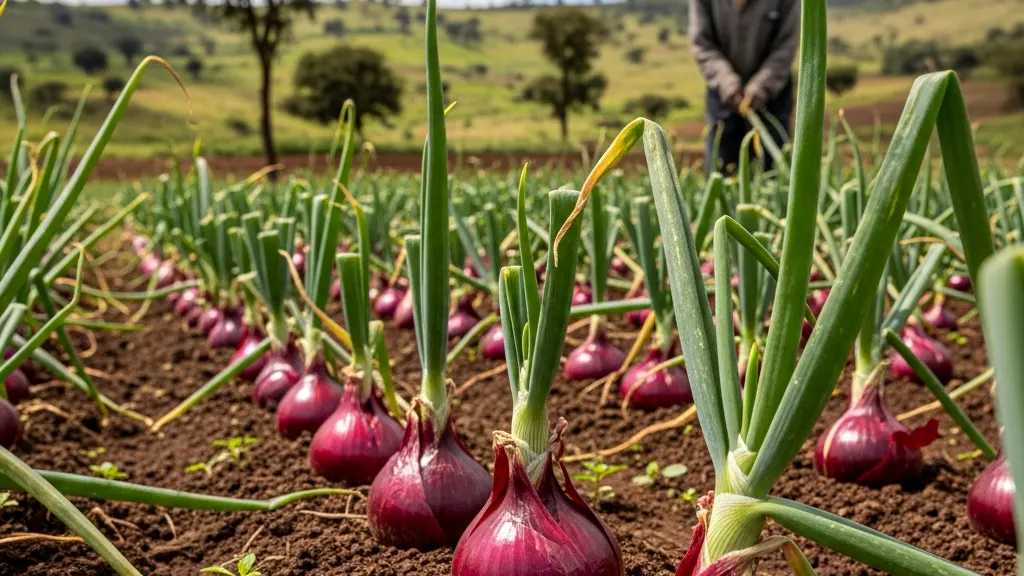

Bulb onion farming remains one of the most lucrative agribusiness ventures in Kenya. for 2026, driven by high demand in urban centers like Nairobi and Mombasa. By utilizing superior F1 hybrid seeds and modern curing techniques. farmers can achieve yields of up to 25 tonnes per acre. This guide provides a comprehensive roadmap for selecting the right varieties. managing production costs, and navigating the Kenyan market to maximize profitability.
Table of Contents
What are the best F1 onion varieties for Kenyan soil in 2026?
The top performing F1 onion varieties in Kenya for 2026 include Neptune F1, Jambar F1, and Russet F1. These hybrids are preferred for their resistance to Downy Mildew, deep red color, and extended shelf life of up to six months. Farmers in high-altitude areas also favor Red Pinoy F1 for its rapid maturity and bulb uniformity.
Selecting the correct seed variety is the single most critical decision a farmer makes before touching the soil. In 2026, the shift from Open Pollinated Varieties (OPVs) to F1 Hybrids is non-negotiable for commercial success. Hybrids offer genetic superiority that guarantees disease resistance and the ability to withstand long-distance transport without bruising.
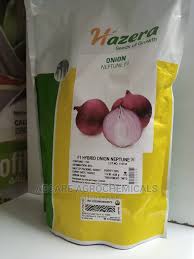
Neptune F1 has emerged as a market leader due to its exceptional curing ability. It produces medium-to-large bulbs with a deep red skin that buyers in Wakili Market and Kongowea aggressively seek. This variety matures in roughly 90 days after transplanting and boasts a strong pungent flavor. that Kenyan consumers prefer for cooking.
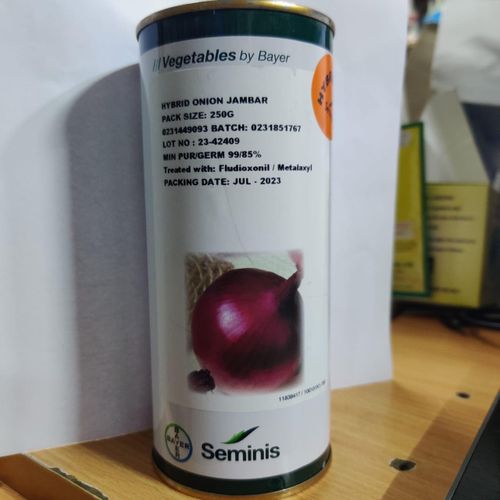
Jambar F1 is another powerhouse variety favored for its high yield potential. It performs exceptionally well in semi-arid areas like Kajiado and Rumuruti provided there is consistent drip irrigation. Jambar is known for its thick neck which requires careful curing to create a hard shell that resists rotting.
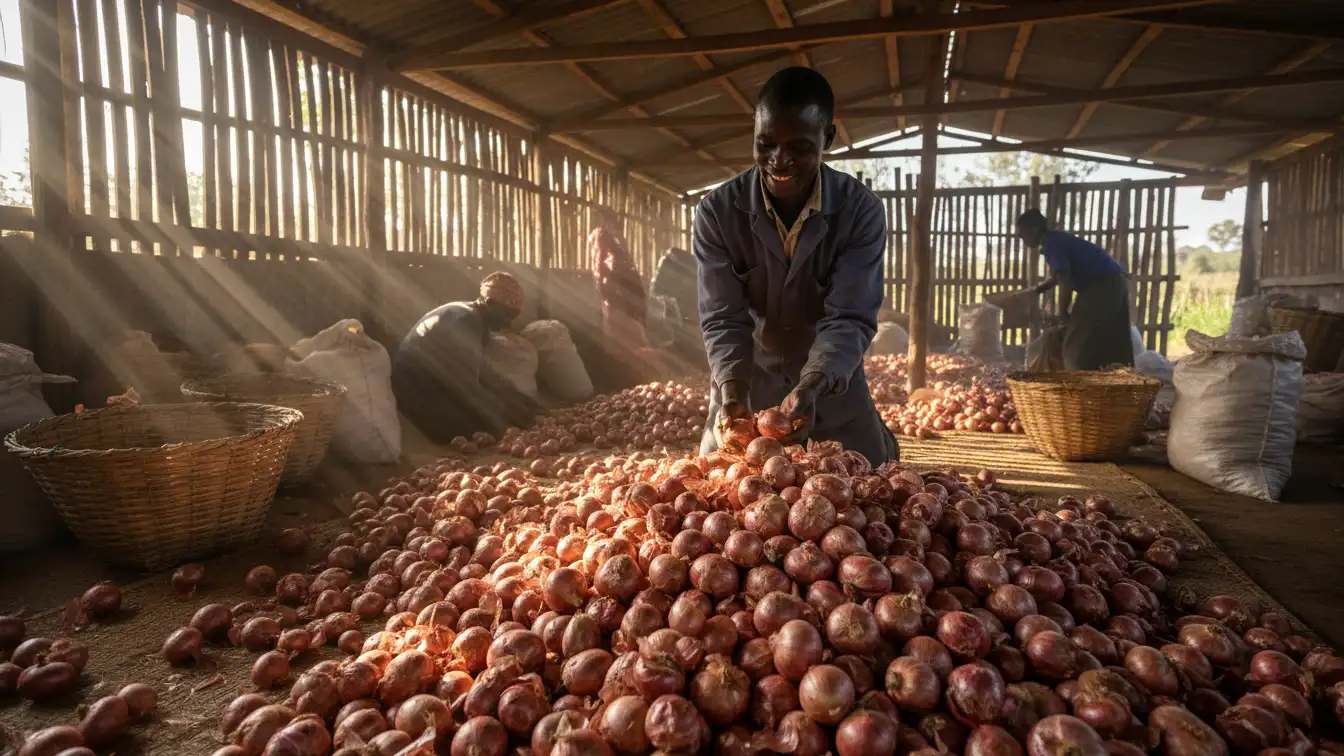
Russet F1 is gaining traction in 2026 for farmers targeting the export market or high-end supermarkets. It has a slightly darker, almost purple skin and distinct rings. While the seed cost is approximately 15% higher than standard red onions. the yield consistency justifies the investment for professional growers.
Read Also: Best Onion Varieties for the 2026 Short Rains: Red Coach vs. Neptune
Expert Tip: Never mix varieties in the same nursery bed. Different varieties have different germination rates and growth speeds. Mixing them leads to uneven transplanting sizes and complicates your fertilizer regime.
Where to Buy Bulb Onion Farming in Kenya: Best F1 Varieties in 2026 in Kenya
Farmers can purchase certified F1 onion seeds from Kenya Seed Company, Royal Seed, and Amiran Kenya. For digital convenience, platforms like Safaricom Digifarm and iShamba offer verified inputs. Government bodies like KALRO also stock certified seeds suitable for various ecological zones.
Sourcing inputs in Kenya requires vigilance due to the prevalence of counterfeit seeds in the market. In 2026, the most reliable sourcing strategy involves buying directly from the breeder’s subsidiary or a licensed super-distributor. Avoid buying loose seeds weighed in generic clear bags at local agrovets.
Official Government & Institutional Sources
KALRO remains a primary source for foundational knowledge and certified seeds. Their centers in Katumani and Thika often stock varieties that have been tested for local drought resistance. While they focus heavily on OPVs, they are increasingly stocking hybrid distributors to support modern farming.
Trusted Commercial & Online Platforms
Royal Seed is a dominant player for F1 varieties like Red Pinoy and Jambar. They have authorized stockists in every major town, including Nakuru, Eldoret, and Meru. Their packaging in 2026 features enhanced security seals that change color when tilted to verify authenticity.
Safaricom Digifarm has revolutionized input procurement. By dialing 283#, farmers can order seeds that are delivered to a local depot. This ensures a digital audit trail.
Mkulima Young and Jiji Kenya are also popular platforms. However, farmers must exercise extreme caution here. Only buy from verified sellers with visible ratings and physical shop locations.
Buyer’s Caution Checklist
Before paying for seeds, check for the KEPHIS tag on the packet. Ensure the lot number is visible and the expiry date is at least six months away. If buying seedlings, demand to see the vaccination schedule to ensure you are not importing thrips to your shamba.
How do environmental conditions in Meru, Kajiado, and Nyeri compare?
Meru offers cool, high-altitude conditions ideal for large bulb formation but requires strict fungal management. Kajiado provides hot, dry weather perfect for curing and preventing rot but necessitates heavy irrigation. Nyeri balances both but faces land fragmentation challenges.
Success in onion farming is dictated by the specific micro-climate of your region. Meru County, particularly the Timau and Buuri regions, is famous for producing massive bulbs due to the rich volcanic soil and high altitude. However, the cold mist in July makes the crop highly susceptible to Downy Mildew and Purple Blotch.
In contrast, Kajiado County has become the new frontier for large-scale onion farming in 2026. The hot, semi-arid climate creates a natural greenhouse effect that speeds up maturity. The low humidity significantly reduces fungal diseases.
Read Also: How to Start Bulb Onion Farming in Kenya: Complete 2026 Guide, Costs & Profit Per Acre
The primary cost in Kajiado is water. You cannot farm in this region without a reliable borehole and a comprehensive drip irrigation system. This infrastructure investment is mandatory for success.
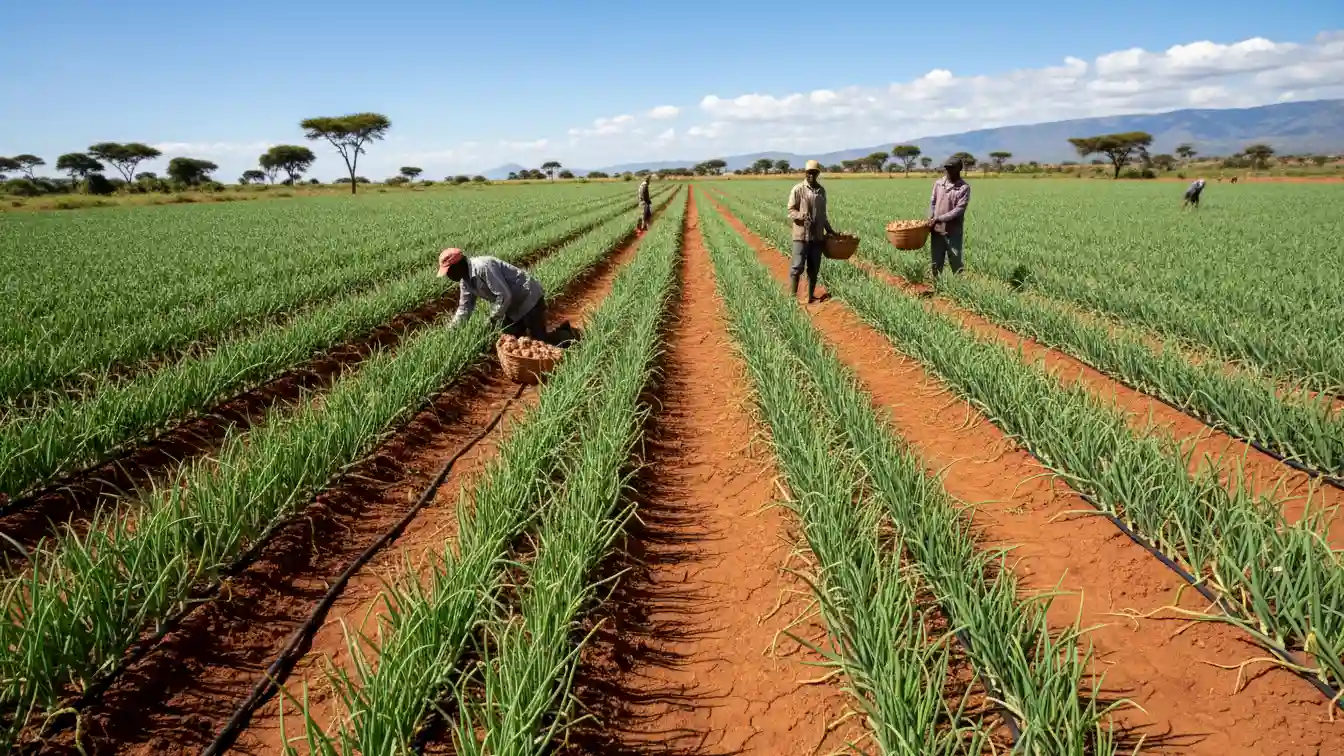
Nyeri County, specifically the Kieni West belt, is the traditional grain basket for onions. The soil is loamy and well-drained. However, land sizes are shrinking due to subdivision.
Farmers in Nyeri often form cooperatives to aggregate their produce. This allows them to negotiate better prices with Nairobi brokers compared to isolated farmers in other regions.
What is the optimal 12-month schedule for onion farming?
To maximize profits, time your harvest for months when Tanzanian imports are low, typically January to March and May to June. This requires planting your nursery in September or January. Avoid harvesting during the long rains as curing becomes impossible and post-harvest losses spike.
January through February is a prime harvesting window if you planted late the previous year. Prices are usually high because short-rain crops from competitors may have failed. If starting fresh, prepare your nursery beds using solarization to kill soil-borne pests.
March and April mark the transplanting phase for the long-rain season crop. This is risky as excessive rains can trigger fungal infections. Ensure your drainage channels are dug deep to prevent waterlogging which causes bulb rot.
Vegetative growth and bulb formation occur in May and June. Apply high-potassium fertilizers to encourage bulb expansion. Monitor for thrips aggressively during dry spells as they suck sap and stunt growth.
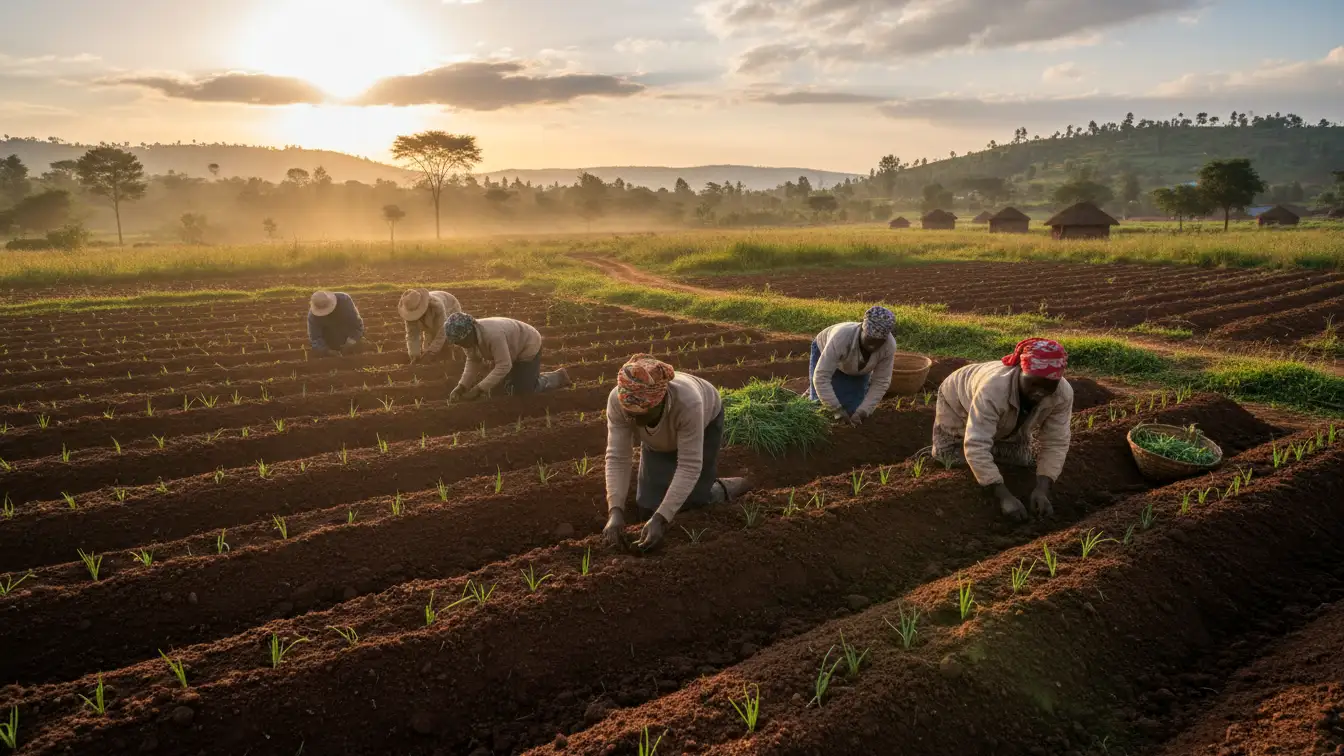
July and August are harvest times for the crop planted in March. Prices often dip here due to market flooding. Properly cured F1 onions can sit in a store for months while prices recover.
Read Also: Best Greenhouse Farming Guide in Kenya: Profits, Costs, and Beginner Mistakes to Avoid in 2026
September and October are the Gold Mine planting season. Establishing a nursery now targets the lucrative January market. Use shade nets to protect delicate seedlings from the scorching sun.
Transplanting and early growth happen in November and December. Weeding must be done meticulously as weeds compete for nutrients. Many farmers now use selective herbicides to manage weeds efficiently.
What are the projected costs and profits for one acre of onions?
Farming one acre of F1 onions in 2026 costs between KES 150,000 and KES 180,000. This covers seeds, labor, drip installation, and crop protection. With a conservative yield of 15 tonnes and an average price of KES 50/kg, revenue is KES 750,000, yielding a net profit of KES 570,000 per acre.
Financial discipline is the difference between a hobby and a business. The highest cost drivers in 2026 are hybrid seeds and labor. F1 seeds are expensive, costing up to KES 30,000 per kg, but the return on investment justifies the expense.
The table below provides a detailed breakdown of the input costs for one acre of bulb onions using drip irrigation.
| Cost Item | Description | Estimated Cost (KES) |
|---|---|---|
| Land Preparation | Ploughing, harrowing, bed making | 15,000 |
| Seeds (F1 Hybrid) | 1kg of Neptune/Jambar F1 | 28,000 |
| Nursery Management | Trays, media, labor, foliar | 10,000 |
| Fertilizers | DAP (Basal), CAN, NPK 17:17:17 | 35,000 |
| Crop Protection | Fungicides, Insecticides (Thrips control) | 30,000 |
| Labor | Transplanting, weeding (x3), harvesting | 40,000 |
| Miscellaneous | Transport, bags, contingencies | 12,000 |
| TOTAL COST | Total Production Cost | 170,000 |
Break-even Analysis: If you spend KES 170,000 and the market price crashes to KES 30/kg, you need to harvest 5.6 tonnes to break even. A well-managed acre produces 15 to 20 tonnes. This creates a massive safety margin, making onions one of the safest high-value crops to grow.
How does the onion supply chain function from farm to market?
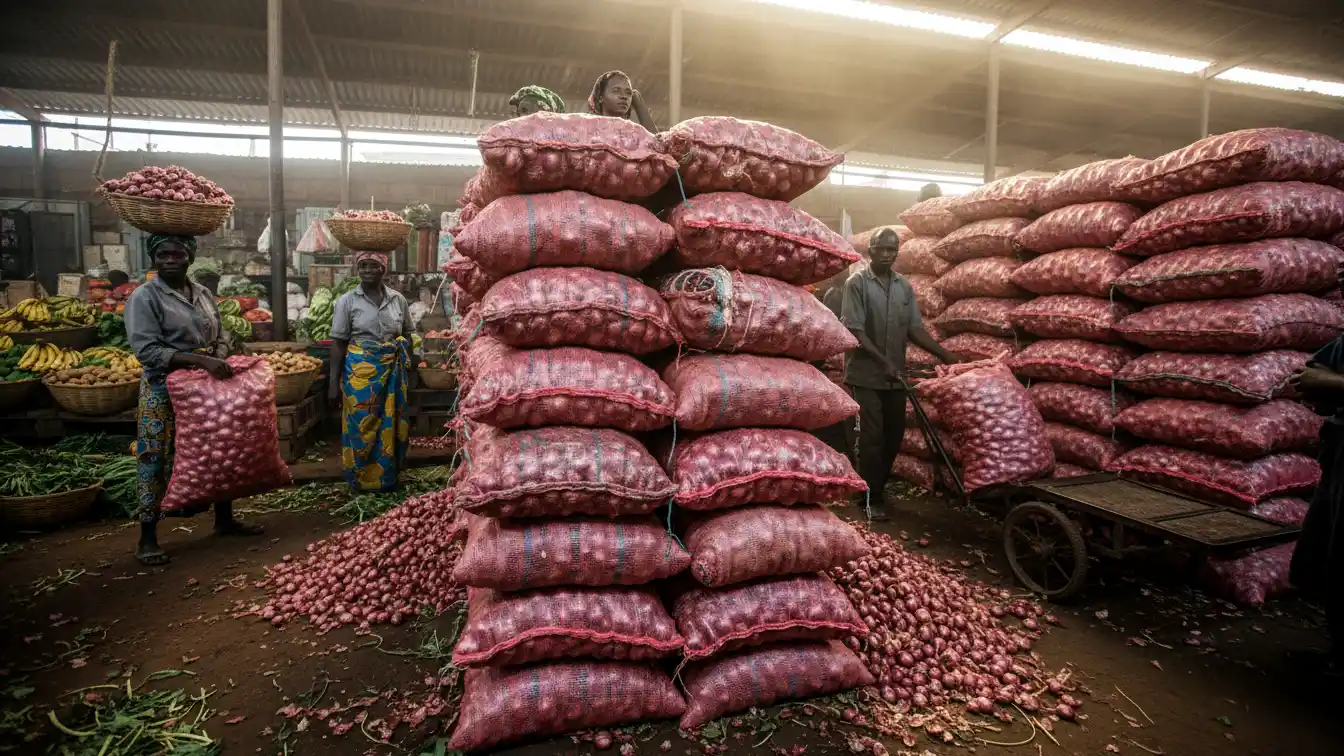
The supply chain moves from Farm Gate to Brokers and Aggregators, then to Wholesale Markets like Marikiti, and finally to Retailers. Value is added through curing, grading, and packaging in specific red net bags.
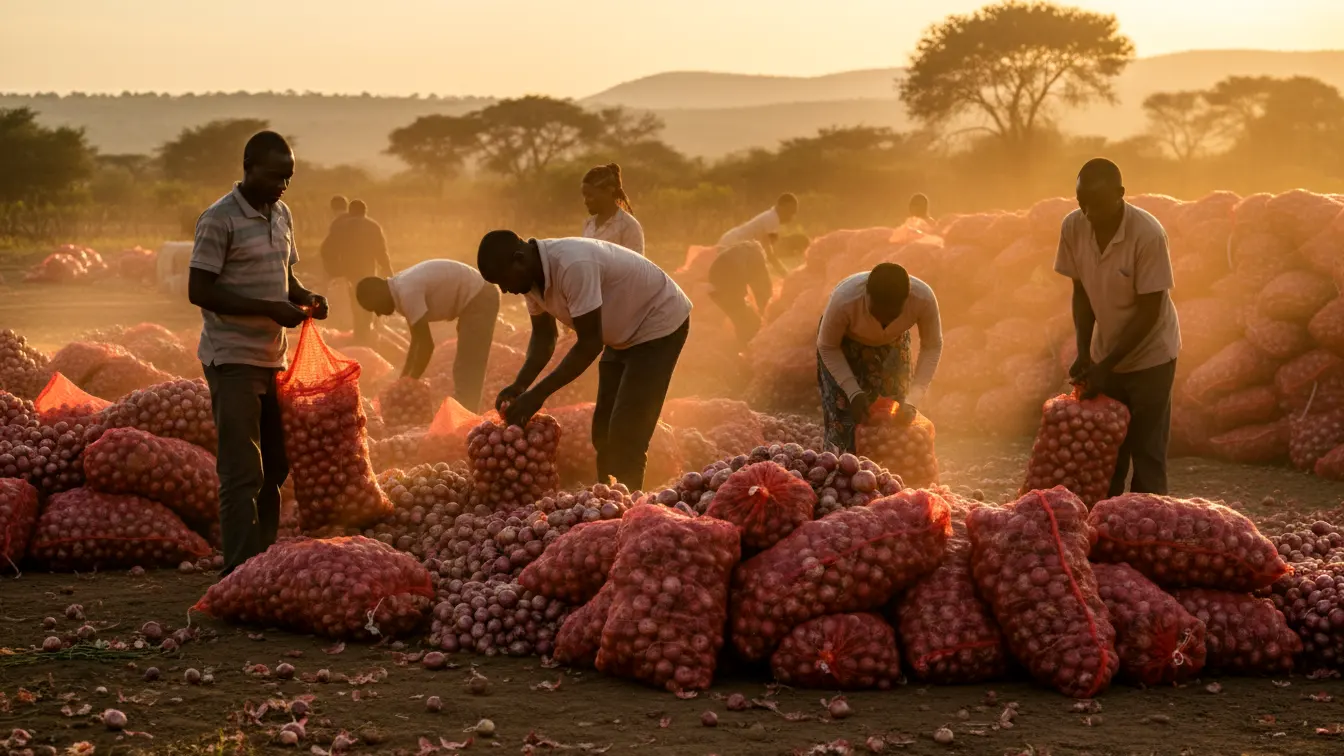
The Kenyan onion market is ruled by visual appeal. Curing is the process of drying the onion until the neck is tight and the skin is papery. Farmers who sell green onions face prices up to 40% lower.
Grading is the next step in value addition. Onions are sorted into Small, Medium, and Large categories. Most brokers demand the Medium size which fits six to eight onions per kilogram.
Read Also: How to Grow Bulb Onions in Crates: Step by Step Guide for Kenyan Farmers
Packaging has evolved significantly in recent years. The traditional 90kg gunny bag is disappearing because it damages the bulbs at the bottom. The standard now is the red net bag packed to 15kg or 20kg to allow airflow.
2026 Outlook and Conclusion
As we navigate 2026, bulb onion farming in Kenya is maturing into a highly technical and competitive sector. The days of broadcasting seeds and hoping for rain are over. The farmers who will succeed this year are those who treat their shamba like a factory.
Climate variability remains the biggest threat. However, the adoption of resilient F1 varieties like Neptune and Jambar, combined with drip irrigation, provides a robust shield against weather shocks. The demand for onions in Kenya is inelastic as people cook with them daily.
Call to Action: Do not start with five acres; start with half an acre. Master the nursery management and build a relationship with a reliable buyer. Once you have a successful harvest under your belt, scale up.
Farmers Also Ask
How many onion plants fit in one acre?
An acre can accommodate between 250,000 to 300,000 plants depending on spacing. The recommended spacing is 30cm between rows and 8-10cm between plants. High population density maximizes yield but requires disciplined fertilizer application to prevent nutrient competition.
What is the best fertilizer for onions?
Onions need a balanced diet. Start with DAP or a specialized planting fertilizer rich in phosphorus for root establishment. During vegetative growth, use CAN for leaf development. In the bulbing stage, switch to high-potassium fertilizers to increase bulb size and weight.
How do I control thrips in onions?
Thrips are the number one enemy. Use a rotation of active ingredients to prevent resistance. Alternate between Imidacloprid, Acetamiprid, and Spinetoram. Always add a sticker to your spray because onion leaves are waxy.
Can I grow onions without drip irrigation?
It is possible but risky and less profitable. Rain-fed agriculture exposes you to fungal diseases during heavy rains and stunted growth during droughts. Drip irrigation ensures the consistent moisture required for uniform bulb formation and allows for fertigation.
How long does it take for onions to mature?
F1 Hybrid onions typically mature in 90 to 120 days after transplanting. Varieties like Red Pinoy are on the shorter end, while Jambar may take slightly longer. However, you must add 2-3 weeks for proper curing after lifting them from the soil.
Why are my onions rotting in the store?
Rotting is usually caused by harvesting immature onions, incomplete curing, or storing them in a damp room with poor ventilation. Neck Rot enters through the neck if it has not dried tight. Ensure you stop watering weeks before harvest to allow the bulbs to dry down.
Is onion farming profitable in Kenya in 2026?
Yes, highly profitable. With a production cost of KES 10-12 per kg and a market selling price that averages KES 40-60 per kg, the margin is significant. A well-managed acre can net over KES 400,000 in a single season.
What is the best month to plant onions in Kenya?
To hit the high-price window, plant your nursery in September or October to harvest in January or February. Alternatively, plant in January or February to harvest in May. Avoid harvesting during heavy rains as drying becomes difficult.
How do I know my onions are ready for harvest?
Onions are physiological mature when the tops fall over. When about 70-80% of the leafy tops in your field have weakened and fallen over naturally, it is time to harvest. Do not wait for all tops to dry completely brown.
Where is the biggest market for onions in Kenya?
Nairobi consumes the bulk of onions, with Wakili and Marikiti markets being the central hubs. Mombasa’s Kongowea Market is also a massive outlet. However, many farmers in 2026 are finding success selling to institutions or aggregating for export.