
Table of Contents
Snippet Summary: Coconut farming in Kenya is a high-yield, long-term investment primarily suited for the Coastal region, offering returns from raw nuts, madafu, oil, and value-added byproducts. By 2026, demand for coconut oil and organic water has surged, making this “Tree of Life” a pillar of agribusiness stability. With proper variety selection like the East African Tall and strategic intercropping, farmers can achieve break-even within 5 years and sustain profits for decades.
The coconut tree, often revered as the “Tree of Life,” is more than just a scenic feature of the Kenyan coast; it is an industrial powerhouse waiting to be tapped. As we move through 2026, the agricultural landscape in Kenya has shifted towards crops that offer climate resilience and multiple revenue streams. Coconut farming fits this description perfectly.
Whether you are in Kilifi, Kwale, or Lamu, the potential to transform a sandy shamba into a recurring revenue engine is immense. The global shift toward plant-based diets and natural cosmetics has spiked the price of coconut derivatives. Farmers are no longer just selling nuts; they are entering a complex value chain.
Read also: 10 Most Profitable Farming Ventures in Kenya for 2026
However, many beginners fail because they treat coconut farming as a “plant and forget” venture. It requires agronomic precision, from soil testing to pest management against the Rhinoceros Beetle. This guide serves as your authoritative blueprint, moving beyond basic advice to provide financial realities and actionable strategies for the modern Kenyan farmer.
What Are the Most Profitable Coconut Varieties for Kenyan Soil in 2026?
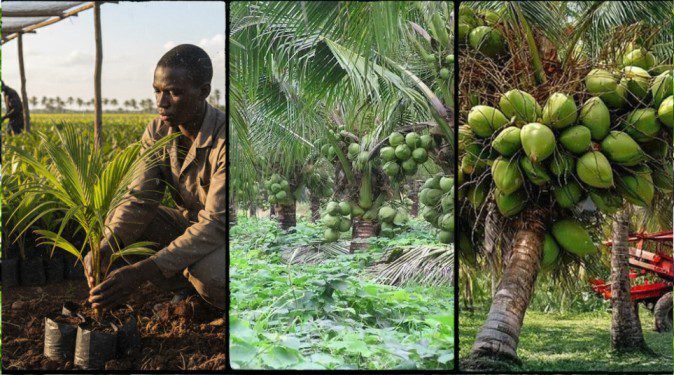
The most profitable varieties for 2026 are the East African Tall for longevity and drought resistance, and the Hybrid varieties (like PB 121) for early maturity and higher nut counts. While the Tall variety takes 5-7 years to fruit, it produces for up to 80 years. Hybrids fruit in 3-4 years but require more water and intensive care.
Selecting the right variety is the single most critical decision you will make. In Kenya, the market is historically dominated by the East African Tall (EAT). However, the landscape is changing with the aggressive introduction of hybrids by KALRO (Kenya Agricultural and Livestock Research Organization).
Your choice depends entirely on your end goal and financial timeline. Are you selling madafu (water) for quick cash flow? Or are you aiming for dry nuts for the copra and oil industry? Your strategy dictates your seed selection.
The East African Tall (EAT)
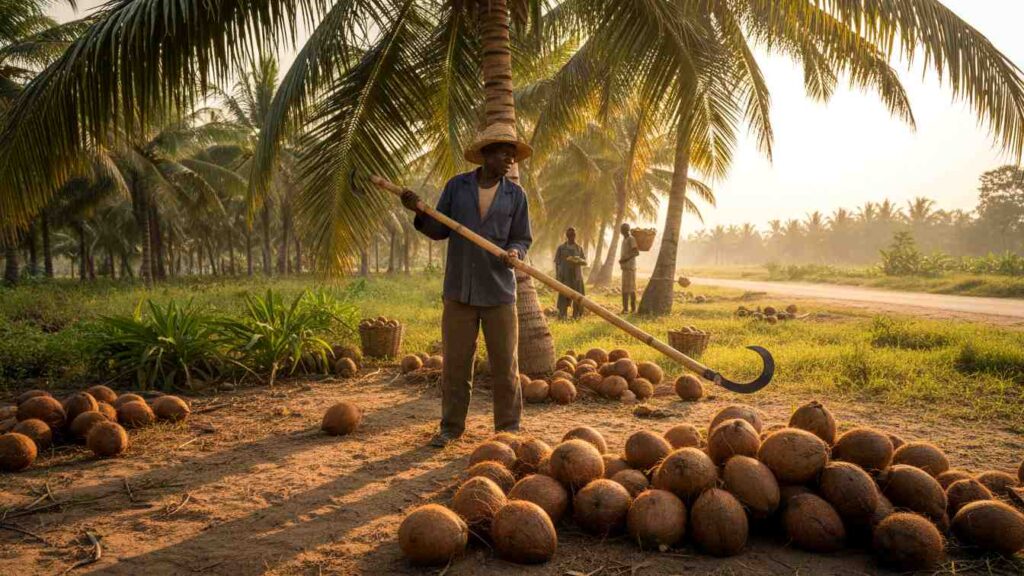
This is the heritage breed of the coast and the backbone of the industry. It is incredibly hardy, capable of withstanding the salty winds and sandy soils of Mombasa and Kilifi better than any import. It yields large nuts with thick meat (kernel), making it ideal for the oil and copra industry.
The downside is patience, as you must wait nearly seven years for the first commercial harvest. However, once established, these trees require minimal irrigation. They act as a legacy investment for future generations.
The Hybrids (Dwarfs and Crosses)
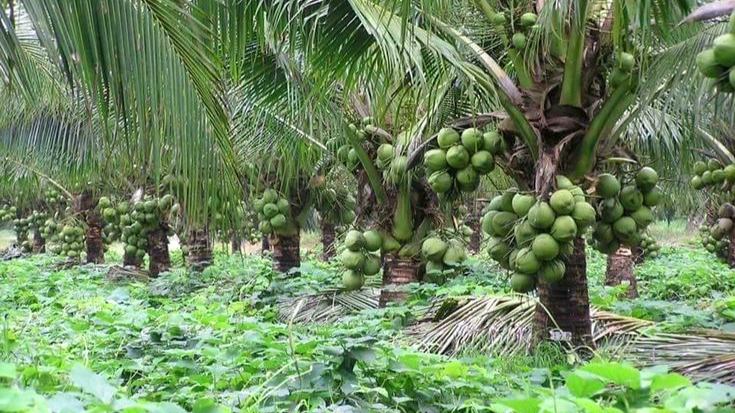
For farmers looking for a quicker return on investment, hybrids are the answer. Varieties developed or certified by KALRO Mtwapa often combine the resilience of the local tall varieties with the high yield of imported dwarfs. These trees are shorter, making harvesting safer and cheaper.
They can start flowering in as little as 36 months, drastically reducing the wait time. However, they are less tolerant of drought and low-nutrient soils. They demand a strict fertilization regime to maintain their high output.
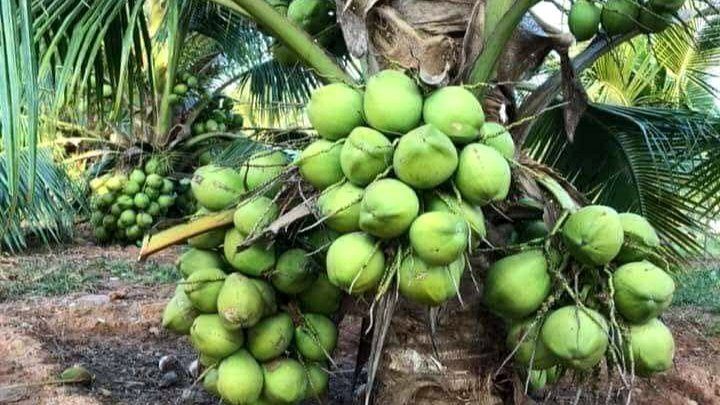
“Expert Tip: If your farm is far from a reliable water source, stick to the East African Tall. Hybrids are like high-maintenance dairy cows; if you miss watering schedules during the first three years, their growth stunts permanently.”
How Do You Prepare Your Shamba for Maximum Yield?
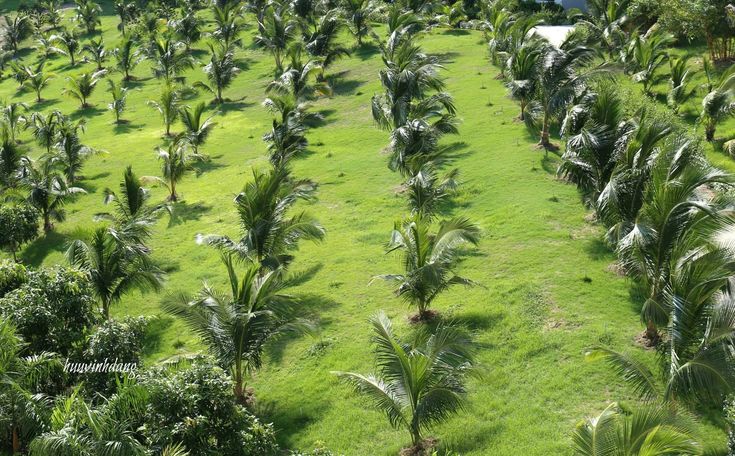
Preparation involves clearing the land and digging holes measuring 2ft x 2ft x 2ft, spaced at 9m x 9m for tall varieties to allow canopy spread. Fill holes with topsoil mixed with compost manure and a phosphate fertilizer. This spacing ensures 60-70 trees per acre, optimizing sunlight penetration and reducing fungal disease risks.
Land preparation in 2026 goes beyond just slashing bush. You must conduct a soil test to ensure the pH is between 5.5 and 7.0. Coconuts thrive in sandy loam soils that drain well; waterlogging is the silent killer of coconut roots.
The downside is patience, as you must wait nearly seven years for the first commercial harvest. However, once established, these trees require minimal irrigation. They act as a legacy investment for future generations.
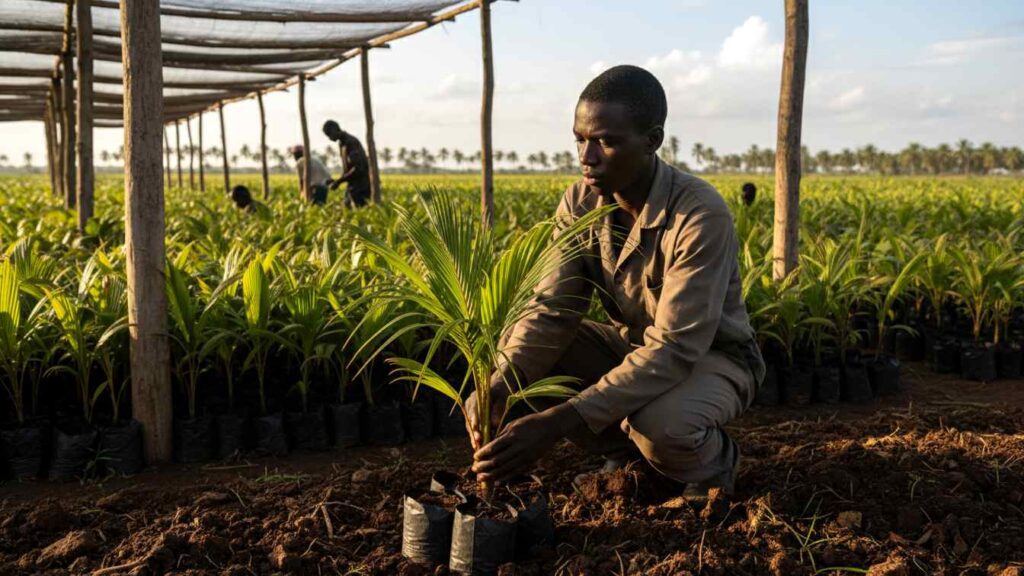
When digging your holes, carefully separate the topsoil from the subsoil. Mix the topsoil with two debes of well-decomposed manure and 200g of planting fertilizer. This creates a nutrient-rich “cradle” for the delicate seedling.
Read also: Banana Farming in Kenya: Best Varieties, Planting Guide and Profit Potential for Small Farmers
Do not bury the collar of the seedling too deep, as this can lead to rotting before establishment. Ensure the area is free of termite mounds. Termites can destroy a young plantation in weeks if not managed early.
Module A: Regional Comparative Analysis (Coastal Belt)
Coconut farming is not uniform across Kenya. While the crop is synonymous with the coast, the agronomic and market conditions vary significantly between counties. Below is a comparative analysis of the three primary coconut-producing giants: Kilifi, Kwale, and Lamu.
1. Kilifi County: The Market Hub
Kilifi is the undisputed capital of coconut farming in Kenya. The infrastructure here is superior, with better road networks connecting farms to processors like Kentaste. The presence of research institutions gives farmers an edge in knowledge.
Pros: Highest concentration of buyers; established cooperatives; access to KALRO Mtwapa for seedlings.
Cons: Land prices are higher due to tourism competition; higher labor costs due to urbanization.
2. Kwale County: The High-Yield Frontier
Kwale offers deeper, more fertile soils compared to the rocky parts of Northern Kilifi. The rainfall patterns in the Shimba Hills belt support vigorous growth without heavy irrigation. This region is becoming the new frontier for large-scale plantations.
Pros: Cheaper land acquisition costs; fertile soils leading to larger nut sizes; proximity to the Mombasa port for export.
Cons: Some interior roads are impassable during the long rains, complicating logistics.
3. Lamu County: The Premium Niche
Lamu retains a traditional farming approach. The coconuts here are often grown organically by default, fetching a premium in niche markets. The isolation helps in maintaining bio-security against certain pests.
Pros: High demand for organic certification; potential for agro-tourism integration; less pest prevalence due to isolation.
Cons: Significant logistical challenges getting produce to Mombasa/Nairobi; security concerns in border areas affecting labor availability.
Read also: Strawberry Farming in Kenya: Step‑by‑Step Guide, Costs, Best Seed Varieties and Profits in 2026
Verdict for 2026: If you want volume and quick market access, choose Kilifi. If you are an investor looking for cheap land with high long-term soil potential, choose Kwale.
What Are the Water and Fertilizer Requirements?
Adult coconut trees require 50-100 liters of water per week during dry spells. For fertilization, apply NPK (rich in Potassium/Muriate of Potash) biannually. A deficiency in Potassium leads to yellowing fronds and small, elongated nuts that lack market value. Organic mulch is mandatory to retain soil moisture.
Water is the fuel for the coconut engine. In the first year, seedlings must be watered twice a week without fail. By 2026, many smart farmers are using solar-powered drip irrigation to mitigate the erratic coastal rains.
This investment cuts mortality rates from 20% down to nearly 0%. A stressed tree will abort its flowers. Consistent moisture ensures the “button nuts” hold onto the tree until maturity.
Regarding nutrition, the coconut tree is a heavy feeder of Potassium (K). You must apply salt (agricultural salt or sodium chloride) if you are far from the sea, alongside Muriate of Potash. A common mistake is using only DAP; while good for roots, it does not support nut formation.
Module B: 12-Month Farming Calendar (Coastal Cycle)
Successful coconut farming requires adhering to a strict calendar aligned with the coastal monsoon winds and rain patterns. Farming by the season maximizes yield and minimizes cost. Here is your 2026 operational schedule.
Quarter 1: January – March (Hot & Dry)
Focus: Moisture Conservation & Pit Prep.
This is the driest period of the year. Aggressively mulch around the base of your trees using dry coconut fronds or husks (coir).
Do not burn waste on the farm, as this destroys organic matter. Start digging holes for new planting now so the soil aerates and sterilizes in the sun. If you have irrigation, maintain a steady flow to prevent nut abortion.
Quarter 2: April – June (Long Rains – Masika)
Focus: Planting & Fertilization.
This is the main planting season. Transplant seedlings immediately after the first heavy rains wet the soil deep (at least 30cm).
Apply the first round of manure and NPK fertilizers to established trees. Watch out for fungal infections like Bud Rot as humidity rises. Ensure drainage channels are open to prevent waterlogging.
Quarter 3: July – September (Cool & Dry)
Focus: Pest Control & Weeding.
The Rhinoceros Beetle is most active during this transition. Inspect the crowns of young trees weekly.
Use pheromone traps to capture adults before they breed. Clear weeds that compete for nutrients, especially ring-weeding 2 meters around the trunk. Slashing the inter-row spaces now creates mulch for the coming dry season.
Quarter 4: October – December (Short Rains – Vuli)
Focus: Secondary Planting & Harvesting.
A second planting window opens during the short rains. This is also a peak harvesting period for the end-of-year market demand.
Apply the second dose of fertilizer in late October to capitalize on the moisture. Review your annual yields and plan for the next cycle. Secure your madafu contracts for the December tourist season.
Module C: Deep-Dive Financials (2026 Projections)
Let’s talk money. Farming without math is just a hobby. The table below outlines the costs and potential revenue for one acre of coconut farming (approx. 60 trees) in Kenya, assuming a mix of selling fresh madafu and dry nuts.
Assumptions:
1. Land is owned (no lease costs included).
2. Variety is Hybrid (starting production in year 4).
3. 2026 Market prices: KES 40 per mature nut, KES 50 per madafu.
| Cost Item | Year 1 (Setup) | Year 2-3 (Maintenance) | Year 4 (First Harvest) | Year 5+ (Full Production) |
|---|---|---|---|---|
| Land Prep (Clearing/Holes) | KES 15,000 | KES 5,000 | KES 5,000 | KES 5,000 |
| Seedlings (Hybrid @ KES 350) | KES 21,000 | KES 0 | KES 0 | KES 0 |
| Manure & Fertilizers | KES 10,000 | KES 12,000 | KES 15,000 | KES 18,000 |
| Labor (Weeding/Pest Control) | KES 20,000 | KES 15,000 | KES 20,000 | KES 25,000 |
| Total Annual Cost | KES 66,000 | KES 32,000 | KES 40,000 | KES 48,000 |
| Revenue (Nuts/Tree) | 0 | 0 | 30 nuts x 60 trees | 80 nuts x 60 trees |
| Gross Revenue (@ KES 45 avg) | KES 0 | KES 0 | KES 81,000 | KES 216,000 |
| Net Profit | (KES 66,000) | (KES 32,000) | KES 41,000 | KES 168,000 |
Break-Even Analysis
As shown, you will operate at a loss for the first 3 years. By Year 4, you break into profit. From Year 5 onwards, the maintenance costs stabilize while yields increase.
A well-managed acre can generate KES 15,000 – KES 20,000 per month passively for decades. This does not include income from intercropping (e.g., beans or capsicum), which can cover your operational costs in years 1-3. The real wealth is in scale; 10 acres provides a managerial salary.
How Do You Handle Pest and Disease Management?
The primary threats are the Rhinoceros Beetle (bores into the crown), the Red Palm Weevil, and Lethal Yellowing Disease. Control beetles using pheromone traps and physical removal with a hooked wire. For Lethal Yellowing, there is no cure; infected trees must be uprooted and burned immediately to save the plantation.
Read also: Hass Avocado in Kenya: Price, Seedlings, Varieties & Where to Buy
Pest control requires vigilance. The Rhinoceros Beetle is attracted to rotting organic matter, so keep your farm clean. Avoid heaps of cow dung near the coconut trees unless it is fully decomposed, as this acts as a breeding ground.
For chemical control, consult Agri-SeedCo or local agro-vets for recommended systemic insecticides if infestation is severe. However, for export-quality nuts, organic traps are preferred. A simple trap using castor cake and yeast can be highly effective.
Lethal Yellowing is a more serious threat causing widespread devastation. It causes the nuts to drop prematurely and the fronds to yellow from the bottom up. If you spot these signs, contact the county agricultural officer immediately.
Module E: Supply Chain & Value Addition
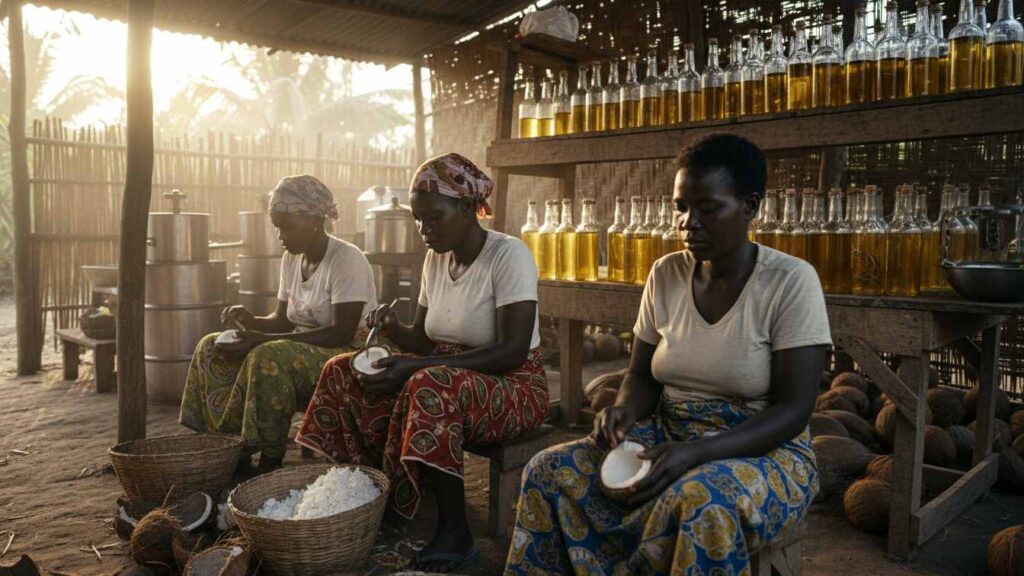
Selling raw nuts is the lowest tier of profitability. In 2026, the real money lies in value addition and understanding the supply chain. You must move up the ladder to maximize returns.
1. The Copra Chain
Dry nuts are split and dried to make copra, which is pressed for oil. If you can dry your own copra (using solar dryers), you can sell directly to millers like Pwani Oil or Kentaste. This bypasses the brokers who offer rock-bottom prices for whole nuts.
2. The Madafu Market
Urban centers like Nairobi and Mombasa have an insatiable thirst for madafu. The logistics here are speed-dependent. You need a reliable transporter to get the nuts to market within 24 hours of harvest.
This market pays instant cash (via M-Pesa) compared to the copra market which may have payment delays. Branding your madafu for hotels can double your margin. Hygiene in handling is paramount for this segment.
3. By-Products: Nothing is Waste
- Coir (Husks): Used for making ropes, mats, and cocopeat for hydroponic farming. Cocopeat prices are rising as greenhouse farming expands.
- Shells: Carbonized to make charcoal briquettes. This is a booming eco-friendly fuel sector in Kenya.
- Makuti: The leaves are woven for roofing thatch, highly prized by hotels in Diani and Malindi.
Conclusion: 2026 Outlook
The outlook for coconut farming in Kenya for 2026 and beyond is overwhelmingly positive, driven by the global wellness trend and the local demand for cooking oil alternatives. The government’s push, through the Nuts and Oil Crops Directorate, to revitalize the sector is beginning to bear fruit. Better seedling availability and standardized pricing models are now realities.
However, climate change remains a variable. Your success will depend on your ability to adapt, using drought-resistant varieties, investing in water harvesting, and not relying on a single revenue stream. Intercrop your coconuts.
Process your own oil if possible. Join a cooperative to increase your bargaining power. The “Tree of Life” will reward those who respect its agronomic needs.
Your Action Plan:
1. Secure land in Kilifi or Kwale.
2. Source certified seedlings from KALRO Mtwapa or buy online jiji kenya (Contact them directly).
3. Dig your holes now.
4. Plan your intercropping strategy to fund the first 4 years.
FAQ: Troubleshooting Coconut Farming
1. How many coconut trees can I plant on one acre?
You can plant between 60 to 70 trees per acre using a spacing of 9m x 9m. If you plant them closer (e.g., 6m x 6m), the canopy will close up too early, reducing photosynthesis and nut production, while also making intercropping impossible.
2. How long does it take for a coconut tree to bear fruit?
It depends on the variety. Hybrid varieties and Dwarfs typically start bearing fruit in 3 to 4 years. The traditional East African Tall takes about 6 to 7 years. However, the Tall variety is more drought-resilient and lives longer.
3. What is the current price of a coconut in Kenya in 2026?
The farm-gate price for a mature dry nut ranges from KES 30 to KES 50 depending on size and season. Madafu (tender coconut) retails for KES 50 to KES 80 in urban centers, offering a higher margin if you handle the logistics.
4. Can coconuts grow in Nairobi or central Kenya?
Generally, no. Coconuts require high humidity, sandy soil, and warm temperatures (27°C average). While they might survive in Nairobi as ornamental trees, they will likely not fruit or will produce very small, commercially unviable nuts due to the altitude and cold nights.
5. Where can I buy certified coconut seedlings in Kenya?
The most reliable source is KALRO Mtwapa (Industrial Crops Research Institute). You can also check with licensed private nurseries in Kilifi and Kwale. Avoid buying roadside seedlings of unknown genetic origin.
6. What is the Lethal Yellowing Disease?
This is a phytoplasma disease spread by leafhoppers. It causes the fronds to turn yellow and drop, and the nuts to fall prematurely. It is incurable. The only management is to cut down and burn infected trees to stop the spread to healthy ones.
7. Is coconut farming profitable for small-scale farmers?
Yes, but it is a volume game. A small farmer with 2 acres (120 trees) can earn a decent supplementary income, especially if they add value (e.g., selling charcoal briquettes or oil). Intercropping with cash crops like maize, simsim, or cassava is essential for profitability on small plots.
8. How do I make Virgin Coconut Oil (VCO) at home?
To make VCO, grate fresh mature coconut meat, extract the milk using warm water, and let it ferment for 24-48 hours. The oil will separate from the water and curds. Scoop the oil and filter it. This “cold press” method fetches the highest price in the market.
9. Can I use borehole water for irrigation?
Yes, but you must test the salinity. While coconuts are salt-tolerant, highly saline borehole water can eventually damage the soil structure and affect nutrient uptake. Drip irrigation is recommended to maximize efficiency.
10. Are there government subsidies for coconut farmers in 2026?
The County Governments of Kilifi and Kwale occasionally distribute free or subsidized seedlings during the long rains. Check with your local Ward Agricultural Officer or the Agriculture and Food Authority (AFA) offices at the coast for current programs.