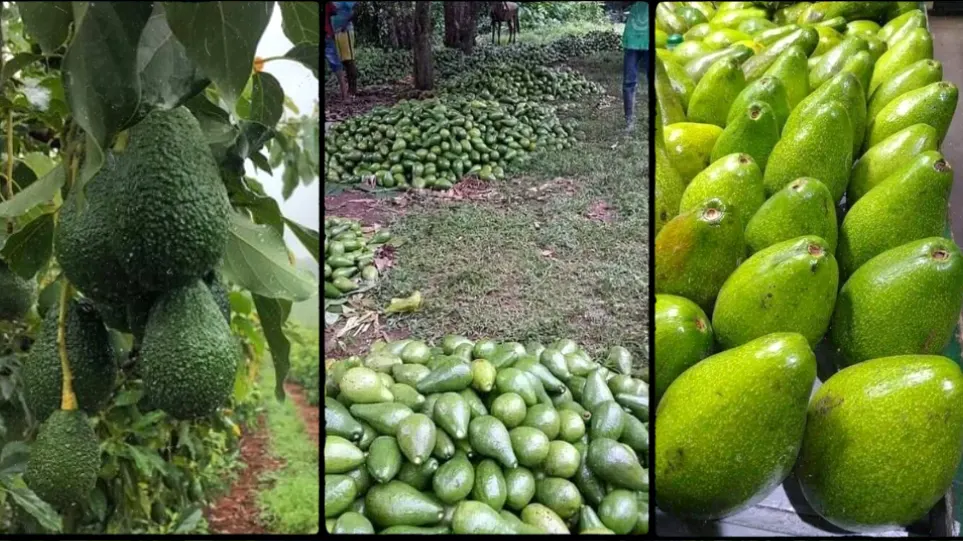

Avocado farming in Kenya has evolved into a lucrative agribusiness, earning the country billions in foreign exchange annually. However, many enthusiastic investors and small-scale farmers lose up to 60% of their potential revenue due to avoidable errors. These mistakes range from poor variety selection and improper planting techniques to mishandling the harvest.
Table of Contents
The global market in 2026 demands perfection, with strict adherence to phytosanitary standards set by the European Union and China. Kenyan farmers who fail to professionalize their orchards risk rejection at packhouses, leading to massive financial losses. This comprehensive guide outlines the critical pitfalls in the avocado value chain and provides actionable solutions for sustainable success.
By understanding the agronomic and market dynamics, you can transform a struggling orchard into a high-yielding asset. We will cover every stage of production, ensuring you have the knowledge to navigate the complexities of modern avocado farming. Avoid these common mistakes to secure your place in the competitive export market.
What are the most costly variety selection mistakes farmers make?
Farmers often plant the Hass variety in hot, low-altitude areas where it produces small “button” fruits, or Fuerte in export-focused zones where demand is low. The most critical error is failing to plant pollinator varieties like Ettinger or Bacon, which can reduce orchard yields by up to 30% due to poor cross-pollination.
One of the most fundamental errors is assuming that the Hass variety will thrive in any ecological zone. While Hass is the king of the export market, it requires specific altitudes between 1,000m and 2,000m above sea level to produce export-grade sizes. Planting it in lowlands like parts of Machakos or Kilifi often results in small fruits that are rejected by exporters.
Read Also: HOW TO EXPORT HASS AVOCADOS FROM KENYA IN 2026: A STEP-BY-STEP GUIDE
Conversely, farmers in high-potential areas often cling to the Fuerte variety due to its local popularity. While Fuerte is delicious, its thin skin makes it susceptible to damage during shipping, drastically reducing its export viability. In 2026, the export market is over 80% dominated by Hass, making Fuerte a risky primary crop for commercial ventures.
Another overlooked mistake is the exclusion of pollinator varieties in the orchard layout. Avocado trees are dichogamous, meaning their male and female flower parts open at different times. Interplanting Type B varieties like Bacon or Ettinger within a Type A Hass orchard significantly boosts fruit set and overall tonnage.
Where to Buy Common Mistakes in Avocado Farming in Kenya and How to Avoid Them in Kenya
To avoid the mistake of buying diseased or genetically inferior planting materials, purchase seedlings exclusively from KEPHIS-registered nurseries. Government institutions like KALRO and established private entities like Kakuzi provide traceable, certified seedlings that guarantee true-to-type genetics and freedom from root rot.
The title of this section highlights a crucial reality: buying cheap inputs is essentially “buying mistakes” that will haunt your farm for decades. The single biggest error a beginner farmer can make is sourcing seedlings from unverified roadside vendors. These seedlings often carry Phytophthora (root rot) or are not grafted correctly, leading to stunted growth and years of wasted resources.
To avoid these pitfalls, you must source materials from certified institutions that prioritize plant health. KALRO (Kenya Agricultural and Livestock Research Organization) in Kandara is the premier source for clean scions and rootstocks. Their seedlings are scientifically propagated to ensure they are free from seed-borne diseases.
Private sector giants like Kakuzi Plc in Murang’a also offer high-quality seedlings to contract farmers and the general public. These organizations enforce strict hygiene protocols that roadside nurseries simply cannot match. Digital platforms like Richfarm Kenya are also vetting nurseries to help farmers connect with legitimate suppliers.
When purchasing, always demand to see the KEPHIS (Kenya Plant Health Inspectorate Service) certification of the nursery. Inspect the seedlings for a strong graft union at least 15cm above the soil level. Avoid any batch that shows yellowing leaves or root coiling, as these are signs of poor nursery management.
How does neglecting soil analysis lead to orchard failure?
Skipping soil tests often leads to planting in acidic soils that lock up essential nutrients like Phosphorus and Calcium, causing stunted growth. Without a soil analysis, farmers blindly apply fertilizers that may worsen soil imbalances, leading to weak trees that are susceptible to diseases like root rot.
Many farmers view soil testing as an unnecessary expense, preferring to guess their fertilizer requirements. This is a fatal mistake because avocados are highly sensitive to soil pH and salinity. A pH below 5.5 can cause aluminum toxicity, while a pH above 7.5 can lead to severe iron and zinc deficiencies.
Farmers in counties like Nyamira and Kisii often deal with acidic soils that require lime application before planting. Without a specific analysis report, you cannot know the exact quantity of agricultural lime needed to neutralize the acidity. This leads to years of applying expensive fertilizers that the tree simply cannot absorb.
Furthermore, neglecting to test for soil pathogens can be disastrous. Land previously used for coffee or tea may harbor Armillaria root rot or nematodes. A comprehensive soil test from CropNuts or KALRO will reveal these biological threats, allowing you to treat the soil or choose a different site.
What are the fatal errors during land preparation and planting?
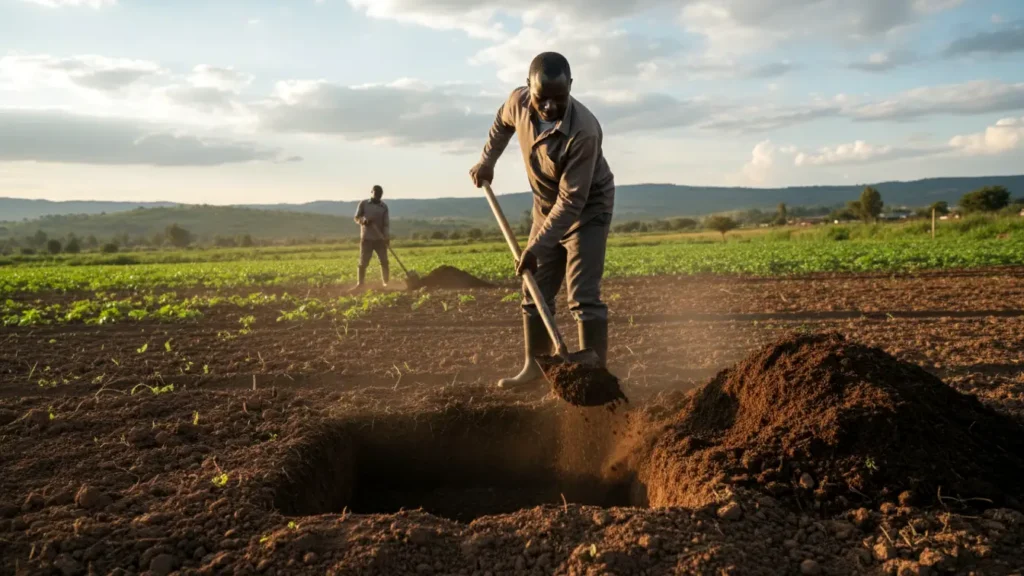
Planting avocados in shallow holes or waterlogged areas causes root asphyxiation, killing the tree within the first two years. Another common error is mixing raw manure and diammonium phosphate (DAP) directly with the roots during planting, which burns the delicate root system and causes immediate transplant shock.
The “lazy hole” syndrome is a prevalent mistake where farmers dig small, shallow holes that restrict root expansion. A standard avocado planting hole should be 2ft by 2ft by 2ft to loosen the soil structure. This allows the taproot to penetrate deep into the subsoil, anchoring the tree and accessing deep moisture reserves.
Drainage is another area where many farmers fail. Avocados detest “wet feet,” and planting them in waterlogged areas without raised beds guarantees fungal infection. In flat areas with heavy clay soils, such as parts of Uasin Gishu, failure to install drainage channels will result in 100% crop loss during the long rains.
Read Also: Pixie Orange Farming in Kenya 2026: Complete Guide to Seedlings, Costs and Profit per Acre
Incorrect manure application is also a major killer of young seedlings. Farmers often use fresh animal manure that has not fully decomposed, which generates high heat and ammonia that scorch young roots. Always use well-rotted manure mixed with topsoil, and never let fertilizer granules come into direct contact with the seedling’s root ball.
How do regional climate differences impact avocado farming success?
Failure to adapt management practices to local climate conditions leads to fungal diseases in wet areas or sunscald in dry zones. Farmers in high-rainfall counties must prioritize canopy management to reduce humidity, while those in dry regions must invest heavily in irrigation and mulching to prevent flower abortion.
Kenya’s diverse microclimates mean that a “copy-paste” farming approach is a guaranteed path to failure. What works in the cool highlands of Kiambu will not work in the semi-arid zones of Laikipia. Recognizing these differences is key to avoiding regional pitfalls.
| Region/County | Primary Mistake | Strategic Correction |
|---|---|---|
| Murang’a (Central) | Harvesting immature fruit due to broker pressure. | Strictly adhere to HCD dry matter testing (min 23%). Join cooperatives to bypass brokers. |
| Kisii (Nyanza) | High humidity leading to Anthracnose and fungal issues. | Aggressive pruning to open the canopy. Rigorous copper-based fungicide schedules during rains. |
| Uasin Gishu (Rift Valley) | Wind damage causing fruit drop and branch breakage. | Plant windbreaks like Grevillea 2 years prior. Use staking for young trees. |
| Meru (Eastern) | Inconsistent irrigation causing fruit cracking. | Invest in drip irrigation to maintain soil moisture during dry spells between rains. |
Farmers in high-humidity zones like Kericho often make the mistake of allowing dense canopies. This creates a microclimate that favors Cercospora spot and Anthracnose. In these areas, the mistake of skipping pruning is directly linked to poor fruit quality.
What irrigation mistakes cause flower abortion and poor fruit quality?
The most damaging irrigation mistake is inconsistent watering during the flowering and fruit-setting stages, which causes the tree to shed flowers and young fruits due to stress. Over-watering is equally dangerous, as it promotes Phytophthora root rot, while under-watering leads to small fruits and calcium deficiency symptoms.
Many Kenyan farmers rely solely on rain-fed agriculture, which is a significant gamble in the face of changing climate patterns. Avocado trees have a shallow root system that dries out quickly, necessitating supplemental irrigation. The mistake of waiting until the leaves wilt to water the trees stresses the plant and permanently stunts yield potential.
During the flowering phase, water stress is the primary cause of flower abortion. If the tree senses a lack of water, it will drop flowers to save itself, resulting in a poor harvest. Conversely, flooding the orchard to “make up” for missed watering creates anaerobic conditions that suffocate roots.
Water quality is another often-ignored factor. Using saline water from boreholes in arid areas causes leaf tip burn and reduces the tree’s vigor. Farmers in places like Kajiado must test their water sources to ensure salinity levels are within the tolerance range for avocados.
Why is improper fertilization the silent killer of avocado yields?
Applying nitrogen-rich fertilizers during the flowering stage stimulates excessive vegetative growth, causing the tree to drop flowers in favor of new leaves. Neglecting micronutrients like Boron and Zinc leads to deformed fruits and poor fruit retention, significantly lowering the percentage of exportable grade produce.
Fertilizer application must follow the phenological cycle of the tree, yet many farmers apply it randomly. The most common error is applying heavy Nitrogen doses (like CAN or Urea) when the trees are blooming. This signals the tree to grow wood and leaves instead of setting fruit, leading to a lush green tree with no avocados.
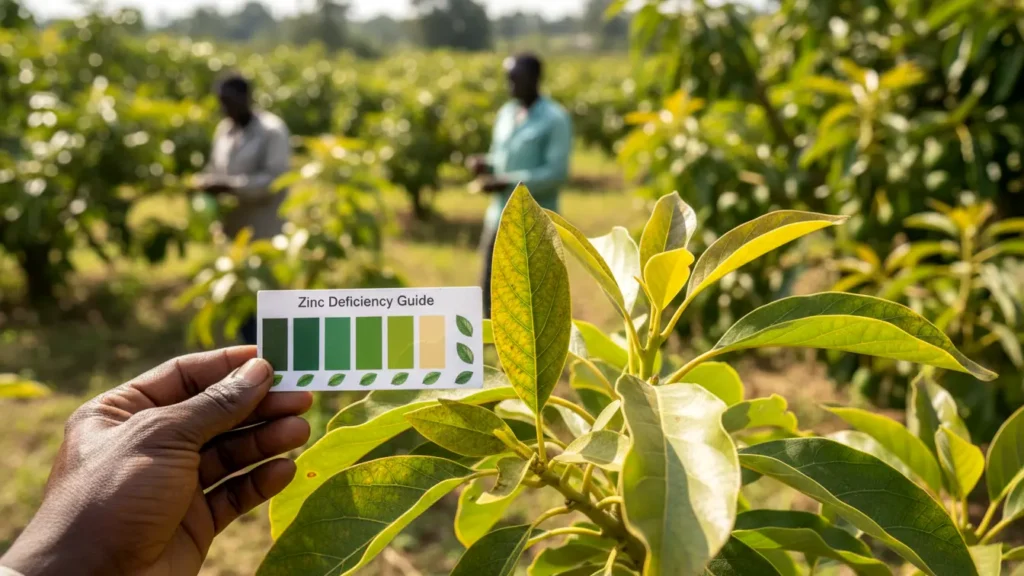
Ignoring micronutrients is another costly oversight. Boron deficiency is rampant in Kenyan soils and leads to hollow stems and lumpy fruit. Zinc deficiency results in “rosette” growth where leaves are small and bunched, severely limiting photosynthesis and energy production.
Read Also: 10 Most Profitable Farming Ventures in Kenya for 2026
Organic farmers also make mistakes by assuming manure is enough. While manure improves soil structure, it often lacks sufficient quantities of specific nutrients required for heavy fruiting. A balanced approach using soil amendments and foliar feeds from reputable companies like Yara or Amiran is essential.
How does poor canopy management and pruning reduce production?
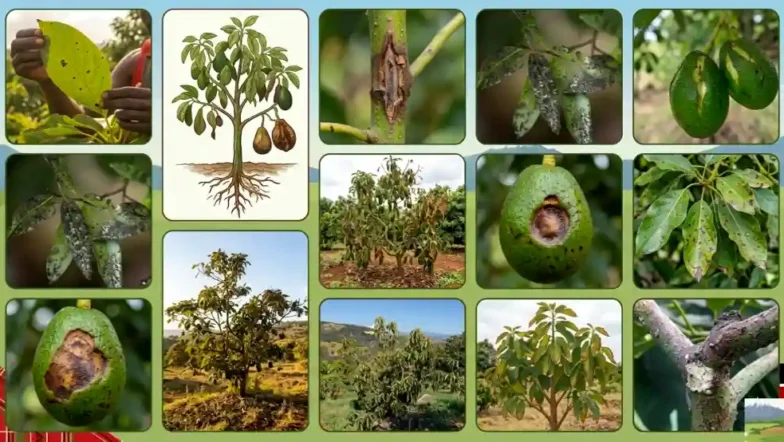
Failing to prune creates a “bush” effect where sunlight cannot penetrate the center of the tree, causing the interior branches to become unproductive and die. Unpruned trees grow too tall, making harvesting dangerous and expensive, while also creating a haven for pests like scales and thrips that hide in the dense foliage.
Many farmers are afraid to prune, fearing they will cut away potential fruit. This hesitation leads to overcrowding, where branches from neighboring trees interlock. When this happens, the lower branches lose access to sunlight and stop producing, shifting all fruit production to the very top of the canopy.
The “skirt” of the tree—the lower branches touching the ground—is a major entry point for pests and diseases. A common mistake is leaving these branches intact, allowing ants and snails to climb easily. Skirting (trimming lower branches) to a height of 0.5 meters is a mandatory practice for orchard hygiene.
Improper tool hygiene during pruning is a primary vector for spreading diseases. Using the same saw to cut a diseased tree and then a healthy one without sterilization transfers pathogens instantly. Farmers must dip pruning tools in a bleach or methylated spirit solution between every tree to avoid this catastrophe.
What are the critical errors in pest and disease management?
The most devastating mistake is ignoring the False Codling Moth (FCM), which is a quarantine pest that leads to total interception of shipments to the EU market. Farmers also frequently misuse hard chemicals that kill beneficial pollinators like bees, or fail to observe pre-harvest intervals, leading to chemical residue rejections.
Pest control in 2026 is about intelligence, not just spraying. The False Codling Moth (FCM) has become the single biggest threat to Kenyan avocado exports. The mistake of thinking “I don’t see it, so it’s not there” is dangerous because FCM larvae burrow inside the fruit, making them invisible until cut open.
To avoid this, farmers must use pheromone traps to monitor pest populations. Relying solely on calendar-based spraying is a mistake that leads to resistance and high costs. Integrated Pest Management (IPM) strategies, such as field sanitation and biological controls, are now mandatory for serious farmers.
Read Also: Strawberry Farming in Kenya: Step‑by‑Step Guide, Costs, Best Seed Varieties and Profits in 2026
Fruit flies are another major headache. A common error is leaving fallen, rotting fruit on the orchard floor. These fruits become breeding grounds for fruit flies. The correct practice is to bury all fallen fruit at least two feet deep or place them in a specialized “augur bag” to kill the larvae.
How do harvesting and post-harvest mistakes destroy export value?
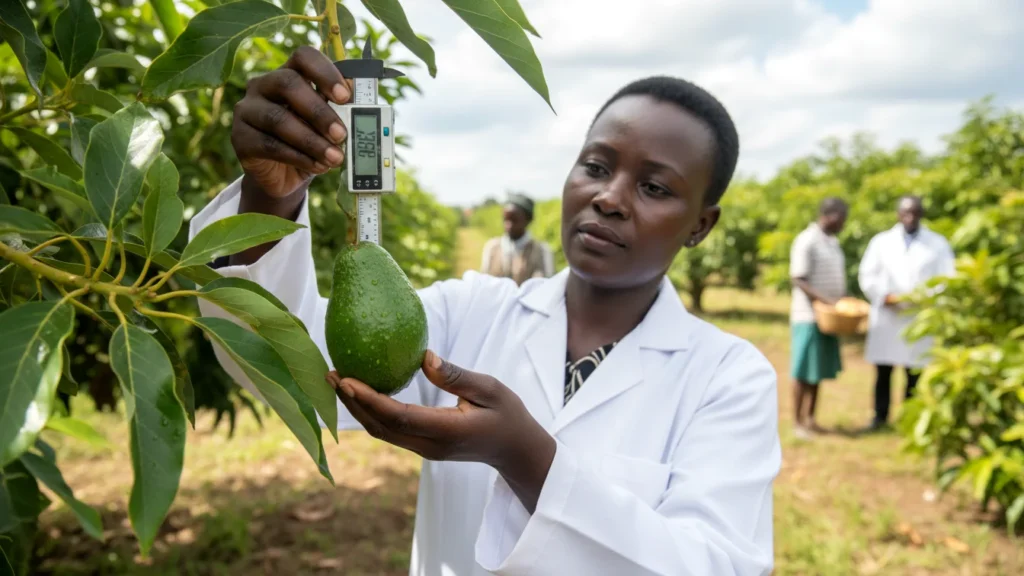
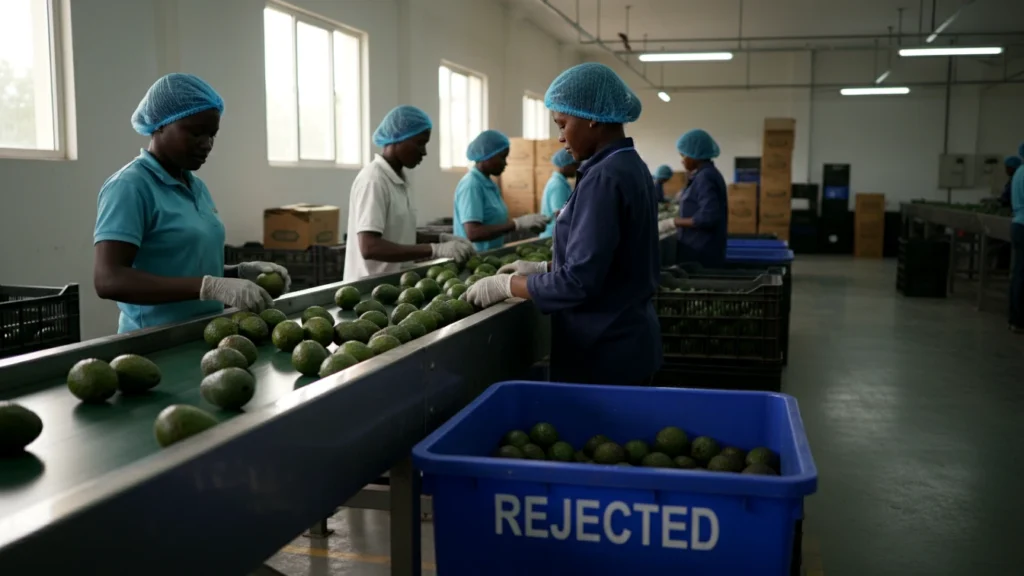
Harvesting avocados before they reach the required dry matter content (minimum 23%) results in fruit that never ripens properly and shrivels, destroying the reputation of Kenyan produce. Rough handling during picking causes internal bruising that only becomes visible after ripening, leading to claims and non-payment from international buyers.
The rush to cash in often drives farmers to harvest premature fruit. This short-sighted mistake has previously caused Kenya to face temporary bans in global markets. In 2026, the Horticultural Crops Directorate (HCD) enforces strict maturity testing, and attempting to bypass this is a legal and financial error.
Physical handling mistakes are equally costly. Pulling the fruit from the tree instead of clipping it leaves an open wound at the stem end, inviting rot. Farmers must use sharp clipping tools to leave a 3mm stalk (pedicel) attached to the fruit, which acts as a natural seal against pathogens.
Post-harvest heat is another enemy. Leaving harvested crates in the direct sun raises the internal pulp temperature, accelerating ripening and reducing shelf life. The mistake of not moving fruit to a shaded cooling shed immediately after picking can reduce the fruit’s marketable window by weeks.
What financial and marketing mistakes bankrupt avocado projects?
Farmers often underestimate the capital required to sustain the orchard for the 3-4 years before the first commercial harvest, leading to project abandonment. Another major financial error is selling to brokers at farm-gate prices without a contract, rather than aggregating volumes with cooperatives to negotiate better rates with exporters.
Farming is a business, yet many treat it as a side hustle without a budget. The cost of maintaining an acre of avocados until maturity is significant (approx. KES 200,000 – 300,000). The mistake of running out of funds for irrigation or pest control in Year 2 results in stunted trees that never reach their potential.
On the marketing side, the “broker trap” is the most common pitfall. Brokers thrive on the farmer’s lack of market information, offering quick cash for unsorted fruit. This often results in the farmer earning 50% less than the true market value. In 2026, failing to join a cooperative like the Avocado Society of Kenya is a strategic error.
Read Also: How to Grow Bulb Onions in Crates: Step by Step Guide for Kenyan Farmers
Contract farming offers stability, but signing without legal advice is a mistake. Farmers must understand the clauses regarding rejection rates and payment terms. Partnering with reputable exporters like Olivado or BioFarms who offer agronomic support can mitigate these risks and ensure a guaranteed market.
Conclusion: Professionalizing Your Path to “Green Gold”
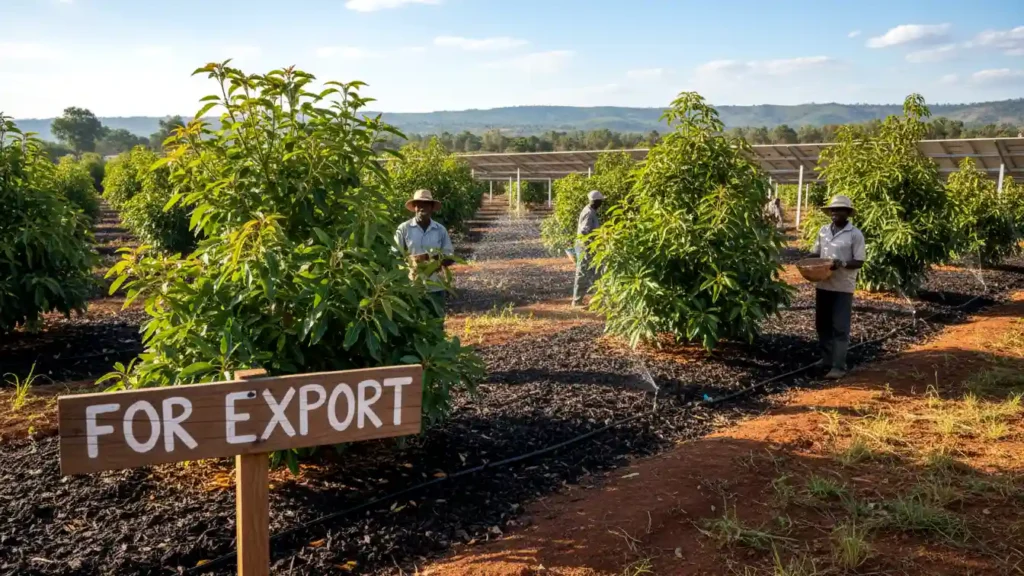
Transforming avocado farming in Kenya from a struggling venture into a highly profitable export business requires more than just enthusiasm; it demands precision and professionalism. As outlined throughout this guide, the difference between facing fruit rejection at the packhouse and earning substantial returns often comes down to avoiding avoidable errors.
The 2026 global market is highly competitive and unforgiving of shortcuts. Whether it is neglecting essential soil analysis, sourcing inferior seedlings from unverified vendors, or harvesting immature fruit due to broker pressure, every mistake chips away at your potential revenue. However, by shifting your mindset to view your orchard as a long-term commercial asset rather than a passive side venture, you can effectively navigate these pitfalls.
Adhering to strict standards set by bodies like KEPHIS and HCD, implementing data-driven agronomic practices, and joining reputable cooperatives to bypass exploitative brokers are no longer optional—they are prerequisites for sustainable success. Embrace the knowledge provided here to make informed decisions at every stage of the value chain. By committing to quality, hygiene, and best practices today, you secure your place as a reliable, high-yielding supplier in the lucrative international avocado market tomorrow.
Farmers Also Ask: Troubleshooting Avocado Farming Mistakes
Why are my avocado flowers dropping without forming fruit?
Flower abortion is primarily caused by water stress (too little or too much) or nitrogen overdose during flowering. Ensure consistent soil moisture and avoid applying nitrogen fertilizers until the fruit has set and reached the size of a marble. Lack of boron and zinc can also contribute to weak flower retention.
How do I stop my avocado trees from turning yellow?
Yellowing leaves usually indicate Phytophthora root rot or nitrogen deficiency. If the yellowing starts from the canopy top and moves down, it is likely root rot caused by waterlogging. Improve drainage immediately and treat with phosphite-based fungicides. If it is nutrient-related, apply foliar feeds rich in Zinc and Iron.
Can I plant avocado trees with maize or beans?
Intercropping with beans is acceptable in the first two years as they fix nitrogen. However, avoid maize as it competes heavily for nutrients and light, and its pollen can attract pests like thrips during the avocado flowering stage. Never intercrop with potatoes or tomatoes due to the risk of Verticillium wilt.
Why are my avocado fruits cracking?
Fruit cracking is caused by irregular watering. If a dry spell is followed by heavy irrigation or rain, the internal fruit flesh expands faster than the skin, causing it to burst. Maintaining consistent soil moisture through mulching and drip irrigation prevents this.
How many years does it take for a Hass avocado tree to fruit?
Grafted Hass avocado trees typically start fruiting in the 3rd year, with commercial viability reached by the 4th or 5th year. Seedlings grown from seeds (not grafted) can take 7 to 10 years to fruit and will not be true-to-type.
What is the best spacing for avocado farming in Kenya?
The standard spacing for Hass avocados is 5m x 5m (approx. 150 trees per acre). In high-density planting, spacing can be reduced to 4m x 3m, but this requires intensive pruning and canopy management to prevent overcrowding.
How do I control fruit flies in my avocado orchard?
Use Integrated Pest Management (IPM). Install pheromone traps (like Bactro-traps) to monitor and catch males. Practice field sanitation by burying fallen rotting fruits at least 2 feet deep to kill larvae. Avoid calendar spraying of hard chemicals that kill beneficial insects.
Why do exporters reject my avocados?
The top reasons for rejection are immaturity (dry matter below 21-23%), physical damage (bruises, sunburn), and presence of pests (scales, fruit fly). Chemical residue exceeding the Maximum Residue Limits (MRLs) allowed by the EU is also a major cause.
Is it profitable to farm Fuerte avocados in 2026?
Fuerte is less profitable for export compared to Hass but remains profitable for the local Kenyan market and specific export windows in the Middle East. It is hardier and requires less input than Hass, making it a decent option for low-input farmers targeting domestic consumers.
How can I tell if an avocado seedling is high quality?
A quality seedling should have a dark green color, a straight stem, and a healed graft union at least 15cm from the soil. It should be in a large enough bag (6×9 inches) to accommodate roots without coiling. Always ask to see the mother block where the scions were harvested.