
Table of Contents
Dairy goat farming has firmly established itself as one of the most resilient, high-yield, and accessible agribusiness ventures in Kenya for the 2026 fiscal year. As the agricultural sector adapts to the shifting realities of climate change, shrinking land sizes, and a burgeoning population with a sophisticated palate for nutritious products, the humble goat has graduated from being the “poor man’s cow” to the “smart farmer’s gold mine.”
Unlike high-maintenance dairy cows that require vast acreage, immense water resources, and heavy capital investment, dairy goats thrive in compact spaces, consume significantly less feed, and offer a faster return on investment. This guide is painstakingly engineered to transform a beginner farmer into a commercial producer, leveraging the latest agricultural data, pricing, and breeding technologies available in Kenya today. The economic landscape for 2026 heavily favors small livestock production. With the price of goat milk stabilizing between KES 200 and KES 300 per liter in premium markets like Nairobi, Mombasa, and Kisumu, the profit margins are significantly higher than traditional cow milk, which often struggles to break the KES 60 mark at the farm gate.
Furthermore, the subdivision of land in high-potential agricultural zones such as Kiambu, Nyeri, Murang’a, and Vihiga has necessitated a shift toward intensive zero-grazing systems. Cows are simply becoming too large for the average quarter-acre plot. Goats, however, fit perfectly. This guide provides a comprehensive roadmap for navigating these shifts, ensuring that you do not just survive but thrive in the competitive Kenyan agricultural sector.
Also read
We will cover everything from selecting the right genetics from KALRO and private breeders to constructing affordable, disease-proof housing and formulating cost-effective feeds that maximize lactation. Success in this venture requires a fundamental paradigm shift. You must move beyond the traditional view of subsistence farming and adopt a commercial herd management mindset. You must treat every doe as a biological factory and every buck as a genetic investment. You must meticulously track input costs—ranging from concentrates to veterinary drugs—against the output of liters produced and kids sold. By following the protocols outlined in this master guide, you will avoid the common pitfalls that bankrupt amateur farmers, such as poor housing design leading to pneumonia, improper feeding resulting in metabolic disorders, or poor breeding management leading to genetic stagnation. Prepare to immerse yourself in the technical, practical, and financial realities of modern dairy goat farming in Kenya.
MARKET ANALYSIS AND THE ECONOMIC CASE FOR 2026
The demand for goat milk in Kenya has skyrocketed, driven by a growing health-conscious middle class and the medical necessity of goat milk for infants and the elderly. Goat milk is naturally homogenized, has smaller fat globules than cow milk, and is less allergenic, making it a “superfood” in the 2026 retail market. Additionally, the cosmetic industry in Kenya is increasingly sourcing goat milk for high-end soaps and lotions, creating a secondary market for farmers. However, the opportunity is not just in milk. The breeding stock market is insatiable. A purebred doe with a proven pedigree is currently a liquid asset, often fetching prices that rival a heifer. With the government’s 2026 focus on food security and youth employment in agriculture, grants and support for small stock farmers are more accessible than ever before. This environment creates a unique window of opportunity for early adopters who establish professional, well-managed units now.
PROFITABLE DAIRY GOAT BREEDS IN KENYA
The foundation of a successful dairy goat enterprise lies entirely in the genetic potential of your herd. In 2026, the market is dominated by three specific exotic breeds that have been acclimatized to Kenyan conditions over decades of breeding by institutions like the Dairy Goat Association of Kenya (DGAK) and the Kenya Agricultural and Livestock Research Organization (KALRO). Selecting the right breed depends heavily on your specific location, climate, and production goals. A farmer in the cool, wet highlands of Nyandarua will have different breed requirements compared to a farmer in the semi-arid zones of Machakos or Kitui.
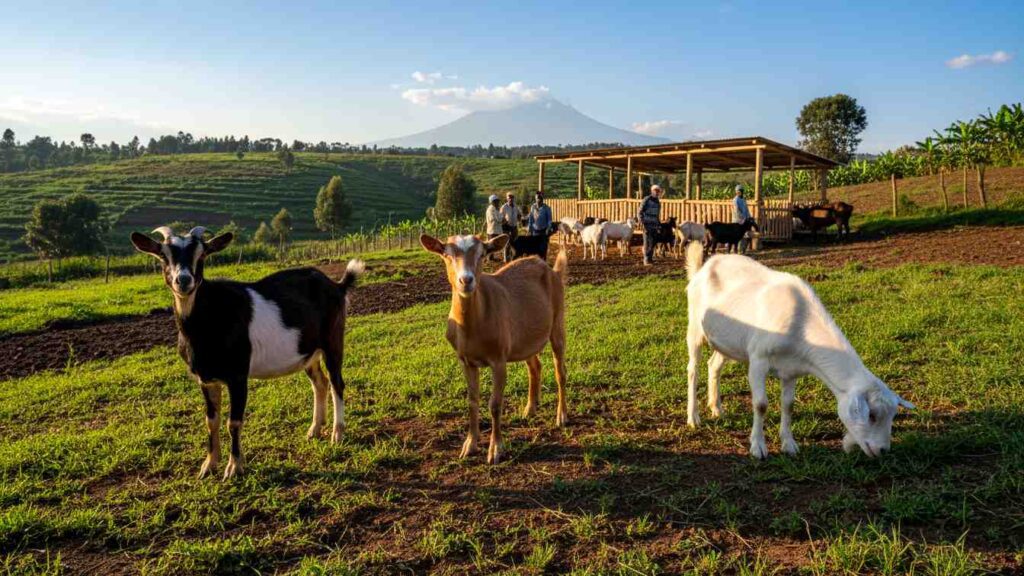
Selecting the right breed for your specific climatic zone is the first step toward profitability.
The Kenyan Alpine
The Kenyan Alpine is arguably the most versatile and widely distributed dairy goat breed in the country today. Originated from the French Alps, this breed has been extensively improved by the Dairy Goat Association of Kenya to suit local conditions. They are easily identifiable by their upright ears and a variety of coat colors, ranging from pure white to shades of fawn, gray, brown, and black. Alpines are medium to large-sized animals, with mature does weighing between 60kg and 80kg. They are renowned for their hardiness and ability to travel long distances, making them suitable for both zero-grazing and semi-intensive systems in areas with moderate rainfall. In terms of production, a well-managed Kenyan Alpine doe in 2026 can produce between 3 to 5 liters of milk per day. Their milk has a butterfat content of approximately 3.5%, which is excellent for fresh consumption and yoghurt production.
Read more
Pixie Orange Farming in Kenya 2026: Complete Guide to Seedlings, Costs and Profit per Acre
The current market price for a purebred breeding Alpine doe ranges from KES 25,000 to KES 45,000, while young bucks with good lineage can fetch up to KES 20,000. Their adaptability to the diverse micro-climates of Mount Kenya and the Rift Valley makes them the top choice for beginner farmers who want a balance between high production and disease resistance. They are the 4×4 vehicle of the goat world—reliable, tough, and productive.
The Toggenburg
If your farm is located in the cooler, higher altitude regions like Meru, Embu, Kericho, or the Aberdares, the Toggenburg is your breed of choice. Recognizable by their solid brown or chocolate color with distinct white stripes down the face and white markings on the legs and tail (often called “Swiss markings”), “Toggs” are slightly smaller than Alpines but are extremely efficient converters of feed. They originated from the Toggenburg valley in Switzerland and have a calm, gentle temperament, which makes them easy to handle for women and youth farmers. Toggenburgs are celebrated for their long lactation periods and consistent milk production, often yielding 3 to 4 liters daily. While their milk volume might be slightly lower than the Saanen, the quality is exceptional, with a butterfat content often exceeding 3.8%, making it ideal for cheese making. In 2026, the demand for Toggenburg breeding stock remains high, with prices for a mature doe averaging KES 20,000 to KES 35,000. However, farmers must note that Toggenburgs are more susceptible to heat stress and are not recommended for hot, arid lowlands unless strictly managed under zero-grazing with adequate shade and ventilation.
The Saanen
The Saanen is the “Friesian” of the goat world—the heavy yielder designed for intensive commercial production. Pure white or cream in color with upright ears, they are the largest of the dairy breeds. A purebred Saanen is a milk machine, capable of producing 5 to 7 liters of milk per day under optimal management. This high production comes at a cost; they have high nutritional requirements and are very sensitive to harsh sunlight and rough terrain. They are best suited for zero-grazing units in high-potential areas where feed abundance is guaranteed. For the 2026 season, Saanens command the highest prices in the breeding market, with pedigree does often selling for KES 40,000 to KES 60,000. However, beginners should approach this breed with caution. Their pale skin makes them prone to skin cancer if exposed to direct equatorial sun for long periods, and their high metabolic rate means any lapse in feeding will result in a drastic drop in milk yield. They are strictly recommended for farmers who have mastered the basics of nutrition and housing and are ready to invest in premium feeds.
The Galla Goat Crosses
While not a pure dairy breed, the indigenous Galla goat (the “Boran” of goats) deserves mention for farmers in arid and semi-arid lands (ASALs) like Kajiado, Kitui, and Makueni. In 2026, climate resilience is a major factor. Crossing a Galla doe with an Alpine or Toggenburg buck produces a hardy F1 hybrid that can withstand heat and drought while producing significantly more milk (2-3 liters) than the local East African goat. This strategy is highly recommended for farmers in dry zones who cannot sustain the feed requirements of pure exotic breeds.
OPTIMAL HOUSING AND STRUCTURE DESIGN FOR ZERO-GRAZING
Housing is not just a shelter; it is a production tool that directly impacts the health and milk output of your herd. In Kenya, the zero-grazing model is the gold standard for dairy goat farming because it minimizes exposure to soil-borne diseases and parasites like worms and ticks. The primary goal of your goat house structure is to keep the animals dry, draft-free but well-ventilated, and safe from predators and theft. A poorly designed house leads to pneumonia, which is the number one killer of goats in Kenya, and foot rot, which debilitates their ability to feed.
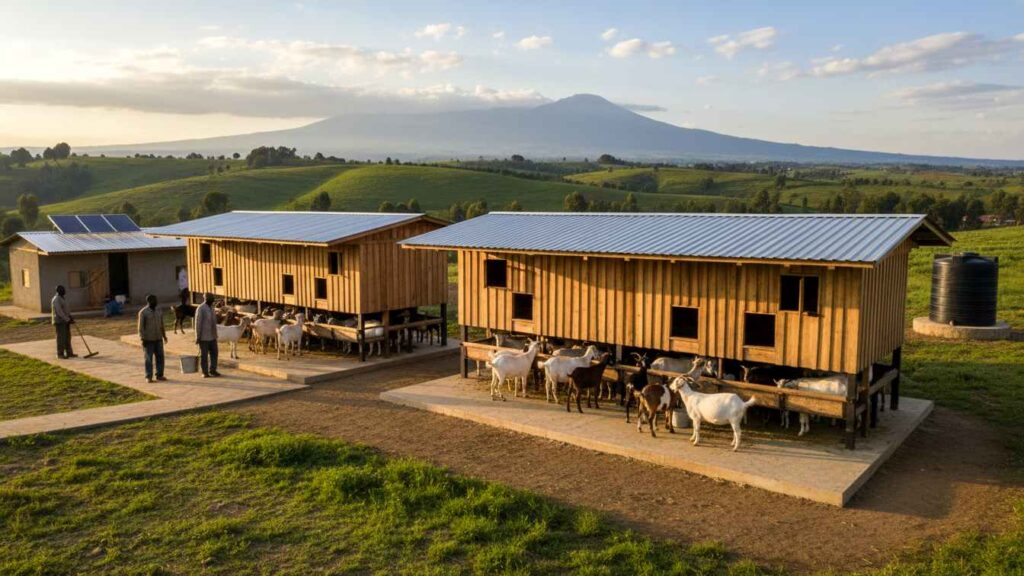
The Raised Floor System
The single most important feature of a modern dairy goat unit is the raised slatted floor. The floor should be elevated at least 2 to 3 feet (0.6 to 1 meter) off the ground. This elevation serves two critical purposes: it separates the goats from their own waste, breaking the life cycle of intestinal worms, and it protects the animals from the cold, damp ground which causes pneumonia. The floor should be constructed using timber slats (approx. 2×1 inch size) with a gap of 0.5 to 1 inch between them. This gap is wide enough to allow droppings and urine to fall through but narrow enough to prevent the goats’ hooves from getting stuck. Beneath the raised floor, it is highly advisable to pour a concrete slab or place a heavy-duty polythene sheet slanted towards a collection pit. This allows for the easy collection of goat pellets (manure) and urine. Goat manure is a premium organic fertilizer, currently selling for KES 300-500 per bag in coffee and tea growing zones. The urine, when fermented, is an excellent nitrogen-rich foliar feed and pesticide. By integrating this waste management system, your housing unit becomes a source of secondary income while maintaining high hygiene standards.
Ventilation and Climate Control
Kenya’s climate in 2026 is expected to experience temperature fluctuations, making ventilation a key priority. Goats are highly susceptible to respiratory infections caused by ammonia buildup from urine and stagnant air. Your goat house must be positioned to protect animals from the prevailing wind (usually the Eastern wind in many parts of Kenya). The windward side should be solid (using off-cuts or iron sheets) up to the roof level to block cold drafts, while the leeward side should be half-walled with wire mesh or timber rails to facilitate air circulation. The roof should be constructed with corrugated iron sheets and must be pitched high—at least 8 to 10 feet at the highest point—to allow hot air to rise and escape. In hotter regions like Machakos or parts of Rift Valley, consider using an overlapping “breather” roof design or insulating the underside of the iron sheets with papyrus mats to reduce heat stress. Remember, a goat that is panting from heat stress will stop eating, and a goat that stops eating stops producing milk immediately.
Floor Space Requirements
Overcrowding is a recipe for disaster. Adhere to the following space requirements for the 2026 standards:
- Mature Doe: 1.5 to 2.0 square meters per animal.
- Buck: 3.0 square meters (they need more room and isolation).
- Kids (grouped): 0.5 to 1.0 square meter per kid.
- Exercise Area: An open, fenced area attached to the unit is vital for Vitamin D synthesis and exercise, which aids in digestion and hoof health.
ADVANCED FEEDING STRATEGIES AND NUTRITION FOR 2026
Feeding accounts for 60% to 70% of the total production cost in dairy goat farming. The mistake most beginners make is treating goats like scavengers. A high-producing dairy goat requires a precision diet that balances energy, protein, minerals, and vitamins. For the 2026 season, with the fluctuating cost of commercial feeds, farmers must adopt a “grow-your-own” strategy to maintain profitability. Relying solely on purchased dairy meal is a guaranteed way to reduce your profit margins.
The Total Mixed Ration (TMR) Approach
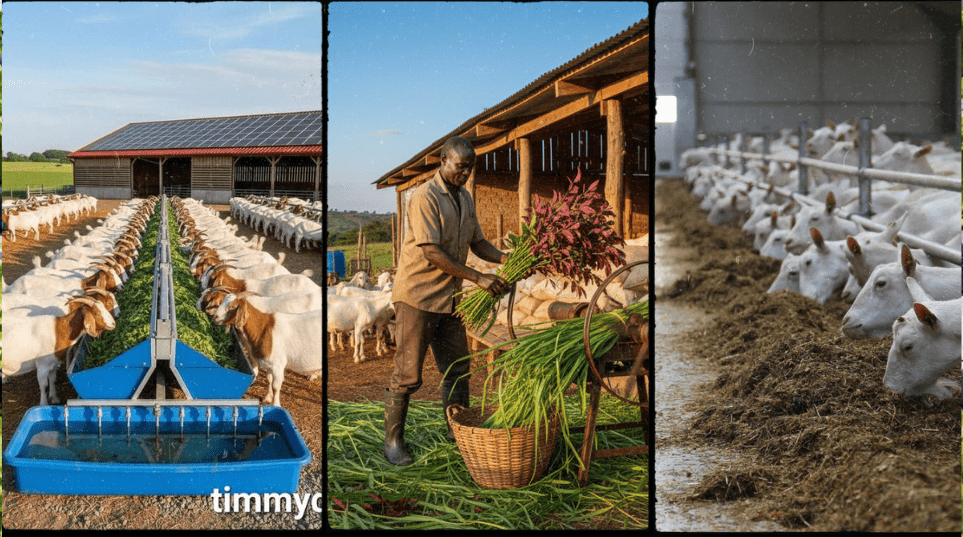
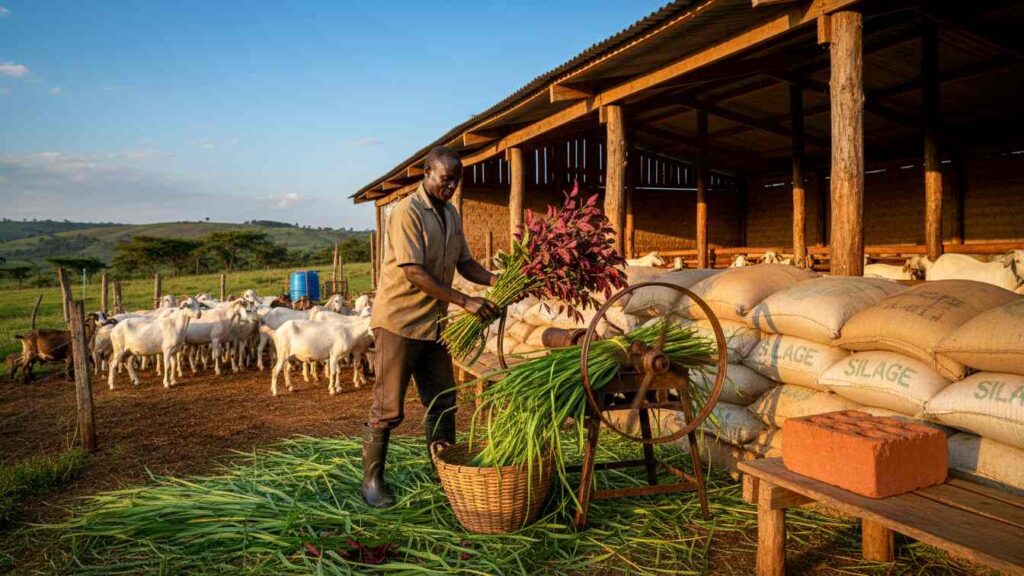
Goats are selective eaters (browsers) and will naturally pick out the tasty, leafy parts of fodder while ignoring the nutrient-rich stems. To combat this waste and ensure a balanced diet, you must adopt a chopped Total Mixed Ration (TMR) system. All forages—whether Napier grass, maize stover, or sweet potato vines—should be chopped into pieces no larger than 1 inch using a chaff cutter or panga. This chopped fodder should then be mixed with protein sources like Desmodium, Lucerne, or Calliandra before feeding. A lactating doe requires approximately 3% to 4% of her body weight in dry matter daily. For a 60kg goat, this translates to roughly 2.5kg to 3kg of dry matter, or about 8kg to 10kg of fresh green matter per day. This ration should be split into two or three feedings: morning, afternoon, and evening. Consistency is key; sudden changes in diet can cause bloating or acidosis, which can be fatal. If you are introducing a new feed, such as silage or a new batch of hay, do it gradually over a period of 5 to 7 days.
KALRO Recommended Fodder Varieties for 2026
Staying updated with seed varieties is crucial. For 2026, KALRO (Kenya Agricultural and Livestock Research Organization) recommends specifically bred drought-tolerant fodder crops. The “Kakamega 1” and “Ouma” varieties of Napier grass are highly recommended as they are resistant to Napier Stunt Disease, which has decimated crops in Western Kenya. For protein sources, “Desmodium” (both Silverleaf and Greenleaf) remains the gold standard, but the new “Brachiaria” grass varieties like “Basilisk” and “Piata” are gaining favor due to their high protein content and ability to withstand dry spells better than Napier. In drier areas, Sorghum varieties like “E1291” and “Ikinyaruka” are vital.
You may like
How to Grow Bulb Onions in Crates: Step by Step Guide for Kenyan Farmers
These are dual-purpose crops where the grain can be used for human or poultry food, and the stalks serve as excellent fodder. Farmers should also plant “Calliandra” and “Leucaena” trees along fences. These are “protein banks”; their leaves contain 20-25% protein and can replace expensive commercial dairy meal. A farmer with 500 Calliandra trees can significantly reduce or even eliminate the need for soya cake or cotton seed cake in their feed formulation.
Hydroponic Fodder: The 2026 Solution
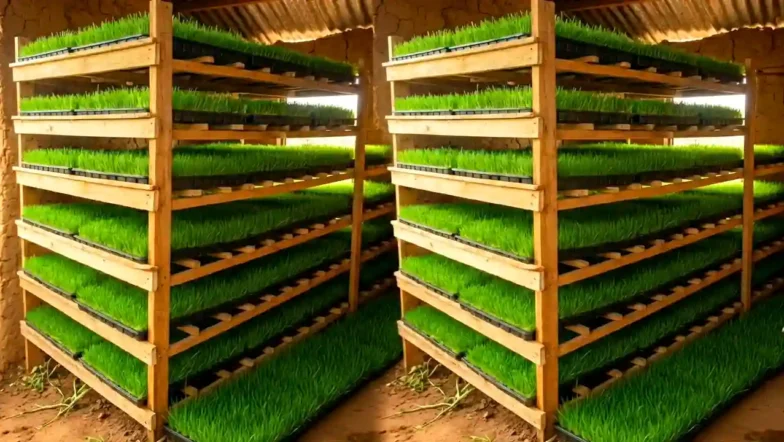
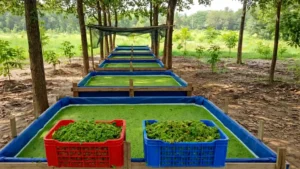
With land sizes shrinking, hydroponic fodder is becoming a mainstream solution in Kenya. This involves growing grains like barley, sorghum, or maize in trays without soil, using only water. Within 7 days, you harvest a mat of green fodder including the roots. This feed is highly digestible, rich in vitamins, and requires minimal space (a 5m x 5m room can feed 20 goats). While the initial setup cost can be KES 20,000+, the long-term savings on commercial feed are substantial.
Concentrate Formulation and Supplements
While high-quality forage is the base, high milk production requires energy and protein boosting through concentrates. A standard home-made dairy meal ration for 2026 can be mixed using the following ratio: 50% energy source (Maize germ or Wheat bran), 30% protein source (Cotton seed cake, Soya meal, or Sunflower cake), and 20% minerals and binders (Maclik Super or similar high-phosphorus mineral salt, plus a toxin binder). Never feed urea to goats unless you are an expert nutritionist. Goats are very sensitive to urea poisoning. Stick to vegetable proteins. Furthermore, provide a mineral licking block in every pen 24/7. Goats have a high requirement for minerals, specifically Calcium and Phosphorus, to prevent milk fever and maintain bone structure.
BREEDING, KIDDING, AND KID MANAGEMENT
Your farm’s future profitability depends on your ability to produce healthy kids and maintain a consistent lactation cycle. A doe should kid (give birth) once every year. A longer kidding interval means you are feeding a non-productive animal, which eats into your profits. The breeding cycle must be managed with military precision.
Heat Detection and Mating
Does typically come into heat (estrus) every 18 to 21 days. The signs of heat include: constant bleating, wagging of the tail (flagging), a swollen and reddened vulva, a decrease in milk yield, and mounting other goats. The heat period lasts for 24 to 36 hours. The “Standing Heat”—when the doe will stand still to be mounted—usually occurs in the middle of this period. This is the optimal time for service. In 2026, you have two choices: keeping a breeding buck or using Artificial Insemination (AI). Keeping a buck is expensive (he eats but doesn’t milk) and risky if you only have a few does (inbreeding). For small herds (under 10 does), AI is highly recommended. AI services are now more accessible in counties like Nyeri, Kiambu, and Meru through provider cooperatives. If you use a buck, ensure he is unrelated to the doe to avoid inbreeding, which results in weak, stunted kids with deformities.
The “Buck Effect”
If you choose to keep a buck, utilize the “Buck Effect.” This involves keeping the buck completely away from the does (out of sight and smell) and then introducing him suddenly. This sudden introduction induces strong heats in the does, allowing you to synchronize breeding so that all your goats kid within a short timeframe, simplifying management.
The Kidding Process
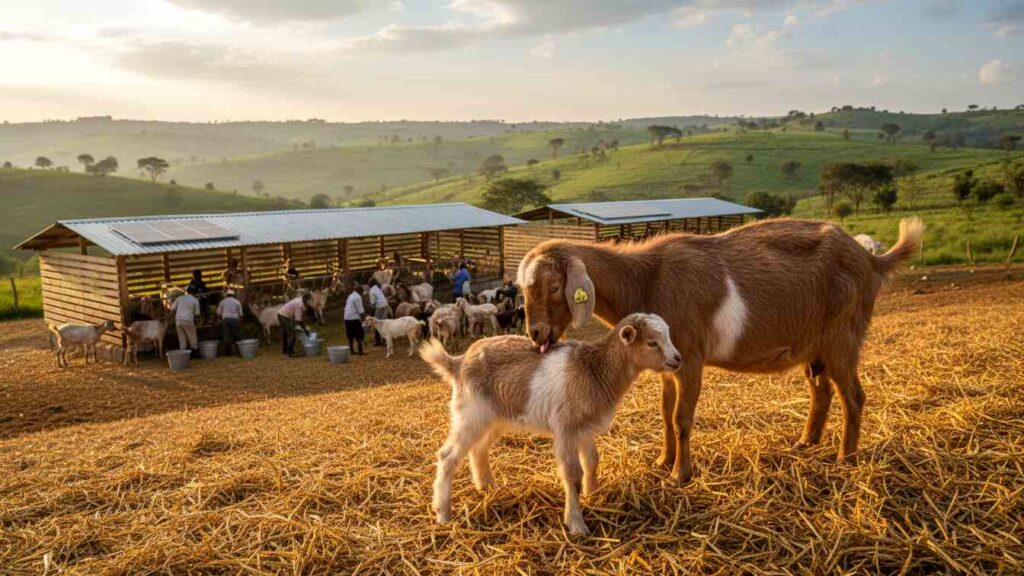
Gestation (pregnancy) in goats lasts approximately 150 days (5 months). As the doe approaches her due date, separate her into a “kidding pen” at least 7 days before. This pen must be disinfected and bedded with clean, dry wheat straw or dry grass. Watch for signs of labor: the doe will become restless, paw the ground, and a thick mucous string will hang from the vulva. Once the kid is born, the first priority is clearing the airways. Wipe the mucus from the nose and mouth. Dip the umbilical cord in Iodine to prevent infection. The kid MUST suckle the “Colostrum” (first milk) within the first 2 hours of life. Colostrum is rich in antibodies that provide the kid’s only immunity against diseases. A kid that misses colostrum has a less than 50% chance of survival.
Rearing Kids for Replacement
Do not starve the kids to sell milk. A stunted kid will never become a high-producing doe. Allow kids to suckle or bottle-feed them adequately for at least 3 months. Weaning should be done based on weight (at least 12-15kg), not just age. Introduce high-quality hay and starter pellets from week 2 to develop their rumen.
DISEASE CONTROL AND HERD HEALTH MANAGEMENT
A sick goat is a liability. In Kenya, the disease landscape is aggressive, but preventable. Your health strategy should focus on prevention rather than cure. Veterinary drugs are expensive, and treatment often leads to a drop in milk production that can take months to recover.
Vaccination Schedule (Kenyan Context)
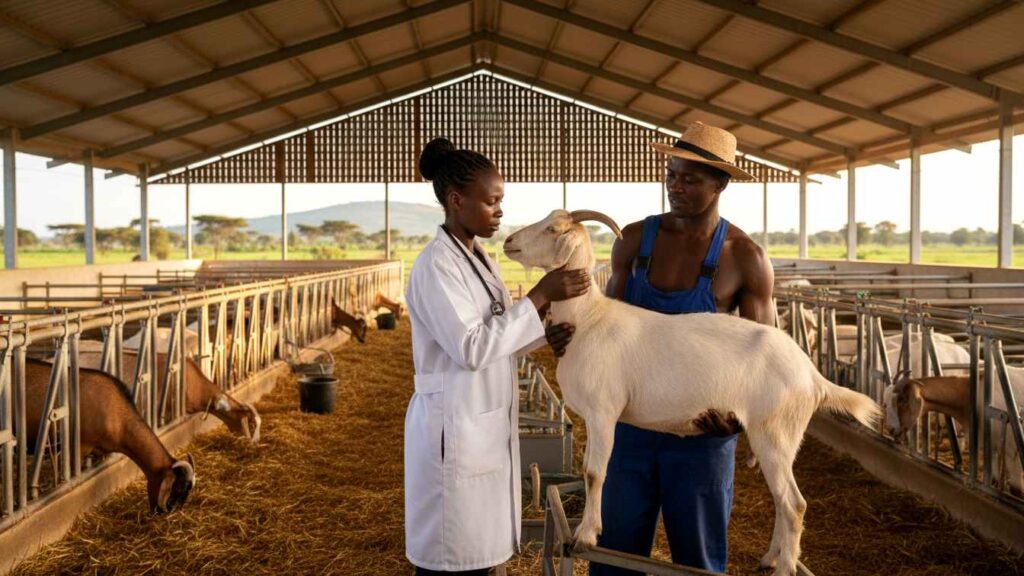
You must adhere to a strict vaccination calendar. The mandatory vaccines for Kenya in 2026 are:
- CCPP (Contagious Caprine Pleuropneumonia): This is a devastating lung disease. Vaccinate annually.
- Enterotoxaemia (Pulpy Kidney): Caused by a sudden change in diet. Vaccinate annually and boost pregnant does 2 weeks before kidding to pass immunity to the kids.
- Rift Valley Fever (RVF): Critical during rainy seasons (El Niño years). Vaccinate as per government directives.
- Anthrax and Blackquarter: Vaccinate annually.
- Goat Pox: Vaccinate annually if the disease is prevalent in your county.
Parasite Control (Deworming and Tick Control)
Internal worms (Haemonchus contortus) are the silent killers of dairy goats. They cause anemia (bottle jaw) and severe weight loss. Deworm your adult goats every 3 months. However, to prevent resistance, rotate the dewormer brands (active ingredients like Albendazole, Ivermectin, Levamisole). For kids, start deworming at 1 month of age. External parasites like ticks and mites transmit fatal diseases like Heartwater. Even in zero-grazing units, ticks can enter via hay or grass. Spray or dip your goats weekly using acaricides. Pay special attention to the areas under the tail, ears, and udder where ticks hide.
Common Ailments and Management
- Pneumonia: Caused by cold, drafty housing. Symptoms include coughing and nasal discharge. Treat early with antibiotics (Oxytetracycline).
- Mastitis: Inflammation of the udder. Prevent by maintaining hygiene. Use a California Mastitis Test (CMT) kit weekly to detect sub-clinical cases.
- Bloat: Accumulation of gas in the rumen. Treat with anti-bloat oil or vegetable oil. Avoid feeding wet, young grass.
- Scours (Diarrhea): Common in kids due to dirty milk or overfeeding. Rehydrate immediately and treat with Sulpha drugs.
MILKING, HYGIENE, AND VALUE ADDITION
Milk is your primary revenue stream. The quality of your milk determines your market price. Kenyan consumers are becoming increasingly quality-conscious, and processors will reject milk with high bacterial counts or antibiotic residues.
Safe Milking Procedures
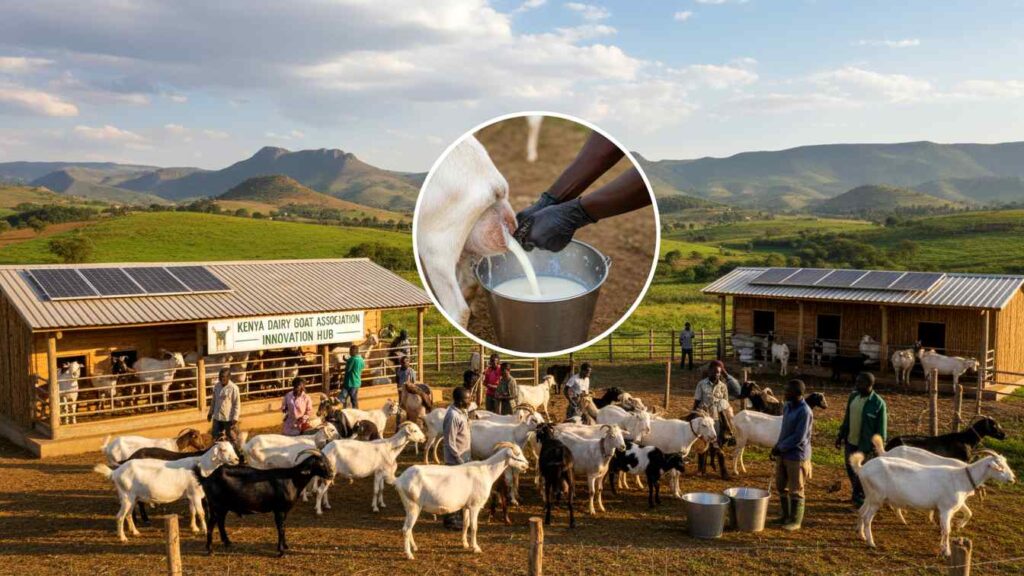
Milking should be done at the same times every day (e.g., 6:00 AM and 5:00 PM) to maintain routine.
- Preparation: Wash your hands thoroughly. Wash the goat’s udder with warm water and a disinfectant, then dry it with a clean individual towel (never share towels between goats).
- Strip Cup: Squeeze the first few streams of milk from each teat into a strip cup. Check for clots or watery milk, which are signs of Mastitis. If the milk is clear, proceed.
- Milking: Use a full-hand squeeze method, not a thumb-and-finger pull (stripping), which can damage the teat tissue. Milk quickly and completely.
- Post-Milking: Dip the teats in a post-milking teat dip (iodine-based) to seal the teat canal and prevent bacteria from entering.
- Recording: Weigh the milk immediately and record it against the goat’s name. This data is your business ledger.
Value Addition Opportunities
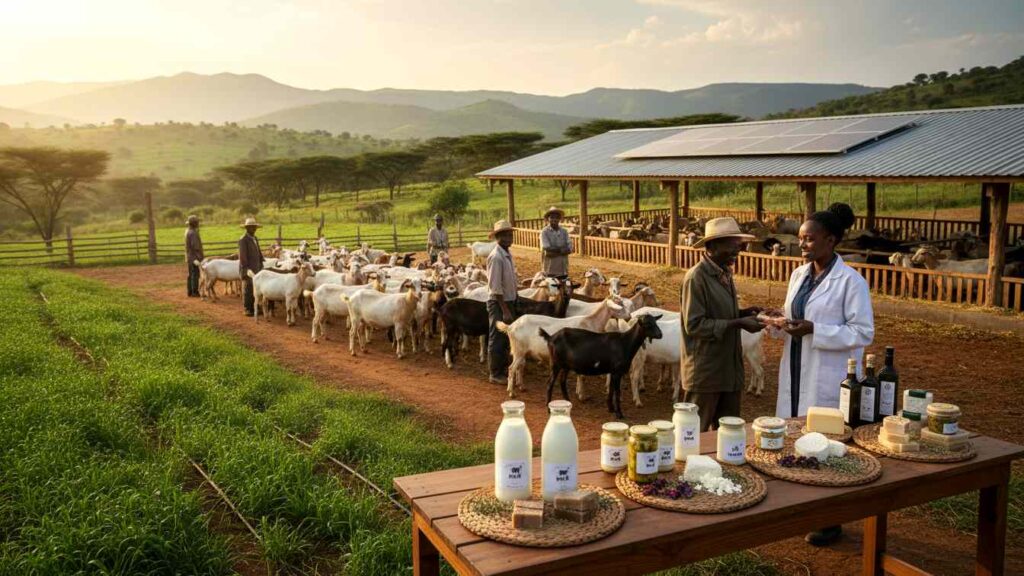
Selling raw milk is good, but value addition is where the real profit lies. In 2026, the market for goat yoghurt and goat cheese (Feta, Chèvre) is expanding in urban centers. Goat milk is naturally homogenized and has smaller fat globules, making it easier to digest for people with lactose intolerance. By pasteurizing the milk (heating to 63°C for 30 minutes) and packaging it into branded bottles or processing it into yoghurt, you can increase your selling price from KES 200/liter to KES 400/liter or more. Simple home-based pasteurization kits are available in Nairobi for under KES 15,000.
ECONOMICS, MARKETS, AND BUSINESS PLANNING
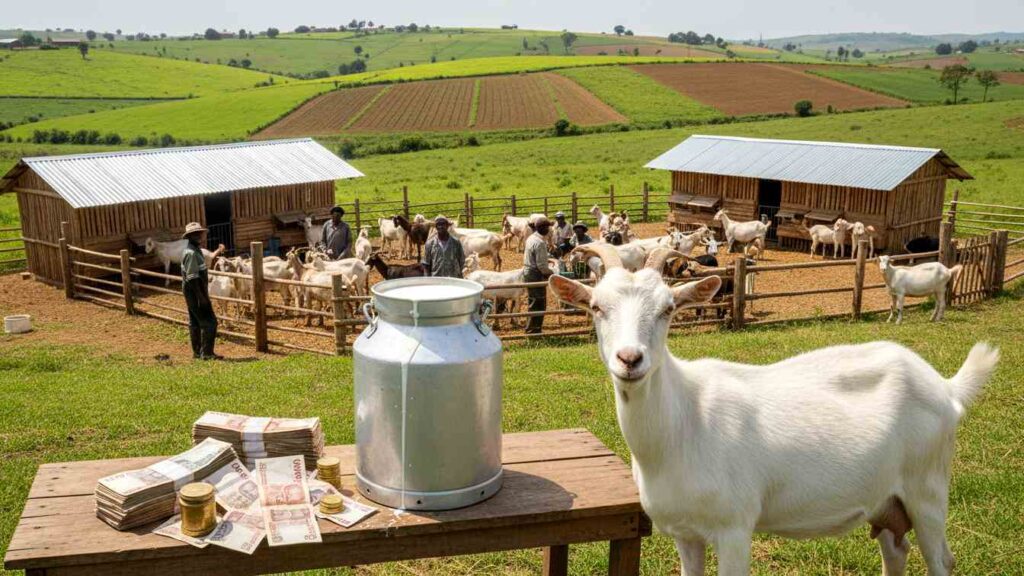
Farming is a business. You must know your numbers. Let’s look at a conservative estimate for a starter unit of 3 Does in 2026.
Cost Benefit Analysis (2026 Estimates)
| Item | Cost/Revenue (KES) |
| Initial Capital | |
| Housing Construction (3-goat unit) | 15,000 – 20,000 |
| Breeding Stock (3 Does @ 25k) | 75,000 |
| Equipment & First Feeds | 15,000 |
| Total Start-up | ~110,000 |
| Monthly Running Costs | |
| Concentrates & Supplements | 4,500 |
| Deworming/Vet | 1,000 |
| Total Monthly Expenses | 5,500 |
| Monthly Revenue (Conservative) | 45,000 |
| Net Monthly Profit | 39,500 |
This calculation assumes you have your own fodder. If you buy all fodder, your profits will reduce by 40%. This highlights the importance of the “grow-your-own” feed strategy. Additionally, manure sales can cover your water bill.
Marketing Strategies
Do not wait for customers to find you.
- Social Media: Use Facebook, TikTok, and WhatsApp groups. “Nairobi Farmers Market” and specific estate groups are goldmines.
- Local Institutions: Approach private hospitals and clinics. Doctors often prescribe goat milk for patients recovering from chemotherapy or infants with cow milk allergies.
- Cooperatives: Join the Dairy Goat Association of Kenya (DGAK). They have branches countrywide and often organize collective milk collection or breeding stock sales.
ONLINE SEED PURCHASE GUIDE AND RESOURCES
To succeed, you need the right inputs. Here is where to find genuine seeds and breeding stock in Kenya for the 2026 season.
- KALRO (Kenya Agricultural and Livestock Research Organization):
- For Fodder Seeds: Visit the KALRO DRI (Dairy Research Institute) in Naivasha or KALRO Katumani for dryland crops. Website: www.kalro.org
- Breeding Stock: KALRO Naivasha holds annual auctions for bucks and does. Keep an eye on their website for dates.
- Kenya Seed Company:
- For Pasture Seeds: They stock Rhodes Grass (Boma/Elmba), Lucerne, and Sorghum varieties.
- Availability: Major agro-vets countrywide. Website: www.kenyaseed.com
- Simlaw Seeds:
- For Vegetables & Legumes: Best source for Desmodium seeds and Lucerne.
- Location: Kijabe Street, Nairobi, and countrywide branches. Website: www.simlaw.co.ke
COMPREHENSIVE FAQ
- Q1: How much land do I need to start dairy goat farming in Kenya? A: A zero-grazing unit for 4 goats occupies about 10ft by 15ft. However, you need at least 0.25 to 0.5 acres to grow fodder.
- Q2: Which is better between Alpine and Toggenburg? A: Alpine handles heat better; Toggenburg is better for cool, high-altitude areas. Both are excellent milkers.
- Q3: Can I feed my goats only Napier grass? A: No. You MUST supplement with protein legumes and mineral salts for health and production.
- Q4: How do I stop my goats from getting bloat? A: Wilt fresh grass in the sun for 3-4 hours and introduce new feeds gradually.
- Q5: Where can I sell my goat milk in Kenya? A: Neighbors, local hospitals, and goat farmers’ associations like DGAK.
- Q6: What is the lifespan of a dairy goat? A: 10-12 years, but peak production declines after 7-8 years.
- Q7: How often should I deworm my goats? A: Adults every 3 months. Always rotate deworming drug brands.
- Q8: Can goats and cows be kept together? A: Not recommended in the same pen due to bullying and different needs.
- Q9: Why is my goat producing milk with a bad smell? A: Often the “Buck Effect.” Keep the breeding buck in a separate house downwind.
- Q10: Is goat farming profitable in dry areas like Kitui or Machakos? A: Yes, but plant drought-resistant fodder like Brachiaria and consider Galla goat crosses.
- Q11: How do I transport a goat safely? A: Use a vehicle or crate where they can stand comfortably. Never tie them to roofs or boda bodas.
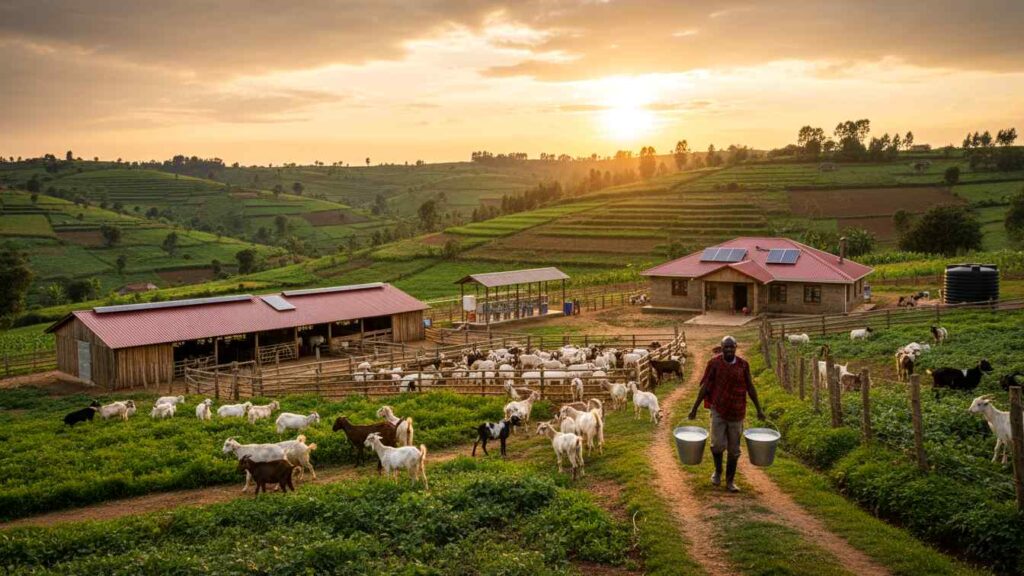
With dedication, proper management, and the right knowledge, dairy goat farming is a path to financial freedom in 2026. This guide provides the technical backbone for your farming venture. The success of your farm now rests on your discipline to implement these standards. Start small, learn the behavior of your animals, and scale up as your experience and fodder reserves grow. Happy farming!
Read more

10 Most Profitable Farming Ventures in Kenya for 2026
Why 2026 is the Year of the Agropreneur The Kenyan agricultural sector has undergone a massive transformation over the last five years. Gone are the days when farming was a retirement plan or a last resort. In 2026, you are entering an era of precision agriculture and high-value export markets. The farmers making millions today are not just…
100 Smart Garden Tips 2026: The Ultimate Guide for Kenya Farmers
Save 80% on food costs with 100 smart garden tips for 2026. Learn how to use KES 2,500 subsidized fertilizers and vertical farming to earn KES 15,000 monthly from your Kenyan backyard.
15 Most Profitable Agribusiness Ideas in Kenya to Start in 2026
Discover the 15 most profitable agribusiness ideas in Kenya to start in 2026. Explore expert tips on Hass avocados, poultry, fertilizer costs, and KALRO seeds.