
Table of Contents
EXECUTIVE SUMMARY OF THE 2026 EXPORT SEASON
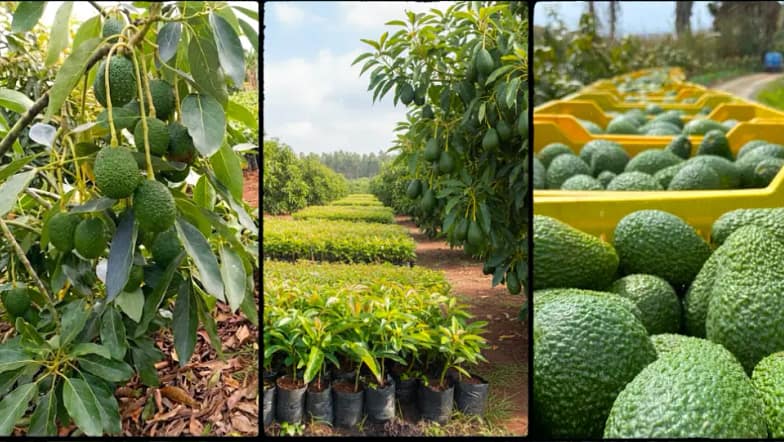
The 2026 Hass avocado season in Kenya is projected to be a landmark year, characterized by high value but tempered by significant climatic and regulatory challenges. Following the strategic closure of sea exports in October 2025-a government measure strictly enforced to prevent the export of immature fruit-the sea export window is officially scheduled to reopen in mid-March 2026. Air exports remain open for specific varieties like Hass and Fuerte, provided strict traceability measures are met, but the bulk of the volume will move via sea freight starting Q2.
Financially, the outlook is robust. Export prices for the 2026 season are trending upwards, driven by lower yields in competing markets like Peru and Mexico due to global weather anomalies. Kenyan farmers can expect farm-gate prices for export-grade produce to hover around KES 150 to KES 180 per kilogram for premium sizes (12-18). Local wholesale prices fluctuate between KES 30 and KES 60 per kilogram, while retail street prices range from KES 10 to KES 20 per fruit.
Read also: Pixie Orange Farming in Kenya 2026: Complete Guide to Seedlings, Costs and Profit per Acre
However, the climatic forecast for early 2026 predicts a weak La Niña event, signaling hotter and drier conditions than the historical average. This poses a threat to fruit size. Farmers without functional irrigation systems will struggle to achieve the “Size 12-16” fruits that command the highest premiums in the European and Chinese markets. Furthermore, the Horticulture Crops Directorate (HCD) has ramped up enforcement on traceability, meaning the “briefcase exporter” era is effectively over. Only those with registered farms and clear audit trails will succeed.
This master-level guide is designed for Kenyan farmers, agribusiness investors, and logistical stakeholders looking to enter or expand their footprint in the lucrative export market for the 2026 season. It covers regulatory compliance, advanced agronomy, financial modeling, and market trends specific to the current agricultural landscape.
UNDERSTANDING EXPORT REGULATIONS AND COMPLIANCE (HCD & KEPHIS)
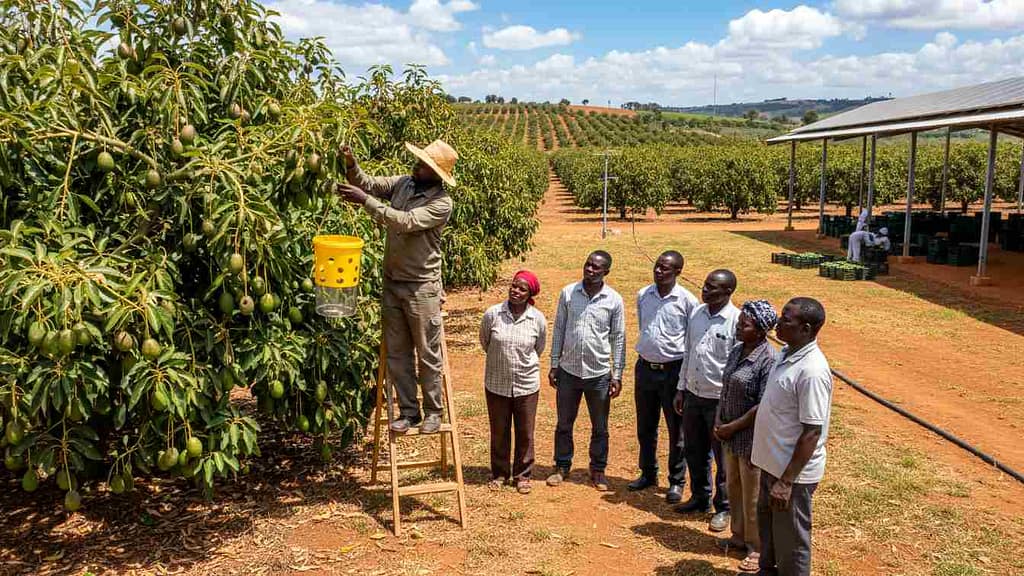
Before planting a single seed or signing a contract, you must navigate the regulatory landscape. The days of informal exporting are gone. The Horticultural Crops Directorate (HCD) and the Kenya Plant Health Inspectorate Service (KEPHIS) have tightened rules for 2026 to protect Kenya’s global reputation. The “Kenya Brand” was threatened in previous years by the interception of pests at European ports; consequently, the government has adopted a zero-tolerance policy.
Mandatory Registration and Licensing
Export licenses are not optional. You must register as an exporter with the HCD. This involves a vetting process where you must demonstrate access to a licensed packhouse. If you are a farmer, you must register your farm with your local county agricultural office and ensure your exporter lists you as a sourced farm. This linkage is crucial for the “Single Window System,” a digital platform used to clear cargo at the port of Mombasa or JKIA.
Phytosanitary Certification
Every consignment leaving Kenya must have a phytosanitary certificate issued by KEPHIS. This document certifies that your avocados are free from quarantine pests, specifically the False Codling Moth (FCM) and fruit flies (Bactrocera dorsalis). To get this certificate, KEPHIS inspectors must visit the packhouse during grading. If they find live pests, the consignment is rejected. In 2026, KEPHIS has introduced a “Farm-to-Port” tracking system where repeated interceptions from a specific farm will lead to that farm being blacklisted from the export grid for two seasons.
The KS 1758 Standard
The Kenya Standard 1758 (Horticulture Code of Practice) is now the baseline for compliance. While previously voluntary for some smallholders, major buyers in the EU (Netherlands, France, Germany) and the emerging Chinese market now demand full KS 1758 compliance. This covers food safety, worker hygiene, environmental conservation, and social accountability. Implementation of this standard requires documenting everything: from the type of fertilizer used to the toilet facilities available for harvesters.
Traceability: The 2026 Imperative
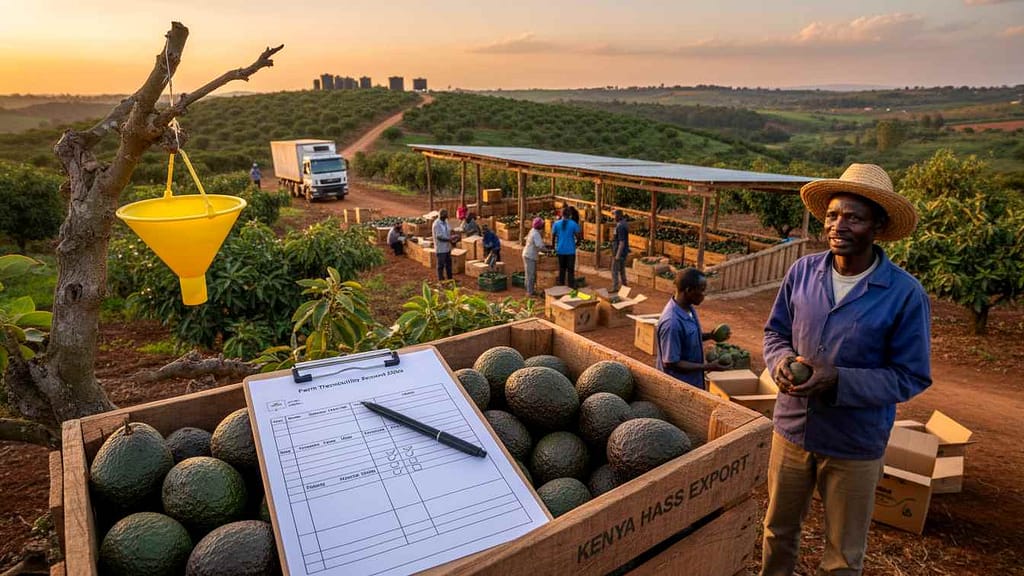
Traceability is the buzzword for 2026. European buyers now require a clear paper trail from the supermarket shelf back to the specific tree block in Kenya. This means you must maintain detailed records of your spray programs (dates, chemicals used, dosage), fertilizer applications, and harvesting dates.
Read also: How to Grow Bulb Onions in Crates: Step by Step Guide for Kenyan Farmers
Failure to produce these records during a random audit will result in your fruit being rejected at the port of entry. The digital integration of these records is becoming standard, with many exporters providing mobile apps for their contracted farmers to log data.
SELECTING THE RIGHT ECOLOGICAL ZONES AND VARIETIES
Success begins with location. You cannot force an avocado tree to be commercially viable in an incompatible zone.
The Dominance of Hass
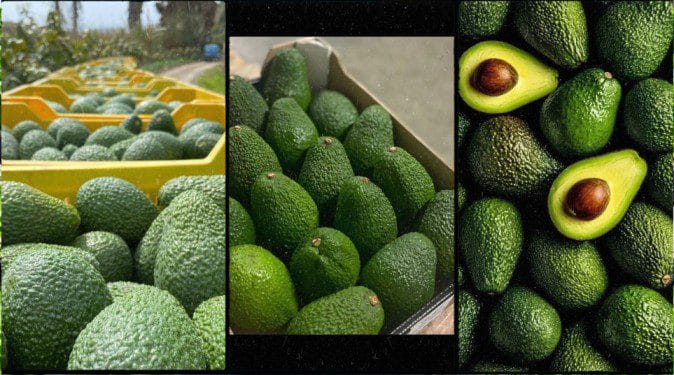
Hass is the undisputed king of export, accounting for over 75% of Kenya’s avocado exports. It is preferred for its long shelf life, high oil content, and the fact that its skin turns purplish-black when ripe, masking minor handling blemishes that would ruin a green-skinned variety.
The Role of Fuerte and Other Varieties
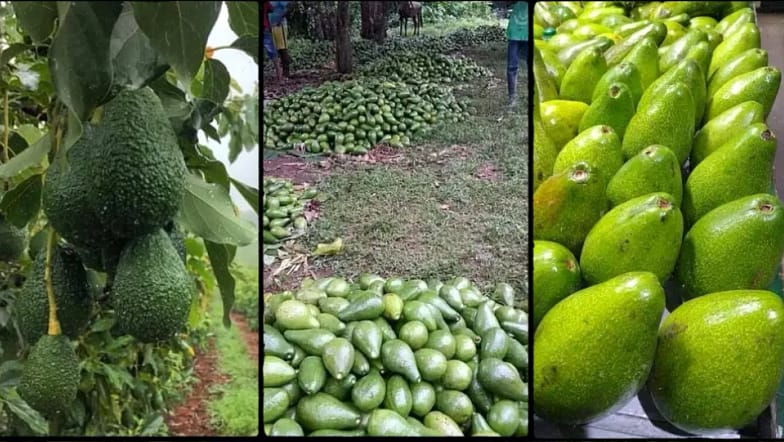
Fuerte is the second most common variety but is largely consumed locally or used for processing into crude avocado oil. Its thin green skin damages easily during shipping, making it risky for long sea voyages to Europe. However, Fuerte has a niche in the Middle East and for early-season air freight. For the 2026 market, planting Hass on Fuerte or indigenous rootstocks is a common practice to boost drought resilience and root rot resistance. Other varieties like Pinkerton are gaining small traction for specific windows, but Hass remains the safe investment.
Ecological Suitability and Altitude
Hass avocados thrive in altitudes between 1,000m and 2,200m above sea level. Ideal counties include Murang’a, Kiambu, Nyeri, Meru, Kisii, Kericho, and parts of Uasin Gishu and Trans-Nzoia. The trees require well-drained soil; waterlogging is the number one killer of avocado trees due to Phytophthora root rot. If your land has heavy black cotton soil or clay that holds water, you must plant on raised ridges/mounds or choose a different crop entirely.
Temperature Sensitivity
Temperature plays a vital role in fruit set. The tree needs cool temperatures (10-20°C) to induce flowering but warmer temperatures (20-28°C) for fruit development. Frost is fatal to flowers and young fruit. The predicted hotter conditions in early 2026 mean that farmers in lower altitudes (below 1,000m) may face higher rates of flower abortion and sunburn on the fruit. Canopy management to shade the fruit will be your primary defense against the harsh 2026 sun.
SOURCING CERTIFIED SEEDLINGS (ONLINE SEED PURCHASE GUIDE)
The success of your orchard depends entirely on the quality of your seedlings. You must buy grafted seedlings from KEPHIS-certified nurseries. “Roadside” seedlings often carry root rot diseases or are not true-to-type, meaning they might never produce export-quality fruit. In 2026, a certified seedling costs between KES 250 and KES 450 depending on its age and the nursery’s reputation.
Verified Sources for 2026
To avoid fraud, purchase from these verified entities:
1. KALRO (Kenya Agricultural and Livestock Research Organization)
Availability: Horticulture Research Institute (Kandara/Thika) and Tigoni Centre.
Best for: 100% genetic purity and disease-free rootstocks. KALRO is the gold standard for foundation material.
Contact: Visit their headquarters in Loresho or the specific institutes directly.
2. Farmers Trend Limited
Price: Approx. KES 250 – 300 per seedling.
Service: Offers online ordering and delivery across Kenya. They are popular for their “virtual agrovet” platform and verified agronomy content.
Website/Contact: Search “Farmers Trend Kenya” for their digital shop.
3. Royal Seedlings (Murang’a)
Price: KES 300 – 450.
Service: Specializes in large-scale export-quality seedlings. They often have seedlings ready for immediate planting during the rainy season.
Focus: High sanitary standards to prevent Phytophthora transmission.
4. Richfarm Kenya
Price: KES 150 – 350.
Service: Provides agronomy support and “start-up packages” that include soil testing and hole preparation guidance.
Contact: Search “Richfarm Kenya” for direct sales lines.
5. Oxfarm Organic Ltd
Service: Sells comprehensive packages that include seedlings, organic fertilizer, and planting labor.
Best for: Absentee farmers who need a “done-for-you” management service.
Evaluating Seedling Quality
When buying, inspect the graft union. It should be clean, fully healed, and V-shaped. Avoid seedlings where the scion (top part) is much thicker than the rootstock, or where the leaves show yellowing (chlorosis), which indicates root issues. Ensure the seedlings have been “hardened off”-exposed to sunlight gradually-so they don’t die of shock when planted in the field.
LAND PREPARATION AND PLANTING PROTOCOLS
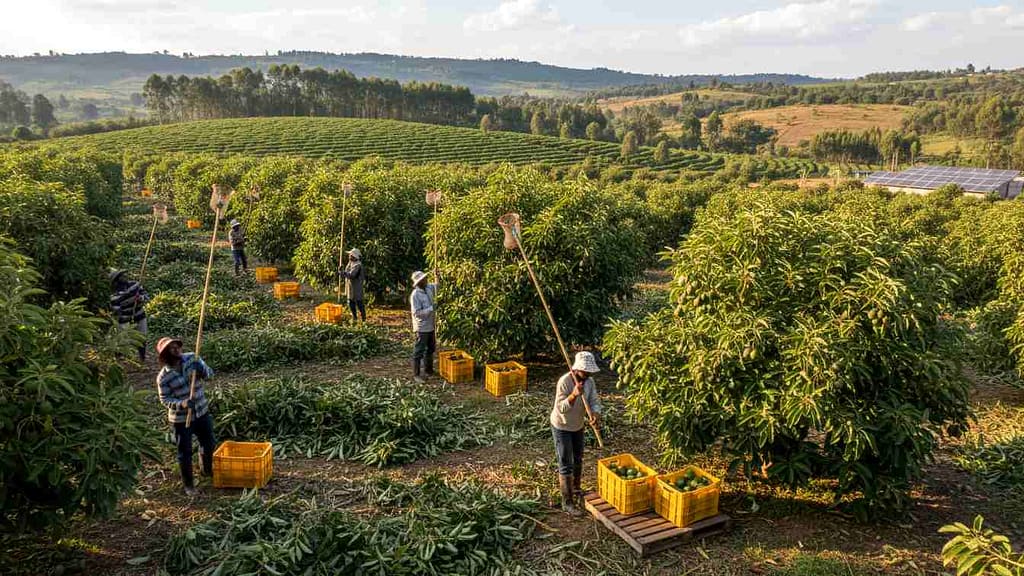
Proper land preparation is a one-time investment that dictates the lifespan of your orchard.
Spacing and Density
The standard spacing for Hass avocados in Kenya is 5m by 5m (approx. 150 trees per acre). This allows for machinery access and sufficient light penetration. High-density planting (3m by 3m or 4m by 3m) is gaining popularity to maximize yields in the first 7 years, but it requires rigorous pruning (hedging) to prevent the orchard from becoming a dark jungle. For most farmers, 5m x 5m is the sustainable choice.
Planting Hole Specifications
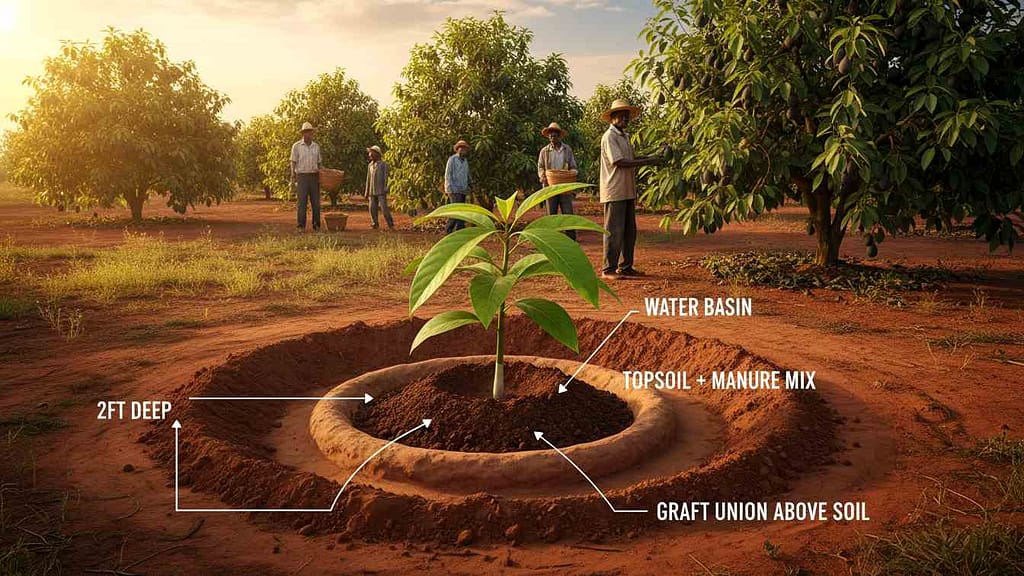
Dig planting holes that are 2ft by 2ft by 2ft (60cm x 60cm x 60cm). Separate the topsoil (darker, nutrient-rich) from the subsoil (red/brown, clay-heavy). Mix the topsoil with two debes (approx. 40kg) of well-decomposed manure (cattle or goat) and 250g of DAP planting fertilizer. DAP provides the phosphorus needed for strong root development.
Soil Correction
Before filling the hole, review your soil test results. If your soil is acidic (pH below 5.5), which is common in tea-growing zones like Murang’a and Kericho, add agricultural lime during this mixing stage. Avocados struggle to uptake nutrients in acidic soil.
Planting Technique
Fill the hole with the manure-soil mixture and water it heavily to allow it to settle for a week before planting. This prevents the seedling from sinking too deep later. When planting, carefully remove the plastic bag without breaking the soil ball housing the roots. Place the seedling in the center.
Crucial Rule: Ensure the graft union remains at least 3 inches above the soil line. Burying the graft union will cause the scion to rot, killing your expensive seedling within months. Create a small basin around the tree to hold water, but ensure the soil slopes slightly away from the trunk to prevent collar rot.
FERTILIZER AND WATER MANAGEMENT (2026 CLIMATE ADAPTATION)
The 2026 weather forecast predicts a drier-than-average start to the year. Water stress during flowering (August-October) and fruit set (January-March) causes massive fruit drop, known as “June Drop” or “December Drop.”
Irrigation Requirements
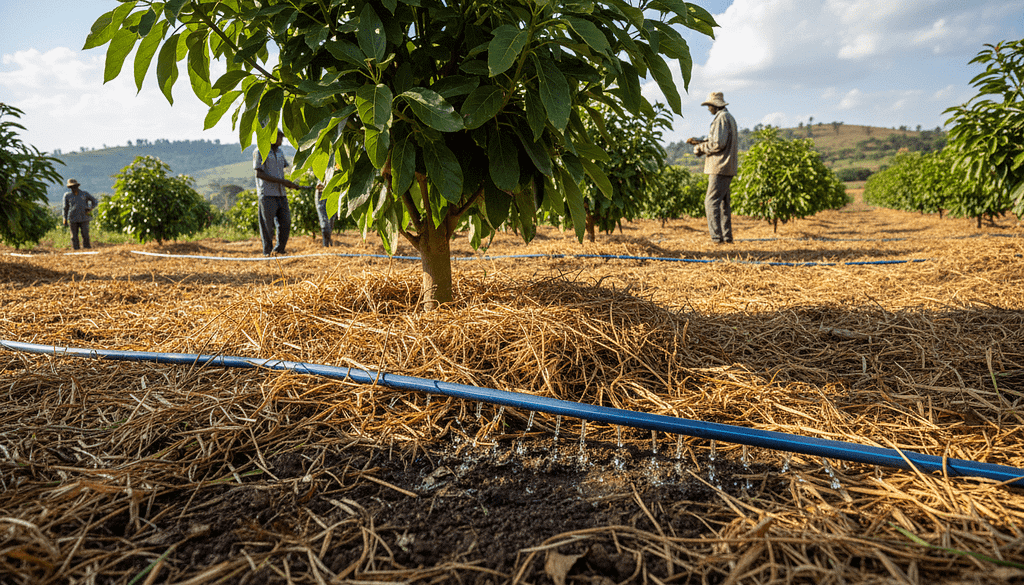
You must invest in irrigation to be a serious exporter. Reliance on rain-fed agriculture is a gamble that usually results in small fruit sizes (rejected by exporters). A simple drip irrigation line (16mm pipe with integral drippers) for each row is the most efficient method.
Read also: Dairy Farming in Kenya: Complete Beginner’s Guide, Costs, Profits and Best Breeds
Volume:Young trees (Year 1-2): 10-20 liters per week.Mature trees (Year 4+): 50-80 liters per week during dry spells.
Consistency is key. Erratic watering (flooding then drying out) causes fruit cracking and stress-induced drop.
Nutrient Management Program
Fertilizer application should follow a strict schedule based on the tree’s phenological cycle.
1. Vegetative Stage (Year 1): Focus on Nitrogen for growth. Apply CAN (Calcium Ammonium Nitrate) three times a year (one handful, approx 150g per tree) during the rains.
2. Pre-Flowering (Mature Trees): Apply NPK rich in Phosphorous to boost root and flower formation.
3. Fruit Setting & Enlargement (The Critical Phase): Apply NPK rich in Potassium (e.g., NPK 15:9:20 or Yara Mila Winner). Potassium is the “fruit filler”-it increases the weight and size of the avocado.
4. Organic Matter: Apply 2-4 debes of well-rotted manure per tree annually at the onset of the long rains. This improves soil structure and moisture retention.
Micronutrients: The Quality Secret
Zinc and Boron are the difference between Class 1 and Class 2 fruit.Boron: Deficiency causes “corking” inside the fruit and distorted shapes.Zinc: Deficiency causes small leaves and poor fruit finish.
Apply foliar sprays containing Zinc and Boron just before flowering (bud burst) and again when fruits are the size of a marble. Products like Solubor or specialized avocado foliars are available in local agrovets.
PEST AND DISEASE CONTROL (THE LYNFIELD TRAP REQUIREMENT)
Pest management is the biggest hurdle for Kenyan exporters. The European Union and new markets like South Korea have zero tolerance for quarantine pests.
False Codling Moth (FCM)
FCM is the primary threat. If a single moth larva is found in your shipment at a European port, the entire container is destroyed at your cost, and Kenya risks a total ban.
The Solution: Pheromone Traps. HCD now mandates the use of Lynfield traps or similar delta traps. You should install at least 2-4 traps per acre. These traps use a female pheromone to attract and kill male moths, breaking the breeding cycle. You must monitor these traps weekly and record the “kill count” for your audit.
Fruit Flies
Fruit flies sting the fruit, leaving invisible eggs that hatch into maggots during shipping.
Read also: Hass Avocado in Kenya: Price, Seedlings, Varieties & Where to Buy
Control: Use protein bait sprays (like bacterial-based baits or Torula yeast). Spot-spray a small patch of foliage on the trunk or lower branches-never spray the fruit itself. The flies are attracted to the protein, eat the poison, and die.
Fungal Diseases: Anthracnose and Cercospora
These fungi cause black spots on the fruit skin, rendering them “ugly” and unsellable, even if the inside is perfect.
Control: A preventative copper-based fungicide spray program is required. Start spraying at the onset of rains and repeat monthly.
Critical Warning: Observe “Pre-Harvest Intervals” (PHI). You must stop spraying chemicals at least 14-21 days before harvest. Modern testing equipment in Europe detects chemical residue up to parts per billion. If you exceed the MRL (Maximum Residue Limit), your fruit is rejected.
Thrips
Thrips damage the fruit skin when it is very young, causing “scabs” or alligator skin as the fruit expands.
Control: Monitor flowers and young fruit. Use IPM (Integrated Pest Management) compatible pesticides like Spinosad or Neem-based products early in the season.
HARVESTING AND POST-HARVEST HANDLING
Harvesting is not about picking everything at once. It is a selective, scientific process.
Determining Maturity (Dry Matter)
You cannot judge maturity by skin color alone for Hass. The standard metric is Dry Matter Content. For export, Hass avocados must have a dry matter content of at least 21-23%. This ensures they ripen evenly after 20-30 days of sea shipping. If harvested with low dry matter (immature), the fruit will shrivel and never ripen, tasting rubbery. Exporters will often visit your farm to sample fruits and test them in a microwave or dehydrator before giving the green light to harvest.
Harvesting Techniques
Tools: Never pull the fruit. Pulling tears the skin at the stalk, creating an entry point for stem-end rot. Use specialized clipping shears (snips).The Cut: Cut the stalk, leaving about 0.5cm (the “button”) attached to the fruit. If the stalk is too long, it will puncture other fruits in the crate. If it is removed completely, the fruit will rot.Hygiene: Fruits must never touch the bare ground. Soil contains fungal spores. Harvested fruits should be placed gently into canvas picking bags and then transferred to clean, rigid plastic crates.
Handling and Shade
Do not use woven sacks (gunia). They scratch the fruit skin, leading to “rub marks” that darken and look like bruises later. Keep the harvested crates in the shade immediately. Leaving crates in the direct sun for even one hour can raise the internal pulp temperature, accelerating the ripening process and shortening the shelf life by weeks. The “Cool Chain” starts on the farm.
MARKETING AND EXPORT LOGISTICS
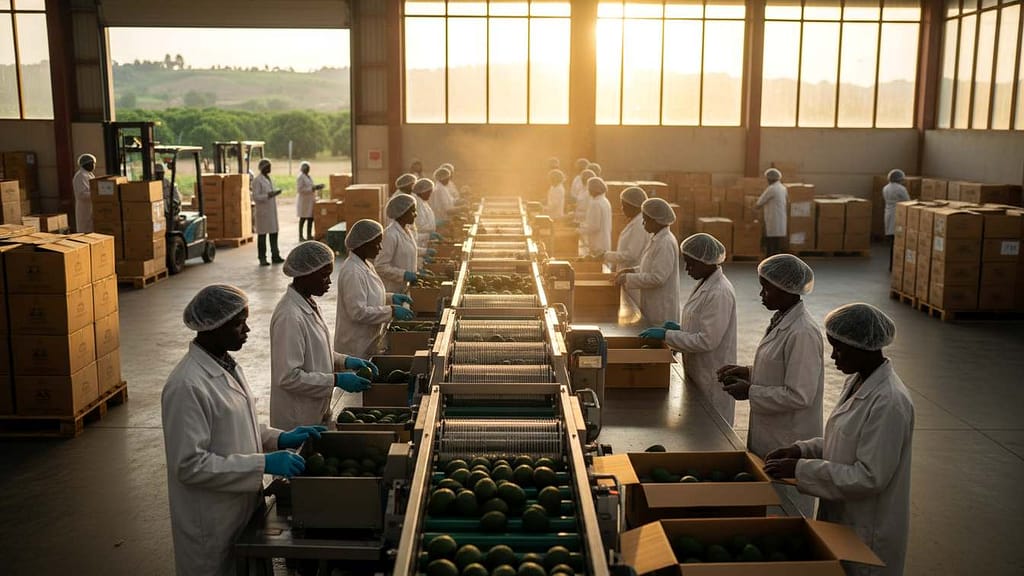
As a beginner, you will likely not export directly yourself in your first year. The logistics of booking air freight or sea containers, clearing customs, and handling international payments are complex and capital-intensive.
The Contract Farming Model
The smartest route is to contract with an established export company. Top registered exporters in Kenya include Kakuzi, Keitt Exporters, Mofarm, and various members of the Avocado Society of Kenya.
How it works:
1. Sign a contract early in the season.
2. The exporter provides agronomy advice and sometimes advances chemicals.
3. During harvest, they bring their own grading teams or supervise your team.
4. Payment is usually calculated per kilogram based on the graded fruit (Export Grade vs. Oil Grade).
The Cooperative Model
If you are a smallholder farmer (less than 5 acres), you lack the volume to fill a 40ft container (which holds ~20 tons). Join a local avocado cooperative. Cooperatives aggregate volume from many small farmers to negotiate better prices with big exporters. They also help in sharing the cost of expensive certifications like GlobalGAP and GRASP, which are requirements for selling to premium European supermarkets like Tesco or Lidl.
Direct Export (Advanced)
If you have significant volume (over 50 acres) or a consortium of farmers, you can register as an exporter. This requires:HCD Export License.Packhouse agreement (you can lease space in an EPZ packhouse).Freight forwarding partner (e.g., Kuehne+Nagel, Bolloré).Marketing agent in Europe/Asia to receive and sell the fruit.
Market Destinations in 2026
Europe (EU): The biggest market. High volume, strict quality (GlobalGAP required).China: The growing giant. Requires specific orchard registration and strict fumigation protocols. Prices are premium but rejection rates are higher for skin blemishes.Middle East (Dubai/Qatar): Good for air freight and lower grade fruit (Class 2).India & Malaysia: New protocols opened in 2024/2025, offering new opportunities for diversification.
FINANCIAL PROJECTIONS AND ROI ANALYSIS FOR 2026
Farming is a business. Here is what the numbers look like for a well-managed operation in 2026.
Revenue Potential (Per Acre)
Tree Count: 150 trees (5m x 5m spacing).Yield (Mature, 5+ years): Conservative estimate of 400-500 fruits per tree.Tonnage: Approx. 8-10 tons per acre.Price: At a conservative average of KES 100 per kg (farm gate for export quality), revenue is KES 800,000 to KES 1,000,000 per acre per year.Note: First harvest (Year 3) will be small (approx. 1-2 tons), ramping up significantly in Year 4 and 5.
Cost of Production (Annual)
Fertilizer & Manure: ~KES 60,000 per acre.Crop Protection (Sprays): ~KES 50,000 per acre.Labor (Pruning, weeding, harvesting): ~KES 40,000 per acre.Water/Irrigation: ~KES 30,000 per acre (pumping costs).Total Operational Cost: ~KES 180,000 – 200,000 per acre.
Profit Margin
Gross Profit: KES 800,000 – KES 200,000 = KES 600,000 per acre.
This represents a very high ROI compared to maize or beans, but it requires patience (3-4 years of negative cash flow before break-even).
CHALLENGES AND RISK MITIGATION
1. Theft: As avocado prices rise, theft has become a major issue in Central Kenya.Mitigation: Fence your orchard, use sensor lights, or hire guards during harvest season (Feb-Aug).
2. Climate Change: Unpredictable rains.Mitigation: Invest in water harvesting (pans/dams) and mulch heavily.
3. Market Saturation: Everyone is planting avocados.Mitigation: Focus on Quality. There is always a shortage of Size 12-16 Premium fruit. There is a glut of small, scarred fruit. Be in the top 10% of quality producers.
FAQ: COMMON QUESTIONS FROM KENYAN FARMERS
Q1: How much money can I make from one acre of Hass avocados in 2026?
A: A mature, well-managed acre (150 trees) can produce 8-10 tons of fruit per year. At a conservative export price of KES 100/kg (farm gate), this is KES 800,000 to KES 1,000,000 in gross revenue. However, beginners often start with 3-5 tons per acre in the first bearing years.
Q2: How long does it take for a Hass avocado tree to fruit?
A: Grafted Hass seedlings typically start bearing small crops in year 2 or 3. Commercial quantities (profitable yields) are usually reached by year 4 or 5. Seedlings that are not grafted can take 7-10 years and may never produce quality fruit.
Q3: Can I export avocados if I only have 50 trees?
A: Yes, but not directly. You will need to sell to an aggregator or exporter agent. They will combine your harvest with others to fill a container. Ensure you are registered with a group to get the benefits of scale.
Q4: Why do my avocado flowers fall off without forming fruit?
A: This is usually due to water stress (lack of irrigation) or lack of pollination. Ensure you are irrigating during flowering and avoid spraying insecticides in the morning when bees are active. Boron deficiency also causes poor fruit set.
Q5: What is the “closed season” I hear about?
A: The Kenyan government (HCD) closes the export market for sea shipments from roughly October to March. This is to prevent farmers from harvesting immature fruit to chase high prices, which ruins Kenya’s reputation. Air exports are often still allowed with strict permits, but the main sea volumes stop.
Q6: Do I need a license to grow avocados?
A: You do not need a license to grow them for yourself, but you need to register with your local county agriculture office and HCD if you intend to sell for export. This registration is free or low-cost and is required for traceability.
Q7: What is the difference between Fuerte and Hass prices?
A: Hass almost always fetches a higher price (often double) because of the global export demand. Fuerte is sold cheaply in local markets or to oil processors because it ripens too fast and has thin skin.
Q8: Can I intercrop beans or maize with avocados?
A: In the first 2-3 years, yes. Legumes like beans are good as they fix nitrogen. Avoid heavy feeders like maize too close to the tree (keep a 1-meter radius clear). Strictly avoid potatoes, tomatoes, and capsicum as they carry bacterial wilt and nematodes that can spread to the avocado roots.
✔ EXPERT TIP:
Always test your soil before planting. A KES 2,000 soil test from a reputable lab (like CropNuts or KALRO) can save you KES 200,000 in wasted fertilizer. If your soil pH is too acidic, your trees will never absorb the expensive fertilizer you buy, leading to stunted growth.
⚠ CRITICAL WARNING:
Beware of “brokers” who offer cash prices slightly above the market rate but do not care about traceability. Selling to them might seem profitable today, but it keeps you out of the formal system. If you sell to a broker, you cannot prove your harvest history, and you will fail future audits for certification. Stick to registered agents and build a long-term relationship.
By following this guide, you are positioning yourself not just as a farmer, but as a professional agribusiness operator ready to succeed in the 2026 global market. The opportunity is immense, but it favors the disciplined, the compliant, and the patient.
Read more
How to Grow Tomatoes in Plastic Containers with a Self-Watering System (Beginner’s Guide 2026)

Learn how to grow tomatoes in plastic containers with a self-watering system in Kenya. A complete 2026 guide on varieties, DIY setup, and high-yield tips.
Watermelon Farming in Kenya 2026: Step by Step Guide from Planting to Harvest
Master Watermelon Farming in Kenya 2026 with this step-by-step guide. Learn about the best varieties (Sukari F1), cost of production, disease control, and how to make KES 300k+ per acre.
How to Grow Tomatoes in Sacks: A Complete Step-by-Step Guide for 2026
Learn how to grow tomatoes in sacks in Kenya. 2026 guide covers best varieties, KES financial breakdown, pest control, and trusted suppliers like KALRO