
Table of Contents
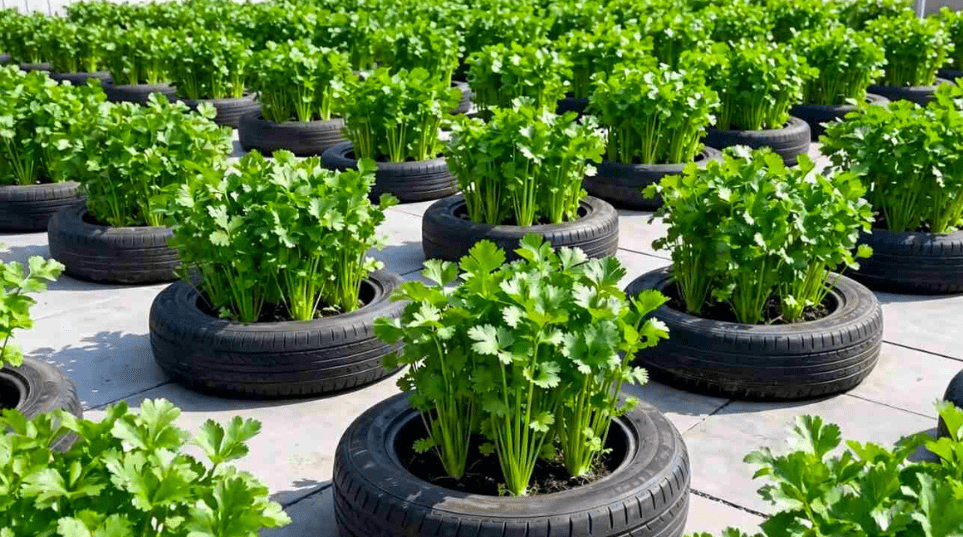
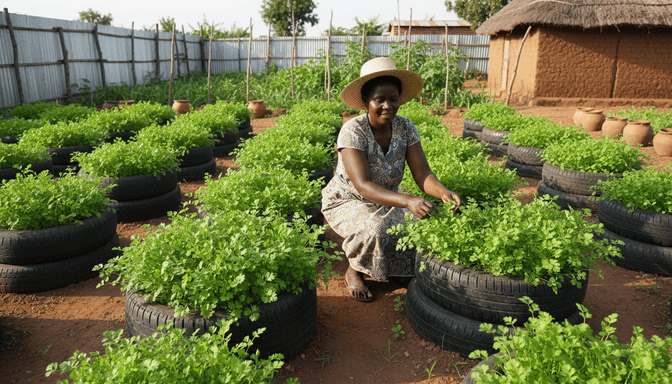
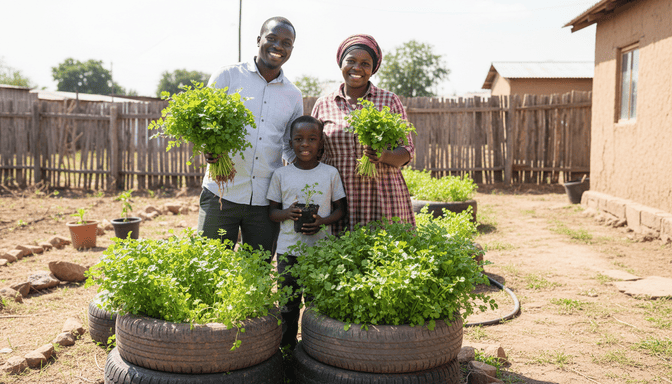
Farming in Kenya is changing. You no longer need acres of land in the village to grow your own food. In busy towns like Nairobi, Mombasa, and Kisumu, space is tight, and innovative farming is becoming a necessity. One of the most practical ways to grow vegetables is by using old automobile tyres. Among the best crops for this method is Coriander, which we locally call Dhania.
Dhania is a must-have spice in almost every Kenyan kitchen. Whether you are frying Sukuma Wiki or making fresh Kachumbari, you need that fresh aroma. The problem is that market prices jump up and down, and the herbs you buy at the supermarket often lack flavor. Growing coriander at home in old tyres solves these issues. It saves you money, it uses up waste that would otherwise litter the environment, and it guarantees you fresh produce.
This guide will walk you through exactly how to set up a tyre garden for coriander. We will cover how to mix your soil, how to treat the seeds so they actually grow, and how to deal with pests. This method is perfect for beginners and requires very little money to start.
You May Like
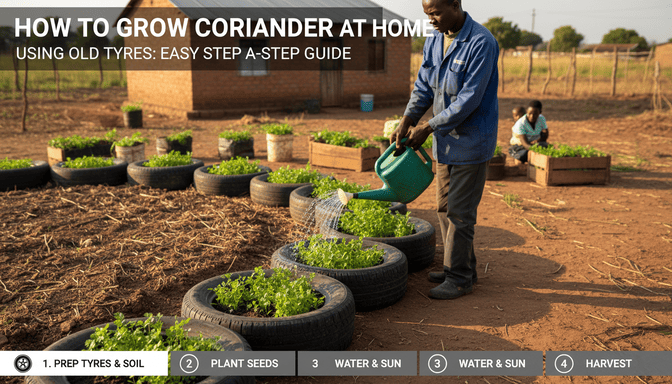
How to Grow Coriander at Home Using Old Tyres: Easy Step-by-Step Guide
The Advantages of Tyre Farming for Coriander
Using old tyres is often called container gardening. Tyres are everywhere in Kenya. You can find them discarded by the road or buy them cheaply from Jua Kali mechanics. They are tough and will not crack in the hot tropical sun like cheap plastic pots often do.
The black rubber absorbs heat from the sun. Coriander seeds need warmth to wake up and start growing. The heat held by the tyre warms the soil mix, which makes germination happen faster. This is very helpful during the cold season in June and July. This extra warmth can cut down germination time by several days compared to planting directly in the cold ground.
Tyres also help you control weeds. When you plant in a tyre, you decide exactly what soil goes in there. Weeds from the surrounding ground cannot creep in easily. This cuts down the hard work of weeding, making it a great method for busy people who want a garden but have limited time.
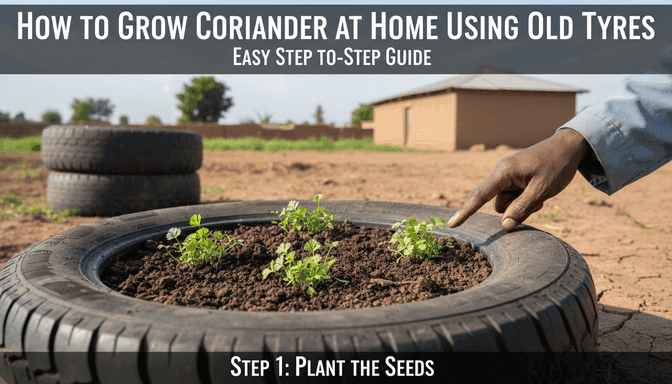
Step 1: Sourcing and Preparing the Tyres
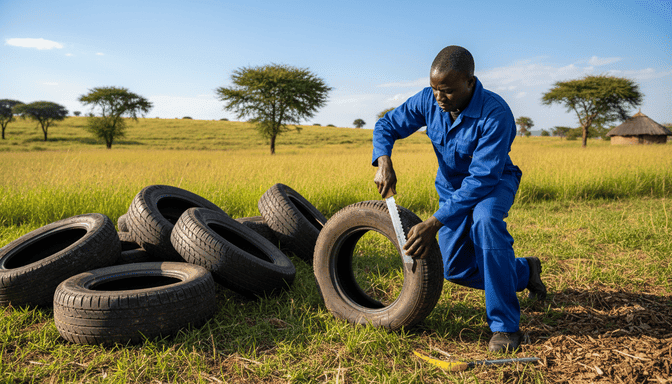
Your first task is to get the tyres. You do not need massive truck tyres; standard car tyres are the best size for coriander. Visit your local vulcanizer or tyre repair shop. They are often happy to get rid of them for free or for as little as KES 50.
Once you have the tyres, you have to prepare them. An uncut tyre has a rim that holds water. If water sits there, it breeds mosquitoes. To stop this and to give yourself more planting space, you should cut off the top side wall. Use a sharp knife or a heavy-duty cutter. If the rubber is tough, keep dipping your knife in water or oil to make it slide through easier.
After cutting, wash the tyres with soapy water and a hard brush. This is important because used tyres might have oil, brake fluid, or road dirt on them. Scrubbing them ensures your food grows in a clean environment. Let them dry in the sun for a day before you use them.
Step 2: Formulating the Perfect Soil Mix
Coriander has soft roots that cannot push through hard, compacted clay. If you just dig up red soil from your compound and throw it in the tyre, the plants will fail. The soil will cake up and choke the roots.
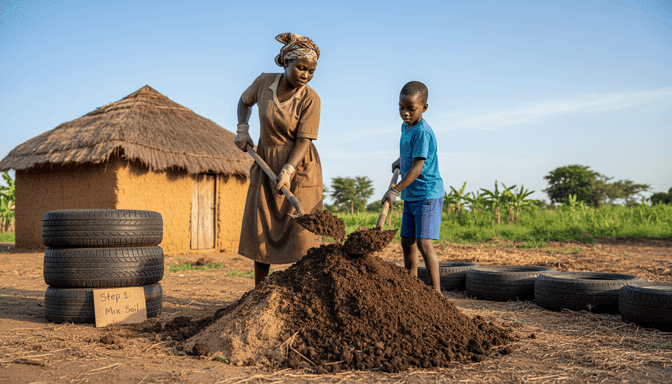
You need a mixture that lets water pass through but still stays moist. The best recipe for a tyre garden is a 1:1:1 ratio. This means one bucket of topsoil, one bucket of well-rotted manure (cow or goat is best), and one bucket of river sand. If you cannot find river sand, you can use old sawdust or rice husks.
Mix these three things together thoroughly. The sand creates air gaps for drainage so roots don’t rot. The manure provides the food the plant needs to grow leaves. The topsoil gives the roots something to hold onto. Organic manure is usually enough for coriander, so you don’t necessarily need chemical fertilizers at this stage.
Step 3: Selecting and Preparing Coriander Seeds
You can find good coriander seeds at any agrovet. The “Cilantro” variety is popular because it has big leaves and a strong smell. Brands like Kenya Seed Company, Simlaw, or Royal Seeds are reliable. A small 50g packet costs between KES 150 and KES 250 and will plant many tyres.
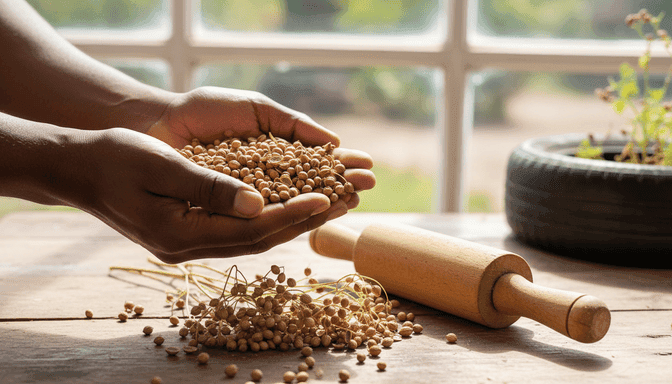
Here is a secret that many new farmers miss: a coriander seed is actually a fruit with two seeds inside. If you plant the round ball whole, it takes a long time to sprout, and the plants grow unevenly. You need to split them.
Put the seeds on a table or in a cloth bag. Take a wooden block, a rolling pin, or even a glass bottle and gently rub or roll over them. You want to crack the round ball into two halves, but be careful not to crush the inside into powder. This is called scarification. It helps water get into the seed faster, meaning you get sprouts much sooner.
Step 4: Sowing the Seeds
Before you plant, think about where your tyres are sitting. Coriander likes morning sun but hates the scorching afternoon heat. If it gets too hot, the plant panics and produces flowers too early, which ruins the flavor. Partial shade is best.
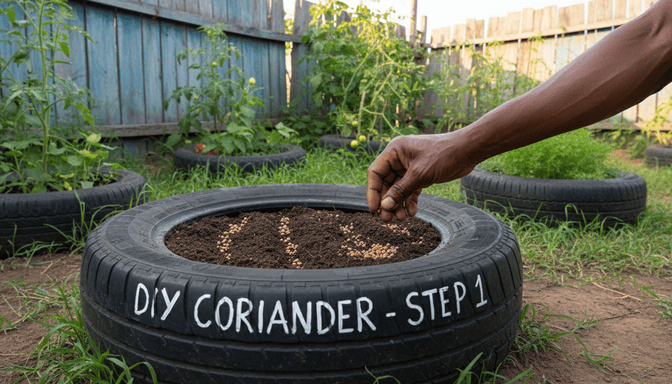
Fill your tyres with the soil mix, leaving about an inch of space at the top. Water the soil first so it settles. Then, make shallow lines across the soil with your finger or a stick. Space these lines about 15cm apart.
Sprinkle your split seeds along these lines. Do not pour them in a heap. If they are too crowded, the stalks will be thin and weak. Try to drop a seed every 2 or 3 centimeters. Cover them lightly with a little bit of soil. Do not bury them deep; they need to be near the surface to push through easily.
Step 5: Watering and Moisture Management
Watering is where most people go wrong. Coriander loves water, but it hates swimming in it. Because tyres sit above the ground, the wind hits the sides and dries the soil out faster than a normal garden. Check your soil every day.
Water early in the morning or late in the evening. If you water in the middle of the day, the sun will evaporate the water before the roots get it, and you might burn the leaves. Use a watering can with a “rose” nozzle that makes a gentle spray. A heavy stream of water from a hose or bucket will wash your seeds away or expose the roots.
For the first week or so, keep the soil damp. You can even cover the tyre with a wet gunny bag to keep the moisture in until you see green sprouts. Once the plants are up, only water when the top of the soil feels dry.
Step 6: Thinning and Weeding
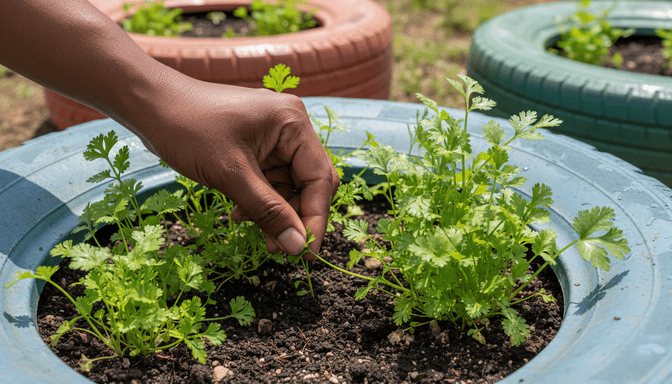
Two or three weeks after planting, your coriander will be about 5cm tall. You will likely see that some spots are too crowded. You must thin them out. This means pulling out the tiny, weak plants so the big ones have room to grow.
If you skip this step, the plants will fight for nutrients and turn yellow. Don’t throw away the baby plants you pull out; they are very tasty in salads. Aim to leave about 10cm of space between the plants that remain.
Weeding a tyre garden is fast. Because the space is small, you can pull weeds by hand in just a few minutes. Remove weeds immediately. They steal food from your crops and hide pests. Keep the area around the tyres clean too, so bugs don’t have a ladder to climb up.
Step 7: Pest and Disease Control
Coriander is tough, but it has enemies. In Kenya, aphids (wadudu wa kijani) and whiteflies are the most common trouble. They suck the juice from the leaves, making them curl up and turn yellow.
Since this is for your home kitchen, avoid harsh poisons. Use safe, natural remedies. A mixture of neem oil and water works well. You can also make a spray by crushing garlic and hot pilipili, soaking it in water for a day, and spraying it on the pests.
During the rainy season, you might see a white powder on the leaves. This is a fungus called powdery mildew. It happens when plants are too crowded and air cannot flow. Thinning your plants helps prevent this. Also, try not to water the leaves in the evening; wet leaves at night encourage fungus.

Step 8: Fertilizer Application
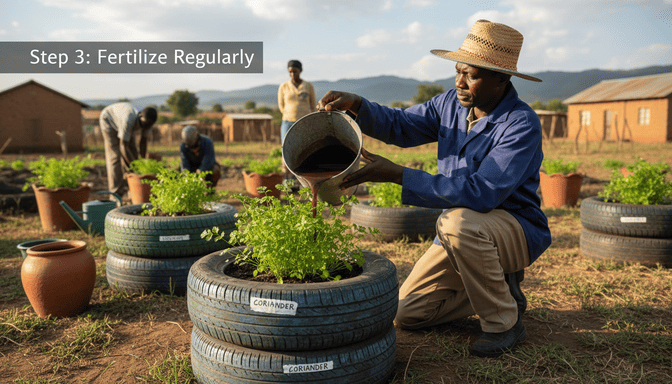
Even though you added manure at the start, coriander grows leaves very fast and gets hungry. About 3 to 4 weeks after they sprout, give them a boost. We call this top dressing.
The best option is organic liquid fertilizer. You can make “manure tea” by soaking a sack of cow dung in a drum of water for a week. Dilute the dark liquid until it looks like light tea and water your plants with it.
If you prefer store-bought fertilizer, you can use CAN. Dissolve a tablespoon in a 10-liter watering can and apply it to the soil. Do not get it on the leaves or they will burn. This nitrogen boost will turn the leaves a deep, beautiful green.
Step 9: Harvesting Techniques
Your coriander should be ready to eat in 4 to 6 weeks. In hot places like Mombasa, it grows very fast. In cooler areas like Limuru, it takes a little longer.
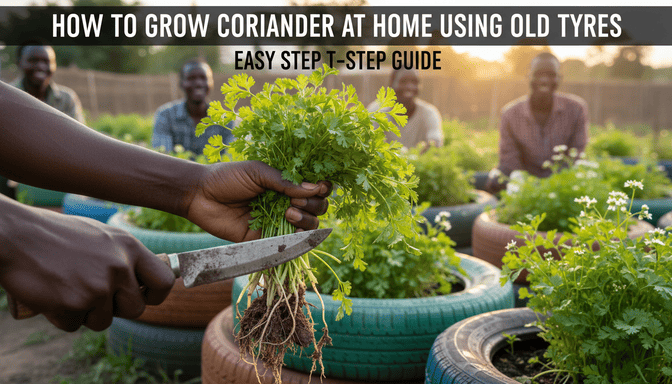
You have two choices for harvesting. The first is “cut and come again.” Take a knife or scissors and cut the big outer leaves, but leave the small center leaves growing. The plant will keep producing for another few weeks. This is great for home use.
The second way is uprooting. This is what commercial farmers do. You pull the whole plant out, roots and all. Shake off the soil. You usually do this when the plant is big but before it starts to grow flowers. Once you see flowers, the leaves become bitter and tough.
Step 10: Post-Harvest Handling and Storage
Dhania wilts incredibly fast once it leaves the soil. If you are selling to neighbors, don’t harvest until they order. If it is for your own fridge, wrap the roots in a wet paper towel and put the bunch in a plastic bag. It stays fresh in the fridge for about a week this way.
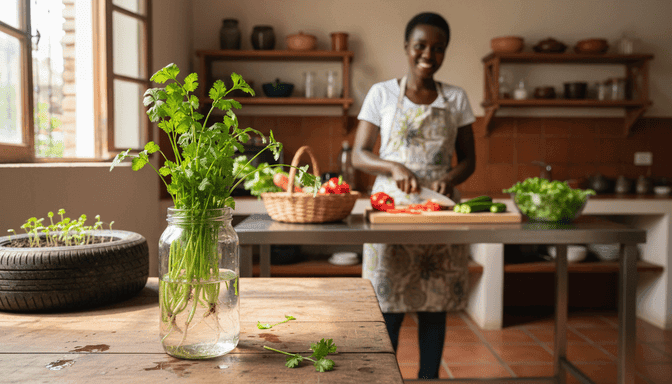
A traditional method used in many Kenyan kitchens is to put the bunch in a jar of water, standing up like flowers in a vase. Keep it in a cool corner away from the sun and change the water every day. This keeps the leaves fresh for 3 or 4 days.
Do not wash the coriander until you are ready to cook with it. If you wash it and then store it, it will rot.
Financial Breakdown: Is It Worth It?
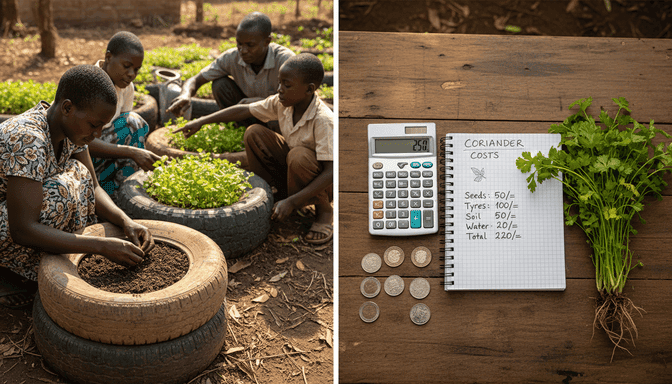
Let us look at the cost of growing coriander in tyres for a small household or micro-business.
| Item | Unit Cost (KES) | Quantity | Total Cost (KES) |
|---|---|---|---|
| :— | :— | :— | :— |
| Old Tyres | 50 | 10 | 500 |
| Manure (Debe) | 50 | 5 | 250 |
| Seeds (Packet) | 200 | 1 | 200 |
| Top Soil | Free | – | 0 |
| Water/Labor | Variable | – | 100 |
| Total Investment | 1,050 |
Potential Return:
A single tyre can produce approximately 10 to 15 market-size bunches of Dhania over a cycle if managed well.
10 tyres x 12 bunches (average) = 120 bunches.
Market price per bunch = KES 10 to KES 20.
Total Revenue = KES 1,200 to KES 2,400.
The first harvest pays for your setup. After that, you only need to buy seeds and manure, which means your profit goes up. Plus, you save money by not buying vegetables at the market every day.
Troubleshooting Common Problems
Even with the best care, things can go wrong. Here is how to fix common issues:
Yellow Leaves: This usually means the plant is hungry for nitrogen or you are overwatering. If the soil is soggy, stop watering for a few days. If the soil is dry, use the manure tea mentioned in Step 8.
Plants Falling Over: This is often a disease called “damping off.” It happens when the soil is too wet and the seeds were planted too close together. Thin out the plants and reduce watering.
Early Flowering (Bolting): If your coriander flowers when it is still small, it is stressed by heat. The plant thinks it is dying and tries to make seeds quickly. Shade your tyres during the hottest part of the day or use mulch to keep the roots cool.
FAQ: Growing Coriander in Old Tyres at Home
Q1: Can I really grow coriander in old tyres?
Yes! Old tyres make excellent containers for coriander. They retain heat, allow good drainage, and are perfect for small spaces or urban gardens.
Q2: What type of coriander seeds should I use?
The “Cilantro” variety is popular in Kenya for its large leaves and strong aroma. Reliable brands include Kenya Seed Company, Simlaw, and Royal Seeds. A 50g packet costs around KES 150–250 and is enough for several tyres.
Q3: Do I need special soil for coriander?
Yes. Coriander prefers light, airy soil. Mix topsoil, well-rotted manure, and sand in a 1:1:1 ratio. This helps water drain, roots breathe, and plants grow healthy leaves.
Q4: How often should I water coriander in tyres?
Water early in the morning or late in the evening. Keep the soil damp but not soggy. Avoid watering at midday or overwatering, as this can rot the roots or wash away seeds.
Q5: How long does it take for coriander to grow?
Coriander generally takes 4–6 weeks to reach harvestable size. In hotter areas, it grows faster; in cooler regions, it may take a bit longer.
Q6: How do I prevent pests and diseases?
Common pests include aphids and whiteflies. Use neem oil sprays or a mixture of crushed garlic and hot chili. Avoid chemical pesticides for home-grown coriander. Ensure proper spacing and avoid wetting leaves at night to prevent fungal infections.
Q7: Can I reuse tyres for multiple planting cycles?
Yes! Once you harvest, remove old soil, refresh it with compost or manure, and you can plant a new batch of coriander.
Q8: How do I harvest coriander for continuous supply?
Use the “cut and come again” method: cut the outer leaves, leaving the inner leaves to keep growing. For commercial harvest, uproot the whole plant before it flowers.
Q9: Is coriander profitable to grow in tyres?
Yes! Even a small setup of 10 tyres can yield 120 bunches of coriander per cycle, generating revenue between KES 1,200–2,400. Your initial investment is usually recovered after the first harvest.
Q10: Can I grow coriander in urban apartments?
Absolutely. Tyre gardening is ideal for balconies, terraces, and small compounds. You just need sunlight, proper watering, and the right soil mix.
Conclusion
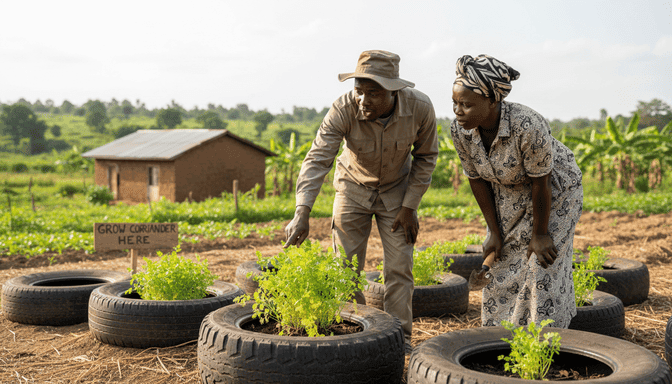
Growing coriander in old tyres is a smart, sustainable way to farm in Kenya. It uses waste materials, takes up very little space, and gives you healthy, organic herbs. Whether you are on a balcony in Nairobi or have a small compound in Eldoret, you can do this.
Follow these steps, and you will have a constant supply of fresh Dhania. Start small with two or three tyres, learn how the plant grows, and add more as you get confident. The soil you mix today will feed you for a long time.
Read More

Beyond Maize: 7 Drought-Resistant “Smart Crops” to Plant This Season
Discover the top 7 drought-resistant smart crops for Kenyan farmers in 2026. Learn about seed varieties, fertilizer costs, and profit potential to beat the dry season.
Top 10 Hass Avocado Diseases in Kenya: Causes, Symptoms & Treatment Guide (2026)
Discover the ultimate 2026 guide to fighting Hass avocado diseases in Kenya. Learn treatment costs, fungicide prices, and expert tips to secure healthy yields.
100 Smart Garden Tips 2026: The Ultimate Guide for Kenya Farmers
Save 80% on food costs with 100 smart garden tips for 2026. Learn how to use KES 2,500 subsidized fertilizers and vertical farming to earn KES 15,000 monthly from your Kenyan backyard.