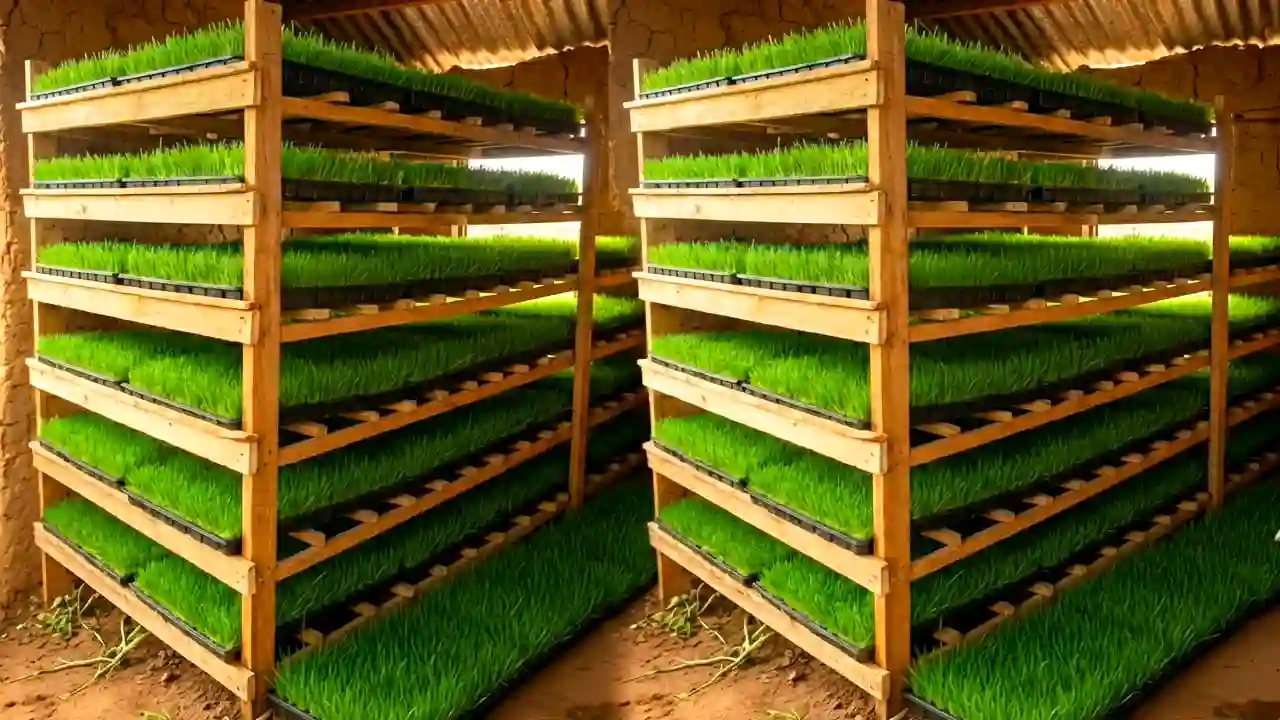

Hydroponic fodder production in Kenya is the leading strategy for smallholder farmers to bypass volatile commercial feed prices in 2026. By converting grain into high-protein lush green feed in just 7 days, farmers can reduce their feed bill by up to 40%-50% while maintaining milk and meat yields. This method requires zero soil, minimal water, and allows a 4m x 3m shamba space to produce as much feed as an acre of Napier grass.
Table of Contents
The cost of commercial dairy meal has risen sharply, pushing farmers in counties like Kiambu and Uasin Gishu to seek sustainable alternatives. Hydroponics offers a climate-resilient solution that guarantees feed availability even during the “Long Rains” or unexpected droughts. With the right setup, you can harvest fresh grass daily from a vertical space smaller than a standard zero-grazing unit.
Government initiatives in 2026 have tried to cap maize seed prices, yet retail costs remain unpredictable due to supply chain resistance. This economic pressure makes the efficiency of hydroponic systems, where 1kg of seed yields 8kg of fodder. more critical than ever. Mastering this technology is no longer a luxury; it is a survival skill for the modern Kenyan livestock farmer.
What Are the Best Hydroponic Fodder Varieties for Kenyan Livestock in 2026?
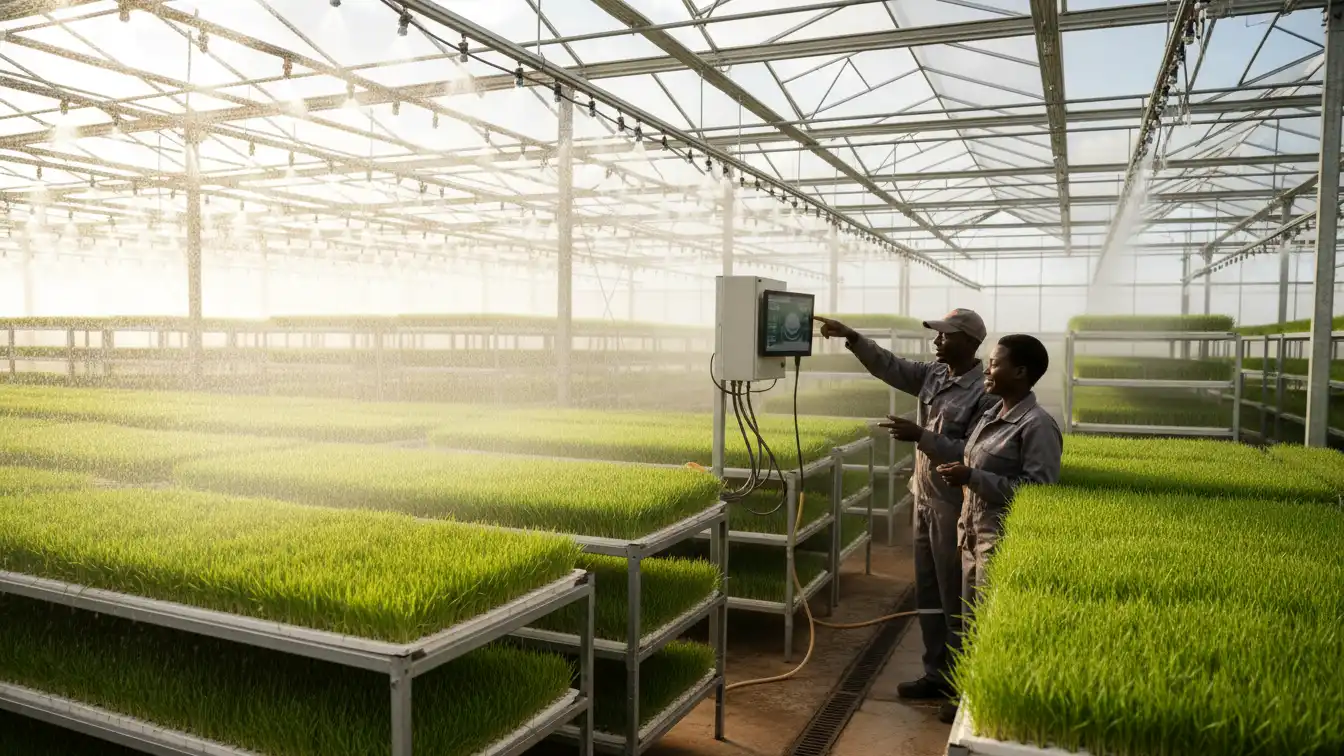
The best varieties for 2026 remain Barley (highest protein at 23%) and White Maize (most accessible). Sorghum and Wheat are viable alternatives for drought-prone counties like Kitui or Machakos. Barley is the “gold standard” for dairy cows due to its superior leafy biomass and nutrient density compared to maize.
Selecting the right seed variety is the foundation of a successful hydroponic system. In 2026, the choice between barley, maize, wheat, and oats depends largely on your location and the specific livestock you are rearing. While maize is ubiquitous in Kenya, barley offers a nutritional profile that is unmatched for dairy production.
1. Barley (The Dairy King)
Barley remains the undisputed champion for hydroponic fodder in Kenya. It germinates rapidly, producing a thick root mat and lush green leaves within 6 to 7 days. Kenya Seed Company and Simlaw Seeds have optimized varieties specifically for hydroponic uptake.
Barley fodder boasts a crude protein content of roughly 23%, which is significantly higher than dry hay. This protein boost directly translates to improved milk quality and quantity for dairy breeds like Friesians and Ayrshires. Farmers in cool highland areas like Limuru find barley easiest to grow due to its preference for moderate temperatures.
Expert Tip: “For dairy farmers in Githunguri and Meru, Barley fodder increases milk output by 10-15% because of its high digestibility and protein content relative to dry matter.”
2. White Maize (The Accessible Alternative)
Maize is the most readily available seed in any local agrovet across the 47 counties. However, maize fodder has a higher starch content and slightly lower protein (about 18-20%) compared to barley. It is excellent for fattening beef cattle and pigs but requires rigorous treatment to prevent fungal growth.
Read Also: How to Grow Clover Seed for High-Quality Livestock Fodder in Kenya (2026 Guide)
The main challenge with maize in 2026 is the cost fluctuation of certified seed. which retailers often sell above the government cap of KES 210 per kg. Despite this, maize produces a heavy root mat that animals love to chew. It is an energy-dense feed perfect for finishing bulls before market.
3. Oats (The Yield Champion)
Oats are gaining popularity in 2026 because they offer the highest biomass yield per kilogram of seed. Research shows that 1kg of oat seeds can produce nearly 8kg to 10kg of fresh fodder, outperforming both maize and wheat. Simlaw Seeds now stocks oat varieties suited for hydroponic trays.
The nutritional profile of oats is balanced, offering good fiber and protein levels suitable for horses and goats. However, oats can be slower to germinate in colder regions compared to barley. Farmers in Narok often use oats as a dual-purpose crop for both field grazing and hydroponic sprouting.
4. Sorghum (The Arid Specialist)
For farmers in semi-arid areas like Makueni, Sorghum is a resilient alternative. It requires less water to germinate and is resistant to mold, which is a common killer of maize crops in humid units. Note that sorghum sprouts must be harvested strictly at day 7 to avoid potential toxicity issues found in older plants.
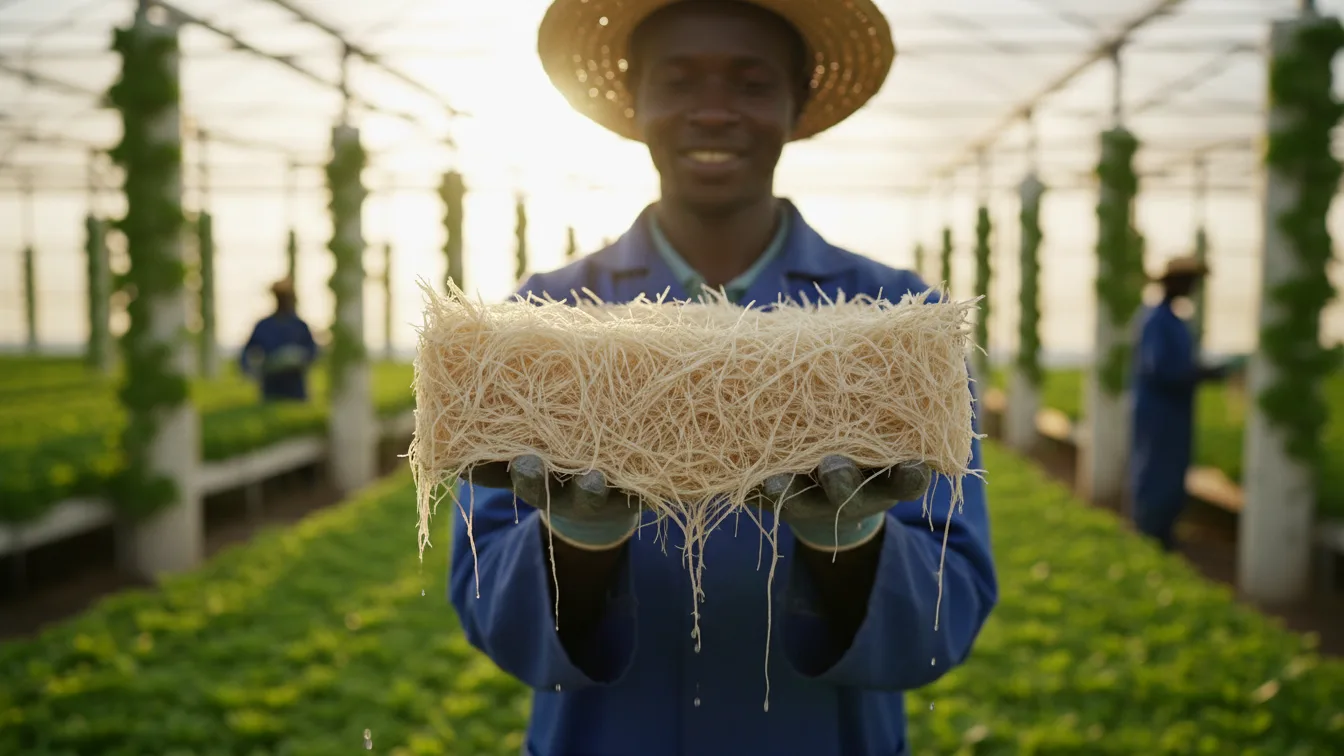
Step-by-Step Guide: How to Grow Hydroponic Fodder (7-Day Cycle)
Consistency is the secret to high yields in hydroponic farming. You must treat your fodder unit like a laboratory where hygiene and timing are strictly observed. Follow this proven 7-day protocol to ensure mold-free, lush green mats every time.
Day 1: Soaking and Cleaning
Weigh your seeds carefully; use about 1kg to 1.5kg of seed for a standard 60cm x 40cm tray. Wash the seeds thoroughly in a bucket to remove floating chaff, broken grains, and dust. These impurities are the primary cause of mold, so rinse until the water runs clear.
Soak the clean seeds in water mixed with a disinfectant for 4 hours to kill surface bacteria. You can use a dilute solution of household bleach (Jik) at a ratio of 50ml per 20 liters of water. After 4 hours, drain this water, rinse the seeds again, and soak them in fresh plain water for another 12 to 24 hours.
Day 2: Incubation (Sprouting)
Drain the soaking water and transfer the wet seeds into a gunny bag or a plastic bucket with drainage holes. Place this container in a warm, dark corner of your feed store for 24 to 48 hours. This “incubation” period mimics the underground environment, triggering the seeds to burst open.
By the end of this stage, you should see tiny white rootlets emerging from the seeds. If the seeds feel hot to the touch, sprinkle some cold water on them to prevent fermentation. Do not let them dry out, but ensure they are not sitting in stagnant water.
Day 3: Tray Transfer
Transfer the sprouted seeds into your clean, sterilized hydroponic trays. Spread the seeds evenly to a depth of about 1.5cm to 2cm; too thick, and the bottom layer will rot. Place the trays on the lower shelves of your rack, where the light is dimmer.
Day 4 to Day 6: Growth and Watering
Move the trays up the rack as the shoots grow taller and turn green. Water the trays 3 to 5 times a day using a misting system or a knapsack sprayer dedicated solely to water. The goal is to keep the roots moist, not soaked.
Read Also: Azolla Farming in Kenya: Cheap Animal Feed and Higher Profits in 2026
Ensure your structure is well-ventilated to keep the temperature between 18°C and 24°C. If you see yellowing leaves, the plants may need more indirect sunlight. If you smell a sour odor, you likely have root rot due to over-watering or poor drainage.
Day 7: Harvest and Feeding
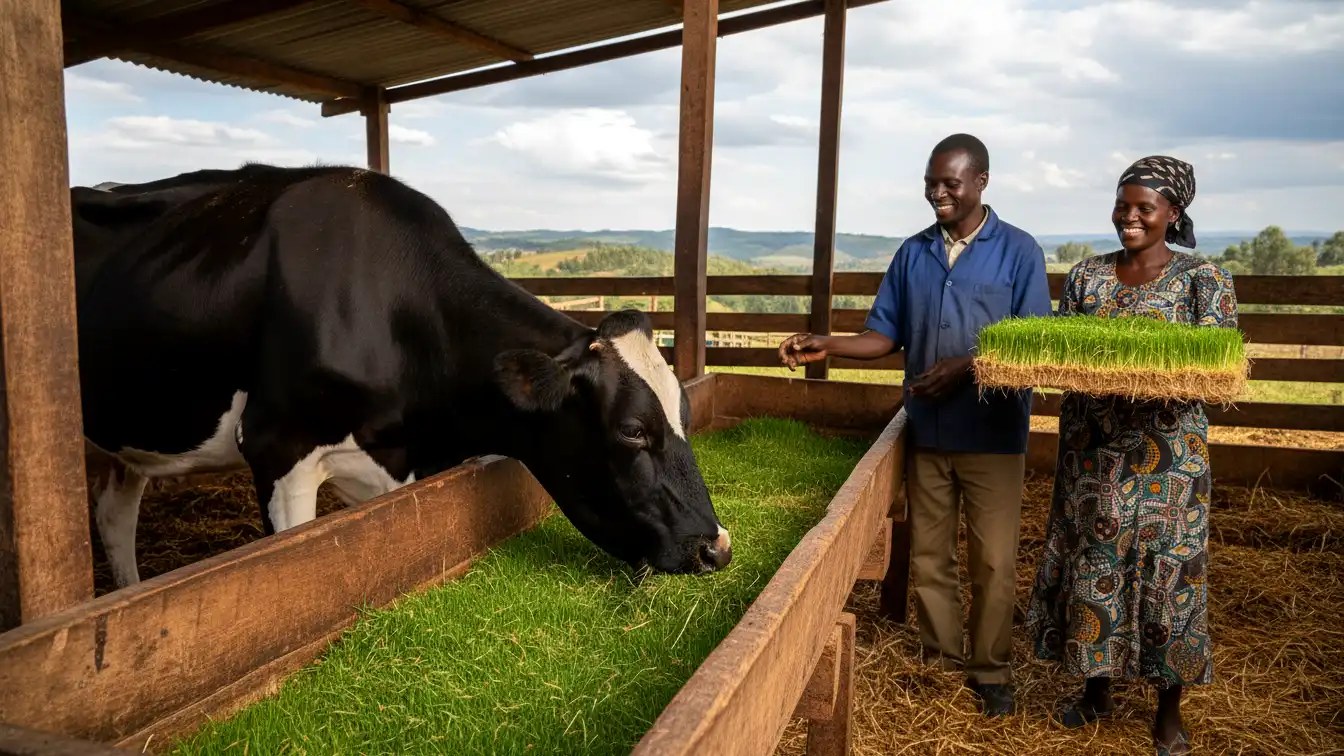
On the seventh day, the fodder should be 20cm to 25cm tall and look like a lush green carpet. Remove the entire mat from the tray; it will peel off easily like a rug. Feed the whole mat—roots, seeds, and leaves—to your livestock immediately.
Where to Buy Hydroponic Fodder Systems and Seeds in Kenya?
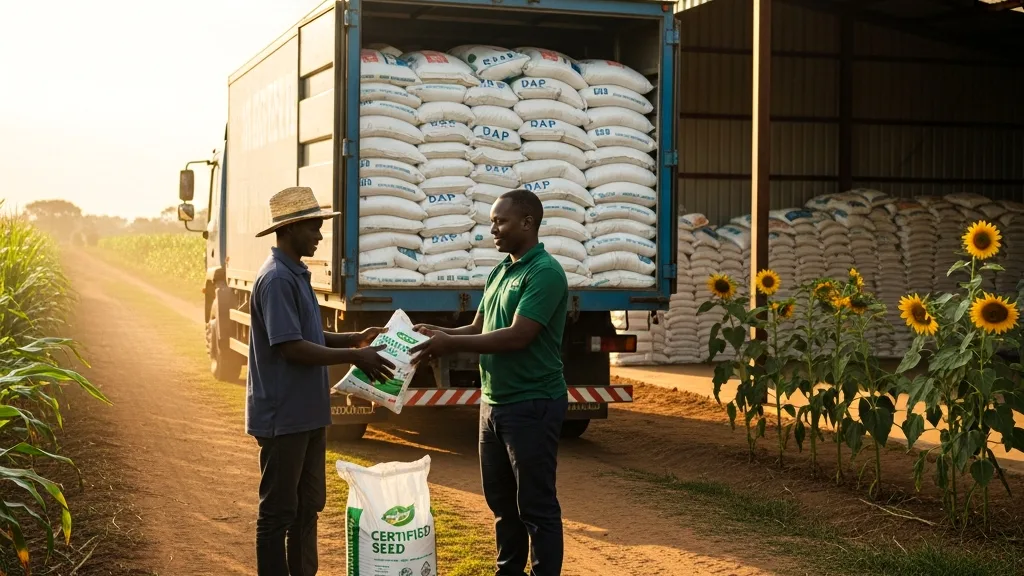
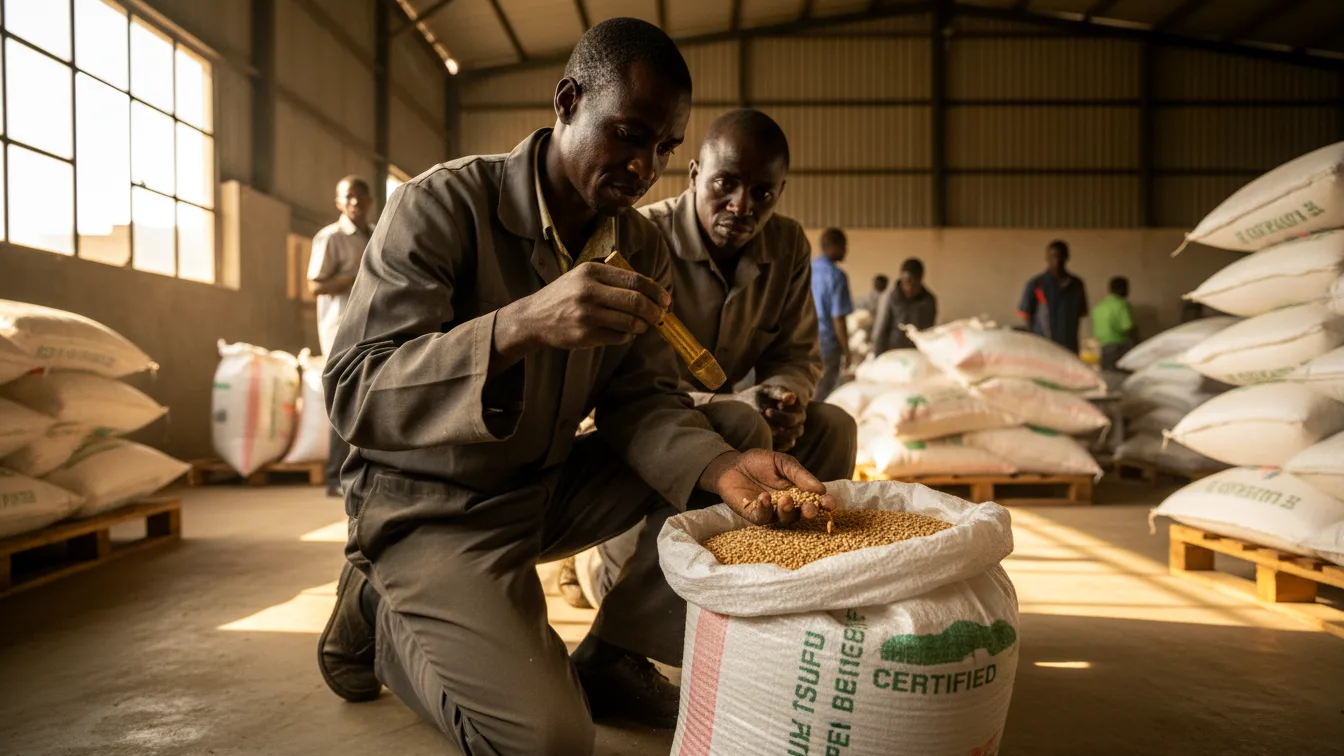
Purchase certified seeds from Kenya Seed Company, Simlaw Seeds, or verified agents on Digifarm. For full turnkey systems and trays, rely on established leaders like Grandeur Africa or Hydroponics Kenya. Avoid unbranded roadside sellers for seeds, as germination rates below 90% will ruin your economic model.
Sourcing high-quality inputs is critical because hydroponics amplifies both success and failure. If you buy seeds with a 60% germination rate, you lose 40% of your production space to rotting grain. In 2026, the market has shifted toward digital procurement and specialized agrovets.
Certified Seed Providers
Kenya Seed Company (KSC): They remain the primary source for certified barley and wheat. Visit their depots in Kitale, Nakuru, or Nairobi Industrial Area to buy in bulk 90kg bags.
Simlaw Seeds: A subsidiary of KSC, they are excellent for smaller quantities (10kg or 25kg bags) suitable for urban farmers in places like Ruai or Syokimau. Their “Hydro-Grade” seeds are pre-cleaned to reduce mold risks.
Equipment and Tray Suppliers
Grandeur Africa: Known for durable aluminum racking systems that resist rust. They also provide UV-treated plastic trays that prevent root rot.
Local Fabricators (Jua Kali): Many welders in Kariobangi and Gikomba now fabricate steel racks. If choosing this route, ensure the metal is galvanized or painted with anti-rust epoxy to prevent contamination.
Online Marketplaces: Platforms like Jiji and Facebook Marketplace list plastic trays ranging from KES 150 to KES 300. Always verify the durability of these trays; brittle plastic will crack under the weight of wet fodder after a few months.
Buyer’s Caution Verification List
Before exchanging money via M-Pesa, verify the following:
- Seed Cleanliness: Inspect the bag for weevils or broken grains; broken grains rot and cause mold.
- Tray Depth: Ensure trays are no deeper than 2-3 inches; deeper trays cause heat buildup and fermentation.
- Training Credibility: Ask for photos of their current operating unit, not downloaded internet pictures.
How Do Hydroponic Fodder Yields Compare Across Kenyan Counties?
Yields vary significantly by climate; Kiambu achieves high yields naturally due to cool temperatures (18-22°C). Mombasa and Kisumu require investment in climate control (fans/misting) to prevent mold, often increasing OPEX by 15%. Uasin Gishu offers the best profitability due to proximity to cheap seed sources.
Read Also: Top 5 Profitable Dairy Cow Breeds for Successful Farming in Kenya (2026 Guide)
Geography dictates your operational costs and success rates. Hydroponic fodder thrives in moderate temperatures between 17°C and 24°C. Here is how three distinct regions compare in 2026.
Region 1: Kiambu & Central Highlands (The Ideal Zone)
Farmers in Kiambu, Nyeri, and Murang’a enjoy the “Goldilocks” climate. Natural humidity and cool temperatures mean simple shade net structures are sufficient. Yields here are high, with 1kg of barley reliably producing 8-9kg of fodder without expensive climate control.
Region 2: Machakos & Kajiado (The Challenge Zone)
Heat is the enemy here. Farmers must construct units with high roofs (at least 3 meters) and install heavy shade nets (70-90% density). Misting systems must run more frequently to lower ambient temperature, which increases water consumption and electricity costs slightly.
Region 3: Uasin Gishu & Trans Nzoia (The Profit Zone)
While the climate is good, the real advantage here is input cost. Being the “grain basket” of Kenya, farmers here source maize and barley at farm-gate prices, often 20-30% cheaper than Nairobi prices. This proximity to raw materials makes the Return on Investment (ROI) fastest in this region.
Region 4: Coastal & Lake Region (The High-Tech Zone)
In Mombasa and Kisumu, high humidity combined with heat creates a perfect breeding ground for mold. Farmers here must invest in electric fans and extraction systems to keep air moving. Despite the higher energy costs, the scarcity of green grass in these regions makes hydroponics a vital technology for zero-grazing units.
What Does a 12-Month Hydroponic Fodder Production Calendar Look Like?
Production is year-round (365 days), independent of rain. However, the calendar focuses on seed procurement strategies. Buy bulk seeds during harvest seasons (January/February for Maize, September/October for Barley) to lock in low prices. Increase hygiene protocols during the “Long Rains” (March-May) to combat humidity-driven mold.
The beauty of hydroponics is its independence from the rainy seasons that dictate traditional Kenyan agriculture. However, a smart farmer aligns their procurement with the national harvest to maximize margins.
Q1: January – March (Stockpiling)
Activity: This is the post-harvest season for maize. Prices for 90kg bags are at their lowest. Buy enough grain to last 6 months if you have dry storage.
Production Note: January is hot; ensure your misting timers are active to prevent heat stress in the fodder.
Q2: April – June (The Mold Battle)
Activity: The Long Rains bring high humidity. This is when mold (fungus) strikes hardest. Action: Increase seed washing with a dilute bleach solution (Jik) or vinegar. Ensure ventilation in the grow house is at maximum capacity.
Q3: July – September (Peak Production)
Activity: The cold season (especially July) slows down germination slightly (from 7 days to 8 days). Action: You may need to pre-soak seeds in warm water to trigger germination. Feed intake by livestock increases as grazing pastures deteriorate.
Q4: October – December (Barley Sourcing)
Activity: Wheat and Barley harvest occurs in Narok and Timau. Secure your barley stocks now. Action: Prepare for the holiday season demand; milk prices often rise in December, so ensure your cows are at peak production with high-quality fodder.
Is Hydroponic Fodder Farming Profitable in Kenya? (Financial Deep Dive)
Yes, primarily through cost-avoidance. Producing 1kg of hydroponic fodder costs approximately KES 4–6, while commercial dairy meal costs over KES 45 per kg. Substituting 30-50% of commercial feed with fodder improves profit margins by roughly KES 150-200 per cow per day.
The financial model of hydroponic fodder relies on “substitution economics.” You are not selling the fodder; you are selling the milk or meat produced at a lower input cost. Below is a breakdown for a standard 7-day cycle unit designed for 5 dairy cows (approx. 40-50kg fodder/day).
The “Break-Even” Analysis
Initial setup costs (CAPEX) can seem high, but the daily operating costs (OPEX) are incredibly low compared to buying hay and dairy meal. A well-managed unit pays for itself in 8 to 12 months through savings on the feed bill.
2026 Estimated Financial Table (KES)
| Cost Item | Type | Estimated Cost (KES) | Notes |
|---|---|---|---|
| Structure (4m x 3m) | CAPEX | 35,000 – 50,000 | Includes shade net, timber/metal, racking. |
| Trays (50 pcs) | CAPEX | 15,000 – 20,000 | Based on durable plastic trays @300-400 KES. |
| Water System | CAPEX | 8,000 – 12,000 | Tank, piping, misting nozzles. |
| Total Setup | Total CAPEX | 58,000 – 82,000 | One-off investment. |
| Seed (90kg Bag) | OPEX | 3,500 – 5,200 | Price varies by season and variety. |
| Labor & Water/mo | OPEX | 3,000 | Minimal labor (1 hour/day). |
| Cost per Kg Produced | Metric | 4.50 – 6.00 | Includes seed, water, and labor. |
Note: Prices are estimates for 2026 and can fluctuate based on fuel prices and local seed availability.
Profit Calculation Case Study
Consider a farmer in Kiambu with 3 cows. Currently, they spend KES 600 per day on dairy meal. By introducing hydroponic fodder, they reduce dairy meal usage by 50%, saving KES 300 daily.
Read Also: DAIRY GOAT FARMING IN KENYA: THE 2026 MASTER GUIDE TO PROFITABLE BREEDS, HOUSING, AND MILK PRODUCTION
The cost to produce the necessary hydroponic fodder is only KES 100 per day. The net saving is KES 200 per day, which translates to KES 6,000 per month. Over a year, this farmer saves KES 72,000, effectively recovering the cost of the structure.
Troubleshooting: How to Stop Mold and Yellowing
Mold is the biggest threat to any hydroponic fodder system. It appears as a white, cotton-like fuzz or blue-green spots on the root mat. The primary causes are dirty seeds, poor ventilation, or high humidity.
To combat mold, never skip the seed washing step. Using a fungicide is not recommended if you want organic milk; instead, rely on the bleach (Jik) soak and proper airflow. If you see mold spots on a tray, remove it immediately to prevent spores from spreading to neighboring trays.
Yellowing leaves usually indicate a lack of light or overcrowding in the trays. Ensure your shelves have enough vertical space (at least 30cm) to allow light to reach the back of the lower trays. If overcrowding is the issue, reduce the seed density from 1.5kg to 1kg per tray.
How Can Farmers Add Value to the Hydroponic Fodder Supply Chain?
Value addition involves fabricating and selling turnkey systems, retailing “sprouted seeds” to hobby farmers, or formulating Total Mixed Rations (TMR). Farmers can also dry excess fodder to create “hydro-hay” pellets, though this is energy-intensive.
For entrepreneurial farmers, the opportunity extends beyond just feeding their own animals. The supply chain for hydroponics in Kenya is maturing, creating gaps for service providers.
1. System Fabrication and Consultancy
Many beginners fail because of poor structural design (lack of slope in trays, poor ventilation). Experienced farmers can charge a consultancy fee to set up standardized units for neighbors. Selling “DIY Kits” with pre-cut pipes and trays is a growing niche in peri-urban Nairobi.
2. Selling “Ready-to-Eat” Mats
Urban farmers in areas like Ruiru or Syokimau often keep 1 or 2 cows but lack the time to manage seed washing. You can run a larger commercial unit and sell ready-to-eat fodder mats delivered daily via boda boda. This model works like a “milk subscription” in reverse.
3. Integration with Dry Matter (TMR)
Hydroponic fodder is 90% water. To add value, mix it with chopped hay, maize germ, and minerals to create a balanced Total Mixed Ration (TMR). Selling this pre-mixed ration allows you to command a higher price as it solves the “nutrition balancing” headache for other farmers.
2026 Outlook: The Future of Soil-less Feeds
As we navigate 2026, climate patterns in Kenya are becoming increasingly unpredictable. The reliance on rain-fed Napier grass is a risk that serious dairy and beef farmers can no longer afford. Hydroponic fodder has moved from an “experimental technology” to a “survival necessity.”
Read Also: 10 Most Profitable Farming Ventures in Kenya for 2026
The technology is also getting cheaper. With local production of plastic trays and increased knowledge on mold control, the barriers to entry have dropped. For the smallholder farmer with 2 to 5 cows, this system is the only way to compete with large commercial farms. Start small, master the seed washing process, and scale up as your savings accumulate.
Farmers Also Ask (FAQ)
1. Does hydroponic fodder replace dry feeds completely?
No. Hydroponic fodder is a supplement, not a complete replacement. It is approximately 10-15% dry matter. You must feed it alongside hay or straw to ensure the livestock gets enough fiber for rumen function. A 50/50 ratio is recommended.
2. How do I stop mold from growing on my seeds?
Hygiene is key. Wash seeds in a solution of water and household bleach (Jik) at a ratio of 1 cup Jik to 20 liters water for 10 minutes, then rinse thoroughly. Ensure your grow house has excellent air circulation.
3. Can I use tap water for hydroponic fodder?
Yes, treated tap water is actually beneficial because the residual chlorine helps prevent mold. If using river or borehole water, test it for salinity and consider adding a water sanitizer.
4. How much hydroponic fodder should I feed a dairy cow?
A good rule of thumb is 1.5% of the cow’s body weight. For a standard 400kg cow, feed about 6kg to 9kg of hydroponic fodder per day, split into two meals.
5. Which animal benefits most from hydroponic fodder?
Dairy cows and pigs show the fastest ROI. Cows increase milk yield, and pigs reach slaughter weight faster. Poultry (chicken) also benefit, especially from the yellowing leaves which are rich in vitamins.
6. Do I need nutrients or fertilizers in the water?
Generally, no. The grain (seed) contains enough energy to sustain growth for 7 days. Using plain water reduces costs and eliminates the risk of chemical residues in the milk/meat.
7. Why is my fodder yellow instead of green?
Yellowing usually indicates a lack of light or overcrowding. Ensure your unit allows indirect sunlight (but not direct scorching sun). If trays are stacked too close vertically, the lower levels won’t get enough light.
8. Can I grow hydroponic fodder without a greenhouse?
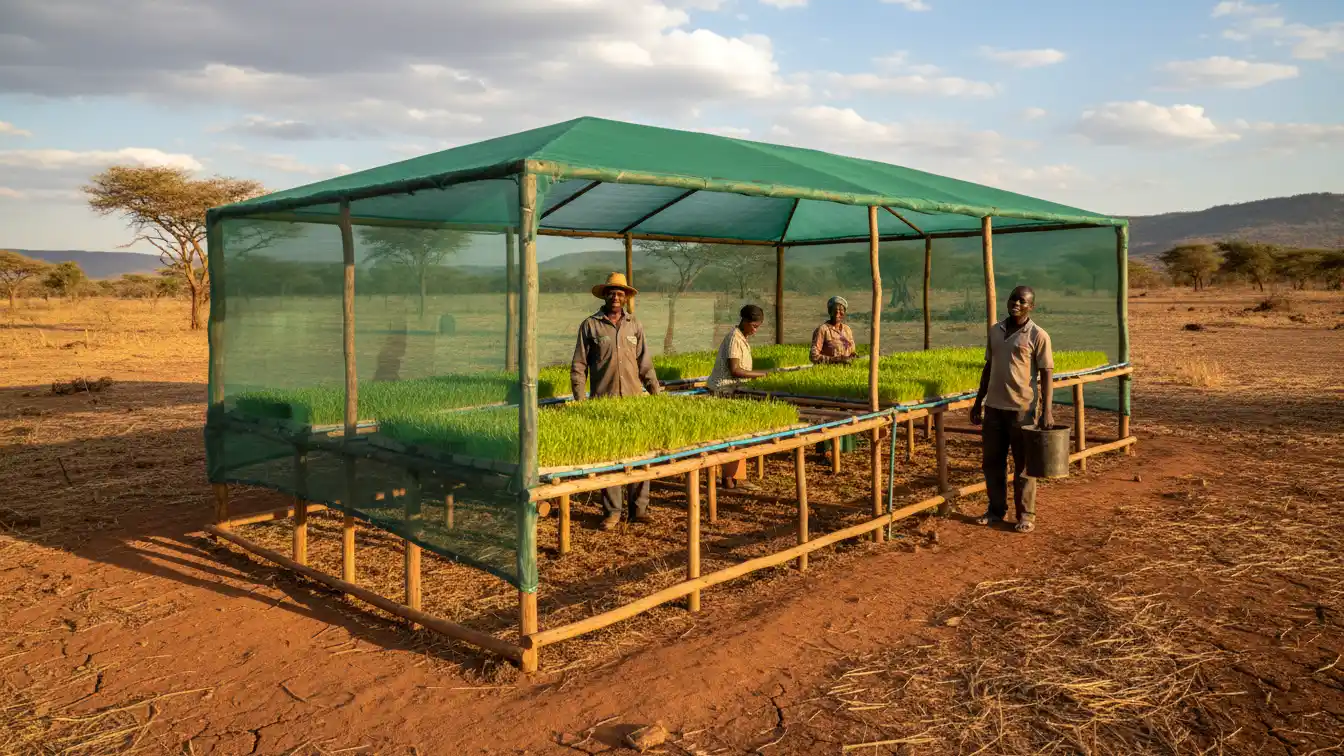
Yes. You do not need an expensive greenhouse. A simple shade net structure or a well-ventilated mud structure with windows works fine, provided you can control the temperature and keep pests out.
9. How much water does a hydroponic unit consume?
It is very water-efficient. It takes about 1.5 to 2 liters of water to produce 1kg of fodder. Most of this water is reused if you have a catchment system, though recycling water increases mold risk if not treated.
10. Is barley better than maize for fodder?
Nutritionally, yes. Barley has higher crude protein and better fiber structure for ruminants. However, maize is often cheaper and easier to find. Use barley for dairy cows and maize for beef cattle or pigs.
11. Can I use local “Jua Kali” trays instead of plastic ones?
You can, but be careful with rust and cleaning. Metal trays must be galvanized or painted with food-safe paint. Plastic trays are generally preferred because they are easier to sterilize and don’t corrode.