
Table of Contents
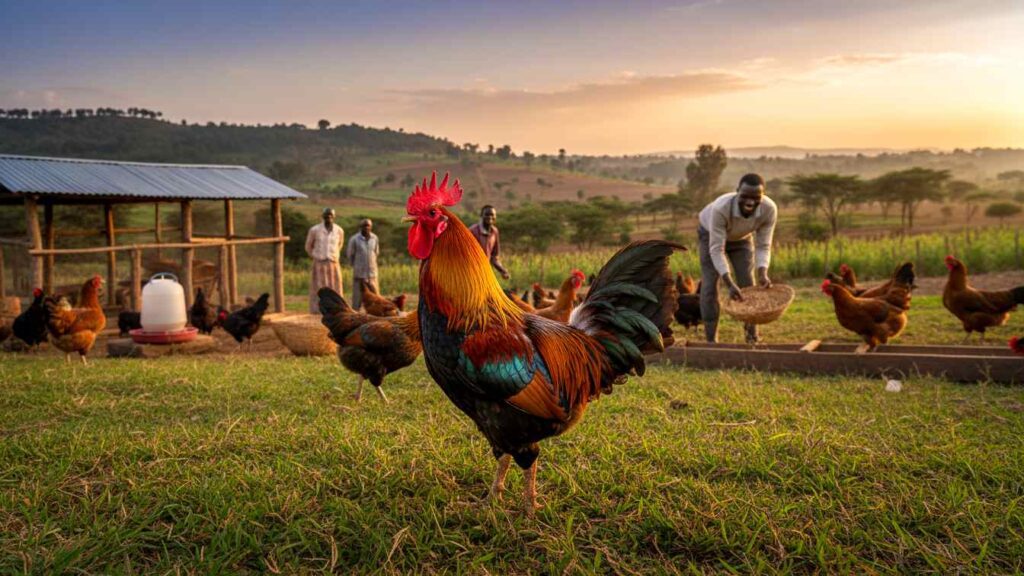
Farming in Kenya has evolved significantly over the last decade, and as we enter the 2026 agricultural season, Improved Kienyeji chicken rearing stands out as one of the most resilient and profitable ventures for small-to-medium scale farmers. The landscape has shifted from hobby farming to serious agribusiness. Unlike exotic broilers that require intensive, hospital-like care, or commercial layers that demand expensive, high-protein feeds to remain viable, Improved Kienyeji birds offer the perfect equilibrium. They are hardy, highly disease-resistant, and fetch premium prices in Nairobi, Kisumu, Mombasa, and Eldoret markets. This master guide covers everything you need to know to start, manage, and profit from your flock this year, tailored specifically to the economic and climatic realities of 2026.
The 2026 agricultural forecast for Kenya predicts a hotter-than-average first quarter due to lingering climatic shifts following the La Niña conditions of late 2025. For poultry farmers, this means heat stress management will be your primary challenge in the early months, while feed costs are expected to fluctuate depending on the regional maize harvest from the North Rift. This guide is specifically designed to navigate these realities, ensuring you do not just survive the season but thrive in it. We will break down the exact costs of production, the best breeds released by KALRO and private hatcheries, and a watertight vaccination schedule to keep your flock alive. Whether you are farming in the cool hills of Kiambu, the expansive plains of Uasin Gishu, or the semi-arid belts of Machakos, the principles here are designed to maximize your Kenyan Shillings and minimize mortality.
PROFITABILITY AND MARKET ANALYSIS FOR 2026
Understanding the numbers is the first step to success. In 2026, the consumer demand for organic and free-range tasting chicken has pushed the price of Improved Kienyeji products higher than ever before. The Kenyan middle class is increasingly avoiding soft broiler meat, preferring the leaner, texturally superior, and tastier meat of Kienyeji birds. This shift is your financial opportunity.
Current market data collected from major towns indicates a robust pricing structure. A day-old Improved Kienyeji chick currently retails between KES 100 and KES 110 from reputable hatcheries. If you prefer to buy month-old chicks to skip the delicate brooding stage, expect to pay between KES 280 and KES 300 per bird. While this initial cost is higher than in previous years, the reduced mortality rate often makes it a smarter investment for beginners.
When it comes to sales, a mature cock weighing 2.5kg to 3kg is fetching between KES 1,200 and KES 1,500 in urban markets, with prices peaking during the Easter and Christmas holidays. Mature hens sell for roughly KES 850 to KES 1,000. Eggs are another major revenue stream; a tray of fertilized hatching eggs is selling for KES 900 to KES 1,050, while a tray of table eggs (for eating) goes for KES 340 to KES 450 depending on your location and branding. The profit margin is healthiest when you sell fertilized eggs or mature cocks for meat.
CHOOSING THE RIGHT BREED: A DEEP DIVE
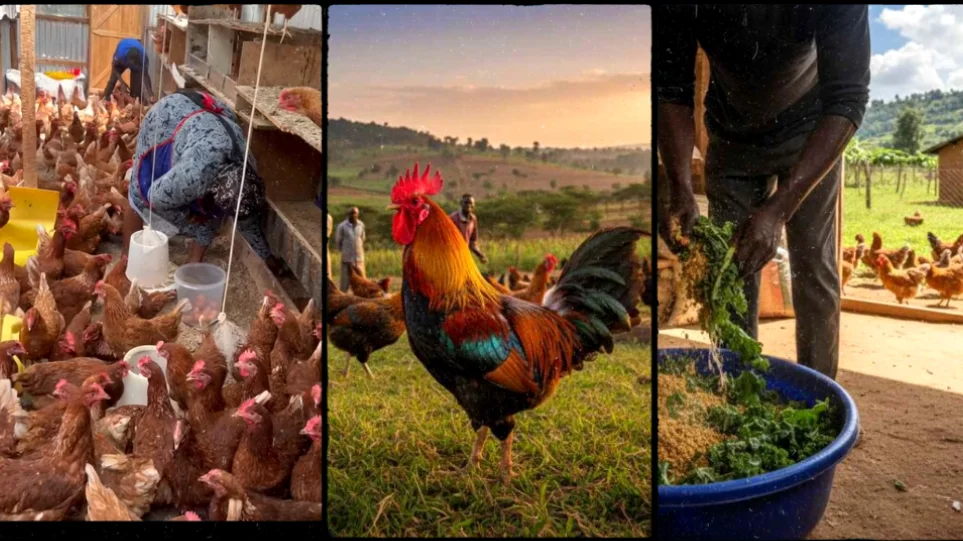
Selecting the correct genetics is the difference between a bird that consumes your profits and one that builds your bank account. For 2026, four specific breeds dominate the Kenyan market, each with distinct advantages and disadvantages.
The KALRO Improved Kienyeji KC3
Developed by the Kenya Agricultural and Livestock Research Organization, this bird is widely considered the king of reliability for the average Kenyan farmer. The KC3 line has been bred specifically for Kenyan conditions, meaning it possesses high resistance to local diseases and heat. The KC3 variety typically has a brown or spotted plumage, which is preferred by local buyers who associate it with pure Kienyeji.
Characteristics: They mature in 4.5 to 5 months. A well-managed hen can lay 220 to 280 eggs per year.
Pros: Extremely hardy, excellent foragers, low feed requirements compared to exotics.
Cons: Slower growth rate than the Rainbow Rooster.
Best For: Farmers targeting the egg market and those in harsh climatic zones.
The Rainbow Rooster
Originating from India but perfected for East Africa by Kukuchic, this bird is a dual-purpose giant. It grows faster than the KALRO breed, often hitting 3kg in just 4 months if well fed. It is multicolored and very attractive, making it easy to sell alive in open-air markets where aesthetics drive prices.
Characteristics: Rapid weight gain, massive body structure, males can reach 4kg to 5kg at full maturity.
Pros: Fastest path to meat sales; highly aesthetic.
Cons: They are heavy feeders. If you do not supplement with greens, their feed bill can be overwhelming. They are slightly less disease-resistant than the KALRO KC3.
Best For: Farmers targeting the meat market and quick turnover.
The Kenbro
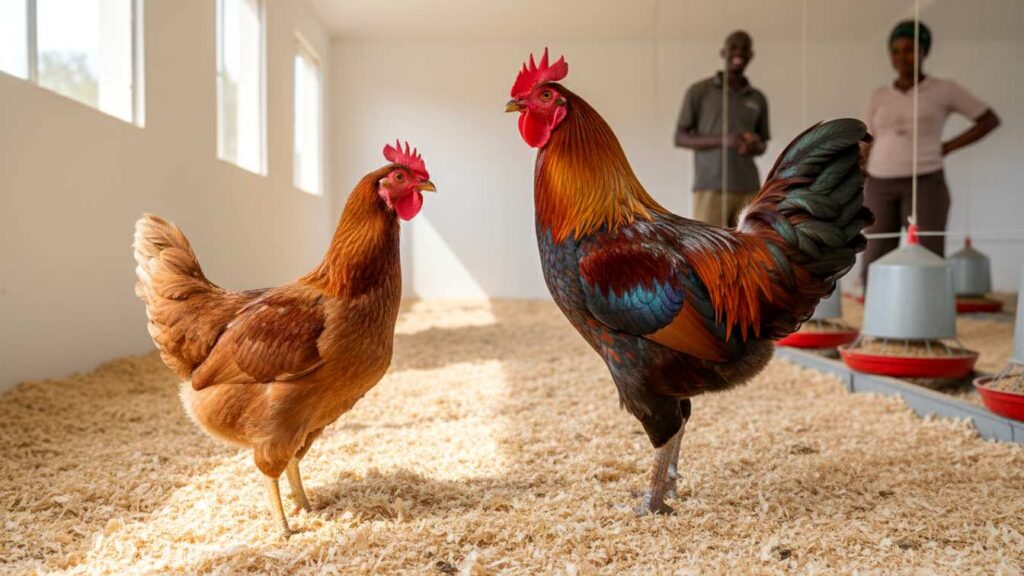
Developed by Kenchic, the Kenbro is a red-feathered bird that serves as an excellent intermediate between commercial broilers and pure Kienyeji. It has softer meat than the KALRO breed but harder than a broiler.
Characteristics: Red feathers, yellow legs/skin. Matures in 4 months.
Pros: Consistent growth rates, widely available support from Kenchic.
Cons: Requires more intensive management and better housing than KALRO birds. They do not brood (sit on eggs), so you need an incubator.
Best For: Peri-urban farmers with limited space who want decent meat and egg production.
The Kuroiler
Kuroilers are famous scavengers. Originating from India, these birds will thrive if you have a large compound where they can forage for half their food. They are genetically designed to live on kitchen waste and agricultural by-products.
Characteristics: Large eggs, vibrant multi-colored feathers, very active.
Pros: Best for free-range systems where feed cost reduction is the priority.
Cons: Like the Kenbro, they rarely go broody. They can be aggressive toward smaller breeds.
Read Also: Barred Plymouth Rock Chicken in Kenya: Breed Traits, Eggs, Meat and Profits for Small Farms
Best For: Farmers with large acreage or orchards who want birds to clean up bugs and weeds.
OPTIMAL HOUSING CONSTRUCTION AND MANAGEMENT
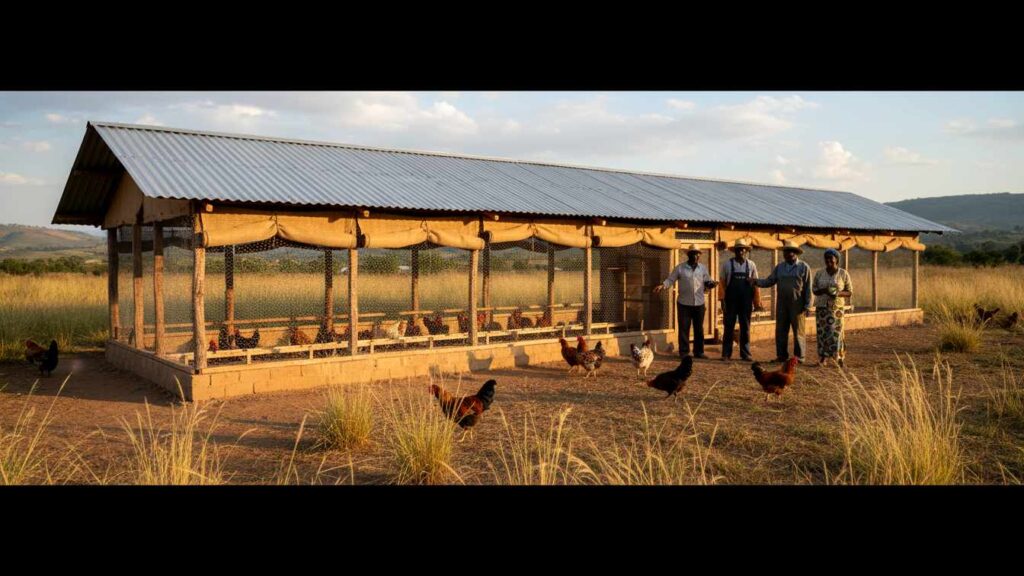
The forecast for early 2026 indicates hot and dry conditions across most of Kenya. This weather pattern poses a significant risk of heat stress, which can kill your flock in hours. Your housing structure must be engineered to combat this naturally.
House Orientation and Dimensions
A professional poultry house must be oriented East-West. This means the long solid walls face the sunrise and sunset, while the main windows face North and South. This prevents direct sunlight from penetrating and heating up the inside of the house during the hottest parts of the day. For 2026 standards, experts recommend increasing the roof height to at least 7 feet on the lower side and 9 feet on the higher side to allow hot air to rise and escape away from the birds.
Ventilation and Materials
The longer sides should be covered with chicken wire mesh to allow maximum cross-ventilation. Avoid using stone blocks for the upper parts of the walls; use timber and mesh instead. In colder areas like Limuru or Kericho, you can use adjustable curtains (gunia or tarpaulins) to regulate temperature. In hot areas like Mombasa or Kisumu, the house should be almost entirely open mesh with a wide roof overhang of at least 1 meter to prevent rain from entering.
Space Requirements
Overcrowding is a death sentence, leading to cannibalism and disease spread. Stick to the rule of 1 square foot per bird for chicks and 2 to 2.5 square feet per bird for adults. If you are rearing them in a deep litter system, ensure the wood shavings are 4 to 6 inches deep and are turned every three days. This prevents heat and ammonia buildup from the manure, which can cause blindness and respiratory issues.
Heat Stress Management Protocol
During the hot months of January to March, add electrolytes and multivitamins to your chickens’ drinking water during the hottest part of the day (12 PM to 3 PM). This simple step prevents heat stroke and keeps production stable. Ensure water tanks are kept in the shade, as chickens will refuse to drink warm water.
THE BROODING PHASE: THE FIRST 28 DAYS
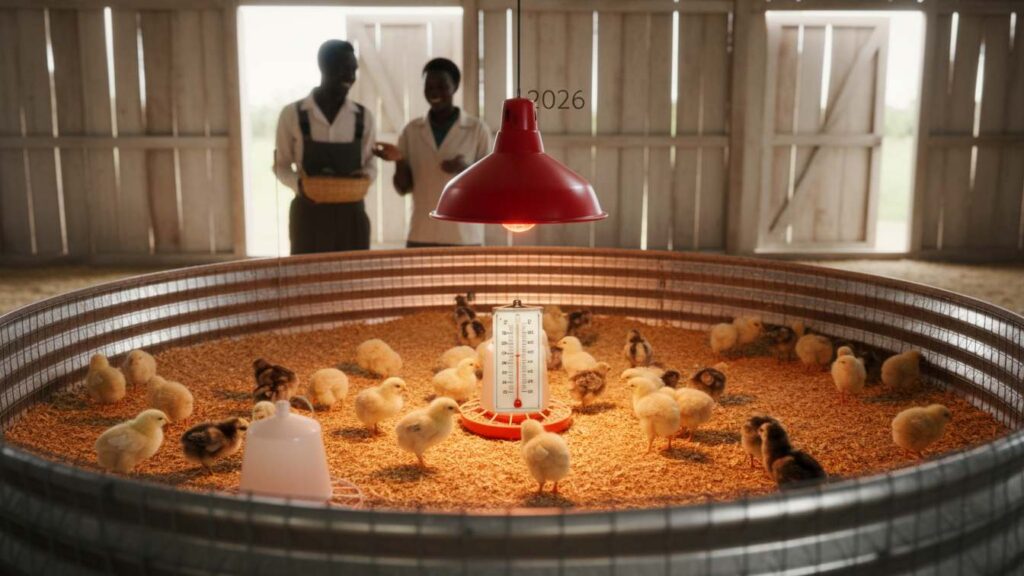
The first four weeks, known as brooding, are the most delicate. Mortality is highest during this period. You need a dedicated brooder area, which is essentially a nursery for chicks.
Setting Up the Brooder
Construct a circular guard using plywood, hardboard, or cardboard. Circles are better than corners because chicks tend to pile up in corners when cold, leading to suffocation. The floor must be covered with dry wood shavings, initially covered with old newspapers for the first 3 days to prevent chicks from eating the litter.
Temperature Control
Temperature control is non-negotiable.
Week 1: 32°C to 34°C.
Week 2: 30°C to 32°C.
Week 3: 28°C to 30°C.
Week 4: 26°C to 28°C.
You can use infrared bulbs (250 Watts), a jiko (charcoal stove), or a specialized brooding pot. If using a jiko, ensure the gases are vented out or the briquettes are fully lit before placing them inside to prevent carbon monoxide poisoning.
Hygiene and Management
Change the water twice a day. Dirty water is the fastest way to spread Coccidiosis, a parasitic disease that causes bloody diarrhea. Inspect chicks daily for “pasting,” where droppings stick to their vent and block defecation. Gently clean this with warm water if observed.
COMPREHENSIVE FEEDING STRATEGIES AND COST REDUCTION
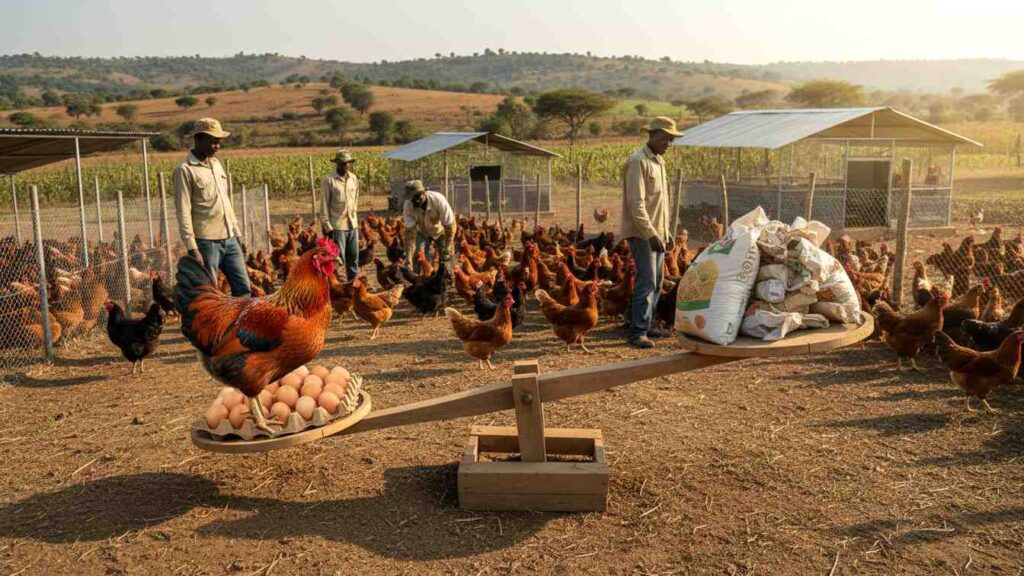
Feeds account for roughly 70% of your production costs. In 2026, the price of commercial feeds like Chick Mash and Growers Mash remains high, with a 50kg bag averaging KES 2,750 to KES 3,900 depending on the brand. To make a profit, you must follow a strict feeding schedule and supplement wisely without compromising nutrition.
Phase 1: The Starter Phase (Day 1 to Week 8)
During this phase, you must use commercial Chick Mash. Do not compromise here. Chicks need high protein (18-20%) and balanced vitamins to build their skeleton and immune system. A chick that is stunted in the first 8 weeks will never recover its growth potential. Each chick will consume roughly 2kg of feed during this entire period.
Phase 2: The Growers Phase (Week 9 to Week 18)
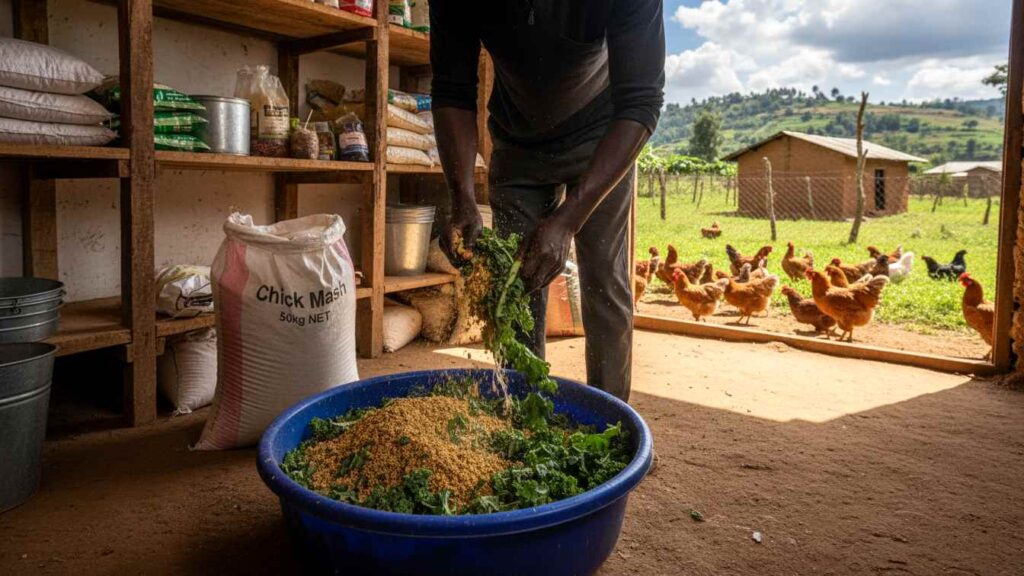
This is where you can start to implement cost-saving measures. Switch to Growers Mash. You can now mix commercial Growers Mash with local supplemental feeds.
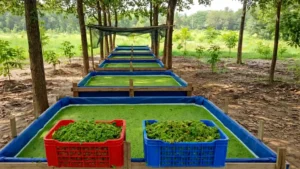
Hydroponic Fodder: This is sprouted barley or maize. It is rich in vitamins and highly digestible.
Lucerne (Alfalfa): High in protein and gives the egg yolks a deep yellow color.
Kitchen Greens: Sukuma wiki, spinach, and cabbage are excellent, provided they are clean and free of mold.
Read Also: Poultry Farming in Kenya 2026: Complete Guide to Profitable Improved Kienyeji Chicken
Ratio: A mix of 70% commercial feed to 30% greens works well for Improved Kienyeji birds. This reduces your bag purchase frequency without starving the birds.
Phase 3: The Laying/Finishing Phase (Week 19 onwards)
Once the birds start laying (around Week 19-20), you must switch hens to Layers Mash and meat birds to a Finisher diet. Layers need significant calcium for strong shells. If you see soft-shelled eggs, you are cutting too many corners. Provide crushed oyster shells or limestone grit in a separate trough so hens can peck at it as needed.
Fermented Feeds Strategy
For 2026, many smart farmers are adopting fermented feeds. This involves soaking your chick or growers mash in water with a lactobacillus culture (like EM1 or even natural fermentation) for 3 days. This process breaks down the anti-nutrients in the grain, making it more digestible. Birds eat less but absorb more nutrients, and their gut health improves significantly, reducing antibiotic use.
Waste Reduction
To reduce wastage, use hanging feeders adjusted to the level of the chicken’s back. This prevents them from scratching out the feed. Wastage is the number one invisible cost on Kenyan farms. A 10% waste rate can destroy your entire profit margin.
DISEASE CONTROL AND VACCINATION MASTERCLASS
Disease is the enemy of profit. An outbreak of Newcastle Disease can wipe out 100% of your flock in three days. You cannot cure viral diseases; you can only prevent them. Below is the mandatory vaccination schedule for Kenya in 2026.
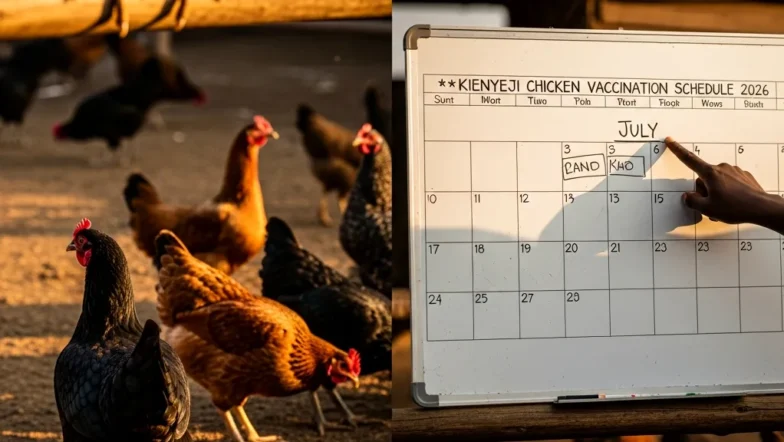
The 2026 Vaccination Schedule
Day 1: Marek’s Disease
Usually done at the hatchery before you buy the chicks. Always ask for a vaccination certificate when buying day-old chicks to confirm this was done.
Day 7: Newcastle Disease (1st Dose) + Infectious Bronchitis (IB)
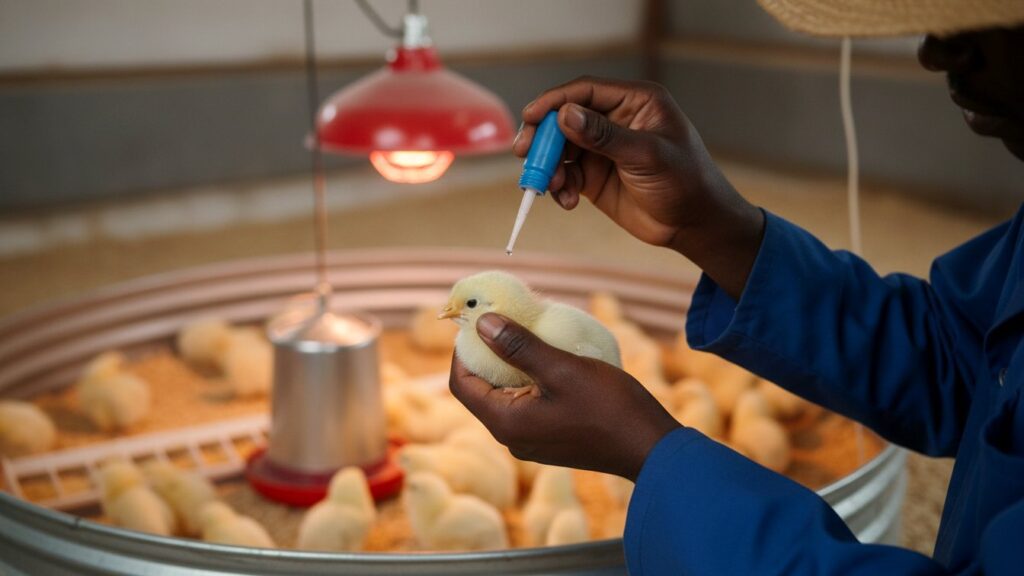
Administered via eye drops or drinking water. The eye drop method is superior for ensuring every chick gets the dose. If using water, starve the chicks for 2 hours beforehand so they are thirsty and drink the vaccine immediately. Use chlorine-free water (rainwater or boiled cooled water) and add skimmed milk powder to stabilize the virus.
Day 14: Gumboro (IBD) (1st Dose)
Administered via drinking water. Gumboro affects the immune system and is highly lethal in young chicks. The virus attacks the Bursa of Fabricius, destroying the bird’s ability to fight off other infections.
Day 21: Gumboro (IBD) (2nd Dose)
Administered via drinking water. This booster is critical for full immunity.
Day 28: Newcastle Disease (2nd Dose)
Administered via eye drops or drinking water. This reinforces the immunity from the first week.
Week 6 to 8: Fowl Pox
Administered via a wing web stab. You will need a special two-pronged needle. This is a painful vaccine, so handle birds gently. Fowl Pox causes wart-like lesions on the comb and wattle and can cause blindness.
Week 8: Fowl Typhoid
Administered via intramuscular injection. This protects against Salmonella Gallinarum, a bacterial disease that causes sudden death and yellow diarrhea.
Week 19 (Just before laying): Deworming and Boosters
Deworm your flock using Piperazine or Levamisole. Repeat deworming every 3 months. Also, repeat the Newcastle vaccine every 3 months for the rest of the bird’s life.
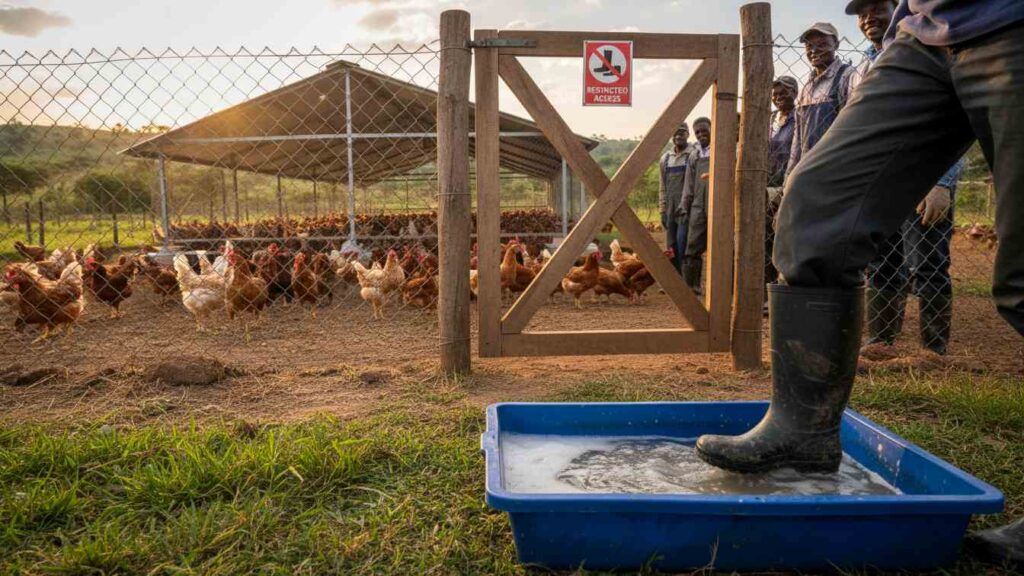
Biosecurity Protocols
Vaccination is useless without biosecurity.
Footbaths: Place a footbath with disinfectant (like Omni-cide or diluted bleach) at the door of every poultry house.
Visitors: Do not let neighbors or buyers enter your poultry unit. They carry diseases on their shoes and clothes.
Quarantine: If you buy new birds, keep them separate from your main flock for at least 14 days to observe for signs of illness.
SOURCING CHICKS AND AVOIDING SCAMS
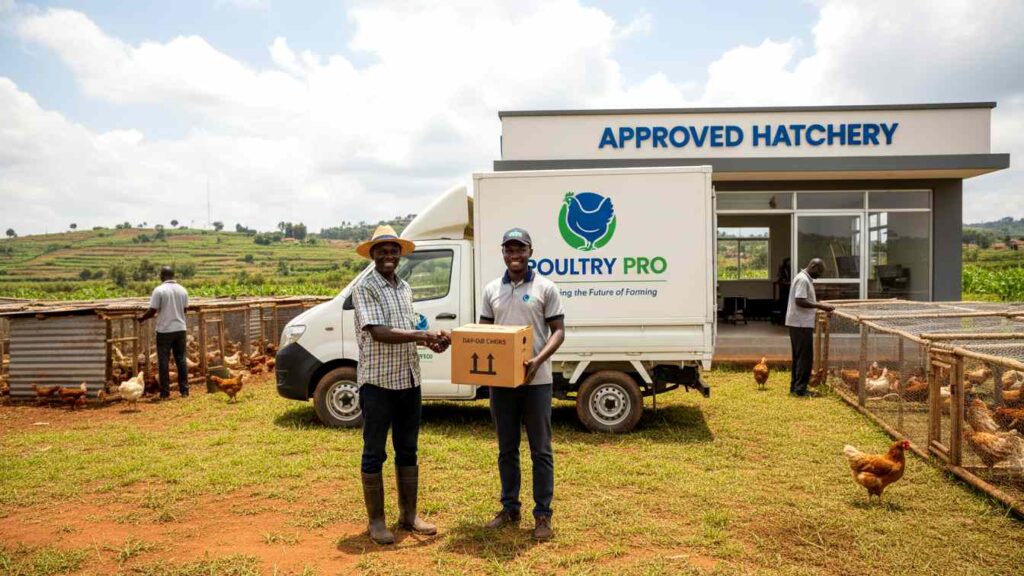
One of the biggest risks in 2026 is buying fake Improved Kienyeji chicks-mongrels that look like quality breeds but grow slowly and die easily. Only buy from certified hatcheries. Below are verified Kenyan sources active for the 2026 season.
Certified Sources
KALRO Naivasha / Kakamega (Non-Ruminant Research Institute)
Best for: Pure KALRO KC3 Improved Kienyeji.
How to buy: You usually need to book in advance via M-Pesa. Demand is high.
Contact: Visit the KALRO website or their specific poultry centers in Naivasha and Kakamega.
Kenchic Limited
Best for: Kenbro (Red/Brown dual purpose).
Contact: 0703 056 055.
Locations: They have poultry centers in Nairobi (Exsan House), Mombasa, Nakuru, Kisumu, and Nyeri.
Booking: Requires a 25% deposit. Waiting period is typically 1-2 weeks.
Kukuchic Limited
Best for: Rainbow Rooster and Premium Improved Kienyeji.
Contact: 0727 578 733.
Notes: They are the official breeders of the Rainbow Rooster in East Africa. Highly recommended for meat farmers.
Ziwani Poultry
Best for: KALRO Improved Kienyeji and Kuroilers.
Location: Thika/Ngoliba area.
Contact: 0708 923 991.
Read Also: Top 7 Best AI Apps for Kenyan Farmers in 2026: Fight Crop Diseases, Cut Costs and Boost Yields
MARKETING AND SALES STRATEGIES FOR THE MODERN FARMER
Producing the chicken is only half the work; selling it is where the money is made. In 2026, relying solely on brokers who visit your farm will result in low profits. You must take control of your marketing.
Timing Your Market
The peak seasons for poultry consumption in Kenya are April (Easter), August (School Holidays), and December (Christmas/Jamhuri Day). Work backwards from these dates. If you want to sell in December, you must start your chicks in July or August.
Value Addition
Instead of selling live birds, consider slaughtering and packaging. A dressed chicken, cleaned and packaged in a neat bag with a branded sticker, fetches KES 100 to KES 200 more than a live bird. You can sell these directly to households, offices, or local butcheries. Ensure you have a Halal slaughterman if targeting a diverse customer base.
Digital Marketing
Use WhatsApp Status and local community groups. Take clear photos of your flock, eggs, and dressed chicken. Post consistently. Facebook Marketplace is also effective, but be wary of scammers. Ask for payment on delivery or use a secure location.
Contract Farming
Approach local hotels, schools, and hospitals. They require a consistent supply. Even a small contract to supply 10 chickens a week can cover your operational costs. The key here is reliability; you must never miss a delivery.
DETAILED FINANCIAL BREAKDOWN (ROI ANALYSIS)
Let us look at a hypothetical budget for rearing 100 Improved Kienyeji chickens for meat (harvesting at 4.5 months) in 2026. Note that these costs are estimates and vary by location.
Expenditure
Chicks (100 Day Olds @ KES 100): KES 10,000
Chick Mash (4 bags @ KES 3,000): KES 12,000
Growers Mash (8 bags @ KES 2,800): KES 22,400
Vaccines & Medicine: KES 3,000
Wood Shavings & Charcoal: KES 2,000
Miscellaneous/Labor: KES 5,000
Total Cost of Production: KES 54,400
Projected Income
Assumed Mortality: 5% (95 birds surviving)
Average Sale Price per Bird: KES 1,200
Total Revenue (95 * 1,200): KES 114,000
Manure Sales (10 bags @ KES 200): KES 2,000
Total Gross Income: KES 116,000
Net Profit
Total Income (KES 116,000) – Total Cost (KES 54,400) = KES 61,600.
This represents a profit of over 100% in roughly 5 months. If you sell eggs, the dynamics change, with a longer payback period but a steady weekly income flow.
CONCLUSION
Rearing Improved Kienyeji chickens in Kenya in 2026 is a viable path to financial independence, but it is not a get-rich-quick scheme. It requires discipline, strict adherence to vaccination schedules, and smart cost management. By choosing the right breed like the KALRO KC3 or Rainbow Rooster, preparing for the hot Q1 weather, and sourcing your inputs from genuine suppliers, you place yourself in the top 10% of farmers who actually make a profit.
Start small, learn the behavior of your birds, and scale up as you master the art. Poultry farming is a science and a business; treat it with that level of seriousness, and the rewards will be substantial. The market is ready for your produce-are you ready to supply it?
FREQUENTLY ASKED QUESTIONS (FAQ)
Q: How long does it take for improved Kienyeji chickens to mature?
Improved kienyeji chickens usually take about 4 to 5 months to reach market weight for meat, which is faster than pure local breeds. For eggs, most improved strains start laying from around 22 to 24 weeks of age if well fed and vaccinated.
Which is the best improved kienyeji chicken in Kenya?
There is no single “best” breed, but popular and reliable options include Kuroiler, Rainbow Rooster, Kenbro and KARI Improved Kienyeji. Farmers choose based on goals: Kuroiler and Rainbow Rooster for fast growth, KARI lines for strong disease resistance, and Kenbro for good meat plus decent egg numbers.
Q: What are the disadvantages of improved Kienyeji chicken?
Improved kienyeji birds need more structured feeding, vaccination and management than village chickens, so feed costs and input costs can be high. If farmers buy chicks from unknown middlemen or inbred lines, they can face problems like poor growth, deformities and low production.
Q: How many eggs does improved kienyeji lay per day?
A good improved kienyeji hen can lay about 200 to 280 eggs per year, which averages roughly 4 to 6 eggs per week at peak production. In real farms this means some days with an egg and some without, instead of exactly one egg every single day
Q: What is a kienyeji chicken?
Kienyeji chicken simply means indigenous or “local” chicken in Kenya, usually hardy birds kept in rural homes under free range or semi free range systems. Improved kienyeji are upgraded versions of these local birds that have been selectively bred or crossed to grow faster and lay more eggs while keeping the traditional taste.
Q: How many months does a kienyeji chicken take to mature?
Pure kienyeji chickens are slower and commonly take about 6 to 7 months to reach a good market weight. They also start laying later than improved lines, so farmers who choose them need more patience and a longer feeding period.
Q: What are the types of improved Kienyeji chicken?
Common improved kienyeji types in Kenya include KARI Improved Kienyeji, Kuroiler, Rainbow Rooster, Kenbro and several branded “improved local” lines from private hatcheries. Most of these are dual purpose, meaning they are good for both meat and eggs compared to ordinary village birds.
Q: How do you keep improved kienyeji chickens successfully?
To keep improved kienyeji well, provide proper housing, a balanced starter–grower–layer feeding program, clean water and a strict vaccination schedule. Combine semi free range for cheap greens with good biosecurity and regular deworming so the birds stay healthy and convert feed into meat and eggs efficiently.
How much capital do I need to start with 100 Improved Kienyeji chickens?
In 2026, budget approximately KES 50,000 to KES 60,000 for operational costs (chicks, feed, vaccines). This excludes the capital cost of building the poultry house.