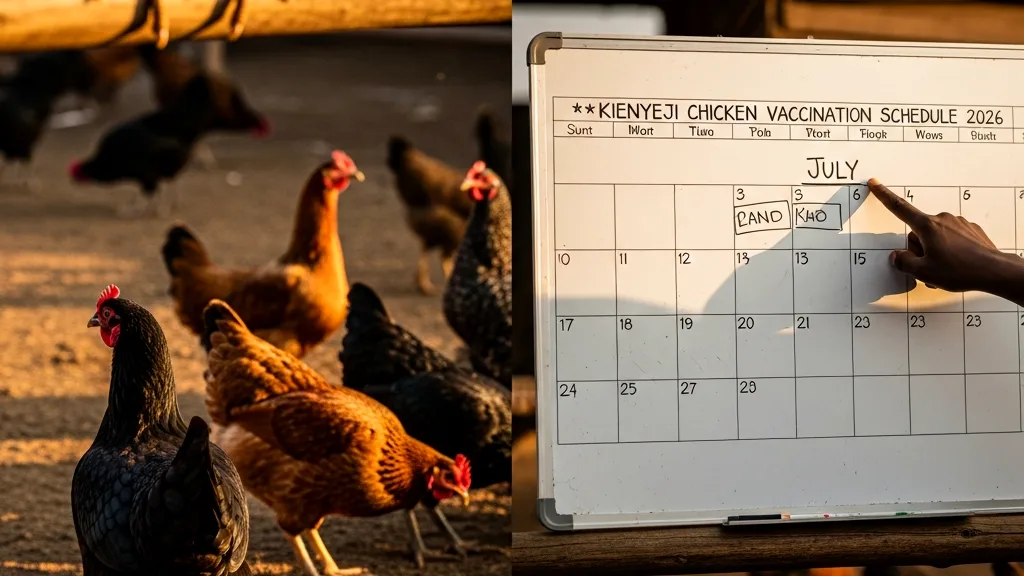

This 2026 guide provides a definitive, month-by-month vaccination protocol. for Kienyeji poultry farmers in Kenya to prevent catastrophic losses from Newcastle, Gumboro, and Fowl Pox. It details exact dosage timings, sourcing from verified Agrovets, and financial breakdowns to maximize flock profitability.
Table of Contents
Poultry farming in Kenya has evolved significantly, and the “laissez-faire” approach of the past is no longer viable for commercial success. Newcastle Disease, locally known as Kidero. remains the number one killer of free-range and semi-intensive chicken in Kenya, often wiping out 100% of a flock within 72 hours. For a beginner farmer, skipping a KES 400 vial of vaccine can result in a loss of over KES 100,000 in stock.
The 2026 landscape introduces new challenges, including mutated strains and higher feed costs, making mortality reduction paramount. Successful farmers view vaccination not as an expense, but as a mandatory insurance policy. Whether you are rearing Improved Kienyeji or pure indigenous breeds, the biological risks remain identical.
Why is a strict vaccination schedule critical for Kienyeji chickens in 2026?
A strict schedule is the only guaranteed defense against viral diseases like Newcastle (Kidero) which has no cure once contracted. In 2026, with shifting climate patterns increasing disease vectors, adhering to a preventative calendar ensures flock survival, protects your capital investment, and guarantees marketable weight by month five.
The primary reason for a strict schedule is the viral nature of the most deadly poultry diseases. Bacterial infections can often be treated with antibiotics, but viral infections like Newcastle Disease and Gumboro have no cure. Once the virus enters your flock, the only management strategy is to isolate and cull, which equates to total financial loss.
Furthermore, the market demand for “organic” and “safe” meat means buyers are increasingly wary of sick birds. A documented vaccination history increases the resale value of your flock. Buyers from Nairobi to Kisumu prefer sourcing from farmers who can prove their flock health management is professional and consistent.
Climate variability in 2026 has also led to the persistence of disease vectors like mosquitoes throughout the year. Mosquitoes are the primary carriers of Fowl Pox. Without a rigid schedule that anticipates these environmental risks, farmers leave their flocks exposed to preventable outbreaks.
Which Kienyeji breeds require the most rigorous vaccination in 2026?
While all poultry requires vaccination, improved breeds like the KALRO Improved Kienyeji, Kuroiler, and Rainbow Rooster have faster growth rates that can be compromised by disease stress. Pure indigenous birds have higher natural resistance but are still fatal victims to Newcastle and Fowl Pox without intervention.
Analyzing Top Breeds for Immunity and Management
In 2026, the genetic landscape of Kenyan poultry is dominated by three main categories, each with specific health nuances. Understanding the genetic limitations of your specific breed helps you tailor the vaccination intensity.
1. KALRO Improved Kienyeji: Developed by the Kenya Agricultural and Livestock Research Organization, this bird is the industry standard for hardiness. They are robust foragers but are highly susceptible to Gumboro (Infectious Bursal Disease) during their rapid growth phase between week 3 and week 6. Neglecting the Gumboro schedule for KALRO birds is a primary cause of early chick mortality.
2. Kuroiler and Rainbow Rooster: These Indian-origin breeds grow faster than the KALRO variety. This accelerated metabolism makes them heavy feeders and unfortunately, more prone to respiratory complications if the Newcastle vaccine is delayed. Their larger body mass also means that when they crash from disease, the financial loss per bird is significantly higher.
3. Kenbro and Sasso: These act closer to broilers in their early stages. They require a strict bio-security environment. Farmers in Uasin Gishu and Nakuru have reported higher success rates with these breeds when adhering to a “commercial-style” vaccination regime, rather than a loose free-range schedule.
Where to Buy Kienyeji Chicken Vaccination Schedule: A Month-by-Month Guide for 2026 in Kenya
You can purchase the physical vaccines and professional veterinary consultation required for this schedule at certified hubs like Sidai Africa, Ultravetis, and regional Kenya Seed Company outlets. Digital platforms like Digifarm and iShamba now also offer veterinary linkage services to ensure you access genuine inputs.
Read Also: Barred Plymouth Rock Chicken in Kenya: Breed Traits, Eggs, Meat and Profits for Small Farms
Sourcing genuine vaccines is the most critical step in the supply chain. In Kenya, “dead vaccines” (vaccines that have lost potency due to poor refrigeration) are a major cause of failure. You might vaccinate your flock and still lose them because the product was stored incorrectly at the shop.
Trusted Suppliers and Verification
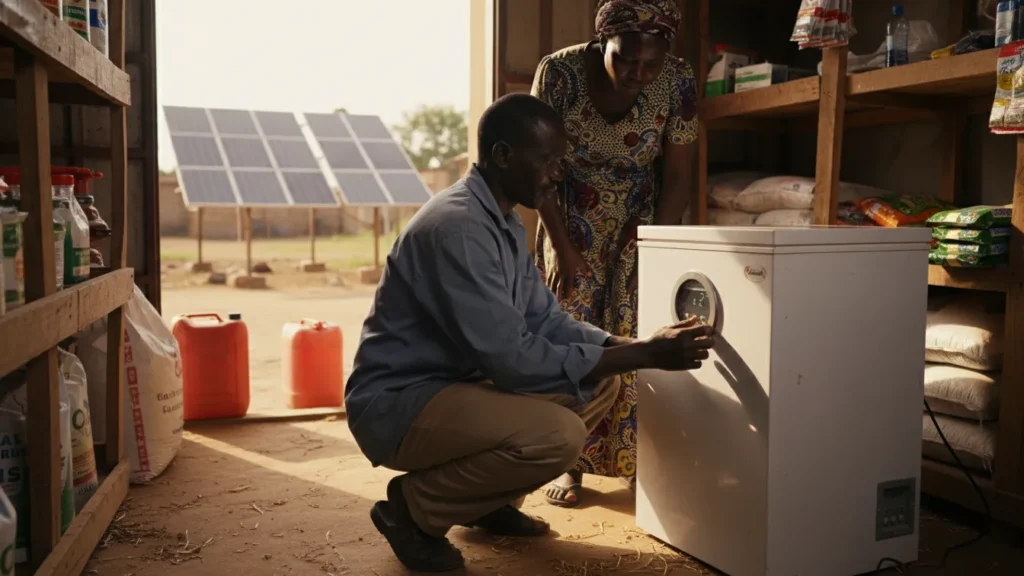
Sidai Africa: With a network spanning the country, Sidai is a leader in the cold chain. They use solar-powered fridges ensuring vaccines remain between 2°C and 8°C even during power blackouts. They are a top recommendation for buying live vaccines like Lasota and Gumboro.
Coopers Brand (MSD Animal Health): Available in most reputable Agrovets. Look for the distinct branding and check the expiry date. Their Fowl Pox vaccine is widely regarded as the most effective in the East African region.
KALRO Naivasha/Nairobi: For farmers near research centers, buying directly from KALRO ensures you are getting the specific strains used to develop the birds you are likely rearing. This genetic matching often results in better immunity development.
Buyer’s Caution Checklist for 2026
The Fridge Test: When you walk into an Agrovet, look at the fridge immediately. Is it powered on with a visible light? If the vaccines are kept on a shelf or in a warm fridge, walk away immediately.
Cooler Boxes: Never transport vaccines in your pocket or a plastic bag. You must carry a cool box with ice packs. The virus in the vaccine dies within minutes of heat exposure.
Diluent Matching: Ensure the Agrovet gives you the correct diluent (water mixer) for the specific vaccine. Using tap water kills the vaccine immediately due to chlorine.
How do vaccination needs vary by Kenyan county?
Vaccination protocols must adapt to local climate and disease prevalence. High-humidity zones require aggressive coccidiosis management alongside vaccines, while hot, dry regions need extra care in vaccine transport and Fowl Pox prevention due to mosquito vectors.
Kiambu & Central Region (High Density)
Kiambu is the poultry hub of Kenya due to its proximity to Nairobi. The high density of farms means airborne diseases travel fast. If your neighbor has Newcastle, your birds are at immediate risk.
Strategy: Strict adherence to the schedule is mandatory. Bio-security (footbaths) is as important as the shot itself. Repeat Newcastle vaccinations every 2 months instead of 3 due to high viral load in the environment.
Read Also: Azolla Farming in Kenya: Cheap Animal Feed and Higher Profits in 2026
Kakamega & Western Region (The Free-Range Hub)
Kakamega and Bungoma have a strong culture of free-range (kuku ya kienyeji) rearing. The risk here is soil-borne pathogens and interaction with wild birds. Fowl Typhoid is more prevalent here.
Strategy: Ensure the intramuscular injection at Week 8 is never skipped. Also, focus heavily on deworming, as free-range birds pick up worms from the soil constantly. Deworming aids the vaccine by ensuring the bird’s system is strong.
Machakos & Eastern Region (Heat Stress)
In Machakos and Kitui, the challenge is heat. Heat stress weakens the bird’s immune system, making vaccines less effective if administered during the hottest part of the day. The sun can also degrade the vaccine during transport.
“Strategy: Vaccinate ONLY in the early morning (6:00 AM) or late evening. Transporting vaccines from the town to the shamba requires high-quality cooler boxes to prevent the “cold chain” from breaking in the scorching heat.”
What is the comprehensive 12-month vaccination workflow?
The 2026 workflow begins at Day 1 with Marek’s disease (hatchery) and follows a rigorous timeline: Newcastle/IB at Day 7, Gumboro at Day 14 and 24, Fowl Pox at Week 6, and Fowl Typhoid at Week 8. Adult birds require Newcastle boosters every 3 months and regular deworming.
The Critical First 8 Weeks (The Danger Zone)
The first two months determine the survivability of your flock. Most beginner farmers lose their birds between Week 3 and Week 5 due to Gumboro or Coccidiosis. This period requires daily observation and strict calendar adherence.
| Age | Vaccine / Action | Administration Method | Target Disease |
|---|---|---|---|
| Day 1 | Marek’s Disease | Subcutaneous Injection (Neck) | Marek’s (Paralysis) – Usually done at Hatchery |
| Day 7 | Newcastle (HB1) + Infectious Bronchitis (IB) | Eye Drop or Drinking Water | Newcastle & Respiratory issues |
| Day 14 | Gumboro (IBD) – 1st Dose | Drinking Water | Infectious Bursal Disease |
| Day 21-24 | Gumboro (IBD) – Booster | Drinking Water | Infectious Bursal Disease |
| Week 4 (Day 28) | Newcastle (Lasota) | Drinking Water or Eye Drop | Newcastle (Stronger strain) |
| Week 6 | Fowl Pox | Wing Web Stab | Fowl Pox (Ndui) |
| Week 8 | Fowl Typhoid | Intramuscular Injection | Fowl Typhoid |
| Week 9 | Deworming (First Round) | Drinking Water | Internal Worms |
Detailed Breakdown of Vaccination Events
Day 7: The Newcastle Primer (HB1). This is the first time you will intervene. The maternal antibodies from the hen are fading, and the chick is vulnerable. Use the eye-drop method for best results, as it ensures every single chick gets the dose.
Day 14: The Gumboro Critical Point. Gumboro disease targets the bursa, which is the “command center” of the chick’s immune system. If Gumboro strikes, the bird’s immune system is permanently destroyed. Administer this via drinking water, ensuring you withdraw water for 2 hours prior so the chicks are thirsty.
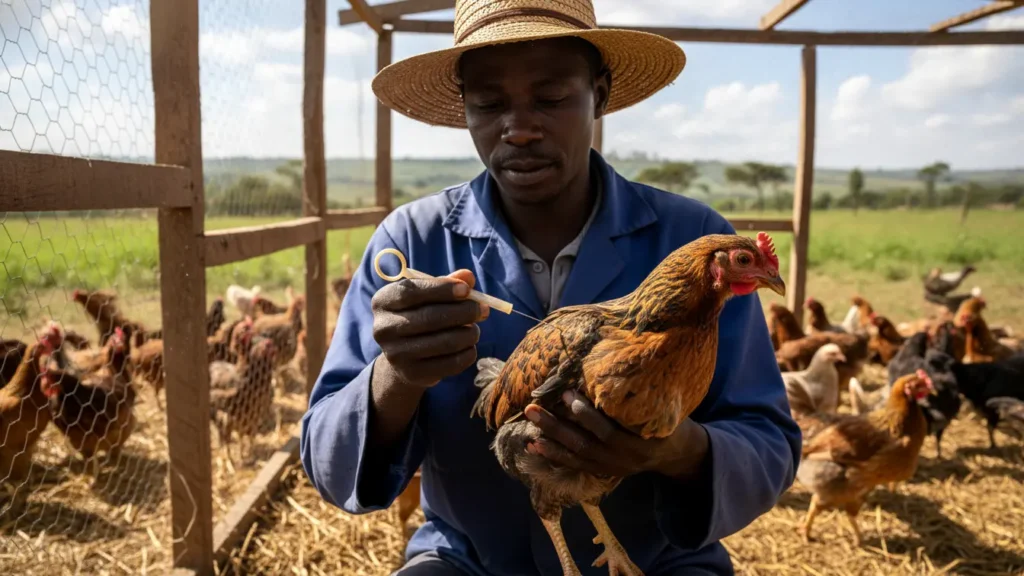
Week 6: The Fowl Pox Stab. This is unique because it is not a drop or injection, but a “stab” through the wing web. You must check for a “take” (a small scab/swelling) at the injection site after 7 days to confirm the vaccine worked. If there is no scab, you must repeat the vaccination.
Maintenance Phase: Month 3 to Month 12
Once the bird passes the 2-month mark, they are hardier, but not invincible. The focus shifts to maintaining immunity against Newcastle and Parasites. Neglecting adult birds is a common error that leads to losses just before market sale.
- Every 3 Months: Repeat Newcastle Vaccine (Lasota strain). This is non-negotiable. Even adult birds die from Kidero.
- Every 2 Months: Deworming (Alternating brands like Ascarex and Levamisole to prevent resistance).
- Month 5 (Point of Lay): Provide a multi-vitamin boost to prepare hens for egg production stress.
Expert Tip: Never vaccinate sick birds. Vaccines stimulate the immune system; if the bird is already fighting an infection, the vaccine can kill it. Isolate sick birds first, treat them, and vaccinate only the healthy flock.
How do you correctly administer vaccines to avoid failure?
Vaccine failure is usually human error, not product failure. Success depends on maintaining the cold chain (2-8°C), using chlorine-free water (preferably boiled and cooled), and ensuring every bird receives the dose within 2 hours of mixing.
The Water Withdrawal Method
For drinking water vaccines (like Gumboro and Lasota), you must make the birds thirsty first. Remove all drinkers from the coop for 2 to 3 hours before administration. This ensures that when you return the medicated water, all birds drink immediately and consume the full dose rapidly.
Chlorine is the Enemy
City tap water contains chlorine, which kills the live virus in the vaccine instantly. You must use water that has been boiled and cooled, or rain water collected in a clean plastic container. Alternatively, purchase a “vaccine stabilizer” (often blue in color) from the Agrovet to neutralize the chlorine.
The Eye-Drop Technique
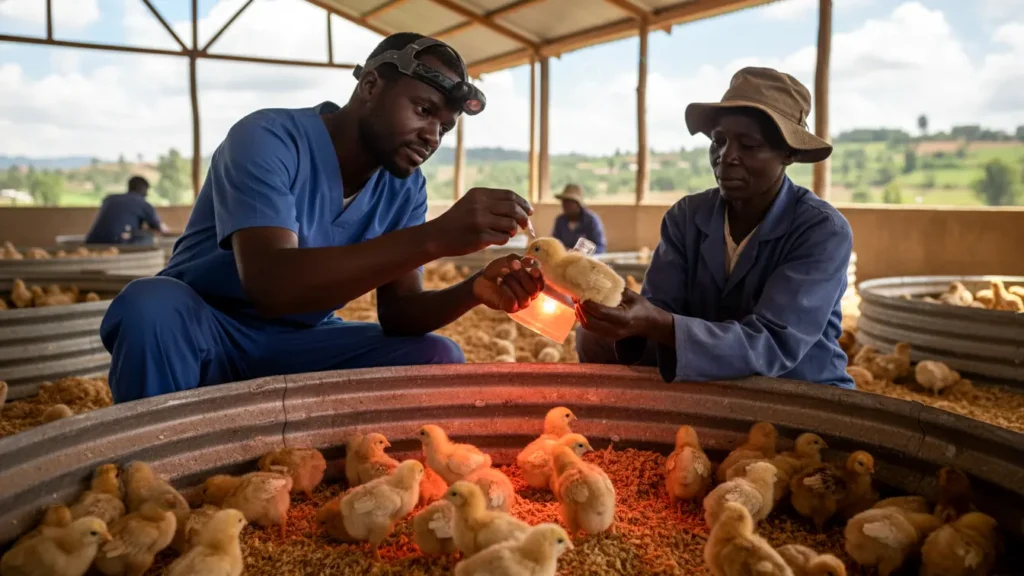
The most effective method for Newcastle is the eye-drop. Hold the chick sideways and drop one bead of the vaccine into the eye. Wait for the chick to blink (swallow) before releasing it. If it doesn’t blink, the vaccine may have rolled off, and the bird remains unprotected.
Read Also: Dairy Farming in Kenya: Complete Beginner’s Guide, Costs, Profits and Best Breeds
What are the costs and returns of a full vaccination program?
The cost of fully vaccinating one Kienyeji chicken in 2026 is approximately KES 30-50 over its lifetime. In contrast, the loss of a mature bird costs KES 1,000-1,500. The Return on Investment (ROI) for vaccination is over 2,000%, making it the single most profitable activity in poultry farming.
Financial Breakdown (Per 100 Birds)
Many beginners fear the upfront cost of vaccines. However, when you break down the numbers, the cost is negligible compared to feeds. A 100-dose vial of Newcastle vaccine costs roughly KES 350. That is KES 3.50 per bird.
| Item | Unit Cost (KES) | Frequency (Year 1) | Total Cost for 100 Birds (KES) |
|---|---|---|---|
| Newcastle (HB1/Lasota) | 350 (per 100 doses) | 5 times | 1,750 |
| Gumboro | 400 (per 100 doses) | 2 times | 800 |
| Fowl Pox | 450 (per 100 doses) | 1 time | 450 |
| Fowl Typhoid | 500 (per 100 doses) | 1 time | 500 |
| Dewormers | 300 (100g sachet) | 6 times | 1,800 |
| Syringes/Droppers | 500 (Misc) | – | 500 |
| TOTAL COST | KES 5,800 |
The Break-Even Logic:
Total Vaccination Cost for 100 birds = KES 5,800.
Cost per Bird = KES 58.
Selling Price of 1 Mature Kienyeji Cock = KES 1,200 – 1,500.
Reality Check: If you lose just 5 birds to disease, you have lost KES 6,000—more than the cost of vaccinating the entire flock for a whole year. Vaccination is not an expense; it is profit protection.
Farmers often look at the receipt at the Agrovet and feel the pinch, but they fail to calculate the “opportunity cost” of a wiped-out flock. When a flock dies at Week 12, you lose not just the bird, but the 12 weeks of feed you invested. That loss is often unrecoverable for small-scale farmers.
How does the supply chain and value addition play a role?
A robust supply chain ensures vaccine potency through unbroken cold storage, while value addition occurs when farmers use vaccination records to brand their meat as “Safe & Premium.” This certification allows access to high-end markets like supermarkets and hotels that reject undocumented poultry.
The Cold Chain Integrity
The “Cold Chain” refers to the temperature-controlled supply chain. In Kenya, this is the weak link. A vaccine traveling from Nairobi to a remote village in Homabay often passes through three hands. If one matatu courier puts the package on a hot dashboard, the vaccine is destroyed.
Farmers must take control of the last mile. Always travel to the Agrovet with a cool box containing ice packs. If you don’t have a cool box, a thermos flask with ice cubes is a viable alternative for short distances. Do not store vaccines in the freezer compartment of your home fridge (unless specified); most liquid vaccines should not freeze, but stay chilled at 2-8°C.
Value Addition: The “Vaccinated” Premium
In 2026, educated consumers are asking questions. Restaurants and hotels in major towns require suppliers to adhere to food safety standards. By keeping a vaccination card (signed by a vet or Agrovet), you add value to your product.
Read Also: Poultry Farming in Kenya 2026: Complete Guide to Profitable Improved Kienyeji Chicken
You can market your birds as:
“Professionally Managed, Disease-Free Kienyeji.”
This distinction allows you to charge KES 100-200 above the market rate per bird, as buyers are assured they are not buying a sick or incubating bird.
Many successful farmers in Kiambu are now using QR codes on their packaging that link to their vaccination history. This level of transparency builds immense trust with high-net-worth clients who are willing to pay premium prices for guaranteed safety.
Biosecurity: The Partner to Vaccination
Vaccination is not a silver bullet; it works best when combined with strong biosecurity. Biosecurity refers to the physical barriers you put in place to stop disease from entering your farm. Even a vaccinated bird can be overwhelmed if the viral load in the environment is too high.
The Footbath Rule
Every poultry coop should have a footbath at the entrance containing a disinfectant like Virkon S or plain magadi soda. You and any visitors must step in this before entering. This simple step kills viruses carried on shoes from the market or other farms.
Quarantine New Birds
Never introduce a new chicken directly into your flock, even if you bought it from a reputable source. Isolate new birds for at least 14 days. Observe them for coughing, sneezing, or diarrhea before allowing them to mix with your main flock.
2026 Outlook and Conclusion
As we navigate 2026, the poultry sector in Kenya is becoming more professional. The days of throwing corn to chickens and hoping for the best are ending. With feed costs rising, efficiency is the only way to maintain margins. A rigorous vaccination schedule is the foundation of that efficiency.
The prevalence of erratic weather patterns in Kenya suggests that disease outbreaks will become more unpredictable. The farmers who survive and thrive will be those who follow the science. Do not wait for your birds to droop their wings before you rush to the Agrovet. By then, it is often too late.
Call to Action: Visit your local licensed Agrovet today and purchase a “Vaccination Record Card.” Map out the next 6 months on your calendar. An investment of KES 5,000 in vaccines today will secure your KES 150,000 revenue tomorrow.
Farmers Also Ask (FAQ)
1. Can I vaccinate my chickens while they are laying eggs?
Yes, you can and must vaccinate layers against Newcastle. However, use the Lasota strain or a killed vaccine. Some live vaccines might cause a temporary drop in egg production (5-10%) for a few days, but this is better than losing the bird to disease.
2. Can I use Aloe Vera instead of vaccines?
No. This is a dangerous myth. While Aloe Vera and Capsicum (pilipili) act as immune boosters and antibiotics, they cannot stop a viral infection like Newcastle or Gumboro. Only a vaccine can create the specific antibodies needed to fight these viruses.
3. What should I do if I miss the vaccination date by a few days?
Vaccinate immediately. A delay of 2-3 days is usually acceptable, but the longer you wait, the wider the window of risk. If you are weeks late, consult a vet before proceeding, as the dosage might need adjustment.
4. Why did my chickens die even after vaccination?
This is often due to “Vaccine Failure.” It happens if the vaccine was expired, stored improperly (warm), mixed with chlorinated tap water, or administered to birds that were already sick/stressed. It does not mean vaccines don’t work; it means the process failed.
5. Can I keep leftover vaccines for next time?
No. Once a vaccine vial is opened and mixed with water, it must be used within 2 hours. The virus in the vaccine dies quickly after mixing. Dispose of any leftovers safely; do not store them in the fridge for next month.
6. Is Gumboro vaccine necessary for indigenous Kienyeji?
Yes. While pure Kienyeji are tougher, Gumboro (IBD) attacks the immune system (the Bursa) of young chicks. If a Kienyeji chick gets Gumboro, it might survive but will have a destroyed immune system, making it weak and stunted for life.
7. How do I mix the vaccine correctly?
Use “Vaccine Diluent” provided by the Agrovet. If not available, use boiled water that has cooled down, or rain water. Do not use tap water directly as the chlorine kills the vaccine. Adding a teaspoon of skimmed milk powder to the water can help stabilize the vaccine.
8. What is the difference between Newcastle HB1 and Lasota?
HB1 is a mild strain used for young chicks (Day 7) as a primer. Lasota is a stronger strain used for older birds (Week 4 onwards) and for boosters. Do not give Lasota to day-old chicks as it can cause severe reactions.
9. Can I vaccinate ducks and chickens together?
Ducks are generally resistant to many chicken diseases but can be carriers. It is safe to vaccinate them, but consult a vet for dosage. However, it is best practice to keep ducks and chickens separated to prevent cross-contamination.
10. Where can I get training on vaccination in Kenya?
Organizations like KALRO, Kenchic, and Sidai offer periodic training. Additionally, many county agricultural offices hold field days. Joining digital communities like Mkulima Young can also connect you with training opportunities.