
Table of Contents
Mango farming has solidified its status as the “Green Gold” of Kenyan agribusiness, offering resilient farmers potential net profits exceeding KES 400,000 per acre annually once trees mature. As we step into 2026, the sector is evolving from traditional subsistence farming to high-tech, export-oriented agribusiness. This authoritative guide breaks down the exact 2026 cost structures, high-yielding Apple Mango varieties, and spacing techniques required to dominate the local and export markets.
The global demand for exotic fruits is rising, and Kenyan mangoes are prized for their unique flavor profile. However, achieving export-quality yields requires precision, adhering to strict spacing rules, and selecting the right genetic material. Farmers can no longer rely on rainfall alone; the shift towards irrigation and certified seedlings is the defining trend of 2026.
Read Also: Hass Avocado in Kenya: Price, Seedlings, Varieties & Where to Buy
This comprehensive manual will serve as your blueprint for success. We will cover everything from soil preparation in Makueni to the complex logistics of exporting Kent mangoes to the European Union. Whether you are a novice looking to plant your first acre or a seasoned farmer aiming to optimize yields, this guide contains the financial and technical data you need.
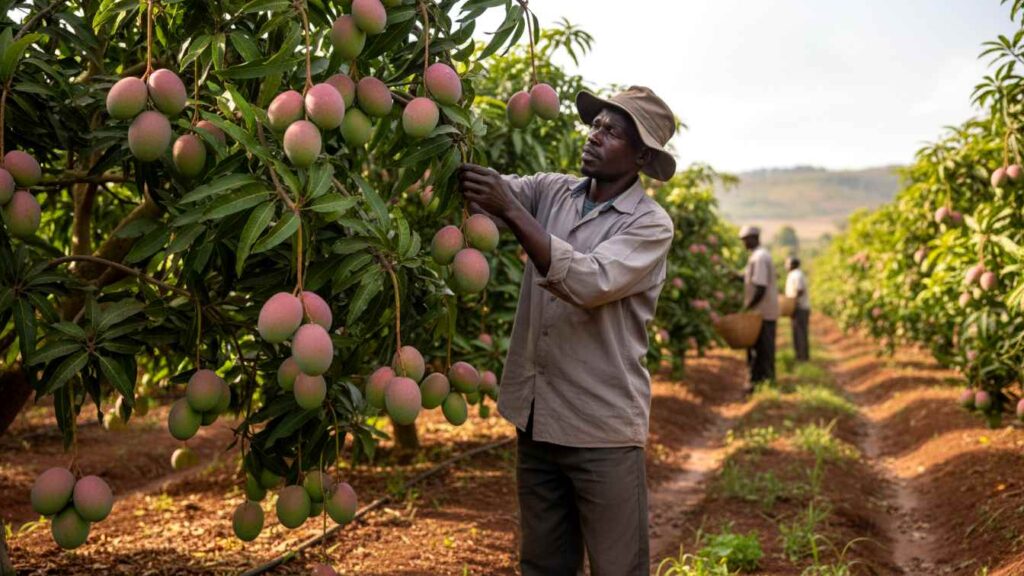
Which Kenyan Counties Offer the Best Climate for High-Yield Mango Farming?
Makueni, Kilifi, and Meru are the top performers for 2026. While Makueni leads in total volume and processing infrastructure, Kilifi dominates the coastal Ngowe variety production. Meru and Murang’a represent the high-potential zones for late-season harvesting, which often fetches premium prices due to market scarcity.
Module A: Regional Comparative Analysis
Success in mango farming depends heavily on location. The ecological requirements for mangoes—hot, dry climates with specific stress periods to induce flowering, vary significantly across Kenya. In 2026, smart farmers are analyzing micro-climates within these counties to gain a competitive edge.
1. Makueni County (The Volume Leader)
Makueni remains the undisputed king of mango production in Kenya, boasting over 4 million mango trees. The semi-arid climate of zones like Kibwezi and Wote is perfect for the Apple Mango and Tommy Atkins varieties. The hot temperatures ensure high sugar accumulation (Brix levels), making the fruit incredibly sweet. However, the market here often faces a “glut” (oversupply) between December and February. This oversupply drives farm-gate prices down to as low as KES 5 per piece during peak weeks. Farmers here must invest in value addition or timing technologies to delay harvest. Contacts like Mugo Farmers often source heavily from this belt for juice processing.
2. Kilifi County (The Coastal Specialist)
The humid coastal heat favors the indigenous Ngowe mango. This variety is large, incredibly sweet, and fiber-free, making it the top choice for processors and juice makers. Kilifi farmers enjoy an earlier harvest season compared to Eastern Kenya, allowing them to hit the Nairobi market before prices crash. The challenge here is high fungal pressure (Anthracnose) due to humidity. This requires strict spray programs recommended by KALRO to keep fruit skins clean. Farmers in Malindi and Magarini are also experimenting with Apple Mango with moderate success.
3. Meru & Murang’a (The Off-Season Strategists)
These counties are changing the game in 2026. Located in slightly higher altitudes, trees here mature slower and fruit later. When Makueni runs dry in March or April, Meru farmers are just harvesting. This allows them to sell Apple Mangoes at KES 30–50 per piece farm-gate, tripling the revenue of their eastern counterparts. This region is the current frontier for smart investors looking to avoid the mid-season price crash. Specific areas like Tharaka Nithi offer a blend of heat and altitude that prolongs the growing season.
4. Machakos & Kitui (The Emerging Giants)
Machakos, particularly the Yatta belt, utilizes the Yatta Canal for irrigation, stabilizing yields even during drought years. Kitui has vast tracts of affordable land suitable for large-scale mechanization. The soil in these areas is typically well-drained sandy loam, which prevents root rot and encourages deep root penetration. Farmers here are rapidly adopting high-density planting to maximize land use.
“Personal Expert Tip: If you are buying land specifically for mangoes in 2026, look at Tharaka Nithi or lower Murang’a. The land is cheaper than Makueni, and you hit the lucrative late-season window.
What Are the Best Commercial Mango Varieties for the Kenyan Market in 2026?
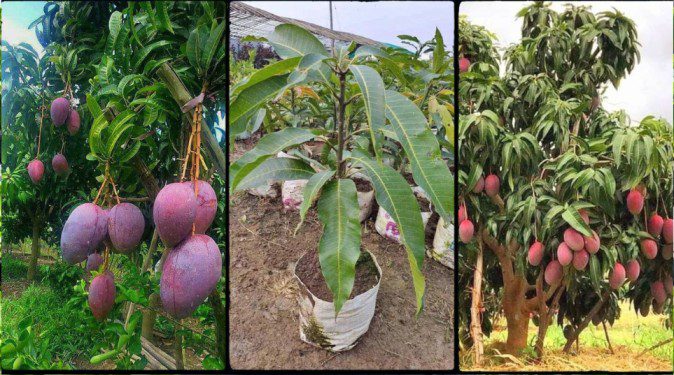
The Apple Mango remains the most profitable for fresh market sales due to its red skin and long shelf life. The Ngowe is unmatched for processing and local sweetness. The Kent variety is gaining traction for the European export market because it is fiberless and resistant to damage during shipping.
Choosing the right variety (cultivar) is the first financial decision you will make. In 2026, the market has shifted towards fruits that look good (cosmetic appeal) and travel well. Below is an in-depth look at the specific varieties driving the Kenyan market.
1. The Apple Mango (The Local King)
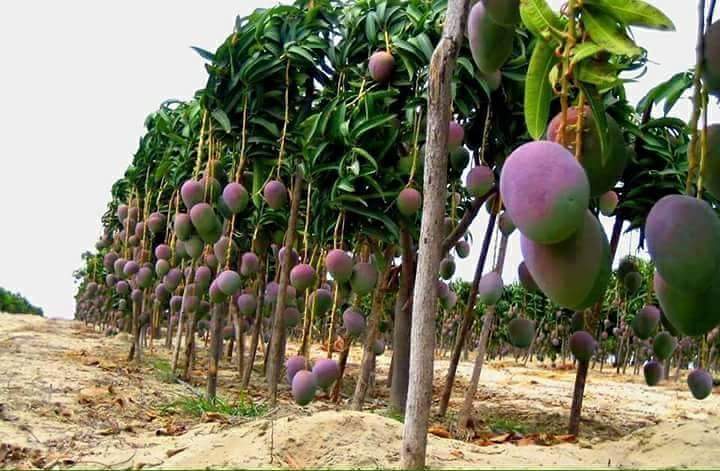
This is the “cash cow” of Kenyan orchards and the most planted variety in Makueni and Machakos. It is easily identifiable by its rich red blush when ripe, which attracts buyers in the soko. It is a heavy yielder, often producing 300-500 fruits per mature tree under optimal care. The flesh is yellow, juicy, and relatively fiber-free, making it excellent for fresh consumption. It has a medium shelf life and is moderately resistant to Anthracnose. Beginners should dedicate 70% of their orchard to grafted Apple Mango seedlings from certified nurseries like Kimplanter or Agri-SeedCo.
2. The Ngowe (The Sweetest Specialist)
Native to the Kenyan coast, the Ngowe is a large, beak-like mango that turns deep yellow upon ripening. It is widely regarded as the sweetest mango in Kenya and the preferred variety for export to the Middle East. However, it has a thin skin and bruises easily, making transport difficult over long distances on rough roads. It is best grown if you have a contract with a processor or a nearby market. Processors like Coca-Cola (Minute Maid) often prefer Ngowe pulp for its high brix content and distinct aroma.
3. The Kent (The Export Standard)
If you plan to export to the EU, Kent is your mandatory choice. It is a late-maturing variety, often ready when other varieties have finished. The fruit is large, maintaining a green skin with a slight red blush even when fully ripe. Inside, the flesh is deep orange, completely fiberless, and has a butter-soft texture. Kent has a thicker skin than Ngowe, allowing it to withstand sea freight to Europe without rotting. It fetches a premium price but requires rigorous pest management to meet export standards.
4. Tommy Atkins (The Survivor)
Tommy Atkins is the tough guy of mangoes; it survives rough transport and stays fresh for weeks on the shelf. It is characterized by its dark red to purple skin and medium size. While it is excellent for supermarkets that require long shelf life, the taste is often fibrous and less sweet than Apple or Ngowe. It is highly resistant to Anthracnose and Powdery Mildew. This makes it a safe bet for areas with higher humidity or for farmers who cannot spray frequently.
5. Vandyke (The Aesthetic Choice)
Vandyke is gaining popularity for its stunning bright red color and uniform shape. It is a smaller fruit compared to the Kent or Apple mango but packs a punch in flavor. It is highly productive and has a regular bearing habit, meaning it produces fruit every year without fail. However, it is susceptible to “jelly seed,” a condition where the flesh around the seed breaks down. Proper calcium nutrition is required to manage this issue.
6. Haden and Sabine (Niche Varieties)
Haden is the parent of many modern mango varieties and offers a spicy, rich flavor beloved by connoisseurs. Sabine is an emerging variety in the coastal region, known for its massive size and disease resistance. While less common, these varieties can fetch high prices in specialized markets or high-end grocery stores in Nairobi like Zucchini.
The Importance of Rootstocks
When buying seedlings, the variety on top (scion) matters, but the rootstock matters more for survival. In Kenya, the most common rootstocks are Sabre and Peach. Sabre rootstocks are drought-tolerant and ideal for the rocky soils of Eastern Kenya. Peach rootstocks offer vigor but require better soil fertility. Always ask your nursery provider which rootstock they have used to ensure it matches your soil conditions.
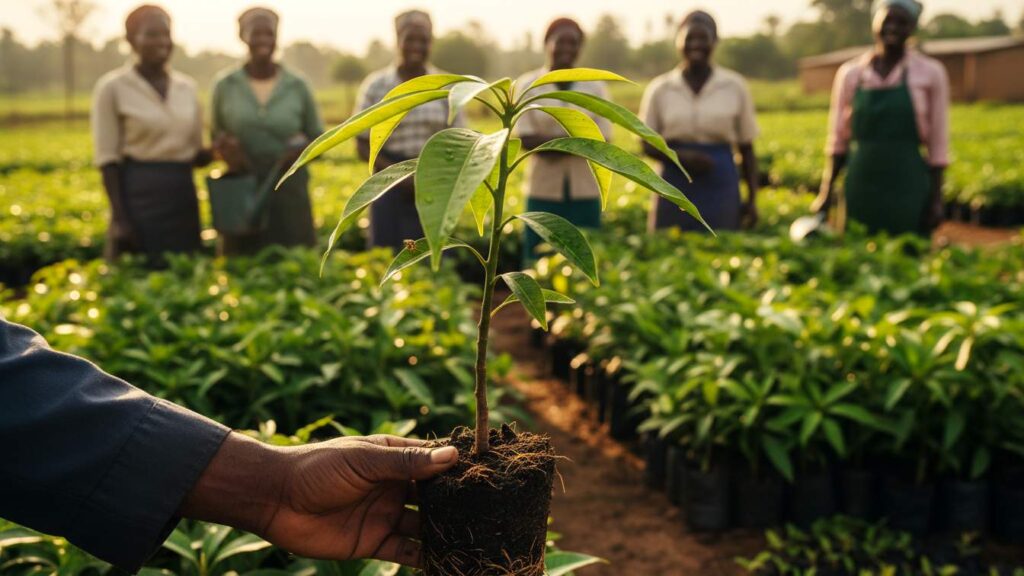
What Does a Successful Mango Farming Calendar Look Like for a Kenyan Year?
A profitable calendar revolves around the rains. Planting occurs during the onset of the Long Rains (April) or Short Rains (October). Crucially, you must stress trees (withhold water) in July/August to induce flowering, followed by aggressive pest management during fruit setting in September/October to combat fruit flies.
Module B: 12-Month Farming Calendar (2026 Edition)
Farming without a calendar is gambling. In 2026, successful farmers use data-driven schedules to anticipate pest attacks and market windows. Below is the standard operation cycle for a mature orchard in Eastern Kenya.
January – February: Harvesting & Marketing
This is the peak harvest season for Eastern Kenya (Makueni/Kitui). Focus on careful harvesting using poles with catching nets to avoid fruit falling. Bruised fruits rot within 48 hours and are rejected by exporters. Aggressively market your produce to aggregators or via digital platforms. Ensure you have crates ready; never transport in sacks.
Read Also: How to Grow Dwarf Papaya Trees in Containers for Massive Harvests in Kenya 2026
March – April: Pruning & Planting
Immediately after harvest, prune the trees aggressively. Remove dead branches, water shoots, and open the center of the canopy to let sunlight in. This sunlight penetration reduces fungal disease and encourages new fruiting spurs. This is also the best time to dig holes (2ft x 2ft x 2ft) and plant new grafted seedlings as the Long Rains begin. Source seedlings from Simlaw Seeds or local certified nurseries.
May – June: Vegetative Growth & Nutrition
Apply well-decomposed manure (2 debes per tree) and NPK fertilizer rich in Nitrogen (like NPK 23:23:0) to support leaf growth. Weeding is critical here; the shamba must be clean to prevent competition for nutrients. Foliar sprays with Zinc and Magnesium help strengthen the new leaves. Monitor for leaf miners and aphids during this flush stage.
July – August: Flowering Induction (The Money Phase)
This is where amateurs fail and professionals succeed. You need the tree to stop growing leaves and start growing flowers. In professional farming, we use Potassium Nitrate (foliar spray) to induce flowering if the weather isn’t cold enough. Stop watering the trees to stress them slightly; this “dry shock” signals the tree to reproduce. Inspect for Powdery Mildew, which appears as white dust on flowers, and treat with sulfur-based fungicides immediately.
September – October: Fruit Set & Pest Control
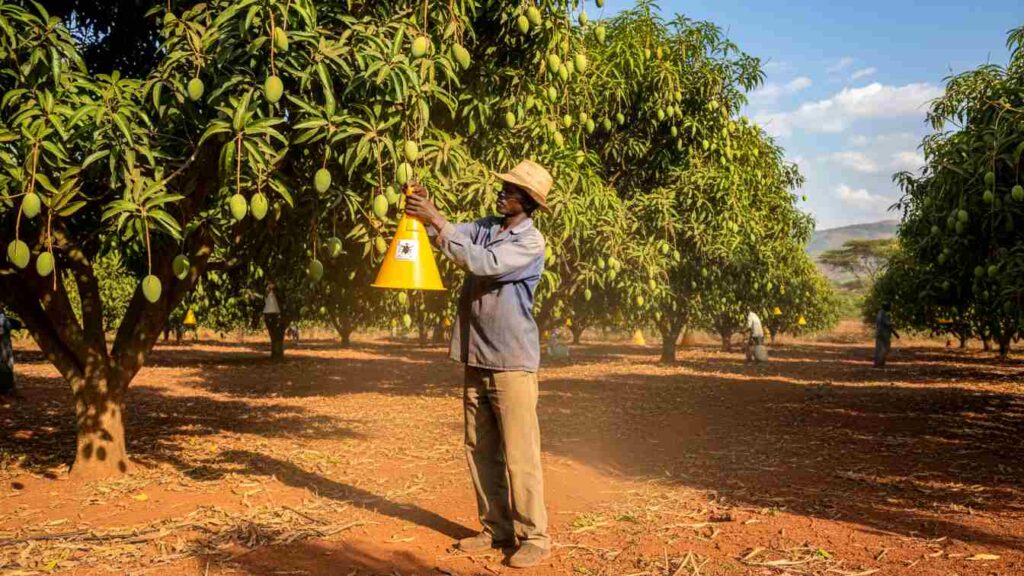
Once fruits are the size of marbles, the Fruit Fly is your primary enemy. Install pheromone traps (like the ones from Real IPM or Kenya Biologics) at a rate of 4 per acre. Do not spray harsh chemicals that kill pollinators (bees) during the day. Apply Calcium and Boron foliar fertilizers to prevent fruit cracking and ensure a firm skin. Thin the fruits if the cluster is too heavy to prevent branch breakage.
November – December: Fruit Maturity & Protection
Support heavy branches with wooden props to prevent snapping under the weight of the fruit. Begin scouting for buyers and negotiating prices before the harvest begins. If you have late-season varieties, your harvest might push into January, fetching better prices. Stop all chemical spraying at least 21 days before harvest (Pre-Harvest Interval) to ensure safety.
How Much Profit Can You Realistically Make Per Acre of Mangoes in 2026?
By Year 5, a well-managed acre can generate KES 400,000 to KES 600,000 gross revenue. Start-up costs are approximately KES 60,000. Break-even typically occurs in Year 3 or 4. Profitability depends heavily on spacing (High Density vs. Standard) and post-harvest management.
Module C: Deep-Dive Financials
The following analysis assumes 1 Acre of land using standard spacing of 5m x 5m, resulting in approximately 150 trees. We assume the use of grafted Apple Mango variety, selling primarily to the local fresh market.
Important Note: Mango farming is a long-term investment. Years 1 and 2 are purely expenditure with no yield. First harvest (testing) happens in Year 3. The figures below are conservative estimates based on 2026 market rates.
| Item / Activity | Year 1 (Establishment) | Year 3 (First Harvest) | Year 5 (Full Maturity) |
|---|---|---|---|
| Land Prep & Holes | KES 15,000 | KES 5,000 (Maintenance) | KES 5,000 |
| Seedlings (150 @ KES 200) | KES 30,000 | KES 0 | KES 0 |
| Manure & Fertilizer | KES 10,000 | KES 15,000 | KES 25,000 |
| Pest Control (Fruit Fly) | KES 5,000 | KES 20,000 | KES 35,000 |
| Labor (Weeding/Harvest) | KES 10,000 | KES 20,000 | KES 40,000 |
| TOTAL EXPENSES | KES 70,000 | KES 60,000 | KES 105,000 |
| Yield (Fruits per Tree) | 0 | 50 | 300 |
| Total Fruits (150 trees) | 0 | 7,500 | 45,000 |
| Avg Price (Farm Gate) | 0 | KES 10 | KES 12 |
| GROSS REVENUE | KES 0 | KES 75,000 | KES 540,000 |
| NET PROFIT | (KES -70,000) | KES 15,000 | KES 435,000 |
Break-Even Analysis
You will run at a loss for the first two years, which acts as the barrier to entry for impatient investors. In Year 3, the harvest is usually light (“scouting fruits”), barely covering your operational costs. The “hockey stick” growth happens between Year 4 and Year 5. Once the tree canopy fully forms, your maintenance costs stabilize while yields skyrocket.
Read Also: How to Start Bulb Onion Farming in Kenya: Complete 2026 Guide, Costs & Profit Per Acre
High-Density Planting Option
Advanced farmers in 2026 are moving to 3m x 3m spacing (400 trees per acre). This requires rigorous pruning to keep trees small. While this doubles establishment costs to over KES 120,000, it can potentially double revenue in the early years (Years 3-6) before canopy management becomes difficult. This method is recommended only if you have irrigation and technical expertise.
What Common Diseases and Pests Threaten Mango Yields?
The Mango Fruit Fly and Mango Seed Weevil are the primary pests, while Anthracnose and Powdery Mildew are the leading diseases. Integrated Pest Management (IPM), using traps and hygiene rather than just chemicals, is the only sustainable control method in 2026.
Module D: Pest and Disease Management
1. The Mango Fruit Fly (Bactrocera invadens)
This pest causes rotting fruits and rejection in export markets. The female lays eggs under the skin of ripening fruit, and the maggots eat the flesh. Control is achieved by using Bactrolure or similar pheromone traps to kill males. Field sanitation—burying fallen fruit—is mandatory to break the breeding cycle.
2. Mango Seed Weevil
This pest burrows into the seed, often leaving the fruit looking healthy on the outside but rotting from the core. It is notoriously difficult to control with sprays. The best defense is orchard hygiene and painting the tree trunk with sticky barriers to prevent weevils from climbing up.
3. Anthracnose
This fungal disease causes black spots on leaves, flowers, and fruits, leading to fruit drop and rotting. It thrives in wet, humid conditions. Regular pruning to improve airflow and preventative sprays with copper-based fungicides during the wet season are essential. Post-harvest, a hot water dip can sanitize the fruit skin.
4. Powdery Mildew
This white, powdery fungus attacks the flowers, causing them to dry up and fall off, resulting in total crop failure. It is common during cool, cloudy weather at flowering time. Sulfur-based sprays are effective, but timing is key—spray at the first sign of the white dust.
How Can Farmers Minimize Post-Harvest Losses and Maximize Export Value?
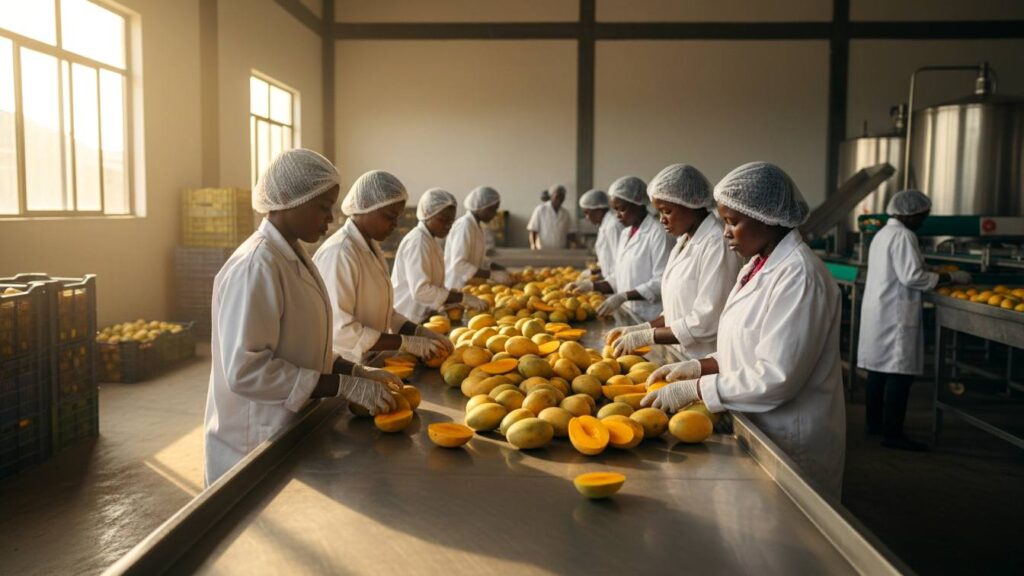
Post-harvest loss claims 40% of Kenyan mangoes. Minimize this by harvesting before 10 AM, using crates instead of sacks, and employing cold water treatment to remove field heat. For value addition, solar drying into mango chips is the most accessible high-margin entry point for small-scale farmers.
Module E: Supply Chain & Value Addition
The money in mango farming is not just in growing, but in how you handle the fruit after it leaves the tree. The 2026 market is unforgiving of damaged fruit, and consumers demand longer shelf life.
1. The Export Standard (Global GAP)
To export to the EU or UK, you must meet strict Maximum Residue Levels (MRLs). This means you cannot simply spray chemicals whenever you see a bug; you must use Integrated Pest Management (IPM). Companies like Kenchic (often involved in broader agri-logistics) or specialized exporters will require Global GAP certification. If you have less than 5 acres, form a cooperative to afford this certification and share the auditing costs.
2. Value Addition: Dried Mangoes
If you cannot sell your fresh fruit, do not let it rot. A simple solar dryer costs about KES 15,000 to build using greenhouse plastic and timber. 10kg of fresh mango produces about 1kg of dried mango chips (leather). While fresh mangoes sell for KES 15/kg during a glut, dried mango sells for KES 800 – 1,200 per kg in supermarkets in Nairobi. This shelf-stable product can be sold year-round.
3. Logistics and Handling
Never transport mangoes in mesh bags (gunia). This causes pressure points that rot immediately. Use well-ventilated plastic crates that stack without crushing the fruit. If you are selling to a high-end grocer like Carrefour or Naivas, the fruit must be blemish-free and uniform in size. M-Pesa is the standard for payment; ensure you have a separate till number for your farm to track income distinct from personal funds.
Read Also: Pixie Orange Farming in Kenya 2026: Complete Guide to Seedlings, Costs and Profit per Acre
4. Hot Water Treatment
For export, fruit is often subjected to Hot Water Treatment (HWT). This involves dipping the mangoes in water at 46°C to 48°C for about 60 minutes. This process kills fruit fly eggs and fungal spores without cooking the fruit. While expensive to set up individually, many cooperatives in Makueni now offer this service to members.
2026 Outlook: Is Mango Farming Still Profitable?
As we navigate 2026, the mango sector in Kenya is maturing. The days of simply planting a tree and waiting for money are over. The new era belongs to the “Smart Farmer” who leverages technology and market intelligence.
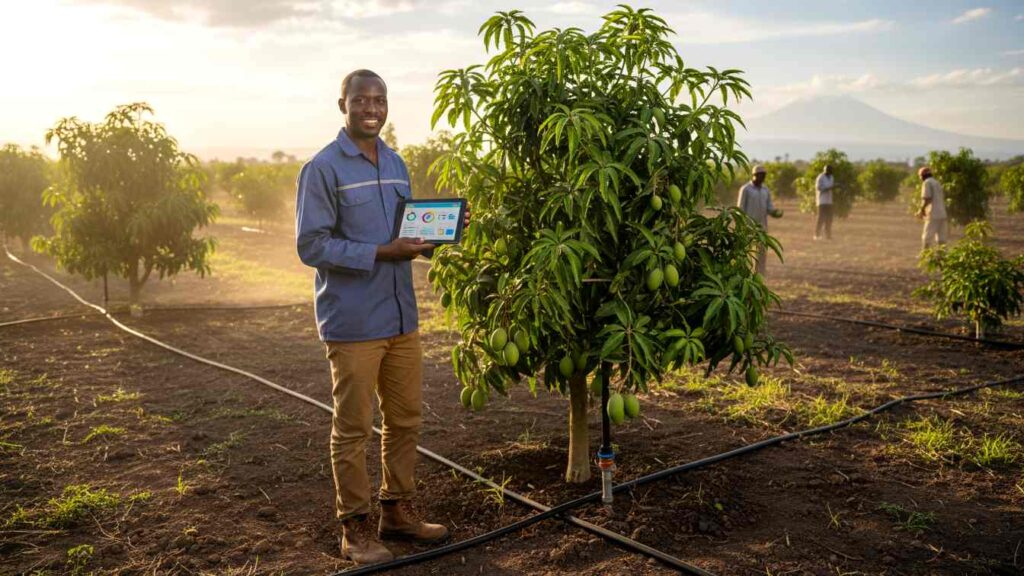
Climate change is causing erratic rainfall, meaning investment in drip irrigation is no longer optional, it is mandatory for consistent yields. Farmers relying on rain-fed agriculture will find themselves with biennial bearing (fruiting only every two years). Furthermore, the ban on certain chemical pesticides by the EU means organic and biological controls are the only path forward for exporters.
Your Action Plan: Start with comprehensive soil testing from CropNuts or KALRO to understand your baseline. Secure high-quality grafted seedlings—never grow from seeds as the results are unpredictable. Focus on the Apple Mango for local cash flow and Kent if you have confirmed export links. If you treat your mango farming as a business, minimizing waste and maximizing quality, the returns in 2026 are undeniable.
Frequently Asked Questions (FAQ) Farmers Also Ask
Is mango farming profitable in Kenya?
Yes, mango farming can be very profitable in Kenya if you choose the right varieties, manage pests and target good markets. Well managed orchards commonly earn about Ksh 300,000 to 800,000 per acre per season, depending on yield and price.
How many years does it take a mango tree to bear fruit?
A mango grown from seed usually takes about 4 to 7 years before it starts giving fruit. A grafted mango tree is much faster and can start bearing a few fruits from the second to third year in the field under good care.
What is the spacing for mango trees in Kenya?
For most standard mango varieties in Kenya, common spacing is about 8 meters by 8 meters, which gives roughly 63 trees per acre. Some farmers use closer spacing like 5 by 5 meters with smaller or pruned trees to fit up to about 160 trees per acre.
Can 7 months have mango?
Yes, it is possible to find mangoes in the seventh month (July) in Kenya, although it depends on the region. Coastal and some irrigated or off season areas can still have fruit, and because different regions peak at different times, traders are often able to source fresh mango almost all year.
How long does a grafted mango tree take to bear fruit?
A grafted mango tree will start producing sample fruits in 2.5 to 3 years. However, significant commercial harvest begins in Year 4, with peak production reached between Year 7 and Year 10.
What is the best fertilizer for sweet mangoes?
To increase sweetness, you need Potassium. Use Muriate of Potash (MOP) or specific foliar boosters rich in Potassium and Boron during the fruiting stage. Avoid excessive Nitrogen during fruiting, as it makes the fruit watery and less sweet.
Can I grow mangoes in cold areas like Limuru or Kericho?
No. Mangoes require hot, dry weather to thrive. High-altitude, cold areas will result in stunted trees that may grow leaves but will never flower or produce fruit. Focus on low-altitude zones (0–1600m ASL).
What is the price of a grafted mango seedling in Kenya?
Certified grafted seedlings cost between KES 150 and KES 300 depending on the variety and the nursery. Buying from certified bodies like KALRO or Kefri ensures you get disease-free plant material.
Is drip irrigation necessary for mango farming?
While mangoes are drought-tolerant, drip irrigation is the secret to off-season fruiting. By controlling water application, you can induce flowering when competitors are dry, allowing you to harvest when market prices are highest.
Which mango variety is best for export from Kenya?
Kent and Keitt are the preferred export varieties for the European market because they have no fiber, longer shelf life, and do not change color rapidly, allowing for sea freight. Apple Mango is primarily for the domestic and regional market.
Where can I sell my mangoes in Kenya?
Beyond local markets (Marikiti, Wakulima), you can sell to processors like Kevian Kenya or Sunny Mango. For export, contact aggregators like Keitt Exporters. In 2026, digital platforms like Twiga Foods are also major buyers for fresh produce.