
Pig farming in Kenya is a high-turnover agribusiness offering returns of up to 40% per cycle if managed with strict bio-security and feed cost control. In 2026, success lies in leveraging alternative feeds like wheat bran in breadbasket counties and tapping into the value-added market (sausages and smokies) rather than selling live animals alone.
Table of Contents
What Are the Most Profitable Pig Farming Regions in Kenya?
Kiambu, Uasin Gishu, and Kakamega offer the highest potential but for different reasons. Kiambu dominates in market proximity to Nairobi, Uasin Gishu leads in low-cost feed access (maize/wheat by-products), and Kakamega offers a robust local market for indigenous and crossbreed pork with lower initial capital requirements.
Module A: Regional Comparative Analysis (2026)
Selecting the right location determines your cost of production and profit margins. In 2026, the “breadbasket” counties are outperforming traditional zones due to rising commercial feed costs.
1. Kiambu County: The Market Hub
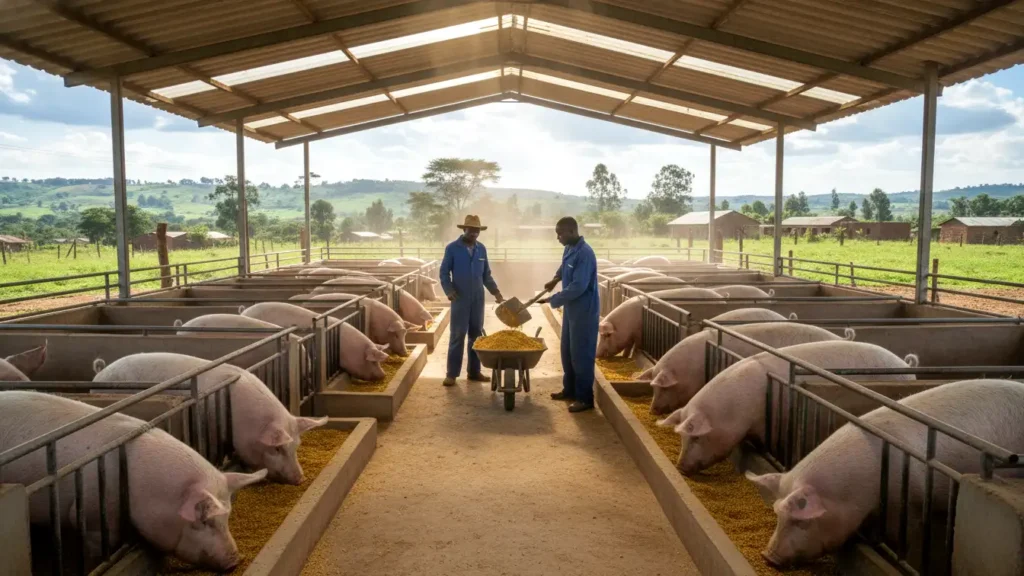
Kiambu remains the epicenter of intensive pig farming due to its proximity to Nairobi’s high-end hotels and the Farmer’s Choice slaughterhouse. Farmers here typically use the “Farrow-to-Finish” model. However, land sizes are small (0.25 – 0.5 acres), and competition for commercial feed is high.
This high demand drives production costs up to KES 280 per kg of pork produced. The primary advantage is zero transport stress to market; buyers often collect directly from the farm gate. Access to veterinary services from University of Nairobi kabete campus is also a major plus.
2. Uasin Gishu County: The Feed Advantage
Known as Kenya’s breadbasket, Uasin Gishu is the most profitable region for 2026 start-ups. Farmers here have direct access to cheap raw materials like maize germ, wheat bran, and pollard from local millers. This proximity reduces feed costs—which constitute 70% of total expenses—by nearly 30% compared to Kiambu.
The trade-off is the transport cost to Nairobi, though a growing population in Eldoret is creating a strong local demand. Many farmers here are forming cooperatives to transport pigs in bulk, lowering individual logistics costs. The climate is also cooler, which reduces heat stress in mature pigs.
3. Kakamega County: The Low-Input Model
Kakamega supports a vibrant market for indigenous and crossbreed pigs. The system here is often semi-intensive, utilizing kitchen waste and sweet potato vines to supplement commercial feeds. While the growth rate is slower (8-9 months to market weight vs 6 months in intensive systems), the input costs are significantly lower.
Demand is driven by local butcheries and cultural acceptance of pork as a staple protein. This makes it ideal for farmers with limited capital (under KES 100,000). The local market prefers slightly fattier meat, which is easier to produce with cheaper forage-based diets.
4. Nakuru and Nyeri: The Emerging Zones
Nakuru is rapidly becoming a pig farming hotspot due to the availability of food waste from hotels and institutions. Nyeri farmers are integrating pig farming with coffee and tea farming, using manure to fertilize crops. Both counties have moderate climates ideal for the Landrace breed.
How Much Capital Is Needed to Start a Piggery?
To start a 10-sow commercial unit in 2026, you need approximately KES 500,000 to KES 800,000 for infrastructure, stock, and the first cycle of feed. A smaller subsistence unit with 2 sows can be started for as little as KES 150,000 if using locally sourced timber and semi-intensive feeding.
Module B: Financial Breakdown (CapEx vs OpEx)
Understanding the difference between Capital Expenditure (CapEx) and Operating Expenditure (OpEx) is vital. Most beginners run out of cash because they spend too much on fancy buildings and forget about feed costs.
Capital Expenditure (One-off Costs)
Land & Fencing: If you do not own land, leasing in rural Murang’a or Machakos costs roughly KES 15,000 per acre per year. Security fencing is non-negotiable to prevent theft and control bio-security. Chain-link with a live hedge (Kei Apple) is the standard in Kenya.
Structure Construction: A unit for 10 pigs requires roughly KES 150,000 using stone and iron sheets. Using off-cuts and timber reduces this to KES 80,000. You must budget for a concrete floor; pigs will dig through mud floors, causing sanitation nightmares.
Breeding Stock: A quality in-pig gilt (pregnant female) from a reputable breeder like Altech or Farmer’s Choice costs KES 40,000 – 50,000. Do not economize here; poor genetics will eat as much feed but grow half as fast.
Operating Expenditure (Recurring Costs)
Feeds: This is your giant. A sow eats 2.5kg per day, costing about KES 120 daily. Over a year, one sow consumes over KES 43,000 in feed alone. You must have cash reserves to feed the pigs for 6 months before you sell a single animal.
Water: Pigs are thirsty animals. A lactating sow needs 20-30 liters per day. If you don’t have a well or river, buying water from vendors in places like Kajiado will destroy your margins.
Read Also: Top 5 Profitable Dairy Cow Breeds for Successful Farming in Kenya (2026 Guide)
Labor: One farmhand can manage up to 50 pigs if the water system is automated. In 2026, a skilled farm manager expects KES 15,000 – 20,000 per month. General casual laborers typically earn KES 400 – 600 per day.
Which Pig Breeds Perform Best in Kenya?
The Camborough is currently the top performer for commercial farming due to its disease resistance and high feed conversion ratio. For beginners, the Large White and Landrace cross (F1) is the safest bet, offering a balance of good mothering abilities and fast growth rates suitable for Kenyan climates.
Module C: Breed Selection Strategy
Choosing the right breed depends on your market and management level. In 2026, the Kenyan market rewards lean meat, pushing farmers away from traditional fatty breeds.
1. Large White
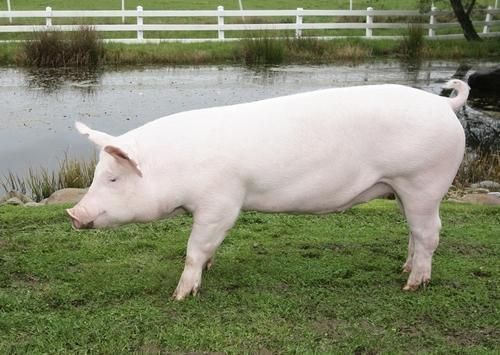
This is the industry standard in Kenya. They are white, have erect ears, and are known for fast growth and high-quality lean meat. They are excellent mothers but can be prone to sunburn if kept in open fields in hot counties like Kisumu.
Best for: Farmers targeting Farmer’s Choice or high-end butcheries. They require intensive management and high-quality commercial feeds to reach their potential.
2. Landrace
Distinguishable by their large, drooping ears, Landrace pigs are long-bodied. They are famous for farrowing large litters (12+ piglets). However, they have weaker legs and may struggle on rough concrete floors.
Best for: Crossbreeding. You rarely keep pure Landrace for meat. You mate a Landrace sow with a Large White boar to get the robust F1 cross.
3. Camborough
This synthetic breed is gaining massive popularity in Nakuru and Thika. It is bred for efficiency: it eats less feed to produce the same amount of meat (low Feed Conversion Ratio). They are hardy and handle disease outbreaks slightly better than pure breeds.
Best for: Commercial farmers looking to maximize profit margins. The initial cost of stock is higher, but the lower feed bill makes up for it.
4. Duroc
These are reddish-brown pigs with muscular builds. They are terminal sires, meaning you use a Duroc boar to mate with your F1 sows. The resulting piglets grow incredibly fast and are very hardy.
Best for: Farmers who want to produce “porkers” quickly. They can be aggressive, so they are not recommended for first-time farmers with children around the farm.
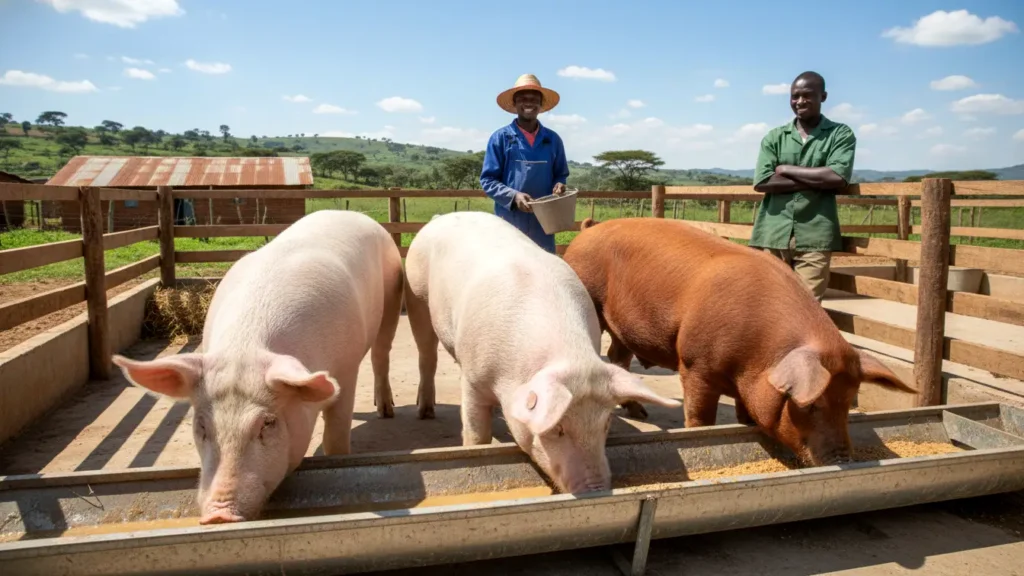
Where to Buy High-Quality Piglets in Kenya (2026)
1. Government and Research Institutions
These are the most reliable sources for pure breeds like Large White, Landrace, and Duroc.
- KALRO (Kenya Agricultural and Livestock Research Organization): Specifically the DTI Naivasha station. They offer improved breeds that mature in just 4–6 months.
- University of Nairobi (UoN) – Kabete Campus: A key center for high-quality breeding stock and expert veterinary advice.
2. Certified Commercial Breeders
For commercial operations, synthetic or hybrid breeds like the Camborough or F1 Gilts are preferred for their superior feed conversion and large litter sizes.
- Farmer’s Choice: Known for their F1 Gilts (Large White x Landrace). They offer extensive support for contracted farmers and high-quality breeding stock.
- Contact: +254 721 914 529 / +254 728 522 676.
- Ogal Farms: A leading specialist in world-class genetics and Artificial Insemination (AI) solutions. They are a primary source for high-performing breeding stock in East Africa.
- Contact: +254 115 260 260.
3. Regional “Hotspot” Markets
If you are in specific counties, look for these established clusters:
- Kiambu (Githunguri/Thika): Known for intensive production; many farmers sell weaners and pregnant gilts (KES 25,000 – 45,000 for gilts).
- Nakuru/Uasin Gishu: Reputable private farms often list stock on agricultural marketplaces. Look for farmers who can show historical records of their sows’ performance.
4. Online Agricultural Marketplaces
Digital platforms have become a primary way to bypass brokers, but you must visit the farm before paying.
- Mkulima Young & Cowsoko: Popular platforms for livestock listings.
- Jiji Kenya: Useful for checking current price trends (e.g., 2-month-old weaners typically range from KES 4,500 to 6,000 in 2026).
Checklist When Buying Piglets
- Weight: A healthy 2-month-old weaner should weigh at least 10-12kg.
- Physical Signs: Look for a curly tail (sign of health), bright eyes, and a smooth coat. Avoid “scouring” (diarrhea) or coughing animals.
- Documentation: Always ask for farrowing records and vaccination history.
- Quarantine: Regardless of the source, keep new piglets in a separate pen for at least 21–30 days to prevent the introduction of diseases like African Swine Fever.
How Should I Plan My First 12 Months?
Your first year must focus on herd establishment and strict health adherence. Months 1-4 are for construction and sourcing genetically superior gilts. Months 5-9 focus on gestation and feeding management, while months 10-12 involve farrowing and weaning piglets to generate your first revenue cycle.
Module D: 12-Month Farming Calendar (2026)
This calendar assumes you are starting with 3 in-pig gilts to accelerate returns. This strategy cuts out the 7-month wait for a piglet to reach breeding age.
Month 1-2: Infrastructure & Bio-security
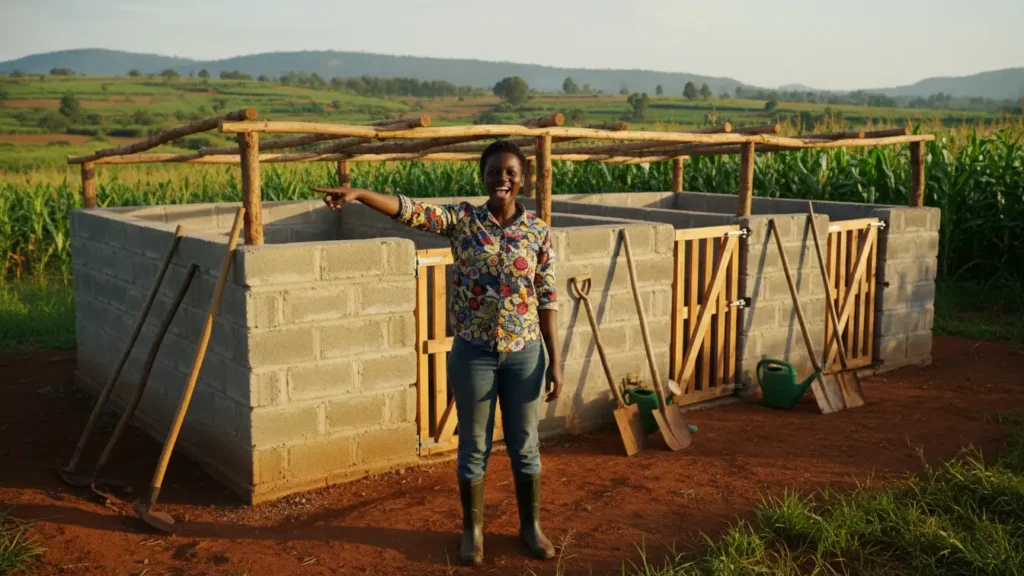
Construct your pigsty using locally available materials but ensure a concrete floor to prevent worms. Design distinct “zones”: a mating area, gestation pens, and a farrowing creep area with a heat source. Contact Kenya Seed Company or Agri-SeedCo to plant supplementary fodder like sweet potato vines or lucerne on the farm perimeter.
Read Also: Poultry Farming in Kenya 2026: Complete Guide to Profitable Improved Kienyeji Chicken
Month 3: Stocking & Quarantine
Purchase 3 in-pig gilts from a reputable breeder like Farmer’s Choice or KALRO (Naivasha). Do not bring them into the main pen immediately; quarantine them for 3 weeks. Administer a broad-spectrum dewormer and multi-vitamin injection to manage transport stress.
Month 4: Gestation Management
Feed the gilts 2.5kg of “Sow & Weaner” meal daily. Water is critical—ensure they have ad-lib access (at least 20 liters per pig/day). Poor water intake leads to small piglets and low milk production. Introduce simple toys (hanging chains or tires) to reduce boredom and tail biting.
Month 5: Farrowing Preparation
Move gilts to the farrowing crate 7 days before their due date. Wash the gilts with a mild disinfectant to remove parasite eggs. Prepare the “creep area” for piglets with a warm bulb or charcoal pot (jiko) protected by wire mesh.
Month 6: Farrowing & Piglet Care
Birth happens. Ensure every piglet suckles colostrum within the first 6 hours. Critical Action: Administer iron injections (2ml intramuscular) on Day 3 to prevent anemia. Clip needle teeth to protect the sow’s udder.
Month 7-8: Weaning & Fattening
Wean piglets at 4-6 weeks. Switch the sow back to “Sow & Weaner” to induce heat for the next cycle. Move piglets to the “weaner pool” and start them on “Pig Creep Pellets” (high protein). This is the most expensive feeding phase but yields the fastest growth.
Month 9-11: The Growth Spurt
Transition weaners to “Pig Finisher” meal. Monitor weight gain weekly. A healthy pig should gain 600g-800g per day. Engage a vet to vaccinate against Erysipelas and re-deworm.
Month 12: Marketing & Sales
Your first batch should now weigh 90kg-100kg. Sort them by size. Contact buyers 3 weeks in advance. If selling to a slaughterhouse, ensure you have the “Movement Permit” from your local veterinary officer.
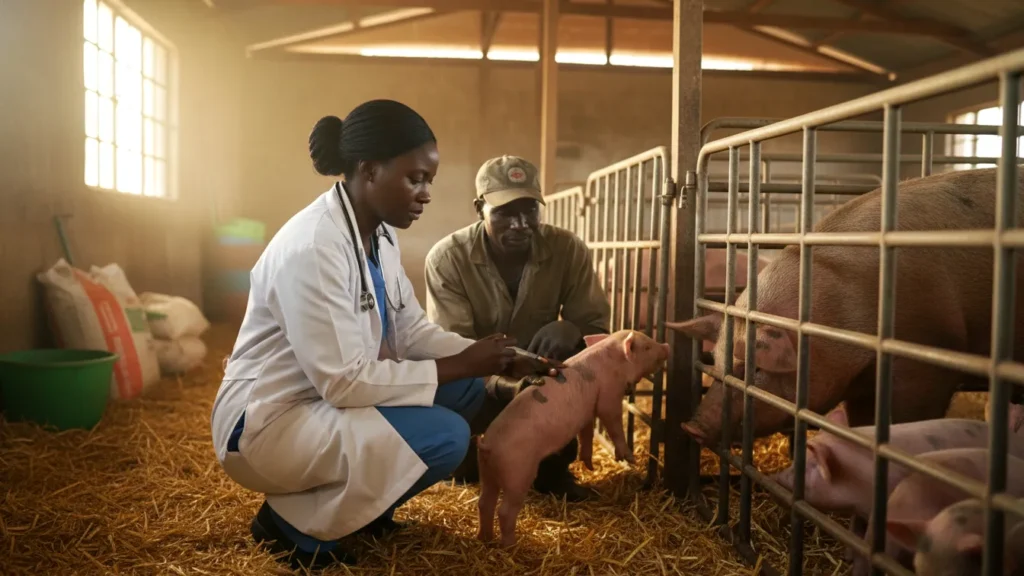
What Is the Best Feeding Strategy for High Profits?
To maximize profits, use a mix of commercial concentrates and farm-made fodder. Feeding 100% commercial feeds yields the fastest growth but lowest margins while feeding 100% waste results in poor quality meat. A 70:30 ratio of commercial feed to high-quality forage (sweet potato vines/hydroponics) strikes the best balance in 2026.
Module E: Nutrition & Feeding Protocols
Feed is the largest variable cost in pig farming. In Kenya, the price of commercial feeds fluctuates with the maize harvest. Smart farmers hedge against this by diversifying their feed sources.
1. Commercial Feeds
Brands like Unga Farm Care, Pembe, and Sigma Feeds offer standardized rations.
– Sow & Weaner: For breeding females and young piglets. Low energy, high protein.
– Pig Finisher: High energy to bulk up pigs before slaughter.
Tip: Buy in bulk directly from the factory in industrial areas like Nairobi’s Industrial Area to save KES 200-300 per bag compared to retail prices.
2. Home Mixing
If you are in Uasin Gishu or Trans-Nzoia, mixing your own feed is highly profitable. You will need a mill and a mixer.
Formula: Maize Germ (40%), Wheat Pollard (30%), Soya Cake (20%), Fishmeal/Omena (8%), Vitamin Premix (2%).
Warning: Ensure your Omena is dry and free from mold (aflatoxins), which can kill pigs or cause abortion in sows.
3. Alternative Fodder
Sweet Potato Vines: These are excellent sources of protein (roughly 16%). Plant them on the ridges of your farm. They can replace up to 50% of the green ration.
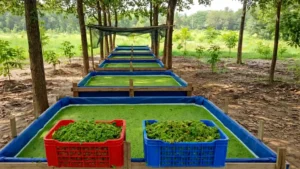
Hydroponic Barley: Growing fodder hydroponically allows you to harvest green feed in 7 days. It is highly nutritious and reduces reliance on expensive commercial meals.
Kitchen Waste (Swill): While common, it is risky. It must be boiled for at least 30 minutes to kill pathogens. Never feed raw meat scraps to pigs.
Is Pig Farming Profitable in Kenya in 2026?
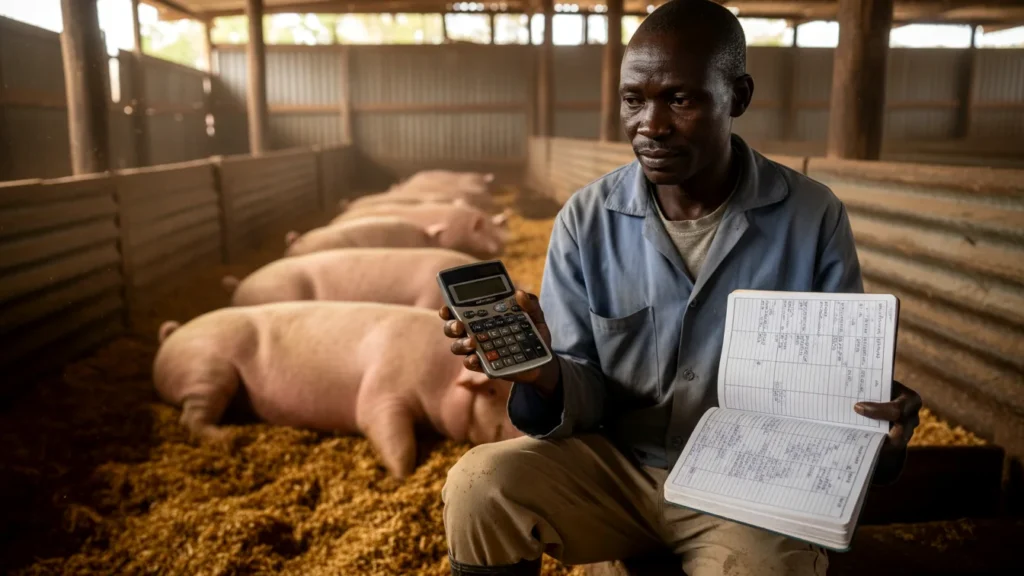
Yes, but margins depend on feed efficiency. A farmer using strictly commercial feeds breaks even at KES 290/kg carcass weight. Farmers compounding their own feed using local raw materials (maize bran, pollard, soya) can lower production costs to KES 220/kg, widening profit margins to KES 3,000–5,000 per pig sold.
Module F: Deep-Dive Financials
The table below outlines the costs and potential revenue for a small starter unit of 10 Porkers raised from weaner (2 months) to slaughter weight (6 months) in 2026. This assumes a semi-commercial feeding regime (70% commercial feed, 30% quality fodder).
Read Also: Hass Avocado in Kenya: Price, Seedlings, Varieties & Where to Buy
Break-Even Analysis (10 Pigs)
| Expense Item | Unit Cost (KES) | Quantity/Details | Total Cost (KES) |
|---|---|---|---|
| Weaners (Stock) | 5,500 | 10 quality piglets (12kg) | 55,000 |
| Feed (Grower Meal) | 3,200 (70kg bag) | 15 bags (Months 3-4) | 48,000 |
| Feed (Finisher Meal) | 3,000 (70kg bag) | 25 bags (Months 5-6) | 75,000 |
| Veterinary & Iron | 500 per pig | Deworming, Iron, Vitamins | 5,000 |
| Labor & Water | 3,000 / month | 4 months (Part-time) | 12,000 |
| Transport to Market | 500 per pig | Hired pickup to abattoir | 5,000 |
| TOTAL COST (OpEx) | 200,000 |
Revenue Projection (Sales)
| Revenue Stream | Price (KES) | Yield | Total Revenue (KES) |
|---|---|---|---|
| Pork Sale (Carcass) | 480 per kg | 10 pigs @ 70kg (dressed) | 336,000 |
| Manure Sales | 200 per bag | 30 bags | 6,000 |
| GROSS REVENUE | 342,000 | ||
| NET PROFIT | (Revenue – Cost) | 142,000 |
“Financial Warning: The biggest killer of profit is the “Maintenance Phase.” If you keep a pig beyond 7 months, it eats into your profit daily without adding proportional weight. Sell immediately when they hit 90kg-100kg live weight.”
Read Also: 10 Most Profitable Farming Ventures in Kenya for 2026
How Do I Add Value to My Pork Products?
Selling live pigs to brokers offers the lowest margin. The real money in 2026 is in value addition: opening a local pork butchery or producing sausages and smokies. Even simple processing like packaging 1kg minced pork or pork chops can increase your earnings by 40% per kg compared to selling the whole carcass.
Module G: Supply Chain & Value Addition
The traditional supply chain involves a broker buying your pig at KES 250/kg live weight, slaughtering it, and selling it to a butchery at KES 450/kg. To maximize profit, you must cut out the broker.
1. The “Farm-to-Fork” Model
Establish a small “Pork Center” or butchery in a nearby trading center. You will need a Single Business Permit from the County Government and a Food Hygiene License. By slaughtering your own pigs at a registered municipal slaughterhouse (cost ~KES 1,500 per pig) and retailing the meat yourself, you capture the full retail price (KES 500-600/kg).
2. Sausage and Smokies Production
Value-added products like “Smokies” are in high demand in urban centers. Regulatory Requirement: To produce sausages commercially, you must comply with KEBS standards (specifically KS 1223:2024 for sausages). This requires a clean, tiled production room, a stainless steel mincer, and a sausage filler.
Starter Strategy: If you cannot afford the machinery, partner with a local butcher who has a mincer. You supply the meat, pay a small fee for mincing and casing, and brand the sausages as “Farm Fresh.” This is popular in peri-urban areas like Ruai and Kitengela.
3. Breeding Stock Sales
Once you have established a reputation for high-quality, disease-free pigs, selling piglets becomes a lucrative revenue stream. A 2-month-old weaner piglet sells for KES 4,500 – 6,000. Raising a piglet to this age costs significantly less than fattening it for slaughter, offering faster cash flow turnover.
What Are the Major Disease Risks?
African Swine Fever (ASF) is the biggest threat as it has no cure and kills up to 100% of infected herds. Other manageable but costly diseases include Erysipelas, worms, and mange. Prevention through strict bio-security controls (fencing, footbaths, restricted access) is the only viable strategy for a Kenyan farmer.
Module H: Health & Bio-security Protocols
A single outbreak can bankrupt a farm. In 2026, the density of pig farms in counties like Kiambu increases the risk of disease spread.
1. African Swine Fever (ASF)
This viral disease is spread by contact with infected pigs, contaminated feed, or visitors. Symptoms: High fever, redness on ears and belly, vomiting, and sudden death. Protocol: Total lockdown. No visitors inside the pigsty. Install a footbath with “Virkon” or strong bleach at the gate. If ASF hits, you must cull the entire herd and disinfect; there is no other way.
2. Internal Parasites (Worms)
Worms compete with the pig for food, leading to stunted growth. Treatment: Deworm weaners at 8 weeks and then every 3 months. Use injectable Ivermectin or oral dewormers like Piperazine. Sign: Coughing, rough hair coat, and visible worms in dung.
3. Erysipelas (Diamond Skin Disease)
Caused by bacteria found in soil. Symptoms: Diamond-shaped red patches on the skin, fever, and stiffness. Prevention: Vaccination is effective. Consult your local agro-vet for the “Ery-Vac” vaccine. Penicillin is effective if caught early.
4. Mange (Scabies)
A skin condition caused by mites. Pigs scratch constantly against walls, damaging equipment and losing weight. Treatment: Spray with acaricides (like Triatix) or use Ivermectin injections. Oil mixed with sulfur is a common organic remedy used by small-scale farmers in Western Kenya.
2026 Outlook and Conclusion
The pig farming landscape in Kenya for 2026 is defined by efficiency and safety. With the Kenya Bureau of Standards (KEBS) enforcing stricter food safety rules, the “swill feeding” era (feeding pigs raw garbage) is ending. The market is shifting toward traceability—consumers want to know where their pork comes from and what the pig ate.
“Emerging Trend: Expect a rise in “Contract Farming” models where large processors provide feed and genetics to farmers in exchange for guaranteed off-take. This reduces market risk for beginners. Also, digital platforms for selling livestock are bypassing traditional brokers, putting more money in farmers’ pockets.”
Your Immediate Call to Action: Do not buy 10 pigs tomorrow. Start by securing a reliable source of feed (visit a miller in Thika or Eldoret) and build a structure that allows for easy cleaning. Visit a successful farm in your county, seeing the setup is worth 100 hours of reading. Start small (2-3 sows), master the breeding cycle, and scale up from your own profits.
FAQ: Farmers Also Ask
How do I identify a healthy piglet for purchase?
A healthy piglet should have bright eyes, a curly tail, and a smooth, shiny coat. Avoid piglets with rough hair, diarrhea (scouring), or those that are coughing. The piglet should be active and alert. Check the size relative to age; a 2-month-old weaner should weigh at least 10-12kg. Always ask to see the mother (sow) to judge her size and health.
Can I feed my pigs strictly on kitchen waste?
No, you cannot rely strictly on kitchen waste for commercial success. While it saves money, it lacks the balanced protein and minerals needed for fast growth, resulting in pigs taking 10-12 months to reach slaughter weight instead of 6. Kitchen waste should only be a supplement (max 30% of diet) and must be boiled to prevent diseases like African Swine Fever.
What is the best breed for a beginner in Kenya?
The Large White or a crossbreed of Large White and Landrace is best for beginners. Large Whites are hardy, grow fast, and produce lean meat which the market prefers. The Landrace cross adds excellent mothering ability and large litter sizes. Avoid pure breeds like Duroc initially as they can be aggressive and harder to manage.
How much space does a pig need in the sty?
Overcrowding causes stress and slow growth. A general rule for 2026 standards is:
– Weaners: 0.3 – 0.5 square meters per pig.
– Porkers/Fatteners: 1.0 square meter per pig.
– Sow with piglets: 6 – 8 square meters for the farrowing pen to prevent crushing.
How do I control African Swine Fever (ASF)?
There is no vaccine or cure for ASF. Prevention is your only defense.
1. Biosecurity: Fence your farm and lock the gate.
2. Disinfect: Have a footbath with disinfectant at the entrance.
3. No Swill: Do not feed raw hotel scraps or meat products.
4. Quarantine: Isolate new pigs for 30 days before mixing them with your herd.
Where can I sell my pigs if I don’t have a butchery?
Apart from local butcheries, you can sell to major processors like Farmer’s Choice (requires creating an account and meeting strict weight/health criteria). Other options include listing on agribusiness platforms like Mkulima Young, contacting boarding schools or hotels directly, or forming a cooperative with other local farmers to sell in bulk to Nairobi traders.
What vaccinations are mandatory for pigs in Kenya?
Strictly speaking, pigs require fewer vaccines than poultry. The most critical “medical” interventions are Iron Injections for piglets (Day 3) and Deworming (every 2-3 months). However, vaccination against Erysipelas and Parvovirus (for breeding sows) is highly recommended in commercial setups. Consult a vet from Ultravetis or local agro-vets for a schedule.
Why are my pigs eating the wooden walls of the sty?
This is a sign of mineral deficiency (pica) or boredom. It means your feed lacks Calcium, Phosphorus, or Salt. Switch to a balanced commercial feed or add a high-quality mineral premix to your home-made ration. Also, provide “toys” like hanging tires or fresh chains for them to chew on to relieve boredom.
How do I make my own pig feed to cut costs?
You can mix your own feed if you have access to cheap raw materials. A basic ration for growers involves:
– Maize Germ/Bran: 50% (Energy)
– Pollard/Wheat Bran: 25% (Bulking/Energy)
– Soya Cake/Sunflower Cake: 20% (Protein)
– Fishmeal (Omena): 3% (Protein)
– Mineral Premix & Salt: 2%
Ensure you mix thoroughly. Consult a nutritionist to balance the formula based on the specific age of your pigs.
What is the “heat check” method for breeding sows?
To know if a sow is ready to breed, apply pressure to her back with your hands. If she “stands” rigid and ears prick up (the “standing reflex”), she is in heat and ready for the boar or Artificial Insemination (AI). This usually happens every 21 days. Missed heats result in “empty days” where you are feeding a non-productive animal, killing your profits.