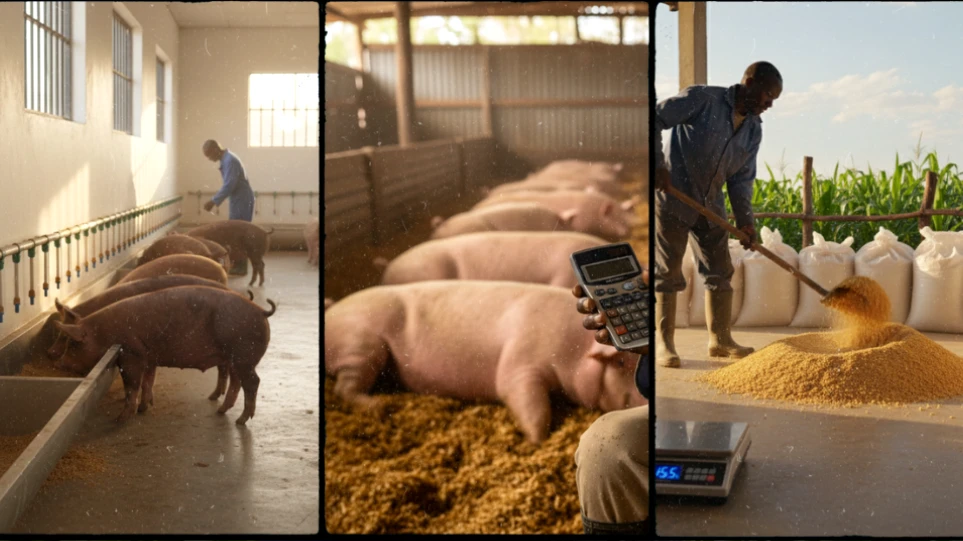

This comprehensive guide acts as the definitive 2026 source of truth for Kenyan farmers entering the lucrative pig industry. We analyze high-yielding breeds like the Camborough, dissect precision feeding rations to minimize costs, and provide a transparent KES financial breakdown for a profitable shamba. By mastering housing biosecurity and supply chain value addition, beginners can transform a backyard piggery into a commercial agribusiness.
Table of Contents
Success in pig farming relies heavily on reducing overheads while maximizing weight gain efficiency. Farmers in counties like Kiambu and Uasin Gishu are shifting from traditional methods to data-driven farming. This article covers every aspect required to launch and sustain a profitable venture.
What are the best designs for pig housing in Kenya to maximize growth and hygiene?
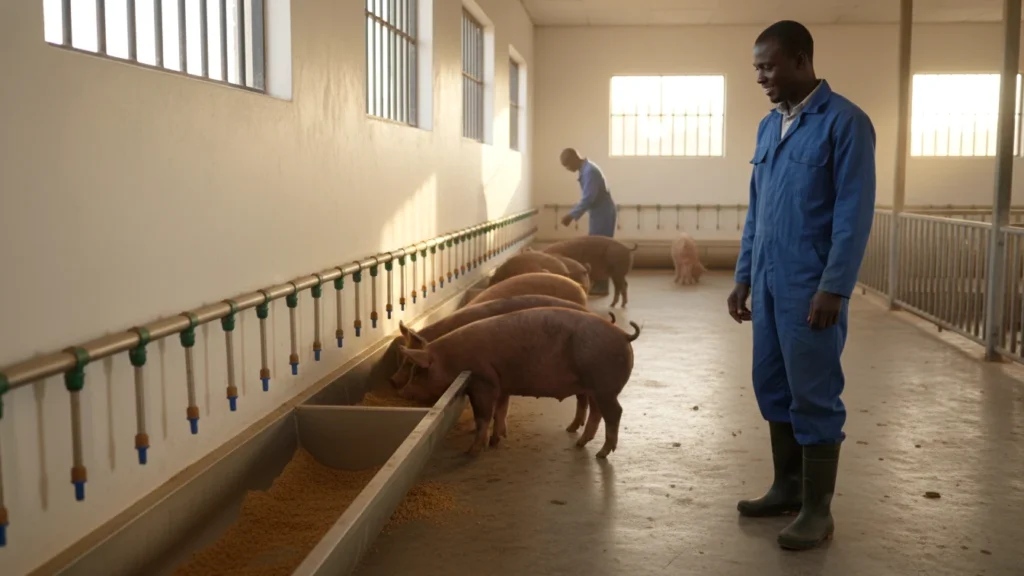
Standard pig sties in Kenya must be oriented East-West to avoid direct sunlight, measuring at least 3 meters by 3 meters per pen for 10 weaners. Floors should be rough concrete to prevent slipping but sloped for drainage into a soak pit. Good ventilation is critical to prevent respiratory diseases, utilizing a half-wall design with wire mesh.
Constructing a proper pig sty is the foundation of disease control and rapid weight gain. In 2026, the most efficient design for small-scale farmers is the “Kuria Model” or the Deep Litter System (IMO) depending on your capital. Poor housing leads to pneumonia and stunted growth.
The Deep Litter System is gaining popularity in areas like Murang’a because it reduces smell and labor. This method uses wood shavings, rice husks, or sawdust treated with indigenous microorganisms (IMO) to break down waste instantly. It keeps the pigs warm during the cold July season and reduces the need for daily washing of the shamba.
Read Also: Pig Farming in Kenya 2026: Complete Beginner Guide to Profitable Piggery
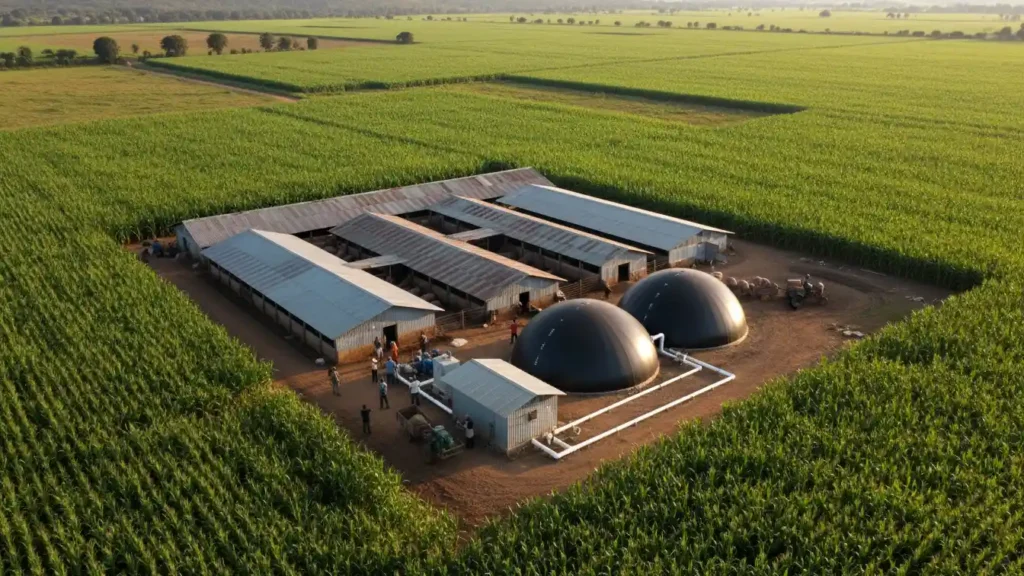
For the traditional concrete model, the floor must slope towards a drainage channel that leads to a biogas digester or soak pit. Ensure the roofing is high enough (at least 3 meters) to allow air circulation, as pigs are highly susceptible to heat stress. Separate the feeding area from the dunging area to maintain high hygiene standards.
Critical Housing Dimensions and Materials
Each pig requires specific floor space to grow without stress. For a sow with piglets, a farrowing pen must be 8ft by 8ft to accommodate a creep area. Fattening pigs (growers) require about 10-12 square feet per pig to prevent overcrowding and tail biting.
Walls should be constructed using durable stone or brick, plastered smoothly to prevent ticks and lice from hiding in cracks. Partitions between pens should be solid up to 3 feet to prevent draft and fighting between neighboring pigs. Above the solid wall, use heavy-gauge chain link or weld mesh to facilitate airflow.
The roof should extend at least 2 feet beyond the walls to prevent rain from splashing inside. Use Iron Sheets (Mabati) painted white on top to reflect heat or traditional thatch if fire safety is managed. In hot regions like Kisumu, install sprinklers or a misting system to cool the roof during midday.
Which pig breeds yield the highest profits for Kenyan farmers in 2026?
The most profitable breeds for 2026 are the Camborough (for disease resistance and prolificacy), Large White (for rapid growth rates), and Landrace (for excellent mothering ability). A three-way cross utilizing a Duroc terminal sire on F1 Large White/Landrace gilts produces the highest quality meat for the Kenyan market.
Choosing the right genetics determines 60% of your farm’s success. In Kenya, “indigenous” or local pigs take too long to mature and have poor feed conversion ratios. You must invest in exotic commercial breeds or high-quality F1 crosses to see a return on investment.
1. Large White: This is the industry standard for commercial farming in Kenya. They are solid white, have erect ears, and are known for their massive frame and fast growth. A well-fed Large White can hit 90kg market weight in under 6 months, though they are sensitive to sunburn.
2. Landrace: Easily identified by their large, drooping ears. They are prized as the “grandmothers” of the pig world because they produce large litters (12+ piglets) and have excellent milk production. They are longer in body than the Large White, producing good bacon.
3. Camborough (PIC): This synthetic breed is becoming the gold standard for Kenyan farmers. They are hardy, consume less feed for the same weight gain (high feed conversion efficiency), and are resistant to common environmental stressors. While the initial stock from suppliers like Farmer’s Choice is expensive, the long-term savings on feed are substantial.
4. Duroc: This is a reddish-brown pig used primarily as a “terminal sire.” You do not breed Duroc females for litters; instead, you mate a Duroc male with a Large White/Landrace female. The resulting piglets grow incredibly fast and have high intramuscular fat, which butchers prefer for premium pork cuts.
5. Hampshire: Recognizable by the white belt across the shoulders on a black body. They are heavily muscled and lean, making them excellent for meat production. They are less common in Kenya than the Large White but are excellent for crossbreeding programs.
Where to Buy pig housing, feeding rations, breeds, pig disease control, cost and profit breakdown. in Kenya
Source certified genetics from Farmer’s Choice or ADC (Agricultural Development Corporation) to ensure purity. For housing and feeds, utilize Safaricom Digifarm for verified inputs or purchase directly from millers like Unga Farm Care. Always verify supplier credentials to avoid inbreeding or substandard feeds.
Procuring quality inputs is where many beginners fail, falling victim to roadside brokers selling stunted “runt” piglets. In 2026, rely on established institutions and verified digital platforms. Sourcing from unverified neighbors often leads to inbreeding depression and poor disease resistance.
Government & Research Sources: Your first stop for breeding stock should be the Agricultural Development Corporation (ADC) or KALRO (Kenya Agricultural and Livestock Research Organization) centers, specifically in Lanet or Naivasha. They provide F1 gilts and boars with traceable lineage. Booking is often required months in advance due to high demand.
Read Also: How to Get Instant Farm Input Mobile Loans in Kenya 2026: Digital Credit Apps and Bank Options
Commercial & Digital Sources: For feeds and equipment, Safaricom Digifarm and iProcure connect farmers directly to manufacturers, cutting out the middlemen who hike prices. For piglets, Farmer’s Choice runs an extension program selling high-quality genetics to contracted farmers. Platforms like Mkulima Young are useful, but you must physically inspect the parent stock before paying via M-Pesa.
Buyer’s Caution Checklist: Always demand a vaccination history, specifically for Erysipelas and Parvovirus. Check for physical defects like hernias or inverted nipples on gilts. If buying feeds, ensure the bags have a valid KEPHIS or KEBS standardization mark to avoid aflatoxin-contaminated maize.
How should you formulate pig feeding rations for maximum weight gain?
Pigs require specific protein levels at different stages: Creep Feed (22% CP), Weaner (18-20% CP), Grower (16% CP), and Finisher (14% CP). A cost-effective home mix often involves maize germ, pollard, soya cake, and a specialized macro-premix. Water must be available 24/7 via nipple drinkers to maximize intake.
Feed accounts for up to 75% of production costs in pig farming. To remain profitable in 2026, you cannot rely solely on expensive commercial bags from major millers. You must learn to mix rations or supplement wisely using locally available raw materials.
The Life-Cycle Feeding Strategy
Piglets need high protein to build muscle and frame. Start with “Creep Pellets” from day 10 to weaning (day 28-35). From weaning to 2 months, use a Weaner meal rich in energy and protein to prevent “weaning shock.”
As the pig grows older (Grower/Finisher stage), you reduce the protein slightly and increase the energy (carbohydrates) to fatten them up for the market. Growers (2-4 months) need roughly 1kg-1.5kg of feed per day. Finishers (4-7 months) will consume 2kg-3kg daily depending on the energy density of the feed.
Home Mixing Ratios and Ingredients
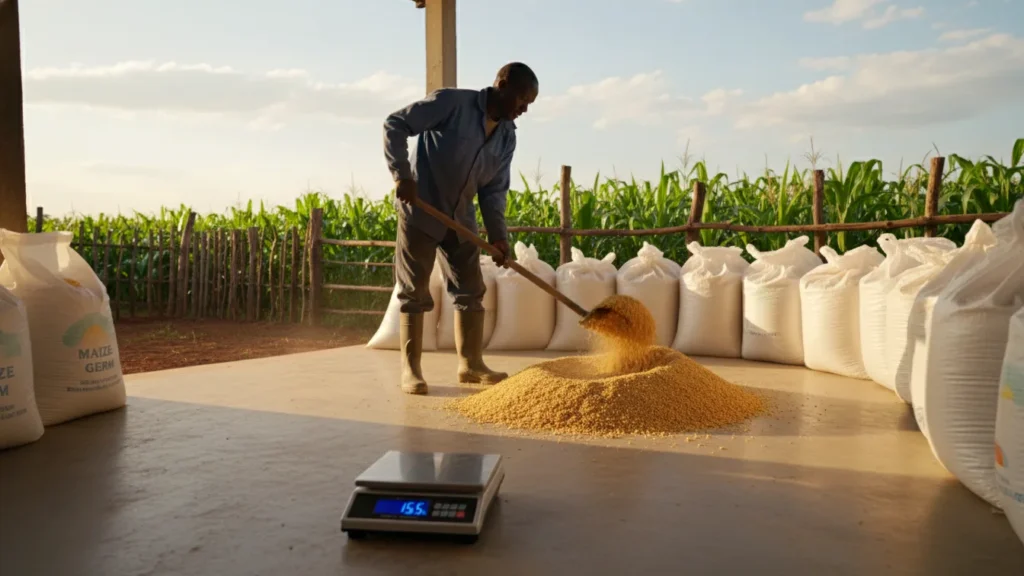
Many farmers in Uasin Gishu cut costs by mixing their own feeds. A basic 100kg Grower ration might look like this: 50kg Maize/Broken Maize, 25kg Pollard/Wheat Bran, 15kg Soya Cake or Fishmeal (Omena), and 10kg Pig Mix (Lime, Salt, Premix). Ensure your Omena is dry and free from sand to prevent digestive blockages.
Hydroponic Fodder & Silage: To supplement expensive grains, 2026 farmers are using hydroponic barley and sweet potato vine silage. These provide essential vitamins and fiber, improving gut health. However, these are supplements and should not exceed 30% of the total daily diet.
What is the most effective protocol for pig disease control and vaccination?
Strict biosecurity is the only defense against African Swine Fever (ASF), which has no cure or vaccine. Essential vaccinations include Erysipelas and Parvovirus for breeding stock. Regular deworming with Ivermectin every 3 months and controlling external parasites like mites using acaricides is mandatory for herd health.
Disease can wipe out a pig farm in days. The most feared killer in Kenya is African Swine Fever (ASF). Since there is no vaccine, your farm must be a fortress against unauthorized entry.
Biosecurity Measures
Fencing is non-negotiable to keep out stray dogs, wild pigs, and unauthorized visitors. Install a footbath with disinfectant (like glutaraldehyde or Virkon) at the entrance of the piggery. Do not feed swill (kitchen scraps) from hotels unless it has been thoroughly boiled for at least 30 minutes, as raw pork scraps can carry ASF virus.
Vaccination and Health Schedule
While ASF has no jab, you must vaccinate against other killers to protect your investment. 1. Week 3-4: Iron injection to prevent anemia, as piglets born on concrete lack access to soil nutrients. 2. Weaning: Deworming with broad-spectrum dewormers. 3. Gilts/Sows: Parvovirus and Leptospirosis vaccines before breeding to prevent stillbirths. 4. Routine: Erysipelas vaccination every 6 months to prevent “Diamond Skin Disease.”
Read Also: Top 5 Profitable Dairy Cow Breeds for Successful Farming in Kenya (2026 Guide)
Observe your pigs daily for signs of illness. Symptoms like lethargy, shivering, loss of appetite, or purple discoloration of the ears require immediate veterinary attention. Isolation pens must be available to quarantine sick animals away from the healthy herd.
Which Kenyan counties offer the best environment for commercial pig farming?
Kiambu offers the best market access due to proximity to Nairobi and slaughterhouses. Uasin Gishu provides the lowest production costs due to abundant maize and wheat for feed. Nakuru offers a balanced advantage with a central location for logistics and a moderate climate suitable for exotic breeds.
1. Kiambu County (The Market Hub): Kiambu is the heart of pig farming in Kenya due to the presence of Farmer’s Choice in Kahawa West. Land is expensive here, so farmers utilize intensive zero-grazing units on small plots (40x80ft). The advantage is low transport costs to the market, but the challenge is the high cost of buying feeds from retailers.
2. Uasin Gishu (The Grain Basket): Farmers in Eldoret and surrounding areas have a massive competitive advantage: cheap feed. Being the maize and wheat capital, farmers can source raw materials directly from harvesters at rock-bottom prices. The profit margins per pig in Uasin Gishu are typically 15-20% higher than in Kiambu, though transport to Nairobi markets cuts into this slightly.
3. Nakuru County (The Logistics Center): Nakuru is strategically placed to supply Western Kenya, Nairobi, and the Central region. The climate is mild, reducing heat stress on pigs. Availability of by-products from local industries (like milling plants) makes feed formulation easier and cheaper.
How should a beginner plan their pig farming calendar for the first year?
Months 1-2 focus on sty construction and biosecurity setup. Month 3 is for sourcing weaners and quarantining them. Months 4-8 are strictly for feeding and growth management. Months 9-10 involve finishing and marketing, while Months 11-12 focus on deep cleaning and restocking or farrowing if breeding.
Quarter 1: Infrastructure & Sourcing (Jan – Mar)
January is typically dry and perfect for construction activities. Build your sty and cure the concrete floors thoroughly to prevent cracking. In February, source your feeds and secure a reliable water connection. By March, bring in your weaners (approx. 2 months old) and isolate them for observation.
Quarter 2: The Growth Phase (Apr – Jun)
The long rains arrive during this period. Ensure your roof doesn’t leak and bedding remains dry to prevent pneumonia. Pigs are on Grower Mash during this stage. This is a cash-intensive period with no income, so ensure your financial reserves are ready.
Quarter 3: Finishing & Health Check (Jul – Sep)
July is cold, requiring extra bedding or heating for younger pigs. Switch to Finisher Mash to bulk up the pigs for the final push. If you are keeping gilts for breeding, serve them (inseminate) in month 8 when they reach roughly 110kg and are on their 2nd or 3rd heat.
Quarter 4: Harvest & Review (Oct – Dec)
Your first batch is ready for slaughter (porkers) at 6-7 months. December offers the highest pork demand due to Christmas festivities. Sell your stock, sanitize the pens thoroughly, and review your financial books to adjust feed ratios for the next year.
What are the realistic costs and profit margins for pig farming in 2026?
Raising a pig to market weight (90kg) costs approximately KES 14,000 – 16,000 in feeds and vet care. Selling at KES 280-320 per kg carcass weight generates revenue of KES 20,000 – 23,000. This leaves a net profit of roughly KES 4,000 – 7,000 per pig, taking about 6-7 months to realize.
Profitability in 2026 depends entirely on the Feed Conversion Ratio (FCR). If your pigs eat too much but grow too slowly, you will lose money. The following breakdown assumes a commercial approach with 10 pigs.
| Expense Category | Details | Cost (KES) |
|---|---|---|
| Stocking (Weaners) | 10 Quality Weaners @ 5,000 each | 50,000 |
| Feeding (Total) | ~300kg feed per pig to reach 90kg @ 45/kg | 135,000 |
| Veterinary/Meds | Vaccines, Dewormers, Iron, Vitamins | 5,000 |
| Labor & Water | Part-time attendant / Utility bills | 15,000 |
| Transportation | Moving pigs to slaughter/market | 5,000 |
| Total Cost | Cost of production for 10 pigs | 210,000 |
| Revenue | 10 pigs x 70kg (Carcass Weight) x 300 KES/kg | 210,000 |
| PROFIT SCENARIO | Standard Break Even | 0 (Break-even) |
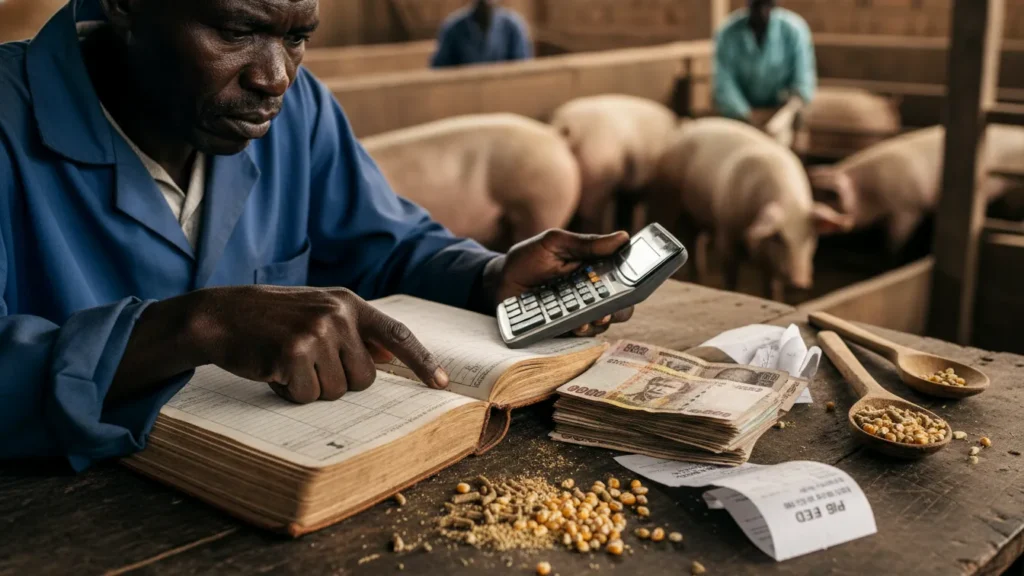
Analyst Note: The table above shows a break-even scenario if you rely 100% on expensive commercial feeds and sell at standard broker prices. To make the KES 70,000 profit often cited by experts, you MUST reduce feed costs to KES 30-35/kg by home mixing. Additionally, selling value-added products (sausages/pork joints) rather than whole carcasses increases revenue significantly.
How can farmers add value to maximize revenue per pig?
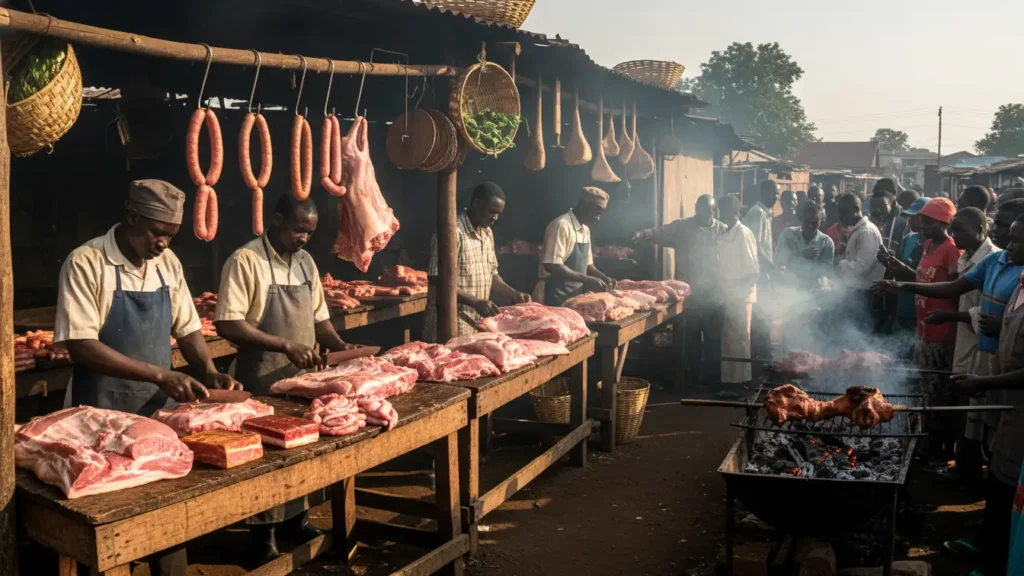
Value addition involves processing raw pork into sausages, bacon, smokies, or selling specific cuts (chops, ribs) directly to consumers. Opening a local “Pork Joint” or butchery allows farmers to bypass brokers, often doubling the profit margin per animal compared to selling live weight.
Read Also: How to Grow Clover Seed for High-Quality Livestock Fodder in Kenya (2026 Guide)
Selling a live pig to a broker is the least profitable exit strategy. The broker makes the money, not the farmer. In 2026, the smart money is in the “Farm-to-Fork” model where you control the retail price.
The “Vibanda” & Butchery Model
Opening a small roast pork eatery (vibanda) in a high-traffic area allows you to sell 1kg of cooked pork for KES 600-800. Compare this to the KES 300 per kg you receive for raw carcass weight. Even after factoring in charcoal and labor, the margin doubles per pig processed.
Processing Licenses and Regulations
If you want to produce sausages or smokies, you need certification from the Kenya Bureau of Standards (KEBS) and a food handling certificate. While the paperwork is tedious, processed pork has a longer shelf life. Start small with unbranded fresh sausages for local neighbors before scaling to supermarkets.
2026 Outlook: The Future of Pig Farming in Kenya
As we move through 2026, the Kenyan pig industry is consolidating. The days of “trial and error” farming are over. Success now belongs to farmers who use data to manage feed costs and maintain strict biosecurity against ASF.
We are seeing a massive shift towards insect-based protein (Black Soldier Fly larvae) to replace expensive Omena and Soya. Farmers adopting this technology are seeing feed costs drop by 30%. Furthermore, the demand for pork in urban centers like Nairobi, Kisumu, and Mombasa is at an all-time high due to the rising price of beef.
Read Also: 10 Most Profitable Farming Ventures in Kenya for 2026
Ready to Start Your Piggery?
Don’t guess with your investment. Start with proper genetics and a solid feed plan. Visit your local KALRO center this week to book your F1 foundation stock and join a local cooperative for bulk feed purchasing.
Farmers Also Ask (FAQ)
How long does it take for a pig to reach market weight?
With good management and quality breeds like Large White or Camborough, a pig should reach 90-100kg (market weight) in 6 to 7 months. Indigenous breeds may take over 10 months to reach this weight. Consistent feeding is key to meeting this timeline.
What is the best way to prevent piglets from being crushed by the sow?
Install “farrowing crates” or guard rails in the pen. These rails are fixed about 20cm from the wall and 20cm from the floor. They give piglets a safe escape space when the mother lies down.
Can I feed my pigs entirely on kitchen waste?
No, kitchen waste alone lacks the balanced protein and minerals needed for growth. It causes slow growth and produces fatty, low-quality meat. It can also transmit diseases like ASF if not boiled strictly.
How much water does a pig need per day?
A growing pig needs 5-10 liters of water daily. A lactating sow (breastfeeding) can drink up to 20-30 liters. Lack of water immediately stops growth and milk production.
What is the ratio of boars to sows?
For natural mating, one healthy boar can service about 20 sows. If you have fewer than 5 sows, it is cheaper to pay for Artificial Insemination (AI) services. This avoids the high cost of feeding a boar year-round.
How do I know if my pig has worms?
Signs include coughing, rough hair coat, slow growth, pot-belly, and scouring (diarrhea). Even without signs, deworm every 3 months as a preventative measure. Consult a vet for the correct dosage.
Is Artificial Insemination (AI) better than keeping a boar?
For small farmers, yes. AI grants access to superior genetics from top-quality boars without the cost of feeding one. It also prevents the spread of sexually transmitted diseases.
Why are my pigs eating their own piglets (Cannibalism)?
This is usually caused by stress, lack of water, or mineral deficiency (salt or protein). Ensure the sow is not thirsty and her ration has enough salt. Isolate aggressive sows immediately to protect the litter.
What is “Castration” and when should it be done?
Castration is the removal of testicles in male piglets not intended for breeding. It prevents “boar taint” (bad smell in meat). It should be done between day 3 and day 7 to minimize stress.
How much land do I need for 50 pigs?
For 50 pigs, you need roughly a 40x60ft or 50x100ft plot. This accommodates the pens, a feed store, and a waste management system. You do not need acres of grazing land for commercial pig farming.