
Table of Contents
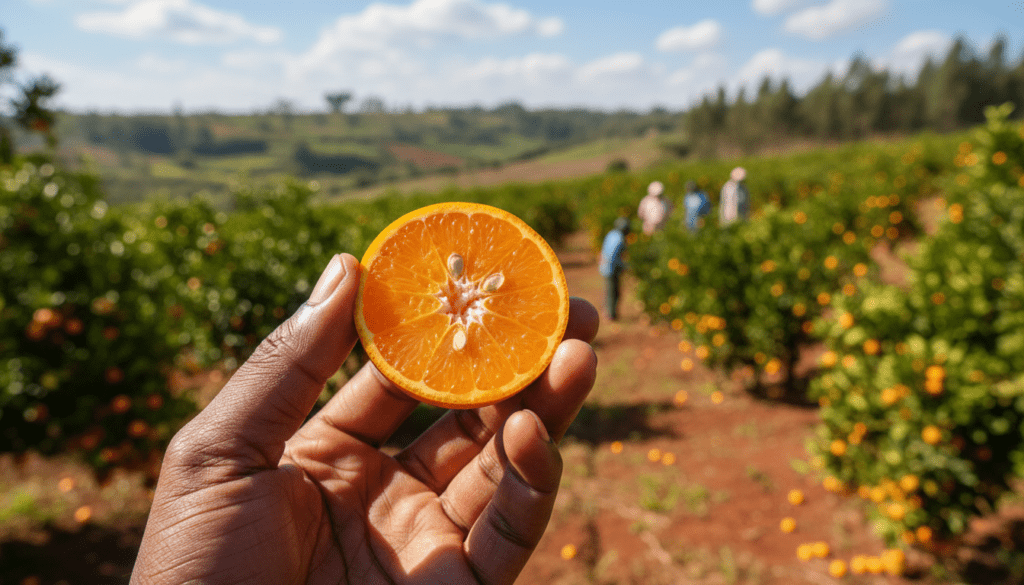
Pixie orange farming has firmly established itself as the millionaire’s playground in Kenya’s agribusiness sector for the 2026 season. Unlike traditional maize or bean farming, which often leaves farmers at the mercy of fluctuating prices and unpredictable weather patterns, pixie oranges have maintained a premium market value due to their high sugar content, seedless nature, and significantly longer shelf life. This guide cuts through the noise to provide you with a verified, master-level roadmap for establishing a profitable orchard this year, ensuring that every shilling invested yields maximum returns.
The 2026 agricultural calendar has seen a distinct shift in profitability metrics, with pixie oranges now outperforming standard citrus varieties like Washington Navel or Valencia, particularly in semi-arid regions. With farm-gate prices currently stabilizing between KES 70 and KES 100 per kilogram in production hubs like Makueni and Machakos, and retail prices hitting upwards of KES 150 to KES 200 per kilogram in high-end Nairobi supermarkets and grocery chains, the potential for high returns is undeniable. However, success depends entirely on using the correct KALRO-recommended protocols, certified planting materials, and a disciplined management schedule.
Read about
How to Grow Bulb Onions in Crates: Step by Step Guide for Kenyan Farmers
This comprehensive text serves as the ultimate manual for the serious investor. We will explore every nuance of the trade, from soil chemistry to export protocols, ensuring that your venture into pixie orange farming is not just a gamble, but a calculated business decision.
THE ECONOMIC LANDSCAPE OF CITRUS FARMING IN 2026
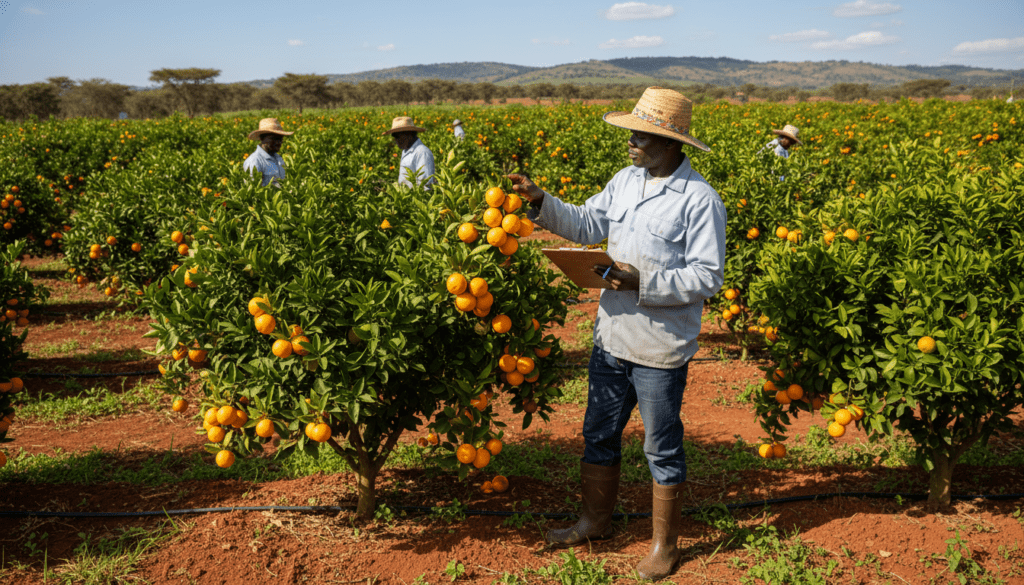
The agricultural sector in Kenya has undergone significant transformation over the last five years. By 2026, the focus has shifted heavily towards high-value horticultural crops that offer resilience against climate change. The pixie orange, a natural mutant of the Valencia orange, has emerged as a frontrunner because it thrives in the very conditions that cause other crops to fail.
Market trends in 2026 indicate a growing middle class in Kenya with a refined palate, preferring the sweet, easy-to-peel pixie over larger, more acidic citrus varieties. Furthermore, the juice processing industry has begun to aggressively source pixies for premium juice blends, creating a secondary market for Grade 2 fruits that do not meet the aesthetic standards for the table market. This dual-market capability ensures that wastage is minimized, and farmers can monetize nearly 95 percent of their total harvest.
Comparative analysis with other popular fruits reveals why the pixie is superior for semi-arid zones. Unlike avocados, which require immense amounts of water and are susceptible to frost in highland areas, or macadamia nuts which have seen volatile global price shifts, the pixie orange local market remains under-supplied. The demand consistently outstrips supply from May to September, creating a seller’s market that savvy farmers are leveraging for maximum profit.
ECOLOGICAL REQUIREMENTS AND LAND PREPARATION FOR 2026
Pixie oranges are incredibly resilient, but they are not magic; they require specific environmental conditions to thrive and produce commercial tonnage. The 2026 climate outlook suggests that semi-arid lands remain the gold standard for this crop.
Target Regions and Micro-Climates
The crop performs best in arid and semi-arid lands (ASALs). The ideal altitude ranges between 500 meters and 1500 meters above sea level. Areas like Makueni (Wote, Kibwezi), Kitui, Machakos (Yatta), coastal regions like Voi and Taveta, and parts of Nyeri (Kieni) and Murang’a (lower zones) are ecologically perfect. The temperatures in these regions, often ranging between 25 degrees Celsius and 35 degrees Celsius, facilitate the accumulation of sugars in the fruit, giving the Kenyan pixie its distinct sweetness compared to those grown in cooler climates.
Soil Analysis and pH Balancing
Soil preparation is the most critical pre-planting activity. Pixie oranges require deep, well-drained sandy loamy soils. The trees hate “wet feet,” meaning that waterlogging is a death sentence, leading to root rot and collar rot. Heavy clay soils or “black cotton” soils are generally discouraged unless substantial investment is made in soil amendments and raised bed planting.
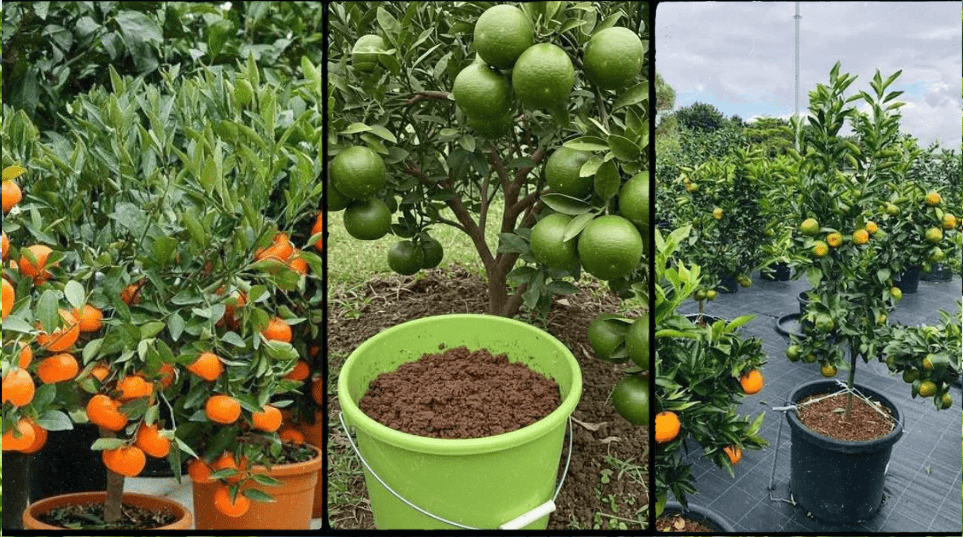
The ideal soil pH range is 6.0 to 7.5. In 2026, it is mandatory to conduct a soil test before digging a single hole. Many Kenyan soils in agricultural zones have become acidic due to years of DAP fertilizer use. If your pH is below 6.0, you must apply agricultural lime (calcium carbonate) at least three months prior to planting to neutralize the acidity. This ensures that the micronutrients required by the tree are chemically available for absorption.
Land Preparation Protocols
Land preparation must commence at least three months before the onset of the rainy season. This timeline allows the soil to aerate and for any applied manure to decompose fully.
Step 1 involves clearing the land of all bushes, shrubs, and weeds. It is vital to destump thoroughly to remove potential termite hideouts, as termites are a major threat to young citrus saplings.
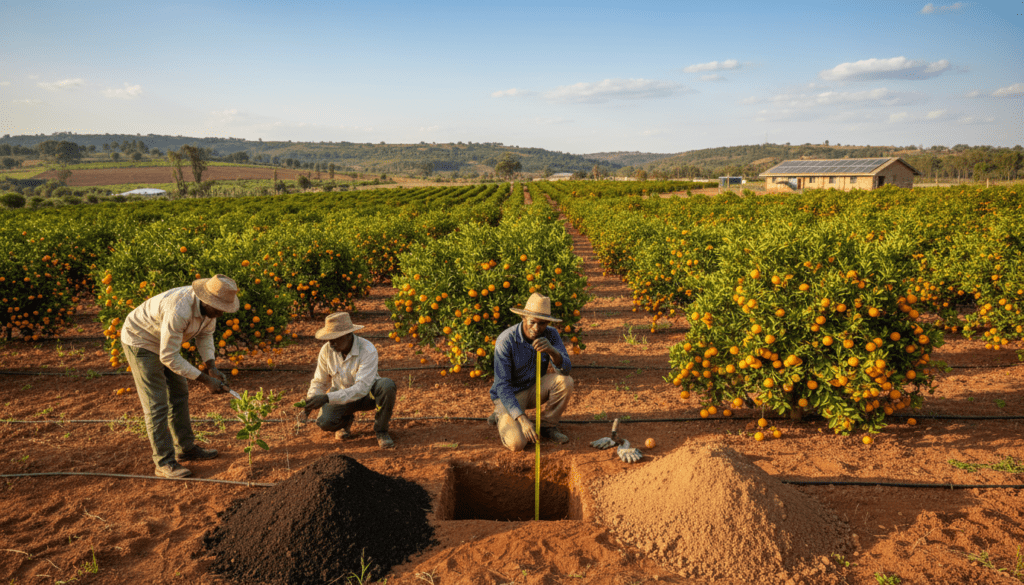
Step 2 is deep ploughing. Plough deeply to loosen the soil structure, breaking any hard pans that might restrict root penetration. In 2026, we are seeing successful farmers adopting the “z-hole” technique or standard 2x2x2 feet planting holes. This size is non-negotiable; a small hole constricts the root system and stunts the tree’s lifespan, which should exceed 20 years.
Hass Avocado in Kenya: Price, Seedlings, Varieties & Where to Buy
Separating topsoil from subsoil during digging is a critical step often skipped by beginners. When digging your 2 feet by 2 feet hole, pile the dark, nutrient-rich topsoil on one side and the lighter, clay-heavy subsoil on the other. You will later mix the topsoil with well-decomposed manure and return it to the hole first. This ensures the young feeder roots have immediate access to nutrients.
Critical Error Note
Never use fresh manure. It generates intense heat as it decomposes, which will burn the tender roots of your expensive seedlings, causing them to wither within weeks. Always use manure that has been cured for at least six months.
CERTIFIED SEEDLINGS AND VARIETIES: WHAT TO BUY IN 2026
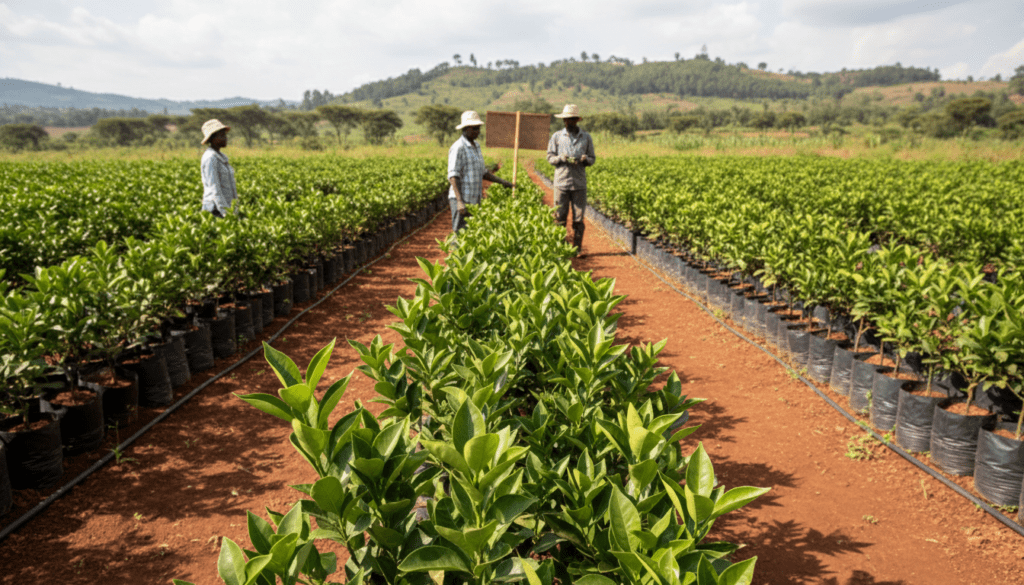
The market is flooded with counterfeit seedlings that will either never fruit, take ten years to fruit, or produce sour lemons. For the 2026 season, you must insist on the “California Pixie” variety grafted onto specific rootstocks. The success of your farm is determined at the nursery level.
Understanding Rootstocks
A grafted tree consists of two parts: the scion (the top part that produces the fruit) and the rootstock (the bottom part that interacts with the soil). For Kenya’s semi-arid conditions, the following rootstocks are recommended:
Rough Lemon: This is the most popular rootstock for areas like Ukambani and the Coast. It induces a deep taproot system that scavenges for water, making the tree drought-tolerant. It also promotes vigorous growth and high yields.
Carrizo Citrange: This rootstock offers better resistance to nematodes and Phytophthora root rot. It is ideal for areas where the soil has been previously cultivated or where disease pressure is known to be higher.
Cleopatra Mandarin: Excellent for saline soils. If your borehole water is slightly salty, this is the rootstock you must request.
Identifying Quality Seedlings
The current 2026 price for a certified, grafted pixie orange seedling ranges from KES 250 to KES 350 depending on the nursery’s reputation and the seedling’s age. Avoid roadside sellers offering seedlings at KES 100; these are often simply lemon trees or poorly grafted rejects.
A quality seedling should be pencil-thick at the graft union, have dark green vigorous leaves, and be approximately 1.5 to 2 feet tall. The graft union must be fully healed and free of any plastic wrapping at the time of purchase, or the wrapping should be easy to remove without damaging the bark. The plant should be in a sufficiently large potting bag to ensure the roots are not “J-rooted” (curled upwards due to lack of space).
Transportation and Hardening
When transporting seedlings, handle them with extreme care. Do not stack them horizontally in a car boot or pickup truck where the heavy soil bags can crush the stems. Transport them upright in crates. Upon arrival at your farm, do not plant them immediately. Water them and let them acclimatize to your local weather in a shaded area for at least one week. This “hardening off” process significantly reduces transplant shock and mortality rates.
PLANTING PROTOCOLS AND SPACING MATRIX
Spacing is the single most debated topic, but for commercial efficiency in 2026, the recommended spacing is 4 meters by 5 meters. This matrix allows for approximately 200 trees per acre.
The Logic of Spacing
Some high-density farming advocates suggest 3 meters by 3 meters, but this often leads to canopy closure too early. Once the branches of neighboring trees touch, sunlight cannot penetrate the lower sections, leading to a “hollow” tree that only bears fruit at the very top. Furthermore, tight spacing makes it impossible to move tractors or motorized sprayers between rows after year five. The 4m x 5m matrix ensures that even when trees are mature, machinery can access the rows, and sunlight can reach all sides of the canopy to ripen the fruit uniformly.
The Planting Process
During the actual planting, mix your reserved topsoil with 20kg (one standard bucket) of well-decomposed goat or cow manure. Add 200g of DAP fertilizer (or a specialized planting fertilizer rich in phosphorus like Monoammonium Phosphate) to this mix. Phosphorus is essential for root development.
Click here to buy pixie seedlings
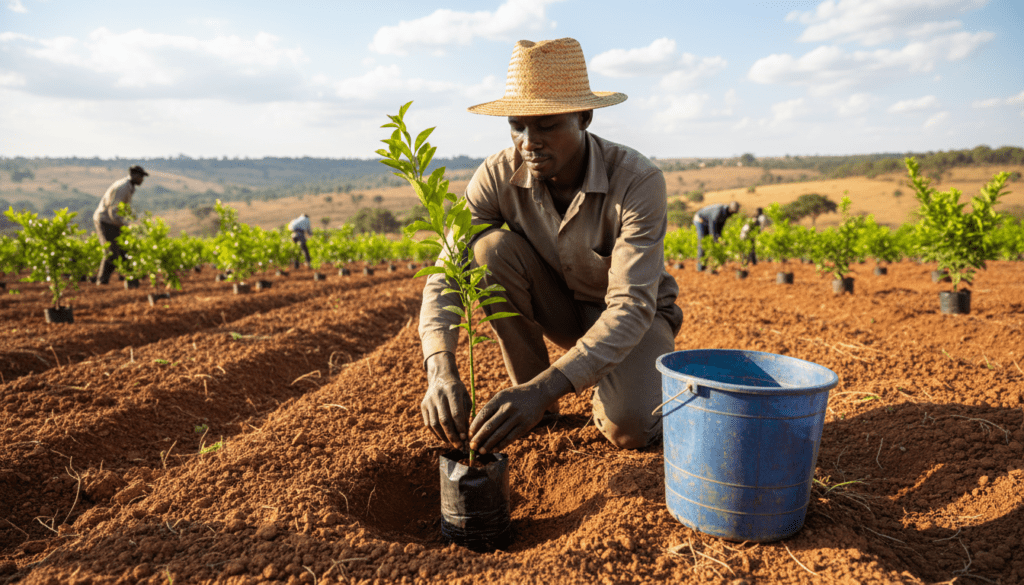
Fill the hole with this mixture until it is nearly level with the ground. Water the hole to allow the soil to settle. Create a small hollow in the center to accommodate the seedling’s root ball. Carefully slit the polythene bag with a razor blade-do not pull the seedling out by the stem as this can snap the roots. Place the root ball in the hole ensuring the soil level matches the nursery level.
The Golden Rule of Planting
The graft union must remain at least 6 inches above the soil surface. This is non-negotiable. If you bury the graft union, the scion (the pixie part) will start developing its own roots. These roots are not resistant to soil-borne diseases. Furthermore, burying the union invites collar rot, a fungal infection that rings the bark and kills the tree. Water immediately after planting with at least 20 liters per tree to eliminate air pockets in the soil.
ORCHARD MANAGEMENT: IRRIGATION SYSTEMS
Pixie oranges are drought-tolerant but not drought-resistant during their establishment phase. For the first two years, consistency is key to survival and growth rate.
Irrigation Methods in 2026
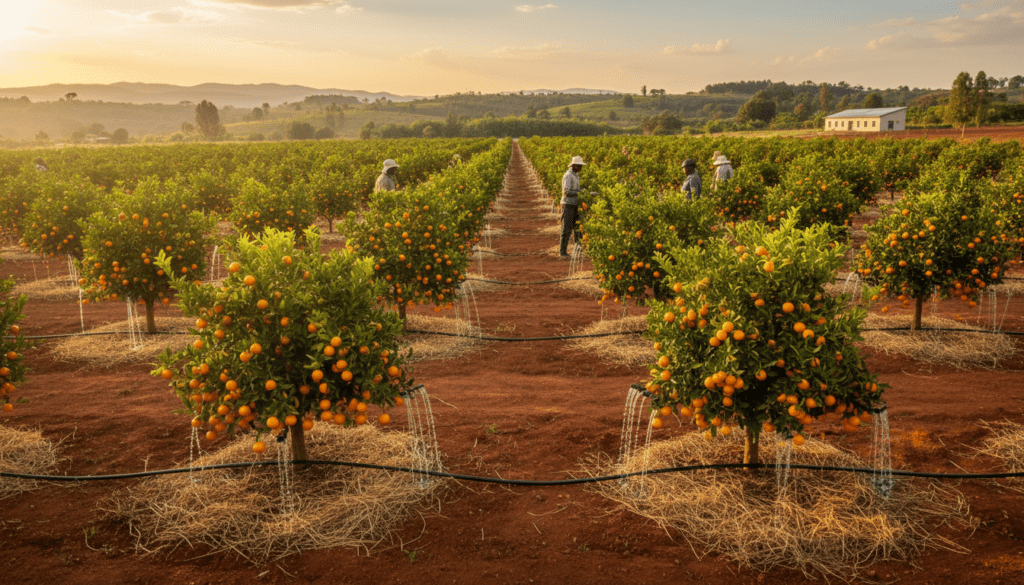
In 2026, drip irrigation remains the most cost-effective and efficient method for commercial orchards. Basin irrigation (flooding) is wasteful and encourages weed growth, while overhead sprinklers can encourage fungal diseases on the leaves.
Install a double-line drip system for each row of trees. This ensures that water is distributed on both sides of the root zone. You will need to deliver approximately 20 liters of water per tree per week during the dry season for young trees. As the trees mature, this requirement increases to roughly 50-80 liters per week depending on evapotranspiration rates.
Water Stress Management
While water is crucial, strategic “water stress” is a technique used by expert farmers to induce flowering. By withholding water for 2-4 weeks just before the rainy season, the tree perceives a threat to its survival. When water is reintroduced (either by rain or irrigation), the tree bursts into a heavy bloom to reproduce. However, this technique should only be attempted on trees older than 3 years. Stressing young saplings will simply stunt them.
Beware of Salinity
Many boreholes in ASAL regions have high saline levels. Citrus trees are moderately sensitive to salt. If your water EC (Electrical Conductivity) is high, you must leach the soil periodically by applying excess water to push salts below the root zone. Using heavy organic mulch also helps buffer the roots against salt damage.
NUTRITION AND FERTILIZATION PROGRAM
Fertilizer application in 2026 has become expensive, so precision is required. The “blind application” of fertilizer is a waste of money. The following schedule is a standard baseline, but it should be adjusted based on leaf analysis.
Year 1 and 2: Vegetative Growth
The goal in the first two years is to build a strong structural frame. Nitrogen is the driver of vegetative growth.
Months 1-3: No fertilizer (allow roots to settle).
Month 4: Top dress with CAN (Calcium Ammonium Nitrate) at a rate of 100g per tree.
Month 8: Top dress with CAN (150g per tree) + NPK 17:17:17 (100g per tree).
Month 12: Apply 10kg of well-rotted manure per tree.
Year 3 Onwards: Production Phase
Once the tree starts bearing fruit, the focus shifts to Potassium and Phosphorus for fruit development and sweetening.
Onset of Rains: Apply NPK 17:17:17 (300g per tree) + Manure (20kg).
Flowering Stage: Foliar sprays rich in Boron and Zinc are critical. Boron helps in pollen tube growth, ensuring fruit set. Zinc deficiency leads to small, mottled leaves and small fruit.
Fruit Expansion Stage: Apply a Potassium-rich fertilizer (like Multi-K or Muriate of Potash) to increase fruit size and sugar content (Brix level).
Deficiency Management
Yellowing leaves with green veins usually indicate Iron or Zinc deficiency. Yellowing of older leaves usually indicates Nitrogen deficiency. Burnt leaf tips often indicate Chloride toxicity or saline water issues. Regular scouting allows you to address these issues before they impact yield.
WEED CONTROL AND INTERCROPPING
Weeding must be done with extreme caution. Citrus trees have shallow feeder roots that extend to the “drip line” (the edge of the canopy). Digging deep with hoes (jembes) near the tree trunk will sever these roots, shocking the tree and opening entry points for fungal infections.
Weeding Strategies
1. Ring Weeding: Hand-pull weeds within a 2-foot radius of the trunk.
2. Mowing/Slashing: Keep the grass between rows short rather than digging it up. This maintains soil structure and prevents erosion.
3. Herbicides: Use contact herbicides carefully, ensuring a shield is used on the sprayer nozzle so that no chemical drifts onto the pixie leaves or green stems. Glyphosate can be fatal to young citrus if it touches the green bark.
Intercropping Guidelines
In the first two years, the wide spacing between rows can be utilized for short-term crops to generate cash flow.
Approved Crops: Beans, green grams, cowpeas, and watermelons (if space permits). These legumes fix nitrogen and cover the soil.
Forbidden Crops: Maize, sorghum, and napier grass. These are heavy feeders that will outcompete your orange trees for nutrients and sunlight. Maize also grows tall, shading the young saplings. Solanaceous crops (tomatoes, potatoes, capsicums) should also be avoided as they share soil-borne diseases like Bacterial Wilt and nematodes with citrus.
PESTS AND DISEASE CONTROL STRATEGIES
The 2026 season brings the usual suspects in terms of pests, but with climate variability, their lifecycles have accelerated.
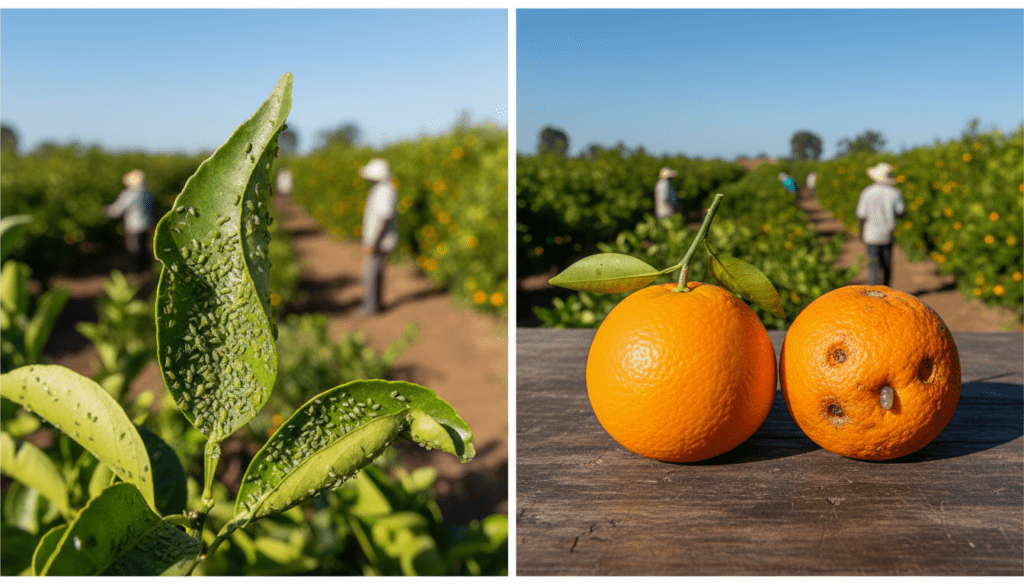
Thrips
Thrips are microscopic insects that scrape the surface of the developing fruitlet when it is the size of a marble. This damage results in a silvery, scurfy ring around the stem end of the mature fruit. While the fruit is edible, it is considered Grade 2 or “market reject” aesthetically.
Control: Scout during flowering. Shake a flower cluster over a white paper; if you see tiny moving specks, spray immediately with Acetamiprid or Spinetoram.
Fruit Flies
Fruit flies are the biggest threat to harvest volume. They puncture the ripening fruit to lay eggs. The larvae hatch inside, causing the fruit to rot and drop prematurely.
Control: In 2026, the industry standard is to use pheromone traps (like Bactrolure) rather than blanket spraying. Hang these traps at strategic points to lure and kill male flies. Field sanitation is also vital-pick up and bury all fallen rotting fruits at least 2 feet deep to break the breeding cycle.
False Codling Moth (FCM)
This is a quarantine pest, meaning if it is found in your export shipment, the entire consignment is rejected. The larva bores into the fruit, leaving a tiny hole that is hard to see.
Control: Use mating disruption pheromones and strict field hygiene.
Greening Disease (HLB)
This is a bacterial infection spread by the Citrus Psyllid. It causes uneven yellowing of leaves and bitter, lopsided fruit. There is no cure.
Control: Infected trees must be uprooted and burned. Prevention involves controlling the psyllid vector using Imidacloprid and starting with clean seedlings.
PRUNING AND CANOPY MANAGEMENT
Pruning is often the most neglected aspect of citrus farming in Kenya, yet it determines the longevity of the orchard.
Formative Pruning (Years 1-2)
The goal is to create a single main trunk up to about 2 feet, then allow 3 or 4 main scaffold branches to develop outwards. Remove any shoots that grow from the rootstock (suckers) immediately. Remove any branches that cross each other or grow inwards towards the center of the tree. We want a “vase” shape that allows light to penetrate the center.
Maintenance Pruning (Year 3+)
Remove dead wood and “water shoots” (vigorous, vertical branches that do not bear fruit). Skirt the trees by trimming any branches that touch the ground. This prevents ants and snails from climbing onto the tree and reduces the splash of fungal spores from the soil onto the leaves during rain.
FINANCIAL BREAKDOWN: ESTABLISHMENT COST PER ACRE (2026 ESTIMATES)
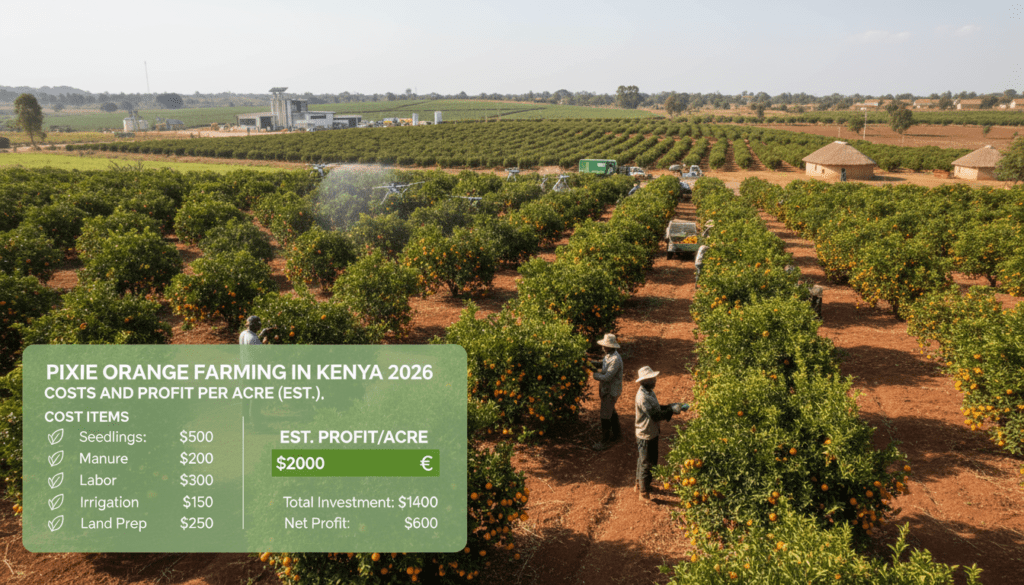
Establishing one acre of pixie oranges is a capital-intensive venture. Below is a realistic, line-item cost breakdown for the 2026 season in Kenya Shillings (KES). Note that these costs can vary by +/- 15% depending on location and labor availability.
1. Land Preparation
– Bush clearing and stump removal: KES 8,000
– Deep ploughing (tractor): KES 5,000
– Harrowing: KES 3,000
– Hole digging (200 holes x KES 50 labor): KES 10,000
– Sub-total: KES 26,000
2. Planting Materials
– Certified Seedlings (200 trees x KES 300 avg): KES 60,000
– Transport of seedlings (varies by distance): KES 5,000
– Sub-total: KES 65,000
3. Inputs (Initial)
– Manure (4 tons of cured manure + transport): KES 20,000
– Planting Fertilizer (DAP/MAP – 2 bags x KES 6,500): KES 13,000
– Agricultural Lime (if needed, 10 bags): KES 4,000
– Pesticides/Fungicides (Starter pack): KES 8,000
– Sub-total: KES 45,000
4. Irrigation Infrastructure
– 10,000 Liter Tank (Plastic): KES 75,000
– Drip Kit (1 acre, double line, professional install): KES 65,000
– Piping and connectors: KES 15,000
– Sub-total: KES 155,000
5. Labor and Miscellaneous
– Planting labor: KES 5,000
– Fencing (Chain link/Barbed wire + posts) – *Optional but recommended*: KES 80,000
– Contingency (10%): KES 30,000
TOTAL ESTIMATED STARTUP COST (With Irrigation & Fencing): ~KES 406,000
TOTAL ESTIMATED STARTUP COST (Rain-fed/Existing water): ~KES 171,000
While the figure of KES 400,000 for a fully irrigated, fenced farm seems high, it is a one-time CAPEX (Capital Expenditure). The annual maintenance cost (OPEX) drops significantly to about KES 80,000 – 100,000 per year for labor and inputs.
PROFITABILITY AND YIELD PROJECTIONS
This is where the numbers validate the investment. A grafted pixie orange tree is a biological machine designed to produce revenue.
Timeline to Profit
Year 1 & 2: Zero yield. Costs are incurred for weeding, watering, and feeding.Year 3: First commercial harvest. Average 10-20 kg per tree.Calculation: 200 trees x 15 kg = 3,000 kg.Revenue @ KES 80/kg: KES 240,000.This typically covers the annual running costs and pays back a portion of the startup capital.Year 4: Yield increases significantly. Average 30-40 kg per tree.Calculation: 200 trees x 35 kg = 7,000 kg.Revenue @ KES 80/kg: KES 560,000.You are now in pure profit territory.Year 5 (Maturity): Average 60-80 kg per tree.Calculation: 200 trees x 70 kg = 14,000 kg (14 Tonnes).Revenue @ KES 80/kg: KES 1,120,000.
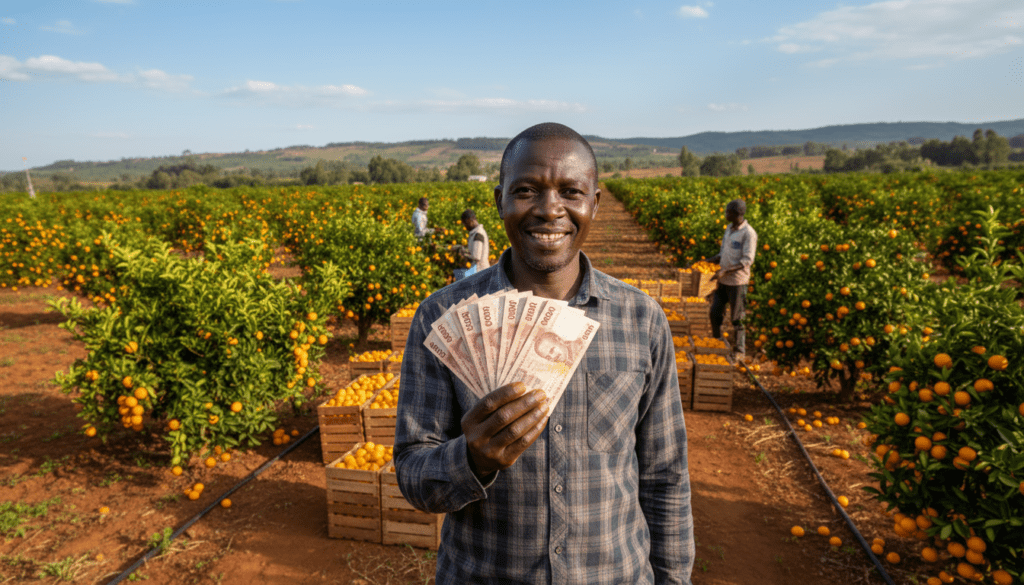
By Year 5, your one-acre orchard is capable of generating over KES 1 Million annually with a recurring cost of less than KES 120,000 per year. These trees can remain productive for 20 to 25 years.
Sensitivity Analysis
Even if the market price crashes to KES 50/kg (worst-case scenario), a mature acre still generates KES 700,000. Conversely, if you time your harvest for the off-peak season (December-February) or sell directly to consumers/supermarkets, prices can reach KES 120-150/kg, pushing revenue towards KES 2 Million per acre.
HARVESTING AND POST-HARVEST HANDLING
Knowing when to pick is an art. Pixie oranges do not ripen after being picked (they are non-climacteric). If you pick them green, they stay green and sour.
Maturity Indices
1. Color Break: The skin changes from deep green to orange. However, in hot areas, ripe fruit may still have patches of green (re-greening).
2. Taste Test: The most reliable method. Randomly sample fruits from different trees. The sugar content (Brix) should be high and acidity low.
3. Juice Content: The fruit should feel heavy for its size.
Harvesting Technique
Never pull the fruit by hand. This tears the peel near the stem, allowing fungi to enter and rot the fruit within days. Always use clipping shears (secateurs) to cut the stem, leaving a small “button” (calyx) attached to the fruit. This button acts as a seal.
Sorting and Grading
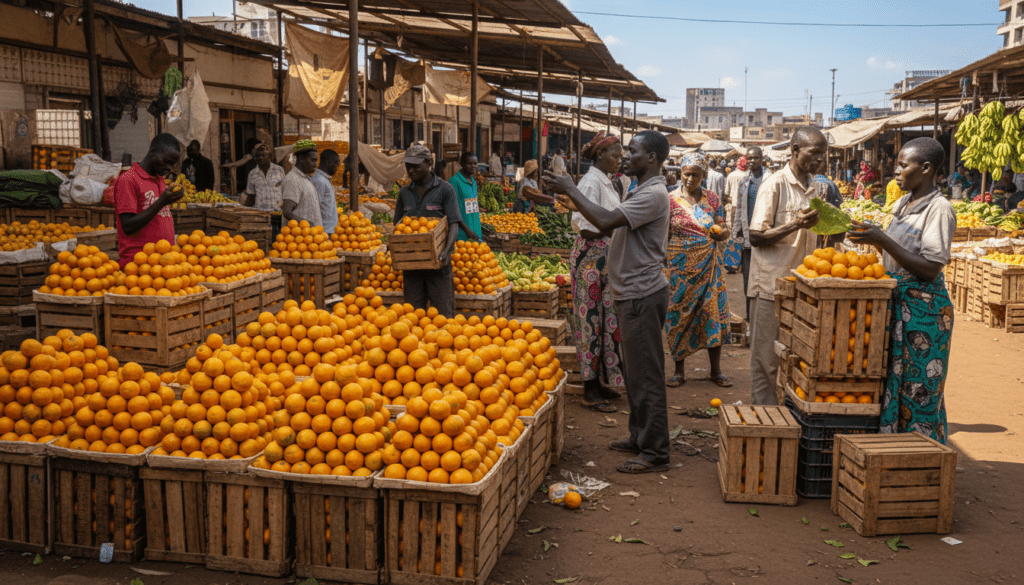
Grade 1 (Premium): Large to medium size, uniform orange color, no blemishes/scars. Sold to supermarkets and export.Grade 2 (Standard): Medium size, slight thrips scarring or wind rub marks. Sold in open markets (Marikiti, Muthurwa).Grade 3 (Juicing): Small size, significant blemishes, but sound internal quality. Sold to juice processors.
MARKETING YOUR PRODUCE IN 2026
The market for pixie oranges in Kenya is far from saturated. The local demand in Nairobi, Mombasa, and Kisumu is huge. Supermarkets like Naivas, Carrefour, and Quickmart are constantly sourcing fresh produce. To access these premium markets, you need consistency and quality.
Cooperative Power
A single farmer with one acre might struggle to supply a supermarket chain consistently. A group of 10 farmers can guarantee weekly delivery, giving you bargaining power to demand higher prices (e.g., KES 130/kg). Joining a cooperative in 2026 is highly recommended to share transport costs and access bulk-buying discounts for fertilizer.
Export Opportunities
Export markets to the Middle East and Europe are expanding. However, they require strict adherence to Global GAP (Good Agricultural Practices) standards. This involves traceability-you must document every chemical spray, fertilizer application, and harvest date. If you plan to export, minimize harsh chemical usage from day one and prioritize biological controls.
Value Addition
Don’t let waste rot on the farm. Invest in a simple manual or electric juicer. Freshly squeezed, frozen pixie juice is a high-value product that sells for KES 300-400 per liter in urban centers. Marmalade and dried orange peels (for tea blending) are other viable cottage industries.
COMPREHENSIVE FAQ
Q: How long does it take for pixie oranges to mature?
A: Grafted pixie orange trees begin flowering in the second year, but significant commercial harvesting starts from the third year. Full maturity and peak production are reached by the fifth year.
Q: Can pixie oranges grow in cold areas?
A: No, they perform poorly in cold, highland areas like Limuru, upper Kericho, or Nyandarua. They need heat and plenty of sunshine to develop their sugar content. Cold weather leads to acidic, sour fruit and slow growth.
Q: Why are my pixie oranges dropping before they are ripe?
A: Fruit drop is often caused by water stress (irregular irrigation), nutrient deficiency (especially Zinc or Nitrogen), or fruit fly infestation. Ensure consistent watering and use fruit fly traps. Natural “physiological drop” also occurs when the tree sheds excess fruit it cannot support; this is normal if it’s less than 20% of the crop.
Q: What is the best rootstock for Kenya?
A: Rough Lemon is the most popular due to its drought tolerance. Carrizo Citrange is excellent for disease resistance but requires more consistent watering. Cleopatra Mandarin is best for saline soils.
Q: Do I need a greenhouse for pixie farming?
A: No, pixie oranges are an open-field crop. A greenhouse is unnecessary and would likely be too humid, leading to fungal diseases. They love direct sun and air circulation.
Q: How many trees can fit in one acre?
A: With the recommended 4m x 5m spacing, you can fit approximately 200 trees. Using 3m x 3m high-density spacing allows for up to 450 trees but requires advanced pruning expertise and higher input costs.
Q: Is pixie farming better than Hass avocado farming?
A: Both are profitable but serve different needs. Hass avocados have a stronger export market but take longer to mature (3-4 years) and use massive amounts of water. Pixie oranges have a stronger, high-value local market, use less water, and fruit twice a year in some regions, offering better cash flow.
Q: Where can I get financing for pixie farming?
A: Many SACCOs and agricultural financing bodies like the Agricultural Finance Corporation (AFC) offer loans for orchard establishment if you have a valid title deed. In 2026, several mobile-based agri-lenders also offer input financing.
ONLINE SEED PURCHASE GUIDE (KENYA 2026)
Finding genuine seedlings is the first step to success. Below are reputable sources and contacts for 2026. Always call ahead to book, as stocks run out during the rainy season.
Trusted Institutions
1. KALRO (Kenya Agricultural and Livestock Research Organization)
Horticulture Research Institute, Thika or Katumani center.
– Website: www.kalro.org
Note: The most trusted source for clean planting material. They often have waiting lists, so book early.
2. KEPHIS (Kenya Plant Health Inspectorate Service)
Visit their offices to get a list of certified private nurseries in your region.
– Website: www.kephis.org
Vetted Private Nurseries
Oxfarm Organic Ltd: Known for wide delivery networks and agronomy packages.Richfarm Kenya: Offers agronomy support alongside seedlings and often organizes farm tours.Royal Seedlings Murang’a: High-quality grafted varieties with a focus on citrus.
Scam Alert
Do not send money to M-Pesa numbers found on Facebook comments without verifying the nursery’s physical existence. Visit the nursery personally for your first order to inspect the hygiene and grafting quality. If the seedlings look withered, yellow, or have weeds growing in the bags, do not buy them.
Pixie orange farming in 2026 is not a get-rich-quick scheme; it is a serious investment that rewards patience and precision. With the right land, certified seedlings, and a dedication to proper crop nutrition and protection, your acre of land can transform into a sustainable, high-income asset for the next generation. Start planning today-the best time to plant a tree was 20 years ago; the second-best time is now.
Read more
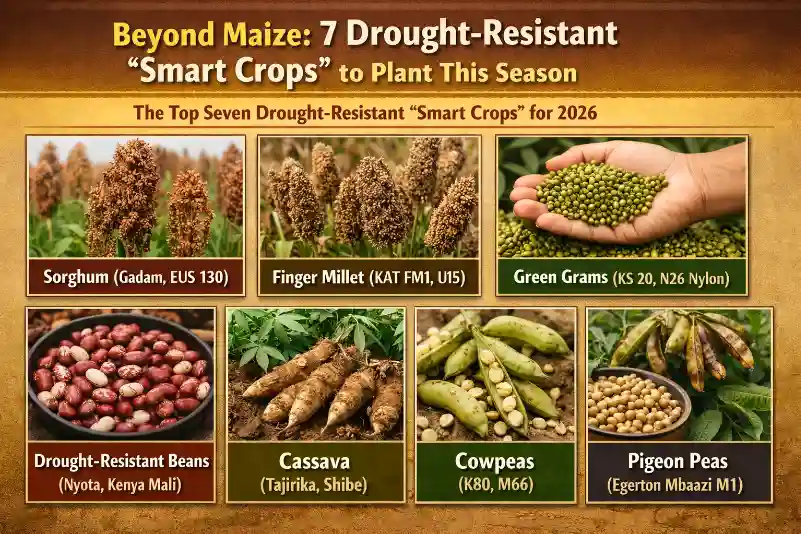
Beyond Maize: 7 Drought-Resistant “Smart Crops” to Plant This Season

Discover the top 7 drought-resistant smart crops for Kenyan farmers in 2026. Learn about seed varieties, fertilizer costs, and profit potential to beat the dry season.
Top 10 Hass Avocado Diseases in Kenya: Causes, Symptoms & Treatment Guide (2026)
Discover the ultimate 2026 guide to fighting Hass avocado diseases in Kenya. Learn treatment costs, fungicide prices, and expert tips to secure healthy yields.
100 Smart Garden Tips 2026: The Ultimate Guide for Kenya Farmers
Save 80% on food costs with 100 smart garden tips for 2026. Learn how to use KES 2,500 subsidized fertilizers and vertical farming to earn KES 15,000 monthly from your Kenyan backyard.
Hydroponic Fodder vs. Commercial Feed: Slashing Dairy Costs in 2026
Discover how Kenyan farmers are cutting dairy feeding costs in 2026 by replacing expensive commercial feed with fast-growing hydroponic barley fodder.