
- Profitability: Up to KES 1M per acre in 90 days.
- Top Variety: Sukari F1 (Best for local market).
- Best Season: Plant in Aug/Sept for the Dec holiday peak
Table of Contents
Watermelon farming remains one of the most lucrative short-term agribusiness ventures. in Kenya for 2026, offering high returns within a three-month cycle. Success requires precise timing to target dry seasons, selecting disease-resistant F1 hybrid seeds, and utilizing drip irrigation systems. This guide provides a comprehensive roadmap for beginner farmers to navigate production from soil preparation to market entry.
Is watermelon farming profitable in Kenya in 2026?
Yes, watermelon farming is highly profitable in Kenya with potential returns on investment exceeding 300% under optimal management. Farmers can harvest between 15 to 25 tonnes per acre using hybrid seeds and modern agronomy. With market prices ranging from KES 20 to KES 45 per kg, a single acre can generate gross revenues between KES 300,000 and KES 1,000,000 in just 90 days.
Market Demand and ROI
The profitability of watermelon farming in Kenya is driven by the fruit’s immense. popularity and high demand in urban centers like Nairobi, Mombasa, and Kisumu. Unlike other crops that require long maturity periods, watermelons offer a quick turnaround of 75 to 90 days. This allows smart farmers to grow up to three cycles per year if they have reliable water sources.
Timing and Seasonality Risks
Profitability is heavily dependent on timing the market to avoid gluts. During the rainy seasons of April and November, prices often dip due to oversupply and lower fruit quality caused by waterlogging. The most successful farmers in 2026 are those who utilize irrigation to produce fruit during dry months when prices peak.
Payment Security Developments
M-Pesa integration in the value chain has streamlined payments, reducing the risk of theft and fraud during harvest sales. Brokers and wholesalers now commonly pay deposits instantly, securing the farmer’s cash flow. Despite rising input costs, the margin remains wide enough for substantial profit if pest management is handled correctly.
READ ALSO: Mango Farming in Kenya: Spacing, Seedlings, Yields and Profit per Acre in 2026
What are the best watermelon varieties for Kenyan farmers?
The best varieties for 2026 are Sukari F1, Zebra F1, and Sentinel F1 due to their high yield and sugar content. Sukari F1 is preferred for its oblong shape and extreme sweetness, making it a market favorite. Zebra F1 is valued for its robust rind which is excellent for long-distance transport, while newer varieties like Pato F1 offer superior resistance to Fusarium Wilt.
Sukari F1 (The Market Leader)
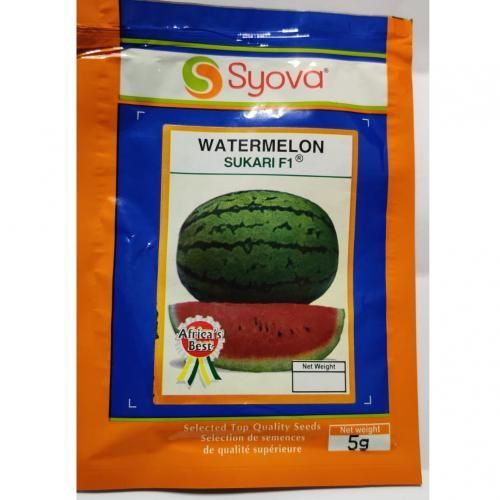
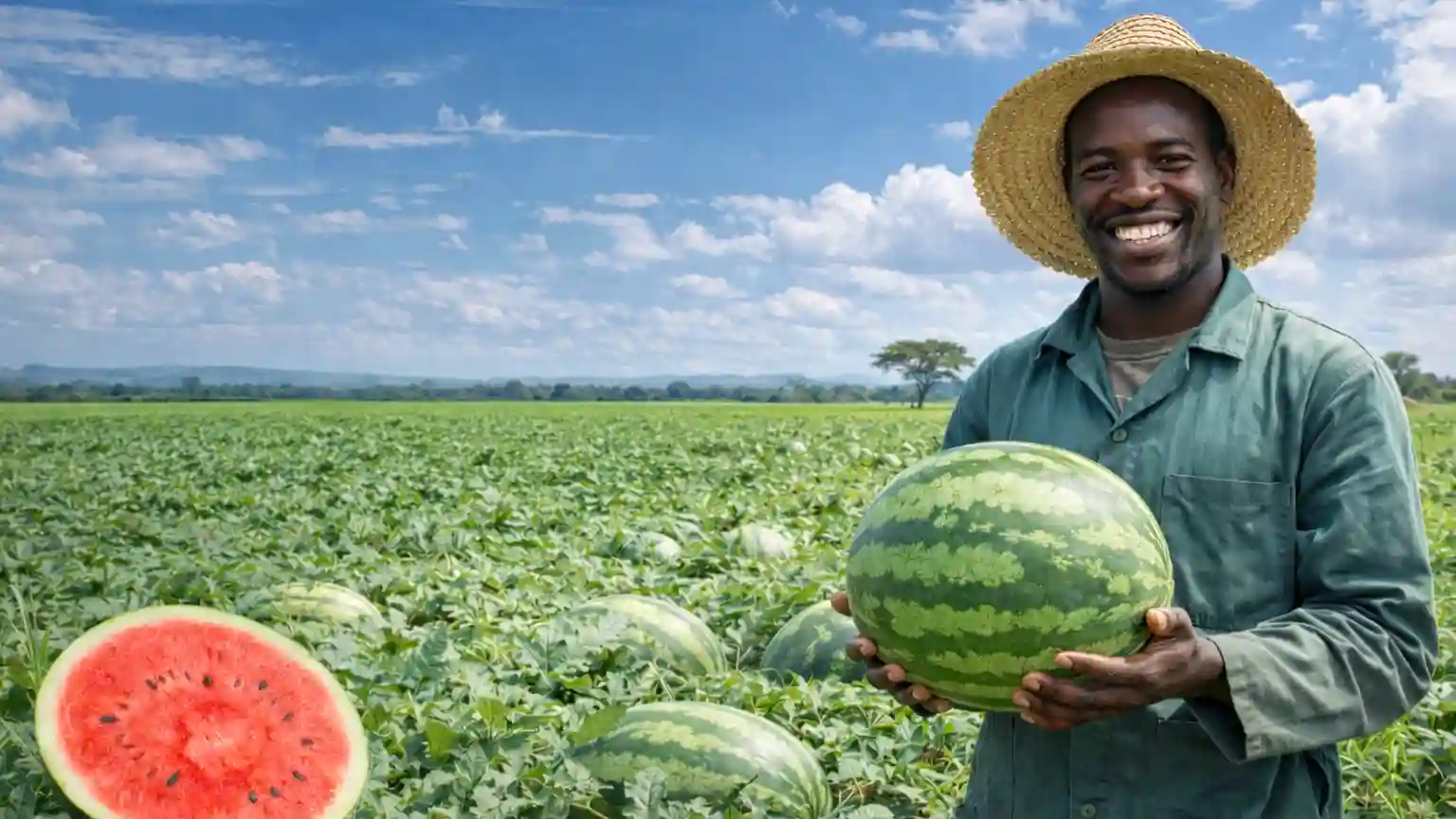
Sukari F1 remains the undisputed king of Kenyan watermelons in 2026. It is famous for its incredibly sweet, deep red flesh and an average fruit weight of 7kg to 12kg. It matures quickly, usually ready for harvest within 80 to 90 days, and has good resistance to common field diseases.
Zebra F1
This variety is easily identifiable by its distinct light and dark green stripes. Zebra F1 is favored by farmers in Garissa and Tana River who transport goods over long distances. Its tough rind prevents breakage during transport to Nairobi markets, ensuring the farmer loses less revenue to post-harvest damage.
Sentinel F1
Sentinel F1 is an oblong variety similar to Sukari but with a slightly larger potential size, often reaching 15kg under drip irrigation. It is highly vigorous and provides excellent leaf cover. This foliage protects the fruit from sunburn in hot counties like Turkana or Kitui.
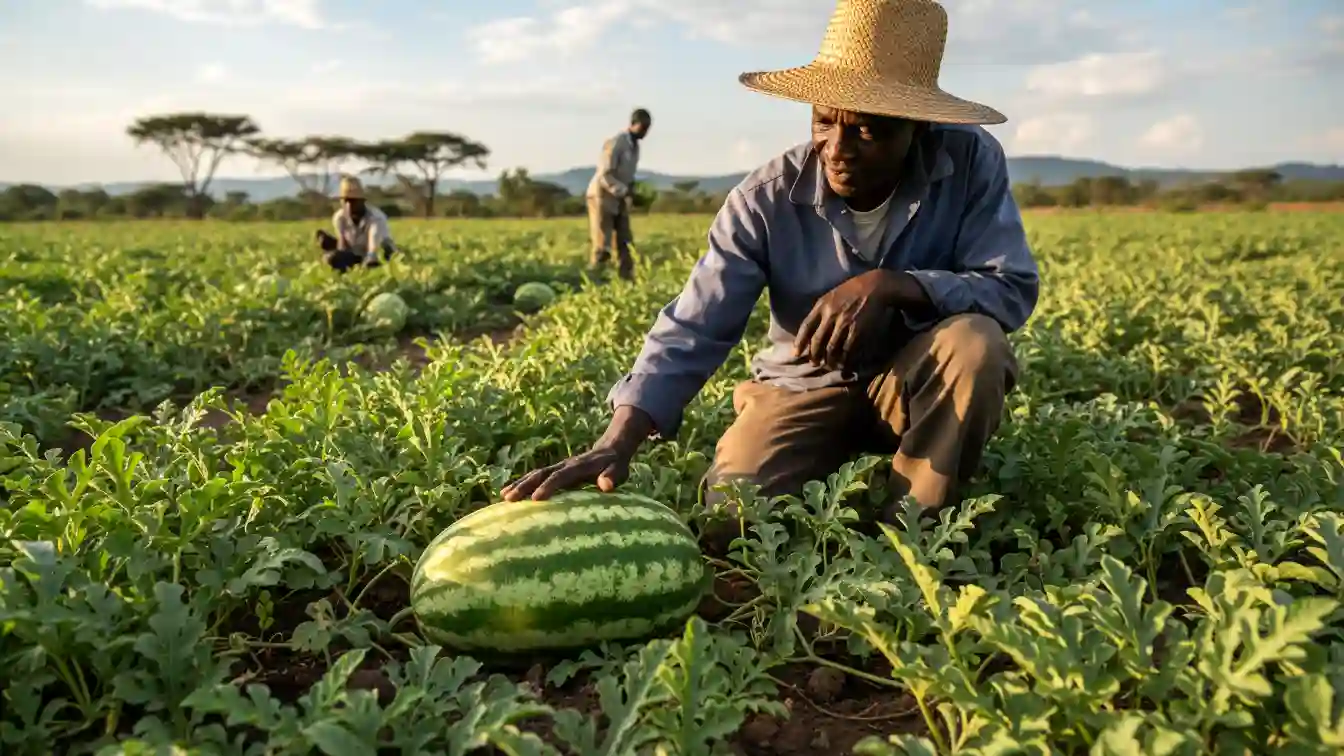
Where to Buy Watermelon Authentic Seeds in Kenya
For 2026, authentic seeds should be sourced from Kenya Seed Company, Simlaw Seeds, or Royal Seed via authorized stockists. Digital procurement through Safaricom Digifarm and iShamba is now standard for verifying inputs. Avoid buying loose seeds from open markets to prevent purchasing fake or low-germination stock.
Official Government & Institutional Sources
Kenya Seed Company (KSC) is the primary go-to for certified seeds. Their specific watermelon varieties are adapted to local ecological zones. You can find their main depots in Kitale, Nairobi, and Nakuru.
Trusted Commercial & Online Platforms
Simlaw Seeds, a subsidiary of Kenya Seed, is renowned for high-quality horticultural seeds including the popular Sukari F1. They have outlets in most major towns. Royal Seed (Kenya Highland Seed) is known for introducing resilient hybrids and their seeds are widely available in agrovets across the country.
Digital Verification and Safety
Safaricom Digifarm and iShamba allow farmers to order inputs via phone. They partner with verified suppliers to ensure that what is delivered to your shamba is genuine and certified. Always check for the KEPHIS label on seed packets to ensure the packet is sealed and has a valid lot number.
Which regions in Kenya are best suited for watermelon farming?
The best regions are semi-arid areas with hot temperatures and access to irrigation water. Kajiado, Machakos, Kilifi, Garissa, and Meru are top producers. Watermelons thrive in temperatures between 25°C and 35°C, making the coastal and eastern regions ideal compared to the cold highland areas.
Kajiado County (The Irrigation Hub)
Kajiado, particularly around Loitokitok, is a powerhouse for watermelon farming. The volcanic loam soils are fertile, and the proximity to Nairobi reduces transport costs significantly. Farmers here rely heavily on irrigation, allowing them to produce year-round and dominate the market during off-seasons.
READ ALSO: Hass Avocado Seedlings in Kenya 2026: Trusted Nurseries, Prices and Spacing Guide
Kilifi County (Coastal Heat)
The coastal climate of Kilifi provides the high heat units required for rapid sugar accumulation in the fruit. While the sandy soils require more frequent watering and manuring, the lack of frost ensures zero crop loss due to cold. Varieties grown here tend to be sweeter due to the constant sunshine.
Meru and Tharaka Nithi (The Emerging Giant)
The lower belts of Meru and Tharaka Nithi utilize rivers flowing from Mount Kenya to irrigate vast tracts of land. This region produces massive fruits, often exceeding 12kg. The clay-loam soils here hold water well, reducing irrigation costs compared to the sandy soils of the coast.
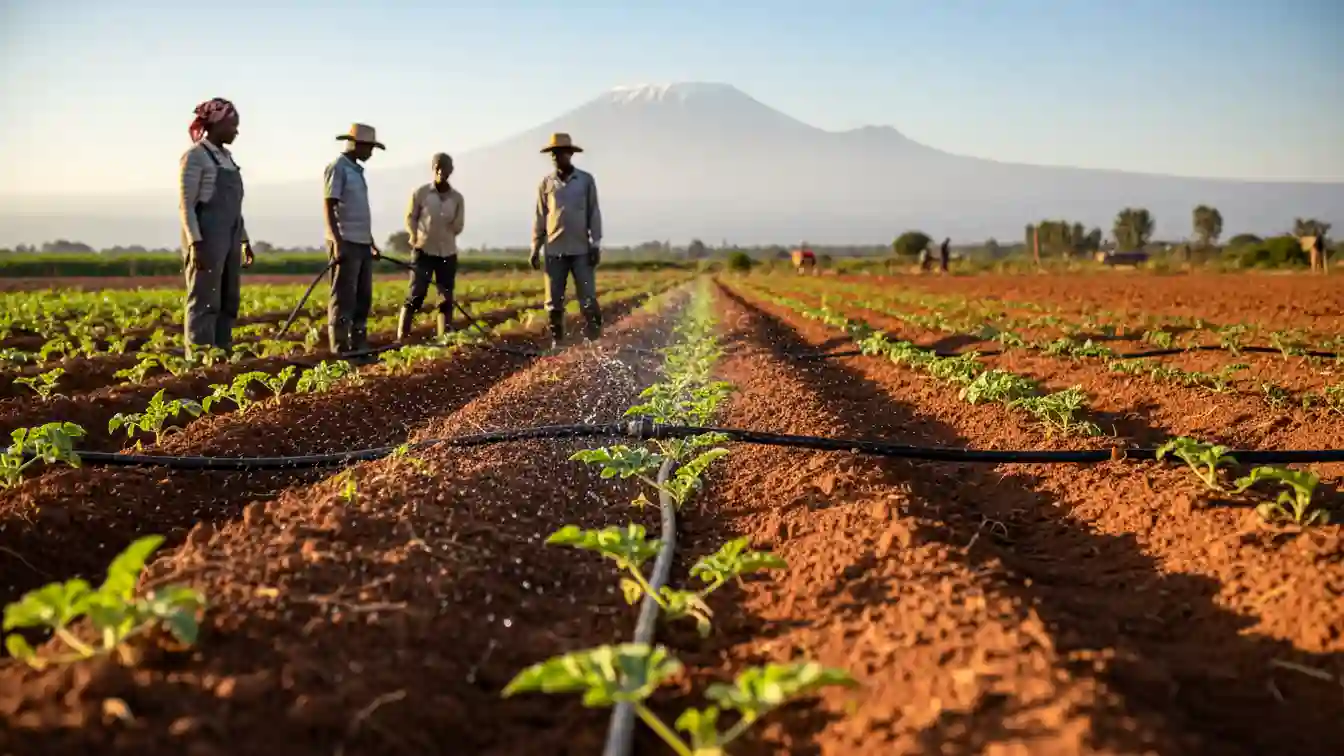
How do you plant and manage watermelons step by step?
Start with deep ploughing and harrowing to create a fine tilth. Space plants 1 meter apart within rows and 1.5 meters between rows to allow vine spread. Apply well-decomposed manure and DAP fertilizer at planting, followed by drip irrigation to keep leaves dry.
Land Preparation and Planting
Clear the land of all weeds and debris, then plough deep to aerate the soil. Watermelons have deep taproots, so loose soil is essential for vigorous growth. Prepare raised beds if you are in an area prone to waterlogging, as standing water will cause root rot immediately.
Fertilization Regime
Mix soil with well-rotten manure and DAP fertilizer during planting to boost root development. At the vegetative stage (3 weeks), top dress with CAN to encourage leafy growth. Once flowering begins, switch to NPK rich in potassium to support fruit setting and sweetening.
Pruning and Maintenance
Pruning is a secret weapon for high yields in 2026. Remove the tips of the main vine to encourage lateral branching, which produces more female flowers. Place dry grass or mulch under the developing fruits to prevent them from sitting directly on damp soil.
What is the optimal watermelon farming calendar for 2026?
The optimal calendar targets harvest during hot, dry months when demand is high and supply is low. Planting in July or August targets the December holiday market, while January planting targets the hot Easter season. Avoid planting during the peak of long rains to prevent fungal diseases.
January – March (Hot Season)
This is the ideal planting time for regions with irrigation. The heat accelerates growth, and the dry weather reduces fungal infections. Harvests from this crop hit the market in April, often commanding high prices before the long rains fully set in.
April – June (Long Rains)
Avoid planting open-field watermelons during this period unless you are in a very dry zone like Garissa. The excessive moisture leads to Downy Mildew and fruit rotting. Use this time for land preparation or growing cover crops to fix nitrogen.
July – September (The Gold Mine)
Planting in late July or August is the strategic move for the lucrative December market. As the weather warms up from the cold season, the crop matures perfectly for the Christmas festivities. This is when a 90kg bag equivalent of melons sells at premium rates.
October – December (Short Rains)
Short rains can be tricky, but manageable with good drainage. Planting in October targets the January and February heatwave demand. Farmers must be vigilant with fungicide application during this period to protect the foliage.
What are the pests and diseases affecting watermelons in Kenya?
Major pests include Melon Flies, Aphids, Spider Mites, and Thrips. Common diseases are Powdery Mildew, Downy Mildew, and Fusarium Wilt. Control involves a strict spray program using approved insecticides and fungicides, crop rotation, and maintaining field hygiene.
The Melon Fly Menace
The Melon Fly is the most destructive pest, stinging young fruits and causing them to rot or grow deformed. Farmers use pheromone traps to catch males and reduce breeding. Weekly sprays with insecticides containing Lambda-cyhalothrin can also suppress populations.
Fungal Diseases
Powdery Mildew appears as white dust on leaves and kills the plant’s ability to photosynthesize. Fusarium Wilt causes the entire vine to collapse overnight. The best defense against wilt is using resistant F1 varieties and rotating crops with maize or beans for at least three seasons.
READ ALSO: 10 Most Profitable Farming Ventures in Kenya for 2026
Spider Mites and Aphids
These pests suck sap from the leaves, causing them to curl and yellow. They thrive in dry, dusty conditions. Keeping the field periphery wet and using specific miticides like Abamectin helps keep their numbers down before they destroy the crop.
What is the cost of production and profit analysis?
The cost of production for one acre of watermelon in 2026 is approximately KES 80,000 to KES 120,000. This includes seeds, labor, drip kit installation, and chemicals. With a conservative yield of 15 tonnes sold at KES 25/kg, revenue is KES 375,000, leaving a net profit of KES 255,000 per acre.
Break-Even Analysis
Watermelon farming is capital intensive but yields high returns. The break-even price for a farmer with average yield is roughly KES 8 to KES 10 per kg. Since market prices rarely drop below KES 15, the risk of financial loss is low if the crop is successfully harvested.
2026 Financial Projection Table (1 Acre)
| Expense Item | Cost (KES) | Notes |
|---|---|---|
| Land Preparation | 10,000 | Ploughing and Harrowing |
| Seeds (F1 Hybrid) | 15,000 | 500g of Sukari F1 |
| Fertilizers (DAP, CAN, NPK) | 20,000 | Basal and Top Dressing |
| Pesticides & Fungicides | 25,000 | Comprehensive spray program |
| Labor (Weeding, Spraying) | 20,000 | Casual labor over 3 months |
| Irrigation/Water | 15,000 | Fuel/Electricity for pumping |
| Miscellaneous | 10,000 | Transport, Bags, Loss |
| TOTAL COST | 115,000 | Total Investment |
| REVENUE | 375,000 | 15 Tonnes @ KES 25/kg |
| NET PROFIT | 260,000 | Profit per Cycle |
How does the watermelon supply chain and value addition work?
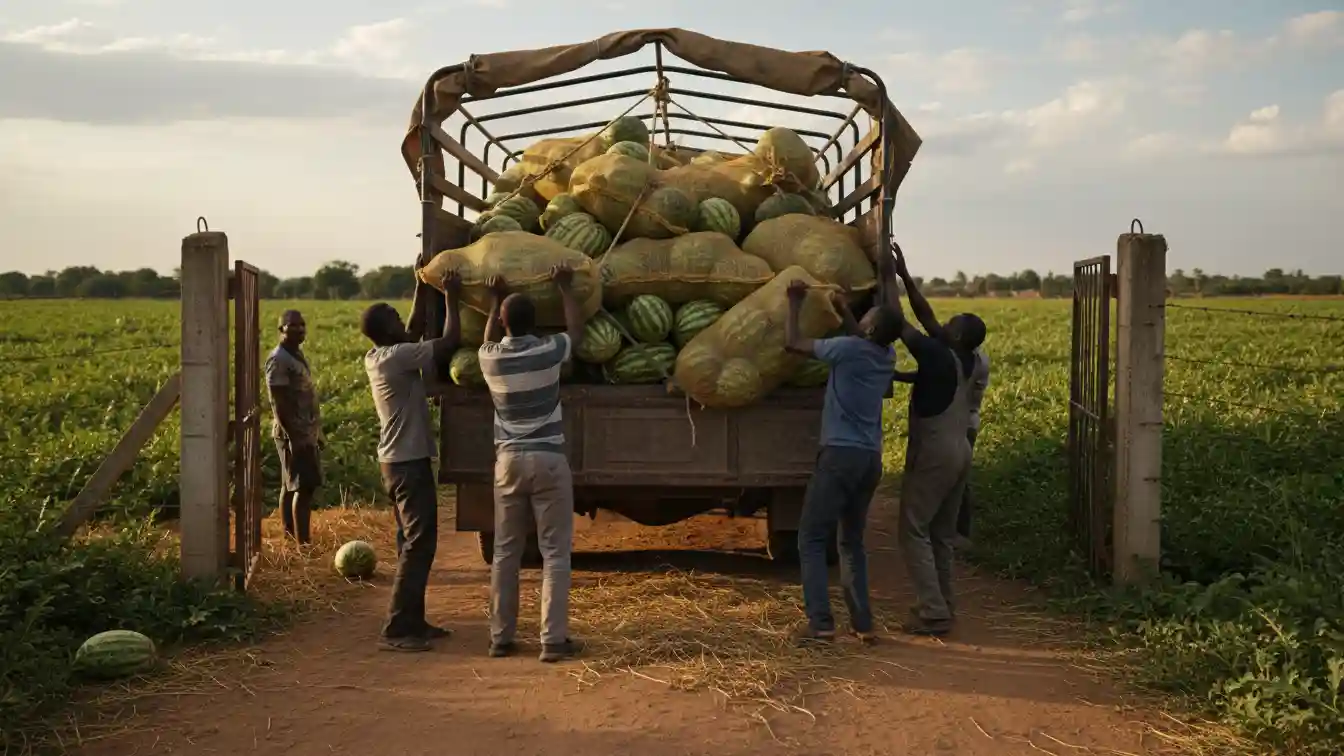
The supply chain moves from Farm to Broker/Aggregator, then to Wholesale Markets like Marikiti, and finally to Retailers. Value addition is limited but growing, with opportunities in fresh juice production. Dried watermelon snacks and fruit salads for offices are also emerging markets.
Navigating Middlemen
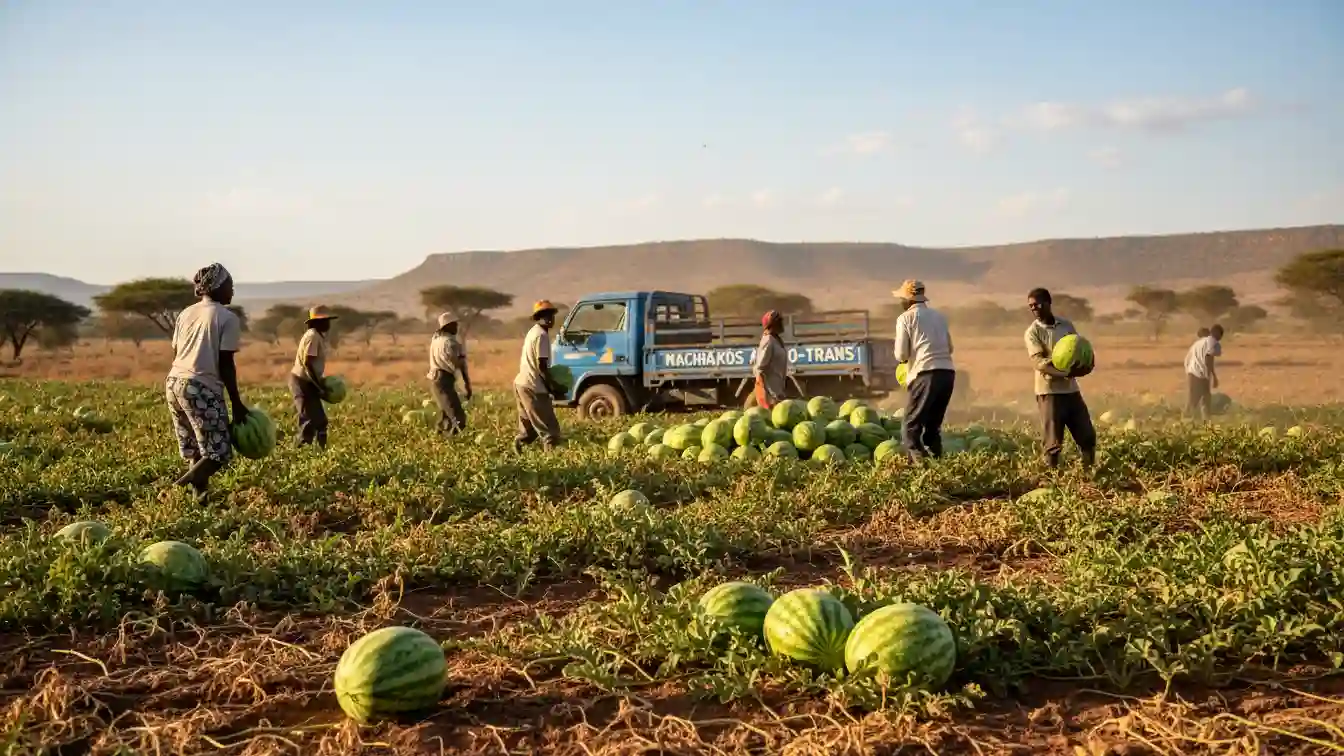
Most farmers sell directly to brokers who come to the farm with lorries. While this offers convenience, brokers often dictate lower prices. To maximize profit, farmers are increasingly forming groups to transport their own produce to Wakulima Market in Nairobi or Kongowea Market in Mombasa.
Value Addition Opportunities
In 2026, the market for healthy beverages is booming. Farmers can partner with juice bars in urban centers to supply “seconds” (fruit with cosmetic defects but good interior) for blending. Selling cut and cling-wrapped quarter-melons to supermarkets and office workers offers a higher margin per kilogram than selling whole fruits.
READ ALSO: Top 7 Best AI Apps for Kenyan Farmers in 2026: Fight Crop Diseases, Cut Costs and Boost Yields
Direct to Consumer
Using platforms like Facebook Marketplace and WhatsApp status updates, farmers near towns can sell directly to households. This “farm-to-fork” model eliminates two layers of middlemen. This allows the farmer to keep 100% of the retail price.

2026 Outlook and Conclusion
As we navigate 2026, watermelon farming in Kenya is evolving from a gamble into a precision science. The adoption of affordable drip irrigation kits and climate-smart seeds has stabilized yields, making it a reliable income source for the modern farmer. The market demand continues to grow as the Kenyan middle class expands and health consciousness rises.
For the aspiring farmer, the key to success lies in professional management. Treat your shamba like a business, not a hobby. Invest in soil testing, adhere to a strict spray schedule, and research your market timing before you plant a single seed.
Farmers Also Ask (FAQ)
How much does it cost to start watermelon farming in Kenya?
For 1 acre in 2026, the initial investment ranges from KSh 85,000 to KSh 120,000. This includes certified F1 seeds (KSh 14k), land preparation (KSh 15k), fertilizers (KSh 25k), and basic irrigation setup.
What is the profit per acre for watermelon in Kenya
A well-managed acre can net between KSh 250,000 and KSh 450,000 per cycle. With market prices at KSh 25–40/kg and a yield of 15–20 tonnes, gross revenue often exceeds KSh 500k.
What is the best spacing for Sukari F1 watermelons?
The optimal spacing is 1.5m to 2m between rows and 60cm to 90cm between plants. This prevents overcrowding and reduces the risk of fungal diseases like Powdery Mildew.
What is the best fertilizer schedule for watermelons in Kenya?
Use DAP (50kg/acre) at planting for root growth. Top-dress with CAN (50kg/acre) at 3 weeks for foliage, and apply NPK (17:17:17) or Potassium-rich foliars during fruit setting to increase sugar content.
Which region in Kenya is best for watermelon farming?
Hot, semi-arid regions are best. Kajiado, Makueni, Machakos, Garissa, and Kilifi are the top producers due to high heat units which make the fruit sweeter.
How many tonnes of watermelon can 1 acre produce?
Kenyan farmers using hybrid seeds like Sukari F1 typically harvest 15 to 25 tonnes per acre. Exceptional management with drip irrigation can push yields to 30 tonnes.
How long does watermelon take to mature in Kenya?
Most hybrid varieties like Sukari F1 take 75 to 90 days to mature, though this can drop to 70 days in hot regions like Garissa. Maturity may delay up to 100 days in cooler highland areas. Always harvest when the tendril nearest the fruit turns brown and dries up.
Last Updated: February 2026 with current KES market prices from Marikiti and Kongowea markets.