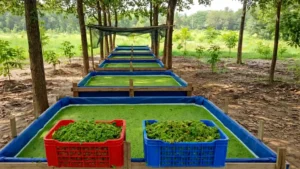


- Urban smart gardens reduce household vegetable costs by up to 80 percent, a statistic that has become crucial in 2026 as retail prices fluctuate.
- Modern vertical setups require less than 50 square meters to generate KES 15,000 monthly in combined savings and surplus sales. Furthermore,
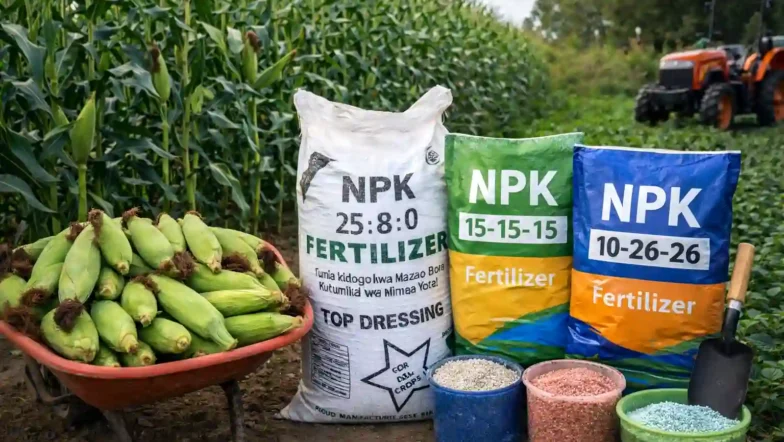
- Government subsidized fertilizers at KES 2,500 per 50kg bag are now highly accessible for smallholder gardeners through digital e-vouchers.
In 2026, setting up a smart garden is no longer just a hobby for urban residents in Kenya. It is a critical financial survival tactic for households facing rising food costs and unpredictable weather patterns. Adopting modern vertical and container farming methods ensures a steady, reliable supply of fresh, pesticide-free vegetables.
This ultimate guide breaks down 100 essential tips, setup costs, and top-yielding seed varieties needed to succeed today. From the experience of successful farmers, proper planning and using quality inputs are the true secrets to high yields.
Phase 1: Space Optimization and Structures (Tips 1-20)
- Use UV-treated vertical grow bags to extend the lifespan of your garden to over five years.
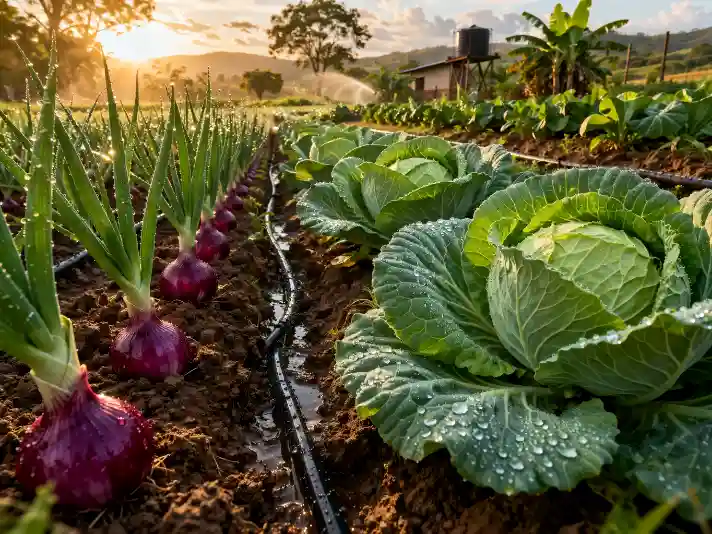
- Maximize balcony space using multi-tier PVC pipe systems for leafy greens.
- Repurpose 20-liter jerry cans by cutting side openings for “hanging” strawberry gardens.
- Install wooden raised beds with a minimum depth of 30cm to allow for deep root penetration.
- Ensure your garden receives at least six hours of direct sunlight daily for optimal photosynthesis.
- Use white-colored containers in hot regions like Mombasa to reflect heat and keep roots cool.
- Paint wooden structures with non-toxic, lead-free sealants to prevent rot from daily watering.
- Install a basic “A-frame” vertical stand to triple your planting area on a small concrete patch.
- Use gravel at the bottom of containers to prevent soil from clogging drainage holes.
- Group plants with similar water needs together to simplify irrigation schedules.
- Secure vertical towers to balcony railings using heavy-duty cable ties to prevent wind damage.
- Leave 50cm walkways between raised beds to allow for easy weeding and harvesting.
- Use trellises for climbing crops like cucumbers to save ground space.
- Install bird netting early if you are growing strawberries or young seedlings.
- Use reflective foil behind plants in shaded balconies to bounce extra light onto the leaves.
- Label every container with the planting date to track maturity accurately.
- Ensure rooftop gardens do not exceed the building’s weight capacity: consult a professional if unsure.
- Use lightweight volcanic pumice in your soil mix to reduce the weight of balcony pots.
- Place heavy pots over structural beams or near walls on rooftops for better weight distribution.
- Install a “living wall” using felt pockets for herbs like mint, coriander, and rosemary.
Read Also: Top 10 Best Money-Making Agriculture Business Ideas in Kenya (2026)
Phase 2: Soil Health and Fertility (Tips 21-40)
- Never use “dead” backyard soil alone; it compacts and suffocates container roots.
- Mix 40 percent red soil, 40 percent well-cured manure, and 20 percent cocopeat for the perfect base.
- Apply subsidized DAP at a rate of 10 grams per hole during transplanting for strong roots.
- Use well-decomposed goat manure for leafy greens as it is rich in nitrogen.
- Sterilize your soil by covering it with clear plastic in the sun for two weeks before planting.
- Mix crushed eggshells into the soil to provide a slow-release calcium boost for tomatoes.
- Apply CAN fertilizer four weeks after transplanting to encourage deep green, vigorous leaves.
- Use organic seaweed extracts as a foliar spray to help plants recover from heat stress.
- Incorporate “Biochar” into your mix to retain nutrients and moisture for longer periods.
- Avoid over-fertilizing; too much nitrogen leads to lush leaves but very little fruit.
- Test your soil pH using simple digital meters; most vegetables prefer a range of 6.0 to 7.0.
- Add a handful of vermicompost (worm castings) to every pot for a microbial boost.
- Use “Tea Manure” (liquid manure) every two weeks to provide instant nutrients to hungry crops.
- Rotate your crops: never plant tomatoes in the same soil where potatoes just grew.
- Top-dress with compost every three months to replenish nutrients washed away by watering.
- Use Epsom salts (magnesium sulfate) to prevent yellowing in pepper and tomato leaves.
- Avoid using fresh chicken manure; it is too “hot” and will burn delicate seedling roots.
- Incorporate bone meal into your fruit tree containers for better flowering and fruit set.
- Use mulching (dry grass or sawdust) on top of pots to prevent soil splashing and nutrient loss.
- Check your e-voucher status on your phone regularly to catch fertilizer subsidy windows.
Read Also: Top 5 Hybrid Onion Varieties (F1) Dominating the Kenyan Market in 2026
Phase 3: Seed Selection and Planting (Tips 41-60)
- Choose Buena Vista F1 tomatoes for their incredible resistance to Wilt and Leaf Curl virus.
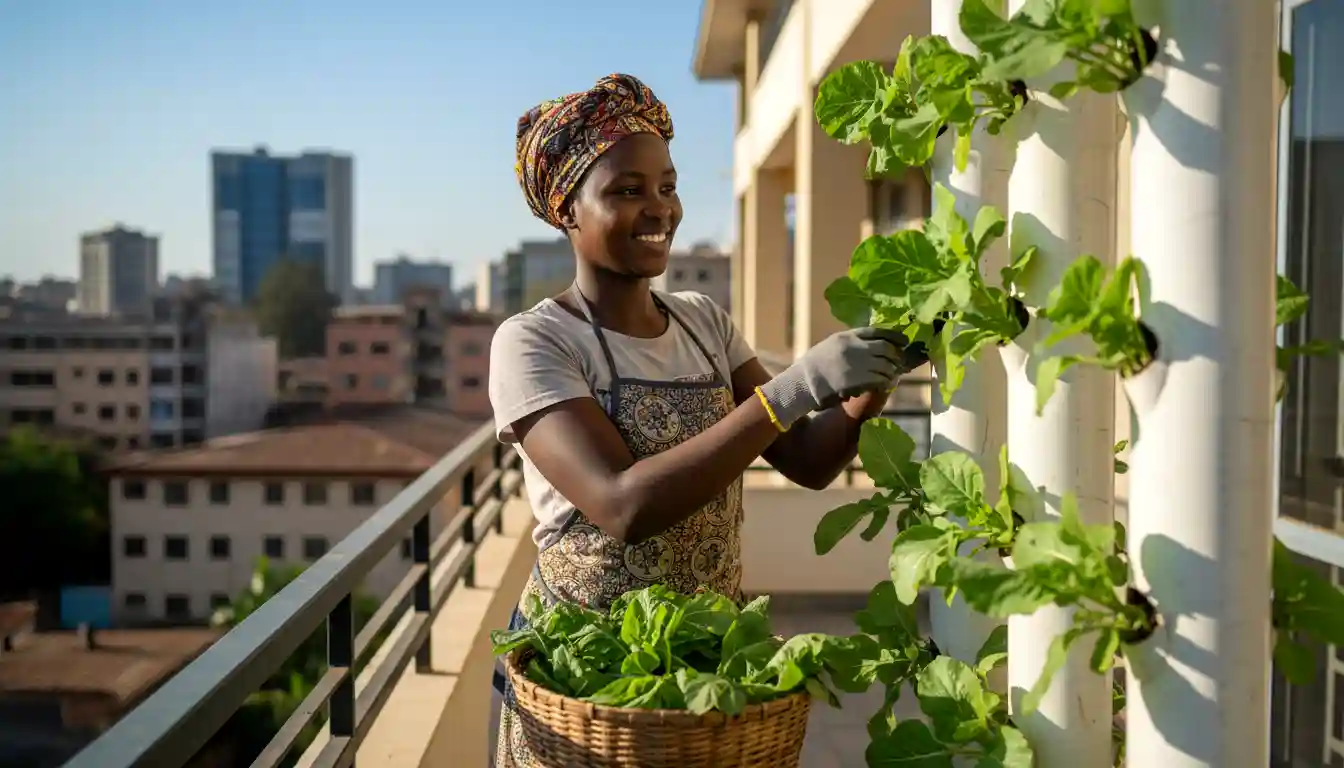
- Plant Red Creole onions if you want a variety that stores well for up to six months.
- Select Thousand Headed sukuma wiki for continuous harvesting over a long period.
- Always buy certified seeds from KALRO or Kenya Seed Company to guarantee germination.
- Start delicate seeds like peppers in a nursery tray before moving them to final containers.
- Transplant seedlings late in the evening to reduce “transplant shock” from the sun.
- Space spinach plants at least 20cm apart to allow for large, healthy leaf development.
- Plant “successionally”: sow a few seeds every two weeks to ensure a continuous harvest.
- Use “Companion Planting”: grow onions near kale to naturally repel aphids.
- Plant marigolds around your garden borders to deter nematodes and other soil pests.
- Soak hard seeds like beetroot for 12 hours before planting to speed up germination.
- Ensure the “eye” of the bean seed faces downward when planting for faster emergence.
- Use high-quality potting plugs for expensive F1 hybrid seeds to ensure 100 percent success.
- Don’t bury seeds too deep: a general rule is to plant them twice as deep as their width.
- Thin out overcrowded seedlings early to prevent competition for light and nutrients.
- Keep the nursery soil consistently moist but never waterlogged during the first 10 days.
- Choose “Indeterminate” tomato varieties for vertical gardens to maximize height.
- Grow herbs like coriander in partial shade to prevent them from “bolting” (flowering) too early.
- Use “Self-Pollinating” varieties for indoor or enclosed balcony gardens.
- Keep a “Garden Journal” to note which varieties performed best in your specific micro-climate.
Phase 4: Water and Irrigation (Tips 61-80)
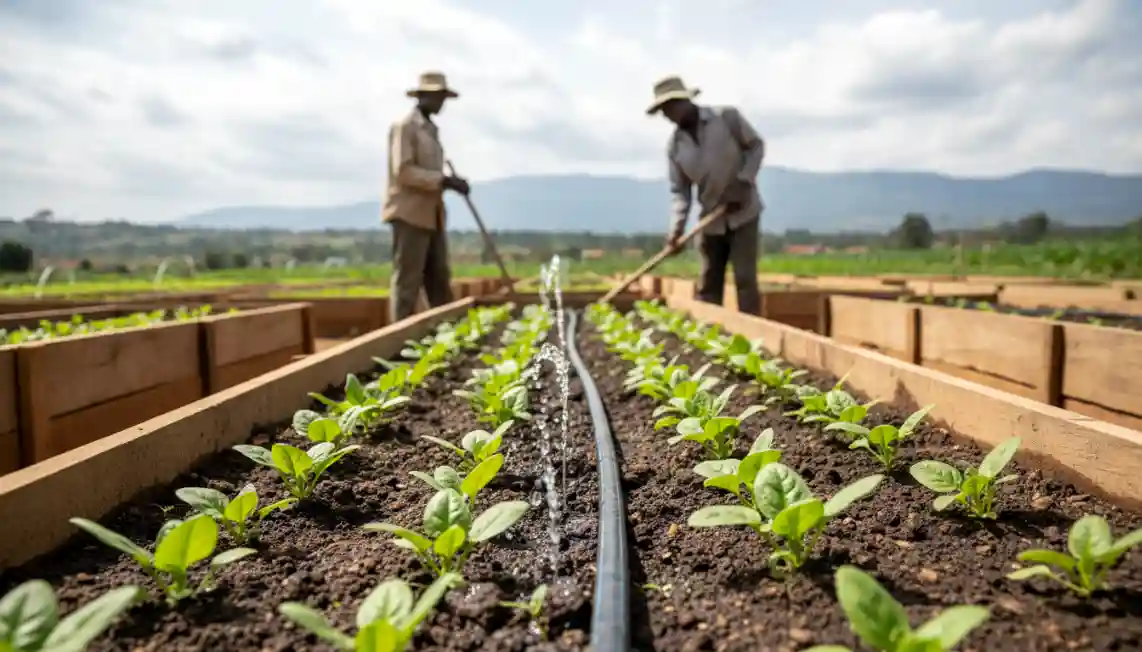
- Install a gravity-fed drip kit to save up to 70 percent of water compared to hand watering.
- Use a simple 500-liter tank raised 1.5 meters high to provide enough pressure for drip lines.
- Water your plants at the base, not the leaves, to prevent fungal diseases like Powdery Mildew.
- Harvest rainwater from your roof: it is free and lacks the chlorine found in municipal water.
- Use “Wick Irrigation” for indoor pots: a cotton string can pull water from a jar into the soil.
- Mulch your containers heavily with rice husks or dry grass to reduce evaporation.
- Check soil moisture by sticking a finger 2cm deep: if it feels dry, it is time to water.
- Group “thirsty” crops like cucumbers together and “dry-tolerant” herbs like rosemary separately.
- Use “Olla Pots” (buried clay pots) to provide slow, deep moisture to the root zone.
- Set up a simple greywater filtration system to reuse kitchen water for non-edible plants or fruit trees.
- Flush your drip lines once a month to prevent blockages from mineral deposits or silt.
- Water early in the morning (before 8 AM) so plants are hydrated before the midday heat.
- Use recycled plastic bottles with tiny pinholes as “slow-release” waterers for individual plants.
- Avoid watering late at night: wet leaves in the dark are a magnet for slugs and snails.
- Install a cheap water timer if you travel frequently to keep your garden alive.
- Use a “Fine Mist” sprayer for nursery seedlings to avoid washing them out of the soil.
- Increase watering frequency during the flowering stage to prevent fruit drop.
- Reduce watering as onions approach maturity to allow the bulbs to cure properly.
- Use saucer trays under pots to catch excess water and keep your balcony clean.
- Always ensure your containers have enough drainage holes to prevent “Wet Feet” or root rot.
Read Also: 2026 Fertilizer Guide: Understanding NPK Ratios for Maximum Maize Yields
Phase 5: Pests, Marketing, and Profit (Tips 81-100)
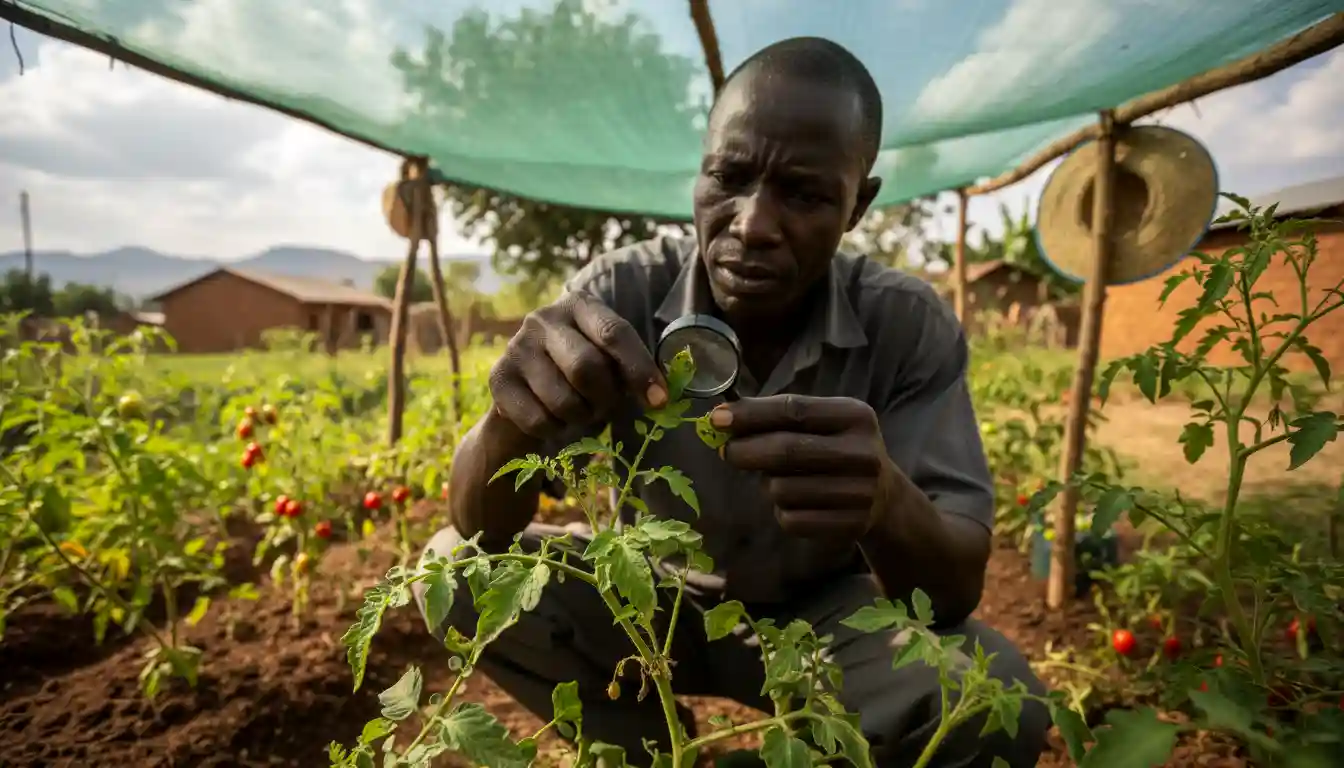
- Inspect the underside of leaves daily for early signs of aphids or spider mites.
- Use a “Neem Oil” and soap solution as a safe, organic pesticide for household gardens.
- Control Tuta Absoluta on tomatoes using pheromone traps or delta traps early in the season.
- Use “Yellow Sticky Traps” to catch whiteflies and fungus gnats without using chemicals.
- Pick off large pests like kale caterpillars by hand if you have a small garden.
- Apply “Bordeaux Mixture” (copper-based) to prevent blight during the humid rainy season.
- Create a “Barrier” of wood ash around pots to stop slugs from reaching your lettuce.
- Value Addition: Wash and pre-cut your spinach to sell at a 30 percent premium in your estate.
- Use WhatsApp status and estate groups to market your “Fresh, Organic” surplus to neighbors.
- Package your herbs in small, clear ziplock bags to increase their “Supermarket Appeal.”
- Grow “High-Value” crops like cherry tomatoes or purple broccoli for better profit margins.
- Keep a simple ledger: track your “Input Costs” versus “Market Value” of the food you eat.
- Offer “Garden Tours” or consultations to neighbors for a small fee once you become an expert.
- Use “Brand Identity”: name your small garden (e.g., “Roysambu Fresh”) to build trust.
- Solarize your used potting soil for 30 days before reusing it to kill hidden pests and pathogens.
- Buy inputs in bulk with friends or neighbors to reduce the “Per Unit” cost of fertilizer and seeds.
- Harvest early in the morning for maximum “Turgor” (crispness) and longer shelf life.
- Use “Cold Storage” (a simple charcoal cooler) to keep harvested veggies fresh for days.
- Focus on “Zero Waste”: turn your kitchen scraps into compost to close the nutrient loop.
- Be patient and consistent: a smart garden is a living business that grows with your attention.
Read Also: How Kenyan Farmers Can Make Free Fertilizer from Kitchen Waste at Home
Financial Breakdown and Profit Potential
Setting up a 50-square-meter smart garden costs between KES 15,000 and KES 35,000 depending on materials. A well-managed setup can generate KES 10,000 to KES 25,000 monthly in combined household savings and sales.
| Expense / Income Item | Best Case (KES) | Average Case (KES) | Worst Case (KES) |
| Setup (Sacks/Pots, Drip kit) | 15,000 | 25,000 | 35,000 |
| Inputs (Seeds, Fertilizer, Soil) | 5,000 | 8,000 | 12,000 |
| Pest & Disease Control | 2,000 | 4,000 | 7,000 |
| Gross Value (6 Months) | 90,000 | 60,000 | 30,000 |
| Net Value / Profit | 68,000 | 23,000 | -24,000 |
Note: The “Worst Case” often results from total neglect or failure to manage water and pests. In 2026, those who treat their garden as a business rarely see these losses.
Conclusion: Your Final Investment Decision
Setting up a smart garden is a highly worthwhile investment for reducing household grocery bills. It requires daily commitment, but it provides a reliable buffer against volatile market prices and high inflation.
Success belongs to those who treat their small gardens like a professional business operation. If you are a hands-on individual looking to aggressively cut costs and generate side income, this is the perfect venture for you in 2026.