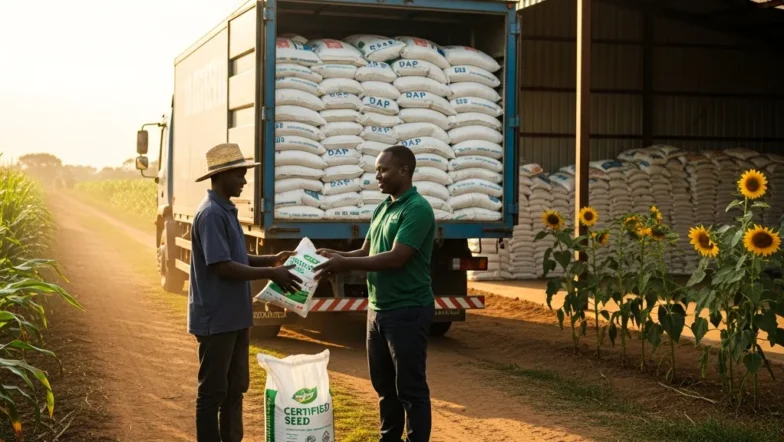


- A 1-litre bottle of generic 2,4-D Amine costs between KES 675 and KES 800 in most Kenyan agrovets as of April 2026.
- The recommended dosage is 120ml to 150ml per 20-litre knapsack sprayer for effective post-emergence weed control.
- This selective herbicide safely eliminates broadleaf weeds in maize and wheat fields without harming the main crop.
Table of Contents
Managing weeds manually on your shamba is expensive and heavily reliant on scarce labor during peak planting seasons. As Kenyan farmers embrace modern crop protection, understanding the correct use of selective herbicides is necessary for maximizing yields. This guide breaks down current retail prices, safe mixing ratios, and expert application techniques to help you secure a clean harvest.
What is 2,4-D Amine and Why is it Essential for Kenyan Farmers?
2,4-D Amine is a selective post-emergence herbicide designed to eliminate broadleaf weeds in grass crops. It acts as a systemic growth regulator that forces invasive plants to overgrow and collapse.
The chemical 2,4-Dichlorophenoxyacetic acid is widely utilized across Kenyan agricultural zones. It is classified as a selective post-emergence herbicide. This means it is applied directly to weeds after they have sprouted above the soil surface.
For Kenyan farmers, this chemical is an essential tool for maintaining clean cereal fields. Its primary use lies in controlling stubborn broadleaf weeds in major staple crops like maize, wheat, and sugarcane. The broadleaf weeds absorb the chemical through their leaves and roots, causing fatal cellular growth.
Read Also: Top 10 Best Agrovets in Kenya (2026 Guide): Where to Buy Genuine Inputs in Nairobi, Eldoret & Nakuru
From what many farmers experience in Uasin Gishu County, controlling wandering jew by hand is nearly impossible once rains peak. A local wheat farmer recently reported saving over KES 15,000 on manual labor by switching to a well-timed chemical application. Because cereal crops belong to the grass family, they safely tolerate the chemical while the invasive weeds die off.
Why 2,4-D is Trending in the 2026 Planting Season
The 2026 long rains have triggered aggressive weed growth across Kenya, making manual weeding too expensive. The shift toward selective herbicides drastically reduces labor costs and protects subsidized fertilizer investments.
The current long rains from March to May 2026 have been particularly generous across Kenya. While this weather is excellent for seed germination, it also creates the perfect breeding ground for aggressive broadleaf weeds. Farmers are realizing that relying solely on manual weeding with jembes is a losing battle against fast-growing invasive plants.
Cost efficiency is the primary driver behind the massive trend toward selective herbicides this year. Hiring casual laborers to weed a one-acre maize farm currently costs upwards of KES 4,000 per session. In stark contrast, a single litre of this herbicide clears the same acre in just a few hours for a fraction of the price.
Read Also: Top 10 Hass Avocado Diseases in Kenya: Causes, Symptoms & Treatment Guide (2026)
Furthermore, the government has capped subsidized fertilizer prices at KES 2,500 per bag in 2026. Farmers want to ensure that this valuable nutrition goes directly into their maize and wheat crops. Using a fast-acting post-emergence weed killer guarantees that primary crops utilize all available soil moisture and nutrients.
Varieties of 2 4 D Weed Killers in Kenya
Kenyan agrovets stock two primary formulations of this herbicide, namely the amine salt and the ester formulation. The amine formulation is water-soluble, meaning it is much safer to use near sensitive crops because it does not easily turn into a volatile vapor. In contrast, ester formulations act faster but carry a higher risk of vapor drift during hot weather.
Most agricultural extensions authorized by KEPHIS strongly recommend sticking to the amine formulations for mixed-crop farming setups. Popular brands like Osho D-Amine and Agrolone Selective are widely trusted by local smallholders. Knowing the variety you are purchasing ensures you apply it correctly without endangering neighboring vegetable plots.
Where to Buy 2 4 D Weed Killer chemicals in Kenya
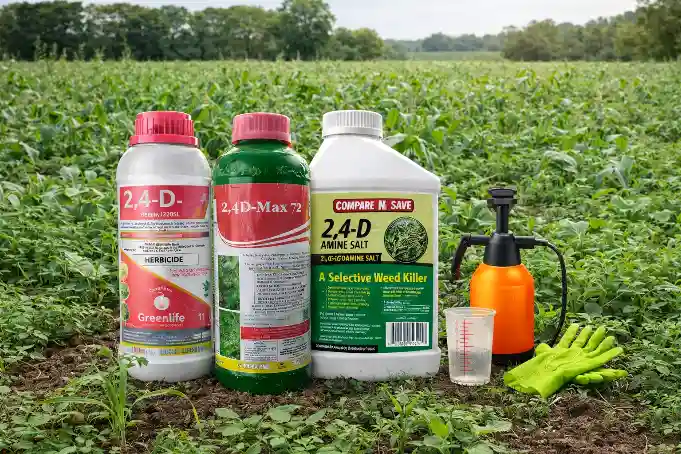
Sourcing authentic agricultural chemicals is critical to avoid counterfeit products that can damage your entire harvest. Reliable procurement should always be done through licensed agrovet shops or direct distributors approved by national authorities. Avoid buying unsealed or repackaged chemicals from informal roadside vendors at all costs.
Nairobi typically offers the lowest wholesale rates due to the high concentration of importers in the Industrial Area. In agricultural strongholds like Nakuru and Eldoret, procurement is equally straightforward but carries a marginal transport markup. Buying in larger 5-litre containers at the start of the season is highly recommended to lower your overall input costs.
2,4-D Weed Killer Price List in Kenya (April 2026 Update)
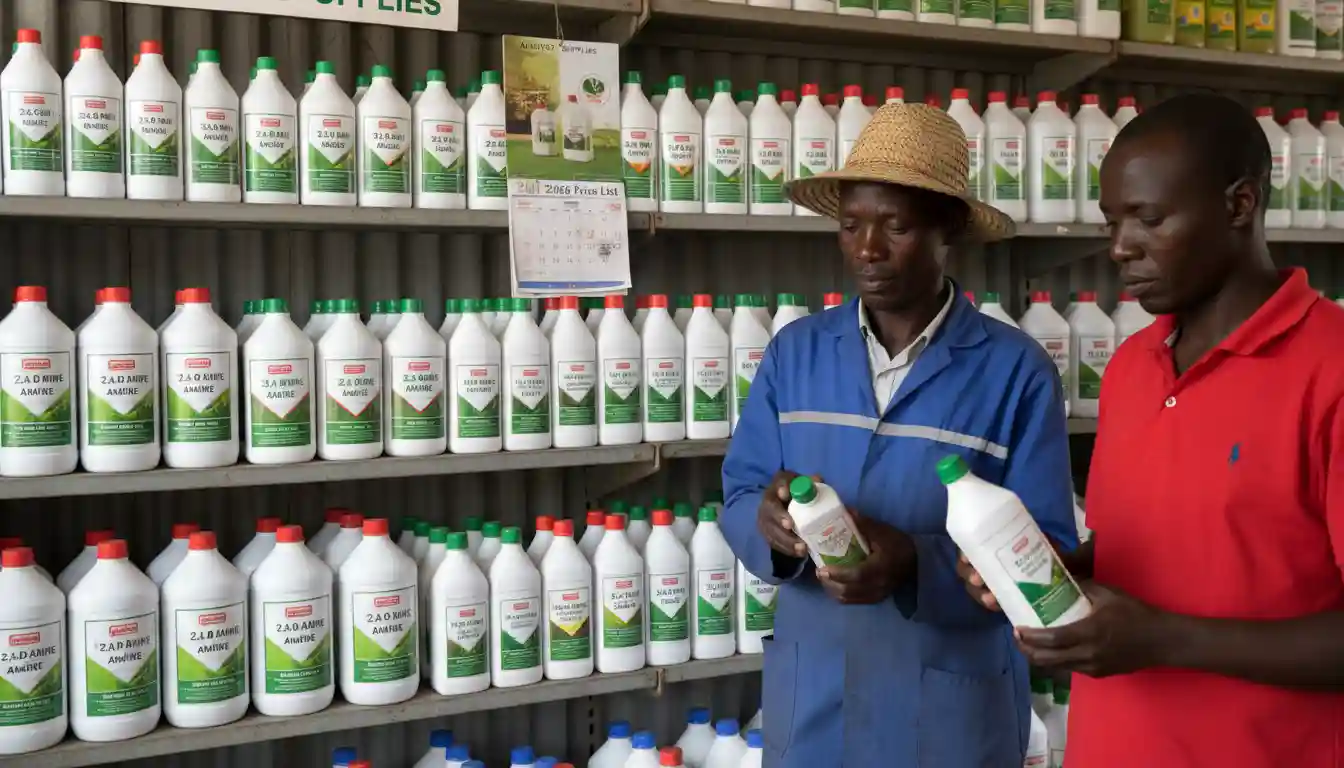
Prices vary slightly by brand and location, with a standard 1-litre bottle averaging KES 750. Nairobi offers the lowest wholesale rates, while farmers in Eldoret and Nakuru pay a slight markup.
Read Also: 100 Smart Garden Tips 2026: The Ultimate Guide for Kenya Farmers
Securing the right agricultural inputs at a fair price is crucial for maintaining profitability on your farm. The following table compares current average retail prices for popular brands across major Kenyan agricultural hubs.
| Herbicide Brand | 500ml Price (KES) | 1 Litre Price (KES) | 5 Litre Price (KES) |
|---|---|---|---|
| Generic 2,4-D Amine 720g/L | 450 – 500 | 675 – 750 | 3,400 – 3,500 |
| Osho D-Amine 72SL | 500 – 550 | 800 – 1,050 | 3,800 – 4,000 |
| Agrolone Selective | 480 – 520 | 850 – 950 | 3,900 – 4,200 |
Transactions at most licensed agrovets are seamlessly handled via mobile money, making procurement fast and traceable. You can easily purchase a 1-litre generic bottle for KES 675 if you buy directly from major urban suppliers. A 1-litre bottle of a branded formulation might retail for slightly more in rural setups.
Step-by-Step Application Guide for Maximum Efficacy
The Best Time to Spray (Post-Emergence Timing)
Timing is everything when it comes to post-emergence weed control. The optimal time to spray is when the weeds are young and actively growing at the 2 to 4 leaf stage. At this early stage, the chemical penetrates the thin cuticle deeply and destroys the root system rapidly.
Waiting until the weeds are flowering makes the herbicide significantly less effective. Furthermore, you must monitor the skies and avoid spraying if heavy rain is expected within 4 to 6 hours. Rainfall immediately after spraying will wash the chemical off the broadleaf weeds before it can be absorbed.
Correct Dosage and Mixing Instructions per Acre
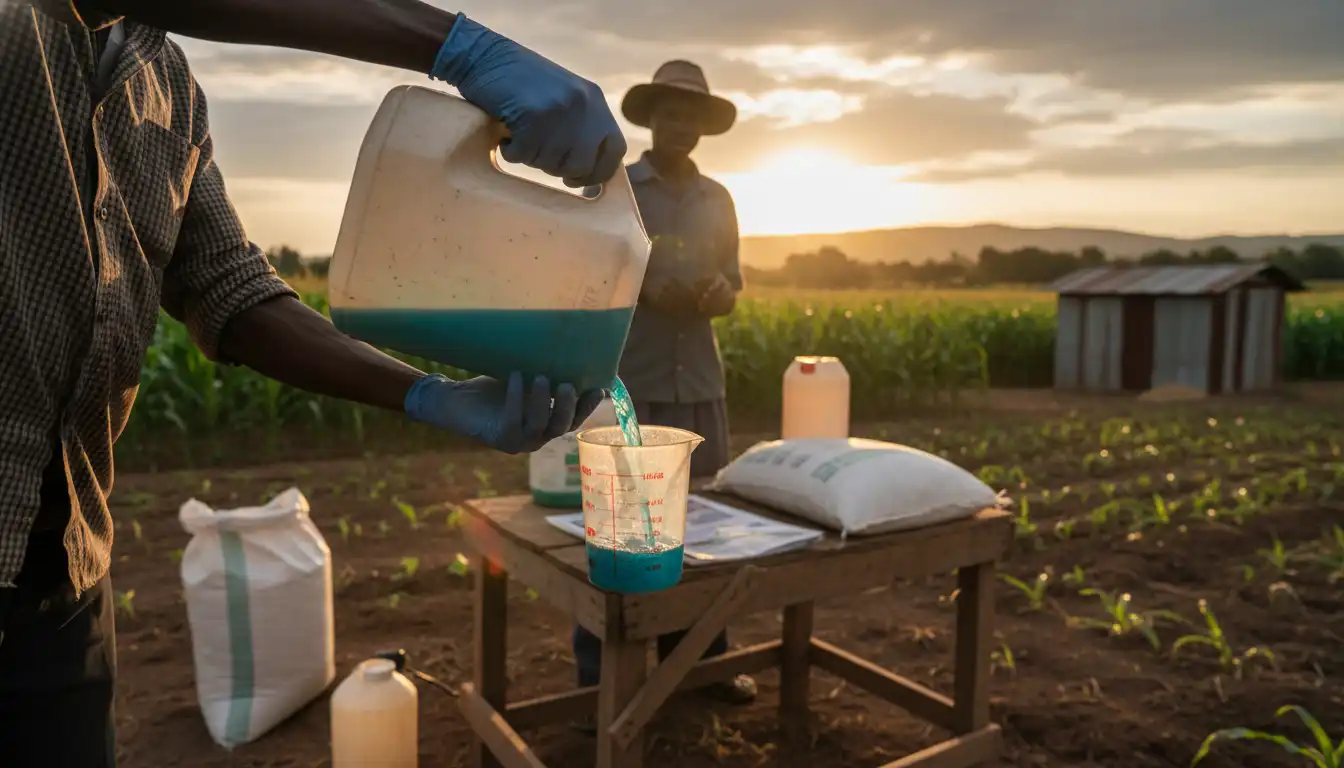
Mixing the correct dosage prevents crop damage and optimizes your chemical expenditure. For standard fields, the recommended application rate ranges from 1.5 to 2.5 litres per hectare. If using a standard 20-litre backpack sprayer, mix 120ml to 150ml of the herbicide per tank.
Before adding the chemical, fill your knapsack sprayer halfway with clean water. Add the measured herbicide, agitate the tank gently, and then fill the rest of the space with water. Using clean water is vital because muddy water binds with the active ingredients and reduces chemical efficacy.
Selective Control: Which Crops are Safe and Which are Not?
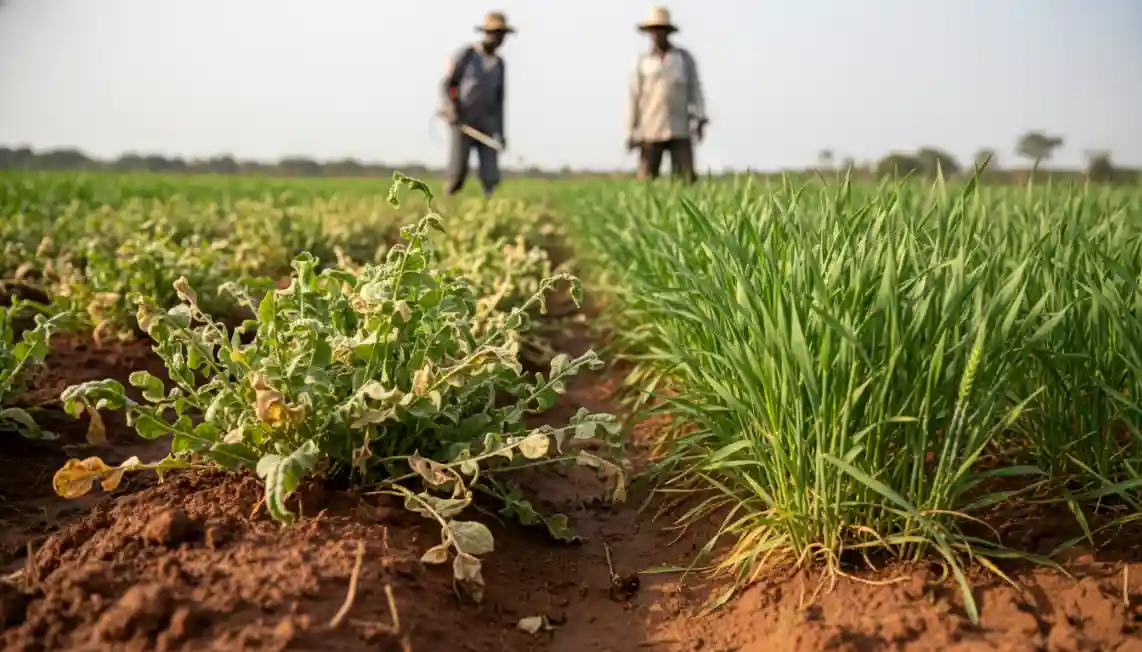
This herbicide is safe for crops in the grass family like maize, wheat, barley, and sorghum. It is highly destructive to sensitive broadleaf crops like beans, tomatoes, peas, and sunflowers.
Understanding the concept of selective control is vital for preventing accidental farm losses. This specific chemical formulation exclusively targets dicotyledons, commonly known as broadleaf plants. Therefore, it remains entirely safe for monocotyledons, which include all major grass-type crops.
You can confidently apply this mixture over maize, wheat, barley, sorghum, and established grass pastures. As long as these safe crops have surpassed the delicate seedling stage, the chemical will bypass their metabolic systems. Agricultural guidelines suggest spraying maize only after the 2-leaf stage but before the plant exceeds 35 centimetres in height.
Read Also: Beyond Maize: 7 Drought-Resistant “Smart Crops” to Plant This Season
Conversely, you must strictly avoid spraying near sensitive crops like beans, tomatoes, peas, and cabbages. These broadleaf crops absorb the chemical just like the target weeds and will suffer irreversible wilting. Even a small amount of wind drift carrying the chemical onto a neighboring tomato shamba will cause severe destruction.
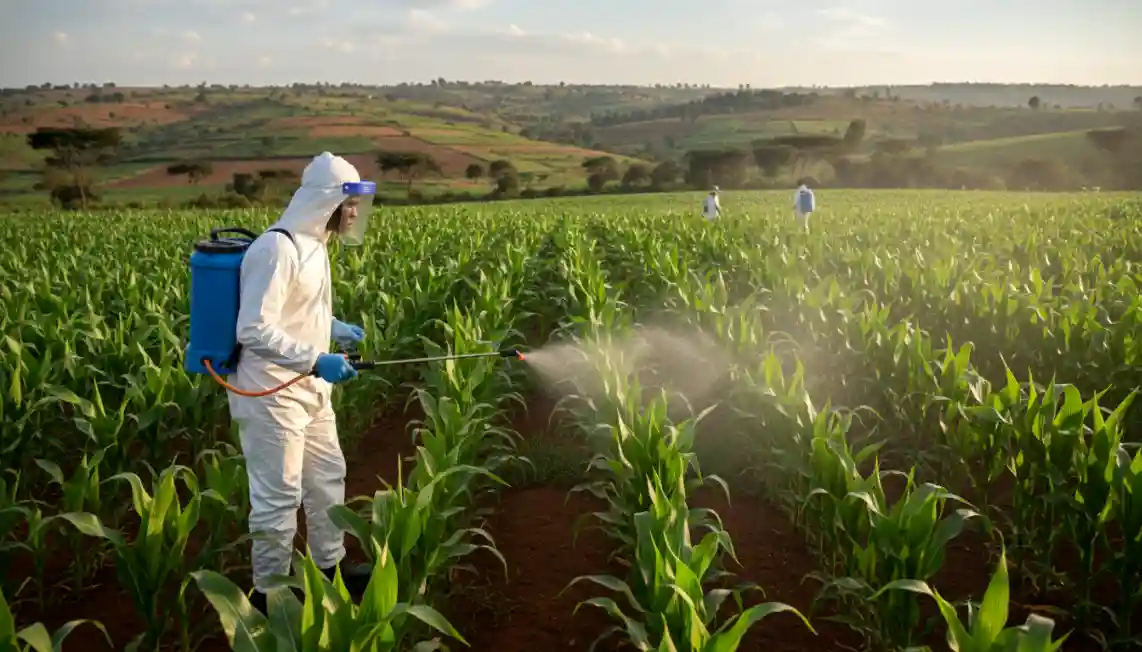
Critical Safety Precautions for 2,4-D Use
Farmers must wear proper protective equipment to prevent skin and respiratory irritation. Managing wind drift and respecting soil replanting intervals ensures the safety of neighboring farms and future crop rotations.
Handling agricultural chemicals requires a highly professional and disciplined approach to safety. Personal Protective Equipment is non-negotiable when mixing and spraying these potent herbicides. You must consistently wear chemical-resistant gloves, a long-sleeved overall, rubber boots, and a functional respiratory mask.
Managing chemical drift to neighboring farms is another major legal and ethical responsibility. Always keep your spray nozzle low and directed strictly at the targeted weeds. Never spray on windy days, as the breeze can easily carry toxic droplets into adjacent sensitive vegetable fields.
Finally, you must account for soil residual effects before planning your next planting cycle. The chemical can linger in the topsoil for one to four weeks depending on local rainfall and soil microbes. Observe a strict replanting interval of at least 30 days before sowing sensitive broadleaf seeds in a treated field.
Risks & Reality Check
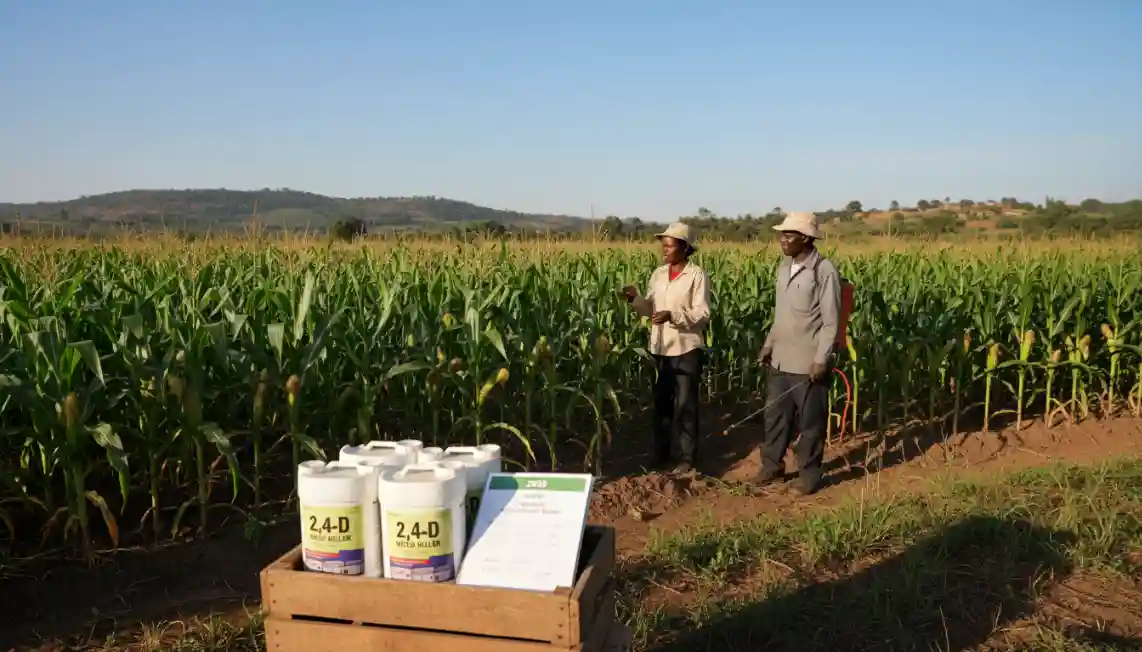
Chemical weed control carries inherent risks if poorly managed or timed incorrectly. Farmers must accept the reality that extreme weather or counterfeit chemicals can completely derail expected outcomes.
Transitioning to chemical weed control is not a guaranteed path to massive profits without careful management. One major risk is the rampant influx of counterfeit herbicides flooding the Kenyan market. If you purchase adulterated chemicals, you will spend money on labor and inputs without killing a single weed.
Market realities also dictate that input costs can fluctuate unpredictably during the peak planting window. While estimated ranges suggest strong financial savings over manual labor, poor timing can lead to partial weed suppression. Farmers who spray late in the season often experience crop failures because the weeds have already stolen critical nutrients.
Furthermore, extreme climatic shifts like unexpected heavy downpours can wash away freshly applied chemicals. You must accept that environmental variables play a huge role in the success of your chemical application. Preparing for these hard truths ensures you adopt a grounded, realistic approach to modern crop protection.
Recommended Fertilizers for Post-Weeding Top Dressing
After eliminating nutrient-stealing weeds, applying nitrogen-rich top dressing fertilizers maximizes your crop yields. Calcium Ammonium Nitrate and Urea are the top choices for Kenyan maize farmers in 2026.
Once the broadleaf weeds have completely wilted, your main crop is ready for a nutrient boost. The table below outlines the best government-approved fertilizers for top dressing your clean fields.
| Fertilizer Type | Best Application Time | Current Subsidized Price (KES) |
|---|---|---|
| Calcium Ammonium Nitrate (CAN) | 1 to 2 weeks post-weeding | 2,500 per 50kg bag |
| Urea | Immediately after weeding in wet soil | 2,500 per 50kg bag |
Top dressing should be applied when the soil is moist to ensure immediate nutrient uptake by the maize roots. KALRO experts estimate that applying top dressing within two weeks after successful weeding can significantly boost final harvest weight. Always verify fertilizer availability at your local National Cereals and Produce Board depot to access subsidized rates.
2,4-D Amine vs. Roundup: Which One Should You Choose?
The choice between these two depends entirely on your target area. 2,4-D Amine is a selective herbicide, meaning it specifically targets broadleaf weeds while leaving your grass-family crops (like maize, wheat, and barley) unharmed. In contrast, Roundup (Glyphosate) is a non-selective, systemic herbicide that kills almost any green plant it touches.
If you are clearing a field before planting, Roundup is the superior choice for total vegetation control. however, if your crops have already sprouted and you need to eliminate weeds without destroying your harvest, 2,4-D Amine is the essential tool for the job.
The Best Time to Spray: The “Rain-Fast” Rule
Timing your application with the weather is the difference between a clean field and wasted money. For maximum efficacy, 2,4-D Amine requires a specific “rain-fast” period to be fully absorbed into the plant’s system.
- Rain-Fast Period: Ensure there is no rainfall for at least 4 to 6 hours after application. If it rains sooner than this, the chemical may wash off the leaf surfaces before it reaches the roots, significantly reducing its killing power. For the best results in 2026’s unpredictable weather, aim to spray early in the morning once the dew has dried, ensuring the weeds are actively growing and the leaves are dry.
Conclusion
The agricultural landscape in Kenya is shifting rapidly as farmers adapt to higher labor costs and changing weather patterns. Utilizing a selective post-emergence weed killer is an effective strategy to protect your yields and optimize subsidized fertilizer inputs. However, this method requires strict adherence to mixing ratios and application timing to be truly successful.
Read Also: 15 Most Profitable Agribusiness Ideas in Kenya to Start in 2026
The hard truth is that poor application techniques will waste your investment and potentially harm your soils. Precision and ongoing education are the ultimate keys to maintaining long-term agricultural profitability. Take the time to measure your doses accurately and always prioritize the safety of your farm workers.
Making the switch to chemical weed management can yield strong, realistic returns when executed properly. Securing authentic products from certified agrovets ensures your farm stays productive and financially viable in 2026. Armed with this practical guide, you are well-prepared to tackle invasive weeds and secure a bountiful harvest.
Frequently Asked Questions (FAQs)
What is the current 2026 price for 2,4-D herbicide in Kenya?
A 1-litre bottle of 2,4-D Amine currently retails between KES 675 and KES 800 in most Kenyan agrovets. A 5-litre container averages KES 3,500 depending on your location.
How many milliliters of 2,4-D should be mixed per litre of water?
You should mix 6ml to 8ml of the herbicide per litre of water. This ensures optimal chemical concentration for eliminating stubborn broadleaf weeds safely.
What is the recommended 2,4-D herbicide dosage per acre for maize farmers?
Maize farmers should apply 0.6 to 1.0 litres of the chemical per acre. Always dilute this correctly across three to four 20-litre backpack sprayers for even coverage.
Which specific broadleaf weeds does 2,4-D effectively eliminate?
It effectively controls broadleaf invasive plants like wandering jew, pigweed, black nightshade, amaranthus, and blackjack without harming surrounding grasses.
Is 2,4-D herbicide harmful to humans or livestock during application?
Yes, it is moderately toxic. Farmers must wear full protective gear during application and keep grazing livestock out of treated fields for at least seven days.
What are the primary differences between 2,4-D weed killer and Roundup?
2,4-D is selective and only targets broadleaf weeds while keeping maize safe. Roundup is non-selective and will destroy all green vegetation it touches, including crops.
What is the correct mix ratio for 2,4-D in a 20 litre knapsack sprayer?
The standard mixing ratio is 120ml to 150ml of 2,4-D Amine per 20-litre knapsack sprayer. Ensure you fill the tank halfway with clean water before adding the chemical.
Are there any long term side effects of using 2,4-D on farm soil?
No, the chemical breaks down rapidly in the soil within one to four weeks. It does not leave long-term toxic residuals that prevent future crop rotation cycles.
How do you calculate 2,4-D herbicide dosage per hectare for large fields?
Large-scale farms should use 1.5 to 2.5 litres of herbicide per hectare, thoroughly mixed into 100 to 200 litres of water based on the specific brand strength.
How does the 2,4-D price in Kenya compare to the current price in Uganda?
Kenyan prices remain lower due to a highly competitive local distribution network. A 1-litre bottle costs KES 750 in Kenya compared to roughly UGX 45,000 across the border.