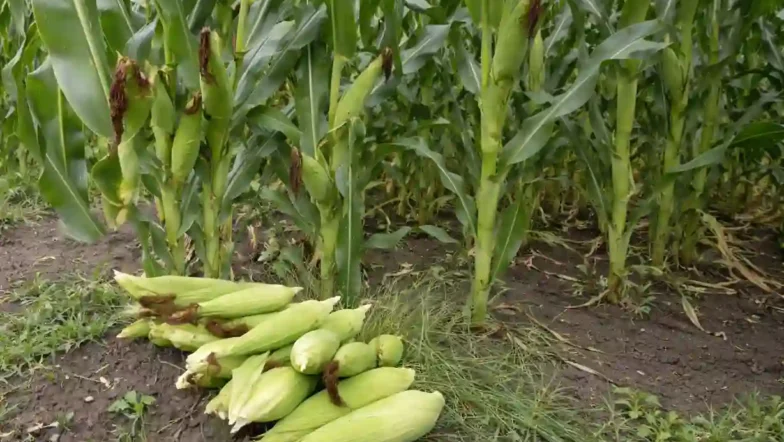
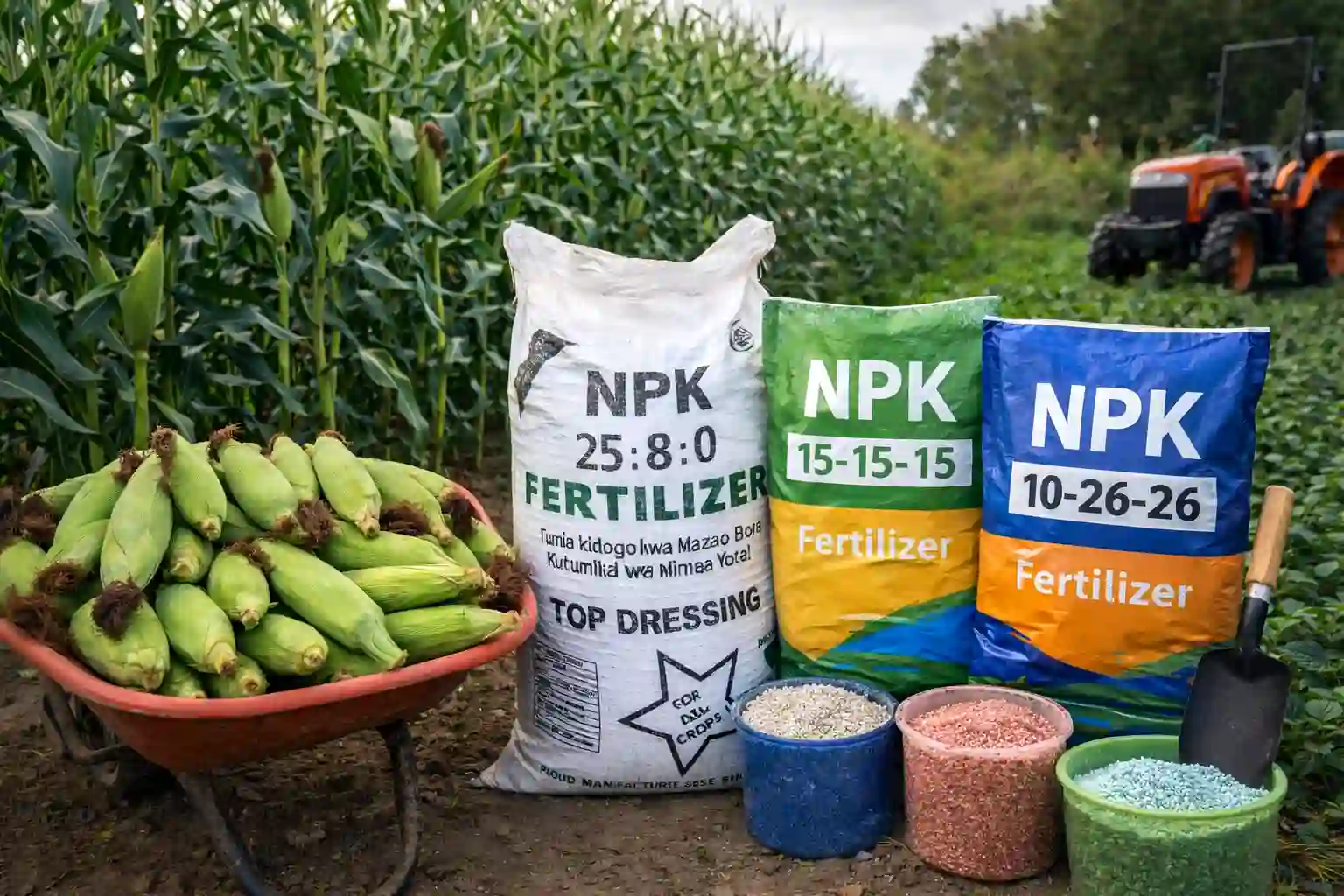

- Understand critical NPK ratios like 23:23:0 for planting and 26:0:0 for top-dressing to maximize 2026 maize yields.
- Accessing the 2026 government e-Voucher subsidy drops DAP costs to approximately KES 2,500 per 50kg bag at NCPB depots.
- Proper fertilizer application combined with certified seeds like KALRO H6213 can yield up to 35 90kg bags per acre.
Table of Contents
Maximizing maize harvests in Kenya relies entirely on applying the correct fertilizer formulas at the right growth stages. This comprehensive 2026 guide decodes complex NPK ratios, outlining exactly what nutrients your maize crop needs from planting to tasseling. By combining modern soil nutrition strategies with certified seeds, farmers can drastically increase their profitability per acre.
What Are the Best Maize Varieties to Pair With Specific NPK Fertilizers in 2026?
Choosing the right seed variety determines how efficiently your crop absorbs NPK nutrients. High-altitude varieties like H6213 require heavy basal feeding, while drought-tolerant seeds like SC Duma 43 thrive on lower nitrogen inputs in arid regions. Matching genetics with nutrition guarantees higher profitability.
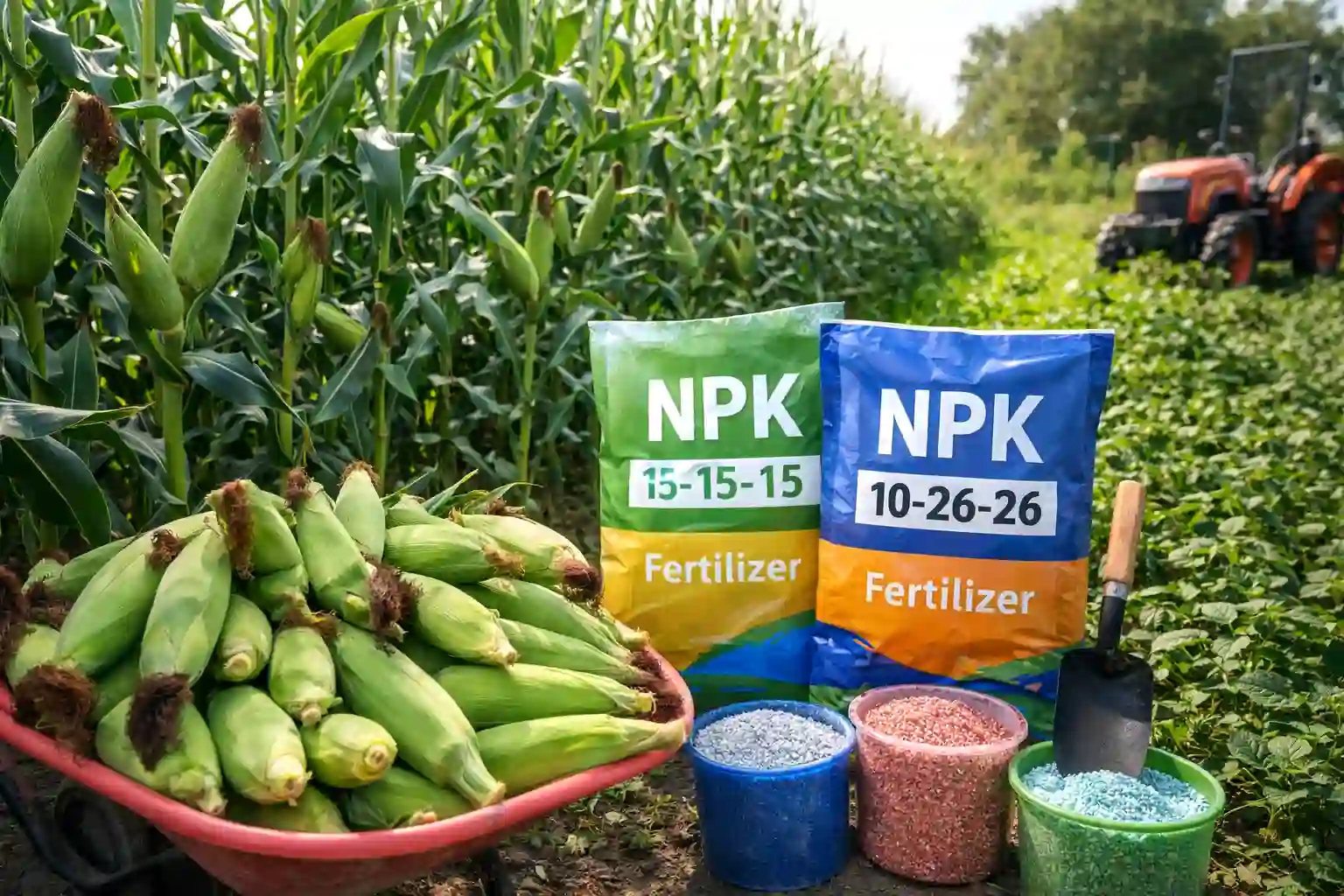
Understanding Seed Genetics and Nutrient Uptake
The foundation of a successful maize harvest begins long before you open a bag of fertilizer. Modern hybrid seeds are genetically engineered to process nutrients at different rates based on their ecological zones. Farmers must understand that high-yielding varieties will fail if not supported by the correct Nitrogen, Phosphorus, and Potassium levels.
A vigorous root system established early on ensures that top-dressing applications are fully absorbed during the critical silking stage. If you plant a highland variety in a low-altitude zone, the plant will experience severe heat stress, preventing it from taking up applied NPK.
Read Also: Maize Farming in Kenya: High Yield Production Guide, Best Practices and Profit Tips 2026
Alternatively, planting fast-maturing seeds in heavy rainfall areas can lead to rapid nutrient leaching before the plant utilizes them. Farmers must conduct soil testing through companies like CropNuts to determine baseline fertility before purchasing seeds. Soil pH significantly impacts how well a chosen variety can extract phosphorus from DAP.
High Altitude Champions for 2026
Regions like Uasin Gishu and Trans Nzoia are famous for supporting late-maturing, high-yielding maize varieties. The Kenya Seed Company variety H6213 remains a top performer, capable of producing massive cobs when adequately fed. This variety demands a strong basal application of phosphorus to build a deep root network capable of anchoring the massive stalks.
Without proper nutrition, these tall varieties are highly susceptible to lodging during heavy highland winds. Another excellent choice for high-altitude farmers is H614D, prized for its heavy grain weight and excellent roasting qualities.
Because it stays in the field for up to six months, this seed requires a split application of CAN top-dressing to maintain green foliage. Late-season nitrogen application ensures the cobs fill completely to the tip, maximizing the weight of your 90kg bag. Neglecting mid-season nutrition will result in stunted, partially filled cobs.
Drought Tolerant and Mid-Altitude Performers
For farmers operating in semi-arid regions or mid-altitude zones like Machakos or Nakuru, quick-maturing varieties are essential. SC Duma 43 from Seed Co is highly recommended for 2026 due to its exceptional drought tolerance and fast growth cycle. Because it matures rapidly, all essential nutrients must be available in the soil precisely at planting.
Delayed fertilizer application will instantly reduce the final yield since the plant cannot recover lost time. DK 8031 is another resilient hybrid that performs beautifully under moderate rainfall, boasting strong resistance to common foliar diseases.
When growing these faster varieties, farmers often opt for specialized NPK blends rather than traditional DAP to provide immediate, balanced nutrition. Ensuring adequate potassium levels helps these plants regulate water loss through their stomata during dry spells.
The following table compares the top recommended maize varieties for the 2026 season. It highlights their maturity periods and expected yields under optimal fertilizer management.
| Seed Variety | Ecological Zone | Maturity Period | Expected Yield (90kg bags/acre) | Disease Resistance Focus |
|---|---|---|---|---|
| H6213 | High Altitude (1500m+) | 160 to 190 days | 35 to 45 | Maize Lethal Necrosis (MLN) |
| H614D | High Altitude (1500m+) | 150 to 180 days | 30 to 40 | Grey Leaf Spot |
| SC Duma 43 | Low to Mid Altitude | 90 to 120 days | 25 to 30 | Drought tolerant, MSV |
| DK 8031 | Mid Altitude | 110 to 130 days | 28 to 34 | Rust and Blight |
Where To Buy Fertilizers and Seeds in Kenya 2026
Farmers can source authentic fertilizers and seeds through government NCPB depots using the e-Voucher system or private agro-dealers. Platforms like Safaricom Digifarm and Mkulima Young provide digital verification to prevent the purchase of counterfeit inputs. Always verify KEPHIS certification labels on seed packets.
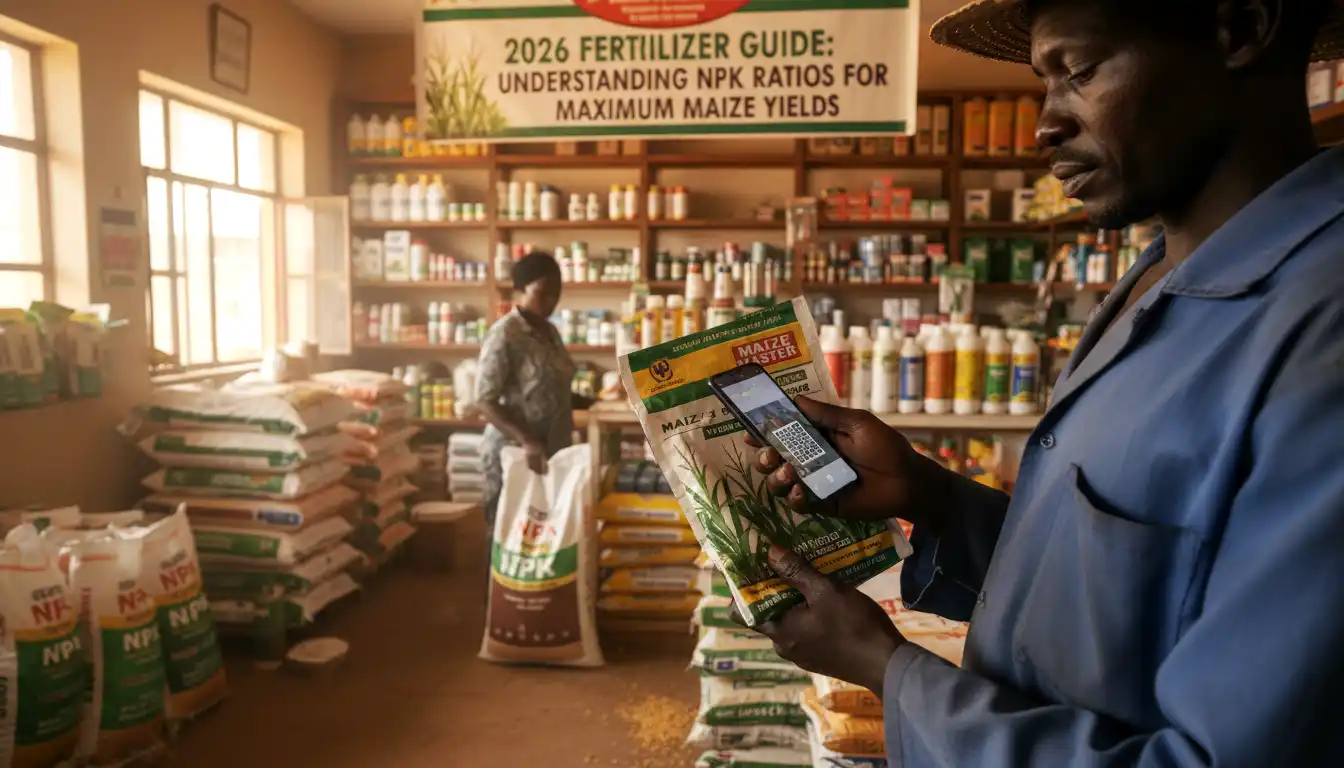
Navigating the 2026 Government Subsidy Program
The Kenyan government has aggressively digitized the agricultural input subsidy program to eliminate cartels and ensure genuine farmers benefit. By utilizing the National Cereals and Produce Board (NCPB) network, registered farmers can access subsidized basal and top-dressing fertilizers at a fraction of the commercial cost. To qualify in 2026, you must be registered in the national farmer database through your local agricultural extension officer or village elder.
Once registered, farmers receive an SMS containing an e-Voucher detailing their allocation based on their registered acreage. This digital system ensures that a 50kg bag of subsidized fertilizer costs around KES 2,500, compared to commercial market prices that can exceed KES 6,000.
Farmers simply present their ID and the SMS code at the designated NCPB depot to collect their inputs. It is crucial to complete this registration process early in January, as depot stocks can deplete rapidly as the March long rains approach. Relying on last-minute purchases often forces farmers to buy expensive commercial alternatives.
Identifying Counterfeit Seeds and Fertilizers
The lucrative nature of agricultural inputs in Kenya unfortunately attracts unscrupulous traders who sell adulterated fertilizers and fake seeds. Counterfeit basal fertilizers often consist of dyed sand or crushed stones mixed with a small amount of genuine product. Applying fake inputs is a disaster, resulting in total crop failure and massive financial losses.
Read Also: Fake Seeds in Kenya 2026: How to Spot Counterfeit Seed Before You Plant and Protect Your Harvest
Always purchase your supplies from certified, well-known agro-dealer chains or directly from government depots. For maize seeds, the Kenya Plant Health Inspectorate Service (KEPHIS) mandates a scratch-off verification sticker on every genuine packet.
Farmers must scratch the panel to reveal a unique code, which is then sent via SMS to a designated shortcode for instant verification. If the system replies that the code is invalid or has already been used, return the seeds immediately. Vigilance at the point of purchase is your first line of defense against harvest failure.
Digital Sourcing Platforms and Cooperatives
Beyond traditional brick-and-mortar agro-vets, digital ecosystems are revolutionizing how Kenyan farmers source inputs in 2026. Platforms like Safaricom Digifarm offer a one-stop-shop where farmers can purchase verified inputs on credit via M-Pesa. These platforms partner directly with major manufacturers to ensure that every bag of fertilizer delivered is authentic and correctly formulated.
The convenience of having heavy inputs delivered directly to local collection points saves significant transport costs. Joining a local farmers cooperative also provides massive leverage when sourcing fertilizers.
Cooperatives pool the financial resources of hundreds of members to buy inputs in bulk directly from importers in Mombasa. Bulk purchasing completely bypasses middlemen margins, dropping the per-bag price significantly. Furthermore, cooperatives often employ agronomists who ensure the purchased NPK blends are specifically tailored to the local soil requirements.
How Do Different NPK Fertilizer Ratios Impact Maize Growth in Kenya?
NPK stands for Nitrogen, Phosphorus, and Potassium. Nitrogen fuels leafy green growth, Phosphorus builds strong root systems during planting, and Potassium ensures stress resistance and grain filling. Applying a balanced 23:23:0 ratio at planting followed by high-nitrogen CAN top-dressing creates the ultimate growth cycle.
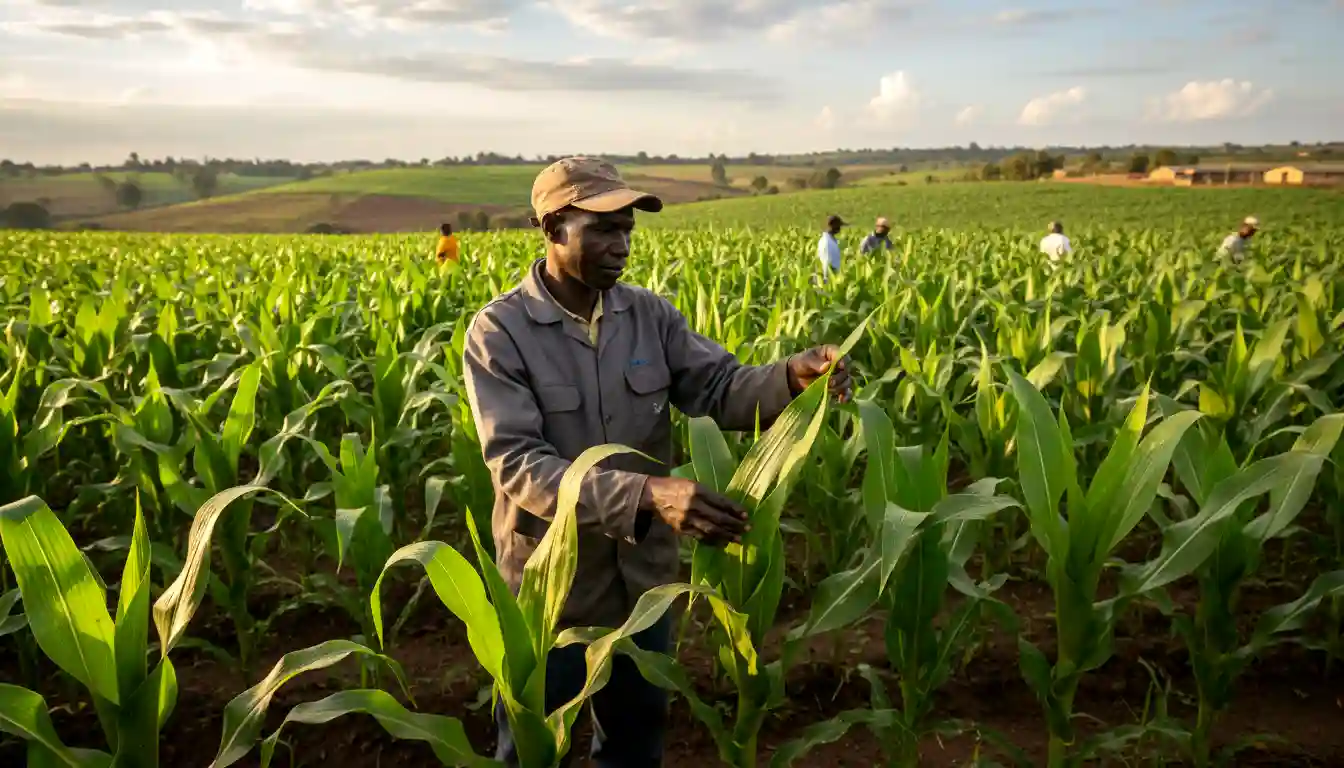
Demystifying the NPK Ratio Numbers
Walking into an agro-vet in Kenya can be overwhelming due to the sheer variety of fertilizer bags stacked on the shelves. The three numbers printed on every bag represent the percentage by weight of Nitrogen (N), Phosphorus (P), and Potassium (K). For example, a bag labeled 17:17:17 contains equal parts of all three primary macronutrients.
Understanding these numbers is the key to providing exactly what your maize crop needs at any given week. Maize is a heavy feeder, meaning it rapidly depletes soil nutrients and requires significant external inputs to achieve commercial yields. Nitrogen is the engine of plant growth, responsible for creating the deep green chlorophyll that powers photosynthesis.
A nitrogen deficiency will manifest as yellowing lower leaves, leading to stunted stalks and tiny cobs. Phosphorus is critical in the first four weeks, driving root expansion and early vigor.
Potassium is often overlooked in Kenyan soils, yet it plays a vital role in stalk strength and water retention. A lack of potassium causes weak stems that snap under the weight of mature cobs or strong winds.
Modern soil tests frequently reveal severe potassium depletion in lands that have been farmed continuously for decades. Adjusting your chosen ratio based on accurate soil data prevents wasted money on nutrients your shamba does not actually need.
Basal Planting Fertilizers
The fertilizer applied on the day of planting is known as the basal application. Historically, Kenyan farmers have relied heavily on Di-Ammonium Phosphate (DAP 18:46:0) because of its massive phosphorus content. Phosphorus does not move easily through the soil, so it must be placed directly next to the seed during planting.
Read Also: Bean Farming in Kenya 2026: The Ultimate Guide to the Most Profitable Varieties
However, continuous use of DAP without liming has led to dangerous levels of soil acidity across major farming belts. To combat acidic soils, agronomists in 2026 highly recommend using blended NPK planting fertilizers like 23:23:0 or NPK 17:17:17.
These blends provide a gentler release of nutrients and often include essential micro-nutrients like zinc and sulfur. Zinc is particularly important for maize, as it helps the plant process proteins and regulate growth hormones. Applying one 50kg bag of a balanced basal fertilizer per acre is the standard baseline for commercial operations.
Top Dressing Essentials
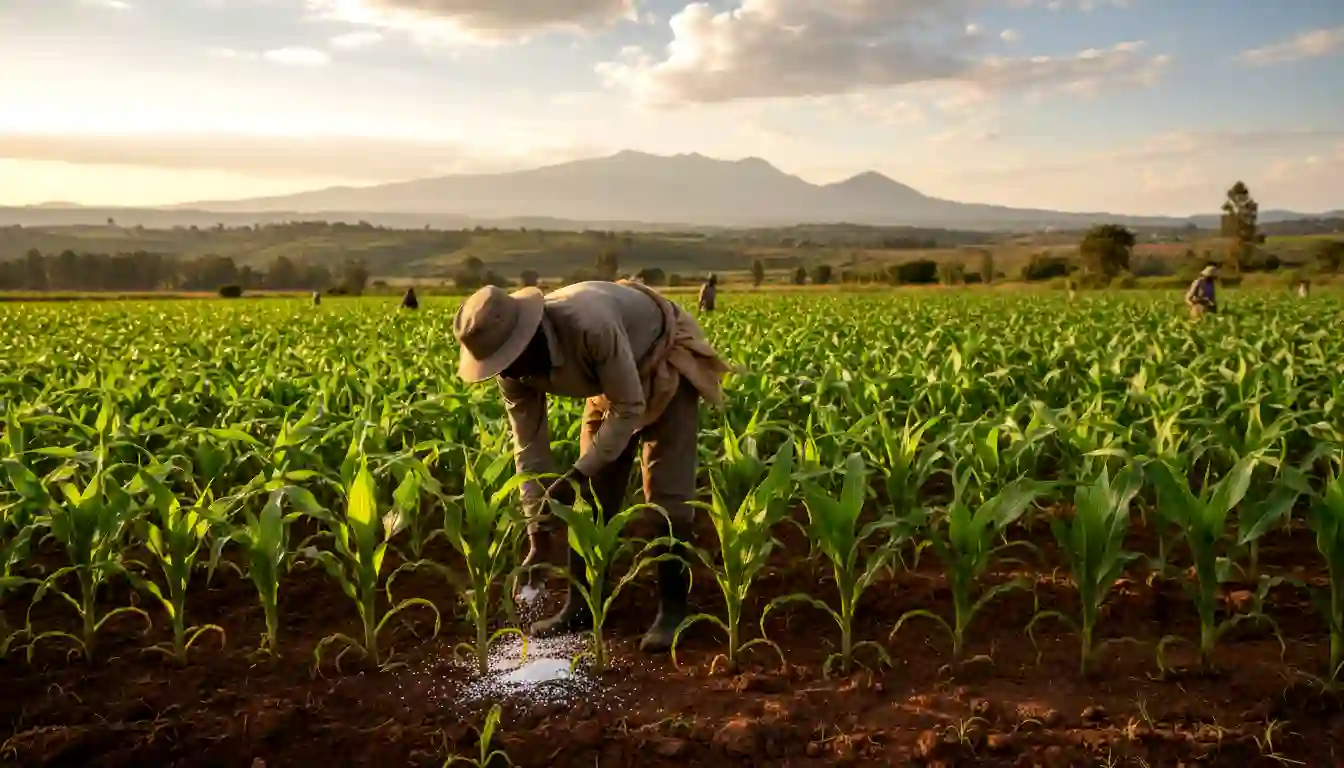
Once the maize reaches knee-high, usually around four to six weeks after planting, it enters a phase of exponential vegetative growth. This is the exact moment when the plant’s demand for nitrogen spikes dramatically. Farmers apply top-dressing fertilizers, predominantly Calcium Ammonium Nitrate (CAN 26:0:0) or Urea (46:0:0), to fuel this rapid expansion.
CAN is preferred in acidic soils because the calcium component helps neutralize soil pH while delivering nitrogen. For maximum efficiency, top-dressing should be done when the soil is moist to prevent the nitrogen from volatilizing into the atmosphere.
Many successful commercial farmers split their top-dressing into two applications. The first is done at knee-height, and the second is applied just before tasseling to guarantee the cobs fill out perfectly. Skipping the top-dressing phase will absolutely devastate your final yield, regardless of how good your basal application was.
This table provides a clear comparison of the most popular fertilizers used in Kenyan maize farming. It outlines their ideal application stages and primary benefits.
| Fertilizer Type | Standard Ratio | Application Stage | Primary Benefit for Maize |
|---|---|---|---|
| DAP | 18:46:0 | Planting (Basal) | Promotes rapid root development. |
| NPK Blend | 23:23:0 or 17:17:17 | Planting (Basal) | Balanced start, reduces soil acidity buildup. |
| CAN | 26:0:0 | Top-Dressing (Knee-high) | Boosts leafy growth, adds calcium to soil. |
| Urea | 46:0:0 | Top-Dressing (Requires moisture) | Maximum nitrogen delivery for heavy feeders. |
| YaraMila Power | Various Blends | Planting / Vegetative | Contains trace elements like Zinc and Boron. |
Which Kenyan Counties Offer the Best Climate for Maximizing Maize Yields With NPK Ratios?
Uasin Gishu, Trans Nzoia, and Meru counties represent the ultimate environments for high-yield maize farming. Uasin Gishu offers massive tracts of acidic soils perfect for specific NPK blends. Trans Nzoia provides consistent rainfall for top-dressing absorption, while Meru allows for dual-season planting.
Uasin Gishu: The Historic Grain Basket
Uasin Gishu County has long held the title of Kenya’s primary grain basket due to its expansive, flat topography and favorable highland climate. The region receives reliable, highly predictable rainfall perfectly aligned with the long-maturing maize varieties like H6213. Large-scale mechanization is extremely common here, allowing farmers to plow, plant, and apply fertilizers with pinpoint tractor precision.
This mechanization drastically reduces labor costs and ensures that basal fertilizers are placed at the exact correct depth below the seed. However, decades of continuous maize monoculture and heavy reliance on DAP have rendered the soils in Uasin Gishu quite acidic.
In 2026, smart farmers in this region are aggressively transitioning to specialized NPK blends that contain calcium and magnesium to slowly rehabilitate soil pH. Extensive liming programs are also undertaken prior to planting to ensure the applied nutrients are actually available to the crop. When soil acidity is managed, yields in Uasin Gishu can easily surpass 35 bags per acre.
Trans Nzoia: Consistent Rainfall and Deep Soils
Bordering Uasin Gishu, Trans Nzoia County boasts incredibly fertile volcanic soils that provide an excellent foundation for aggressive maize growth. The county experiences a prolonged rainy season that provides the perfect moisture levels for top-dressing fertilizers like CAN and Urea to dissolve efficiently. Because the soil retains moisture so well, plants rarely suffer from mid-season drought stress, allowing cobs to fill out completely.
Farmers here often practice crop rotation with legumes to naturally boost nitrogen levels. A major advantage of Trans Nzoia is the deep soil profile, which allows maize root systems to expand extensively when stimulated by phosphorus.
Read Also: Top 10 Best Agrovets in Kenya (2026 Guide): Where to Buy Genuine Inputs in Nairobi, Eldoret & Nakuru
Deep roots not only extract more nutrients but also physically anchor the heavy, 10-foot-tall stalks common in this region. The primary challenge here is the heavy pressure from foliar diseases fueled by the constant humidity. Robust fungicide applications must be integrated into the farming routine to protect the green leaf area for maximum photosynthesis.
Meru County: The Dual-Season Powerhouse
Unlike the massive, single-season harvests of the North Rift, Meru County offers a highly lucrative dual-season farming environment. Benefiting from the rain shadow of Mount Kenya, certain zones within Meru receive two distinct rainy seasons, allowing for bi-annual maize harvests. Farmers here favor medium-maturing varieties that can be harvested and cleared rapidly before the next rains begin.
Managing fertility in a dual-season setup requires intense discipline, as the soil has virtually no time to rest. Because the land is farmed continuously, organic matter depletion is a critical issue in Meru.
Successful farmers combine commercial NPK applications with heavy doses of composted cow manure to maintain soil structure and biology. The manure acts as a sponge, holding onto the commercial fertilizer nutrients and preventing them from washing away down the steep terraced hillsides. This hybrid approach to fertility guarantees high yields while maintaining the long-term health of the shamba.
What is the Ideal 12-Month Planting Cycle for Optimizing Maize Yields in Kenya?
The Kenyan farming calendar heavily relies on the Long Rains in March and Short Rains in October. Land preparation begins in February with deep plowing to integrate organic matter. Precise timing of DAP application in March and CAN top-dressing in May ensures the crop never suffers nutrient stress.
January to March: Land Preparation and Basal Feeding
The agricultural year officially kicks off in January with the clearing of crop residues from the previous harvest. In highly mechanized regions, these residues are chopped and incorporated back into the soil using heavy disc harrows to build organic carbon. Deep plowing should be completed by mid-February to expose soil-dwelling pests to the harsh sun and break up any hardpan layers.
A broken hardpan allows the maize roots to dive deep following the phosphorus gradient established by basal fertilizers. By early March, as the skies begin to gather clouds indicating the onset of the long rains, planting must commence.
Timing is everything, planting just before the first heavy downpour ensures the seed and the NPK basal fertilizer absorb moisture simultaneously. Ensure the fertilizer is placed a few centimeters below and to the side of the seed to prevent chemical burning of the emerging radicle. Proper spacing, typically 75cm between rows and 30cm between holes, guarantees optimal plant populations per acre.
April to June: Top Dressing, Weeding, and Pest Control
April brings rapid vegetative growth, but it also brings fierce competition from aggressive weeds. A combination of pre-emergence herbicides applied at planting and mechanical weeding is essential to keep the field clean. Weeds will ruthlessly steal your expensive fertilizer inputs if left unchecked, suffocating the young maize.
During this early growth stage, farmers must conduct rigorous scouting for the devastating Fall Armyworm, spraying approved insecticides immediately upon detection. When the maize reaches knee-height, typically in May, the first critical top-dressing of CAN is applied.
Ensure the soil is moist during application, placing a small pinch of fertilizer in a ring around the base of each stalk. By June, as the maize approaches the tasseling stage, a second, lighter application of nitrogen can push the crop to its absolute genetic potential. At this height, the canopy closes, naturally suppressing further weed growth by blocking out the sunlight.
July to December: Harvesting, Drying, and Storage
From July to September, the heavy work shifts from active management to monitoring as the crop begins the long drying process. The cobs will drop downwards on the stalk, a natural defense mechanism that prevents rainwater from rotting the grain. Harvesting usually begins in late October or November when the grain moisture drops below 18 percent.
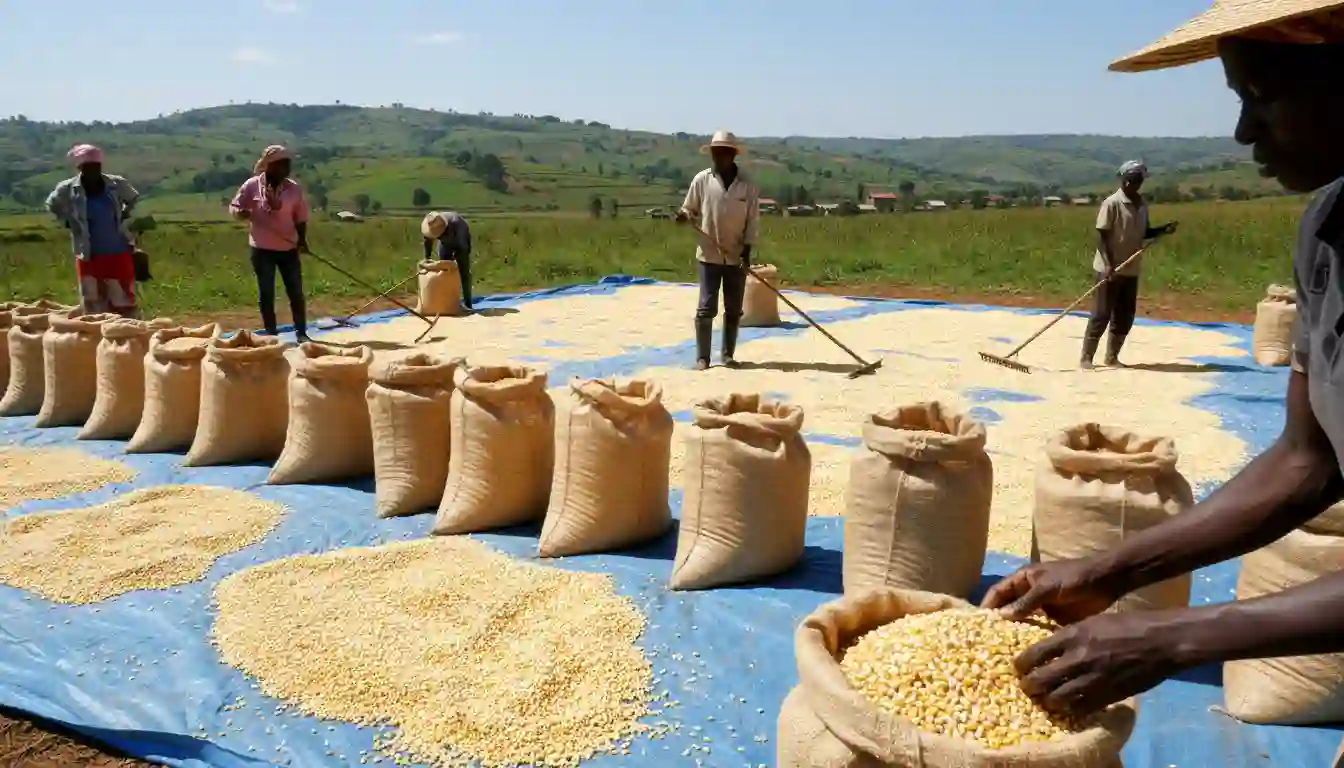
Laborers manually pluck the cobs or utilize combine harvesters on larger mechanized estates. Once harvested, the maize must be shelled and dried on tarpaulins to a safe storage moisture level of exactly 13.5 percent.
Storing grain with higher moisture guarantees catastrophic aflatoxin contamination and severe post-harvest losses. By December, the grain is safely packed into specialized hermetic bags or delivered to national silos, readying the farmer to calculate profits and begin the cycle anew.
What Are the Real Financial Costs and Returns for Maize Farming in 2026?
An acre of maize in 2026 requires an estimated capital injection of KES 35,000 to KES 45,000 for maximum yield. Subsidized fertilizers significantly lower input costs, allowing for a break-even point at roughly 15 bags. High-yield management pushes production to 30 bags, securing excellent profit margins.
Land Preparation and Input Expenditures
Commercial maize farming requires a realistic appraisal of the heavy upfront capital needed to bring a crop to harvest. The first major expense is land preparation, where tractor plowing and harrowing will cost approximately KES 5,000 per acre in 2026. If the land requires liming to correct severe acidity, expect to spend an additional KES 3,000 on agricultural lime.
Purchasing 10kgs of premium, certified hybrid seed like H6213 adds roughly KES 2,500 to the budget. Fertilizer remains the most significant variable cost, heavily dependent on your ability to secure government subsidies.
Using the e-Voucher system, a 50kg bag of basal NPK and a bag of top-dressing CAN will total around KES 5,000. However, if forced to buy at commercial agro-vet prices, this input cost immediately jumps to nearly KES 12,000. Labor for planting, two weeding sessions, and pesticide applications must also be strictly budgeted, demanding reliable cash flow throughout the vegetative phase.
Revenue Projections and Risk Mitigation
The financial success of a maize operation hinges entirely on the final yield and the prevailing market price at the time of sale. A well-managed acre benefiting from exact NPK ratios and timely rain should produce between 30 to 35 bags of 90kg each. If the market price holds at a conservative KES 3,200 per bag, gross revenues can reach KES 96,000 to KES 112,000 per acre.
Subtracting the total production costs reveals a highly attractive net profit for serious farmers. However, farming is never without risk.
Droughts, hail, or armyworm infestations can decimate a crop, dropping yields to below 10 bags per acre and resulting in total financial ruin. Progressive farmers mitigate these risks by taking out multi-peril crop insurance policies offered by local financial institutions. Understanding your break-even point, usually hovering around 15 bags per acre, dictates every financial decision you make on the farm.
The following table provides a realistic 2026 financial projection for one acre of commercial maize utilizing subsidized fertilizers. It is highly important to remember that these estimated ranges vary by management, weather conditions, and localized input pricing.
| Expense Category | Estimated Cost (KES) | Notes and Assumptions |
|---|---|---|
| Land Prep (Plowing & Harrowing) | 5,000 | Tractor hire rates vary by county. |
| Seed (10kg Hybrid) | 2,500 | Certified seeds from local agro-vets. |
| Fertilizers (Subsidized NPK + CAN) | 5,000 | Assumes successful e-Voucher access. |
| Agrochemicals (Herbicides/Pesticides) | 4,000 | Pre-emergence and Fall Armyworm control. |
| Labor (Planting, Weeding, Harvest) | 12,000 | Manual labor paid daily. |
| Post-Harvest (Shelling, Drying, Bags) | 5,000 | Machine shelling and hermetic storage bags. |
| Total Estimated Cost | 33,500 | Baseline investment required per acre. |
How Can Value Addition and Supply Chain Strategies Increase Your Maize Profits?
Selling raw maize immediately after harvest traps farmers in low seasonal prices. Utilizing modern storage technologies like hermetic bags or transforming grain into milled flour captures higher consumer margins. Integrating supply chain logistics with local millers guarantees a stable, year-round income stream.
Post-Harvest Handling and Strategic Storage
The majority of Kenyan farmers rush to sell their freshly harvested maize in December to pay for school fees and holiday expenses. This massive glut in supply causes market prices to crash temporarily, allowing middlemen to buy premium grain at predatory prices. To escape this cycle of poverty, farmers must invest in specialized storage solutions like Purdue Improved Crop Storage (PICS) bags.
Read Also: Kenya Long Rains 2026: The Ultimate March Planting Guide (Weather, Seeds, and Fertilizer Prices)
These triple-layer hermetic bags completely seal off oxygen, naturally suffocating dangerous weevils without the use of toxic dusting chemicals. By safely storing grain in hermetic bags until April or May, farmers can wait for market supplies to dwindle and prices to peak.
A bag sold in December for KES 2,800 can easily command over KES 4,500 just four months later. Advanced farmers are also utilizing the Warehouse Receipt System (WRS), depositing properly dried grain into certified silos in exchange for a tradable receipt. This receipt can be used as collateral to secure bank loans, providing immediate liquidity while waiting for grain prices to rise.
Milling and Packaging for Retail
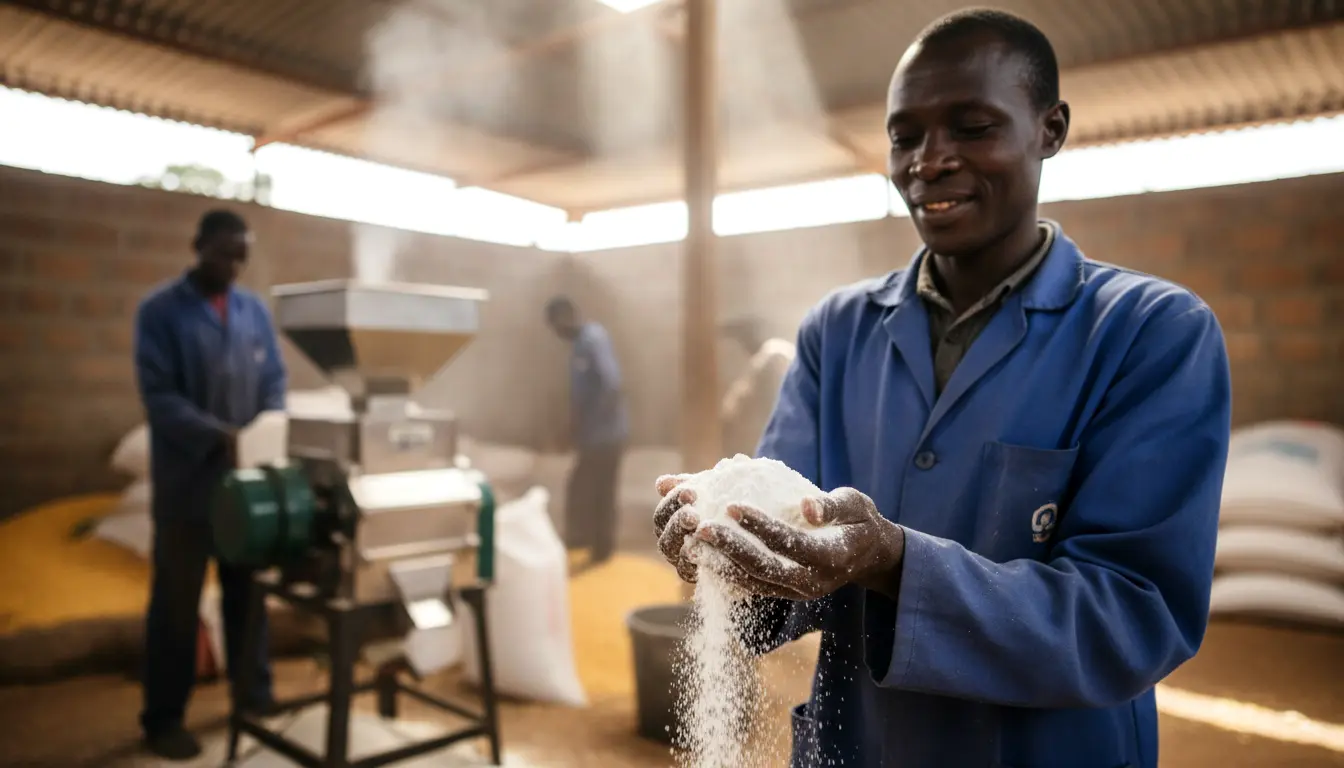
Transforming raw grain into packaged maize meal (unga) is the ultimate form of value addition in the maize supply chain. Instead of selling 90kg bags to large commercial millers, farmer cooperatives are increasingly purchasing small-scale posho mills. By milling their own harvest, they capture the lucrative margins that exist between wholesale grain prices and retail flour prices.
Producing branded, nicely packaged maize meal allows farmers to sell directly to local supermarkets, schools, and hospitals. Entering the milling business requires strict adherence to food safety standards, particularly regarding moisture levels and aflatoxin testing.
The Kenya Bureau of Standards (KEBS) strictly monitors commercially sold flour to protect public health. Investing in an affordable, digital moisture meter is non-negotiable for anyone venturing into value addition. Furthermore, selling the byproduct maize bran to local dairy and poultry farmers creates an entirely secondary revenue stream that maximizes the profitability of every single cob.
What is the 2026 Outlook for Maize Farming and Fertilizer Application in Kenya?
The 2026 outlook is highly positive due to stabilized subsidy programs and advanced soil testing availability. Farmers who adopt precision NPK application will out-compete traditional broadcasters. Start testing your soils today to lock in your fertilizer strategy for the upcoming rains.
Embracing Precision Agriculture
As we move deeper into 2026, the era of guessing fertilizer requirements is officially over. Climate change has made rainfall patterns erratic, forcing farmers to maximize efficiency during the short windows of optimal weather. The future belongs to farmers who adopt precision agriculture techniques, utilizing GPS-guided soil sampling and customized NPK blends.
The national government and private sector players are heavily investing in mobile soil testing labs that bring critical data directly to the village level. Furthermore, integrating bio-fertilizers and organic amendments alongside synthetic chemicals will become standard practice.
Relying entirely on synthetic fertilizers degrades soil biology over time, reducing the long-term carrying capacity of the land. By embracing a holistic approach to soil nutrition, incorporating crop rotation, cover crops, and precise fertilizer targeting, yields will continue to climb. Start preparing your land early, secure your inputs through verified channels, and commit to aggressive weed and pest management to guarantee a bumper harvest this year.
Often Asked Questions (FAQ)
How much fertilizer do I need for one acre of maize?
You generally need one 50kg bag of basal fertilizer (like DAP or NPK 23:23:0) at planting, followed by one 50kg bag of CAN for top-dressing at knee height.
Can I mix DAP and CAN together during planting?
No. DAP is for root development at planting, while CAN provides rapid nitrogen for leafy growth weeks later. Mixing them wastes the nitrogen component completely.
What happens if I apply too much nitrogen fertilizer?
Excessive nitrogen causes rapid, weak vegetative growth, making stalks incredibly tall but prone to snapping in the wind, and severely delays the grain filling process.
How do I know if my maize has a phosphorus deficiency?
A severe phosphorus deficiency manifests as dark green or distinctly purplish discoloration on the tips and margins of the older, lower leaves during early growth.
Is organic manure a complete substitute for NPK fertilizers?
While excellent for soil structure, manure releases nutrients too slowly to meet the explosive demands of modern hybrid maize. A combined approach works best.
When is the exact right time to top-dress with CAN?
The optimal time is when the maize is roughly knee-high (4 to 6 weeks after planting) and the soil is sufficiently moist to dissolve the granules quickly.
Why is my soil pH important when applying fertilizers?
Highly acidic soils bind essential nutrients like phosphorus, making them physically unavailable to the plant roots regardless of how much fertilizer you apply.
How can I access government-subsidized fertilizer in 2026?
You must register as a farmer through your local ward agricultural officer to be included in the national database and receive your allocation e-Voucher via SMS.
What is the difference between DAP and NPK blends?
DAP contains only Nitrogen and Phosphorus (18:46:0), while NPK blends (like 17:17:17) provide a balanced mix of Nitrogen, Phosphorus, Potassium, and trace elements.
Can I apply fertilizer when it is completely dry?
No. Applying fertilizer without rain or irrigation leads to volatilization where nitrogen evaporates into the air, or the chemicals can burn the roots.