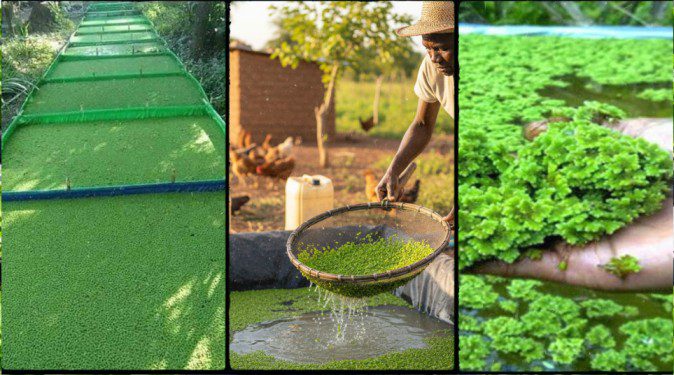
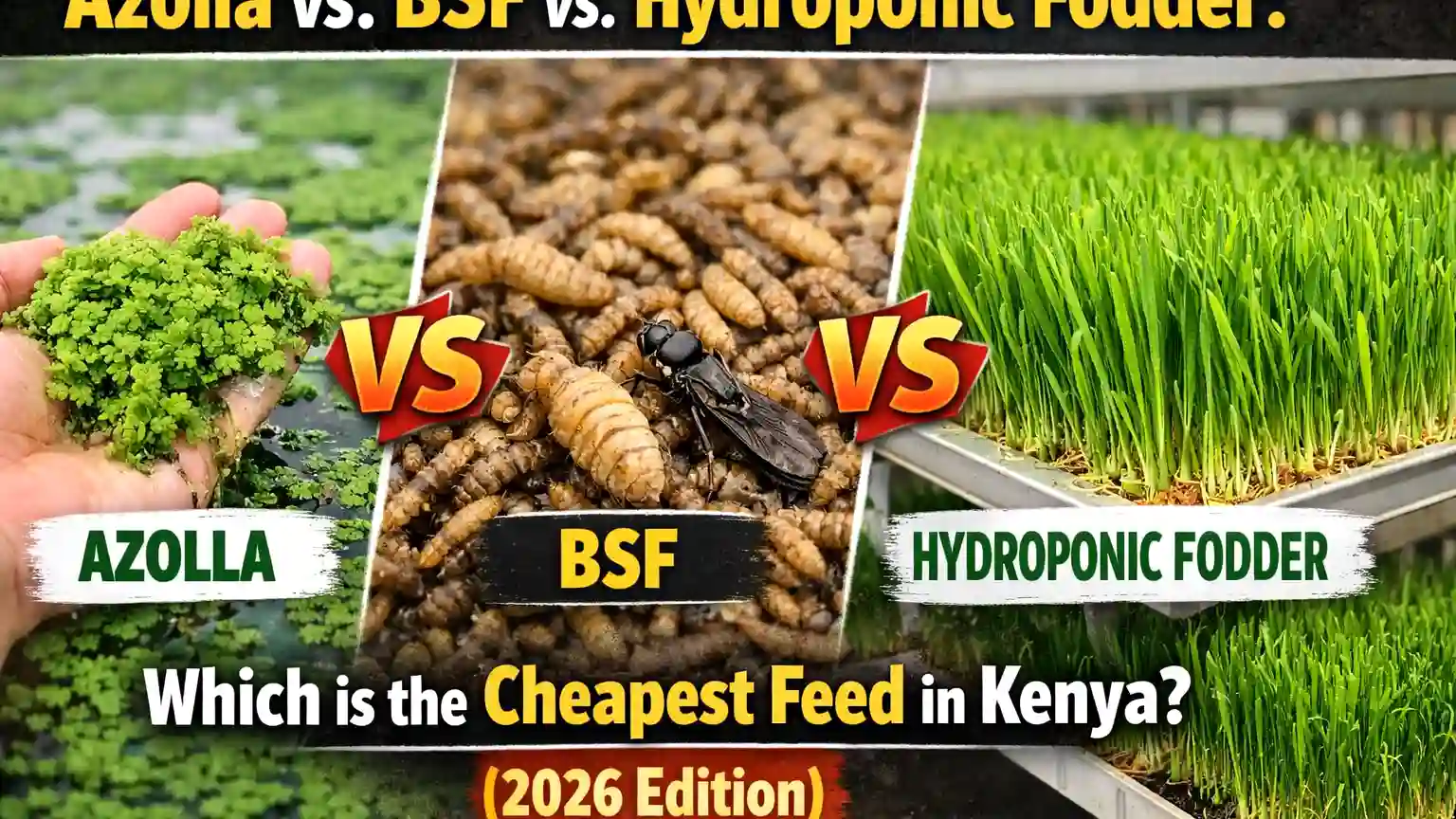

- Cheapest Overall: Azolla wins on operational costs with near-zero daily input requirements once the pond is established.
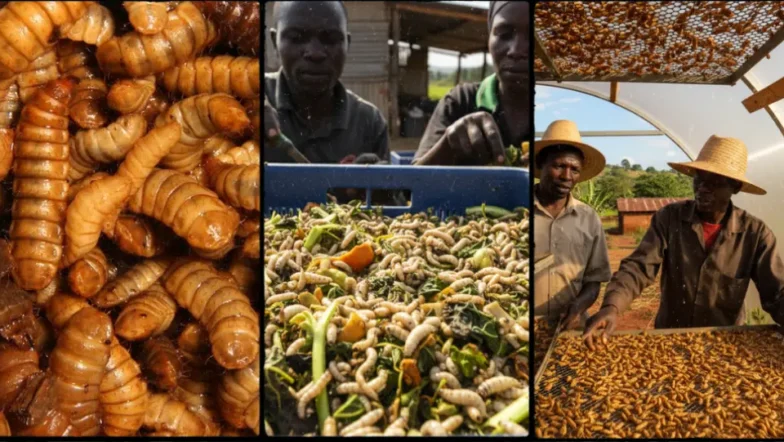
- Best for Protein: Black Soldier Fly (BSF) larvae offer the highest digestible protein content (40-60%) specifically for poultry and pigs.
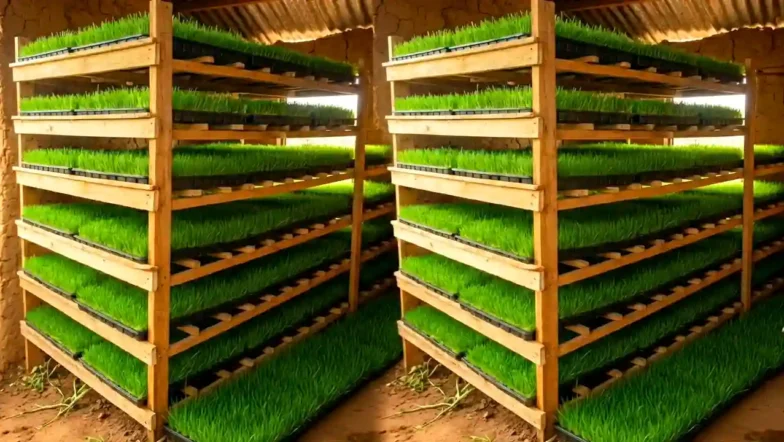
- Fastest Bulk Volume: Hydroponic fodder produces the highest volume of biomass per square meter but requires the highest initial capital investment.
Table of Contents
Kenyan farmers are currently facing a critical turning point in livestock production due to the escalating costs of commercial feeds like soya and omena. As we navigate 2026, the reliance on traditional feed formulation is bankrupting small-scale ventures across Kiambu, Uasin Gishu, and beyond. This guide provides a definitive comparison between the three leading alternative feeds: Azolla, Black Soldier Fly (BSF), and Hydroponic Fodder.
We analyze the economics, nutritional value, and labor requirements to determine which option truly protects your profit margins on the shamba. Reducing the cost of production is the primary motivation for integrating these alternative protein and biomass sources.
Why Are Kenyan Farmers Switching to Alternative Feeds in 2026?
The shift is driven by the volatile price of commercial concentrates and the scarcity of reliable grazing land due to erratic rainfall patterns. Farmers are adopting controlled farming systems to guarantee feed security. Reducing the cost of production by 30% to 50% is the primary motivation for integrating these alternative protein and biomass sources.
The agricultural landscape in Kenya has shifted dramatically over the last five years. Reliance on rain-fed nappier grass or expensive dairy meal is no longer a sustainable business model for the modern agri-preneur. In 2026, the cost of a 70kg bag of dairy meal has hit record highs, forcing farmers to innovate or exit the market.
Alternative feeds provide a buffer against market inflation. By producing protein and fodder on-site, you decouple your business from the fluctuating global prices of maize germ and wheat bran. This independence is crucial for long-term survival in the Kenyan dairy and poultry sectors.
Furthermore, the nutritional density of these alternatives often surpasses traditional feeds. BSF larvae provide essential amino acids that boost chicken growth rates, while hydroponic barley offers high digestibility for lactating cows. The focus has moved from merely filling the animal’s stomach to optimizing nutrient uptake for maximum output.
What Are the Best Varieties and Strains for Kenyan Alternative Feeds?
For Azolla, the Azolla pinnata strain is the most resilient to Kenyan temperatures and grows rapidly in fresh water. For BSF, the standard Hermetia illucens works best in warm climates. For hydroponics, Barley is the superior grain choice over maize due to its higher protein conversion and lower risk of mold during the sprouting phase.
Azolla Pinnata: The Green Gold
Azolla pinnata remains the gold standard for Kenyan farmers. This free-floating aquatic fern fixes atmospheric nitrogen, converting it into plant protein. Unlike other strains, pinnata is well-adapted to the fluctuating temperatures found in the Central Highlands and the Nyanza basin.
Read Also: Azolla Farming in Kenya: Cheap Animal Feed and Higher Profits in 2026
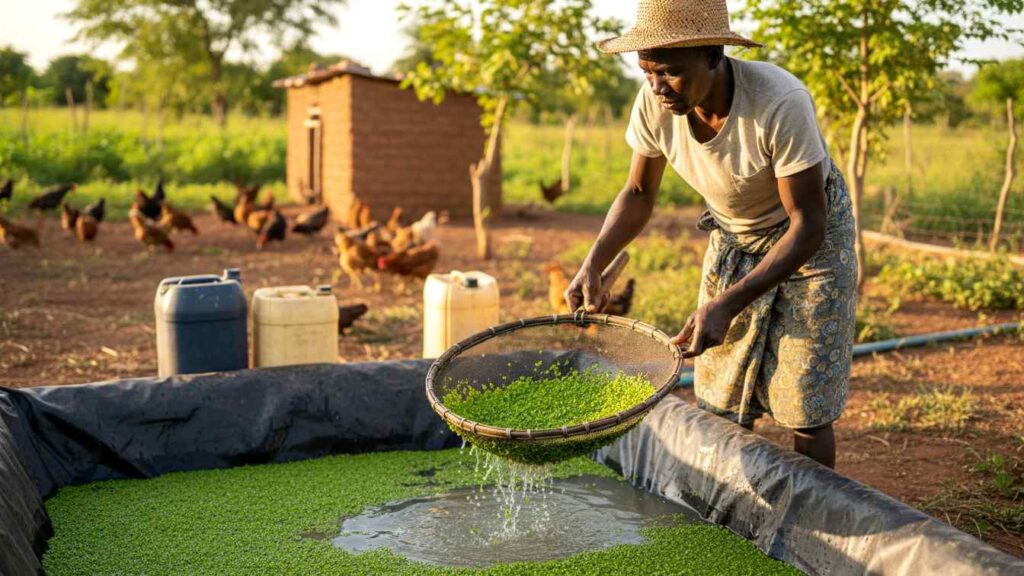
It doubles its biomass every 2-3 days under optimal conditions. It requires shallow ponds, usually lined with dam liners, and a mix of soil, manure, and superphosphate to trigger rapid growth. It is excellent for omnivorous fish like Tilapia, indigenous chicken, and even as a supplement for dairy cows.
Black Soldier Fly (BSF): The Protein Powerhouse
The Hermetia illucens fly is harmless, does not carry diseases, and its larvae are voracious eaters of organic waste. In 2026, genetic selection has not changed the fly itself, but farming techniques have improved. The focus is on the larval stage where the fat and protein content is at its peak.
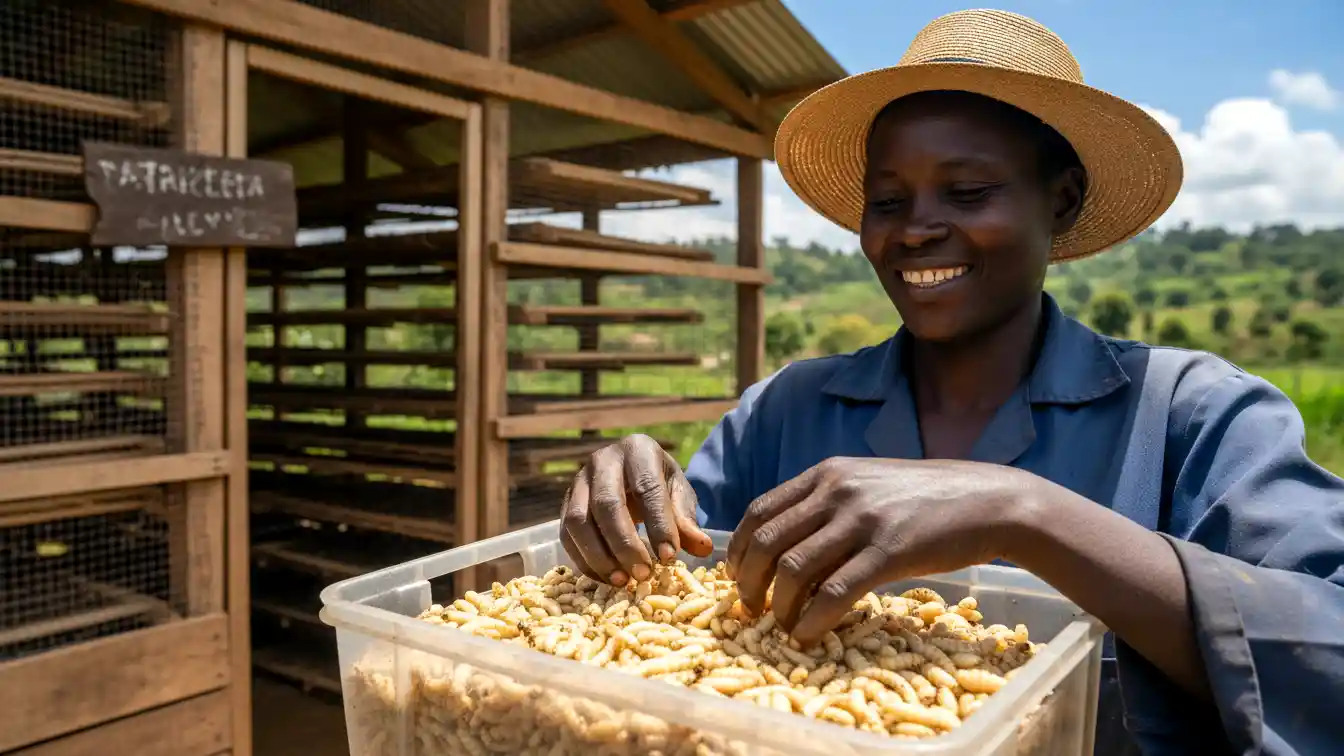
Farmers are sourcing “neonates” (5-day old larvae) from established breeders to jumpstart their colonies. The larvae thrive on market waste, rotten fruits, and kitchen scraps, converting trash into high-value protein in roughly 14 days.
Hydroponic Fodder: The Speed Grower
While maize is readily available, Barley is the superior choice for hydroponic systems in 2026. Maize tends to develop mold (fungal growth) if humidity is not perfectly controlled, which can be fatal to livestock. Barley sprouts cleanly and produces a dense root mat that animals consume entirely.
Sorghum is also gaining traction in semi-arid areas like Machakos. It is drought-resistant even in fodder form and provides good energy levels. The key is using certified seed that has high germination rates (above 95%) to prevent waste in the trays.
Where to Source Quality Azolla, BSF, and Hydroponic Fodder Inputs in Kenya (Trusted Suppliers 2026)
In 2026, the best sourcing channels are digital agri-platforms like Safaricom Digifarm and Mkulima Young. Physical sourcing centers include InsectiPro for BSF eggs, KALRO centers for Azolla culture, and local agrovets for treated barley seeds. Always verify the seller’s reputation to avoid low-viability starter cultures.
Digital Marketplaces
The sourcing landscape has digitized. Platforms like Jiji Kenya and Mkulima Young are flooded with starter kit vendors. However, due diligence is required. Look for vendors with verified reviews who offer after-sales support, as setting up these systems requires technical guidance.
Institutional Suppliers
KALRO (Kenya Agricultural and Livestock Research Organization) remains the safest bet for pure strains. Their centers in Naivasha and Thika provide uncontaminated Azolla cultures. For BSF, companies like InsectiPro and Zihanga Ltd sell neonates and eggs that guarantee a high hatch rate, which is critical for a beginner.
Local Agrovets & Hardware
For hydroponics, you are buying components rather than a “seed.” Aluminum trays or specialized plastic fodder trays can be bought in Nairobi’s River Road area or major hardware suppliers in regional towns. Kenya Seed Company outlets are the go-to for untreated barley or sorghum seeds suitable for sprouting.
Which Regions in Kenya are Best Suited for Each Feed Type?
BSF thrives in warm coastal and lake regions like Kilifi and Kisumu due to high humidity and heat. Hydroponics is ideal for the cool highlands of Meru and Nyandarua where land is scarce. Azolla is versatile but requires shade nets in hot areas to prevent scorching and wind protection in open plains.
The Coast (Kilifi & Kwale): BSF Territory
The coastal strip offers the perfect climate for Black Soldier Fly farming. The consistent warmth accelerates the lifecycle of the fly, allowing for faster harvesting cycles compared to the chilly highlands. Farmers in Kilifi are using BSF to supplement aquaculture diets, significantly lowering the cost of fish pellets.
Central Highlands (Meru & Kiambu): Hydroponic Hubs
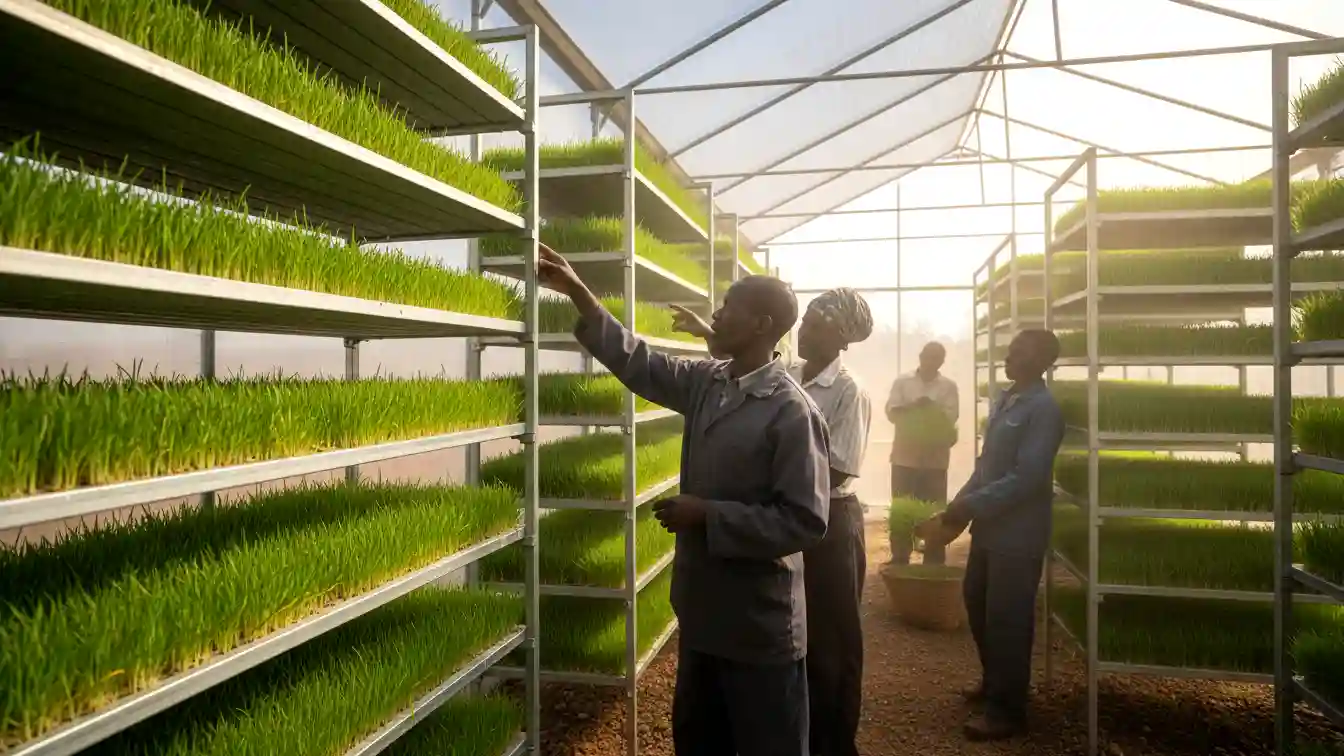
In high-density dairy areas like Kiambu, land is expensive and scarce. Hydroponic fodder is the logical solution here. A farmer can produce 500kg of fodder daily in a 5m x 5m room, vertically stacked.
Read Also: Black Soldier Fly (BSF) Farming in Kenya: A 2026 Cost-Profit Analysis
The cool temperatures also help reduce mold proliferation in the barley trays. This is often a common challenge in hotter zones.
Nyanza & Western (Kisumu & Kakamega): Azolla Belts
With a high concentration of poultry and fish farming, this region is adopting Azolla rapidly. The availability of fresh water from the lake basin supports the maintenance of Azolla ponds. Farmers here often integrate Azolla directly into fish ponds, creating a self-sustaining ecosystem where the fish feed on the growing fern.
How Does the 12-Month Farming Calendar Look for Alternative Feeds?
These feeds allow for year-round production independent of rainfall. The only variations occur in management: BSF requires heating during the cold months of July and August, while Azolla requires shading during the hot dry season of January to March to prevent evaporation and burning.
January – March (Hot & Dry)
Azolla: This is a critical time for water management. Top up ponds daily to compensate for evaporation. Install 70% shade nets to protect the fern from direct UV radiation.
BSF: Production peaks during these hot months. Ensure the substrate stays moist, as dry waste slows down larval consumption.
April – June (Long Rains)
Hydroponics: Humidity spikes during the rains. Increase ventilation in the grow room to prevent mold. Treat seeds with a mild bleach solution before soaking.
BSF: protect the breeding cages from rain. If the adult flies get wet, mating stops, and egg production crashes.
July – August (Cold Season)
BSF: The cold slows down metabolism. You may need to introduce artificial heat sources (bulbs or charcoal jikos) in the larvae room to maintain activity. Expect a longer harvest cycle (up to 21 days).
Azolla: Growth slows slightly. Reduce the amount of manure added to the pond to avoid ammonia buildup since the plants are absorbing nutrients more slowly.
September – December (Short Rains)
General: This is the best time to scale up production in preparation for the January dry spell. Expand ponds and build extra racks. Harvest and dry excess Azolla and BSF for storage.
What Are the Setup Costs and Return on Investment for Each Method?
Azolla is the cheapest to start (approx. KES 3,000 for a liner and culture). BSF requires moderate investment (KES 15,000 – 30,000 for cages and bins). Hydroponics is capital intensive (KES 80,000+ for a decent unit) but saves maximum land space. Azolla offers the fastest ROI, often within the first month.
The following financial breakdown assumes a small-scale farmer intending to supplement feed for roughly 300 chickens or 3 dairy cows. Prices are estimated in 2026 Kenya Shillings (KES).
Financial Comparison Table (2026 Estimates)
| Cost Category | Azolla (10m x 2m Pond) | BSF (Start-up Unit) | Hydroponics (50kg/day) |
|---|---|---|---|
| CAPEX (Setup) | KES 3,500 – 5,000 | KES 20,000 – 35,000 | KES 80,000 – 120,000 |
| OPEX (Monthly) | KES 200 (Water/Manure) | KES 1,000 (Attractant) | KES 4,500 (Seeds/Water) |
| Labor Intensity | Low (15 mins/day) | Medium (1 hour/day) | High (2 hours/day) |
| Protein Content | 20% – 25% | 40% – 60% | 12% – 15% |
| Break-Even Point | 1 Month | 3 – 4 Months | 8 – 12 Months |
Break-Even Analysis
Azolla is virtually free after setup. If you replace 20% of your commercial feed with Azolla, the savings on feed costs will cover the cost of the dam liner and superphosphate within weeks. It is the entry-level “gateway” to alternative feeds.
Hydroponics has a longer runway. You are essentially trading land cost for infrastructure cost. The break-even calculation relies heavily on the price of barley seeds.
If seed prices spike, the margins on hydroponic fodder thin out rapidly. This volatility is a key risk factor to consider before investing.
How Can Farmers Add Value to These Feeds for Higher Profits?
Value addition involves processing raw biomass into shelf-stable products. Azolla can be dried and ground into a green meal powder. BSF larvae can be dehydrated and sold as a premium protein treat for pet owners or fish farmers. Hydroponic mats can be ensiled (silage) to preserve them for transport or future use.
Read Also: Hydroponic Fodder in Kenya 2026: Slash Your Livestock Feed Costs by 50%
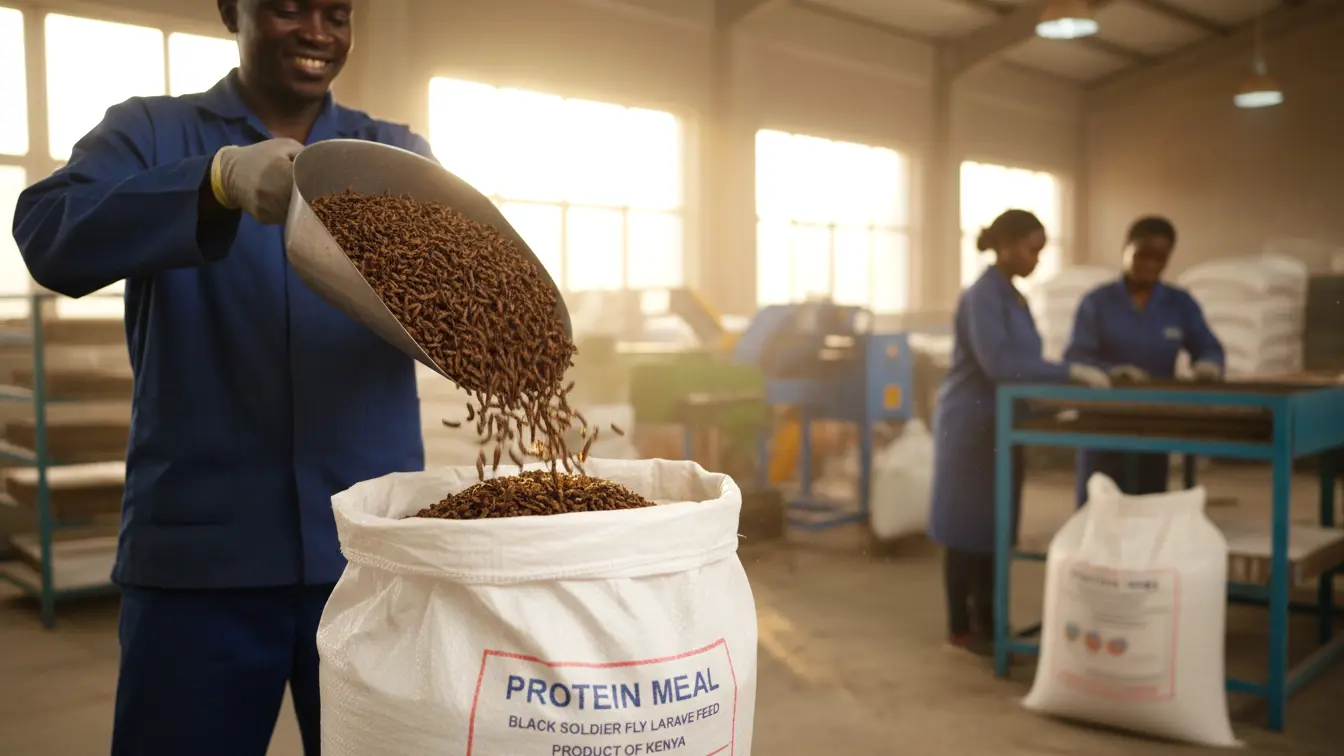
Creating BSF Meal
Raw larvae have a short shelf life. To add value, farmers are blanching the larvae in hot water and then solar drying them. The dried larvae can be ground into a coarse powder that replaces Omena in feed formulation.
This BSF meal sells for a premium to other farmers who do not have the time to farm the insects themselves. It is becoming a lucrative side business for established breeders.
Azolla Cakes and Pellets
Fresh Azolla contains a lot of water. By drying it in the shade (to preserve vitamins) and mixing it with bran or maize germ, farmers can use a simple pelletizer to create homemade feed pellets. These pellets are easier to store and handle than wet biomass, and they can be sold to neighbors.
Hydroponic Silage
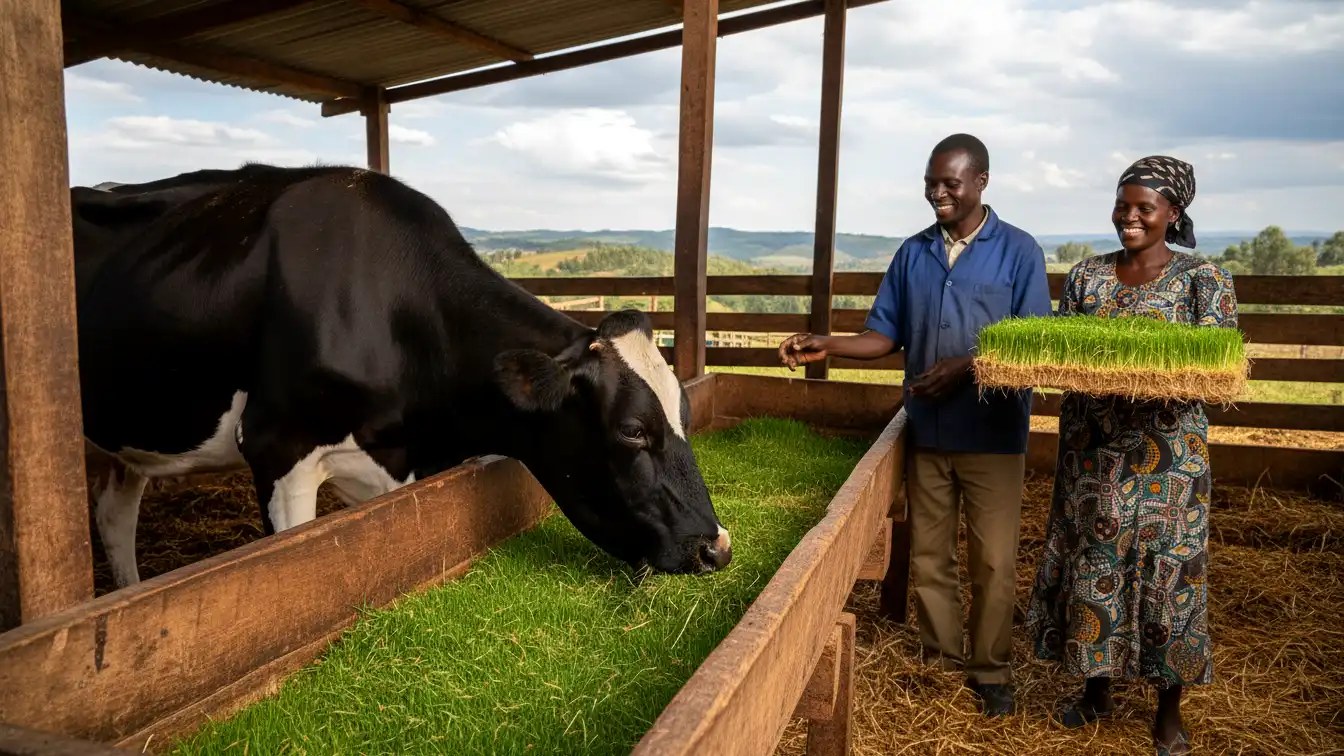
Hydroponic fodder must usually be fed fresh. However, if you have surplus production, you can wilt the mats slightly and pack them into silage bags. This fermentation process preserves the fodder and can actually improve the bioavailability of certain nutrients, allowing you to sell “ready-to-eat” fodder during droughts.
What is the 2026 Outlook for Alternative Animal Feeds?
The trend is moving toward integrated circular systems. Successful farms in 2026 will use animal waste to feed BSF and Azolla, which in turn feed the animals. Regulatory bodies like KEBS are beginning to standardize commercial insect-based proteins, opening the door for large-scale export and formal market entry.
Read Also: Top 5 Profitable Dairy Cow Breeds for Successful Farming in Kenya (2026 Guide)
The Rise of the Circular Shamba
The future is not about choosing just one. The most profitable farms in Kenya are combining all three. Manure from the cows fertilizes the Azolla pond.
Waste from the hydroponic selection feeds the BSF larvae. The BSF larvae feed the chickens. This closed-loop system eliminates waste and minimizes external inputs.
Call to Action
Do not wait for commercial feed prices to drop; they likely won’t. Start small. Dig a 3×2 meter hole for Azolla this weekend.
It is the lowest risk investment with immediate returns. Once you master the water management, move to BSF. Control your inputs, and you will control your profits.
Farmers Also Ask (FAQ)
Does Azolla affect the taste of milk or eggs?
No, Azolla does not negatively alter the taste. In fact, the high beta-carotene content in Azolla often results in a richer, yellower yolk in eggs, which is preferred by Kenyan consumers. For dairy cows, it boosts milk production without tainting the flavor, provided it is harvested from clean water.
Can I feed BSF larvae to ruminants like cows and goats?
Technically yes, but it is not economically efficient. BSF is a high-protein source best utilized by monogastric animals like chickens, pigs, and fish. Cows require high fiber and energy, which makes hydroponic fodder or silage a far better and cheaper option for them.
How do I prevent mold in my hydroponic barley system?
Mold is the biggest killer of hydroponic systems. Ensure your trays are cleaned with a bleach solution between cycles. Soak seeds in a fungicide or diluted vinegar solution before planting. Most importantly, ensure your grow room has excellent air circulation using fans or open vents.
Is it legal to sell BSF larvae in Kenya?
Yes, selling BSF larvae is legal. However, if you are processing them into a packaged commercial feed powder for sale in agrovets, you will eventually need certification from the Kenya Bureau of Standards (KEBS) to ensure safety and quality control.
How much water does an Azolla pond consume?
Azolla ponds consume water primarily through evaporation. In a hot area like Machakos, you might need to top up 1-2 inches of water per week. Ensure the pond is lined correctly with a dam liner to prevent seepage into the soil.
Can I grow hydroponic fodder without a greenhouse?
Yes, you can use a simple shade net structure or even a well-ventilated room in your house. The “greenhouse” is only necessary to control temperature and humidity. As long as you can protect the trays from direct scorching sun, rain, and rats, you can grow fodder.
What is the biggest risk with BSF farming?
The biggest risk is the colony collapsing due to pesticides. If you feed your larvae market waste that has been sprayed with heavy chemicals, the larvae will die. Always source organic waste or wash vegetable scraps thoroughly before feeding them to the larvae.
How long does it take for Azolla to be ready for harvest?
If you start with a good culture and proper fertilization (manure + superphosphate), Azolla spreads incredibly fast. You can usually start harvesting within 10 to 14 days after the initial stocking. From there, you can harvest daily.
Can I use maize instead of barley for hydroponics?
Yes, you can use maize. It is cheaper and more available. However, maize has a lower protein content compared to barley and is more prone to mold. If you use maize, ensure you use clean, whole grains that have not been broken or treated with preservatives.
Is Azolla safe for human consumption?
While Azolla is rich in protein, it is not commonly eaten by humans in Kenya. It can be eaten if grown in very hygienic conditions, but the variety grown in manure-fertilized ponds for livestock is strictly for animal feed due to potential bacterial contamination.