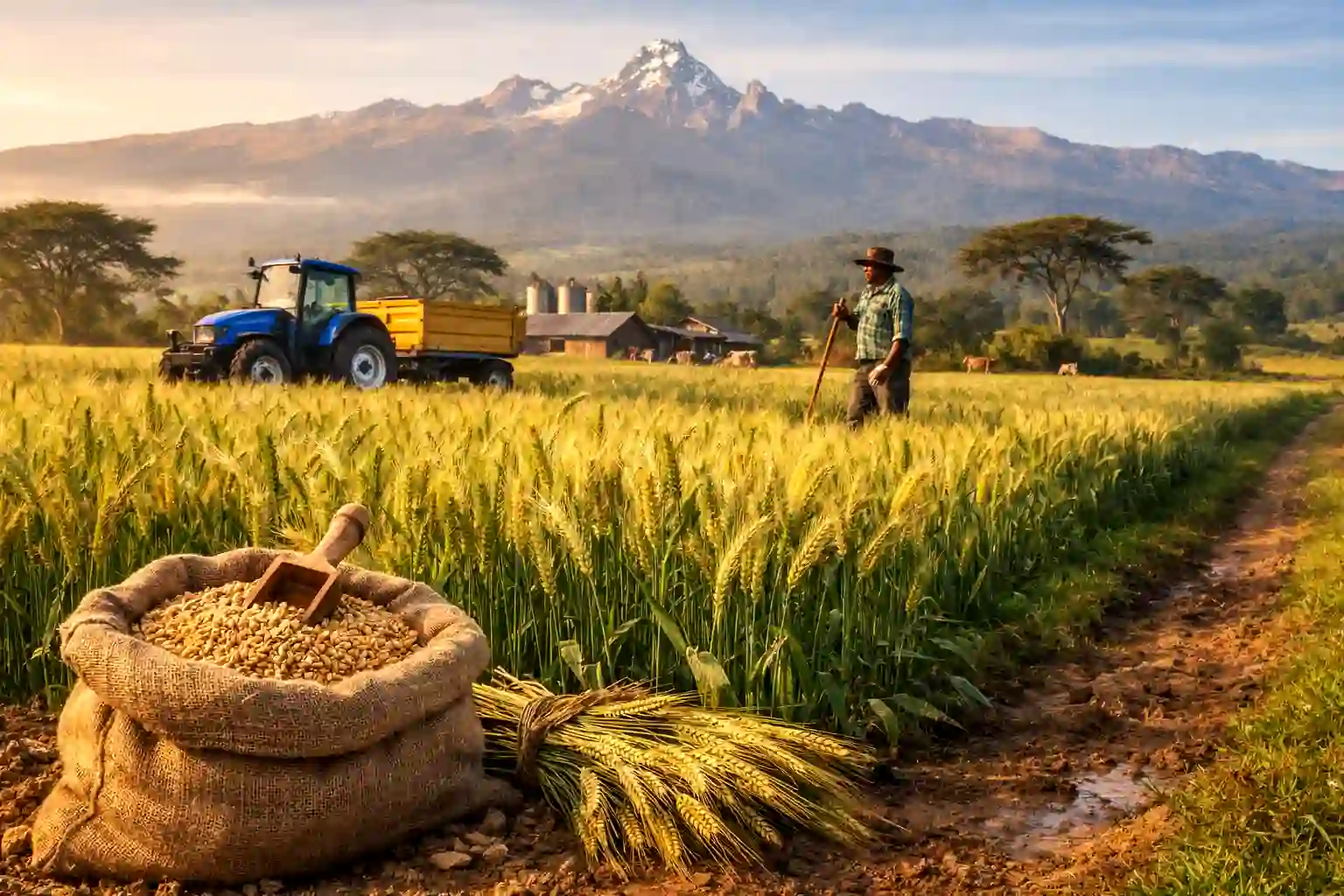

- Estimated Profit: Competent farmers in Narok and Timau are netting between KES 35,000 and KES 65,000 per acre in 2026, depending heavily on rainfall and fungal management.
- Primary Market: The East African Breweries Limited (EABL) contract remains the “Gold Standard” for liquidity, offering approximately KES 53.30 – KES 57.00 per kg for malt-grade barley.
- Key Varieties: The Aliciana and Planet varieties are dominating 2026 harvests due to their high resistance to waterlogging and superior malting quality.
Table of Contents
Barley farming in Kenya has evolved from a secondary “filler crop” into a high-stakes commercial venture for farmers in the Rift Valley and Mt. Kenya regions. As we navigate 2026, the sector is defined by strict quality controls from EABL and a shift towards newer, high-yielding European varieties that resist lodging. Barley farmers with a contract enjoy a guaranteed market provided they meet the strict nitrogen and moisture content standards required for malting.
What are the best barley varieties for Kenyan farmers in 2026?
The top-performing varieties in 2026 are Aliciana, RGT Planet, and Grace. Aliciana is currently the market leader for contract farmers due to its 10-15% higher yield potential and resistance to waterlogging. Old varieties like Sabini and Nguzo are being phased out in favor of these newer European breeds that mature faster and offer better malting extract.
High-Yield Malting Varieties
Success in barley farming starts with seed selection. In 2026, the market is entirely driven by “Malting Grade” specifications. If your barley fails to meet these specs due to high nitrogen or shriveled grains, it is downgraded to “Feed Grade,” which fetches 40-50% less revenue.
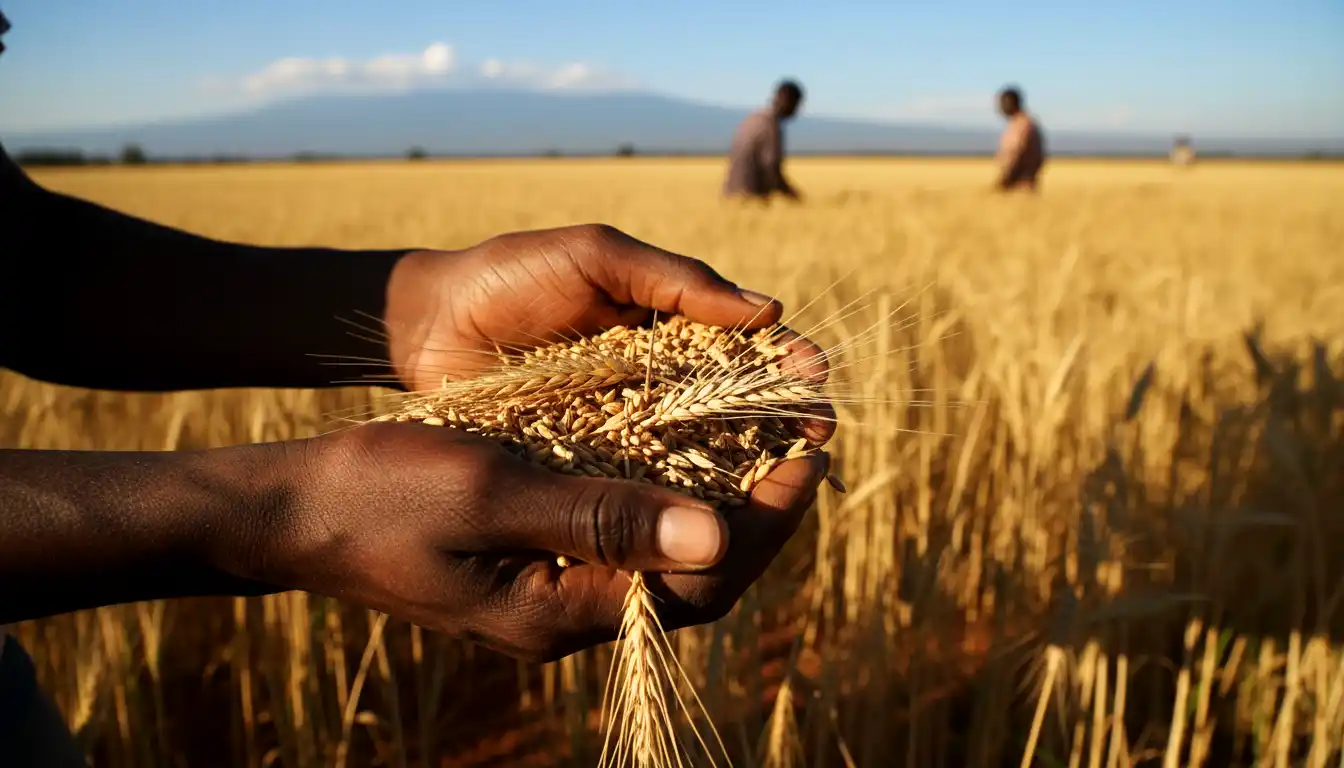
Aliciana has become the darling of Narok farmers. It is a two-row barley that stands well against the heavy winds often experienced in Mau Narok, reducing losses from lodging. RGT Planet is another heavyweight, favored in Meru for its exceptional disease resistance package, particularly against Net Blotch.
READ ALSO: Maize Farming in Kenya: High Yield Production Guide, Best Practices and Profit Tips 2026
Fanaka is still used in drier pockets because it is drought-tolerant, but its yield ceiling is lower than Aliciana. Farmers are advised to only plant varieties recommended by their buyer to ensure the harvest is accepted.
| Variety | Type | Maturity | Avg. Yield (Bags/Acre) | Key Advantage |
|---|---|---|---|---|
| Aliciana | Malting (2-Row) | 120-130 Days | 22 – 30 | Excellent resistance to lodging & waterlogging. |
| RGT Planet | Malting (2-Row) | 135 Days | 20 – 28 | Superior disease resistance; high malt extract. |
| Grace | Malting | 120 Days | 18 – 22 | Early maturity; good for short rain seasons. |
| Fanaka | Feed/Malt | 110 Days | 15 – 18 | Drought tolerant; suitable for lower altitudes. |
Where to Buy Certified barley seeds in Kenya 2026
Certified barley seeds are strictly controlled in Kenya. You must purchase them through East African Maltings Limited (EAML) offices in Molo, Narok, or Timau if you are a contracted farmer. Independent farmers can source certified seeds from Kenya Seed Company or authorized stockists like Leldet and Amiran Kenya, but contract-supplied seed is recommended for market assurance.
Securing quality inputs is the first step to avoiding “Feed Grade” rejection. In 2026, the supply chain is tighter than ever.
1. East African Maltings Ltd (EAML):
This is the subsidiary of EABL that handles raw material sourcing. They provide seed on credit to contracted farmers. This is the safest route because the seed variety is guaranteed to be what the brewery wants.
2. Kenya Seed Company & Simlaw Seeds:
For farmers growing barley for animal feed or local markets, Kenya Seed Company offers varieties like Nguzo. These are available at major agrovets in Nakuru, Eldoret, and Nairobi.
3. Digital Platforms:
Platforms like iProcure and DigiFarm have become vital in 2026 for booking fertilizer and chemicals. They ensure you get genuine inputs delivered to your nearest depot, avoiding the fake chemicals often sold in downstream agrovets.
Which regions are best for barley farming in Kenya?
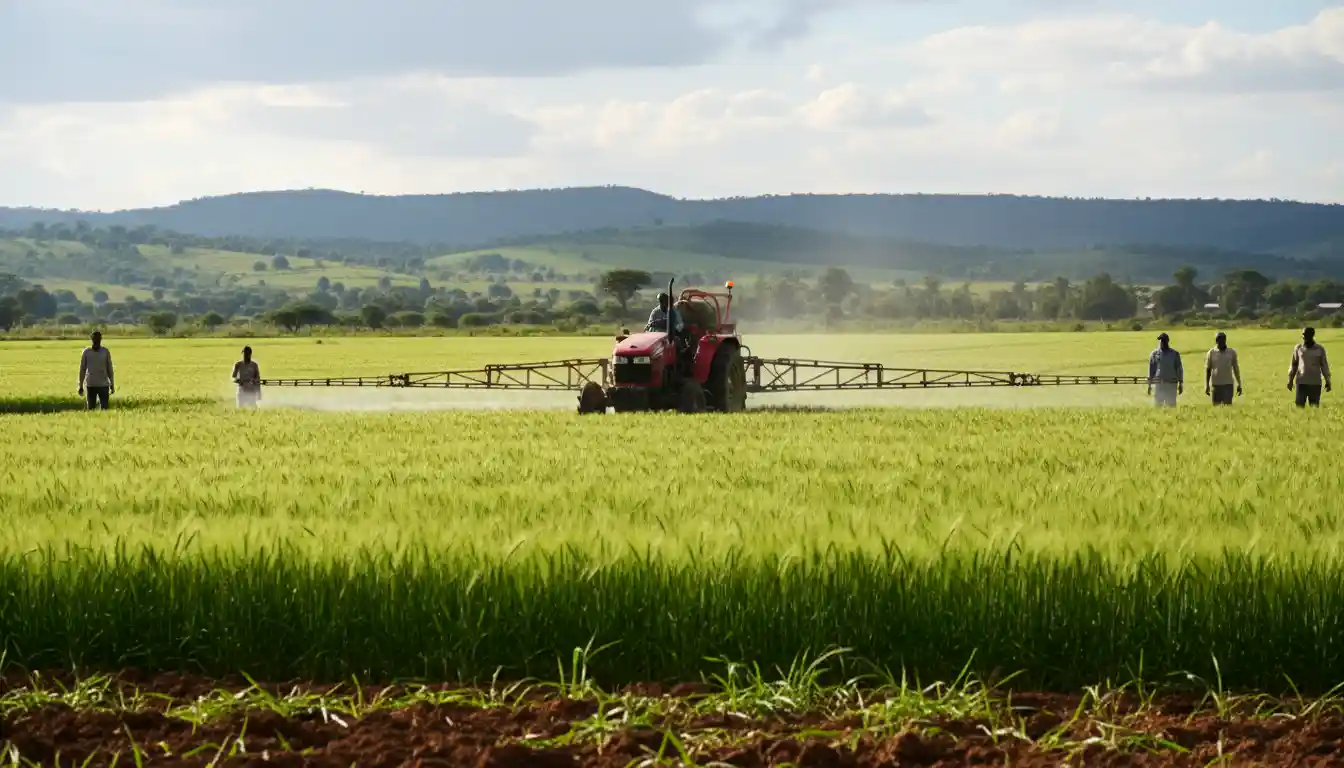
Mau Narok is the undisputed capital of barley farming, accounting for over 60% of national production. Timau (Meru) is the second-largest hub, favored for its large-scale mechanization. Other viable regions include Moiben (Uasin Gishu), Molo, and parts of Laikipia.
County-by-County Analysis
Narok County (The Barley Belt):
Narok is synonymous with barley. The cool, high-altitude climate of Mau Narok allows for slow grain filling, which increases the starch content required for beer. Farmers here often lease land, with 2026 lease rates ranging from KES 10,000 to KES 15,000 per acre per year.
READ ALSO: Bulb Onion Farming in Kenya: Best F1 Varieties in 2026
Meru County (Timau):
Timau farmers are typically large-scale and highly mechanized. The soils here are volcanic and rich, often producing yields of 25+ bags per acre. The challenge in Timau is often the overlap with wheat harvesting which can strain machinery availability.
Nakuru & Uasin Gishu:
Molo and Njoro are traditional barley zones but have seen land fragmentation. Moiben is an emerging powerhouse, with many wheat farmers switching to barley due to the EABL price guarantee. Soil acidity in Uasin Gishu is a concern, so liming is frequently required before planting.
What is the best month to plant barley in Kenya?
The ideal planting window for the main season is mid-March to mid-April (Long Rains). A second, smaller season (Short Rains) is planted in October, primarily in Timau and parts of Narok. Planting must coincide with the onset of rains to ensure germination.
12-Month Farming Calendar (2026)
January – February:
Deep ploughing is essential to break the hardpan. Apply lime if soil tests indicate acidity (pH below 5.5). Pre-emergent herbicide application is recommended to clear weeds before planting.
March:
Plant immediately after the first effective rains (approx. 30mm). The recommended seed rate is 35-40kg per acre. Apply DAP fertilizer at a rate of 50-75kg per acre.
April – June:
Apply broadleaf herbicides at the 3-leaf stage. Top dress with CAN or Urea if the crop shows yellowing. This is also the critical “Fungicide Window” to spray against Net Blotch, Scald, and Rust.
July – September:
The crop needs cool weather for grain filling. Monitor for lodging if rains are heavy. Harvest begins when the crop turns golden yellow and moisture content drops below 13.5%.
Is barley farming profitable in Kenya in 2026?
Yes, barley farming is profitable but capital intensive. With a total cost of production averaging KES 38,000 – 45,000 per acre, and gross revenue of KES 80,000 – 100,000, farmers can expect a net profit of KES 35,000 – 55,000 per acre.
Deep-Dive Financial Breakdown (Per Acre)
The following table outlines the costs for a commercial farmer renting land in Narok in 2026. Note that estimated ranges vary by management and weather conditions.
| Expense Item | Cost (KES) | Notes |
|---|---|---|
| Land Lease | 12,000 | Average commercial rate in Narok/Mau. |
| Ploughing & Harrowing | 4,500 | Tractor hire (Diesel prices affect this). |
| Certified Seed (40kg) | 4,800 | Approx KES 120/kg for treated seed. |
| Fertilizer (DAP + CAN) | 9,500 | 75kg Planting + 50kg Top Dressing. |
| Herbicides & Fungicides | 8,000 | Crucial for Malt Grade. |
| Harvesting (Combine) | 3,500 | Standard acre rate. |
| Transport & Bags | 3,000 | Transport to silo/depot. |
| Miscellaneous/Labor | 2,000 | Scouting, bag loading, etc. |
| TOTAL COST | 47,300 | High input, high output model. |
| REVENUE | 96,000 | 20 Bags x 90kg @ KES 53.3/kg. |
| NET PROFIT | 48,700 | Per acre, per season. |
Break-Even Analysis:
To cover the KES 47,300 cost, a farmer needs to harvest approximately 10 bags (900kg). Anything above 10 bags is profit. A poor farmer getting 12 bags makes very little, while a good farmer getting 25 bags makes excellent returns.
How does the barley supply chain work in Kenya?
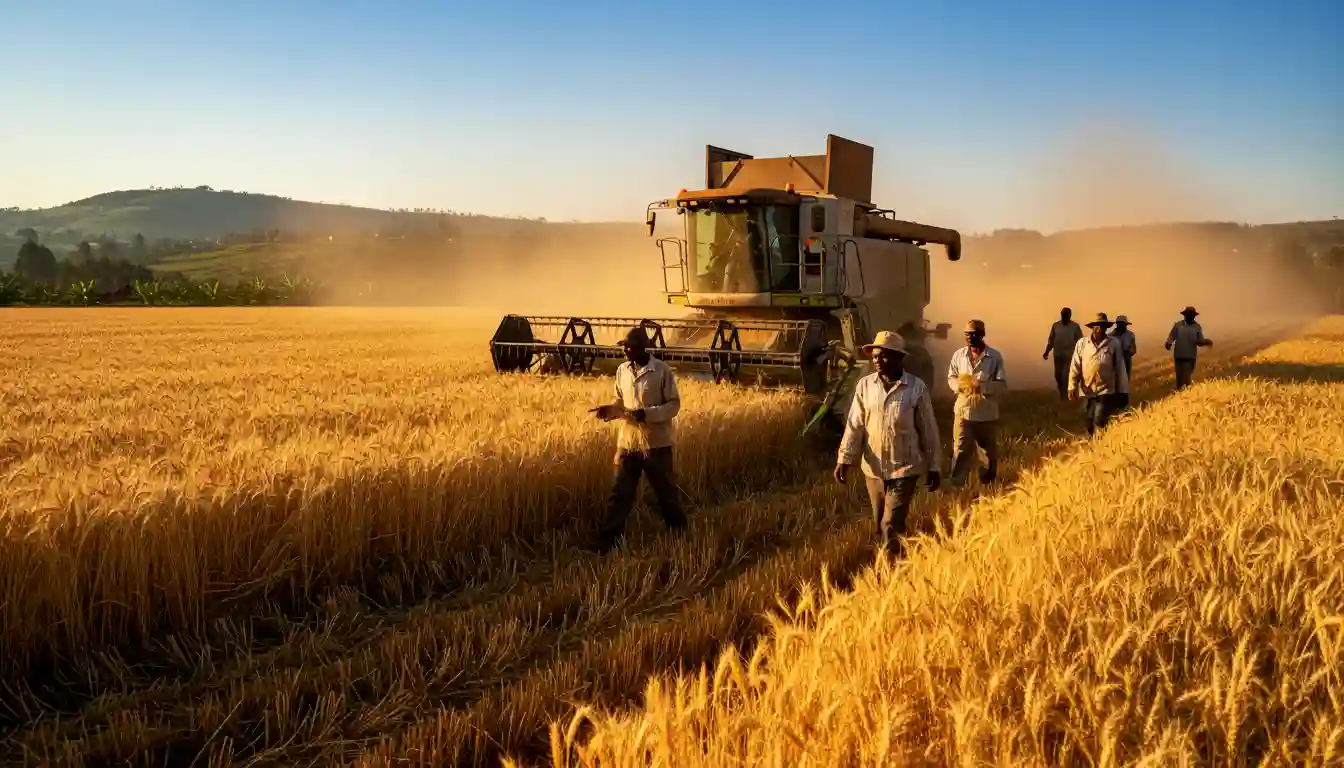
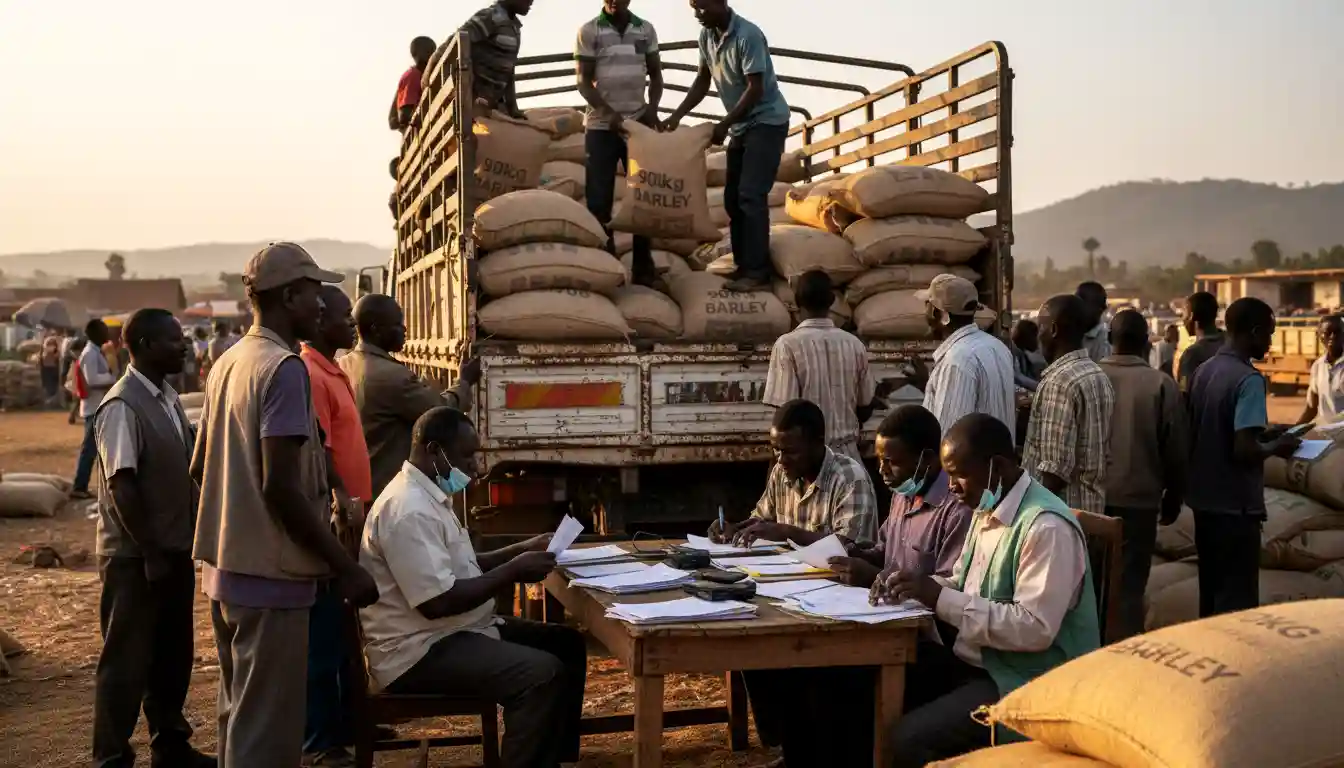
The supply chain is highly vertical. It flows from Farmer to Aggregator/Transporter to EAML Silos to EABL Brewery. Unlike maize, there are very few “middlemen” or brokers because 90% of barley is grown under strict contract.
Value Addition & By-Products
While the grain goes to beer, the “straw” (stems left after harvest) is a goldmine often overlooked by beginners. Barley straw is softer and more palatable to dairy cows than wheat straw. In 2026, a bale of barley hay sells for KES 250 – 400.
READ ALSO: Top 10 Best Agrovets in Kenya (2026 Guide): Where to Buy Genuine Inputs in Nairobi, Eldoret & Nakuru
Micro-Breweries:
A small but growing niche exists for selling specialized barley to craft breweries in Nairobi. However, this requires malting the barley yourself or paying a third party to malt it. This process is complex and usually requires a license.
Conclusion: 2026 Outlook
Barley farming remains one of the most secure agribusiness ventures in Kenya for 2026, primarily due to the EABL contract system. The removal of market price risk allows farmers to focus entirely on agronomy and increasing yield per acre. The biggest threat in 2026 is climate variability, as unpredictable rains at harvest can ruin an entire crop’s malting quality.
READ ALSO: How to Get Instant Farm Input Mobile Loans in Kenya 2026: Digital Credit Apps and Bank Options
Actionable Advice: Do not plant barley without a market plan. If you cannot get an EABL contract, partner with a large-scale farmer who has one. Invest in soil testing, as barley hates acidic soil and a cheap test can save you thousands in lost inputs.
Frequently Asked Questions: Barley Farming in Kenya
How much is barley per kg in Kenya?
In 2026, the contract price for malting barley offered by EABL/EAML is approximately KES 53.30 to KES 57.00 per kg. This translates to roughly KES 4,800 to KES 5,100 per 90kg bag. Feed grade barley sold in the open market fetches lower prices, typically KES 35 – 40 per kg.
How many months does it take for barley to grow?
Barley is a fast-maturing crop, taking between 3.5 to 4.5 months (110 to 135 days) to reach harvest maturity, depending on the variety and altitude. Varieties like Grace mature faster (approx. 120 days), while Aliciana may take slightly longer in very high-altitude areas like Mau Narok.
How many kg of barley seed per acre?
The recommended seed rate is 35kg to 40kg per acre for certified seeds. If using a planter machine, you can achieve better spacing and use closer to 35kg. Broadcasting (hand planting) often wastes seed, requiring up to 50kg per acre to ensure a good stand.
How to grow barley in Kenya?
Start by ploughing and harrowing to create a fine tilth. Plant at the onset of rains using DAP fertilizer. Apply a pre-emergence herbicide to control weeds early. Top dress with CAN at the tillering stage. Crucially, apply fungicides at the stem elongation stage to prevent diseases.
What is the average barley yield per acre in Kenya?
The national average is about 15 to 18 bags (90kg) per acre. However, professional farmers using certified seeds and proper agronomy in Narok and Timau regularly achieve 22 to 30 bags per acre. Yields below 12 bags are generally considered barely profitable.
What is the expected barley farming profit per acre?
Net profit typically ranges from KES 35,000 to KES 55,000 per acre per season. This assumes a yield of 20+ bags and adherence to malting quality standards. If the crop is downgraded to feed quality due to poor management, profits can drop significantly.
Where are the best regions for barley farming in Narok?
The best areas in Narok include Mau Narok, Enkare Nyiro, Tipis, and Olokurto. These high-altitude zones offer the cool temperatures necessary for high-quality grain formation. The EAML depot in Narok town serves as the central hub for these regions.
Where can I buy certified barley seeds in Kenya?
Certified seeds are best purchased from East African Maltings Ltd (EAML) if you are a contracted farmer. Other reputable sources include Kenya Seed Company stockists and large agrovets like Leldet Agrovets in Nakuru and Eldoret. Always check for the KEPHIS certification tag on the bag.
Where is the best place to buy or sell barley in Kenya?
To sell malting barley, the only major buyer is EABL (via EAML). For feed barley, dairy cooperatives in Githunguri and Limuru, or animal feed manufacturers like Unga Farm Care and Wonder Feeds, are the best buyers. Buying seeds should be done at registered depots to avoid fakes.
Is there a barley farming in Kenya PDF guide?
Yes, EABL and KALRO often provide technical manuals to contracted farmers. You can also find comprehensive guides on the Cereal Growers Association (CGA) website or by visiting the EAML agronomy offices in Molo or Narok to request their latest “Barley Growers Manual 2026.”