
Table of Contents
The 2026 Kenyan Greenhouse Blueprint: Earn KES 500K+ With This Master Strategy
Greenhouse farming in Kenya has evolved from a luxury venture for the wealthy into a critical survival strategy for the smart beginner farmer in 2026. With the Kenya Meteorological Department forecasting a neutral climate phase after the La Niña of 2025, this year presents a unique Goldilocks window for farmers who can control their environment. This guide is not just theory; it is a battle-tested roadmap designed to help you generate over KES 500,000 in net profit within two seasons using a standard 8m by 15m greenhouse.
The secret to success in 2026 lies in precision. Gone are the days of guessing. Today, you must know your seed varieties by name, your fertilizer by composition, and your market prices by the shilling. This guide aggregates the latest data from KALRO, real-time market trends from Wakulima Market and Kongowea, and construction costs current as of January 2026. Whether you are in Kiambu, Uasin Gishu, or Kajiado, these principles apply universally but require local adaptation.
Read also
Pixie Orange Farming in Kenya 2026: Complete Guide to Seedlings, Costs and Profit per Acre
We will cover everything from the exact cost of nails and polythene to the specific phone numbers of legitimate seed merchants. You will learn why 60% of beginners fail in the first year usually due to soil mismanagement or cheap metallic structures and how you can join the top 10% who treat farming as a high-precision science. We will explore the nuances of soil chemistry, the engineering behind structural integrity, and the psychological warfare involved in negotiating with market brokers.
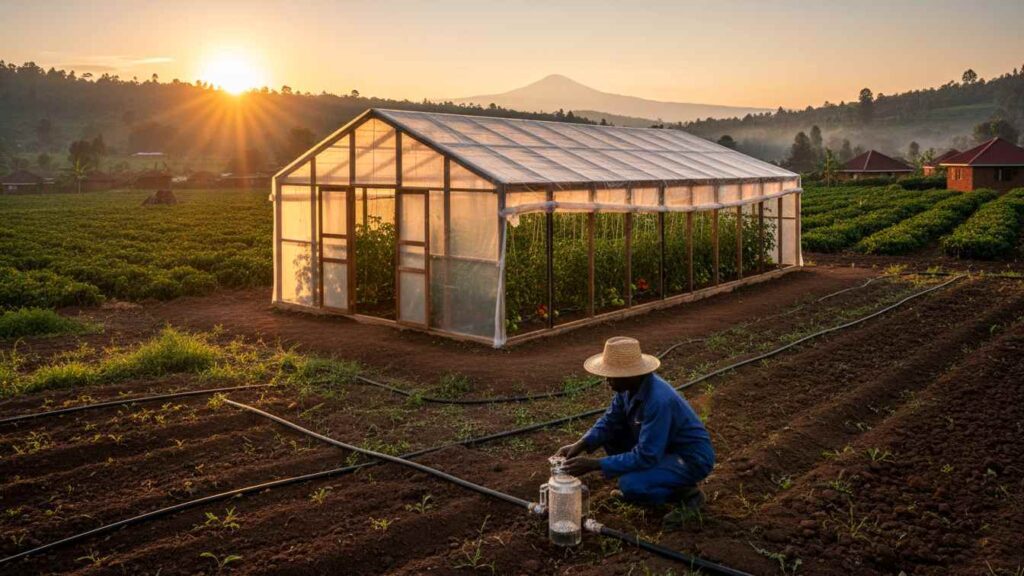
A well-constructed wooden greenhouse in Kenya with a farmer inspecting the irrigation system during sunrise.
A standard 8m x 15m wooden greenhouse is the most cost-effective entry point for beginners in 2026.
Phase 1: The Financial Reality of 2026
Understanding the Startup Capital and ROI
Before you buy a single nail, you must understand the financial landscape of 2026. Inflation has adjusted the cost of building materials, but the price of produce has also risen, balancing the scales for the astute investor. For a beginner, the target is a Low Cost, High Output model. We recommend starting with a wooden greenhouse if your budget is tight, as metallic structures have seen a 15% price hike due to global steel fluctuations affecting the Kenyan market.
A standard 8m by 15m wooden greenhouse will cost you between KES 150,000 and KES 180,000 to construct fully. This includes the cost of treated timber, UV-treated polythene (200 microns), insect netting, and labor. Do not cut corners on the timber treatment; termites are the silent killers of wooden greenhouses in Kenya. If you opt for a metallic structure of the same size, budget between KES 230,000 and KES 300,000. While metallic structures last longer (10+ years vs. 3-5 years for wood), the initial capital outlay can cripple a beginner cash flow.
Your return on investment (ROI) depends entirely on your crop choice and timing. For example, a tomato crop in an 8m x 15m greenhouse can host roughly 500 indeterminate plants. If managed well, each plant can yield 15kg over a 6-9 month harvest period. That is 7,500kg total. At a conservative average market price of KES 50 per kg, your gross revenue is KES 375,000 per season. With two seasons in a year or overlapping crops, hitting the KES 500,000 profit mark is mathematically achievable, provided you minimize input wastage.
Critical Cost Breakdown for January 2026
You need to walk into your agrovet or hardware store knowing the prices. As of January 2026, a roll of high-quality UV-treated greenhouse polythene (yellow or clear, 200 microns) costs approximately KES 95 to KES 110 per square meter depending on the brand. You will need roughly 200-250 square meters for a standard tunnel. Insect netting, which is non-negotiable for blocking whiteflies and Tuta absoluta, costs about KES 150 per running meter.
Drip irrigation is your lifeline. A complete drip kit for an 8m x 15m plot, including the tank connection, filtration system, and driplines with 20cm or 30cm spacing, will cost between KES 20,000 and KES 30,000. Do not attempt to hand-water a greenhouse; it encourages fungal diseases like blight and powdery mildew. Automation is not a luxury; it is a hygiene standard.
Labor and miscellaneous inputs like sawdust for nursery preparation, twine for trellising, and initial fertilizers (DAP and manure) will add another KES 30,000 to your budget. Always reserve at least KES 50,000 as an emergency operating fund for the first three months. Crop pests do not wait for your next paycheck, and having liquidity to buy a specific fungicide on a Sunday morning can save your entire harvest.
Hidden Costs Nobody Tells You About
Beginners often calculate the wood and the plastic but forget the operational friction costs. In Kenya, you must account for transport logistics. Moving materials from the hardware store to your farm can cost KES 5,000 to KES 10,000 depending on the distance and road conditions. You must also budget for water pumping costs; if you are using an electric pump, your Kenya Power bill will increase. If you are using a petrol generator, fuel costs must be factored into your daily opex. Furthermore, casual labor for weeding or trellising is often needed during peak growth stages, costing KES 400 to KES 600 per day per person.
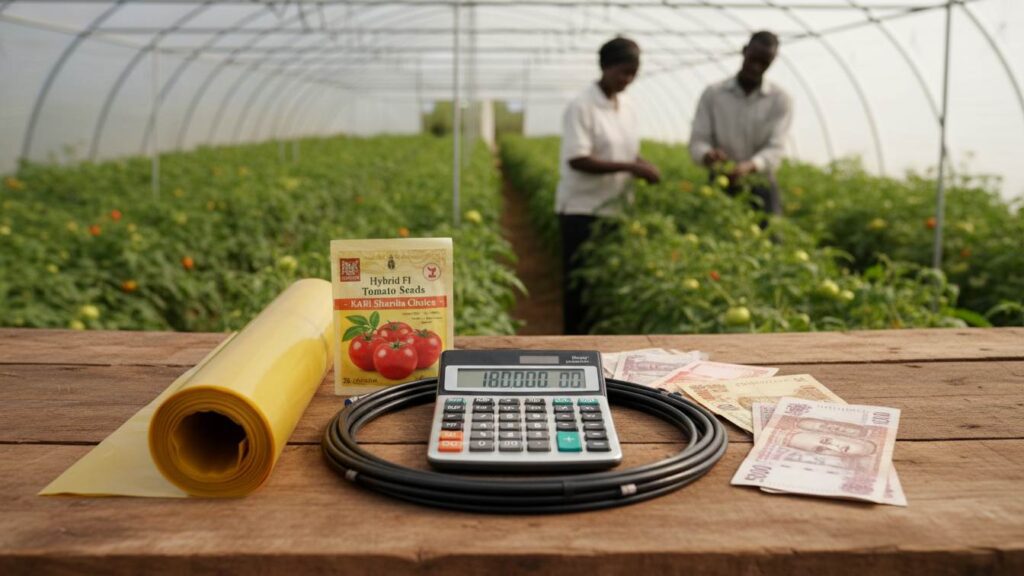
Essential items for budgeting a greenhouse farm in Kenya including polythene, drip lines, and currency.
Accurate budgeting prevents stalled projects. Pictured are the core components of your initial investment.
Alt: Essential items for budgeting a greenhouse farm in Kenya including polythene, drip lines, and currency.
PHASE 2: CHOOSING YOUR GOLDEN CROP
HIGH-VALUE CROPS FOR THE 2026 MARKET
The mistake most beginners make is growing what they like to eat, not what the market pays for. In 2026, the holy trinity of greenhouse profitability in Kenya remains Tomatoes, Capsicums (Colored), and Cucumbers. However, niche crops like herbs (Basil and Coriander) are gaining traction for peri-urban farmers near Nairobi and Mombasa who can supply high-end restaurants directly.
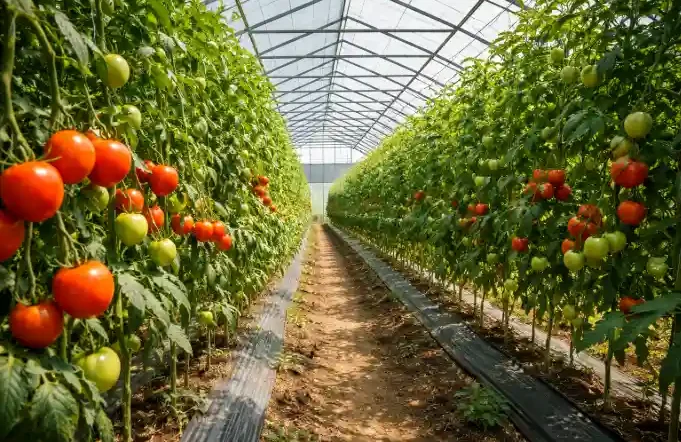
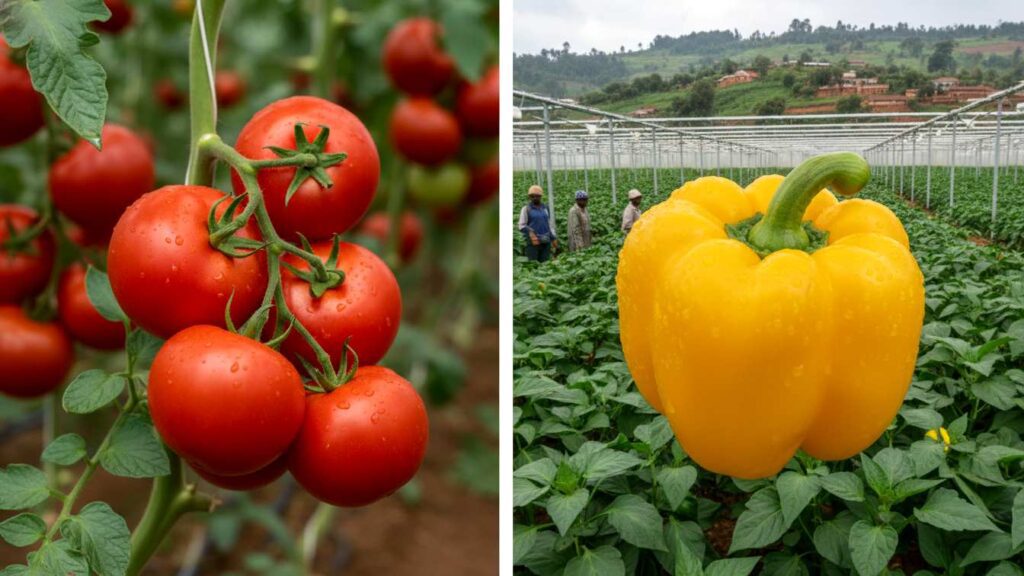
Tomatoes are the volume king. The demand in Nairobi alone is insatiable. You want to focus on Indeterminate varieties. Unlike the bush tomatoes you see in open fields, indeterminate varieties grow like vines, reaching up to 3 meters in height. They continue to flower and fruit for up to 9 months. The varieties to watch in 2026 include Anna F1 (famous for sweetness and hardiness), Tylka F1, and the robust Corazon F1. These hybrids are bred to resist local bacterial wilts and nematodes.
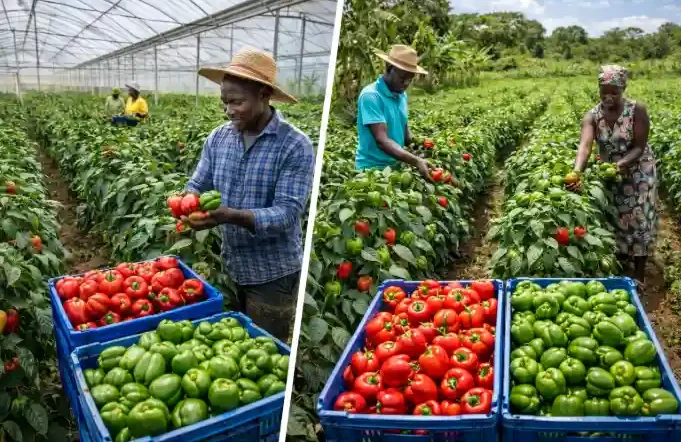
Colored Capsicums (Yellow and Red) are the margin kings. While green capsicums sell for KES 50-80 per kg, yellow and red ones can command KES 200-250 per kg in supermarkets and hotels. They require more patience as they take longer to color, but the payout is significantly higher. Varieties like Commandant F1 and Admiral F1 are excellent performers. If you are in a hotter region like Kisumu or Garissa, capsicums thrive in the heat inside a well-ventilated greenhouse.
THE BEST SEEDS FOR 2026 PRODUCTION
Selecting the right seed is 50% of the battle. Do not buy seeds from open sacks in the market. You need certified F1 Hybrid seeds. For 2026, verify that your seeds are packed recently.
For Tomatoes:
1. Anna F1 by Monsanto/Bayer: The veteran champion. Excellent shelf life and transportability.
2. Tylka F1: Superior resistance to Tomato Yellow Leaf Curl Virus (TYLCV), which is prevalent in lower altitudes.
3. Eva F1: Great for cooler highland areas like Limuru or Nyahururu.
For Capsicum:
1. Commandant F1 by Syngenta: Produces massive blocky fruits that the market loves.
2. Pasarella F1: An excellent red variety known for uniform coloring.
3. Ilanga F1: A reliable yellow variety that resists sunscald.
For Cucumber:
1. Supermarketer F1: The standard for field and greenhouse, very high yielding.
2. Diplomat F1: Parthenocarpic (does not need bees for pollination), making it perfect for sealed greenhouses where pollinators cannot enter.
PHASE 3: CONSTRUCTION AND SITE PREPARATION
SITE SELECTION AND ORIENTATION
Your greenhouse must be oriented North-South. This is a non-negotiable rule for Kenya, which sits on the equator. A North-South orientation allows the sun to travel over the arch of the greenhouse from East to West, ensuring that plants on one side do not shade the plants on the other side. If you orient it East-West, the crops in the southern rows will be permanently shaded by the northern rows, leading to stunted growth and uneven ripening.
You may like
How to Grow Big Cabbages in Containers Kenya: Best Varieties, Where to Buy Seeds and Best Farming Practices 2026
The site must be flat or gently sloping. If it is too steep, you will spend a fortune on leveling and terracing. Avoid low-lying areas that are prone to flooding; a waterlogged greenhouse is a disease factory. Ensure you have a reliable water source. A standard greenhouse consumes about 200-300 liters of water per day during peak heat. If you rely on Nairobi City Council water, have a backup tank of at least 2,000 liters.
STRUCTURAL INTEGRITY AND VENTILATION
Ventilation is the most overlooked aspect of greenhouse construction. In Kenya, overheating is a bigger problem than freezing. Your greenhouse must have side vents that can be rolled up and down. We recommend a roll-up height of at least 2 meters from the ground. This allows cool air to enter from the sides and push hot air out through the top vents (if you have a vented roof design).
The insect net must be 40-mesh or higher. This mesh size is small enough to block whiteflies and aphids but large enough to allow airflow. If you use a mesh that is too fine, you will choke the plants, leading to high humidity and fungal outbreaks. Ensure the plastic cover is pulled tight; loose plastic flaps in the wind, which weakens the structure and tears the material over time.
SOIL HEALTH AND STERILIZATION
This is the step where 60% of farmers fail. You cannot just build a greenhouse over existing grass and start planting. The soil inside a greenhouse is intensive real estate; it works 10 times harder than open field soil. You must test your soil. Send a sample to CropNuts (Crop Nutrition Laboratory Services) or KALRO. A basic soil analysis costs about KES 3,000 and will save you KES 50,000 in lost fertilizer.
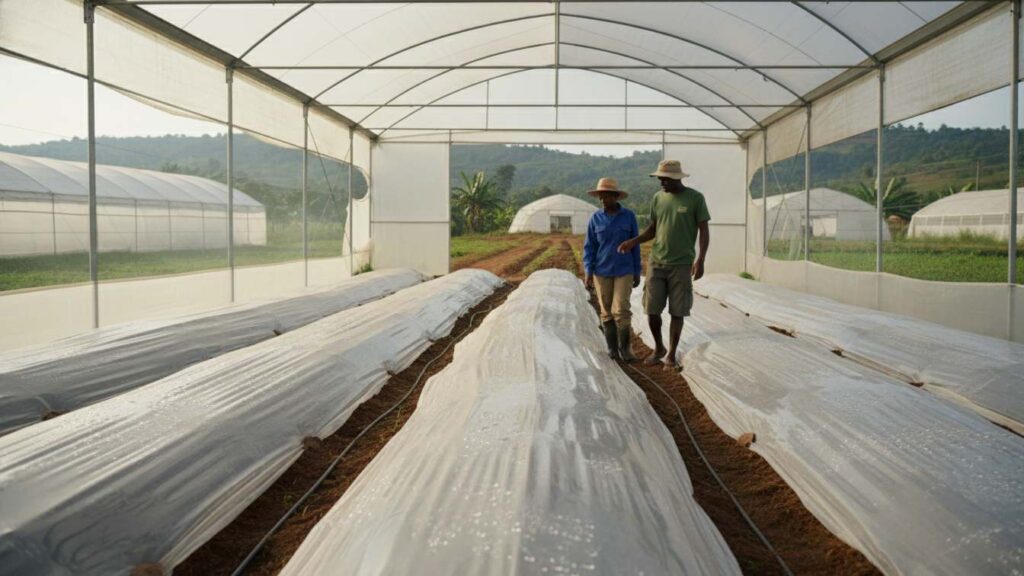
You must sterilize the soil to kill soil-borne pests like nematodes and bacterial wilt. In 2026, chemical fumigants are becoming expensive and restricted. The best beginner method is Solarization.
1. Wet the soil inside the greenhouse thoroughly to conduct heat.
2. Cover the soil with a clear, thin polythene sheet (gauge 1000 or similar).
3. Burry the edges of the sheet to trap the heat.
4. Close the greenhouse completely for 3-4 weeks during a sunny month.
The internal temperature will rise to over 60 degrees Celsius, cooking the nematodes, weed seeds, and fungal spores. It is free, effective, and organic.
CRITICAL ERROR: Never skip soil sterilization. Bacterial wilt can live in the soil for years. If it infects your greenhouse, you will have to abandon tomato farming in that structure for at least 5 years.
PHASE 4: THE GROWING CYCLE AND MANAGEMENT
NURSERY MANAGEMENT
Do not plant seeds directly into the greenhouse soil. You must raise them in a nursery using seedling trays. Using trays ensures 100% germination rates and prevents root shock during transplanting. Use Coco Peat (coconut fiber) as your planting media instead of soil. It is sterile, holds water well, and is available at most agrovets for KES 600 per 5kg block.
Sow one seed per hole. Water gently every morning using a mist sprayer or a watering can with a fine rose. Your seedlings are ready to transplant when they have 4-6 true leaves, usually after 3-4 weeks. Hardening off is crucial: reduce watering and expose the seedlings to more sunlight for 3 days before moving them to the main greenhouse. This toughens the tissue and prepares them for the real world.
TRANSPLANTING AND SPACING
In your 8m x 15m greenhouse, you will create raised beds. These beds should be 1 meter wide and 15cm high, separated by 50cm walking paths. Raised beds improve drainage and root aeration.
Plant your tomatoes or capsicums in zigzag double rows on each bed.
Inter-row spacing: 60cm between the two lines on the bed.
Intra-row spacing: 30cm to 40cm between plants in the same line.
This spacing maximizes population while allowing airflow. Poor airflow leads to Botrytis (Grey Mold), a fungal disease that rots fruits.
TRELLISING AND PRUNING
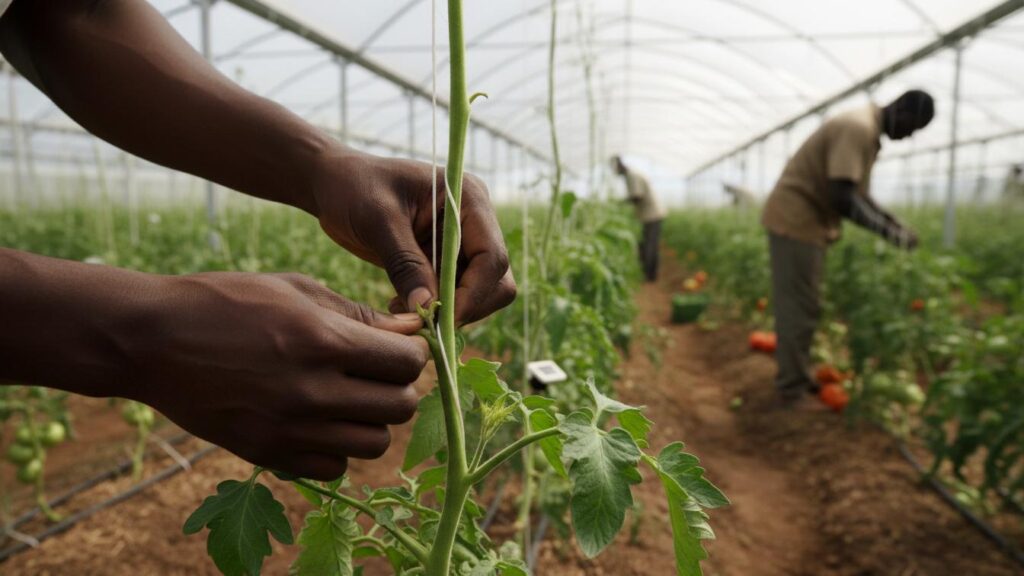
Greenhouse tomatoes are vines. They cannot support their own weight. You must trellis them. Run a 16-gauge galvanized wire horizontally 2.5 meters above each bed. Tie a piece of UV-treated twine (costs KES 300 per roll) from the base of each plant to the overhead wire. As the plant grows, gently twist it around the twine in a clockwise direction.
Read about
DAIRY GOAT FARMING IN KENYA: THE 2026 MASTER GUIDE TO PROFITABLE BREEDS, HOUSING, AND MILK PRODUCTION
Pruning is a daily task.
1. Remove Suckers: Suckers are the small shoots that grow between the main stem and the leaf branch (the axil). Pinch them off with your fingers when they are small (less than 1 inch). If left to grow, they become new stems that steal energy from the main fruit production.
2. Remove Lower Leaves: As the plant grows taller, the lower leaves age and touch the ground. These are entry points for disease. Cut them off with sterilized scissors. Keep the bottom 30cm of the stem bare to improve airflow.
PHASE 5: FERTILIZATION AND IRRIGATION
THE SPOON-FEEDING APPROACH
Greenhouse plants are hungry. You cannot just dump fertilizer once and leave. You must use Fertigation feeding the plant through the drip irrigation system. This is the most efficient way to farm as nutrients are delivered directly to the root zone.
Week 1-2 (Rooting Stage): Use a high-phosphorus fertilizer to encourage root establishment. A starter grade NPK or a solution of DAP (filtered to avoid clogging drippers) works well. The goal is to build a massive root system that can support a heavy crop later.
Week 3-8 (Vegetative Stage): The plant needs Nitrogen for leaves and stems. Calcium Ammonium Nitrate (CAN) is your friend here. Dissolve it in water and feed via the drip lines.
Week 9+ (Flowering and Fruiting): Switch to high Potassium. Potassium (K) makes the fruits heavy, shiny, and sweet. Use NPK 17:17:17 or specialized soluble fertilizers rich in Potassium like Multi-K.
Do not forget Micronutrients. A deficiency in Calcium leads to Blossom End Rot, where the bottom of your tomato turns black and rotten. This is very common in Kenya due to acidic soils locking out calcium. Prevent it by spraying Calcium Nitrate foliar feeds every two weeks once flowering starts.
WATER MANAGEMENT FOR 2026
The 2026 forecast predicts a dry start to the year. You must manage water carefully. Over-watering is as dangerous as under-watering.
The Finger Test: Stick your finger 2 inches into the soil. If it feels dry, irrigate. If it sticks to your finger or feels cool and damp, wait.
Generally, a mature tomato plant needs about 1 to 1.5 liters of water per day. In hot months (January, February), split this into two sessions: one at 8:00 AM and one at 4:00 PM. Never water late in the evening; wet soil at night encourages fungi like Phytophthora.
MAINTAINING YOUR DRIP SYSTEM
Drip lines can clog easily with algae or silt. Once a month, flush your lines. Open the ends of the drip lines and turn on the water at full pressure for 2 minutes to flush out any debris. Clean your disk filters or screen filters weekly. If you notice a specific plant wilting while others are healthy, check the emitter near that plant; it is likely blocked.
PHASE 6: PEST AND DISEASE WARFARE
THE BIG THREE ENEMIES
In a Kenyan greenhouse, you will fight three main wars. Understanding these enemies is key to winning the battle.
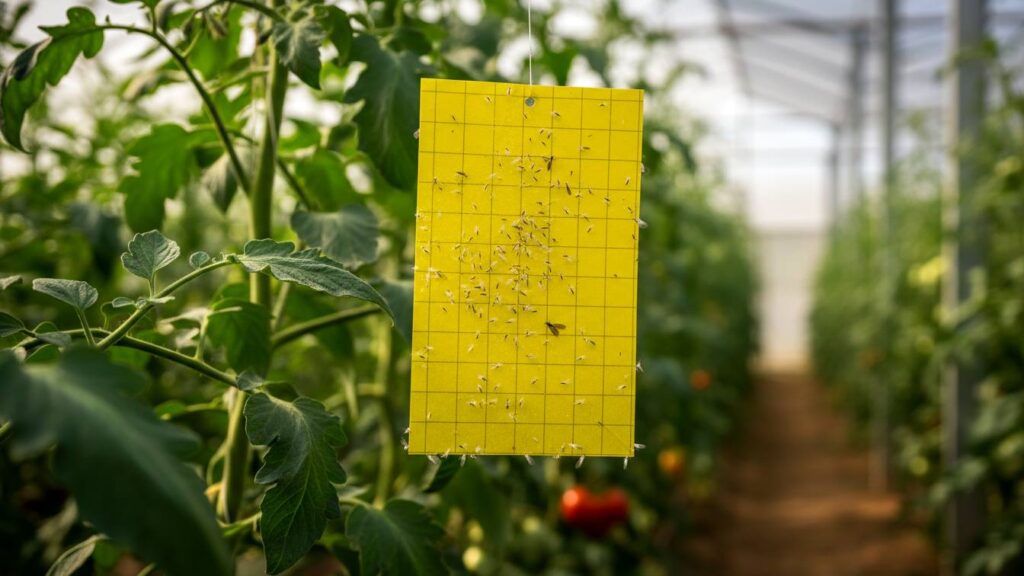
1. Whiteflies: These are tiny white insects that hide under the leaves. They are vectors for viral diseases like Tomato Yellow Leaf Curl Virus. When disturbed, they fly up in a cloud.
Control: Use yellow sticky traps (KES 50 each) to catch the adults. Place one trap every 2 meters. If the population explodes, spray with Acetamiprid or Imidacloprid-based insecticides. Ensure you spray the undersides of the leaves where they hide.
2. Tuta Absoluta: This is the tomato leaf miner. The larvae eat the green mesophyll of the leaves, creating transparent silvery patches. They also drill holes into the fruit, making it unmarketable. It is devastating and can destroy 100% of a crop in days.
Control: Prevention is key. Ensure your insect net has absolutely no holes. Use pheromone traps to catch the males and disrupt mating. If an infestation occurs, use specialized chemicals like Coragen or Belt, but rotate them to prevent resistance.
3. Blight (Early and Late): These are fungal diseases that turn leaves brown and stems black. They thrive in high humidity and cool temperatures.
Control: Keep the greenhouse vents open during the day to lower humidity. Avoid wetting the leaves. Spray protective fungicides like Mancozeb weekly during the rainy season (March-May). If infection is visible, switch to curative fungicides like Metalaxyl.
EXPERT TIP: ROTATE YOUR CHEMICALS
Pests are smart. If you use the same chemical active ingredient three times in a row, the pests will develop resistance, and the chemical will stop working. You must alternate between different classes of pesticides (e.g., switch between a pyrethroid and a carbamate). Keep a record book of what you sprayed and when. pests.
PHASE 7: HARVESTING AND MARKETING
HARVESTING FOR MAXIMUM SHELF LIFE
Harvest your tomatoes at the Breaker Stage. This is when the fruit has just turned from green to a pinkish-yellow color. Do not wait for them to turn deep red on the vine unless you have a ready buyer nearby who will consume them immediately. Harvesting at the breaker stage allows the fruit to ripen in transit, giving it an extra 5-7 days of shelf life. This is crucial if you are transporting your produce to Nairobi, Mombasa, or Kisumu.
Harvest early in the morning when the fruit is cool and turgid. Use a sharp knife or secateurs to cut the fruit stem. Remove the fruit with the calyx (the green star-shaped leafy part) attached; it makes the fruit look fresher to buyers and prevents the entry of pathogens through the stem scar. Place the harvested fruits gently into crates; do not throw them. Line your plastic crates with paper or cardboard to prevent bruising the bottom layer of tomatoes.
MARKETING STRATEGY 2026
Do not wait until harvest day to find a buyer. This is the recipe for desperation selling at low prices. Start marketing when your crop is flowering.
1. Local Mama Mbogas: These are the backbone of the Kenyan vegetable market. They are reliable for small daily volumes (20-50kg). Visit the local market in your town and build relationships with 5-10 women. Offer them consistent quality, and they will become your loyal customers.
2. Institutions: Schools, hospitals, and prisons in your county feed hundreds of people daily. They often need 50-100kg per week. Visit the procurement officers and tender for supply.
3. Urban Markets: If you have large volumes (500kg+ per harvest), hire a pickup (Probox or Canter) and take it to the wholesale markets like Marikiti or Githurai in Nairobi. Be prepared for aggressive brokers; know the market price before you arrive.
4. Social Media: Facebook groups like Digital Farmers Kenya and WhatsApp groups for local farmers are powerful tools. Post photos of your crop progress. Pre-sell your harvest by taking orders online.
PHASE 8: ONLINE SEED PURCHASE GUIDE (2026)
In 2026, the digital landscape has matured. You can skip the middleman and buy certified seeds directly from reputable suppliers online. This ensures you get genuine products, not fakes filled with ash or expired seeds. Here are the verified Kenyan links for this season:
1. Simlaw Seeds
The giant of the industry. Best for Cabbage (Gloria F1), Onions (Red Creole), and standard tomatoes.
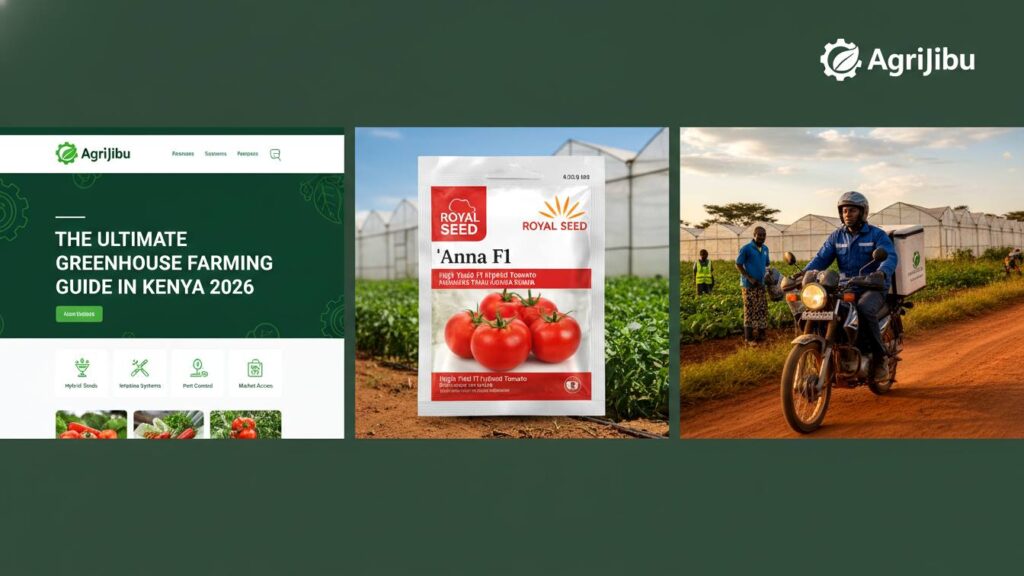
Where to buy: You can order via AgriJibu (a major agricultural e-commerce platform in Kenya) or visit their physical depots.
Website: simlaw.co.ke (Informational) / agrijibu.co.ke (For online purchase and delivery).
2. Kenya Seed Company
The state corporation. Best for maize and pasture, but also solid vegetable seeds. They have integrated with eCitizen for services.
Where to buy: AgriJibu stocks their full range of vegetable seeds.
Website: kenyaseed.com
3. Royal Seed (Kenya Highland Seed)
The premium choice for greenhouse hybrids like Anna F1 and Commandant F1. Their germination rates are legendary.
Where to buy: Their seeds are widely available on Jumia Kenya and AgriJibu. Buying on Jumia ensures delivery to your doorstep anywhere in Kenya.
Website: jumia.co.ke (Search for Royal Seed).
4. Farmers Trend Virtual Agrovet
Excellent for seedlings (fruit trees, specialty crops) and specific farm inputs. They offer delivery via courier services like Wells Fargo or G4S.
Website: farmerstrend.co.ke
5. Kihysoco
A comprehensive online agrovet based in Nairobi that ships countrywide. Good for hardware, knapsack sprayers, and chemicals alongside seeds.
Website: kihysoco.com
FREQUENTLY ASKED QUESTIONS (FAQ)
Q1: How much money do I truly need to start a greenhouse in 2026?
To be safe, budget KES 250,000 for a wooden greenhouse (8m x 15m). This covers the structure (KES 160k), inputs (KES 40k), water setup (KES 20k), and an emergency labor/chemical fund (KES 30k). Do not start with exactly the construction cost; you will run out of money mid-season and have to abandon the project.
Q2: Can I use local untreated timber to save money?
No. Untreated timber will rot within 18 months due to the high humidity inside a greenhouse and termite attacks. You will spend more replacing the structure than you saved. Always use treated gum poles or cedar which can withstand the environment for 3-5 years.
Q3: Which is better for a beginner: Tomatoes or Capsicum?
Tomatoes. They are harder work regarding pruning, but have a guaranteed market every single day. Everyone eats tomatoes. Capsicums have a better price but a smaller, more picky market. Learn the ropes with tomatoes first, then graduate to colored capsicums once you have mastered the climate control.
Q4: How do I control bacterial wilt without chemicals?
Prevention is the only cure. Use Soil Solarization (baking the soil under plastic) before planting. Dip your shoes in a disinfectant footbath (Kerol or Bleach) before entering the greenhouse. Never let visitors walk into your greenhouse; they carry pathogens on their shoes from other farms.
Q5: How often should I change the polythene cover?
High-quality UV-treated polythene (200 microns) lasts 3 to 4 years in the Kenyan sun. If it starts to yellow or crack, light transmission drops, and your yields will suffer. Replace it immediately to maintain optimal growing conditions.
Q6: Is drip irrigation mandatory?
Yes. Overhead watering (sprinklers/hosepipes) wets the leaves, which guarantees fungal diseases like Blight. Drip irrigation keeps the leaves dry and saves 60% of your water. It also allows for fertigation, which is essential for high yields.
Q7: Can I grow crops in a greenhouse year-round in Kenya?
Absolutely. That is the main advantage. You can time your harvest to hit the market in April/May and November/December when open-field rains have destroyed outside crops, giving you peak prices.
Q8: What is the biggest mistake beginners make?
Ignoring soil testing. They guess the fertilizer requirements, leading to acidic soil or nutrient lockout. Spend the KES 3,000 on a soil test; it is the best insurance you can buy.
Q9: Where can I get a loan for greenhouse farming?
The Agricultural Finance Corporation (AFC) offers loans for farm infrastructure. Some banks like Equity and Co-op Bank also have Agri-biashara products. However, they usually require you to have farmed for at least one season to prove you are serious and have cash flow records.
Conclusion
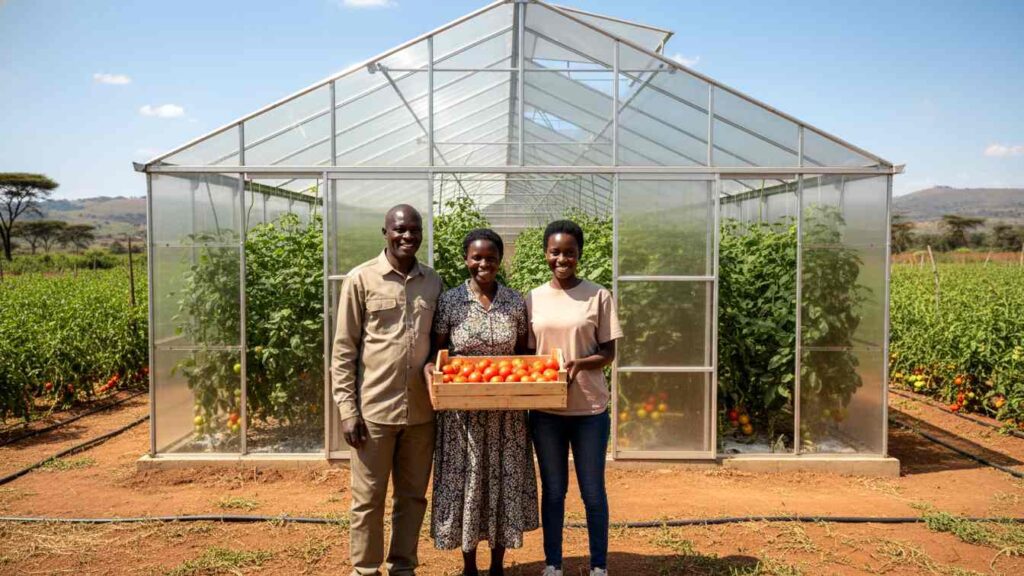
The path to earning KES 500,000 is not paved with miracles; it is paved with discipline. Greenhouse farming in 2026 is about controlling the variables. You control the water. You control the pests. You control the nutrients. By following this guide building the right structure, choosing the verified seed varieties like Anna F1 or Commandant F1, and managing your budget with the January 2026 prices you are already ahead of 90% of the competition.
Start small. Master the 8m x 15m unit. Once you have cracked the code of one greenhouse, scaling to two or three is simply a matter of copy and paste. The market is waiting. The season is open. It is time to plant.
Read more
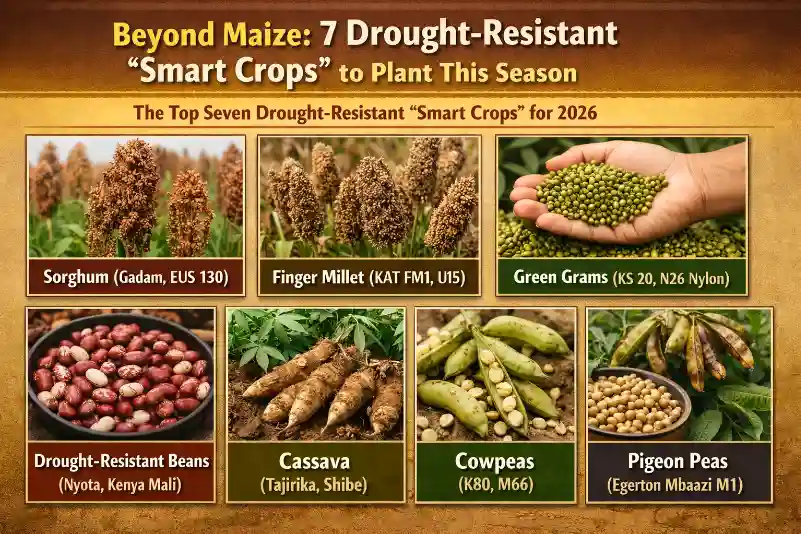
Beyond Maize: 7 Drought-Resistant “Smart Crops” to Plant This Season

Discover the top 7 drought-resistant smart crops for Kenyan farmers in 2026. Learn about seed varieties, fertilizer costs, and profit potential to beat the dry season.
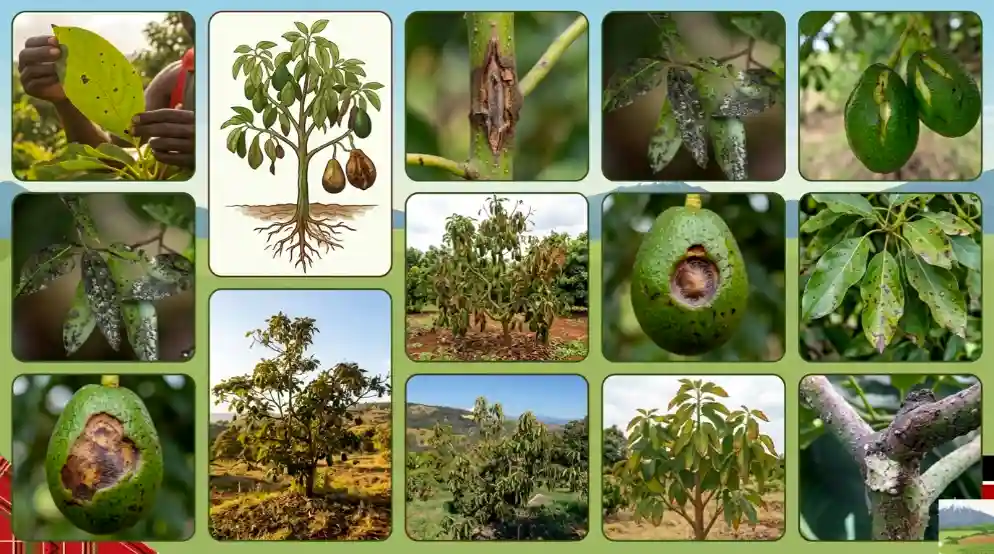
Top 10 Hass Avocado Diseases in Kenya: Causes, Symptoms & Treatment Guide (2026)
Discover the ultimate 2026 guide to fighting Hass avocado diseases in Kenya. Learn treatment costs, fungicide prices, and expert tips to secure healthy yields.
100 Smart Garden Tips 2026: The Ultimate Guide for Kenya Farmers
Save 80% on food costs with 100 smart garden tips for 2026. Learn how to use KES 2,500 subsidized fertilizers and vertical farming to earn KES 15,000 monthly from your Kenyan backyard.