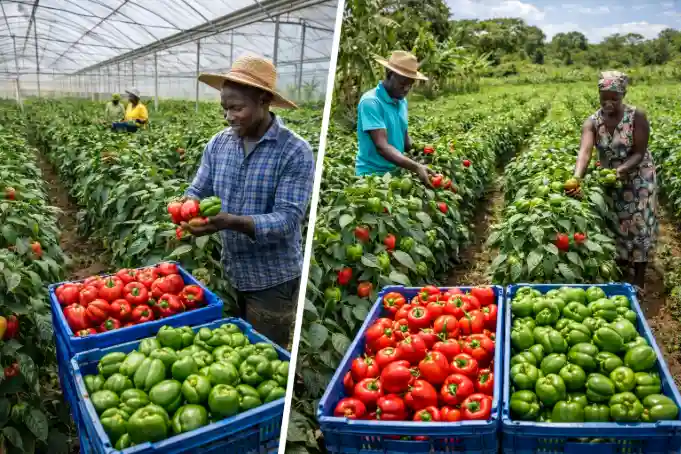

- Green capsicums fetch between KES 50 and 100 per kilo, while premium red and yellow varieties command KES 150 to 250 in urban hubs.
- A well-managed acre can produce 15 to 30 tonnes per season, generating potential gross revenues exceeding KES 1.5 million.
- The 2026 government e-Voucher subsidy program has stabilized essential input costs, bringing subsidized DAP down to KES 2,500.
Table of Contents
Capsicum farming remains one of the most lucrative horticultural ventures in Kenya today. Demand for both standard green hoho and premium colored bell peppers continues to surge across local markets. If you approach this business with proper planning and modern agronomic practices, your shamba can generate consistent profit margins.
Which Capsicum Varieties Yield the Highest Profits in Kenya for 2026?
Selecting the right variety dictates your market entry and overall profitability in Kenya. Open-pollinated varieties like California Wonder are excellent for budget-conscious beginners targeting local green markets. Hybrid varieties like Pasarella F1 and Admiral F1 offer superior disease resistance and premium colored fruits.
Understanding Open-Pollinated Versus Hybrid Seeds
Most beginners in Kenya struggle with deciding between cheap open-pollinated seeds and expensive hybrid options. Open-pollinated varieties are affordable but often produce lower yields and lack robust disease resistance. Hybrids require a larger upfront capital injection but reward farmers with uniform fruits and resistance to common viruses.
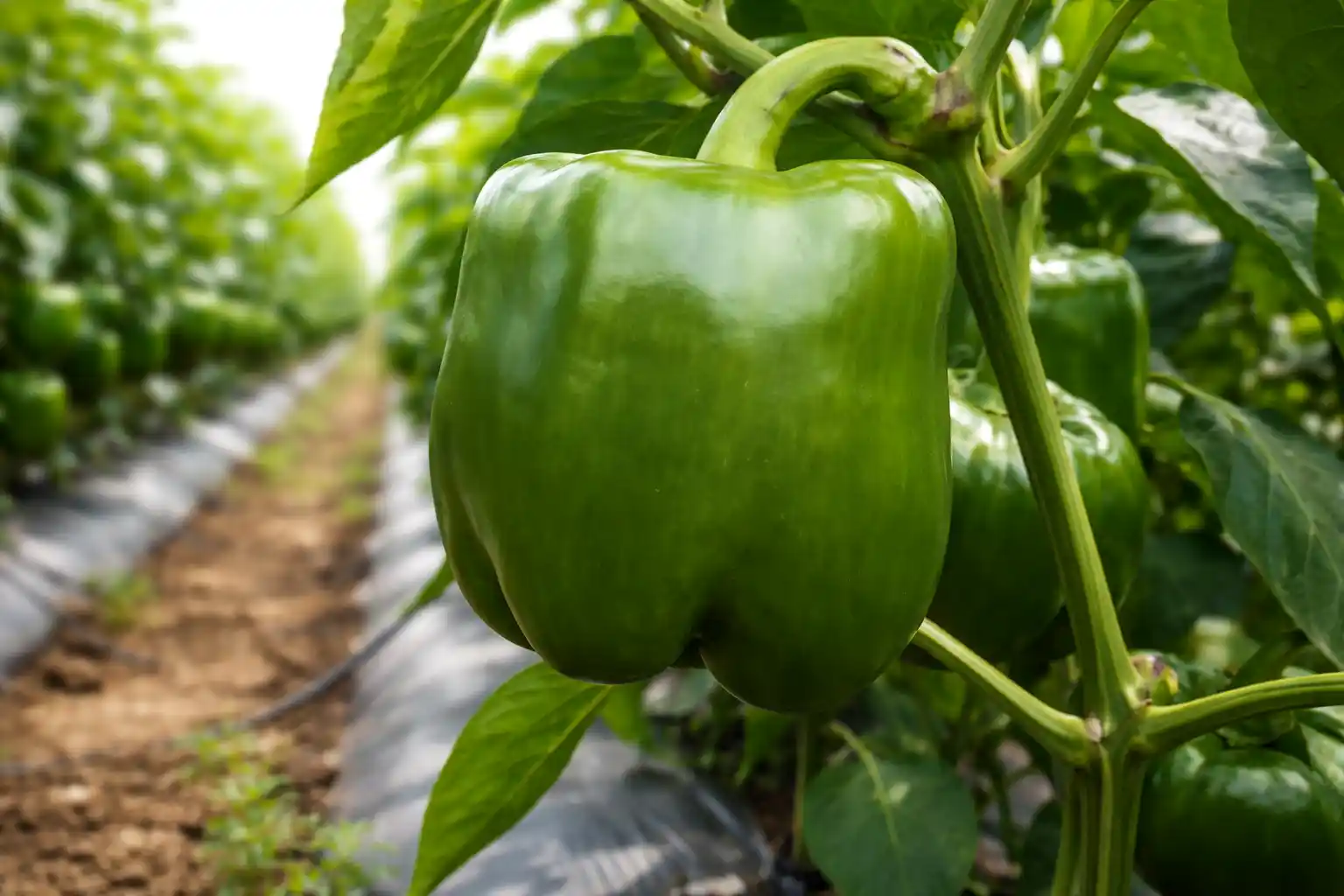
For open-field farming, California Wonder and Yolo Wonder remain the undisputed champions for green capsicums. These varieties tolerate the harsh outdoor conditions found in many Kenyan counties. They produce thick-walled, blocky fruits that survive rough transport on rural roads.
Read Also: Carrot Farming in Kenya 2026: Step by Step Guide, Yields, Costs and Profit Per Acre
If you are investing in greenhouse technology, colored hybrids are the most profitable route. Varieties like Pasarella F1 for red capsicums and Admiral F1 for yellow capsicums dominate the premium market. These hybrids mature faster and command triple the price of standard green hoho at urban grocery chains.
Comparing Top Seed Varieties for 2026
Before purchasing your seeds, you must evaluate the maturity period, expected yield, and specific disease resistance of each variety. The following table provides a direct comparison of the top-performing capsicum varieties currently available in the Kenyan market.
| Variety Name | Color & Market | Maturity Period | Expected Yield (Per Acre) | Disease Resistance |
|---|---|---|---|---|
| California Wonder | Green (Local Markets) | 75 to 80 Days | 10 to 15 Tonnes | Moderate (Susceptible to Blight) |
| Maxibel | Green (High-Yield) | 70 to 75 Days | 15 to 20 Tonnes | High (Tobacco Mosaic Virus) |
| Pasarella F1 | Red (Supermarkets/Export) | 80 to 85 Days | 25 to 30 Tonnes (Greenhouse) | Excellent (Powdery Mildew, TMV) |
| Admiral F1 | Yellow (Premium Buyers) | 80 to 90 Days | 25 to 30 Tonnes (Greenhouse) | Excellent (Bacterial Spot, TMV) |
Always align your variety choice with your available infrastructure and target buyer. Growing premium yellow capsicums in an open field without irrigation usually leads to sunburned, unmarketable fruits. Wasting expensive greenhouse space on low-value green varieties heavily restricts your financial returns.
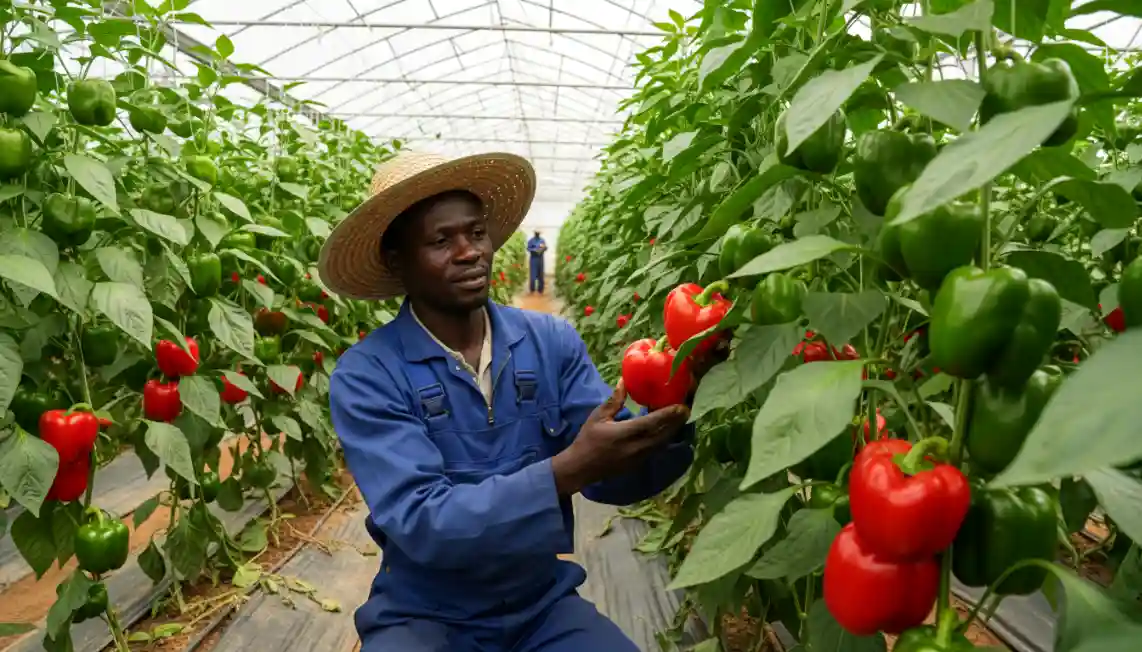
Where to Buy Capsicum Seeds and Farming Inputs in Kenya
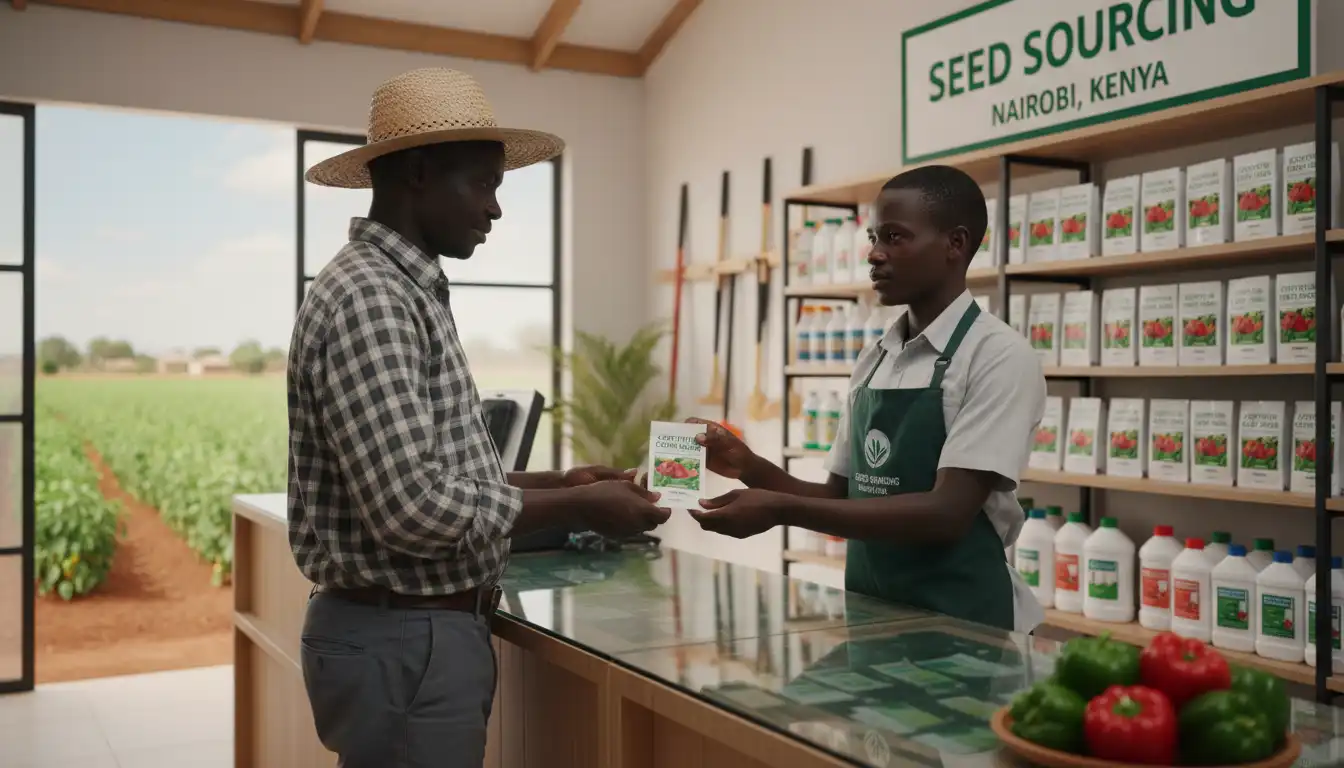
You can source certified capsicum seeds from major agricultural input companies like Syngenta, Amiran Kenya, and Royal Sluis. Digital platforms such as Safaricom Digifarm and Mkulima Young also connect farmers with verified distributors. Always check for the official KEPHIS certification sticker to avoid counterfeit seeds.
Leveraging Digital Platforms and Major Agrovets
Finding genuine, high-germination seeds is the first major hurdle for beginner farmers. The Kenyan market is unfortunately flooded with counterfeit seeds packaged in realistic, fake branded packets. To protect your investment, only purchase seeds from reputable, established agrovets in major towns.
In 2026, technology plays a massive role in seed procurement. Platforms like Safaricom Digifarm allow farmers to order certified inputs and collect them at local depots. Additionally, platforms host verified vendors, but you must remain vigilant and read buyer reviews before sending mobile money payments.
Read Also: Sukuma Wiki Farming in Kenya 2026: Types, Price per kg, Yields and Profits per Acre
For large-scale commercial operations, buying directly from the source is the safest strategy. Companies like Syngenta Kenya and Amiran provide comprehensive technical support alongside their hybrid seeds. They will often send an agronomist to your shamba to advise on greenhouse setup and nursery management.
What Are the Best Fertilizers and 2026 Market Prices for Capsicums?
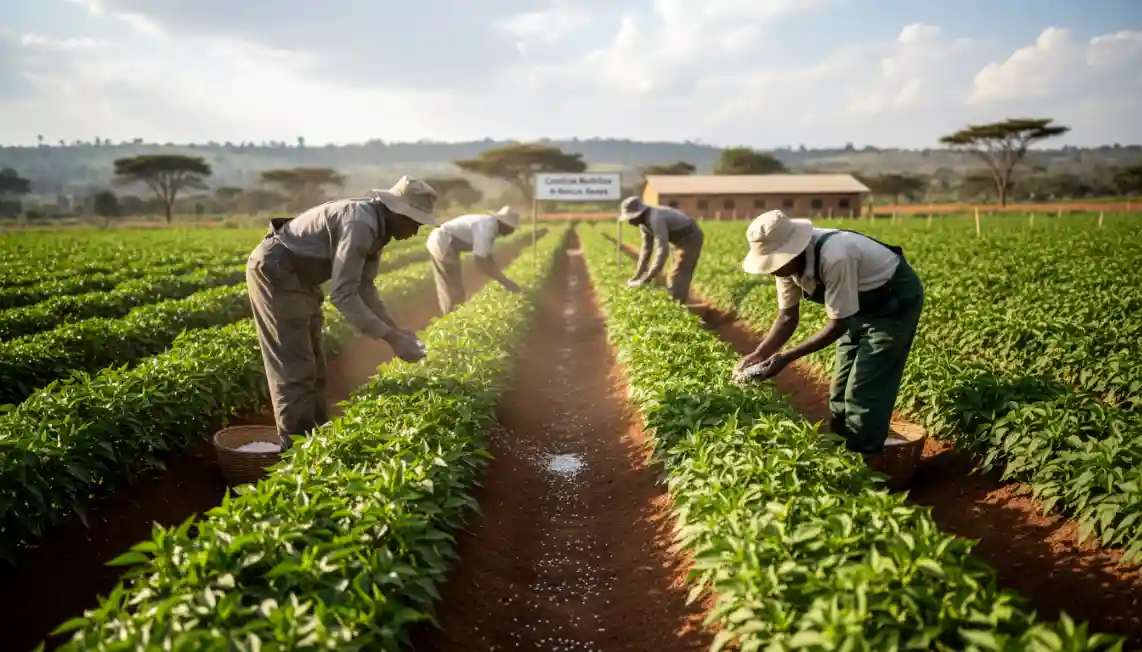
Capsicums are heavy feeders requiring targeted NPK applications for vegetative growth and fruit development. In 2026, basal planting heavily relies on subsidized DAP priced at KES 2,500 to KES 3,500. Top dressing requires CAN and specialized NPK blends to prevent blossom end rot and maximize fruit size.
Navigating Soil Nutrition and the e-Voucher Subsidy
Proper soil nutrition is non-negotiable if you want thick-walled, heavy fruits. The 2026 agricultural landscape is heavily influenced by the government fertilizer subsidy program accessed via digital e-Vouchers. Registered farmers can secure a 50kg bag of DAP from National Cereals and Produce Board depots for a fraction of the commercial price.
During the nursery and transplanting phases, phosphorus is critical for robust root development. You should apply DAP directly into the planting holes, ensuring it mixes well with the soil to prevent root burn. If your shamba suffers from high acidity, agronomists highly recommend switching to NPK 23:23:0 or NPK 17:17:17 as a basal alternative.
Once the plants begin to flower, their nitrogen and potassium demands skyrocket. Top-dressing with CAN provides the necessary nitrogen without drastically increasing soil acidity. Potassium-rich foliar feeds are then introduced to enhance fruit color, wall thickness, and overall market weight.
2026 Fertilizer Price and Usage Guide
Understanding current input costs is essential for accurate budget forecasting. From what many farmers experience, buying inputs in bulk during the off-season saves significant capital. The table below outlines the recommended fertilizers for capsicum farming alongside their prevailing 2026 market prices in Kenya.
| Fertilizer Type | Application Stage | Role in Plant Growth | Subsidized Price (KES) | Commercial Price (KES) |
|---|---|---|---|---|
| DAP (18:46:0) | Planting / Transplanting | Stimulates deep root development | 2,500 to 3,500 | 6,000 to 6,800 |
| NPK (17:17:17) | Planting / Early Growth | Balanced growth in acidic soils | 3,275 | 5,500 to 6,500 |
| CAN (26% N) | Top Dressing (Vegetative) | Boosts leaf and stem growth | 2,875 | 4,000 to 4,800 |
| YaraMila Winner | Flowering & Fruiting | Maximizes fruit size and color | Not Subsidized | 7,000 to 8,000 |
From what many farmers experience, ignoring calcium applications leads directly to blossom end rot. This physiological disorder causes the bottom of the capsicum to turn black and rot before maturity. Always supplement your basal fertilizers with calcium-rich foliar sprays during the active fruiting stage.
Which Kenyan Counties Offer the Best Climate for Capsicum Farming?
Capsicums thrive in warm climates with temperatures between 15 and 30 degrees Celsius. Counties like Kajiado and Machakos excel in greenhouse and irrigated open-field production due to optimal heat. High-altitude regions like Uasin Gishu require strict greenhouse environments to protect the crop from frost and low night temperatures.
Machakos and Makueni: The Warm Open-Field Champions
The lower eastern counties of Machakos and Makueni boast some of the most favorable climates for open-field capsicum farming. The warm daytime temperatures accelerate fruit maturity and enhance the sweet flavor profile of colored peppers. However, success here is entirely dependent on reliable irrigation systems, as rainfall is notoriously erratic.
Farmers in these regions often rely on deep boreholes and solar-powered drip irrigation to sustain their crops. Pests like thrips and red spider mites multiply rapidly in the dry heat. Therefore, maintaining a strict scouting and spraying schedule is absolutely vital for a profitable harvest.
Kajiado: The Greenhouse Capital
Areas like Isinya, Kitengela, and Loitokitok within Kajiado County have become the epicenter for greenhouse capsicum farming. The proximity to Nairobi allows farmers to harvest in the morning and deliver fresh produce to city supermarkets by noon. The bright, intense sunlight in Kajiado ensures rapid photosynthesis and heavy fruiting.
Read Also: Greenhouse Prices in Kenya: 2026 Construction Costs and Profit Analysis
Greenhouse farming in Kajiado mitigates the area’s strong winds and intense evaporation rates. Most successful farmers here cultivate premium red and yellow hybrids like Pasarella F1. The controlled environment allows them to harvest continuously for up to eight months, maximizing their return on investment.
Uasin Gishu and Trans Nzoia: The High-Altitude Challenge
Known primarily as Kenya’s grain basket, Uasin Gishu offers excellent soils but presents climate challenges for capsicums. Night temperatures often drop below 15 degrees Celsius, which stunts fruit development and causes flower drop. Open-field capsicum farming in these high-altitude zones is generally considered too risky for commercial scaling.
To succeed in the North Rift, farmers must invest heavily in greenhouse infrastructure to trap heat. The advantage here is the abundance of fresh water and relatively lower pest pressure compared to the hotter counties. Those who master greenhouse temperature control in Uasin Gishu enjoy massive profits by supplying the underserviced Eldoret market.
What is the Ideal 12-Month Planting Cycle for Capsicums in Kenya?
To maximize profits, time your harvest to coincide with the dry season when market supply is low. Plant seeds in the nursery in December and transplant in late January under irrigation. This ensures your crop matures by April and May, capturing peak prices before the long rains harvest floods the market.
Nursery Preparation and Seedling Management
Capsicum seeds have a tough outer coat and can take up to 14 days to germinate. It is highly recommended to use seedling propagation trays filled with sterile coco peat rather than direct soil nurseries. This method drastically reduces soil-borne diseases like damping-off and ensures a near perfect survival rate during transplanting.
Keep the propagation trays under a shade net and ensure the coco peat remains moist but not waterlogged. Once the seedlings develop four true leaves, begin the hardening-off process. Expose them gradually to direct sunlight and reduce watering frequency to prepare them for field conditions.
Transplanting, Vegetative Growth, and Flowering
Transplanting should only occur during the late afternoon to minimize transplant shock. Ensure your drip lines are running and the soil is completely saturated before moving the seedlings. Space the plants 40cm to 45cm apart within rows, leaving 60cm between the rows for easy movement during harvesting.
During the vegetative stage, apply your nitrogen-rich fertilizers and begin establishing a preventative spraying program. Thrips and whiteflies will attack the tender new leaves if left unchecked. As the first flowers appear, introduce calcium and boron foliar feeds to strengthen the blossoms and prevent premature dropping.
Harvesting and Post-Harvest Strategy
Green capsicums are usually ready for the first harvest 70 to 80 days after transplanting. Use sharp secateurs to cut the fruit stems, as pulling the peppers by hand will break the brittle plant branches. Harvest early in the morning when the fruits are fully turgid and store them immediately in a cool, shaded area.
If you are targeting the premium colored market, you must leave the fruits on the plant for an additional three to four weeks. This waiting period increases the risk of pest damage and theft, requiring heightened farm security. A well-managed capsicum plant will produce new flush cycles, allowing you to harvest weekly for several months.
What Are the Real Financial Costs and Returns for Capsicums in 2026?
An acre of open-field capsicums requires an initial investment of KES 150,000 to KES 250,000 covering seeds, drip irrigation, and inputs. With average yields of 15 tonnes selling at KES 70 per kilo, gross revenue reaches KES 1,050,000. Net profits can comfortably range from KES 500,000 to over KES 1.2 million per season.
Breaking Down the Capital Requirements
What guides rarely tell you is that capsicum farming demands heavy operational capital during the first three months. You must fund land preparation, seedling acquisition, agrochemicals, and daily labor long before the first harvest. Drip irrigation is the most significant upfront cost, but it is a permanent asset that will serve multiple crop cycles.
Greenhouse farming drastically alters these financial metrics. Setting up a standard 8m by 15m wooden greenhouse costs approximately KES 150,000 to KES 250,000. While the initial capital is much higher, the controlled environment doubles the yield and targets the premium market.
Profitability and Cost Analysis Table
The following table provides a realistic financial model for one acre of open-field green capsicums in Kenya. Please note that these estimated ranges vary by management, weather conditions, and prevailing market rates.
| Financial Metric | Worst Case Scenario | Average Case Scenario | Best Case Scenario |
|---|---|---|---|
| Initial Input Costs (KES) | 150,000 | 200,000 | 250,000 (Optimal Care) |
| Total Yield Expected | 8 Tonnes | 15 Tonnes | 25 Tonnes |
| Farm-Gate Price (Per Kg) | KES 40 (Market Glut) | KES 70 | KES 120 (Off-Season) |
| Gross Revenue (KES) | 320,000 | 1,050,000 | 3,000,000 |
| Estimated Net Profit (KES) | 170,000 | 850,000 | 2,750,000 |
These figures clearly demonstrate why timing your crop is so essential. If you harvest during a market glut when prices crash to KES 40 per kilo, your profit margins shrink dramatically. Conversely, utilizing irrigation to harvest during the dry season captures premium prices and maximizes profitability.
Risks & Reality Check: What Threatens Capsicum Farming?
The biggest threats include severe market price fluctuations, devastating pest attacks like thrips and red spider mites, and poor water management. Bacterial wilt and blossom end rot can wipe out an entire crop in weeks. Farmers must maintain strict hygiene, consistent scouting, and secure reliable water sources to survive.
Pest Invasions and Disease Outbreaks
One small mistake in pest management can wipe out your entire investment in a matter of days. Thrips are the most destructive pest, feeding on the flowers and causing severe fruit distortion that renders the capsicum unmarketable. Red spider mites thrive in hot, dry conditions, weaving tiny webs under the leaves and draining the plant sap.
Read Also: 15 Most Profitable Agribusiness Ideas in Kenya to Start in 2026
Soil-borne diseases, particularly bacterial wilt, pose a massive threat to open-field farmers. There is no chemical cure for bacterial wilt once it infects a plant. You must immediately uproot and burn infected plants, and strictly practice crop rotation with non-solanaceous crops like maize or beans to break the disease cycle.
Market Volatility and Water Reliability
Some farmers are forced to sell at a loss when buyers disappear during peak rainy seasons. The Kenyan horticultural market is highly informal, and prices at hubs like Wakulima Market fluctuate daily based on supply truck arrivals. Relying on a single broker is a dangerous game that often leads to delayed payments and massive post-harvest losses.
Water reliability is another brutal reality check. Capsicums have shallow root systems and cannot survive prolonged drought or irregular watering schedules. If your borehole fails or the local river dries up during the fruiting stage, the plants will drop their flowers and the existing fruits will become stunted and bitter.
How Do You Market and Add Value to Harvested Capsicums in Kenya?
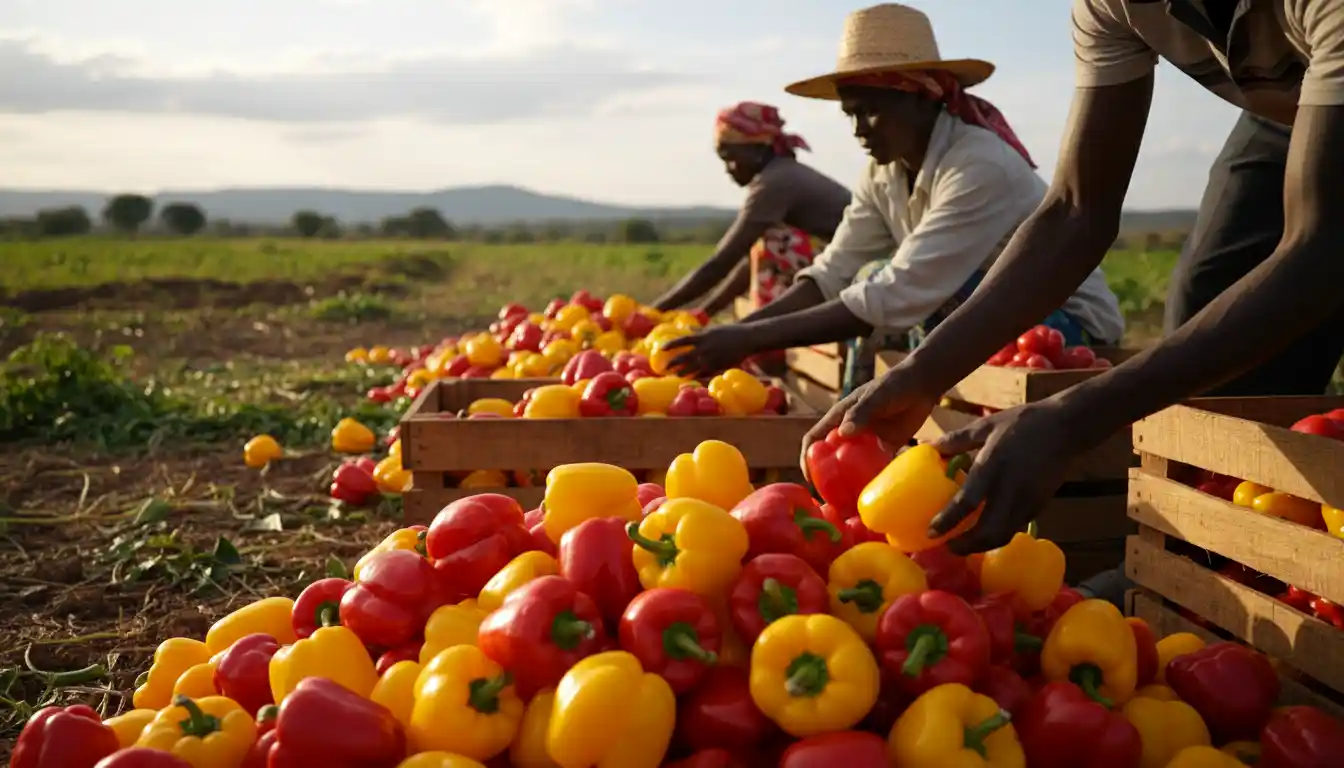
Successful marketing involves bypassing middlemen and securing direct supply contracts with supermarkets, hotels, and institutional buyers. Exporting colored capsicums requires strict adherence to GlobalGAP standards and HCD regulations. Proper grading, sorting, and packaging in ventilated crates drastically improves shelf life.
Navigating the Local Urban Markets
The majority of green capsicums produced in Kenya end up in major wholesale centers like Mombasa Kongowea Market and Nairobi Wakulima Market. Selling here requires building relationships with reliable brokers who understand daily price movements. It is a high-volume, fast-paced environment where presentation and timing dictate your final payout.
To capture higher margins, serious farmers secure direct supply contracts with tier-one supermarkets like Naivas or Carrefour. Supermarkets demand consistent supply, uniform fruit sizes, and strict adherence to safe chemical residue limits. While the onboarding process is rigorous, the stable, premium payout is well worth the effort.
Export Standards and Value Addition
The export market for Kenyan capsicums, particularly to Europe and the Middle East, is highly lucrative but heavily regulated. Farmers must attain GlobalGAP certification and register with the Horticultural Crops Directorate. Export buyers strictly reject any fruits with blemishes, pest damage, or high chemical residues.
Value addition for capsicums in Kenya is still in its infancy, presenting a unique opportunity for innovative entrepreneurs. Processing surplus or slightly damaged fruits into dried chili flakes, sweet pepper powders, or blended sauces can salvage value from grade-two harvests. Proper packaging and branding of these processed goods open up lucrative retail channels across the country.
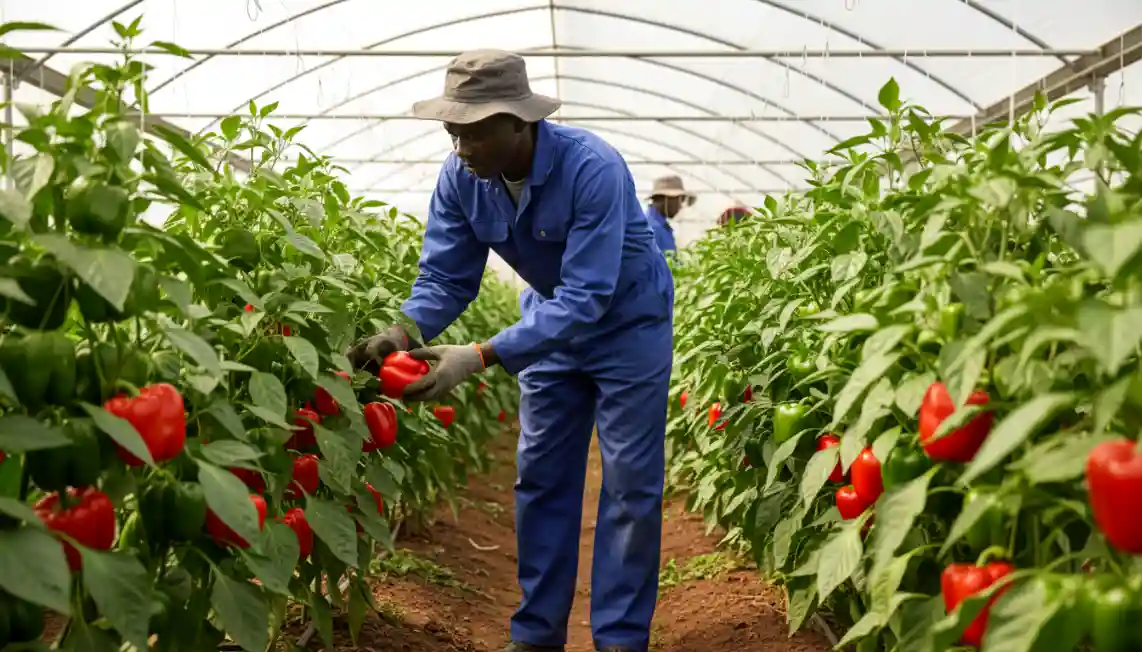
2026 Outlook and Decision Guidance: Is Capsicum Farming for You?
The 2026 outlook is highly positive, driven by rising urban consumption and expanded digital supply chains. However, climate unpredictability demands mandatory investments in drip irrigation and greenhouse structures. Farmers who adopt precision agriculture and secure direct market linkages will dominate the profitability charts.
Who Should Invest vs. Who Should Avoid
Capsicum farming is highly recommended for investors with enough capital to install drip irrigation and purchase certified hybrid seeds. If you have access to a reliable water source and are willing to employ a dedicated farm manager, this venture will yield excellent returns. It is also perfect for individuals near urban centers who can supply supermarkets directly.
Conversely, you should avoid this agribusiness if you are relying solely on unpredictable rainfall for open-field cultivation. Absentee farmers who cannot visit their shamba weekly will likely lose their investment to pest outbreaks or worker theft. It is not a get-rich-quick scheme for those lacking the patience to follow strict agronomic schedules.
Adapting to Climate Change and Market Shifts
As we navigate 2026, the traditional reliance on rain-fed agriculture is no longer sustainable for high-value horticulture. The shifting weather patterns dictate that water harvesting and solar irrigation are now baseline requirements, not luxuries. Farmers integrating shade nets and greenhouse structures are experiencing far lower crop losses compared to open-field traditionalists.
The Kenyan consumer is also evolving, with a noticeable spike in demand for colored bell peppers in middle-class neighborhoods. This shift is pushing more farmers to transition from standard green hoho to premium red and yellow hybrids. The integration of digital marketplaces is cutting out exploitative middlemen, putting more cash directly into the farmer pocket.
Read Also: Bulb Onion Farming in Kenya: Best F1 Varieties in 2026
Hard Truths for New Farmers
This business is not passive, and you will face unforeseen challenges regardless of how well you plan. Daily management, strict monitoring, and proper record keeping are absolutely essential to avoid losing money. Treat your shamba like a strict commercial enterprise, secure your water source, and your path to agribusiness wealth will be steady.
Farmers Also Ask
How long does capsicum take to grow in Kenya?
Capsicums take about 70 to 90 days to mature after transplanting. The exact time depends on the specific seed variety and the local climate conditions of your farm.
How much does a greenhouse for capsicum cost?
A standard 8m by 15m wooden greenhouse costs between KES 150,000 and KES 250,000. This estimate generally includes drip irrigation lines and heavy-duty polythene covers.
What is the spacing for capsicum plants?
The ideal spacing is 40cm between individual plants and 60cm between rows. This setup allows proper canopy growth, minimizes disease spread, and ensures easy harvesting.
How much does 1 kg of capsicum cost in Kenya?
Green capsicums cost KES 50 to 100 per kg at local markets. Premium colored varieties fetch KES 150 to 250 per kg in supermarkets, depending heavily on the season.
Can I grow capsicum in an open field?
Yes, varieties like California Wonder thrive in open fields. However, you must have reliable drip irrigation and strict pest control measures to succeed commercially.
What is the yield of capsicum per acre?
A well-managed acre can yield between 15 and 30 tonnes per season. This volume depends heavily on consistent irrigation, proper fertilizer application, and seed genetics.
Which is the best fertilizer for capsicum?
Use DAP for planting to boost root growth, CAN for top-dressing during vegetative stages, and specialized NPK blends for optimal flowering and fruit development.
How do I control thrips in capsicums?
Implement a strict weekly scouting routine and install blue sticky traps. Rotate specific systemic insecticides carefully to prevent these pests from developing resistance.
Why are my capsicum fruits rotting at the bottom?
This is Blossom End Rot, typically caused by a severe calcium deficiency and irregular watering. Apply calcium foliar sprays and maintain consistent soil moisture levels.
Where can I sell my capsicum harvest in Kenya?
You can sell at major urban hubs like Wakulima Market or directly to supermarkets like Naivas. Digital platforms like Mkulima Young also offer great direct selling channels.