
Table of Contents
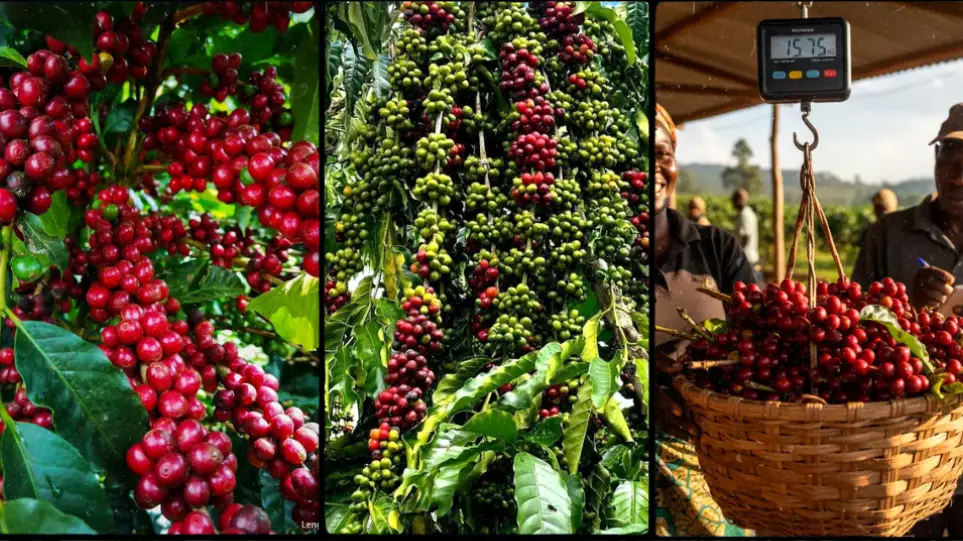
Coffee farming in Kenya is experiencing a massive resurgence in 2026, driven by global demand for specialty Arabica and internal market reforms. This guide provides a comprehensive operational blueprint for local and diaspora investors aiming to maximize returns from the “black gold” sector. We break down the exact costs, yield expectations, and technical management strategies required to turn a raw piece of land into a profitable shamba.
Success in this industry no longer relies on traditional methods; it demands precision agriculture and a business-first mindset. New regulations at the Nairobi Coffee Exchange (NCE) have opened doors for direct exports, reducing the dominance of middlemen and increasing farmer earnings. By adopting disease-resistant varieties like Batian and implementing modern irrigation, you can secure a sustainable income despite climate variability.
Read Also: Macadamia Nuts in Kenya 2026: Prices, Health Benefits and Profitable Farming Opportunities
The journey from seedling to the first export-quality harvest requires patience, capital, and technical discipline. This article outlines every financial and agronomic step needed to navigate the 2026 coffee landscape. We will cover soil preparation, pest control, and the critical post-harvest handling that defines your final cup score.
What are the most profitable coffee varieties for Kenyan farmers in 2026?
The most profitable varieties for 2026 are Batian and Ruiru 11 due to their robust resistance to Coffee Berry Disease (CBD) and Coffee Leaf Rust (CLR). These varieties significantly lower production costs by eliminating the need for frequent fungicide sprays. While traditional SL28 and SL34 varieties offer premium cup quality, their high susceptibility to disease makes them financially risky for new entrants without large capital reserves.
Technical Analysis: Selecting Your Genetics
The choice of coffee variety is the single most important decision you will make, as coffee trees have an economic lifespan of over 30 years. In 2026, the cost of fungicides has risen, making disease resistance a financial necessity rather than just a convenience. Farmers must weigh the trade-off between the iconic flavor profiles of old varieties and the cost-efficiency of modern hybrids.
1. Batian (The 2026 Commercial Leader)
Batian stands out as the superior choice for new establishments in 2026 due to its true-breeding nature and tall growth habit. It was developed by the Coffee Research Institute (CRI) to combine the deep root system of SL varieties with the disease resistance of Ruiru 11. This variety produces large beans (AA grade) and matures early, often yielding a fly crop within 18 months of planting.
The primary economic advantage of Batian is the reduction in chemical input costs. A farmer growing SL28 must spray fungicides up to 12 times a year to control CBD, whereas a Batian farmer may only need preventative copper sprays twice. This reduction directly increases the profit per acre by slashing operational expenditures by nearly 30%.
2. Ruiru 11 (High Density & Compact)
Ruiru 11 is a compact, dwarf hybrid perfect for peri-urban farming or small land parcels where maximizing tree density is crucial. Because of its short stature, farmers can plant up to 1,000 trees per acre, compared to 600 for tall varieties. This density allows for higher cherry production per unit area, provided the soil nutrition is aggressively managed.
However, Ruiru 11 has a shallow root system and is susceptible to nematode attacks and drought stress. To mitigate this in 2026, it is mandatory to purchase grafted seedlings where the Ruiru scion is grafted onto an SL28 or Batian rootstock. This combination gives you the disease resistance of the hybrid with the drought tolerance of the traditional root system.
3. SL28 and SL34 (The Heritage Varieties)
SL28 and SL34 remain the benchmark for Kenyan coffee quality, known globally for their intense blackcurrant acidity and complex flavor notes. These tall varieties thrive in high-altitude zones like Nyeri and Kirinyaga, where the cool climate slows bean maturation. Despite their quality, they are extremely susceptible to Coffee Berry Disease (CBD) and Coffee Leaf Rust.
We only recommend these varieties for veteran farmers or corporate estates with the infrastructure to manage a strict 14-day spray interval. For a beginner, a single missed spray during the wet season can result in a 100% crop loss due to CBD. The risk profile for SL varieties is simply too high for most small-scale investors in the current economic climate.
Where to Buy Inputs for Coffee Farming in Kenya 2026:Cost, Yields, Profit per Acre, & Complete Beginner Profit Guide
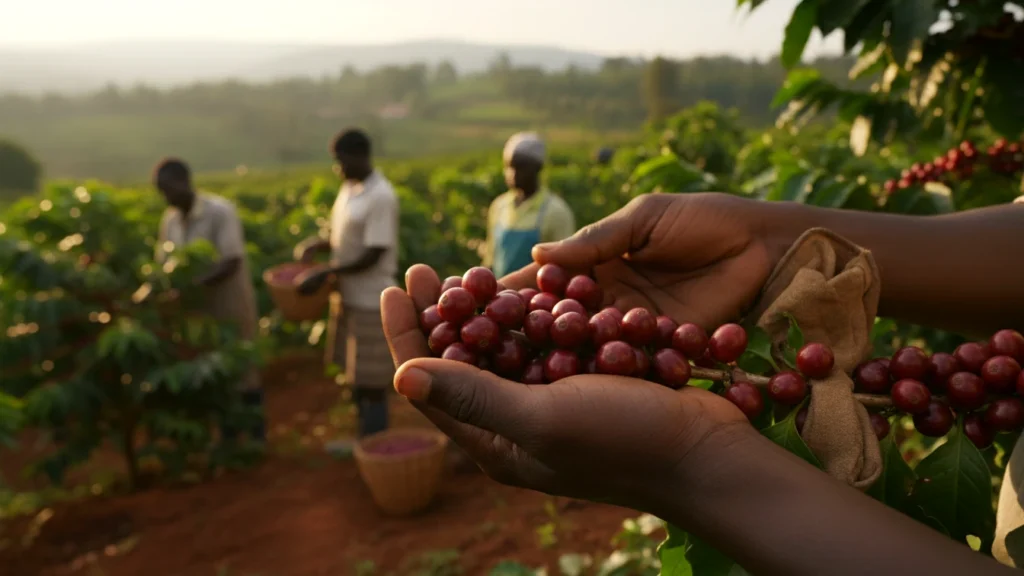
You must source planting materials directly from the Coffee Research Institute (CRI) in Ruiru or their certified satellite nurseries to ensure genetic purity. Essential inputs like fertilizers should be purchased from authorized distributors such as the Kenya Farmers Association (KFA) or vetted suppliers on DigiFarm. Avoiding roadside nurseries is critical to preventing the planting of low-yielding, second-generation seedlings.
Sourcing Certified Seedlings
The market in 2026 is flooded with counterfeit seedlings that look healthy but lack the genetic potential for high yields. Real Batian or grafted Ruiru 11 seedlings are complex to produce and cannot be replicated by basic roadside sellers. Your first stop must always be the KALRO – Coffee Research Institute to book your seedlings months in advance.
Read Also: Mango Farming in Kenya: Spacing, Seedlings, Yields and Profit per Acre in 2026
Authorized commercial nurseries, such as Solai Coffee Estate or those certified by the Kenya Plant Health Inspectorate Service (KEPHIS), are reliable alternatives if CRI stock is low. Always demand a receipt and a copy of their nursery certification certificate before payment. Planting a fake seedling is a mistake you will not discover for three years, by which time your investment capital is gone.
Fertilizer and Chemical Sourcing
Counterfeit fertilizers and diluted chemicals are a major threat to Kenyan agribusiness. Purchase your DAP, CAN, and NPK fertilizers strictly from large-scale depots like MEA Ltd or Yara Kenya distributors. When buying agrochemicals, check for the tamper-proof seal and verify the batch number via SMS services often provided on the label.
Which counties are best for coffee farming in Kenya?
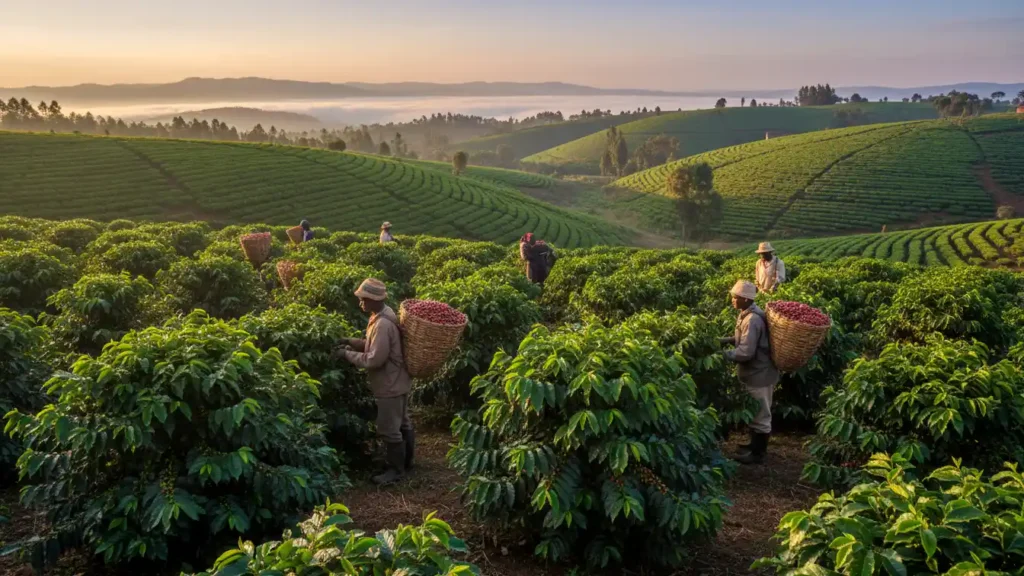
The traditional central highlands of Kiambu, Nyeri, and Murang’a remain top-tier due to their volcanic soil and existing processing infrastructure. However, the Western and Rift Valley regions, specifically Bungoma, Kericho, and Trans Nzoia, are the best investment frontiers for 2026. These emerging regions offer affordable land leases and virgin soils that require less rehabilitation than the exhausted central farms.
Zone 1: The Central Highlands (The Classic Belt)
This region, comprising Kiambu, Kirinyaga, Embu, and Nyeri, produces the highest quality Arabica beans in the world. The soil is deep red volcanic loam, which is acidic and rich in organic matter, perfect for coffee. The main advantage here is the dense network of cooperative wet mills, meaning you never have to travel far to deliver your cherry.
However, the challenges in Central Kenya include rapid urbanization and high land costs. Many coffee farms are being converted into real estate, pushing the price of remaining agricultural land out of reach for beginners. Furthermore, the soils here have been farmed for over a century and often require heavy liming to correct acidity levels.
Zone 2: The Rift Valley Frontier (The Expansion Belt)
Kericho, Bomet, and Nakuru are rapidly becoming the new hubs for large-scale coffee estates. The altitude in these areas matches Central Kenya, yet the land is significantly cheaper and the soils are less fatigued. The rainfall patterns are reliable, and the slightly warmer temperatures favor the faster-maturing Batian variety.
Zone 3: Western Kenya (The Organic Potential)
Bungoma and Trans Nzoia around Mount Elgon offer unique microclimates that produce coffee with distinct fruity notes. This region is ideal for farmers interested in organic or fair-trade certification due to lower historical chemical usage in the soil. The challenge here is logistics; the road network and factory density are lower, often requiring farmers to invest in on-farm pulping machinery.
What is the 12-month coffee farming calendar for maximum yield?
The coffee cycle begins in January with pruning and field hygiene, followed by fertilization during the long rains in March and April. The critical berry expansion phase runs from June to August, requiring pest control and foliar feeds. The main harvest spans October to December, while a smaller early crop harvest may occur in June depending on the region’s rainfall pattern.
January – March: Pruning and Stress Management
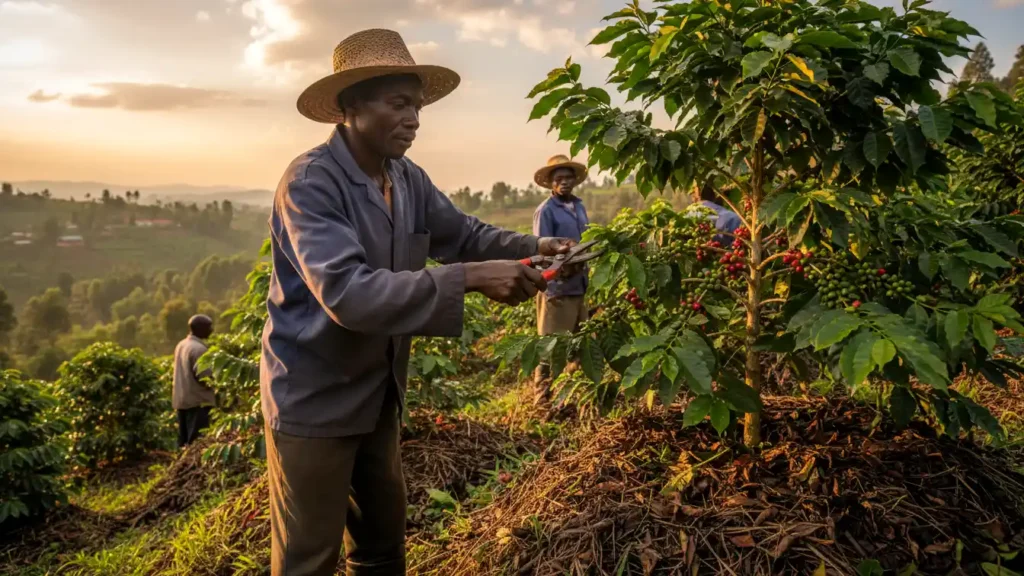
Immediately after the main harvest, the trees must be pruned to remove old bearing wood and open the canopy. This allows sunlight to penetrate, which triggers the hormonal changes necessary for the next flowering cycle. Farmers must also conduct soil tests during this dry period to determine pH and nutrient requirements for the coming season.
Read Also: Coconut Farming in Kenya: Step by Step Guide, Best Varieties and Profit Tips
Water conservation is critical during these hot months. Mulching with maize stalks or napier grass helps retain soil moisture and suppresses weed growth. If you have an irrigation system, apply water stress by withholding irrigation for a few weeks, then irrigate heavily to trigger a uniform flowering.
April – June: Nutrition and Protection
As the long rains begin, apply the main planting fertilizer, typically NPK 17:17:17, to support berry formation. This is also the season for Coffee Berry Disease (CBD), so a rigorous spray program using copper-based fungicides must be maintained. Weeding should be done manually or with herbicides to prevent competition for nutrients.
July – September: Berry Expansion and Hardening
The berries are now green and expanding in size. This is the stage where the final bean size is determined, so moisture stress must be avoided. Foliar sprays containing Zinc, Boron, and Calcium are applied to ensure solid bean formation and prevent defects like “lights” (empty shells).
October – December: Ripening and Harvesting
The coffee cherries turn from green to a deep crimson red. Harvesting must be done carefully, picking only the ripe cherries to ensure high cup quality. The harvested cherry should be delivered to the factory or pulped on the farm on the same day to prevent fermentation defects.
How much does it cost to start coffee farming in Kenya?
Establishing one acre of coffee in 2026 costs between KES 250,000 and KES 350,000, covering land preparation, certified seedlings, and labor. The annual maintenance for a mature acre ranges from KES 100,000 to KES 150,000. Break-even typically occurs in year 3 or 4, with potential gross revenues exceeding KES 600,000 per year under optimal management.
Establishment Cost Breakdown (1 Acre – 2026 Estimates)
The following table details the Capital Expenditure (CAPEX) for the first year, assuming a spacing of 2m x 2m (approx 1000 trees for Ruiru 11/Batian high density).
| Activity / Item | Details | Cost Estimate (KES) |
|---|---|---|
| Land Preparation | Deep ploughing, harrowing, lining | 20,000 |
| Hole Digging | 1,000 holes (2x2ft), Labor @ KES 40/hole | 40,000 |
| Certified Seedlings | 1,000 grafted seedlings @ KES 80 | 80,000 |
| Manure | 15 tons (Goat/Cow) + Transport | 70,000 |
| Fertilizer (DAP/SSP) | Planting fertilizer (100g/hole) | 18,000 |
| Labor (Year 1) | Weeding, spraying, pruning | 90,000 |
| Pest/Disease Control | Fungicides, insecticides, knapsack | 40,000 |
| TOTAL CAPEX | Year 1 Investment | KES 358,000 |
Revenue and Profit Projections
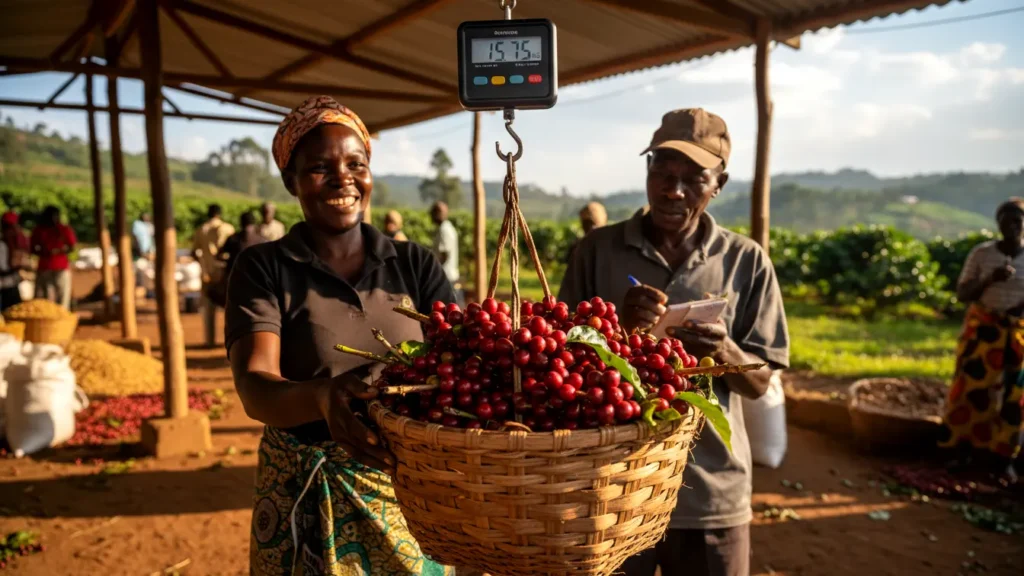
A well-managed acre of coffee in Kenya, utilizing high-density planting (1,000 trees), can yield significantly.
Yield Projection: 1,000 trees x 8kg cherry/tree = 8,000kg Cherry.
Price Projection: KES 90 per kg (Conservative average).
Gross Revenue: 8,000kg x KES 90 = KES 720,000.
Operational Costs: KES 150,000 (Mature upkeep).
Net Profit: KES 570,000 per acre per year.
These figures assume professional management. Neglected farms often yield less than 2kg per tree, which results in a financial loss. The key variable is the global market price, which fluctuates, but quality beans always command a premium.
How can farmers add value to coffee to increase margins?
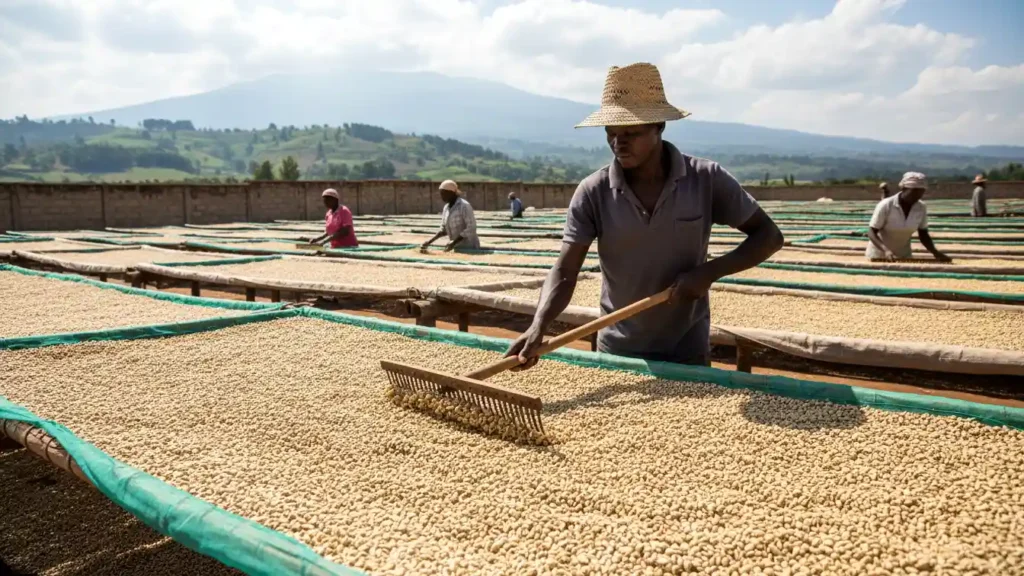
Value addition involves processing raw cherry into Parchment or fully milled Green Beans rather than selling fresh cherry to cooperatives. Farmers who invest in eco-pulpers and drying beds can sell directly to millers or exporters, bypassing cooperative inefficiencies. This strategy can increase revenue per kilogram by 30% to 40% and offers faster payment cycles.
Read Also: 10 Most Profitable Farming Ventures in Kenya for 2026
On-Farm Processing: The Game Changer
The traditional model of delivering cherry to a cooperative society often subjects farmers to theft, mismanagement, and delayed payments. In 2026, the trend is shifting toward “Estate” status, even for smallholders. By acquiring a license from the county government and installing a small motorized pulper, you become an independent processor.
When you pulp your own coffee, you control the fermentation process, which is where the flavor profile is developed. You then dry the beans to 10.5% moisture content to create “parchment.” Parchment is a storable commodity; unlike fresh cherry which rots in days, parchment can be held for months while you negotiate better prices with millers or private buyers.
Direct Marketing and Export
The Capital Markets Authority (CMA) has reformed the Nairobi Coffee Exchange to allow for a Direct Settlement System (DSS). This ensures that when your coffee is sold at auction or via direct contract, the money flows directly to your bank account, not through a cooperative middleman. Farmers can now aggregate their produce and hire a marketing agent to represent them directly at the auction.
Advanced Pest and Disease Management
In 2026, climate change has altered pest cycles, requiring vigilance. The Coffee Berry Borer is a major threat that drills into the berry, destroying the bean. Control relies on field hygiene; ensure no dried berries (“mbuni”) are left on the ground or tree after harvest, as these serve as breeding grounds.
Coffee Leaf Rust (CLR) appears as orange powder on the underside of leaves and causes defoliation. While Batian and Ruiru 11 are resistant, resistance can break down under extreme stress. Monitor your trees closely and apply a copper fungicide if you spot more than 5% infection levels in the field.
Antestia Bugs are responsible for the “potato taste” defect that ruins cup quality. These bugs must be controlled using targeted insecticides like pyrethroids immediately after pruning. Pruning itself helps by opening the bush, making the environment less habitable for the bugs.
Irrigation: The Key to Consistency
Rain-fed agriculture is increasingly risky due to erratic weather patterns. Investing in an irrigation system is the best insurance policy for a coffee farmer. Drip irrigation is the most efficient method, delivering water and fertilizer (fertigation) directly to the root zone with minimal waste.
Irrigation allows you to manipulate the flowering season. By irrigating during a dry spell, you can trigger an “out-of-season” flowering. This results in a harvest that hits the market when supply is low, commanding significantly higher prices than the main crop.
2026 Outlook: The Future of Kenyan Coffee
The future of coffee farming in Kenya is bright for those who treat it as a science. The global demand for high-acid, fruity Kenyan Arabica exceeds supply. As consumers in Asia and the West become more sophisticated, they are willing to pay premiums for traceability and sustainability.
Young farmers should focus on Regenerative Agriculture. Using cover crops, reducing tillage, and integrating shade trees like Macadamia not only improves soil health but also creates additional revenue streams. The government’s push to revitalize the sector through the Coffee Cherry Advance Revolving Fund provides easier access to credit for inputs.
Call to Action
Don’t just plant trees; build a business. Start with a comprehensive soil test to understand your land’s potential. Secure your genetics from KALRO and invest in knowledge by joining digital farming communities. The path to profitability is clear for those willing to do the work.
Farmers Also Ask (FAQ)
1. How many coffee trees can I plant in one acre?
For traditional tall varieties like SL28, the spacing is 9ft x 9ft, allowing roughly 600 trees per acre. For compact varieties like Ruiru 11, spacing can be 6ft x 6ft or 8ft x 5ft, allowing between 1,000 to 1,300 trees per acre.
2. How long does it take for coffee to grow in Kenya?
Grafted seedlings typically start flowering in the second year, with the first significant harvest arriving in the third year. The trees reach their full production peak between year 4 and year 5, continuing for decades.
3. What is the best fertilizer for coffee planting?
At planting, use Single Super Phosphate (SSP) or DSP mixed with well-decomposed manure to boost root development. Avoid using DAP at planting if your soil test indicates high acidity, as it can further lower pH.
4. Can I intercrop coffee with other crops?
Yes, but you must choose compatible crops. Beans and legumes are excellent during the establishment phase (years 1-2) as they fix nitrogen. Avoid heavy feeders like maize or bananas directly in the coffee rows as they compete for light and nutrients.
5. Why are my coffee berries dropping before maturity?
Premature berry drop is usually caused by water stress (drought), Nitrogen deficiency, or a heavy infestation of Coffee Berry Disease (CBD). Ensure consistent soil moisture through mulching and apply proper fungicides during wet weather.
6. Is coffee farming profitable in 2026?
Yes, but volume and quality are the deciding factors. With global prices stabilizing, a farmer with high-quality AA/AB grades and yields above 10kg per tree makes significant profit. Low-input, low-yield farming is not profitable.
7. What is the difference between Robusta and Arabica coffee?
Kenya primarily grows Arabica (mild, acidic, high value) in high-altitude regions. Robusta (bitter, high caffeine, lower value) grows in low-altitude areas like Busia and Siaya. Arabica fetches much better prices in the export market.
8. How do I control the Coffee Berry Borer?
Field hygiene is the most effective control method. Ensure all “buni” (dried berries) are stripped from the trees and ground after harvest. Use alcohol-based traps to catch the beetles, as spraying is difficult once they are inside the berry.
9. Where can I get a license to sell coffee directly?
The Capital Markets Authority (CMA) and the Agriculture and Food Authority (AFA) regulate licensing. Recent reforms have made it easier for grower associations and large estates to obtain a “Grower Miller” license to export directly.
10. Does irrigation improve coffee yields?
Absolutely, irrigation is a game-changer. It triggers flowering during dry spells, allowing for an early crop that hits the market when prices are high. It also prevents berry abortion during drought, ensuring a heavier harvest.