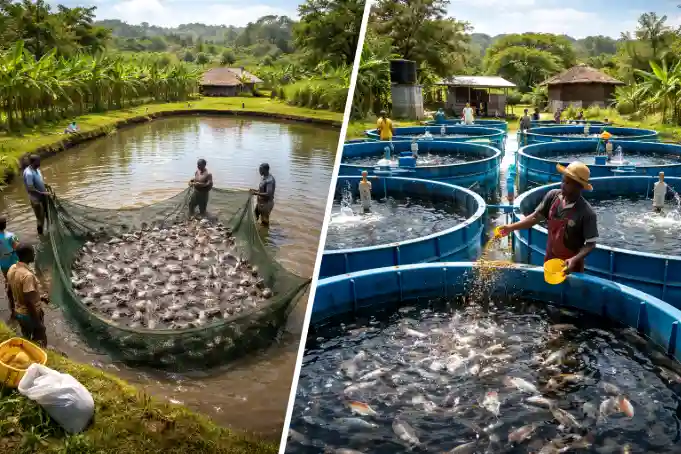

- Setting up a 1,000-capacity earthen pond costs between KES 50,000 and KES 150,000, while a basic 10,000-liter plastic tank setup ranges from KES 50,000 to KES 80,000 before adding filtration systems.
- Nile Tilapia and African Catfish remain the top earners in 2026, with market prices averaging KES 300 to KES 500 per kilogram in major urban centers like Nairobi and Kisumu.
- Commercial fish feed now accounts for up to 70 percent of total production costs, making locally formulated feeds and subsidized pond fertilizers critical for maximum profitability.
Table of Contents
The Kenyan aquaculture landscape is shifting rapidly as farmers heavily debate the profitability of traditional earthen ponds versus high-density tank systems. With commercial fish feed prices rising past KES 3,500 per 25kg bag in 2026, making the right choice dictates your ultimate survival in this agribusiness. This guide breaks down current startup costs, resilient fish breeds, and accurate financial projections to help you launch a sustainable fish farm.
Which Fish Breeds Offer the Best Returns in Kenya?
Comparing Tilapia, Catfish, and Trout
Nile Tilapia and African Catfish are the most profitable breeds for Kenyan farmers. Tilapia thrives in warm ponds and feeds on natural algae, while Catfish tolerates high stocking densities in tanks. Both species reach market weight within six to eight months under optimal feeding protocols.
Selecting the right fish breed is the foundational step for a profitable aquaculture venture. The commercial performance of a breed depends entirely on your climate and your chosen farming system. Nile Tilapia is a filter feeder that excels in earthen ponds where it can consume natural phytoplankton.
African Catfish is highly resilient and performs exceptionally well in concrete or plastic tanks where oxygen levels might fluctuate. Most beginners in Kenya struggle with stunted growth simply because they stock the wrong breed for their local weather. In highland areas like Nyeri, farmers are successfully pivoting to cold-water species like Rainbow Trout to target premium restaurant buyers.
Read Also: Rabbit Farming in Kenya 2026: Complete Beginner Guide to Breeds, Housing and Profits
To help you decide, the comparison below highlights the performance of the three most popular commercial fish species in Kenya. Please note that these estimated ranges vary by management and exact water quality conditions.
| Fish Breed | Average Yield (Per Acre/Year) | Maturity Period | Disease Resistance |
|---|---|---|---|
| Nile Tilapia | 3,000 to 5,000 kg | 6 to 8 Months | High (Susceptible to poor water quality) |
| African Catfish | 5,000 to 7,000 kg | 5 to 7 Months | Very High (Tolerates low oxygen) |
| Rainbow Trout | 1,500 to 2,500 kg | 8 to 12 Months | Low (Requires constant cold, clean water) |
Where to Buy Fish Farming Supplies in Kenya?
Certified Hatcheries and Feed Distributors
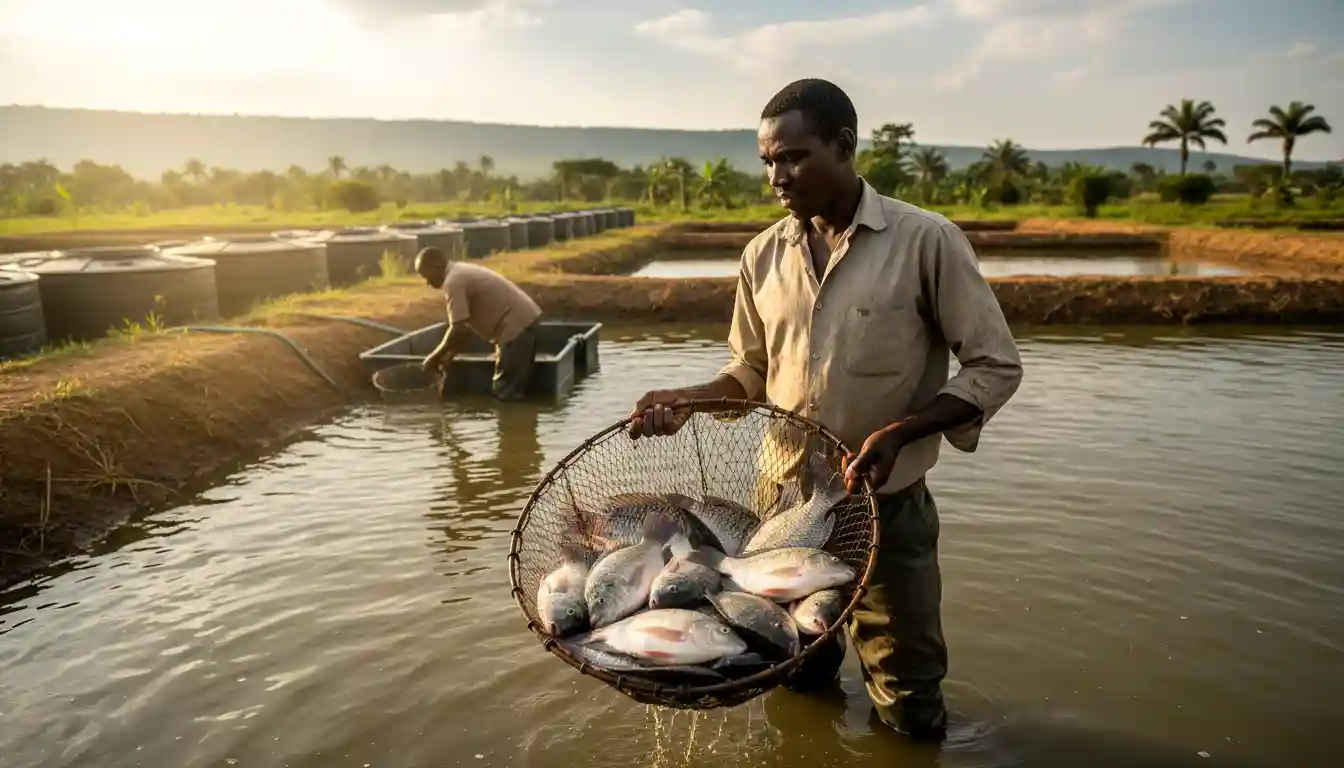
You must buy mono-sex fingerlings from certified hatcheries approved by the Kenya Fisheries Service. Trusted sources include KALRO stations, Jewlet Enterprises, and Hydro Victoria Fish Hatchery. Digital platforms like Mkulima Young also connect farmers with verified commercial feed suppliers.
Sourcing cheap, uncertified fingerlings from local rivers or untrusted neighbors is a guaranteed path to massive losses. Uncertified fish often breed uncontrollably in the pond, leading to overpopulation and severely stunted growth. To maximize profitability, you need certified mono-sex male Tilapia because males grow significantly faster and larger than females.
Quality fingerlings in 2026 cost between KES 5 and KES 15 each depending on the breed and your location. Established institutions like the Kenya Marine and Fisheries Research Institute provide excellent genetic stocks and vital technical advice. For your feed procurement, trusted brands like Unga Farm Care and Sigma Feeds dominate the market.
Smart farmers use platforms like Jiji Kenya and Mkulima Young to compare feed prices across different regional distributors. However, always insist on seeing recent customer reviews before making a mobile money payment to an online supplier. Securing a reliable nearby supplier is critical because running out of feed for even three days can set your fish growth back by weeks.
How Do You Manage Pond Fertilization and Water Quality?
Using Organic Manure and Subsidized Fertilizers
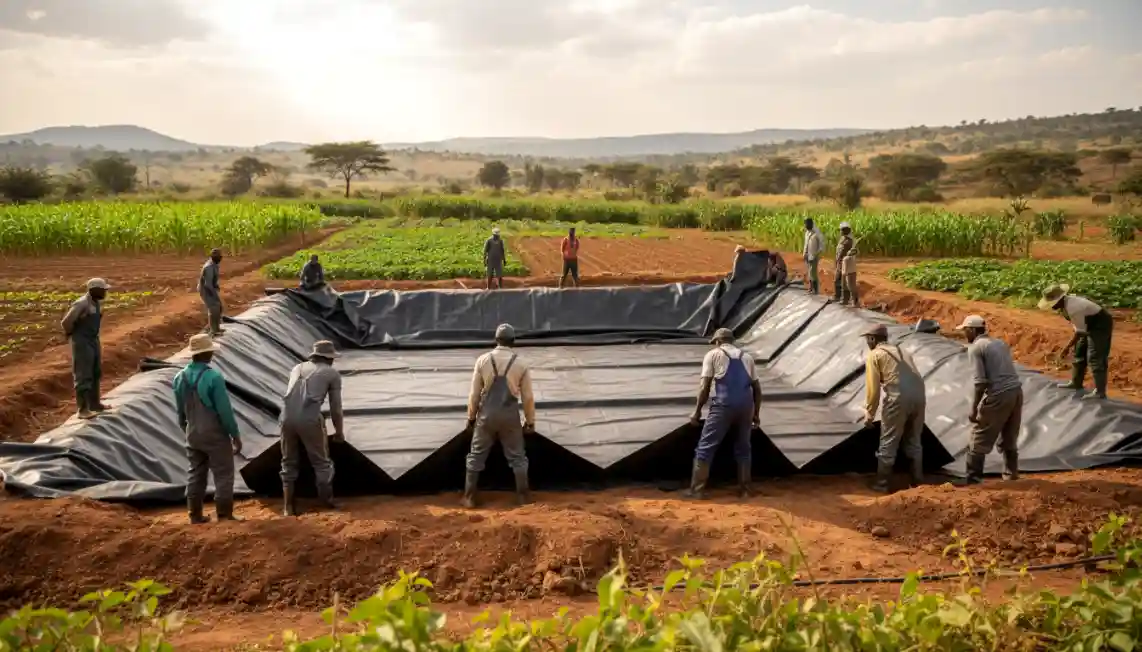
Proper pond fertilization creates a natural food web of phytoplankton, drastically reducing commercial feed costs. Farmers use a combination of organic manure and chemical fertilizers like DAP and UREA to stimulate green water. Tank systems rely entirely on mechanical filtration and frequent water exchange.
One major advantage earthen ponds have over tanks is their ability to generate free, natural food for your fish. By fertilizing the pond water before stocking your fingerlings, you trigger an algae bloom that feeds juvenile fish during their most vulnerable stage. Tank farmers completely miss out on this benefit and must rely entirely on expensive commercial feeds from day one.
Read Also: Azolla Farming in Kenya: Cheap Animal Feed and Higher Profits in 2026
For pond farmers, mastering water nutrition is the ultimate secret to lowering the cost of production. The government of Kenya currently provides subsidized fertilizers, which makes preparing an earthen pond highly affordable. Here is a breakdown of the best fertilizers used for blooming earthen fish ponds across the country, though estimated ranges vary by management and application rates.
| Fertilizer Type | 2026 Subsidized Price (KES) | Primary Function in Ponds |
|---|---|---|
| DAP (Di-Ammonium Phosphate) | 3,500 per 50kg bag | Promotes rapid algae and phytoplankton bloom. |
| UREA | 3,500 per 50kg bag | Boosts nitrogen levels to sustain natural food webs. |
| Organic Animal Manure | 0 to 500 per wheelbarrow | Maintains long-term pond fertility and macro-invertebrate growth. |
Which Kenyan Counties Offer the Best Climate for Fish Farming?
Matching Fish Breeds to Regional Temperatures
Kisumu provides the ideal natural warmth for rapid Tilapia growth in both ponds and lake cages. Nyeri is perfect for cold-water Rainbow Trout, while Machakos requires lined ponds or tank systems due to water scarcity and porous soils.
Kenya features diverse agro-ecological zones, meaning a fish farming system that works in one county might completely fail in another. From what many farmers experience in the Lake Victoria basin regions like Kisumu and Homa Bay, the naturally warm climate accelerates fish metabolism. This allows Tilapia to reach a market weight of 400g in just six months, maximizing your annual turnover.
In contrast, the central highlands covering Nyeri and Meru experience much cooler temperatures. Tilapia reared in open ponds here will grow very slowly, often taking up to ten months to reach maturity. Farmers in these highland areas usually invest in greenhouse-covered ponds to trap heat or switch entirely to high-value Rainbow Trout farming.
For arid and semi-arid areas like Machakos or Kajiado, water retention is the biggest hurdle. The soil is too porous to hold water naturally, forcing farmers to buy expensive dam liners. In these dry regions, high-density plastic tank systems utilizing solar-powered water recycling have become the most profitable path forward.
What is the Ideal 12-Month Production Cycle for Fish Farming?
Timing Your Stocking and Harvesting
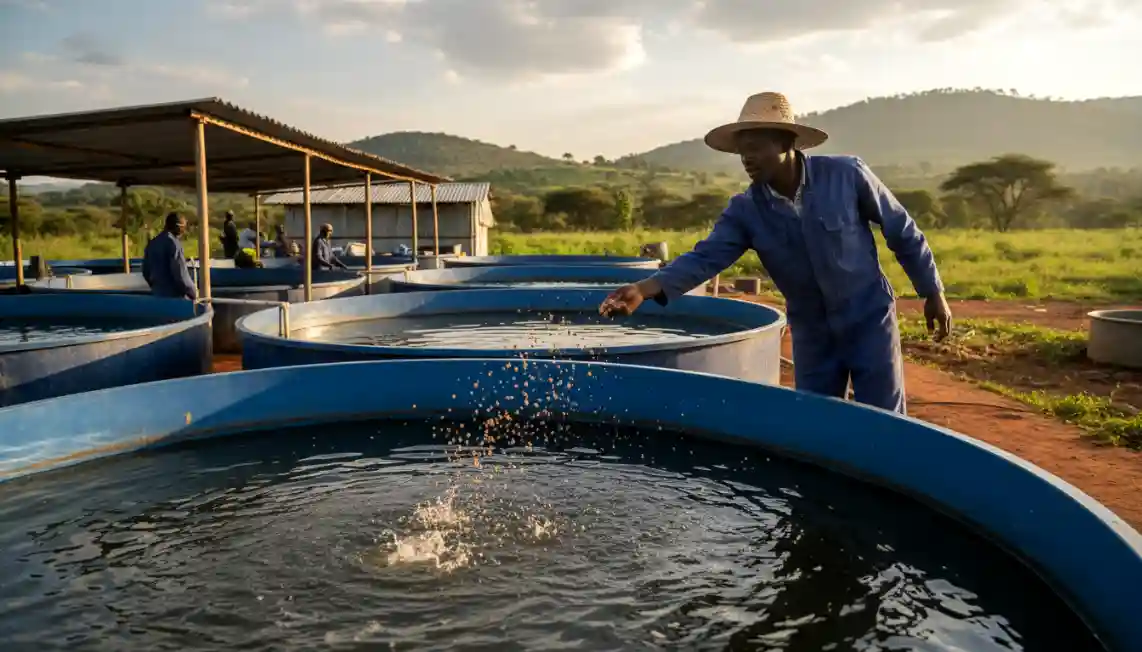
A standard production cycle begins in March just before the long rains, ensuring adequate water supply for pond filling. Harvesting occurs between October and November when fish reach the 400g to 500g market weight. Tank farmers can operate year-round regardless of rainfall patterns.
Timing your production cycle correctly ensures you hit the market when demand is peaking and natural water supplies are abundant. For earthen pond farmers, preparations must begin in late February. This involves draining old water, applying agricultural lime to kill parasites, and spreading manure to kickstart the natural algae bloom.
By mid-March, as the long rains begin, the ponds are filled and ready to receive the young fingerlings. The first three months involve intensive feeding using starter crumbles that have very high protein content. During the cold months of June and July, fish appetite naturally drops, so farmers must carefully monitor feed quantities to avoid polluting the water with uneaten pellets.
Read Also: Azolla vs. BSF vs. Hydroponic Fodder: Which is the Cheapest Feed in Kenya? (2026 Edition)
The final grow-out phase happens between August and October. At this stage, fish are consuming larger floating grower pellets to bulk up for the market. By November, a well-managed pond is ready for total harvesting, allowing you to sell the catch right before the festive season when fish prices in Kenya hit their highest peak.
Pond vs Tank Fish Farming: Which System is More Profitable?
Breaking Down the Financial Realities
Earthen ponds yield higher profit margins for beginners because they generate natural feed, lowering operational costs. Tank systems require less space and allow higher stocking densities but suffer from high electricity and commercial feed expenses. A well-managed pond breaks even by the second harvest.
The debate around whether ponds or tanks generate better returns ultimately comes down to your available capital and land size. Earthen ponds demand a larger piece of land but require very little technological intervention once established. Plastic tanks save space and deter predators, but a single power outage shutting down your oxygen pump can wipe out your entire stock in hours.
From what many farmers experience, the first production cycle rarely yields massive profits due to the heavy sunk costs of construction. To build a standard 300 square meter earthen pond, you need about KES 25,000 for excavation and up to KES 40,000 if a liner is required. Meanwhile, a commercial-grade tank system demands at least KES 80,000 upfront for the tanks, bio-filters, and heavy-duty water pumps.
Understanding the strict financial commitment is crucial before choosing between a pond and a tank setup. The financial model below outlines the expected best-case and average-case costs for a 1,000-capacity Tilapia farm over a single six-month production cycle. Keep in mind that these estimated ranges vary by management, feed brand, and local market fluctuations.
| Expense / Revenue Item | Earthen Pond Setup (KES) | Plastic Tank Setup (KES) |
|---|---|---|
| Initial Setup (Excavation/Tanks) | 25,000 to 50,000 | 60,000 to 100,000 |
| 1,000 Certified Fingerlings | 10,000 to 15,000 | 10,000 to 15,000 |
| Commercial Fish Feed (18 to 22 bags) | 54,000 to 65,000 | 70,000 to 85,000 (No natural feed) |
| Labor & Utilities (Water pumping/Electricity) | 5,000 to 10,000 | 15,000 to 25,000 |
| Estimated Gross Revenue (800 surviving fish) | 84,000 to 120,000 | 84,000 to 120,000 |
| Cycle 1 Profit/Loss (Including Setup) | (10,000) Loss to 10,000 Profit | (76,000) Loss to (15,000) Loss |
| Cycle 2 Projected Profit (Setup Paid Off) | 15,000 to 40,000 Profit | (11,000) Loss to 20,000 Profit |
How Can You Maximize Profits Through Fish Value Addition?
Processing and Packaging for Urban Markets
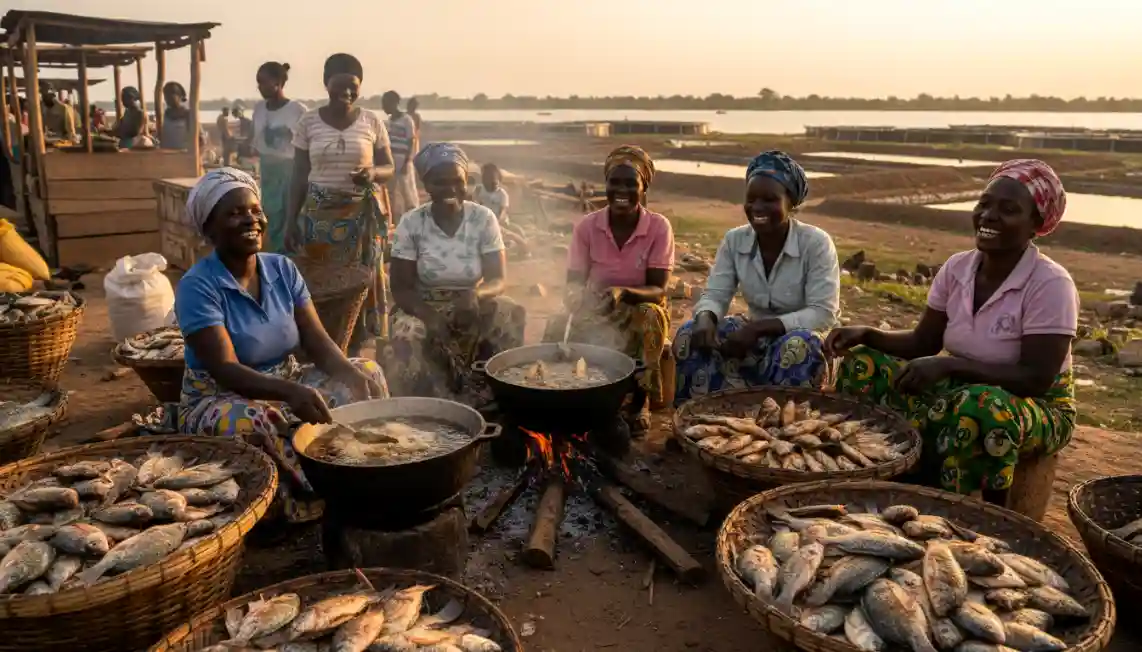
Selling raw, unprocessed fish at the farm gate severely limits your earning potential. Farmers increase profits by gutting, scaling, and deep-frying the fish before selling to local consumers. Vacuum packing and sun-drying also extend shelf life and open up premium urban markets.
Relying exclusively on farm-gate brokers is the fastest way to lose your hard-earned profits. Brokers in Kenya often dictate very low bulk prices, sometimes offering as little as KES 200 per kilogram. To bypass these middlemen, successful agri-entrepreneurs process the fish themselves to capture the retail value.
A simple value addition strategy is setting up a frying station near the farm or at the local market. Deep-fried Tilapia fetches a premium from local consumers and eliminates the immediate need for expensive cold storage. Raw fish sold for KES 150 can easily fetch KES 300 once scaled, spiced, and expertly fried.
For those targeting high-end Nairobi supermarkets, investing in a vacuum sealing machine is a game changer. Filleting the fish, vacuum packing the meat, and freezing it allows you to brand your product and sell it for over KES 800 per kilogram. This level of professional packaging completely transforms a basic pond project into a formal, highly profitable food business.
Risks & Reality Check: The Biggest Challenges in Fish Farming
Market Failures, Feed Costs, and Predators
High commercial feed costs and predatory birds are the leading causes of farm failure. Global supply chain disruptions in 2026 have pushed fish feed prices up, eating into profit margins. Poor water quality management also leads to rapid disease outbreaks and mass fish die-offs.
The reality of aquaculture in Kenya is that it requires strict daily discipline, and small mistakes quickly compound into total losses. The most devastating risk currently facing farmers is the uncontrollable cost of imported fish feed ingredients. Crop and market failures can also occur if you harvest when the market is flooded with cheap imported fish from neighboring countries.
Predators are another massive headache for open pond farmers. Kingfishers, monitor lizards, and even stray domestic cats will relentlessly hunt your expensive fingerlings. Covering your ponds with predator netting is no longer an optional luxury, it is an absolute necessity if you want to achieve an 80 percent survival rate by harvest time.
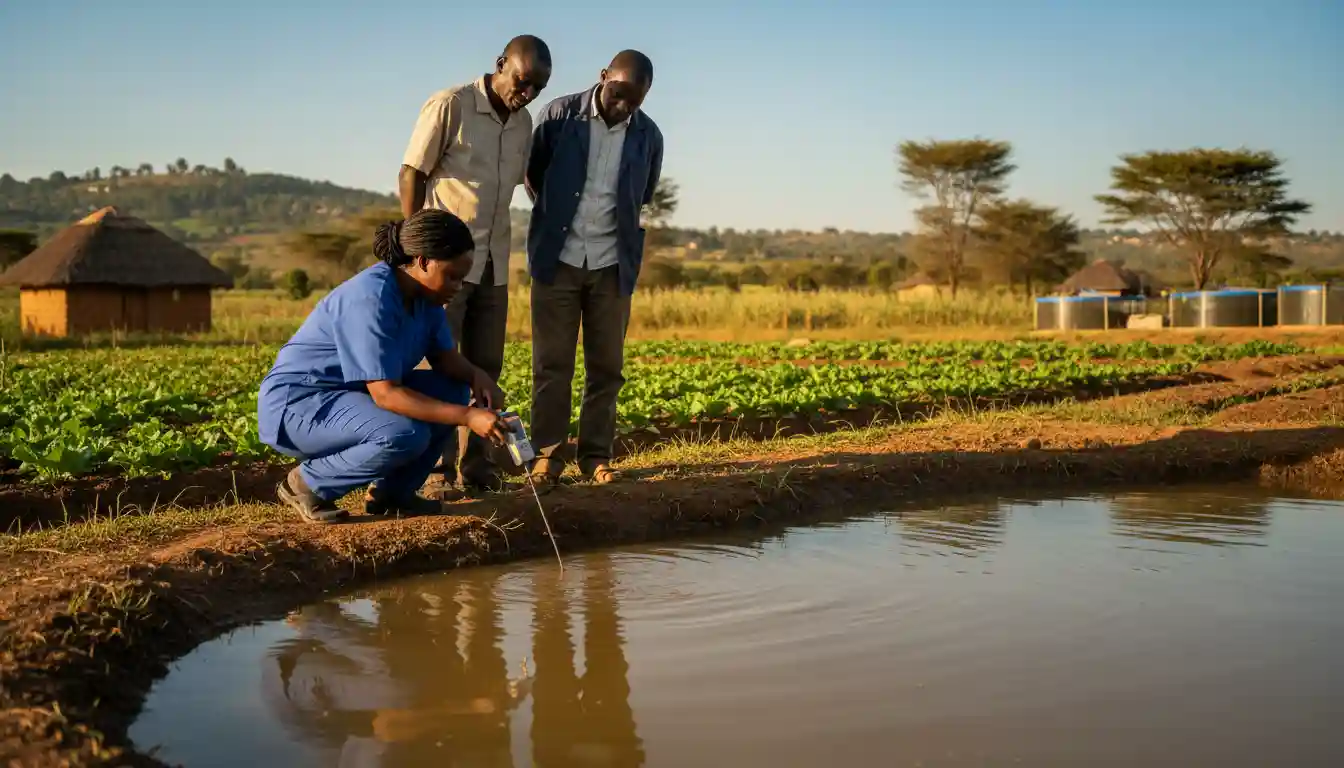
Finally, poor water management destroys more fish farms than diseases ever will. Overfeeding causes leftover pellets to rot at the bottom of the pond, creating deadly ammonia spikes. You must invest in a basic water testing kit to monitor pH and oxygen levels, allowing you to catch invisible water problems before your fish start floating belly up.
What is the 2026 Outlook for Aquaculture in Kenya?
Future Trends and Alternative Feeds
The Kenyan aquaculture sector will continue to expand as the population demands more affordable protein. Farmers who adopt localized feed formulation and solar-powered tank systems will outcompete those relying entirely on expensive imported inputs. Start small, master water quality, and scale up gradually.
Despite the high costs of inputs, the demand for fresh fish in Kenya continues to outpace the natural supply from Lake Victoria. The national government and various non-governmental organizations are heavily pushing for sustainable aquaculture to bridge this massive food security gap. This guarantees a ready market for any farmer capable of producing quality fish at a competitive price.
Read Also: How to Get Instant Farm Input Mobile Loans in Kenya 2026: Digital Credit Apps and Bank Options
Looking ahead, the most profitable farmers will be those who figure out how to lower their feed costs. Innovators are already turning to Black Soldier Fly larvae as a cheap, protein-rich alternative to commercial fishmeal. Adopting these locally available feed solutions is the only way to shield your agribusiness from global inflation.
If you are planning to invest in fish farming this year, start with one or two manageable earthen ponds to learn the practical behavior of the fish. Master the daily routines of feeding, water monitoring, and predator control before pouring money into expensive concrete tanks. With patience and sharp financial tracking, your aquaculture venture will grow into a highly rewarding enterprise.
Farmers Also Ask (FAQ)
How many fish can a 1000 litre tank hold?
A 1000-litre tank safely holds 80 to 100 mature Tilapia or up to 150 Catfish, provided you have a highly efficient water filtration and oxygenation system.
What is the best food for fast growth?
High-protein floating pellets from reputable brands like Unga Farm Care or Sigma Feeds ensure fast growth and allow you to monitor daily feeding habits.
How long does tilapia take to mature?
Under optimal warm weather and consistent feeding, Nile Tilapia takes six to eight months to reach a marketable weight of 400g to 500g in Kenya.
Is catfish farming profitable in Kenya?
Yes, Catfish is highly profitable because it tolerates poor water conditions, grows fast, and can be stocked at much higher densities than Tilapia.
How much is a fish pond liner in Kenya?
A quality heavy-duty dam liner for a standard 300 square meter fish pond costs between KES 20,000 and KES 40,000, depending on the thickness.
Why are my fish dying in the pond?
Fish die-offs are mostly caused by low dissolved oxygen, high ammonia from rotting feed, or abrupt temperature drops. Always test your water pH.
Can I make my own fish feed?
Yes, you can formulate feed using maize bran, soybean meal, and Black Soldier Fly larvae to cut costs, but ensuring the correct protein balance is key.
What is the current price of tilapia in Kenya?
Fresh farm-gate Tilapia sells for KES 300 to KES 500 per kilogram depending on the size of the fish and proximity to major urban centers.
Do I need a license to farm fish?
Small-scale farmers generally do not need a commercial license. However, large commercial setups require permits from the Kenya Fisheries Service.
How do I control predators in my fish pond?
The most effective method is covering the entire pond surface with a specialized anti-predator net to keep away kingfishers, eagles, and monitor lizards.