
Table of Contents
Farming in Kenya has undergone a radical transformation over the last decade. The romanticized notion that one requires acres of fertile land in Molo, Kinangop, or Timau to cultivate high-value vegetables is officially a relic of the past. As we settle into 2026, the landscape of Kenyan agriculture has shifted from the expansive rift valley fields to the vertical spaces of our rapidly densifying cities. Urban farming in Nairobi, Mombasa, Kisumu, and Nakuru has revolutionized how households produce food, and hanging cabbage farming is currently at the forefront of this agricultural shift.
This comprehensive guide is not designed for the casual hobbyist who merely wants to see something green grow. This is a master-level resource for serious Kenyan farmers, urban entrepreneurs, and sustainability advocates who aim to harvest big, heavy, commercial-grade cabbages weighing between two to four kilograms using strictly limited space. Whether you are managing a small rental plot in Ruai, utilizing a tight balcony in Kilimani, or maximizing a concrete backyard in Eldoret, this guide will provide the technical knowledge required to maximize vertical space. You will learn to grow massive heads of cabbage that rival, and often exceed, the quality of those produced on large-scale open commercial farms.
In the economic climate of 2026, food security is paramount. The market price for a single large cabbage head in Nairobi retail markets such as Marikiti or City Park now fluctuates between KES 80 and KES 150 depending on the season and rainfall patterns. Retail prices per kilogram are hitting highs of KES 111 to 120. By utilizing container gardening techniques, you effectively control the soil composition, water intake, and pest exposure, virtually guaranteeing a premium harvest that is free from the chemicals often found in mass-market produce.
THE REVOLUTION OF URBAN FARMING IN KENYA
The concept of growing food in containers is not new, but the technology and methodology have been refined significantly by 2026. We are living in an era of “Micro-Climate Agriculture.” In a container, you are not just planting a seed; you are acting as the god of a small universe. You control every variable. This is critical in Kenya, where weather patterns have become increasingly erratic due to climate change. The long rains are no longer guaranteed, and the heat intensity in January and February can scorch open-field crops.
Container farming, specifically the hanging and vertical systems detailed here, solves these macroscopic problems on a microscopic level.
Disease Control and Soil Management
Traditional farming in Kenya struggles immensely with soil-borne diseases. Bacterial Wilt (Ralstonia solanacearum) is the scourge of the tomato, potato, and cabbage farmer. Once it infects a field, that field can remain unproductive for years. In a container system, this risk is nearly eliminated. You use fresh, treated soil mixed with compost and manure. If one container gets sick, you simply remove it. The disease cannot travel through the plastic to the next container. This quarantine capability is the superpower of container gardening.
Water Efficiency in a Scarcce Landscape
By 2026, water has become one of the most precious resources in East Africa. Traditional open-field farming is notoriously wasteful, with runoff and evaporation claiming a significant percentage of irrigation water. Container farming is a closed-loop mentality. It uses 40 to 60 percent less water than open-field farming because you target the root zone directly. There are no weeds stealing water from your crop, and the reduced surface area of the soil means less evaporation.
Read more
Pixie Orange Farming in Kenya 2026: Complete Guide to Seedlings, Costs and Profit per Acre
Space Maximization and Verticality
A standard 50 by 100-foot plot in a place like Kitengela or Joska can historically hold about 1,000 cabbages if planted in rows on the ground. However, using vertical hanging systems, you can exploit the “air rights” of your land. By stacking containers or hanging them in rows, you can triple that number to 3,000 heads in the same footprint. This increases the yield per square meter and maximizes the return on investment for the urban farmer.
CHOOSING THE RIGHT CONTAINER AND SETUP
One of the most common mistakes beginners make is underestimating the root mass of a brassica plant. You cannot grow a commercial-grade cabbage in a small Kasuku tin or a two-liter soda bottle. Cabbages have extensive, albeit shallow, root systems that require lateral width to anchor the heavy head, and they are voracious feeders that need a large reservoir of nutrients.
The Jerrican Method
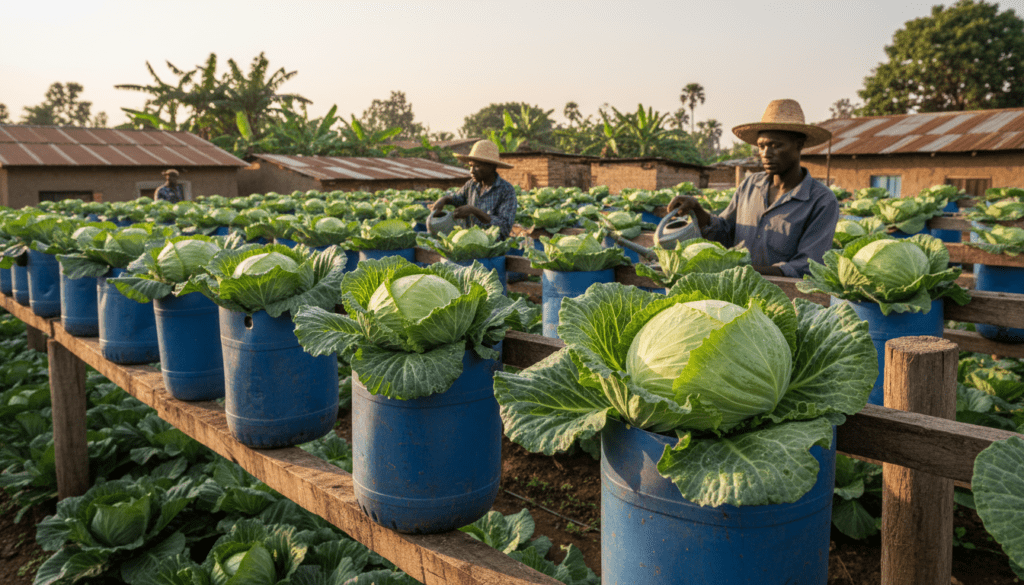
The gold standard for cost-effective container farming in Kenya remains the recycled 20-Liter Jerrican. These are readily available at practically every marketplace or recycling center for a low cost.
To prepare the jerrican, lay it on its side. You want to maximize the surface area for the plant to spread its leaves. Cut a large rectangular window on the upper side, but crucially, leave the handle and the spout intact. These structural elements prevent the plastic from buckling under the weight of wet soil and a heavy cabbage.
Read more
How to Grow Bulb Onions in Crates: Step by Step Guide for Kenyan Farmers
Drainage is the single most critical factor in container preparation. Cabbages hate having “wet feet.” If water stagnates at the bottom of the container, the roots will suffer from oxygen deprivation and eventually rot. You must drill at least 10 to 15 holes at the bottom of the jerrican using a hot nail, a soldering iron, or a drill bit. Ensure these holes are distributed evenly.
The hanging mechanism requires engineering precision. A mature cabbage in a jerrican filled with wet soil can weigh upward of 10 to 12 kilograms. You cannot use flimsy strings or old nylon ropes that degrade in the UV sun. Use strong binding wire, preferably gauge 16. Loop it securely through the handle and the neck of the jerrican. When hanging them on a line, ensure your support structure-whether it is a clothesline post, a timber beam, or a metal pipe-can support the cumulative weight. A line of 10 cabbages equals 100 kilograms or more.
Why Soda Bottles Fail
It is important to address a common myth. Many internet tutorials suggest using 2-liter soda bottles for vertical farming. This works for kale (sukuma wiki) or spinach, which are harvested by the leaf. It does not work for heading cabbages. The root ball of a cabbage will become “root-bound” in a small bottle long before the head forms. This stress causes the plant to bolt (produce seeds) prematurely or produce a “tennis ball” sized head that is woody and bitter. You need a minimum of 15 to 20 liters of soil volume to achieve a 3-kilogram head.
BEST CABBAGE VARIETIES FOR CONTAINERS IN KENYA 2026
Genetic selection is half the battle. Not all cabbages are created equal, and in 2026, the seed market has evolved to offer hybrids that are specifically suited for high-density planting. For container farming, you require varieties that possess a “compact” growing habit. This means they have smaller wrapper leaves (the outer leaves) but produce a heavy, dense inner head. This allows you to hang containers closer together without the plants overshadowing each other.
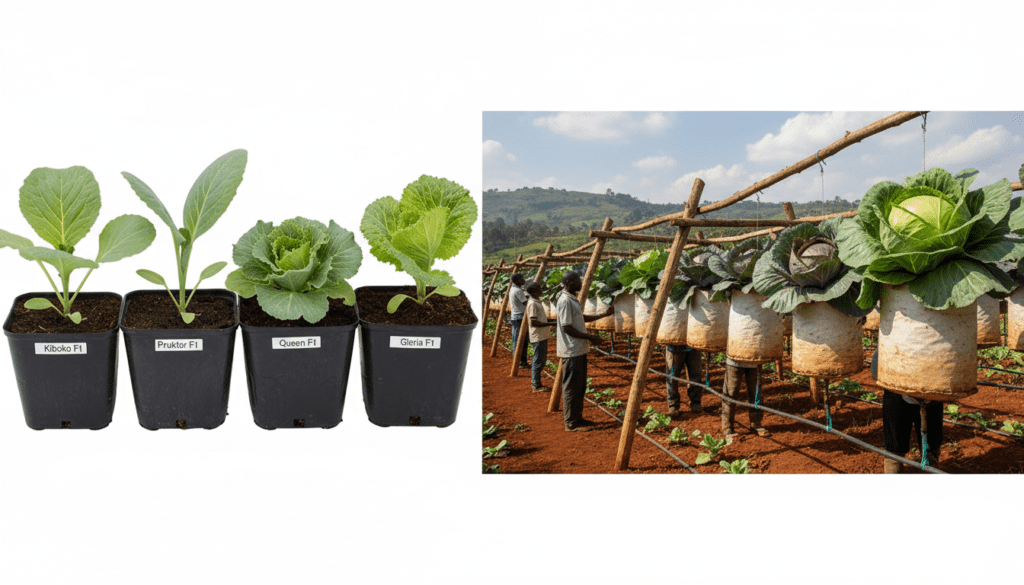
Kiboko F1 The 2026 Champion
This variety is currently the most robust option for disease resistance in the Kenyan market. It has been bred to be highly resistant to Black Rot (Xanthomonas campestris), which is the number one killer of cabbages in wet or humid conditions. Kiboko F1 produces a dark green head weighing between 4 and 5 kilograms and matures in approximately 80 to 90 days. It is perfect for containers because its stalk is thick and sturdy, supporting the heavy head without snapping.
Pruktor F1
Pruktor is a favorite among container farmers because of its architectural efficiency. It is a compact plant that does not spread its leaves as wide as traditional varieties. This is known as a “high-population” variety. It matures relatively fast, in about 80 days, and produces a solid, round head weighing 3 to 4 kilograms. Its ability to stand in the field without bursting makes it ideal for farmers who may not be able to harvest everything in one day.
Queen F1
If your goal is a quick turnover to catch a specific market window, Queen F1 is the variety of choice. It is an early maturing variety, often ready in 75 to 80 days. While it yields slightly smaller heads in the range of 2.5 to 3 kilograms, the heads are very uniform, sweet, and crisp. This makes Queen F1 excellent for home consumption and local grocery sales where quality is preferred over sheer size.
Gloria F1
Gloria F1 is the legendary variety of Kenya, known by almost every farmer. It is reliable, heat tolerant, and capable of producing massive heads up to 5 kilograms or more. However, Gloria is a heavy feeder. If you choose this variety for containers, you must be extremely disciplined with your fertilizer application. It requires a lot of fuel to build that massive size, and in a container, nutrients can run out quickly.
Read About
Dairy Farming in Kenya: Complete Beginner’s Guide, Costs, Profits and Best Breeds
SOIL PREPARATION AND THE MAGIC MIX
The soil in your container is the engine of your farm. In open-field farming, roots can travel meters deep to find nutrients. In a container, they can only eat what you put in the bucket. Therefore, you cannot simply dig up red soil from the roadside and expect miracles. Roadside soil is often compacted, acidic, and devoid of organic life.
The Magic Mix Formula
To grow a prize-winning cabbage, you must construct a growing medium that is loose, rich in organic matter, and holds moisture without becoming waterlogged. For every one container, you should mix the following ratios:
One Part Topsoil
Use good quality garden soil. Preferably, collect this from a forest area or a spot in your garden that has not grown crops recently. This soil provides the mineral backbone and stability for the plant.
One Part Well-Rotten Manure
Cow or goat manure is the best for cabbages. It provides a slow-release source of Nitrogen. It is absolutely critical that the manure is fully decomposed. It should be black, crumbly, and odorless. If you use fresh, wet manure, the high ammonia levels will “burn” the tender roots of the cabbage, killing the plant within days.
One Handful of Wood Ash
Cabbages prefer a neutral to slightly alkaline soil pH (around 6.5 to 7.0). Kenyan soils are often acidic. Wood ash helps to raise the pH and also provides Potassium, which is essential for fruit and head firmness.
One Tablespoon of DAP
Mix one tablespoon of Di-ammonium Phosphate (DAP) thoroughly into the bottom half of the soil mix. DAP provides the high levels of Phosphorus needed for strong root development during the first few weeks of growth.
Sterilizing Your Soil
This step separates the masters from the amateurs. Soil often contains nematode eggs, weed seeds, and fungal spores. Before filling your containers, you should sterilize the mix. You can do this by pouring boiling water over the soil mix and letting it drain. Alternatively, you can use “solarization.” Moisten the soil, pile it up, cover it tightly with a black plastic sheet, and leave it in the hot sun for two weeks. The heat generated under the plastic will cook the pests and pasteurize the soil.
NURSERY MANAGEMENT AND TRANSPLANTING
Never plant cabbage seeds directly into the final hanging container. The tiny seeds need a controlled nursery environment to thrive. Start your seeds in a separate nursery tray or a basin.
Sowing Seeds
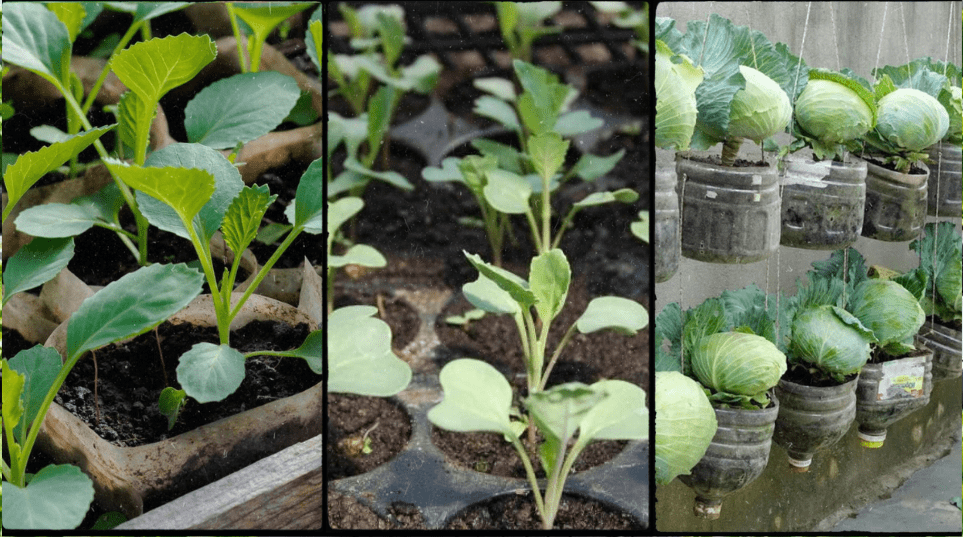
Use a plastic seedling tray with cocopeat if possible, as this ensures 100 percent germination and easy root extraction. If using soil, make fine furrows in a basin. Drop the seeds thinly; do not overcrowd them. Cover them very lightly with fine soil. Water gently using a mist sprayer or your hand. In the warm climate of Nairobi or Mombasa, they will germinate in 4 to 6 days.
Hardening Off
Before moving the babies to the big containers, they must be “hardened off.” This means gradually exposing them to harsher conditions. A week before transplanting, reduce the watering frequency and expose the nursery tray to direct sunlight for longer periods. This thickens the cuticle of the leaves and prepares the plant for the real world.
The Transplanting Stage
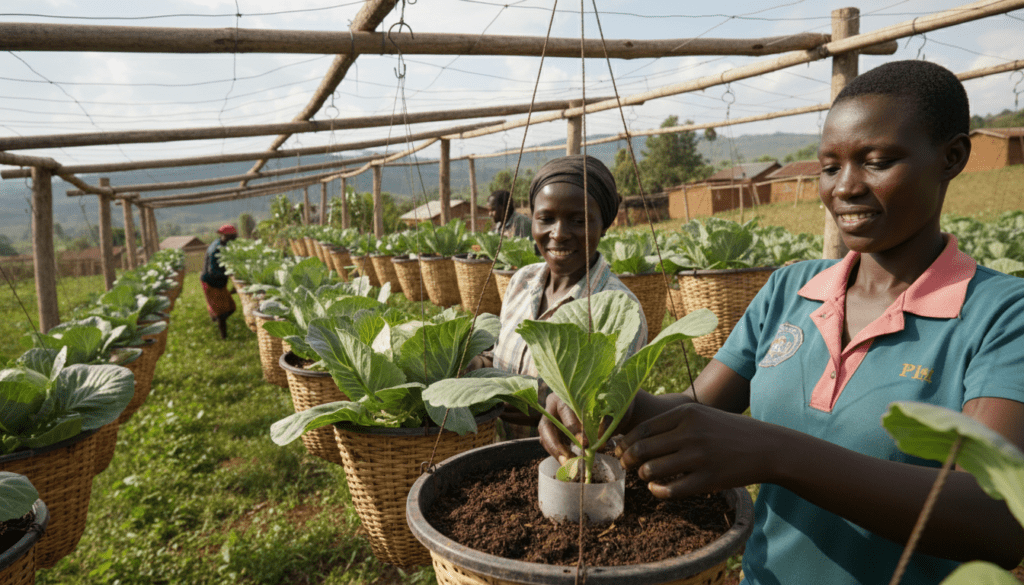
Transplant the seedlings when they have developed four true leaves, which is usually about four weeks after germination.
Timing is everything. Water the seedlings heavily one hour before moving them to ensure they are fully hydrated. Perform the transplanting late in the evening, ideally around 5:00 PM or on a cloudy day. This prevents the harsh midday sun from causing transplant shock, which can stunt the plant’s growth for a week.
Dig a hole in your container soil large enough to accommodate the root ball. Place the seedling in the hole and firm the soil gently around the stem to remove air pockets.
The Cutworm Trick
Cutworms are nocturnal pests that slice young seedlings at the base. To prevent this, place a small “collar” around the stem at soil level. This can be cut from a plastic straw or a small section of a plastic bottle. Push it slightly into the soil. This physical barrier prevents the cutworm from wrapping around the stem.
FEEDING YOUR CABBAGE: THE BIG HEAD REGIMEN
You cannot starve a plant and expect a harvest. To get a 4-kilogram cabbage, you must feed the plant aggressively. Cabbages are known as “heavy feeders.”
Week 1 to 2 Root Establishment
During the first two weeks after transplanting, do not apply fertilizer. The DAP you put in the soil mix is sufficient. Water only. Keep the soil moist but not soggy. Allow the roots to explore the container.
Week 3 The Nitrogen Boost
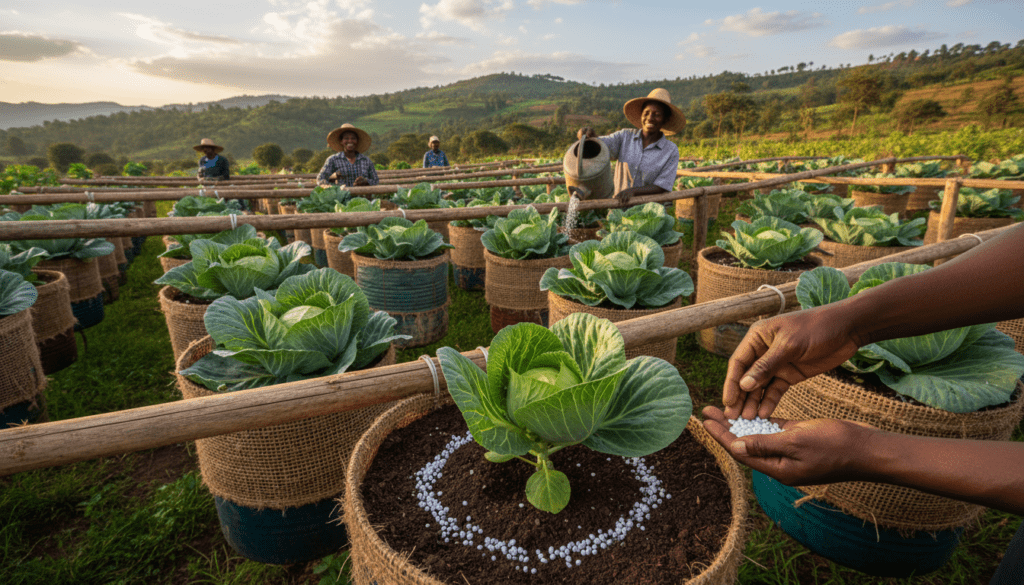
At week three, the plant needs to build a massive factory of leaves. The bigger the outer leaves, the more energy the plant can generate to fill the head. Top dress with one teaspoon of CAN (Calcium Ammonium Nitrate) or NPK 23:23:0 per plant. Place the fertilizer in a ring about 2 inches away from the stem. Do not let the chemical fertilizer touch the stem, or it will burn the plant tissue. Water immediately after applying to dissolve the granules into the root zone.
Week 6 Head Formation
When you see the center leaves starting to curl inward, a process known as “cupping,” the plant is shifting its energy from leaf growth to head formation. At this stage, apply one tablespoon of NPK 17:17:17. This balanced fertilizer supports the structural integrity and dense packing of the head.
Micronutrients and Liquid Gold
Chemical fertilizers often lack micronutrients like Boron and Magnesium. Every two weeks, apply “Liquid Gold,” which is a manure tea. Make this by soaking a sack of manure or Tithonia (Mexican sunflower) leaves in a drum of water for seven days. Dilute this mixture 1:1 with clean water and pour it into your containers. This adds beneficial bacteria and essential micronutrients, giving your cabbage a sweeter taste and a deep, dark green color that buyers love.
WATERING PROTOCOLS FOR KENYAN CLIMATES
Watering is the most frequent task in container gardening, and it requires consistency. Inconsistent watering is the primary cause of “Splitting.” Splitting occurs when the soil gets too dry, causing the cabbage head to harden, and then receives a sudden flush of water. The internal pressure builds up faster than the outer leaves can stretch, causing the head to crack open like a dropped watermelon. Once a cabbage splits, it is unmarketable.
The Finger Test
Do not water by a strict schedule; water by feel. Stick your finger one inch into the soil. If it feels dry, it is time to water. If it feels damp, wait.
The best time to water is early morning, between 6:00 AM and 8:00 AM. This allows the plant to hydrate before the sun gets hot. Avoid evening watering if possible. Wet leaves at night encourage fungal diseases like Downy Mildew because the water does not evaporate quickly in the cool night air.
Volume Requirements
Each mature cabbage needs about 500ml to 1 liter of water per day during hot weather. In the cool season, this may drop to 300ml.
Mulching In Containers
In 2026, temperatures are rising. Mulching is not optional; it is mandatory. Place a layer of dry grass, straw, or dry leaves on top of the soil in your container. This mulch acts as an insulator. It reduces water evaporation by up to 50 percent, saving you water. It also keeps the roots cool. Cabbages are cool-weather crops; if the roots in a black plastic jerrican get too hot, the plant will stress and stop growing. The mulch reflects the sun and keeps the soil temperature stable.
PEST AND DISEASE WARFARE
In a container garden, you have the advantage of being able to inspect every single plant. You can fight pests manually without resorting to heavy chemical warfare.
Aphids (Wadudu wa kijani)
These are small green or black insects that suck sap and curl the leaves. They usually hide on the undersides of leaves.
The solution is simple: Mix one tablespoon of liquid dish soap with one liter of water and spray the undersides of the leaves. The soap suffocates the aphids. Neem oil is also highly effective.
Diamondback Moth (DBM)
The Diamondback Moth is the arch-nemesis of the Kenyan cabbage farmer. The larvae are small green caterpillars that eat holes in the leaves, making them look like a window pane.
Inspect your plants daily. Handpick the green caterpillars and destroy them. If the infestation is severe, use a biological pesticide like Bacillus thuringiensis (Bt), which is available at most agrovets. This bacteria kills the caterpillar but is safe for humans and pets.
Black Rot
This bacterial disease presents as yellow V-shaped lesions on the leaf edges.
There is no cure for Black Rot. Prevention is the only strategy. Use resistant varieties like Kiboko F1. If you see a plant with these symptoms, remove it immediately and burn it. Do not compost it. Do not touch healthy plants after touching sick ones, as you will spread the bacteria on your hands.
HARVESTING AND POST-HARVEST
Patience is the final test. Your cabbage is ready for harvest when the head feels rock-hard when squeezed. If it feels spongy or gives way under pressure, it is not yet full. It needs more time to pack in leaves.
Cutting
Use a sharp, clean knife. Cut at the base of the head, leaving three to four wrapper leaves attached. These loose outer leaves act as a shock absorber and packaging during transport, protecting the valuable head inside from bruising.
Market Prices 2026
Understanding the market is key to profitability.
In Nairobi markets like Marikiti, a large head fetches KES 80 to 120.
In Mombasa (Kongowea), prices can reach KES 150 due to the high demand and the difficulty of growing cool-weather crops in the coastal heat.
At the Farm Gate (selling to neighbors), you can sell for KES 70 to 100 per head, cutting out the transport costs entirely.
Storage
Store your harvested cabbages in a cool, dark place. Do not wash the cabbage until you are ready to sell or use it. Washing introduces moisture which promotes rot. A dry, cool cabbage can stay fresh for weeks.
ONLINE SEED PURCHASE GUIDE KENYA 2026
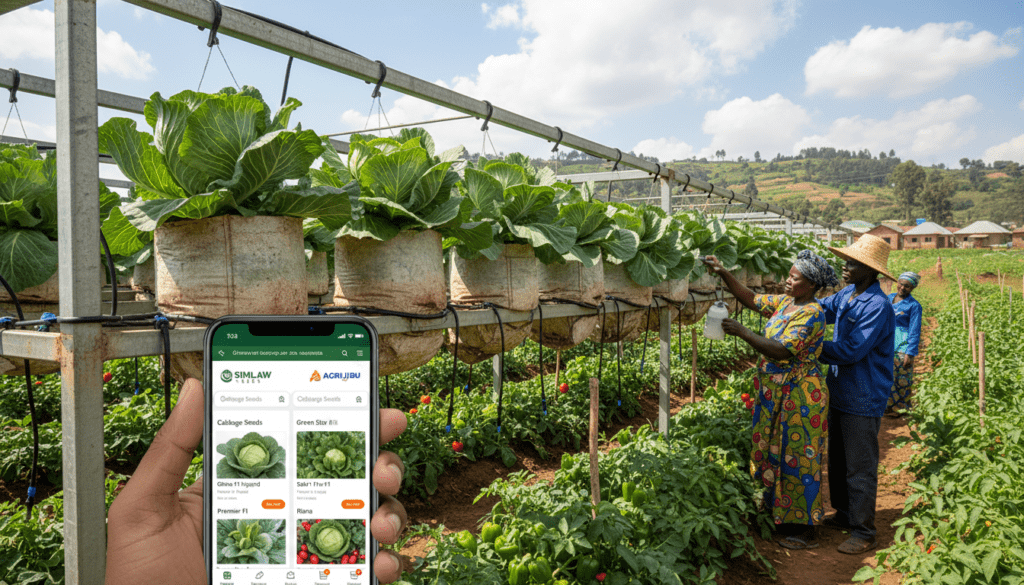
Accessing genuine seeds is critical. The market is flooded with counterfeit seeds that have low germination rates or are not the variety claimed on the package. Buy only from certified distributors.
Simlaw Seeds (Kenya Seed Company)
This is the most trusted source for heritage varieties like Gloria F1 and Queen F1. Their quality control is stringent.
Website: simlaw.co.ke
AgriJibu Online Store
AgriJibu has become a major player by 2026, stocking a wide range of imported seeds from Syngenta and Continental, including Pruktor F1. They often offer delivery services across the country.
Website: agrijibu.co.ke
Royal Seedlings and Kenya Hybrids
If you do not want to go through the hassle of a nursery, these companies sell ready-to-plant seedlings. This saves you four weeks of time but costs slightly more per plant.
Search on royalseedlings.com or check local agrovet listings in your town.
FAQ: EXPERT ANSWERS FOR KENYAN FARMERS
Q: Can I really grow cabbages in 10-liter buckets?
A: Yes, you can, but you must manage your expectations. A 10-liter bucket restricts the root mass. You will likely harvest heads weighing 1.5kg to 2kg. For maximum commercial size (4kg+), you must use 20-liter containers to allow for full root expansion.
Q: Why are my cabbages forming heads but they are soft and loose?
A: This condition is usually caused by two factors: high temperatures preventing the head from tightening, or a lack of Nitrogen and water. Ensure you are watering enough to cool the plant, and verify that you did the Week 3 top dressing to fuel leaf growth.
Q: How do I stop my hanging containers from falling due to weight?
A: A mature wet container can weigh up to 15kg. It is physics. You must use 16-gauge binding wire and secure it to a 4×2 inch timber beam or a metal pipe. Do not use plastic ropes or baling twine; the sun will degrade them within months, and they will snap, destroying your crop.
Q: Is “liquid fertilizer” from the agrovet better than manure tea?
A: Commercial foliar fertilizers are excellent for a quick fix or correcting a specific deficiency rapidly. However, manure tea provides long-term soil health and beneficial bacteria that synthetics cannot offer. The best approach is to use both: Manure tea for the soil drench, and Foliar spray for the leaves.
Q: Can I re-use the soil for the next season?
A: No, not immediately for cabbage. Cabbages are heavy feeders and they deplete the soil of specific nutrients. They also attract specific pests. You must rotate. Plant spinach, sukuma wiki, or beans (which fix nitrogen) in that soil next season. If you must plant cabbage again, remove 50 percent of the old soil and replace it with fresh compost and manure.
Q: What is the most profitable month to harvest cabbage in Kenya?
A: Supply and demand dictate prices. The market is often flooded during the rainy seasons. The best prices are usually found in January to March (the dry season) and July (the cold season when growth slows down). Plan your planting 3 months backward from these dates to hit the high-price window.
Q: My cabbage leaves are turning purple. What is wrong?
A: This is a classic sign of Phosphorus deficiency. It often happens if you did not use DAP during planting, or if the weather is very cold, which locks up phosphorus in the soil. Apply a phosphorus-rich foliar fertilizer to correct it.
Q: How many cabbages can I grow on a 10ft by 10ft balcony?
A: With a well-designed 3-tier hanging system, you can comfortably fit 30 to 40 plants in that space. This is enough to feed a family and sell the surplus to neighbors.
ECONOMIC BREAKDOWN: IS IT WORTH IT?
Farming is a business, and every business requires a balance sheet. Let us perform the math for a small 50-container setup in your backyard.
Expenses (Estimated)
50 Recycled Jerricans: KES 2,500 (at KES 50 each).
Seeds (10g sachet): KES 600.
Manure (2 sacks): KES 500.
Fertilizer (DAP/CAN): KES 500.
Insecticides/Fungicides: KES 800.
Total Initial Capital: KES 4,900.
Revenue (Conservative Estimates)
Harvest of 45 Marketable Heads (allowing 5 for loss or home consumption).
Average Price per head: KES 100.
Total Revenue: KES 4,500.
Analysis
In the first cycle, you essentially break even. However, your biggest cost was the jerricans, which are a one-time asset.
For the Second Cycle, your costs drop significantly. You already own the containers. Your only costs are seeds, manure, and fertilizer, totaling perhaps KES 1,000.
Second Cycle Revenue: KES 4,500.
Second Cycle Profit: KES 3,500.
While a profit of KES 3,500 will not make you a millionaire, the savings on your grocery bill are significant. If you buy one cabbage a week at KES 100, that is KES 5,200 a year saved. Furthermore, the quality of chemical-free food for your family is priceless. If you scale this up to 500 containers, which is possible on a standard 50×100 plot, you are looking at a potential profit of KES 35,000 to KES 40,000 every three months as a supplementary income stream.
ADVANCED TIP: MULTI-STOREY GARDENS
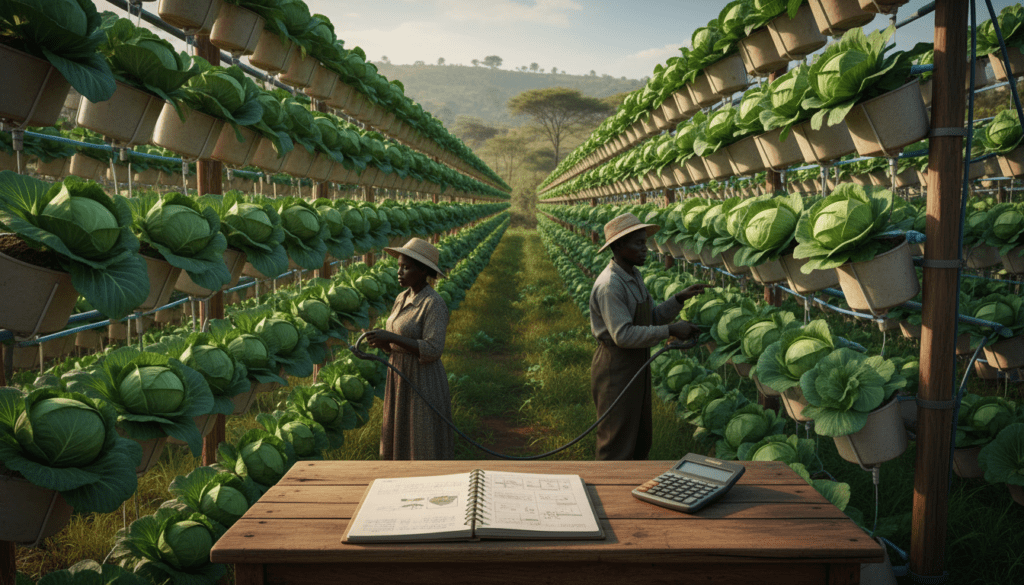
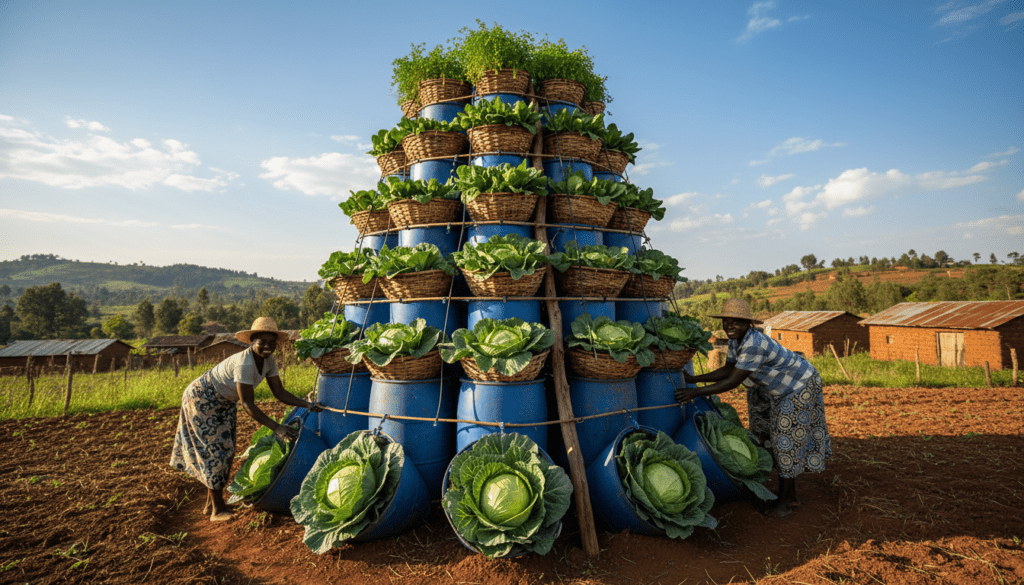
If you find the process of cutting and hanging jerricans too messy or labor-intensive, consider investing in “Multi-Storey Garden” liners. These are heavy-duty HDPE plastic sheets that are welded into tiered cones, resembling a wedding cake.
Cost and Efficiency
These units typically cost around KES 2,500 for a structure that holds 100 plants. They use vertical space even better than jerricans because they are a single cohesive unit.
Suitability for Cabbage
Can you grow cabbages in them? Yes, but there is a catch. The soil pockets get smaller as you go up the tiers. Therefore, you should only plant cabbages on the bottom and middle tiers where the soil volume is largest and the base is most stable. Use the top tiers for lighter crops like Sukuma Wiki, Spinach, or Coriander (Dhania). This creates a complete vegetable ecosystem in one square meter.
CONCLUSION
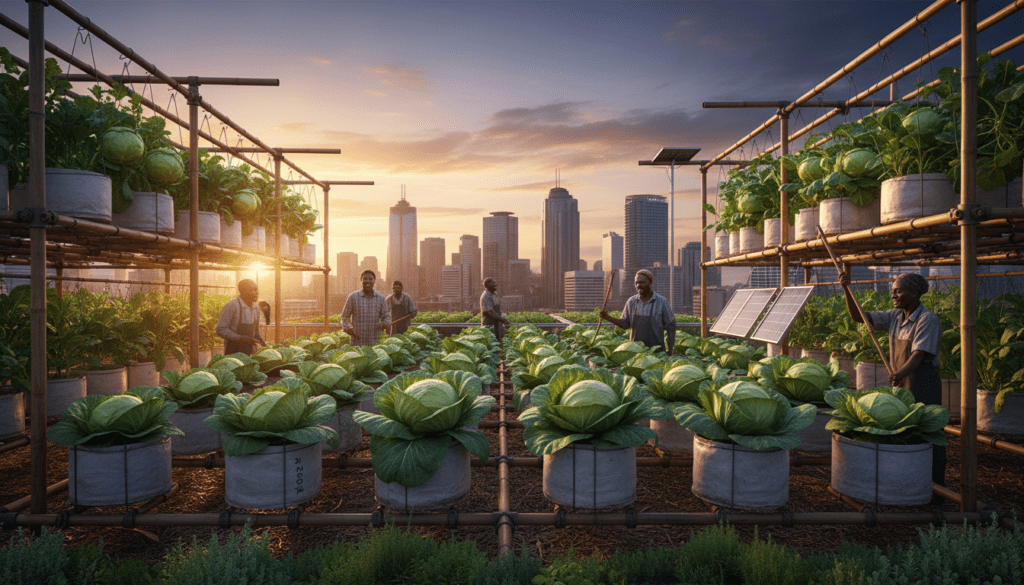
Growing big cabbages in containers in Kenya is not just a theoretical possibility; it is a proven, smart strategy for the year 2026. As urbanization continues to swallow arable land, the future of farming is vertical. By choosing the right variety like Kiboko F1, preparing a nutrient-rich soil mix, and mastering the water schedule, you can turn your empty airspace into a productive farm.
The market is ready. The prices are high. The demand for clean, traceable food in Nairobi and other major cities is insatiable. The only missing ingredient is your effort. Start today. Go find those jerricans, order your seeds, and get growing.
Read More
Crop & Livestock Insurance Kenya (2026): Costs & Top Providers

Agricultural insurance in Kenya has evolved into a critical safety net for farmers, protecting against climate shocks, pests, and market volatility. In 2026, modern digital platforms and government subsidies have made coverage more accessible, with premiums averaging 3.5% to 6% of the production cost. This guide outlines the best providers, cost structures, and regional strategies…
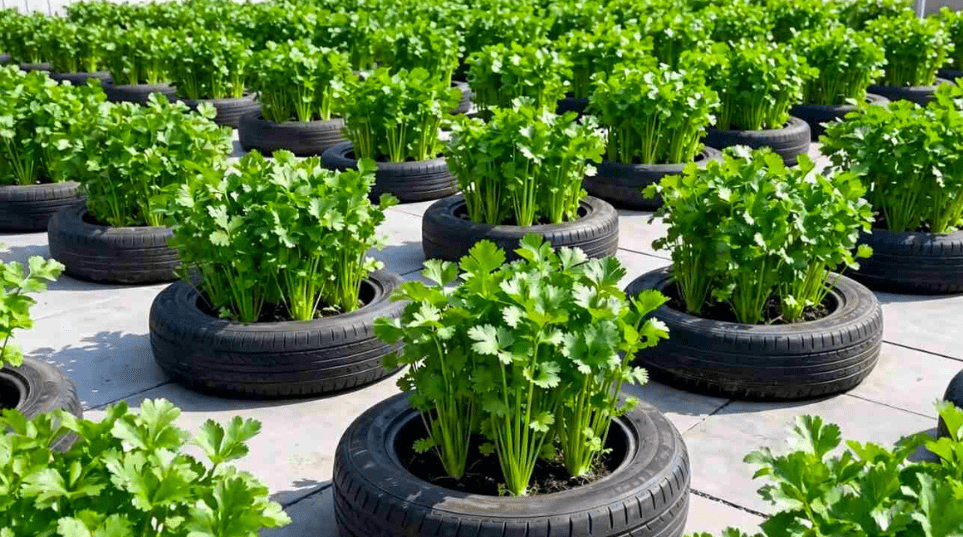
How to Grow Coriander at Home Using Old Tyres: Easy Step-by-Step Guide
Farming in Kenya is changing. You no longer need acres of land in the village to grow your own food. In busy towns like Nairobi, Mombasa, and Kisumu, space is tight, and innovative farming is becoming a necessity. One of the most practical ways to grow vegetables is by using old automobile tyres. Among the…
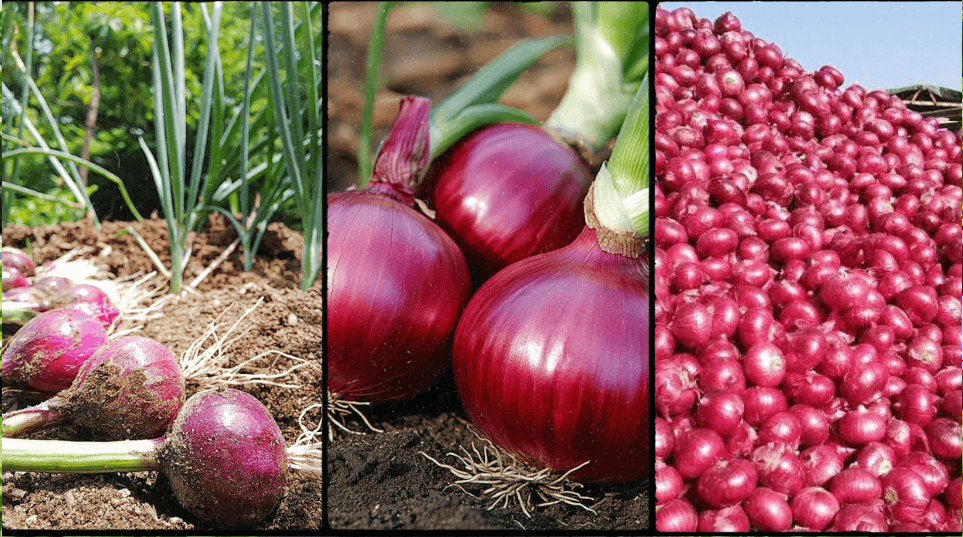
How to Start Bulb Onion Farming in Kenya: Complete 2026 Guide, Costs & Profit Per Acre
Bulb onion farming is one of the most lucrative agribusiness ventures in Kenya today. The demand for onions in major cities like Nairobi, Mombasa, and Kisumu remains consistently high throughout the year. Despite this demand, Kenya still imports a significant percentage of its onions from neighboring Tanzania to meet local consumption needs. This gap in…