
- Verify inputs instantly: Use the KEPHIS SMS code 1393 to scratch and verify all seed packets under 10kg to avoid the 20 percent of fake seeds currently in the market.
- Know the 2026 prices: Genuine subsidized government fertilizer typically costs KES 2,500 per 50kg bag, while commercial certified maize seeds average KES 550 to KES 750 per 2kg packet.
- Demand strict compliance: Only purchase chemicals from shops displaying a valid 2026 Pest Control Products Board (PCPB) license and offering proper printed receipts.
Table of Contents
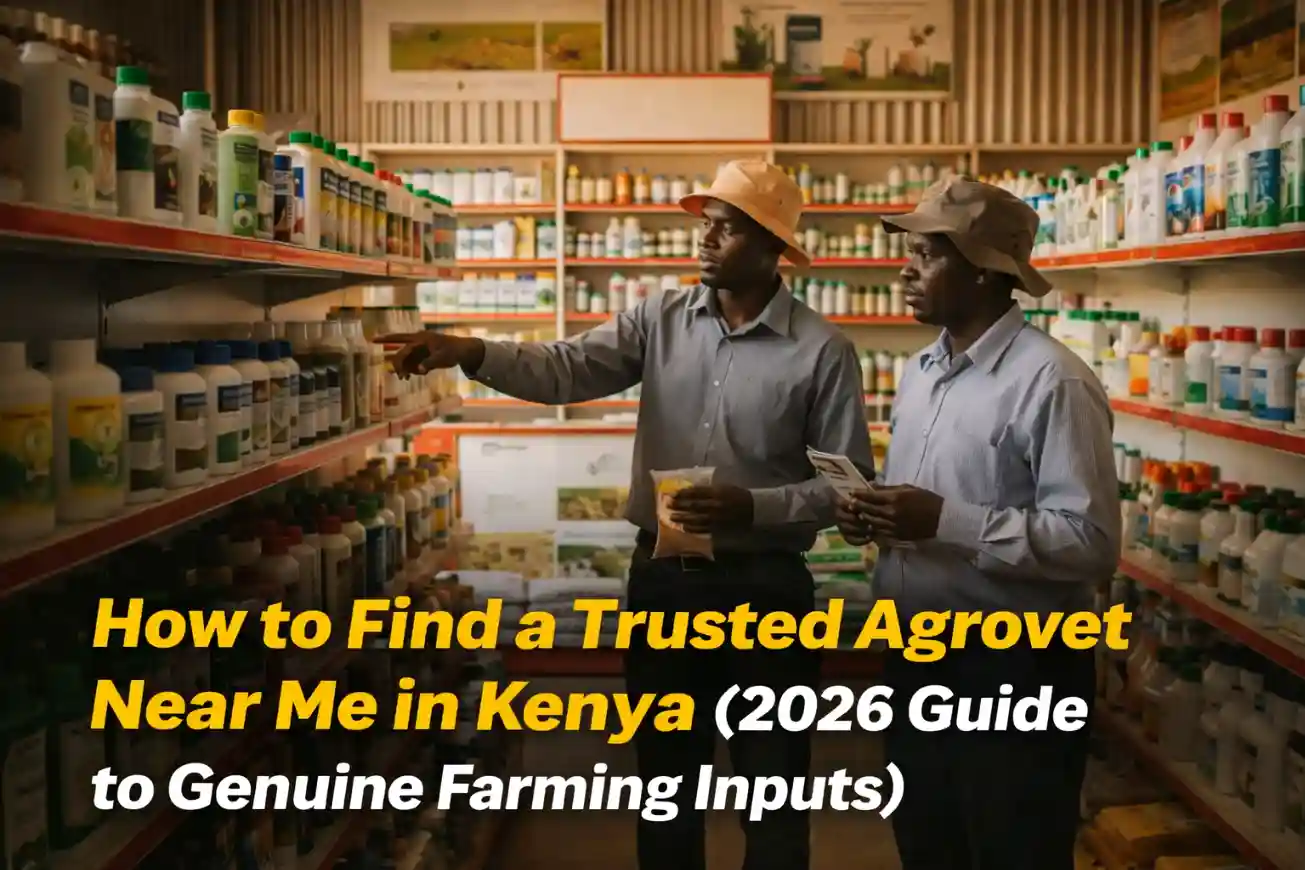
Finding a trusted supplier for your farm inputs, is the single most important decision you will make before planting season begins. With recent 2026 reports indicating that counterfeit agricultural chemicals account for a significant portion of the Kenyan market, a simple mistake at the shop can lead to total crop failure. This guide breaks down exactly how to identify genuine dealers, spot dangerous fakes, and secure the right inputs to support a successful harvest.
Why Choosing the Right Agrovet Matters (Avoid Fake Inputs)
Choosing the right agrovet protects your farm from counterfeit seeds, diluted pesticides, and expired fertilizers. Buying genuine inputs directly prevents catastrophic crop failures, saves you money, and ensures your harvest meets market safety standards.
The Kenyan market currently faces a severe challenge with counterfeit agricultural inputs. Unscrupulous traders are filling the market with fake seeds, diluted pesticides, and expired fertilizers repackaged in convincing containers. From what many farmers experience in regions like Uasin Gishu and Trans Nzoia, these fake products look almost identical to the genuine items.
The impact of buying fake inputs is devastating to both your financial stability and your crop yield. A single application of counterfeit fungicide can lead to total crop failure, resulting in a completely wasted season. Farmers lose millions of shillings annually due to these dangerous counterfeits.
Read Also: Top 10 Best Agrovets in Kenya (2026 Guide): Where to Buy Genuine Inputs in Nairobi, Eldoret & Nakuru
However, not all agrovets are equal, and you have the power to protect your investment by doing due diligence. By learning how to identify authorized dealers, you can completely avoid the trap of roadside scammers. A reliable shop becomes your farming partner, providing you with high-quality products and accurate agronomic advice.
What Is an Agrovet? (Quick Explanation)
An agrovet is a licensed farm input supplier that sells certified seeds, agricultural chemicals, animal drugs, and farm equipment. They serve as the primary link between manufacturers and local farmers.
An agrovet is a specialized agricultural stockist that supplies farmers with essential inputs for both crop and livestock production. These shops are regulated businesses that stock items like hybrid seeds, fertilizers, fungicides, herbicides, and veterinary drugs. There are three main types of agrovet businesses operating in Kenya today.
Retail agrovets are the most common and operate in almost every trading center across the country. Wholesale suppliers operate in major agricultural hubs, selling bulk inputs to retailers and large-scale commercial farmers. Finally, franchise or authorized dealers are appointed directly by major manufacturers, offering the highest level of product security.
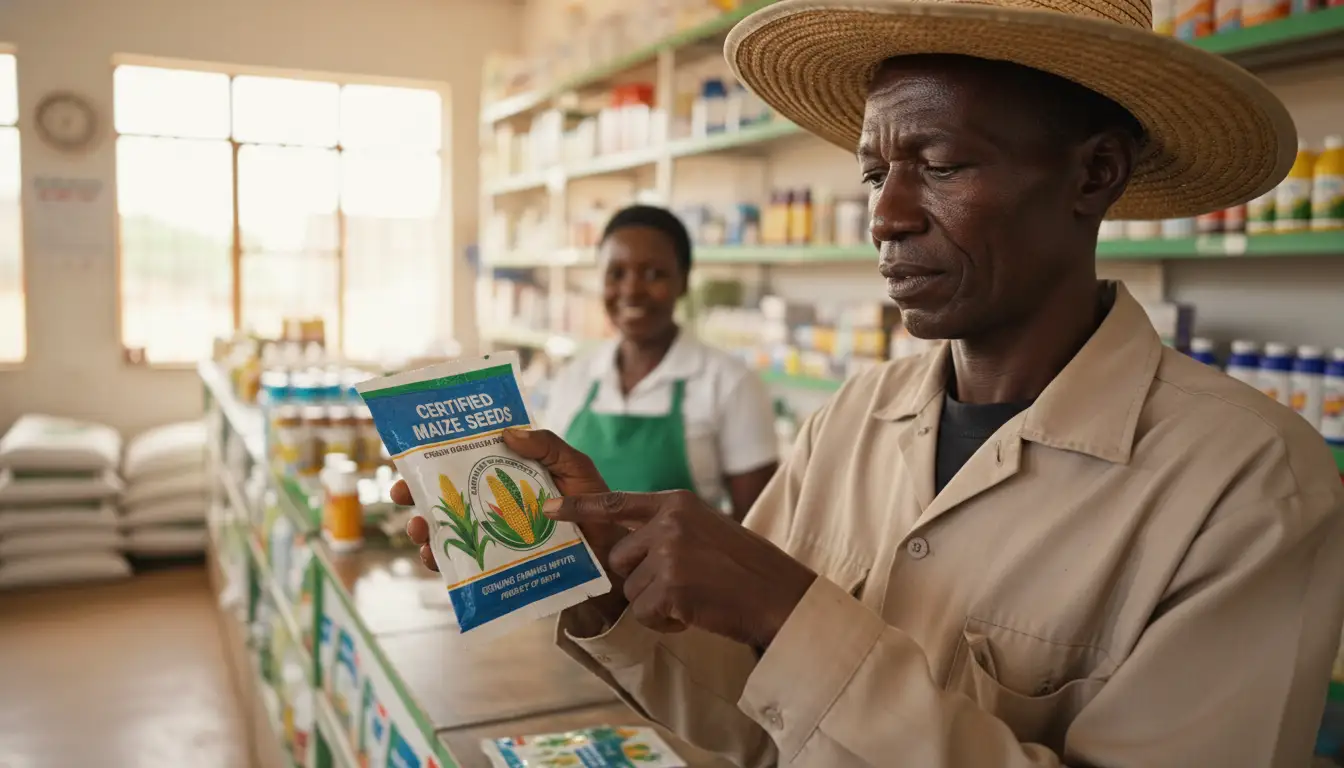
7 Signs of a Trusted Agrovet Near You
1. Licensed by KEBS / PCPB
A legitimate shop must operate under the strict regulations of the Pest Control Products Board (PCPB) and the Kenya Bureau of Standards (KEBS). You should immediately look for a valid, framed PCPB license displayed openly on the shop wall. If the attendant hesitates or cannot show you an updated 2026 license, take your money elsewhere.
2. Sells Certified Seeds Only
Trusted dealers only stock seeds from recognized and regulated brands like Kenya Seed Company, Simlaw Seeds, and Seed Co. Every seed packet under 10kg must feature the official KEPHIS scratch-off sticker for digital verification. You must strictly avoid any shop that sells unbranded, repackaged seeds weighed out from open sacks.
3. Original Packaging and Seals
Genuine stockists will never sell you products with broken seals, faded labels, or missing expiry dates. Reputable manufacturers use tamper-proof seals to ensure the chemical remains pure and undiluted. You should never buy loose chemicals poured into recycled plastic water bottles.
4. Knowledgeable Staff
The best shops employ trained agronomists or veterinary professionals, not just casual cashiers. When you describe a problem on your farm, the staff should confidently explain the correct dosage, planting spacing, and exact spraying intervals. If the attendant is just guessing or telling you to read the bottle yourself, they are not qualified to serve you.
5. Proper Storage Conditions
Agricultural chemicals and seeds are highly sensitive to temperature fluctuations and direct sunlight. A trustworthy stockist keeps their store well-ventilated, clean, and organized. Fertilizers should be stacked on wooden pallets, and herbicides must never be exposed to the hot sun outside the shop.
6. Transparent Pricing
Honest businesses maintain transparent pricing that aligns with the current 2026 market average. If an offer seems extremely cheap, you are likely buying a diluted or expired counterfeit product. Reliable dealers provide clear, itemized receipts for every single transaction to guarantee accountability.
Read Also: Fake Seeds in Kenya 2026: How to Spot Counterfeit Seed Before You Plant and Protect Your Harvest
7. Positive Reviews and Reputation
A good reputation is the strongest indicator of a reliable agricultural input supplier in any local community. Check their online presence through Google reviews to see what other local farmers are saying about their products. A shop that consistently helps farmers achieve high yields will always be highly recommended in the village.
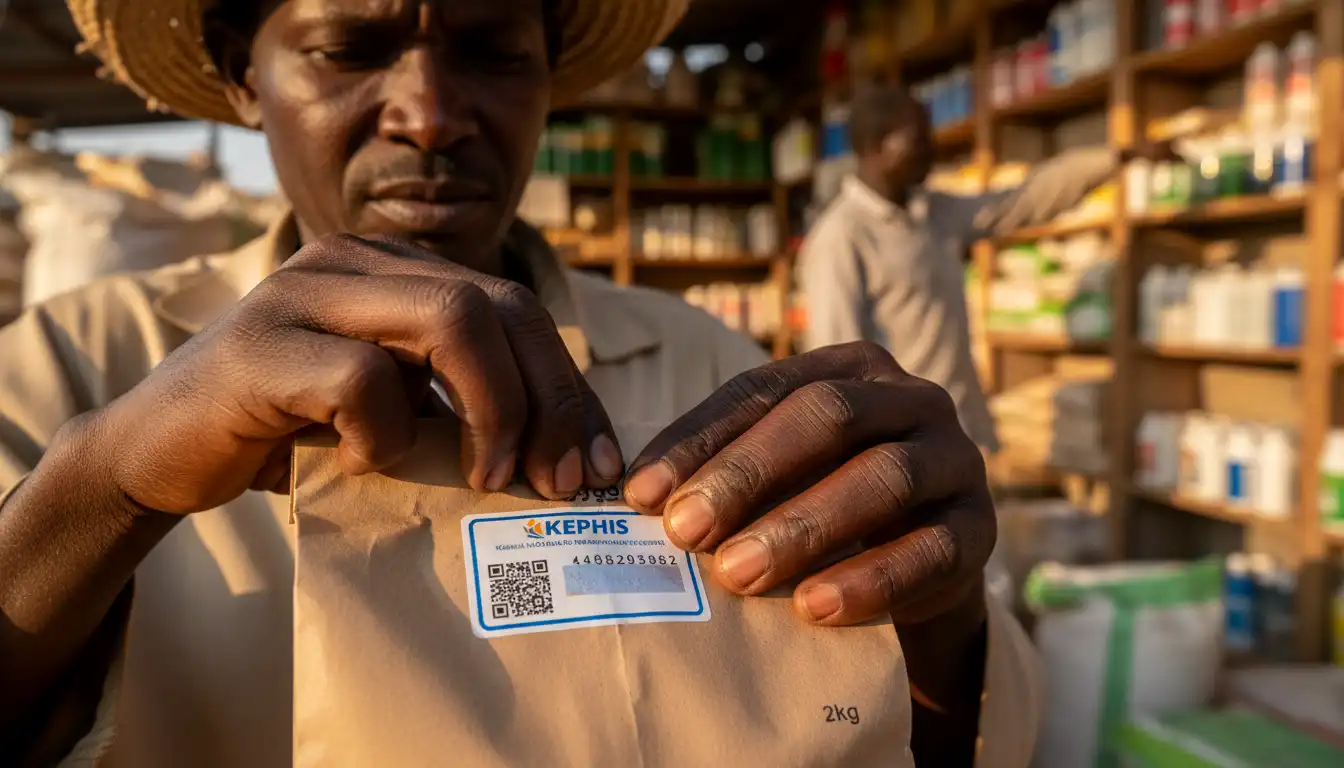
How to Verify Seeds Using KEPHIS SMS Code 1393 (Step-by-Step)
Fake seeds are everywhere, and the easiest way to protect yourself is by using the official KEPHIS verification system. It takes less than a minute and can save your entire season.
Step 1: Locate the Scratch Sticker
Check the seed packet for a scratch-off sticker. This is usually found on certified seed packages under 10kg. If the packet has no sticker, that’s already a red flag.
Step 2: Scratch to Reveal the Code
Gently scratch the sticker to reveal a unique verification code. Avoid damaging the numbers so you can read them clearly.
Step 3: Send the Code via SMS
Open your phone messages and send the revealed code to 1393. Make sure you type the code exactly as it appears.
Step 4: Wait for Confirmation
Within a few seconds, you’ll receive a reply confirming whether the seed is genuine or fake. The message will also include details about the seed brand and variety.
Step 5: Confirm Before Leaving the Shop
Always verify the seed while still at the agrovet. If the response shows the code is invalid, fake, or already used, do not buy it.
Pro Tip
Never trust a seller who refuses you time to verify seeds. Genuine dealers will always allow you to confirm authenticity before payment.
How to Find a Reliable Agrovet Near You (Step-by-Step)
Step 1: Search on Google Maps
Start your search by opening Google Maps on your smartphone and typing “agrovet near me” into the search bar. This simple step will generate a list of registered agricultural businesses within your immediate area. Filter the results to focus only on shops with a rating of 4.0 or higher.
Step 2: Check Reviews Carefully
Do not just look at the star rating; take time to read the actual comments left by other customers. Look closely for any specific complaints regarding fake products, poor germination rates, or rude service. If multiple farmers praise a specific shop for high-quality certified farm chemicals, that business is likely trustworthy.
Step 3: Visit Before Buying in Bulk
Never place a massive order for a large farm without visiting the physical premises first. Walk into the shop and physically inspect the products on the shelves to verify expiry dates and intact seals. This physical inspection immediately separates serious professionals from unreliable brokers.
Step 4: Ask Questions
Test the expertise of the staff before you spend any money on sensitive chemical inputs. Ask them specific questions about the best selective pesticide for your crop or how to manage a current disease outbreak. If they struggle to answer basic agronomy questions, consider it a red flag and walk away.
Step 5: Compare 2-3 Agrovets
Never rely on just one shop for all your farming needs without testing the market first. Visit at least two or three different dealers in your town to compare their stock, staff knowledge, and prices. Once you identify the most professional stockist, you can build a long-term business relationship with them.
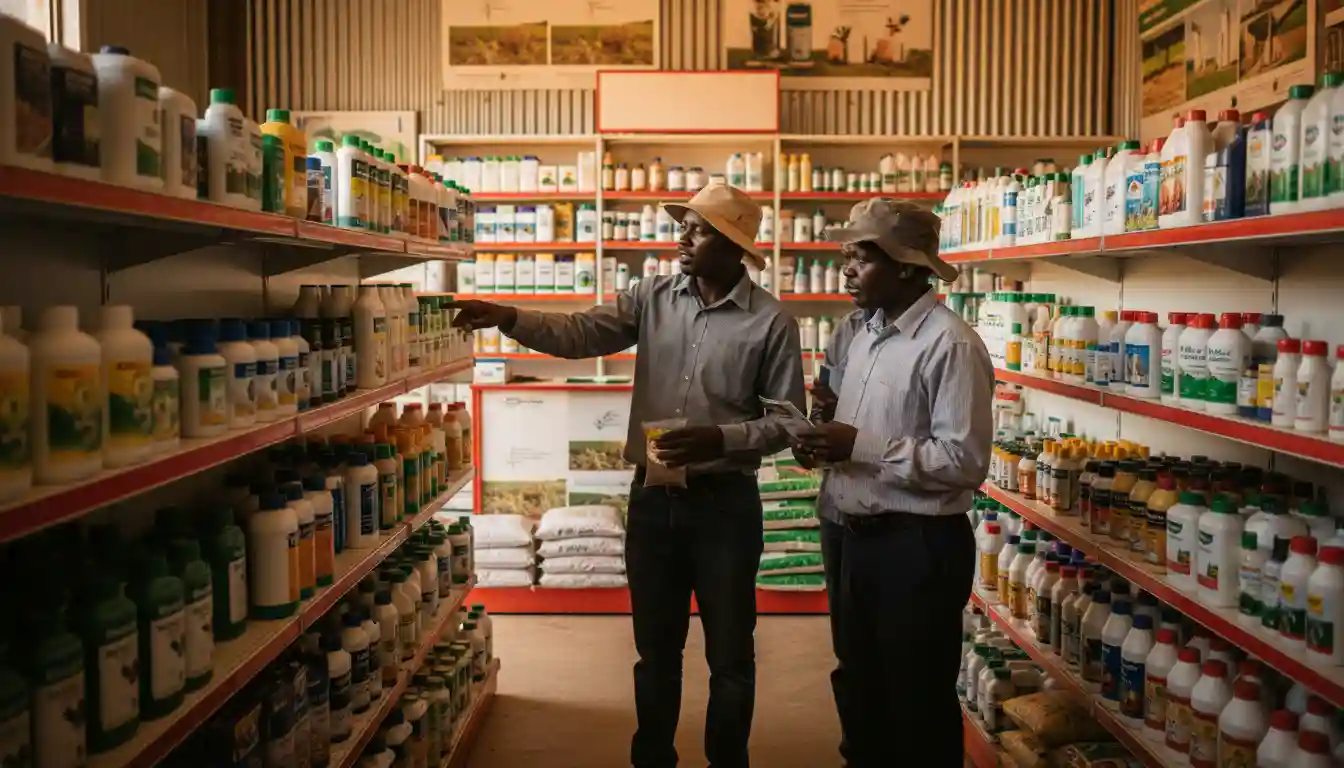
Best Places to Find Agrovets in Kenya
If you’re serious about getting genuine farm inputs, location matters more than most farmers think. Not all agrovets operate at the same standard. Some areas have a higher concentration of verified dealers simply because of demand and regulation.
Read Also: 2026 Fertilizer Guide: Understanding NPK Ratios for Maximum Maize Yields
In Nairobi, you’ll find some of the most established agrovets, especially around the CBD. Areas like River Road and Kirinyaga Road are known for wholesale and retail suppliers dealing directly with major brands. Westlands and Karen also have well-stocked shops that focus on quality, though prices can be slightly higher. In places like Ngong and Kawangware, you’ll find smaller agrovets, but you need to be more careful and verify products before buying.
In Nakuru, the agrovet scene is strong because of the region’s farming activity. Town areas and places along Kenyatta Avenue have reliable suppliers, and many farmers build long-term relationships with specific shops they trust.
Eldoret is another key agricultural hub. Most agrovets here are experienced in handling large-scale farmers, so you’ll find better advice, especially for maize and wheat farming. Areas like Moi’s Bridge and the main town have solid options.
If you’re in rural areas or small trading centers, you’ll definitely find agrovets nearby, but this is where most fake inputs circulate. Don’t just buy because it’s convenient. Take time to inspect products, verify seed codes, and ask questions. A short trip to a bigger town can save you an entire season’s investment.
At the end of the day, the best agrovet isn’t just the closest one. It’s the one that consistently sells genuine products, gives the right advice, and earns trust from farmers over time.
Red Flags to Avoid Fake Agrovets
The most glaring red flag is any shop selling agricultural chemicals in unlabelled, recycled, or generic containers. Genuine manufacturers spend millions ensuring their packaging is safe and properly labeled with crucial dosage instructions. If a dealer pours a pesticide into a used water bottle, you are buying a highly dangerous and illegal product.
Extremely cheap prices are another massive warning sign that should immediately raise your suspicion. Producing high-quality farm inputs is expensive, and massive discounts usually mean the product is counterfeit or expired. Always refer to standard market rates to avoid falling for these pricing scams.
Refusing to issue a stamped or branded receipt is a common tactic used by rogue dealers to avoid a paper trail. A genuine business will always provide a proper M-Pesa transaction message or a printed receipt detailing exactly what you bought. Furthermore, completely avoid shops that use overly pushy sales tactics to clear old inventory.
Input Varieties: Best Agrovet Products to Always Verify Before Buying
Hybrid seeds are among the most heavily counterfeited items in the Kenyan agricultural sector today. Scammers frequently coat generic grain with fake green or pink dye and sell it as premium hybrid seed. You must always scratch the KEPHIS sticker and use the SMS 1393 verification system before leaving the counter.
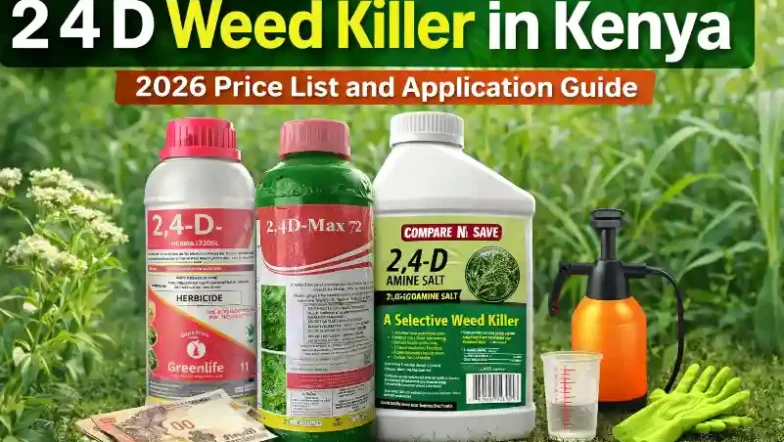
Herbicides like Glyphosate and 2,4-D are incredibly popular, making them prime targets for illegal duplication. Counterfeiters often mix a tiny amount of the real chemical with water or harmful industrial solvents. Always check the bottle for an intact, branded foil seal under the main cap to ensure purity.
Fungicides and fertilizers also require careful inspection before you load them onto your transport. Counterfeit fertilizers are often mixed with plain sand or crushed stones to increase the weight of the bag. Verify that the 50kg bag features professional, unbroken machine stitching at the top and clearly printed batch numbers.
Farming Input Varieties to Consider
Before visiting your local shop, it is crucial to know the specific input varieties suited for your ecological zone. Seed varieties are classified by altitude, meaning a maize variety meant for coastal lowlands will fail miserably in the high altitudes of Timboroa. Always consult local KALRO guidelines to identify the exact seed and fertilizer varieties optimized for your soil type.
Where to Buy Genuine Farm Inputs in Kenya
Finding authentic locations to purchase your inputs requires focusing on established agricultural hubs and authorized distributor networks. In major towns, look for dedicated farming supply streets, such as the lower CBD areas in Nairobi or the main agricultural avenues in Eldoret and Kitale. Always prioritize businesses that are direct franchise holders for trusted brands like Osho Chemicals or Kenya Seed Company.
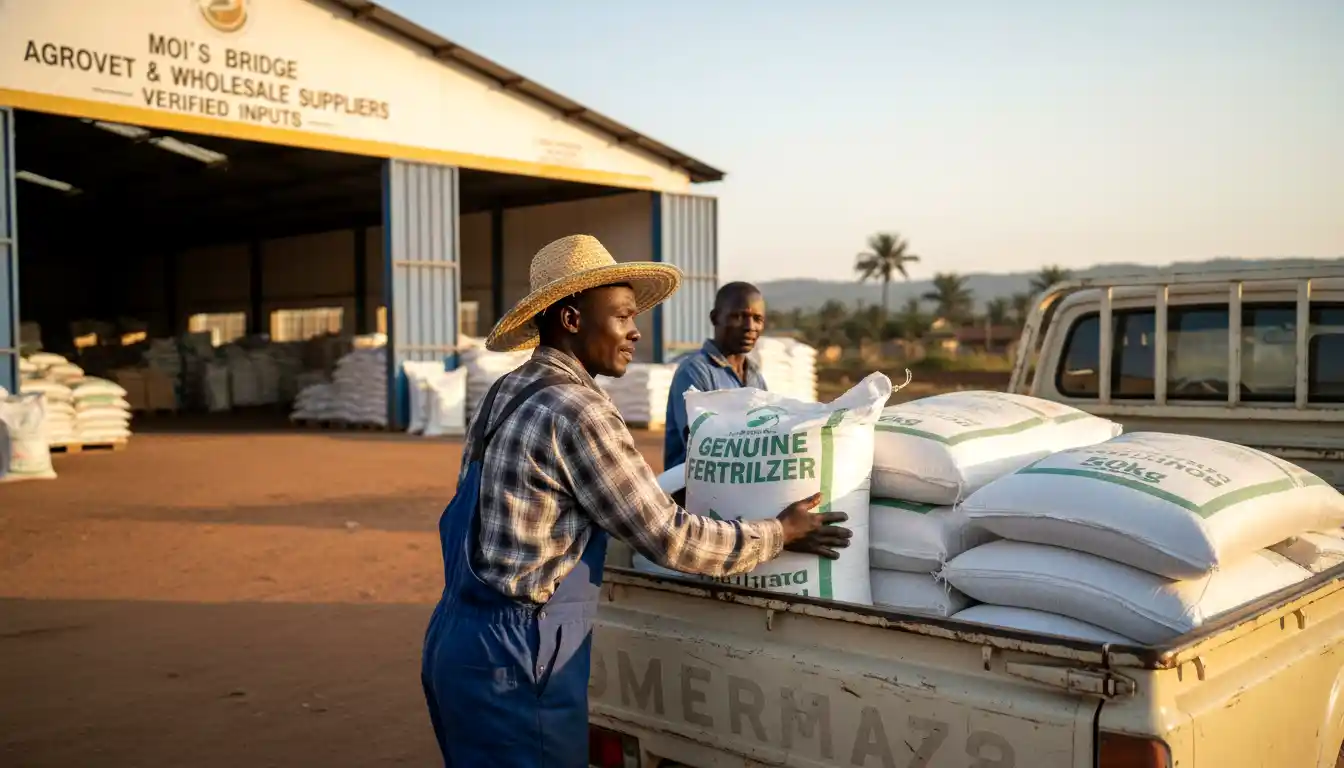
Online Agrovet Shops in Kenya (Are They Safe?)
Buying farming inputs online has become increasingly popular in Kenya due to the sheer convenience it offers to busy farmers. Digital platforms allow you to compare prices, read product descriptions, and have heavy inputs delivered directly to your farm. This saves you transport money and valuable time, especially during the hectic planting season.
However, the online space is also crowded with scammers, fake listings, and completely unverified products. Social media platforms are particularly risky, as anyone can post a picture of a fertilizer bag and demand a deposit via M-Pesa. If you buy from random, unverified sellers on Facebook or WhatsApp, you face a very high risk of losing your money.
Read Also: 15 Most Profitable Agribusiness Ideas in Kenya to Start in 2026
To safely navigate digital purchasing, only buy from known brand websites or recognized e-commerce platforms that offer buyer protection. Look for digital stockists that have a physical address listed on their website and a dedicated customer service line. When in doubt, always request to pay upon delivery so you can physically inspect the seals and KEPHIS stickers.
Top 10 Online Agrovet Shops in Kenya
Here are some of the best online platforms where you can shop for certified seeds, fertilizers, pesticides, animal health products, farm tools, and other essential agricultural inputs. These sites offer convenience, country‑wide delivery, and a range of products trusted by farmers:
- Jumia Kenya – One of Kenya’s largest e-commerce platforms, offering a wide range of certified seeds, fertilizers, pesticides, and farm equipment. Convenient delivery nationwide.
- Agrems Agrovet – Popular online agrovet with certified seeds, crop protection solutions, and livestock feeds delivered across Kenya.
- Hotline Agrovet – Offers genuine Fugo animal feeds and a wide range of farm inputs with reliable delivery services.
- MavunoVet – One‑stop online agrovet shop based in Eldoret selling agrochemicals, seeds, veterinary products, and farm equipment.
- AgriJibu – Online marketplace for farm inputs, vet supplies, sprayers, and fertilizers with easy browsing and purchase options.
- SokoFarm – Marketplace connecting farmers with verified farm input suppliers and delivering certified products to your location.
- DFK AgroDuka – Digital agrovet store offering agricultural chemicals, seeds, fertilizers, farm tools, and irrigation systems.
- Kilimokona Online Agrovet – Online shop with a broad range of farm inputs including pesticides, seeds, livestock products, and equipment.
- Agroswift – Reliable supplier of quality agricultural inputs and last‑mile delivery solutions for Kenyan farmers.
- Agroduka Limited – Online agrovet platform allowing farmers to order certified inputs and have them delivered anywhere in Kenya.
Price Guide: How to Know If Agrovet Prices Are Genuine (2026)
Understanding the standard 2026 market rates is your best defense against both price gouging and cheap counterfeits. For maize seeds, the government has capped subsidized prices, setting a 2kg packet at KES 500. If you prefer commercial brands, expect to pay between KES 550 and KES 750 for a standard 2kg packet depending on the variety.
For essential chemicals, standard non-selective herbicides generally retail between KES 800 and KES 1,200 for a 1-liter bottle. Selective herbicides, such as those used for maize farms, range from KES 700 to KES 1,100 per liter. Any shop offering these products for half the stated market price is almost certainly selling you water mixed with food coloring.
Comparing prices across different fertilizer brands helps you spot counterfeits easily while planning your farming budget. Below is a realistic 2026 price guide for recommended fertilizers to help you verify genuine stockist pricing.
| Fertilizer Type (50kg Bag) | Estimated 2026 Price Range (KES) | Primary Use Case |
|---|---|---|
| Government Subsidized (DAP/CAN) | 2,500 | General planting and top-dressing via e-voucher. |
| Commercial DAP | 5,500 – 6,200 | Root development during planting season. |
| Commercial CAN | 4,800 – 5,500 | Nitrogen top-dressing for growing crops. |
| NPK Blends (e.g., 17:17:17) | 5,800 – 6,500 | Balanced nutrition for vegetables and fruits. |

Official Bodies That Regulate Agrovet Products in Kenya
Before you trust any agrovet, you need to understand who actually controls and monitors what they sell. These are not just names. These are the institutions that separate genuine inputs from dangerous fakes.
KEPHIS (Kenya Plant Health Inspectorate Service)
This is the authority responsible for seed certification in Kenya. Every genuine seed must pass through KEPHIS testing and approval. They also provide the SMS verification system (1393) used to confirm seed authenticity. If a seed is not traceable through KEPHIS, don’t touch it.
PCPB (Pest Control Products Board)
PCPB regulates all pesticides, herbicides, and fungicides in Kenya. Any agrovet selling farm chemicals must have a valid PCPB license. This ensures the products are approved, safe, and correctly labeled. No license, no trust.
KEBS (Kenya Bureau of Standards)
KEBS ensures that all agricultural products meet national quality standards. This includes packaging, labeling, and safety compliance. Products with proper KEBS markings are far less likely to be counterfeit.
KALRO (Kenya Agricultural and Livestock Research Organization)
KALRO is not a regulator but a research authority. They develop and recommend the best seed varieties and farming practices for different regions. If you want to know what actually works on your farm, KALRO is the source.
👉 Bottom line:
If an agrovet ignores these authorities, they are not operating legitimately. Always verify alignment with these bodies before you buy anything.
Conclusion: Protect Your Farm by Choosing the Right Agrovet
Your farm’s success starts long before planting—it starts at the agrovet shop. Buying fake seeds, diluted chemicals, or expired fertilizers can destroy an entire season’s work and cost you thousands of shillings. By taking a few extra minutes to verify products, check licenses, and inspect packaging, you can protect your crops and secure a healthy harvest.
Use the KEPHIS SMS code 1393 to confirm seed authenticity, check that every chemical comes from a shop with a valid PCPB license, and always compare prices against the current market rates. Pay attention to storage conditions, knowledgeable staff, and the reputation of the agrovet in your community.
Remember, the closest shop is not always the best. The most reliable agrovets are those that consistently provide genuine inputs, accurate guidance, and transparent pricing. Take your time, do your research, and make informed choices—your farm depends on it.
Get Expert Help Before You Buy Farm Inputs
Most farmers lose money not because they didn’t work hard, but because they bought the wrong inputs or trusted the wrong supplier.
If you want to avoid costly mistakes, you don’t have to figure everything out alone.
We offer paid consultation (KES 2,000) where we help you:
- Choose the right seeds for your region
- Identify genuine agrovet suppliers near you
- Select the correct pesticides and fertilizers
- Plan your planting and spraying schedule
This is practical, real advice based on what actually works, not guesswork.
👉 The goal is simple: help you avoid losses and get results.
Ready to get started? Book your consultation now.
Frequently Asked Questions About Agrovet Shops
Where can I find a trusted agrovet near me in Nairobi?
Search Google Maps for highly rated shops in areas like River Road, Westlands, or Karen. Always check for PCPB certification before buying any chemicals.
Which are the best agrovets near Ngong for farm inputs?
Top rated agrovets in Ngong town include local verified stockists along the main highway. Always verify their KEPHIS seed licenses before purchasing.
How do I compare agrovet prices near me before buying?
Call three different local shops and ask for prices of specific items like a 2kg packet of hybrid seeds. Compare these against standard 2026 market rates.
Are there affordable or cheap agrovets near me with genuine products?
Yes, but be cautious of extremely low prices. Genuine affordable shops rely on high stock turnover. Always verify seed stickers to ensure authenticity.
Which agrovet shops near Kawangware Nairobi are reliable?
Several registered agricultural input stockists operate along Naivasha Road in Kawangware. Ensure they have physical premises and offer official receipts.
Is there an agrovet near me open now or operating late hours?
Most Kenyan agrovets operate from 8 AM to 6 PM. For late hours, try searching Google Maps for shops in busy trading centers which may close at 8 PM.
What should I look for when choosing the best agrovet near me?
Look for clear PCPB licenses, original sealed packaging, knowledgeable staff, well-lit chemical storage, and transparent pricing matching local averages.
Where can I find agrovet wholesalers in Nairobi for bulk buying?
Nairobi CBD, specifically around Kirinyaga Road, hosts major wholesale distributors authorized by leading chemical and seed manufacturers.
How can I get contact numbers and addresses of agrovets near me?
Use online business directories, Google Maps, or ask your local county agricultural extension officer for a list of vetted stockists in your ward.
Which agrovets in Nairobi CBD offer the best prices and selection?
Authorized distributors for trusted brands in the CBD offer the best bulk pricing. Always confirm their official dealer status before making payments.