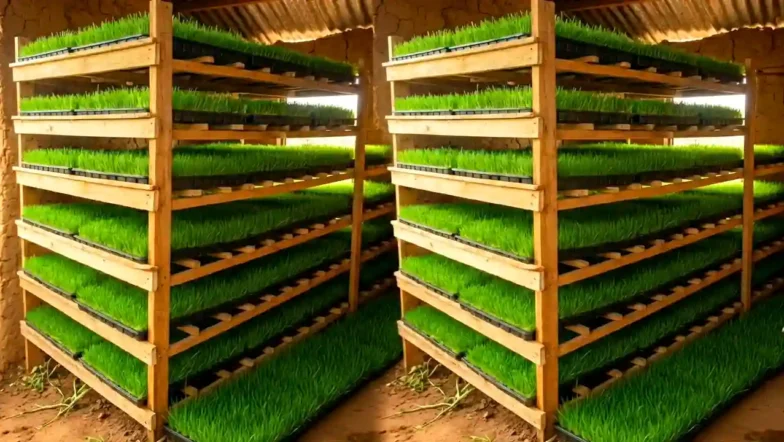


- Hydroponic fodder slashes daily feeding costs by up to 60 percent, reducing reliance on expensive KES 3,500 dairy meal bags.
- It takes just seven days to grow hydroponic barley from seed to harvest, yielding 8kg of fresh green fodder from exactly 1kg of raw seed.
- Commercial feed prices in 2026 remain highly volatile due to global supply chain disruptions impacting raw maize and soya availability.
Table of Contents
The Kenyan dairy sector is facing unprecedented feed cost inflation in 2026. Farmers must seek urgent alternatives to traditional feeding methods to remain profitable. Transitioning from purely commercial feeds to a mixed system is an absolute survival necessity.
This guide breaks down the true cost of feeding dairy cows today. It also reveals how smart fodder management can restore profitability to your shamba. We cover everything from setup costs to managing deadly fungal risks.
Which Feeding System Delivers the Best Yield and Quality for Dairy Cows in Kenya?
Hydroponic barley fodder delivers the highest yield per square meter and matures in seven days. Commercial dairy meal provides concentrated energy but is vulnerable to price hikes and aflatoxin.
Comparing Fodder Varieties and Feed Types
Most beginners in Kenya struggle to decide what to feed their cows to maximize milk output. Commercial dairy meal provides a balanced diet but relies heavily on highly expensive maize. Conversely, fresh sprouts grown from barley seeds offer a constant supply of digestible green feed.
Modern sprouting systems cannot completely replace dry matter in a dairy cow’s diet. Cows strictly need roughage like Boma Rhodes hay for proper rumen function. The secret lies in substituting the expensive commercial concentrate with fresh sprouts while maintaining basic roughage.
The Role of KALRO in New Fodder Technologies
The Kenya Agricultural and Livestock Research Organization has tested several drought-tolerant fodder varieties for 2026. Their trials demonstrate that cows fed a proper ratio of fresh sprouts increase milk yields substantially. KALRO strongly advocates for climate-smart agriculture to combat the massive national fodder deficit.
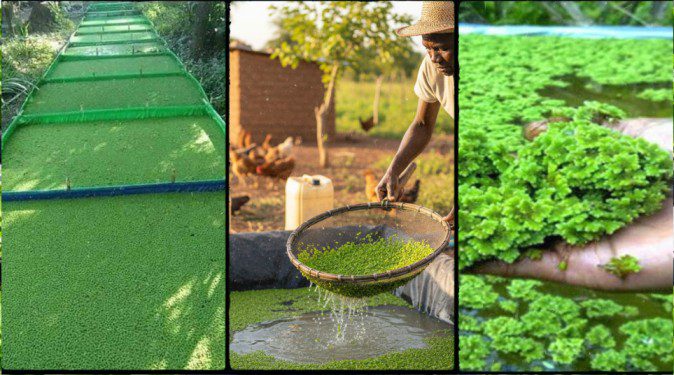
Read Also: Azolla vs. BSF vs. Hydroponic Fodder: Which is the Cheapest Feed in Kenya? (2026 Edition)
Farmers are now adopting KALRO-approved seeds to ensure maximum germination rates in their trays. Using uncertified seeds from the local open market often leads to poor sprouting and wasted capital. Investing in certified inputs is the critical first step toward securing a reliable daily feed supply.
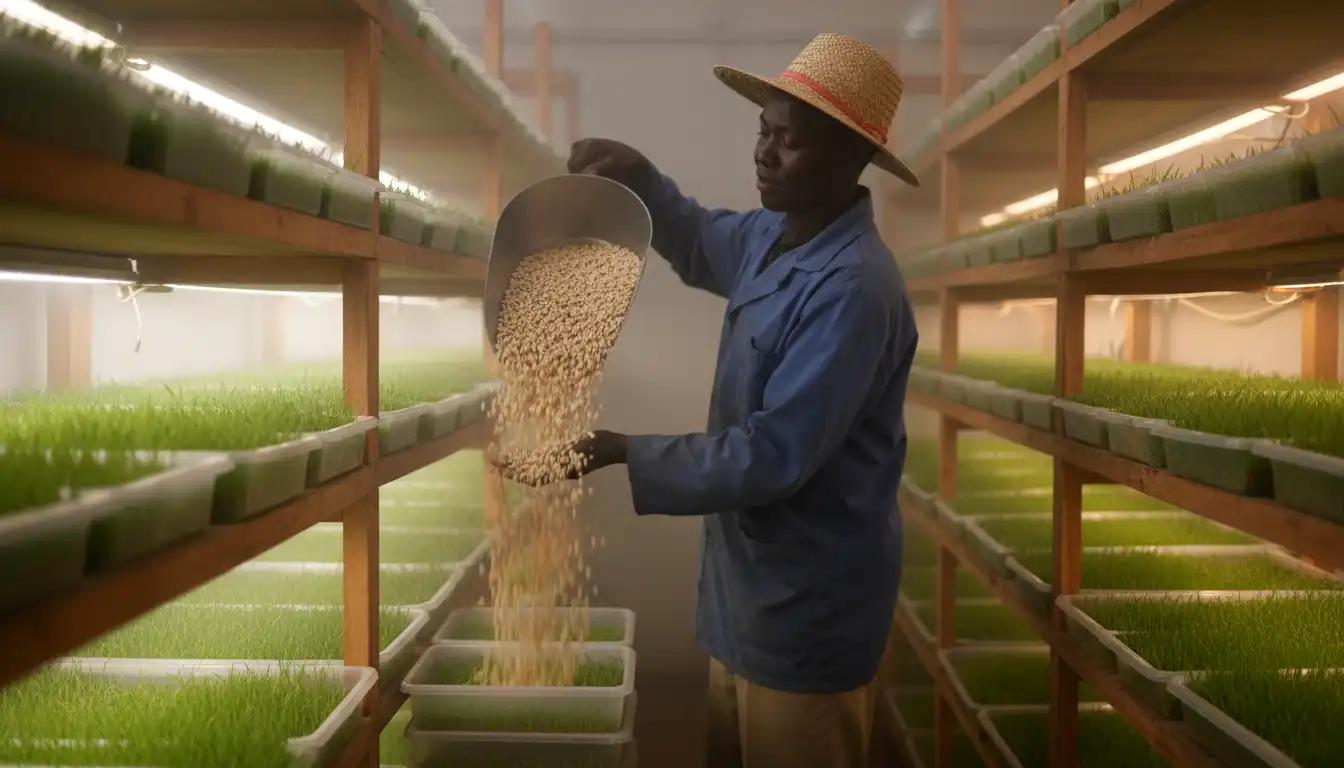
The table below compares the three primary dairy feeding components available to Kenyan farmers in 2026. Please remember that estimated ranges vary by management and regional climate conditions.
| Feed Type | Maturity Period | Yield Potential | Disease and Risk Resistance |
|---|---|---|---|
| Hydroponic Barley | 7 days | 8kg fodder per 1kg of seed | High risk of mold if humidity is poorly managed |
| Commercial Dairy Meal | Ready to feed | High energy density per kg | Risk of aflatoxin from poor grain storage |
| Traditional Napier Grass | 90 to 120 days | 50 to 80 tons per acre annually | Susceptible to Napier stunt disease and drought |
Where to Buy Hydroponic Fodder Seeds and Dairy Feed in Kenya
Source certified seeds from Kenya Seed Company, KALRO centers, or verified agrovets in major farming towns. Quality commercial feeds are best procured directly from reputable millers or digital platforms like Digifarm.
Securing Quality Inputs for Your Dairy Farm
From what many farmers experience, buying uncertified seeds often leads to devastating mold outbreaks. For sprouting systems, barley is universally considered the gold standard because it yields significantly more biomass. It is absolutely crucial to source clean seeds from trusted suppliers to guarantee high germination.
Avoid back-alley millers who frequently mix sawdust and sand into their dairy meal. Stick to established brands that carry valid KEPHIS and Kenya Bureau of Standards certifications. Platforms like Mkulima Young are excellent for comparing market prices before sending bulk mobile payments.
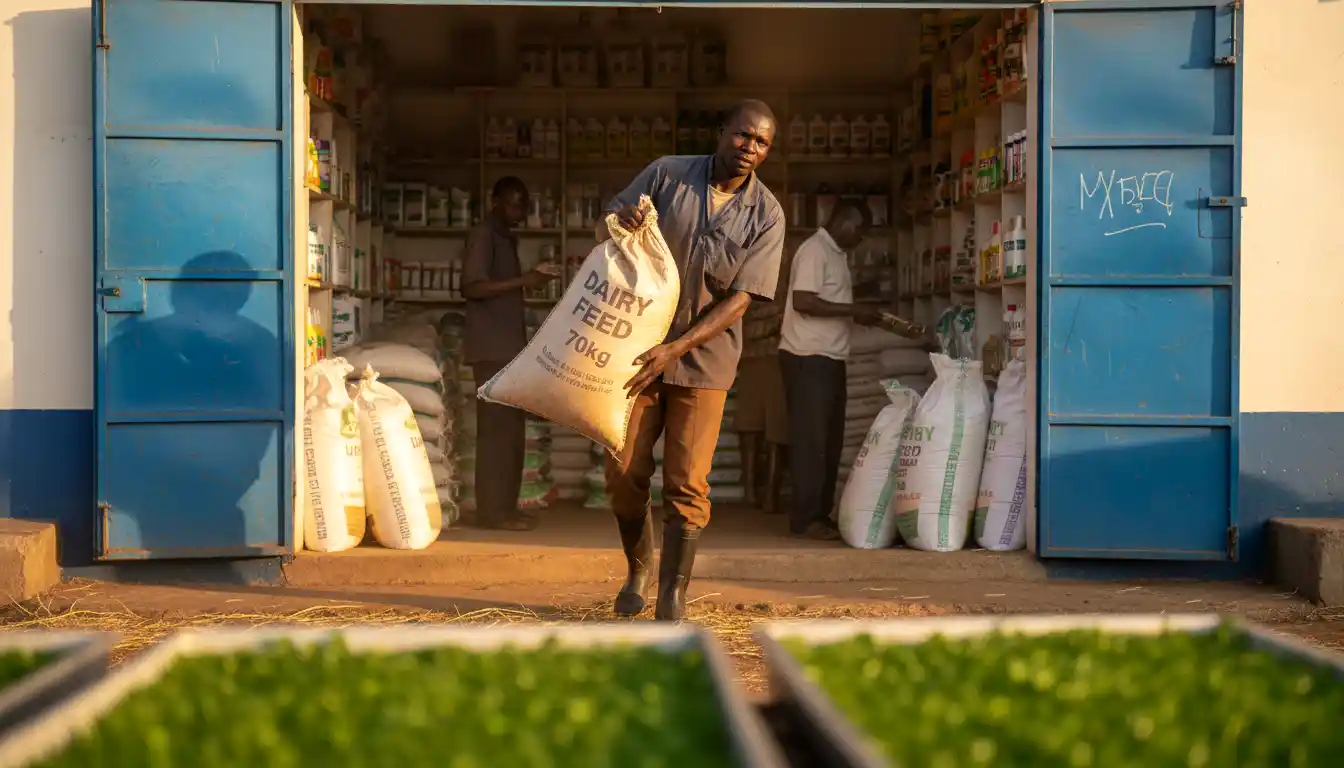
Essential Equipment for Your Hydroponic Setup
Setting up a functional system requires specific infrastructure to withstand daily watering routines. You need UV-treated plastic trays which retail for about KES 140 each from specialized suppliers. You also must build a sturdy wooden or metallic rack to hold the trays vertically.
Read Also: Hydroponic Fodder in Kenya 2026: Slash Your Livestock Feed Costs by 50%
A high-quality shade net is necessary to control internal temperatures and keep out wild birds. A reliable water source with simple misting nozzles will automate the process and save labor. Investing in proper equipment upfront prevents costly system failures and feed shortages later.
Navigating the Digital Procurement Space
The modern Kenyan farmer is increasingly relying on digital applications to source inputs and track market trends. Platforms allow users to access credit facilities and purchase verified feeds directly through their mobile phones. This digital tracking creates a transparent supply chain that locks out counterfeit feed peddlers.
Furthermore, joining active digital farming groups provides invaluable real-time intelligence on local seed stocks. Community recommendations are often more reliable than flashy advertisements when trying to source authentic inputs. Always ask for a receipt and a seed certification tag when buying bulk supplies.
How Do Soil Nutrition and Fertilizer Prices Affect Commercial Feed Costs in 2026?
High global fertilizer prices directly inflate the cost of maize, driving up retail dairy feed prices. While sprouting systems rely mostly on water, traditional feed crops require substantial expensive fertilizer applications.
The Hidden Cost of Commercial Feed Production
In 2026, the price of a standard 70kg bag of commercial dairy feed remains painfully high. This cost is directly tied to the immense expense of growing maize with imported fertilizers. When large-scale farmers pay more for planting inputs, the final cost of harvested grain skyrockets.
Feed millers subsequently pass these inflated production costs straight down to the dairy farmer. Even when international grain prices stabilize, local transport costs keep retail feed prices artificially high. Understanding this fragile supply chain helps farmers see why traditional feeding methods are economically unsustainable.
Government Interventions and Expert Nutrition Advice
The Kenyan government maintains a fertilizer subsidy program through the National Cereals and Produce Board. Registered farmers access these subsidies using the digital e-Voucher system to secure vital soil nutrients. However, persistent global shipping disruptions have kept unsubsidized open-market prices painfully high.
Growing sprouts bypasses this soil nutrient crisis by isolating farmers from volatile fertilizer markets. Seeds only require clean water and a highly diluted nutrient solution to sprout effectively. Expert agricultural nutritionists advise supplementing the water with a balanced mineral mix to boost sprout vitality.
The following table outlines the current March 2026 fertilizer prices affecting traditional feed crop production. Note that these estimated ranges vary by management and seasonal local availability.
| Fertilizer Type | Subsidized Price (KES) | Open Market Price (KES) | Primary Use in Feed Farming |
|---|---|---|---|
| DAP (Di-Ammonium Phosphate) | 3,500 | 4,500 to 5,200 | Planting maize and root development |
| CAN (Calcium Ammonium Nitrate) | 2,875 | 3,800 to 4,200 | Top-dressing for leaf expansion |
| NPK (Nitrogen, Phosphorus, Potassium) | 3,275 | 4,000 to 4,500 | General soil fertility and stress resistance |
Which Kenyan Counties Offer the Best Climate for Production?
Kiambu and Nakuru are ideal for indoor systems due to moderate temperatures that naturally prevent mold. Uasin Gishu remains the powerhouse for traditional maize crops, while arid counties rely heavily on climate-smart structures.
Kiambu and Central Kenya
Kiambu has rapidly shrinking land sizes due to widespread real estate development. Indoor vertical farming is a strict necessity here to sustain profitable zero-grazing units. The naturally cool climate significantly reduces the need for expensive cooling fans inside the structures.
Read Also: Azolla Farming in Kenya: Cheap Animal Feed and Higher Profits in 2026
Farmers in this region successfully integrate fresh sprouts with carefully measured quantities of commercial feed. This hybrid feeding approach keeps their high-yielding Friesian and Ayrshire cows incredibly productive. However, they must remain vigilant about humidity control during the cold July season.
Uasin Gishu and the Rift Valley
Known universally as the agricultural breadbasket, Uasin Gishu is the epicenter of large-scale maize production. Farmers here have access to large tracts of land to grow cheap traditional silage. Relying strictly on factory dairy meal is relatively more affordable because local transport costs are minimal.
Despite the abundance of open pasture, progressive farmers are slowly adopting alternative indoor methods. They use fresh green feed specifically during the harsh dry season to maintain consistent milk yields. This strategic adoption proves that modern technologies are beneficial even in land-rich counties.
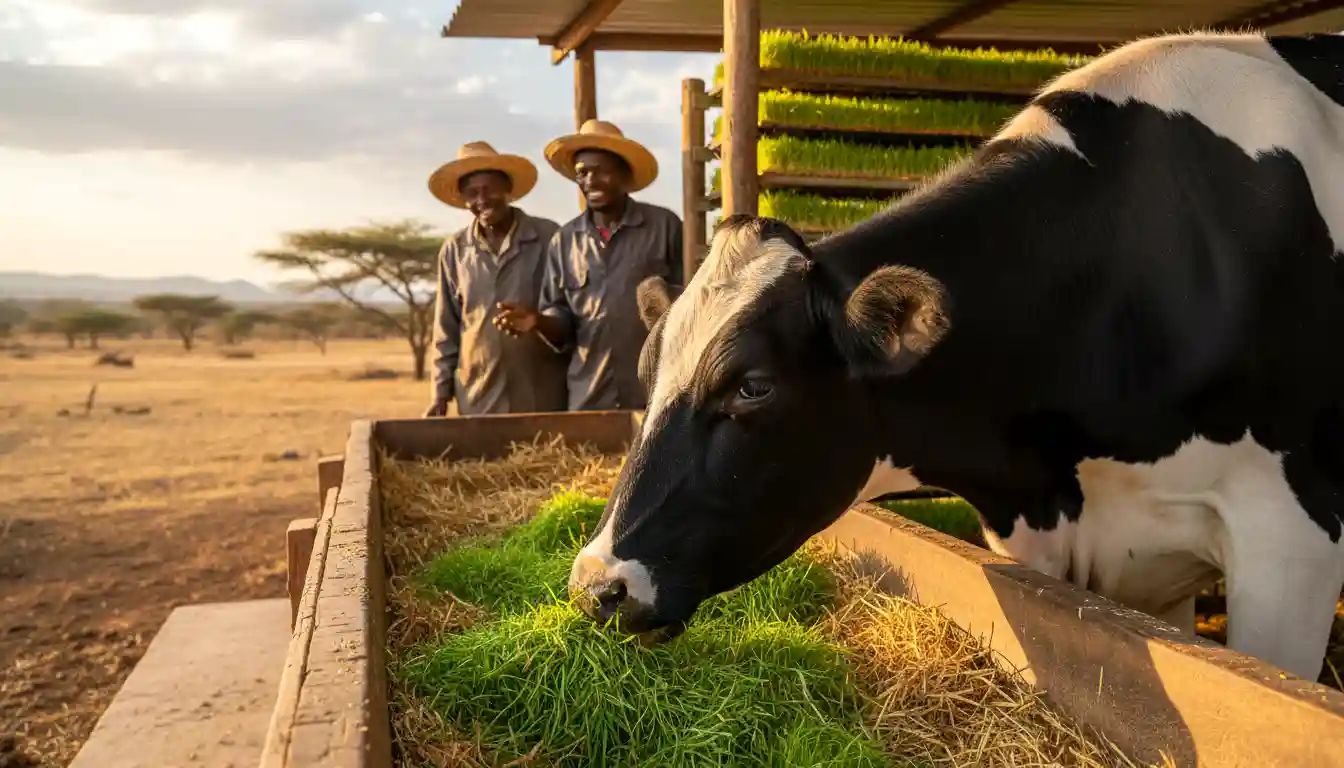
Kajiado and Semi-Arid Zones
In arid areas like Kajiado, water scarcity makes traditional pasture cultivation an extreme challenge. Growing fresh sprouts indoors uses up to 90 percent less water than traditional open-field irrigation. The primary challenge here is managing the intense daily heat to prevent total crop failure.
Farmers utilize well-ventilated structures covered with heavy shade nets to keep their trays cool. Some innovative pastoralists even bury their structures partially underground to naturally regulate extreme temperatures. Without these water-saving methods, many herders face severe distress sales during prolonged droughts.
What is the Ideal 12-Month Planting Cycle in Kenya?
Sprouting systems operate on a continuous 7-day cycle year-round regardless of national rain patterns. Commercial feed ingredients follow the traditional long rains, creating seasonal price fluctuations that peak in March.
The Continuous 7-Day Cycle
One of the greatest financial advantages of modern indoor systems is absolute climate independence. You soak seeds on Monday, transfer them to trays on Tuesday, and harvest by the following Monday. This reliable routine means a dairy farmer can mathematically predict exact feed volumes every day.
To maintain an uninterrupted supply, simply divide your holding rack into seven distinct sections. Plant a new batch of trays every single day to create a perpetual harvesting loop. This steady routine protects your milk yields from devastating drops during the harsh dry season.
The Traditional Feed Crop Calendar
If you rely entirely on factory feeds, your business is at the mercy of the national harvest. Planting typically begins in March during the crucial long rains with expensive top-dressing applications. Between June and September, farmers helplessly pray for adequate rainfall to ensure proper grain filling.
Harvesting finally happens from October through December, bringing a temporary supply glut. Immediately after this harvest, dry feed prices usually stabilize or drop slightly as millers stock up. However, from January to March, national grain reserves run dangerously low and prices spike dramatically.
Managing Seasonal Transitions
Smart farmers use the calendar to their advantage by hoarding dry feed when prices dip in November. They safely store these bags on wooden pallets in dry rooms to prevent deadly aflatoxin buildup. When January arrives and feed prices surge, they reduce factory rations and ramp up their fresh green production.
This dynamic adjustment requires impeccable record-keeping and a deep understanding of local market trends. Preparing for the transition between the wet and dry seasons separates profitable dairies from struggling hobbyists. You must anticipate the market rather than reacting in a panic when prices inevitably rise.
How Do the Financials Compare for Dairy Farmers in Kenya?
Replacing half of your factory feed with fresh green sprouts saves up to KES 6,000 monthly per cow. Setting up a basic structure costs about KES 40,000, which pays for itself rapidly.
Breaking Down the Heavy Daily Costs
A high-yielding cow requires roughly 12kg of dairy meal per day alongside bulky roughage. At an average 2026 cost of KES 50 per kilogram, feeding just one cow costs about KES 600 daily. Over a single month, this translates to a staggering KES 18,000 solely on commercial concentrates.
Alternatively, one kilogram of quality barley seeds reliably produces massive quantities of fresh green feed. To feed the same cow, your direct seed input cost is highly affordable. Even when adding water and dry hay costs, the total daily feeding expense drops significantly.
Capital Investment vs. Long-Term Savings
Setting up a commercial-grade unit requires an initial capital injection that scares away many beginners. Constructing a simple timber frame and buying required materials will cost roughly KES 40,000 to KES 50,000. However, this is a one-off infrastructural cost that radically changes your business margins.
Read Also: Sunflower Varieties in Kenya 2026: Best Types to Grow for Oil, Feed and Flowers in 2026
When you calculate the immense monthly savings, a farmer recovers this entire setup cost quickly. From that point onward, the farm operates at a vastly improved monthly profit margin. The reduced financial stress allows the farmer to reinvest profits into better veterinary care.
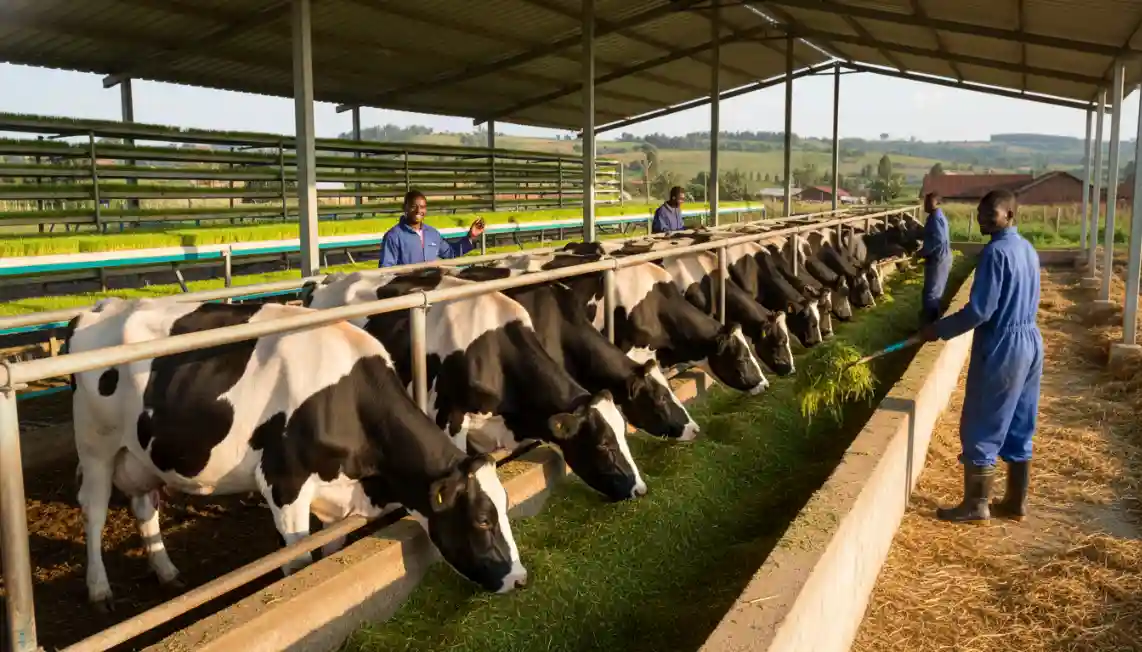
This financial table illustrates the estimated monthly cost to feed one standard dairy cow using three strategies. Remember that these estimated ranges vary by management, so strict daily tracking is crucial.
| Feeding Strategy (Per Cow / Month) | Best Case Cost (KES) | Average Cost (KES) | Worst Case Cost (KES) |
|---|---|---|---|
| 100% Commercial Dairy Meal + Hay | 15,000 | 18,500 | 22,000 |
| Hybrid: 50% Meal + 50% Fodder | 9,000 | 11,500 | 14,000 |
| 70% Hydroponic Fodder + 30% Hay | 6,500 | 8,000 | 10,500 |
What Are the Biggest Risks Associated With These Feeding Methods?
The biggest risk in sprouting systems is deadly fungal growth caused by poor tray hygiene. For factory feeds, the main dangers are counterfeit products and lethal aflatoxin poisoning from bad maize.
The Harsh Reality of Fungal Challenges
While growing fresh green feed sounds flawless, it comes with unforgiving management demands. One small mistake in water hygiene can wipe out your entire weekly supply with a massive fungal outbreak. Feeding moldy sprouts to a cow risks severe digestive issues and immediate drops in milk production.
Furthermore, this green feed is essentially 80 percent water by weight. If you fail to provide adequate dry roughage alongside the wet sprouts, the cow’s rumen will fail. Farmers often sell their stock at a loss when animals lose body condition from improper dry matter balancing.
Factory Feed Pitfalls and Market Fraud
Relying solely on factory feeds exposes your farm to the harsh unregulated realities of the Kenyan market. Brokers often re-bag expired feeds or mix them with sawdust to illegally increase total volume. Paying premium prices for adulterated bags is a quick way to bankrupt a dairy business.
Aflatoxin contamination is another massive silent killer in the local grain sector. When millers utilize poorly dried maize, highly lethal toxins pass directly into the cow’s milk. Major processors will reject your entire supply immediately if lab tests detect these deadly toxins.
Labor and Management Risks
Another major risk often overlooked is the high dependency on skilled labor for indoor setups. If your farmhand forgets to run the misting system on a scorching hot afternoon, delicate seedlings will wither. This system requires rigid discipline, strict hygiene protocols, and daily visual inspections to succeed.
How Can You Optimize the Supply Chain and Value Addition?
Maximize profit by drastically lowering production costs, then processing raw milk into high-value products like yogurt. Building direct market linkages with local consumers ensures much better margins than corporate processors.
Streamlining Your Farm’s Core Inputs
To truly slash operational costs, you must optimize exactly how and where you source your seeds. Buying barley seeds in bulk directly from large-scale farmers is vastly cheaper than retail buying. Store these bulk seeds in a cool, dry place to successfully maintain their germination viability.
For your dry feed needs, form powerful cooperative buying groups with neighboring farmers. Purchasing massive tons directly from the factory gates attracts significant bulk discounts and eliminates middleman markups. This cooperative strategy also structurally guarantees that you receive factory-sealed, unadulterated feed batches.
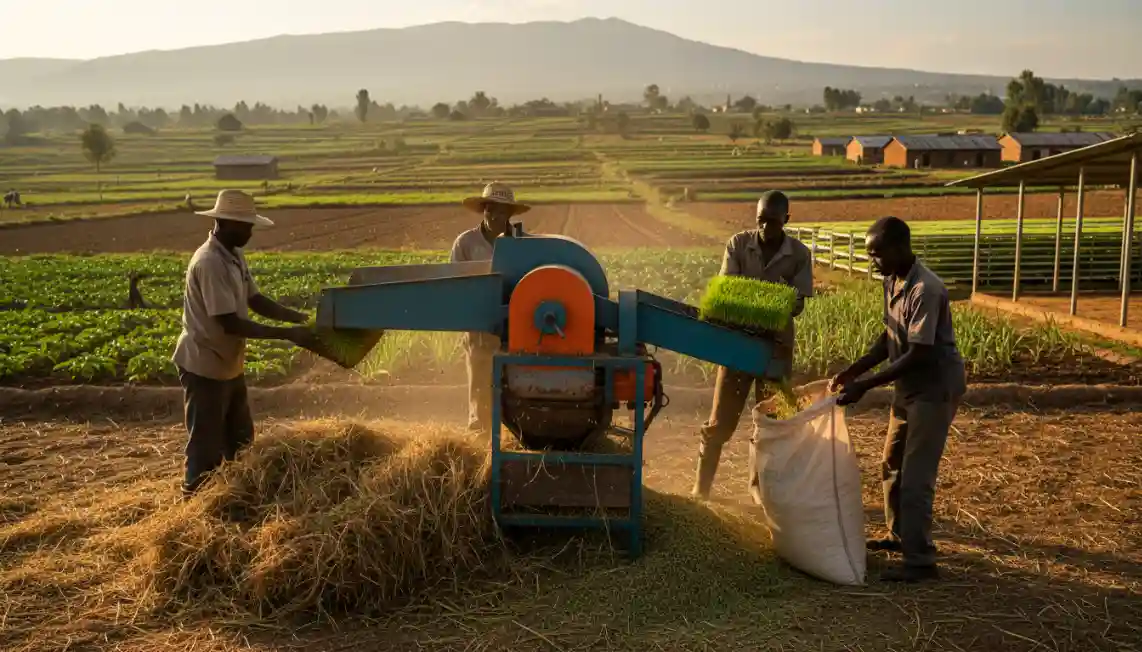
Adding Value to Your Cheaper Milk
Once you have aggressively slashed daily feeding costs, your profit margin per liter naturally increases. However, selling raw milk to powerful brokers severely limits your ultimate financial growth. The real life-changing money in dairy farming is found strictly in smart value addition.
Investing in a small commercial pasteurizer allows you to produce highly sought-after fermented milk products. A single liter of raw milk transformed into premium yogurt fetches significantly more in local supermarkets. By controlling both input costs and final pricing, you insulate your farm from market shocks.
Cold Chain Management and Distribution
Producing high-quality milk is useless if it spoils before reaching the paying consumer. Investing in an aluminum milk cooler or a modified deep freezer is critical for maintaining fresh batches. Proper cold chain management prevents rapid bacterial growth, ensuring your milk passes strict processor quality tests.
For distribution, bypass traditional broker cartels by targeting local bakeries, schools, and hospitals directly. Delivering to these institutional buyers via a customized motorbike secures a fixed, negotiated daily price. Direct consumer sales remain the absolute most profitable route for the modern Kenyan dairy farmer.
Decision Guidance: Who Should Invest vs. Who Should Avoid?
Urban farmers with zero-grazing units and steady water access should aggressively invest in climate-smart sprouting systems. Pastoralists in remote, extremely arid zones without reliable infrastructure should avoid these systems until water is secured.
Evaluating Your Farm Profile
Every dairy operation in Kenya has unique geographical and financial constraints that dictate system success. If you manage a compact zero-grazing unit in Kiambu with a steady piped water supply, transitioning is highly recommended. The massive reduction in daily commercial feed costs will instantly boost your tight urban profit margins.
Read Also: 15 Most Profitable Agribusiness Ideas in Kenya to Start in 2026
Conversely, farmers relying entirely on seasonal rainfall in deep rural settings must exercise extreme caution. Without a guaranteed daily water source and strict hygiene protocols, expensive seeds will simply rot in the trays. Always evaluate your exact management capabilities before abandoning traditional pasture feeding entirely.
Hard Truths: The Future of Dairy Feeding in Kenya
As we navigate into 2026, the global supply squeeze on essential grains will keep feed prices uncomfortably high. The government’s aggressive push for climate-smart agriculture validates modern technologies as the most viable path forward. Transitioning to a smart hybrid feeding model is the mathematical way to remain profitable today.
Expecting guaranteed passive returns without breaking a physical sweat is a highly costly illusion. Daily management, meticulous disease monitoring, and proper financial record-keeping are absolutely essential to avoid losing money. Your physical presence on the shamba completely dictates your long-term success in this competitive sector.
Ultimately, the most successful dairy operations will be those that adapt quickly to resource constraints. Start small today, intensely master the daily germination process, and gradually reduce your heavy financial dependence on commercial concentrates. Your healthy cows and your growing bank account will heavily reward your strict daily dedication.
Farmers Also Ask (FAQ)
Is hydroponic fodder cheaper than dairy meal?
Yes. Producing fresh green sprouts costs roughly KES 10 per kg compared to commercial dairy meal averaging KES 50 per kg in 2026.
Can cows survive on hydroponic fodder alone?
No. Cows strictly require dry roughage like hay for their rumen to properly function. Green sprouts must supplement, not replace, dry feeds.
How long does barley take to grow in indoor trays?
Barley takes exactly seven days from the precise time you place soaked seeds in trays until it is ready for harvest.
What causes mold in indoor sprouting systems?
Mold is primarily caused by poor air circulation, high room temperatures, and failure to clean trays with bleach between cycles.
Where can I buy growing trays in Kenya?
You can purchase UV-treated trays from specialized suppliers like Grekkon Limited or verified agrovets in major farming towns.
How much water does indoor farming need?
Indoor systems use up to 90 percent less water than open-field crops. Light misting three times a day is usually sufficient.
Why are commercial dairy feed prices so high?
Prices are exceptionally high due to global supply chain disruptions inflating fertilizer costs, which drives up raw grain prices.
What is the best seed for these systems?
Barley is widely considered the absolute best seed due to its fast germination rate, high protein content, and massive green yield.
How do I treat seeds before planting?
Soak seeds in clean water mixed with a small amount of food-grade bleach for 12 hours to kill fungal spores before planting.
Is a greenhouse required for this process?
A full greenhouse is not required. A simple wooden structure covered with a high-quality shade net controls temperature effectively.