
Table of Contents
Is maize farming in Kenya profitable for beginners in 2026?
Yes, maize farming remains highly profitable in Kenya if managed correctly. With modern hybrid seeds and proper agronomy, a farmer can harvest between 30 to 40 bags per acre. At a conservative market price of KES 3,500 per bag, gross revenue can reach KES 140,000 per acre against production costs of roughly KES 50,000 to KES 65,000. However, relying on rain-fed agriculture without soil testing significantly reduces margins.
Introduction to Maize Production in Kenya
Maize is not just a crop in Kenya. It is the backbone of national food security and the primary staple food for millions. For the 2026 farming season, the agricultural landscape is shifting. Farmers are moving away from traditional subsistence methods toward precision farming to combat climate change and shrinking land sizes.
The National Cereals and Produce Board (NCPB) and private millers are constantly in need of high-quality grain. This demand creates a stable market for beginners. However, the difference between a farmer who harvests 10 bags and one who harvests 40 bags lies in technical knowledge. This guide covers every aspect of production from soil health to post-harvest management.
Success in 2026 requires treating farming as a business. You must track inputs, labor costs, and market trends. The era of planting and hoping for rain is over. You must plan.
Ecological Requirements for Maize
Maize grows in a wide range of ecological zones in Kenya, from the coast to the highlands. However, optimum performance depends on specific conditions.
Temperature is a key factor. Maize thrives in temperatures between 18 degrees Celsius and 30 degrees Celsius. Extremely high temperatures during pollination can sterilize the pollen leading to poor grain filling. Conversely, frost in very high altitude areas can kill the crop instantly.
Read also: Strawberry Farming in Kenya: Step‑by‑Step Guide, Costs, Best Seed Varieties and Profits in 2026
Rainfall requirements vary by variety. Generally, maize requires 500mm to 900mm of rainfall fairly distributed throughout the growing season. The most critical stage for water is during silking and tasseling. If water stress occurs here, yields can drop by 50 percent or more.
Soil type matters immensely. Maize prefers well-drained loamy soils with a pH between 5.5 and 7.0. Kenyan soils in areas like Uasin Gishu and Trans Nzoia have become acidic over time due to continuous use of DAP fertilizer.
Always conduct a soil test before buying fertilizer. It costs approximately KES 1,500 to KES 2,500 but can save you thousands in wasted inputs.
Which Maize Seed Varieties are Best for 2026?
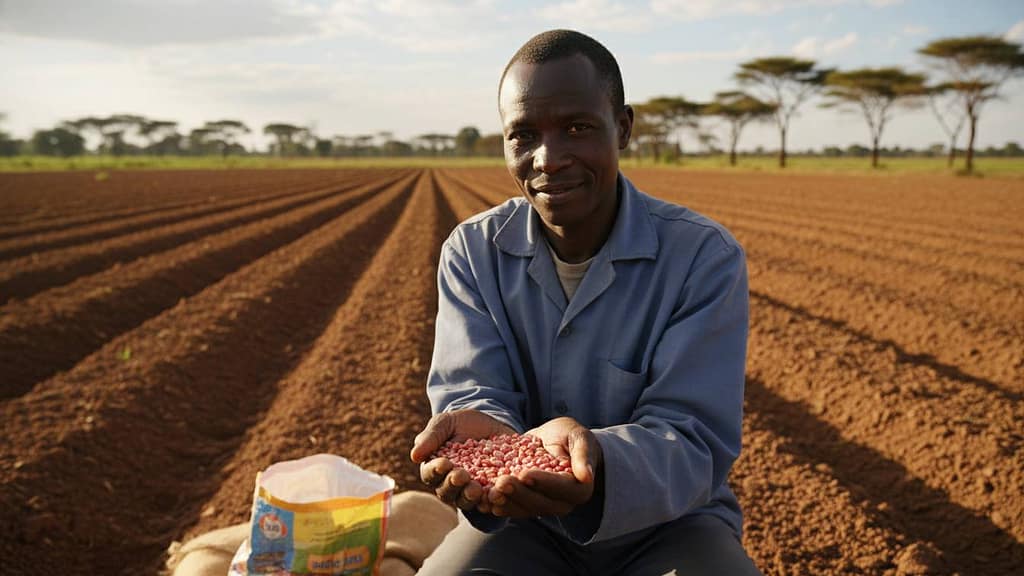
Selecting the right seed is the single most important decision a farmer makes. In Kenya, seeds are categorized by maturity period and altitude suitability.
Highland Varieties
Highland areas include Kitale, Eldoret, Mau Narok, and Kericho. These areas have a long growing season of five to seven months. The best varieties here are late-maturing hybrids that have high yield potential.
Popular varieties for these zones include the H600 series from Kenya Seed Company. H614D is legendary but newer varieties like H6213 and H629 are gaining popularity due to better disease resistance. Other competitive seeds come from companies like Seed Co and Pannar.
These varieties can yield upwards of 40 bags per acre but require patience. They stay in the farm longer which means you usually only get one season per year.
Medium Altitude Varieties
These are suitable for areas like Central Kenya, parts of Western, and Nyanza. The elevation ranges from 1,200m to 1,600m above sea level. The growing season is shorter and typically lasts three to four months.
The H500 series acts well here. Varieties like Duma 43 from Seed Co are also excellent because they mature in about three to four months. This allows farmers to plant two seasons in a year to maximize annual cash flow.
Dryland and Lowland Varieties
For semi-arid areas like Machakos, Makueni, and parts of the Coast, drought tolerance is non-negotiable. You cannot plant highland seeds here as they will wither before tasseling.
Look for the Katumani series or DH04. These are short-season varieties that mature in roughly three months. They are bred to escape drought. While the yield is lower, a harvest is almost guaranteed compared to long-duration crops.
Land Preparation and Planting Techniques
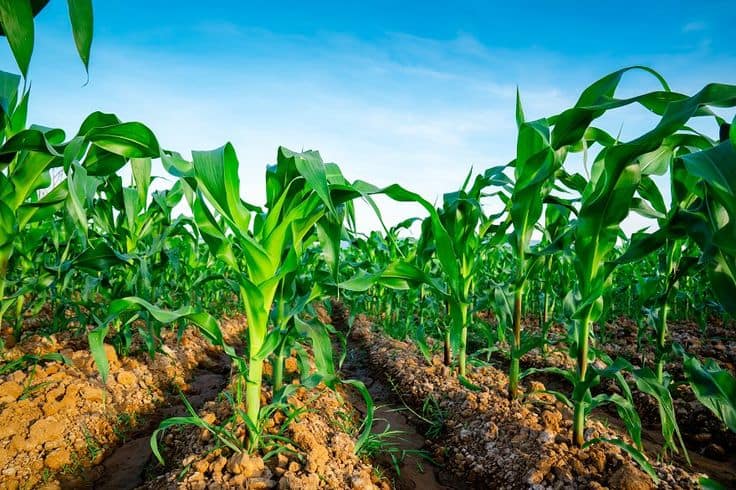
Land preparation must start early. For the main season in March, ploughing should be done in January or February. This allows organic matter to decompose and exposes soil-borne pests to the sun.
Conservation agriculture is gaining traction. Instead of deep ploughing every season, which destroys soil structure, consider minimum tillage. This involves ripping or using herbicides to clear weeds before planting directly. This retains soil moisture which is critical if rains are erratic.
What is the Correct Spacing for Maize in Kenya?
The standard recommended spacing for commercial maize farming in Kenya is 75cm between rows and 25cm between plants. This population gives approximately 21,000 to 22,000 plants per acre. Some intensive farmers use 60cm by 20cm, but this requires high fertilization and moisture.
Planting Depth and Fertilizer Application
Planting depth should be 2.5cm to 5cm. If you plant too deep, the shoot struggles to emerge. If too shallow, birds may eat the seeds or the roots won’t anchor well.
Read also: HOW TO EXPORT HASS AVOCADOS FROM KENYA IN 2026: A STEP-BY-STEP GUIDE
Fertilizer application at planting is mandatory for high yields. Di-Ammonium Phosphate (DAP) has been the standard for years. However, because of soil acidity issues, many agronomists now recommend NPK 23:23:0 or SSP combined with lime if the soil is acidic.
Use one bottle top of fertilizer per hole. Mix the fertilizer thoroughly with the soil before placing the seed. Direct contact between the seed and chemical fertilizer can burn the seed leading to poor germination.
If using mechanized planters, ensure the calibration is set correctly. This helps to avoid skipping holes or double planting.
Weed Management Strategies
Weeds are the biggest thief of yields. They compete for water, light, and nutrients. In the first four to six weeks, the maize field must be weed-free. This is the critical period.
Manual weeding is labor-intensive and expensive. In 2026, labor costs in rural Kenya are rising. Many farmers are switching to chemical weed control.
Pre-emergence herbicides are sprayed immediately after planting before the maize germinates. These chemicals create a seal on the soil that prevents weed seeds from sprouting. Products containing S-Metolachlor or Atrazine are common.
Post-emergence herbicides are used when the maize is already growing. You must be careful to use selective herbicides that kill weeds but do not harm the maize. Always consult an agronomist on the correct dosage to avoid stunting your crop.
How to Control Fall Armyworm
The Fall Armyworm remains the biggest threat to maize farming in East Africa. It can destroy a crop in days if left unchecked.
Control requires Integrated Pest Management (IPM). Do not rely on one method. Start by scouting the field early in the morning. If you see sawdust-like poop in the funnel of the plant, the worm is present.
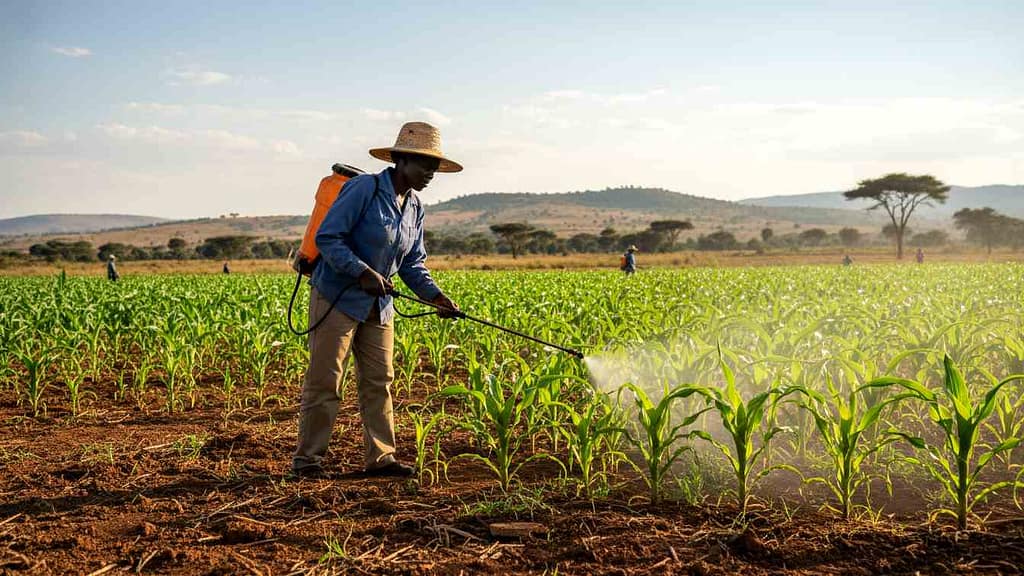
Rotate chemicals to prevent resistance. Use Emamectin benzoate, Lufenuron, or Coragen. Spray early in the morning or late evening when the worms are active.
Top Dressing and Nutrition
Top dressing is the application of nitrogenous fertilizer to boost growth. This is usually done in two splits.
The first application is done when the maize is knee-high about four weeks after germination. Calcium Ammonium Nitrate (CAN) is the preferred input. It provides Nitrogen for vegetative growth and Calcium for stalk strength.
Read also: Best Greenhouse Farming Guide in Kenya: Profits, Costs, and Beginner Mistakes to Avoid in 2026
The second application can be done just before tasseling. This ensures the plant has enough energy to fill the cobs. Urea can be used, but it is volatile and can evaporate if not covered with soil.
Foliar fertilizers are also excellent boosters. These are liquid fertilizers sprayed on the leaves. They are rich in trace elements like Zinc and Boron which are essential for heavy grains.
Disease Management
Maize Lethal Necrosis Disease (MLND) caused devastation in the Rift Valley years ago. While it is better controlled now, crop rotation is the best defense. Do not plant maize two seasons in a row in the same field if MLND is present. Rotate with beans, potatoes, or sorghum.
Maize Smut and Leaf Blight are other common issues. Certified seeds usually have resistance to these. If you see fungal infections, fungicides can be used but prevention through good seed selection is better.
Harvesting Best Practices
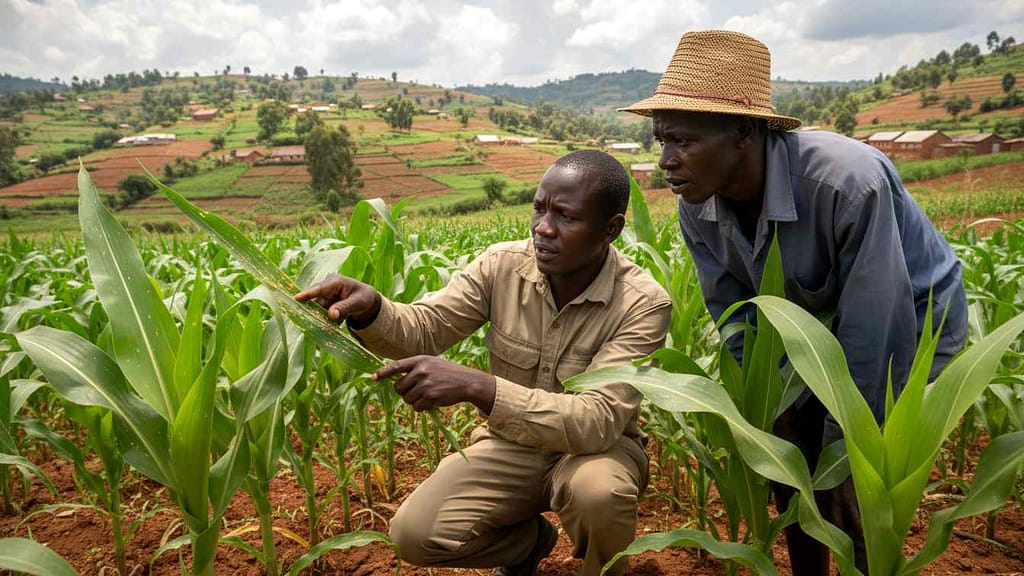
Harvesting should commence when the crop has reached physiological maturity. You will see a black layer form at the base of the grain where it connects to the cob. The leaves will turn yellow and dry up while the cobs hang downwards.
Do not harvest too early. High moisture content leads to rotting and mold. However, leaving it too long in the field exposes the crop to weevils and theft.
Cut the stalks and stook them to allow further drying if the weather permits. De-husking can be done in the field or at the homestead.
Avoid throwing cobs directly onto the soil during harvest. This introduces fungal spores that cause aflatoxin. Use canvas sheets or sacks.
Post-Harvest Management and Aflatoxin
Aflatoxin is a chemical poison produced by fungus. It causes cancer and liver failure. In Kenya, maize with high aflatoxin levels is rejected by millers and the NCPB.
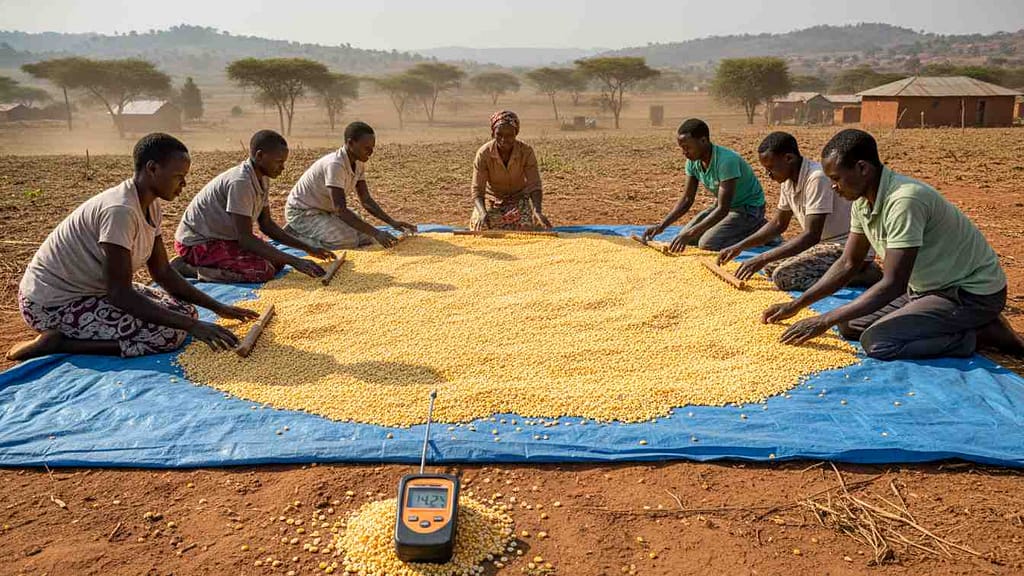
To prevent this, dry your maize on tarpaulins or raised platforms. Never dry maize on the bare ground. The target moisture content for storage is 13.5 percent.
You can test this by biting the grain. It should crack with a sharp sound. Alternatively, shake it in a glass jar and listen for a crisp rattle.
For storage, use hermetic bags like PICS or Purdue bags. These bags have multiple layers that cut off oxygen. Weevils cannot survive inside so you do not need to use dusting chemicals.
Economics of Maize Farming (2026 Estimates)
Let us look at the numbers. Farming is a business and you must know your margins.
Ploughing and harrowing costs between KES 4,000 and KES 5,000. Certified seeds cost roughly KES 2,500 for 10kg. Fertilizer costs range from KES 3,500 to KES 6,000 depending on subsidies.
Herbicides and labor will consume another KES 15,000 to KES 20,000 per acre. Post-harvest costs and miscellaneous expenses add another KES 8,000. Total production cost estimates range from KES 36,000 to KES 48,500 per acre.
A poorly managed farm yields 10 to 15 bags while a well-managed farm yields 30 to 40 bags. If you harvest 35 bags and sell at KES 3,500, revenue hits KES 122,500.
Subtracting production costs leaves a net profit of roughly KES 74,000 per acre. This assumes high yields and good prices.
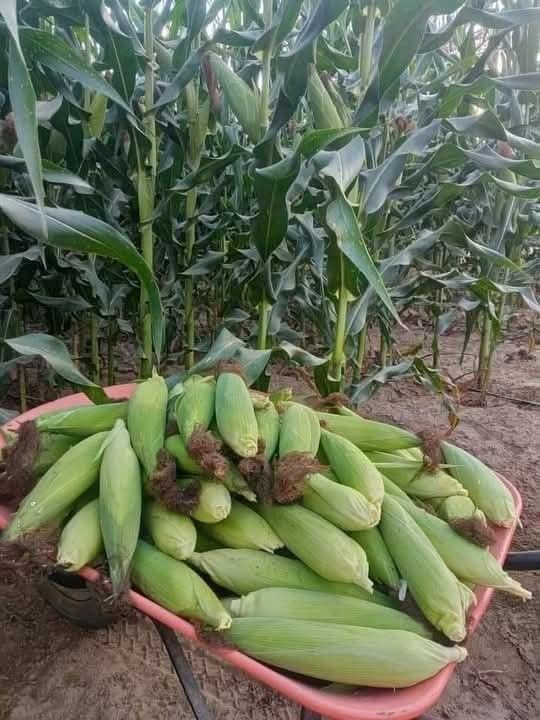
To maximize profit, consider selling green maize. This is harvested earlier, saving on storage costs, and often fetches a higher price per cob.
Marketing Your Produce
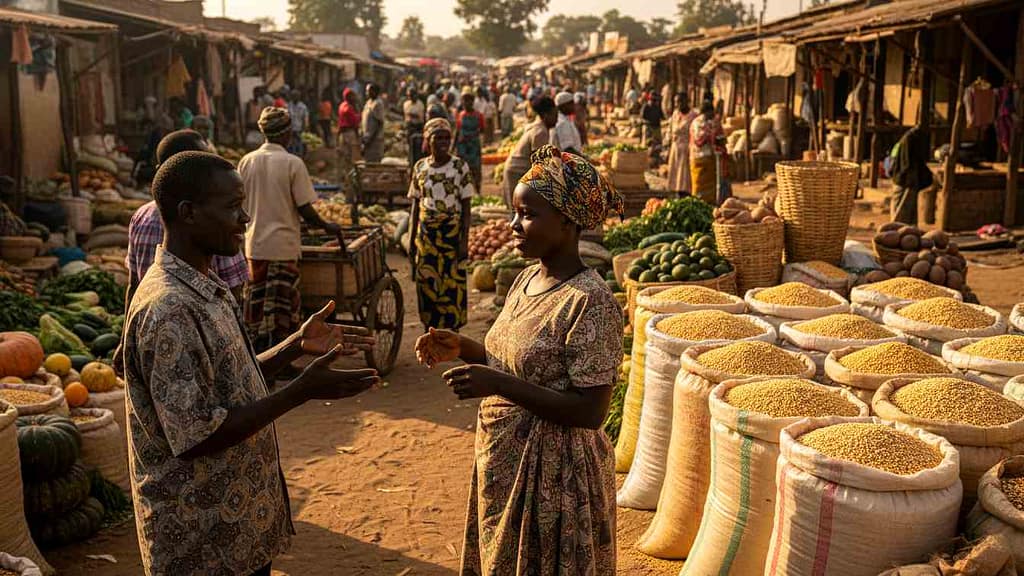
Don’t wait until harvest to find a buyer. Visit local schools, millers, and animal feed manufacturers early. If you have good storage, wait as prices are lowest immediately after harvest.
Joining a cooperative society is also beneficial. Co-ops can aggregate produce from many farmers to negotiate better prices with large millers. They also facilitate access to government subsidized fertilizer.
Key Success Factors for 2026
Test your soil to correct acidity and nutrient deficiencies. Buy certified hybrid seeds suitable for your specific ecological zone. Control weeds strictly during the first six weeks.
Monitor for Fall Armyworm weekly and spray immediately upon detection. Dry maize thoroughly to 13.5 percent moisture to avoid rejection.
Conclusion
Maize farming in Kenya is evolving. The days of low-input and low-output farming are gone. By adopting the agronomic practices outlined in this guide, you can transform maize farming from a survival activity into a profitable enterprise.
Read also: Pixie Orange Farming in Kenya 2026: Complete Guide to Seedlings, Costs and Profit per Acre
The 2026 season holds great promise for those who prepare. Secure your inputs early, prepare your land before the rains, and treat your farm like the business it is.
FAQs
How many bags of maize can I get from one acre in Kenya?
With traditional methods, farmers often get 10 to 15 bags. However, with hybrid seeds, proper fertilizer application, and pest control, you can harvest between 30 and 40 bags per acre in high-potential zones like Trans Nzoia.
What is the best month to plant maize in Kenya?
The best time depends on the region. In the main grain basket of the Rift Valley, planting starts in March at the onset of the long rains. In short-rain areas like Eastern Kenya, planting happens in October.
How much fertilizer is needed per acre of maize?
Standard recommendation is one bag of planting fertilizer like DAP or NPK and one to two bags of top-dressing fertilizer like CAN per acre. However, a soil test is the only way to know the exact requirements for your farm.
Why is my maize turning yellow?
Yellowing maize usually indicates Nitrogen deficiency. This happens if you skipped top dressing or if heavy rains leached the nutrients. It can also be a sign of waterlogging or Maize Lethal Necrosis Disease.
Is it better to sell green maize or dry maize?
Selling green maize provides quick cash flow and eliminates post-harvest costs like drying and storage. It is often more profitable if you are near an urban center. Dry maize allows you to store and wait for better market prices but carries higher risks of weevils and theft.
Ultimately, success in the 2026 maize season depends on your willingness to trade traditional guesswork for technical precision and a business-first mindset. By investing in certified hybrid seeds, conducting essential soil tests, and maintaining a proactive defense against the Fall Armyworm, you can effectively bridge the gap between a meager subsistence harvest and a high-yielding, 40-bag-per-acre commercial enterprise. As the agricultural landscape in Kenya evolves, the farmers who prioritize modern agronomy and strategic post-harvest management will be the ones to secure the highest profit margins and lead the way in national food security. The tools for a bumper harvest are now in your hands—plan early, manage your inputs diligently, and transform your farm into a thriving business for the 2026 season and beyond.