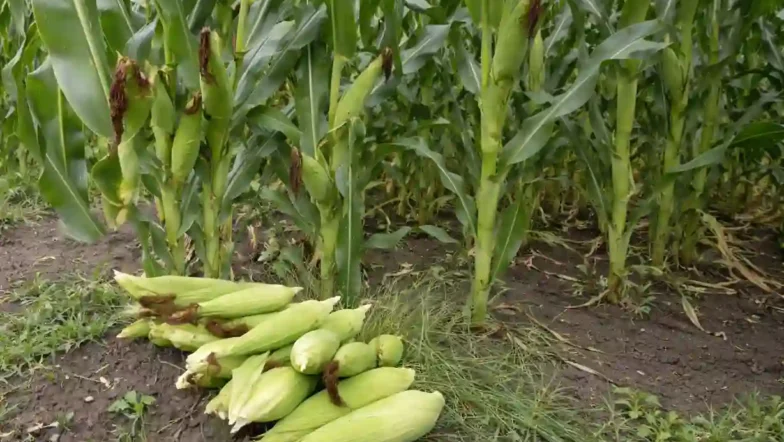


- Best for Heavy Rains (Highlands): H6213 is the 2026 yield champion (40-52 bags/acre) for Trans Nzoia and Uasin Gishu, offering superior rot resistance during the predicted wet March-May season.
- Best for Quick Harvest (Drought Escape): SC Duma 43 (popularly known as “SC Puma”) matures in 90 days, making it the perfect tactical crop to escape mid-season dry spells in erratic zones like Machakos and Murang’a.
- Best for Drylands (ASALs): DH04 is the definitive survival crop for arid counties like Kitui and Makueni, capable of yielding 20+ bags/acre with minimal rainfall where other varieties fail completely.
Table of Contents
The 2026 Long Rains are forecast to be “hard-hitting” across the Lake Victoria Basin and Central Highlands. presenting a unique challenge for Kenyan farmers: how to balance yield potential with the risk of waterlogging. While many farmers are actively searching for “SC Puma,” the correct certified variety name is SC Duma 43. This guide pits this fast-maturing hybrid against the highland giant H6213 and the dryland specialist DH04. Your choice this season will determine whether you harvest 50 bags or face a total write-off due to floods or false starts in the rains.

Which Maize Variety Suits Your 2026 Ecological Zone?
H6213 is strictly for high-altitude, high-rainfall zones (Trans Nzoia, Nakuru) due to its 6-month maturity. SC Duma 43 and DH04 are short-season varieties (3 months) designed for lower altitudes and areas with unreliable rain (Machakos, Makueni, Kilifi).
Module A: Technical Deep-Dive & Best Varieties
For the 2026 season, the distinction between these three varieties is stark. Your choice must align with your elevation and soil drainage capacity.
Read Also: Maize Farming in Kenya: High Yield Production Guide, Best Practices and Profit Tips 2026
1. SC Duma 43 (The “SC Puma” of Popular Search)
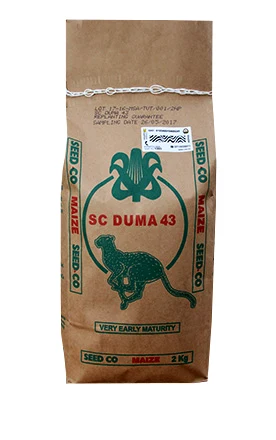
Widely referred to by farmers as “SC Puma” due to its feline branding, SC Duma 43 is a 400-series hybrid from Seed Co. It is engineered for speed. In 2026, it retails at approximately KES 950 — 1,100 per 2kg packet. Its standout feature is early maturity (90 to 100 days), allowing farmers to harvest before the heavy late-season floods or dry spells hit. It resists Maize Streak Virus (MSV) but requires well-drained soil; it will not survive standing water.
2. DH04 (The Dryland Specialist)
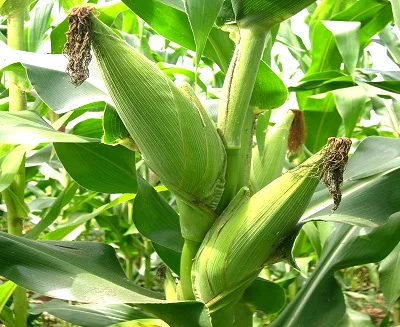
Produced by Kenya Seed Company, DH04 is the safety net for arid counties. Retailing at approximately KES 750 — 850 per 2kg packet, it is a short variety that withstands lodging (falling over) better than taller breeds. While its yield cap is lower (20 to 24 bags/acre), it is almost guaranteed to produce grain when other crops fail due to moisture stress.
Read Also: Fake Seeds in Kenya 2026: How to Spot Counterfeit Seed Before You Plant and Protect Your Harvest
3. H6213 (The Highland Giant)
This is the heavyweight champion for the North Rift breadbasket, costing KES 750 — 850 per 2kg packet. It takes a long time to grow (up to 7 months) but rewards patience with massive yields of up to 52 bags per acre. Crucially for “flood-prone” discussions, H6213 has bred-in tolerance to Ear Rot and Leaf Blight, diseases that destroy weaker varieties during prolonged wet conditions.
| Feature | SC Duma 43 (“Puma”) | DH04 | H6213 |
|---|---|---|---|
| Best For | Speed & Drought Escape | Severe Drought/ASALs | High Yields & Wet Highlands |
| Maturity Period | 90 — 100 Days | 80 — 100 Days | 160 — 210 Days |
| Yield Potential | 30 — 35 Bags/Acre | 20 — 24 Bags/Acre | 40 — 52 Bags/Acre |
| Rainfall Req. | 250mm — 500mm | 200mm — 450mm | 800mm — 1500mm |
| Waterlog Tolerance | Low (Needs Drainage) | Low (Needs Drainage) | Medium (Resists Rots) |
| 2026 Est. Price (2kg) | KES 950 — 1,100 | KES 750 — 850 | KES 750 — 850 |
Which Fertilizers Deliver the Best ROI for 2026?
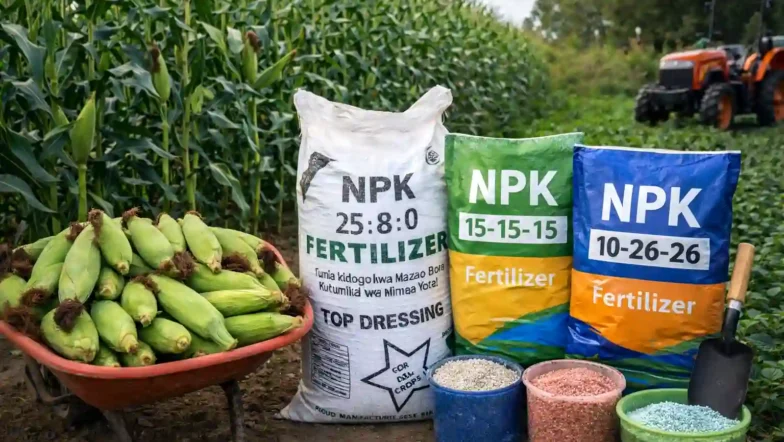
DAP remains the standard for planting, but acidic soils in Uasin Gishu require NPK 23:23:0 or YaraMila Cereal to prevent “purple maize” syndrome. Top dress with CAN when the maize is knee-high (4 weeks) for maximum cob expansion.
Module G: Fertilizer & Soil Nutrition
In 2026, the government subsidy program has capped fertilizer prices at KES 2,500 per 50kg bag for registered farmers. However, commercial prices remain high, fluctuating between KES 3,500 and KES 6,500 depending on the brand. Soil acidity is a major profit killer; if your soil pH is below 5.5, standard DAP will lock up nutrients and reduce yields.
| Fertilizer Type | Role | 2026 Commercial Price (50kg) | Application Rate |
|---|---|---|---|
| DAP (18:46:0) | Root Establishment | KES 6,000 — 6,900 | 50kg – 75kg per Acre |
| NPK (23:23:0) | Balanced Starter (Non-Acidifying) | KES 5,500 — 6,000 | 50kg – 75kg per Acre |
| CAN (26:0:0) | Top Dressing (Vegetative Growth) | KES 3,280 — 4,200 | 50kg – 100kg per Acre |
| YaraMila Power | Premium Starter (with Micro-nutrients) | KES 6,500 — 7,200 | 50kg per Acre |
| Subsidized (Any Type) | Govt Program (DAP/CAN/NPK) | KES 2,500 (Fixed) | Max 100 Bags (Based on Acreage) |
Where to Buy SC Puma, DH04, and H6213 in Kenya (2026 Guide)
Avoid “hanging” seeds from open markets. Buy certified seeds directly from Kenya Seed Company depots (Kitale, Nairobi), Seed Co stockists, or authorized digital platforms like iShamba and DigiFarm to ensure 99% germination rates.
Module B: Sourcing & Procurement
Counterfeit seeds are a growing threat in 2026. A fake packet of “SC Puma” often contains ordinary grain dyed green, which will result in zero harvest. Always verify the KEPHIS scratch label on the packet before paying.
Read Also: Top 10 Best Agrovets in Kenya (2026 Guide): Where to Buy Genuine Inputs in Nairobi, Eldoret & Nakuru
Official Stockists & Platforms:
1. Kenya Seed Company (KSC): The primary source for H6213 and DH04. Key depots are located in Kitale, Nakuru, and Nairobi (Kijabe Street).
2. Seed Co Kenya: The exclusive source for SC Duma 43 (Puma). Look for their “Simba” logo at major agrovets nationwide.
3. Digital Apps: Use Safaricom DigiFarm or Mkulima Young to locate the nearest verified agrovet.
4. Government Depots (NCPB): The primary distribution points for the KES 2,500 subsidized fertilizer. Early booking via your ward agricultural officer and the KIAMIS system is mandatory.
Which Kenyan Counties Offer the Best Climate for H6213 vs. DH04?
Trans Nzoia and Uasin Gishu are the undisputed kingdom for H6213. Conversely, Machakos, Kitui, and the drier parts of Meru are best suited for DH04 or SC Duma 43, where rainfall is below 600mm.
Module C: Regional Comparative Analysis
1. Trans Nzoia & Uasin Gishu (The Granary):
This region expects 800mm+ of rainfall during the 2026 Long Rains. H6213 is the correct choice here. Planting SC Duma 43 here is a waste of potential yield unless you are planting a late second crop. The soil is deep and clay-loam, ideal for H6213’s massive root system.
2. Machakos & Makueni (The ASAL Frontier):
Rainfall here is erratic and often ceases abruptly in May. H6213 will fail to tassel. Farmers must plant DH04 or SC Duma 43. These varieties can reach physiological maturity with as little as 300mm of rain, ensuring food security when long-season crops wither.
3. Kiambu & Meru (The Mid-Altitude Zones):
A transitional zone. Farmers here can gamble on H6213 if irrigation is available, but SC Duma 43 offers a safer, faster turnaround, allowing for a second crop of beans or potatoes in the same year.
What is the Ideal 12-Month Planting Cycle for Maize in Kenya?
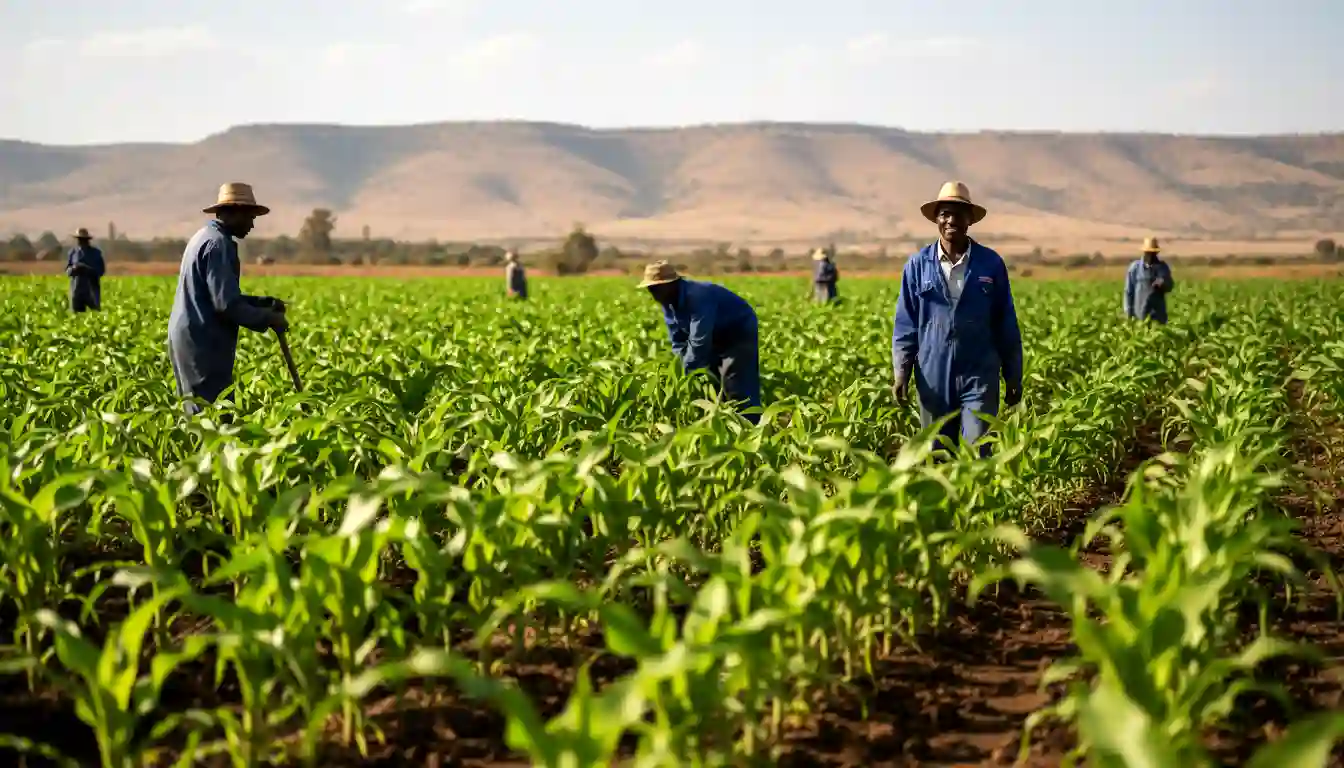
Prepare land in January-February. Dry plant H6213 in early March for the Long Rains. Harvest in October-November. For SC Duma/DH04, plant in March (Long Rains) and again in October (Short Rains).
Module D: 12-Month Farming Calendar
January — February: Land Preparation
Clear weeds and plough deep. This is the time to apply lime if your soil test indicates acidity. Purchase seeds and fertilizer now to avoid the March price hike.
March: Planting (Long Rains)
The onset of rains (usually mid-March) is the trigger. For H6213, plant immediately. For SC Duma 43, you have a 2-week window. Apply DAP/NPK at planting.
April — May: Weeding & Top Dressing
Weed control is critical at weeks 3-4. Apply CAN top dressing when the crop is knee-high. Scout for Fall Armyworm (FAW); early detection saves 30% of your yield.
June — August: Grain Filling
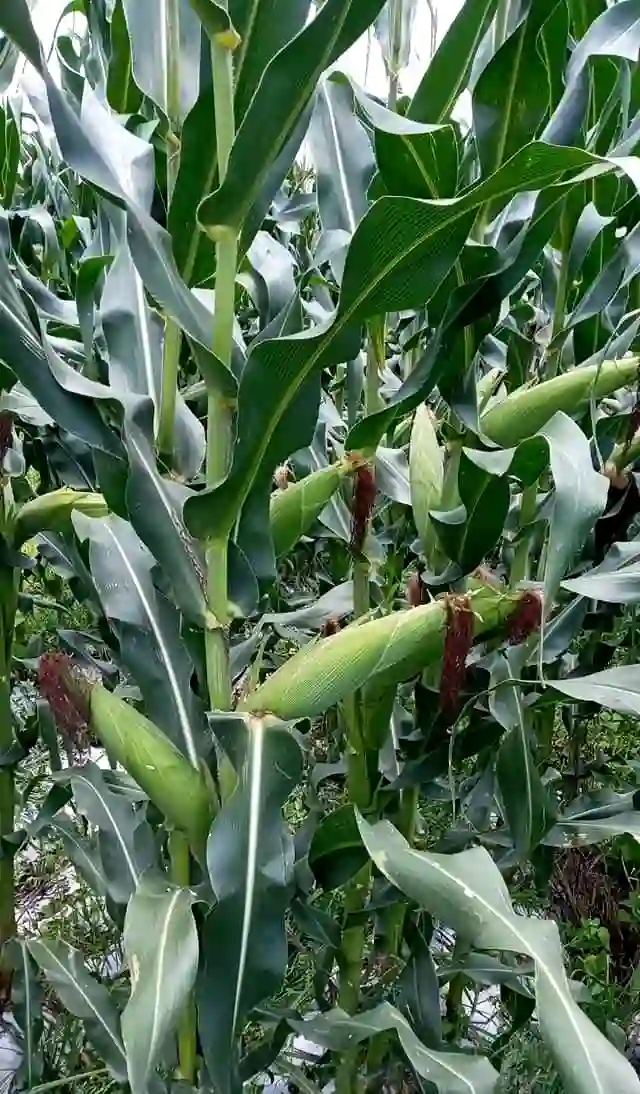
Critical moisture period. H6213 is filling its large cobs. DH04 and SC Duma 43 are already drying down and will be ready for harvest by July/August.
Read Also: Kenya Long Rains 2026: The Ultimate March Planting Guide (Weather, Seeds, and Fertilizer Prices)
September — October: Harvest & Short Rains Prep
Harvest H6213. Dry maize to 13.5% moisture content to prevent aflatoxin. Immediately plough for the Short Rains if you are in a bimodal zone.
Can You Make a Profit? Deep-Dive Financials (KES)
Yes, but margins are tight. A well-managed acre of H6213 can generate a net profit of KES 70,000+. Poor management leads to losses. Breakeven yield is approximately 12-15 bags per acre.
Module E: Deep-Dive Financials
The following table breaks down the cost of production for one acre of maize in 2026, assuming the use of commercial fertilizer (worst-case cost scenario) and hired labor. Estimated ranges vary by management style.
| Item | Unit Cost (KES) | Quantity | Total Cost (KES) |
|---|---|---|---|
| Land Lease (1 Season) | 10,000 | 1 Acre | 10,000 |
| Ploughing & Harrowing | 4,000 | 1 Acre | 4,000 |
| Certified Seeds (H6213) | 800 | 5 Packets (10kg) | 4,000 |
| Planting Fertilizer (Commercial DAP) | 6,500 | 1.5 Bags (75kg) | 9,750 |
| Top Dressing (CAN) | 3,500 | 2 Bags (100kg) | 7,000 |
| Labor (Planting/Weeding) | 500/day | 20 Man-days | 10,000 |
| Pest Control (Armyworm) | 2,500 | Lump sum | 2,500 |
| Harvesting & Shelling | 120/bag | 30 Bags | 3,600 |
| Transport & Bags | 100/bag | 30 Bags | 3,000 |
| TOTAL OPEX | KES 53,850 |
Revenue Scenario (Conservative):
Harvest: 30 Bags (90kg)
Selling Price: KES 4,000 per bag (NCPB 2026 Estimate)
Gross Revenue: KES 120,000
Net Profit: ~KES 66,150 per acre
“Note: Using subsidized fertilizer (KES 2,500) reduces OPEX by over KES 8,000, significantly boosting your profit margin.“

How Can You Sell Your Maize for Maximum Profit?
Don’t sell at the farm gate immediately if you can avoid it. Dry your maize to 13.5% moisture and store it. Prices peak in May-June. Major off-takers include NCPB, Unga Ltd, and Mombasa Maize Millers.
Module F: Supply Chain & Value Addition
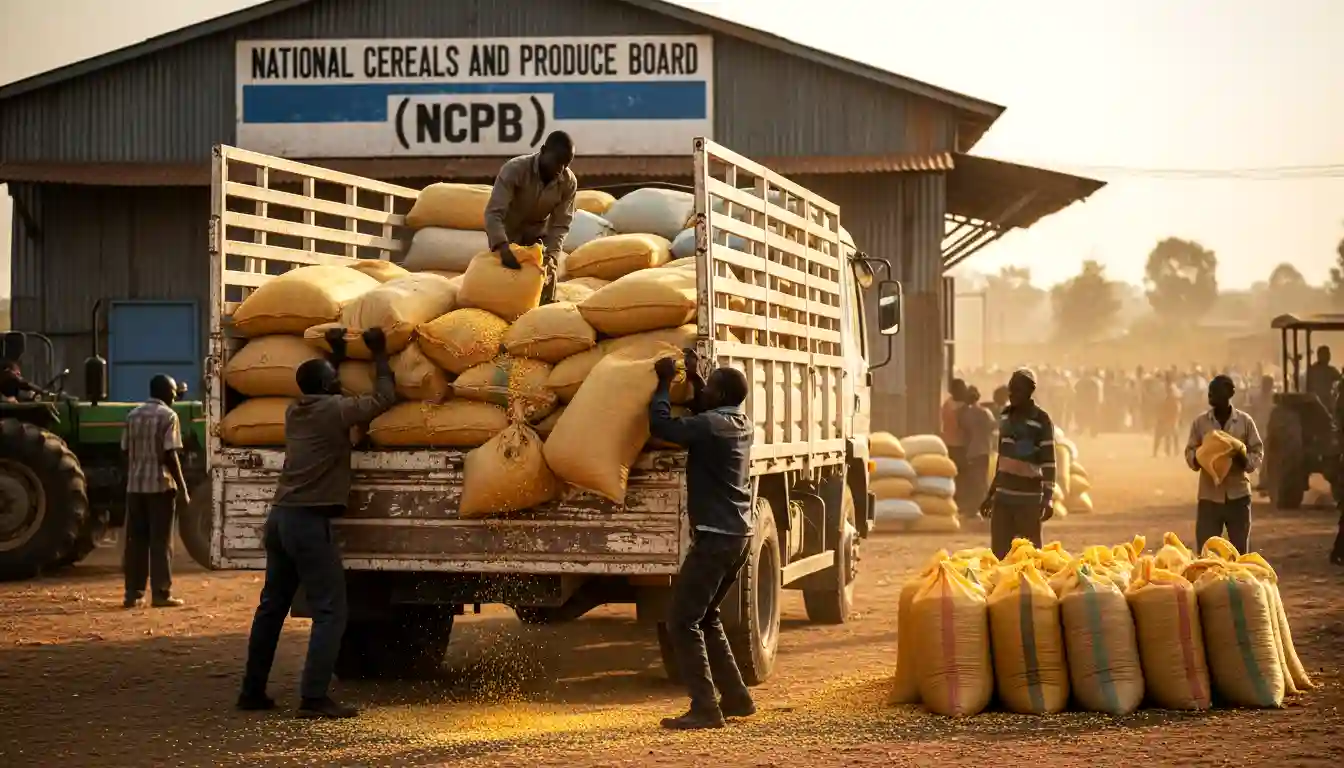
The “Market-Ready” exit strategy is crucial. In 2026, the National Cereals and Produce Board (NCPB) is expected to set a buying price around KES 4,000 per 90kg bag. However, private millers often pay more for clean, dry maize delivered to their gate.
Top Buyers in 2026:
1. NCPB: Reliable but payment can be delayed. Requires stringent moisture checks (13.5%).
2. Unga Limited & Pembe Millers: Direct buyers for large quantities. They pay a premium for Grade 1 maize free of aflatoxin.
3. Local Schools & Institutions: Often overlooked, boarding schools buy maize in bulk at market rates, often paying cash.
Value Addition:
Consider milling your own maize into flour (Posho) if local prices for grain are low. Selling branded maize flour in 2kg or 5kg packets can double your revenue per kilo compared to selling raw grain.
2026 Outlook: The Verdict
The 2026 season presents “mixed fortunes” with a forecast of erratic rains. Farmers in flood-prone highlands should stick to H6213 for its disease resistance but must invest in drainage channels to avoid waterlogging. For those in marginal areas or fearing a short rain season, SC Duma 43 (SC Puma) is the smartest tactical choice, sacrificing some yield for the certainty of a harvest. DH04 remains the only logical choice for true dryland farming.
Read Also: Bean Farming in Kenya 2026: The Ultimate Guide to the Most Profitable Varieties
Call to Action: Don’t guess. Test your soil pH this week. Book your subsidized fertilizer at the NCPB depot immediately, and buy your certified seeds from a licensed stockist today. The rains won’t wait.
Farmers Also Ask (FAQ)
What is the difference between SC Puma and SC Duma 43?
They are the same. “SC Puma” is a common nickname used by farmers for SC Duma 43. The official variety name on the packet is SC Duma 43.
Can I plant H6213 in Machakos?
No. H6213 takes too long (6-7 months) to mature. Machakos rains usually end before it tassels, leading to total crop failure. Use DH04 or SC Duma 43 instead.
Is DH04 resistant to floods?
No. DH04 is drought-tolerant, not flood-tolerant. Maize roots rot in standing water. Ensure your field has drainage channels if heavy rains are predicted.
How many bags of fertilizer do I need for 1 acre?
Standard practice is 1-2 bags (50kg) of DAP for planting and 1-2 bags of CAN for top dressing per acre, depending on soil fertility.
What is the current price of a 90kg bag of maize in Kenya (2026)?
As of March 2026, the NCPB buying price is projected at KES 4,000. Market prices range from KES 3,800 to KES 4,500 depending on the region.
How deep should I plant maize seeds?
Plant seeds 2-3 cm deep in moist soil. If dry planting, plant slightly deeper (4-5 cm) to prevent germination from light showers before the main rains.
Which herbicide is best for maize?
Pre-emergence herbicides like Lumax or Primagram Gold are effective. For post-emergence, use selective herbicides like Knight or Governor to kill weeds without harming maize.
How do I stop Fall Armyworm in 2026?
Scout weekly. Spray immediately upon seeing window-pane leaf damage. Rotate chemicals like Escort, Coragen, and Match to prevent resistance.
Does SC Duma 43 make good silage?
Yes. While bred for grain, SC Duma 43 produces excellent silage if harvested at the soft dough stage due to its high grain-to-stover ratio.
Where can I get the government subsidized fertilizer?
Register on KIAMIS via your ward agricultural officer. Once registered, you will receive an e-voucher to redeem at the nearest NCPB depot or KNTC store.