Multi-Storey Vertical Garden Farming in Kenya: Complete Setup Guide 2026

Multi-Storey Vertical Garden Farming in Kenya: Complete Setup Guide 2026

  • Production Efficiency: A single vertical tower occupying one square meter can produce up to 150 plants, representing a 500 percent increase in land productivity compared to conventional horizontal gardening.
  • Resource Conservation: These systems reduce water usage by up to 70 percent through centralized irrigation shafts and minimized surface evaporation, making them essential for Kenya’s increasingly erratic climate.
  • Financial Viability: With an average setup cost of KES 3,500 to KES 6,000 per unit, commercial farmers can achieve a full return on investment within two harvest cycles of high-demand vegetables.

The agricultural sector in Kenya is facing a historic pivot in 2026 as land fragmentation in high-potential areas like Kiambu and Uasin Gishu reaches critical levels. Urbanization in cities like Nairobi, Nakuru, and Mombasa has further diminished available space for traditional farming, causing a surge in food prices for essential leafy greens. Multi-storey vertical garden farming has evolved from a niche hobby into a mainstream commercial solution for ensuring household food security and generating consistent revenue.

By moving farming from the horizontal plane to the vertical axis, Kenyan farmers are bypassing the limitations of poor soil quality and limited acreage. This guide provides a comprehensive, data-driven framework for establishing a multi-storey vertical farm. We will explore the technical specifications, financial inputs, and management strategies required to thrive in the modern Kenyan agricultural landscape.

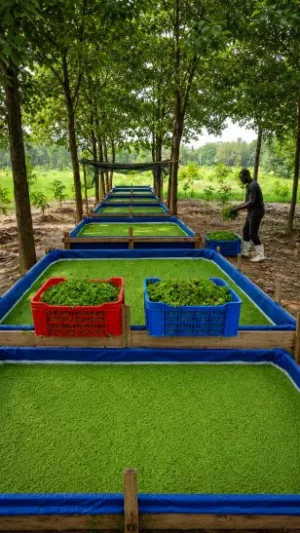
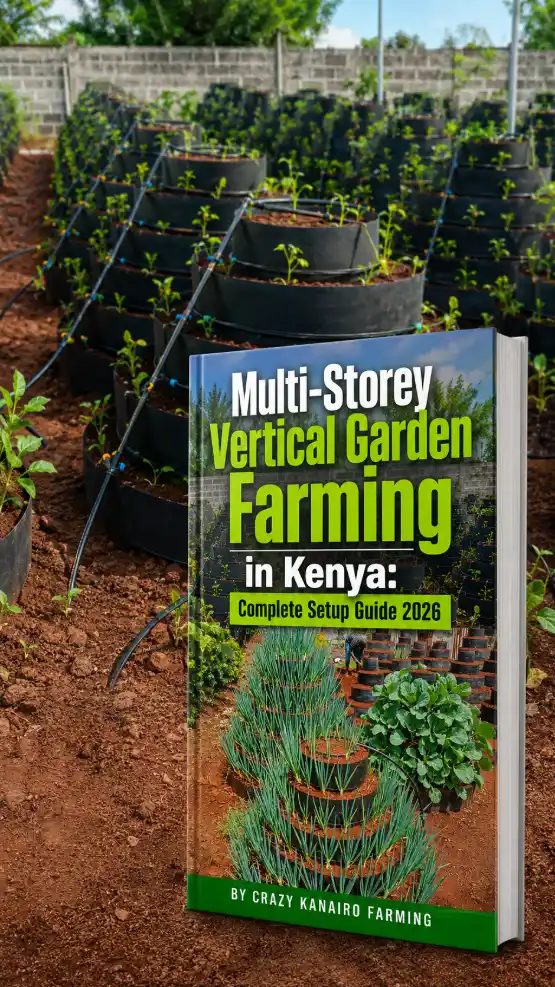
Commercial vertical farm with tiered HDPE towers and integrated drip irrigation for high-density vegetable production.

What Is a Multi-Storey Vertical Garden?

A multi-storey vertical garden is a conical or cylindrical growing structure made from high-density polyethylene (HDPE) liners. It consists of several stacked rings of decreasing diameter, allowing for high-density planting on the top and sides. The system uses a specialized soil-manure medium and a central drainage core to optimize moisture and nutrient delivery.

In the Kenyan context, these structures are often referred to as conical gardens or tower gardens. They differ fundamentally from the old-fashioned sack gardens, which were prone to rotting and structural collapse. The 2026 standard utilizes UV-treated dam liners that are engineered to withstand the intense equatorial sun for over a decade. These materials reflect heat, keeping the root zone cool and moist, which is vital for the health of delicate seedlings.

The architecture of a multi-storey garden is based on a “frustum of a cone” design. This shape provides the necessary stability to hold up to 400 kilograms of moist soil without tipping. Each layer or “storey” provides a platform for planting, effectively creating a high-rise building for vegetables. This design ensures that even the lowest plants receive adequate sunlight, a common failure point in vertical systems that use straight vertical walls.

The Structural Components

The base of the tower is typically the widest section, providing a footprint of approximately 1.2 meters in diameter. As the structure ascends, each subsequent ring is slightly smaller, creating a series of steps. These steps serve two purposes: they allow sunlight to reach the base of every plant and they provide a catchment area for water to percolate through the soil medium. The central part of the tower contains a vertical “chimney” of coarse material like ballast or gravel to facilitate deep irrigation.

Evolution from Traditional Methods

Farmers have shifted away from wooden raised beds and gunny bags because of the high replacement costs and pest infestations. Wood rots and attracts termites, while bags tear within months. The modern multi-storey garden is a permanent asset. It is essentially an “above-ground farm” that can be dismantled and moved if a tenant changes houses or if a farmer decides to reconfigure their plot. This portability is a significant advantage in the rental-heavy urban markets of Kenya.

Why Multi-Storey Gardening Is Growing in Kenya (2026 Trend)

Growth is driven by extreme land scarcity, the rising cost of irrigation water, and a 2026 consumer demand for organic, pesticide-free vegetables. Urban households are adopting these towers to insulate themselves from inflation, while youth entrepreneurs are using them to create high-margin agribusinesses on small rented plots.

Economic pressures in 2026 have made the “Mama Mboga” budget a significant portion of household spending. A family of five in Nairobi may spend KES 150 daily on kales and spinach. By installing just two vertical towers, that family can produce all their vegetables for free, saving over KES 50,000 annually. This financial incentive is the primary driver behind the mass adoption seen in middle-income estates across the country.

The “Lipa na M-Pesa” economy has also integrated with vertical farming. Modern sensors and automated drip kits now allow farmers to monitor soil moisture from their smartphones. This technological integration appeals to the Kenyan youth who previously viewed farming as a back-breaking, low-tech endeavor. Now, vertical farming is seen as a precision science that fits within a modern, tech-forward lifestyle.

Climate Resilience and Water Scarcity

Kenya continues to face unpredictable rainfall patterns. Traditional farming relies heavily on the “Long Rains,” which are no longer guaranteed. Multi-storey gardens are climate-resilient because they require very little water. Because the soil is contained within plastic liners, surface evaporation is minimal. A farmer can water their tower once every three days using greywater from the kitchen (if properly filtered), making it a viable option even during severe droughts.

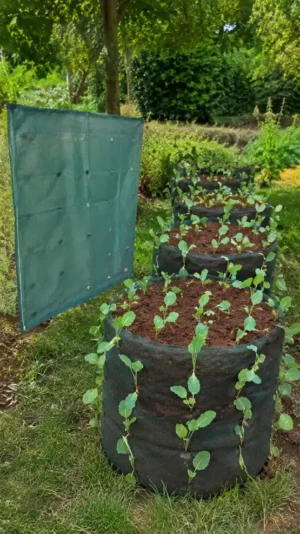
Two tiered, circular Multi-Storey Vertical Garden  filled with soil and small plants are set in a lush kitchen garden surrounded by trees and greenery.
Two tiered, circular Multi-Storey Vertical Garden filled with soil and small plants are set in a lush kitchen garden surrounded by trees and greenery.

Benefits of Multi-Storey Vertical Garden Farming

The primary benefits include a 6-to-1 yield ratio compared to flat land, a 70 percent reduction in water consumption, and the elimination of most soil-borne pests. These gardens allow for year-round organic production, provide ergonomic harvesting at waist height, and can be installed on non-arable surfaces like concrete or rocky ground.

Space efficiency is the most cited benefit. In a country where the average urban plot is 40 by 60 feet, every inch counts. A single tower can hold 120 kale plants. To get that same number of plants on the ground, you would need a 10-meter long row. This allows residents of crowded areas like Pipeline or Githurai to become self-sufficient farmers on their balconies or rooftops.

The ergonomic design is another major advantage for the aging population and people with physical limitations. Harvesting from a vertical tower happens at chest and waist level. There is no need for the constant bending and kneeling required in traditional gardening. This makes it an ideal activity for retirees in rural areas who want to remain active without the physical strain of heavy field labor.

Pest and Disease Management

Soil-borne diseases are a major cause of crop failure in Kenya. By using a controlled soil mixture in a vertical tower, you bypass the pathogens present in the local ground soil. Additionally, the vertical walls act as a barrier to crawling pests like snails and slugs. Because the plants are elevated, air circulation is significantly better, which reduces the incidence of fungal infections like powdery mildew that thrive in stagnant, humid air near the ground.

Organic Production Value

In 2026, Kenyan consumers are highly sensitive to chemical residues in their food. Vertical gardens are the easiest structures to manage organically. Because the area is small and contained, you can use natural remedies like neem oil or garlic spray effectively. You have total control over the inputs, ensuring that the manure is well-decomposed and the water is clean. This allows farmers to market their produce as “Premium Organic,” fetching higher prices in specialty markets.

Materials Needed to Build a Vertical Garden

Essential materials include UV-treated HDPE dam liners (0.5mm to 1mm thickness), high-quality sandy loam topsoil, well-rotten goat or cow manure, and a central core of ballast or a perforated PVC pipe. Required tools include a heavy-duty stapler or plastic bolts, a measuring tape, a sharp hole cutter, and a spirit level for ground preparation.

The choice of liner is the most critical decision in the setup process. Many vendors sell cheap “black polythene” which will degrade and crack within six months due to UV exposure. Insist on 0.5mm or 0.75mm HDPE (High-Density Polyethylene) liners. These are the same materials used to line professional dams and fish ponds. They are puncture-resistant and can withstand the weight of hundreds of kilograms of wet soil without stretching or tearing.

The soil medium is the second most important factor. You cannot simply use any dirt from the yard. Successful vertical farmers in 2026 use a precise mix of 2 parts topsoil to 1 part manure. The topsoil should be crumbly and rich in organic matter. Avoid heavy clay soils which will compact and prevent water from reaching the lower levels. Adding a small amount of charcoal dust or wood ash can help regulate soil pH and provide essential minerals like potassium.

Materials Checklist for a Standard Tower

Large rolls of black industrial HDPE Pond Liners material are stacked and secured with yellow straps on a flatbed trailer.
  • HDPE Liner: Approximately 4 to 5 square meters per tower.
  • Manure: 2 bags (50kg each) of well-decomposed manure.
  • Topsoil: 4 to 5 bags (50kg each) of fertile loam soil.
  • Central Core: 1 bag of ballast or a 3-inch diameter perforated PVC pipe.
  • Fasteners: Plastic bolts, nuts, or heavy-duty industrial staples.
  • Seedlings: 120 to 150 units of your chosen vegetable.

Using Old Tyres for Multi-Storey Garden Construction

Using old tyres for vertical or stacked garden systems is possible, but it is generally considered a low-cost DIY alternative rather than a professional-grade solution for modern multi-storey vertical farming in Kenya.

Structural limitations:
Old tyres are not designed for vertical agricultural loads. When stacked to higher levels, they may lose stability over time, especially when filled with wet soil, which can increase pressure and cause deformation.

Hygiene and contamination concerns:
Tyres are difficult to clean thoroughly and may retain residues over time. Under prolonged exposure to strong sunlight and heat, their material gradually degrades, making them less suitable for long-term food production systems focused on organic standards.

Pest and disease risk:
The enclosed structure of tyres can create hidden damp spaces that are difficult to monitor. These conditions may increase the risk of pest hiding spots or localized disease development if not properly managed.

Durability comparison:
While tyre-based systems are cheaper to build, they generally have a much shorter lifespan compared to UV-treated HDPE vertical garden structures, which are designed to last many years under outdoor conditions.

In Kenya, tyre-based gardens are best suited for small-scale household experiments or temporary setups. For commercial or long-term food production, engineered multi-storey vertical garden kits (JUMIA) remain the more efficient and reliable option.

Multi-Storey Vertical Garden Measurements & Design

A standard commercial vertical tower stands 1.5 meters high with 6 distinct tiers. The base ring has a diameter of 1.2 meters, with each subsequent ring decreasing by 15 centimeters. Planting holes are spaced 20cm apart in a staggered pattern, ensuring no plant is directly shaded by the one above it.

Precision in measurements ensures the structural integrity of the tower. If the base is too small for the height, the center of gravity will be too high, making the tower unstable. A 1.2-meter base provides a wide enough footprint to support a 1.5-meter height even when the soil is saturated with water. The narrowing of each layer creates the “steps” that are essential for light penetration to the lower leaves.

The spacing of the planting holes is dictated by the type of crop. For Sukuma Wiki (Kale) and Spinach, a 20cm gap is ideal to allow the large leaves to expand. For Strawberries or Herbs, you can reduce this to 15cm to maximize the number of plants. The staggered “zig-zag” layout is mandatory. This prevents water from “channeling” down one side of the tower and ensures that the root systems of different plants do not compete for the same space in the soil medium.

Standard Tier Dimensions Table

The following table provides the specific ring diameters and circumference measurements for a 6-tier professional tower.

Tier LevelDiameter (cm)Circumference (cm)Approx. Plants
1 (Base)120 cm377 cm25-30
2105 cm330 cm20-25
390 cm283 cm18-22
475 cm236 cm15-20
560 cm188 cm10-15
6 (Top)45 cm141 cm8-10

Step-by-Step Setup Guide

Setup involves leveling the site, assembling the largest HDPE ring at the base, filling it with a soil-manure mix around a central drainage core, and repeating the process for all tiers. Once the structure is stable, you cut staggered holes and transplant your seedlings, followed by a thorough initial watering.

Step 1: Site Preparation and Leveling

Choose a location that receives 6 to 8 hours of direct sunlight. In Kenya, the sun is strongest from the north-east and south-west depending on the season, so ensure no tall trees or buildings block the tower. Use a jembe and a spirit level to ensure the ground is perfectly flat. If the base is uneven, the weight of the soil will cause the tower to lean, eventually leading to a structural failure that can spill hundreds of kilograms of soil.

Step 2: Mixing the Growth Medium

On a clean concrete floor or a tarpaulin, mix your topsoil and manure. The ratio should be roughly 60 percent soil and 40 percent manure. If your soil is very heavy, add 10 percent sand to improve drainage. It is highly recommended to add a natural soil conditioner at this stage. Many Kenyan farmers use neem cake or tobacco dust to repel soil-dwelling pests like cutworms that might be lurking in the manure.

Step 3: Assembling the Rings and Core

Place the largest ring (Tier 1) on the leveled ground. In the exact center, place your 3-inch PVC pipe or start building your column of large stones. This core must run through the entire height of the tower. It acts as the “spine” of the garden, ensuring that when you pour water at the top, it reaches the bottom layers through gravity. Without this core, the water will simply soak the top few inches and leave the bottom plants to wither.

Step 4: Filling and Compaction

A Kenyan agropreneur in a blue overall using a shovel to mix red volcanic soil with dark organic manure on a clean concrete floor

Fill the first ring with your soil mix. As you fill, use your hands or a flat piece of wood to press the soil down. Do not over-compact, but ensure there are no large air pockets. Air pockets can cause the soil to “slump” later, which can tear the roots of your plants. Once the first ring is full and level, place the second ring on top, centered around the irrigation core, and repeat the process until all tiers are complete.

Step 5: Planting the Seedlings

Use a sharp knife or a specialized hole saw to cut the planting holes according to your pre-calculated spacing. Insert the seedlings at a slight downward angle. Ensure the roots are deep enough to reach the moist center of the soil mass. The best time for transplanting in Kenya is in the late afternoon (after 4 PM). This gives the young plants a full night to recover from “transplant shock” before they have to face the heat of the next day’s sun.

Optimized Irrigation for Multi-Storey Vertical Gardens (Drip Loop System)

Efficient irrigation is critical in multi-storey vertical garden farming because water must reach multiple soil layers evenly without causing runoff, waterlogging, or dry pockets. In modern setups, drip irrigation is the most reliable method, especially when designed as a loop system around the upper section of the tower.

A drip loop system delivers water slowly and consistently through emitters, allowing moisture to percolate downward through all tiers of the structure. This ensures that both upper and lower planting zones receive adequate hydration, which is often a challenge in manual watering systems.


Key Benefits of the Drip Loop System

Consistent water distribution:
Water is released gradually, allowing uniform absorption across all soil layers and reducing the risk of uneven plant growth.

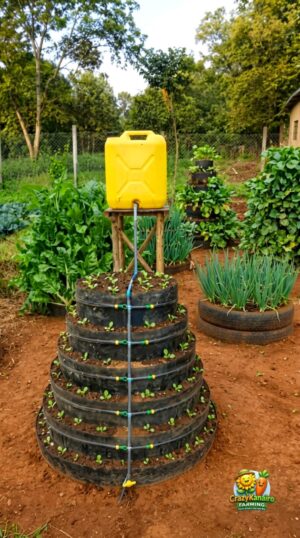
A tiered vertical garden tower with black plastic rings and an attached drip irrigation pipe for watering.

Reduced labor requirements:
Once installed, a single connected system can supply multiple towers, significantly reducing the time spent on daily watering.

Improved water efficiency:
Drip irrigation minimizes evaporation and surface runoff by delivering water directly into the root zone, making it highly suitable for dry and water-limited regions.

Better crop performance:
Stable moisture levels support healthier root development, faster growth rates, and improved yields across leafy vegetables and herbs commonly grown in vertical gardens.


Practical Setup Guidelines

  • Position the main drip line at the top or central inlet of the tower
  • Align emitters to distribute water evenly across planting zones
  • Use low-pressure water flow to allow gradual percolation through all tiers
  • Test the system after installation to confirm lower layers receive sufficient moisture
  • Flush the line periodically to prevent clogging from soil particles or organic matter

For small-scale farmers, a simple gravity-fed tank can also be used effectively, eliminating the need for pumps while still maintaining consistent water delivery.

Best Vegetables for Multi-Storey Gardens in Kenya

Leafy greens like Spinach and Sukuma Wiki (Kale) are the standard choices due to their high demand. However, Strawberries are the most profitable per square foot, while herbs like Coriander (Dhania), Parsley, and Celery offer the fastest turnover and highest margins in urban kitchen markets.

Lush green Swiss chard growing densely in a circular tiered planter garden, outdoors on a landscaped lawn.

When selecting crops in 2026, consider the market demand and growth cycle. Spinach is highly favored because it regenerates quickly; you can harvest outer leaves every few days for several months. For Strawberries, the vertical system is superior because it keeps the fruit off the ground, preventing the rot and soil-staining that reduces market value. A single tower of Chandler strawberries can produce a harvest every week for up to three years if managed correctly.

Herbs are the “hidden gems” of vertical farming. Urban residents in areas like Westlands or Kilimani are willing to pay premium prices for fresh, organic herbs. Dhania (Coriander) grows exceptionally well in the top tiers where sunlight is most intense. By staggering your planting dates across different towers, you can ensure a daily harvest that supplies local restaurants or grocery stores with a consistent product.

Crop Suitability and Yield Potential

The following table outlines the expected performance of common vegetables in a standard 6-tier vertical garden.

Crop NameBest Tier PositionHarvest FrequencyEst. Yield (Monthly)
SpinachTiers 1 to 4Weekly15 – 20 kg
Kale (Sukuma)Tiers 1 to 5Weekly12 – 18 kg
StrawberriesAll TiersEvery 3 days8 – 12 kg
CorianderTop Tier (6)Once (Pull out)80 – 100 Bunches
LettuceTiers 2 to 4Once (Head)60 – 80 Heads

Cost of Multi-Storey Vertical Garden in Kenya (2026)

A professional 6-tier HDPE kit costs approximately KES 3,200. When you add the cost of high-quality soil (KES 1,000), manure (KES 800), and seedlings (KES 600), the total startup cost per tower is roughly KES 5,600. DIY versions using recycled materials can be built for under KES 2,000 but have a much shorter lifespan.

In 2026, the price of agricultural inputs has been influenced by global supply chain shifts. While the plastic liners are relatively stable in price, the cost of high-quality organic manure has risen due to increased demand. It is often cheaper to buy manure in bulk (a 7-ton lorry) if you are setting up more than 10 towers. For small-scale urban farmers, “bagged and treated” manure from reputable agrovets is safer and more convenient, even at a higher unit price.

Seedling costs vary by variety. Standard Sukuma Wiki seedlings cost about KES 2 to KES 3 each, while hybrid Spinach or Strawberry runners can cost KES 10 to KES 30 per plant. Investing in high-quality hybrid seeds or certified runners is always more profitable in the long run. These plants are bred for disease resistance and higher yields, ensuring that your expensive tower space is not wasted on low-performing “local” varieties.

Startup Budget for a 5-Tower Commercial Unit

This budget reflects realistic 2026 pricing for a small commercial venture in a peri-urban area.

ItemQuantityUnit Price (KES)Total (KES)
UV-Treated HDPE Kits5 Units3,20016,000
Topsoil (Transported)20 Bags2505,000
Goat Manure (Treated)10 Bags5005,000
Hybrid Seedlings600 Units53,000
Installation Labor2 Days1,0002,000
GRAND TOTAL31,000

Profitability of Multi-Storey Vertical Farming

Profitability is high due to the low “cost-per-plant” maintenance. A 5-tower setup can generate a gross monthly income of KES 8,000 to KES 12,000. With an initial investment of KES 31,000, the farmer achieves a break-even point within 4 months, after which 90 percent of the revenue is pure profit.

The real money in vertical farming comes from market timing and direct-to-consumer sales. If you sell your vegetables to a broker, you might receive KES 30 per kilogram. If you sell directly to your neighbors or through a community WhatsApp group, you can easily fetch KES 70 per kilogram. In 2026, the “farm-to-fork” movement in Kenya is strong, and urban dwellers are willing to pay a premium for the convenience of having fresh greens delivered to their doorstep.

Scaling is the next step for profitability. Once a farmer masters the management of 5 towers, they can easily scale to 50 or 100 towers on a small plot of land. At this scale, the operation becomes a full-time commercial enterprise capable of supplying supermarkets or hospitals. The labor requirement does not increase linearly; one person can easily manage 50 towers by spending just 2 hours a day on watering and basic maintenance.

Return on Investment (ROI) Example

Consider a single tower planted with 120 spinach plants. If each plant yields 150g of leaves per week, that is 18kg per week. At KES 50 per kg, the tower earns KES 900 per week, or KES 3,600 per month. Since the monthly operating cost (water and fertilizer top-up) is less than KES 300, the net profit is KES 3,300 per month. The KES 5,600 setup cost is recovered in less than 8 weeks of harvesting.

Common Mistakes Farmers Make

The three most common failure points are using fresh (hot) manure that kills roots, failing to install a central irrigation core leading to dry bottom layers, and over-watering which causes soil compaction and fungal diseases. Neglecting sunlight requirements is also a major cause of stunted growth.

Using fresh manure is a catastrophic mistake. As fresh manure decomposes, it generates intense heat and releases ammonia gas, both of which will “burn” the tender roots of seedlings within 48 hours. Always ensure your manure is at least six months old or has been professionally composted. If it still smells like animal waste, it is not ready for a vertical tower.

Many farmers try to save money by omitting the central irrigation core. They believe they can simply water the top of the tower. However, soil acts as a powerful filter. By the time the water reaches the third tier, it has all been absorbed by the upper soil. The bottom three tiers will remain bone-dry, and the plants will eventually die. The gravel or ballast core is a non-negotiable structural requirement for even water distribution.

The Problem of “Leggy” Plants

If your plants have long, thin stems and very small, pale leaves, they are “leggy.” This is a sign of light starvation. Many urban farmers place towers on balconies that only get 2 hours of sun. Plants will literally stretch themselves to death trying to find light. If your site is shaded, you must choose shade-tolerant crops like mint or parsley, or move the towers to a rooftop or an open garden area.

Where to Buy Multi-Storey Vertical Gardens in Kenya

Authorized kits can be purchased from GrandAgro, Elgon Kenya, and Real IPM. Numerous fabricators also list units on Jumia and Jiiji. Always verify that the material is UV-treated HDPE dam liner and not ordinary black polythene before completing the transaction.

When sourcing your kit, look for manufacturers who offer installation services. While the setup is straightforward, having a professional do the first one ensures you learn the nuances of soil compaction and core placement. In regions like Mt. Kenya and Rift Valley, local agricultural cooperatives often stock these kits as part of their member support programs. Buying through a cooperative often comes with the added benefit of technical advice and market linkages.

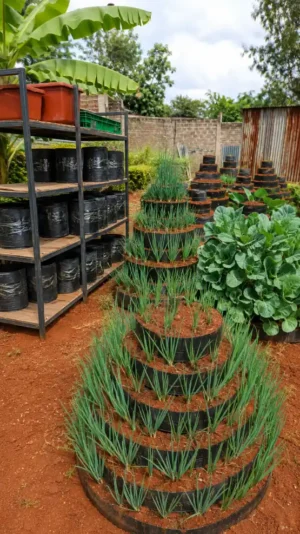
Lush green onions and leafy vegetables grow in tiered, vertical garden structures within a sunny outdoor space featuring red soil and a person tending to the plants in the background.

Professional Installation Services

For farmers or institutions looking for a ready-to-use, properly engineered setup, professional installation services are available. This is especially useful for commercial farms, schools, and urban projects where structural stability, correct measurements, and efficient irrigation design are critical.

One example of such service providers in Kenya is Vertical Tech Garden, which specializes in designing and installing multi-storey vertical garden systems tailored for different space sizes and production goals.

You can view their services here:
Vertical Tech Garden

Hiring professionals can help ensure:

  • Correct structural assembly and balance
  • Proper soil layering and drainage design
  • Efficient irrigation integration
  • Faster setup time with reduced trial-and-error risks

This option is ideal for users who want a commercial-ready system without handling the technical installation process themselves.

Multi-Storey Vertical Garden vs Other Farming Methods

Vertical gardens outperform sack gardens in durability (10 years vs 6 months) and outperform raised beds in space efficiency (6x more plants). They are superior to hydroponics for beginners because they are low-tech and do not require expensive nutrient solutions or constant electricity for pumps.

Compared to greenhouse farming, multi-storey gardens have a much lower entry barrier. A small greenhouse costs upwards of KES 150,000, whereas a vertical farm of equal production capacity can be started for KES 40,000. Furthermore, vertical towers do not suffer from the “heat-trap” issues of poorly ventilated greenhouses in hot areas like Kisumu or Garissa. They are naturally ventilated and easy to manage for someone with no formal agricultural training.

The comparison with hydroponics is also important. While hydroponics can yield faster, it is vulnerable to power outages and requires precise chemical balancing. Multi-storey gardens use soil, which acts as a buffer. If you forget to water for one day, the soil retains enough moisture to keep the plants alive. In a hydroponic system, a pump failure of just four hours can kill an entire crop. For the average Kenyan household, the soil-based vertical garden is the more robust and reliable technology.

Risks & Reality Check

Vertical farming is not a “get rich quick” scheme. It requires daily discipline. Pests like aphids and whiteflies can spread rapidly in a high-density environment. If you do not inspect your towers every morning, a small infestation can ruin 150 plants in a matter of days. You must be prepared to use organic sprays regularly to keep the crop healthy.

There is also the risk of market saturation. If everyone in your estate is growing Sukuma Wiki, the price will drop. Successful farmers in 2026 diversify their towers. One might have spinach, another strawberries, and a third traditional vegetables like Managu or Terere. This diversification ensures that you always have something to sell, regardless of the local market fluctuations.

Finally, consider the weight. A fully loaded and watered vertical tower can weigh over 500 kilograms. If you are planning a rooftop farm on an older building, you must consult a structural engineer first. Placing ten towers on a balcony not designed for such loads can lead to structural cracks or a catastrophic collapse of the balcony. Ground-based installations are always the safest option for heavy towers.

What is a multi-storey vertical garden in Kenya?

It is a conical farming structure made from HDPE liners that allows for high-density vegetable production on multiple vertical levels or “storeys.”

How do you set up a multi-storey vertical garden step by step?

Level the ground, assemble HDPE rings from widest to narrowest, fill with a soil-manure mix around a central gravel core, cut holes, and transplant seedlings.

How much does a multi-storey vertical garden cost in Kenya in 2026?

A complete 6-tier setup including the kit, soil, manure, and hybrid seedlings costs approximately KES 5,600 per tower.

What are the measurements of a standard multi-storey vertical garden?

The height is 1.5 meters, the base diameter is 1.2 meters, and it typically features 6 tiers with 15cm to 20cm plant spacing.

Which vegetables grow best in a multi-storey vertical garden?

Spinach, spring onions, Kale, Strawberries, Lettuce, and Herbs like Coriander and Parsley are the most successful and profitable crops.

How many plants can one multi-storey vertical garden hold?

Depending on the crop and tier configuration, a single tower can comfortably accommodate between 100 and 150 plants.

Is multi-storey vertical gardening profitable in Kenya?

Yes, a well-managed tower can yield a net profit of KES 3,000 per month, paying for its setup cost within the first 8 to 10 weeks of harvest.

Where can I buy a multi-storey vertical garden in Kenya?

Kits are available from GrandAgro, Elgon Kenya, and Real IPM, as well as verified agricultural sellers on Jumia and Jiiji.

How long does a multi-storey vertical garden last?

When constructed with 0.5mm+ UV-treated HDPE dam liners, these structures are designed to last between 10 and 12 years.

What is the difference between a sack garden and a multi-storey vertical garden?

Vertical gardens use durable HDPE plastic and an engineered conical design for better light and water distribution compared to temporary, rot-prone bags.

Comments

0 Comments Write a comment

Leave a Reply