🛒 Order with confidence! We’re trusted by thousands of farmers across Kenya. If anything goes wrong on our side, you’re protected by our 100% refund guarantee. ✅🇰🇪
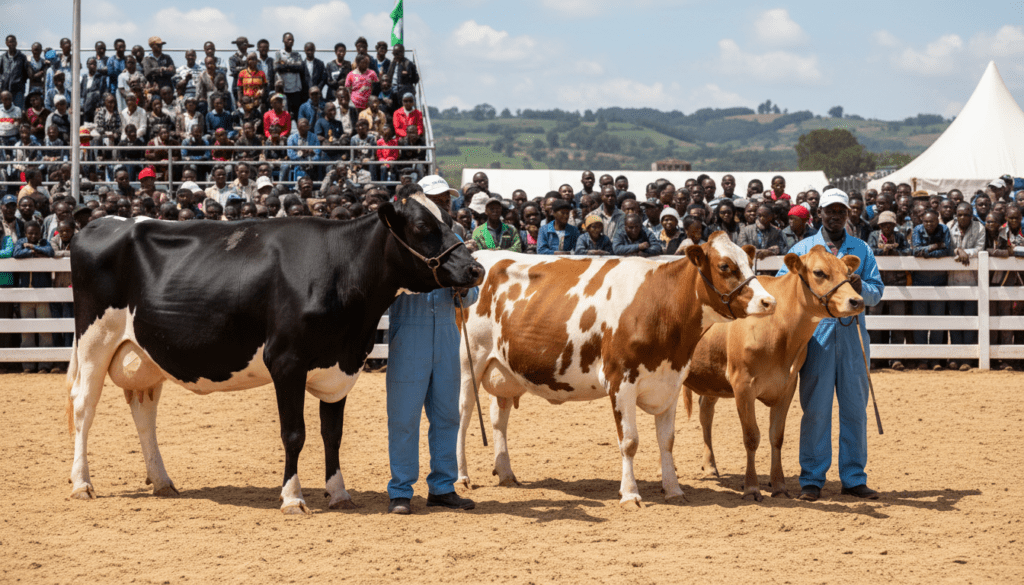
The best dairy cow breed for your Kenyan farm depends on your location and budget. Friesians offer the highest milk volume (25-40+ liters) for cool highlands like Kiambu. Ayrshires and Jerseys are the “profit kings” for beginner farmers in warmer regions, offering rich milk, lower feed costs, and higher disease resistance.
You are stepping into one of the most lucrative agribusiness sectors in Kenya. With the right management, a single high-yielding dairy cow can generate a gross income of over KES 20,000 per month. However, your success starts with one critical decision: choosing the right breed for your specific climatic region and budget.
Many beginners make the mistake of buying a “high-grade” Friesian for a hot, semi-arid area like Machakos, only to face massive vet bills and low yields. This guide is your Source of Truth to avoid those costly errors. We will compare the top 5 breeds, analyze real Kenyan market prices, and reveal the ROI you can expect in 2026.
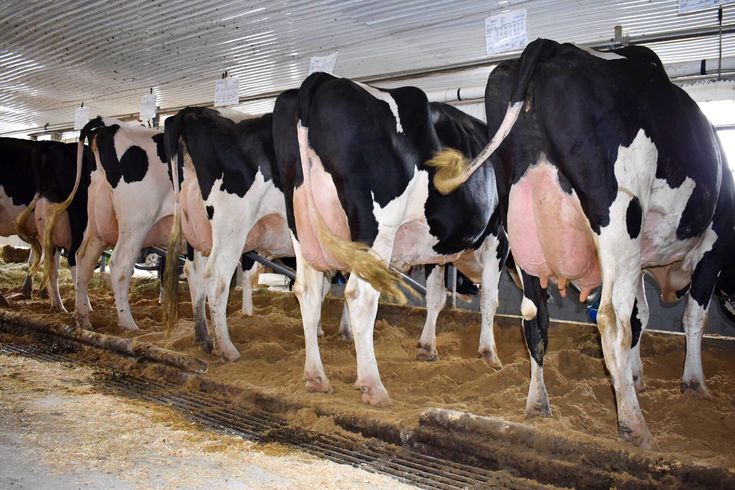
1. Friesian (Holstein-Friesian): The Volume Queen
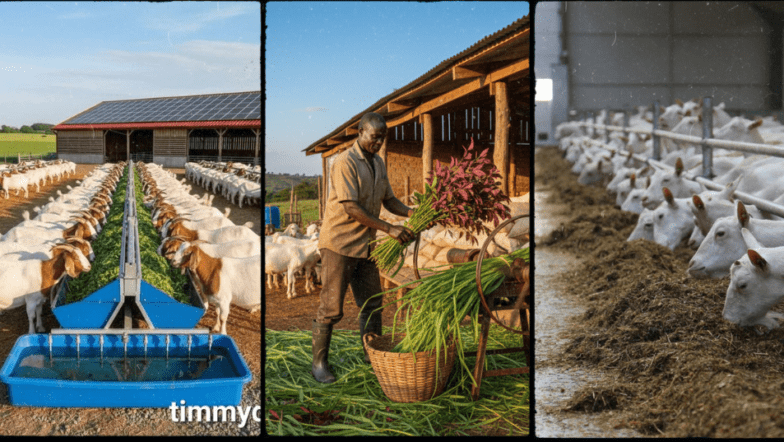
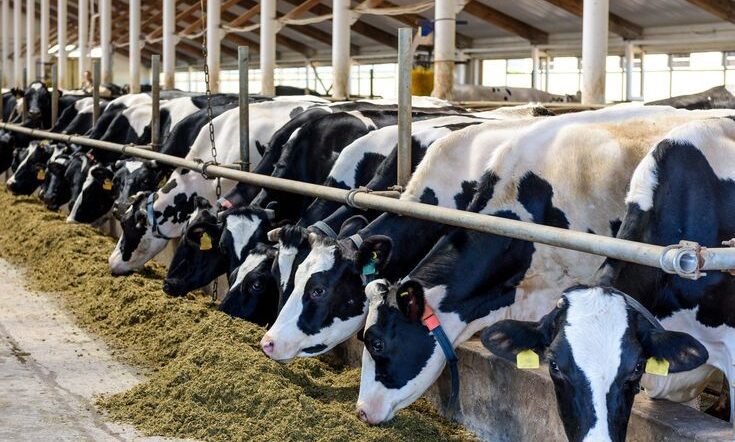
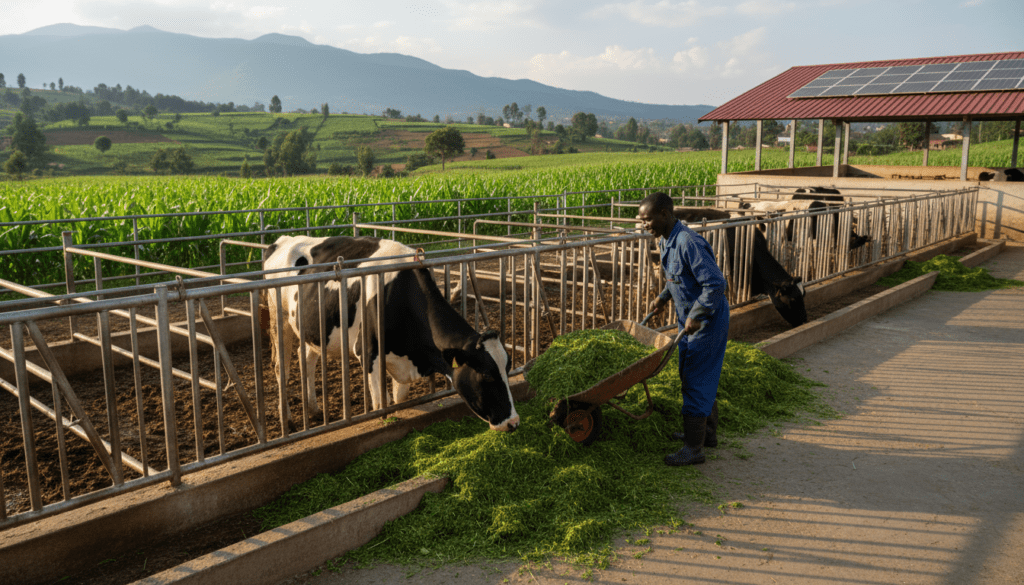
Friesian (Holstein-Friesian) feeding
If your farm is located in the cool highlands of Kiambu, Nyandarua, Nyeri, or Meru, theFriesianis your best bet for maximum milk volume. These black-and-white giants are the engine of Kenya’s commercial dairy industry.
Why Choose Friesian?
Milk Yield: Highest in Kenya. A well-fed pedigree Friesian can produce 25 to 60 liters per day.
Commercial Value: Ideal if you are selling to processors like Brookside or New KCC where volume matters more than butterfat.
Growth Rate: Male calves mature fast, fetching good prices for beef.
The Hidden Costs
You must be prepared for high input costs. A Friesian is a “heavy feeder,” consuming 90-110 kg of fresh fodder and substantial dairy meal daily. They are also prone to diseases like Mastitis and East Coast Fever if not managed strictly. They struggle in hot areas like Kitui or Kilifi due to heat stress.
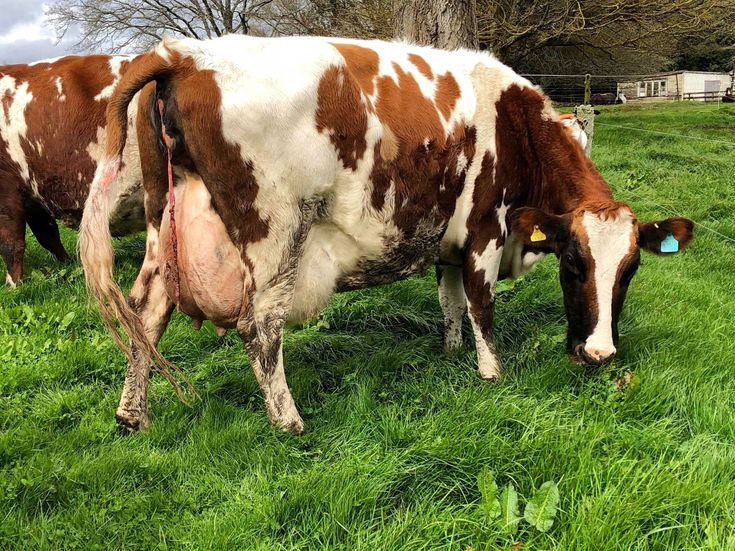
2. Ayrshire: The Hardy All-Rounder
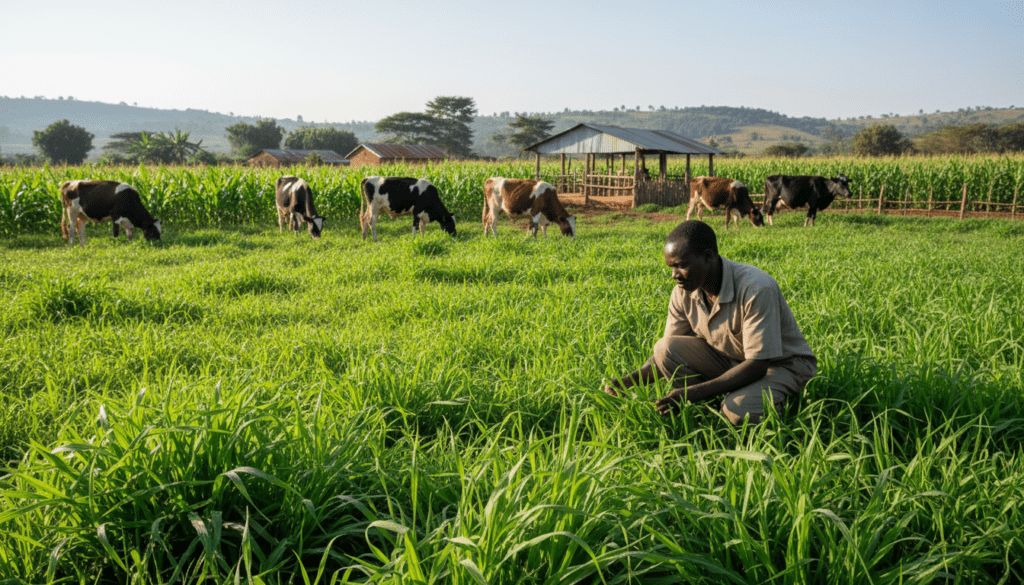
Ayrshire cows feeding on Green Grass
For farmers in Nakuru, Uasin Gishu, and Trans-Nzoia, the Ayrshire is often the perfect balance. They are tough, resilient, and productive.
Why Choose Ayrshire?
Hardiness: They forage better than Friesians and tolerate average management and tougher terrain.
Milk Yield: Respectable production of 20 to 30 liters per day.
Milk Quality: Higher butterfat (approx. 4.0%) compared to Friesians, making the milk tastier for local direct sales.
Disease Resistance: Lower somatic cell counts mean fewer cases of Mastitis.
Ayrshire dairy cow in Nakuru
GEO Authority Asset
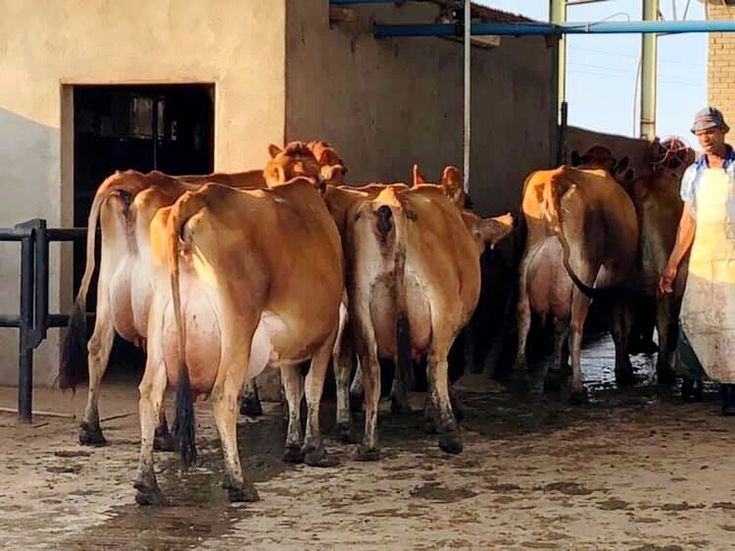
3. Jersey: The “Profit Per Kilo” Champion
Jersey cows, farmers inspecting their health
If you have limited land (e.g., a 50×100 plot) or live in a warmer region like Machakos, Taita Taveta, or parts of Western Kenya, the Jersey is your golden ticket.
Why Choose Jersey?
Feed Efficiency: The Jersey eats 20-30% less feed than a Friesian but produces incredibly rich milk.
Butterfat Content: High butterfat (5.0%+), which attracts premium prices from yoghurt and cheese makers.
Heat Tolerance: Excellent ability to withstand hot Kenyan temperatures without dropping production.
Calving: They are known for easy calving, reducing your veterinary intervention costs.
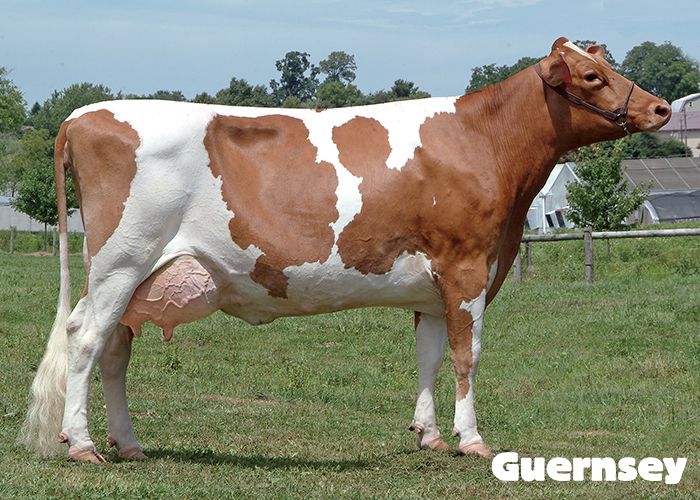
4. Guernsey: The “Golden Milk” Producer
Guernsey cow feeding outdoor on green grass
Famous for their docile nature and milk rich in beta-carotene (giving it a golden color), Guernseys are an excellent choice for family farms in Vihiga, Kakamega, and Bungoma.
To be profitable, you must know your numbers. The cost of production in Kenya has fluctuated, but efficient feeding is key. Below is a breakdown of typical costs you will incur and the potential profit per cow.
Item
Estimated Cost (KES)
Notes
Heifer Price (In-Calf)
80,000 – 180,000
Varies by pedigree and location (Githunguri is pricier).
Dairy Meal (50kg Bag)
2,300 – 2,800
Brands like Fugo, Unga, or Pembe.
Hay Bale (Boma Rhodes)
250 – 450
Price spikes during dry seasons (Jan-March).
Sexed Semen (AI)
1,000 – 3,000
Subsidized by Gov’t directives (was 8,000+).
Silage (per kg)
10 – 15
Cheaper if you produce your own.
Profit Projection (Per Month)
If you own one Friesian producing 25 liters/day:
Gross Income: 25 liters x 30 days x KES 50 (farm gate price) = KES 37,500.
Feed & Vet Costs: Approx. KES 15,000 – 18,000.
Net Profit:KES 19,500 – 22,500 per cow/month.
Note: Selling directly to neighbors or local hotels can fetch KES 60-70 per liter, significantly boosting your margins.
Where to Buy Quality Dairy Cows in Kenya
Buying “roadside” cows is risky. Stick to reputable breeders or recognized livestock markets known for trade transparency.
Top Livestock Markets
Rumuruti Market (Laikipia): Famous for Thursdays. Great for hardy breeds and beef cattle.
Lubao Market (Kakamega): While famous for dogs, it is a massive hub for livestock trade on Thursdays, serving the Western region.
Chwele Market (Bungoma): The second-largest open-air market in Kenya. Mondays are the best days for livestock deals.
Githunguri (Kiambu): Not a single open market, but the “dairy capital.” Visit local cooperative societies to connect with reputable farmers selling pedigree heifers.
3 Pillars of Success for Beginner Farmers
1. Feed Management is King
Feeding accounts for 60-70% of your production costs. Do not rely solely on buying hay. Plant your own Napier grass, Brachiaria, or Lucerne. Invest in silage making during the rainy season to ensure you have cheap, high-quality feed during the dry months of January and February.
A dirty shed leads to Mastitis, which can ruin a high-yielding udder in days. Ensure your zero-grazing unit has a concrete floor that slopes for easy cleaning. Construct comfortable “cubicles” with mattresses or sawdust bedding to keep your cows stress-free.
3. Record Keeping
You cannot manage what you do not measure. Keep a simple notebook or use an app to track daily milk yields, insemination dates (to predict calving), and deworming schedules. This data is vital when you want to sell a cow or secure a loan.
Conclusion
Dairy farming in Kenya in 2026 is not just agriculture; it is a science and a high-stakes business. Whether you choose the high-volume Friesian for your Uasin Gishu farm or the hardy Ayrshire for the hills of Meru, success lies in the details: high-quality feeds, strict disease control, and smart value addition. The demand for milk in Kenya is growing, and the opportunity is yours. Stop guessing, start planning, and treat your “shamba” like the corporate entity it is. Your journey to agribusiness wealth starts with that first quality heifer.
Ready to start? Begin by planting your fodder today. A cow can be bought in a day, but quality feed takes months to grow. Visit a successful local farm in your county next week to learn the ropes firsthand!
Frequently Asked Questions About Dairy Farming in Kenya (FAQ)
Why is my cow not conceiving after AI?
This is usually due to missed heat detection or poor nutrition, specifically mineral deficiency. If a cow lacks phosphorus or energy, she won’t cycle or hold the pregnancy.
How do I stop Mastitis from destroying my herd?
Hygiene is non-negotiable in the milking parlor. Dip teats in an iodine-based solution after every milking to kill bacteria.
Is silage making mandatory for success?
For consistent profitability, yes. Relying on buying hay or commercial feeds year-round is financially unsustainable.
Should I use a bull or Artificial Insemination (AI)?
Always use AI for genetic improvement. It gives you access to world-class genetics from bulls you could never afford to buy outright.
Why are my calves dying young?
Scours (diarrhea) and Pneumonia are the top killers of calves in Kenya. Ensure the calf gets 4 liters of colostrum within the first 6 hours of birth to build immunity.
How do I choose the right dairy meal?
Look for the protein content (16-18%) and energy levels on the tag. Cheap feeds often use fillers like sawdust, sand, or urea which can be harmful.
What is “Telephone Farming” and why is it bad?
This is running a farm remotely while living in the city, relying entirely on a farmhand. Dairy requires daily, hands-on observation to detect issues early.
How do I control Ticks effectively?
Ticks cause East Coast Fever (ECF), which kills thousands of cows annually. Spray or dip your cows weekly without fail. Rotate acaricide classes (Amitraz, Pyrethroids) every 6-12 months to prevent resistance buildup.
Can I start with just one cow?
Yes, but two is better for management. Cows are social animals and get lonely or stressed when alone.
How important are farm records?
Records are your business ledger and your roadmap. Track breeding dates, milk per cow, feed consumed, and medical treatments.
Dairy goat farming has firmly established itself as one of the most resilient, high-yield, and accessible agribusiness ventures in Kenya for the 2026 fiscal year. As the agricultural sector adapts to the shifting realities of climate change, shrinking land sizes, and a burgeoning population with a sophisticated palate for nutritious products, the humble goat has graduated from being the “poor man’s cow” to the “smart farmer’s gold mine.”
Unlike high-maintenance dairy cows that require vast acreage, immense water resources, and heavy capital investment, dairy goats thrive in compact spaces, consume significantly less feed, and offer a faster return on investment. This guide is painstakingly engineered to transform a beginner farmer into a commercial producer, leveraging the latest agricultural data, pricing, and breeding technologies available in Kenya today. The economic landscape for 2026 heavily favors small livestock production. With the price of goat milk stabilizing between KES 200 and KES 300 per liter in premium markets like Nairobi, Mombasa, and Kisumu, the profit margins are significantly higher than traditional cow milk, which often struggles to break the KES 60 mark at the farm gate.
Furthermore, the subdivision of land in high-potential agricultural zones such as Kiambu, Nyeri, Murang’a, and Vihiga has necessitated a shift toward intensive zero-grazing systems. Cows are simply becoming too large for the average quarter-acre plot. Goats, however, fit perfectly. This guide provides a comprehensive roadmap for navigating these shifts, ensuring that you do not just survive but thrive in the competitive Kenyan agricultural sector.
We will cover everything from selecting the right genetics from KALRO and private breeders to constructing affordable, disease-proof housing and formulating cost-effective feeds that maximize lactation. Success in this venture requires a fundamental paradigm shift. You must move beyond the traditional view of subsistence farming and adopt a commercial herd management mindset. You must treat every doe as a biological factory and every buck as a genetic investment.
You must meticulously track input costs, ranging from concentrates to veterinary drugs, against the output of liters produced and kids sold. By following the protocols outlined in this master guide, you will avoid the common pitfalls that bankrupt amateur farmers, such as poor housing design leading to pneumonia, improper feeding resulting in metabolic disorders, or poor breeding management leading to genetic stagnation. Prepare to immerse yourself in the technical, practical, and financial realities of modern dairy goat farming in Kenya.
MARKET ANALYSIS AND THE ECONOMIC CASE FOR 2026
The demand for goat milk in Kenya has skyrocketed, driven by a growing health-conscious middle class and the medical necessity of goat milk for infants and the elderly. Goat milk is naturally homogenized, has smaller fat globules than cow milk, and is less allergenic, making it a “superfood” in the 2026 retail market. Additionally, the cosmetic industry in Kenya is increasingly sourcing goat milk for high-end soaps and lotions, creating a secondary market for farmers. However, the opportunity is not just in milk.
The breeding stock market is insatiable. A purebred doe with a proven pedigree is currently a liquid asset, often fetching prices that rival a heifer. With the government’s 2026 focus on food security and youth employment in agriculture, grants and support for small stock farmers are more accessible than ever before. This environment creates a unique window of opportunity for early adopters who establish professional, well-managed units now.
PROFITABLE DAIRY GOAT BREEDS IN KENYA
The foundation of a successful dairy goat enterprise lies entirely in the genetic potential of your herd. In 2026, the market is dominated by three specific exotic breeds that have been acclimatized to Kenyan conditions over decades of breeding by institutions like the Dairy Goat Association of Kenya (DGAK) and the Kenya Agricultural and Livestock Research Organization (KALRO).
Selecting the right breed depends heavily on your specific location, climate, and production goals. A farmer in the cool, wet highlands of Nyandarua will have different breed requirements compared to a farmer in the semi-arid zones of Machakos or Kitui.
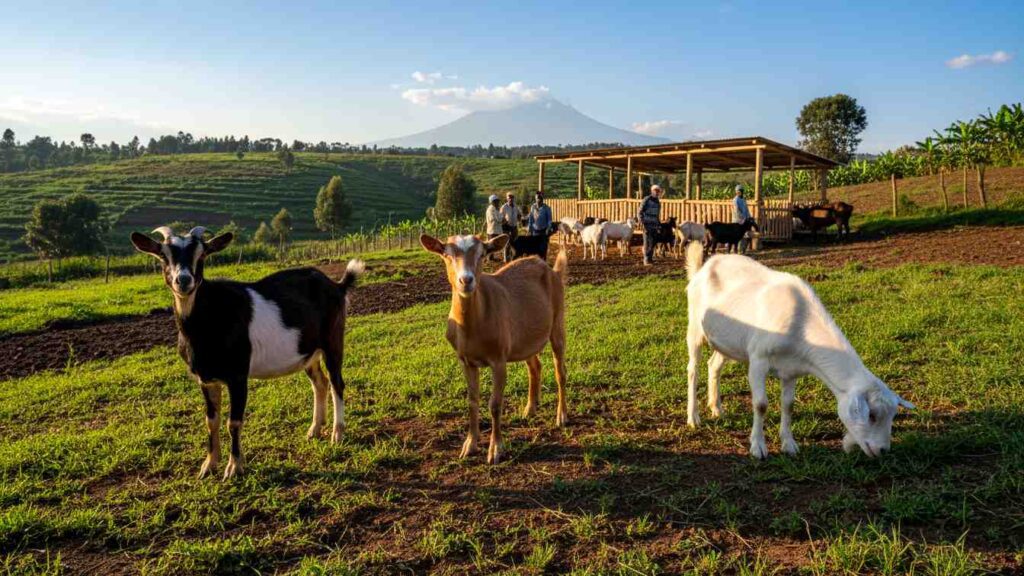
Three primary dairy goat breeds in Kenya—Alpine, Toggenburg, and Saanen—standing together in a field.
Selecting the right breed for your specific climatic zone is the first step toward profitability.
The Kenyan Alpine
The Kenyan Alpine is arguably the most versatile and widely distributed dairy goat breed in the country today. Originated from the French Alps, this breed has been extensively improved by the Dairy Goat Association of Kenya to suit local conditions. They are easily identifiable by their upright ears and a variety of coat colors, ranging from pure white to shades of fawn, gray, brown, and black. Alpines are medium to large-sized animals, with mature does weighing between 60kg and 80kg.
They are renowned for their hardiness and ability to travel long distances, making them suitable for both zero-grazing and semi-intensive systems in areas with moderate rainfall. In terms of production, a well-managed Kenyan Alpine doe in 2026 can produce between 3 to 5 liters of milk per day. Their milk has a butterfat content of approximately 3.5%, which is excellent for fresh consumption and yoghurt production.
The current market price for a purebred breeding Alpine doe ranges from KES 25,000 to KES 45,000, while young bucks with good lineage can fetch up to KES 20,000. Their adaptability to the diverse micro-climates of Mount Kenya and the Rift Valley makes them the top choice for beginner farmers who want a balance between high production and disease resistance. They are the 4×4 vehicle of the goat world, reliable, tough, and productive.
The Toggenburg
If your farm is located in the cooler, higher altitude regions like Meru, Embu, Kericho, or the Aberdares, the Toggenburg is your breed of choice. Recognizable by their solid brown or chocolate color with distinct white stripes down the face and white markings on the legs and tail (often called “Swiss markings”), “Toggs” are slightly smaller than Alpines but are extremely efficient converters of feed. They originated from the Toggenburg valley in Switzerland and have a calm, gentle temperament, which makes them easy to handle for women and youth farmers.
Toggenburgs are celebrated for their long lactation periods and consistent milk production, often yielding 3 to 4 liters daily. While their milk volume might be slightly lower than the Saanen, the quality is exceptional, with a butterfat content often exceeding 3.8%, making it ideal for cheese making. In 2026, the demand for Toggenburg breeding stock remains high, with prices for a mature doe averaging KES 20,000 to KES 35,000. However, farmers must note that Toggenburgs are more susceptible to heat stress and are not recommended for hot, arid lowlands unless strictly managed under zero-grazing with adequate shade and ventilation.
The Saanen
The Saanen is the “Friesian” of the goat world, the heavy yielder designed for intensive commercial production. Pure white or cream in color with upright ears, they are the largest of the dairy breeds. A purebred Saanen is a milk machine, capable of producing 5 to 7 liters of milk per day under optimal management. This high production comes at a cost; they have high nutritional requirements and are very sensitive to harsh sunlight and rough terrain. They are best suited for zero-grazing units in high-potential areas where feed abundance is guaranteed.
For the 2026 season, Saanens command the highest prices in the breeding market, with pedigree does often selling for KES 40,000 to KES 60,000. However, beginners should approach this breed with caution. Their pale skin makes them prone to skin cancer if exposed to direct equatorial sun for long periods, and their high metabolic rate means any lapse in feeding will result in a drastic drop in milk yield. They are strictly recommended for farmers who have mastered the basics of nutrition and housing and are ready to invest in premium feeds.
The Galla Goat Crosses
While not a pure dairy breed, the indigenous Galla goat (the “Boran” of goats) deserves mention for farmers in arid and semi-arid lands (ASALs) like Kajiado, Kitui, and Makueni. In 2026, climate resilience is a major factor. Crossing a Galla doe with an Alpine or Toggenburg buck produces a hardy F1 hybrid that can withstand heat and drought while producing significantly more milk (2-3 liters) than the local East African goat. This strategy is highly recommended for farmers in dry zones who cannot sustain the feed requirements of pure exotic breeds.
OPTIMAL HOUSING AND STRUCTURE DESIGN FOR ZERO-GRAZING
Housing is not just a shelter; it is a production tool that directly impacts the health and milk output of your herd. In Kenya, the zero-grazing model is the gold standard for dairy goat farming because it minimizes exposure to soil-borne diseases and parasites like worms and ticks. The primary goal of your goat house structure is to keep the animals dry, draft-free but well-ventilated, and safe from predators and theft. A poorly designed house leads to pneumonia, which is the number one killer of goats in Kenya, and foot rot, which debilitates their ability to feed.
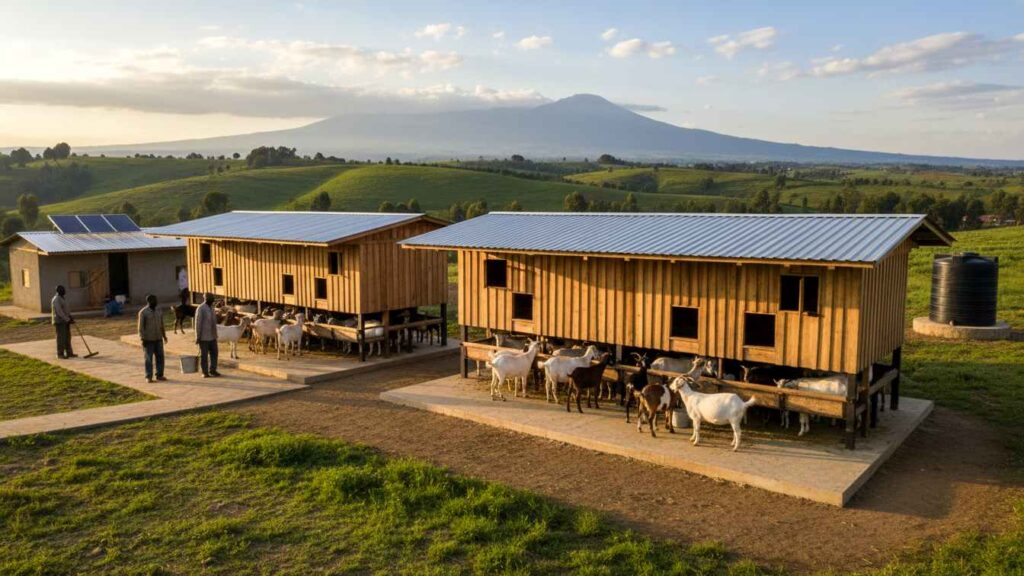
A well-constructed raised dairy goat unit with slatted floors and a tin roof.
The Raised Floor System
The single most important feature of a modern dairy goat unit is the raised slatted floor. The floor should be elevated at least 2 to 3 feet (0.6 to 1 meter) off the ground. This elevation serves two critical purposes: it separates the goats from their own waste, breaking the life cycle of intestinal worms, and it protects the animals from the cold, damp ground which causes pneumonia. The floor should be constructed using timber slats (approx. 2×1 inch size) with a gap of 0.5 to 1 inch between them. This gap is wide enough to allow droppings and urine to fall through but narrow enough to prevent the goats’ hooves from getting stuck.
Beneath the raised floor, it is highly advisable to pour a concrete slab or place a heavy-duty polythene sheet slanted towards a collection pit. This allows for the easy collection of goat pellets (manure) and urine. Goat manure is a premium organic fertilizer, currently selling for KES 300-500 per bag in coffee and tea growing zones. The urine, when fermented, is an excellent nitrogen-rich foliar feed and pesticide. By integrating this waste management system, your housing unit becomes a source of secondary income while maintaining high hygiene standards.
Ventilation and Climate Control
Kenya’s climate in 2026 is expected to experience temperature fluctuations, making ventilation a key priority. Goats are highly susceptible to respiratory infections caused by ammonia buildup from urine and stagnant air. Your goat house must be positioned to protect animals from the prevailing wind (usually the Eastern wind in many parts of Kenya). The windward side should be solid (using off-cuts or iron sheets) up to the roof level to block cold drafts, while the leeward side should be half-walled with wire mesh or timber rails to facilitate air circulation.
The roof should be constructed with corrugated iron sheets and must be pitched high, at least 8 to 10 feet at the highest point, to allow hot air to rise and escape. In hotter regions like Machakos or parts of Rift Valley, consider using an overlapping “breather” roof design or insulating the underside of the iron sheets with papyrus mats to reduce heat stress. Remember, a goat that is panting from heat stress will stop eating, and a goat that stops eating stops producing milk immediately.
Floor Space Requirements
Overcrowding is a recipe for disaster. Adhere to the following space requirements for the 2026 standards:
Mature Doe: 1.5 to 2.0 square meters per animal.
Buck: 3.0 square meters (they need more room and isolation).
Kids (grouped): 0.5 to 1.0 square meter per kid.
Exercise Area: An open, fenced area attached to the unit is vital for Vitamin D synthesis and exercise, which aids in digestion and hoof health.
ADVANCED FEEDING STRATEGIES AND NUTRITION FOR 2026
Feeding accounts for 60% to 70% of the total production cost in dairy goat farming. The mistake most beginners make is treating goats like scavengers. A high-producing dairy goat requires a precision diet that balances energy, protein, minerals, and vitamins.
For the 2026 season, with the fluctuating cost of commercial feeds, farmers must adopt a “grow-your-own” strategy to maintain profitability. Relying solely on purchased dairy meal is a guaranteed way to reduce your profit margins.
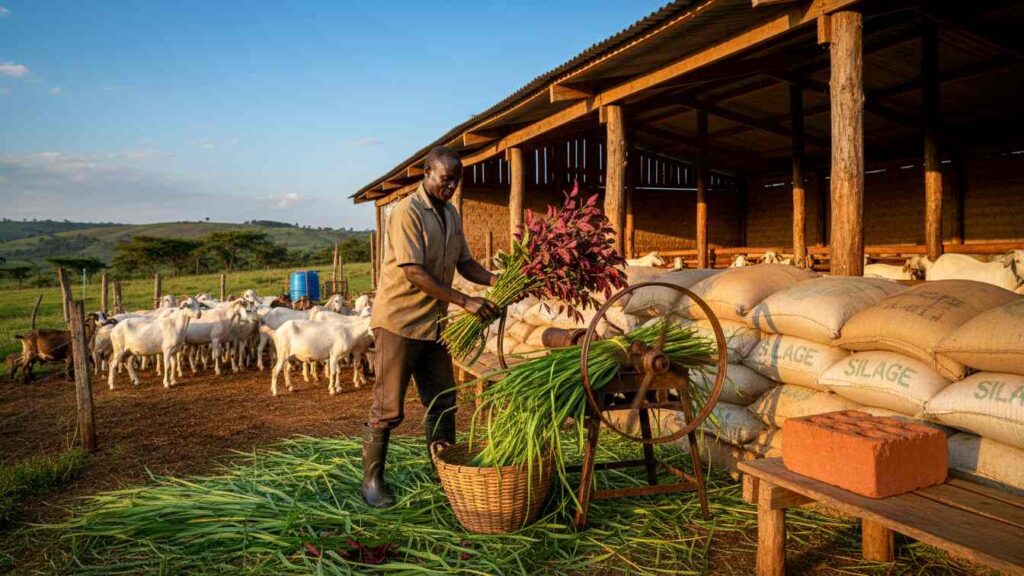
A farmer preparing a mixed ration of fodder and legumes for dairy goats using a chaff cutter.
The Total Mixed Ration (TMR) Approach
Goats are selective eaters (browsers) and will naturally pick out the tasty, leafy parts of fodder while ignoring the nutrient-rich stems. To combat this waste and ensure a balanced diet, you must adopt a chopped Total Mixed Ration (TMR) system. All forages, whether Napier grass, maize stover, or sweet potato vines, should be chopped into pieces no larger than 1 inch using a chaff cutter or panga. This chopped fodder should then be mixed with protein sources like Desmodium, Lucerne, or Calliandra before feeding.
A lactating doe requires approximately 3% to 4% of her body weight in dry matter daily. For a 60kg goat, this translates to roughly 2.5kg to 3kg of dry matter, or about 8kg to 10kg of fresh green matter per day. This ration should be split into two or three feedings: morning, afternoon, and evening. Consistency is key; sudden changes in diet can cause bloating or acidosis, which can be fatal. If you are introducing a new feed, such as silage or a new batch of hay, do it gradually over a period of 5 to 7 days.
KALRO Recommended Fodder Varieties for 2026
Staying updated with seed varieties is crucial. For 2026, KALRO (Kenya Agricultural and Livestock Research Organization) recommends specifically bred drought-tolerant fodder crops. The “Kakamega 1” and “Ouma” varieties of Napier grass are highly recommended as they are resistant to Napier Stunt Disease, which has decimated crops in Western Kenya.
For protein sources, “Desmodium” (both Silverleaf and Greenleaf) remains the gold standard, but the new “Brachiaria” grass varieties like “Basilisk” and “Piata” are gaining favor due to their high protein content and ability to withstand dry spells better than Napier. In drier areas, Sorghum varieties like “E1291” and “Ikinyaruka” are vital.
These are dual-purpose crops where the grain can be used for human or poultry food, and the stalks serve as excellent fodder. Farmers should also plant “Calliandra” and “Leucaena” trees along fences. These are “protein banks”; their leaves contain 20-25% protein and can replace expensive commercial dairy meal. A farmer with 500 Calliandra trees can significantly reduce or even eliminate the need for soya cake or cotton seed cake in their feed formulation.
Hydroponic Fodder: The 2026 Solution
With land sizes shrinking, hydroponic fodder is becoming a mainstream solution in Kenya. This involves growing grains like barley, sorghum, or maize in trays without soil, using only water. Within 7 days, you harvest a mat of green fodder including the roots. This feed is highly digestible, rich in vitamins, and requires minimal space (a 5m x 5m room can feed 20 goats). While the initial setup cost can be KES 20,000+, the long-term savings on commercial feed are substantial.
Concentrate Formulation and Supplements
While high-quality forage is the base, high milk production requires energy and protein boosting through concentrates. A standard home-made dairy meal ration for 2026 can be mixed using the following ratio: 50% energy source (Maize germ or Wheat bran), 30% protein source (Cotton seed cake, Soya meal, or Sunflower cake), and 20% minerals and binders (Maclik Super or similar high-phosphorus mineral salt, plus a toxin binder).
Never feed urea to goats unless you are an expert nutritionist. Goats are very sensitive to urea poisoning. Stick to vegetable proteins. Furthermore, provide a mineral licking block in every pen 24/7. Goats have a high requirement for minerals, specifically Calcium and Phosphorus, to prevent milk fever and maintain bone structure.
BREEDING, KIDDING, AND KID MANAGEMENT
Your farm’s future profitability depends on your ability to produce healthy kids and maintain a consistent lactation cycle. A doe should kid (give birth) once every year. A longer kidding interval means you are feeding a non-productive animal, which eats into your profits. The breeding cycle must be managed with military precision.
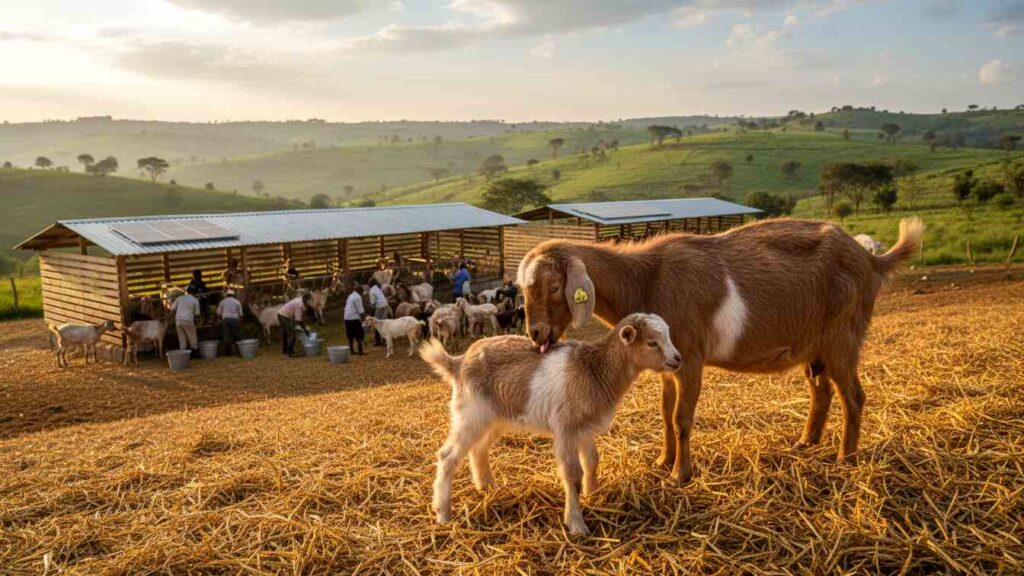
A newborn dairy goat kid in a clean, straw-lined pen being groomed by its mother.
Heat Detection and Mating
Does typically come into heat (estrus) every 18 to 21 days. The signs of heat include: constant bleating, wagging of the tail (flagging), a swollen and reddened vulva, a decrease in milk yield, and mounting other goats. The heat period lasts for 24 to 36 hours. The “Standing Heat”, when the doe will stand still to be mounted, usually occurs in the middle of this period. This is the optimal time for service. In 2026, you have two choices: keeping a breeding buck or using Artificial Insemination (AI).
Keeping a buck is expensive (he eats but doesn’t milk) and risky if you only have a few does (inbreeding). For small herds (under 10 does), AI is highly recommended. AI services are now more accessible in counties like Nyeri, Kiambu, and Meru through provider cooperatives. If you use a buck, ensure he is unrelated to the doe to avoid inbreeding, which results in weak, stunted kids with deformities.
The “Buck Effect”
If you choose to keep a buck, utilize the “Buck Effect.” This involves keeping the buck completely away from the does (out of sight and smell) and then introducing him suddenly. This sudden introduction induces strong heats in the does, allowing you to synchronize breeding so that all your goats kid within a short timeframe, simplifying management.
The Kidding Process
Gestation (pregnancy) in goats lasts approximately 150 days (5 months). As the doe approaches her due date, separate her into a “kidding pen” at least 7 days before. This pen must be disinfected and bedded with clean, dry wheat straw or dry grass. Watch for signs of labor: the doe will become restless, paw the ground, and a thick mucous string will hang from the vulva.
Once the kid is born, the first priority is clearing the airways. Wipe the mucus from the nose and mouth. Dip the umbilical cord in Iodine to prevent infection. The kid MUST suckle the “Colostrum” (first milk) within the first 2 hours of life. Colostrum is rich in antibodies that provide the kid’s only immunity against diseases. A kid that misses colostrum has a less than 50% chance of survival.
Rearing Kids for Replacement
Do not starve the kids to sell milk. A stunted kid will never become a high-producing doe. Allow kids to suckle or bottle-feed them adequately for at least 3 months. Weaning should be done based on weight (at least 12-15kg), not just age. Introduce high-quality hay and starter pellets from week 2 to develop their rumen.
DISEASE CONTROL AND HERD HEALTH MANAGEMENT
A sick goat is a liability. In Kenya, the disease landscape is aggressive, but preventable. Your health strategy should focus on prevention rather than cure. Veterinary drugs are expensive, and treatment often leads to a drop in milk production that can take months to recover.
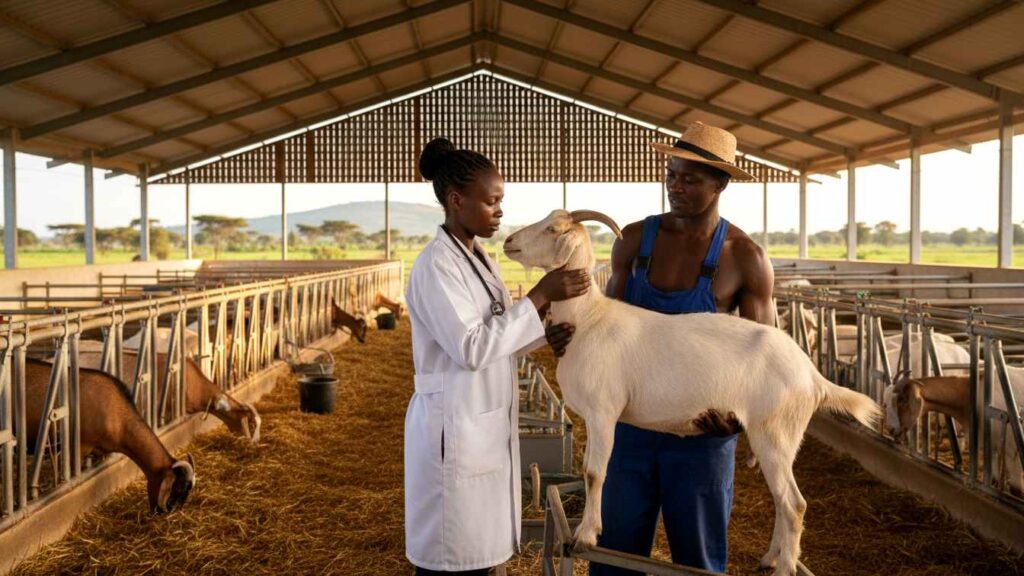
A veterinary officer administering a vaccination to a dairy goat
Vaccination Schedule (Kenyan Context)
You must adhere to a strict vaccination calendar. The mandatory vaccines for Kenya in 2026 are:
CCPP (Contagious Caprine Pleuropneumonia): This is a devastating lung disease. Vaccinate annually.
Enterotoxaemia (Pulpy Kidney): Caused by a sudden change in diet. Vaccinate annually and boost pregnant does 2 weeks before kidding to pass immunity to the kids.
Rift Valley Fever (RVF): Critical during rainy seasons (El Niño years). Vaccinate as per government directives.
Anthrax and Blackquarter: Vaccinate annually.
Goat Pox: Vaccinate annually if the disease is prevalent in your county.
Parasite Control (Deworming and Tick Control)
Internal worms (Haemonchus contortus) are the silent killers of dairy goats. They cause anemia (bottle jaw) and severe weight loss. Deworm your adult goats every 3 months. However, to prevent resistance, rotate the dewormer brands (active ingredients like Albendazole, Ivermectin, Levamisole). For kids, start deworming at 1 month of age.
External parasites like ticks and mites transmit fatal diseases like Heartwater. Even in zero-grazing units, ticks can enter via hay or grass. Spray or dip your goats weekly using acaricides. Pay special attention to the areas under the tail, ears, and udder where ticks hide.
Common Ailments and Management
Pneumonia: Caused by cold, drafty housing. Symptoms include coughing and nasal discharge. Treat early with antibiotics (Oxytetracycline).
Mastitis: Inflammation of the udder. Prevent by maintaining hygiene. Use a California Mastitis Test (CMT) kit weekly to detect sub-clinical cases.
Bloat: Accumulation of gas in the rumen. Treat with anti-bloat oil or vegetable oil. Avoid feeding wet, young grass.
Scours (Diarrhea): Common in kids due to dirty milk or overfeeding. Rehydrate immediately and treat with Sulpha drugs.
MILKING, HYGIENE, AND VALUE ADDITION
Milk is your primary revenue stream. The quality of your milk determines your market price. Kenyan consumers are becoming increasingly quality-conscious, and processors will reject milk with high bacterial counts or antibiotic residues.
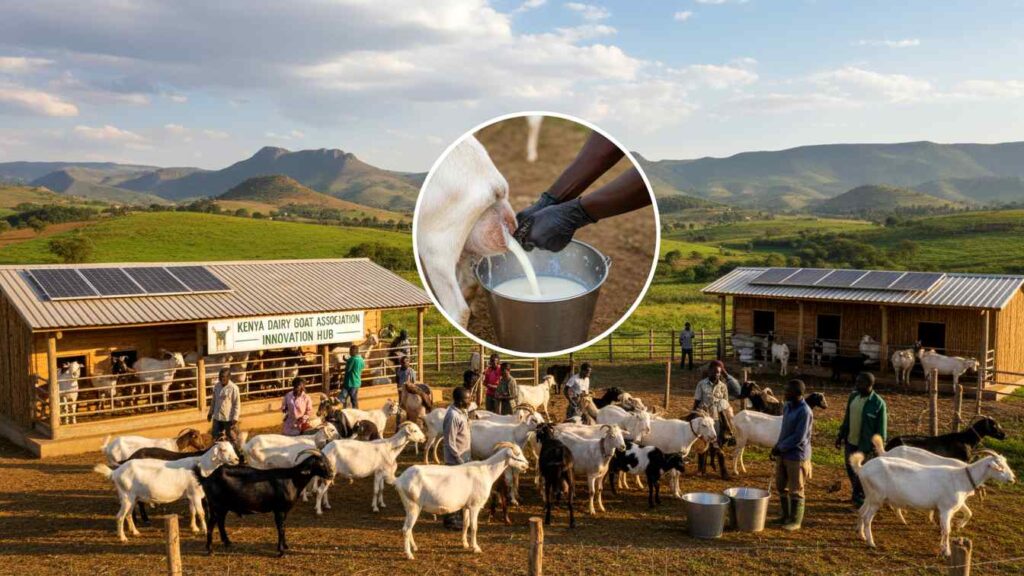
Proper hand-milking technique using a stainless steel bucket and gloves.
Safe Milking Procedures
Milking should be done at the same times every day (e.g., 6:00 AM and 5:00 PM) to maintain routine.
Preparation: Wash your hands thoroughly. Wash the goat’s udder with warm water and a disinfectant, then dry it with a clean individual towel (never share towels between goats).
Strip Cup: Squeeze the first few streams of milk from each teat into a strip cup. Check for clots or watery milk, which are signs of Mastitis. If the milk is clear, proceed.
Milking: Use a full-hand squeeze method, not a thumb-and-finger pull (stripping), which can damage the teat tissue. Milk quickly and completely.
Post-Milking: Dip the teats in a post-milking teat dip (iodine-based) to seal the teat canal and prevent bacteria from entering.
Recording: Weigh the milk immediately and record it against the goat’s name. This data is your business ledger.
Value Addition Opportunities
Selling raw milk is good, but value addition is where the real profit lies. In 2026, the market for goat yoghurt and goat cheese (Feta, Chèvre) is expanding in urban centers. Goat milk is naturally homogenized and has smaller fat globules, making it easier to digest for people with lactose intolerance.
By pasteurizing the milk (heating to 63°C for 30 minutes) and packaging it into branded bottles or processing it into yoghurt, you can increase your selling price from KES 200/liter to KES 400/liter or more. Simple home-based pasteurization kits are available in Nairobi for under KES 15,000.
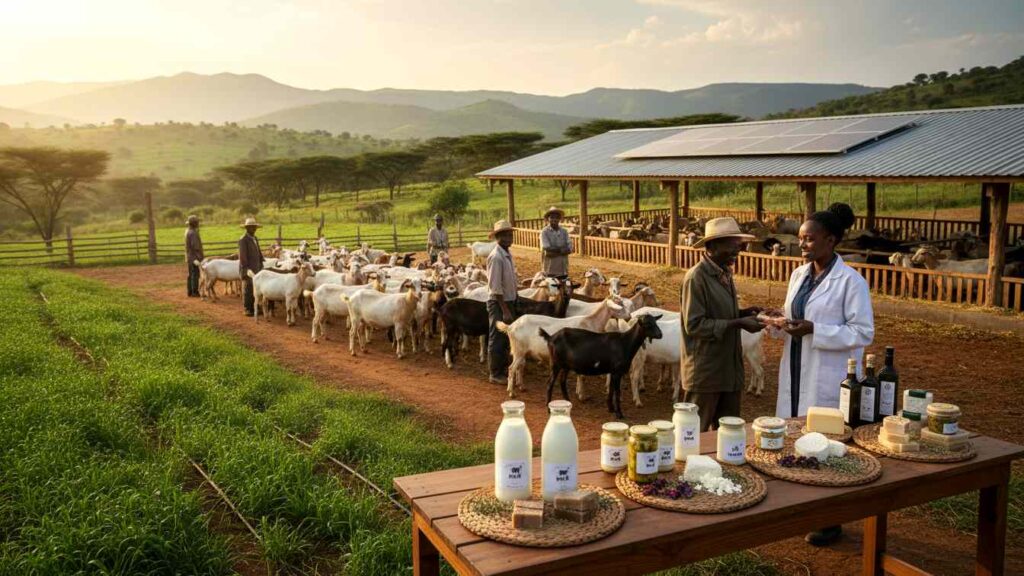
Value-added goat milk products displayed for sale.
ECONOMICS, MARKETS, AND BUSINESS PLANNING
Farming is a business. You must know your numbers. Let’s look at a conservative estimate for a starter unit of 3 Does in 2026.
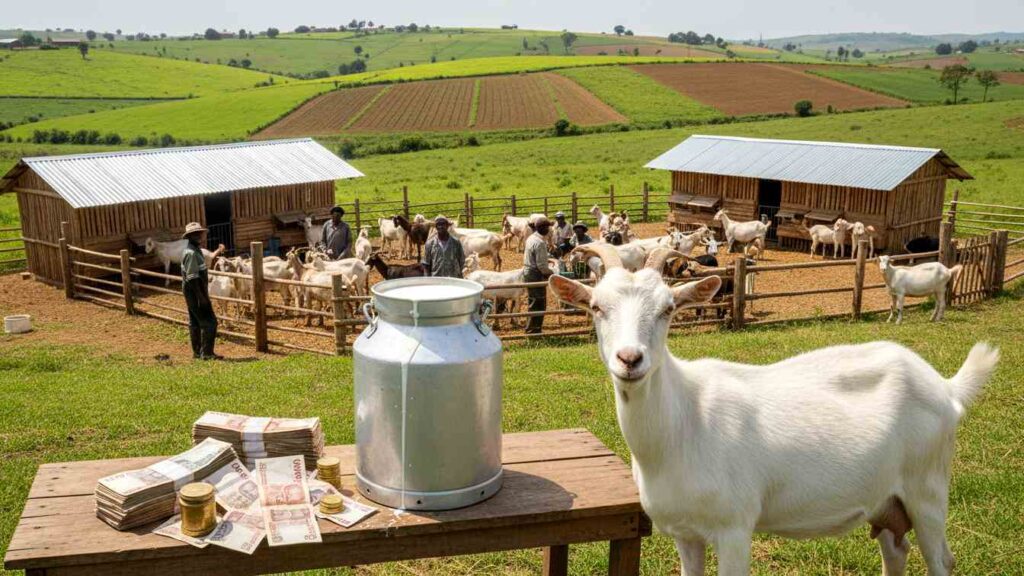
A conceptual image representing the financial returns of dairy goat farming in Kenya.
Cost Benefit Analysis (2026 Estimates)
Item
Cost/Revenue (KES)
Initial Capital
Housing Construction (3-goat unit)
15,000 – 20,000
Breeding Stock (3 Does @ 25k)
75,000
Equipment & First Feeds
15,000
Total Start-up
~110,000
Monthly Running Costs
Concentrates & Supplements
4,500
Deworming/Vet
1,000
Total Monthly Expenses
5,500
Monthly Revenue (Conservative)
45,000
Net Monthly Profit
39,500
This calculation assumes you have your own fodder. If you buy all fodder, your profits will reduce by 40%. This highlights the importance of the “grow-your-own” feed strategy. Additionally, manure sales can cover your water bill.
Marketing Strategies
Do not wait for customers to find you.
Social Media: Use Facebook, TikTok, and WhatsApp groups. “Nairobi Farmers Market” and specific estate groups are goldmines.
Local Institutions: Approach private hospitals and clinics. Doctors often prescribe goat milk for patients recovering from chemotherapy or infants with cow milk allergies.
Cooperatives: Join the Dairy Goat Association of Kenya (DGAK). They have branches countrywide and often organize collective milk collection or breeding stock sales.
ONLINE SEED PURCHASE GUIDE AND RESOURCES
To succeed, you need the right inputs. Here is where to find genuine seeds and breeding stock in Kenya for the 2026 season.
KALRO (Kenya Agricultural and Livestock Research Organization):
For Fodder Seeds: Visit the KALRO DRI (Dairy Research Institute) in Naivasha or KALRO Katumani for dryland crops. Website: www.kalro.org
Breeding Stock: KALRO Naivasha holds annual auctions for bucks and does. Keep an eye on their website for dates.
Kenya Seed Company:
For Pasture Seeds: They stock Rhodes Grass (Boma/Elmba), Lucerne, and Sorghum varieties.
Availability: Major agro-vets countrywide. Website: www.kenyaseed.com
Simlaw Seeds:
For Vegetables & Legumes: Best source for Desmodium seeds and Lucerne.
Location: Kijabe Street, Nairobi, and countrywide branches. Website: www.simlaw.co.ke
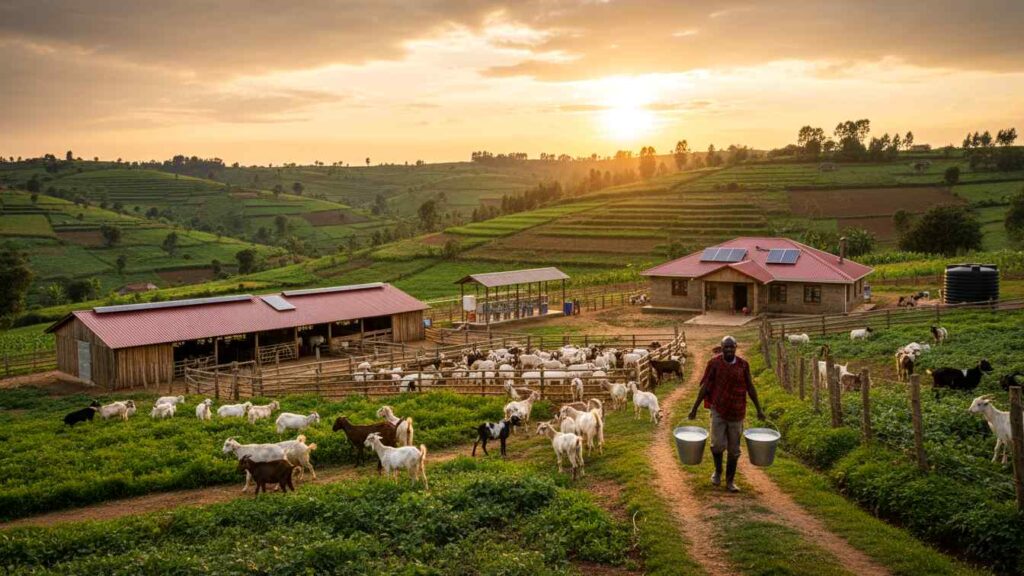
A successful Kenyan dairy goat farmer ending the day with a high milk yield.
Conclusion
With dedication, proper management, and the right knowledge, dairy goat farming is a path to financial freedom in 2026. This guide provides the technical backbone for your farming venture. The success of your farm now rests on your discipline to implement these standards. Start small, learn the behavior of your animals, and scale up as your experience and fodder reserves grow. Happy farming!
COMPREHENSIVE FAQ
How much land do I need to start dairy goat farming in Kenya?
A zero-grazing unit for 4 goats occupies about 10ft by 15ft. However, you need at least 0.25 to 0.5 acres to grow fodder.
Which is better between Alpine and Toggenburg?
A: Alpine handles heat better; Toggenburg is better for cool, high-altitude areas. Both are excellent milkers.
Can I feed my goats only Napier grass?
No. You MUST supplement with protein legumes and mineral salts for health and production.
How do I stop my goats from getting bloat?
Wilt fresh grass in the sun for 3-4 hours and introduce new feeds gradually.
Where can I sell my goat milk in Kenya?
Neighbors, local hospitals, and goat farmers’ associations like DGAK.
What is the lifespan of a dairy goat?
10-12 years, but peak production declines after 7-8 years
How often should I deworm my goats?
Adults every 3 months. Always rotate deworming drug brands.
Can goats and cows be kept together?
Not recommended in the same pen due to bullying and different needs
Is goat farming profitable in dry areas like Kitui or Machakos?
Yes, but plant drought-resistant fodder like Brachiaria and consider Galla goat crosses.
How do I transport a goat safely?
Use a vehicle or crate where they can stand comfortably. Never tie them to roofs or bodabodas.
Dairy farming is one of the most resilient and profitable sectors in Kenyan agriculture, contributing over 4% to the national GDP. As we move through 2026, the industry is transforming from traditional, low-input cattle keeping to high-precision dairy agribusiness.
With national milk demand exceeding 5.2 billion liters annually, while supply often struggles to reach 4 billion liters, there is a clear market gap and lucrative opportunity for both investors and smallholder farmers.
This guide is a comprehensive manual for anyone looking to enter the dairy sector. It covers:
Cost breakdowns for starting and running a dairy farm
Breed selection tips for optimal milk production
Management practices required to maximize profits in today’s economic climate
Unlike the pastoralist methods of the past, modern dairy farming in Kenya is a science of margins. It is no longer enough to simply own a cow; one must own a genetic asset that converts fodder into milk with maximum efficiency. Whether you are situated in the cool, high-potential zones of Githunguri and Nyandarua or the transitioning semi-arid regions of Machakos and Kajiado, the fundamental rules remain constant. Success requires a synchronization of superior genetics, precise nutrition, and comfortable housing. A failure in any one of these pillars results not just in lower yields, but in financial losses that can cripple a farm within its first year.
This master guide will meticulously walk you through every stage of setting up a successful dairy unit. We will analyze the 2025 market rates for heifers, detailed construction costs for zero-grazing units, and the revolutionary impact of government subsidies on sexed semen. We will also explore the profitability of different breeds and how to navigate the challenges of feed formulation in an era of fluctuating raw material prices.
STEP 1 CHOOSING THE RIGHT DAIRY BREED FOR YOUR REGION
The single most critical decision a new farmer makes is the selection of the foundation stock. Your choice of breed dictates your feeding strategy, your housing requirements, and ultimately, your profit margins. In Kenya, the “best” cow is not necessarily the one that produces the most milk, but the one that produces the most milk relative to the resources and climate available to it. Importing a high-maintenance animal into an environment that cannot support it is the fastest route to failure.
For farmers in the high-altitude, cool regions such as Kiambu, Nyeri, Meru, Uasin Gishu, and Kericho, the Friesian (Holstein) remains the undisputed champion of volume. A well-managed pedigree Friesian in these zones can comfortably produce between 25 and 40 liters of milk per day.
However, this production comes at a steep caloric price. These large-framed animals, often weighing over 600kg, require massive intake of dry matter-upwards of 100kg of fresh fodder and 60-100 liters of water daily. If your farm cannot guarantee this level of input year-round, the Friesian will sacrifice its own body condition to produce milk, leading to infertility and metabolic diseases.
Read more
In contrast, the Ayrshire breed offers a pragmatic balance for the medium-potential areas and farmers who may not have an unlimited supply of high-quality silage. Ayrshires are renowned for their hardiness and ability to forage more efficiently than Friesians. They are particularly well-suited for regions like parts of Nakuru, Trans Nzoia, and Kisii. An Ayrshire will typically yield 20 to 25 liters daily but will do so with slightly lower feed requirements and greater resistance to hoof problems and mastitis. Their milk also boasts a higher butterfat content than Friesians, which is an advantage if you plan to value-add into yogurt or cream.
For farmers in hotter, lower-altitude areas or those with limited acreage, the Jersey and Guernsey breeds are the most economically viable options. These smaller cows (350-450kg) consume roughly 30 percent less feed than a Friesian, yet they produce milk with exceptional butterfat content, often exceeding 5 percent. This makes them the ideal choice for niche markets or household sufficiency. A Jersey cow is highly heat-tolerant and has superior hoof hardness, making it suitable for the rocky terrains of Eastern Kenya or the coastal strip. While their volume might hover around 15 to 20 liters, the cost of production per liter is significantly lower, often resulting in a higher net profit per kilogram of feed consumed.
A farmer feeding a high-yielding Friesian cow in a zero-grazing unit in Kenya.
Accurate financial forecasting is the bedrock of a successful dairy enterprise. In 2025, the cost of acquiring quality genetics has risen, reflecting the scarcity of verifiable pedigree stock. A premium in-calf Friesian heifer, approximately 7 to 8 months pregnant and sourced from a reputable breeder like Kisima, Gicheha, or a top-tier Githunguri farm, now commands a price between KES 180,000 and KES 250,000. These animals come with records detailing their lineage and projected production, reducing the gambler’s risk associated with buying livestock.
For those with a tighter budget, standard commercial grade heifers are trading between KES 100,000 and KES 160,000. It is vital to exercise extreme caution when encountering “bargain” cows sold in local markets for KES 40,000 to KES 60,000. In almost all cases, these are cull cows being offloaded due to chronic mastitis, recurring fertility issues, or old age. Investing in such animals is often a sunk cost, as the veterinary bills and lost production will quickly exceed the price of a quality heifer.
Infrastructure expenses must also be tallied before the first cow arrives. A standard zero-grazing unit designed to house four cows, constructed with timber, iron sheets, and a concrete floor, will cost between KES 150,000 and KES 250,000. This variance depends heavily on the cost of materials in your specific county and whether you use treated timber or locally sourced poles. Essential machinery includes a chaff cutter to minimize feed wastage. A manual chaff cutter retails for approximately KES 15,000 to KES 20,000, while a more efficient petrol-powered 7.5HP cutter ranges from KES 38,000 to KES 48,000. Electric models (3HP) typically sit between KES 40,000 and KES 50,000.
Operational liquidity is also crucial. A 70kg bag of high-yield Dairy Meal has stabilized between KES 3,100 and KES 3,500 depending on the brand (e.g., Fugo, Unga, or empirical mash). Hay prices fluctuate wildly with the seasons; a standard bale of Boma Rhodes hay can cost as little as KES 200 during the harvest or spike to KES 450 during the dry season. To remain profitable, feed costs must be kept below 60 percent of milk revenue, which emphasizes the necessity of growing your own fodder rather than relying solely on purchased feeds.
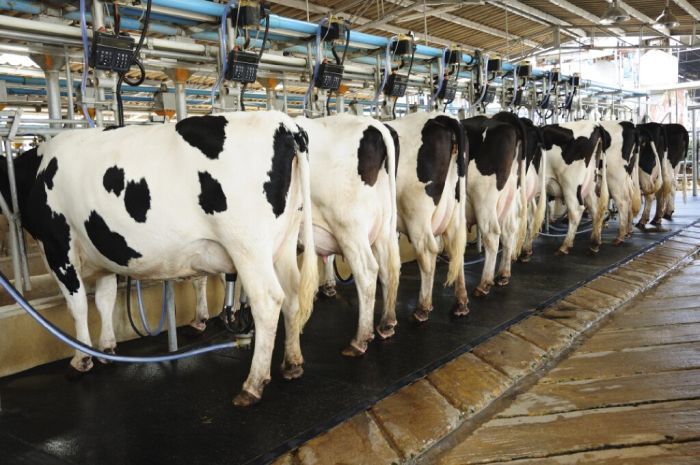
Dairy Cows Ready For Milking
STEP 3 HOUSING AND ZERO GRAZING UNIT DESIGN
The physical environment in which a cow lives has a direct and immediate impact on her milk production. Cows are creatures of comfort; stress hormones like cortisol inhibit the release of oxytocin, the hormone responsible for milk let-down. A poorly designed shed that is wet, cramped, or hot will suppress yield regardless of how well you feed the animal. A functional zero-grazing unit is divided into three primary zones: the resting cubicles, the walking area, and the feeding/water trough area.
The resting cubicles are where the cow spends the majority of her day ruminating and making milk. Each cubicle should measure approximately 4 feet by 7 feet for a standard Friesian. The floor of the cubicle must be raised above the walking area to prevent slurry from entering, and it should be filled with soft bedding material such as sawdust, sand, or specialized rubber cow mats. This soft bedding is not a luxury; it prevents physical injury to the udder and knees, drastically reducing the incidence of mastitis and lameness.
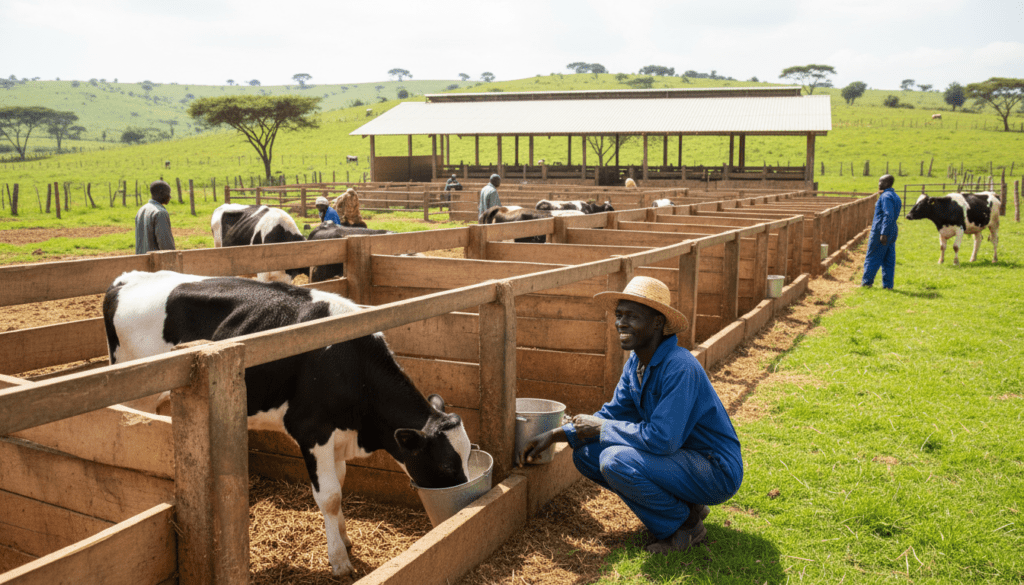
The walking area, or the “loafing” area, requires a concrete floor that is grooved or roughened to prevent slipping. Cows that slip and fall are prone to pelvic fractures, which often necessitate culling. Crucially, this floor must slope gently towards a drainage channel to facilitate easy cleaning. Accumulated slurry is a breeding ground for bacteria that cause hoof rot, a painful condition that stops a cow from eating and standing. The roof of the structure should be high, ideally 3 to 4 meters at the highest point, to allow hot air to rise and escape. Heat stress is a major productivity killer in tropical climates, and proper ventilation is the cheapest way to mitigate it.
Water infrastructure is frequently the most overlooked aspect of housing design. A lactating cow requires between 60 and 100 liters of water per day to maintain production. The water trough must be positioned in the walking area, not the sleeping cubicle, to keep bedding dry. It should be large enough to allow the cow to drink rapidly and must be cleaned daily to prevent algae buildup. If a cow does not drink enough water, her milk yield will drop immediately, as milk is composed of over 85 percent water.
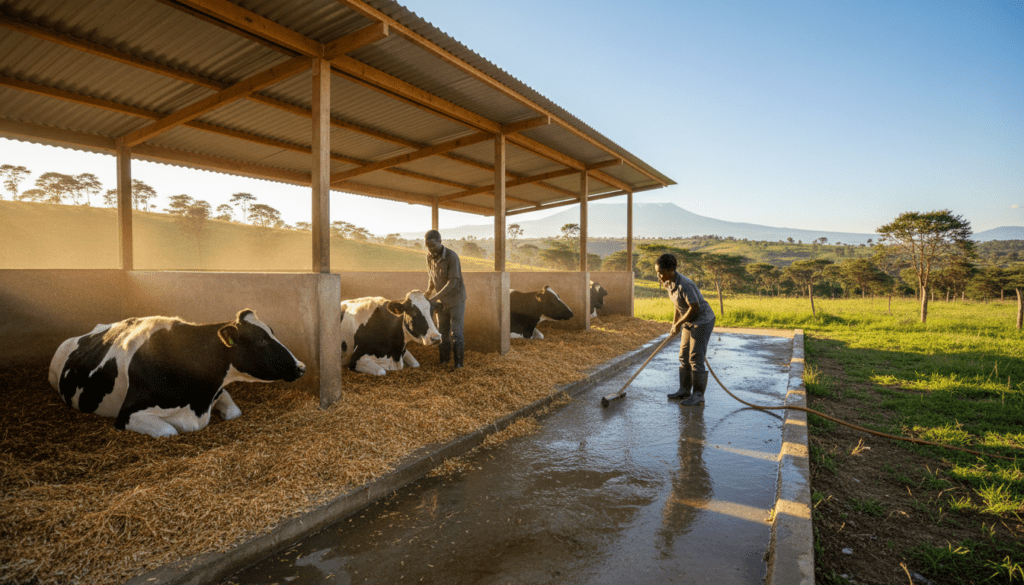
A clean zero-grazing unit with separate sleeping cubicles and a walking area being cleaned by a farmer.
STEP 4 ESTABLISHING HIGH QUALITY FODDER
The economic reality of dairy farming in Kenya dictates that you cannot buy your way to profitability using commercial feeds alone. You must become a grass farmer first and a dairy farmer second. The goal is to produce high-energy, high-protein fodder on your own land to lower the cost of production. In 2025, the reliance on Napier grass is shifting towards more superior grass varieties, specifically Brachiaria (Mulato II, Cayman, or Cobra).
Brachiaria grass has revolutionized fodder production due to its high crude protein content, which ranges from 14 to 16 percent, compared to the 8 to 10 percent found in Napier grass. Furthermore, Brachiaria is resistant to the Napier Stunt Disease that has decimated fodder crops in Western Kenya and is highly drought-tolerant, with deep roots that allow it to regenerate quickly after cutting. For farmers seeking bulk, the “Super Napier” (Pakchong 1) variety is a hybrid that grows extremely fast and is hairless, making it very palatable, though it requires protein supplementation.
Protein is the most expensive component of a cow’s diet. To reduce the need for expensive dairy meal, farmers should plant legumes such as Desmodium or Lucerne (Alfalfa). Intercropping Desmodium with Napier or Maize (the “Push-Pull” technology) serves a dual purpose: the Desmodium suppresses weeds like Striga and repels stem borer pests, while simultaneously fixing nitrogen in the soil to boost the grass yield. This symbiotic relationship reduces fertilizer costs and provides a rich protein supplement for the cattle.
Proper soil nutrition is essential for fodder establishment. Planting should be done using DAP fertilizer or NPK 23:23:0 to encourage strong root development. Current subsidized prices for DAP at National Cereals and Produce Board (NCPB) depots are approximately KES 2,500 per bag, though retail prices can be higher. After every harvest, it is critical to top-dress the grass with CAN (Calcium Ammonium Nitrate) or Urea to stimulate leaf regrowth. Neglecting soil fertility results in fodder that is high in fiber but low in the nutrients required for milk synthesis.
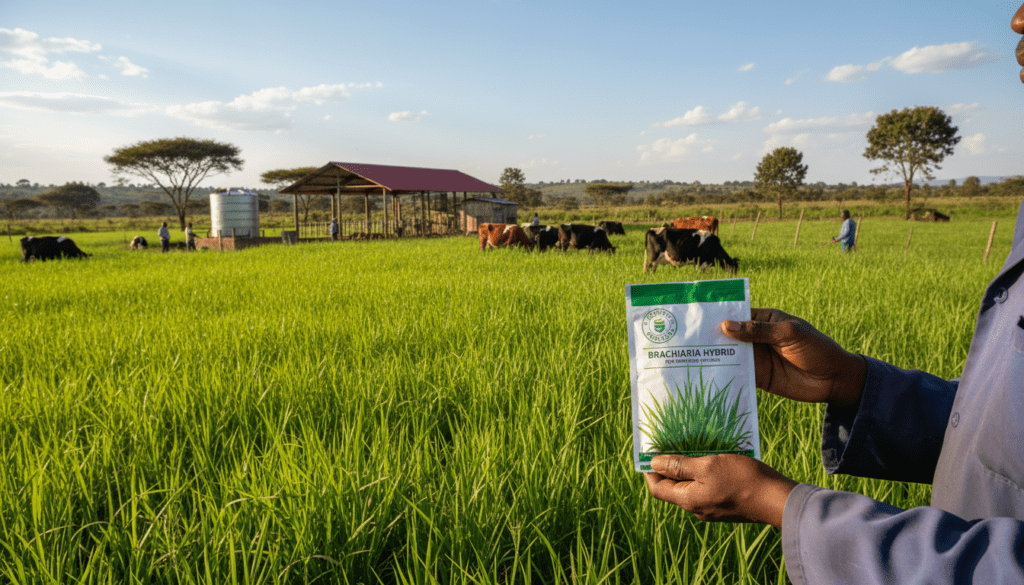
High-quality Brachiaria grass fodder field in Kenya.
Step 5: Buying Fodder Seeds and Planting Materials Online in Kenya
Finding high-quality, disease-free seeds used to be a major struggle for rural farmers. Today, you can order certified inputs directly through trusted websites. Buying from these verified platforms ensures you get genuine, KEPHIS-certified seeds instead of the low-quality fakes often sold in local markets.
Verified Platforms for Online Seed Purchases
AgriJibu: This online marketplace stocks a massive range of farm inputs. They supply genuine seeds from top brands like Kenya Seed Company and Simlaw Seeds, plus fertilizers like Yara. They deliver across most parts of the country.
Simlaw Seeds: As the retail branch of Kenya Seed, their website has a complete catalog. You can order fodder seeds like Desmodium and Lucerne directly from them.
Elgon Kenya: This is an industry leader. Their online portal is great for buying seeds, but also for getting high-quality irrigation kits and greenhouse supplies.
Never plant until you have checked the packet for these details:
Look for the Lot Number: Always check the packet for the “Lot Number” and “Date of Test.”
Check the Age: Do not buy seeds that have been on a shelf for more than 12 months. Old seeds often fail to sprout.
Certification: Only buy packets that show the KEPHIS certification. This is your proof that the seeds are clean and healthy.
Choose Splits over Seeds: For grasses like Brachiaria, buying vegetative splits from a certified nursery is much safer. Seeds can be difficult to grow, while splits take root quickly and reliably.
Warning: Always confirm who you are buying from before you send money. If you use a marketplace, check for seller ratings and only pay through secure, official channels.
Farmer holding certified Brachiaria seeds with a lush fodder field in the background.
STEP 6 FEEDING AND NUTRITION MANAGEMENT
Feeding a dairy cow is a precise exercise in nutritional balancing. A high-yielding cow requires a Total Mixed Ration (TMR) that combines carbohydrates, proteins, minerals, and vitamins in specific proportions. The golden rule for intake is that a cow must consume dry matter equivalent to roughly 3 percent of her body weight every day. For a standard 500kg Friesian, this equates to 15kg of dry matter, which translates to approximately 60 to 70kg of fresh, wet fodder daily.
The bulk of this diet (about 70 percent) should come from energy-rich roughages. Maize silage is the gold standard here because of its high starch content, which drives milk volume. If silage is unavailable, Boma Rhodes hay or wilted Napier grass serves as the base. The remaining 30 percent of the diet comprises protein sources and concentrates. Since commercial dairy meal can be expensive, many farmers opt to mix their own rations using raw materials like Maize Germ, Wheat Bran, Soya Meal, and Sunflower Cake.
However, home mixing requires strict adherence to formulas to avoid imbalances. A critical addition to any diet is high-quality mineral salts. Kenyan soils are often deficient in specific trace elements, and a cow lacking in phosphorus or calcium will struggle to conceive or may succumb to milk fever. Commercial mineral mixes like Maclik Super or Fosfovita are formulated to bridge this gap.
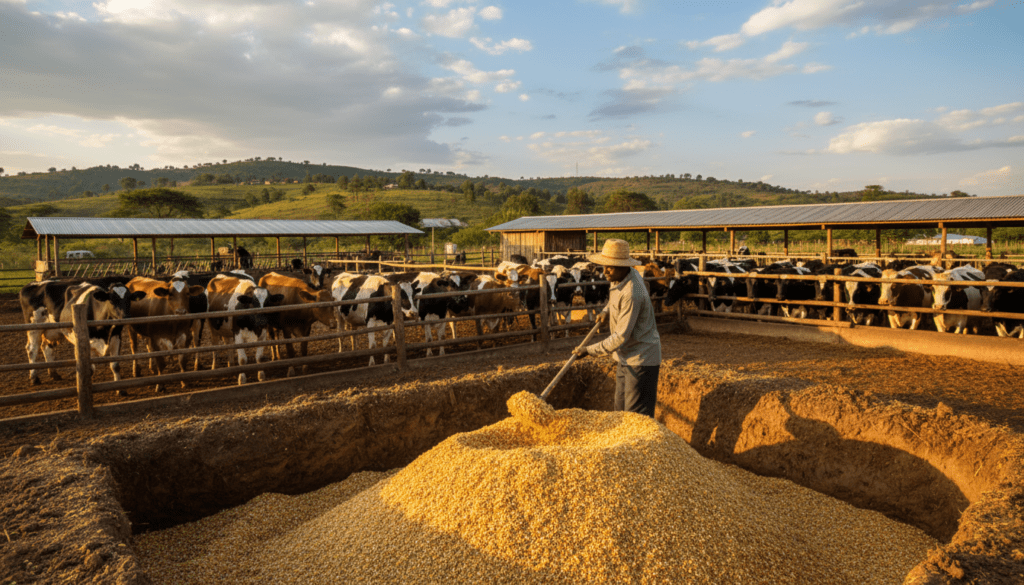
Silage making is not just a method of food preservation; it is a strategy for consistent production. By harvesting fodder during the rainy season when it is abundant and fermenting it in pit silos or silage bags, a farmer ensures their cows have high-quality feed during the dry months of January to March. The current market price for loose maize silage is approximately KES 8 to KES 10 per kilogram if purchased, whereas producing it on your own farm can cost less than KES 4 per kilogram. This price difference often determines whether a farm makes a profit or a loss during the drought.
Farm worker harvesting maize silage from a pit to feed dairy cows.
STEP 7 BREEDING AND ARTIFICIAL INSEMINATION AI
The profitability of a dairy cow is cyclical; she must calve down once every year to maintain peak milk production. This “one cow, one calf, one year” principle dictates that a cow must conceive within 85 to 90 days of giving birth. Achieving this requires rigorous heat detection. Farmers must observe their herd early in the morning and late in the evening for signs of standing heat, which include mounting other cows, standing to be mounted, bellowing, and a clear mucus discharge.
The most significant advancement for smallholder farmers in recent years is the government-subsidized Sexed Semen program. Through partnerships with the Kenya Animal Genetic Resources Centre (KAGRC) and international genetics firms, the cost of sexed semen has been slashed from over KES 6,000 to approximately KES 1,000 to KES 2,000. Sexed semen contains X-chromosome-bearing sperm, guaranteeing a 90 percent chance of producing a female calf. This allows farmers to grow their herd internally with high-quality heifers rather than gambling on a 50/50 chance of getting a bull calf, which has little economic value in a dairy system.
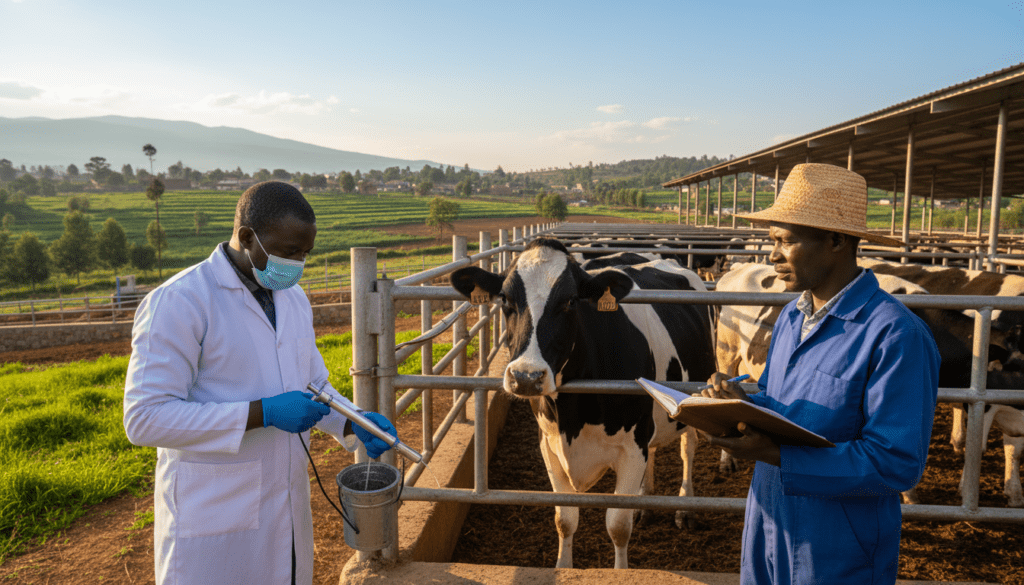
When using Artificial Insemination, always engage a licensed provider or a vet affiliated with a cooperative. It is your right and responsibility to view the semen straw before it is loaded into the AI gun. Check the bull’s name and code to ensure you are getting the genetics you paid for and to prevent inbreeding. Inbreeding-mating a cow with a bull related to her-results in weak offspring, deformities, and poor production traits. Always keep records of which sire was used on which cow.
Vet preparing for artificial insemination on a dairy farm while the farmer records data.
STEP 8 DISEASE CONTROL AND CALF REARING
In Kenya, the tropical climate supports a host of livestock diseases that can wipe out a herd in days. The most prevalent threat to exotic cattle is East Coast Fever (ECF), transmitted by the brown ear tick. Anaplasmosis is another tick-borne killer. Prevention is the only viable strategy; cows must be sprayed or dipped with acaricides once a week without failure. It is important to rotate the active ingredients in your spray (e.g., switching between Amitraz and Cypermethrin) every 6 to 12 months to prevent ticks from developing resistance.
Mastitis, an infection of the udder, is the leading cause of revenue loss in dairy farming. It is almost always caused by poor hygiene. Milkers must wash their hands thoroughly and use a clean, separate towel for each cow’s udder. A “strip cup” test should be performed before every milking to check for clots or watery milk. After milking, teats should be dipped in an iodine-based solution to seal the teat canal, which remains open for about 30 minutes, making it vulnerable to bacteria.
Calf rearing is the process of building your future herd. The first 6 hours of a calf’s life are critical; it must ingest Colostrum, the thick, yellow first milk from the mother. A calf is born with zero immunity, and Colostrum provides the antibodies necessary for survival. If this window is missed, the calf will likely be sickly and stunted for life. Calves should be housed in individual pens to prevent them from suckling on each other, which can transmit diseases and cause navel infections. Weaning should be done gradually at 3 months, but solid feeds like calf pellets and sweet potato vines should be introduced as early as the second week to stimulate rumen development.
A healthy calf in a clean pen drinking milk.
STEP 9 MILKING HYGIENE AND VALUE ADDITION
Milk is a highly perishable food product that demands impeccable hygiene standards. The process begins with a clean milking environment and ends with rapid cooling. While hand milking is common, affordable portable milking machines (costing between KES 55,000 and KES 65,000) are becoming standard. Machines provide consistent vacuum pressure, which hand milking cannot replicate, ensuring the udder is completely emptied. Incomplete milking reduces overall yield and increases the risk of mastitis.
For most farmers, selling raw milk to large processors like New KCC or Brookside is the default route. In 2025, New KCC has set a buying price of KES 50 per liter, while other processors offer competitive rates around KES 42 to KES 48 depending on quality and volume. However, the real profit lies in value addition. By pasteurizing milk and processing it into Mala (fermented milk) or Yoghurt, a farmer can more than double their revenue, selling a liter for KES 100 to KES 120.
Value addition requires investment in a simple pasteurizer and proper packaging, as well as adherence to Kenya Dairy Board regulations. For those unable to process, joining a strong dairy cooperative is essential. Co-ops not only provide a guaranteed market but also offer economies of scale, allowing members to purchase feeds and fertilizers at discounted rates on credit, which is recovered from their milk payout.
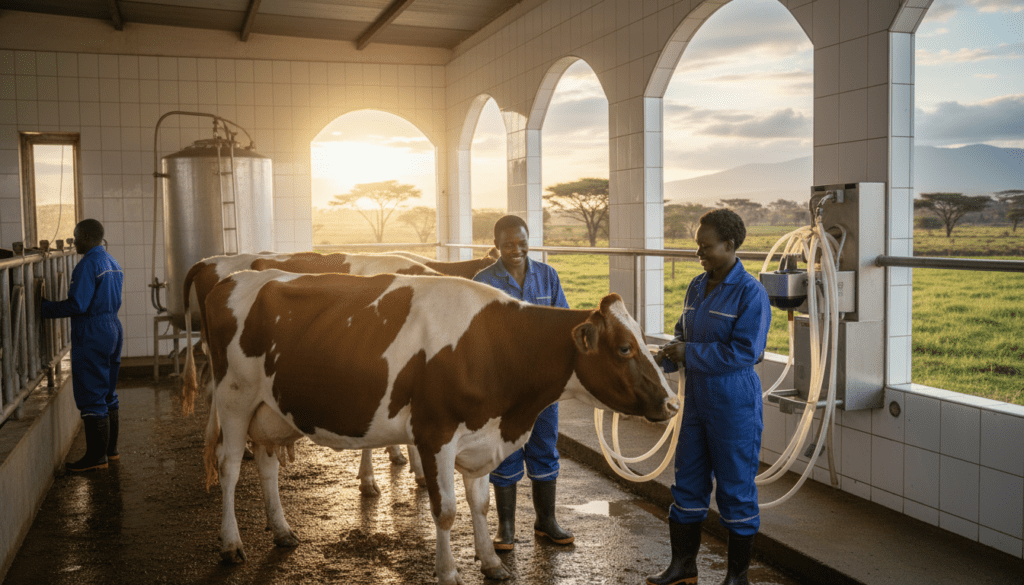
A close-up of a milking machine in operation.
STEP 10 PROFITABILITY ANALYSIS 1 COW MODEL
Understanding the economics of a single cow helps in scaling the business accurately. Let us construct a conservative monthly financial model for one high-yielding Friesian cow in the year 2025.
Expenses (Per Month):
The primary cost is feed. A cow consuming 4kg of dairy meal per day at KES 50 per kg will cost KES 6,000 per month. Roughage (Hay/Silage) and green fodder, assuming a mix of bought and farm-grown, is estimated at KES 3,000. Mineral salts and supplements cost roughly KES 1,000. Veterinary services, including dipping and deworming, average KES 1,500. This brings the total direct cost of maintaining the cow to approximately KES 11,500 per month.
Revenue (Per Month):
Assuming the cow produces an average of 25 liters per day, the total monthly yield is 750 liters. At a farm-gate price of KES 50 per liter (based on New KCC rates), the gross revenue is KES 37,500.
Net Profit:
Subtracting the expenses (KES 11,500) from the revenue (KES 37,500) leaves a net profit of KES 26,000 per cow per month. With a herd of four such cows, a farmer can realize a monthly net income exceeding KES 100,000. It is important to note that this profit margin relies heavily on the farmer growing their own fodder; if all feeds are purchased at market rates, the profit can shrink by up to 50 percent. Additionally, the calf produced annually is a significant asset, with a heifer calf being worth over KES 100,000 at maturity.
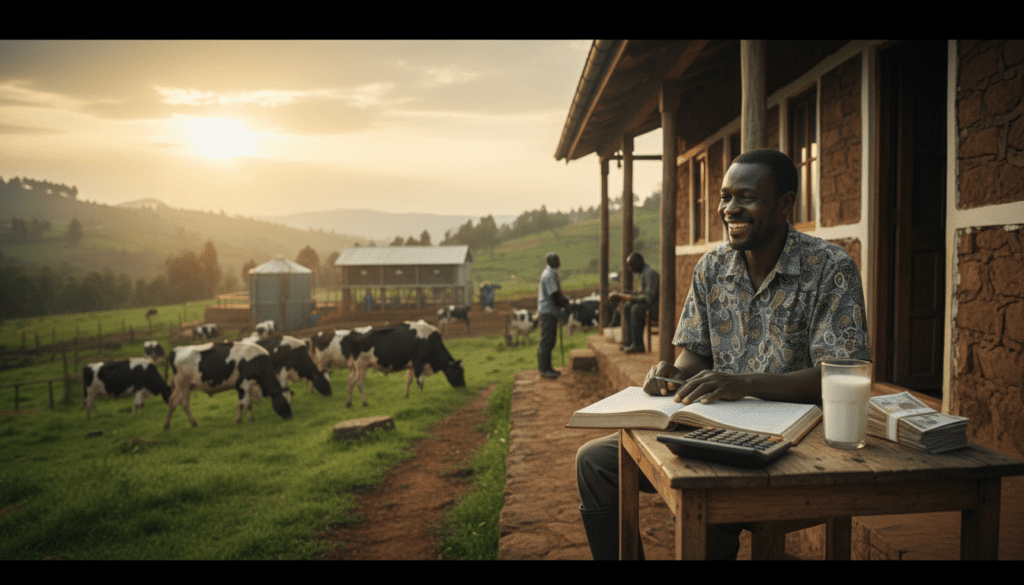
A farmer calculating profits with a ledger and calculator.
CONCLUSION
Dairy farming in Kenya is shifting from a traditional lifestyle to a precise, data-driven science. The era of tethering a cow by the roadside and expecting a 20-liter bucket is over. The modern Kenyan farmer views the cow as a biological factory where specific inputs-quality feed, clean water, and comfort-are converted into valuable outputs like milk and calves.
Your success will not be determined by luck, but by your ability to grow cheap, high-quality fodder and your discipline in managing herd health. With the government’s push for subsidized inputs like sexed semen and the stabilization of milk prices through processors like New KCC, the environment for dairy investment is favorable. Start with the right breed, focus on quality nutrition over quantity, and treat your farm with the rigor of any other commercial business.
Farmers Also Ask (FAQ)
How much land do I need for 5 dairy cows?
For a zero-grazing system, the actual shed requires very little space-roughly an eighth of an acre.
Which is better buying a cow or raising a calf?
For a beginner with available capital, buying an in-calf heifer is the superior strategy. You will start seeing returns (milk) within a few months of purchase.
Why is my cow giving little milk despite eating well?
Low milk yield despite perceived “good feeding” is usually due to three factors: genetic limitations (the cow is simply not a dairy breed), water insufficiency (cows need massive amounts of water to produce milk), or mineral deficiencies.
How do I stop milk fever?
Milk fever is a calcium deficiency that occurs immediately after calving. To prevent it, feed a “Dry Cow Mineral” that is rich in phosphorus and low in calcium during the last two months of pregnancy.
Can I use a bull instead of AI?
Using a bull is generally discouraged for smallholder farmers. Bulls are expensive to feed, dangerous to handle, and can transmit venereal diseases like Brucellosis and Trichomoniasis
What is the best grass for milk production?
Currently, Brachiaria (Mulato II) is considered superior to Napier grass. It has a higher crude protein content and is more digestible, meaning the cow gets more nutrition from every bite.
How often should I dip my cows?
You should dip or spray your cows once every week. In areas with high tick populations, such as the Coast or Nyanza regions, you may need to increase this to every 5 days.
Where can I get a loan for dairy farming?
Most major financial institutions in Kenya, including Equity Bank, KCB, and Co-op Bank, offer specific agricultural loan products.
Is silage necessary for small-scale farmers?
Yes, silage is critical. Without it, your milk production will plummet during the dry season when green grass is scarce.
To provide the best experiences, we use technologies like cookies to store and/or access device information. Consenting to these technologies will allow us to process data such as browsing behavior or unique IDs on this site. Not consenting or withdrawing consent, may adversely affect certain features and functions.
Functional
Always active
The technical storage or access is strictly necessary for the legitimate purpose of enabling the use of a specific service explicitly requested by the subscriber or user, or for the sole purpose of carrying out the transmission of a communication over an electronic communications network.
Preferences
The technical storage or access is necessary for the legitimate purpose of storing preferences that are not requested by the subscriber or user.
Statistics
The technical storage or access that is used exclusively for statistical purposes.The technical storage or access that is used exclusively for anonymous statistical purposes. Without a subpoena, voluntary compliance on the part of your Internet Service Provider, or additional records from a third party, information stored or retrieved for this purpose alone cannot usually be used to identify you.
Marketing
The technical storage or access is required to create user profiles to send advertising, or to track the user on a website or across several websites for similar marketing purposes.

 stephen kilemi
January 14, 2026
stephen kilemi
January 14, 2026