
- Projected Net Profit: KES 150,000 to KES 300,000 per acre per season depending on the target market.
- Maturity Period: Early maturing crop ready for first harvest within 45 to 60 days after planting.
- Harvest Duration: Continuous harvesting for 2 to 3 months guarantees consistent weekly cash flow.
Table of Contents
Okra farming has evolved into one of the most lucrative short-term agribusiness ventures in Kenya for 2026. This crop offers beginner farmers a low barrier to entry with high returns due to increasing local consumption and expanding export markets in Europe. By utilizing modern seed varieties and precision farming techniques, Kenyan farmers can transform a single acre into a consistent revenue stream within two months.
Why Is Okra Farming Gaining Popularity in Kenya?
Okra is gaining popularity because it requires minimal capital, matures in under 60 days, and thrives in hot regions where other crops fail. The demand for export-quality Clemson Spineless and local dietary shifts toward healthy vegetables have stabilized market prices across major Kenyan towns.
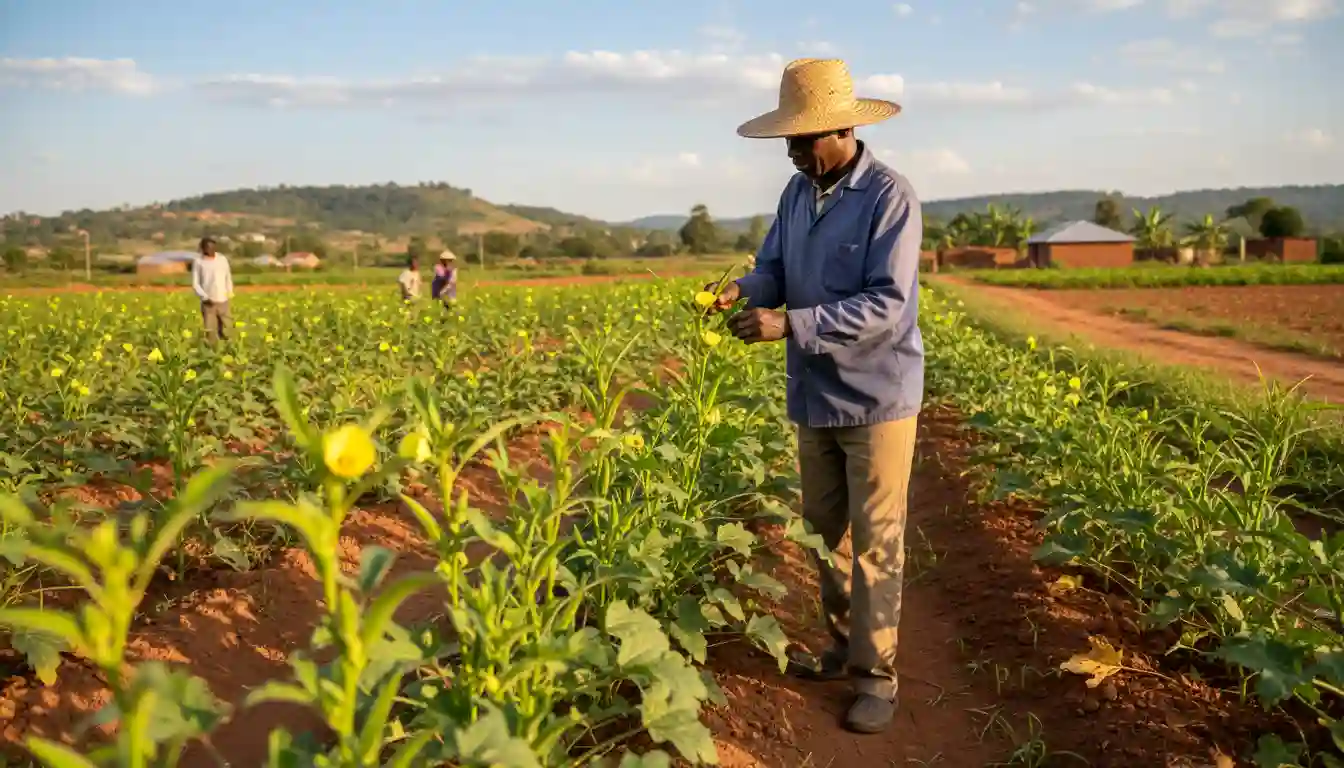
The agricultural landscape in Kenya has shifted towards high-value, short-cycle crops that mitigate climate risks. Okra, locally known as “Bammia” in some regions, is highly drought-tolerant once established. It thrives in the warm climatic zones of Eastern, Coastal, and Nyanza regions.
Farmers in 2026 are pivoting to okra because it provides a “cash crop” liquidity structure. Unlike coffee or tea which require months or years to pay out, okra allows a farmer to harvest three times a week. This frequency matches the operational cash flow needs of small-scale shamba owners who need money for school fees and daily upkeep.
READ ALSO: Top 5 Hybrid Onion Varieties (F1) Dominating the Kenyan Market in 2026
Furthermore, the nutritional profile of okra has driven domestic demand. Supermarket chains like Naivas and Quickmart now stock fresh okra daily. This domestic growth complements the established export channels that supply the United Kingdom and Asian markets.
What Are the Best Okra Varieties for 2026?
The best performing varieties in Kenya include Pusa Sawani for local markets and Clemson Spineless for export. New F1 hybrids like Arka Anamika offer resistance to Yellow Vein Mosaic Virus and provide higher yields per acre.
Pusa Sawani
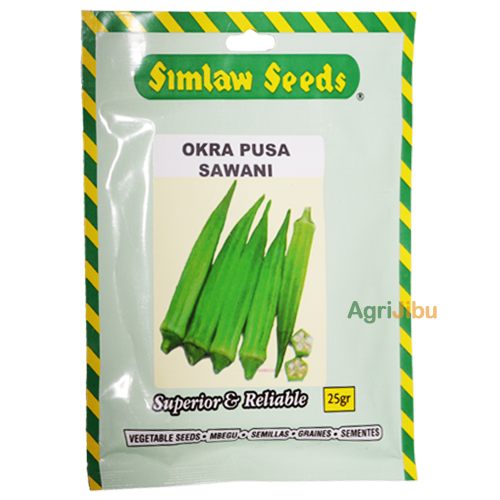
This is the most common variety found in local open-air markets. It produces dark green, smooth, and five-edged pods. Pusa Sawani is favored for its tenderness and is highly suitable for the local Kenyan palate. It is relatively tolerant to soil variations but requires strict pest management during the rainy season.
Clemson Spineless
If your goal is the export market, this is the mandatory variety. Clemson Spineless produces straight, uniform, light green pods that are free of the irritating spines found on wilder varieties. It has a high market value in the EU. Exporters require these pods to be harvested when they are immature to ensure premium quality.
F1 Hybrids (Arka Anamika)
For farmers facing heavy disease pressure, F1 hybrids are the solution for 2026. Varieties like Arka Anamika have been bred to resist the devastating Yellow Vein Mosaic Virus. While the seed cost is higher, the yield stability justifies the investment. These varieties often produce more pods per plant compared to open-pollinated types.
Where to Buy certified Okra seeds in Kenya 2026
Purchase certified seeds from Kenya Seed Company, Simlaw Seeds, or authorized stockists like Elgon Kenya. For 2026, digital platforms such as iProcure and Digifarm offer reliable delivery of verified inputs directly to rural collection points.
READ ALSO: Tomato Farming in Kenya 2026: Cost per Acre and Profit Analysis
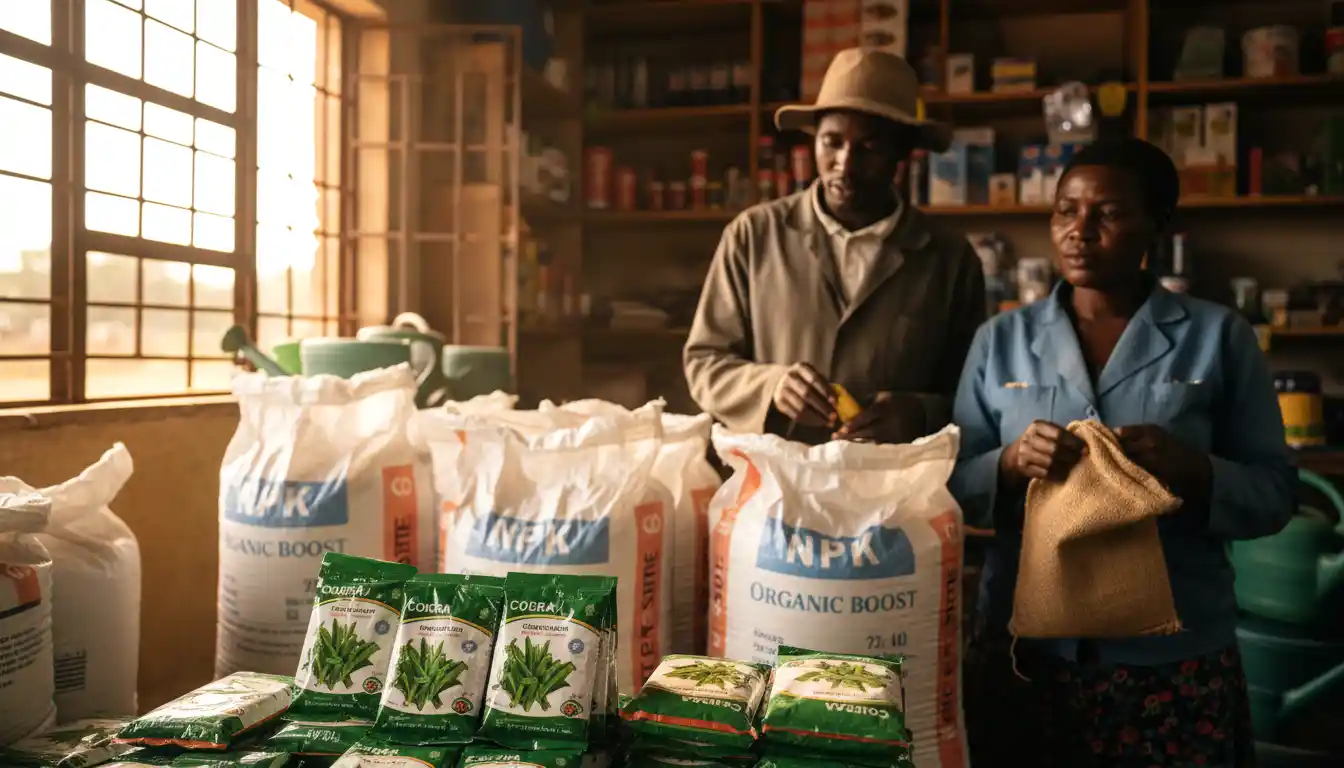
Sourcing quality inputs is the first step toward a profitable harvest. Counterfeit seeds remain a challenge in the Kenyan market. Farmers should strictly buy from registered dealers.
Major Seed Suppliers
Kenya Seed Company and Simlaw Seeds remain the market leaders for open-pollinated varieties like Pusa Sawani. Their outlets are located in major towns including Nairobi, Nakuru, Eldoret, and Mombasa. For specialized F1 seeds, companies like Syngenta and Royal Seed have introduced robust hybrid options available at major agrovets.
Digital Procurement Platforms
In 2026, technology plays a massive role in sourcing. Platforms like Safaricom’s Digifarm allow farmers to order seeds and fertilizer via USSD or app. Twiga Foods also runs an input supply arm that connects farmers with quality inputs on credit. This reduces the risk of buying fake seeds from unlicensed river-road shops.
Fertilizer and Chemical Suppliers
For fertilizers (DAP, CAN, NPK) and crop protection, Yara Kenya and Osho Chemical Industries are the trusted brands. Ensure you buy sealed packages. Never purchase loose chemicals or fertilizers sold in unbranded bags at local markets.
What Are the Ecological Requirements for Success?
Okra requires warm temperatures between 20°C and 30°C and well-drained loam soils with a pH of 6.0 to 6.8. It performs poorly in frost-prone areas or waterlogged soils. Consistent moisture is critical during flowering and pod development.
Soil Conditions
Okra is not overly demanding but thrives in sandy loam soils rich in organic matter. Before planting, conduct a soil test at CropNuts or KALRO laboratories. If the pH is below 6.0, apply agricultural lime at least 30 days before planting to sweeten the soil.
Temperature and Altitude
The crop prefers low to medium altitudes (0 to 1600m above sea level). Areas like Kilifi, Makueni, Garissa, and Kisumu are ideal. High-altitude areas with cold nights will result in stunted growth and poor pod set.
Water Requirements
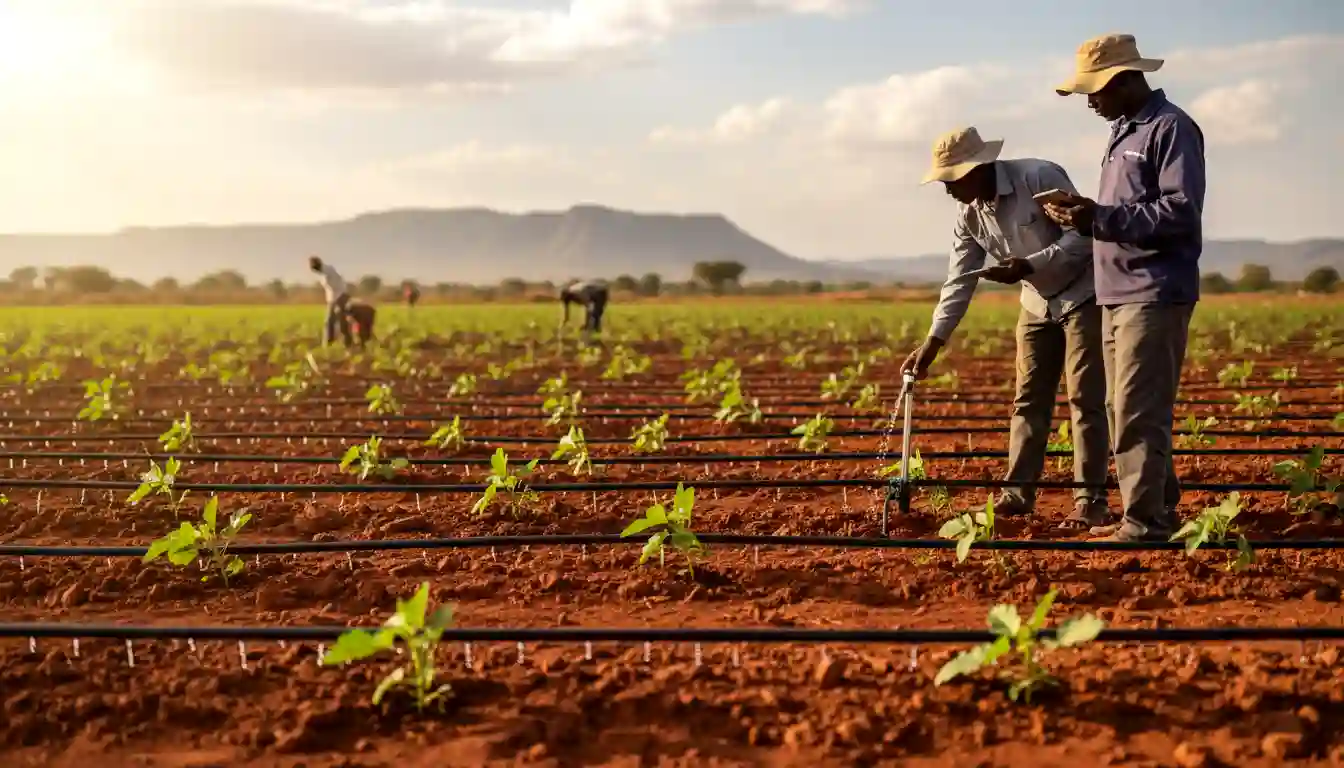
While drought-tolerant, “tolerant” does not mean “immune.” For maximum yield, okra needs irrigation during dry spells. Drip irrigation is the most efficient method for 2026. It prevents fungal diseases associated with overhead watering by keeping the leaves dry.
Regional Comparative Analysis: Where to Farm?
Kilifi offers the best export potential due to climate and port proximity. Kisumu dominates the local consumption market. Machakos is the ideal hub for supplying the Nairobi metropolitan area due to short logistics chains.
Kilifi County (The Export Hub)
Kilifi’s hot coastal climate allows for year-round production of okra. The high temperatures ensure rapid growth and high yields. Farmers here focus heavily on Clemson Spineless for export. The proximity to Mombasa makes logistics easier, though most air freight leaves via Nairobi. The challenge here is fresh water availability for irrigation.
Kisumu County (The Local Market King)
In Nyanza, okra is a staple vegetable often cooked with fish or beef. The local demand in Kisumu City and surrounding towns is immense. Farmers here grow Pusa Sawani and rarely struggle to sell their produce. The market is less fussy about pod size compared to export, allowing for higher biomass sales.
READ ALSO: Hass Avocado Seedlings in Kenya 2026: Trusted Nurseries, Prices and Spacing Guide
Machakos/Makueni (The Nairobi Supplier)
These counties are the breadbasket for Nairobi. With the expansion of the tarmac road network, a farmer in Makueni can get fresh okra to Wakulima Market in Nairobi by 4 AM. The semi-arid climate is perfect for okra if irrigation is available. Land is affordable, and labor is readily available.
12-Month Farming Calendar for Okra
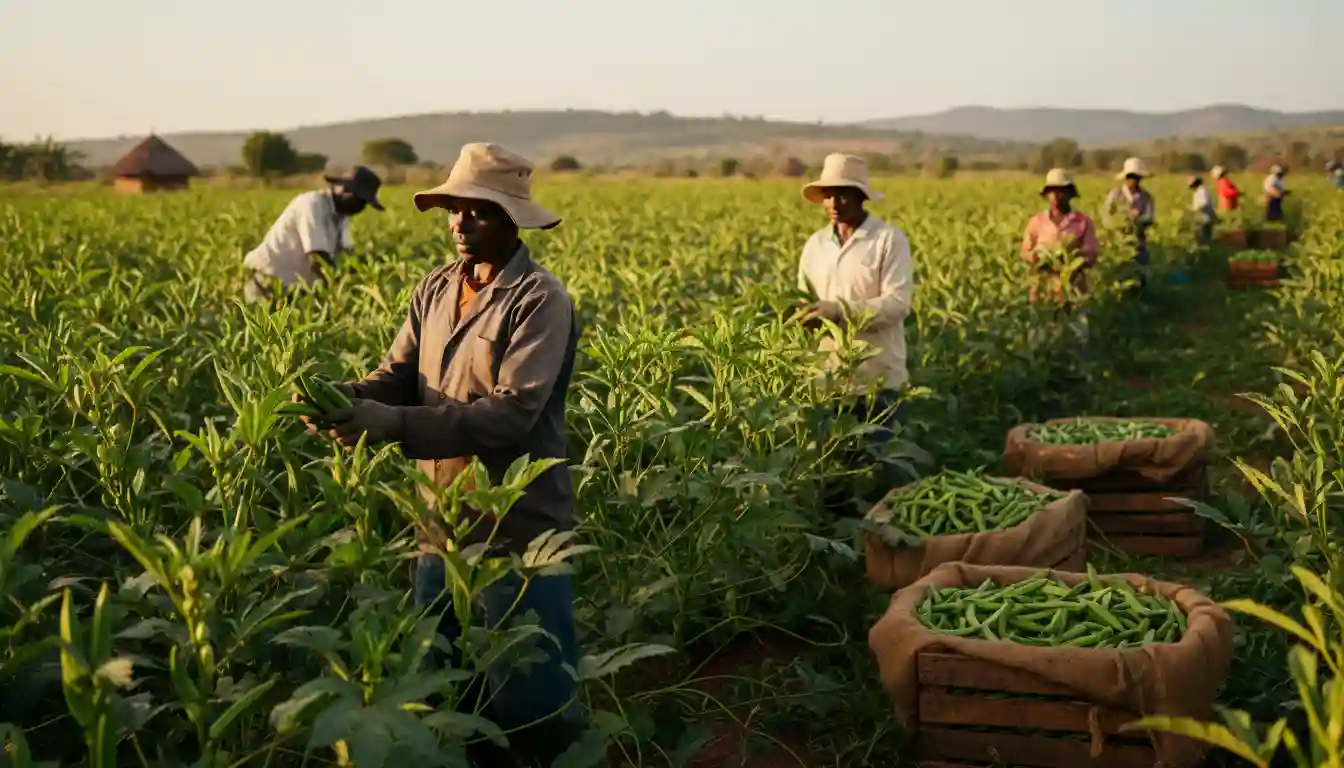
Okra can be grown year-round with irrigation. However, the main planting seasons are March-April (Long Rains) and October-November (Short Rains). Off-season planting in January and July yields the highest market prices.
January – March (High Profit Window)
Activity: Land preparation and planting under irrigation. Why: The market is dry of vegetables during the hot start of the year. Result: Harvest hits the market in March/April when prices are peaking at KES 80-120 per kg.
April – June (Long Rains Season)
Activity: Main season planting. Why: Relies on rain, lowering production costs. Result: High supply in the market by June/July. Prices may dip to KES 40-50 per kg. Focus on volume to maintain profitability.
July – September (Cold Season Management)
Activity: Maintenance and late harvest. Why: Growth slows down in cold weather. Result: Yields drop. Farmers in warmer zones like the Coast or Nyanza have a competitive advantage here as Nairobi cools down.
October – December (Short Rains)
Activity: Second planting season. Why: Capitalize on short rains. Result: Harvest coincides with the December festive season where demand for food is high in urban centers.
Deep Financials: Costs, Yields, and Profits Table
Total production cost per acre is approximately KES 85,000. A conservative yield is 6 tonnes per acre. At an average price of KES 60/kg, revenue is KES 360,000, leaving a net profit of KES 275,000 over 3 months.
The financial success of okra farming lies in cost control and harvesting discipline. The table below outlines the capital requirements for one acre of okra using drip irrigation in 2026.
| Expense Item | Cost (KES) | Notes |
|---|---|---|
| Land Preparation (Plough/Harrow) | 15,000 | Tractor hire and labor for bed making. |
| Seeds (Certified) | 6,000 | Approx 2-3kg per acre. |
| Fertilizers (DAP & CAN) | 18,000 | Basal and top dressing. |
| Manure (Organic) | 10,000 | 3 tonnes of goat/cow manure. |
| Crop Protection (Pesticides) | 12,000 | Fungicides and insecticides. |
| Labor (Planting & Weeding) | 14,000 | Casual labor for 3 months. |
| Harvesting Labor | 10,000 | Intensive labor required every 2 days. |
| TOTAL ESTIMATED COST | 85,000 | Excludes irrigation kit installation. |
Break-Even Analysis
To break even, a farmer needs to sell approximately 1,416 kg of okra at an average farm-gate price of KES 60. Since a well-managed acre produces between 6,000 kg and 9,000 kg, the margin of safety is high. Even if prices drop to KES 30/kg, the farmer remains profitable if yields are maintained above 4 tonnes.
ow Does the Supply Chain and Value Addition Work?
The supply chain moves from Farm Gate to Aggregators, then to Wholesale Markets or Exporters. Value addition opportunities in 2026 include solar-dried okra chips and okra powder for health supplements.
The Local Supply Chain
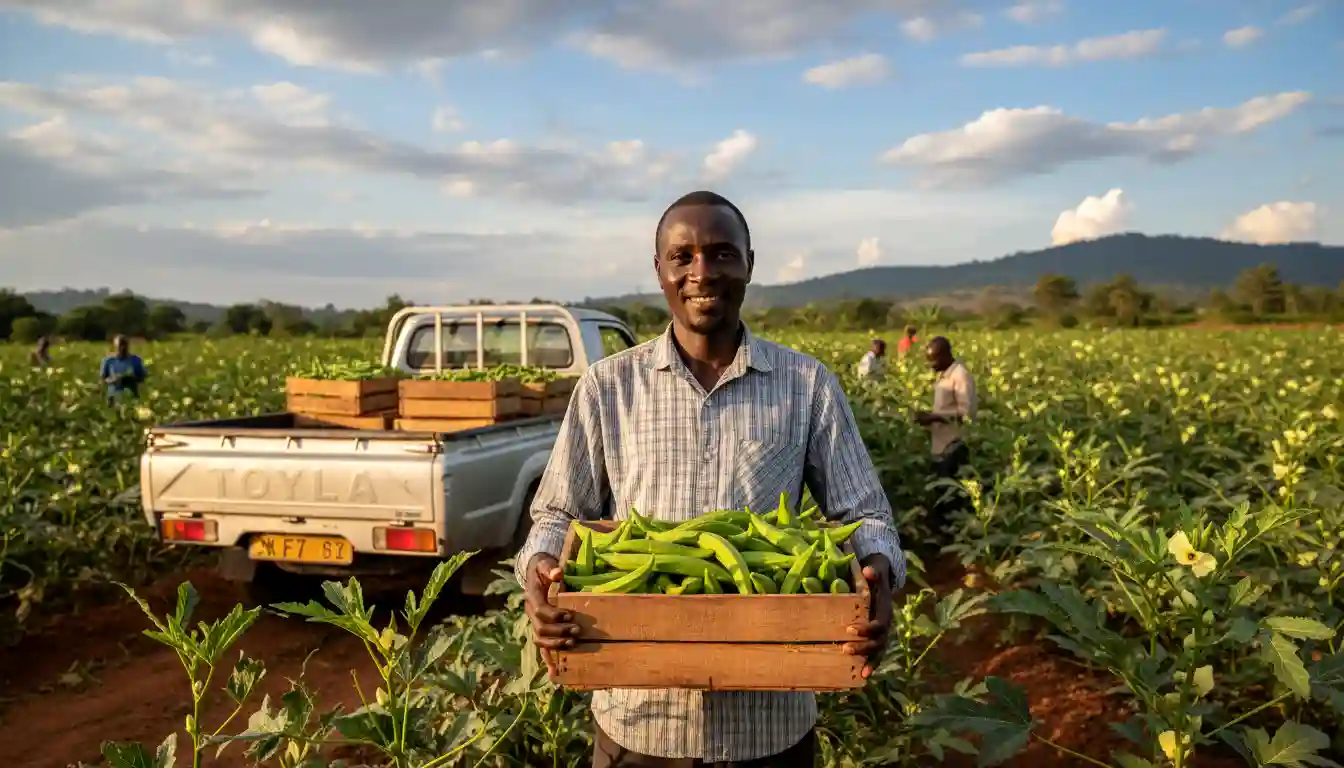
For local markets, timing is everything. Okra has a short shelf life. It must be harvested early in the morning and transported to the market immediately. Brokers often buy at the farm gate, taking the transport risk but offering lower prices. Farmers who form groups can hire a pickup truck to deliver directly to markets like Marikiti or Kongowea, increasing their margin by 20% to 30%.
The Export Supply Chain
This chain is rigorous. Exporters like Vegpro or Keitt Exporters contract farmers. They require GlobalGAP certification. The produce is graded on the farm, packed in cold trucks, and taken to packhouses near JKIA. The payment is often higher but rejection rates can be high if the pods are bent or scarred.
Value Addition: The 2026 Frontier
Post-harvest losses in okra can hit 40%. To combat this, smart farmers are drying excess okra. Solar-dried okra can be stored for months and rehydrated for stews. Additionally, Okra Powder is gaining traction as a superfood for blood sugar management, sold in health shops in Nairobi.
How to Manage Pests and Diseases?
Major threats include Aphids, Fruit Borers, and Powdery Mildew. Control involves crop rotation, using sticky traps, and applying copper-based fungicides. Hygiene in the field is the cheapest and most effective prevention.
READ ALSO: Coriander Varieties in Kenya: Best Dhania Types, Yields and Market Demand 2026
Common Pests
- Flea Beetles: These eat small holes in the leaves. They can be controlled using neem-based organic sprays or synthetic insecticides like Thunder.
- Aphids: They suck sap and transmit viruses. Managing ants (which protect aphids) and using soapy water sprays can help reduce populations.
Common Diseases
- Powdery Mildew: Appears as white dust on leaves during humid weather. It reduces photosynthesis. Use sulfur-based fungicides.
- Yellow Vein Mosaic Virus: The biggest killer of okra. The leaves turn yellow and veins thicken. There is no cure. Infected plants must be uprooted and burned immediately. Control whiteflies to prevent transmission.
2026 Outlook and Conclusion
As we look through 2026, okra farming stands out as a resilient and profitable venture for Kenyan farmers. The combination of short maturity periods and dual-market demand (local and export) creates a safety net that few other crops offer. The key to success lies not just in planting, but in consistent management and securing a market channel before the first pod appears.
READ ALSO: 10 Most Profitable Farming Ventures in Kenya for 2026
Farmers who adopt drip irrigation and focus on quality control will see the highest returns. Whether you are in Kilifi or Machakos, the soil is ready. Start small, manage your costs, and scale up as you master the production cycle.
Farmers Also Ask (FAQ)
How many kgs of okra can I get from one acre?
With good management and irrigation, you can harvest between 6,000 kg and 9,000 kg (6 to 9 tonnes) per acre. Poor management typically yields around 3,000 kg.
How long does okra take to mature in Kenya?
Okra is an early maturing crop. Flowering starts at 40 days, and the first harvest is usually ready between 45 to 60 days after planting, depending on the variety and temperature.
What is the spacing for okra planting?
The recommended spacing is 60cm between rows and 30cm between plants. This population allows for adequate sunlight penetration and airflow, which reduces fungal diseases.
Can okra grow in cold areas like Nyandarua?
No. Okra is a warm-season crop. In cold areas like Nyandarua, growth will be stunted, and pod set will be minimal. It requires temperatures above 20°C for optimal production.
Is okra farming profitable in Kenya?
Yes. With production costs of roughly KES 85,000 and potential revenue of KES 300,000+, it offers a high Return on Investment (ROI) compared to maize or beans.
What is the market price of okra in Kenya in 2026?
Prices fluctuate based on supply. During the rainy season glut, prices dip to KES 30-40 per kg. In dry seasons or export windows, prices can rise to KES 100-150 per kg.
How do I control Yellow Vein Mosaic Virus?
You cannot cure it once a plant is infected. Prevention is key: plant resistant varieties like Arka Anamika, control whiteflies using pesticides, and immediately remove infected plants.
Does okra need a lot of water?
Okra is drought-tolerant but needs consistent moisture for high yields. Water stress causes pods to become fibrous and tough, rendering them unsellable.
Where can I sell my okra harvest in Nairobi?
Major markets include Wakulima Market (Marikiti), City Park Market, and Gikomba. You can also approach supermarket fresh produce managers at Naivas or Carrefour.
Can I export okra from Kenya myself?
Direct export is difficult for beginners due to strict GlobalGAP requirements and logistics. It is better to contract with established export companies who handle the licensing and freight.