

- Rabbit meat prices in 2026 retail between KES 700 and KES 900 per kilogram for health-conscious urban consumers.
- A standard beginner unit of four does and one buck can generate over 150 kits annually under optimal management.
- Rabbit urine is highly lucrative in 2026, selling as a potent organic biopesticide for KES 300 to KES 500 per liter.
Table of Contents
Rabbit farming in Kenya has evolved from a simple backyard hobby into a highly sophisticated, high-return agribusiness venture in 2026. Urbanization and a growing demand for low-cholesterol white meat have created a lucrative gap in the market that smart farmers are rushing to fill. With relatively low startup capital and minimal space requirements, establishing a modern rabbitry offers an incredibly fast return on investment.
Success in this industry now relies heavily on treating the farm like a biological factory. Modern farmers are not just selling meat; they are capitalizing on zero-waste models by monetizing rabbit urine and cold manure. By following strict breeding schedules, utilizing localized fodder, and leveraging digital marketplaces, beginners can easily navigate the learning curve and build a profitable commercial rabbit farm.
What Are the Best Rabbit Breeds for Commercial Farming in Kenya?
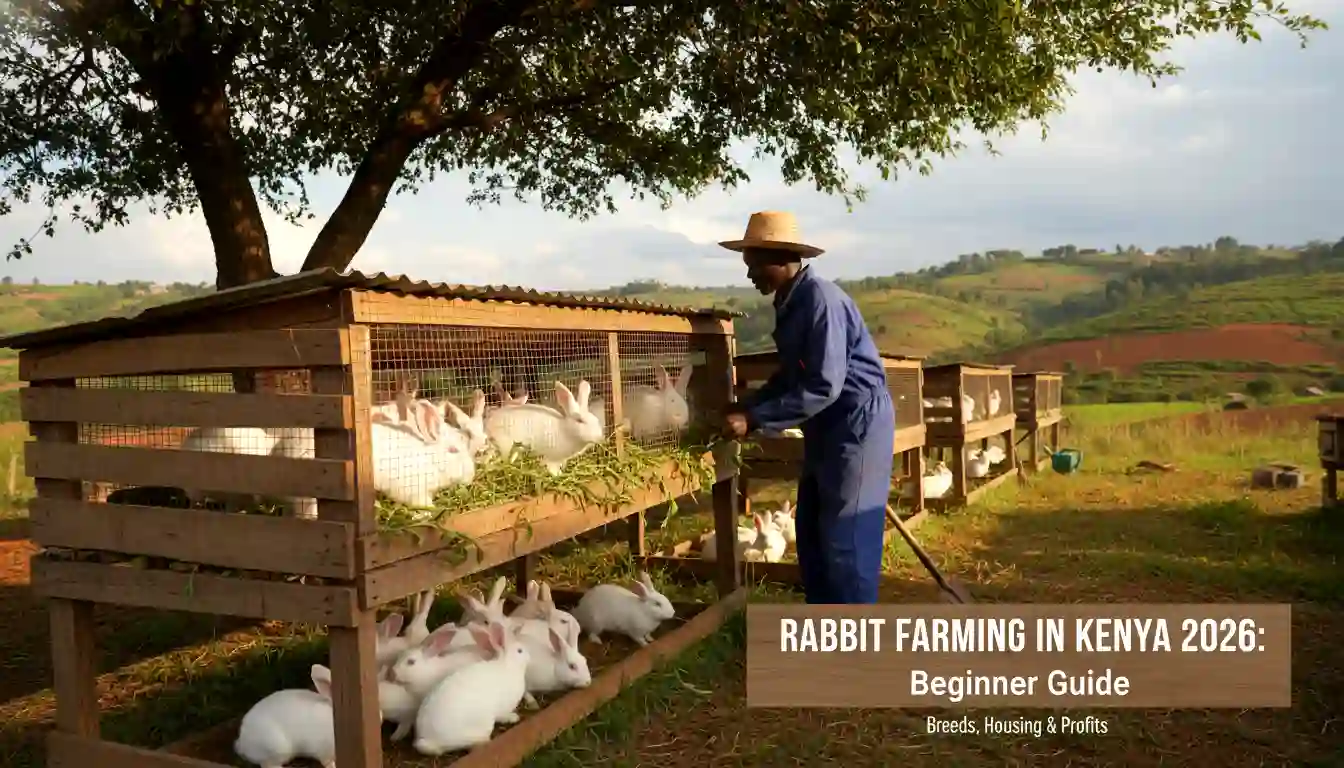
The best commercial rabbit breeds in Kenya are the New Zealand White, California White, Flemish Giant, and Chinchilla. These specific breeds offer rapid growth rates, excellent meat-to-bone ratios, and superior maternal instincts. A mature New Zealand White can reach a market weight of four kilograms within five months.
The New Zealand White
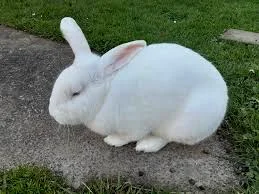
The New Zealand White remains the undisputed industry standard for commercial meat production across Kenya. This breed grows incredibly fast and reaches a slaughter weight of about three kilograms in just four to five months. Does of this breed are famous for their excellent mothering abilities and can comfortably nurse large litters of up to ten kits.
You May Like: Pig Farming in Kenya 2026: Complete Beginner Guide to Profitable Piggery
The California White
Easily identifiable by their white bodies and dark points on the nose, ears, and feet, the California White is another premium meat producer. They boast one of the highest meat-to-bone ratios in the rabbit farming sector. Many Kenyan farmers crossbreed the California White with the New Zealand White to achieve hybrid vigor, resulting in highly disease-resistant offspring.
The Flemish Giant
As the name suggests, the Flemish Giant is a heavyweight breed that can tip the scales at over seven kilograms when fully mature. While they consume more feed and take slightly longer to reach maturity, they are highly valued for crossbreeding purposes. Introducing a Flemish Giant buck to a medium-sized doe dramatically increases the frame size and market weight of the resulting litter.
The Chinchilla Rabbit
The Chinchilla breed is highly versatile, historically farmed for both its meat and its luxurious pelt. In the Kenyan market, the Standard and Giant Chinchilla varieties are preferred for their robust health and adaptability to varying climatic conditions. Their meat is tender, and their pelts can be tanned and sold to local leather artisans for additional income.
The following table compares the top commercial rabbit breeds in Kenya based on mature weight, maturity period, and disease resistance. Use this data to select the best foundation stock for your 2026 rabbitry.
| Rabbit Breed | Average Mature Weight (Kg) | Maturity Period | Disease Resistance |
|---|---|---|---|
| New Zealand White | 4.0 to 5.0 | 4 to 5 Months | High |
| California White | 3.5 to 4.5 | 4 to 5 Months | High |
| Flemish Giant | 6.0 to 8.0 | 6 to 8 Months | Moderate |
| Chinchilla | 4.5 to 5.5 | 5 to 6 Months | High |
Where to Buy Quality Rabbit Breeding Stock in Kenya
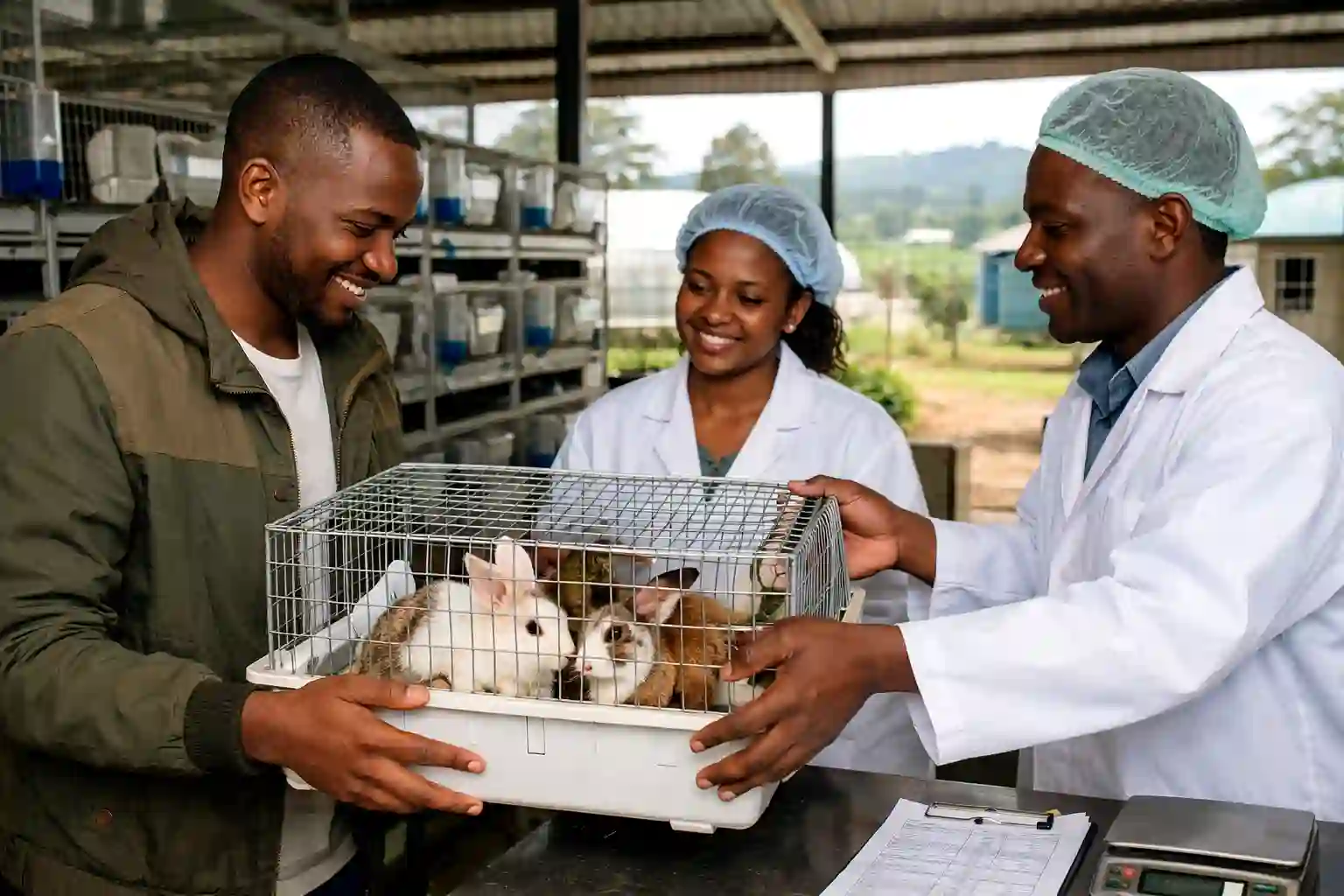
You can source certified rabbit breeding stock from KALRO research stations, the Agricultural Development Corporation, and reputable private breeders. Digital platforms like Safaricom Digifarm, Mkulima Young, and Jiji Kenya also connect buyers with vetted local sellers offering healthy, vaccinated foundation stock.
Government and Research Institutions
For absolute beginners, sourcing foundation stock from recognized government bodies guarantees genetic purity and disease-free animals. The Kenya Agricultural and Livestock Research Organization offers excellent breeding stock alongside comprehensive training manuals. KALRO stations provide farmers with hybrid varieties that have been specifically adapted to local climatic conditions.
You May Like: Improved Kienyeji Chicken Farming in Kenya 2026: Complete Guide to Breeds, Housing, Feeding and Profits
The Agricultural Development Corporation is another highly reliable source for premium agricultural inputs, including livestock. Purchasing from these institutions ensures you are not buying inbred animals, which is a common pitfall in backyard farming. Inbred rabbits suffer from stunted growth, poor immunity, and high mortality rates.
Digital Agribusiness Platforms
The agricultural landscape in 2026 is highly digitized, making it easier than ever to procure livestock from your smartphone. Safaricom Digifarm provides a trusted ecosystem where farmers can access credit, agricultural extension services, and verified inputs. This platform helps mitigate the risk of dealing with unscrupulous middlemen.
Mkulima Young and Jiji Kenya host thousands of listings from independent rabbit farmers across the country. When using these open marketplaces, always request to visit the seller farm in person before making any mobile payments. Observing the hygiene of the seller rabbitry will give you direct insight into the health of the animals you intend to buy.
Private Commercial Breeders
Specialized private breeders, such as those affiliated with the Rabbit Breeders Association of Kenya, are excellent sources for purebred genetics. These professional breeders keep meticulous records of lineages, birth weights, and vaccination schedules. While their breeding bucks and does may cost slightly more, the investment pays off rapidly through larger, healthier litters.
When purchasing from private entities, always ask for a breeding history card. A healthy mature breeding doe or buck generally costs between KES 3,000 and KES 5,000 depending on the breed and weight. Ensure you transport the animals during the cool morning or evening hours to minimize heat stress.
How Do You Manage Rabbit Feed and Soil Nutrition for Fodder?
You manage rabbit nutrition using the 70-20-10 rule where seventy percent is forage, twenty percent is commercial pellets, and ten percent is supplements. To grow high-quality forage like Lucerne, farmers utilize subsidized fertilizers such as DAP and CAN to ensure the soil provides adequate macronutrients for rapid plant growth.
Understanding the 70-20-10 Feeding Rule
Feed represents the highest recurring cost in any rabbit farming enterprise. To maintain profitability in 2026, experts recommend the 70-20-10 feeding strategy to optimize growth and prevent digestive issues. Seventy percent of the diet must consist of high-fiber hay or forage like Lucerne, Boma Rhodes, or dried Napier grass.
Twenty percent of the diet should be dedicated to high-protein commercial rabbit pellets. Quality pellets currently retail between KES 2,500 and KES 2,700 for a 50kg bag at local agrovets. The remaining ten percent consists of safe supplements such as wilted sweet potato vines, carrot tops, and clean vegetable scraps.
Growing Fodder with Subsidized Fertilizers
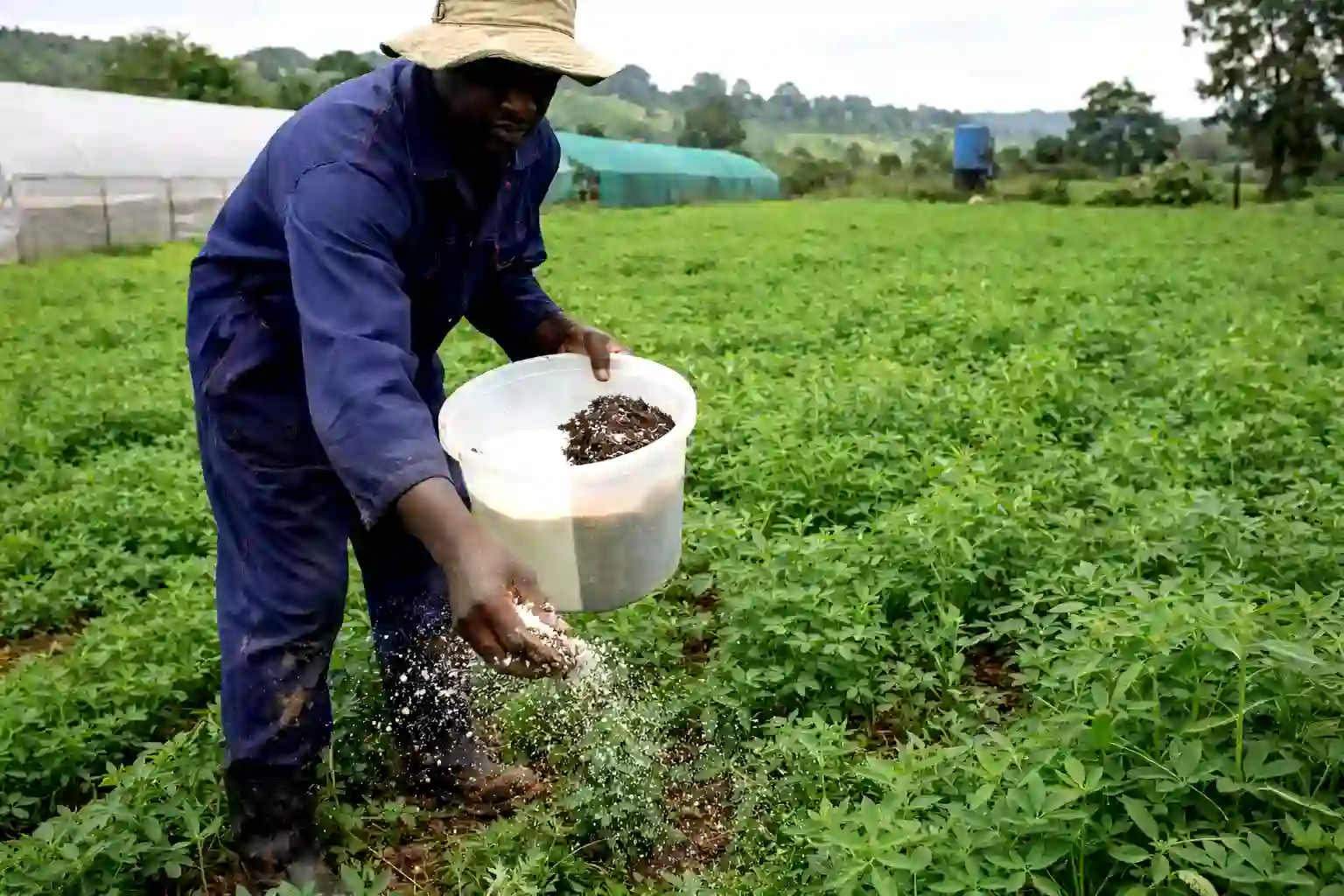
To reduce the cost of commercial pellets, smart farmers cultivate their own protein-rich fodder crops. Growing crops like Lucerne requires well-nourished soil, which is easily achieved through the Kenyan government fertilizer subsidy program. As of March 2026, the maximum cost for subsidized fertilizers accessed via NCPB depots is highly favorable for smallholder farmers.
You May Like: Top 5 Profitable Dairy Cow Breeds for Successful Farming in Kenya (2026 Guide)
Planting fodder crops with Di-Ammonium Phosphate ensures strong root development and rapid establishment. Top-dressing with Calcium Ammonium Nitrate provides the nitrogen necessary for lush, leafy vegetative growth. Farmers can then harvest, dry, and store this fodder as affordable hay for the dry seasons.
The table below outlines the March 2026 subsidized fertilizer prices available to Kenyan farmers for growing rabbit fodder. Review these costs to budget your forage production effectively.
| Fertilizer Type | Subsidized Price per 50kg Bag (KES) | Primary Use for Rabbit Fodder |
|---|---|---|
| DAP (Di-Ammonium Phosphate) | 3,500 | Root establishment during initial planting. |
| CAN (Calcium Ammonium Nitrate) | 2,875 | Top-dressing for rapid leaf growth. |
| NPK (Nitrogen, Phosphorus, Potassium) | 3,275 | Balanced soil nutrition for continuous harvesting. |
Rabbit Manure as a Premium Soil Optimizer
While growing fodder requires chemical inputs initially, mature rabbit farms quickly become self-sustaining through the production of organic manure. Rabbit droppings are considered a cold manure, meaning they have an optimal carbon-to-nitrogen ratio. Unlike poultry waste, rabbit manure can be applied directly to crops without the risk of burning delicate plant roots.
Furthermore, harvesting rabbit urine offers a dual-purpose agricultural solution. When fermented for three weeks, rabbit urine acts as both a foliar liquid fertilizer and a potent biopesticide. This organic input is highly sought after by strawberry and indigenous vegetable farmers, creating an excellent secondary revenue stream.
Which Kenyan Counties Offer the Best Climate for Rabbit Farming?
Kiambu, Nakuru, and Machakos counties offer excellent environments for rabbit farming. Kiambu and Nakuru provide cool, high-altitude climates that prevent heat stress, while Machakos requires specialized open-air hutch designs to manage higher temperatures while capitalizing on massive local market demand.
Kiambu County: The High-Altitude Advantage
Kiambu County is the epicenter of intensive rabbit farming in Kenya due to its proximity to the massive Nairobi consumer market. The cool, temperate climate of areas like Limuru and Kikuyu is absolutely perfect for rabbits, which naturally lack sweat glands and struggle in extreme heat. Farmers in Kiambu rarely have to worry about heatstroke wiping out their litters.
Additionally, Kiambu boasts a well-established network of agrovets and veterinary services. Sourcing commercial pellets, hay, and localized extension support is seamless. The high population density means farm-gate sales of rabbit meat and urine are incredibly fast, eliminating complex transport logistics.
Nakuru County: The Agricultural Hub
Nakuru County offers an incredible balance of favorable climate and abundant access to raw fodder materials. The region is known for extensive agricultural activities, making it easy and cheap to source Lucerne, Boma Rhodes hay, and vegetable waste. This significantly lowers the daily feeding costs for commercial rabbitries.
The climate in Nakuru, Naivasha, and Molo is cool and predictable, promoting optimal breeding conditions year-round. Nakuru farmers are also pioneering value addition, setting up small-scale tanneries for rabbit pelts and processing facilities for organic rabbit urine fertilizers. This makes the county a hotspot for comprehensive rabbit value chain development.
Machakos County: Mastering the Semi-Arid Model
While Machakos County features a warmer, semi-arid climate, it has become a highly successful region for rabbit farming through adaptive housing techniques. Farmers here utilize well-ventilated, raised tier hutches placed under the shade of large trees or specialized shade nets. Ensuring constant access to cool, clean drinking water via automated nipple drinkers is critical in this region.
You May Like: DAIRY GOAT FARMING IN KENYA: THE 2026 MASTER GUIDE TO PROFITABLE BREEDS, HOUSING, AND MILK PRODUCTION
The primary advantage of farming in Machakos is the rapid adoption of rabbit urine as a substitute for expensive chemical pesticides. Local horticultural farmers growing tomatoes and capsicums are eager buyers of fermented rabbit urine. This massive local demand for farm by-products makes rabbit farming exceptionally profitable in the lower Eastern region.
What is the Ideal 12-Month Breeding Cycle for Rabbit Farming in Kenya?
An ideal 12-month breeding cycle allows a single doe to safely produce four to five litters annually. This cycle involves a 31-day gestation period, a 45-day weaning phase, and a two-week resting period for the mother before the next mating session.
Quarter 1: Foundation and First Mating
The farming calendar begins with the careful selection and settling of your breeding stock. Before introducing the animals, ensure your raised hutches are fully disinfected and equipped with foot rests to prevent sore hocks. When mating, always take the female to the male hutch, because doing the reverse will cause the highly territorial female to attack the buck.
A successful mating session takes only a few minutes, after which the doe should be returned to her specific cage. Keep a detailed record of the mating date on a hutch card. The gestation period for a rabbit is roughly 28 to 31 days, meaning preparation for the nesting box should begin by the fourth week.
Quarter 2: Kindling and Weaning
A few days before delivery, provide the pregnant doe with a wooden nesting box lined with soft, clean hay. She will naturally pull fur from her chest to create a warm bed for the blind and hairless kits. A healthy doe will deliver between six and ten kits, nursing them primarily at night or early morning.
The kits will open their eyes around day ten and begin sampling solid food by week three. By day 45, the kits should be completely weaned and moved to separate fattening pens, categorized by gender to prevent premature breeding. The mother should then be given a strict two-week rest period on high-quality feed before the next mating cycle.
Quarters 3 and 4: Scaling and Harvesting
As you enter the second half of the year, your first batch of weaned kits will hit the crucial fattening phase. This is when you maximize their intake of high-protein commercial pellets to ensure they reach the target slaughter weight of 2.5 to 3 kilograms. At exactly four to five months of age, these prime meat rabbits are ready for the market.
Simultaneously, your breeding does will be entering their third and fourth kindling cycles. By maintaining strict discipline with the two-week resting rule, you prevent maternal exhaustion and maintain high kit survival rates. Continually harvest urine daily using sloped iron sheets beneath the cages, bottling it for weekly sales to horticultural farmers.
Is Rabbit Farming Profitable in Kenya Under 2026 Market Rates?
Yes, rabbit farming is highly profitable in 2026, offering profit margins of over seventy percent. A small operation with one buck and four does can generate over KES 205,000 in gross revenue annually against an initial setup and operational cost of roughly KES 50,000.
The Capital Expenditure
Starting a rabbit farm requires a strategic initial investment, primarily focused on proper housing. Utilizing the 3-to-1 cage rule, you must build adequate space for the mother, her litter, and the separated weaners. Constructing a professional, raised A-type hutch with automated nipple drinkers costs between KES 3,800 and KES 4,500 per unit.
Acquiring premium genetics is the second major expense. A standard beginner unit of one buck and four does from a certified breeder will cost approximately KES 15,000. Initial feed stocks, basic veterinary supplies like dewormers, and multivitamins will consume the rest of your startup capital.
Revenue Streams and ROI
The return on investment in rabbit farming is exceptionally fast due to the rapid reproduction rate. A single doe can safely produce 25 to 30 surviving kits per year. With four does, you can conservatively raise 100 kits to market weight annually, generating immense revenue when sold at KES 700 per kilo.
The secondary revenue streams are what make modern rabbit farming truly lucrative. Harvesting just one liter of urine daily from a five-rabbit unit yields over 300 liters a year. Selling this bio-liquid at KES 300 per liter ensures that your farm waste completely subsidizes your monthly commercial pellet costs.
The financial table below outlines a conservative 12-month projection for a beginner setup consisting of one buck and four does. Please note that estimated ranges vary by management, feed efficiency, and local market fluctuations.
| Expense / Revenue Item | Estimated Cost (KES) | Estimated Income (KES) |
|---|---|---|
| Hutch Construction (5 Units) | 20,000 | – |
| Breeding Stock (1 Buck, 4 Does) | 15,000 | – |
| Commercial Pellets & Supplements (1 Year) | 12,000 | – |
| Veterinary Care & Miscellaneous | 3,000 | – |
| Total Initial & Operating Costs | 50,000 | – |
| Rabbit Meat Sales (100 kits at 2kg, KES 700/kg) | – | 140,000 |
| Rabbit Urine Sales (200 liters at KES 300/liter) | – | 60,000 |
| Rabbit Manure Sales | – | 5,000 |
| Total Gross Revenue | – | 205,000 |
How Do You Process and Sell Rabbit Meat in the Kenyan Supply Chain?
You process and sell rabbit meat by partnering with certified local slaughterhouses, high-end butcheries, and organic restaurants. To maximize profits, farmers use digital platforms to sell directly to health-conscious consumers while establishing contracts with agribusiness firms that buy rabbit urine in bulk.
Navigating the Meat Market
The demand for rabbit meat in Kenya is driven by its exceptional nutritional profile. It is a white meat that is incredibly high in protein while being significantly lower in cholesterol and fat compared to beef, pork, or even chicken. Doctors and nutritionists frequently recommend rabbit meat for patients managing hypertension and heart disease.
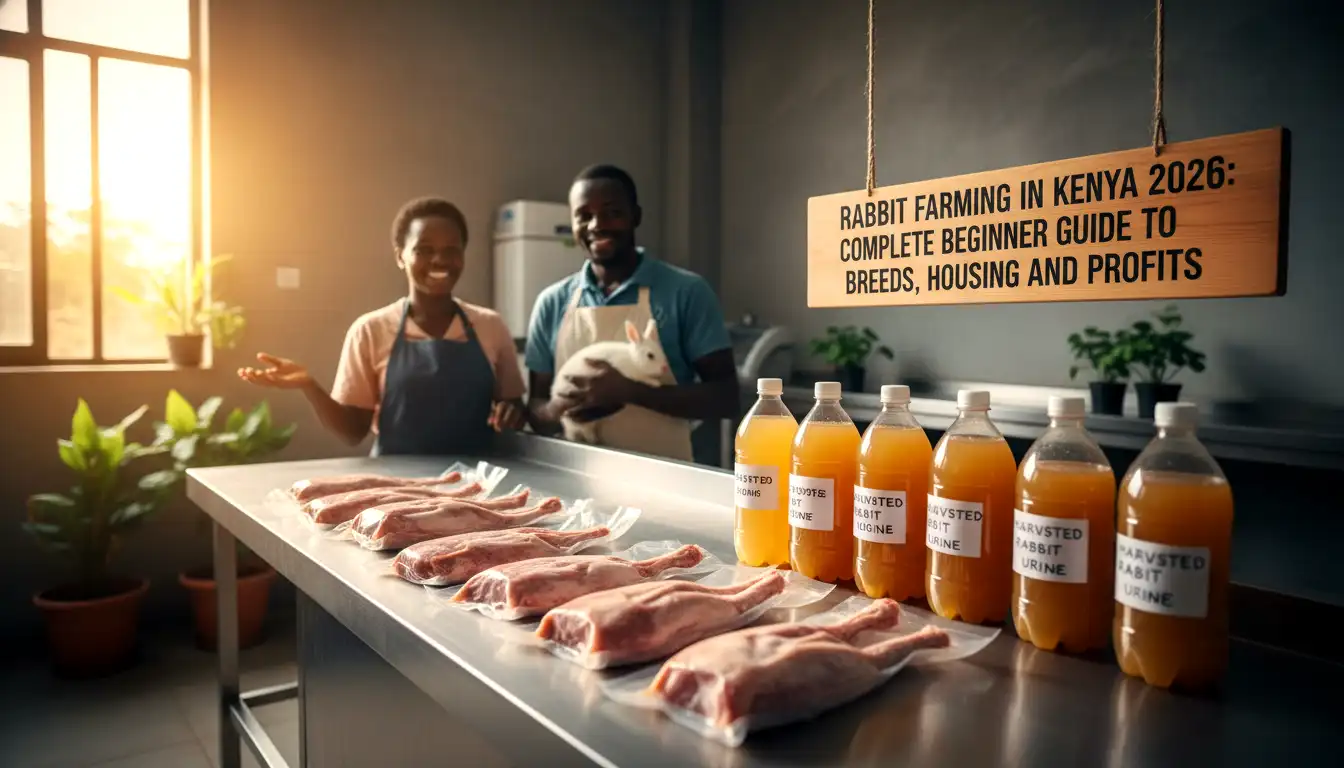
To access premium prices, farmers must ensure the meat is slaughtered in a clean, hygienic environment. While informal farm-gate sales are common, securing supply contracts with high-end restaurants in Nairobi, Mombasa, and Eldoret provides consistent income. Packaging the meat professionally in branded, vacuum-sealed bags drastically increases its retail value in local supermarkets.
Monetizing the Liquid Gold
Rabbit urine has affectionately been dubbed liquid gold in the Kenyan agribusiness sector. It contains high levels of nitrogen, phosphorus, and potassium, making it a powerful fertilizer. More importantly, the pungent odor of the fermented urine acts as a natural insect repellent against aphids and mites on crops.
To process the urine, farmers collect it using plastic gutters beneath the hutches and store it in sealed 20-liter jerrycans in a dark room. After a three-week fermentation process, the liquid is ready for the market. You can easily sell this directly to greenhouse farmers or package it in one-liter bottles for sale at local agrovets.
Value Addition and Tanning
Nothing goes to waste in a well-managed commercial rabbitry. While the meat and urine provide the bulk of the income, the rabbit skin or pelt is also a valuable commodity. When carefully removed, salted, and tanned, these pelts are used to manufacture premium leather goods, hats, and soft interior decor items.
You May Like: 15 Most Profitable Agribusiness Ideas in Kenya to Start in 2026
Partnering with local leather artisans in areas like Kariokor market in Nairobi can turn what is normally discarded waste into a profitable product line. Value addition requires patience and a bit of networking, but it protects your farm from price fluctuations in the primary meat market.
2026 Outlook and Conclusion
The outlook for rabbit farming in Kenya through 2026 and beyond is remarkably positive. As input costs for larger livestock like dairy cows and beef cattle continue to skyrocket, smallholder farmers are rapidly pivoting to highly efficient micro-livestock. The rabbit’s ability to turn affordable green forage into premium white meat makes it an inflation-proof agribusiness asset.
To succeed, you must abandon the backyard hobbyist mindset and adopt strict commercial protocols. Build professional raised hutches, source certified genetics, adhere to the 70-20-10 feeding rule, and meticulously harvest every drop of urine. If you are ready to launch your agribusiness journey, start by visiting a local KALRO station this week to book your foundation breeding stock.
Farmers Also Ask (FAQ)
Where can I sell my rabbits in Kenya?
You can sell your rabbits directly to high-end butcheries, local supermarkets, organic restaurants, and individual consumers via platforms like Jiji Kenya and Mkulima Young.
Is rabbit farming profitable in Kenya?
Yes, it is highly profitable. A well-managed setup of four does and one buck can yield over KES 200,000 annually from meat and urine sales against low feeding costs.
How much does a rabbit cost per kilo in Kenya?
In 2026, premium rabbit meat retails between KES 700 and KES 900 per kilogram depending on the location and whether it is sold farm-gate or in stores.
What are the disadvantages of rabbit farming?
The main disadvantages include the high labor requirement for daily hutch cleaning, vulnerability to heat stress, and the risk of rapid disease spread in crowded cages.
How many months is a rabbit pregnant?
A female rabbit is pregnant for roughly one month. The standard gestation period ranges strictly between 28 and 31 days before she kindles her kits.
What is the biggest killer of rabbits?
Bloat and digestive complications caused by a lack of dietary fiber are the biggest killers, closely followed by Coccidiosis from poor hutch hygiene.
What animals are rabbits afraid of?
Rabbits are highly fearful prey animals. They are naturally terrified of stray dogs, feral cats, snakes, foxes, and large birds of prey like hawks and owls.
What is the 3-3-3 rule for rabbits?
The 3-3-3 rule guides new rabbit integration: 3 days to overcome initial stress, 3 weeks to learn the daily routine, and 3 months to fully settle and trust.
What is a rabbit’s worst enemy?
A rabbit’s worst natural enemies include foxes, coyotes, and stray dogs. In captivity, their worst enemies are poor ventilation, damp conditions, and severe heat.
Is rabbit meat healthy to eat?
Yes, it is exceptionally healthy. Rabbit meat is packed with high-quality protein while maintaining significantly lower fat and cholesterol levels than beef.