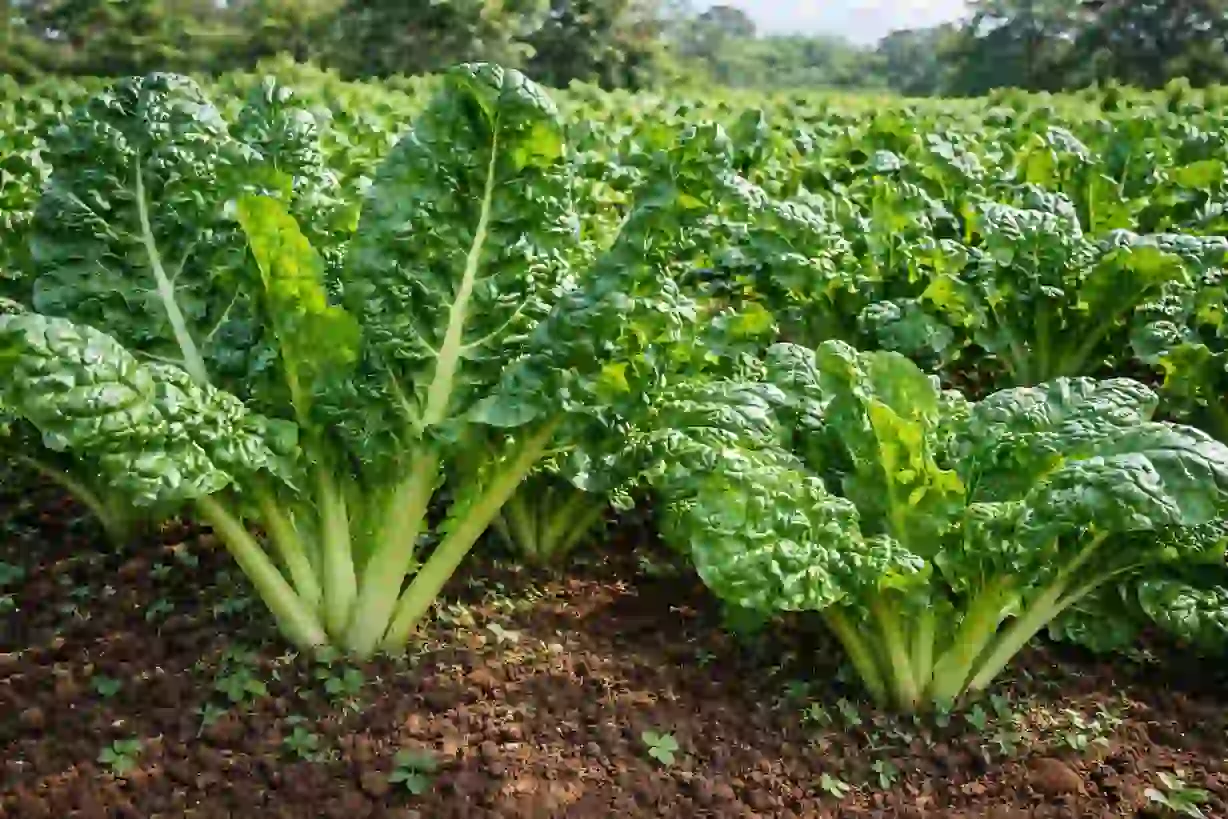

- High Profitability: A well-managed acre can generate a net profit between KES 200,000 and KES 450,000 per season depending on market timing and irrigation.
- Fast Maturity: The Ford Hook Giant variety matures in just 45 to 60 days allowing for up to 4 harvest cycles per year under irrigation.
- Market Demand: Consistent year-round demand exists in major urban centers like Nairobi and Mombasa via Mama Mboga vendors and supermarket chains.
Spinach farming remains one of the most lucrative short-term horticultural ventures for Kenyan farmers in 2026 due to rapid urbanization and shifting dietary habits. While many local farmers confuse Swiss Chard with true spinach, the commercial market heavily favors the hardy Swiss Chard varieties like Ford Hook Giant which offer continuous harvesting potential. Success in this sector requires strict adherence to soil nutrition management and strategic timing to hit the market when supply from rain-fed agriculture dips.
Table of Contents
Is spinach farming profitable for beginners in Kenya?
Yes, spinach farming is highly profitable for beginners because it requires low initial capital investment compared to long-season crops like maize. With a breakeven point often reached within two months, farmers can reinvest profits quickly. However, profitability relies heavily on water availability and pest management.
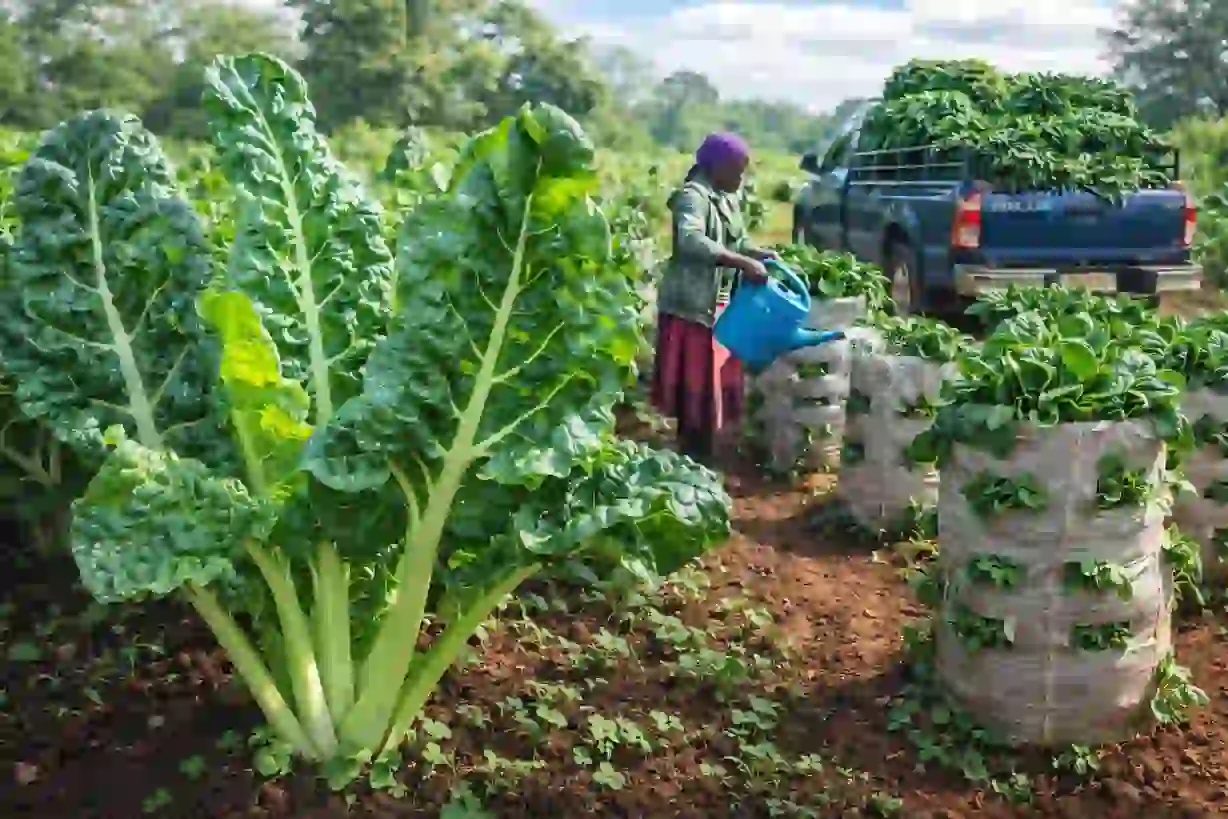
The profitability of spinach in 2026 is driven by its “cut-and-come-again” harvesting model. Unlike cabbage where you harvest the whole head once, spinach allows farmers to harvest leaves weekly for up to six months. This provides a steady weekly cash flow which is vital for smallholder farmers managing daily expenses.
Beginners should start with a quarter or half an acre to master the agronomy before scaling up. Local demand has surged as health-conscious consumers in Nairobi and Kisumu increase their vegetable intake. Furthermore, the rise of digital grocery deliveries has opened new direct-to-consumer channels.
Read Also: Okra Farming in Kenya 2026: Step by Step Guide, Costs, Yields and Profits
However, beginners must be wary of the glut season during the long rains when prices drop significantly. Proper planning ensures you enter the market when prices are favorable. Consistency in supply helps build long-term relationships with buyers.
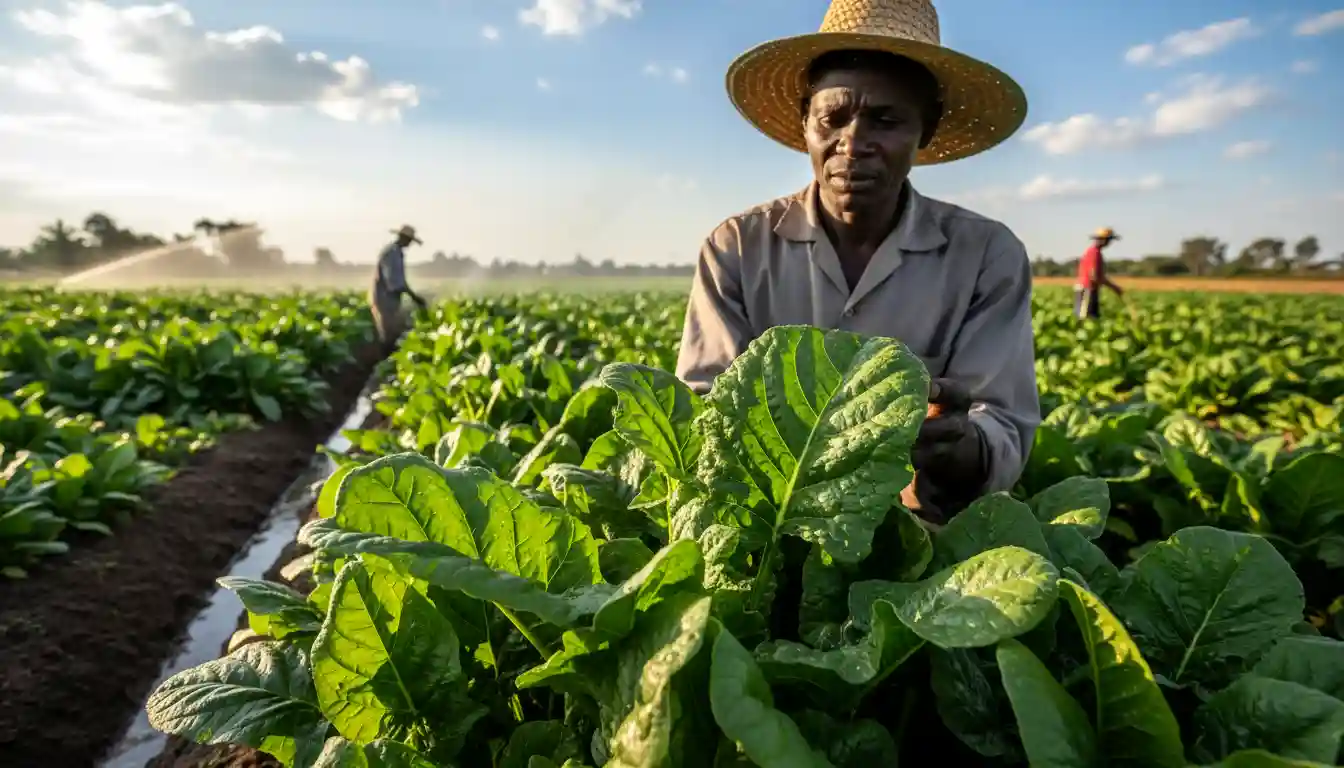
Which spinach varieties yield the highest returns in 2026?
The Ford Hook Giant is the undisputed market leader in Kenya due to its large crinkled leaves and high yield potential. Other viable varieties include Swiss Chard Lucullus for warmer areas and Giant Noble for cooler highland regions. Hybrid F1 seeds are gaining popularity for disease resistance.
Ford Hook Giant
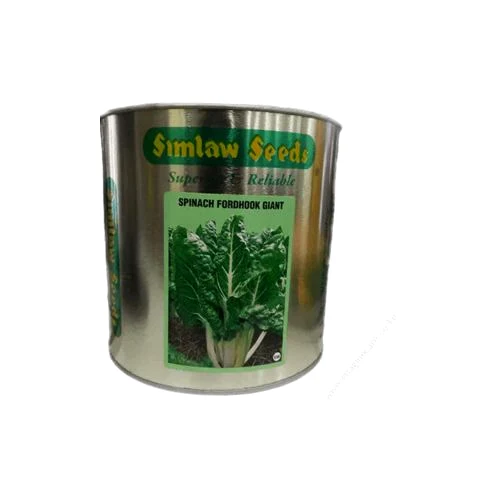
This is the industry standard in Kenya. It produces large, thick, dark green leaves that withstand transport better than softer varieties. It is technically a Swiss Chard but is sold as spinach in 95% of Kenyan markets.
It recovers quickly after harvesting and is highly resistant to bolting (going to seed) during hot weather. Farmers prefer it because of its heavy yield per acre. Resistance to common fungal infections makes it ideal for most regions.
Swiss Chard Lucullus
Lucullus is distinct due to its lighter green leaves and white midribs. It is exceptionally prolific and yields very well in slightly warmer counties like Machakos or parts of Kajiado. The flavor is milder, which some specialized markets and high-end restaurants prefer.
New Zealand Spinach
While not a true spinach, this trailing plant is excellent for hotter, drier areas where standard varieties fail. It is heat-tolerant and spreads across the ground. It is a niche crop best suited for kitchen gardens or specific contract farming arrangements.
Where to Buy Spinach Certified seeds in Kenya 2026
Certified seeds should be sourced from established suppliers like Kenya Seed Company, Simlaw Seeds, or Royal Seed to ensure germination rates above 85%. For seedlings, contact certified commercial nurseries in your county to avoid introducing soil-borne diseases like bacterial wilt to your farm.
In 2026, sourcing inputs has shifted towards a hybrid of physical agro-vets and digital platforms. Farmers must prioritize certified seeds to guarantee the yields projected in financial models. Buying cheap, uncertified seeds from open-air markets often leads to poor germination and uneven growth.
Top Digital Sourcing Platforms
Safaricom Digifarm, Jumia kenya and iProcure have become essential for purchasing inputs. These platforms allow farmers to order fertilizers and seeds via phone and collect them at local depots. Mkulima Young and Jiji Kenya are excellent for finding reputable seedling propagators if you prefer transplanting over direct seeding.
Physical Agrovets & Key Suppliers
- Simlaw Seeds (Nairobi & Countrywide): The primary source for the authentic Ford Hook Giant.
- Kenya Seed Company: Reliable for standard open-pollinated varieties.
- Continental Seeds: Known for importing high-quality hybrid varieties suitable for greenhouse and intensive farming.
- Local Commercial Nurseries: In growing hubs like Naivasha and Kiambu, buying ready-to-plant seedlings (3-4 weeks old) saves time and ensures uniform crop establishment.
How to Grow Spinach in Sacks Step by Step
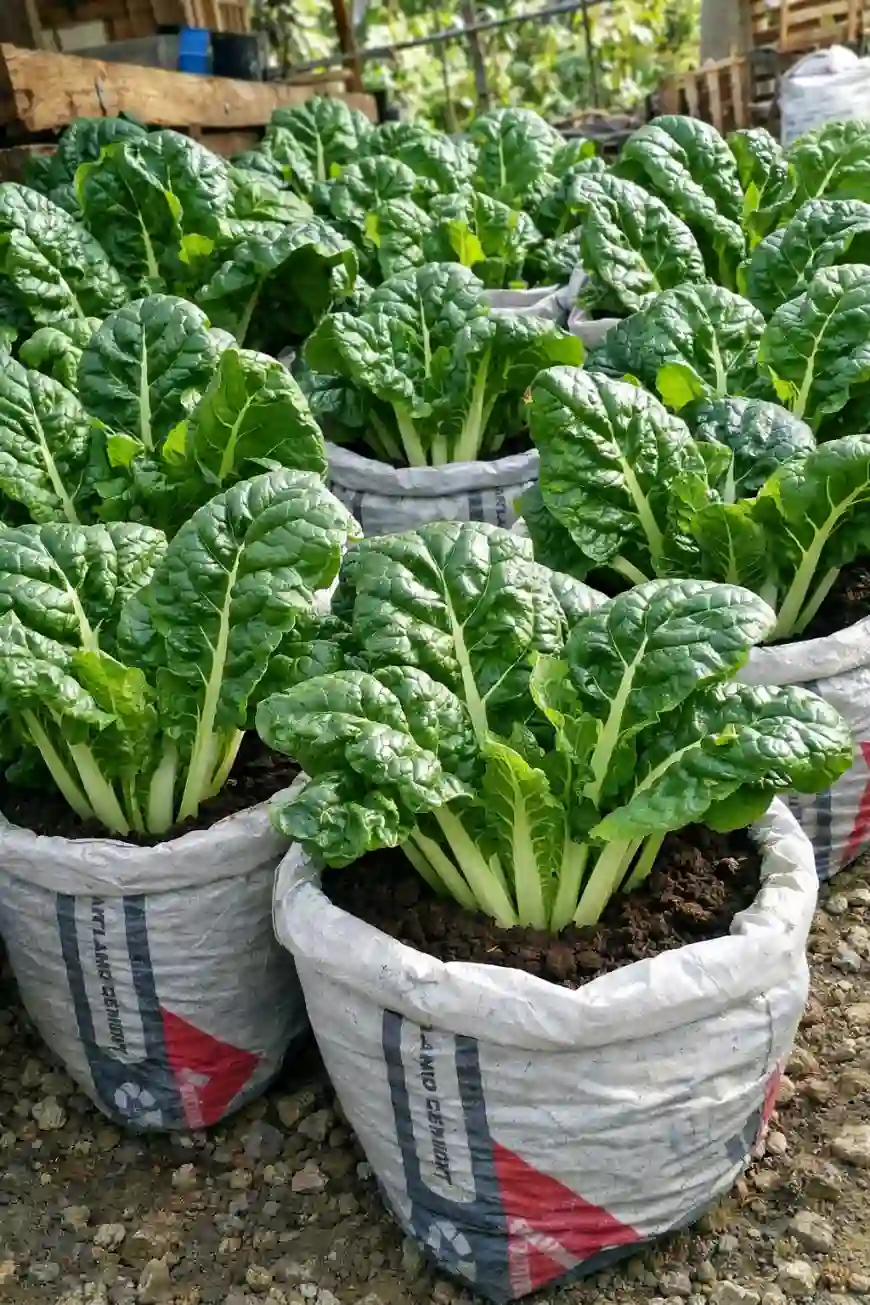
Growing spinach in sacks is a brilliant “hack” for small spaces or if you just want to avoid the backache of traditional gardening. It’s essentially vertical gardening on a budget.
Here is your step-by-step guide to a leafy harvest.
1. Prepare Your Sack
You don’t need anything fancy. Old flour, rice, or cement sacks (thoroughly cleaned) work perfectly.
- Drainage is King: Use a nail or scissors to poke several holes in the bottom and sides of the sack. If water sits at the bottom, your spinach roots will rot.
- Roll it Down: If the sack is very tall, roll the top edges down to create a sturdy “rim” and adjust the height to about 12–15 inches.
2. The Perfect Soil Mix
Spinach is a “heavy feeder,” meaning it loves nutrients. Don’t just use backyard dirt, which can get compacted and hard in a bag.
- The Blend: Mix 50% topsoil, 40% well-rotted manure or compost, and 10% sand or sawdust for drainage.
- Fill: Fill the sack up to about 2 inches from the rim. Tap the bag on the ground to let the soil settle, but don’t pack it down too tight.
3. Sowing the Seeds
You can plant on the top surface and even through the sides of the sack if you’re feeling ambitious.
- Depth: Plant seeds about ½ inch deep.
- Spacing: If planting on top, space seeds about 3–4 inches apart.
- Side Planting: If you poked holes in the sides of the sack, you can carefully tuck seedlings into those holes to maximize your yield.
4. Location and Sunlight
Spinach is a bit of a “Goldilocks” plant—it doesn’t like it too hot or too cold.
- Sun: Place the sack where it gets 4–6 hours of sunlight.
- Heat Warning: If it’s mid-summer, keep the sack in partial shade. Too much heat causes “bolting” (when the plant grows a tall stalk and turns bitter).
5. Water and Maintenance
- Keep it Moist: Sacks dry out faster than the ground. Feel the soil daily; if the top inch is dry, give it a drink.
- Thinning: If too many seeds sprout close together, pull the smaller ones out so the strongest have room to grow. (Bonus: You can eat the sprouts you pull out!)
- Feed: Every 2 weeks, you can add a liquid organic fertilizer or a little more compost to the top.
6. Harvesting
Your spinach should be ready in about 40–50 days.
- Cut and Come Again: Instead of pulling the whole plant, just snip the outer leaves. The center will keep producing new growth for weeks.
- Timing: Harvest in the morning when the leaves are the crispest.
What are the ecological requirements for growing spinach?
Spinach thrives in cool to moderate climates with temperatures between 15°C and 22°C. It requires fertile, well-drained soil rich in organic matter with a pH between 6.0 and 6.8. Consistent moisture is critical; water stress causes bitter leaves and early bolting.
Read Also: How to Grow Tomatoes in Sacks: A Complete Step-by-Step Guide for 2026
Soil Preparation
Land preparation must be thorough. Plough the land to a depth of at least 8 inches to loosen the soil. Incorporate well-decomposed manure at a rate of 10 tonnes per acre two weeks before planting.
Spinach is a heavy feeder and requires nitrogen-rich soil to produce large, succulent leaves. Soil testing is recommended to determine exact nutrient needs. Correcting acidity with lime may be necessary in some highland areas.
Altitude and Rainfall
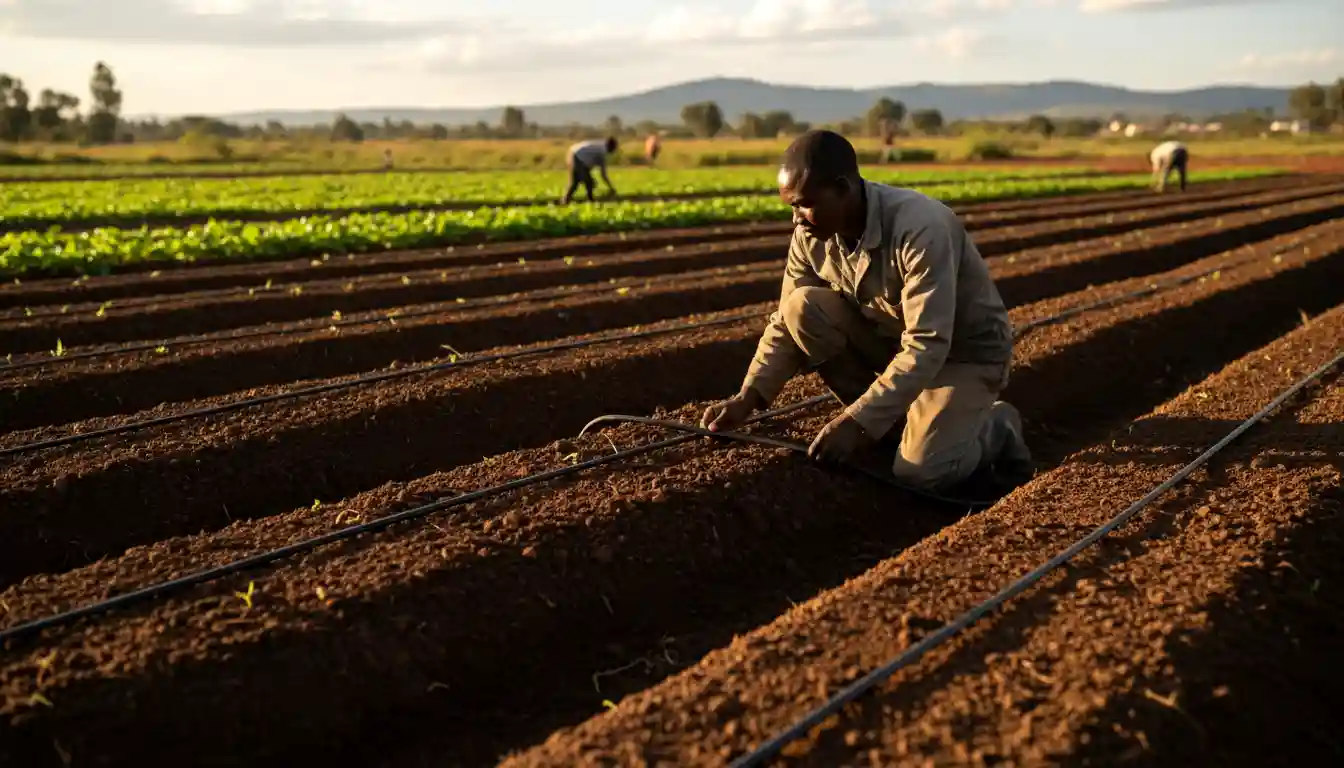
While spinach can grow in a wide range of altitudes, it performs best in high-potential areas like the Central Highlands and Rift Valley. It requires approximately 500mm of rainfall well-distributed throughout the growing season. In 2026, relying solely on rainfall is risky; supplementary irrigation (drip lines) is highly recommended for commercial success.
How does spinach performance compare across different Kenyan counties?
Kiambu County offers the highest profit margins due to low transport costs to Nairobi. Nyandarua County produces the highest yields per acre due to its cool climate. Kajiado County (Isinya/Kitengela) is emerging as a strong producer but requires higher investment in water infrastructure.
Kiambu County (The Market Leader)
Farmers in Kiambu (Githunguri, Limuru) enjoy a massive logistical advantage. The proximity to Nairobi’s Wakulima and Kangemi markets means produce arrives fresh, commanding premium prices. However, land leasing costs in Kiambu are significantly higher, averaging KES 20,000 to 30,000 per acre annually.
Nyandarua County (The Yield King)
The cool, wet climate of Nyandarua is perfect for leafy greens. Spinach leaves here grow larger and darker, often weighing 20% more per stem than those grown in warmer areas. The challenge lies in road infrastructure during the rainy season, which can lead to post-harvest losses if transport trucks get stuck.
Kajiado/Machakos (The Irrigated Frontier)
Farmers here rely 100% on irrigation. While production costs are higher due to water pumping, these counties produce during dry spells when Kiambu and Nyandarua supplies dip. This allows farmers in Kitengela and Athi River to sell at peak prices, often double the standard rate.
What is the optimal 12-month calendar for spinach farming?
The most profitable strategy is to time harvests for the dry months of January-March and August-October. Planting should be staggered every two weeks to ensure a continuous supply. Avoid planting the main crop during the heavy rains of April to prevent fungal diseases.
First Season (Long Rains Timing)
- January: Land preparation and nursery establishment.
- February: Transplanting seedlings. Install drip irrigation to manage early dry spells.
- March: Weeding and top dressing with CAN or foliar feeds.
- April: Harvesting begins. Prices are high before the main rain-fed crop floods the market.
- May – June: Peak harvest. Prices may dip; focus on volume sales.
Second Season (Short Rains Timing)
- July: Land preparation for the second crop.
- August: Transplanting. This is a cold month, so growth may be slightly slower.
- September: Intensive pest management (aphids are common in dry weather).
- October – December: Harvesting. Demand peaks in December due to festivities.
Read Also:Best Onion Varieties for the 2026 Short Rains: Red Coach vs. Neptune
How much does it cost to farm one acre of spinach in 2026?
The total cost of production for one acre of spinach ranges from KES 85,000 to KES 125,000. This includes land lease, certified seeds, labor, fertilizers, and pest control. With proper management, revenue can exceed KES 400,000 over a 4-month harvest period.
Financial success in spinach farming depends on cost control and yield maximization. The table below breaks down the estimated costs for a beginner farmer renting land in a peri-urban area.
Estimated Financial Breakdown (1 Acre)
| Expense Item | Cost (KES) | Notes |
|---|---|---|
| Land Lease (1 Season) | 10,000 – 15,000 | Varies by county location. |
| Ploughing & Harrowing | 8,000 | Tractor hire. |
| Manure (10 Tonnes) | 20,000 | Including transport. |
| Certified Seeds/Seedlings | 8,000 | ~20,000 seedlings per acre. |
| Fertilizers (DAP & CAN) | 18,000 | Base and top dressing. |
| Crop Protection (Pesticides) | 15,000 | Fungicides and insecticides. |
| Labor (Weeding/Watering) | 20,000 | Manual labor costs. |
| Water/Irrigation Costs | 10,000 | Fuel for pump or water bill. |
| TOTAL ESTIMATED COST | ~KES 114,000 | Excluding harvesting labor. |
Revenue & Profit Projections
A well-maintained acre yields approximately 15,000 to 20,000 kg (15-20 tonnes) over its lifecycle. Estimated ranges vary by management practices and prevailing weather conditions.
Conservative Yield: 15,000 kg
Average Farm Gate Price: KES 25 per kg (Low season) to KES 40 per kg (High season).
Gross Revenue: 15,000 kg x KES 30 (avg) = KES 450,000.
Net Profit: KES 450,000 – KES 114,000 = KES 336,000.
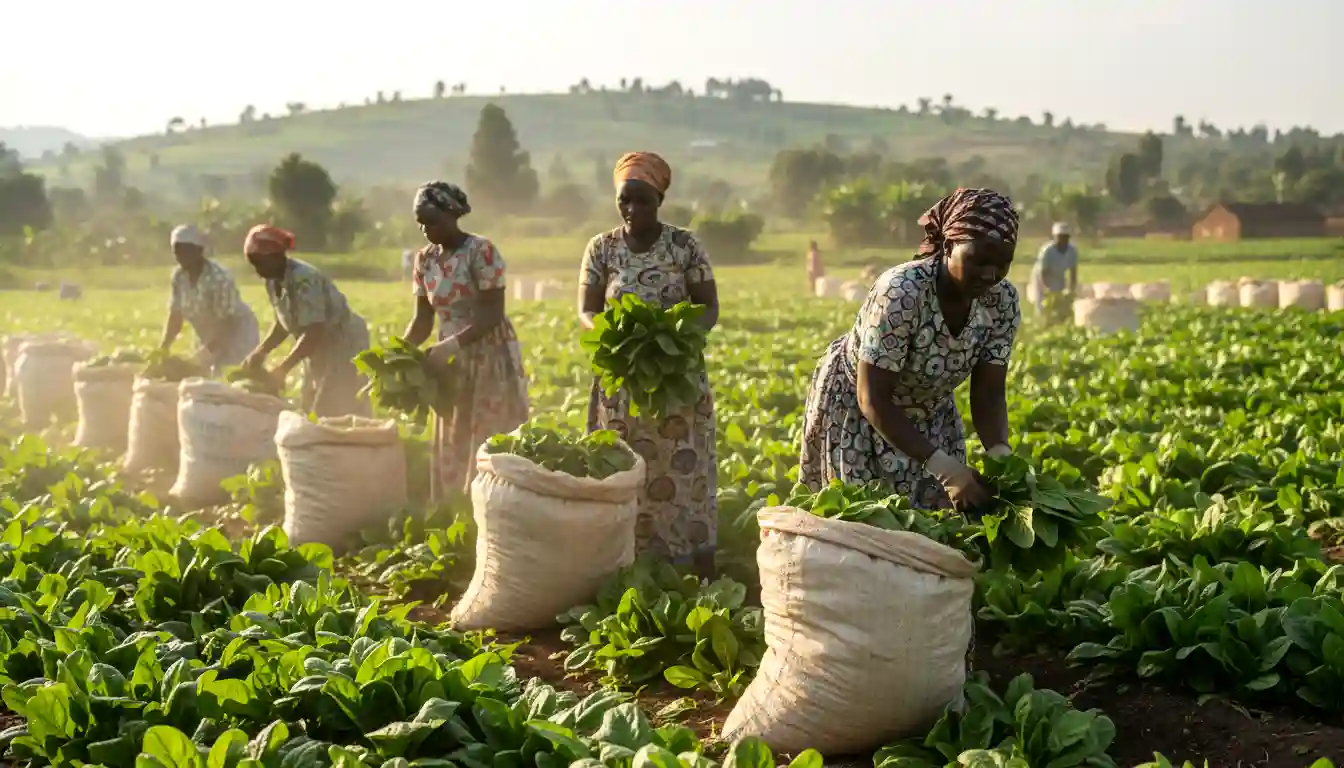
Note: Harvesting labor is usually paid per bag harvested and deducted from gross sales or added to costs.
What are the common pests and diseases affecting spinach?
The most destructive pests are Aphids, Cutworms, and Leaf Miners. Common diseases include Damping-off in nurseries, Leaf Spot (Cercospora), and Downy Mildew. Integrated Pest Management (IPM) using crop rotation and specific pesticides is essential for control.
Pest Management
Aphids cluster under leaves and suck sap, causing curling and yellowing. They are prevalent during dry spells. Farmers should use sticky traps or safe insecticides like imidacloprid (strictly adhering to Pre-Harvest Intervals).
Cutworms attack young stems at night; drenching the soil before planting helps minimize this threat. Leaf miners create visible white trails on leaves, reducing market quality. Neem-based sprays are effective in controlling early infestations.
Disease Control
Leaf Spot causes brown lesions on leaves, rendering them unsellable. It spreads rapidly in wet conditions. Fungicides containing copper or mancozeb are effective preventatives.
To avoid damping-off, ensure the nursery bed is raised and soil is sterilized or solarized before sowing seeds. Crop rotation with non-leafy vegetables breaks the disease cycle. Proper spacing allows for air circulation, reducing fungal risks.
How do I market and sell my spinach harvest in Kenya?
Sell directly to Mama Mboga traders for immediate cash payments or aggregate produce for city markets like Wakulima or Marikiti. Supplying institutions (schools, hospitals) requires contracts but offers stability. In 2026, selling via WhatsApp groups to estate residents is a growing high-margin channel.
Value Chain Dynamics
The spinach value chain is short. Most farmers sell to brokers at the farm gate who then transport to urban wholesale markets. While this is convenient, brokers often dictate low prices.
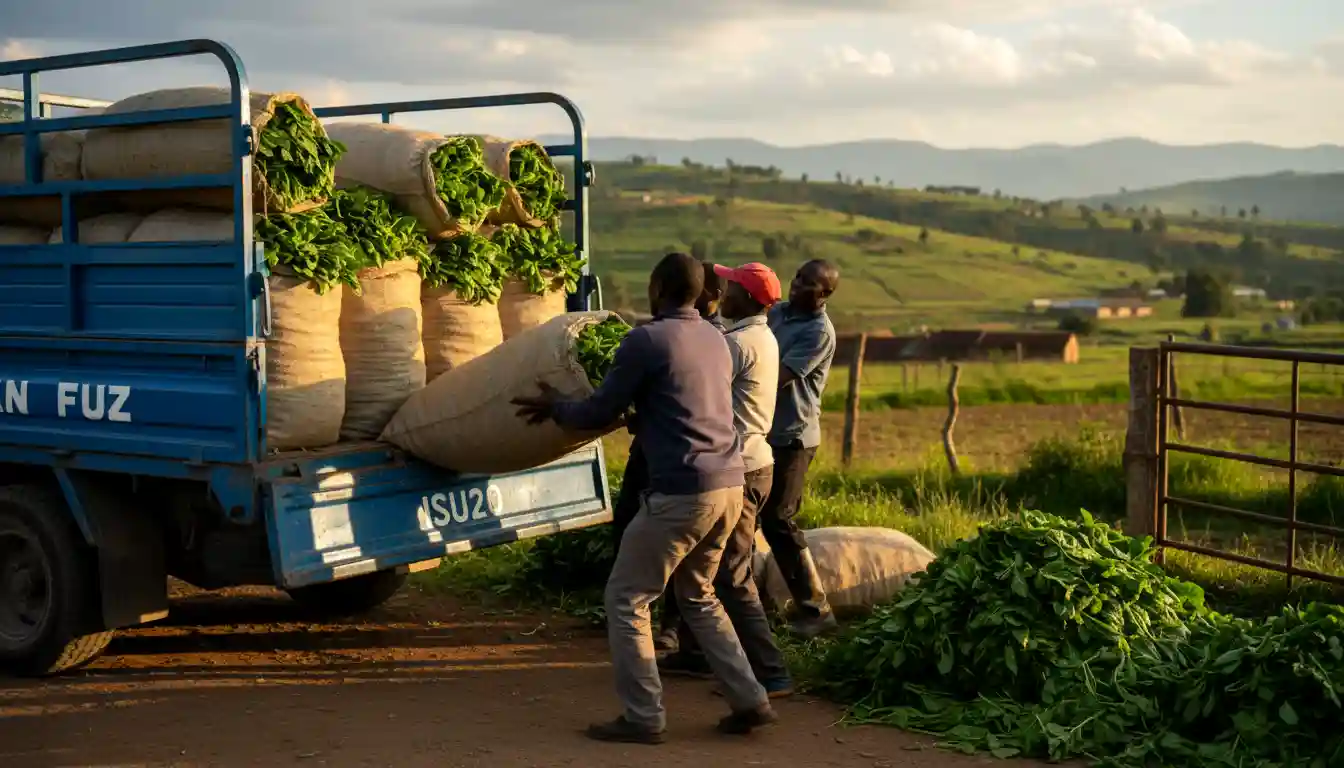
Farmers forming groups can hire their own transport (Canter trucks) to take produce directly to Nairobi, increasing margins by 30%. Direct marketing eliminates middlemen but requires more time and effort. Building a network of reliable buyers is key to consistent sales.
Value Addition
Value addition for spinach is minimal but impactful. Simple practices like washing the leaves, bundling them neatly, and keeping them in cool, shaded crates can increase the selling price. Some urban farmers are now chopping and packaging ready-to-cook spinach for supermarkets, which commands a 200% markup compared to raw leaves.
What is the 2026 outlook for spinach farmers?
The outlook is highly positive. As the cost of living stabilizes, the demand for affordable nutrition remains high. Climate variability will favor farmers who invest in irrigation systems, as rain-fed supply becomes less predictable.
In 2026, the gap between “traditional” farming and “smart” farming is widening. Farmers utilizing soil testing, drip irrigation, and hybrid seeds are seeing yields double that of traditional farmers. The market is also demanding higher quality; leaves with holes or pest damage are increasingly rejected by urban buyers.
For the beginner farmer, the strategy is clear: Start small, secure a water source, and prioritize crop management. Do not plant without a marketing plan. Visit your target market three weeks before harvest to secure buyers.
Read Also: Top 10 Best Money-Making Agriculture Business Ideas in Kenya (2026)
The future belongs to those who treat farming as a business, not a hobby. Record keeping helps track expenses and profits accurately. Continuous learning and adaptation to market trends ensure long-term sustainability.
Farmers Also Ask (FAQ)
How many spinach plants per acre in Kenya?
An acre can hold between 20,000 and 40,000 plants depending on spacing. A spacing of 45cm by 30cm is standard for Ford Hook Giant to allow for large leaf expansion. Closer spacing increases plant count but may result in smaller leaves and higher disease risk.
How long does spinach take to mature in Kenya?
Spinach (Swiss Chard) takes 45 to 60 days from transplanting to the first harvest. If planted directly from seed, it may take 60 to 75 days. The first harvest is usually lighter, with yields increasing in subsequent weeks.
Can spinach grow in hot areas like Mombasa?
Standard spinach struggles in high heat. However, varieties like Swiss Chard Lucullus or the trailing New Zealand Spinach can tolerate coastal heat if provided with shade nets and ample water. It is not the primary crop for the coastal strip but can be grown for subsistence.
What is the best fertilizer for spinach?
Planting requires DAP or a balanced NPK fertilizer to establish roots. For top dressing, nitrogen-rich fertilizers like CAN or Urea are essential to promote leafy growth. Organic options like chicken manure are excellent for boosting nitrogen levels naturally.
How often should I water spinach?
Spinach needs moist soil but not waterlogging. In dry seasons, water 2 to 3 times a week using drip irrigation. Mulching helps retain soil moisture and reduces the frequency of watering required.
How do I control pests in spinach naturally?
Use a mixture of chillies, garlic, and soap water as a natural spray against aphids. Intercropping with strong-smelling herbs like onions or garlic can also repel pests. Neem oil is another effective organic pesticide widely available in Kenya.
What is the price of a 90kg bag of spinach in Kenya?
The price fluctuates significantly. In the high supply season, a bag can go for as low as KES 1,500. In the dry season or high-demand periods, the same bag can fetch upwards of KES 4,500 to KES 6,000.
Can I plant spinach in sacks?
Yes, sack farming (vertical farming) is very popular in urban areas like Kibera and Mathare. A single sack can hold 50-80 plants. This method saves space and water, making it ideal for household consumption or small-scale sales.
How many months can I harvest spinach?
With good management and regular top dressing, you can harvest from the same plants for 4 to 6 months. However, after 6 months, the leaves tend to become smaller and tougher, and it is usually more economical to uproot and replant.
Is spinach farming labor intensive?
Yes, specifically during weeding and harvesting. Weeding must be done carefully to avoid damaging shallow roots. Harvesting is manual and time-consuming, requiring labor to pick, sort, and bundle the leaves efficiently.