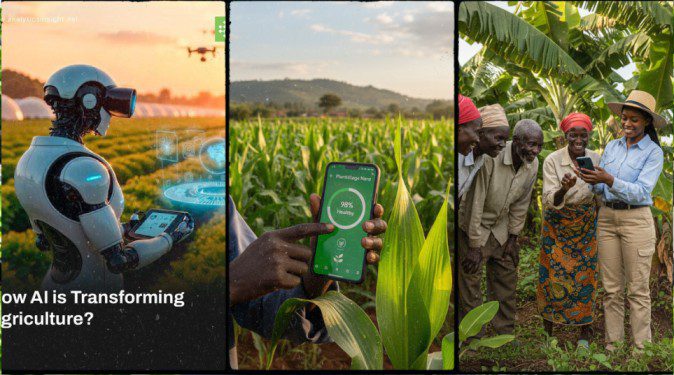

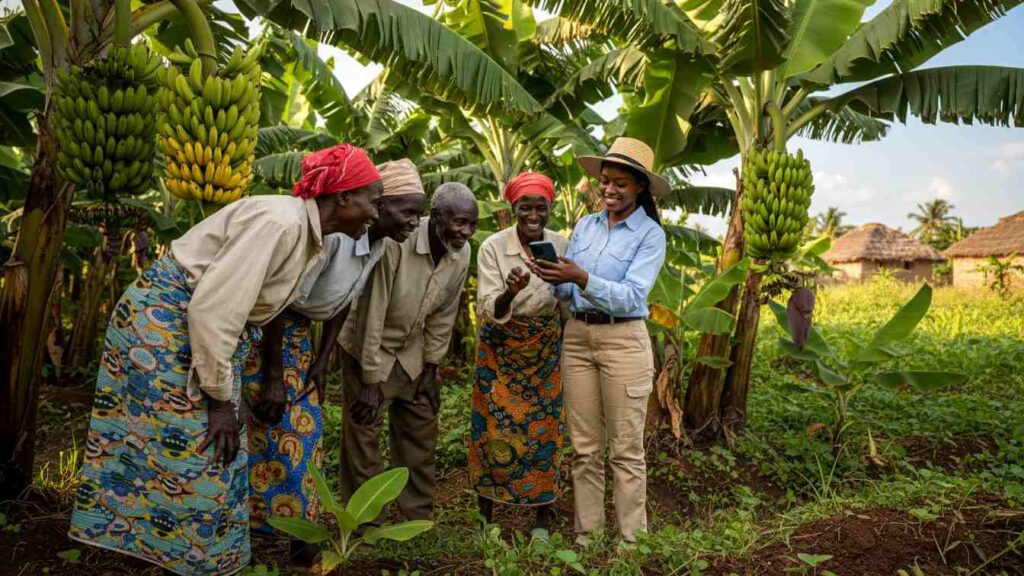
In 2026, Kenyan farmers are combating crop losses using offline-capable AI apps like PlantVillage Nuru, Tumaini, and Agrio. These tools act as a “doctor in your pocket,” diagnosing pests like Fall Armyworm and Late Blight in seconds with 95%+ accuracy. By integrating these apps with Safaricom data bundles and budget smartphones like the Neon Ray Ultra, smallholders in counties like Meru and Uasin Gishu can save up to KES 60,000 per acre by preventing harvest collapse.
Table of Contents
What Are the Best AI Apps for Crop Disease Diagnosis in Kenya for 2026?
The top performers for 2026 are PlantVillage Nuru (best for offline use on cassava/maize), Agrio (best for premium satellite alerts), and Tumaini (essential for banana farmers). KALRO’s KAOP app remains critical for local weather and agronomy data. For entry-level users, Nuru is the “Source of Truth” because it works without active data bundles.
Farming in Kenya has evolved from traditional guesswork to precision agribusiness. In 2026, the difference between a bumper harvest and a total loss often sits in the palm of your hand. With climate change accelerating pest migration, relying on the “wait and see” method is no longer a financial option for serious shamba owners.
This guide cuts through the tech jargon to give you a practical, field-tested roadmap. We focus on tools that work in deep rural areas (like interior Kilifi or North Rift) where 4G signals can be patchy. We also break down the real costs in Kenya Shillings (KES), so you know exactly what to budget for your agribusiness upgrade.
The rise of affordable smartphones, such as the Neon Ray series distributed by Safaricom, has democratized access to artificial intelligence. You no longer need a university degree to identify Complex Viral Diseases. You simply need a camera, a battery, and the will to scout your field every Friday.
Top 7 Best AI Apps for Kenyan Farmers in 2026
1. PlantVillage Nuru: The Offline Specialist
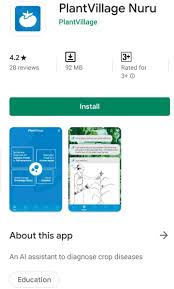
Developed with support from global research institutes, PlantVillage Nuru remains the gold standard for Kenyan smallholders in 2026. Its primary strength lies in its offline capability, which is crucial for farmers in remote wards of Bungoma or Busia. Once downloaded via Wi-Fi or a one-time data bundle, the AI model resides locally on your phone.
It specializes in cassava (Mosaic Disease, Brown Streak) and maize (Fall Armyworm, MLN). The interface speaks Swahili, making it accessible to older farmers who may struggle with technical English. It also integrates with the iShamba SMS service for follow-up advice.
2. Agrio: The Satellite Sentinel
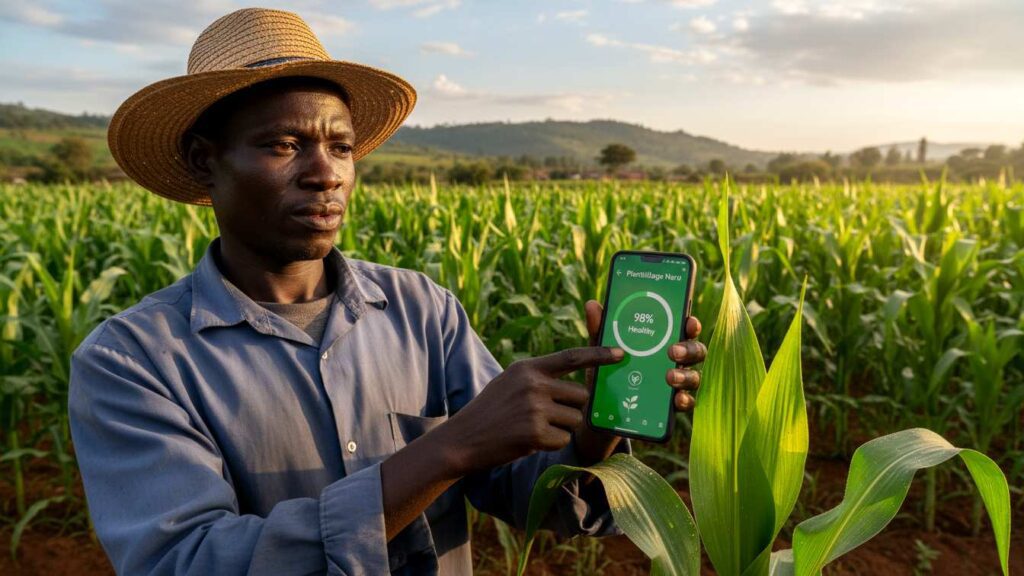
Agrio takes a different approach by combining camera scans with satellite imagery. It is ideal for larger scale farmers in Nakuru and Narok who need to monitor vast hectares of wheat or potatoes. The app sends push notifications alerting you when disease vectors are moving into your specific ward.
READ ALSO: Top 10 Best Money-Making Agriculture Business Ideas in Kenya (2026)
While the basic scanning feature is free, the premium alerts require a subscription, often paid via M-Pesa. This tool is best for high-value horticulture crops where a single day of delay in spraying can mean rejection at the export gate. It is widely used by avocado farmers in Murang’a.
3. Tumaini: The Banana Guardian
Banana farmers in Kisii and Tharaka Nithi rely heavily on the Tumaini app. It is specifically trained to detect Fusarium Wilt (Panama Disease) and Bacterial Wilt, two existential threats to the banana sector. In 2026, it has updated modules to help distinguish between nutritional deficiencies and viral infections.
The app provides a “confidence score” with every scan, telling you how sure the AI is about the diagnosis. If the score is low, it prompts you to take more photos from different angles. This reduces false alarms and unnecessary chemical purchases.
4. DigiFarm by Safaricom (The All-in-One Partner)
While primarily known for its USSD service (*944#), the 2026 app version of DigiFarm uses AI to create “Credit Scores” for farmers who lack traditional bank accounts.
- Best Feature: Kilimo AI. This tool analyzes your farm size and historical yields to provide a customized “Input Loan” (seeds and fertilizer) that you repay after harvest via M-PESA.
- Market Reach: It connects you to Soko, an AI marketplace that matches your harvest volume with wholesale buyers in Nairobi, ensuring you get a fair price.
5. FarmSuite by Ujuzi Kilimo (The Soil Scientist)
Ujuzi Kilimo has revolutionized soil management. Their FarmSuite app uses AI to turn complex soil data into simple, actionable instructions.
- Best Feature: Precision Fertilization. By linking with portable soil sensors, the AI tells you exactly which nutrients your soil is missing. This prevents “blind application” of expensive fertilizers, saving farmers up to 30% in input costs.
- Impact: It provides real-time alerts on soil pH and moisture levels, which is critical for sensitive crops like coriander and tomatoes.
6. Plantix (The Pest Encyclopedia)
Plantix is often called the “World’s Largest Hospital for Plants.” In Kenya, it has become essential for its massive database of tropical pests.
READ ALSO: Top 5 Agriculture insurance companies in Kenya 2026: Madison vs. CIC vs. Co-op Bank.
- Best Feature: Outbreak Alerts. The app uses anonymized GPS data from other farmers to warn you if an outbreak (like Fall Armyworm) is moving toward your specific sub-county.
- Multilingual Support: In 2026, the AI-driven translation allows farmers to receive diagnosis reports in fluent Swahili and Sheng, making it highly accessible to the youth and rural elders alike.
7. Aniwise (The Livestock Assistant)
Developed by a Kenyan innovator, Aniwise is the leading AI tool for livestock farmers. It focuses on animal welfare and production tracking.
- Best Feature: Symptom Scanning. Farmers can take a photo of their cow, goat, or poultry, and the AI scans for visible abnormalities or signs of illness.
- Data Trends: The AI tracks milk production and feeding schedules, flagging “invisible” trends like a gradual drop in yield that might indicate early-stage mastitis or poor nutrition.
Comparison of AI App Focus Areas
| App | Primary Focus | Best For | Offline Capable? |
| PlantVillage | Disease Diagnosis | Maize & Cassava Farmers | Yes |
| DigiFarm | Finance & Market | Commercial Smallholders | Yes (via USSD) |
| FarmSuite | Soil Intelligence | Input Optimization | Partial |
| Plantix | Pest Management | General Horticulture | Yes |
| Aniwise | Livestock Care | Dairy & Poultry Farmers | Yes |
Which Kenyan Counties Benefit Most from AI Disease Diagnosis?
Uasin Gishu benefits most for maize (Fall Armyworm detection), Meru for horticulture (reducing pesticide misuse on exports), and Kilifi for reviving the cashew and coconut sectors. Each region faces unique biological threats that specific AI models are now trained to identify instantly.
Module A: Regional Comparative Analysis (2026)
Kenya’s agricultural landscape is diverse, and so are its disease profiles. An app that works wonders for a maize farmer in Eldoret might be useless for a cashew grower in Malindi. Here is how 2026 tech adoption compares across key agricultural hubs.
1. Uasin Gishu (The Grain Basket)
Farmers here are fighting a war on two fronts: Head Smut and Fall Armyworm (FAW). In 2026, the stakes are higher as Maize Lethal Necrosis (MLN) pockets have resurfaced in Turbo and Moiben.
The AI Advantage: Farmers using PlantVillage Nuru report a 40% reduction in chemical costs. Instead of blanket spraying, they use the app to scout specific infected rows. The app’s offline mode is critical here, as deep field connectivity can be unreliable during the heavy rains.
2. Meru County (The Horticulture Hub)
Meru is facing a silent crisis: the “Two-Tier” farming system where export crops are clean, but local market crops are laden with pesticide cocktails. This has led to high rejection rates for avocados and miraa at the Jomo Kenyatta International Airport cargo center.
The AI Advantage: Agrio is gaining traction here among export-oriented avocado farmers. Its ability to flag “pre-symptomatic” stress allows farmers to treat trees months before harvest. This ensures fruit meets the strict MRL (Maximum Residue Limits) for the EU market, effectively securing the farmer’s bonus payment.
3. Kilifi County (The Coastal Revival)
The cashew and coconut sectors are being revived with new disease-tolerant varieties from KALRO Mtwapa. However, the Rhinoceros Beetle and fungal die-back remain threats to young seedlings in Ganze and Magarini.
The AI Advantage: The Tumaini App (originally for bananas) has updated modules relevant to coastal crops. It helps new farmers distinguish between fungal infections and drought stress—a common confusion in the semi-arid coastal belt. Early detection is saving the new government-distributed cashew seedlings from early mortality.
4. Kirinyaga County (The Rice Bowl)
In the expansive Mwea Irrigation Scheme, Rice Blast is a persistent enemy. The humid conditions required for paddy rice are also perfect for fungal pathogens.
The AI Advantage: New modules in Agrio allow for “crowd-sourced” disease mapping. When one farmer in a scheme detects Blast, the app alerts neighbors within a 2km radius to drain their fields or apply fungicides immediately. This community-based early warning system prevents scheme-wide failures.
How Does the 12-Month Farming Calendar Align with Disease Risks?
Disease pressure spikes during the onset of Long Rains (March-April) and Short Rains (October-November). Smart farmers use AI apps for “preventative scouting” two weeks before rains start, identifying dormant pests that hatch with moisture.
Module B: 12-Month Farming & Disease Risk Calendar
To profit in 2026, you must sync your smartphone usage with the rain patterns. Here is your operational battle plan for the Kenyan crop year.
- January – February (Dry Season/Preparation):
Focus: Land preparation and soil testing.
Tech Action: Use KALRO KAOP to check 2026 rainfall forecasts. Scan perennial trees (Mango/Avocado) for scale insects that thrive in dust.
Risk: Low fungal disease, but high pest pressure (Mites/Thrips). - March – April (Long Rains Onset):
Focus: Planting Maize/Beans in Trans-Nzoia and Uasin Gishu.
Tech Action: Daily Scouting. This is the “Danger Zone” for Fall Armyworm. Use Nuru to scan young whorls every morning.
Risk: Fungal spikes (Blight/Rust) due to sudden humidity. - May – June (Vegetative Growth):
Focus: Weeding and Top Dressing.
Tech Action: Diagnose yellowing leaves immediately. Is it Nitrogen deficiency or MLN disease? The app knows the difference; your eyes might not.
Risk: Nutritional deficiencies masquerading as viral disease. - July – August (Cold Season):
Focus: Pod filling (Beans) / Tasseling (Maize).
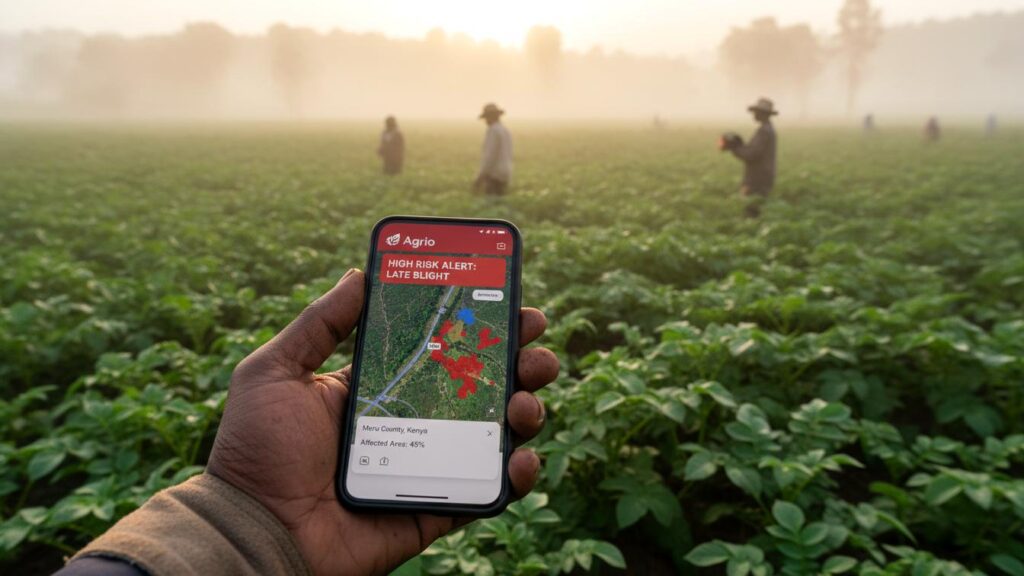
Tech Action: Potato farmers in Meru and Nyandarua must scan for Late Blight (Barafu), which loves the cold mist.
Risk: Late Blight and Powdery Mildew are at peak lethality. - September – October (Harvest & Short Rains Prep):
Focus: Harvesting Long Rains crop.
Tech Action: Check for “storage pests” like Weevils before bagging. Ensure your granary is clean using visual comparisons in the app.
Risk: Aflatoxin contamination if drying is poor. - November – December (Short Rains):
Focus: Quick rotation crops (Vegetables/Beans).
Tech Action: High alert for Tuta Absoluta in tomatoes in Kajiado and Kirinyaga. Agrio alerts are vital here.
Risk: Tuta Absoluta and Bacterial Wilt due to erratic showers.
Is Investing in an AI Farming Setup Financially Viable in 2026?
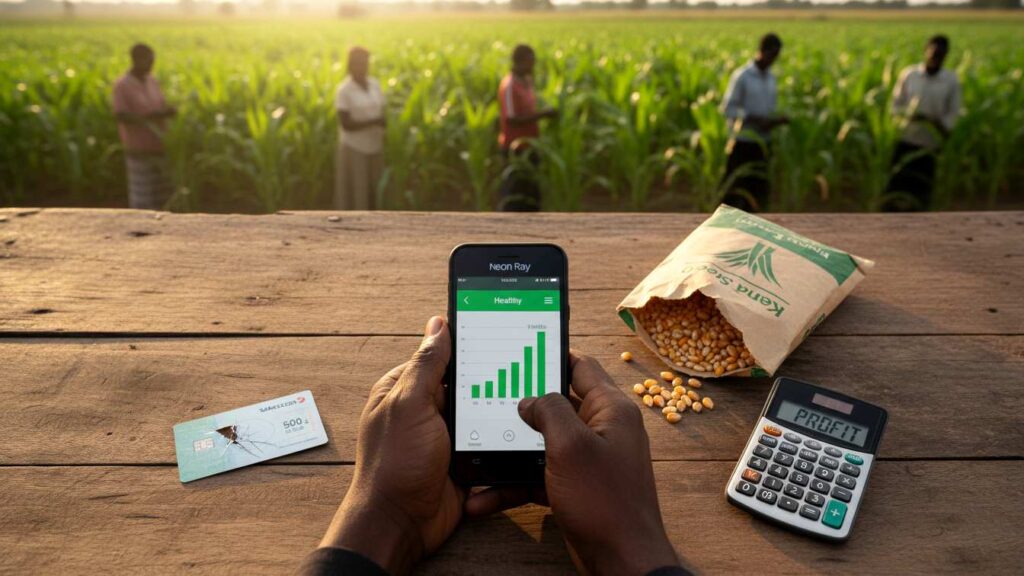
Yes. The total entry cost (Smartphone + Data) is approx. KES 6,000. Preventing just one acre of total crop failure (valued at KES 45,000 – 90,000) yields a 10x Return on Investment (ROI) in the first season alone.
Module C: Deep-Dive Financials (Break-Even Analysis)
Let’s talk money. Many small-scale farmers in Kenya fear technology because of the perceived cost. But in 2026, the cost of ignorance is far higher than the cost of a phone.
READ ALSO: Top 10 Best Agrovets in Kenya (2026 Guide): Where to Buy Genuine Inputs in Nairobi, Eldoret & Nakuru
Below is a breakdown of the investment required versus the potential loss from a single disease outbreak. We assume a standard smallholder farmer in Kitale growing 2 acres of maize.
The “Digital Farmer” Starter Pack Costs (2026 Estimates):
| Item | Brand/Type | Est. Cost (KES) | Notes |
|---|---|---|---|
| Smartphone | Neon Ray Ultra / Nokia C-Series | 4,500 – 7,000 | One-time asset. 4G enabled. |
| Data Bundle | Safaricom “All in One” (Monthly) | 1,000 / month | 5GB Data + WhatsApp (Nuru is offline). |
| App Subscription | PlantVillage Nuru | 0 (Free) | Open source public good. |
| Solar Charger | Generic Portable Panel | 1,200 | Essential for off-grid scouting. |
| Premium App (Optional) | Agrio (Entry Level) | 500 / month | For satellite alerts. |
| TOTAL YEAR 1 COST | Hardware + 6 Months Data | ~12,700 – 15,000 | Investment |
The “Cost of Inaction” (Loss Scenario – 1 Acre Maize):
| Loss Factor | Calculation | Lost Revenue (KES) |
|---|---|---|
| Yield Loss | 20 Bags dropped to 5 Bags (75% loss) | 45,000 (@3k/bag) |
| Wasted Inputs | Fertilizer + Seed (DAP/CAN/Kenya Seed) | 15,000 |
| Wrong Chemicals | Buying “Cocktails” that don’t work | 3,000 |
| Labor | Weeding a doomed crop | 5,000 |
| TOTAL LOSS | Per Acre / Season | ~68,000 |
Expert Analysis: If you spend KES 15,000 on tech to save a harvest worth KES 90,000 (30 bags @ 3k), your net profit is significantly protected. The break-even point is saving just 5 bags of maize from disease.
Once you own the phone, the recurring cost is only data. This phone also serves as your bank (M-Pesa), your market connection (Facebook Marketplace), and your weather station (KAOP).
How Does Disease Diagnosis Improve Market Value?
Clean crops fetch premium prices. Exporters in 2026 strictly require “Zero Interception” for pests like False Codling Moth. Using AI apps provides a digital audit trail, proving your crop was monitored and treated correctly, opening doors to the EU export market.
Module E: Supply Chain & Value Addition
In 2026, the market doesn’t just want food; it wants safe food. The era of selling spotted, chemical-laden produce at the roadside for pennies is ending. The real money is in the “Clean Food” supply chain, managed by aggregators like Twiga Foods.
1. The Export Gatekeeper
For avocado farmers in Murang’a and Meru, the Agriculture and Food Authority (AFA) has suspended sea shipments in the past due to immature and pest-ridden fruit. By using AI to confirm maturity and pest freedom, you qualify for GlobalG.A.P. certification.
Value Add: An export-grade avocado sells for KES 20-40 per piece. A rejected local one sells for KES 5-10. Tech bridges this gap.
2. The “Viazi Soko” Digital Link
Potato farmers using apps to certify their crop as “Blight Free” are now preferred by processors who make crisps (e.g., Tropical Heat). These processors pay a contracted premium price per KG because they know the potato won’t rot in storage. The app history serves as a digital logbook of your spray regime.
3. Reducing Post-Harvest Loss
Many diseases, like Anthracnose in mangoes, look invisible at harvest but rot the fruit 3 days later. AI scanning can detect these latent infections before you pack. Sorting out the 10% bad fruit saves the 90% good fruit from cross-contamination during transport to Nairobi or Mombasa.
Step-by-Step Guide: How to Use These Apps in the Field
Success depends on good lighting and steady hands. Always scan 3-5 different plants in a zigzag pattern across the field. Never rely on a single leaf scan to make a decision for the whole acre.
READ ALSO: How to Get Instant Farm Input Mobile Loans in Kenya 2026: Digital Credit Apps and Bank Options
Using these apps effectively requires a bit of technique. Here is a field-tested protocol for getting accurate results with PlantVillage Nuru or Agrio.
Step 1: The “Golden Hour” Rule
Do not scan in direct, blinding noon sunlight. The glare washes out the leaf colors, confusing the AI. The best time to scan is between 8:00 AM and 10:00 AM, or after 4:00 PM. If you must scan at noon, use your body to cast a shadow over the leaf.
Step 2: The “Background Check”
Place your hand behind the leaf or hold the leaf against a neutral background (like the soil or your trouser leg). If the camera sees other plants in the background, it might try to diagnose the wrong leaf. Isolate the target.
Step 3: The “Zig-Zag” Scouting Pattern
Don’t just scan the plants near the gate. Walk a ‘W’ shape through your field. Scan plants at the corners and in the center. Pests like Fall Armyworm often start in the middle of the field where they are harder to see.
Step 4: Interpreting the Result
If the app says “80% Fall Armyworm,” verify it physically. Look for the frass (sawdust-like poop) in the whorl. If the app says “Unknown,” try again. If it persists, consult a local county agronomist or send the photo to the PlantVillage SMS support line.
Conclusion: The 2026 Outlook
The year 2026 is a turning point for Kenyan agriculture. The tools are no longer “futuristic”—they are basic farm equipment, just like a jembe or a panga. With the cost of smartphones dropping and AI accuracy hitting 98%, the barrier to entry is gone.
The farmers who adopt these tools today are the ones who will be expanding their acreage tomorrow. Those who ignore them risk being left behind by pests that evolve faster than traditional methods can handle. It is time to digitize your shamba.
Your Action Plan: 1. Buy a 4G Phone: Even a refurbished model works. 2. Download PlantVillage Nuru: It is free and works offline. 3. Scout Weekly: Make Friday your “inspection day.” 4. Join a Digital Coop: Groups using these tools have better bargaining power.
Don’t let pests eat your profit. Scan it, treat it, and bank it.
Farmers Also Ask (FAQ)
Can I use these AI apps without data bundles
Yes. PlantVillage Nuru is designed specifically to work offline. You only need data to download the app initially (about 50MB). Once installed, the AI model lives inside your phone and can diagnose crops in the middle of a field with zero signal.
Does the app detect all diseases?
No app is perfect, but they are highly effective for major threats. Nuru is excellent for Cassava Mosaic Disease, Fall Armyworm, and Late Blight. Agrio covers a wider range of vegetables but requires internet. Always consult a real agronomist if the app gives a confusing result.
How much does the Agrio app cost in Kenya?
Agrio has a free version for basic identification. Their premium “Satellites & Alerts” package costs approximately KES 500 – 800 per month depending on the acreage. For smallholders, the free version or ad-supported tiers are usually sufficient.
Will this work on a ‘Kabambe’ (Feature Phone)?
No. You need a smartphone with a camera and Android operating system (Android 5.0 or higher). The Neon Ray series from Safaricom is the most affordable option, often priced between KES 3,500 and 5,000.
What do I do if the app says my crop is sick?
The app will recommend a “Control Measure.” This might be a specific chemical (pesticide/fungicide) or a cultural practice (uprooting/burning). Crucial Tip: Take the diagnosis to a registered agrovet (like Simlaw or Elgon Kenya) to get the exact genuine product recommended.
Can it detect fake seeds?
Not directly. However, the Kenya Seed Company uses stickers on seed packets that you can verify via SMS. AI apps diagnose plant health, not seed authenticity. Use the scratching label method for seed verification.
Is there an AI app for livestock diseases too?
Yes. For 2026, look at the Aniwise chatbot or iCow. While Nuru focuses on crops, these other platforms offer similar diagnostic help and advice for dairy cows, poultry, and goats.
How accurate is the diagnosis?
In 2026, apps like Nuru boast over 95% accuracy for the specific diseases they are trained on (like MLN or FAW). This is often higher than a non-expert human eye. However, lighting conditions matter—always scan in good daylight.
Do I need to speak English to use them?
No. PlantVillage Nuru has a voice command feature and speaks Swahili. It is built to be accessible to farmers who may not be able to read or write, guiding them via audio prompts.
Where can I get help if I get stuck?
Contact the developers or local partners.
KALRO ICT: www.kalro.org
PlantVillage Kenya: Offers SMS support (send “JOIN” to 20307).
Agri-SeedCo: For seed-related inquiries.