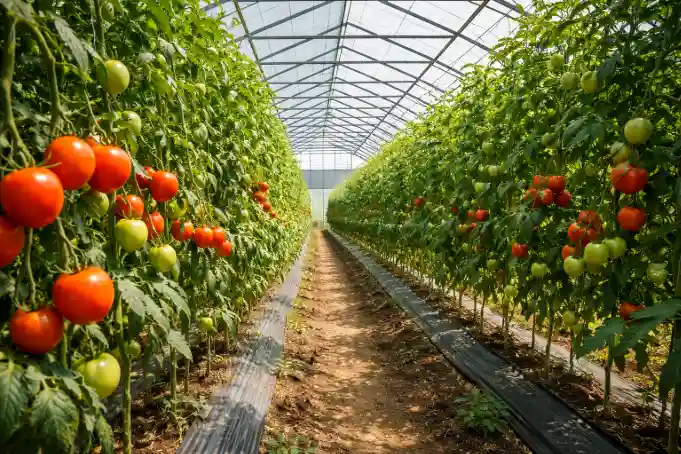

- Greenhouse Prices in Kenya: A standard 8×15 meter metallic greenhouse costs between KES 230,000 and KES 350,000 in 2026, while wooden options start at KES 150,000.
- Greenhouse tomato farming yields up to 15 tons per season, generating potential revenues of KES 600,000 per harvest.
- Kenyan farmers can access 2026 government fertilizer subsidies, lowering DAP costs to KES 3,500 via the NCPB e-Voucher system.
Table of Contents
Investing in controlled environment agriculture protects your crops from unpredictable weather patterns while multiplying your harvest per square meter. By leveraging modern galvanised steel structures, UV-treated polythene, and certified hybrid seeds, serious agribusiness entrepreneurs can achieve full return on investment within just two planting seasons. This comprehensive 2026 guide breaks down exact material costs, local market prices, and regional agronomic strategies to guarantee maximum profitability on your shamba.
Which Crops Yield the Highest Returns in Kenyan Greenhouses?
Tomatoes and capsicums remain the highest-yielding greenhouse crops in Kenya for 2026, driven by continuous urban market demand. Varieties like Anna F1 and Lino thrive in controlled environments, drastically minimizing common open-field fungal diseases.
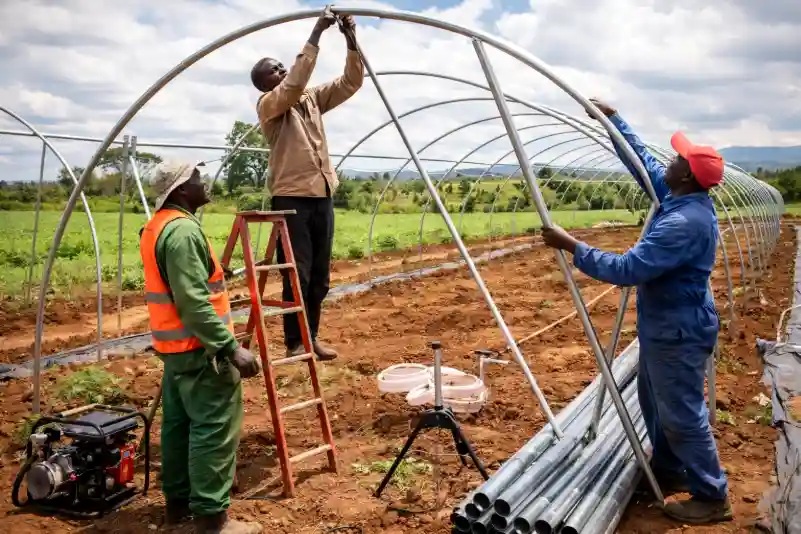
Top Performing Tomato Varieties
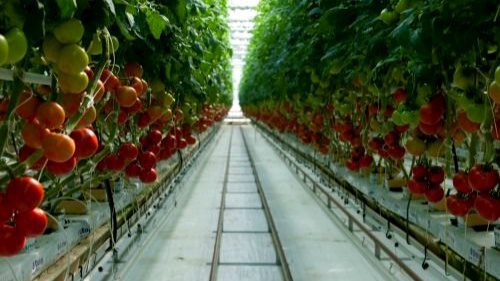
The Anna F1 hybrid dominates the Kenyan greenhouse space due to its incredible resistance to fusarium wilt and nematodes. This indeterminate variety grows continuously upward, perfectly utilizing the vertical space provided by metallic frames. With proper trellising, farmers harvest premium, firm fruits that command top prices in Nairobi supermarkets.
High-Value Capsicum Options
Colored bell peppers, particularly the Lino and Commandant F1 varieties, offer massive profit margins compared to standard green capsicums. These hybrids take longer to mature but change into vibrant reds and yellows that hotels and export markets demand. Growing capsicum requires strict temperature management but ultimately delivers exceptional financial returns.
Read Also: Best Greenhouse Farming Guide in Kenya: Profits, Costs, and Beginner Mistakes to Avoid in 2026
The following table compares the top-performing greenhouse seed varieties available in Kenya for 2026 based on yield potential, maturity duration, and disease resistance. Selecting the right hybrid is the first step toward guaranteed farm profitability.
| Crop & Variety | Maturity Period | Yield Potential (Per Plant) | Disease Resistance Profile |
|---|---|---|---|
| Tomato (Anna F1) | 75 Days | 15 to 18 kg | Fusarium, Verticillium Wilt, Nematodes |
| Capsicum (Lino) | 65 Days | 4 to 5 kg | Tobacco Mosaic Virus, Bacterial Wilt |
| Capsicum (Commandant F1) | 90 Days | 5 to 6 kg | Powdery Mildew, Blossom End Rot |
| Cucumber (Darina F1) | 45 to 55 Days | 10 to 12 kg | Downy Mildew, Scab |
Where to Buy Greenhouses Equipments in Kenya (Trusted Suppliers and 2026 Prices)
You can source certified metallic greenhouse frames and UV-treated polythene directly from industry leaders like Aqua Hub Kenya and Namani Irrigation Systems. For seeds and specialized agronomic support, farmers should rely on digital platforms like Safaricom Digifarm.
Choosing the Right Construction Partner
Attempting to build a greenhouse with unverified local artisans often results in collapsed structures during heavy rainstorms. Established companies provide structural guarantees and use galvanized steel that resists rust for up to fifteen years. They also install the correct micron-level UV polythene, ensuring optimal light transmission for photosynthesis.
Digital Procurement Platforms
In 2026, Kenyan farmers leverage platforms like Mkulima Young to compare prices for secondary inputs like shade nets and drip irrigation kits. Safaricom Digifarm allows registered users to access micro-loans via M-Pesa to finance these upfront capital expenditures. Purchasing certified seedlings from authorized Kenya Seed Company agents prevents devastating early-stage crop failures.
What Are the Best Fertilizer Strategies for Greenhouse Soils in 2026?
Greenhouse farmers should utilize a basal application of NPK 23:23:0 during planting, followed by targeted top-dressing with CAN during the vegetative stage. Utilizing the 2026 government subsidy drops the cost of a 50kg bag of DAP to KES 3,500 at local NCPB depots.
Managing Soil Nutrition Indoors
Unlike open-field agriculture, greenhouse soils are easily depleted because of the high density of plants grown in a confined area. Farmers must conduct routine soil testing through KALRO to determine exact nutrient deficiencies before applying synthetic inputs. Overusing DAP without proper liming leads to severe soil acidity, which stunts crop root development.
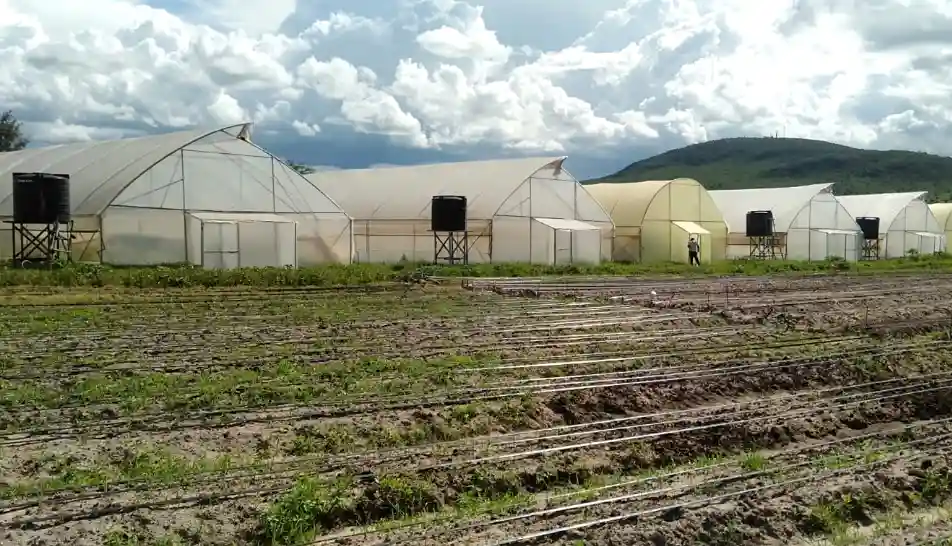
Foliar Feeding Techniques
Foliar fertilizers are highly effective inside a greenhouse where the wind does not disrupt the spraying process. Applying calcium-rich foliar sprays prevents blossom end rot in tomatoes and capsicums during peak fruiting stages. Always spray during the early morning or late evening to prevent the nutrient solution from evaporating too quickly.
The table below outlines the 2026 retail and subsidized prices for the most critical greenhouse fertilizers in Kenya. Leveraging state subsidies drastically reduces your seasonal input expenditures.
| Fertilizer Type | Usage Stage | 2026 Retail Price (50kg) | 2026 Subsidized Price (NCPB) |
|---|---|---|---|
| DAP (18:46:0) | Planting / Root Development | KES 6,000 | KES 3,500 |
| NPK (17:17:17) | Balanced Early Growth | KES 5,800 | KES 3,275 |
| CAN (26:0:0) | Top-Dressing / Vegetative | KES 4,500 | KES 2,875 |
| Urea (46:0:0) | Heavy Nitrogen Boost | KES 6,200 | KES 3,500 |
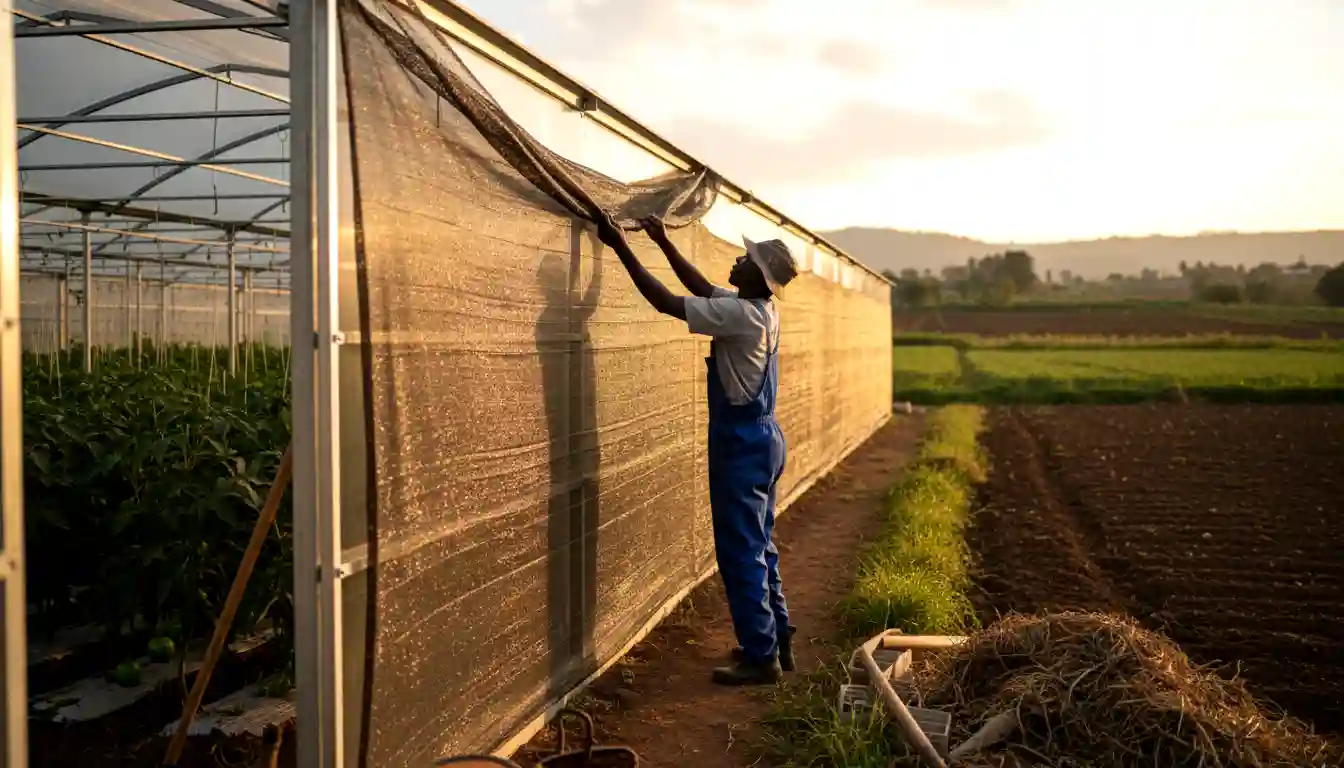
Which Kenyan Counties Offer the Best Climate for Greenhouse Farming?
Nakuru, Kajiado, and Kiambu counties provide the most lucrative environments for greenhouse agriculture in Kenya. Nakuru offers rich volcanic soils, Kajiado benefits from low humidity that suppresses fungal diseases, and Kiambu provides immediate logistics to Nairobi.
Kiambu County Agronomics
Kiambu County is the epicenter of intensive greenhouse farming due to land fragmentation and its proximity to Nairobi. Because land plots are small, vertical farming inside a greenhouse maximizes yield per square meter perfectly. The cooler climate dictates the use of anti-drip polythene to prevent nighttime condensation from falling onto sensitive tomato leaves.
Read Also: How to Start Bulb Onion Farming in Kenya: Complete 2026 Guide, Costs & Profit Per Acre
Farmers in Kiambu benefit immensely from reduced transport overheads when supplying major outlets like City Park Market. However, the higher baseline humidity requires excellent side ventilation to prevent blight outbreaks. Investing in roll-up side nets ensures proper airflow while keeping devastating whiteflies outside the structure.
Nakuru County Advantages
Nakuru boasts exceptional volcanic soils that drain well, which is a critical factor for indoor drip irrigation systems. The region enjoys high daytime solar radiation, accelerating the maturity period for crops like capsicums and cucumbers. Furthermore, the modernized highway network allows farmers to move highly perishable produce smoothly.
In this county, sourcing clean water is generally easier, reducing the initial capital needed for massive water harvesting dam liners. Many farmers in Naivasha and Gilgil use medium-sized metallic greenhouses to rotate between horticulture and premium export flowers. This diversification buffers them against sudden market price drops.
Kajiado County Dynamics
Kajiado represents the frontier of modern climate-smart agriculture, characterized by high temperatures and extremely low ambient humidity. This arid environment is surprisingly perfect for greenhouses because the lack of moisture naturally eliminates fungal pathogens. Crops grow exceptionally fast due to the intense solar energy trapped inside the structure.
The primary challenge in Kajiado is securing a reliable water supply for the continuous drip irrigation needed. Successful farmers sink boreholes or invest heavily in solar water pumping systems to keep operational costs low. With proper water management, Kajiado farms produce some of the firmest, longest-lasting tomatoes in the country.
What is the Ideal 12-Month Planting Cycle for Greenhouses in Kenya?
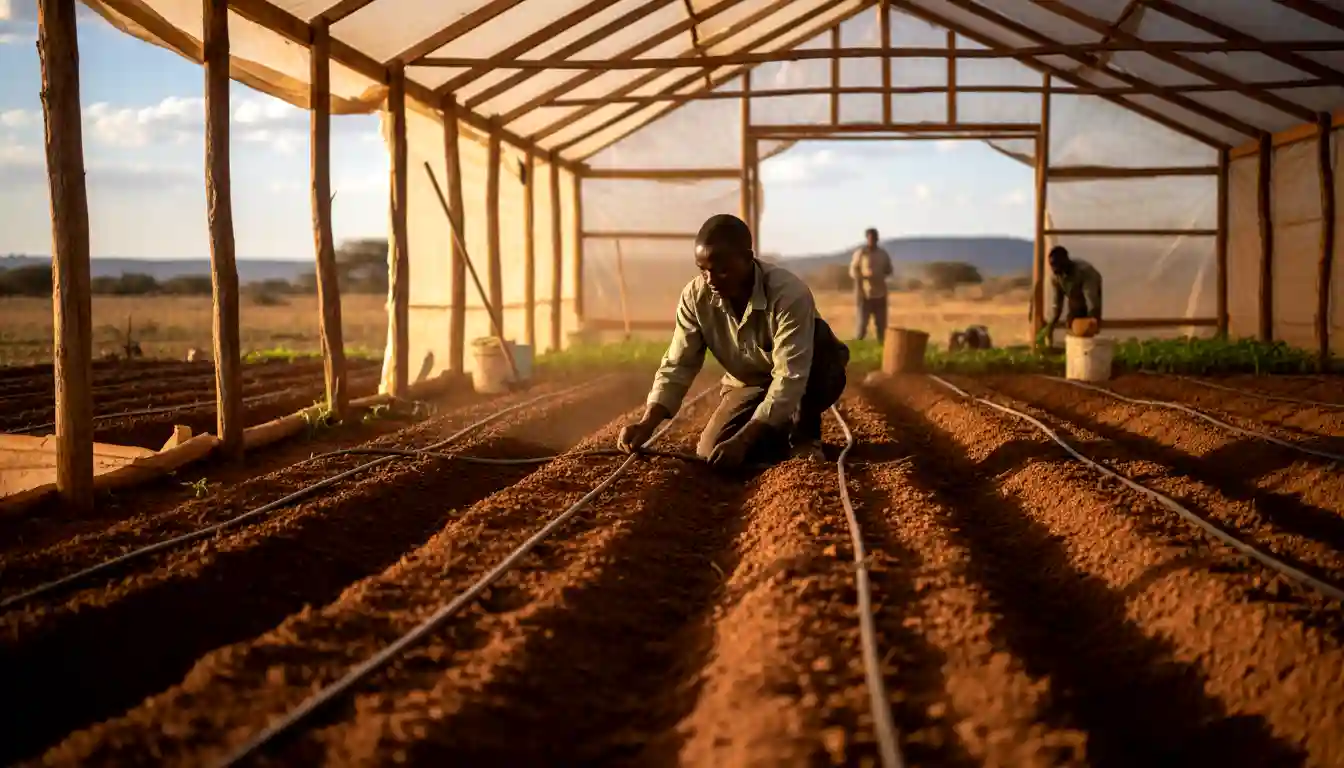
The ideal greenhouse cycle involves two major planting seasons, starting with land preparation in January and initial harvesting in May. After a brief rotation or soil solarization phase in September, the second crop is planted to target the high-demand December festive season.
Quarter 1: Preparation and Planting
From January to March, farmers focus on deep soil preparation, structural repairs, and germinating seeds in specialized nursery trays. Transplanting typically occurs in mid-February once the seedlings develop their true leaves. During this period, checking the drip irrigation lines for blockages is mandatory before the hot dry season peaks.
Read Also: Spinach Farming in Kenya 2026: Best Varieties,, Costs, Yields and Profit per Acre
Applying a basal dose of NPK ensures the young transplants establish aggressive root systems. Farmers must strictly monitor the greenhouse doors to prevent early pest entry, utilizing footbaths mixed with disinfectant. The vegetative growth during these three months sets the foundation for the entire year’s profitability.
Quarter 2: Growth and First Harvest
April, May, and June bring the heavy Long Rains across most of Kenya, causing chaos for open-field farmers. Greenhouse crops remain completely protected from heavy downpours that would otherwise knock off blossoms and spread soil-borne diseases. Top-dressing with CAN begins, pushing the plants into heavy flowering and fruiting stages.
By late May, the first major harvest commences, usually capturing excellent market prices as outdoor supplies dwindle. Harvesting occurs twice a week, carefully picking fruits at the breaker stage to maximize shelf life. Strict hygiene is maintained to avoid spreading viruses via pruning shears.
Quarter 3: Transition and Sanitation
July and August represent the coldest months in Kenya, but the greenhouse traps radiant heat, keeping crop metabolism high. The first season concludes by early September, requiring the complete removal of old crop residues. Farmers then practice soil solarization by covering moist soil with clear plastic to kill nematodes naturally.
Quarter 4: The Festive Season Boom
From October to December, the second crop cycle is aggressively managed to align with the massive December holiday demand. Irrigation is increased as the short rains give way to hotter daytime temperatures in late November. Cashing in on the festive season often generates the highest profit margins of the entire calendar year.
How Much Does It Cost to Build a Greenhouse and What Are the Profits in 2026?
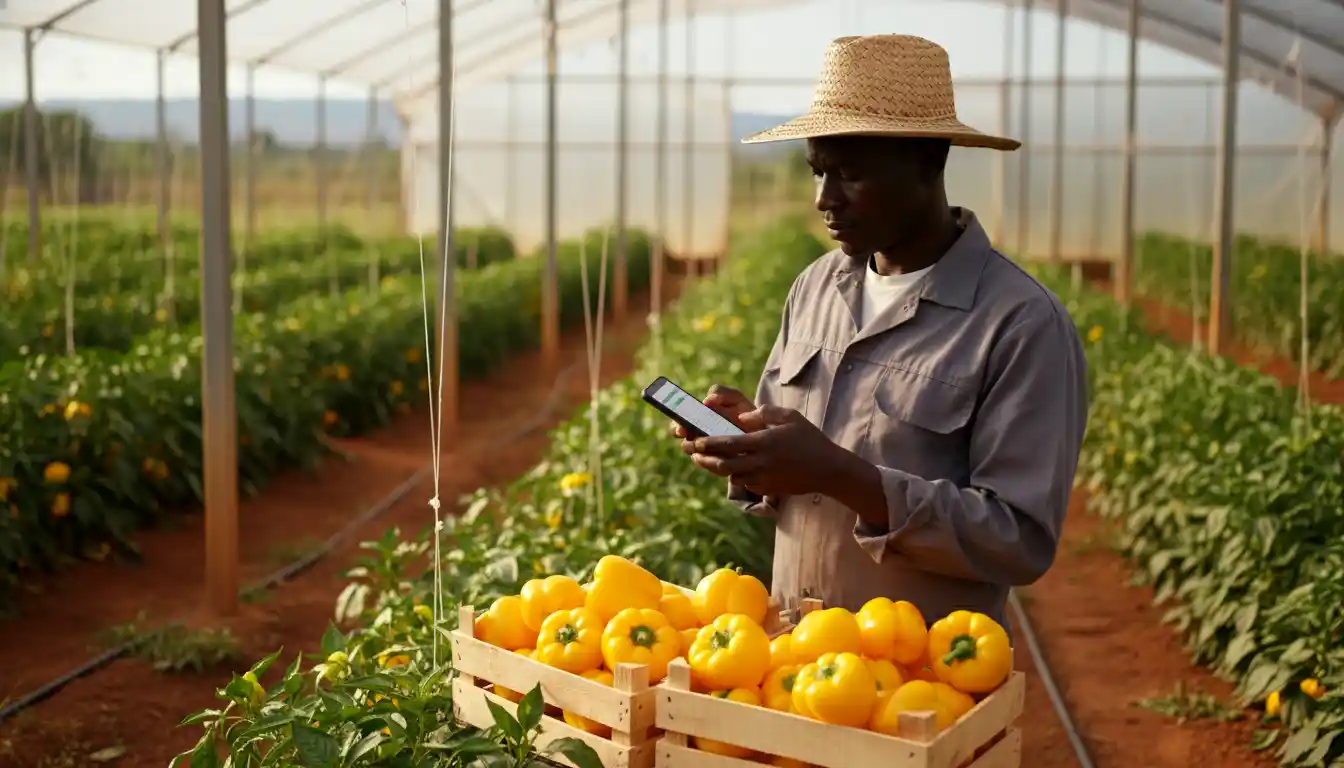
Building an 8×30 meter metallic greenhouse in Kenya requires a capital expenditure of approximately KES 360,000. With an optimized yield of 12,000 kilograms of tomatoes selling at KES 50 per kilo, a single season generates KES 600,000. This achieves a break-even point in under one year.
Capital Expenditure Breakdown
Entering the greenhouse sector requires significant upfront capital, primarily directed at the physical structure and irrigation infrastructure. A standard 8×30 meter galvanized steel frame, completely fitted with 200-micron polythene and insect nets, costs roughly KES 300,000. Adding a 1,000-liter water tank, filtration unit, and comprehensive drip lines adds another KES 60,000.
Secondary capital costs include procuring certified hybrid seeds, initial fertilizers, and digital soil testing. Small-scale farmers can opt for wooden structures to slash initial costs by half, but these require frequent timber replacement due to termite damage. Investing in metallic frames guarantees longevity and higher resale value if the agribusiness pivots.
Operational Costs and Revenue
Operating expenses encompass daily labor, agrochemicals, and water pumping costs via electricity tokens. A dedicated farm worker managing a single greenhouse commands about KES 10,000 monthly. If an 8×30 meter greenhouse holds 1,200 tomato plants yielding 10kg each, the total harvest reaches 12,000 kilograms per season.
Read Also: 10 Most Profitable Farming Ventures in Kenya for 2026
Selling this volume at a conservative wholesale price of KES 50 per kilogram generates KES 600,000 in gross revenue. After deducting approximately KES 150,000 for seasonal operating expenses, the net profit stands at KES 450,000. It is vital to note that estimated ranges vary by management, agronomic skill, and market timing.
This financial breakdown details the capital expenditure, operational costs, and projected revenue for a standard commercial greenhouse in Kenya. Careful financial planning ensures you maintain adequate cash flow throughout the growing season.
| Expense / Revenue Category | Item Description | Estimated Cost / Revenue (KES) |
|---|---|---|
| Capital Expenditure | 8x30m Metallic Structure & Polythene | KES 300,000 |
| Capital Expenditure | Drip Irrigation Kit & 1000L Tank | KES 60,000 |
| Operating Expense | Seeds, Fertilizers & Agrochemicals | KES 50,000 (Per Season) |
| Operating Expense | Labor & Farm Management | KES 60,000 (Per Season) |
| Projected Revenue | 12,000 kg Tomatoes @ KES 50/kg | KES 600,000 (Per Season) |
| Net Profit Potential | Gross Revenue minus Opex | KES 490,000 |
How Do You Connect Greenhouse Harvests to Premium Markets in Kenya?
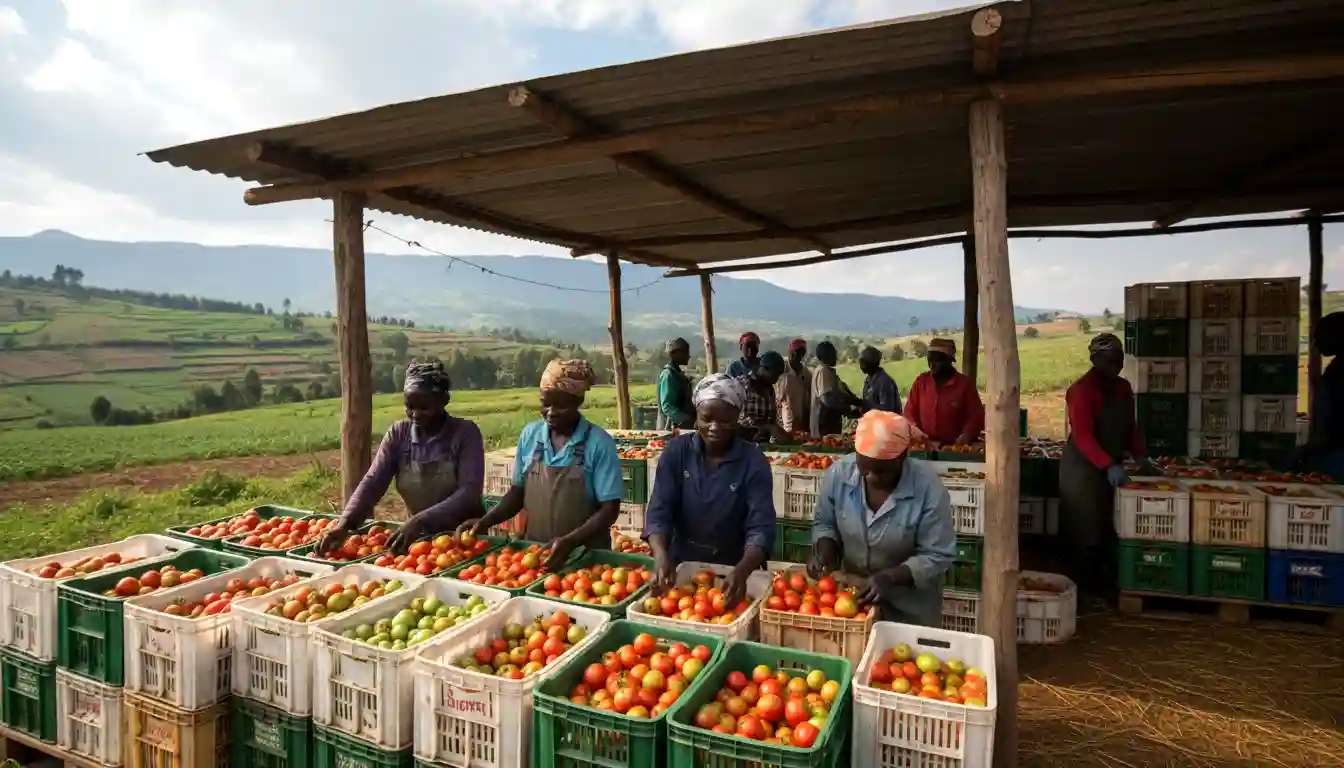
Securing premium markets involves bypassing traditional brokers via digital platforms like Mkulima Young. Contracting directly with agri-tech logistics companies like Twiga Foods ensures steady pricing. Proper post-harvest grading and packing produce in rigid crates ensures maximum quality upon urban delivery.
Mastering Post-Harvest Handling
The profitability of greenhouse farming is won or lost during the harvesting and transit phases. Highly perishable crops like tomatoes must be harvested at the breaker stage, where they show just a hint of color, to ensure a longer shelf life. Picking fully ripe fruits guarantees they will crush and rot while navigating rough rural roads to the market.
Read Also: 15 Most Profitable Agribusiness Ideas in Kenya to Start in 2026
Farmers must strictly abandon the use of traditional 90kg bags for transporting delicate vegetables. Investing in rigid, ventilated plastic crates prevents mechanical damage and allows for proper air circulation. Grading the produce by size and color before loading allows farmers to command premium prices from high-end buyers.
Digital Supply Chain Linkages
In 2026, relying solely on traditional brokers severely limits a farmer’s profit margins. Progressive growers use digital agriculture platforms to secure purchase orders before the harvest even begins. Companies like Twiga Foods offer predictable pricing and handle the complex logistics of moving produce from the farm gate to urban vendors.
Value Addition Strategies
Adding value to raw harvests shields farmers from sudden market gluts that crash fresh produce prices. Sun-drying excess tomatoes or processing them into thick pastes extends their commercial viability by months. Packaging mixed-color bell peppers into branded shrink wrap allows direct sales to Nairobi supermarkets and affluent residential estates.
What is the 2026 Outlook for Greenhouse Farming in Kenya?
The 2026 outlook for Kenyan greenhouse farming is exceptionally positive, driven by climate unpredictability that makes open-field farming too risky. Advancements in solar-powered irrigation and localized manufacturing of metallic frames are lowering the barriers to entry. This growth heavily favors commercial agribusiness ventures.
Embracing Precision Agriculture
As weather patterns become increasingly erratic, controlled environment agriculture transitions from a luxury to an absolute necessity. The integration of moisture sensors that monitor soil conditions via smartphone apps is revolutionizing crop management. This precision ensures water and expensive fertilizers are never wasted, driving up overall profit margins.
Call to Action for Farmers
If you are planning to enter the agribusiness sector this year, begin by testing your soil and securing quotes from certified greenhouse constructors. Do not cut corners by purchasing substandard polythene or ignoring water harvesting infrastructure. Start small, master the agronomy of high-value crops, and scale your operations using the profits from your first successful harvests.
What Are the Most Common Greenhouse Questions (FAQ)
How much does it cost to build a greenhouse in Kenya?
A standard commercial greenhouse costs between KES 150,000 for wooden frames and KES 800,000 for large metallic structures, depending on size and irrigation.
How much does a small greenhouse cost in Kenya?
A small 8×15 meter greenhouse in Kenya costs about KES 150,000 for timber structures and KES 240,000 for durable galvanized metallic frames.
What size greenhouse is ideal for a family of four?
An 8×15 meter greenhouse perfectly feeds a family of four, providing continuous fresh vegetables while yielding surplus produce for local market sales.
What are the main disadvantages of a greenhouse?
Main disadvantages include high initial setup capital, strict daily temperature management requirements, and the rapid spread of indoor crop diseases.
Do plants grow better in a greenhouse or outside?
Plants grow significantly faster and yield up to three times more inside a greenhouse because environmental stress, pests, and weather are fully controlled.
What crops should not be grown in a greenhouse?
Deep-rooted crops like maize, large fruit trees, and space-consuming vegetables like pumpkins or cabbages are rarely economically viable in greenhouses.
What is the easiest crop to grow in a greenhouse?
Tomatoes and cucumbers are the easiest greenhouse crops. They offer fast maturity rates, high urban market demand, and well-documented agronomic guidelines.
Should you open a greenhouse every day?
Yes, side ventilation nets and doors must be opened daily to release trapped heat, lower internal humidity, and ensure vital airflow around plant leaves.
Why can greenhouses sometimes be harmful to plants?
Poorly ventilated greenhouses trap excessive heat and moisture. This creates a highly favorable breeding ground for aggressive fungal pathogens like blight.
What are the most common types of greenhouses used in Kenya?
The most common types include tunnel-shaped metallic greenhouses, locally built wooden structures, and ventilated shade net houses for hot coastal regions.