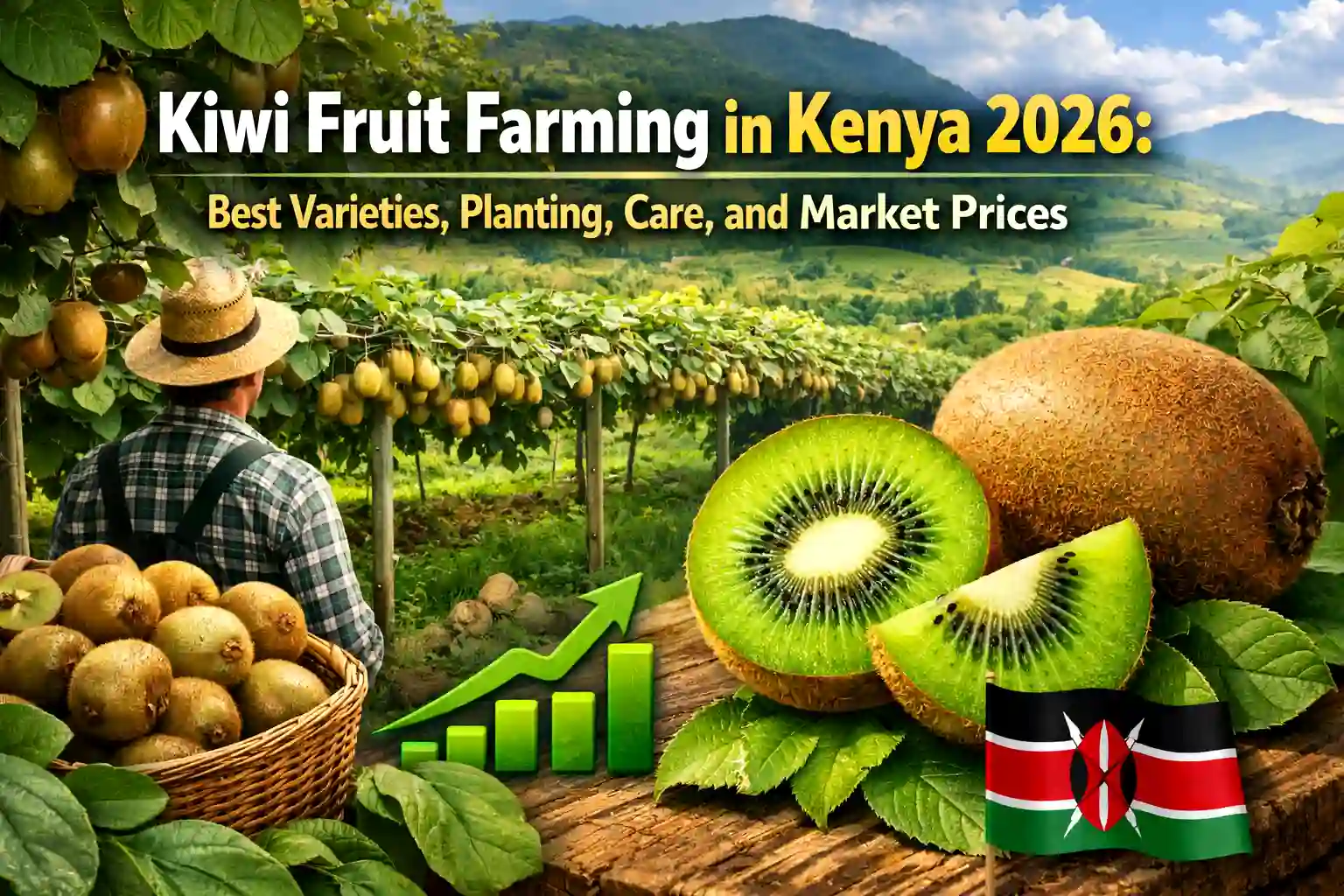

- High Profit Potential: Mature kiwi vines yield up to 50 kg per plant, generating over KES 1.5 million per acre annually at farmgate prices of KES 200 to KES 500 per kg.
- Ideal Climate Zones: Thrives in Kenyan highlands like Meru, Uasin Gishu, and Nakuru at altitudes of 1,500 to 2,500 meters with well drained acidic soils.
- 2026 Input Costs: Certified grafted seedlings retail at KES 400 to KES 500, while government subsidized DAP fertilizer costs KES 3,500 per 50kg bag.
Table of Contents
Kiwi fruit is rapidly transitioning from an expensive imported luxury to a highly lucrative cash crop for Kenyan highland farmers. With optimal ecological conditions and a growing local demand driven by health conscious consumers, investing in a well structured kiwi orchard offers a sustainable agribusiness opportunity. Modern farming techniques now allow local growers to achieve impressive yields that rival international imports.
Which Are the Best Kiwi Fruit Varieties for Kenyan Farmers in 2026?
Selecting the right kiwi variety dictates yield potential and market acceptance. In Kenya, Hayward remains the dominant commercial choice due to its large fruit size and extended shelf life, while Golden Kiwi is gaining premium traction. Farmers must plant one male vine for every six to eight female vines to ensure successful pollination and fruiting.
Choosing the correct vine genetic material is the most critical decision for any new orchard investor. In Kenya, commercial success relies heavily on selecting varieties adapted to moderate climates with sufficient chill hours. Farmers must also remember that kiwi plants are dioecious, requiring the strategic planting of male vines alongside female fruit bearing varieties.
Read Also: Apple Farming in Kenya 2026: Cost, Profit Per Acre, Best Varieties & Market Guide
The Hayward Variety
The Hayward variety is universally recognized as the standard for commercial kiwi production due to its exceptional fruit size and iconic fuzzy brown skin. This robust variety boasts a superior shelf life, making it a favorite among large scale retail distributors and export markets. Furthermore, Hayward vines exhibit excellent resistance to common root pathogens when planted in well drained soils.
The Golden Kiwi Variety
Golden Kiwi has rapidly gained popularity among high end consumers who prefer its smooth, hairless skin and intensely sweet yellow flesh. This variety generally matures slightly earlier than Hayward, allowing farmers to capture premium early market prices. However, Golden Kiwi requires meticulous canopy management as its delicate fruits are highly susceptible to sunburn and wind damage.
The Bruno and Allison Varieties
Bruno produces slightly elongated fruits and is celebrated for its incredibly vigorous vegetative growth and heavy fruiting clusters. Allison, on the other hand, is an early fruiting variety that adapts exceptionally well to the lower altitude thresholds of the Kenyan highlands. Both varieties serve as excellent diversification options for farmers looking to extend their harvesting season.
| Kiwi Variety | Average Yield Per Vine | Maturity Period | Disease Resistance |
|---|---|---|---|
| Hayward | 40 to 60 kg | 3 to 4 Years | High resistance to root rot |
| Golden Kiwi | 30 to 50 kg | 3 Years | Moderate, prone to sun scorch |
| Bruno | 50 to 70 kg | 3 to 4 Years | High overall resilience |
| Allison | 40 to 55 kg | 3 Years | Good resistance to leaf spot |
Where to Buy Kiwi Grafted planting material in Kenya 2026
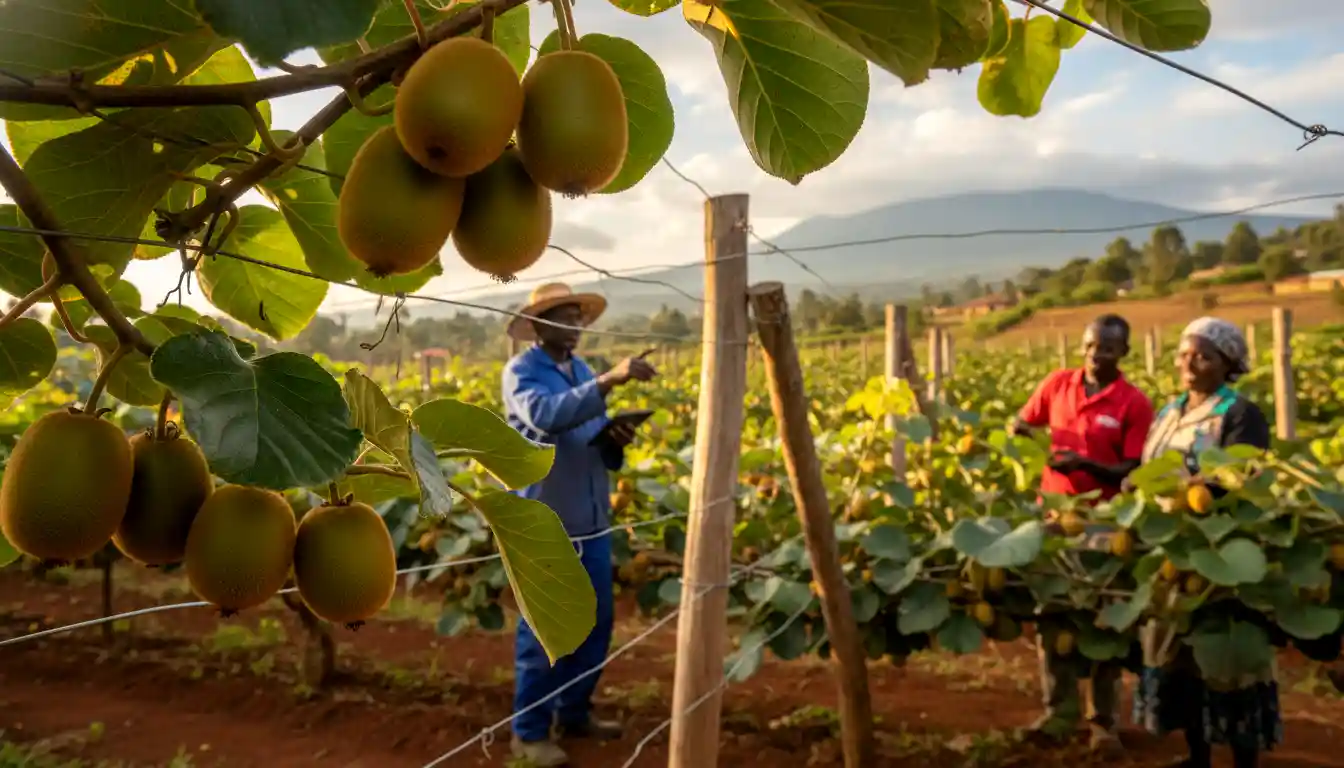
Securing clean, grafted planting material is the foundation of a productive orchard. In 2026, Kenyan farmers can source high quality, certified kiwi seedlings priced between KES 400 and KES 500 from KALRO Mkulima Shops, Seed Farm, and Organic Farm nurseries. Avoid growing vines from seeds as they take up to seven years to fruit.
Procuring disease free planting material is non negotiable for long term orchard viability. The Kenyan agricultural sector has modernized, allowing farmers to access high quality grafted seedlings from certified government and private nurseries. Utilizing digital agribusiness platforms has also streamlined the procurement process for rural farmers.
KALRO Mkulima Shops
The Kenya Agricultural and Livestock Research Organization (KALRO) has established multiple Mkulima Shops across the country to support specialized fruit farmers. These centers provide climate resilient, certified kiwi seedlings backed by extensive local agronomic research. Purchasing from KALRO ensures you receive genuine varieties that are perfectly acclimatized to Kenyan highland conditions.
Private Commercial Nurseries
Reputable private entities like Seed Farm, Farmers Trend, and Organic Farm offer robust grafted seedlings to the general public. In 2026, these high quality seedlings retail between KES 400 and KES 500 per unit depending on the specific variety and volume ordered. Farmers can easily verify the credibility of these nurseries through online agricultural forums and verified customer reviews.
Digital Procurement Platforms
Modern farmers are increasingly leveraging platforms such as Safaricom Digifarm, Mkulima Young, and Jiji Kenya to source farm inputs safely. These digital marketplaces connect growers directly with certified propagators, eliminating expensive middlemen and ensuring fair pricing. Payments are securely processed via M-Pesa, ensuring seamless transactions and documented financial records.
What Are the Best Fertilizers and Soil Nutrition Strategies for Kiwi Vines?
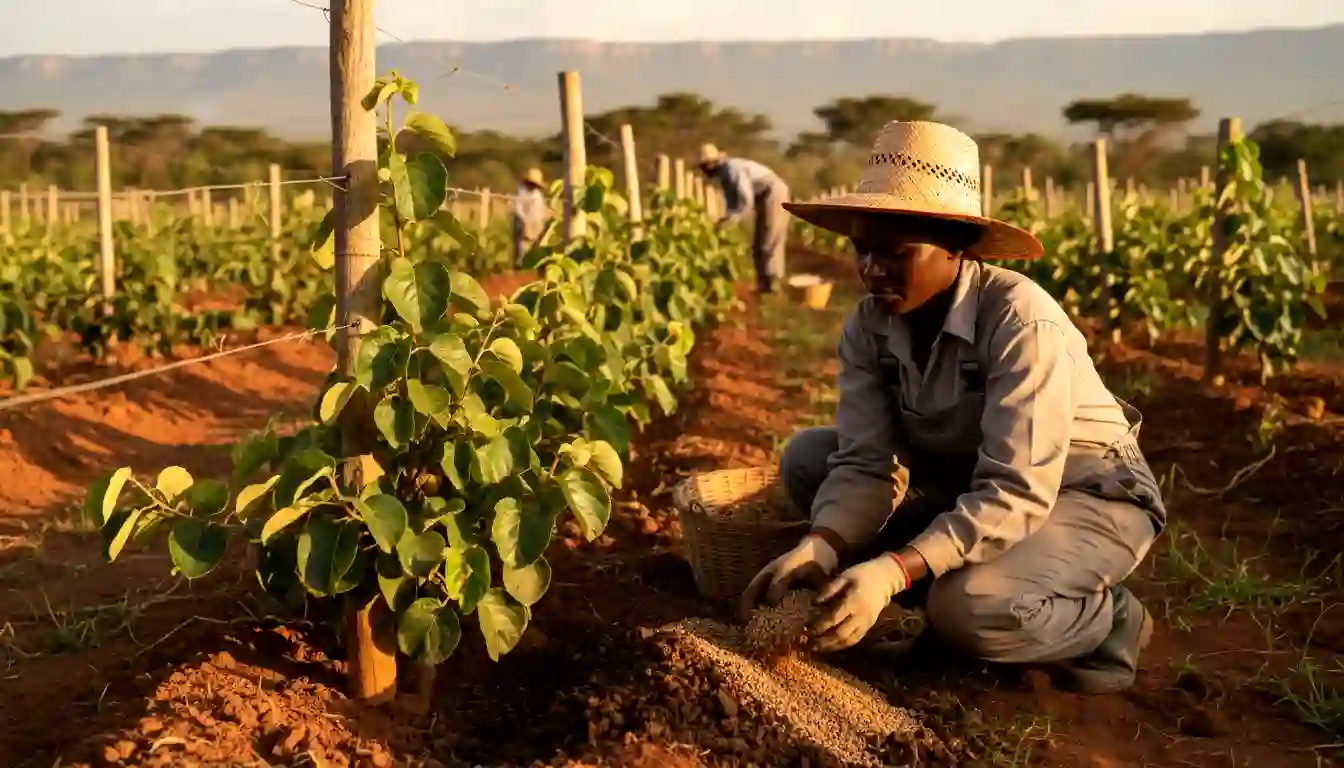
Kiwi vines are heavy feeders that require precise nutritional management for robust canopy growth and high fruit sets. Kenyan farmers achieve the best results by applying well rotted organic manure during planting, followed by targeted applications of DAP for root establishment, CAN for vegetative growth, and potassium rich NPK to boost fruit size and sweetness.
Read Also: Grape Farming in Kenya 2026: Best Varieties (Red, Green and Black), Health Benefits and Beginner’s Growing Guide
Kiwi vines possess shallow, aggressive root systems that require constant access to balanced soil nutrients. Achieving commercial grade fruit size demands a strict feeding schedule starting from the initial seedling transplanting phase. Kenyan agronomists strongly recommend combining synthetic fertilizers with rich organic compost to maintain optimal soil structure and moisture retention.
Base Nutrition and Planting Preparation
Before introducing the grafted seedlings into the soil, farmers must ensure the planting holes are enriched with high quality organic matter. Mixing a 50kg bag equivalent of well decomposed cow manure into the topsoil provides a slow release nutrient base. Additionally, applying DAP at planting stimulates rapid and deep root development to anchor the heavy climbing vines.
Vegetative Growth and Canopy Development
As the vines begin their vigorous climbing phase, nitrogen becomes the most critical element for expanding the leafy canopy. Applying CAN fertilizer during the onset of the long rains guarantees strong structural shoots capable of supporting heavy fruit loads. Regular soil testing is advised to prevent nitrogen toxicity, which can severely delay flowering.
Top Dressing for Fruit Setting
Once the vines enter the reproductive phase, the nutritional focus must immediately shift toward phosphorus and potassium. Applying specialized NPK blends heavily influences the final sugar content, firmness, and overall commercial grade of the kiwi fruits. While farmers are accustomed to purchasing a standard 90kg bag of traditional planting inputs, specialized fertilizers for kiwi vines are often distributed in manageable 50kg sacks.
| Growth Stage | Recommended Fertilizer | 2026 KES Cost (per 50kg) | Application Rate |
|---|---|---|---|
| Planting and Root Establishment | DAP (Subsidized) | KES 3,500 | 150g per planting hole |
| Vegetative and Canopy Growth | CAN (Subsidized) | KES 2,875 | 200g per vine annually |
| Flowering and Fruit Sizing | NPK 17-17-17 | KES 3,275 to 4,200 | 250g per mature vine |
| Ongoing Soil Conditioning | Organic Manure | KES 500 (per ton) | 20kg per vine annually |
Which Kenyan Counties Offer the Best Climate for Kiwi Fruit Production?
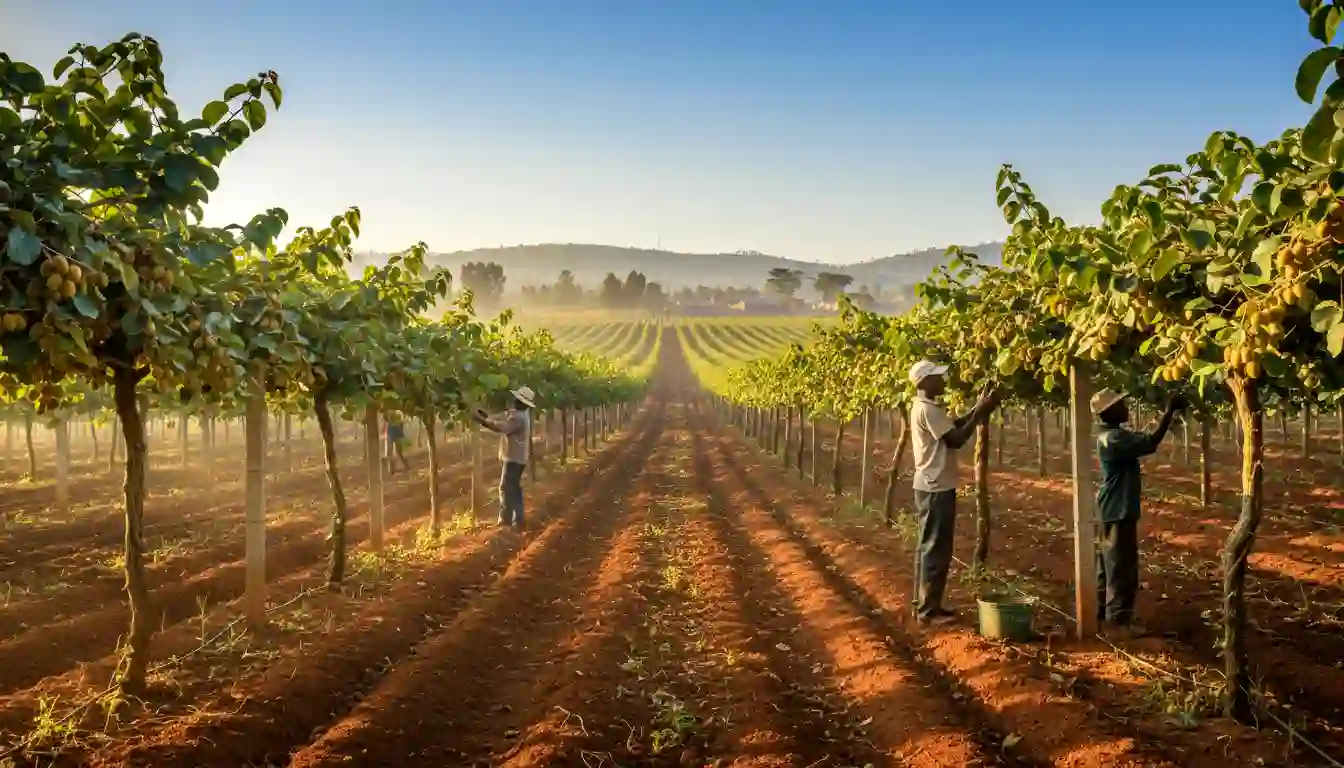
Kiwi vines demand cool temperatures, adequate chill hours, and well distributed rainfall to break dormancy and trigger flowering. The central highlands and Rift Valley regions provide optimal agro-ecological conditions. Meru, Uasin Gishu, and Nakuru counties stand out as the premier zones for commercial kiwi cultivation due to their ideal altitudes and fertile, well drained soils.
The unique physiology of the kiwi vine requires a delicate balance of cool temperatures, moderate rainfall, and well drained acidic soils. Unlike tropical fruits, kiwi vines enter a dormant phase that is triggered by low temperatures, making high altitude zones absolutely essential. We have analyzed three premier Kenyan counties that provide the ultimate environment for commercial production.
Meru County: The Highland Advantage
Meru County boasts some of the most fertile volcanic red soils in Kenya, creating an ideal foundation for heavy feeding crops. The high altitude areas around Timau and Imenti provide the necessary chill hours required to break vine dormancy naturally. Furthermore, the region receives consistent, well distributed rainfall that minimizes the need for expensive supplementary irrigation systems.
Uasin Gishu County: Diversification Hub
Traditionally known as the breadbasket for maize cultivation, Uasin Gishu is rapidly transforming into a lucrative fruit farming hub. Specific elevated zones like Kaptagat offer the cool night temperatures that kiwi vines desperately need for optimal flower setting. The county also features excellent road infrastructure, allowing farmers to transport their delicate harvests to major urban markets efficiently.
Nakuru County: The Cool Climate Champion
Nakuru County, particularly the Molo and Elburgon regions, is practically tailor made for temperate fruit production. The consistently cool climate ensures a robust dormancy period, which translates to vigorous spring growth and heavy fruiting clusters. Additionally, local farmers have access to abundant organic manure from the vibrant dairy sector, heavily reducing synthetic fertilizer costs.
What is the Ideal 12-Month Planting Cycle for Kiwi Fruit Production in Kenya?
Timing your orchard activities to align with the Kenyan rainy seasons ensures optimal vine establishment and fruit development. Land preparation should conclude by February, allowing for planting during the March to May long rains. Pruning and canopy management occur during the cooler dry months, preparing the vines for peak flowering and eventual harvest.
Read Also: Watermelon Farming in Kenya 2026: Step by Step Guide from Planting to Harvest
Successful agribusiness relies heavily on aligning farm operations with natural climatic rhythms. A well structured farming calendar minimizes input wastage while maximizing vine health and fruit quality. By following this strict timeline, Kenyan farmers can synchronize their harvests with peak market demand.
January to February: Land Preparation
The early months of the year are dedicated to rigorous land clearing, deep plowing, and comprehensive soil testing. Farmers should dig planting holes measuring two feet wide and two feet deep to loosen the soil profile. This is also the perfect time to construct the structural trellises that will support the heavy vines.
March to May: Planting and Establishment
As the long rains commence, the freshly prepared shamba is ready to receive the grafted kiwi seedlings. The abundant natural moisture ensures rapid root establishment and minimizes transplant shock for the young plants. During this period, farmers must apply base fertilizers and strictly monitor the field for early pest infestations.
June to August: Canopy Management
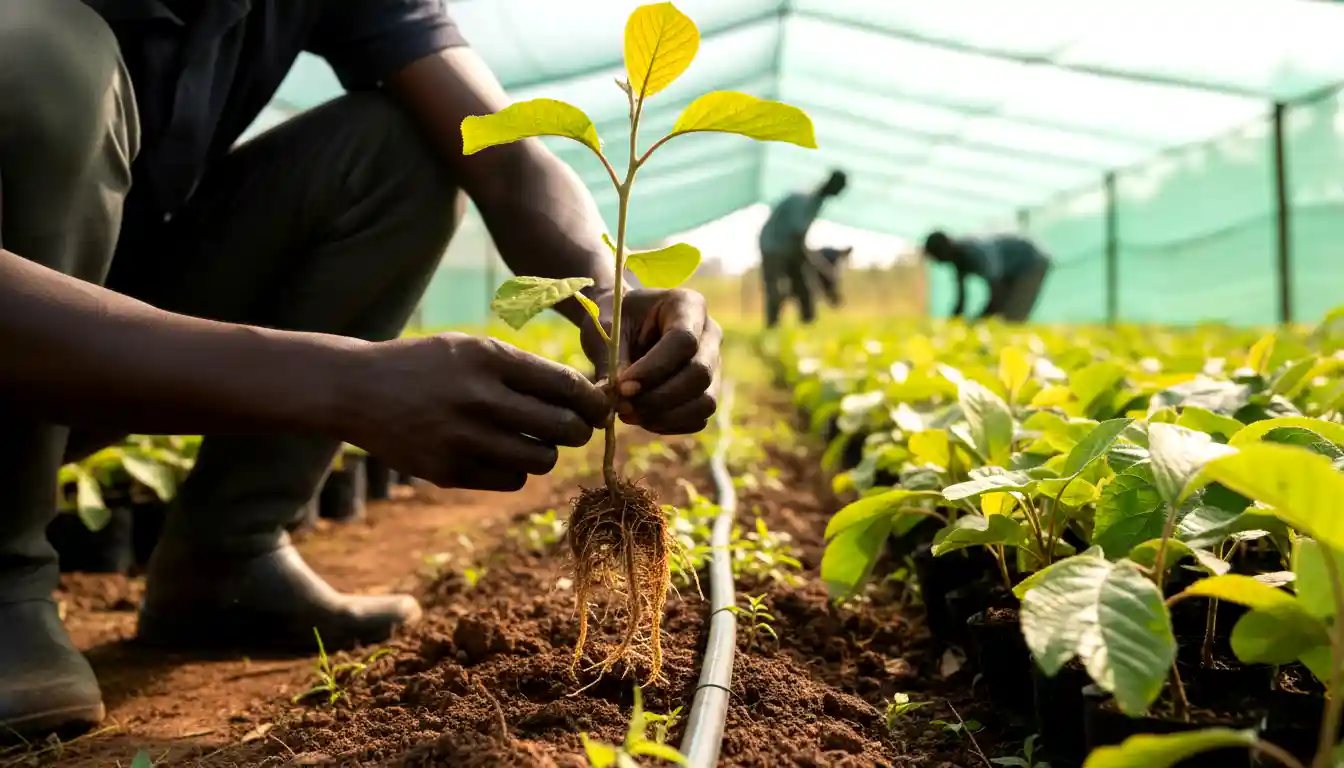
The cool, dry mid year season requires intensive canopy management and vine training along the installed wire trellises. Proper pruning ensures adequate sunlight penetration, which is vital for preventing fungal diseases and encouraging robust vegetative growth. Mulching around the base of the vines helps conserve precious soil moisture during dry spells.
September to December: Top Dressing and Irrigation
The onset of the short rains in October provides an excellent window for applying top dressing fertilizers to support fruit development. As the year ends and dry conditions return, supplementary drip irrigation becomes absolutely critical to prevent fruit drop. Consistent watering guarantees that the developing kiwi fruits attain their maximum commercial size and premium weight.
How Much Does It Cost to Start Kiwi Fruit Farming in Kenya per Acre?
Establishing a commercial kiwi orchard requires significant upfront capital, primarily driven by the cost of seedlings and robust trellis systems. For a one acre farm holding 200 vines, the initial setup cost averages KES 365,000. However, the long term profitability is immense, with mature orchards generating gross revenues exceeding KES 1.2 million annually.
Entering the kiwi farming sector requires a solid financial strategy and a clear understanding of initial capital expenditures. Unlike seasonal crops, kiwi vines represent a long term infrastructural investment that pays dividends for decades. It is important to remember that these estimated ranges vary by management, weather conditions, and fluctuating market dynamics.
Initial Setup Expenditures
The bulk of your first year capital will go toward purchasing certified seedlings and constructing heavy duty support trellises. A standard acre accommodates approximately 200 vines, costing around KES 100,000 for high quality grafted planting material. Galvanized wire, treated wooden posts, and labor for the pergola system will consume an additional KES 150,000.
Annual Maintenance Costs
Once established, the orchard requires continuous funding for nutritional management, pest control, and supplementary irrigation. Purchasing subsidized government fertilizers and organic manure typically costs a farmer about KES 45,000 annually per acre. Routine labor for pruning, weeding, and general shamba maintenance adds another KES 40,000 to the yearly operational budget.
Revenue Generation and Break Even
A well managed orchard will begin producing commercially viable yields by the third or fourth year. With each mature vine yielding 20 to 50 kilograms, an acre can easily produce over 4,000 kilograms of premium fruit annually. Selling at a conservative wholesale price of KES 300 per kilogram generates a gross income of KES 1,200,000, ensuring rapid capital recovery.
| Investment Category | Quantity Needed (Per Acre) | Unit Price (KES) | Total Cost (KES) |
|---|---|---|---|
| Certified Grafted Seedlings | 200 Vines (incl. male pollinators) | KES 500 | KES 100,000 |
| Trellis System (Poles and Wire) | 1 Standard Pergola Setup | Lump Sum | KES 120,000 |
| Fertilizer and Manure (Year 1) | Assorted Bags and Tons | Variable | KES 45,000 |
| Labor and Land Preparation | Contracted Farmhands | Lump Sum | KES 40,000 |
| Drip Irrigation Installation | 1 Acre Kit | Lump Sum | KES 60,000 |
| Total Estimated Setup Cost | First Year Only | – | KES 365,000 |
How Do You Navigate the Kiwi Fruit Supply Chain and Value Addition in Kenya?
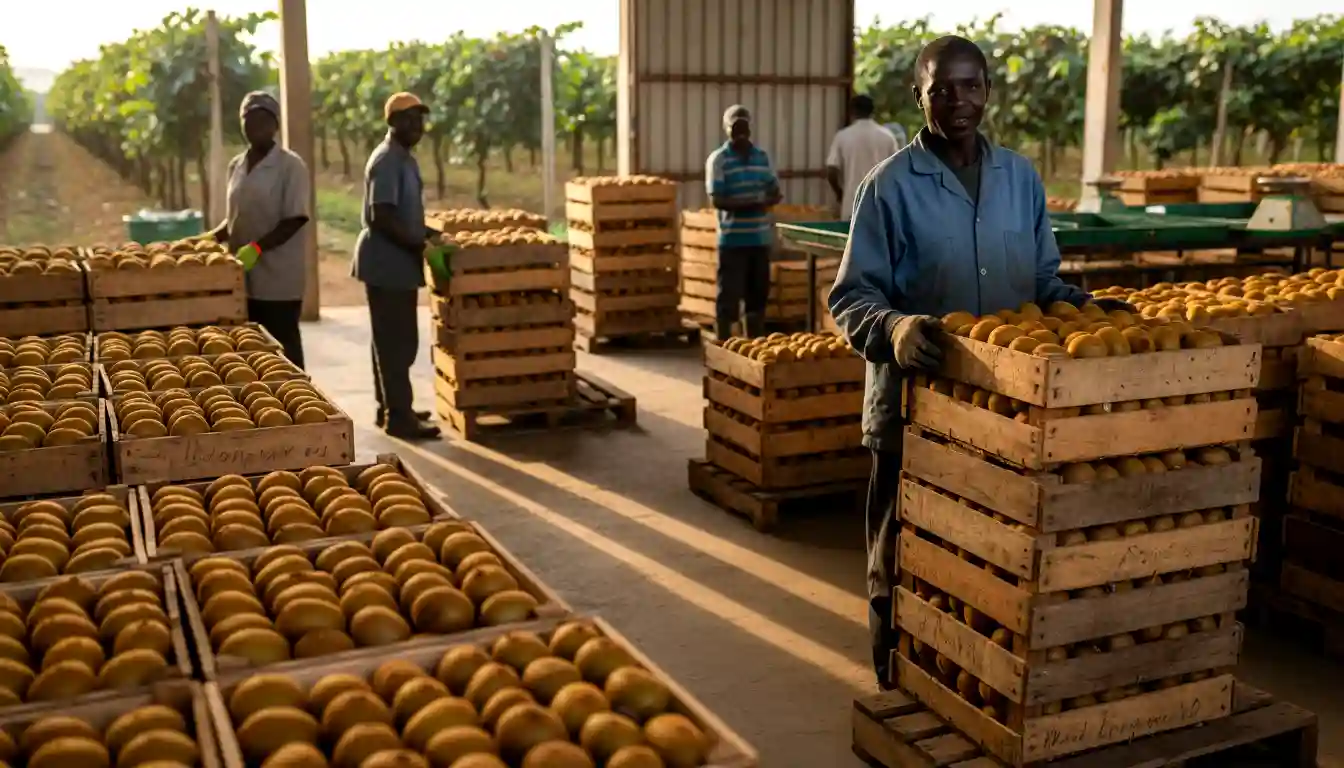
The local supply chain is shifting from reliance on imports to celebrating locally grown kiwi fruits. Farmers can maximize profits by grading fruits accurately and supplying premium retail outlets like Carrefour and Zucchini. Value addition through processing unmarketable fruits into jams, dried snacks, or juices opens secondary revenue streams for innovative agribusiness entrepreneurs.
Read Also: Dragon Fruit Farming in Kenya 2026: The Ultimate Guide to Millions [Pitaya Success Roadmap]
Producing high quality fruits is only half the battle; successfully navigating the local and export supply chain is where real wealth is generated. The Kenyan market has a robust appetite for premium fruits, driven by an expanding middle class and health conscious demographics. Strategic post harvest handling ensures your produce reaches these lucrative retail destinations in perfect condition.
Post Harvest Handling and Storage
Kiwi fruits are climacteric, meaning they continue to ripen after they have been plucked from the vine. Harvesting must occur when the fruits reach the correct sugar level but still retain a firm texture to withstand transport logistics. Storing the harvested crop in specialized cold rooms at near zero temperatures drastically extends their shelf life and market viability.
Targeting Premium Local Markets
Savvy farmers target high end grocery chains like Zucchini, Naivas, and Carrefour, which pay a premium for consistent, clean produce. Unlike maize which is aggressively traded per 90kg bag, kiwi fruits are carefully packed in small protective wooden crates to preserve their delicate skin. Financial settlements for these premium deliveries are instantly processed via secure M-Pesa commercial paybills.
Unlocking Value Addition Opportunities
Not all harvested fruits will meet the strict aesthetic standards required by high end supermarkets. Astute agribusiness entrepreneurs process these irregular fruits into high value secondary products like dried kiwi snacks, natural juices, and artisanal jams. This strategic value addition eliminates post harvest wastage and creates entirely new, highly profitable revenue streams.
What is the 2026 Outlook for Kiwi Fruit Farming in Kenya?
The trajectory for kiwi farming in Kenya is overwhelmingly positive, driven by rising health awareness and a strategic push to reduce import dependency. As KALRO continues to release localized agronomic data and private nurseries increase seedling propagation, early adopters stand to reap massive financial rewards. Now is the perfect time to establish your orchard.
The future of the Kenyan horticultural sector heavily favors high value, low volume crops like the kiwi fruit. As the government continues to support farmers through subsidized inputs and advanced research, the barriers to entry are rapidly decreasing. By leveraging modern agronomy and digital marketplaces, local farmers are perfectly positioned to replace costly international fruit imports entirely.
Read Also: Top 7 Best AI Apps for Kenyan Farmers in 2026: Fight Crop Diseases, Cut Costs and Boost Yields
Take Action Today
There has never been a more opportune moment to transform your underutilized highland shamba into a lucrative fruit producing enterprise. Begin by conducting a comprehensive soil test and sourcing certified seedlings from reputable nurseries like KALRO. Commit to the process, implement rigorous management practices, and secure your financial future through progressive agribusiness.
Farmers Also Ask FAQs
Where can you find certified kiwi seedlings in Kenya?
You can purchase certified grafted kiwi seedlings from KALRO Mkulima Shops, Seed Farm, and Organic Farm nurseries across Kenya for KES 400 to KES 500 each.
What is the average cost of kiwi seeds compared to grafted seedlings?
Kiwi seeds are extremely cheap but unviable for commercial farming. Grafted seedlings cost KES 400 to KES 500 but guarantee true to type, high yielding vines.
How much should you expect to pay per individual kiwi seedling?
In 2026, you should expect to pay an average of KES 400 to KES 500 per certified grafted kiwi seedling from reputable agricultural nurseries in Kenya.
How many years does it take for a kiwi plant grown from seed to produce fruit?
A kiwi vine grown directly from seed can take up to seven years to produce fruit, making it highly impractical compared to grafted vines that fruit in three years.
Which regions in Kenya are most suitable for planting kiwi fruit?
The central highlands, parts of the Rift Valley, Meru, Nakuru, and Uasin Gishu offer the ideal cool climates, high altitudes, and well drained soils required.
What is the typical maturation timeline for a kiwi vine to reach full production?
A well managed grafted kiwi vine typically starts bearing a few fruits in year three, reaching peak commercial production between years five and eight.
What are the current market prices for kiwi fruit in Kenya?
Wholesale market prices range from KES 200 to KES 500 per kilogram, while premium retail outlets sell individual fruits for KES 50 to KES 100 depending on size.
How profitable is commercial kiwi farming compared to other fruit crops?
Kiwi farming is exceptionally profitable. A mature acre can generate over KES 1.2 million annually, far exceeding the returns of traditional seasonal crops.
Does a kiwi vine produce fruit every year once established?
Yes, a healthy kiwi vine will produce fruit annually for 20 to 30 years provided it receives proper pruning, adequate chill hours, and consistent pollination.
How can you distinguish between male and female kiwi seedlings or vines?
You cannot distinguish them until they flower. Male flowers lack a stigma and produce pollen, while female flowers have a prominent white stigma in the center.