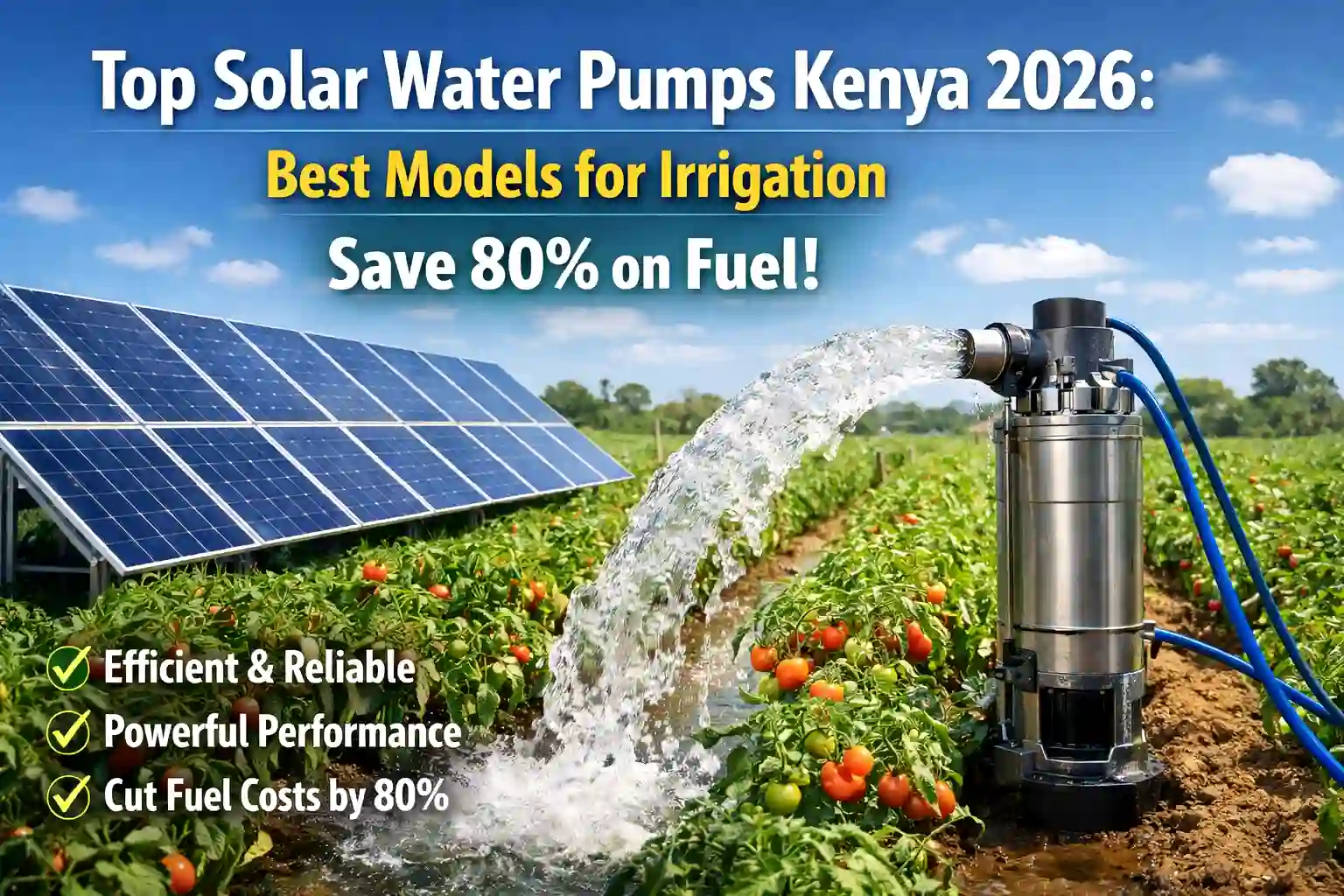

- SunCulture RainMaker and Davis & Shirtliff Dayliff submersible models dominate the 2026 market, cutting diesel fuel costs by up to 80 percent immediately.
- Initial capital for a baseline 2-acre solar surface pump system averages KES 59,999, accessible through flexible Lipa Pole Pole M-Pesa payment plans.
- Coupling solar irrigation with drip fertigation boosts crop yields by 90 percent, transforming semi-arid land into highly profitable agribusiness ventures.
Table of Contents
Transitioning from diesel to solar-powered irrigation is the most lucrative upgrade a Kenyan farmer can make in 2026. Harnessing equatorial sunshine allows you to eliminate recurring fuel costs and secure year-round harvests regardless of delayed rains. This definitive guide breaks down equipment costs, projected profits, and regional strategies to help you scale your agribusiness sustainably.
Which Are the Top Solar Water Pump Models for Kenyan Farmers in 2026?
SunCulture and Davis & Shirtliff offer the most reliable solar water pumps in Kenya for 2026. SunCulture excels in pay-as-you-go surface systems for smallholders. Davis & Shirtliff provides heavy-duty submersible models for deep boreholes.
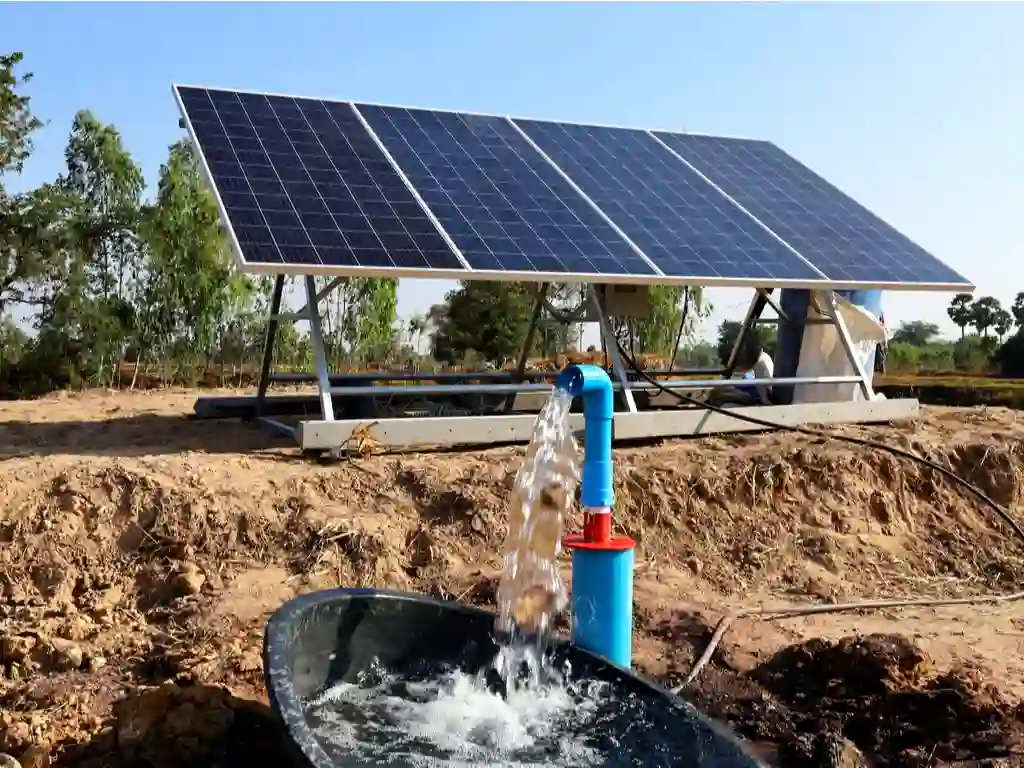
The 2026 Kenyan market offers highly efficient solar water pumps designed for diverse agricultural needs. Surface pumps draw water from shallow rivers or reservoirs, making them perfect for farms located near permanent water bodies. Submersible pumps are engineered for deep boreholes, pushing water up from depths exceeding 100 meters to overhead storage tanks.
SunCulture remains the pioneer of off-grid solar irrigation through its innovative pay-as-you-go model. Their RainMaker 2S and ClimateSmart Battery systems are highly sought after by small-scale farmers managing one to three acres. The Lipa Pole Pole payment structure allows farmers to acquire the pump with a minimal deposit.
Read Also: SunCulture Solar Water Pump Prices in Kenya 2026: Cost and Profit Guide
Davis & Shirtliff dominates the heavy-duty agricultural sector with its Dayliff range of submersible solar pumps. These permanent magnet brushless DC motor pumps deliver exceptional flow rates for commercial farms. Their high initial cost is quickly offset by massive savings on generator maintenance and diesel purchases.
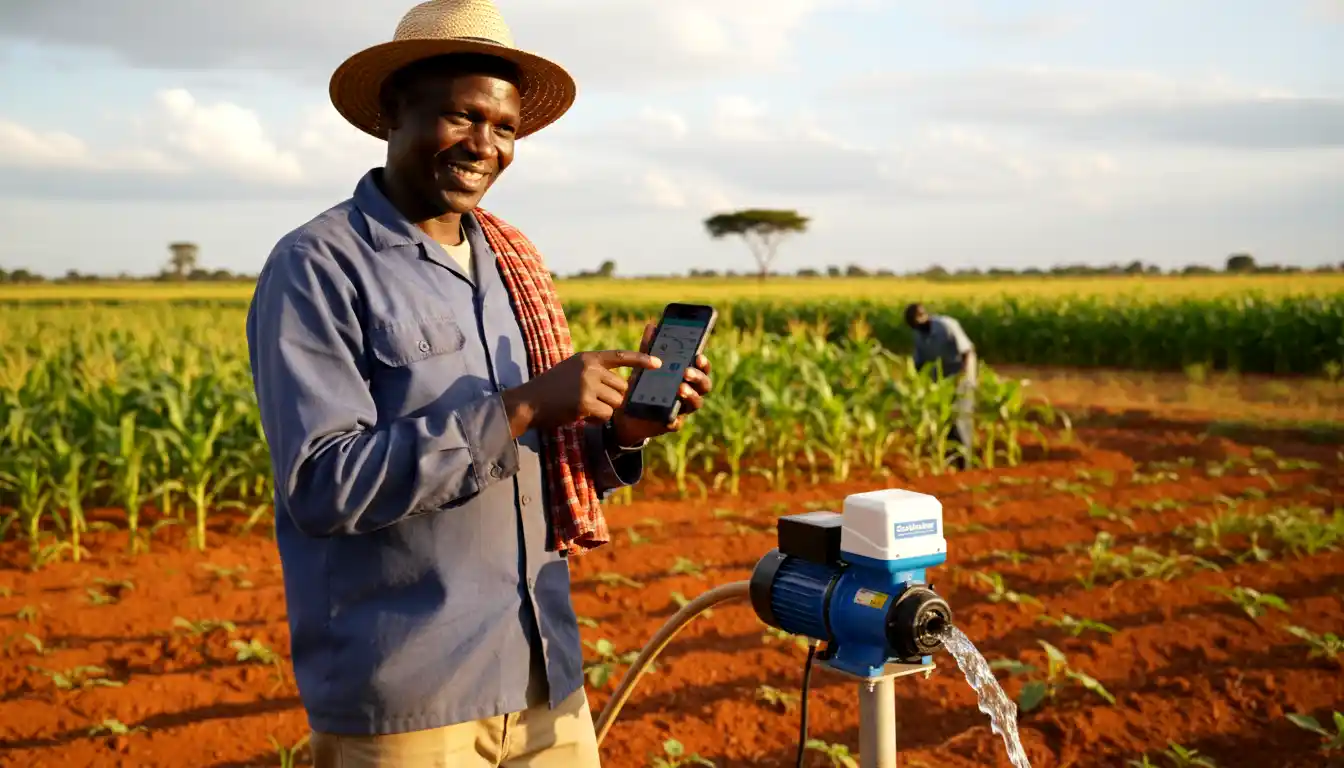
Pump Performance and Pricing Comparison
Comparing maximum head capacity and flow rates is critical before investing your capital. The maximum head determines how high the pump can push water vertically from the source. Always consult an agronomist or a certified technician to size your pump correctly.
| Pump Model | Pump Type | Max Head / Depth | Estimated Cash Price (KES) | Target Farm Size |
|---|---|---|---|---|
| SunCulture RainMaker2 Direct | Surface | 20 meters | 59,999 | Up to 2 Acres |
| SunCulture CSB2 (With Battery) | Surface | 20 meters | 104,999 | Up to 3 Acres |
| Dayliff Submersible 900W | Submersible | 82 meters (270 ft) | 77,000 | Medium Farming |
| Dayliff Heavy Duty 3000W | Submersible | 237 meters (780 ft) | 222,000 | Large Commercial |
How Do You Optimize Fertilizer Application Through Solar Fertigation Systems?
Fertigation merges solar water pumping with drip irrigation to deliver dissolved fertilizers directly to crop roots. This modern technique reduces fertilizer waste by 40 percent and accelerates crop growth. Using highly soluble inputs guarantees maximum nutrient uptake without clogging your drip tapes.
Pairing your solar water pump with a fertigation system is a game changer for Kenyan agriculture in 2026. You dissolve the nutrients in a central water tank instead of manually broadcasting dry fertilizer across your shamba. The solar pump then drives this nutrient-rich water through your drip lines directly to the root zones.
Solubility is the most crucial factor when selecting fertilizers for solar-powered drip systems. Calcium Ammonium Nitrate dissolves perfectly and is ideal for top-dressing leafy greens and fruiting crops. Specialized water-soluble NPK blends like YaraMila are highly recommended to prevent clogging the tiny emitters on your drip tapes.
Government subsidy programs in early 2026 have stabilized the volatile input market. Subsidized fertilizers are available at local National Cereals and Produce Board (NCPB) depots, drastically lowering production costs. Regular flushing of your irrigation system with clean water prevents mineral crystallization inside the pipes.
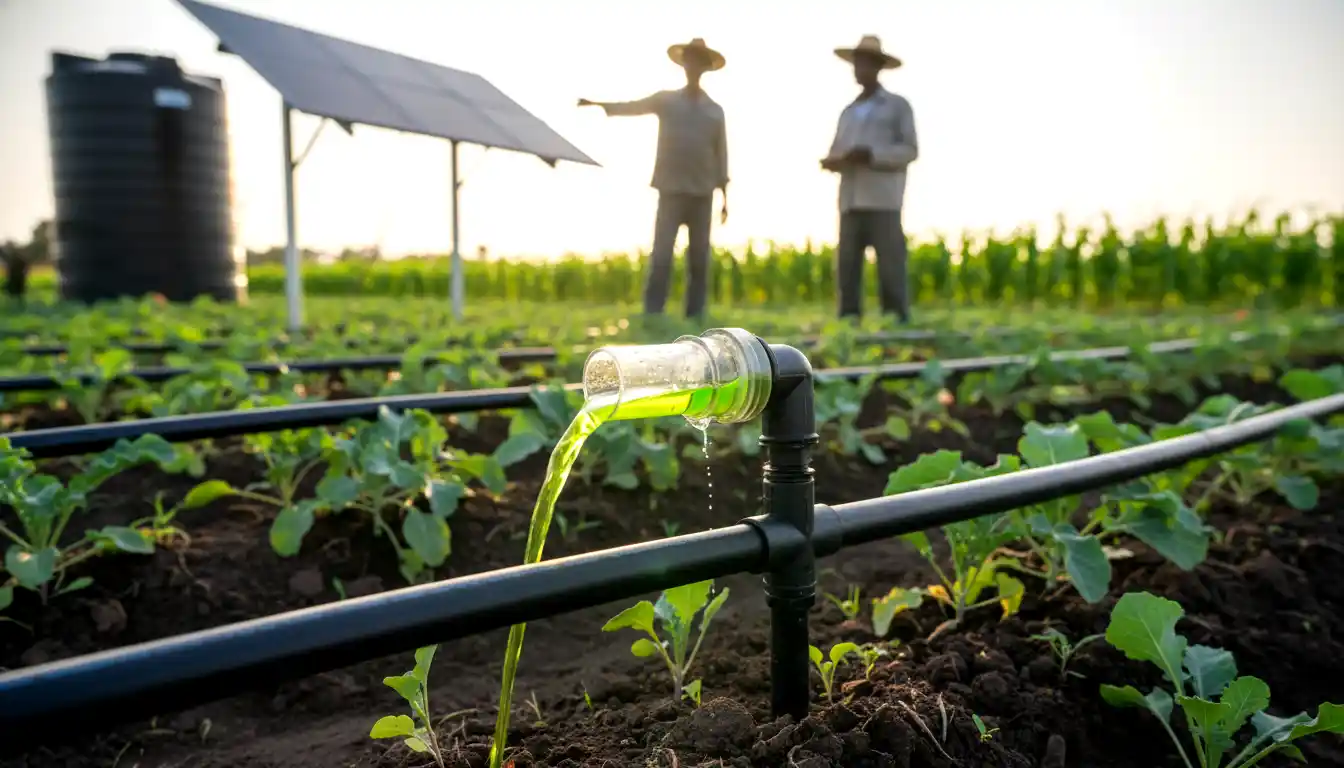
2026 Fertilizer Price and Application Guide
Monitoring market prices helps you budget effectively for the planting season. While government subsidies offer relief, commercial markets provide specialized blends crucial for high-value horticultural crops. Always verify the authenticity of subsidized bags by checking the official government seals.
| Fertilizer Type | Primary Use | Solubility for Drip | Subsidized Price (KES / 50kg) | Market Price (KES / 50kg) |
|---|---|---|---|---|
| DAP (18-46-0) | Basal application, root growth | Low (Requires soaking) | 2,500 | 5,500 |
| CAN (26% N) | Top dressing, vegetative growth | High | 2,500 | 3,500 |
| NPK (17-17-17) | Balanced growth, flowering | Medium | 2,500 | 4,800 |
| YaraMila Winner | Premium horticultural fruiting | Very High | Not Subsidized | 6,500 |
Which Crop Varieties Are Best for Solar Irrigation?
High-yielding hybrid varieties of tomatoes, onions, and capsicums offer the fastest return on investment for solar-irrigated farms. Planting drought-tolerant hybrids maximizes water efficiency. Fast-maturing crops allow you to achieve up to three harvest cycles annually.
Selecting the right seed varieties is just as important as installing a reliable solar water pump. Farmers in semi-arid regions are achieving massive success with hybrid tomatoes like Shanty F1 and Zara F1. These varieties possess strong disease resistance and produce firm fruits that survive long transport routes to urban markets.
Read Also: Top 7 Best AI Apps for Kenyan Farmers in 2026: Fight Crop Diseases, Cut Costs and Boost Yields
Bulb onions are another incredibly profitable choice for drip-irrigated agribusinesses in Kenya. Red Creole and Neptune F1 onions respond exceptionally well to precise fertigation schedules. Market demand for these pungent red varieties remains consistently high, ensuring quick sales at the farm gate.
For export-oriented farmers, French beans and Hass avocados present lucrative opportunities. Solar pumping guarantees the consistent watering required to meet strict European export standards for pod straightness and fruit size. Utilizing certified seedlings from recognized nurseries ensures high germination rates and robust initial growth.
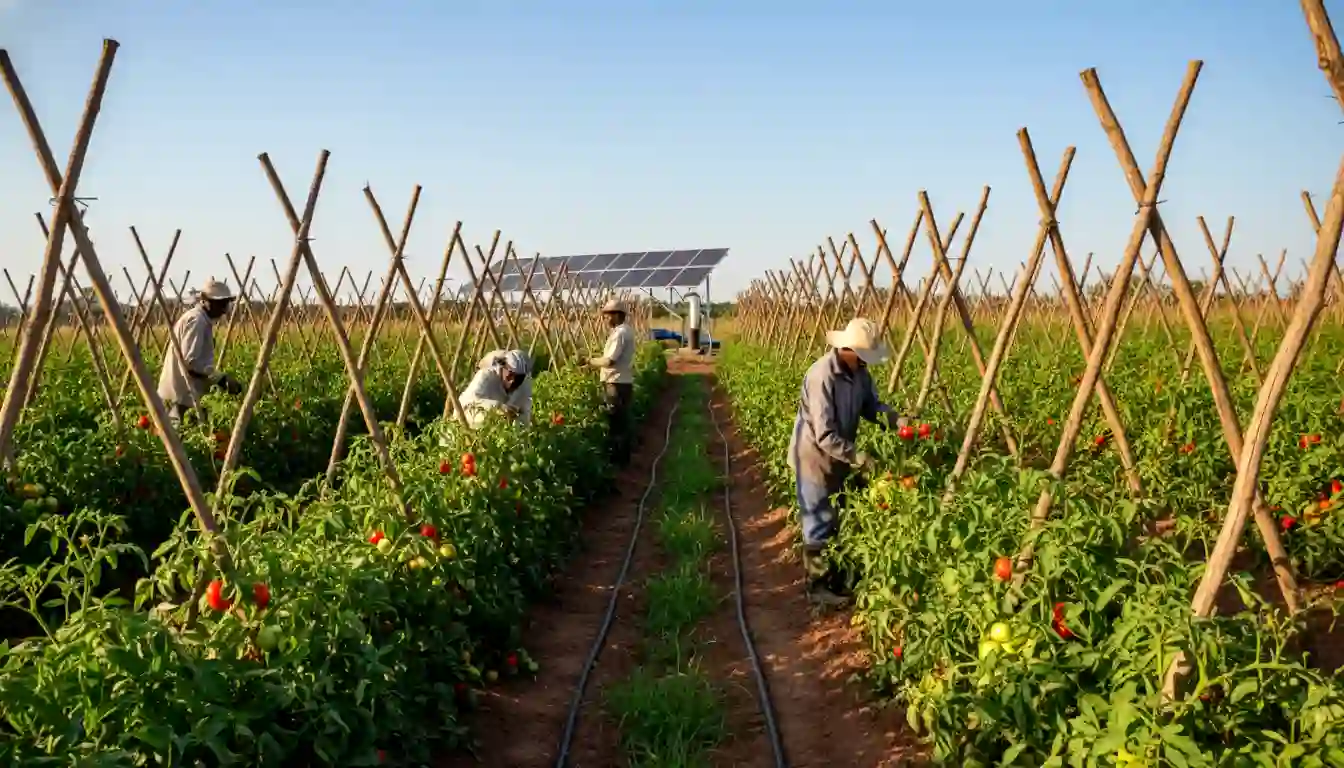
Where to Buy Genuine Solar Water Pumps in Kenya (Top Suppliers 2026)
You can source certified solar water pumps from authorized distributors like Davis & Shirtliff, SunCulture, and Epicenter Africa. Digital platforms like Safaricom Digifarm provide verified vendor contacts. Always demand a warranty certificate and professional installation to protect your agribusiness investment.
Procuring a genuine solar water pump requires dealing strictly with authorized national distributors. Walking into a certified branch guarantees you access to authentic products and immediate after-sales support. Their in-house engineers will conduct a site survey to recommend the exact pump specifications for your borehole.
SunCulture has streamlined its procurement process through digital accessibility and field agents. You can initiate a purchase via their official USSD codes or WhatsApp business accounts directly from your smartphone. This direct-to-farmer model eliminates middlemen and reduces the risk of purchasing counterfeit equipment.
Modern farmers also leverage digital agricultural platforms to find reliable irrigation suppliers. Applications like Safaricom Digifarm and the Mkulima Young marketplace connect buyers with vetted technology providers. A certified supplier will always provide at least a two-year warranty on the pump motor and a ten-year guarantee on the solar panels.
Which Kenyan Counties Offer the Best Climate for High-Yield Irrigated Farming?
Machakos, Kajiado, and Meru counties are prime locations for solar irrigated farming. Machakos and Kajiado benefit from abundant sunshine ideal for solar panels. Meru offers fertile volcanic soils and permanent rivers for efficient surface water pumping.
The success of solar irrigation relies heavily on an optimal balance of solar irradiation and water availability. Machakos County represents a perfect environment for transforming semi-arid land into productive green belts. The region receives intense sunshine which maximizes the power output of solar panels.
Kajiado County shares similar dryland characteristics but boasts expansive flatlands suitable for large-scale commercial farming. The abundance of underground aquifers makes deep submersible solar pumps a necessity here. Farmers in areas like Loitokitok use solar irrigation to grow massive quantities of onions and watermelons.
Meru County offers a contrasting but equally profitable scenario for solar surface pumps. The region features rich volcanic soils and numerous permanent streams flowing from Mount Kenya. This reliable water access allows Meru farmers to maintain strict export schedules for French beans and Hass avocados.
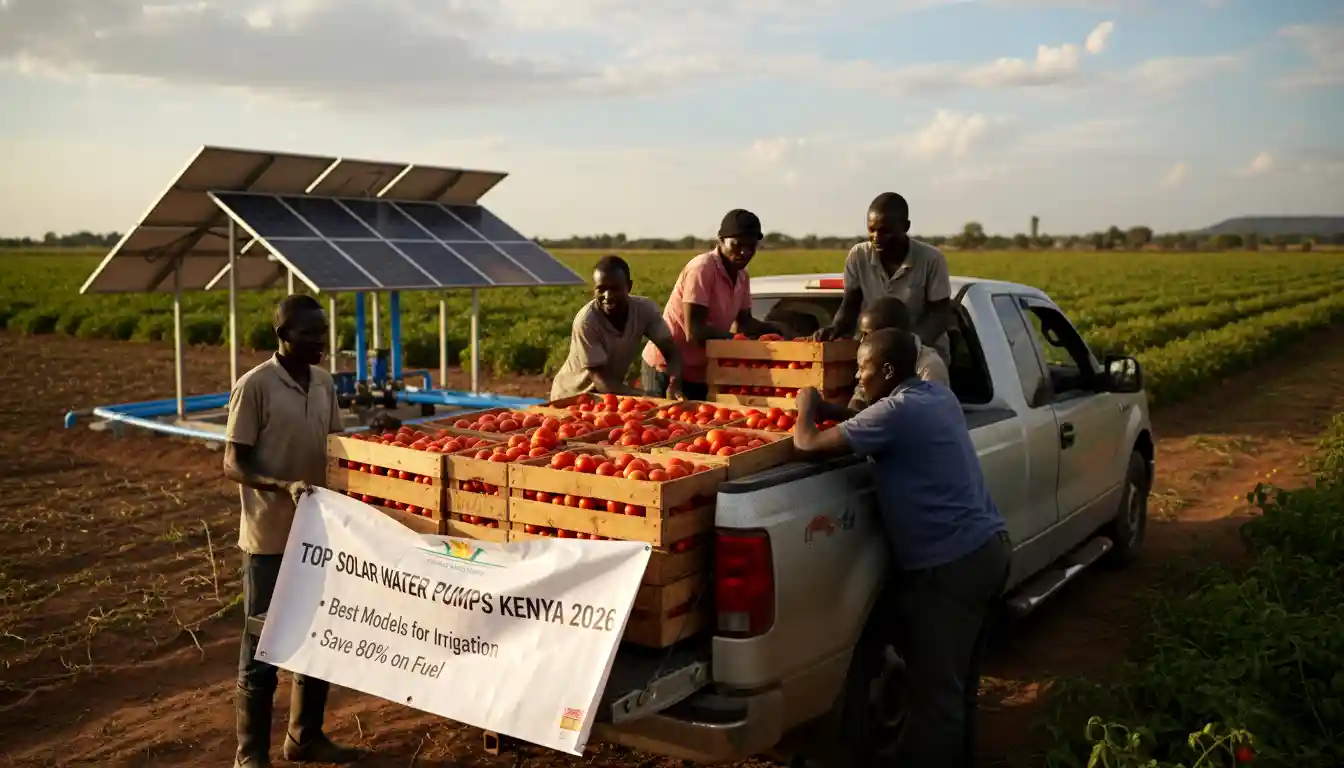
What is the Ideal 12-Month Planting Cycle Using Solar Irrigation in Kenya?
A solar-irrigated calendar ignores traditional rain patterns, allowing you to plant during dry seasons when market prices peak. Begin primary crop cycles in January and August to harvest in April and December. Rotate high-value crops with legumes to maintain soil health.
Breaking free from erratic rain-fed agriculture gives you the ultimate market advantage. With a solar water pump, your farming calendar is dictated purely by market demand rather than weather forecasts. The most profitable strategy is off-season farming, where you time your harvests to coincide with periods of national scarcity.
Your first major cycle should commence in early January to hit the market in late March. During this period, traditional harvests are months away and city markets are desperate for fresh horticultural produce. Routine maintenance of your solar panels during the dusty January month ensures maximum pumping efficiency.
Read Also: 15 Most Profitable Agribusiness Ideas in Kenya to Start in 2026
The second major planting window opens in August, aiming for the lucrative December holiday market. Tomatoes planted in August require consistent daily watering, easily handled by an automated solar drip system. Always incorporate a short legume cycle between major harvests to fix nitrogen back into your shamba.
How Much Profit Can You Make With Solar Water Pumps in Kenya?
Solar water pumps eliminate daily diesel costs, boosting profit margins by up to 239 percent. Cultivating one acre of irrigated tomatoes can generate KES 450,000 in net profit per season. Break-even for a KES 60,000 pump system is typically achieved within the very first harvest cycle.
The financial argument for replacing diesel pumps with solar technology is undeniable. A standard petrol water pump consumes roughly five liters of fuel daily during peak dry seasons. Solar pumps completely eliminate this operational hemorrhage, converting former fuel expenses directly into net profit.
Recent field data demonstrates that transitioning to solar increases overall farm revenue dramatically. Farmers report a 25 percent increase in farmable acreage simply because water is suddenly free to pump. A well-managed acre of bulb onions under solar irrigation can yield 15 tons, fetching prime market rates.
Initial capital expenditure is the only significant hurdle, but modern financing has neutralized this barrier. A KES 60,000 surface pump system amortized over three years costs roughly KES 1,600 per month in depreciation. Please note that estimated ranges vary by management, seed quality, and market timing.
Visual Insight Processing Error
Organized shelves inside a local agricultural depot showing packaged solar controllers
Real Profit Breakdown: 1 Acre Irrigated Tomatoes (KES)
This financial breakdown illustrates the profitability of growing hybrid tomatoes using a solar surface pump and drip irrigation. Pumping energy costs are zero, maximizing the final take-home profit. Estimated ranges vary by management and actual market prices during harvest.
| Expense / Revenue Item | Cost / Revenue (KES) | Notes |
|---|---|---|
| Certified Seeds & Nursery | 15,000 | High-yield hybrid varieties |
| Drip Tape & Piping (Amortized) | 10,000 | Per-season wear and tear |
| Solar Pump Running Cost | 0 | Free solar energy |
| Fertilizer & Crop Protection | 45,000 | Subsidized DAP, CAN, and pesticides |
| Labor (Planting to Harvest) | 30,000 | Weeding, pruning, and harvesting |
| Total Production Cost | 100,000 | Estimated ranges vary by management |
| Gross Revenue (20 Tons) | 600,000 | Conservative farm-gate price |
| Net Profit Per Season | 500,000 | Achievable within 4 months |
How Can Solar Irrigation Transform Your Supply Chain and Value Addition?
Consistent year-round production empowers farmers to sign lucrative off-take contracts with supermarkets and export processors. Solar setups can also power cold-room storage units to reduce post-harvest losses. Value addition through drying or pulping becomes feasible when water and power are localized.
Supply chain reliability is the biggest challenge facing agricultural buyers in Kenya. Supermarkets and export companies require consistent weekly deliveries of fresh produce, regardless of the season. A solar-irrigated farm guarantees steady production, allowing you to bypass brokers and supply corporate clients directly.
Integration of solar power extends beyond simply pumping water from the ground. Innovative farmers are utilizing excess solar energy during off-peak pumping hours to run small-scale processing equipment. You can power chilling units to extend the shelf life of highly perishable crops like French beans and berries.
Read Also: Top 10 Best Agrovets in Kenya (2026 Guide): Where to Buy Genuine Inputs in Nairobi, Eldoret & Nakuru
Value addition drastically multiplies your profit margins and builds agribusiness resilience. Processing tomatoes into purees or drying surplus onions using solar dryers transforms a highly perishable crop into a stable commodity. This creates a robust business model capable of withstanding local market gluts and price fluctuations.
What is the 2026 Outlook for Solar-Powered Agriculture in Kenya?
The trajectory for Kenyan agriculture in 2026 is distinctly solar-powered and technology-driven. The government is actively shifting the nation away from rain-fed vulnerability through massive irrigation investments. The widespread adoption of affordable pay-as-you-go systems ensures that even the smallest rural shamba can achieve commercial viability.
Taking action today places you ahead of the impending agricultural curve. Farmers who secure their water independence now will dominate the lucrative urban food markets over the next decade. Assess your local water table, consult a certified pump distributor, and upgrade your infrastructure to build generational wealth.
Farmers Also Ask (FAQ)
How long do solar water pumps last?
High-quality solar panels last over 25 years. The pump motor and controller typically last 5 to 10 years depending on water sediment levels and routine maintenance.
Can I pump water at night?
Direct solar pumps only operate during sunlight hours. To pump at night, you must install a system equipped with a high-capacity lithium battery like the SunCulture CSB2.
What happens when it is cloudy?
Modern solar panels still generate power under light cloud cover, though the flow rate decreases. Batteries completely stabilize pressure during heavily overcast days.
Do I need a permit to drill a borehole?
Yes. You must obtain authorization from the Water Resources Authority and conduct an Environmental Impact Assessment before drilling any deep borehole in Kenya.
How do I prevent my solar pump from being stolen?
Install tamper-proof mounting brackets, weld panels to high steel frames, and utilize GPS-tracking controllers to deter farm equipment theft.
Can solar pumps handle muddy river water?
Surface pumps can handle slight turbidity, but heavy mud will destroy the impellers. Always use floating intake filters and construct a settling basin.
How much does a 2-acre drip kit cost in Kenya?
A complete commercial drip irrigation kit for two acres averages KES 150,000 to KES 200,000. This estimate excludes the water pump and main storage tanks.
What is Lipa Pole Pole for solar pumps?
It is a financing model where you pay a small deposit to receive the pump, then make daily or monthly M-Pesa payments until you own it entirely.
Can I run my farmhouse appliances on the pump’s solar panels?
Yes, but you require a hybrid controller and an inverter. Some modern pump controllers feature secondary DC outputs specifically for lighting and charging phones.
Will hard water damage my solar water pump?
Highly saline or hard water causes mineral scaling. Purchasing stainless steel submersible pumps and conducting scheduled acid flushes will prolong equipment lifespan.