
Table of Contents
Introduction to Hass Avocado Farming in Kenya
Hass avocado farming has firmly established itself as one of the most lucrative agribusiness ventures in Kenya, earning the nickname “Green Gold” among smallholder farmers, commercial growers, and agricultural economists. For many years, Kenya’s agricultural economy relied heavily on traditional cash crops such as tea and coffee. However, unstable global prices and increasing climate-related risks have pushed farmers to seek more resilient and profitable alternatives.
Horticulture has taken center stage in this transition, with the Hass avocado emerging as the clear leader. Unlike seasonal crops such as maize or beans that are vulnerable to local market crashes and post-harvest losses, Hass avocados enjoy a stable and steadily rising demand. This demand is fueled not only by growing urban consumption in cities like Nairobi and Mombasa but, more importantly, by strong export markets in Europe, the Middle East, and Asia, particularly China and India.
Why Hass Avocado Is Ideal for Kenyan Farmers
For beginner and experienced farmers alike, Hass avocado offers a rare combination of high returns per acre, manageable production costs, and long-term productivity. Once established, maintenance costs drop significantly after the second year, while a well-managed tree can remain productive for over fifty years. This makes it a true long-term investment rather than a short-term seasonal gamble.
Read Also: Top 10 Hass Avocado Diseases in Kenya: Causes, Symptoms & Treatment Guide (2026)
Avocado farming in Kenya has evolved from a backyard activity into a precision-driven commercial enterprise. Success today depends on quality grafted seedlings, proper spacing, soil management, irrigation, and access to reliable markets. Farmers who approach it professionally consistently outperform those treating it as a side crop.
Kenya’s Natural Advantage in Hass Avocado Production
Kenya is uniquely suited for Hass avocado cultivation. The central highlands, parts of the Rift Valley, and Western Kenya provide ideal conditions, including moderate temperatures, reliable rainfall patterns, and deep, mineral-rich volcanic soils. These factors contribute directly to the fruit’s high oil content, creamy texture, and rich flavor, qualities that make Kenyan Hass avocados highly competitive in international markets.
Kenya’s Position in the Global Avocado Market
As of 2025, Kenya remains the leading avocado exporter in Africa and ranks among the top ten producers globally. This success is driven by both smallholder farmers in counties such as Murang’a and Kiambu and large commercial estates in the Rift Valley. Recent market access agreements, particularly with China and India, have opened a new demand frontier that currently exceeds supply.
What This Guide Will Help You Achieve
This guide is designed to walk you through every practical aspect of Hass avocado farming in Kenya, from land preparation and seedling selection to production costs, yields, and market access. Whether you are starting with idle land or scaling an existing farm, the goal is simple: help you build a profitable, export-ready Hass avocado enterprise.avocado orchard.
WHY CHOOSE HASS OVER OTHER VARIETIES
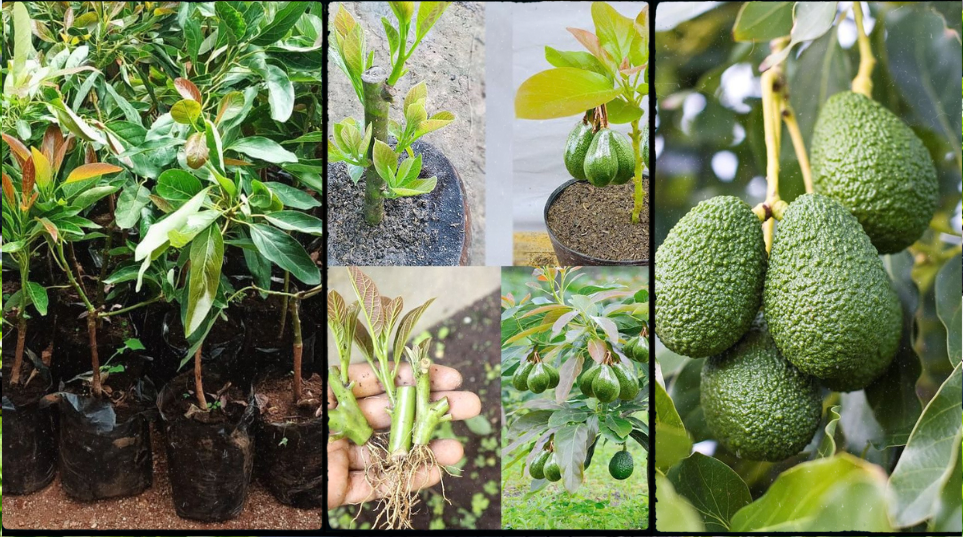
The primary reason to choose the Hass variety over other popular local varieties like Fuerte, Pinkerton, or Puebla is undeniable and overwhelming market demand. While the Fuerte avocado, with its green, smooth skin and larger size, has historically been a favorite for local consumption in Kenya, it possesses significant logistical disadvantages.
Fuerte has a thinner skin that bruises easily during handling and transport, and it has a significantly shorter shelf life. Once a Fuerte avocado ripens, it must be consumed almost immediately, making it a high-risk commodity for shipping via sea containers to Rotterdam or Dubai.
Hass, on the other hand, is the gold standard for international trade. It is characterized by its oval shape and a thick, pebbly skin that turns from green to purplish-black when ripe. This tough, leathery skin acts as a natural packaging material, protecting the delicate flesh inside from physical damage during the long logistical chains involved in export.
It withstands the rigors of packing houses, cold storage, and weeks of sea travel without compromising the internal quality of the fruit. This durability is why exporters pay a premium for Hass. Furthermore, the Hass nut has a smaller seed inside compared to other varieties, meaning the consumer gets more flesh per fruit, which is a key selling point in Western supermarkets.
Financially, the difference in revenue potential between Hass and other varieties is stark and cannot be ignored by any serious commercial farmer. In the local open-air markets of Nairobi, Eldoret, or Kisumu, a Fuerte fruit might fetch between KES 5 and KES 15 depending on the season and glut.
In contrast, a distinct, export-quality Hass avocado can command farm-gate prices ranging from KES 10 to KES 25 per fruit, and significantly higher-often sold by weight at KES 80 to KES 150 per kilogram-if you have a direct contract with an established exporter.
Furthermore, Hass trees are prolific, heavy bearers. A single mature tree that is five to seven years old can produce between 1,000 to 3,000 fruits annually under optimal management. This translates to massive revenue potential per acre that far outstrips maize, beans, or even dairy farming in many contexts.
ECOLOGICAL REQUIREMENTS: WHERE CAN YOU GROW IT
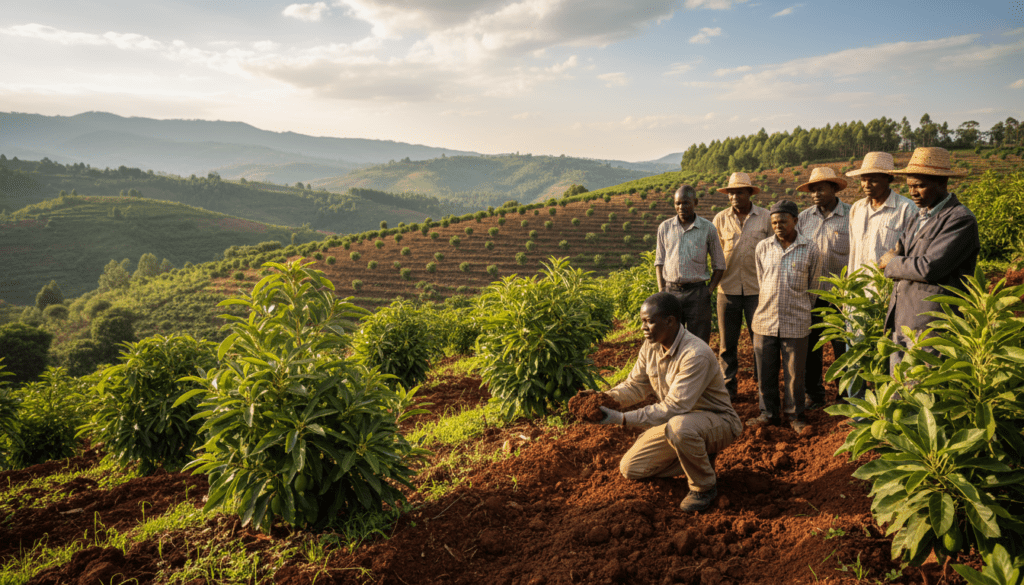
Hass avocados are not a one-size-fits-all crop that can simply be planted anywhere in Kenya; they have specific altitude, temperature, and soil requirements that must be met for commercial success. The ideal altitude for Hass cultivation in Kenya lies between 1,000 and 2,000 meters above sea level. This altitude range encompasses the major agricultural hubs of the country, including Kiambu, Muranga, Nyeri, Meru, Embu, Kisii, Kericho, Trans Nzoia, and parts of the Rift Valley like Nakuru and Eldoret.
In these highland areas, the cool nights and warm days allow the fruit to mature slowly, which is essential for the development of the high oil content and dry matter that international buyers demand.
Read Also: Hass Avocado Seedlings in Kenya 2026: Trusted Nurseries, Prices and Spacing Guide
If you attempt to plant Hass in very low, hot coastal areas like Mombasa or Kilifi, the trees may grow vegetatively, but they will face severe challenges. The heat often causes the trees to shed flowers (abortion), and the resulting fruits usually have low oil content and mature too quickly, leading to a watery taste that fails export quality tests.
Conversely, areas that are too high and prone to frost, such as the upper reaches of Nyandarua or Limuru tea zones, are also unsuitable. Frost is lethal to avocado flowers and young fruits. If your area experiences frequent frost, you will likely lose your entire crop or kill the young trees, making it a risky investment.
Soil drainage is the single most critical factor for avocado survival and cannot be overemphasized. Avocado trees are extremely susceptible to a soil-borne disease called Phytophthora cinnamomi, or root rot, which thrives in waterlogged, anaerobic conditions. You need deep, well-drained, aerated soil, preferably sandy loams or volcanic red soils with a pH between 5.5 and 6.5. If your land has Black Cotton soil (sticky cracking clay that holds water), you must be extremely cautious.
This soil expands when wet and cracks when dry, breaking roots and causing waterlogging. If you must plant in such areas, you will need to import red soil to create large raised mounds for planting or avoid planting avocados there altogether. Waterlogging will likely kill your orchard within the first three years, turning your investment into firewood.
Official Varieties in Kenya and Rootstocks
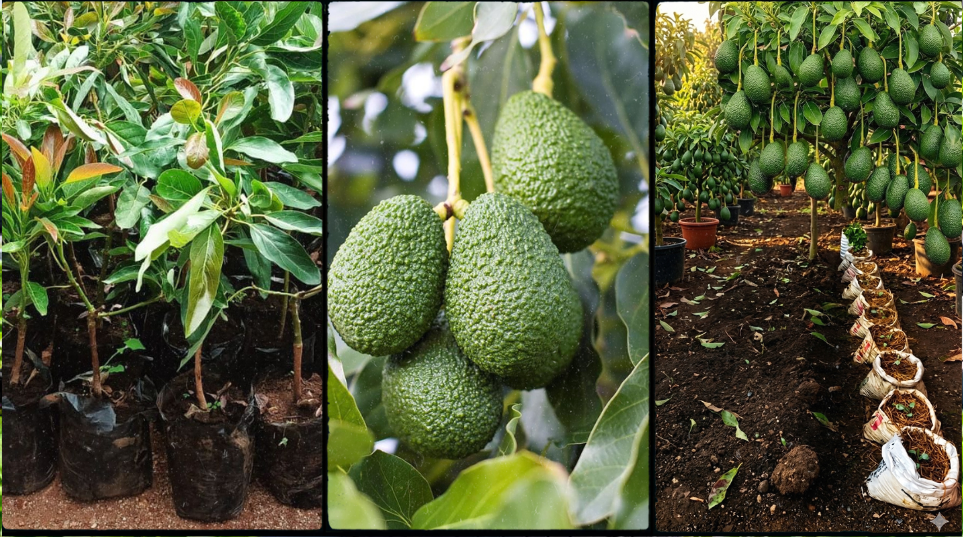
When you plant a Hass avocado tree, you are actually planting two trees joined into one. The top part is called the scion, which produces the Hass fruit. The bottom part is the rootstock, which grows in the soil. In Kenya, nurseries graft high-yielding Hass scions onto tough, local rootstocks often called Kienyeji or indigenous varieties.
These local rootstocks are the best choice for most farmers because they are strong, handle dry weather well, and fight off local soil diseases. When you buy a grafted seedling, you are buying a productive international Hass top joined to a resilient Kenyan bottom.
Some advanced nurseries offer special rootstocks like Duke 7 or Dusa. These are very good at stopping root rot, but they are expensive and hard to find. For most small-scale farmers, the standard local rootstock is perfect, as long as your soil is well-drained.
Why you must use grafted seedlings:
Check the Scar: Always look for the V-shape or union scar on the stem where the graft was made. If the stem is perfectly smooth with no scar, it is not a grafted tree and will not give you the results you want.
Genetics: If you plant a seed from a Hass fruit, you will not get a Hass tree. You will get a wild variety that takes 7 to 10 years to fruit and produces poor quality avocados.
Speed: Grafted trees are clones of the parent tree. They will start producing fruit in just 2 to 3 years.
Certification: Always buy from nurseries approved by KALRO or KEPHIS. Avoid roadside sellers who often sell fake seedlings that may turn out to be low-quality wild trees.
CURRENT MARKET PRICES IN KENYA 2025 ESTIMATES
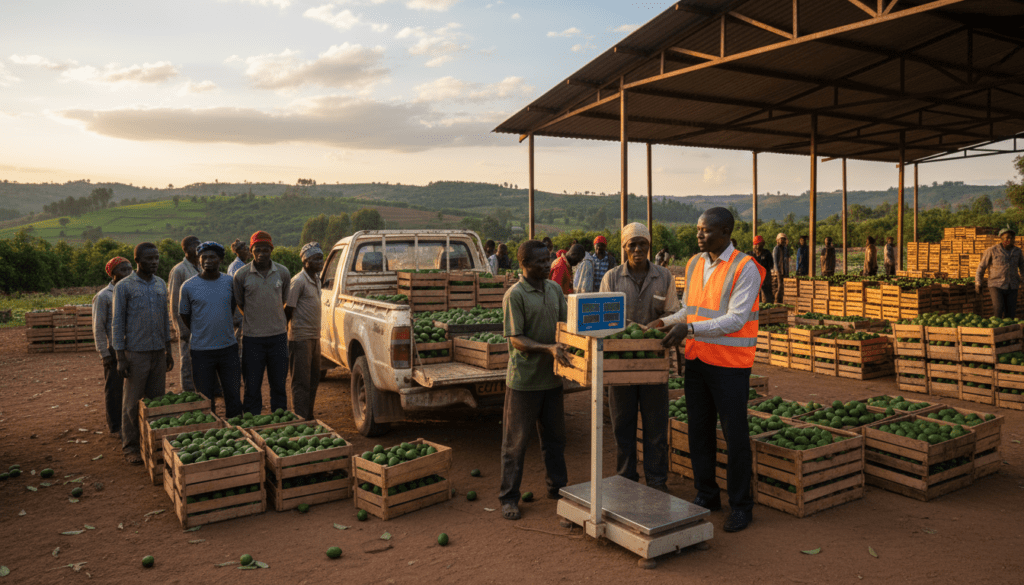
Understanding the numbers is crucial before you dig your first hole. As of early to mid-2025, the price of Hass avocados varies significantly by region, buyer type, and the time of harvest. During the peak harvest season, which typically runs roughly from April/May to September for the main crop in Central and Western Kenya, supply is high, and local prices can dip. However, the export demand usually keeps a floor price that is much higher than other crops.
The farm-gate price, which is what you sell the fruit for at your farm, currently ranges between KES 8 and KES 15 per fruit when selling to local brokers who act as middlemen. These brokers often buy per piece, regardless of weight, provided the fruit looks good. However, the real revenue lies in selling by weight to contracted exporters.
Read Also: Exporting Hass Avocados from Kenya: A Step-by-Step 2026 Guide
For the 2024/2025 season, contracted exporters are paying between KES 12 and KES 25 per kilogram for standard fruits, and up to KES 150 per kilogram for premium Grade 1 fruit during off-peak windows or for specific high-value markets. A kilogram typically consists of 3 to 5 fruits depending on their size codes.
It is important to note that Export Grade means the fruit must be spotless. It must be free of physical damage, free of pests like the False Codling Moth and Scales, and free of sunburn. The fruit is graded by size codes ranging from Code 12 (large) to Code 24 (small). The highest prices are paid for fruits that have the correct dry matter content (usually above 22 percent) which ensures they ripen evenly.
Farmers who can manipulate their crop cycle through irrigation and pruning to harvest during the off-season (late year November-December or very early year January-February) can command significantly higher prices, sometimes double the peak season rates.
Where to Buy Certified Avocado Seedlings in Kenya
Your farm’s success depends entirely on the quality of your seedlings. Never look for the cheapest option. A certified, high-quality grafted seedling typically costs between KES 150 and KES 450. Cheap seedlings are often a trap; they may carry hidden root diseases or come from poor-quality mother trees that will never produce a good harvest.
Only buy from nurseries that have a valid registration certificate from KEPHIS (Kenya Plant Health Inspectorate Service).
Government and Research Institutions
These are the safest places to buy because their seedlings are scientifically tested and disease-free.
- KALRO (Kenya Agricultural and Livestock Research Organization): The gold standard for research-backed seedlings. Visit their Horticulture Research Institute in Kandara (Thika) or centers in Kitale, Njoro, and Kakamega.
- Website: https://www.kalro.org
- JKUAT Enterprises (Juja): They run a commercial nursery that supplies high-quality grafted fruit trees.
- Website: https://jkuates.jkuat.ac.ke
- Ruiru Prison Farm: They run a well-known nursery that supplies high-quality, certified seedlings to the public at very fair prices. You can visit the site directly in Ruiru.
Top-Tier Private Nurseries
These companies are leaders in the industry and adhere to strict professional standards.
- Kakuzi PLC (Muranga): The largest commercial avocado grower in Kenya. Their seedlings are the best in the market, but you must book and pay well in advance due to high demand.
- Website: https://www.kakuzi.co.ke
- Amiran Kenya: A major supplier of agricultural technology and high-quality seedlings.
- Website: https://www.amirankenya.com
- Royal Seedlings (Muranga): A highly reputable private nursery known for consistent quality and good after-sale advice.
- Contact: Reach out through their Official Facebook Page for current stock updates.
Important Buying Rules:
- Ask for the Certificate: Always ask to see the KEPHIS certificate of registration. If they cannot show it, do not buy from them.
- Check the Union: Look for a clear V-shape scar on the stem. This proves the tree was grafted.
- Avoid Roadside Vendors: Never buy from random people on the side of the road. You have no way to complain if the tree turns out to be a fake or diseased variety.
Online Seed and Seedling Purchase Guide (Kenya)
In the digital farming landscape of 2025, buying seeds and seedlings online has become common, especially for farmers who cannot travel to Murang’a, Thika, or other production hubs. While online purchasing is convenient, it carries real risks. The key is using verified platforms and rigorous seller validation.
Trusted Online Seed and Seedling Sources
Kenya Seed Company (KSC)
Kenya Seed Company operates an official online portal and remains one of the most reliable sources of certified seeds in Kenya. While best known for maize and vegetable seeds, they have expanded into horticulture and fruit tree inputs.
👉 Official website: https://www.kenyaseed.com
Oxfarm Organic
Oxfarm Organic is an established agricultural supplier with a strong online presence. They specialize in seedlings, organic inputs, and farm setup services, making them suitable for both small-scale and absentee farmers.
👉 Website: https://oxfarm.co.ke
Richfarm Kenya
Richfarm Kenya is a reputable agribusiness offering certified seedlings, soil testing, training, and farm establishment services. They often provide bundled packages that include delivery, planting labor, and manure application.
👉 Website: https://richfarmkenya.com
These companies are preferable because they have physical offices, traceable operations, and documented customer feedback.
Warning on Social Media Marketplaces
Social media platforms can be useful but are also high-risk. Facebook groups such as Digital Farmers Kenya provide valuable peer insights, but they are also common hunting grounds for scammers.
Common scams include:
- Requests for deposits via M-Pesa for non-existent seedlings
- Sellers disappearing after payment
- Delivery of poor-quality or wrong varieties
Never pay full amounts upfront to an unknown seller on Facebook or Jiji without verification. If possible:
- Visit the nursery physically
- Pay on delivery
- Ask for recent farm photos and live location
- Request the seller’s KEPHIS certification number
You can verify certified nurseries through the Kenya Plant Health Inspectorate Service (KEPHIS).
👉 https://www.kephis.org
Land Preparation: The 60 × 60 × 60 Rule
Land preparation is not a one-day task. You are preparing a permanent root environment that will support the tree for 40 to 50 years. Mistakes made at this stage are difficult and costly to correct later.
Read Also: Top 5 High-Yield 3-Month Crops in Kenya (2026 Profit Guide + ROI Breakdown)
Spacing Guidelines
The standard spacing for a commercial Hass avocado orchard is 5 meters by 5 meters, giving approximately 150 to 160 trees per acre.
Alternative spacing options include:
- 7 m × 7 m for machinery access and intercropping
- 6 m × 4 m for high-density systems
For most Kenyan farmers, 5 × 5 meters offers the best balance between yield and canopy management.
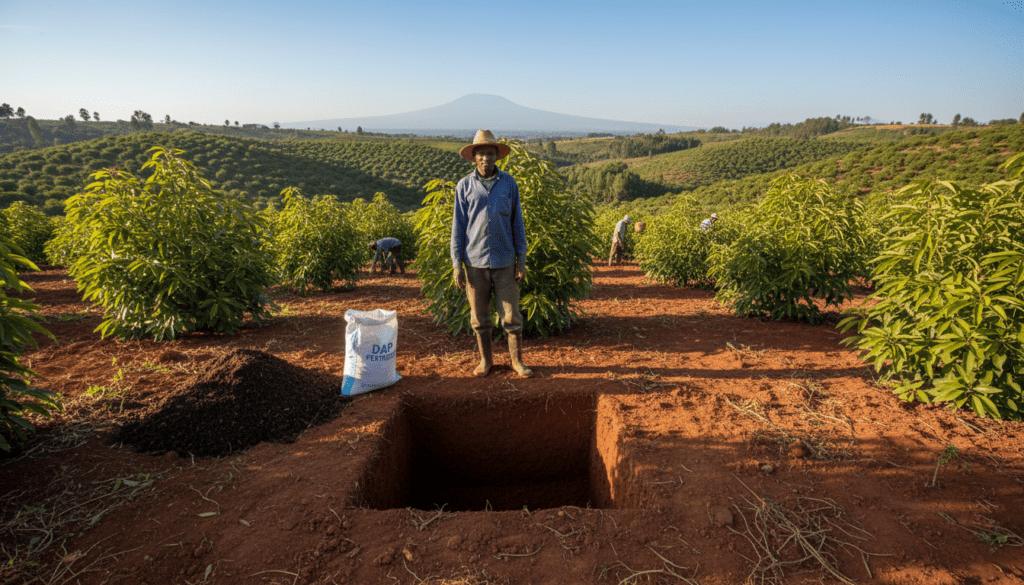
Hole Preparation
Planting holes should be dug at least two months before planting. Early digging allows:
- Soil aeration
- UV exposure to kill soil-borne pests and nematodes
- Improved soil structure
The recommended hole size is 60 cm × 60 cm × 60 cm (2 ft × 2 ft × 2 ft).
When digging:
- Separate the topsoil (dark, fertile upper layer)
- Separate the subsoil (lighter, clay-heavy lower layer)
- Place them in two distinct piles
Backfilling and Soil Amendments
Only the topsoil should be used for refilling. Mix it with:
- 2 debes (≈20 kg) of well-decomposed manure (cow, goat, or poultry)
- 150–200 g of DAP fertilizer, thoroughly mixed
- Agricultural lime, if soil pH is below 5.5 (based on soil test results)
The subsoil should be discarded or used to form a basin around the tree. Never place chemical fertilizer in direct contact with young roots, as this causes root burn and early seedling failure.
PLANTING AND THE CRITICAL FIRST MONTHS
Planting should ideally coincide with the onset of the long rains (March/April) or the short rains (October/November). This timing significantly reduces your irrigation costs and transplanting shock. However, if you have a reliable irrigation system, you can plant at any time of the year. When planting, carefully cut the bottom of the black polythene bag. Place the seedling in the center of the hole, then slit the side of the bag and remove it gently without breaking the ball of soil holding the roots. The soil level of the seedling should match the ground level of your field.
Crucially, ensure the graft union is well ABOVE the soil level. If you bury the graft union, the scion (the Hass part) might rot due to contact with wet soil, or it might start producing its own roots. If the scion roots, you lose the disease resistance and drought tolerance benefits of the rootstock, defeating the purpose of buying a grafted tree. Pack the soil firmly around the roots to eliminate air pockets, but do not stomp on it so hard that you compact the soil completely.
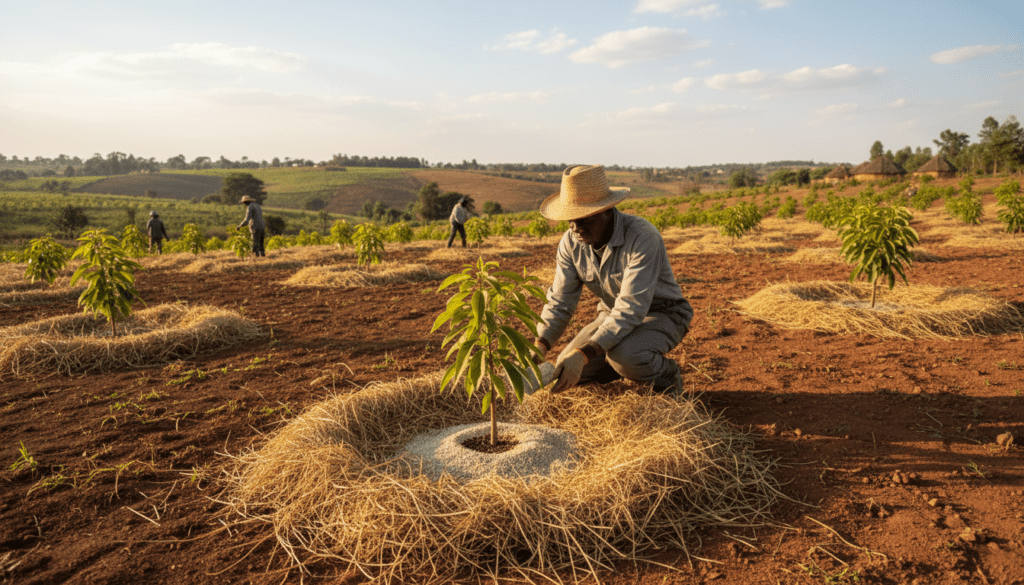
Water immediately after planting. Each tree needs at least 20 liters of water to settle the soil. In the first 3 months, you must mulch the base of the tree. Mulching is the application of dry organic matter like dry grass, maize stalks, or bean trash around the base of the tree. Mulch helps retain soil moisture, suppresses weed growth, and adds organic matter as it decomposes. However, you must keep the mulch at least 3 inches away from the main stem. If wet mulch touches the stem, it creates a humid environment that encourages fungal diseases like collar rot, which can ring-bark and kill the young tree.
FERTILIZER APPLICATION AND COSTS 2025
Avocados are heavy feeders. A starved tree will produce small, sunburned fruits that will be rejected by exporters, or it may drop all its flowers before fruit set. You need a strict regimen of Nitrogen, Phosphorus, and Potassium, along with micronutrients.
In the first year, the focus is on vegetative growth to build a strong canopy. You should apply CAN (Calcium Ammonium Nitrate) three times a year, roughly 100g per tree per application, ideally during the rains. As of 2025, a 50kg bag of CAN costs between KES 2,800 and KES 3,800. From the second year onwards, as the tree prepares to flower, you shift to NPK fertilizers. NPK 17:17:17 is commonly used to support both leaf and root health. A 50kg bag of NPK currently retails between KES 3,500 and KES 4,800.
Micronutrients are often overlooked but are critical for export-quality fruit. Zinc and Boron are essential. Boron deficiency causes misshapen, hooked fruits and hollow stems. Zinc deficiency leads to small leaves and poor fruit set. These are best applied as foliar sprays (liquid fertilizer sprayed on leaves) just before the flowering stage.
A liter of high-quality foliar feed costs between KES 800 and KES 1,500 and goes a long way. Always apply fertilizers in a ring at the drip line of the canopy (where the branches end), not at the trunk, as this is where the active feeding roots are located.
PEST AND DISEASE CONTROL
The biggest enemy of Hass avocado farming in Kenya is the False Codling Moth (FCM). This is a quarantine pest, meaning if European authorities find a single FCM larva in a shipment of Kenyan avocados, the entire consignment is rejected, and the exporter faces penalties.
FCM is difficult because the moth lays eggs on the fruit, and the larvae bore inside, making them invisible and unreachable by surface sprays. You cannot just spray your way out of FCM. You must use Integrated Pest Management (IPM). This involves using pheromone traps to catch male moths and strict field sanitation-burying any fallen fruit immediately so larvae cannot cycle back into the soil.
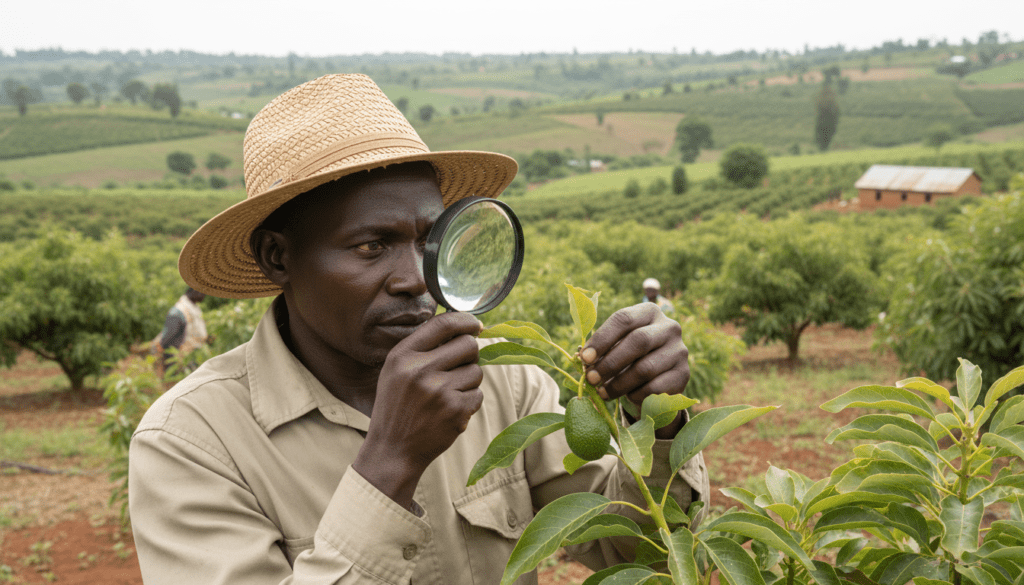
Thrips are another major economic pest. These tiny insects scratch the surface of the fruit when it is very young. As the fruit expands, these scratches turn into large, scabby, corky scars. While the inside of the fruit is perfectly fine, the skin damage renders it Grade 2 or local market quality, causing a massive drop in value. You must scout for thrips during flowering and early fruit set and spray with recommended insecticides like Imidacloprid or organic Neem oil options.
Read Also: Kakuzi PLC Share Price and Company Profile 2026: Avocado Business Performance & Investor Opportunities in Kenya
Regarding diseases, Anthracnose and Root Rot are the primary concerns. Anthracnose appears as black spots on the fruit, especially during wet weather. Regular sprays with copper-based fungicides help control this. Root Rot, caused by Phytophthora, is managed primarily through good drainage, but phosphite-based fungicides can be used as a treatment for trees showing early signs of yellowing and dieback. However, severely affected trees often cannot be saved and must be uprooted to prevent spread.
PRUNING AND CANOPY MANAGEMENT
Pruning is often feared by beginners who worry about cutting their trees, but it is essential for a productive orchard. An unpruned avocado tree will grow very tall, with fruits only at the very top where sunlight hits. This makes harvesting dangerous and expensive, and spraying difficult. You want a tree that spreads out, not one that grows 20 meters high.
Formative pruning happens in the first two years. When the tree reaches about 1 meter in height, you should cut the main vertical shoot (tip it). This forces the tree to push out side branches, creating a bushier, stronger structure. In subsequent years, you perform maintenance pruning.
This involves removing any branches that touch the ground, as these act as bridges for ants and pests to climb into the tree. You also need to remove water shoots-these are very fast-growing, vertical branches that shoot up from the inside of the canopy. They consume a lot of energy but rarely bear fruit.
Pruning should generally be done immediately after harvesting. This allows the tree to recover and produce new vegetative growth that will support the next season’s flowers. Opening up the center of the tree to sunlight is also vital; if the inside of the tree is dark, no fruit will grow there, and it becomes a hiding place for pests.
HARVESTING AND POST HARVEST HANDLING
Hass avocados in Kenya generally mature between May and September, though this varies by region. Crucially, the fruit does not ripen on the tree. It matures on the tree but only ripens (softens) after it is picked. Harvesting must be done at the correct physiological maturity.
For Hass, this is indicated when the skin color changes from a bright, shiny green to a dull, dark olive green. The small stalk attached to the fruit (pedicel) will also turn slightly yellow.
Never pull the fruit off the tree by hand. Pulling tears the skin near the stem, creating an open wound where rot fungi can enter. You must clip the fruit using sharp shears or secateurs, or use a harvesting pole with a cutter and a catching bag for higher branches. You should leave about 0.5 cm of the stalk attached to the fruit. This little piece of stalk acts as a cork, sealing the fruit.
Handle the fruits like eggs. If you drop an avocado from waist height, the internal bruising will not be visible immediately. However, two weeks later, when the fruit arrives in Europe and begins to ripen, black bruises will appear in the flesh. This leads to rejection and claims against the farmer. Place harvested fruits gently into cloth-lined crates or plastic crates that are clean. Do not leave harvested fruit baking in the direct sun; move them to a shaded area immediately to preserve quality.
FINANCIAL BREAKDOWN COST VS PROFIT PER ACRE
Let us look at a conservative estimate for one acre (150 trees) over the first few years to understand the investment required.
Initial Capital Year 1 involves significant outlay. Land preparation, including ploughing and digging holes, will cost around KES 20,000. Purchasing 150 certified seedlings at an average of KES 300 each totals KES 45,000. You will need about 3 tons of manure, costing roughly KES 15,000, and planting fertilizer (DAP) costing KES 10,000. Labor for planting and initial setup will be around KES 10,000. This brings the total startup cost to approximately KES 100,000, excluding the cost of buying the land itself and installing a water tank or drip irrigation system.
Recurring Costs for Years 2 and 3 include fertilizers, manure, pest control, and labor for weeding and pruning. This typically averages KES 70,000 to KES 80,000 per year per acre. During these years, you have zero income from the avocados. However, smart farmers intercrop with beans, peas, or cabbages in the wide spaces between rows to generate cash flow that covers these maintenance costs.
The returns begin in Year 3 with a small harvest, perhaps 50 to 100 fruits per tree. With 150 trees, that is 7,500 fruits. At a conservative farm-gate price of KES 10, that is KES 75,000-enough to start breaking even on annual costs. By Year 5, the trees reach commercial maturity. A well-managed tree can produce 300 to 500 fruits.
Taking a conservative 400 fruits per tree x 150 trees gives you 60,000 fruits. At a local broker price of KES 10, that is KES 600,000 in revenue. If you sell to exporters at KES 15 per fruit equivalent (or by kg), revenue can hit KES 900,000. With annual maintenance costs remaining around KES 100,000, the profit margin is massive, easily surpassing tea or coffee in many regions.
CONCLUSION
Hass avocado farming in Kenya is not a get-rich-quick scheme; it is a get-rich-sure scheme if done with patience, discipline, and precision. The global demand for superfoods is not slowing down, and Kenya’s position as a top exporter is solidifying with new markets in Asia opening up.
By investing in certified seedlings, preparing your land correctly with the right nutrients, and managing pests like a professional, you are building a biological asset that will pay you dividends for decades. Whether you have half an acre in Kiambu or fifty acres in Eldoret, the time to plant was yesterday. The next best time is today. Your orchard is more than just trees; it is a legacy investment.
FREQUENTLY ASKED QUESTIONS FAQ
How long does it take for Hass avocado trees to bear fruit
A Grafted Hass avocado trees typically start bearing their first fruits after 2.5 to 3 years. However, these first harvests are small. Economic or commercial quantities where you make significant profit are usually realized from the 4th or 5th year onwards.
Can avocados grow in hot areas like Kitui or Machakos
Yes, but with conditions. These areas are hotter than the traditional highland zones. The trees will grow faster and often produce sweeter fruit, but water is the limiting factor.
Do I need male and female trees
Avocados have a unique flowering behavior classified as Type A and Type B. Hass is a Type A variety. While it is self-pollinating to an extent, interplanting with a Type B variety like Fuerte, Bacon, or Zutano can significantly boost pollination and yield.
What is the best spacing for Hass avocados
The standard commercial spacing is 5m x 5m. Some farmers use high-density planting of 3m x 3m to maximize early yields, but this requires very skilled pruning and canopy management
How do I find an exporter to buy my fruit
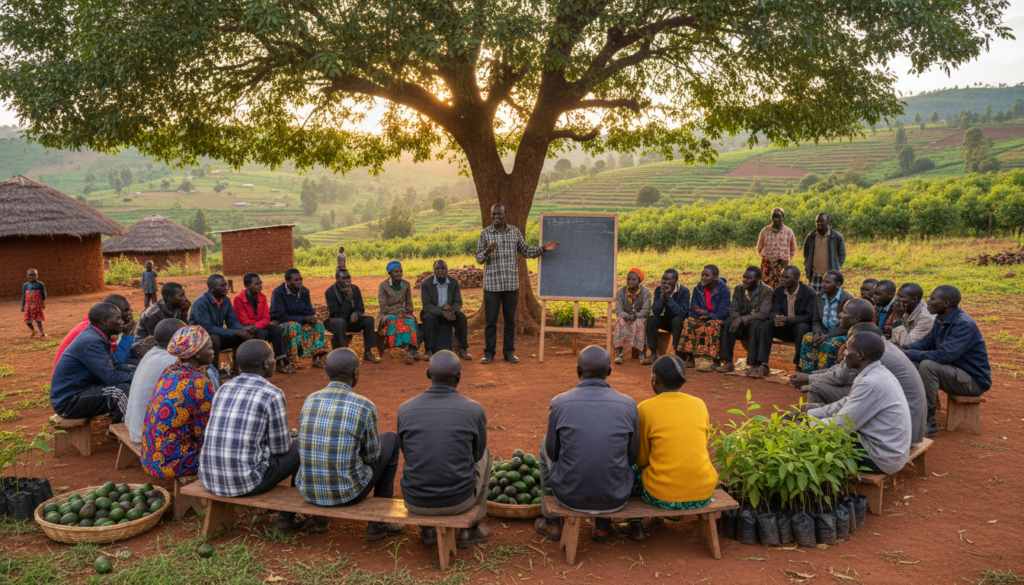
The best route is to join a local avocado cooperative, such as the Muranga Avocado Farmers Cooperative. Exporters prefer dealing with organized groups where they can pick up tons of fruit at a single collection point rather than visiting individual small farms.
Is organic avocado farming more profitable
Yes, organic avocados fetch a premium price in Europe. However, the certification process is rigorous, expensive, and takes time (conversion period).
Can I intercrop avocados with maize
It is generally discouraged to intercrop with maize after the first year. Maize is a heavy feeder that competes for nitrogen, and it grows tall, shading the young avocado trees.
Why are my young avocados turning yellow
Yellowing is usually a sign of distress. The most common causes are waterlogging (too much water or poor drainage leading to root rot), nitrogen deficiency, or a pH imbalance.