
- Phytophthora root rot is the deadliest disease for Kenyan Hass avocados, often requiring Ridomil Gold applications and strict soil drainage.
- Fungal infections like Anthracnose lead to high fruit rejection rates, making preventative copper fungicide sprays mandatory for export markets.
- Treating infected orchards costs between KES 15,000 and KES 40,000 annually per acre, but successful management yields strong returns.
Table of Contents
If you are struggling with dying branches or rotting fruits, this complete guide reveals the critical diseases attacking Hass avocados in Kenya today. Managing orchard health in 2026 requires more than just luck. It demands strict adherence to KEPHIS guidelines, aggressive root rot prevention, and modern fungicide applications to guarantee export-grade harvests.
Avocado Varieties and Disease Resistance Comparison
Hass avocados are highly susceptible to root rot, requiring superior grafting on resistant rootstocks. Fuerte and Pinkerton offer varying degrees of natural immunity, making careful selection critical before planting your commercial orchard.
From what many farmers experience in Kenya, choosing the wrong seedling for your soil type guarantees orchard failure. Selecting a disease-resistant variety is your first line of defense against heavy fungal attacks. While Hass dominates the export market, it must be grafted onto hardy indigenous rootstocks to survive local soil pathogens.
Grafting techniques have advanced rapidly, allowing nurseries to merge the high-yielding Hass scion with indigenous, drought-resistant rootstocks. This combination provides the best of both worlds, offering superior export-quality fruit while maintaining tough underground resilience. Always physically inspect the graft union on your seedlings before purchase to ensure it has fully healed and shows no signs of rot.
Read Also: Hass Avocado Seedlings in Kenya 2026: Trusted Nurseries, Prices and Spacing Guide
The following comparison table highlights the major avocado varieties grown in Kenya. It details their yield potential, maturity periods, and specific disease resistance traits.
| Variety | Maturity Period | Yield Potential (Mature Tree) | Disease Resistance Traits |
|---|---|---|---|
| Hass | 2 to 3 years (Grafted) | 300 to 500 fruits | Highly susceptible to Phytophthora root rot; requires excellent soil drainage. |
| Fuerte | 3 to 4 years | 250 to 400 fruits | Moderate resistance to root rot; very susceptible to Anthracnose. |
| Pinkerton | 2 to 3 years | 200 to 300 fruits | Good tolerance to root rot; vulnerable to Scab. |
Where to Buy Certified Hass Avocado Seedlings in Kenya
You should only purchase grafted Hass avocado seedlings from KEPHIS-certified nurseries or KALRO centers. Verified seedlings currently cost between KES 250 and KES 450, while subsidized fertilizers can be collected directly from NCPB depots.
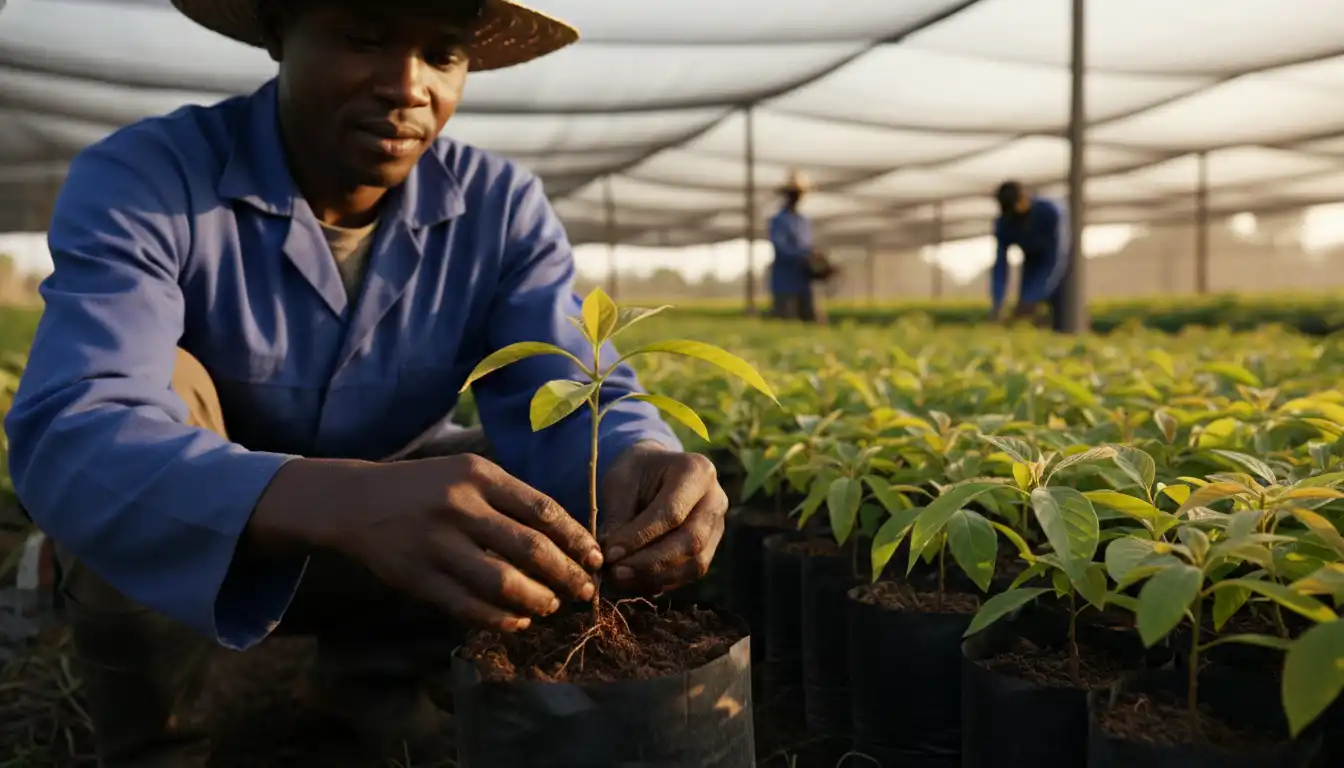
Purchasing undocumented roadside seedlings is the leading cause of orchard failure in Kenya. These cheap alternatives often carry deadly root rot or turn out to be inferior genetic variants that never produce export-grade fruit. Always demand a KEPHIS certification tag when buying young trees for your farm.
In 2026, certified seedlings are available at KALRO stations and reputable commercial nurseries like Kakuzi. Modern digital platforms, including Safaricom Digifarm and Mkulima Young, also connect farmers directly with verified input suppliers. For fertilizers, registered farmers must visit their local National Cereals and Produce Board depots to access government-subsidized rates.
Top 10 Diseases Affecting Hass Avocados
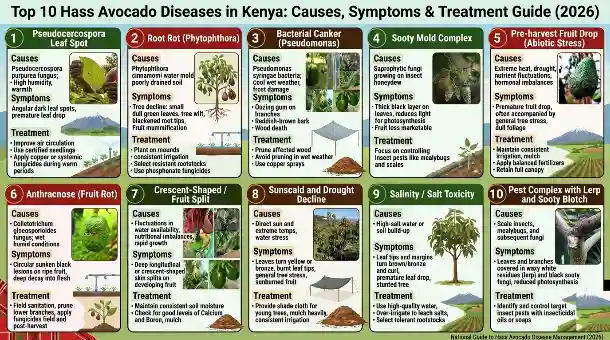
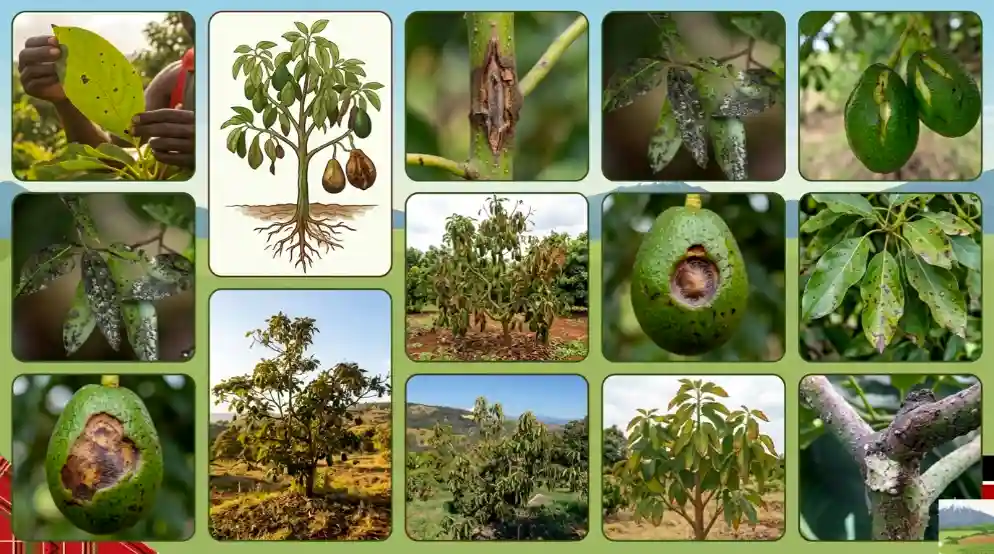
The most devastating avocado diseases include Phytophthora root rot, Anthracnose, and Cercospora spot. These fungal infections cause wilting, fruit lesions, and total tree collapse if not treated early with copper-based fungicides or Metalaxyl-M.
1. Phytophthora Root Rot
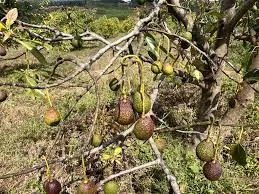
This is the most destructive avocado disease in Kenya, primarily caused by waterlogged soils and heavy clay. The fungus attacks the feeder roots, turning them black and brittle while the tree canopy slowly dies back. Treatment involves improving drainage immediately and applying fungicides containing Metalaxyl-M like Ridomil Gold.
Read Also: Exporting Hass Avocados from Kenya: A Step-by-Step 2026 Guide
2. Anthracnose
Anthracnose is a fungal disease that causes dark, sunken lesions on mature fruits, leading to massive export rejections. It thrives during the heavy rainy seasons in regions like Murang’a and Kisii. You must spray copper oxychloride preventatively and clear fallen leaves to stop the fungus from spreading.
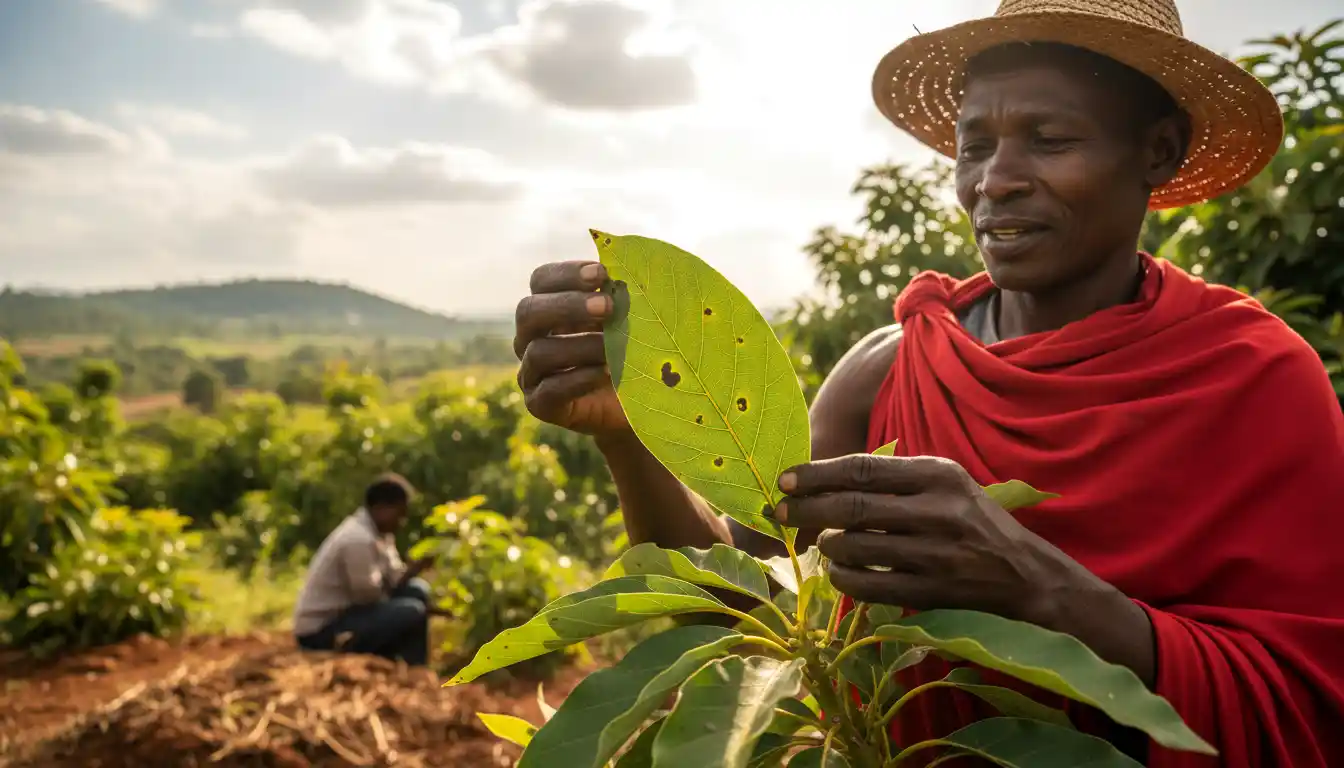
3. Cercospora Spot
This disease presents as small, angular brown spots on leaves and hard, cracked scabs on the fruit skin.
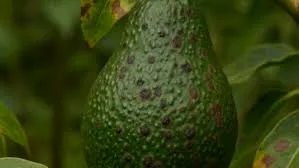
Left untreated, it provides an entry point for Anthracnose, ruining the entire crop before harvest. Regular pruning to improve air circulation and scheduled copper sprays will keep it under control.
4. Avocado Scab
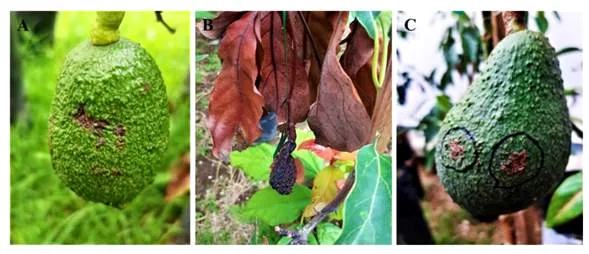
Scab targets young tissues, leaving corky, raised blemishes on the skin of the fruit that make it unsellable in premium markets. It hits hardest during cool, wet weather when the tree is actively flushing new leaves. Protective fungicidal sprays must be applied just as the flower buds begin to swell.
5. Dothiorella Canker
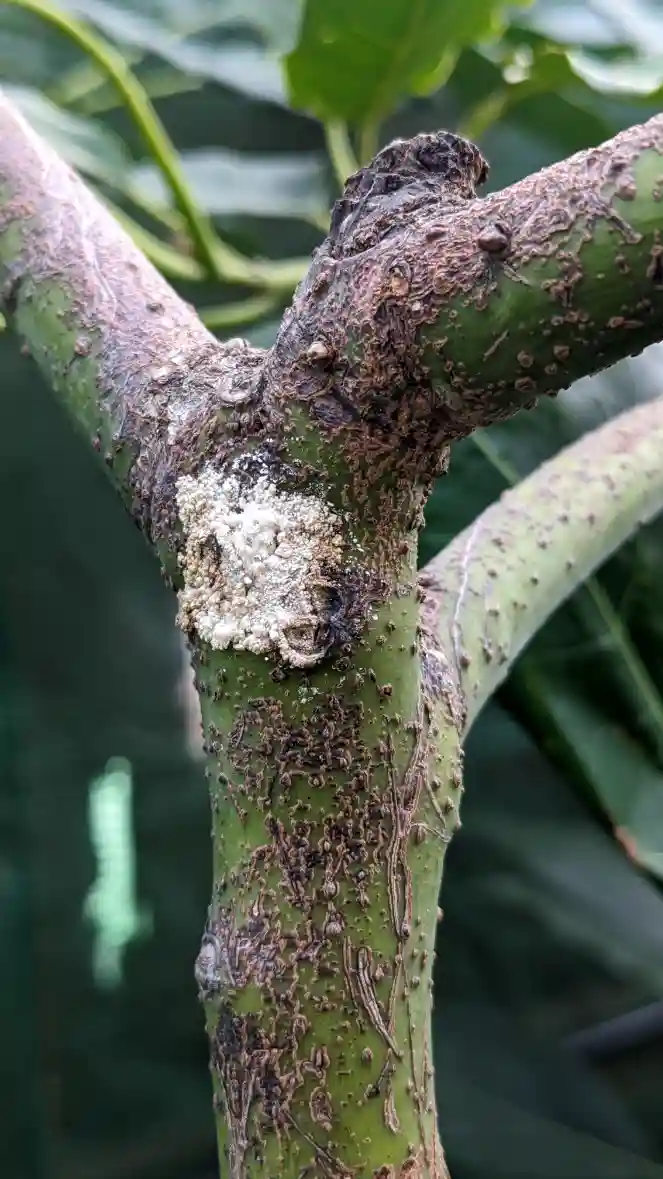
This disease manifests as white, powdery exudates cracking through the bark of the trunk and main branches. It restricts sap flow, causing severe branch dieback and reduced fruit size. Scraping off the infected outer bark and painting the wound with a copper-based paste can save the tree if caught early.
6. Verticillium Wilt
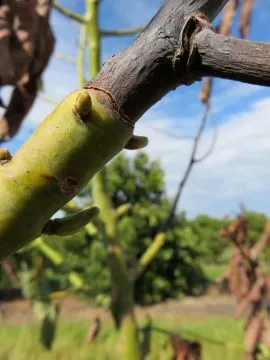
Verticillium wilt causes a sudden collapse of a section of the tree, with leaves turning brown but remaining firmly attached. It is a soil-borne fungus that often strikes trees planted in land previously used for tomatoes or potatoes. There is no chemical cure, so removing dead wood and boosting soil health is the only management strategy.
7. Powdery Mildew
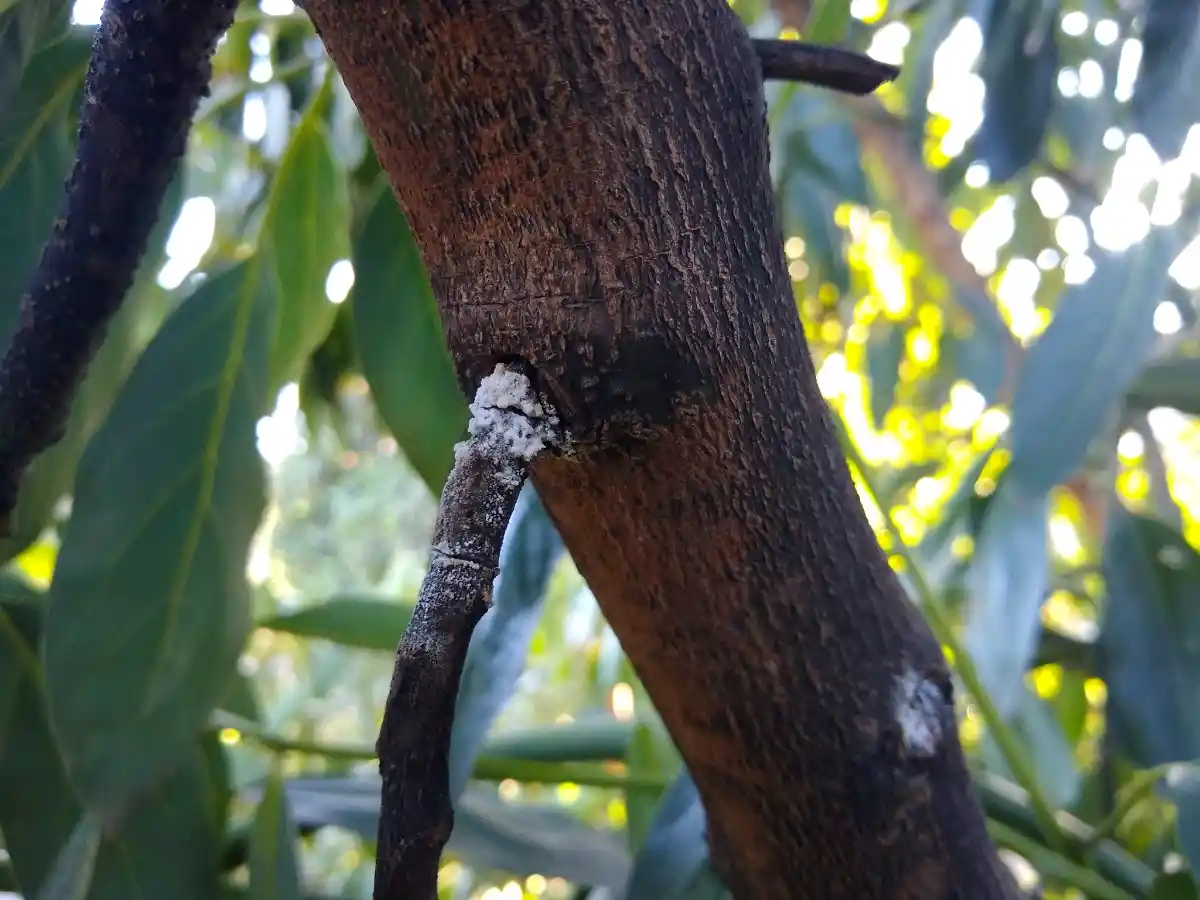
Powdery mildew coats the underside of young avocado leaves with a white, dusty fungal growth. It stunts leaf development and can cause premature leaf drop, weakening young seedlings in the nursery. Applying sulfur-based fungicides and ensuring adequate spacing between trees resolves the issue rapidly.
8. Sooty Mold
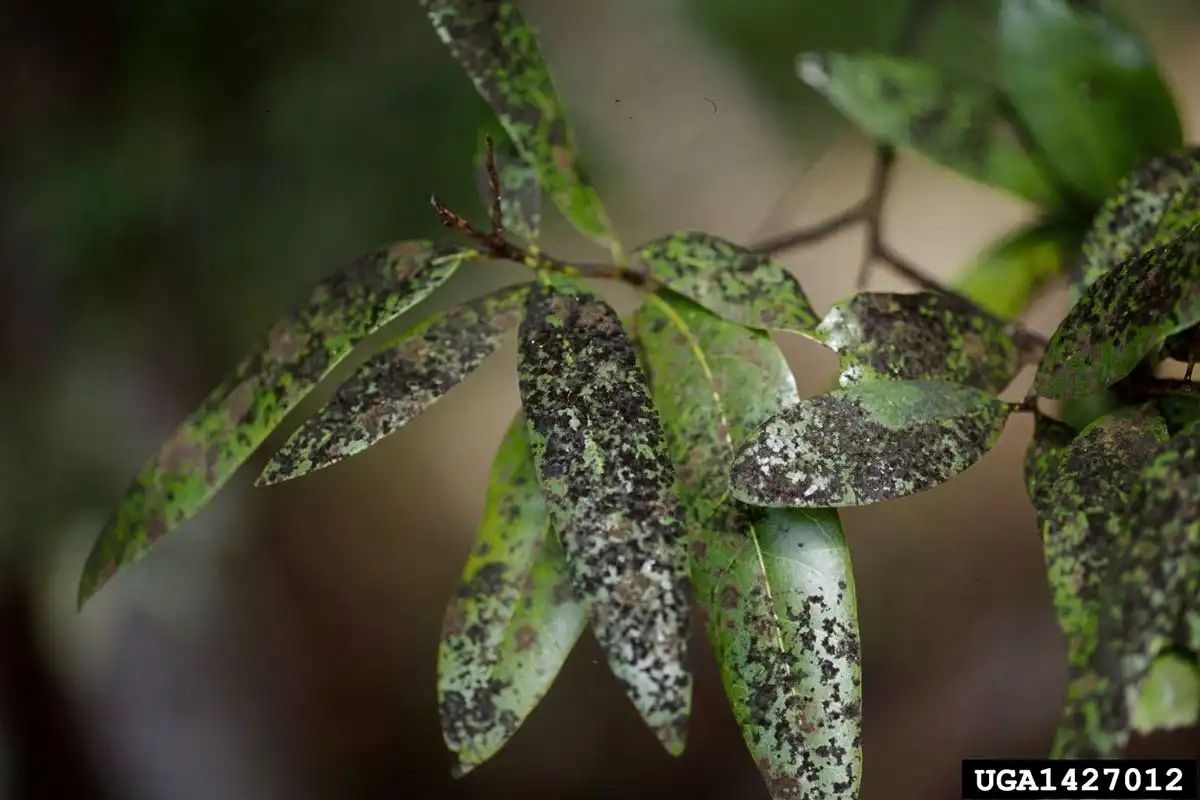
Sooty mold is a black, powdery fungus that grows on the sugary honeydew excreted by pests like aphids and scale insects. While it does not infect the plant directly, heavy coverage blocks sunlight and halts photosynthesis. Treating the underlying insect infestation with horticultural oils clears up the mold naturally.
9. Avocado Sunblotch Viroid
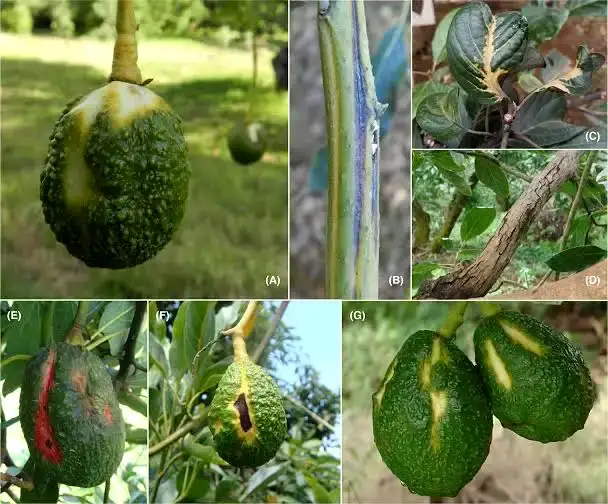
This viroid causes yellow or red sunken streaks on the fruit and deeply indented, discolored lesions on young stems. It is primarily spread through contaminated pruning tools and infected grafting material. Once a tree is infected, it cannot be cured and must be uprooted and burned immediately to protect the rest of the orchard.
10. Armillaria Root Rot
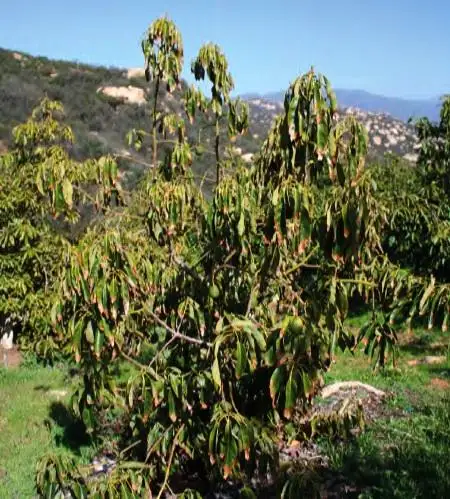
Also known as oak root fungus, Armillaria causes a slow decline in tree health, eventually producing clusters of honey-colored mushrooms at the base of the trunk. It spreads underground through root contact, wiping out entire rows of trees over several years. Digging a deep trench around infected trees isolates the fungus and prevents it from spreading to healthy neighbors.
🔥 Treatment Guide for Top 10 Hass Avocado Diseases (Kenya)
1. Phytophthora Root Rot (Most Dangerous)
Treatment:
- Improve drainage immediately (dig trenches, avoid waterlogging)
- Apply Metalaxyl-M fungicides (e.g. Ridomil Gold) as soil drench
- Add organic matter to improve soil structure
- Use resistant rootstocks when replanting
2. Anthracnose
Treatment:
- Spray copper-based fungicides (e.g. copper oxychloride) before and during rains
- Remove and destroy infected fruits
- Prune to improve airflow
- Harvest carefully to avoid fruit injury
3. Cercospora Spot
Treatment:
- Apply copper fungicides regularly
- Maintain proper tree spacing
- Prune dense canopy to reduce humidity
- Remove infected leaves and fruits
4. Avocado Scab
Treatment:
- Spray preventative fungicides at early flowering stage
- Focus on young fruits and new leaves
- Avoid overhead irrigation
- Maintain orchard hygiene
5. Dothiorella Canker
Treatment:
- Cut and remove infected branches
- Disinfect pruning tools after each cut
- Apply copper-based paste on wounds
- Avoid tree stress (water and nutrients)
6. Verticillium Wilt
Treatment:
- Remove and destroy infected branches
- Avoid planting in land previously used for tomatoes/potatoes
- Improve soil health with organic matter
- No chemical cure, focus on prevention
7. Powdery Mildew
Treatment:
- Spray sulfur-based fungicides
- Improve air circulation through pruning
- Avoid excessive nitrogen fertilizers
- Monitor during dry, humid conditions
8. Sooty Mold
Treatment:
- Control pests (aphids, scale insects) using:
- horticultural oils
- insecticidal soaps
- Wash leaves if heavily covered
- Improve plant health
9. Avocado Sunblotch Viroid
Treatment:
- Uproot and destroy infected trees immediately
- Use certified disease-free seedlings
- Disinfect tools before grafting/pruning
- Avoid using infected scions
10. Armillaria Root Rot
Treatment:
- Remove infected trees completely (including roots)
- Dig trenches to stop spread
- Avoid replanting immediately in infected soil
- Improve drainage and soil aeration
⚠️ Brutal Truth
If a farmer skips:
- drainage
- spray schedule
- sanitation
👉 No fungicide will save that orchard.
Most failures are management problems, not lack of chemicals.
Best Fertilizers to Boost Avocado Immunity
Proper nutrition strengthens avocado trees against fungal attacks and environmental stress. A balanced regimen of DAP for root development, CAN for canopy growth, and NPK for fruit setting is essential for maximum yield.
A well-fed tree is naturally more resistant to pests and diseases, reducing your reliance on expensive chemical sprays. In 2026, the Kenyan government has stabilized subsidized fertilizer prices, making it easier for farmers to access crucial nutrients. Relying solely on raw manure is a common mistake, as it can introduce soil-borne pathogens if not properly composted.
Read Also: Hass Avocado Price in Kenya 2026: Seedlings & Market Guide
It is crucial to avoid applying heavy nitrogen during the fruiting stage, as this encourages vegetative growth over fruit maturation. Top-dressing with potassium-rich fertilizers ensures that the avocado develops a thick skin, which naturally repels fungal infections during wet weather. Always conduct a soil test before applying bulk chemicals to avoid creating toxic nutrient imbalances.
This table outlines the essential fertilizers for avocado farming. It details their primary uses and the current 2026 subsidized market prices in Kenya.
| Fertilizer Type | Application Stage | Primary Benefit | 2026 Price (50kg Bag) |
|---|---|---|---|
| DAP (Di-Ammonium Phosphate) | Planting & Early Growth | Promotes strong root expansion and early establishment. | KES 3,500 (Subsidized) |
| CAN (Calcium Ammonium Nitrate) | Vegetative Growth Stage | Boosts leaf development and improves canopy density. | KES 2,875 (Subsidized) |
| NPK (17:17:17) | Flowering & Fruiting | Enhances fruit size, oil content, and overall crop quality. | KES 3,275 (Subsidized) |
| Well-Rotted Manure | Year-Round Maintenance | Improves soil structure, aeration, and moisture retention. | KES 1,000 to KES 2,500 per ton |
Best Kenyan Counties for Hass Avocado Farming
The central highlands and rift regions provide the ideal climate and well-drained volcanic soils for Hass avocados. Murang’a, Uasin Gishu, and Meru counties currently lead the nation in producing premium, export-grade fruits with minimal disease pressure.
Hass avocados demand specific ecological conditions, thriving at altitudes between 1,000m and 2,200m above sea level. Murang’a County remains the undisputed hub for avocado farming, benefiting from perfect rainfall patterns and deep, mineral-rich soils. However, land fragmentation in Murang’a is forcing new commercial investors to look elsewhere.
Uasin Gishu is rapidly transforming from a traditional maize zone into a highly profitable avocado belt. The large tracts of land available in the Rift Valley allow for extensive, mechanized orchards with excellent air circulation that naturally reduces fungal diseases. Meru County also offers a massive advantage with its unique microclimate, allowing farmers to harvest during off-peak windows when export prices are highest.
12-Month Disease Treatment Calendar for Avocados
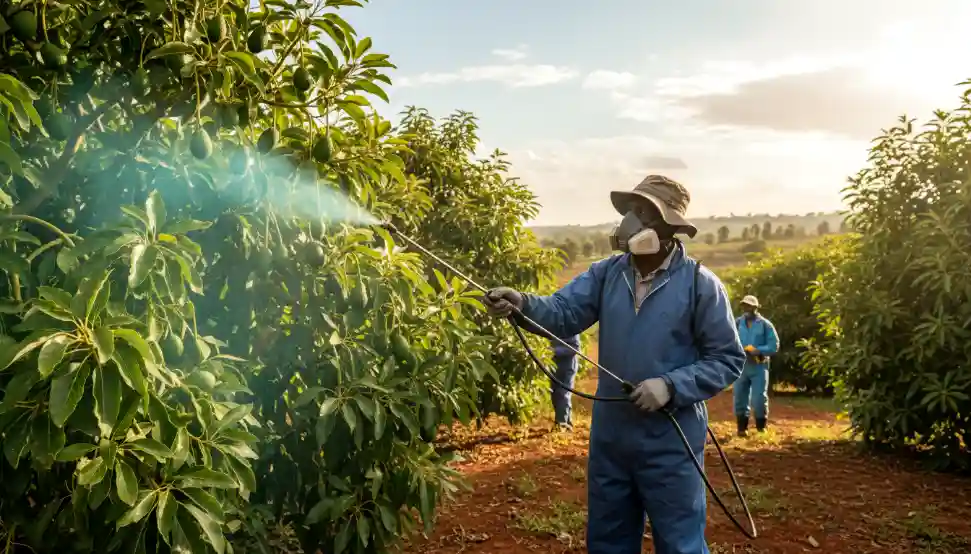
An effective spray program aligns with the rainy seasons when fungal pathogens are most active. Preventative copper sprays begin in early March, while systemic treatments target active infections during the heavy rains of April and May.
January to March: This is the crucial land preparation and early growth phase. Apply your initial copper oxychloride spray just before the long rains begin to create a protective barrier against Anthracnose. Ensure your orchard drains are clear to prevent waterlogging when the storms hit.
April to June: Disease pressure is at its absolute highest during these wet months. Monitor the trees weekly for signs of Phytophthora root rot, and apply Metalaxyl-M soil drenches immediately if leaves begin to yellow. This is also the time to apply NPK fertilizers to support the developing fruit load.
July to December: As the weather dries out, fungal risks decrease, but pest management becomes critical. Prune dead branches to open up the canopy and apply horticultural oils to suppress thrips and scale insects. Late in the year, begin prepping the soil with well-rotted manure to restore nutrients ahead of the next cycle.
Disease Treatment Cost vs Profit Potential
Treating diseases costs an average of KES 25,000 per acre annually, covering fungicides, labor, and specialized foliar feeds. However, a well-managed Hass orchard can generate upwards of KES 900,000 per acre at peak export prices, though estimated ranges vary by management.
Failing to budget for disease control is a fast track to financial ruin in the avocado business. The 2026 export market demands flawless fruit, meaning any damage from Anthracnose or Scab will downgrade your harvest to local market prices. A premium export-grade avocado currently fetches KES 150 to KES 180 per kilogram at the farm gate.
Read Also: 2026 Seeds & Seedling Price List Kenya: KALRO, Kakuzi & ICIPE Certified Sources
It is critical to document every shilling spent on fungicides to accurately calculate your true return on investment. Many beginners fail to realize that spraying labor costs quickly add up, easily consuming KES 5,000 per acre over a single wet season. Buying chemicals in bulk from wholesale agrovets in major towns like Nairobi or Eldoret significantly reduces these recurrent expenses.
This financial table breaks down the expected annual costs and potential revenues. Keep in mind that estimated ranges vary by management, weather, and farm size.
| Financial Metric | Best Case Scenario (KES) | Average Case (KES) | Worst Case Scenario (KES) |
|---|---|---|---|
| Annual Disease Control Cost | 15,000 | 25,000 | 40,000 |
| Fertilizer & Nutrition Cost | 20,000 | 30,000 | 45,000 |
| Gross Revenue (Export Grade) | 1,200,000 | 800,000 | 250,000 |
| Estimated Net Profit | 1,100,000 | 680,000 | 100,000 |
Post-Harvest Care and Avocado Supply Chain
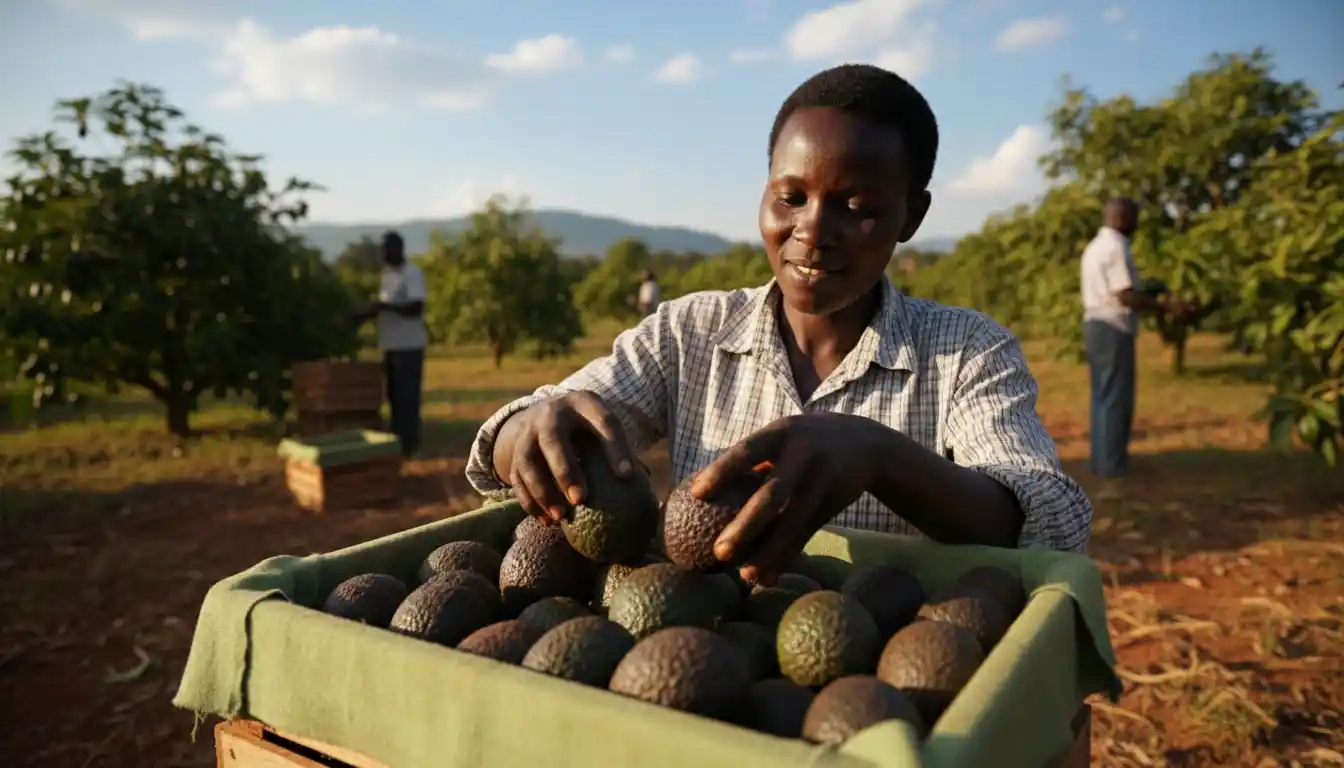
Improper harvesting introduces opportunistic pathogens that cause the fruit to rot during transit. Avocados must be clipped, never pulled, and placed immediately into cold storage to meet stringent international export standards.
What guides rarely tell you is that a significant percentage of crop loss happens after the fruit has left the tree. Rough handling bruises the skin, creating micro-tears where Anthracnose spores rapidly multiply during shipping. Harvesters must use specialized clippers and leave a small piece of the stem attached to prevent fungal entry.
Value addition is another viable strategy for farmers dealing with slightly blemished fruits that cannot be exported. Extracting crude avocado oil for the cosmetics industry is rapidly gaining traction in counties like Murang’a and Kisii. This secondary market provides a critical safety net, ensuring you still generate income even if an Anthracnose outbreak ruins the visual appeal of your crop.
In 2026, the Agriculture and Food Authority enforces strict maturity indices and cold chain protocols before any shipment leaves the Port of Mombasa. Once harvested, the fruit is transported in padded crates to specialized packhouses where it is washed, graded, and cooled to exactly 5 degrees Celsius. Missing any of these steps results in immediate rejection by European and Middle Eastern buyers.
Risks & Reality Check
Avocado farming is highly vulnerable to climate shocks, devastating root rot outbreaks, and volatile international market rejections. A single waterlogging event or a missed spray schedule can wipe out an entire orchard within weeks.
This business is not a passive investment where you simply plant trees and wait for money. The reality on the ground in Kenya is that heavy rains mixed with poor soil drainage act as a death sentence for Hass varieties. One small mistake in water management can trigger Phytophthora, wiping out years of hard work and capital.
Furthermore, the export market is incredibly ruthless regarding physical fruit quality. Some farmers are forced to sell at a loss to local brokers when international buyers reject their produce due to minor cosmetic blemishes caused by Scab or Thrips. Theft of mature fruits directly from the trees is also a massive security headache in heavily populated farming zones.
Real-World Avocado Disease Recovery Case Study
A Nakuru farmer almost lost his two-acre orchard to root rot due to severe waterlogging. By digging deep drainage trenches and applying targeted systemic fungicides, he saved 80 percent of his trees and successfully exported a premium harvest.
In 2024, David, a commercial farmer in Nakuru County, noticed the canopies of his four-year-old Hass trees turning yellow and dropping leaves. Soil tests confirmed a severe infestation of Phytophthora root rot, exacerbated by an unusually heavy rainy season that flooded his flat terrain. He was on the verge of uprooting the entire orchard and taking a heavy financial hit.
Instead of giving up, David consulted an agronomist and immediately excavated deep trenches between the tree rows to pull standing water away from the root zones. He then implemented a strict drenching schedule using Ridomil Gold, paired with an aggressive canopy pruning strategy to reduce the moisture load on the trees. By the 2026 season, the orchard had fully recovered, yielding over 60,000 export-grade fruits that secured him a highly lucrative contract.
Is Hass Avocado Farming Worth It?
Yes, Hass avocado farming remains highly profitable in 2026 if treated as a strict, science-driven commercial enterprise. Those who invest in certified seedlings, proper drainage, and rigorous disease management will secure solid returns.
Read Also: 100 Smart Garden Tips 2026: The Ultimate Guide for Kenya Farmers
The 2026 outlook for Kenyan avocados is exceptionally strong, driven by surging global demand and high farm-gate prices. However, this business is not passive and requires significant capital for inputs. Daily management, monitoring, and proper record-keeping are essential to avoid losing money to preventable fungal diseases.
Hard Truth: If you have poorly drained land and no capital for a proper spray program, Hass avocado farming is too risky for you. But for serious farmers willing to adhere to KEPHIS guidelines and implement strict post-harvest protocols, it can be highly rewarding. Start by testing your soil, map out your drainage plan, and source your seedlings only from verified experts.
Farmers Also Ask
What is the most common disease in Hass avocados?
Phytophthora root rot is the most common and destructive disease. It thrives in poorly drained soils, attacking roots and causing the canopy to yellow, wilt, and eventually die.
How do you treat a diseased avocado tree?
Improve soil drainage for root rot and prune dead branches to increase airflow. Apply targeted systemic or copper-based fungicides to effectively halt fungal spread.
What is the best fungicide for avocado trees?
Fungicides containing Metalaxyl-M like Ridomil Gold are best for root rot. Copper oxychloride is highly effective as a preventative spray against Anthracnose and leaf spots.
What kills fungus completely in avocado trees?
No chemical completely eradicates established fungus. A combination of strict water management, infected wood removal, and systemic fungicides suppresses pathogens safely.
What pesticides are used on Hass avocados?
Horticultural oils, pyrethrins, and bio-pesticides are heavily used to control thrips, lace bugs, and scale insects while adhering to strict international chemical limits.
Which fertilizer is best for Hass avocado?
Use DAP for initial root growth, CAN to support canopy development, and NPK to maximize fruit size and oil content during the flowering and fruiting stages.
What type of fertilizer is best for avocado trees?
Granular fertilizers like NPK 17:17:17 combined with well-composted organic manure provide the best mix of fast-acting nutrients and long-term soil health improvements.
Which manure is best for avocado trees?
Well-rotted cow or goat manure is excellent for avocados. It improves soil aeration, retains moisture, and provides a slow release of essential organic nutrients.
How to properly care for a Hass avocado tree?
Plant in well-drained soil, ensure good spacing, apply organic mulch, maintain a strict fungicide schedule, and prune regularly to allow sunlight into the canopy.
Where can I get avocado diseases pictures and treatment guide in Kenya?
You can find verified visual guides and treatment manuals through KALRO research stations, the KEPHIS website, or certified agricultural platforms like Safaricom Digifarm.