
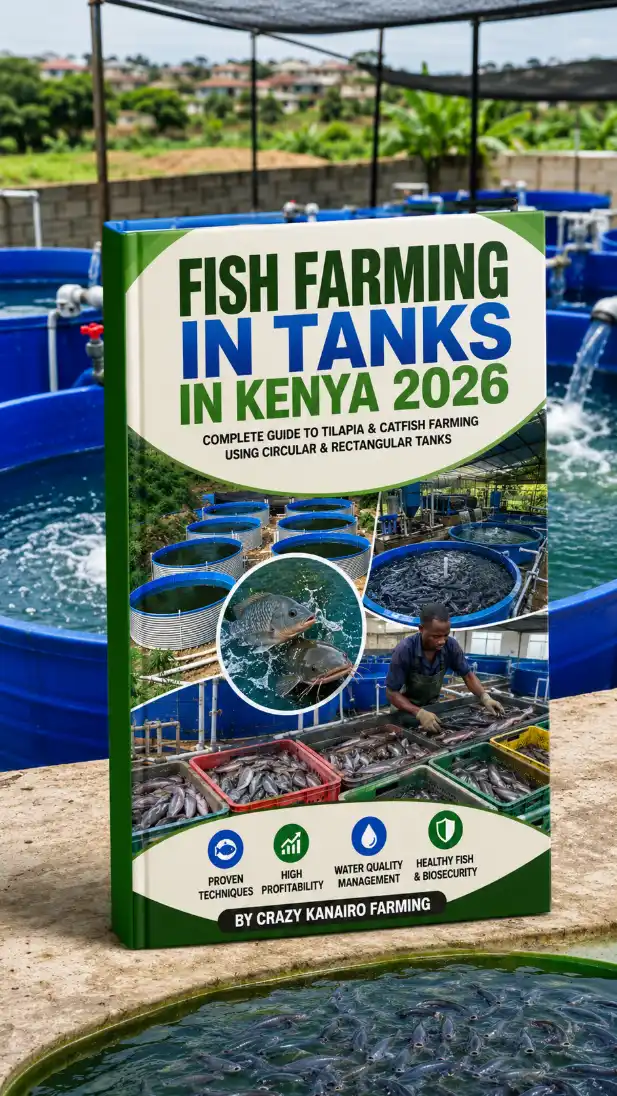
🐟 Thinking of Starting Tilapia or Catfish Farming in Tanks in Kenya?
Fish farming does not necessarily require a large piece of land or a traditional earthen pond.
With the right system, farmers can raise fish using circular tanks, rectangular tanks and other intensive tank systems in relatively compact spaces.
But there is a major difference between owning a fish tank and successfully farming fish in one.
How many fish should you stock?
Should you choose tilapia or catfish?
What size tank do you need?
Circular or rectangular?
How much water is required?
Do you need filtration?
What happens when electricity goes off?
How do you calculate feeding?
Where do you buy good fingerlings?
Can Azolla or Black Soldier Fly larvae help reduce feeding costs?
And most importantly…
Can the project actually make financial sense?
The Fish Farming in Tanks in Kenya 2026 Guide was created to help Kenyan farmers understand these questions before putting serious money into a tank fish-farming project.
Instead of blindly buying tanks and thousands of fingerlings, this guide helps you understand the complete production system behind successful tank aquaculture.
Your tank is only one component.
Successful production depends on the relationship between:
Fish + Water + Oxygen + Feed + Waste + Filtration + Power + Management + Market.
The guide goes beyond basic explanations by showing farmers how these pieces fit together.
📘 What Will You Learn?
We won’t reveal everything here because that’s what the complete guide is for. 😉
But here’s a preview of what you’ll discover.
🐟 Tilapia or African Catfish?
Choosing the wrong species for your objectives can affect everything from stocking and feeding to harvesting and marketing.
The guide helps you understand the characteristics of Nile tilapia and African catfish, allowing you to evaluate which may be more appropriate for your intended system.
You’ll also discover an important management issue with catfish that beginners can easily overlook until they start losing smaller fish.
🔵 Circular vs Rectangular Tanks
Which tank should you buy?
The answer isn’t simply “whichever is cheaper.”
The guide explores circular tarpaulin tanks, galvanized-frame systems, rectangular tanks, concrete tanks and other options, including the practical advantages and limitations farmers should consider.
You’ll understand why tank shape affects:
✔ Water movement
✔ Waste collection
✔ Available space
✔ Cleaning
✔ Plumbing
✔ Management
The guide also shows you how to calculate actual tank water volume rather than guessing based on advertised tank size.
💧 Understand the Water Before You Buy the Fish
Water can look perfectly clean and still cause serious problems for fish.
The guide introduces farmers to the important water-quality factors that need to be understood when raising fish intensively.
You’ll discover what needs to be monitored and why parameters such as dissolved oxygen, temperature, pH, ammonia and nitrite matter.
You’ll also learn about different potential water sources, including:
💧 Borehole water
💧 Tap water
💧 Rainwater
💧 Wells
💧 Rivers and streams
💧 Dam water
💧 Spring water
And importantly, you’ll learn why not all water should go directly into a fish tank simply because it looks clean.
⚙️ RAS, Filtration, Aeration & Plumbing Explained
You may have heard people talking about RAS fish farming.
But do you actually need RAS?
The guide helps you understand the differences between:
Water Exchange Systems
Flow-Through Systems
and
Recirculating Aquaculture Systems (RAS)
You’ll also discover the roles played by mechanical filtration, biological filtration, aeration, tank drains, water inlets, overflow systems and isolation valves.
This is particularly important because intensive tank farming relies heavily on life-support equipment.
🐠 Where and How to Buy Fingerlings
One of the biggest mistakes beginners can make is buying fish simply because somebody offers them cheaply.
The guide explains what to consider when looking for tilapia and African catfish fingerlings in Kenya, including sourcing, quality, size, transportation and acclimatization.
You’ll also learn what to look for when choosing healthy fingerlings before putting them into your tanks.
🌾 Feeding Without Throwing Your Profits Into the Water
Feed is one of the most important costs in fish production.
That’s why this guide doesn’t simply tell you to “feed the fish.”
You’ll learn about:
✔ Fish biomass
✔ Feed Conversion Ratio (FCR)
✔ Feeding frequency
✔ Adjusting feed as fish grow
✔ Sampling fish
✔ Calculating average fish weight
✔ Estimating biomass
✔ Avoiding overfeeding
✔ Monitoring growth
You’ll even see practical calculations demonstrating how a farmer can estimate daily feed requirements.
🌱 Alternative Fish Feeds That Farmers Should Know About
Can you reduce dependence on expensive commercial feeds?
The guide explores several alternative and supplementary feed ingredients farmers are increasingly interested in, including:
🌿 Azolla
🪰 Black Soldier Fly Larvae (BSFL)
🌱 Duckweed
🪱 Earthworms
🌾 Agricultural by-products
🫘 Plant protein ingredients
…and other possibilities.
But there’s an important catch.
Cheap feed doesn’t automatically mean cheaper fish production.
The guide explains why farmers should look beyond the price of a kilogram of feed and instead consider what it costs to produce a kilogram of marketable fish.
🚨 What Happens When Something Goes Wrong?
What would you do if your aerator suddenly stopped?
What about a power blackout?
High ammonia?
A leaking tank?
Fish suddenly refusing to eat?
Unexpected mortality?
These are situations where having a plan before the emergency happens can make a huge difference.
The guide includes a practical emergency-response and troubleshooting section covering several problems tank farmers may encounter.
📊 Learn to Treat Fish Farming as a Business
Fish farming should not be evaluated based on revenue alone.
The guide introduces practical calculations including:
💰 Revenue
📈 Survival rate
🌾 FCR
💵 Production cost per kilogram
📊 Gross margin
⚖️ Break-even selling price
You’ll also find a worked 1,000-fish planning model that helps you think through the important numbers before investing.
📋 Practical Farm Record Templates Included
Good farmers observe their fish.
Good fish-farming businesses also record their numbers.
The guide provides practical templates for recording:
✔ Daily feeding
✔ Mortalities
✔ Water quality
✔ Growth and sampling
✔ Fingerling purchases
✔ Feed purchases
✔ Electricity and water expenses
✔ Labour
✔ Equipment repairs
✔ Harvest quantities
✔ Sales
These records help you understand whether the business is actually performing rather than relying on guesswork.
📈 Planning to Grow From 1,000 to 5,000 Fish?
Scaling is not simply about buying another tank.
The guide explains the additional factors farmers need to reconsider when increasing production, including aeration, filtration, pumps, water supply, backup power, labour, feed storage, harvesting and market capacity.
🎁 BONUS: 30 Success Tips & Tricks
Towards the end of the guide, you’ll receive 30 practical success tips and tricks for tank fish farmers.
These are designed to help you avoid expensive beginner mistakes and think more strategically about stocking, feeding, water quality, equipment, records, marketing and expansion.
🎁 FREE Extra Fish Farming Resource Included
Your purchase also gives you access to an additional FREE Crazy Kanairo Farming resource comparing pond and tank fish farming in Kenya.
So you’re not simply buying a PDF.
You’re getting a practical reference you can return to while planning, setting up, stocking, managing and eventually scaling your fish-farming project.
📥 What Exactly Do You Receive After Purchasing?
After successful purchase, you receive:
📘 Fish Farming in Tanks in Kenya 2026 Complete Digital Guide
Covering both:
🐟 Nile Tilapia Farming
and
🐟 African Catfish Farming
using circular and rectangular tank systems.
The guide is suitable for reading on your:
📱 Smartphone
💻 Laptop
🖥️ Desktop
📲 Tablet
You can keep it as a reference throughout your fish-farming journey.
👨🌾 Who Is This Guide For?
This guide is ideal for:
🌱 Beginners researching fish farming
🏠 Backyard farmers with limited space
🐟 Existing pond farmers considering tanks
🏙️ Urban and peri-urban farmers
📈 Farmers planning commercial expansion
💼 Agribusiness investors researching aquaculture
👨🌾 Farmers interested in tilapia or catfish production
⚙️ Anyone interested in understanding RAS and intensive tank aquaculture
You don’t need to already own a fish farm.
In fact, reading the guide before buying your tanks and fingerlings may be more valuable than reading it after you’ve already invested.
🐟 Don’t Start With the Fish. Start With Knowledge.
A tank full of water is not yet a fish farm.
Successful tank farming requires understanding how stocking, water, oxygen, feed, filtration, waste management, power and markets work together.
One avoidable mistake with tank sizing, stocking, fingerlings, aeration or feeding can cost far more than the price of learning first.
📘 Get Your Copy Today
Fish Farming in Tanks in Kenya 2026: Complete Guide to Tilapia & Catfish Farming Using Circular and Rectangular Tanks
Practical Knowledge • Quality Products • Smarter Farming
Discover more from Crazy Kanairo Farming
Subscribe to get the latest posts sent to your email.




There are no reviews yet.