
🐝 YOUR NEXT AGRIBUSINESS OPPORTUNITY COULD BE IN BEEKEEPING!
What if you could start an agricultural business without needing acres of fertile farmland, daily animal feeding or intensive crop production?
Beekeeping offers an interesting opportunity for Kenyan farmers looking to diversify their income through honey production and other valuable hive products.
But here is the challenge: Buying beehives is not the same as knowing how to run a successful bee farm.
Where should you establish your apiary? Which beehive should you buy? How much capital should you prepare? How do you attract healthy bee colonies? When is honey ready for harvesting? And, most importantly, where do you sell your honey?
Making expensive decisions without understanding these fundamentals can cost you money.
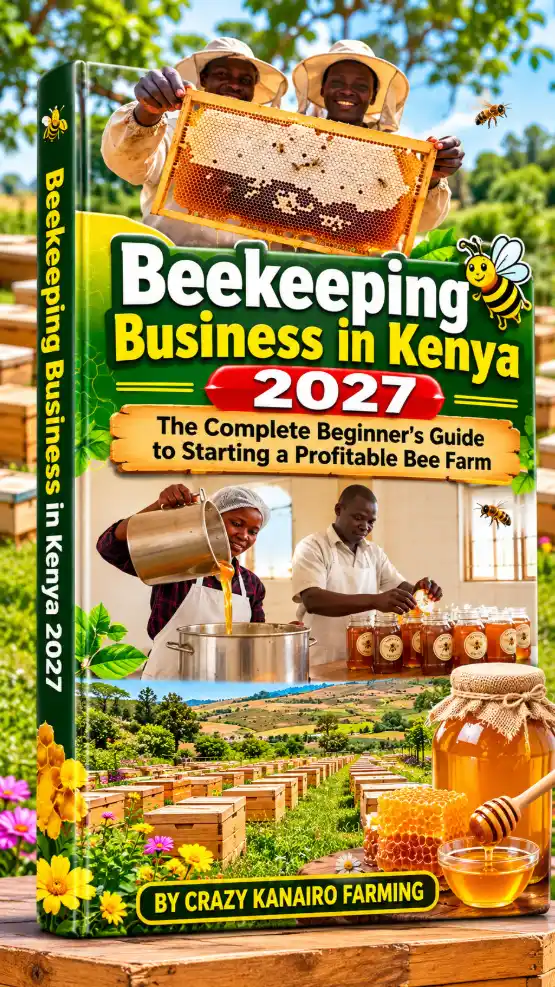
That is exactly why we created the Beekeeping Business in Kenya 2027 guide.
This comprehensive digital publication by Crazy Kanairo Farming is designed to help beginners understand the practical and commercial side of beekeeping before investing their hard-earned money.
WHAT WILL YOU DISCOVER INSIDE?
This is more than a basic introduction to keeping bees. It explores the important decisions involved in establishing and developing a honey production business.
🐝 1. Understanding the Beekeeping Business
Discover the commercial potential of honey production in Kenya, the different products you can obtain from a bee colony and the opportunities available to small-scale and commercial producers.
🏡 2. Choosing the Right Beehives
Not sure whether to invest in Kenya Top Bar Hives (KTBH) or Langstroth hives?
Understand their differences, estimated costs, management requirements and harvesting methods before deciding which system suits your plans.
📍 3. Setting Up Your Apiary
Learn what to look for when selecting an apiary location, including flowering vegetation, water availability, shade, hive positioning, spacing and protection.
💰 4. Understanding Startup Costs
One of the most important decisions is knowing how much money you need before getting started.
Explore itemized equipment costs and sample startup budgets for different apiary sizes, from a one-hive trial setup to a larger commercial operation.
🛠️ 5. Essential Beekeeping Equipment
Discover the protective clothing, smokers, hive tools, gloves, honey extractors and other equipment required to manage your operation.
The guide also includes Kenyan supplier references to help you research where to source essential equipment.
🐝 6. How to Acquire and Manage Bee Colonies
Explore natural swarm baiting, purchasing established colonies, colony installation and the important signs of a healthy bee colony.
🌿 7. Hive Management and Pest Control
Understand routine inspections, colony health monitoring, seasonal management and ways to protect your investment against common apiary pests and predators.
🍯 8. Honey Harvesting and Processing
Learn when honey is ready for harvesting, how to handle mature honeycombs, the differences between extraction methods and the importance of hygienic processing.
📦 9. Packaging, Branding and Selling Honey
Producing honey is only part of the business.
Discover packaging considerations, quality standards, branding essentials and potential marketing channels for reaching honey customers in Kenya.
📊 10. Financial Projections and Business Planning
Explore a sample three-year financial model for a 10-hive apiary, including projected production, revenue, operating expenses and expansion considerations.
📅 11. Your 12-Month Implementation Roadmap
Not sure where to begin?
The guide includes a structured month-by-month roadmap covering planning, site preparation, equipment acquisition, colony establishment, maintenance, harvesting and marketing.
🎁 BONUS: PRACTICAL BEEKEEPING TIPS AND BUSINESS STRATEGIES
There is also an additional collection of practical insights designed to help you think beyond simply installing beehives.
Explore ideas around:
- Establishing reliable bee forage around your apiary.
- Exploring premium cut-comb honey markets.
- Creating reliable water stations for your colonies.
- Reducing ant-related colony disturbances.
- Attracting wild swarms using suitable baiting techniques.
- Avoiding premature honey harvesting.
- Building direct-to-customer honey sales through WhatsApp Business.
These additional insights can help you make better management and business decisions.
WHO SHOULD BUY THIS GUIDE?
This publication is ideal for:
- Beginners interested in starting beekeeping in Kenya.
- Farmers looking to diversify their agricultural income.
- Youth interested in agribusiness opportunities.
- Landowners with suitable spaces for establishing apiaries.
- Existing beekeepers interested in improving their management practices.
- Entrepreneurs exploring honey production, processing and marketing.
- Anyone researching KTBH and Langstroth beekeeping systems.
WHY GET THIS GUIDE BEFORE INVESTING?
Buying equipment without understanding the business can lead to unnecessary expenses.
A well-planned apiary starts with understanding your environment, selecting suitable equipment, managing healthy colonies and identifying your potential market.
Instead of relying on scattered information, get a structured resource that brings these important areas together in one Kenya-focused publication.
<em>Your journey into beekeeping should begin with a plan, not guesswork.</em>
GET YOUR DIGITAL COPY TODAY!
🐝 Beekeeping Business in Kenya 2027
The Complete Beginner’s Guide to Starting a Profitable Bee Farm
Published by Crazy Kanairo Farming
Learn. Plan. Establish. Grow.
Important: This guide is an educational and business-planning resource. Startup costs, production estimates, honey prices and profitability depend on local conditions, colony health, forage availability and management. Financial projections are illustrative, not guaranteed returns.
Discover more from Crazy Kanairo Farming
Subscribe to get the latest posts sent to your email.












There are no reviews yet.