🛒 Order with confidence! We’re trusted by thousands of farmers across Kenya. If anything goes wrong on our side, you’re protected by our 100% refund guarantee. ✅🇰🇪
The 2026 expert guide to Barley Farming in Kenya. Detailed cost per acre analysis (KES), best varieties (Aliciana/Planet), EABL contract prices, and profit projections for Narok and Timau farmers.
Complete 2026 guide to maize farming in Kenya. detailed variety analysis, financial breakdown (KES), and county-specific advice for all 47 counties to maximize your shamba’s yield.
Prepare for the 2026 Long Rains with our expert guide. Detailed weather forecasts, maize variety analysis, fertilizer prices (DAP/CAN), and farming calendar for Kenyan farmers.
Coffee farming in Kenyais experiencing a massive resurgence in 2026, driven by global demand for specialty Arabica and internal market reforms. This guide provides a comprehensive operational blueprint for local and diaspora investors aiming to maximize returns from the “black gold” sector. We break down the exact costs, yield expectations, and technical management strategies required to turn a raw piece of land into a profitable shamba.
Success in this industry no longer relies on traditional methods; it demands precision agriculture and a business-first mindset. New regulations at the Nairobi Coffee Exchange (NCE) have opened doors for direct exports, reducing the dominance of middlemen and increasing farmer earnings. By adopting disease-resistant varieties like Batian and implementing modern irrigation, you can secure a sustainable income despite climate variability.
The journey from seedling to the first export-quality harvest requires patience, capital, and technical discipline. This article outlines every financial and agronomic step needed to navigate the 2026 coffee landscape. We will cover soil preparation, pest control, and the critical post-harvest handling that defines your final cup score.
What are the most profitable coffee varieties for Kenyan farmers in 2026?
The most profitable varieties for 2026 are Batian and Ruiru 11 due to their robust resistance to Coffee Berry Disease (CBD) and Coffee Leaf Rust (CLR). These varieties significantly lower production costs by eliminating the need for frequent fungicide sprays. While traditional SL28 and SL34 varieties offer premium cup quality, their high susceptibility to disease makes them financially risky for new entrants without large capital reserves.
Technical Analysis: Selecting Your Genetics
The choice of coffee variety is the single most important decision you will make, as coffee trees have an economic lifespan of over 30 years. In 2026, the cost of fungicides has risen, making disease resistance a financial necessity rather than just a convenience. Farmers must weigh the trade-off between the iconic flavor profiles of old varieties and the cost-efficiency of modern hybrids.
1. Batian (The 2026 Commercial Leader)
Batian stands out as the superior choice for new establishments in 2026 due to its true-breeding nature and tall growth habit. It was developed by the Coffee Research Institute (CRI) to combine the deep root system of SL varieties with the disease resistance of Ruiru 11. This variety produces large beans (AA grade) and matures early, often yielding a fly crop within 18 months of planting.
The primary economic advantage of Batian is the reduction in chemical input costs. A farmer growing SL28 must spray fungicides up to 12 times a year to control CBD, whereas a Batian farmer may only need preventative copper sprays twice. This reduction directly increases the profit per acre by slashing operational expenditures by nearly 30%.
2. Ruiru 11 (High Density & Compact)
Ruiru 11is a compact, dwarf hybrid perfect for peri-urban farming or small land parcels where maximizing tree density is crucial. Because of its short stature, farmers can plant up to 1,000 trees per acre, compared to 600 for tall varieties. This density allows for higher cherry production per unit area, provided the soil nutrition is aggressively managed.
However, Ruiru 11 has a shallow root system and is susceptible to nematode attacks and drought stress. To mitigate this in 2026, it is mandatory to purchase grafted seedlings where the Ruiru scion is grafted onto an SL28 or Batian rootstock. This combination gives you the disease resistance of the hybrid with the drought tolerance of the traditional root system.
3. SL28 and SL34 (The Heritage Varieties)
SL28 and SL34 remain the benchmark for Kenyan coffee quality, known globally for their intense blackcurrant acidity and complex flavor notes. These tall varieties thrive in high-altitude zones like Nyeri and Kirinyaga, where the cool climate slows bean maturation. Despite their quality, they are extremely susceptible to Coffee Berry Disease (CBD) and Coffee Leaf Rust.
We only recommend these varieties for veteran farmers or corporate estates with the infrastructure to manage a strict 14-day spray interval. For a beginner, a single missed spray during the wet season can result in a 100% crop loss due to CBD. The risk profile for SL varieties is simply too high for most small-scale investors in the current economic climate.
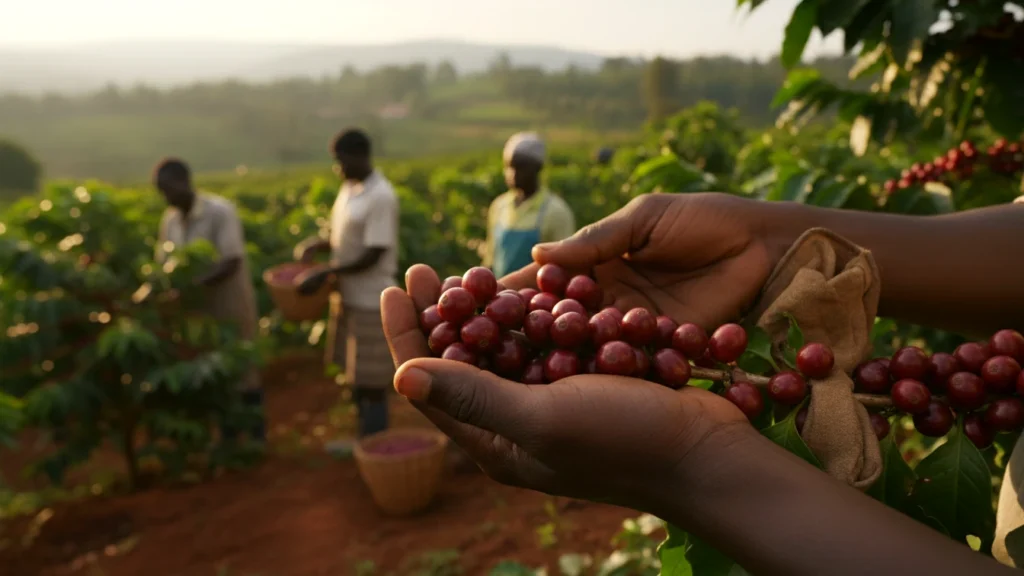
A close-up action shot of a farmer’s hands inspecting the deep red cherries of a healthy Batian coffee tree during harvest in Kiambu
Where to Buy Inputs for Coffee Farming in Kenya 2026:Cost, Yields, Profit per Acre, & Complete Beginner Profit Guide
You must source planting materials directly from the Coffee Research Institute (CRI) in Ruiru or their certified satellite nurseries to ensure genetic purity. Essential inputs like fertilizers should be purchased from authorized distributors such as the Kenya Farmers Association (KFA) or vetted suppliers on DigiFarm. Avoiding roadside nurseries is critical to preventing the planting of low-yielding, second-generation seedlings.
Sourcing Certified Seedlings
The market in 2026 is flooded with counterfeit seedlings that look healthy but lack the genetic potential for high yields. Real Batian or grafted Ruiru 11 seedlings are complex to produce and cannot be replicated by basic roadside sellers. Your first stop must always be the KALRO – Coffee Research Institute to book your seedlings months in advance.
Authorized commercial nurseries, such as Solai Coffee Estate or those certified by the Kenya Plant Health Inspectorate Service (KEPHIS), are reliable alternatives if CRI stock is low. Always demand a receipt and a copy of their nursery certification certificate before payment. Planting a fake seedling is a mistake you will not discover for three years, by which time your investment capital is gone.
Fertilizer and Chemical Sourcing
Counterfeit fertilizers and diluted chemicals are a major threat to Kenyan agribusiness. Purchase your DAP, CAN, and NPK fertilizers strictly from large-scale depots like MEA Ltd or Yara Kenya distributors. When buying agrochemicals, check for the tamper-proof seal and verify the batch number via SMS services often provided on the label.
Which counties are best for coffee farming in Kenya?
The traditional central highlands of Kiambu, Nyeri, and Murang’a remain top-tier due to their volcanic soil and existing processing infrastructure. However, the Western and Rift Valley regions, specifically Bungoma, Kericho, and Trans Nzoia, are the best investment frontiers for 2026. These emerging regions offer affordable land leases and virgin soils that require less rehabilitation than the exhausted central farms.
Zone 1: The Central Highlands (The Classic Belt)
This region, comprising Kiambu, Kirinyaga, Embu, and Nyeri, produces the highest quality Arabica beans in the world. The soil is deep red volcanic loam, which is acidic and rich in organic matter, perfect for coffee. The main advantage here is the dense network of cooperative wet mills, meaning you never have to travel far to deliver your cherry.
However, the challenges in Central Kenya include rapid urbanization and high land costs. Many coffee farms are being converted into real estate, pushing the price of remaining agricultural land out of reach for beginners. Furthermore, the soils here have been farmed for over a century and often require heavy liming to correct acidity levels.
Zone 2: The Rift Valley Frontier (The Expansion Belt)
Kericho, Bomet, and Nakuru are rapidly becoming the new hubs for large-scale coffee estates. The altitude in these areas matches Central Kenya, yet the land is significantly cheaper and the soils are less fatigued. The rainfall patterns are reliable, and the slightly warmer temperatures favor the faster-maturing Batian variety.
A panoramic view of a lush green coffee plantation on the sloping hills of Kericho
Zone 3: Western Kenya (The Organic Potential)
Bungoma and Trans Nzoia around Mount Elgon offer unique microclimates that produce coffee with distinct fruity notes. This region is ideal for farmers interested in organic or fair-trade certification due to lower historical chemical usage in the soil. The challenge here is logistics; the road network and factory density are lower, often requiring farmers to invest in on-farm pulping machinery.
What is the 12-month coffee farming calendar for maximum yield?
The coffee cycle begins in January with pruning and field hygiene, followed by fertilization during the long rains in March and April. The critical berry expansion phase runs from June to August, requiring pest control and foliar feeds. The main harvest spans October to December, while a smaller early crop harvest may occur in June depending on the region’s rainfall pattern.
January – March: Pruning and Stress Management
Immediately after the main harvest, the trees must be pruned to remove old bearing wood and open the canopy. This allows sunlight to penetrate, which triggers the hormonal changes necessary for the next flowering cycle. Farmers must also conduct soil tests during this dry period to determine pH and nutrient requirements for the coming season.
Water conservation is critical during these hot months. Mulching with maize stalks or napier grass helps retain soil moisture and suppresses weed growth. If you have an irrigation system, apply water stress by withholding irrigation for a few weeks, then irrigate heavily to trigger a uniform flowering.
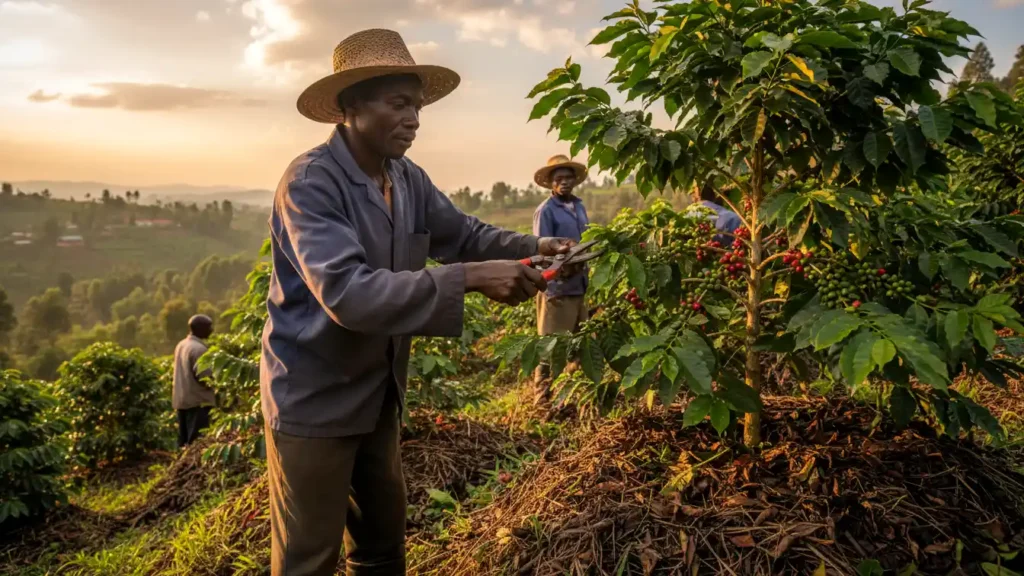
A skilled farmhand using sharp pruning shears to remove excess branches from a coffee tree in a well-mulched shamba in Murang’a
April – June: Nutrition and Protection
As the long rains begin, apply the main planting fertilizer, typically NPK 17:17:17, to support berry formation. This is also the season for Coffee Berry Disease (CBD), so a rigorous spray program using copper-based fungicides must be maintained. Weeding should be done manually or with herbicides to prevent competition for nutrients.
July – September: Berry Expansion and Hardening
The berries are now green and expanding in size. This is the stage where the final bean size is determined, so moisture stress must be avoided. Foliar sprays containing Zinc, Boron, and Calcium are applied to ensure solid bean formation and prevent defects like “lights” (empty shells).
October – December: Ripening and Harvesting
The coffee cherries turn from green to a deep crimson red. Harvesting must be done carefully, picking only the ripe cherries to ensure high cup quality. The harvested cherry should be delivered to the factory or pulped on the farm on the same day to prevent fermentation defects.
How much does it cost to start coffee farming in Kenya?
Establishing one acre of coffee in 2026 costs between KES 250,000 and KES 350,000, covering land preparation, certified seedlings, and labor. The annual maintenance for a mature acre ranges from KES 100,000 to KES 150,000. Break-even typically occurs in year 3 or 4, with potential gross revenues exceeding KES 600,000 per year under optimal management.
The following table details the Capital Expenditure (CAPEX) for the first year, assuming a spacing of 2m x 2m (approx 1000 trees for Ruiru 11/Batian high density).
Activity / Item
Details
Cost Estimate (KES)
Land Preparation
Deep ploughing, harrowing, lining
20,000
Hole Digging
1,000 holes (2x2ft), Labor @ KES 40/hole
40,000
Certified Seedlings
1,000 grafted seedlings @ KES 80
80,000
Manure
15 tons (Goat/Cow) + Transport
70,000
Fertilizer (DAP/SSP)
Planting fertilizer (100g/hole)
18,000
Labor (Year 1)
Weeding, spraying, pruning
90,000
Pest/Disease Control
Fungicides, insecticides, knapsack
40,000
TOTAL CAPEX
Year 1 Investment
KES 358,000
Revenue and Profit Projections
A well-managed acre of coffee in Kenya, utilizing high-density planting (1,000 trees), can yield significantly. Yield Projection: 1,000 trees x 8kg cherry/tree = 8,000kg Cherry. Price Projection: KES 90 per kg (Conservative average). Gross Revenue: 8,000kg x KES 90 = KES 720,000. Operational Costs: KES 150,000 (Mature upkeep). Net Profit:KES 570,000 per acre per year.
These figures assume professional management. Neglected farms often yield less than 2kg per tree, which results in a financial loss. The key variable is the global market price, which fluctuates, but quality beans always command a premium.
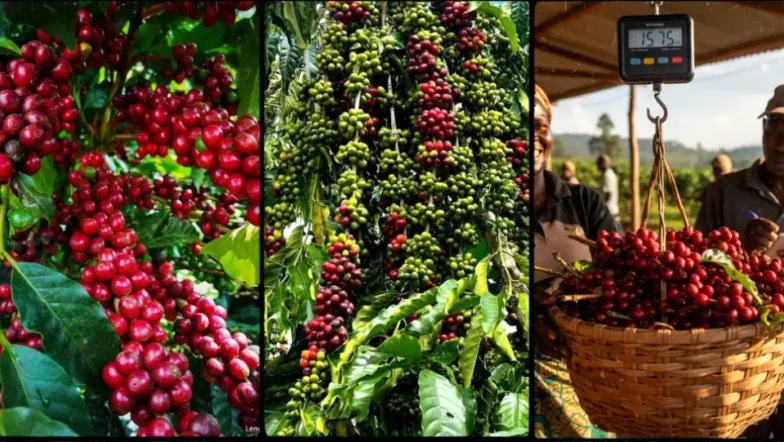
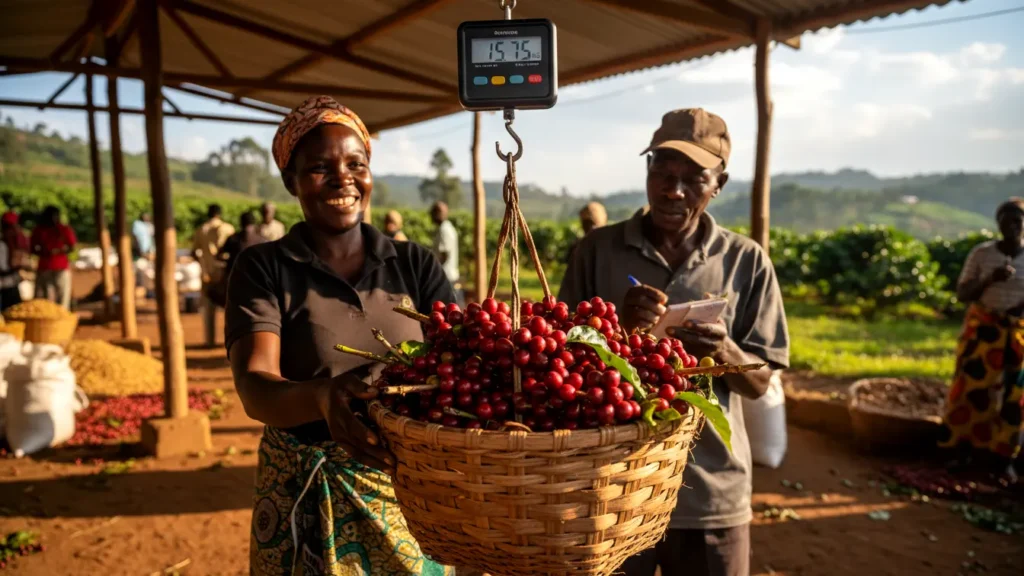
A detailed view of red ripe coffee cherries being weighed on a digital hanging scale at a collection center in Kirinyaga
How can farmers add value to coffee to increase margins?
Value addition involves processing raw cherry into Parchment or fully milled Green Beans rather than selling fresh cherry to cooperatives. Farmers who invest in eco-pulpers and drying beds can sell directly to millers or exporters, bypassing cooperative inefficiencies. This strategy can increase revenue per kilogram by 30% to 40% and offers faster payment cycles.
The traditional model of delivering cherry to a cooperative society often subjects farmers to theft, mismanagement, and delayed payments. In 2026, the trend is shifting toward “Estate” status, even for smallholders. By acquiring a license from the county government and installing a small motorized pulper, you become an independent processor.
When you pulp your own coffee, you control the fermentation process, which is where the flavor profile is developed. You then dry the beans to 10.5% moisture content to create “parchment.” Parchment is a storable commodity; unlike fresh cherry which rots in days, parchment can be held for months while you negotiate better prices with millers or private buyers.
Direct Marketing and Export
The Capital Markets Authority (CMA) has reformed the Nairobi Coffee Exchangeto allow for a Direct Settlement System (DSS). This ensures that when your coffee is sold at auction or via direct contract, the money flows directly to your bank account, not through a cooperative middleman. Farmers can now aggregate their produce and hire a marketing agent to represent them directly at the auction.
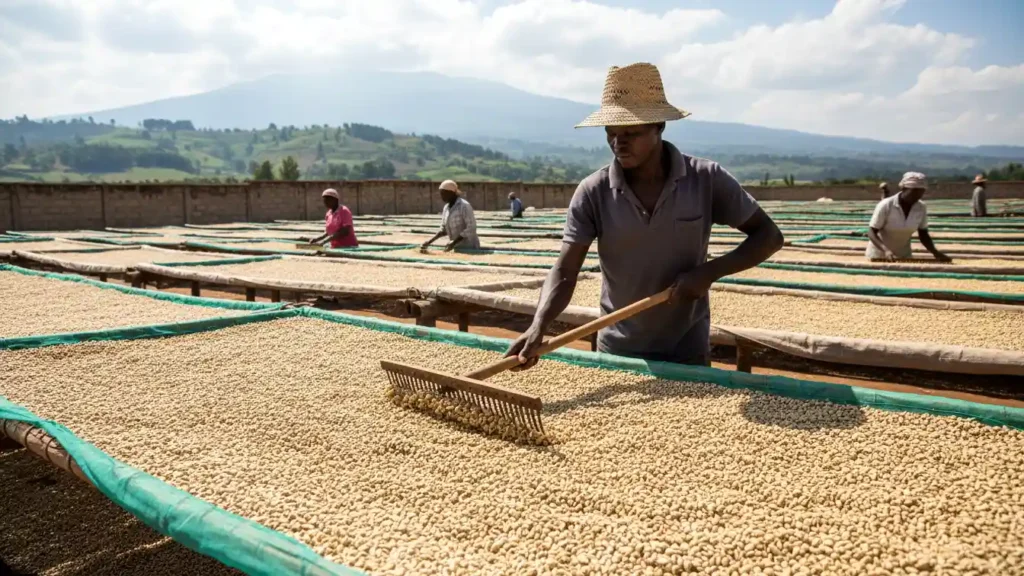
Raised drying beds filled with parchment coffee being raked by a worker under the sun in a coffee factory in Embu
Advanced Pest and Disease Management
In 2026, climate change has altered pest cycles, requiring vigilance. The Coffee Berry Borer is a major threat that drills into the berry, destroying the bean. Control relies on field hygiene; ensure no dried berries (“mbuni”) are left on the ground or tree after harvest, as these serve as breeding grounds.
Coffee Leaf Rust (CLR) appears as orange powder on the underside of leaves and causes defoliation. While Batian and Ruiru 11 are resistant, resistance can break down under extreme stress. Monitor your trees closely and apply a copper fungicide if you spot more than 5% infection levels in the field.
Antestia Bugs are responsible for the “potato taste” defect that ruins cup quality. These bugs must be controlled using targeted insecticides like pyrethroids immediately after pruning. Pruning itself helps by opening the bush, making the environment less habitable for the bugs.
Irrigation: The Key to Consistency
Rain-fed agriculture is increasingly risky due to erratic weather patterns. Investing in an irrigation system is the best insurance policy for a coffee farmer. Drip irrigation is the most efficient method, delivering water and fertilizer (fertigation) directly to the root zone with minimal waste.
Irrigation allows you to manipulate the flowering season. By irrigating during a dry spell, you can trigger an “out-of-season” flowering. This results in a harvest that hits the market when supply is low, commanding significantly higher prices than the main crop.
2026 Outlook: The Future of Kenyan Coffee
The future of coffee farming in Kenya is bright for those who treat it as a science. The global demand for high-acid, fruity Kenyan Arabica exceeds supply. As consumers in Asia and the West become more sophisticated, they are willing to pay premiums for traceability and sustainability.
Young farmers should focus on Regenerative Agriculture. Using cover crops, reducing tillage, and integrating shade trees like Macadamia not only improves soil health but also creates additional revenue streams. The government’s push to revitalize the sector through the Coffee Cherry Advance Revolving Fund provides easier access to credit for inputs.
Call to Action
Don’t just plant trees; build a business. Start with a comprehensive soil test to understand your land’s potential. Secure your genetics from KALRO and invest in knowledge by joining digital farming communities. The path to profitability is clear for those willing to do the work.
Farmers Also Ask (FAQ)
1. How many coffee trees can I plant in one acre?
For traditional tall varieties like SL28, the spacing is 9ft x 9ft, allowing roughly 600 trees per acre. For compact varieties like Ruiru 11, spacing can be 6ft x 6ft or 8ft x 5ft, allowing between 1,000 to 1,300 trees per acre.
2. How long does it take for coffee to grow in Kenya?
Grafted seedlings typically start flowering in the second year, with the first significant harvest arriving in the third year. The trees reach their full production peak between year 4 and year 5, continuing for decades.
3. What is the best fertilizer for coffee planting?
At planting, use Single Super Phosphate (SSP) or DSP mixed with well-decomposed manure to boost root development. Avoid using DAP at planting if your soil test indicates high acidity, as it can further lower pH.
4. Can I intercrop coffee with other crops?
Yes, but you must choose compatible crops. Beans and legumes are excellent during the establishment phase (years 1-2) as they fix nitrogen. Avoid heavy feeders like maize or bananas directly in the coffee rows as they compete for light and nutrients.
5. Why are my coffee berries dropping before maturity?
Premature berry drop is usually caused by water stress (drought), Nitrogen deficiency, or a heavy infestation of Coffee Berry Disease (CBD). Ensure consistent soil moisture through mulching and apply proper fungicides during wet weather.
6. Is coffee farming profitable in 2026?
Yes, but volume and quality are the deciding factors. With global prices stabilizing, a farmer with high-quality AA/AB grades and yields above 10kg per tree makes significant profit. Low-input, low-yield farming is not profitable.
7. What is the difference between Robusta and Arabica coffee?
Kenya primarily grows Arabica (mild, acidic, high value) in high-altitude regions. Robusta (bitter, high caffeine, lower value) grows in low-altitude areas like Busia and Siaya. Arabica fetches much better prices in the export market.
8. How do I control the Coffee Berry Borer?
Field hygiene is the most effective control method. Ensure all “buni” (dried berries) are stripped from the trees and ground after harvest. Use alcohol-based traps to catch the beetles, as spraying is difficult once they are inside the berry.
9. Where can I get a license to sell coffee directly?
The Capital Markets Authority (CMA) and the Agriculture and Food Authority (AFA) regulate licensing. Recent reforms have made it easier for grower associations and large estates to obtain a “Grower Miller” license to export directly.
10. Does irrigation improve coffee yields?
Absolutely, irrigation is a game-changer. It triggers flowering during dry spells, allowing for an early crop that hits the market when prices are high. It also prevents berry abortion during drought, ensuring a heavier harvest.
The Kenyan macadamia industry is witnessing a massive “rebound year” in 2026. Following the government’s strategic intervention to stabilize the sector, macadamia has reclaimed its spot as one of the most profitable “gold-mine” crops for small and large-scale farmers alike. The chaotic price wars of the past have settled, paving the way for a more structured and lucrative market.
Farmers who abandoned their orchards during the slump are now rushing to rehabilitate them. New investors are also entering the space, drawn by the promise of high export demand and standardized pricing models. This guide serves as your comprehensive blueprint for capitalizing on this resurgence.
We will cover everything from the specific grafted varieties you must plant to the exact month you should harvest. We will also analyze the financial returns per acre to help you plan your agribusiness investment. Welcome to the new era of macadamia farming in Kenya.
What Are the Current Market Prices for Macadamia in Kenya (2026)?
In 2026, the farm-gate price for raw, in-shell macadamia nuts has stabilized between KSh 130 and KSh 150 per kilogram. Processed kernels in urban retail centers fetch significantly higher amounts, ranging from KSh 1,800 to KSh 2,500 per kilogram. These prices are enforced through stricter AFA regulations to prevent the exploitation of farmers by brokers.
The price volatility of previous years has stabilized thanks to minimum farm-gate price regulations enacted by the government. In the past, brokers would take advantage of fragmented markets to offer as little as KSh 50 per kilo. In 2026, the Agriculture and Food Authority (AFA) has stepped in to ensure fair play.
Farmers are now empowered to reject low offers. The establishment of localized collection centers has forced buyers to compete transparently. This competition is driving the average price closer to the KSh 150 mark for high-quality, pest-free nuts.
It is important to note that these prices apply to mature nuts only. A temporary trade suspension is often active between December and February. This ban ensures that only mature, high-quality nuts reach the export market, protecting Kenya’s global reputation.
Retail prices tell a different story of immense value addition. In supermarkets across Nairobi and Mombasa, 500g packets of roasted macadamia often sell for over KSh 1,000. This indicates a massive profit margin for those who can process and package their own produce.
Which Kenyan Counties Offer the Best Yields? (Module A)
The “Macadamia Belt” of Kenya includes Murang’a, Kiambu, Meru, Nyeri, and Embu. These counties offer the ideal mix of volcanic soil and altitude. However, emerging regions like Uasin Gishu, Bungoma, and Trans Nzoia are proving to be highly productive frontiers for large-scale farming.
1. Murang’a County: The Traditional Powerhouse Murang’a remains the undisputed leader in macadamia production. The county benefits from deep, well-drained volcanic soils that are rich in organic matter. The altitude, ranging from 1,500m to 1,900m, provides the cool climate necessary for high oil accumulation in the nuts.
Farmers in this region have a long history with the crop. They have established robust cooperative societies that negotiate better prices with major processors like Jungle Nuts. However, land fragmentation is a challenge, pushing farmers toward intensive farming techniques.
2. Meru County: The Volume Leader Meru produces the highest aggregate volume of nuts in the country due to its vast land sizes. The region typically experiences slightly warmer temperatures than Central Kenya. This climatic difference often accelerates maturity, allowing Meru farmers to hit the market weeks before others.
Water management is critical here. Farmers investing in drip irrigation systems from providers like Amiran Kenya are seeing yields 30% higher than rain-fed farms. The county is also home to several new processing factories, reducing transport costs for farmers.
3. Kiambu County: The Innovation Hub Kiambu is known for its adoption of modern agricultural technology. Farmers here are quick to adopt new grafted varieties like KRG-15. Being close to Nairobi, they also have easier access to value-addition markets and export logistics.
4. The Emerging Frontier: Uasin Gishu and Bungoma Traditionally known for maize, Uasin Gishu is rapidly diversifying. The decline in maize profitability has pushed large-scale farmers to plant macadamia orchards. The cool climate is perfect for the crop, and the large tracts of land allow for mechanization that isn’t possible in Central Kenya.
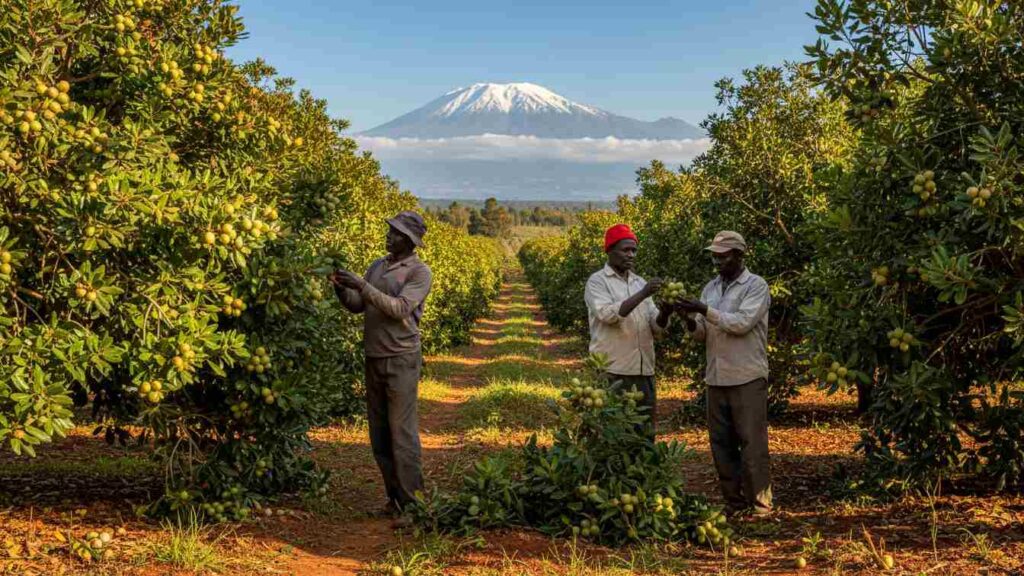
image of a lush macadamia orchard in Murang’a with Mount Kenya in the background
Which Macadamia Varieties Should You Plant for Profit?
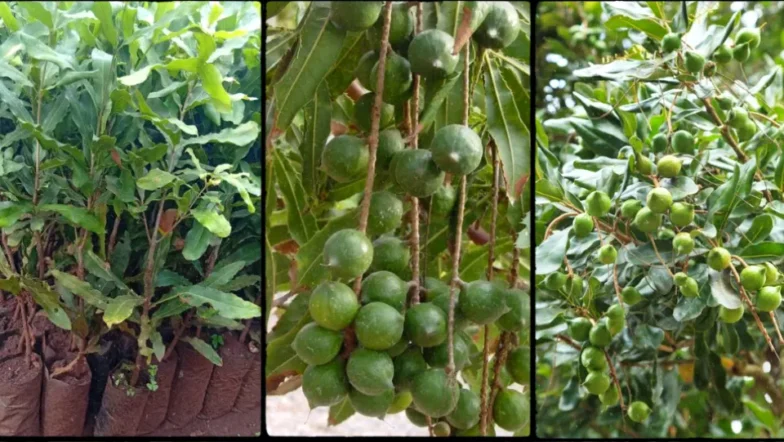
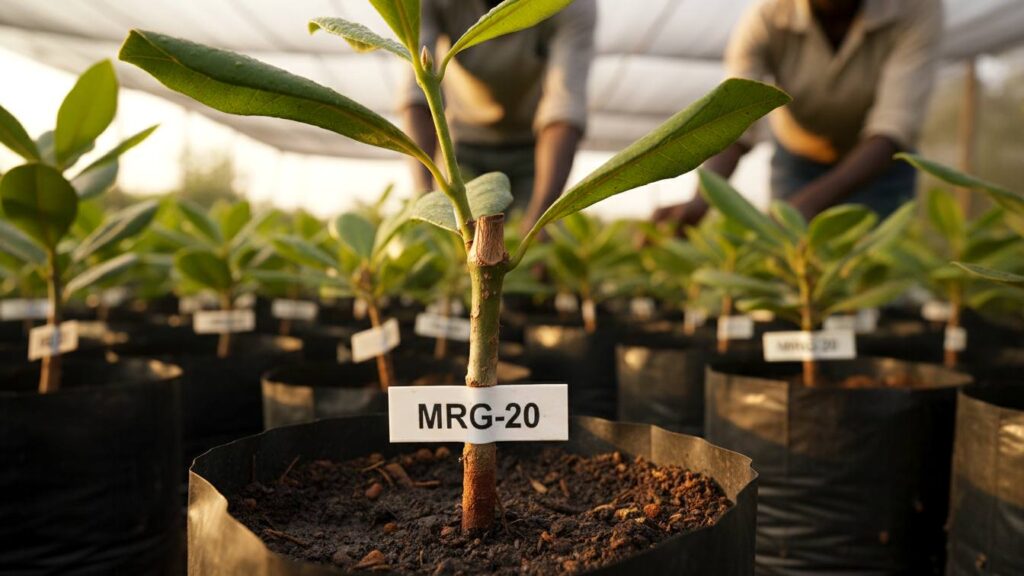
To maximize ROI, avoid indigenous seeds and plant grafted varieties. The top performers for 2026 are Murang’a 20 (MRG-20), Kiambu 15 (KRG-15), and Embu 29 (EMU-29). These varieties mature in 3-4 years, are resistant to pests, and offer high kernel recovery ratios.
The Shift to Grafting In 2026, planting un-grafted seedlings is an economic suicide mission. Traditional trees take over 7 years to fruit and grow too tall for easy harvesting. Grafted seedlings, however, begin fruiting in just 3 to 4 years.
Grafting also ensures genetic consistency. Every tree in your orchard will produce nuts of the same size and quality. This uniformity is crucial when selling to processors who use automated cracking machines.
Top Variety: Murang’a 20 (MRG-20) This variety is the “King” of the 2026 season. It is celebrated for its drought tolerance, making it suitable for areas with erratic rainfall. MRG-20 has a high kernel recovery, meaning the shell is thinner and the edible nut is larger.
Top Variety: Kiambu 15 (KRG-15) KRG-15 is favored for its compact growth habit. This allows for slightly higher planting densities per acre. It is a prolific bearer and responds very well to fertilizer applications.
Sourcing Your Seedlings You must source clean, certified seedlings. Reputable bodies like KALRO (Kenya Agricultural and Livestock Research Organization) are the gold standard. Private nurseries licensed by KEPHIS are also safe bets, but avoid roadside sellers whose scions may be of unknown origin.
Close-up macro shot of a grafted macadamia seedling showing the V-graft union
What Does a Successful 12-Month Farming Schedule Look Like? (Module B)
Success requires a strict calendar. January-March is for harvesting and pruning. April-August focuses on flowering and pest control. September-December is the maturation and main harvest phase. Adhering to this prevents crop loss to pests like the Nut Borer.
January – February: Sanitation and Pruning This period usually marks the end of the previous season’s harvest. Your primary task is field hygiene. Remove all old nuts from the ground to starve pests like the Macadamia Nut Borer.
Prune your trees to open up the canopy. This allows sunlight to penetrate, which is essential for the next flowering cycle. Apply well-decomposed manure now to give the trees a nutrient boost before the rains.
March – April: Flowering and Fertilization The long rains trigger massive flowering. This is a critical time for pollination. Do not spray harsh insecticides that could kill bees.
Apply foliar sprays containing Boron and Zinc. These micronutrients are vital for fruit set and preventing flower abortion. Top-dress with nitrogen-rich fertilizers like CAN to support vegetative growth.
May – July: Nut Development and Protection The nuts are now forming and are soft. This makes them highly susceptible to sucking pests like stink bugs. Scout your orchard weekly for signs of damage.
If you spot pests, use recommended insecticides from stockists like Simlaw Seeds. Ensure you strictly observe pre-harvest intervals (PHI). This is also an excellent time to plant intercrops like beans.
August – October: Oil Formation The shells begin to harden, and the kernel starts accumulating oil. Water stress during this phase leads to immature “blighted” nuts. If the rains fail, supplemental irrigation is mandatory.
Avoid heavy nitrogen application now, as it can delay maturity. Instead, focus on maintaining soil moisture through mulching. Prepare your drying racks and ensure your storage areas are clean.
November – December: The Main Harvest Harvesting begins in earnest. Only pick nuts that have fallen naturally or shake branches very gently. Never beat the trees with sticks, as this damages future flower buds.
De-husk the nuts within 24 hours of harvest. This prevents the green husk from heating up and fermenting the nut inside. Store the de-husked nuts on raised wire racks in a well-ventilated shed.
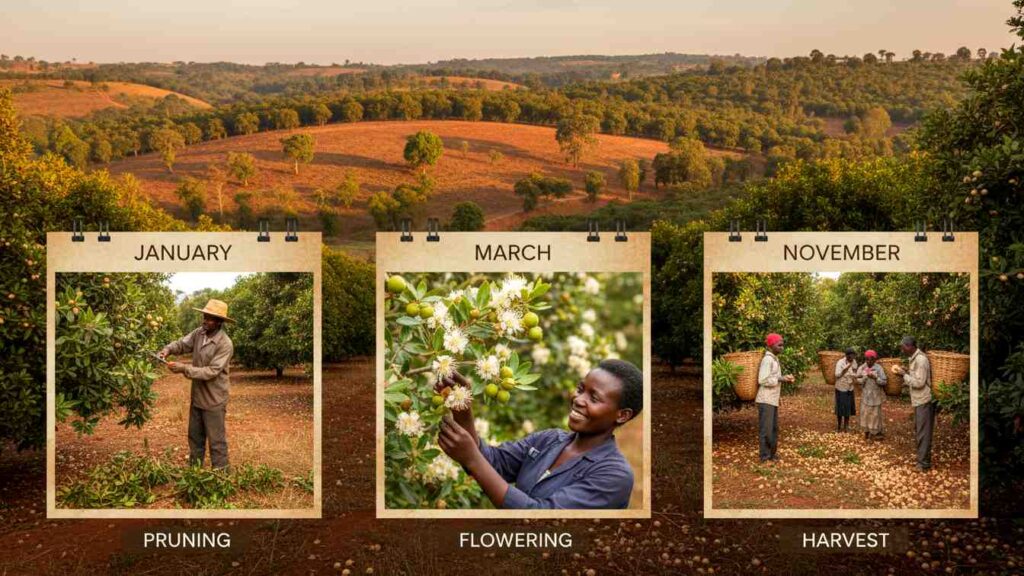
A calendar-style graphic overlaid on a macadamia farm background
How Much Capital Do You Need and What Are the Returns? (Module C)
Establishing one acre requires approximately KSh 40,000 to KSh 70,000. A mature acre (Year 5+) can generate a gross income of KSh 600,000 to KSh 1.2 Million annually. The break-even point is typically reached in year 4 using grafted varieties.
Initial Investment Breakdown Starting a macadamia farm is capital intensive but manageable. The biggest costs are land preparation and seedlings. A spacing of 8m x 8m accommodates roughly 70 to 80 trees per acre.
Expense Item
Estimated Cost (KSh)
Notes
Land Preparation
15,000
Ploughing and hole digging
Certified Seedlings (80 trees)
28,000
@ KSh 350 per seedling
Manure & Fertilizers
12,000
DAP and organic manure
Labor (Planting)
10,000
Planting and initial watering
Contingency
5,000
Transport and miscellany
Total Initial Capital
70,000
Excludes land purchase
Projected Returns Per Acre The magic happens from year 5 onwards. A well-managed grafted tree can produce between 70kg and 80kg of nuts per year. With 80 trees, your total yield is roughly 5,600kg.
At a conservative farm-gate price of KSh 140 per kg, the gross revenue is KSh 784,000. If you value-add or export directly, prices can double. Deducting annual maintenance costs of about KSh 100,000 leaves a very healthy net profit.
Intercropping for Early Cash Flow You don’t have to wait 4 years to earn money. In 2026, smart farmers are intercropping macadamia with Arabica coffee. Research shows this combination can increase land profitability by over 170%.
Beans, peas, and potatoes are also excellent short-term intercrops. They provide cash every 3 months and help cover the weeding and fertilizer costs of the main macadamia crop. This strategy de-risks the investment significantly.
Why Is Global Demand for Kenyan Macadamia Skyrocketing?
The global +900% search growth is driven by health-conscious consumers. Macadamia is now a “Superfood” staple in Keto and Paleo diets due to its high healthy fat content. Additionally, the cosmetic industry is aggressively buying macadamia oil for anti-aging products.
Heart Health and Cholesterol Macadamia nuts have the highest levels of monounsaturated fats of any commercial nut. These “good fats” are proven to lower LDL (bad) cholesterol. This makes them a favorite recommendation by cardiologists in Western markets.
The Keto and Paleo Revolution The ketogenic diet focuses on low carbs and high fats. Macadamia nuts fit this profile perfectly. They are becoming the number one snack for the growing Keto community in Kenya and abroad.
Cosmetic Applications Rich in palmitoleic acid (Omega-7), macadamia oil mimics the skin’s natural sebum. High-end cosmetic brands are using Kenyan macadamia oil in anti-aging creams and hair products. This has created a market for “industrial grade” nuts that may not look pretty enough for snacking but are perfect for oil extraction.
How Do You Navigate the Supply Chain and Value Addition? (Module E)
To maximize profit, bypass brokers by joining a Cooperative. Value addition starts at the farm: de-husking and drying nuts to 10% moisture increases their value. Selling directly to processors like Sasini or Lote Macadamia via contract farming is the safest route.
The Problem with Brokers Middlemen are notorious for manipulating weighing scales and offering below-market prices. In 2026, digital platforms and farmer cooperatives are your best defense. By aggregating your produce with neighbors, you can attract major buyers who only deal in bulk.
On-Farm Processing Value addition doesn’t require a factory. Simple steps like removing the green husk immediately add value. Buyers penalize farmers for delivering nuts with husks because it increases transport weight and risk of rot.
Invest in a simple wire-mesh drying rack. Air-drying your nuts for two weeks reduces moisture content. Processors pay a premium for dry nuts because they are ready for cracking and have a longer shelf life.
The Organic Opportunity There is a 900% increase in demand for organic macadamias in Europe (Netherlands and Germany). Farmers using organic fertilizers, such as those derived from Black Soldier Fly larvae, are fetching premium prices. While certification takes time, the long-term price benefits are undeniable.
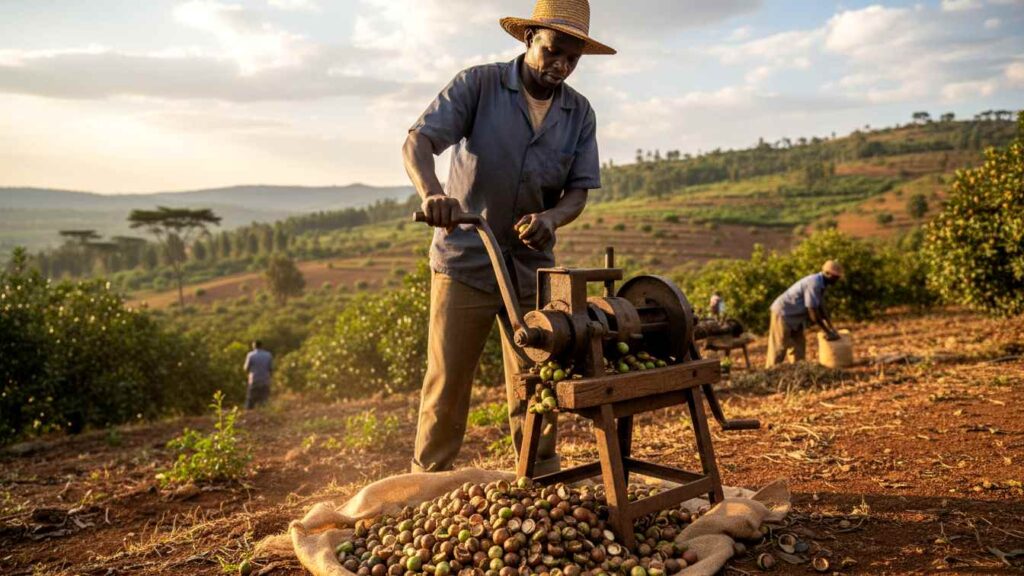
A Kenyan farmer using a manual de-husking machine to remove green skins from macadamia nuts
2026 Outlook: Is Macadamia Farming Worth It?
Yes. The 2026 outlook is overwhelmingly positive due to price stabilization and diversified export markets (China, USA, EU). The crop is resilient, supports retirement planning, and offers carbon credit opportunities through agroforestry integration.
As we look at the agricultural landscape of 2026, macadamia farmingstands out as a resilient venture. The stabilization of prices guarantees a hungry market for your produce. The entry of new buyers from China has broken the monopoly of traditional European buyers.
However, success is not automatic. It belongs to the farmer who treats their orchard like a business. This means investing in grafted seedlings, managing water, and aggregating with others.
If you have the patience to wait 3 to 4 years for your first major harvest, macadamia farming is one of the best retirement plans available. The trees can produce for over 40 years, providing a lifetime of income.
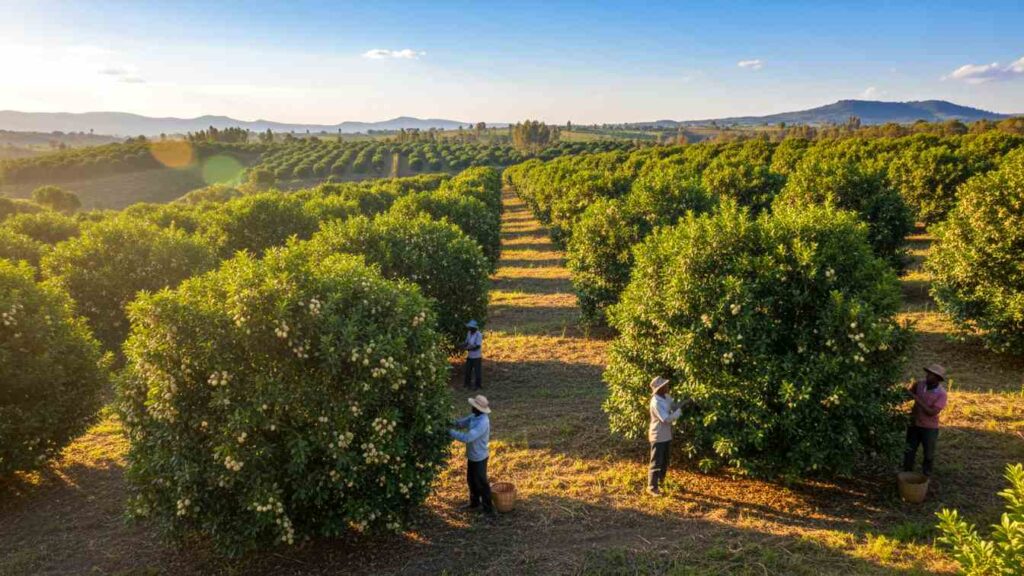
A wide-angle shot of a mature macadamia estate in Kiambu with healthy trees
FAQ: Troubleshooting Your Macadamia Farm
1. Can I intercrop coffee and macadamia nuts?
Yes, this is highly recommended in 2026. Coffee and macadamia have a symbiotic relationship. The macadamia trees provide essential shade for the coffee, protecting it from scorch, while the coffee provides cash flow while you wait for the macadamia to mature.
2. People Also Ask: What is the best spacing for macadamia trees?
For grafted varieties, the standard spacing is 7.5m by 7.5m or 8m by 8m. This allows for about 70 to 80 trees per acre. Avoid spacing them too close, as the canopies will eventually lock, reducing sunlight penetration and lowering production.
3. Why do my macadamia nuts drop prematurely?
Premature nut drop is usually caused by water stress or pest infestation. If the tree feels dehydrated, it sheds nuts to survive. Ensure you mulch heavily and irrigate during dry spells, and scout for stink bugs regularly.
4. How do I know when macadamia nuts are ready to harvest?
The most accurate sign of maturity is when the inside of the husk turns from white to chocolate brown. However, for most varieties, the nuts will naturally fall to the ground when mature. Avoid picking green nuts from the tree.
5. Where can I buy certified grafted macadamia seedlings?
Purchase from registered nurseries to ensure genetic purity. Top providers include KALRO centers, Kenya Seed Company, and Bob Harries. Large processors like Jungle Nuts also run seedling programs for contracted farmers.
6. What is the “AFA Ban” on macadamia harvesting?
The AFA often imposes a ban on harvesting between November and February. This prevents farmers from harvesting immature nuts to chase quick money. Harvesting immature nuts hurts the quality and reputation of Kenyan exports.
7. Can I farm macadamia in dry areas like Kitui?
Farming in semi-arid areas is possible only with reliable irrigation. Without water, the trees may survive but will produce small, low-quality nuts. Drought-tolerant varieties like MRG-20 are best suited for these marginal zones.
8. How do I control the Macadamia Nut Borer?
Control the Nut Borer by practicing field hygiene and removing old nuts. Pheromone traps can be used to catch male moths. Chemical control should only be used when flowering is finished to protect pollinators.
9. Is organic macadamia farming profitable?
Yes, organic nuts fetch a premium of 20-30% over conventional prices. There is high demand in Germany and the Netherlands. However, achieving certification is a rigorous process that takes several years.
10. How do I process macadamia nuts at home?
For local sales, de-husk, dry, and crack the shell using a manual cracker. Roast the kernels lightly before packaging. Note that the hard shell is difficult to crack without damaging the kernel, so industrial processing is often preferred.
Mango farming has solidified its status as the “Green Gold” of Kenyan agribusiness, offering resilient farmers potential net profits exceeding KES 400,000 per acre annually once trees mature. As we step into 2026, the sector is evolving from traditional subsistence farming to high-tech, export-oriented agribusiness. This authoritative guide breaks down the exact 2026 cost structures, high-yielding Apple Mango varieties, and spacing techniques required to dominate the local and export markets.
The global demand for exotic fruits is rising, and Kenyan mangoes are prized for their unique flavor profile. However, achieving export-quality yields requires precision, adhering to strict spacing rules, and selecting the right genetic material. Farmers can no longer rely on rainfall alone; the shift towards irrigation and certified seedlings is the defining trend of 2026.
This comprehensive manual will serve as your blueprint for success. We will cover everything from soil preparation in Makueni to the complex logistics of exporting Kent mangoes to the European Union. Whether you are a novice looking to plant your first acre or a seasoned farmer aiming to optimize yields, this guide contains the financial and technical data you need.
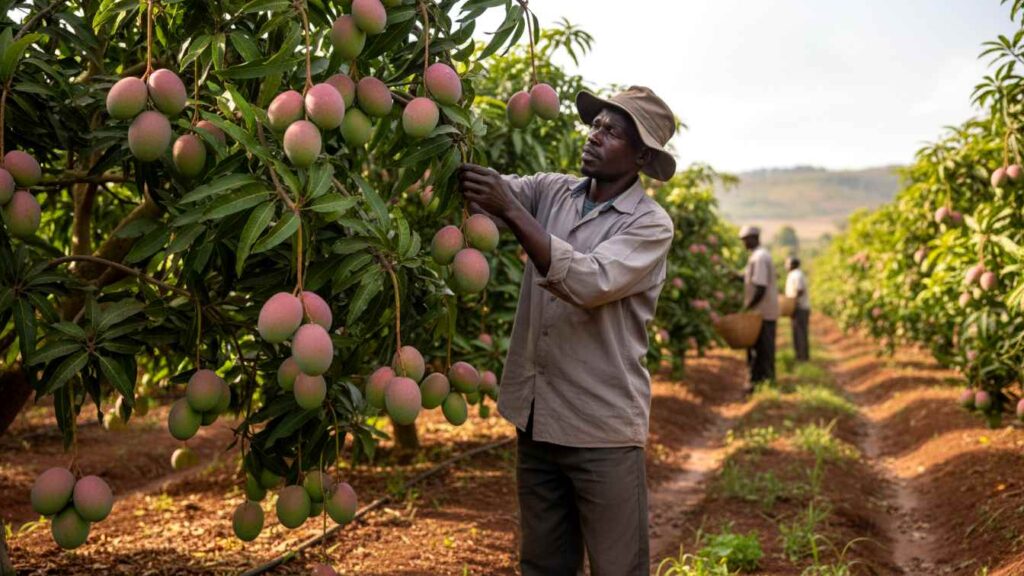
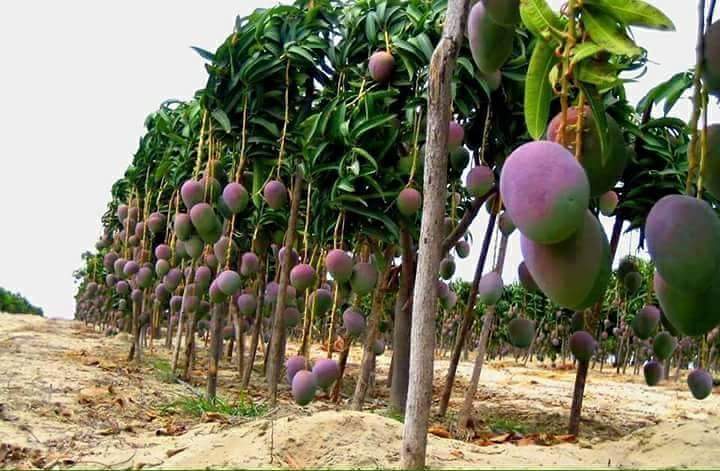
image of a lush Apple Mango orchard in Makueni
Which Kenyan Counties Offer the Best Climate for High-Yield Mango Farming?
Makueni, Kilifi, and Meru are the top performers for 2026. While Makueni leads in total volume and processing infrastructure, Kilifi dominates the coastal Ngowe variety production. Meru and Murang’a represent the high-potential zones for late-season harvesting, which often fetches premium prices due to market scarcity.
Module A: Regional Comparative Analysis
Success in mango farming depends heavily on location. The ecological requirements for mangoes—hot, dry climates with specific stress periods to induce flowering, vary significantly across Kenya. In 2026, smart farmers are analyzing micro-climates within these counties to gain a competitive edge.
1. Makueni County (The Volume Leader) Makueni remains the undisputed king of mango production in Kenya, boasting over 4 million mango trees. The semi-arid climate of zones like Kibwezi and Wote is perfect for the Apple Mango and Tommy Atkins varieties. The hot temperatures ensure high sugar accumulation (Brix levels), making the fruit incredibly sweet. However, the market here often faces a “glut” (oversupply) between December and February. This oversupply drives farm-gate prices down to as low as KES 5 per piece during peak weeks. Farmers here must invest in value addition or timing technologies to delay harvest. Contacts like Mugo Farmers often source heavily from this belt for juice processing.
2. Kilifi County (The Coastal Specialist) The humid coastal heat favors the indigenous Ngowe mango. This variety is large, incredibly sweet, and fiber-free, making it the top choice for processors and juice makers. Kilifi farmers enjoy an earlier harvest season compared to Eastern Kenya, allowing them to hit the Nairobi market before prices crash. The challenge here is high fungal pressure (Anthracnose) due to humidity. This requires strict spray programs recommended by KALRO to keep fruit skins clean. Farmers in Malindi and Magarini are also experimenting with Apple Mango with moderate success.
3. Meru & Murang’a (The Off-Season Strategists) These counties are changing the game in 2026. Located in slightly higher altitudes, trees here mature slower and fruit later. When Makueni runs dry in March or April, Meru farmers are just harvesting. This allows them to sell Apple Mangoes at KES 30–50 per piece farm-gate, tripling the revenue of their eastern counterparts. This region is the current frontier for smart investors looking to avoid the mid-season price crash. Specific areas like Tharaka Nithi offer a blend of heat and altitude that prolongs the growing season.
4. Machakos & Kitui (The Emerging Giants) Machakos, particularly the Yatta belt, utilizes the Yatta Canal for irrigation, stabilizing yields even during drought years. Kitui has vast tracts of affordable land suitable for large-scale mechanization. The soil in these areas is typically well-drained sandy loam, which prevents root rot and encourages deep root penetration. Farmers here are rapidly adopting high-density planting to maximize land use.
“Personal Expert Tip: If you are buying land specifically for mangoes in 2026, look at Tharaka Nithi or lower Murang’a. The land is cheaper than Makueni, and you hit the lucrative late-season window.
What Are the Best Commercial Mango Varieties for the Kenyan Market in 2026?
The Apple Mango remains the most profitable for fresh market sales due to its red skin and long shelf life. The Ngowe is unmatched for processing and local sweetness. The Kent variety is gaining traction for the European export market because it is fiberless and resistant to damage during shipping.
Choosing the right variety (cultivar) is the first financial decision you will make. In 2026, the market has shifted towards fruits that look good (cosmetic appeal) and travel well. Below is an in-depth look at the specific varieties driving the Kenyan market.
1. The Apple Mango (The Local King)
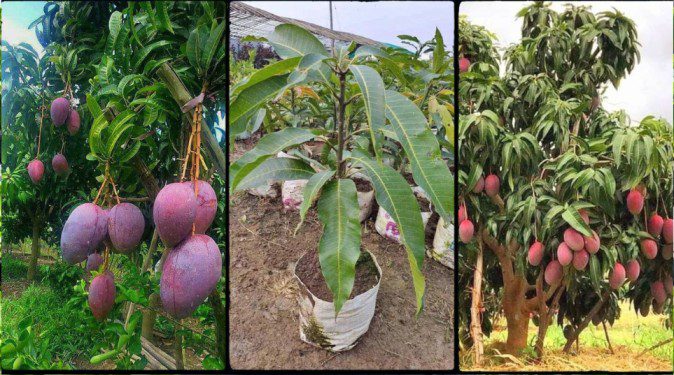
The Apple Mango growing in Machakos
This is the “cash cow” of Kenyan orchards and the most planted variety in Makueni and Machakos. It is easily identifiable by its rich red blush when ripe, which attracts buyers in the soko. It is a heavy yielder, often producing 300-500 fruits per mature tree under optimal care. The flesh is yellow, juicy, and relatively fiber-free, making it excellent for fresh consumption. It has a medium shelf life and is moderately resistant to Anthracnose. Beginners should dedicate 70% of their orchard to grafted Apple Mango seedlings from certified nurseries like Kimplanteror Agri-SeedCo.
2. The Ngowe (The Sweetest Specialist)
Native to the Kenyan coast, the Ngowe is a large, beak-like mango that turns deep yellow upon ripening. It is widely regarded as the sweetest mango in Kenya and the preferred variety for export to the Middle East. However, it has a thin skin and bruises easily, making transport difficult over long distances on rough roads. It is best grown if you have a contract with a processor or a nearby market. Processors like Coca-Cola (Minute Maid) often prefer Ngowe pulp for its high brix content and distinct aroma.
3. The Kent (The Export Standard)
If you plan to export to the EU, Kent is your mandatory choice. It is a late-maturing variety, often ready when other varieties have finished. The fruit is large, maintaining a green skin with a slight red blush even when fully ripe. Inside, the flesh is deep orange, completely fiberless, and has a butter-soft texture. Kent has a thicker skin than Ngowe, allowing it to withstand sea freight to Europe without rotting. It fetches a premium price but requires rigorous pest management to meet export standards.
4. Tommy Atkins (The Survivor)
Tommy Atkins is the tough guy of mangoes; it survives rough transport and stays fresh for weeks on the shelf. It is characterized by its dark red to purple skin and medium size. While it is excellent for supermarkets that require long shelf life, the taste is often fibrous and less sweet than Apple or Ngowe. It is highly resistant to Anthracnose and Powdery Mildew. This makes it a safe bet for areas with higher humidity or for farmers who cannot spray frequently.
5. Vandyke (The Aesthetic Choice)
Vandyke is gaining popularity for its stunning bright red color and uniform shape. It is a smaller fruit compared to the Kent or Apple mango but packs a punch in flavor. It is highly productive and has a regular bearing habit, meaning it produces fruit every year without fail. However, it is susceptible to “jelly seed,” a condition where the flesh around the seed breaks down. Proper calcium nutrition is required to manage this issue.
6. Haden and Sabine (Niche Varieties)
Haden is the parent of many modern mango varieties and offers a spicy, rich flavor beloved by connoisseurs. Sabine is an emerging variety in the coastal region, known for its massive size and disease resistance. While less common, these varieties can fetch high prices in specialized markets or high-end grocery stores in Nairobi like Zucchini.
The Importance of Rootstocks
When buying seedlings, the variety on top (scion) matters, but the rootstock matters more for survival. In Kenya, the most common rootstocks are Sabre and Peach. Sabre rootstocks are drought-tolerant and ideal for the rocky soils of Eastern Kenya. Peach rootstocks offer vigor but require better soil fertility. Always ask your nursery provider which rootstock they have used to ensure it matches your soil conditions.
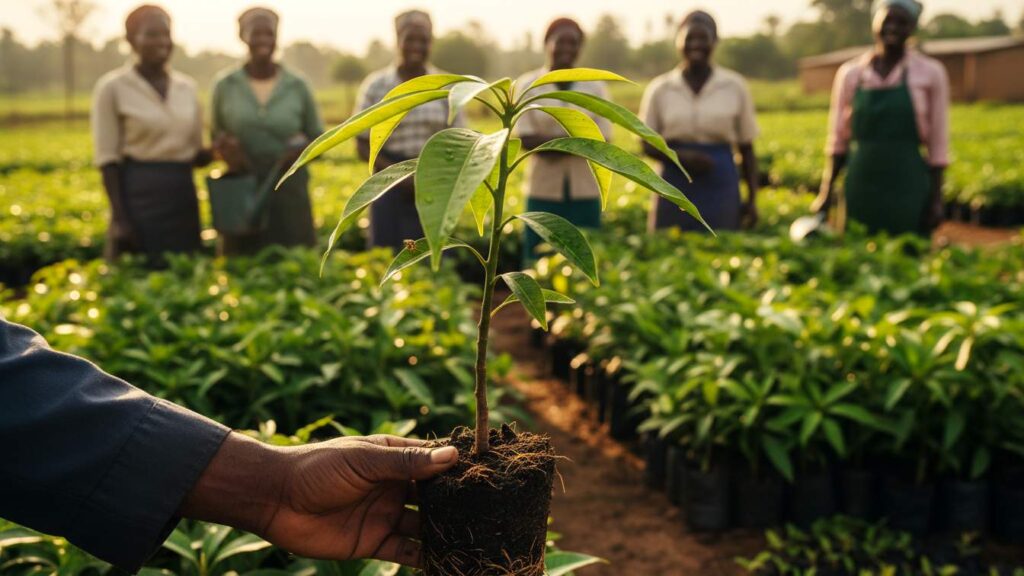
Close-up high-resolution shot of a grafted Apple Mango seedling showing the graft union
What Does a Successful Mango Farming Calendar Look Like for a Kenyan Year?
A profitable calendar revolves around the rains. Planting occurs during the onset of the Long Rains (April) or Short Rains (October). Crucially, you must stress trees (withhold water) in July/August to induce flowering, followed by aggressive pest management during fruit setting in September/October to combat fruit flies.
Farming without a calendar is gambling. In 2026, successful farmers use data-driven schedules to anticipate pest attacks and market windows. Below is the standard operation cycle for a mature orchard in Eastern Kenya.
January – February: Harvesting & Marketing This is the peak harvest season for Eastern Kenya (Makueni/Kitui). Focus on careful harvesting using poles with catching nets to avoid fruit falling. Bruised fruits rot within 48 hours and are rejected by exporters. Aggressively market your produce to aggregators or via digital platforms. Ensure you have crates ready; never transport in sacks.
March – April: Pruning & Planting Immediately after harvest, prune the trees aggressively. Remove dead branches, water shoots, and open the center of the canopy to let sunlight in. This sunlight penetration reduces fungal disease and encourages new fruiting spurs. This is also the best time to dig holes (2ft x 2ft x 2ft) and plant new grafted seedlings as the Long Rains begin. Source seedlings from Simlaw Seeds or local certified nurseries.
May – June: Vegetative Growth & Nutrition Apply well-decomposed manure (2 debes per tree) and NPK fertilizer rich in Nitrogen (like NPK 23:23:0) to support leaf growth. Weeding is critical here; the shamba must be clean to prevent competition for nutrients. Foliar sprays with Zinc and Magnesium help strengthen the new leaves. Monitor for leaf miners and aphids during this flush stage.
July – August: Flowering Induction (The Money Phase) This is where amateurs fail and professionals succeed. You need the tree to stop growing leaves and start growing flowers. In professional farming, we use Potassium Nitrate (foliar spray) to induce flowering if the weather isn’t cold enough. Stop watering the trees to stress them slightly; this “dry shock” signals the tree to reproduce. Inspect for Powdery Mildew, which appears as white dust on flowers, and treat with sulfur-based fungicides immediately.
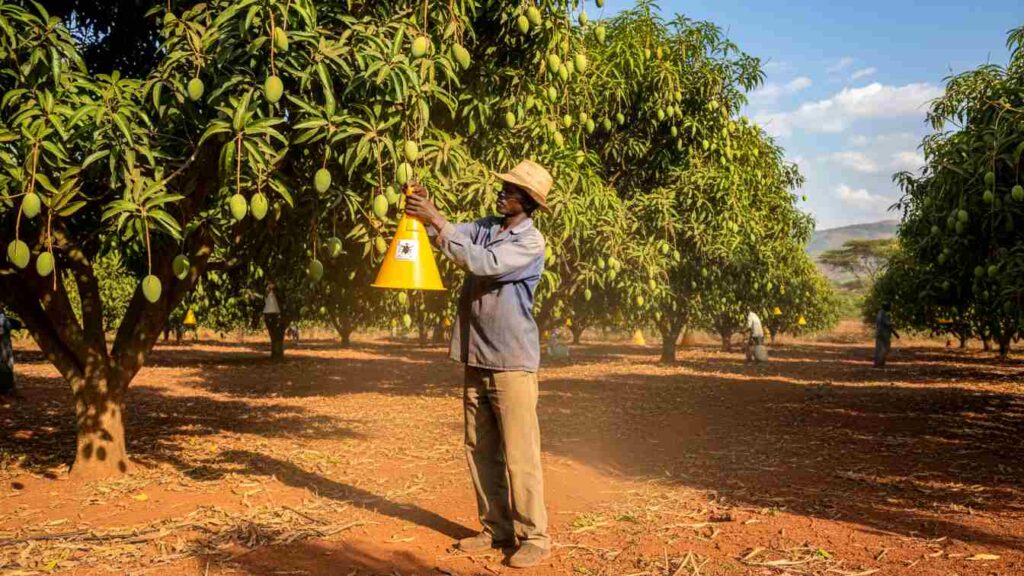
September – October: Fruit Set & Pest Control Once fruits are the size of marbles, the Fruit Fly is your primary enemy. Install pheromone traps (like the ones from Real IPM or Kenya Biologics) at a rate of 4 per acre. Do not spray harsh chemicals that kill pollinators (bees) during the day. Apply Calcium and Boron foliar fertilizers to prevent fruit cracking and ensure a firm skin. Thin the fruits if the cluster is too heavy to prevent branch breakage.
November – December: Fruit Maturity & Protection Support heavy branches with wooden props to prevent snapping under the weight of the fruit. Begin scouting for buyers and negotiating prices before the harvest begins. If you have late-season varieties, your harvest might push into January, fetching better prices. Stop all chemical spraying at least 21 days before harvest (Pre-Harvest Interval) to ensure safety.
A farmer installing a yellow pheromone fruit fly trap on a mango tree branch in a sunny orchard in Eastern Kenya.
How Much Profit Can You Realistically Make Per Acre of Mangoes in 2026?
By Year 5, a well-managed acre can generate KES 400,000 to KES 600,000 gross revenue. Start-up costs are approximately KES 60,000. Break-even typically occurs in Year 3 or 4. Profitability depends heavily on spacing (High Density vs. Standard) and post-harvest management.
Module C: Deep-Dive Financials
The following analysis assumes 1 Acre of land using standard spacing of 5m x 5m, resulting in approximately 150 trees. We assume the use of grafted Apple Mango variety, selling primarily to the local fresh market.
Important Note: Mango farming is a long-term investment. Years 1 and 2 are purely expenditure with no yield. First harvest (testing) happens in Year 3. The figures below are conservative estimates based on 2026 market rates.
Item / Activity
Year 1 (Establishment)
Year 3 (First Harvest)
Year 5 (Full Maturity)
Land Prep & Holes
KES 15,000
KES 5,000 (Maintenance)
KES 5,000
Seedlings (150 @ KES 200)
KES 30,000
KES 0
KES 0
Manure & Fertilizer
KES 10,000
KES 15,000
KES 25,000
Pest Control (Fruit Fly)
KES 5,000
KES 20,000
KES 35,000
Labor (Weeding/Harvest)
KES 10,000
KES 20,000
KES 40,000
TOTAL EXPENSES
KES 70,000
KES 60,000
KES 105,000
Yield (Fruits per Tree)
0
50
300
Total Fruits (150 trees)
0
7,500
45,000
Avg Price (Farm Gate)
0
KES 10
KES 12
GROSS REVENUE
KES 0
KES 75,000
KES 540,000
NET PROFIT
(KES -70,000)
KES 15,000
KES 435,000
Break-Even Analysis You will run at a loss for the first two years, which acts as the barrier to entry for impatient investors. In Year 3, the harvest is usually light (“scouting fruits”), barely covering your operational costs. The “hockey stick” growth happens between Year 4 and Year 5. Once the tree canopy fully forms, your maintenance costs stabilize while yields skyrocket.
High-Density Planting Option Advanced farmers in 2026 are moving to 3m x 3m spacing (400 trees per acre). This requires rigorous pruning to keep trees small. While this doubles establishment costs to over KES 120,000, it can potentially double revenue in the early years (Years 3-6) before canopy management becomes difficult. This method is recommended only if you have irrigation and technical expertise.
What Common Diseases and Pests Threaten Mango Yields?
The Mango Fruit Fly and Mango Seed Weevil are the primary pests, while Anthracnose and Powdery Mildew are the leading diseases. Integrated Pest Management (IPM), using traps and hygiene rather than just chemicals, is the only sustainable control method in 2026.
Module D: Pest and Disease Management
1. The Mango Fruit Fly (Bactrocera invadens) This pest causes rotting fruits and rejection in export markets. The female lays eggs under the skin of ripening fruit, and the maggots eat the flesh. Control is achieved by using Bactrolure or similar pheromone traps to kill males. Field sanitation—burying fallen fruit—is mandatory to break the breeding cycle.
2. Mango Seed Weevil This pest burrows into the seed, often leaving the fruit looking healthy on the outside but rotting from the core. It is notoriously difficult to control with sprays. The best defense is orchard hygiene and painting the tree trunk with sticky barriers to prevent weevils from climbing up.
3. Anthracnose This fungal disease causes black spots on leaves, flowers, and fruits, leading to fruit drop and rotting. It thrives in wet, humid conditions. Regular pruning to improve airflow and preventative sprays with copper-based fungicides during the wet season are essential. Post-harvest, a hot water dip can sanitize the fruit skin.
4. Powdery Mildew This white, powdery fungus attacks the flowers, causing them to dry up and fall off, resulting in total crop failure. It is common during cool, cloudy weather at flowering time. Sulfur-based sprays are effective, but timing is key—spray at the first sign of the white dust.
How Can Farmers Minimize Post-Harvest Losses and Maximize Export Value?
Post-harvest loss claims 40% of Kenyan mangoes. Minimize this by harvesting before 10 AM, using crates instead of sacks, and employing cold water treatment to remove field heat. For value addition, solar drying into mango chips is the most accessible high-margin entry point for small-scale farmers.
Module E: Supply Chain & Value Addition
The money in mango farming is not just in growing, but in how you handle the fruit after it leaves the tree. The 2026 market is unforgiving of damaged fruit, and consumers demand longer shelf life.
1. The Export Standard (Global GAP) To export to the EU or UK, you must meet strict Maximum Residue Levels (MRLs). This means you cannot simply spray chemicals whenever you see a bug; you must use Integrated Pest Management (IPM). Companies like Kenchic (often involved in broader agri-logistics) or specialized exporters will require Global GAP certification. If you have less than 5 acres, form a cooperative to afford this certification and share the auditing costs.
2. Value Addition: Dried Mangoes If you cannot sell your fresh fruit, do not let it rot. A simple solar dryer costs about KES 15,000 to build using greenhouse plastic and timber. 10kg of fresh mango produces about 1kg of dried mango chips (leather). While fresh mangoes sell for KES 15/kg during a glut, dried mango sells for KES 800 – 1,200 per kg in supermarkets in Nairobi. This shelf-stable product can be sold year-round.
3. Logistics and Handling Never transport mangoes in mesh bags (gunia). This causes pressure points that rot immediately. Use well-ventilated plastic crates that stack without crushing the fruit. If you are selling to a high-end grocer like Carrefour or Naivas, the fruit must be blemish-free and uniform in size. M-Pesa is the standard for payment; ensure you have a separate till number for your farm to track income distinct from personal funds.
4. Hot Water Treatment For export, fruit is often subjected to Hot Water Treatment (HWT). This involves dipping the mangoes in water at 46°C to 48°C for about 60 minutes. This process kills fruit fly eggs and fungal spores without cooking the fruit. While expensive to set up individually, many cooperatives in Makueni now offer this service to members.
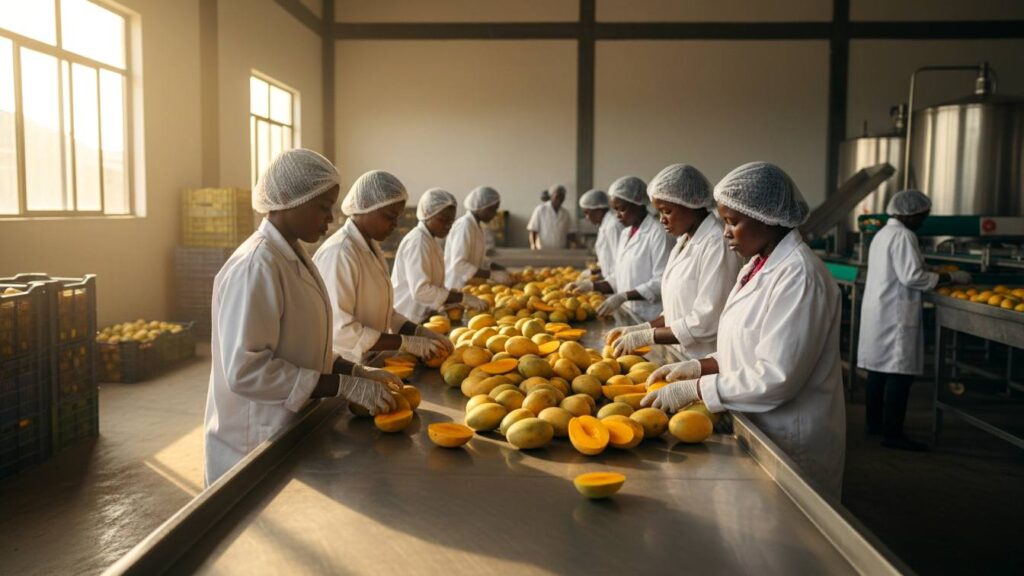
Women in white coats sorting yellow Ngowe mangoes on a stainless steel table in a processing facility in Kenya.
2026 Outlook: Is Mango Farming Still Profitable?
As we navigate 2026, the mango sector in Kenya is maturing. The days of simply planting a tree and waiting for money are over. The new era belongs to the “Smart Farmer” who leverages technology and market intelligence.
Climate change is causing erratic rainfall, meaning investment in drip irrigation is no longer optional, it is mandatory for consistent yields. Farmers relying on rain-fed agriculture will find themselves with biennial bearing (fruiting only every two years). Furthermore, the ban on certain chemical pesticides by the EU means organic and biological controls are the only path forward for exporters.
Your Action Plan: Start with comprehensive soil testing from CropNutsor KALRO to understand your baseline. Secure high-quality grafted seedlings—never grow from seeds as the results are unpredictable. Focus on the Apple Mango for local cash flow and Kent if you have confirmed export links. If you treat your mango farming as a business, minimizing waste and maximizing quality, the returns in 2026 are undeniable.
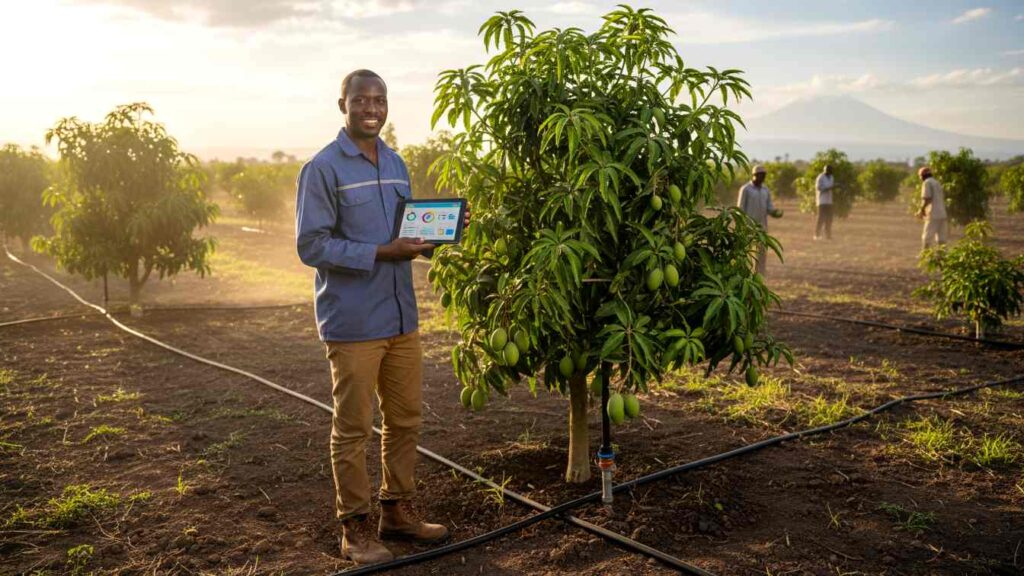
A modern Kenyan farmer holding a tablet showing crop data
Frequently Asked Questions (FAQ) Farmers Also Ask
Is mango farming profitable in Kenya?
Yes, mango farming can be very profitable in Kenya if you choose the right varieties, manage pests and target good markets. Well managed orchards commonly earn about Ksh 300,000 to 800,000 per acre per season, depending on yield and price.
How many years does it take a mango tree to bear fruit?
A mango grown from seed usually takes about 4 to 7 years before it starts giving fruit. A grafted mango tree is much faster and can start bearing a few fruits from the second to third year in the field under good care.
What is the spacing for mango trees in Kenya?
For most standard mango varieties in Kenya, common spacing is about 8 meters by 8 meters, which gives roughly 63 trees per acre. Some farmers use closer spacing like 5 by 5 meters with smaller or pruned trees to fit up to about 160 trees per acre.
Can 7 months have mango?
Yes, it is possible to find mangoes in the seventh month (July) in Kenya, although it depends on the region. Coastal and some irrigated or off season areas can still have fruit, and because different regions peak at different times, traders are often able to source fresh mango almost all year.
How long does a grafted mango tree take to bear fruit?
A grafted mango tree will start producing sample fruits in 2.5 to 3 years. However, significant commercial harvest begins in Year 4, with peak production reached between Year 7 and Year 10.
What is the best fertilizer for sweet mangoes?
To increase sweetness, you need Potassium. Use Muriate of Potash (MOP) or specific foliar boosters rich in Potassium and Boron during the fruiting stage. Avoid excessive Nitrogen during fruiting, as it makes the fruit watery and less sweet.
Can I grow mangoes in cold areas like Limuru or Kericho?
No. Mangoes require hot, dry weather to thrive. High-altitude, cold areas will result in stunted trees that may grow leaves but will never flower or produce fruit. Focus on low-altitude zones (0–1600m ASL).
What is the price of a grafted mango seedling in Kenya?
Certified grafted seedlings cost between KES 150 and KES 300 depending on the variety and the nursery. Buying from certified bodies like KALRO or Kefri ensures you get disease-free plant material.
Is drip irrigation necessary for mango farming?
While mangoes are drought-tolerant, drip irrigation is the secret to off-season fruiting. By controlling water application, you can induce flowering when competitors are dry, allowing you to harvest when market prices are highest.
Which mango variety is best for export from Kenya?
Kent and Keitt are the preferred export varieties for the European market because they have no fiber, longer shelf life, and do not change color rapidly, allowing for sea freight. Apple Mango is primarily for the domestic and regional market.
Where can I sell my mangoes in Kenya?
Beyond local markets (Marikiti, Wakulima), you can sell to processors like Kevian Kenya or Sunny Mango. For export, contact aggregators like Keitt Exporters. In 2026, digital platforms like Twiga Foods are also major buyers for fresh produce.
The Kenyan agricultural sector has undergone a massive transformation over the last five years. Gone are the days when farming was a retirement plan or a last resort. In 2026, you are entering an era of precision agriculture and high-value export markets. The farmers making millions today are not just working hard; they are working with data.
As a beginner, you face significant challenges: fluctuating weather patterns, expensive inputs like DAP and CAN fertilizer, and volatile market prices. However, the opportunities currently outweigh the risks if you choose the right venture. The demand for organic food in Nairobi and the opening of new export corridors to China and the Middle East for fresh produce have created a goldmine for those ready to professionalize their operations.
This guide is not theoretical. It is built on current market rates in Kenya Shillings (KES), recognized varieties from the Kenya Agricultural and Livestock Research Organization (KALRO), and proven agronomic practices. To succeed, you must treat your farm as a business. You need to calculate your cost of production per unit, understand your break-even point, and secure a market before you plant a single seed.
Below are the 10 most profitable farming ventures you can start this year, ranked by their potential for high Returns on Investment (ROI) and scalability.
1. Hass Avocado Farming: The Export Green Gold
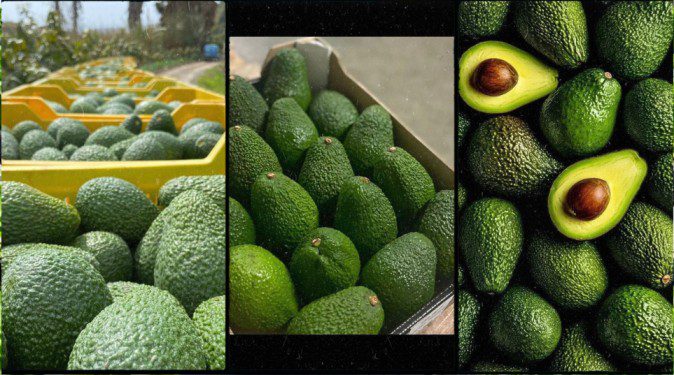
Despite the market maturing,Hass Avocadoremains the undisputed king of high-value tree crops in Kenya. In 2026, the focus has shifted from merely planting trees to producing export-quality fruit that meets strict phytosanitary standards. China and Europe are hungry for Kenyan avocados, but they demand quality.
Why It Is Profitable
Once your trees reach maturity (year 3 to 4), the maintenance costs drop significantly while yields increase. A single mature tree can produce 500 to 1,000 fruits per year. With export prices averaging KES 10 to KES 20 per fruit depending on the season and size, the math is compelling.
Operational Costs and ROI
Initial Setup (Per Acre): You will need approximately 150 seedlings at a spacing of 5m by 5m. Certified seedlings from KALRO or certified nurseries cost about KES 350 each. Total establishment cost, including hole preparation, manure, and labor, is roughly KES 100,000.
Returns: By year 4, one acre can generate between KES 500,000 and KES 1,000,000 annually. The trees remain productive for over 20 years, making this a generational investment.
Key Success Factors
You must invest in irrigation. Relying on rain is a recipe for small, unmarketable fruit. You also need to adhere to strict pest management to avoid fruit flies and False Codling Moth, which are quarantine pests that can get your export license revoked.
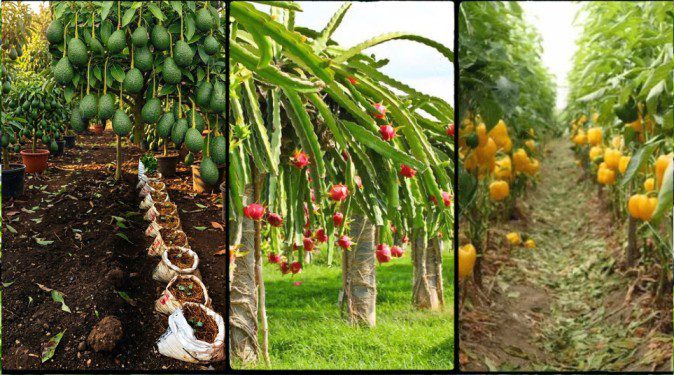
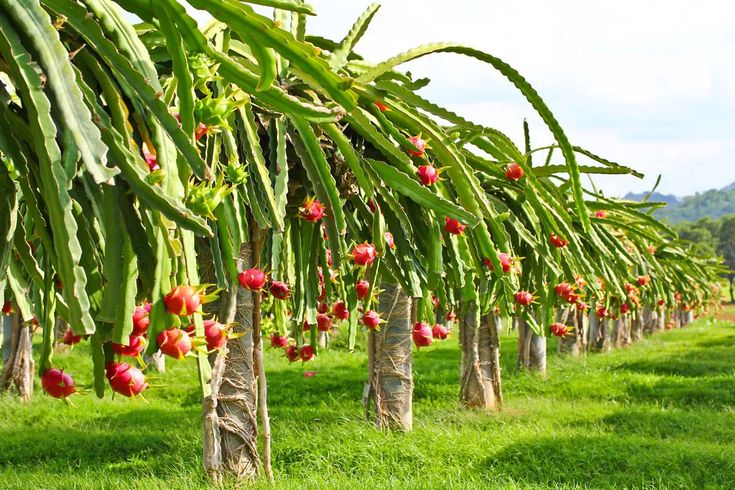
2. Dragon Fruit Farming: The New High-Value Frontier
Dragon Fruit Farming
Dragon fruit is where Hass Avocado was ten years ago. It is currently the most expensive fruit per kilogram in the local market. Because it is a cactus, it is incredibly resilient to drought, making it perfect for semi-arid areas like Ukambani, Isinya, and parts of Naivasha.
Market Dynamics
In 2026, the local supply is still lower than demand. Supermarkets and high-end grocers in Nairobi sell Dragon Fruit for between KES 800 and KES 1,200 per kilogram. Even at a wholesale farm-gate price of KES 500 per kg, the margins are astronomical.
Varieties and Planting
You should focus on the sweet varieties: Red flesh (Costa Rican) and Yellow skin varieties. You will need concrete posts and old motorcycle tires for support, as the plant is a climber. An acre takes about 1,000 posts with 2 vines per post.
Financial Breakdown
Startup Cost: High. Posts, irrigation, and cuttings can cost up to KES 500,000 per acre. Revenue: A mature acre can produce 10 tonnes. At a conservative KES 400 per kg, that is KES 4 million in gross revenue. It is labor-intensive during pollination and harvesting but offers the highest ROI per square meter.
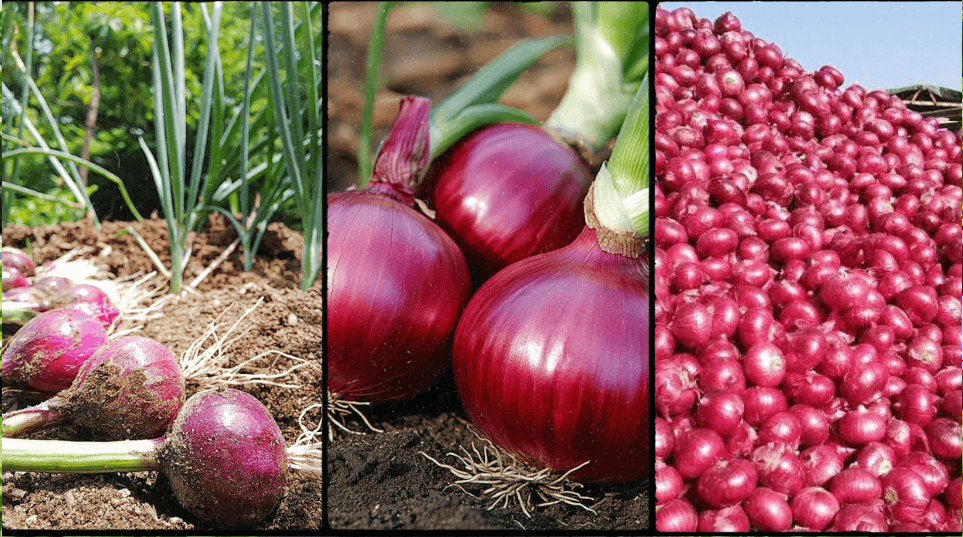
3. Bulb Onion Farming: The Cash Flow King
For beginner farmers who cannot wait three years for a tree crop to mature, bulb onions are the solution. The consumption of onions in Kenya is constant; every meal starts with an onion. However, timing is everything.
To make money with onions, you must harvest when the market is dry. Avoid harvesting in July/August when the Tanzanian onions flood the market. Plan your planting so that you harvest in January/February or May/June.
Preferred Varieties
Neptune F1, Red Creak F1, and Jambar F1 are the leaders. They have a deep red color and a long shelf life, which brokers love. These hybrid seeds are expensive but resistant to Downy Mildew and Pink Root diseases.
ROI Analysis
Cost of Production: KES 120,000 to KES 150,000 per acre (inputs, labor, irrigation). Yield: A well-managed acre yields 15 to 20 tonnes. Profit: At a market price of KES 50 per kg, 15 tonnes yields KES 750,000. Net profit can exceed KES 500,000 in just 4 months.
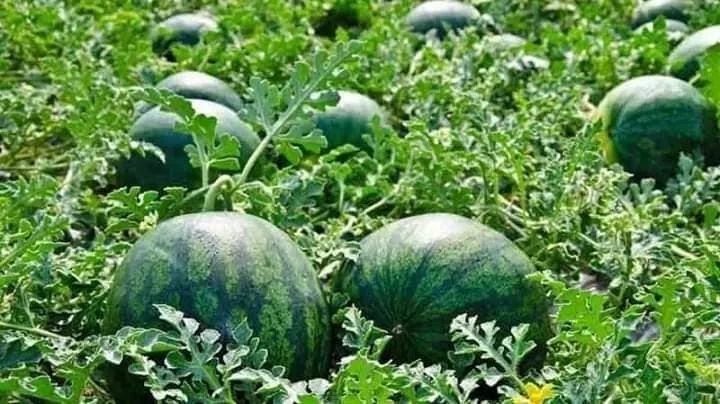
4. Watermelon Farming: High Risk, High Reward
Watermelon growing in a farm
Watermelon is often called the “lottery” of farming. It matures in 75-90 days and can turn a pauper into a millionaire, or vice versa if the crop fails. In 2026, the demand remains huge, especially in urban centers during hot seasons.
Best Varieties for 2026
Stick to Sukari F1 and Zebra F1. These varieties are known for their sweetness and transport hardiness. Brokers will often refuse to buy varieties that crack easily during transport.
Ecological Requirements
Watermelons need heat. Areas like Mwea, Pekerra, and coastal regions are ideal. You must have a steady supply of water for irrigation, but you must stop watering two weeks before harvest to increase sugar content (Brix level).
Financials
Investment: KES 80,000 to KES 100,000 per acre. Returns: Yields can hit 30-40 tonnes per acre. At KES 20 per kg farm-gate price, revenue is KES 600,000 to KES 800,000 per season.
5. Improved Kienyeji Chicken: The Accessible Entry Point
If you have limited land, poultry is your best bet. The market has shifted away from broilers due to high feed costs and low margins. The consumer preference in 2026 is heavily skewed towards “Kienyeji” (indigenous) meat and yellow-yolk eggs.
The “Improved” Advantage
KALRO Improved Kienyeji, Kuroiler, and Rainbow Rooster breeds grow faster than traditional indigenous chickens but maintain the disease resistance and meat quality consumers pay a premium for. They can scavenge for food, reducing your feed bill significantly.
Revenue Streams
You can earn from three sources: selling fertilized eggs for incubation, selling day-old chicks, or selling meat/eggs. Meat: A bird matures in 4-5 months and sells for KES 800-1,000. Eggs: A tray of Kienyeji eggs sells for KES 600-750, compared to KES 350 for exotic layers.
Cost Control
The biggest cost is feed. You must learn to formulate your own feed using local ingredients like maize germ, soya, and omena. Buying commercial feed exclusively will eat up your profits.
6. Passion Fruit Farming: Continuous Weekly Income
Passion fruit is unique because once harvest begins (around month 6-7), it continues weekly for up to 3 years. This provides excellent cash flow for paying bills and funding other farm operations.
Varieties
Purple Passion: Higher demand in fresh market and export. Requires cooler climates (Meru, Uasin Gishu, Nyeri). Yellow Passion: More disease resistant, larger, used mostly for juice processing. Does well in warmer areas.
Management
You must trellis the vines properly. The biggest threat is Woodiness Virus and Fusarium Wilt. You should source grafted seedlings where the scion is purple passion and the rootstock is yellow passion to combine sweetness with disease resistance.
Profitability
One acre can host 600-800 plants. A well-tended vine produces 15-20kg per year. That is roughly 10-15 tonnes per acre. At KES 70 per kg, you are looking at over KES 700,000 annually with weekly payouts.
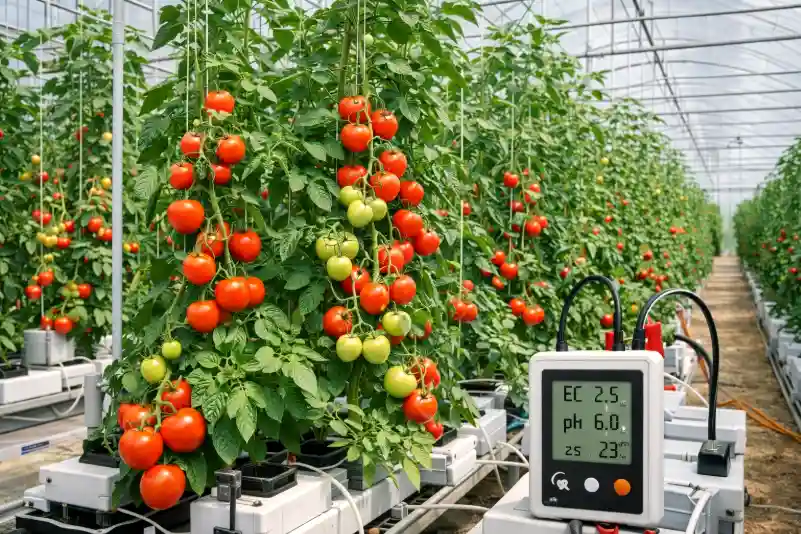
7. Greenhouse Tomato Farming: Precision for Profit
Precision tomato farming in a modern greenhouse using digital monitoring for nutrient and pH levels.
Open field tomato farming is risky due to blight and erratic rain. Greenhouse farming solves this but requires high initial capital. In 2026, the standard is the 8m by 30m greenhouse.
You control the environment. This means you can time your harvest to coincide with high market prices (April and December). You also extend the harvesting period to 6-8 months, compared to 1 month for open field.
Varieties
Indeterminate varieties like Anna F1 and Tylka F1 continue growing upwards and producing fruit as long as they are fed. They require trellising strings.
The Math
A standard greenhouse houses 1,000 plants. Each plant can yield 10-15kg over its life. That is 10 to 15 tonnes from a small space. At an average of KES 60/kg, revenue is KES 600,000 to KES 900,000 per season. However, construction costs are KES 300,000+, so ROI is realized from the second season onwards.
8. Dairy Goat Farming: Small Space, Premium Product
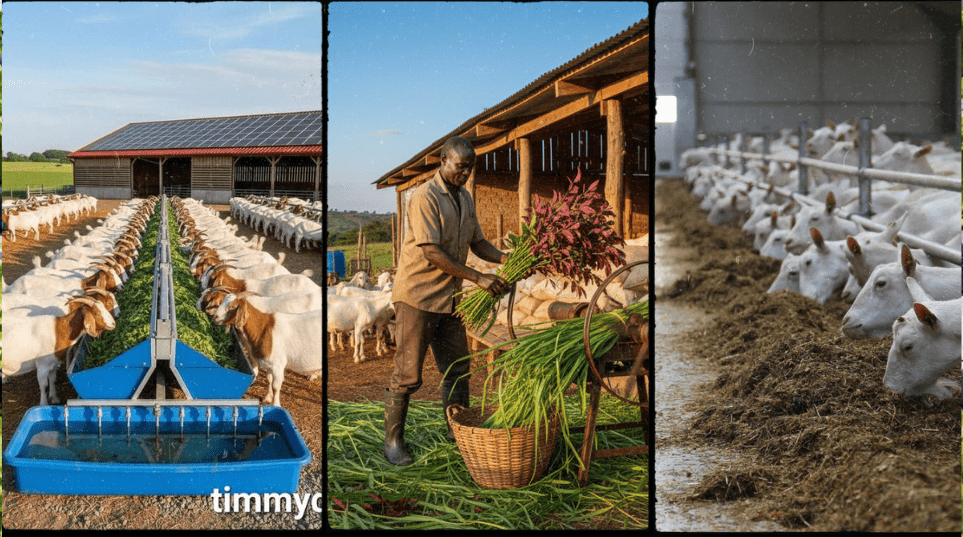
Images of Dairy goats feeding
With land sizes shrinking, dairy cows are becoming difficult to manage for smallholders. Dairy goats are the perfect alternative. Goat milk is a niche superfood, prescribed for people with lactose intolerance and immune issues.
Breeds
Alpine and Toggenburg are the best milkers in Kenyan conditions. A good doe gives 2-4 liters of milk per day.
Goat milk retails for KES 200 per liter, compared to KES 40-50 for cow milk. Feeding: Goats consume much less than cows and eat a wider variety of fodder, including shrubs. Breeding: Goats twin often. Selling weaned kids (young goats) is a massive secondary income stream. A purebred kid sells for KES 10,000 to KES 15,000.
9. Mushroom Farming: The Urban Farming Champion
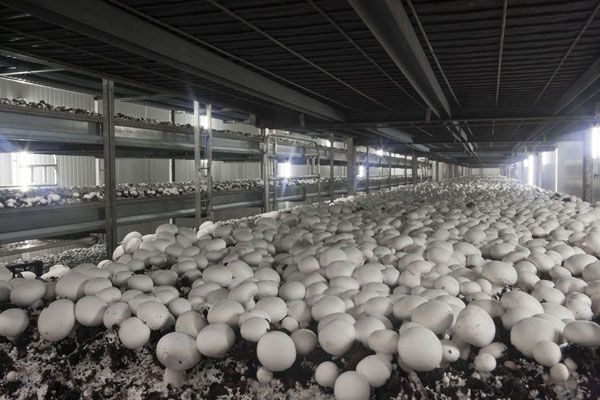
Mushroom Farming
You do not need a single acre of land for this. You can grow mushrooms in a garage, a mud house, or a specialized structure. It is the ultimate vertical farming venture.
Types to Grow
Oyster Mushrooms: Easiest for beginners. They grow on wheat straw, bean trash, or sugarcane bagasse. Harvest starts in 4 weeks. Button Mushrooms: High demand but require complex compost and casing soil. Technically demanding.
ROI
A 10ft by 10ft room can hold 400 bags. Each bag produces 2kg of mushrooms over its cycle. Total 800kg. Wholesale price is KES 400/kg. Revenue: KES 320,000. Costs are low (spawn and substrate), usually around KES 50,000.
10. Colored Capsicum Farming: The Salad Luxury
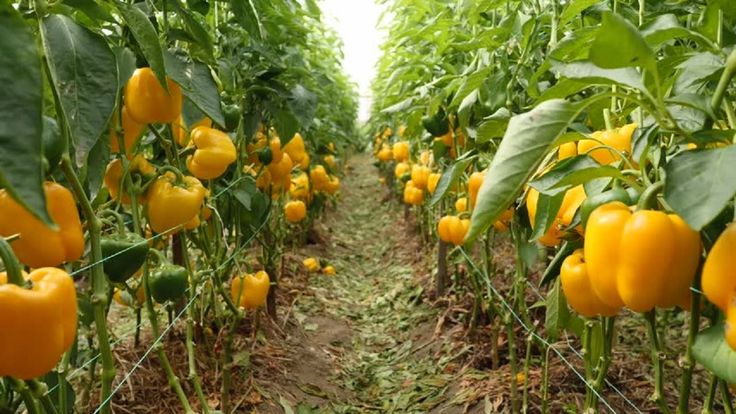
Colored Capsicum Farming
Walk into any supermarket and look at the price of Yellow and Red Capsicums. They are sold per piece or per weight at premium rates. Unlike green capsicums, the colored varieties are almost exclusively grown in greenhouses to protect them from pests and sunscald.
Demand
The hospitality industry (hotels, burger joints, pizza places) and the growing middle class drive demand. The price is stable, rarely dropping below KES 100 per kg.
Similar to tomatoes, indeterminate varieties yield for months. A well-managed greenhouse crop yields 5-8kg per plant. With 1,000 plants, that is 5-8 tonnes. At KES 120/kg average, the returns are solid.
Step-by-Step: How to Analyze ROI Before Planting
Most farmers fail because they plant first and calculate later. Follow this strict process to ensure profitability.
Phase 1: Market Research
Visit the wholesale markets (Marikiti, Wakulima) at 4:00 AM. Observe what is moving fast and what is rotting. Talk to the brokers. Ask them what will be in demand in 3 months.
Phase 2: Soil Testing
Never skip this. Take soil samples to KALRO or CropNuts. It costs roughly KES 2,500. It will save you thousands in wasted fertilizer. If your soil pH is acidic, your expensive DAP fertilizer will be locked up and unavailable to the plants.
Phase 3: Budgeting
Create a budget that includes a 20% contingency fund. Factor in labor, water pumping costs, and post-harvest transport. If the paper math doesn’t show at least a 40% profit margin, do not plant.
Comparative ROI Analysis Table (2026 Estimates)
The table below provides a quick comparison to help you choose the right venture for your capital and timeline.
Venture
Time to First Harvest
Est. Startup Cost (1 Acre/Unit)
Est. Net Profit (Per Season/Year)
Risk Level
Hass Avocado
3 Years
KES 100,000
KES 500,000+ (Year 5)
Low
Bulb Onions
3-4 Months
KES 150,000
KES 400,000
Medium
Watermelon
3 Months
KES 100,000
KES 600,000
High
Dragon Fruit
12-18 Months
KES 500,000
KES 2,000,000+
Medium
Mushrooms (Small scale)
2 Months
KES 50,000
KES 150,000+
Medium
Dairy Goats (5 Does)
Immediate (if lactating)
KES 100,000
KES 300,000 (Yearly)
Low
Conclusion: Take Action Today
The 2026 farming season is full of promise, but it rewards only the prepared. You now have the data, the costs, and the varieties. Do not let “analysis paralysis” stop you. Start small if you must, but start with high standards.
Your Next Step: Choose oneventure from this list that matches your climate and budget. Call a soil testing service tomorrow. Your journey to agricultural wealth begins with that single phone call. Plant with precision, harvest with pride.
People Also Ask (FAQ)
Which farming is most profitable in Kenya for beginners?
For absolute beginners, Bulb Onions or Improved Kienyeji Chicken are the safest bets. Onions have a clear market and are non-perishable for a few weeks, allowing you to find a buyer. Chickens require low capital and can be scaled up as you gain experience.
How much money do I need to start farming in Kenya?
You can start with as little as KES 20,000 for a small sack-farming vegetable project or indigenous chicken setup. However, for a commercial one-acre venture like watermelons or onions, you need a minimum operating capital of KES 100,000 to KES 150,000 to cover inputs and labor.
What is the most expensive crop to grow in Kenya?
Greenhouse crops (Tomatoes/Capsicum) and Dragon Fruit have the highest startup costs. A standard greenhouse costs over KES 300,000 to construct properly, and Dragon Fruit requires expensive posts and irrigation infrastructure. However, they also offer the highest returns per square meter.
Is farming tax-free in Kenya?
Generally, raw agricultural produce sold by farmers is exempt from VAT. However, if you process your goods (e.g., making yoghurt from milk or packing juices), you may become liable for taxes.
Where can I buy certified seeds in Kenya?
You shou purchase seeds from KALRO centers or certified stockists like Kenya Seed Company, Simlaw Seeds, or Amiran Kenya. Avoid buying seeds from open-air markets as they may be fake or have low germination rates, leading to total crop failure.
Why is Banana Farming a Profitable Venture in Kenya?
Banana farming in Kenya offers high returns due to year-round demand in major urban centers like Nairobi and Mombasa. With proper management, one acre can generate a net profit of over KES 400,000 annually starting from the second year. It serves as both a food security crop and a major income earner for smallholders.
Introduction to the Green Gold of Kenya
Banana farming has evolved from a backyard subsistence activity to a major commercial enterprise in Kenya. As we approach the 2026 farming season, the sector is projected to grow significantly due to the adoption of Tissue Culture (TC) technology and improved agronomic practices.
Farmers in regions like Meru, Kisii, Kirinyaga, Muranga, and Taita Taveta have long relied on this crop. However, new areas in Ukambani and parts of the Rift Valley are opening up due to irrigation. The banana plant is resilient, provides continuous cash flow, and contributes significantly to household food security.
The market dynamics are shifting. Kenyan consumers are demanding higher quality, blemish-free fruit. This guide provides a comprehensive roadmap for beginner farmers to navigate these changes and secure high profits.
What Are the Best Banana Varieties for Kenya in 2026?
The best varieties depend on your market goal. For ripening or dessert use, the Grand Nain, Williams, and Giant Cavendish are superior due to high yields. For cooking or matoke, Ngombe and Nusu Ngombe are preferred. Tissue Culture seedlings are highly recommended over traditional suckers to ensure disease-free planting material.
Understanding Banana Varieties
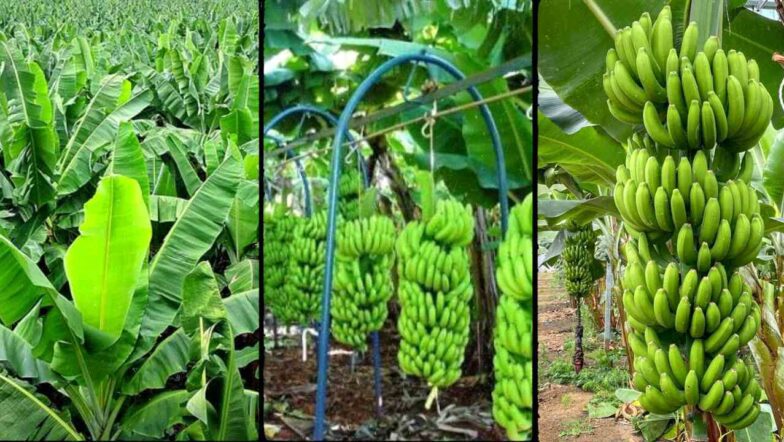
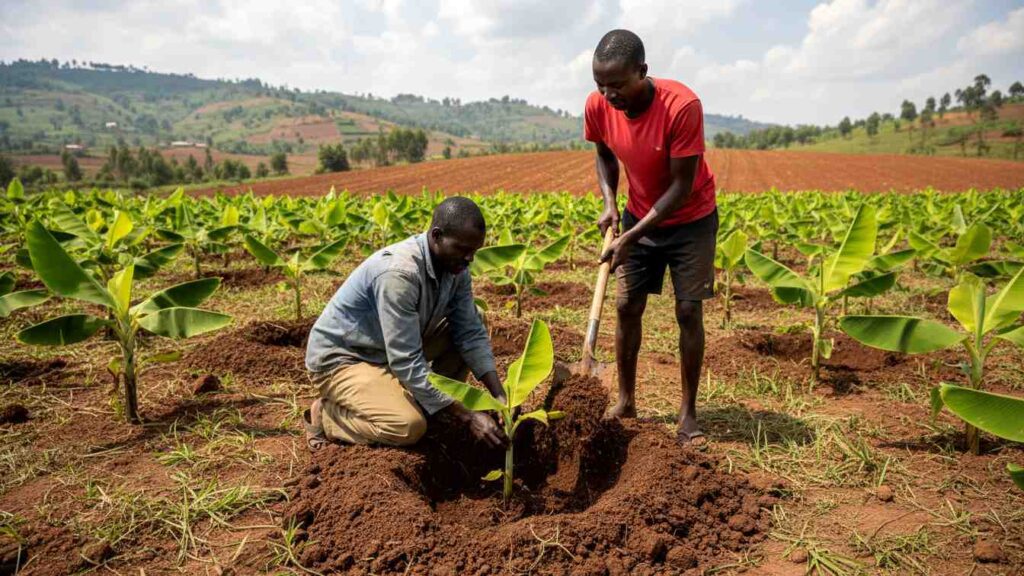
Young bananas planted
Choosing the right variety is the single most important decision a farmer makes. In Kenya, varieties are generally categorized into ripening types and cooking types.
This is a high-yielding variety that is relatively short, making it resistant to wind damage. It produces large bunches weighing between 60kg and 100kg under good management. It is popular in supermarkets and export markets.
A robust variety that grows taller than Grand Nain. It is well-adapted to various ecological zones in Kenya. The fruit is sweet and has a long shelf life, making it excellent for transport to distant markets like Nairobi.
This is the traditional market favorite. It produces very heavy bunches but requires propping to prevent toppling. It thrives in areas with consistent rainfall and fertile soils.
This variety is smaller and sweeter. It fetches a premium price in local markets but yields are generally lower than the Cavendish types.
Top Cooking Varieties
Ngombe:
This is the most popular cooking banana in Kenya. It produces massive bunches and is highly resistant to drought compared to other varieties. It is a staple in Western and Nyanza regions.
Nusu Ngombe:
Similar to Ngombe but slightly smaller. It matures faster and is preferred by farmers who want a quicker turnover.
Fhia 17:
This is a dual-purpose hybrid developed to resist pests and diseases. It can be cooked when green or eaten ripe. It is gaining popularity due to its resistance to Black Sigatoka disease.
Always source your seedlings from certified nurseries or JKUAT approved labs to avoid introducing diseases like Fusarium Wilt into your farm.
Selecting the right variety, such as this Grand Nain, is crucial for maximizing yield per acre.
What Are the Ecological Requirements for Bananas?
Bananas thrive in warm climates with temperatures between 20 degrees Celsius and 30 degrees Celsius. They require deep, well-drained loam soil with a pH of 5.5 to 6.5. Rainfall should be well-distributed, ranging from 1,000mm to 2,500mm annually. Irrigation is mandatory for commercial farming in semi-arid areas.
Climate and Soil Conditions
Bananas are tropical plants that require specific conditions to reach their full potential. Understanding your local climate is the first step toward a successful harvest.
Altitude plays a key role. Bananas perform best from sea level up to 1,800 meters above sea level. Above this altitude, the growth cycle extends, meaning it takes longer for the crop to mature. For example, a banana in Kisii takes longer to mature than one in Kilifi, but the highland crop often has better sugar content.
Soil depth is critical. Banana roots are relatively shallow but require loose structure to anchor the heavy plant. Avoid areas with waterlogging. If your soil retains too much water, the roots will rot. Farmers in heavy clay areas must amend their soil with organic manure and sand before planting.
Wind is a major enemy of banana farming. Strong winds can shred leaves, reducing photosynthesis, or topple the entire plant. If your land is in a windy area, plant windbreakers like Grevillea robusta on the perimeter before establishing the orchard.
How Do You Prepare Land and Plant Bananas?
Plough the land deeply and harrow to a fine tilth. Dig holes measuring 60cm by 60cm by 60cm. Space the holes 3 meters by 3 meters. Mix the topsoil with 20kg of well-decomposed manure and 200g of DAP fertilizer. Plant the seedling deep enough to cover the root ball but do not bury it completely.
The Planting Process
Proper land preparation sets the foundation for the next 10 years of production. A banana stool can remain productive for a decade, so cutting corners at this stage is a costly mistake.
Step-by-Step Planting Guide
Clear the vegetation and remove all stumps. Plowing should be done during the dry season to expose soil pests to the sun.
Mark out the field. The recommended spacing is 3m x 3m (9 feet x 9 feet). This population allows for about 450 stools per acre. In dry areas under irrigation, you can reduce spacing to 3m x 2m to create a microclimate, but this requires higher fertilizer input.
Dig the holes. Separate the topsoil (first 15cm) from the subsoil. The holes should be large (60x60x60cm) to allow root expansion.
Prepare the planting mix. Mix the topsoil with 2 debes (approximately 40kg) of well-rotted farmyard manure. Add 200g of DAP or TSP fertilizer to aid root development. Also, add a nematicide if the area has a history of nematodes.
Plant the seedling. If using Tissue Culture, remove the plastic bag carefully without disturbing the roots. Place the plant in the center of the hole. Fill with the soil-manure mix.
Water immediately. Use at least 20 liters of water per hole to settle the soil and eliminate air pockets.
Plant at the onset of the long rains if you rely on rain-fed agriculture. This gives the plant 3 to 4 months of moisture to establish a strong root system.
African farmers planting a tissue culture banana seedling in a prepared hole with manure.
How Should You Manage Your Banana Orchard?
Essential management practices include weeding, mulching, watering, and desuckering. Maintain a ratio of 3 plants per stool: the mother, the daughter, and the granddaughter. Apply CAN fertilizer during the rainy season and add manure annually. Propping is necessary to support heavy bunches.
Cultural Practices for High Yields
Management is where the profit is made. A neglected farm will produce small bunches that fetch low prices.
Desuckering and Pruning
You must control the population of stems per stool. If you leave too many suckers, they compete for light and nutrients, resulting in small bunches. Keep the 3-Generation rule: one Mother, one Daughter, and one Granddaughter.
Remove all other suckers using a sharp knife. Cut them at ground level and gouge out the growing point to prevent regrowth.
Mulching
Mulching is non-negotiable in banana farming. Use dry grass, maize stalks, or banana leaves. Place the mulch 30cm away from the main stem. This ring prevents weevils from hiding near the base of the plant and allows new suckers to emerge without obstruction. Mulching retains soil moisture and suppresses weeds.
Fertilization
Bananas are heavy feeders. They extract massive amounts of Potassium from the soil. Start with DAP during planting. Top dress with CAN or Urea during the rainy season split into two applications. Apply Muriate of Potash or NPK 17:17:17 when the plant starts flowering to boost bunch weight. Add at least 2 debes of manure per stool every year before the rains.
Propping
Commercial varieties like Williams and Cavendish produce heavy bunches that can snap the stem. Use bamboo or eucalyptus poles to prop the bearing stems. Tie the prop securely to the plant using sisal twine or a banana fiber rope.
What Are the Major Pests and Diseases?
The most destructive disease is Panama Wilt (Fusarium), which has no chemical cure; prevention via TC seedlings is key. Black Sigatoka attacks leaves, reducing yield. Major pests include the Banana Weevil, which bores into the corm, and Nematodes, which destroy roots. Field sanitation and certified inputs are the best controls.
Agronomist inspecting banana leaves for Black Sigatoka and Panama disease symptoms.
Pest and Disease Management
A healthy farm starts with prevention. Once a disease like Panama Wilt enters your farm, it is nearly impossible to eradicate.
Common Diseases
Panama Disease (Fusarium Wilt): This is a soil-borne fungal disease. The leaves turn yellow and collapse, hanging like a skirt around the stem. There is no chemical cure. Use resistant varieties like Fhia 17 or Giant Cavendish. Quarantine infected stools and destroy them.
Black Sigatoka: A fungal disease that causes black streaks on the leaves. It reduces the photosynthetic area, leading to small bunches and premature ripening. Remove affected leaves. Use fungicides if the infection is severe. Ensure good spacing to allow air circulation.
Bacterial Wilt (Xanthomonas): The male bud dries up and fruits ripen unevenly and rot. Debud using a forked stick immediately after the bunch forms to prevent transmission by bees. Disinfect tools with bleach.
Common Pests
Banana Weevil: The adult is a black beetle. The larvae bore tunnels into the corm, weakening the plant. The plant snaps easily during wind. Trap weevils using split banana stems. Keep mulch away from the stool base. Use approved pesticides like Carbofuran.
Nematodes: Microscopic worms that attack roots. The plant looks stunted and topples over. Use clean planting material (TC). Rotate crops if possible. Apply nematicides at planting.
What Is the Cost of Production and Profit Potential?
Establishing one acre costs between KES 80,000 and KES 120,000, covering land prep, 450 TC seedlings, manure, and labor. From year two, maintenance costs drop to KES 40,000. With 450 stools producing 1.5 bunches annually at KES 500 to KES 800 per bunch, gross revenue can exceed KES 450,000 per acre.
Financial Breakdown
Farming is a business. Here is a realistic budget for a one-acre banana enterprise in Kenya using Tissue Culture technology.
Initial Capital (Year 1)
Land Preparation costs about KES 15,000 for ploughing and furrows. Hole digging labor costs approximately KES 10,000. 450 TC seedlings at KES 120 each will cost KES 54,000. Budget KES 20,000 for 4 tonnes of manure and KES 10,000 for fertilizer. Labor for weeding and watering will cost around KES 20,000. The total Year 1 investment is approximately KES 129,000.
Revenue Projections (Year 2 onwards)
Bananas take 12 to 15 months to produce the first harvest. A well-managed acre has 450 stools. Each stool produces roughly 1.5 bunches per year. This results in about 675 bunches per year.
With an average farm gate price of KES 600 per bunch, gross revenue hits KES 405,000. Recurrent expenditure for fertilizer, manure, and labor drops to about KES 50,000 per year. The net profit is approximately KES 355,000 per acre annually.
To maximize profit, time your harvest for the dry season when prices peak. This requires irrigation planning. Also, consider value addition like banana flour or crisps to reduce post-harvest losses.
The biggest markets are wholesale hubs like Wakulima Market in Nairobi, Kongowea in Mombasa, and Kibuye in Kisumu. Supermarkets like Naivas and Carrefour require contract farming with consistent quality. Local institutions like schools and hospitals are excellent for consistent bulk orders of cooking bananas.
Harvesting and Post-Harvest Handling
Harvesting is done when the fingers are plump and the ridges have disappeared. Do not wait for them to ripen on the tree if you are transporting them, as they will bruise.
Cut the bunch with a curved knife, leaving about 30cm of the stalk to handle it. Carry bunches on padded trays or cushions to prevent bruising. Store in a cool, shaded area. For ripening, use safe methods like temperature control or avocado and passion fruit mixing. Avoid calcium carbide as it is illegal and hazardous to health.
Harvested bananas
Key Success Factors Recap
Start with clean Tissue Culture seedlings. Dig large holes and use plenty of manure. Manage suckers strictly using the Mother Daughter Granddaughter rule. Water consistently during dry spells. Handle the fruit carefully during harvest to maintain market value.
Where to Sell Your Banana Harvest
Kenyan farmers have several lucrative options for selling their produce. Large wholesale markets like Wakulima in Nairobi, Kongowea in Mombasa, and Kibuye in Kisumu are the best places to move high volumes of fruit quickly. These markets are essential for both ripening varieties and cooking bananas.
Supermarket chains such as Naivas and Carrefour offer premium prices but require consistent quality and a reliable supply schedule. Farmers can enter into contract farming agreements with these retailers to ensure a stable market. Local schools, hospitals, and hotels also provide a steady demand for bulk orders of matoke and dessert bananas.
Selling directly to retailers in residential estates or at roadside stalls can increase your profit margins by cutting out middlemen. For those looking to maximize their earnings, value addition is a great path. Processing bananas into flour, crisps, or jam allows you to reach specialized customers and reduces losses from overripe fruit.
Conclusion
Banana farming in Kenya is a highly profitable venture that offers long term financial security for dedicated farmers. By transitioning to tissue culture technology and following modern agronomic practices, you can achieve yields that far exceed traditional methods. The key to success lies in choosing the right variety for your climate and maintaining a disciplined management routine.
As we look toward the remainder of the 2026 season, the demand for high quality, locally grown bananas continues to rise. This guide provides the essential steps to navigate the industry and build a thriving commercial enterprise. With careful planning and consistent care, your banana farm will become a reliable source of income for your family and community.
Frequently Asked Questions
How long does a tissue culture banana take to mature?
Tissue culture bananas typically mature faster than sucker-planted bananas. They usually start flowering at 9 to 10 months and are ready for harvest by 12 to 14 months, depending on the altitude and temperature.
What is the difference between Tissue Culture and Suckers?
Tissue Culture (TC) plants are produced in a lab and are 100% disease-free, uniform in growth, and high-yielding. Suckers are uprooted from existing farms and carry a high risk of transmitting diseases like Fusarium Wilt and weevils to the new farm.
Can I intercrop bananas with other crops?
Yes, during the early stages (first 6 months), you can intercrop with beans, cowpeas, or vegetables. Avoid deep-rooted crops like maize or sweet potatoes as they compete for nutrients. Once the canopy closes, intercropping becomes difficult due to shade.
How many banana plants fit in one acre?
With the standard spacing of 3 meters by 3 meters (9ft x 9ft), an acre accommodates approximately 450 stools. If using a high-density spacing of 2.5 meters by 2.5 meters, you can fit roughly 640 plants, but this requires intensive fertilization.
Why are my banana fingers small?
Small fingers are usually caused by three factors: lack of water during the bunch formation stage, poor fertilization (lack of Potassium), or leaving too many suckers on the stool (overcrowding).
Pixie orange farming has firmly established itself as the millionaire’s playground in Kenya’s agribusiness sector for the 2026 season. Unlike traditional maize or bean farming, which often leaves farmers at the mercy of fluctuating prices and unpredictable weather patterns, pixie oranges have maintained a premium market value due to their high sugar content, seedless nature, and significantly longer shelf life. This guide cuts through the noise to provide you with a verified, master-level roadmap for establishing a profitable orchard this year, ensuring that every shilling invested yields maximum returns.
The 2026 agricultural calendar has seen a distinct shift in profitability metrics, with pixie oranges now outperforming standard citrus varieties like Washington Navel or Valencia, particularly in semi-arid regions. With farm-gate prices currently stabilizing between KES 70 and KES 100 per kilogram in production hubs like Makueni and Machakos, and retail prices hitting upwards of KES 150 to KES 200 per kilogram in high-end Nairobi supermarkets and grocery chains, the potential for high returns is undeniable. However, success depends entirely on using the correct KALRO-recommended protocols, certified planting materials, and a disciplined management schedule.
This comprehensive text serves as the ultimate manual for the serious investor. We will explore every nuance of the trade, from soil chemistry to export protocols, ensuring that your venture into pixie orange farming is not just a gamble, but a calculated business decision.
Lush Pixie Orange orchard in Makueni Kenya with a farmer inspecting ripe fruits during the 2026 harvest season.
THE ECONOMIC LANDSCAPE OF CITRUS FARMING IN 2026
The agricultural sector in Kenya has undergone significant transformation over the last five years. By 2026, the focus has shifted heavily towards high-value horticultural crops that offer resilience against climate change. The pixie orange, a natural mutant of the Valencia orange, has emerged as a frontrunner because it thrives in the very conditions that cause other crops to fail.
Market trends in 2026 indicate a growing middle class in Kenya with a refined palate, preferring the sweet, easy-to-peel pixie over larger, more acidic citrus varieties. Furthermore, the juice processing industry has begun to aggressively source pixies for premium juice blends, creating a secondary market for Grade 2 fruits that do not meet the aesthetic standards for the table market. This dual-market capability ensures that wastage is minimized, and farmers can monetize nearly 95 percent of their total harvest.
Comparative analysis with other popular fruits reveals why the pixie is superior for semi-arid zones. Unlike avocados, which require immense amounts of water and are susceptible to frost in highland areas, or macadamia nuts which have seen volatile global price shifts, the pixie orange local market remains under-supplied. The demand consistently outstrips supply from May to September, creating a seller’s market that savvy farmers are leveraging for maximum profit.
ECOLOGICAL REQUIREMENTS AND LAND PREPARATION FOR 2026
Pixie oranges are incredibly resilient, but they are not magic; they require specific environmental conditions to thrive and produce commercial tonnage. The 2026 climate outlook suggests that semi-arid lands remain the gold standard for this crop.
Target Regions and Micro-Climates
The crop performs best in arid and semi-arid lands (ASALs). The ideal altitude ranges between 500 meters and 1500 meters above sea level. Areas like Makueni (Wote, Kibwezi), Kitui, Machakos (Yatta), coastal regions like Voi and Taveta, and parts of Nyeri (Kieni) and Murang’a (lower zones) are ecologically perfect. The temperatures in these regions, often ranging between 25 degrees Celsius and 35 degrees Celsius, facilitate the accumulation of sugars in the fruit, giving the Kenyan pixie its distinct sweetness compared to those grown in cooler climates.
Soil Analysis and pH Balancing
Soil preparation is the most critical pre-planting activity. Pixie oranges require deep, well-drained sandy loamy soils. The trees hate “wet feet,” meaning that waterlogging is a death sentence, leading to root rot and collar rot. Heavy clay soils or “black cotton” soils are generally discouraged unless substantial investment is made in soil amendments and raised bed planting.
The ideal soil pH range is 6.0 to 7.5. In 2026, it is mandatory to conduct a soil test before digging a single hole. Many Kenyan soils in agricultural zones have become acidic due to years of DAP fertilizer use. If your pH is below 6.0, you must apply agricultural lime (calcium carbonate) at least three months prior to planting to neutralize the acidity. This ensures that the micronutrients required by the tree are chemically available for absorption.
Land Preparation Protocols
Land preparation must commence at least three months before the onset of the rainy season. This timeline allows the soil to aerate and for any applied manure to decompose fully.
Step 1 involves clearing the land of all bushes, shrubs, and weeds. It is vital to destump thoroughly to remove potential termite hideouts, as termites are a major threat to young citrus saplings.
Step 2 is deep ploughing. Plough deeply to loosen the soil structure, breaking any hard pans that might restrict root penetration. In 2026, we are seeing successful farmers adopting the “z-hole” technique or standard 2x2x2 feet planting holes. This size is non-negotiable; a small hole constricts the root system and stunts the tree’s lifespan, which should exceed 20 years.
Separating topsoil from subsoil during digging is a critical step often skipped by beginners. When digging your 2 feet by 2 feet hole, pile the dark, nutrient-rich topsoil on one side and the lighter, clay-heavy subsoil on the other. You will later mix the topsoil with well-decomposed manure and return it to the hole first. This ensures the young feeder roots have immediate access to nutrients.
Critical Error Note
Never use fresh manure. It generates intense heat as it decomposes, which will burn the tender roots of your expensive seedlings, causing them to wither within weeks. Always use manure that has been cured for at least six months.
Dimensions for digging a pixie orange planting hole in Kenya, separating topsoil and subsoil for optimal growth.
CERTIFIED SEEDLINGS AND VARIETIES: WHAT TO BUY IN 2026
The market is flooded with counterfeit seedlings that will either never fruit, take ten years to fruit, or produce sour lemons. For the 2026 season, you must insist on the “California Pixie” variety grafted onto specific rootstocks. The success of your farm is determined at the nursery level.
Understanding Rootstocks
A grafted tree consists of two parts: the scion (the top part that produces the fruit) and the rootstock (the bottom part that interacts with the soil). For Kenya’s semi-arid conditions, the following rootstocks are recommended:
Rough Lemon: This is the most popular rootstock for areas like Ukambani and the Coast. It induces a deep taproot system that scavenges for water, making the tree drought-tolerant. It also promotes vigorous growth and high yields.
Carrizo Citrange: This rootstock offers better resistance to nematodes and Phytophthora root rot. It is ideal for areas where the soil has been previously cultivated or where disease pressure is known to be higher.
Cleopatra Mandarin: Excellent for saline soils. If your borehole water is slightly salty, this is the rootstock you must request.
Identifying Quality Seedlings
The current 2026 price for a certified, grafted pixie orange seedling ranges from KES 250 to KES 350 depending on the nursery’s reputation and the seedling’s age. Avoid roadside sellers offering seedlings at KES 100; these are often simply lemon trees or poorly grafted rejects.
A quality seedling should be pencil-thick at the graft union, have dark green vigorous leaves, and be approximately 1.5 to 2 feet tall. The graft union must be fully healed and free of any plastic wrapping at the time of purchase, or the wrapping should be easy to remove without damaging the bark. The plant should be in a sufficiently large potting bag to ensure the roots are not “J-rooted” (curled upwards due to lack of space).
Transportation and Hardening
When transporting seedlings, handle them with extreme care. Do not stack them horizontally in a car boot or pickup truck where the heavy soil bags can crush the stems. Transport them upright in crates. Upon arrival at your farm, do not plant them immediately. Water them and let them acclimatize to your local weather in a shaded area for at least one week. This “hardening off” process significantly reduces transplant shock and mortality rates.
Certified grafted pixie orange seedlings showing a healthy graft union and vigorous growth at a Kenyan nursery.
PLANTING PROTOCOLS AND SPACING MATRIX
Spacing is the single most debated topic, but for commercial efficiency in 2026, the recommended spacing is 4 meters by 5 meters. This matrix allows for approximately 200 trees per acre.
The Logic of Spacing
Some high-density farming advocates suggest 3 meters by 3 meters, but this often leads to canopy closure too early. Once the branches of neighboring trees touch, sunlight cannot penetrate the lower sections, leading to a “hollow” tree that only bears fruit at the very top. Furthermore, tight spacing makes it impossible to move tractors or motorized sprayers between rows after year five. The 4m x 5m matrix ensures that even when trees are mature, machinery can access the rows, and sunlight can reach all sides of the canopy to ripen the fruit uniformly.
The Planting Process
During the actual planting, mix your reserved topsoil with 20kg (one standard bucket) of well-decomposed goat or cow manure. Add 200g of DAP fertilizer (or a specialized planting fertilizer rich in phosphorus like Monoammonium Phosphate) to this mix. Phosphorus is essential for root development.
Fill the hole with this mixture until it is nearly level with the ground. Water the hole to allow the soil to settle. Create a small hollow in the center to accommodate the seedling’s root ball. Carefully slit the polythene bag with a razor blade-do not pull the seedling out by the stem as this can snap the roots. Place the root ball in the hole ensuring the soil level matches the nursery level.
The Golden Rule of Planting
The graft union must remain at least 6 inches above the soil surface. This is non-negotiable. If you bury the graft union, the scion (the pixie part) will start developing its own roots. These roots are not resistant to soil-borne diseases. Furthermore, burying the union invites collar rot, a fungal infection that rings the bark and kills the tree. Water immediately after planting with at least 20 liters per tree to eliminate air pockets in the soil.
Farmer planting pixie orange seedlings ensuring the graft union is well above the soil surface.
ORCHARD MANAGEMENT: IRRIGATION SYSTEMS
Pixie oranges are drought-tolerant but not drought-resistant during their establishment phase. For the first two years, consistency is key to survival and growth rate.
Irrigation Methods in 2026
In 2026, drip irrigation remains the most cost-effective and efficient method for commercial orchards. Basin irrigation (flooding) is wasteful and encourages weed growth, while overhead sprinklers can encourage fungal diseases on the leaves.
Install a double-line drip system for each row of trees. This ensures that water is distributed on both sides of the root zone. You will need to deliver approximately 20 liters of water per tree per week during the dry season for young trees. As the trees mature, this requirement increases to roughly 50-80 liters per week depending on evapotranspiration rates.
Water Stress Management
While water is crucial, strategic “water stress” is a technique used by expert farmers to induce flowering. By withholding water for 2-4 weeks just before the rainy season, the tree perceives a threat to its survival. When water is reintroduced (either by rain or irrigation), the tree bursts into a heavy bloom to reproduce. However, this technique should only be attempted on trees older than 3 years. Stressing young saplings will simply stunt them.
Beware of Salinity
Many boreholes in ASAL regions have high saline levels. Citrus trees are moderately sensitive to salt. If your water EC (Electrical Conductivity) is high, you must leach the soil periodically by applying excess water to push salts below the root zone. Using heavy organic mulch also helps buffer the roots against salt damage.
Drip irrigation system and proper mulching techniques for a young pixie orange tree in a semi-arid farm.
NUTRITION AND FERTILIZATION PROGRAM
Fertilizer application in 2026 has become expensive, so precision is required. The “blind application” of fertilizer is a waste of money. The following schedule is a standard baseline, but it should be adjusted based on leaf analysis.
Year 1 and 2: Vegetative Growth
The goal in the first two years is to build a strong structural frame. Nitrogen is the driver of vegetative growth.
Months 1-3: No fertilizer (allow roots to settle).
Month 4: Top dress with CAN (Calcium Ammonium Nitrate) at a rate of 100g per tree.
Month 8: Top dress with CAN (150g per tree) + NPK 17:17:17 (100g per tree).
Month 12: Apply 10kg of well-rotted manure per tree.
Year 3 Onwards: Production Phase
Once the tree starts bearing fruit, the focus shifts to Potassium and Phosphorus for fruit development and sweetening.
Onset of Rains: Apply NPK 17:17:17 (300g per tree) + Manure (20kg).
Flowering Stage: Foliar sprays rich in Boron and Zinc are critical. Boron helps in pollen tube growth, ensuring fruit set. Zinc deficiency leads to small, mottled leaves and small fruit.
Fruit Expansion Stage: Apply a Potassium-rich fertilizer (like Multi-K or Muriate of Potash) to increase fruit size and sugar content (Brix level).
Deficiency Management
Yellowing leaves with green veins usually indicate Iron or Zinc deficiency. Yellowing of older leaves usually indicates Nitrogen deficiency. Burnt leaf tips often indicate Chloride toxicity or saline water issues. Regular scouting allows you to address these issues before they impact yield.
WEED CONTROL AND INTERCROPPING
Weeding must be done with extreme caution. Citrus trees have shallow feeder roots that extend to the “drip line” (the edge of the canopy). Digging deep with hoes (jembes) near the tree trunk will sever these roots, shocking the tree and opening entry points for fungal infections.
Weeding Strategies
1. Ring Weeding: Hand-pull weeds within a 2-foot radius of the trunk.
2. Mowing/Slashing: Keep the grass between rows short rather than digging it up. This maintains soil structure and prevents erosion.
3. Herbicides: Use contact herbicides carefully, ensuring a shield is used on the sprayer nozzle so that no chemical drifts onto the pixie leaves or green stems. Glyphosate can be fatal to young citrus if it touches the green bark.
Intercropping Guidelines
In the first two years, the wide spacing between rows can be utilized for short-term crops to generate cash flow.
Approved Crops: Beans, green grams, cowpeas, and watermelons (if space permits). These legumes fix nitrogen and cover the soil.
Forbidden Crops: Maize, sorghum, and napier grass. These are heavy feeders that will outcompete your orange trees for nutrients and sunlight. Maize also grows tall, shading the young saplings. Solanaceous crops (tomatoes, potatoes, capsicums) should also be avoided as they share soil-borne diseases like Bacterial Wilt and nematodes with citrus.
PESTS AND DISEASE CONTROL STRATEGIES
The 2026 season brings the usual suspects in terms of pests, but with climate variability, their lifecycles have accelerated.
Thrips
Thrips are microscopic insects that scrape the surface of the developing fruitlet when it is the size of a marble. This damage results in a silvery, scurfy ring around the stem end of the mature fruit. While the fruit is edible, it is considered Grade 2 or “market reject” aesthetically.
Control: Scout during flowering. Shake a flower cluster over a white paper; if you see tiny moving specks, spray immediately with Acetamiprid or Spinetoram.
Fruit Flies
Fruit flies are the biggest threat to harvest volume. They puncture the ripening fruit to lay eggs. The larvae hatch inside, causing the fruit to rot and drop prematurely.
Control: In 2026, the industry standard is to use pheromone traps (like Bactrolure) rather than blanket spraying. Hang these traps at strategic points to lure and kill male flies. Field sanitation is also vital-pick up and bury all fallen rotting fruits at least 2 feet deep to break the breeding cycle.
False Codling Moth (FCM)
This is a quarantine pest, meaning if it is found in your export shipment, the entire consignment is rejected. The larva bores into the fruit, leaving a tiny hole that is hard to see.
Control: Use mating disruption pheromones and strict field hygiene.
Greening Disease (HLB)
This is a bacterial infection spread by the Citrus Psyllid. It causes uneven yellowing of leaves and bitter, lopsided fruit. There is no cure.
Control: Infected trees must be uprooted and burned. Prevention involves controlling the psyllid vector using Imidacloprid and starting with clean seedlings.
Identifying common citrus pests Aphids on leaves and fruit fly damage on a pixie orange.
PRUNING AND CANOPY MANAGEMENT
Pruning is often the most neglected aspect of citrus farming in Kenya, yet it determines the longevity of the orchard.
Formative Pruning (Years 1-2)
The goal is to create a single main trunk up to about 2 feet, then allow 3 or 4 main scaffold branches to develop outwards. Remove any shoots that grow from the rootstock (suckers) immediately. Remove any branches that cross each other or grow inwards towards the center of the tree. We want a “vase” shape that allows light to penetrate the center.
Maintenance Pruning (Year 3+)
Remove dead wood and “water shoots” (vigorous, vertical branches that do not bear fruit). Skirt the trees by trimming any branches that touch the ground. This prevents ants and snails from climbing onto the tree and reduces the splash of fungal spores from the soil onto the leaves during rain.
FINANCIAL BREAKDOWN: ESTABLISHMENT COST PER ACRE (2026 ESTIMATES)
Establishing one acre of pixie oranges is a capital-intensive venture. Below is a realistic, line-item cost breakdown for the 2026 season in Kenya Shillings (KES). Note that these costs can vary by +/- 15% depending on location and labor availability.
1. Land Preparation
– Bush clearing and stump removal: KES 8,000
– Deep ploughing (tractor): KES 5,000
– Harrowing: KES 3,000
– Hole digging (200 holes x KES 50 labor): KES 10,000
– Sub-total: KES 26,000
2. Planting Materials
– Certified Seedlings (200 trees x KES 300 avg): KES 60,000
– Transport of seedlings (varies by distance): KES 5,000
– Sub-total: KES 65,000
3. Inputs (Initial)
– Manure (4 tons of cured manure + transport): KES 20,000
– Planting Fertilizer (DAP/MAP – 2 bags x KES 6,500): KES 13,000
– Agricultural Lime (if needed, 10 bags): KES 4,000
– Pesticides/Fungicides (Starter pack): KES 8,000
– Sub-total: KES 45,000
4. Irrigation Infrastructure
– 10,000 Liter Tank (Plastic): KES 75,000
– Drip Kit (1 acre, double line, professional install): KES 65,000
– Piping and connectors: KES 15,000
– Sub-total: KES 155,000
5. Labor and Miscellaneous
– Planting labor: KES 5,000
– Fencing (Chain link/Barbed wire + posts) – *Optional but recommended*: KES 80,000
– Contingency (10%): KES 30,000
TOTAL ESTIMATED STARTUP COST (With Irrigation & Fencing): ~KES 406,000
TOTAL ESTIMATED STARTUP COST (Rain-fed/Existing water): ~KES 171,000
While the figure of KES 400,000 for a fully irrigated, fenced farm seems high, it is a one-time CAPEX (Capital Expenditure). The annual maintenance cost (OPEX) drops significantly to about KES 80,000 – 100,000 per year for labor and inputs.
Infographic showing the cost breakdown for establishing one acre of pixie oranges in Kenya in 2026.
PROFITABILITY AND YIELD PROJECTIONS
This is where the numbers validate the investment. A grafted pixie orange tree is a biological machine designed to produce revenue.
Timeline to Profit
Year 1 & 2: Zero yield. Costs are incurred for weeding, watering, and feeding. Year 3: First commercial harvest. Average 10-20 kg per tree. Calculation: 200 trees x 15 kg = 3,000 kg. Revenue @ KES 80/kg: KES 240,000.This typically covers the annual running costs and pays back a portion of the startup capital. Year 4: Yield increases significantly. Average 30-40 kg per tree. Calculation: 200 trees x 35 kg = 7,000 kg. Revenue @ KES 80/kg: KES 560,000.You are now in pure profit territory. Year 5 (Maturity): Average 60-80 kg per tree. Calculation: 200 trees x 70 kg = 14,000 kg (14 Tonnes).Revenue @ KES 80/kg: KES 1,120,000.
By Year 5, your one-acre orchard is capable of generating over KES 1 Million annually with a recurring cost of less than KES 120,000 per year. These trees can remain productive for 20 to 25 years.
Sensitivity Analysis
Even if the market price crashes to KES 50/kg (worst-case scenario), a mature acre still generates KES 700,000. Conversely, if you time your harvest for the off-peak season (December-February) or sell directly to consumers/supermarkets, prices can reach KES 120-150/kg, pushing revenue towards KES 2 Million per acre.
Visual representation of the profitability of pixie orange farming in Kenya, showing potential returns of over 1 million shillings.
HARVESTING AND POST-HARVEST HANDLING
Knowing when to pick is an art. Pixie oranges do not ripen after being picked (they are non-climacteric). If you pick them green, they stay green and sour.
Maturity Indices
1. Color Break: The skin changes from deep green to orange. However, in hot areas, ripe fruit may still have patches of green (re-greening).
2. Taste Test: The most reliable method. Randomly sample fruits from different trees. The sugar content (Brix) should be high and acidity low.
3. Juice Content: The fruit should feel heavy for its size.
Harvesting Technique
Never pull the fruit by hand. This tears the peel near the stem, allowing fungi to enter and rot the fruit within days. Always use clipping shears (secateurs) to cut the stem, leaving a small “button” (calyx) attached to the fruit. This button acts as a seal.
Sorting and Grading
Grade 1 (Premium): Large to medium size, uniform orange color, no blemishes/scars. Sold to supermarkets and export.Grade 2 (Standard): Medium size, slight thrips scarring or wind rub marks. Sold in open markets (Marikiti, Muthurwa).Grade 3 (Juicing): Small size, significant blemishes, but sound internal quality. Sold to juice processors.
MARKETING YOUR PRODUCE IN 2026
The market for pixie oranges in Kenya is far from saturated. The local demand in Nairobi, Mombasa, and Kisumu is huge. Supermarkets like Naivas, Carrefour, and Quickmart are constantly sourcing fresh produce. To access these premium markets, you need consistency and quality.
Cooperative Power
A single farmer with one acre might struggle to supply a supermarket chain consistently. A group of 10 farmers can guarantee weekly delivery, giving you bargaining power to demand higher prices (e.g., KES 130/kg). Joining a cooperative in 2026 is highly recommended to share transport costs and access bulk-buying discounts for fertilizer.
Export Opportunities
Export markets to the Middle East and Europe are expanding. However, they require strict adherence to Global GAP (Good Agricultural Practices) standards. This involves traceability-you must document every chemical spray, fertilizer application, and harvest date. If you plan to export, minimize harsh chemical usage from day one and prioritize biological controls.
Value Addition
Don’t let waste rot on the farm. Invest in a simple manual or electric juicer. Freshly squeezed, frozen pixie juice is a high-value product that sells for KES 300-400 per liter in urban centers. Marmalade and dried orange peels (for tea blending) are other viable cottage industries.
Wholesale fruit market in Nairobi showing high demand for fresh pixie oranges.
ONLINE SEED PURCHASE GUIDE (KENYA 2026)
Finding genuine seedlings is the foundation of a profitable harvest. Do not gamble your capital on unverified sources. Use the resources below to ensure your planting material is certified and healthy.
1. Verification Checklist (The “Must-Do” Rules)
Before you send a single shilling, follow these steps:
Verify Certification: Always check if the nursery is registered with KEPHIS (Kenya Plant Health Inspectorate Service). You can search their database or visit your local agricultural office to confirm a nursery’s status.
Physical Inspection: For your first order, go there. If a nursery refuses a site visit, do not buy from them.
Look for Health Indicators:
Leaves should be deep green, not yellow or spotted.
Stems should be sturdy.
No weeds in the nursery bags (weeds signal poor management).
Payment Caution: Never send money to an M-Pesa number found in Facebook comments. Only pay through official business lines associated with verified physical premises.
KALRO (Kenya Agricultural and Livestock Research Organization): The gold standard for research-backed planting materials. Contact their Horticulture Research Institute (Thika or Katumani) to book early.
Established Private Nurseries: Look for companies with a long-standing track record and physical demonstration farms. Examples include Oxfarm Organic Ltd (known for agronomy packages) and Richfarm Kenya (known for farm planning and support). Always verify their current certification before purchasing.
3. Smart Buying Tips
Book Ahead: Quality seedlings sell out fast during the rainy season. Place your orders at least 4–8 weeks in advance depending on the crop.
Ask for Support: Buy from nurseries that provide after-sales agronomy advice. You aren’t just buying a plant; you are buying the knowledge to keep it alive.
Understand Your Variety: Know exactly what you are planting (e.g., F1 hybrids vs. traditional varieties) and ensure it is suited for your specific ecological zone.
The Reality Check
Pixie orange farming in 2026 is not a get-rich-quick scheme. It is a serious investment that demands patience and technical precision.
The Strategy: High-quality certified seedlings + proper soil nutrition + diligent crop protection = a sustainable, high-income asset for years to come.
The Action: Stop waiting for the “perfect” time. If you have the land, start planning now. The best time to plant a tree was 20 years ago; the second-best time is today.
Make Your Move: The Bottom Line
Pixie farming isn’t a get-rich-quick scheme. It is a serious business that rewards the person who follows the rules. By 2026, the difference between a farmer making millions and one struggling to break even comes down to how well you handle the basics.
Don’t Cut Corners: Use only certified, disease-free seedlings. If you buy cheap, unverified stock, you are wasting your time and your land.
Feed the Soil: Your trees are only as good as the food you give them. Test your soil, fix the pH with lime if needed, and use well-rotted manure. If the soil is hungry, your trees will be too.
Watch for Pests: You are in a constant battle with fruit flies and thrips. Don’t wait until half your crop is rotting on the ground to act. Use traps and keep your orchard clean every single week.
Water with Purpose: Trees need consistent water to grow fast and bear sweet fruit. A good drip system is the best investment you can make for your first two years.
Your Action Plan
You now have the roadmap. You know how much it costs to set up, how to space your trees, and how to sell your harvest.
The market for high-quality pixie oranges is huge, and it is still growing. Customers want sweet, seedless fruit, and they are willing to pay for it. The only thing standing between you and a profitable orchard is the work you do in the field today.
Stop waiting for the “perfect” time or more information. You have the facts. If you have the land, get your holes dug, buy your certified seedlings, and start planting. The best investment you can make is the one you start today.
Get to work.
COMPREHENSIVE FAQ
How long does it take for pixie oranges to mature?
Grafted pixie orange trees begin flowering in the second year, but significant commercial harvesting starts from the third year. Full maturity and peak production are reached by the fifth year.
Can pixie oranges grow in cold areas?
No, they perform poorly in cold, highland areas like Limuru, upper Kericho, or Nyandarua. They need heat and plenty of sunshine to develop their sugar content. Cold weather leads to acidic, sour fruit and slow growth.
Why are my pixie oranges dropping before they are ripe?
Fruit drop is often caused by water stress (irregular irrigation), nutrient deficiency (especially Zinc or Nitrogen), or fruit fly infestation.
What is the best rootstock for Kenya?
Rough Lemon is the most popular due to its drought tolerance. Carrizo Citrange is excellent for disease resistance but requires more consistent watering. Cleopatra Mandarin is best for saline soils.
Do I need a greenhouse for pixie farming?
No, pixie oranges are an open-field crop. A greenhouse is unnecessary and would likely be too humid, leading to fungal diseases. They love direct sun and air circulation.
How many trees can fit in one acre?
With the recommended 4m x 5m spacing, you can fit approximately 200 trees. Using 3m x 3m high-density spacing allows for up to 450 trees but requires advanced pruning expertise and higher input costs.
Is pixie farming better than Hass avocado farming?
Both are profitable but serve different needs. Hass avocados have a stronger export market but take longer to mature (3-4 years) and use massive amounts of water.
Where can I get financing for pixie farming?
Many SACCOs and agricultural financing bodies like the Agricultural Finance Corporation (AFC) offer loans for orchard establishment if you have a valid title deed.
To provide the best experiences, we use technologies like cookies to store and/or access device information. Consenting to these technologies will allow us to process data such as browsing behavior or unique IDs on this site. Not consenting or withdrawing consent, may adversely affect certain features and functions.
Functional
Always active
The technical storage or access is strictly necessary for the legitimate purpose of enabling the use of a specific service explicitly requested by the subscriber or user, or for the sole purpose of carrying out the transmission of a communication over an electronic communications network.
Preferences
The technical storage or access is necessary for the legitimate purpose of storing preferences that are not requested by the subscriber or user.
Statistics
The technical storage or access that is used exclusively for statistical purposes.The technical storage or access that is used exclusively for anonymous statistical purposes. Without a subpoena, voluntary compliance on the part of your Internet Service Provider, or additional records from a third party, information stored or retrieved for this purpose alone cannot usually be used to identify you.
Marketing
The technical storage or access is required to create user profiles to send advertising, or to track the user on a website or across several websites for similar marketing purposes.

 stephen kilemi
February 25, 2026
stephen kilemi
February 25, 2026