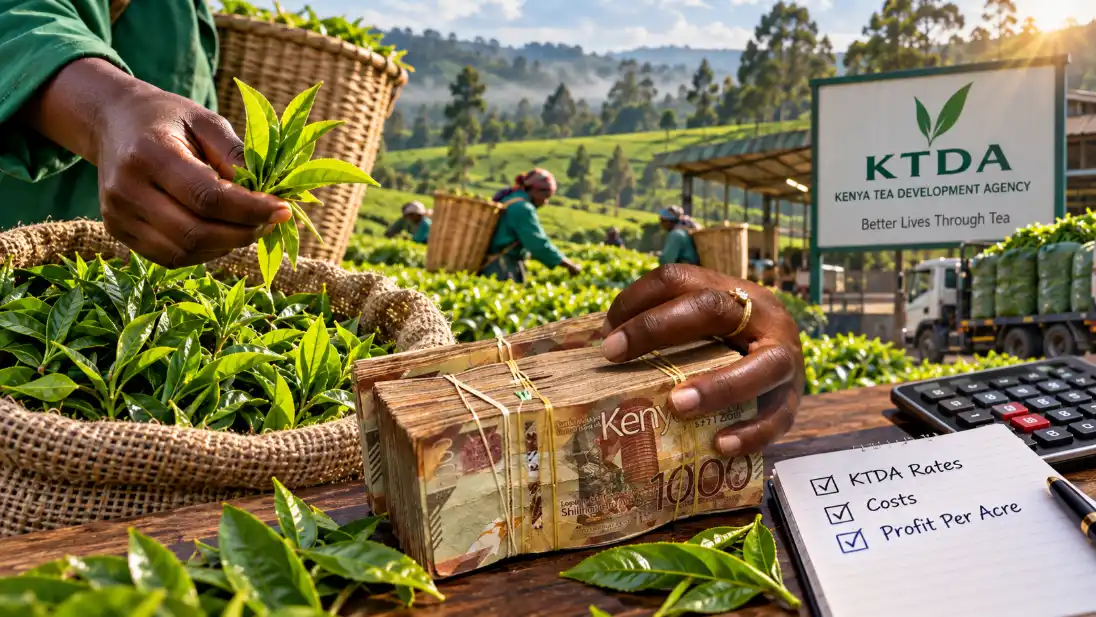

- Two-Tier Payment: KTDA pays smallholders a monthly green leaf rate (currently Ksh 23–30/kg depending on zone) plus an annual bonus from tea auction proceeds.
- Real Setup Cost: Establishing one acre of tea in 2026 costs roughly Ksh 150,000–400,000 in year one; a mature, well-managed acre can net Ksh 191,000–283,000 annually.
- Long Runway: Tea takes 2–3 years to reach first harvest, but a well-pruned bush can keep producing for 50+ years, making it one of the few genuinely multi-generational cash crops in Kenya.
Table of Contents
Kenya is the world’s third-largest tea producer and its top exporter, and the crop still anchors the rural economy across the highlands. Over 700,000 smallholder farmers deliver green leaf to the 54 factory companies managed by the Kenya Tea Development Agency (KTDA), from the slopes of Mount Kenya in Kiambu and Murang’a to the rolling hills of Kericho, Bomet, Nandi, and Nyamira.
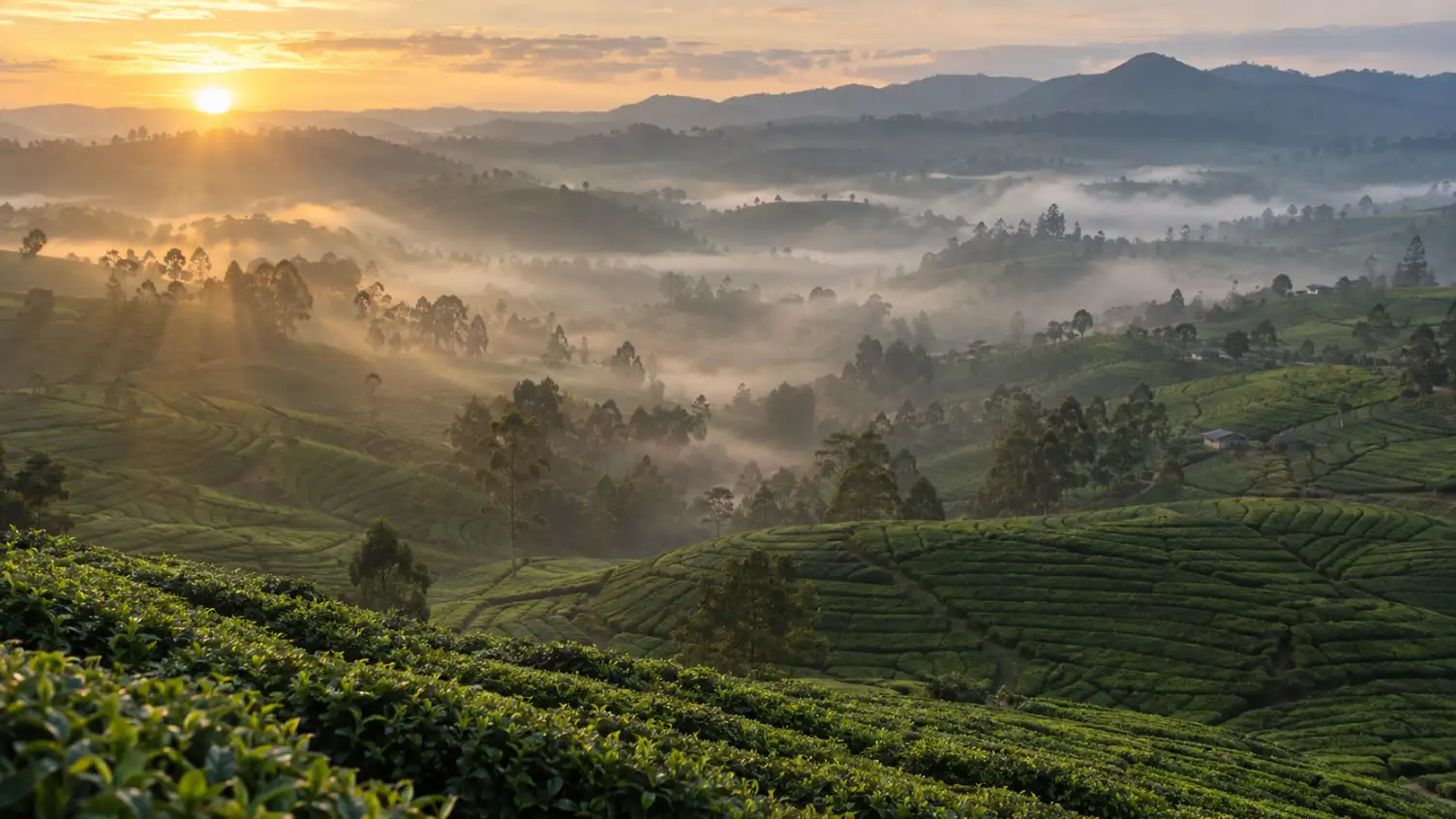
Unlike most cash crops, tea is not a get-rich-quick venture. It takes patience to establish, but once mature, a well-pruned bush keeps producing green leaf for over 50 years with only routine maintenance. This guide breaks down exactly what it costs to start, how KTDA payments actually work, and what real profit per acre looks like in 2026.
Where Did Kenya’s Tea Story Begin?
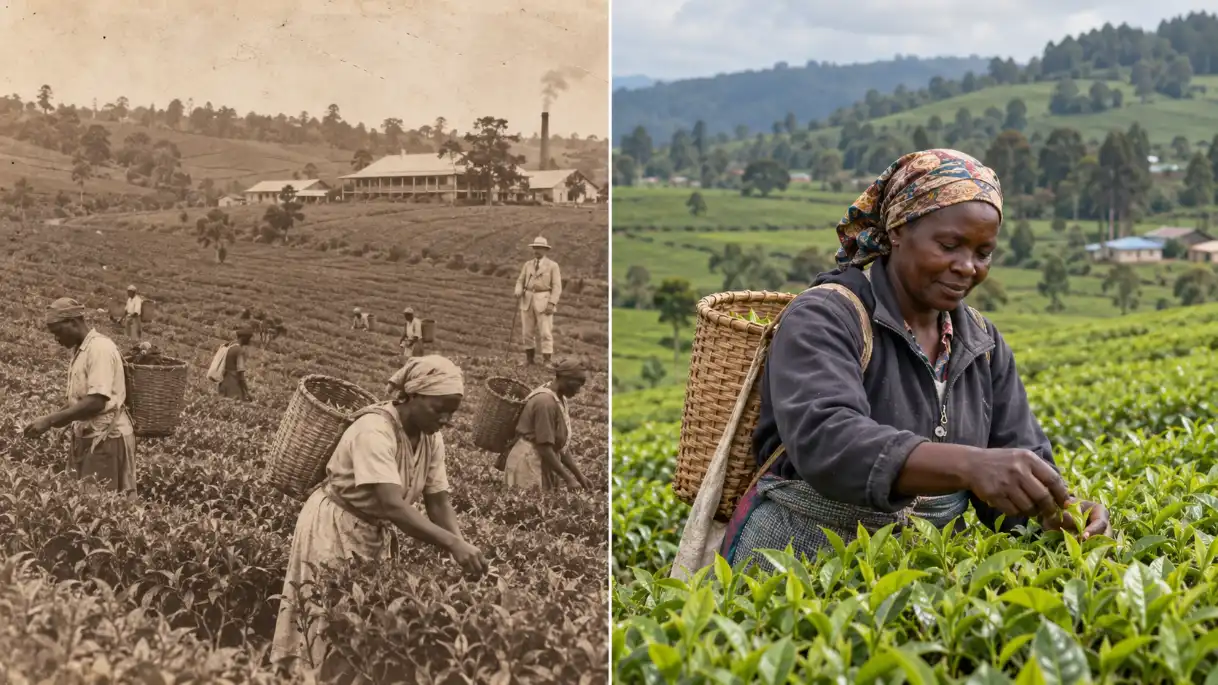
Tea is not native to Kenya. It was first introduced to Limuru, in present-day Kiambu County, in 1903 by British settlers, who quickly recognised that the cool, high-altitude conditions closely matched tea-growing regions in Asia. Large-scale commercial planting followed from 1924 onward, as colonial estates expanded across the highlands.
For decades, this wealth-generating crop was placed entirely out of reach for the people farming the land around it: indigenous Kenyan farmers were legally barred from growing tea commercially until 1956. That policy shift opened the door to the smallholder-driven industry Kenya has today, one where the majority of tea now comes not from colonial-era estates but from family farms averaging well under an acre.
Smallholders vs. Estates: Who Actually Grows Kenya’s Tea?
Kenya’s tea industry runs on two parallel tracks. Smallholder farmers manage roughly 60% of total national production across more than 100,000 hectares, almost all of it organised through KTDA-managed factories. The remaining 40% comes from large multinational estates and plantations, represented separately by the Kenya Tea Growers Association (KTGA) rather than KTDA.
This split matters if you’re planning to enter the sector: smallholders selling through KTDA get the monthly-payment-plus-bonus structure explained later in this guide, while estate-scale operations under KTGA negotiate and market their tea independently. For nearly everyone reading this as a new entrant, the KTDA smallholder route is the realistic starting point.
Why Are Kenyan Farmers Still Investing in Tea in 2026?
Tea remains one of the few crops in Kenya with a guaranteed buyer at your farm gate every single month. Unlike horticulture, where a glut can leave produce rotting at the roadside, KTDA factories collect green leaf on a fixed schedule and pay a set monthly rate, giving smallholders predictable cash flow that few other crops can match.
The sector is also going through a reform push. New minimum reserve pricing at the Mombasa Tea Auction, tighter oversight of factory boards by the Tea Board of Kenya (TBK), and growing demand for specialty teas like purple tea are all aimed at closing the long-standing gap between what Kenyan tea sells for globally and what farmers actually take home.
For farmers with land already in the right agroecological zones (altitude above 1,500m, well-distributed rainfall of 1,200mm+ annually, and slightly acidic soils), tea offers something increasingly rare: a crop that can be handed down to the next generation and still be productive.
The scale of this is hard to overstate: tea alone contributes roughly 23% of Kenya’s total foreign exchange earnings, making it one of the single most important crops to the national economy, not just to the farmers growing it.
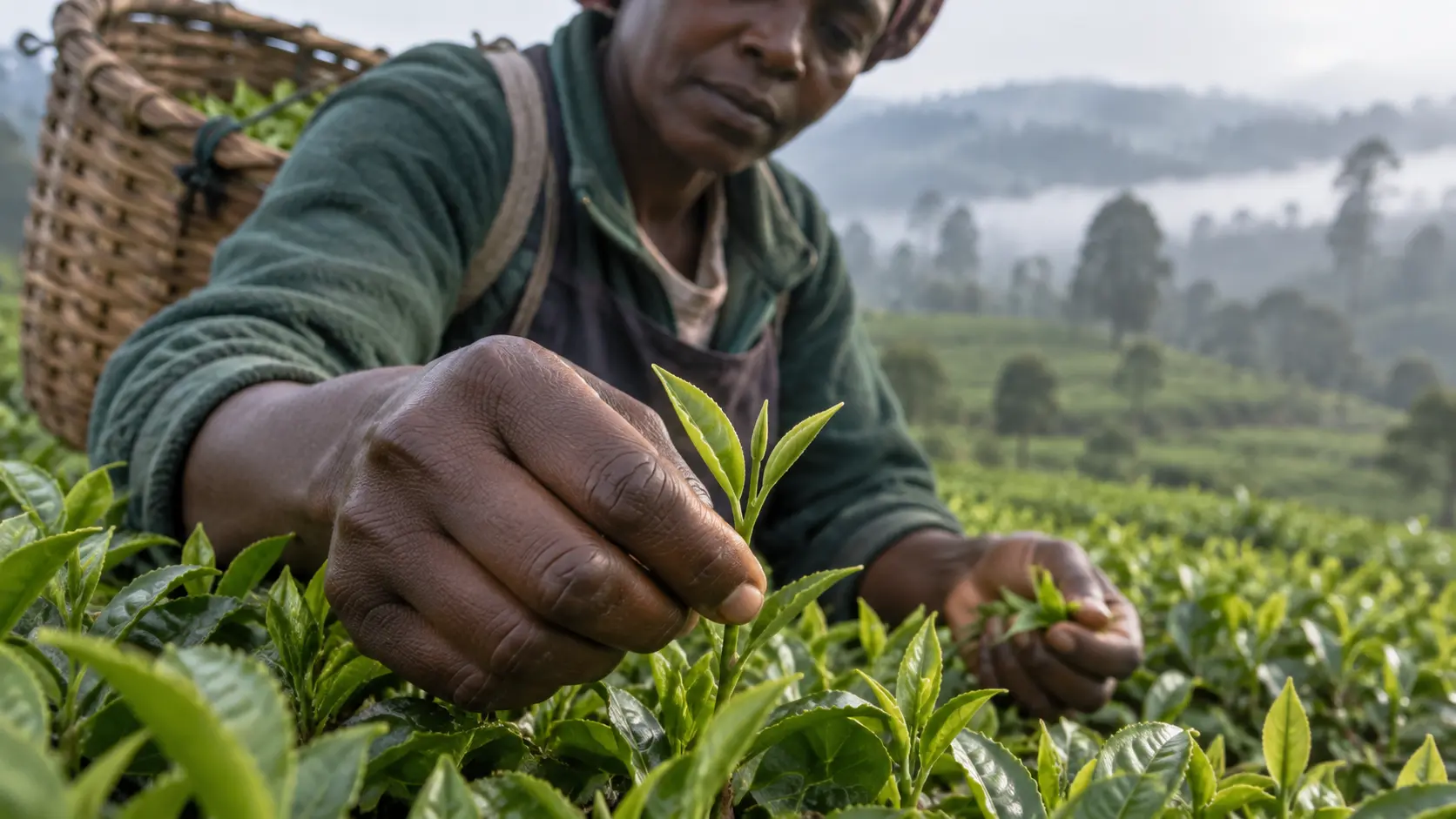
The growing conditions themselves work in farmers’ favour too. Kenya’s tea belts sit between 1,500 and 2,700 metres above sea level, and at that altitude, cooler temperatures naturally suppress many of the pests and diseases that plague tea grown at lower elevations elsewhere in the world. That means comparatively little chemical spraying is needed. Combined with reliable equatorial rainfall, this allows something few tea-growing countries can offer: genuine year-round plucking, with leaves hand-harvested using the classic ‘two leaves and a bud’ standard every 7 to 14 days.
What Are the Best Tea Varieties and Clones for Kenya?
Almost all commercial tea grown in Kenya is Camellia sinensis var. assamica, propagated as clones rather than grown from seed. Clones bred by the Tea Research Institute (TRI, formerly TRFK) at Kericho dominate smallholder plots because they guarantee uniform yield, quality, and disease resistance from the first harvest.
TRFK Clones: The Commercial Workhorses
Clones like TRFK 6/8 and TRFK 31/8 remain the standard choice for CTC (crush-tear-curl) black tea, the form most KTDA factories process. They are selected for high green leaf yield per bush, tolerance to the cool, high-altitude conditions of Kericho and Nandi, and consistent cup quality on the auction floor. A newer generation of clones is also being pushed for better drought tolerance as rainfall patterns shift.
Purple Tea (TRFK 306): The Specialty Premium
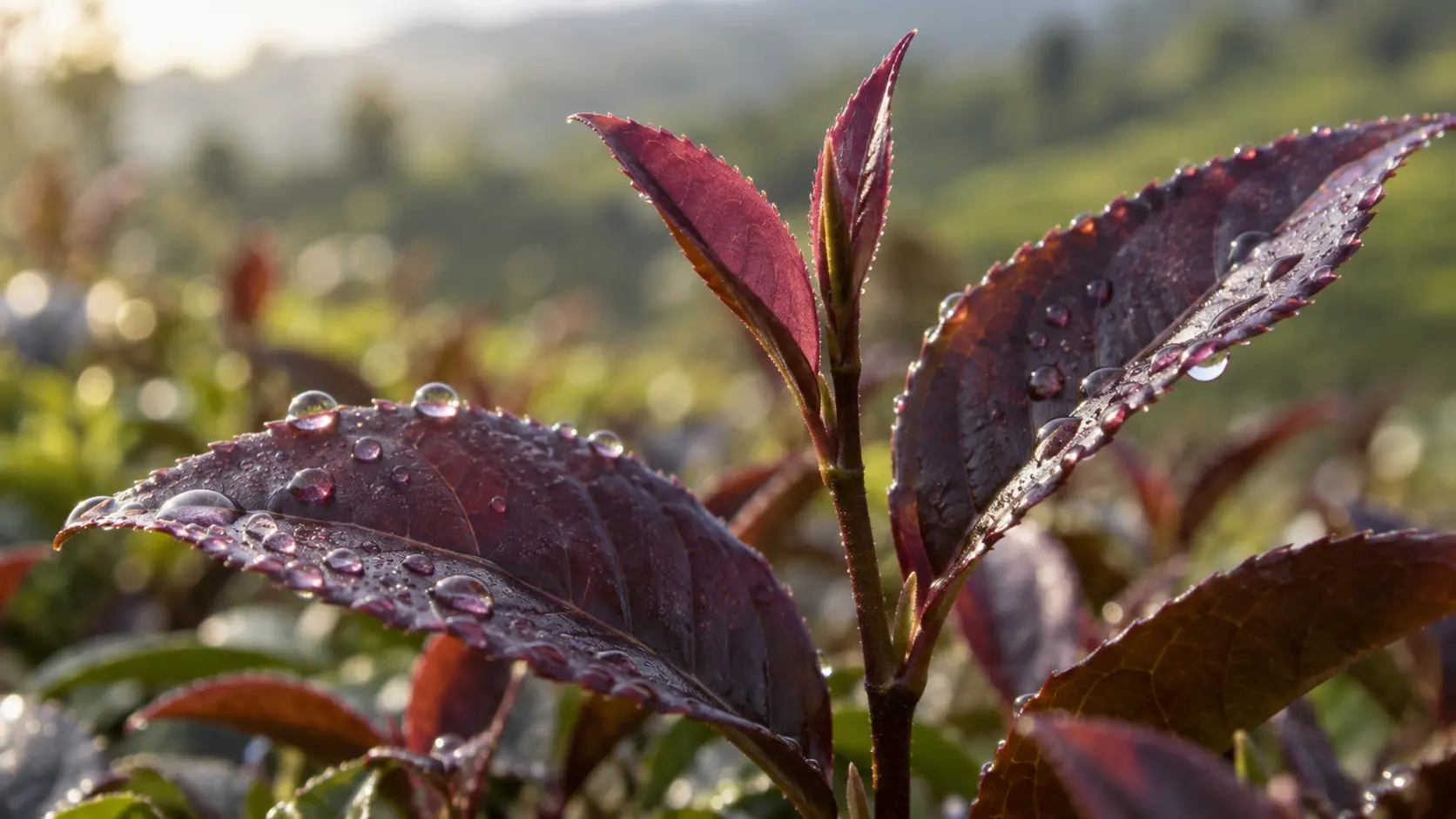
Developed over 25 years by TRI and released for commercial planting in 2011, purple tea (TRFK 306) gets its colour from unusually high anthocyanin levels, the same antioxidant family found in blueberries and red cabbage. It grows best in the colder zones around Mount Kenya and the Nandi Hills, and because production is still limited, it commands a significant premium over standard CTC tea on the specialty market. It is not a replacement for your main bushes, but an intercropped niche line worth considering if you are near a factory that processes it.
Read Also: Coffee Farming in Kenya 2026: Cost, Yields, Profit per Acre, & Complete Beginner Profit Guide
Where Are Kenya’s Best Tea Growing Regions?
Tea in Kenya splits into two broad zones: East of the Rift (the Mount Kenya region) and West of the Rift (the Rift Valley and Western Kenya highlands). KTDA prices, factory bonuses, and even harvest timing differ noticeably between the two.
Mount Kenya Region (East of Rift)
Kiambu, Murang’a, Nyeri, Kirinyaga, Embu, Tharaka-Nithi, and Meru counties sit on the fertile eastern slopes of Mount Kenya. These zones typically post some of the highest monthly green leaf rates in the country, with factory boards recommending payments around Ksh 30/kg as of early 2026. Smallholder plots here tend to be smaller and more intensively managed, often intercropped with coffee, dairy fodder, or horticulture on the same farm.
Kericho & Bomet: The Rift Valley Heartland
Kericho remains synonymous with Kenyan tea, home to some of the country’s largest estates alongside thousands of smallholders. Region Five factories here have held green leaf payments around Ksh 23/kg through early 2026, reflecting tighter factory cash flows even as the region continues to produce the bulk of Kenya’s export volume.
Kericho is officially recognised as Kenya’s largest tea-producing county, widely nicknamed the country’s ‘tea capital’, and is home to some of the largest tea estates on the continent as well as major processors like Unilever Kenya, James Finlay, and Williamson Tea.
Western Kenya: Kisii, Nyamira & Nandi
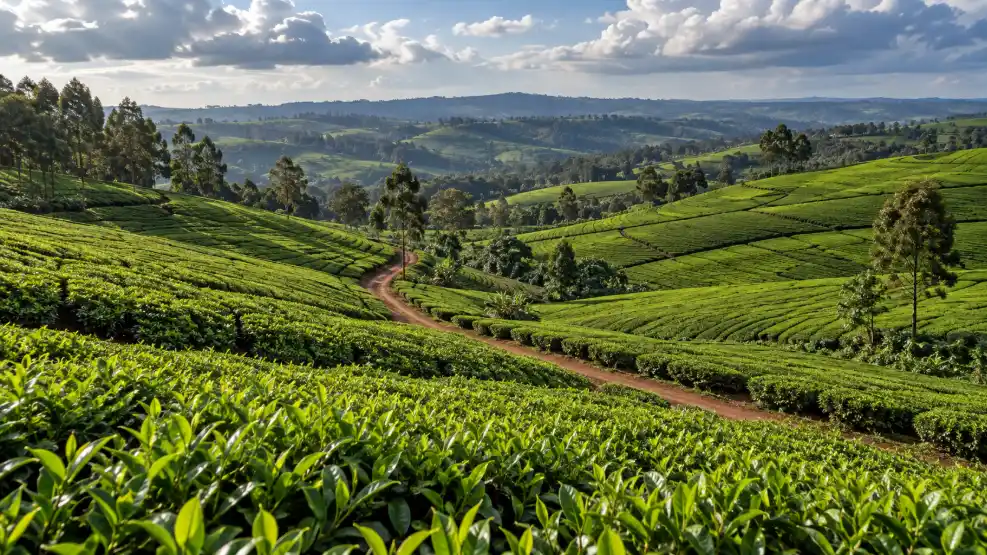
Kisii, Nyamira, Nandi, Trans Nzoia, and Vihiga round out Kenya’s western tea belt. Nyamira factories were paying around Ksh 24/kg in early 2026, one shilling above neighbouring Kericho and Bomet zones. The high rainfall and fertile volcanic soils across this belt support strong yields, though farmers here have historically pushed back on payment disparities compared to the Mount Kenya region.
How Does KTDA Payment Actually Work?
Understanding KTDA’s payment structure is critical before you plant a single bush, because it directly shapes your monthly cash flow versus your year-end lump sum.
The Monthly Green Leaf Payment
Every kilogram of green leaf you deliver to your factory’s collection centre is weighed and logged, and you’re paid a set rate per kilo the following month. As of early 2026, this monthly rate has ranged from roughly Ksh 23 to Ksh 30 per kg depending on your zone and your factory’s individual cash position, since KTDA-managed factory boards set rates independently based on their own financial standing.
The Annual Bonus (Second Payment)
At the end of the financial year, once your factory has sold its processed tea (mostly through the Mombasa Tea Auction, with the rest through direct export contracts), it closes its books and distributes any surplus back to farmers as a second payment, commonly called the bonus. This is why two farmers delivering identical volumes to different factories can end the year with very different total incomes: the bonus depends entirely on how well your specific factory sold its tea that year, not just how much leaf you personally supplied.
Selling Outside KTDA: Private Factories and Hawking
Not every farmer sells exclusively to their local KTDA factory. Private factories and independent buyers (‘hawkers’) sometimes offer higher on-the-spot cash prices, which is tempting when you need money immediately. KTDA factories have publicly flagged this practice as a concern, since it reduces the volume available to pay off factory loans and depresses year-end bonuses for farmers who stayed loyal. Weigh the short-term cash against the long-term bonus before selling outside your factory.
What Is the 12-Month Tea Farming Calendar?
Tea is harvested year-round in Kenya’s highland climate, but the management tasks shift with the seasons.
January – March (Dry Season)
Growth slows as soil moisture drops. This is the best window for pruning mature bushes to the correct plucking table height, since slower growth means less sap loss and faster wound healing before the rains return.
April – June (Long Rains)
Growth accelerates sharply. Plucking rounds tighten from every 10-14 days to as often as every 7 days to keep up with flush growth and avoid coarse, overgrown leaf that factories discount on quality.
July – August (Cold Season)
Cold, often foggy conditions in the highlands slow bud development. Yields dip during this period across almost every tea zone in Kenya, which is normal and not a sign of poor management.
September – December (Short Rains)
A second, smaller growth flush arrives. This is a good period to apply fertilizer split doses and to fill in any gaps in young plots with new seedlings ahead of the next dry spell.
What Are the Setup Costs and Return on Investment for Tea Farming?
Tea has one of the longer investment horizons of any Kenyan cash crop: 2 to 3 years from planting to first harvestable flush, and closer to 5 years before the bush hits full mature yield. The payoff is a productive lifespan of 50+ years from the same planting.
Financial Comparison Table (2026 Estimates)
| Cost Category | Per Acre (One Acre Plot) |
|---|---|
| Land Preparation | Ksh 45,000 – 200,000 (depends on clearing/terracing needs) |
| Seedlings (approx. 2,500-3,000/acre) | Ksh 150,000 – 300,000 (Ksh 60-150 per certified clone seedling) |
| Fertilizer & Pesticides (Annual) | Ksh 20,000 – 75,000 |
| Labor (Plucking & Pruning, Annual) | Ksh 40,000 – 90,000 |
| Years to First Harvest | 2 – 3 Years |
| Mature Yield (Green Leaf) | Approx. 900 kg/acre/month (~10,800 kg/year) |
| Annual Earnings (Mature, Established Zone) | Ksh 191,000 – 283,000 |
These figures are broad 2026 estimates and will vary by county, factory bonus performance, and how intensively the plot is managed. Treat them as planning ranges, not guarantees.
Break-Even Analysis
Because tea takes 2-3 years before it produces any income at all, most smallholders only recover their full establishment cost by year 4 or 5, once the bush reaches closer to mature yield. This is slower than fast-cycle crops like vegetables or even coffee, but the trade-off is that from year 5 onward, your major capital costs are already sunk, and annual expenses drop to just fertilizer, labor, and routine pruning against a full harvest every year for decades.
Read Also: 2026 Seeds & Seedling Price List Kenya: KALRO, Kakuzi & ICIPE Certified Sources
How Can Farmers Add Value to Tea for Higher Profits?
Most smallholders sell raw green leaf and stop there, leaving the far larger margins in processing and branding to the factories. A small but growing number of farmers are capturing more of that value themselves.
Orthodox and Specialty Tea Processing
Standard CTC processing produces the bulk, commodity-grade black tea sold at the Mombasa Auction. Orthodox tea (whole or lightly rolled leaf, hand or small-batch processed) sells at a considerable premium in specialty and export markets, but requires either access to a factory offering an orthodox line or your own small-scale processing setup, which is a significant capital step beyond basic green leaf delivery.
Purple Tea and Green Tea Niches
Purple tea and green tea processed from Kenyan clones consistently test with higher antioxidant (polyphenol) content than many reference varieties from Japan and China, according to research from the Tea Research Institute. That quality story is exactly what specialty buyers pay for. If your zone has a factory that processes purple tea, even a small dedicated plot alongside your main bushes can meaningfully diversify your income.
Direct Export and Co-operative Value Addition
Some KTDA factories have started pursuing direct export contracts rather than routing all their tea through the Mombasa Auction, cutting out a layer of middlemen. As a farmer, you cannot arrange this individually, but you can push for it through your factory’s farmer representatives and annual general meetings, where these decisions on marketing strategy and bonus allocation are actually made.
What Is the 2026 Outlook for Tea Farming in Kenya?
The tea sector is under real pressure to reform. Persistent complaints over payment disparities between the Mount Kenya region and the Rift Valley/Western zones have pushed the issue firmly onto the government’s agenda in 2026.
The Push for a Sh100 Minimum Price
Government officials have floated plans to roughly double the effective price farmers receive per kilogram of made tea, targeting a minimum of around Sh100 per kg, largely through reforms at the Mombasa Auction and tighter factory governance. If this materializes, it would be one of the most significant shifts in farmer earnings the sector has seen in years, though implementation timelines for reforms like this have historically slipped in Kenya’s tea sector.
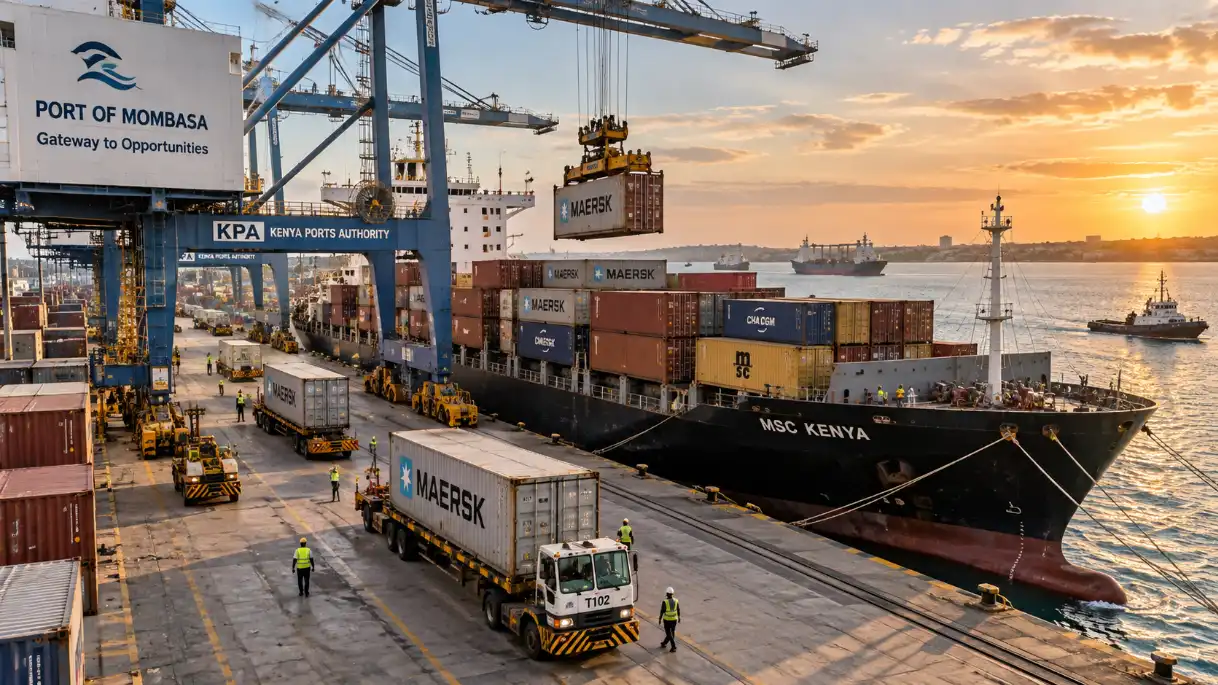
On the export side, Pakistan remains Kenya’s single largest tea buyer by far, importing around 39% of total export volume in early 2026, with Egypt and the United Kingdom trailing well behind. That concentration is worth knowing: shifts in Pakistani demand or currency conditions can move Mombasa Auction prices, and by extension your factory’s year-end bonus, more than any other single external factor.
Read Also: Avocado, Macadamia or Dairy? Best Export-Ready Agribusiness Ventures in Kenya for 2026
Call to Action
Tea is not a crop for farmers chasing a quick season’s profit. If you have suitable highland land and can absorb 2-3 years of establishment costs before your first real income, it remains one of the few Kenyan cash crops that can genuinely be passed down to your children still in production.
Start by registering with your nearest KTDA factory to confirm your zone’s current rates and seedling sourcing options before you plant a single bush.
Tea Farmers Also Ask (FAQ)
How long does it take for tea to start producing in Kenya?
Tea typically takes 2 to 3 years from planting to the first harvestable flush, and closer to 5 years to reach full mature yield. Once established, a well-managed bush can keep producing for over 50 years.
Is tea farming still profitable in Kenya in 2026?
Yes, though margins vary by zone and factory bonus performance. A mature, well-managed acre can net roughly Ksh 191,000 to 283,000 annually, and reforms aimed at raising minimum prices could improve this further.
How much does an acre of tea cost to set up?
Expect to spend roughly Ksh 150,000 to 400,000 in year one, covering land preparation, certified clone seedlings, and initial fertilizer and labor, depending on the condition of your land and clone variety chosen.
What is the difference between KTDA and private tea factories?
KTDA-managed factories are farmer-affiliated cooperatives that pay a monthly green leaf rate plus an annual bonus from auction proceeds. Private factories and independent buyers sometimes offer higher upfront cash prices but do not offer the same bonus structure, and selling to them can reduce your registered factory’s year-end payout.
Can I grow tea outside Kericho and Central Kenya?
Yes, provided your land sits above roughly 1,500m altitude with well-distributed rainfall of 1,200mm or more annually and slightly acidic soils. Nandi, Kisii, Nyamira, Trans Nzoia, and parts of Western Kenya all support commercial tea alongside the more famous Kericho and Mount Kenya zones.
What is purple tea and is it more profitable?
Purple tea (TRFK 306) is a specialty clone developed in Kenya with unusually high antioxidant content, sold at a premium versus standard black tea. It can be a profitable niche add-on, but production is still limited to certain factories, so check whether your local factory processes it before planting a dedicated plot.
How often is tea harvested or plucked?
Plucking rounds typically happen every 10 to 14 days, tightening to as often as every 7 days during the fast-growth long rains season from April to June, and slowing during the cold, foggy months of July and August.
Do I need irrigation for tea farming in Kenya?
Most established Kenyan tea zones rely on natural rainfall rather than irrigation, since the crop is grown almost exclusively in high-rainfall highland areas. Irrigation is only worth the significant added cost (Ksh 50,000 to 500,000 per acre) if you’re pushing into marginal, drier zones outside the traditional tea belts.
How is the KTDA bonus calculated?
The bonus, or second payment, comes from your specific factory’s surplus after it sells its processed tea for the year, mostly through the Mombasa Tea Auction. It depends on how well that individual factory performed commercially that year, not just on how much green leaf you personally delivered, which is why bonus payouts can differ significantly between neighboring factories.
How much is 1kg of tea leaves in Kenya?
It depends which kg you mean. Farmers are paid roughly Ksh 23 to 30 per kg of raw green leaf at the factory gate. Processed, packaged black tea sold at retail is a completely different product and price point, typically costing several hundred shillings per kg once it has been manufactured, branded, and distributed.
How many kilograms of tea can I harvest per acre?
A mature, well-managed acre typically produces around 900 kg of green leaf per month, or roughly 10,800 kg per year, though this varies with clone, altitude, and how consistently the bushes are plucked and maintained.
Which county produces the most tea in Kenya?
Kericho County is Kenya’s largest tea-producing region and is widely known as the country’s tea capital, home to some of the largest tea estates in Africa alongside thousands of smallholder farmers.
Who is the biggest buyer of Kenyan tea?
Pakistan is by far Kenya’s largest tea export market, accounting for around 39% of total export volume in early 2026, followed by Egypt and the United Kingdom.