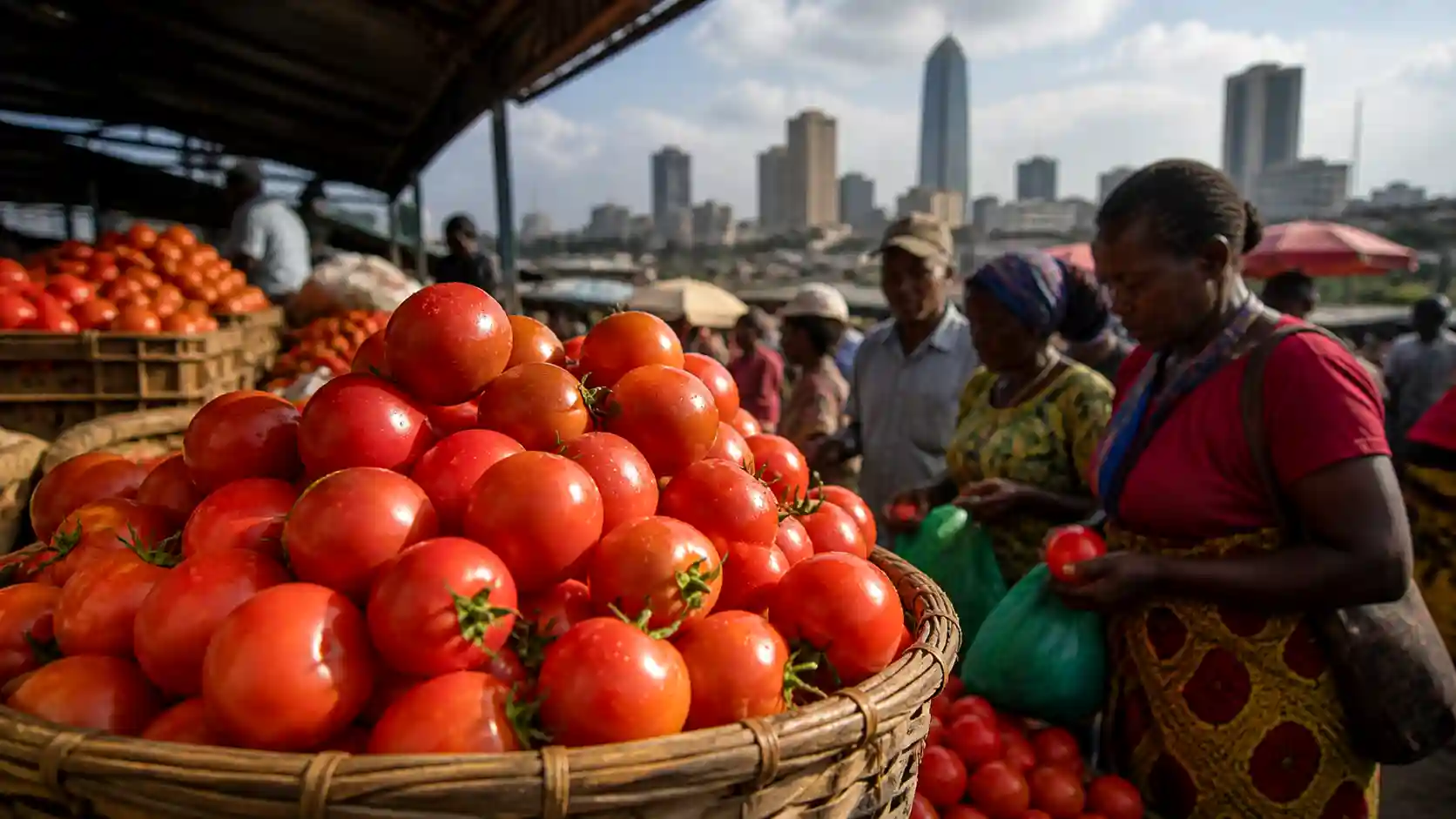

- According to the Kenya National Bureau of Statistics, average retail tomato prices hit KSh 108 per kilogram in April 2026 before fully crossing the KSh 100 mark in May.
- Wholesale wooden crates at Wakulima Market surged to KSh 18,000, driven by heavy flooding that destroyed crops in key supply regions like Mwea and Oloitoktok.
- The root cause was a severe market glut in January 2026, which forced many farmers to abandon the crop entirely just weeks before the extreme rains began.
Table of Contents
The Mama Mboga trap caught millions of Kenyans completely off guard this year. What was once an affordable basic kitchen staple has suddenly become a luxury item strictly rationed in Nairobi households. This crisis is a textbook example of how unpredictable weather and poor market timing can completely disrupt the food supply chain in Kenya.
From what many farmers experience in regions like Kirinyaga and Kajiado, agriculture is less about planting and more about impeccable market timing. When the masses plant simultaneously, the market floods, and when they quit, prices skyrocket to record levels. Understanding the mechanics of this supply shock is crucial for both consumers trying to manage their budgets and farmers looking to profit.
Ralated: How to Grow Tomatoes in Sacks: A Complete Step-by-Step Guide for 2026
To truly grasp the magnitude of this agricultural crisis, we must look beyond the simple narrative of bad weather. The dramatic price surge is the result of a complex chain reaction involving broken logistics, opportunistic middlemen, and systemic failures in crop storage. Here is the definitive breakdown of why the Nairobi tomato market collapsed and how smart farmers are navigating the chaos.
Tomato Prices in Nairobi May 2026 Breakdown
Retail prices in Nairobi officially crossed KSh 108 per kilogram in May 2026. Wholesale wooden crates skyrocketed from KSh 3,000 in January to over KSh 17,000 at major urban markets. This massive volatility reflects a total collapse in local supply chains.
Retail Prices Supermarkets vs Open Markets
Nairobi shoppers felt the sting first at local street vendors and roadside stalls across the city. Mama Mboga vendors adjusted their pricing from three large tomatoes for KSh 20 to a single medium tomato for the exact same price. Shoppers in densely populated estates like Eastleigh, Roysambu, and Kibera faced severe rationing as vendors struggled to secure fresh stock daily.
Supermarkets quickly followed suit to protect their profit margins amid the escalating procurement costs. At major retailers like Naivas, Quickmart, and Carrefour, the price per kilogram surged past KSh 115 by early May. Supermarkets rely heavily on contracted farmers who were equally devastated by the relentless rains, forcing procurement managers to source from expensive secondary markets.
The visual quality of tomatoes on retail shelves also dropped significantly during this period. Due to high disease pressure on the farms, many fruits displayed fungal spots and poor skin texture. Consumers were forced to pay premium prices for substandard produce simply because there were no other fresh options available.
Wholesale Prices at Marikiti Market
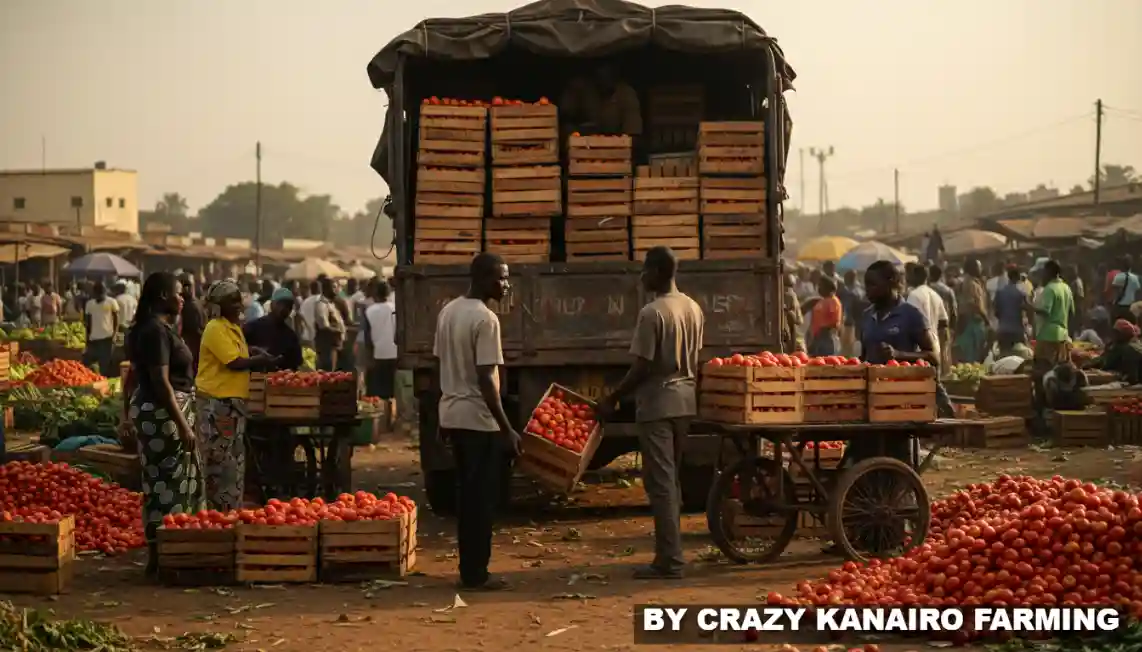
Wakulima Market, popularly known as Marikiti, operates as the beating heart of Nairobi produce trading. In May 2026, the famous large wooden crates of tomatoes became incredibly rare commodities. Brokers were openly demanding between KSh 17,000 and KSh 18,000 for a single extended crate. Just weeks prior, this exact same crate struggled to fetch KSh 10,000 on a good day.
Market traders reported that lorries arriving from the Rift Valley and Central Highlands dropped by more than half. This extreme scarcity allowed market cartels and middlemen to dictate outrageous prices based on daily truck arrivals. Most small-scale retailers simply could not afford the upfront capital required to buy a full crate, forcing them to pool resources.
The volatility at Marikiti is notorious, but May 2026 broke historical records for rapid price inflation. Traders who managed to secure stock early in the morning could resell half a crate by midday for double their purchasing price. It became a pure seller market heavily manipulated by logistics operators and wholesale brokers.
January vs May 2026 Price Comparison
To understand the depth of the current crisis, you must look closely at the brutal market crash of January 2026. During that harvest period, tomatoes flooded the market, and farm-gate prices crashed to a dismal KSh 20 per kilogram. A full extended crate was selling for barely KSh 2,500, leaving farmers in absolute despair.
The situation in January was so severe that farmers were feeding rotting tomatoes to livestock because transport costs exceeded the actual market value. Fast forward to May 2026, and the price per kilogram has multiplied by five times in record speed. The transition from massive oversupply to extreme shortage took less than four months.
You May Like: Top 5 Hybrid Onion Varieties (F1) Dominating the Kenyan Market in 2026
This violent economic swing wiped out unprepared farmers who lacked the capital to replant. It also severely punished urban consumers who had grown accustomed to cheap, abundant salads. The psychological damage from the January losses directly fueled the May shortages.
The Real Causes Behind the Price Spike
The current tomato shortage was triggered by farmers abandoning the crop after a January price crash. Heavy flooding then destroyed the few remaining crops. Damaged roads and greedy middlemen further worsened the entire situation.
1. The January 2026 Glut The Root Cause
Most agricultural extension guides completely ignore the psychological and financial impact of a market glut. In late 2025, highly favorable short rains encouraged thousands of beginner farmers to plant tomatoes simultaneously. By January 2026, the Nairobi wholesale market was drowning in unmanageable supply.
Farmers sold their massive harvests at heavy financial losses just to clear their fields for the next season. Because they lost their initial capital for seeds and fertilizers, over sixty percent of these smallholder farmers refused to plant tomatoes again in February. This mass exodus created a massive and highly predictable supply vacuum.
When the majority of producers stop planting at the exact same time, a severe shortage three months later becomes a mathematical certainty. The farmers who quit in February are the primary reason why Nairobi lacks tomatoes in May. The market simply ran out of active, producing fields.
2. Heavy Rains Destroyed Production
The contrarian farmers who did bravely plant in February faced an entirely new disaster in April. Extremely heavy rains triggered widespread flooding across major agricultural zones in Kenya. Tomatoes are highly sensitive to excess moisture, which strips oxygen from the soil and encourages rapid fungal growth.
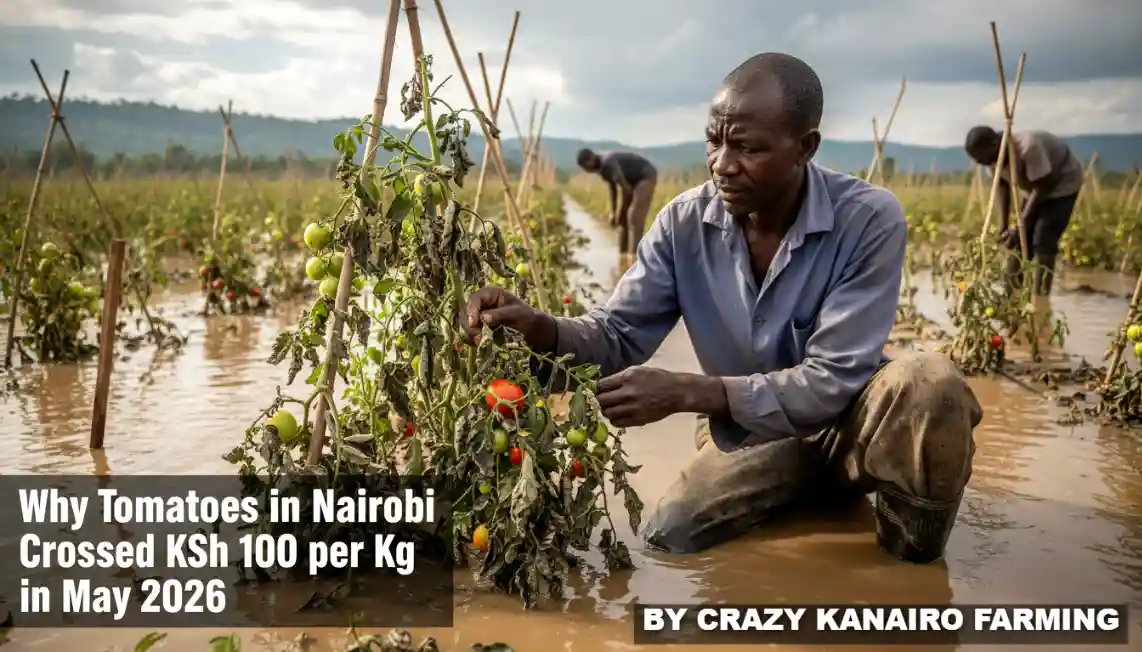
Aggressive plant diseases like early blight, late blight, and bacterial wilt swept through open-field farms relentlessly. According to field data from the Kenya Agricultural and Livestock Research Organization, many affected farmers lost up to 80 percent of their crop to fungal rot. Even mature, healthy fruits split open on the vine due to sudden, excessive water intake.
Managing these diseases during continuous rainfall is practically impossible for an open-field farmer. Chemical sprays are washed away by the rain before they can take effect on the plant leaves. Consequently, the few healthy tomatoes left in the fields were severely compromised in quality and shelf life.
3. Supply Drop from Key Growing Regions
Nairobi relies heavily on very specific growing corridors, primarily Oloitoktok, Mwea, Kirinyaga, and parts of Kajiado County. These strategic regions usually provide a steady, daily stream of fresh produce to feed the capital. However, the unprecedented heavy rains rendered the heavy black cotton soils of Mwea completely unworkable.
Farm tractors sank deep into the mud, and manual laborers could not navigate the deeply flooded fields to harvest. Oloitoktok farmers faced similar logistical and agronomic challenges with aggressive fungal diseases wiping out huge open-field investments. With the main production hubs effectively knocked offline, Nairobi was left starving for fresh supplies.
You May Like: Tomato & Potato Leaves Turning Yellow? 48-Hour Fungus Control Plan (Kenya April 2026)
The city simply consumes too much volume daily for secondary, smaller regions to fill the enormous gap. When Oloitoktok and Mwea fail simultaneously, a national pricing crisis is absolutely guaranteed. The geographical concentration of tomato farming remains a major vulnerability for Kenya.
4. Transport and Logistics Breakdown
Growing the crop is only half the battle in the brutal Kenyan agricultural sector. Moving perishable goods safely from a rural shamba to Marikiti requires highly functional infrastructure. The torrential rains actively washed away crucial rural feeder roads in the agricultural highlands.
Trucks carrying delicate, highly perishable tomatoes were stuck deep in rural mud for days at a time. Severe delays in transport mean massive post-harvest losses for a soft, water-heavy fruit like the tomato. Traders were forced to discard huge portions of their cargo before even reaching the city limits.
Furthermore, local fuel costs remained high, forcing transport owners to hike their freight charges to cover the increased risks. Mechanics and towing fees for stuck lorries added unexpected overheads to the journey. These cascading logistical nightmare costs were directly passed on to the final consumer in Nairobi.
5. Middlemen and Market Behavior
Brokers and middlemen always thrive the most during a national food crisis. When supply drops sharply, the middlemen who tightly control the logistics routes form informal, highly effective cartels. They buy the little available produce at the farm gate for slightly elevated prices but completely double the margin when selling to Nairobi wholesalers.
This predatory, opportunistic pricing is a harsh reality of the deeply fragmented Kenyan supply chain. Risk pricing also plays a massive role during these acute shortages. Because a broker knows that half a crate might spoil due to muddy road delays, they price the good half to aggressively cover the total shipment cost.
This market inefficiency heavily punishes the farmer who gets paid late and the consumer who pays premium retail rates. The lack of a transparent, digital pricing exchange allows these brokers to manipulate artificial scarcity daily. Until farmers can bypass Marikiti entirely, brokers will continue to dictate Nairobi inflation.
Why Tomato Prices in Kenya Are Always Unstable
Tomato prices in Kenya fluctuate wildly due to a total lack of cold storage and a weak processing industry. Farmers rely entirely on unpredictable rain patterns and herd mentality planting.
The Kenyan agricultural sector unfortunately operates heavily on a herd mentality. When the rains begin, everyone rushes to plant the exact same cash crop simultaneously. When harvest time finally arrives, the national market floods instantly, and prices crash to zero.
Because there are virtually no accessible cold storage facilities for small-scale rural farmers, the crop rots in the sun within days. Farmers are forced to accept any price a broker offers just to salvage a fraction of their investment. This lack of holding power destroys any chance of price stabilization.
Furthermore, Kenya critically lacks a robust, decentralized tomato processing industry. In mature global markets, excess fresh tomatoes are immediately converted into paste, sauces, or high-value sun-dried products. Weather dependency is the final, undeniable nail in the coffin.
A vast majority of local farmers still rely exclusively on open-field farming rather than climate-controlled greenhouses. The government has also failed to aggressively subsidize greenhouse materials for rural youth. Until protective farming and value addition become standard national practice, Nairobi will continue to experience these violent price swings every single year.
Impact on Nairobi Consumers
Nairobi residents have been forced to ration tomatoes as severe food inflation bites. Many households are actively switching to tomato paste or completely changing their daily recipes to avoid the high costs.
The baseline cost of living in Nairobi was already straining household budgets long before this crisis hit. According to recent data from the Kenya National Bureau of Statistics, general food inflation remained painfully high in early 2026. The sudden, aggressive jump in tomato prices forced ordinary families to make harsh, immediate dietary adjustments.
The traditional, rich stews that define daily Kenyan cooking are being significantly watered down. Consumers are actively shifting to commercial, processed tomato paste as a cheaper, highly shelf-stable alternative. A small commercial sachet of paste costs KSh 50 and can comfortably serve a whole family for dinner.
In stark contrast, KSh 50 of fresh tomatoes barely yields two small, unappealing fruits at the local kiosk. This forced behavioral shift ultimately hurts local Kenyan farmers while massively benefiting imported paste manufacturers. The cultural habit of cooking with rich, fresh tomatoes is temporarily suspended in Nairobi.
Impact on Farmers Winners vs Losers
Farmers with greenhouses or reliable irrigation systems who planted during the dry season made historic profits. Open-field farmers who planted late lost absolutely everything to floods and fungal diseases.
Who Benefited
The few farmers who actually generated massive wealth in May 2026 were the ultimate contrarians. These are the smart, calculating operators who planted their seedlings in late January when everyone else was quitting. By utilizing efficient drip irrigation during the hot, dry spell, they timed their heavy harvest perfectly for the May shortage.
Greenhouse owners also won big during this chaotic market cycle. Because their delicate crops were fully protected from the heavy April downpours, they entirely avoided the fungal blights that decimated open fields. Selling a premium crate at KSh 17,000 allowed these protected farmers to recover their entire structural infrastructure investment in a single, highly lucrative season.
These winners understood that agricultural profit is derived from scarcity, not abundance. They treated farming as a strategic business rather than a mere cultural routine. Their massive financial returns highlight the absolute necessity of climate-smart agriculture in Kenya.
Who Lost
The absolute biggest losers were the traditional, rain-dependent farmers scattered across the country. They stubbornly waited for the long rains to begin in March before planting, completely exposing their delicate crops to extreme weather. Flooded root systems and severe early blight meant they harvested absolutely nothing but rotting biomass.
You May Like: Top 5 High-Yield 3-Month Crops in Kenya (2026 Profit Guide + ROI Breakdown)
Late planters who foolishly tried to chase the rising prices in March also suffered catastrophic losses. Their young, vulnerable crops were caught precisely in the absolute peak of the April floods. They lost their initial capital for expensive seeds, fertilizer, and manual labor.
This massive crop failure pushed many rural families deeply into toxic debt with local agro-vets and micro-lenders. The emotional toll of watching an entire acre rot away in the mud cannot be overstated. For these farmers, the May 2026 season was an unmitigated disaster.
Deep-Dive Financial Break-Even Analysis
To truly understand the business of tomato farming, you must look objectively at hard financial numbers. The detailed table below outlines the estimated cost and profit breakdown for a standard 1-acre open-field tomato farm in Kenya. This contrasts normal glut conditions against the extreme May shortage conditions.
| Expense Category | Estimated Cost (KES) | Operational Details |
|---|---|---|
| Land Preparation & Lease | 15,000 to 25,000 | Includes heavy tractor ploughing, harrowing, and short-term rural land lease. |
| Seeds & Nursery Setup | 12,000 to 18,000 | Cost for 50g of premium Hybrid F1 seeds plus necessary nursery propagation trays. |
| Fertilizer (DAP, CAN, NPK) | 15,000 to 20,000 | Utilizing available subsidized NCPB rates where highly possible to cut basic costs. |
| Agrochemicals & Spraying | 25,000 to 40,000 | Premium fungicides and systemic pesticides are highly critical during active rains. |
| Labor & Harvesting | 30,000 to 50,000 | Covers manual weeding, physical staking, and intensive daily harvest labor. |
| Total Input Cost | 97,000 to 153,000 | Total capital strictly required before transporting the final harvest to market. |
| Revenue (Glut Season) | 150,000 to 200,000 | Assuming 100 crates successfully sold at a highly dismal KSh 2,000 each. |
| Revenue (May 2026 Spike) | 1,200,000 to 1,500,000 | Assuming 100 crates actively sold at KSh 12,000+ directly to city brokers. |
Real-World Scenario in Kajiado
Take the compelling example of John, a progressive commercial farmer located in Kajiado County. In December 2025, he invested heavily in a basic drip irrigation kit and an excavated water pan. While his rural neighbors passively waited for the rains, he successfully planted two acres of the Anna F1 variety in early February.
He spent heavily on expensive diesel fuel to pump water during the intensely dry weeks of February and March. When the devastating rains finally arrived in April, his robust crop was already mature and highly resistant to fungal shocks. He successfully harvested over 250 premium crates by early May.
Selling his produce directly to desperate Wakulima market brokers at KSh 15,000 per crate, John grossed over KSh 3.7 million. His deliberate, strategic timing transformed a standard farming venture into a highly lucrative, life-changing enterprise. This proves that calculated risk in agriculture yields incredible dividends.
The Smart Farmer Playbook How to Profit From This
To secure consistent profit, you must plant off-season using irrigation, strictly select disease-resistant hybrid seeds, and secure subsidized inputs. Avoid planting when the majority of local farmers are actively planting.
Best Planting Timing Strategy
The ultimate secret to generational agricultural wealth in Kenya is incredibly simple but hard to execute: counter-cyclical planting. You must actively plant when everyone else is happily harvesting, and you must harvest when everyone else is busy planting. The absolute most profitable market window for fresh tomatoes is usually harvesting strictly between April and June, or November and December.
To hit the highly lucrative May shortage perfectly, your expensive seeds must be in the nursery by mid-January and transplanted into the main field by early February. This timeline absolutely requires access to a reliable, permanent water source since February is typically scorching dry in Kenya. Farmers who master this specific calendar consistently avoid the brutal, soul-crushing glut seasons.
Staggered planting is another brilliant risk management technique utilized by professionals. Instead of planting two acres simultaneously, smart operators plant half an acre every three weeks. This ensures a continuous, reliable harvest that captures both average prices and unexpected market spikes.
Technical Deep-Dive and Best Varieties
Selecting the exact right seed variety utterly determines your survival against aggressive fungal diseases and extreme transport conditions. The detailed table below compares the top-performing tomato varieties in Kenya for 2026 based on total yield, field maturity, and vital disease tolerance. Always actively consult a certified local agronomist before purchasing large volumes.
| Tomato Variety Name | Average Maturity Period | Potential Yield Profile | Specific Disease Resistance |
|---|---|---|---|
| Raja F1 | 65 to 70 Days | Approx 10 kg per healthy plant | High Fungal and Bacterial Wilt Resistance. |
| Anna F1 | 75 to 85 Days | Very High (Strictly Greenhouse) | Excellent overall tolerance, highly indeterminate. |
| Kilele F1 | 75 Days | Up to 30,000 kg per acre | Highly resistant to the devastating Leaf Curl Virus. |
| Roma VF | 80 to 85 Days | Medium (Best for Open Field) | Excellent for processing, yields very firm transport fruit. |
The Survival Kit: Where to Source Certified Inputs to Beat Market Volatility
If you want to capitalize on the May 2026 price surge, you have to stop acting like a hobbyist. The reason prices crossed KSh 100 is because most “farmers” were wiped out by bad seeds and poor infrastructure. Only those with elite, authentic inputs are currently making money.
Counterfeit seeds are a silent epidemic in the Rift Valley and Central regions. Buying unverified seeds from a random village agro-vet is a guaranteed way to go broke. You must procure your materials from KEPHIS-certified national distributors who can handle the current climate extremes.
1. Amiran Kenya Ltd: The Greenhouse Standard
Amiran is the heavy hitter for greenhouse kits, drip irrigation, and elite seeds like the Corazon F1. They are built for high-tech production.
- Technical Desk: +254 719 095 000
- Email: [email protected]
- Official Site: www.amirankenya.com
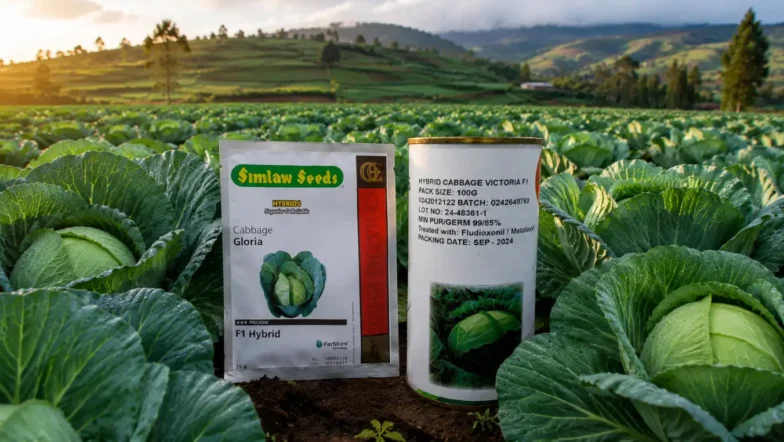
2. Simlaw Seeds Company: Resilience for Open Fields
Simlaw is the go-to for traditional, resilient varieties adapted specifically for Kenyan soils. If you are farming in open fields, do not skip their agronomy advice.
- Main Agronomy Team: +254 722 200 545
- Email: [email protected]
- Official Site: www.simlaw.co.ke
3. Royal Seed (Kenya Highland Seed): The Virus Shield
If you are worried about local viruses, Royal Seed carries the Kilele F1 and Shanty F1. These varieties are specifically engineered to survive when others rot.
- Customer Support: +254 703 145 315
- Email: [email protected]
- Official Site: www.royalseed.biz
What You Should Do Instead
Always buy from verified distributors
Avoid “cheap deals” from unknown agro-vets
Ask for certification or proof of source
Invest in quality seeds before anything else
Fertilizer and Soil Nutrition
Expert crop nutrition is absolutely critical for rapid fruit development and extended transport shelf life. A highly common, devastating mistake among Kenyan farmers is over-applying nitrogen, which creates massive, bushy green plants with very few actual fruits. Proper fertilizer application requires strict discipline and soil testing.
The comparative table below outlines the highly recommended fertilizers required to hit premium market yields. Always strictly adhere to the exact application rates advised by professional soil scientists.
| Fertilizer Brand / Type | Application Stage | Primary Agronomic Benefit |
|---|---|---|
| YaraMila Winner (Yara) | Early Vegetative Stage | Provides highly balanced NPK with vital trace elements for explosive growth. |
| DAP (NCPB Subsidized) | At Direct Transplanting | High phosphorus content specifically ensures deep, incredibly aggressive root development. |
| Calcium Nitrate (Elgon Kenya) | Active Flowering and Fruiting | Directly prevents Blossom End Rot and guarantees highly firm, heavy fruits. |
| CAN (Top Dressing) | Mid to Late Stage Growth | Supplies steady nitrogen and calcium to extend the total active harvesting period. |
Sourcing Inputs and Subsidies
To genuinely maximize your net profits, you must actively reduce your initial baseline input costs safely. The Kenyan government officially introduced a highly effective digital fertilizer subsidy program through the national KIAMIS platform for the 2026 season. This system helps genuine farmers bypass expensive commercial retail rates.
Fully registered rural farmers receive a secure e-voucher directly via SMS to their registered mobile numbers. This highly coveted voucher allows them to legally purchase a 50kg bag of essential DAP or UREA for strictly KSh 2,500 at designated National Cereals and Produce Board depots. Utilizing these subsidies drastically lowers your overall break-even point.

Open Field Farming vs Greenhouse Farming
Open-field farming is fundamentally cheap but heavily exposes delicate crops to unpredictable weather and devastating fungal diseases. Greenhouses require massive upfront capital but strongly guarantee consistent yields and premium off-season market pricing.
Risks of Open-Field Farming
Open-field farming remains the strict default for most beginners simply because it requires very low start-up capital. However, it is fundamentally a high-stakes gamble against harsh, unforgiving nature. You possess absolutely zero control over erratic rainfall, extreme sunlight, or airborne pests like the highly devastating Tuta Absoluta moth.
During heavy seasonal rains, open fields quickly become waterlogged, suffocating delicate roots and drastically accelerating lethal fungal blight. Even a single, unexpected ten-minute hailstorm can physically destroy an entire mature acre of premium fruits instantly. What basic guides rarely tell you is that open-field farming is cheap to start, but incredibly expensive when you inevitably lose the entire crop.
Security is also a massive issue in open-field setups. When tomato prices cross KSh 100 per kilogram, outright theft of mature fruits directly from the fields becomes a rampant rural crisis. Farmers are forced to physically guard their open shambas at night, adding massive labor and safety costs.
Controlled Environment Advantages
Greenhouse farming completely eliminates the chaotic unpredictability of the brutal Kenyan weather system. A standard 8×30 meter greenhouse efficiently creates a highly stable micro-climate where vital water, temperature, and humidity are tightly managed. This specialized environment allows farmers to grow indeterminate varieties like Anna F1, which literally produce continuously for up to eight solid months.
You May Like: Fake Seeds in Kenya 2026: How to Spot Counterfeit Seed Before You Plant and Protect Your Harvest
While the initial construction cost of a quality greenhouse can easily exceed KSh 350,000, the long-term ROI is absolutely undeniable. You naturally use far fewer expensive chemical sprays, utilize drip irrigation incredibly efficiently, and harvest premium, visually perfect unblemished fruits. Most importantly, a protected greenhouse allows you to target exact national shortage periods with absolute, mathematical precision.
Market Outlook When Will Prices Drop
Wholesale tomato prices are widely expected to drop aggressively and stabilize by late July or early August 2026 as newly planted crops finally mature and dry weather vastly improves transport logistics.
The current extreme market prices will absolutely not last forever in Nairobi. High prices always act as a massive, irresistible magnet for opportunistic local farmers. Deeply encouraged by the insane KSh 18,000 crate prices, thousands of farmers frantically rushed to plant massive nurseries in early May.
Because fast varieties like Raja F1 officially mature in just 65 days, a massive, unstoppable wave of fresh supply is currently growing rapidly in the fields. By late July or early August, this massive new harvest will violently flood the Nairobi wholesale market once again. Furthermore, transport routes will be fully operational as the heavy rains finally subside completely.
Expect aggressive wholesale prices to crash quickly back down to a highly stabilized, normal average of KSh 5,000 to KSh 7,000 per crate. If you are foolishly planning to plant right now just to catch the high May prices, you are already dangerously too late. Smart farmers are currently resting their fields entirely, actively preparing to plant safely in August to capture the highly lucrative December holiday demand.
Final Verdict Brutal Truth
Yes, professional tomato farming is highly profitable, but strictly only for farmers who treat it like a ruthless strategic business rather than a guessing game. Timing the market accurately is far more important than mere yield.
The brutal, undeniable truth is that this massive price spike was entirely predictable from day one. The vicious cycle of market glut, farmer despair, sudden supply drop, and extreme price surge repeats almost every single year in Kenya. Most farmers fail spectacularly because they farm purely based on emotion and rain patterns rather than hard market data.
If you lack reliable irrigation, substantial capital for premium agrochemicals, and a highly clear market entry strategy, stay far away from this specific crop. The notorious Mama Mboga trap will absolutely bankrupt you before your first harvest. Sustainable profit in Kenyan agriculture is entirely about smart strategy, controlled environments, and impeccable timing.
Farmers Also Ask (FAQ)
Why are tomato prices so high in Nairobi in May 2026?
Prices surged aggressively because heavy rains destroyed crops, and many farmers had already stopped planting completely following a massive price crash in January 2026.
How much is a crate of tomatoes in Nairobi currently?
As of May 2026, a large wholesale wooden crate of fresh tomatoes at Wakulima Market costs between KSh 17,000 and KSh 18,000 depending on daily arrivals.
What caused the tomato shortage in Kenya in 2026?
The extreme shortage was directly caused by a combination of reduced planting after a January glut, devastating floods in April, and heavily broken transport logistics.
Which regions supply most tomatoes to Nairobi?
Nairobi relies heavily on Oloitoktok, Mwea, Kajiado, Kirinyaga, and parts of the wider Rift Valley for its massive daily fresh tomato supply.
Why do tomato prices fluctuate so much in Kenya?
Prices heavily fluctuate due to a total lack of cold storage, a remarkably weak processing industry, and farmers relying entirely on unpredictable seasonal weather patterns.
When are tomato prices usually lowest in Kenya?
Prices usually crash violently between January and March, and again around late August, following massive national harvest seasons after the short and long rains.
How do heavy rains affect tomato production in Kenya?
Excessive rains cause severe waterlogging, actively trigger devastating fungal diseases like late blight, physically split mature fruits, and completely destroy vital feeder roads.
Are tomato farmers benefiting from the current high prices?
Only a very small percentage of smart farmers with greenhouses or irrigation systems benefited. Traditional rain-dependent farmers unfortunately lost their crops to massive floods.
How can farmers avoid losses during tomato price crashes?
Farmers can easily avoid huge losses by adopting staggered planting, utilizing irrigation during dry seasons to harvest strictly off-cycle, and actively securing direct market contracts.
When are tomato prices expected to drop again in Nairobi?
Prices are highly expected to finally stabilize and drop significantly by August 2026 as the massive new crops planted during the May rush mature and hit the wholesale market.