

- Current prices for animal feed shredders in Kenya range from KES 8,000 for basic manual models to over KES 180,000 for industrial diesel silage choppers.
- Electric feed choppers equipped with 3HP motors are the most highly recommended machines for medium scale poultry and dairy farms, averaging KES 40,000.
- Investing in a specialized fodder cutting machine cuts livestock feed wastage by up to 30 percent, guaranteeing a rapid return on investment.
Table of Contents
Finding the right agricultural machinery is a critical step for reducing overhead costs in modern farming. A reliable animal feed processing machine completely changes how you manage your farm by turning coarse fodder and vegetable waste into easily digestible meals. From what many farmers experience in regions like Kiambu and Nakuru, mechanization is the only way to scale profitability.
Why Farmers in Kenya Are Switching to Feed Shredders
Kenyan farmers are aggressively adopting feed shredders to combat rising commercial livestock feed prices and eliminate farm level wastage. Shredding fodder drastically improves digestion, cuts manual labor time, and reduces the amount of trampled pasture.
The cost of commercial livestock feed in Kenya has skyrocketed, forcing farmers to seek alternative feeding strategies. Many agribusinesses are now relying heavily on farm-grown fodder and vegetable market waste to sustain their flocks and herds. However, feeding whole vegetables or long Napier grass directly to animals always results in significant nutritional and physical wastage.
When animals are fed uncut fodder, they tend to selectively eat the tender leaves and trample the tough stalks into the mud. A good quality shredding machine ensures uniformity in the feed, forcing the animals to consume the entire plant. This simple mechanical intervention improves feed conversion ratios while saving the farmer thousands of shillings every month.
Furthermore, manual chopping using a machete is incredibly labor intensive and highly inefficient for modern farming setups. Shifting to mechanized feed preparation systems allows farmers to process bulk volumes of feed in minutes. Ultimately, this guide compares the best options in the Kenya market to secure your farm operations.
What is a Vegetable Shredder for Animal Feed?
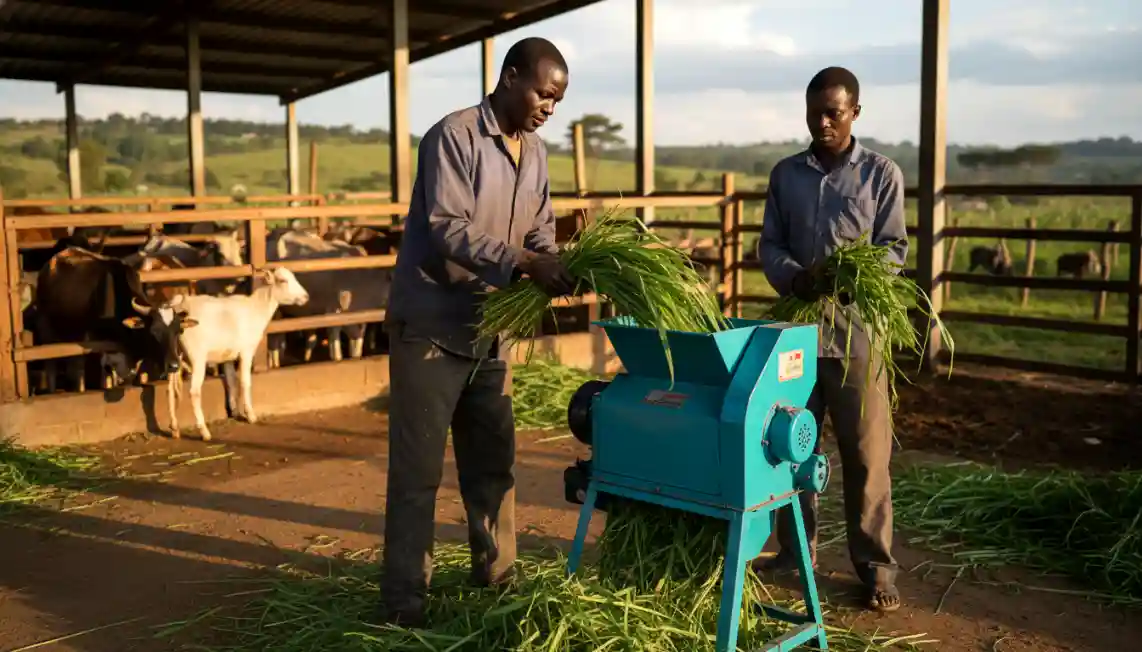
An animal feed vegetable shredder is a heavy duty agricultural machine designed to chop tough fodder and farm waste into fine, digestible pieces. It is built with industrial blades and high capacity motors, unlike standard kitchen appliances.
Read Also: Davis & Shirtliff Price List 2026 (Pumps, Solar & Borehole Costs Kenya)
A common misconception among beginner farmers is confusing domestic kitchen tools with actual agricultural machinery. A true vegetable shredder for animal feed is a robust, purpose-built machine engineered for the rigors of farm life. It is designed to handle tough, fibrous materials that would instantly burn out the motor of a standard household blender.
These machines feature heavy duty steel frames, sharp rotary blades, and powerful driving mechanisms such as electric motors or petrol engines. They are specifically used for processing agricultural output like vegetables, root crops, and hard fodder crops. The primary goal of this equipment is to mechanically break down plant cell walls to improve livestock digestion.
By transforming bulky plant waste into a fine mash or short chopped pieces, the machine helps improve overall feed conversion efficiency. This ensures that your dairy cows, pigs, or poultry extract maximum nutritional value from every single bite. Understanding this distinction is the first step toward building a mechanized, highly efficient feeding program.
Benefits of Using a Feed Shredder in Livestock Farming
Using a feed shredder reduces livestock feed wastage, improves animal digestion, and drastically cuts down manual labor costs. It allows farmers to prepare bulk feed efficiently, directly supporting the expansion of commercial agribusinesses.
The most immediate advantage of using a feed shredding machine is the massive reduction in feed wastage. On a typical Kenyan dairy farm without a chopper, cows can easily waste up to a third of their daily Napier grass allocation by stepping on it. Chopping the fodder into uniform pieces makes it impossible for the animals to sort and discard the tough stems.
Additionally, shredded vegetables and processed greens significantly improve digestion in poultry, goats, pigs, and dairy cows. Poultry farmers notice faster growth rates when their Kienyeji chickens are fed finely chopped sukuma wiki and cabbage. The smaller particle size allows stomach enzymes to break down the nutrients faster and more efficiently.
Read Also: Azolla Farming in Kenya: Cheap Animal Feed and Higher Profits in 2026
Beyond animal health, owning a shredder saves incredible amounts of labor time and daily wages. What would normally take a farmhand four hours to chop by hand can be processed by a 3HP electric machine in under twenty minutes. This efficiency enables bulk feed preparation and provides the critical infrastructure needed to support commercial farming growth.
Types of Vegetable Feed Shredders in Kenya Market
Feed shredders in Kenya are categorized by their power source, including manual hand-crank models, electric motor choppers, petrol or diesel engine machines, and multi-functional processing units.
Selecting the right category of equipment depends entirely on your location, power availability, and the specific scale of your agricultural operation. Treating Kenya as a monolith is a mistake, as farms in grid-connected Nairobi have different needs compared to off-grid farms in Narok. Below is a breakdown of the primary machine categories available in the local market.
Manual Feed Shredders
Manual feed shredders rely entirely on human physical effort through a hand crank or large flywheel mechanism. They are the ultimate low cost entry point for backyard farmers managing a very small number of animals. Because they require no electricity or fuel, their daily operating cost is practically zero.
Electric Feed Shredders
Electric models are currently the most common and highly sought after machines in Kenya due to their balance of power and convenience. Typically equipped with 1.5HP to 3HP electric motors, they are perfect for peri-urban poultry and dairy farms with reliable power connections. They offer clean, quiet, and highly efficient daily operation.
Petrol and Diesel Feed Shredders
For rural, off-grid farms or large scale operations, petrol and diesel engine feed shredders provide unmatched reliability. These machines usually feature powerful engines that deliver a much higher cutting capacity than standard electric models. They are incredibly powerful and can slice through thick, dry maize stalks with absolute ease.
Multi-Function Feed Machines
Multi-function 4-in-1 feed machines are industrial grade units designed to handle multiple stages of feed processing. They can shred soft vegetables, cut tough Napier grass, crush dry cereal grains, and perfectly mix composite feed ingredients. These are heavy investments tailored for serious commercial farms aiming for total feed independence.
Fodder Varieties You Can Process With a Chopper
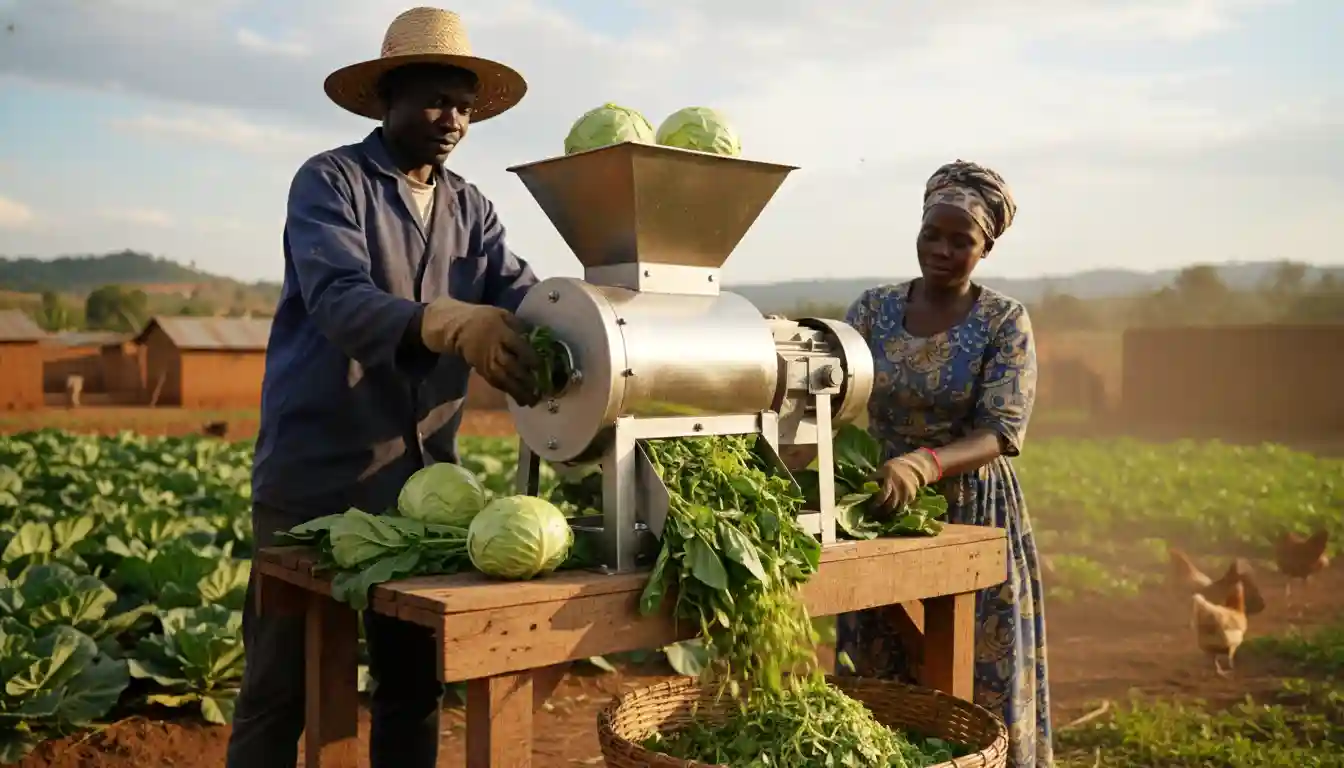
A high quality feed shredder can efficiently process farm vegetable waste like cabbage and sukuma wiki, alongside tough fodder crops including Napier grass, sweet potato vines, and dry maize stalks.
A major benefit of owning a versatile feed chopper is the sheer variety of organic materials you can instantly convert into valuable livestock nutrition. Cabbage leaves, sukuma wiki stalks, and general farm vegetable waste from local markets can be shredded into perfect poultry greens. This practice provides a virtually free source of natural vitamins for your growing birds.
Read Also: Hydroponic Fodder vs. Commercial Feed: Slashing Dairy Costs in 2026
Root crops and heavy vines are also incredibly easy to process with the correct blade setup. Pumpkins and sweet potatoes can be crushed and mixed with dry bran to create an energy rich mash for pigs. Sweet potato vines are chopped into neat, manageable strings that goats and dairy cows consume eagerly.
Finally, tough structural fodder like mature Napier grass and dried maize stalks are the primary targets for these heavy machines. Without a heavy duty shredder, these fibrous stalks are almost entirely rejected by dairy cows. Processing them ensures maximum fiber intake and clears your field quickly for the next planting season.
10 Best Vegetable Shredder Machines in Kenya Today
The best feed processing machines in Kenya include basic manual hand-crank models for beginners, 3HP electric choppers for medium dairy farms, and heavy duty 7.5HP petrol engines for off-grid operations.
Navigating the local machinery market can be overwhelming due to the sheer volume of unbranded imports and local fabrications. Instead of listing random brand names, we have structured this definitive buyer guide by machine category and working capacity. Here are the top categories of machines you should consider for your farm this year.
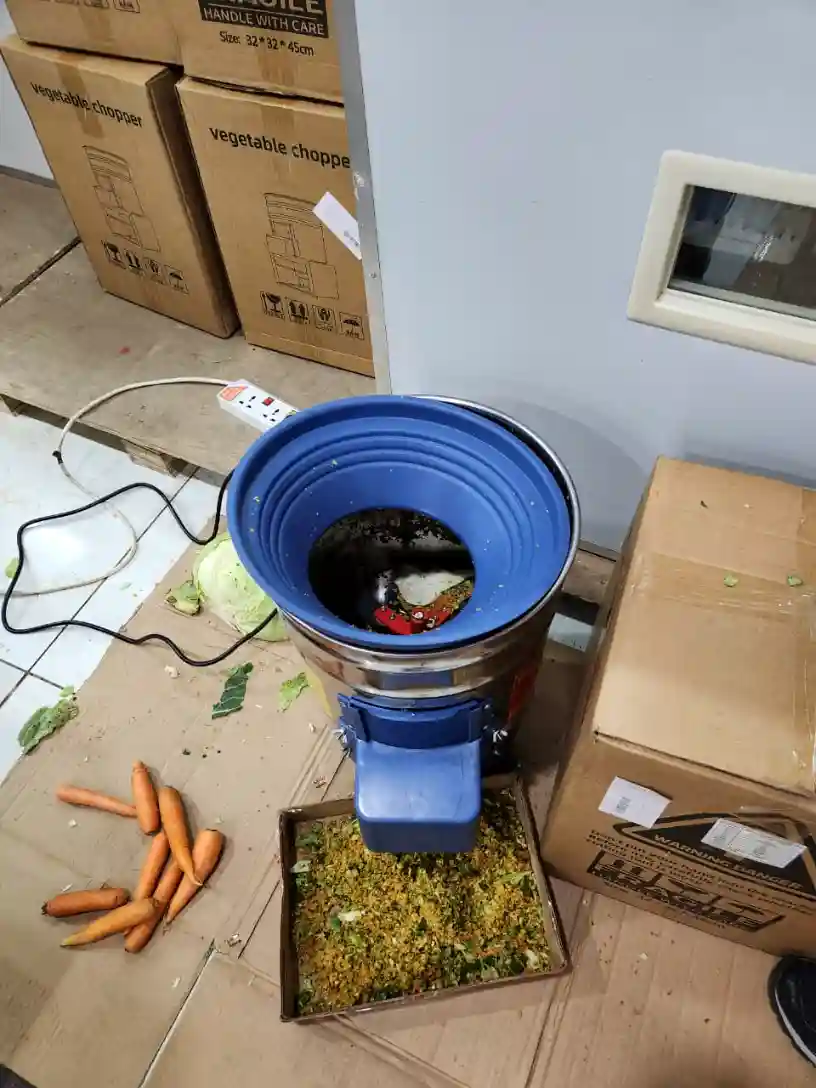
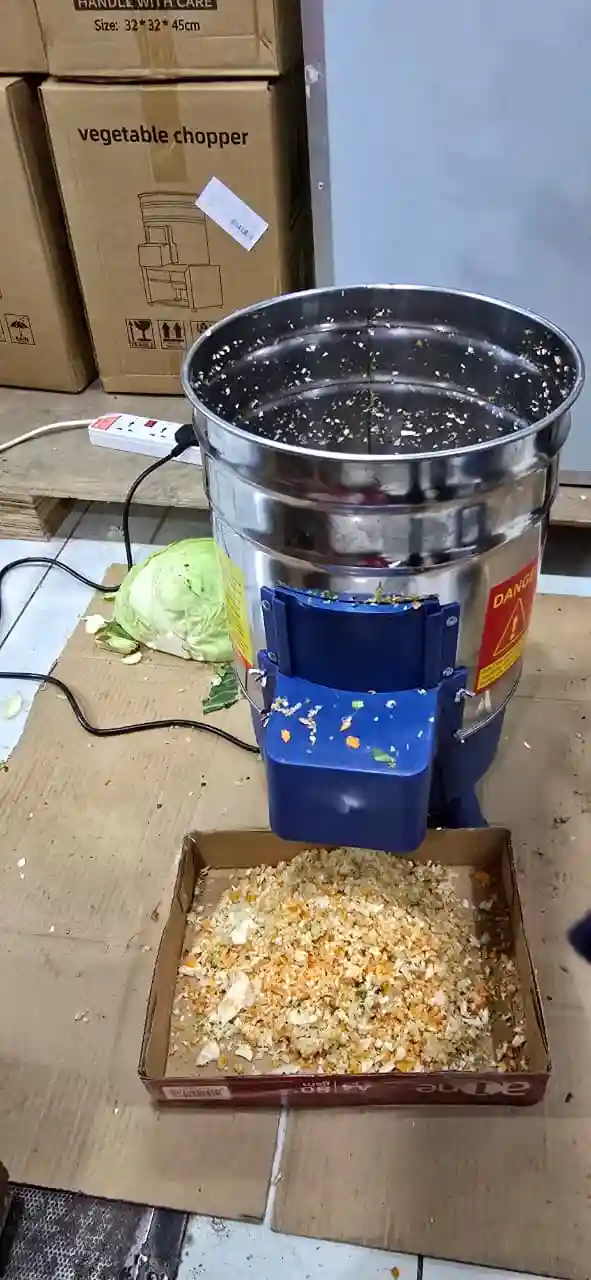
1. Stainless Steel Vegetable Shredders or Poultry Feed Mincers.
In the Kenyan market, especially among vendors in Kariobangi and on Jiji, they are also referred to as Green Feed Shredders.
Here is what you need to know about this specific design:
Target Use: These are built specifically for mincing soft vegetables like cabbage, sukuma wiki, and sweet potato vines. They are a favorite for poultry farmers who need to prepare “greens” for their birds.
The Build: The stainless steel body is critical because vegetable juices are acidic and would rust a standard iron machine in weeks.
The Blades: it uses a high-speed rotary blade system. This is meant for slicing, not crushing.
2. Heavy-Duty Jua Kali Flywheel Cutter
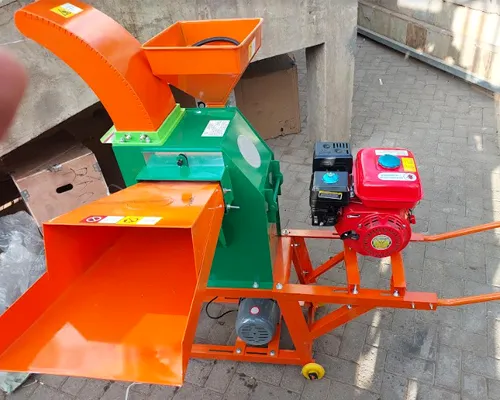
Fabricated locally by skilled artisans in hubs like Kamukunji, these machines use a massive weighted flywheel to maintain cutting momentum. They are much heavier and more durable than imported basic manual cutters. These units easily outlast cheap imports with minimal maintenance.
3. Stainless Steel Poultry Vegetable Shredder
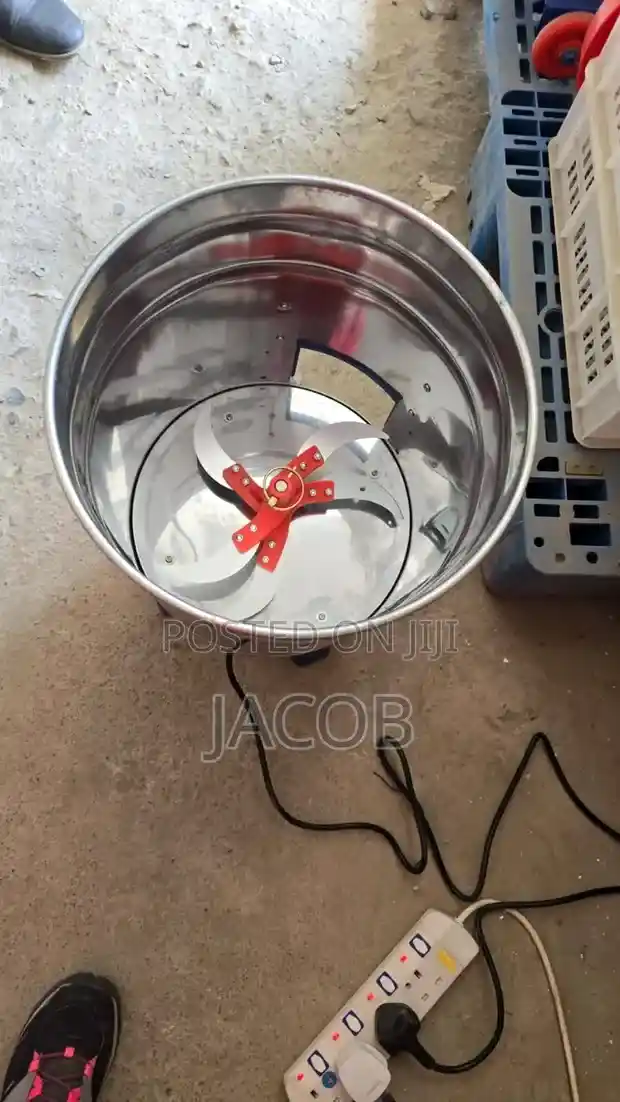
This specialized machine is built entirely from food-grade stainless steel to prevent rust from wet vegetable juices. It is designed specifically to finely mince greens rather than aggressively chop thick wood-like stalks. Poultry farmers highly prefer this unit for hygienic processing.
4. 1.5HP Light Electric Feed Chopper
A compact, motorized unit that takes the physical strain out of daily feed preparation. It plugs directly into a standard household wall socket, making it highly accessible for peri-urban farmers. This machine handles daily vegetable chopping with impressive speed.
5. 2HP High-Speed Electric Chaff Cutter
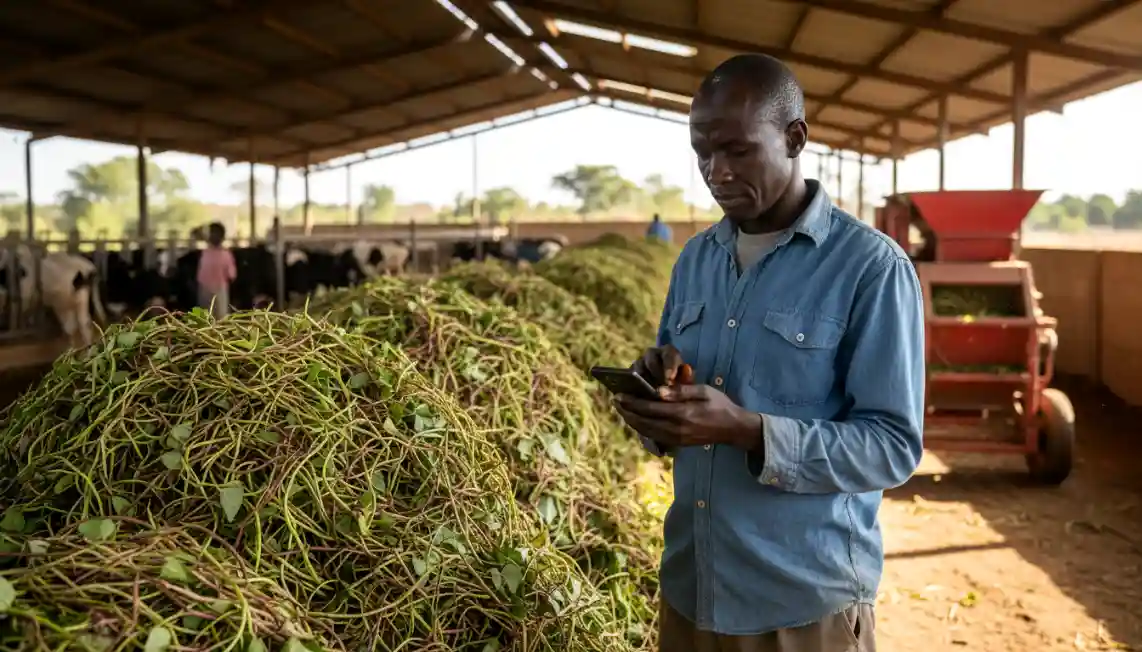
Stepping up in power, the 2HP model utilizes a high speed rotary drum to process tougher materials faster. It handles fresh Napier grass effortlessly, delivering a clean and sharp cut. Small dairy setups benefit greatly from this upgraded speed.
6. 3HP Heavy Duty Electric Shredder
This is the most highly recommended machine in the Kenyan market due to its exceptional balance of power and affordability. The 3HP motor will not stall easily, even when fed thick bunches of fibrous stalks. It perfectly suits serious agribusinesses connected to a reliable power grid.
7. 7.5HP Petrol Engine Feed Chopper
Equipped with a rugged standalone petrol engine, this machine completely bypasses power grid constraints. It is highly mobile and can be wheeled directly into the maize field for instant processing. Off-grid farmers demand this high output capacity for dry stalk management.
8. 7.5HP Diesel Feed Chopper
Diesel engines generate superior torque compared to petrol, making this machine virtually unstoppable. It consumes fuel highly efficiently, lowering the long term operational costs of large scale chopping. Mega farms rely on these units for heavy daily workloads.
9. Multi-Purpose 4-in-1 Feed Chopper
This advanced premium unit performs four distinct functions in one compact steel frame. It seamlessly shreds vegetables, cuts tough grass, crushes maize grains, and mixes the final feed composition. Serious commercial operators use this to formulate their own custom feeds.
10. Industrial Diesel Silage Chopper
Top 10 Places to Buy Feed Shredders in Kenya (2026)
This is a massive piece of commercial machinery specifically designed for large scale silage production. It features an integrated high velocity blower that shoots the chopped material directly into an awaiting transport truck. Contractors and mega-farms focus strictly on this tier of equipment.
Read Also: Improved Kienyeji Chicken Farming in Kenya 2026: Complete Guide to Breeds, Housing, Feeding and Profits
Finding the right supplier is the difference between a machine that lasts a decade and one that burns out in a month. In the 2026 Kenyan market, these ten locations are the most reliable for purchasing animal feed shredders, ranging from industrial-grade imports to robust local fabrications.
Top Suppliers for Animal Feed Shredders in Kenya (2026)
| # | Supplier Name | Location | Phone Number | Direct Link |
| 1 | Autohatch Incubators | Kariobangi North | 0711 275984 | View Shredder Machine |
| 2 | Ecokuku Farm Ltd | Outer Ring Road | 0710 905696 | ecokukufarm.ke |
| 3 | Skyhope Machinery | Industrial Area | 0799 021044 | skyhopemachinery.co.ke |
| 4 | Chaff Cutters Kenya | SMK Business Centre | 0796 349403 | chaffcutters.co.ke |
| 5 | Car & General (C&G) | Nairobi/Nakuru | 0800 724600 | cargen.com |
| 6 | Ndume Limited | Gilgil | 0796 259323 | ndumekenya.com |
| 7 | Farm Machinery Ltd | Nakuru | 0725 729229 | farmmachinery.co.ke |
| 8 | Kihysoco | Nairobi | 0705 031180 | kihysoco.com |
| 9 | BrazAfric Enterprises | Mombasa Road | 0722 925611 | brazafric.com |
| 10 | G-North & Son Ltd | Nairobi | 020 2343859 | gnorth.co.ke |
| 11 | Kenya Agri | Athi River | 0717 228844 | kenyaagri.com |
| 12 | Jua Kali Artisans | Kamukunji | 0745 442825 | juakalihardwaresupplies.co.ke |
Critical Verification Tips for 2026 Purchases
- The “Ladhies Road” Rule: If you are buying from the Kamukunji Jua Kali sector, do not send money via M-Pesa to individuals you haven’t met. Physically visit the workshop on Ladhies Road to inspect the steel gauge and the weight of the flywheel.
- Toll-Free Options: For major distributors like Car & General, always use their toll-free number (0800 724600) to verify current prices and stock availability in their Eldoret or Nakuru branches before traveling.
- Warranty Check: Authorized dealers (Skyhope, G-North, C&G) provide written 1-year warranties on electric motors. If a seller refuses to put a warranty in writing, walk away.
- Eldoret Farmers: If you are in the North Rift, Car & General’s Eldoret branch on Uganda Road is the most reliable for genuine spare parts for imported diesel choppers.
Vegetable Shredder Prices in Kenya for 2026
Prices for vegetable shredders in Kenya range from KES 2,000 for simple manual units up to KES 150,000 for heavy industrial machines. Motor capacity and build material dictate the final cost.
The cost of agricultural machinery in Kenya fluctuates based on import taxes, currency exchange rates, and raw material quality. However, understanding the current market baseline prevents you from being overcharged by unscrupulous middlemen.
The following table provides a clear and accurate snapshot of current machinery prices in major agricultural hubs. These figures represent the average retail costs found in authorized dealerships across Nairobi and Nakuru.
| Machine Category | Power Source | 2026 Price Range (KES) |
|---|---|---|
| Basic Manual Chopper | Hand Crank | 2,000 to 8,000 |
| Heavy Duty Manual | Flywheel | 15,000 to 25,000 |
| Light to Medium Electric | 1.5HP to 3HP Motor | 28,000 to 52,000 |
| Petrol Engine Chopper | 7.5HP Engine | 38,000 to 55,000 |
| Diesel Engine Chopper | 7.5HP Diesel | 65,000 to 78,000 |
| Industrial Silage Blower | 10HP Diesel Unit | 150,000 to 180,000 |
Risks and Reality Check: Machinery and Crop Failures
Investing in a shredder carries risks such as unexpected machinery breakdowns, motor burnouts from power surges, and severe crop failures. A prolonged drought can eliminate your fodder supply, rendering the expensive machine temporarily useless.
While mechanization is highly beneficial, many farmers ignore the stark realities and risks involved in machinery ownership. Unpredictable power surges in rural areas frequently cause electric motors to burn out, leading to costly rewinding repairs. If you lack access to a reliable technician, a simple broken belt can halt your entire feeding operation.
Additionally, severe weather variations and extended droughts pose a significant risk to your return on investment. If a prolonged dry spell destroys your Napier grass and vegetable crops, your expensive shredder will sit idle. Estimated ranges vary by management, but farmers must always maintain an emergency fund for both machine maintenance and alternative feed sourcing.
Fertilizer Generation: Composting Shredded Farm Waste Successfully
Shredded vegetable waste and rejected fodder can be composted into premium organic fertilizer. This nutrient-rich organic matter drastically reduces the need for expensive synthetic fertilizers on your farm.
Not all shredded material will be consumed by your livestock, especially if it gets soiled or ferments too quickly. Fortunately, this finely chopped agricultural waste is the perfect foundational material for creating high quality organic compost. The small particle size accelerates microbial breakdown, turning waste into dark humus in just a few weeks.
Using this farm-generated compost improves soil structure and cuts down your reliance on expensive chemical fertilizers like DAP or CAN. Integrating a shredder into your waste management protocol creates a closed-loop system that benefits both your animals and your crops.
Read Also:Azolla vs. BSF vs. Hydroponic Fodder: Which is the Cheapest Feed in Kenya? (2026 Edition)
Shredded vegetable waste decomposes rapidly, creating nutrient-rich compost that rivals expensive commercial fertilizers. The following table compares the benefits of using farm-generated compost versus standard synthetic options.
| Fertilizer Type | Nutrient Release Rate | Estimated Cost Impact |
|---|---|---|
| Shredded Organic Compost | Slow and sustained release | Virtually free to produce on-farm |
| Commercial NPK Fertilizer | Rapid but short-term impact | High recurring seasonal expense |
How to Choose the Best Feed Shredder Machine
To choose the right feed shredder, analyze your farm size, local power availability, and the specific type of livestock you raise. Balancing your budget against the machine capacity and spare parts availability is crucial.
Selecting the best machinery requires an honest assessment of your specific farm size and your daily operational limits. Buying an oversized industrial machine for five cows is a waste of capital. Match the machine capacity strictly to your daily feeding requirements to ensure optimal efficiency.
Power availability is the second most critical deciding factor for farmers in Kenya. If your local grid experiences constant power blackouts, investing heavily in a large electric motor will stall your daily operations. In such unpredictable areas, a petrol or diesel engine is fundamentally a safer and more reliable choice.
Finally, carefully inspect blade quality and the local availability of spare parts before handing over your money. A cheap imported machine becomes useless if you cannot find replacement belts or rotary blades in your local hardware store. Always prioritize established brands or reputable local fabricators who offer direct maintenance support.
Common Mistakes Farmers Make When Buying Machinery
Many farmers fail by buying kitchen-grade blenders for farm use, ignoring internal motor quality, or choosing a machine with the wrong capacity. Overpaying for unnecessary features without checking local maintenance support is another major trap.
The most devastating mistake beginners make is attempting to process tough farm waste using lightweight kitchen appliances. These domestic tools are engineered for soft fruits and will quickly fail when forced to crush fibrous sweet potato vines. You must invest in dedicated, heavy duty agricultural machinery to avoid immediate equipment failure.
Another common trap is ignoring internal motor quality and focusing solely on the cheapest available price tag. Substandard imported machines often feature motors wound with cheap aluminum wire instead of pure copper, leading to rapid overheating. Once a cheap aluminum motor burns out, the repair cost is often higher than simply buying a new machine.
Finally, farmers frequently overpay for flashy multi-function features they will never actually use. If you only need to chop Napier grass for two cows, buying an advanced grain mixing machine makes zero financial sense. Always stick to the core features that solve your immediate daily problems on the farm.
Is Investing in a Feed Shredder Worth It?
Investing in a feed shredder is highly profitable, typically offering a payback period of six to twelve months. It dramatically reduces feed wastage, lowers monthly labor costs, and speeds up the entire daily feeding process.
Understanding the true return on investment requires a look at exact financial realism on a typical Kenyan farm. Assume a dairy farmer in Githunguri feeds their cows one hundred kilograms of Napier grass daily. Without shredding, cows easily trample and waste up to thirty percent of the fodder, equating to roughly KES 150 lost daily.
Over the course of a standard thirty day month, this hidden wastage costs the farmer a painful amount of money. By purchasing a highly efficient electric feed chopper, the machine typically pays for itself in less than nine months on feed savings alone. This calculation proves that agricultural machinery is a rapid profit generator rather than a simple sunk cost.
Final Verdict on the Best Fodder Choppers
Your machine choice must strictly match your farm scale, not online marketing hype. Small farms should use manual or basic electric models, medium farms need 3HP electric shredders, and large farms require heavy petrol or 4-in-1 machines.
The hard truth about agricultural mechanization in Kenya is that machinery only saves money if properly matched to the farm’s actual output. If you own a small backyard setup, a heavy duty manual or entry level electric machine is more than sufficient. Do not tie up your limited capital in a massive diesel engine you will barely use.
For the vast majority of medium scale commercial farmers, the 3HP electric shredder represents the absolute sweet spot of price and performance. It possesses enough torque to handle daily bulk fodder without drastically spiking your monthly electricity bill. Ultimately, make your decision based on strict math, reliable local support, and your realistic long term agribusiness goals.
Farmers Also Ask
What is the best vegetable shredder for animal feed in Kenya?
The best shredder depends on your scale. Small farms excel with 3HP electric choppers, while large off-grid operations require rugged 7.5HP petrol or multi-purpose 4-in-1 machines.
How much does a feed chopper or chaff cutter cost in Kenya in 2026?
In 2026, manual cutters cost KES 8,000, reliable 3HP electric choppers average KES 40,000, and heavy duty 7.5HP diesel machines range between KES 65,000 and KES 78,000.
What is the difference between a vegetable shredder and a chaff cutter?
A vegetable shredder is designed to finely mince soft greens, while a chaff cutter uses heavier blades specifically engineered to chop tough, fibrous stalks like Napier grass.
Which type of vegetable shredder is best for poultry farming?
A food-grade stainless steel shredder or a high-speed 1.5HP electric chopper is ideal. They cleanly mince cabbage and sukuma wiki into fine pieces suitable for poultry.
Is a manual or electric feed chopper better for small farms in Kenya?
An electric chopper is vastly superior if you have reliable grid power, saving labor. Manual choppers are only recommended for zero-grazing setups with under three animals.
Where can I buy a vegetable shredder for animal feed in Nairobi?
You can buy quality shredders from authorized dealers in the Industrial Area, hardware stores, or heavy-duty local fabrications from Kamukunji Jua Kali artisans.
What is the price of a used Jua Kali chaff cutter in Kenya?
A second-hand Jua Kali chaff cutter typically costs between KES 10,000 and KES 18,000. Prices depend heavily on the condition of the flywheel bearings and cutting blades.
How profitable is investing in an animal feed processing machine in Kenya?
It is highly profitable. By reducing daily fodder wastage by 30 percent and cutting labor hours, a standard electric machine typically pays for itself within nine months.
What should I consider before buying a feed chopper machine in Kenya?
Evaluate your daily feed volume, local power stability, the thickness of the steel housing, motor winding quality, and the availability of replacement blades in your area.
Can a vegetable shredder be used for multiple livestock feeds like cattle, goats, and pigs?
Yes, versatile machines easily chop soft greens for pigs, vines for goats, and thick maize stalks for cattle, making them perfect investments for mixed-use commercial farms.