2026 farming guides and tips now live – read, learn, and grow more profit this season.
Coriander Varieties in Kenya: Best Dhania Types, Yields and Market Demand 2026

Coriander Varieties in Kenya: Best Dhania Types, Yields and Market Demand 2026

Successful coriander farming in Kenya requires selecting the right certified seeds from providers like Simlaw Seeds or Kenya Seed Company to guarantee high germination rates. In 2026, the demand for both fresh leafy dhania and seeds is projected to rise due to expanding urban markets and export opportunities.

Farmers are increasingly realizing that dhania is not just a garnish but a commercial powerhouse capable of generating quick cash flow. However, the difference between profit and loss often lies in technical details like soil pH, variety selection, and timing.

This guide serves as your definitive “Source of Truth” for maximizing yields and profits on your shamba.

Coriander Varieties in Kenya
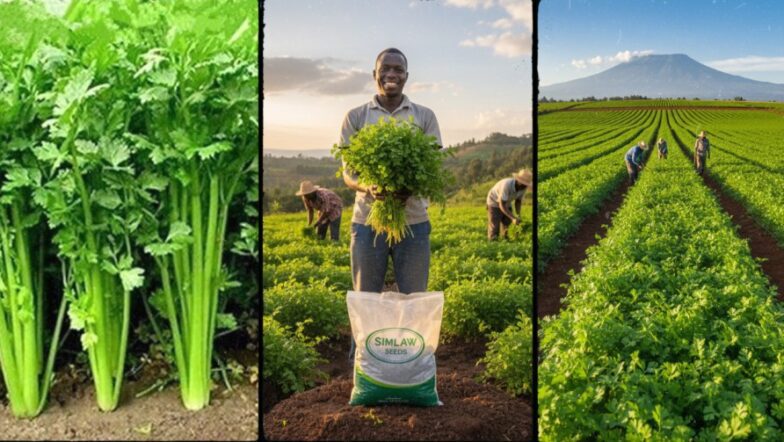
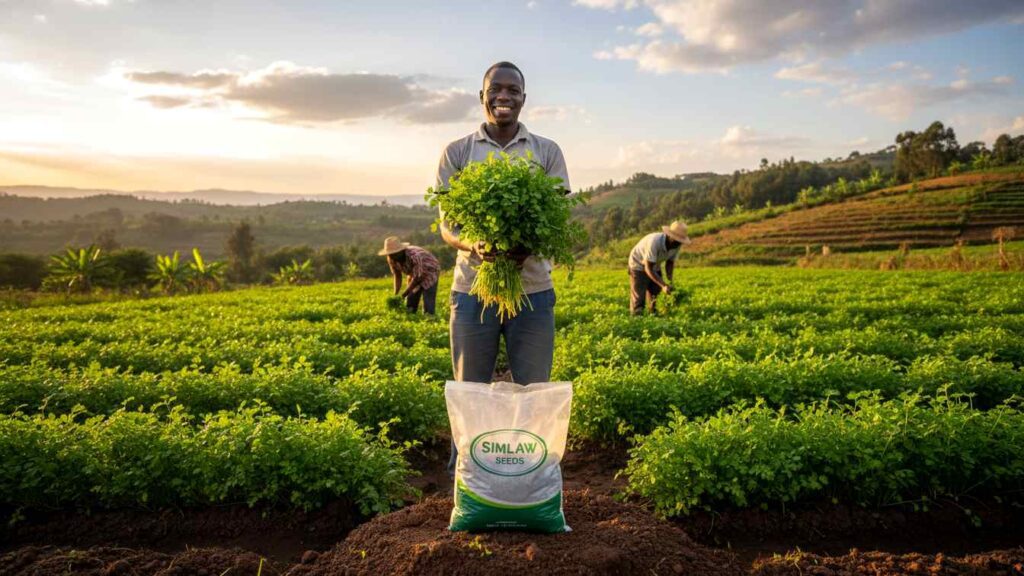
image of a farmer holding healthy Coriander infarm

What Are the Best Coriander Varieties to Grow in Kenya for Maximum Profit?

The most profitable coriander varieties in Kenya for 2026 include Dhania I (Improved)American Long Standing, and Cilantro Filter. These varieties are favored for their resistance to bolting, strong aromatic flavor, and rapid maturity of 4 to 6 weeks. Farmers should choose certified seeds from Kenya Seed Company or Royal Seed to ensure disease resistance and high vegetative yields essential for the fresh market.

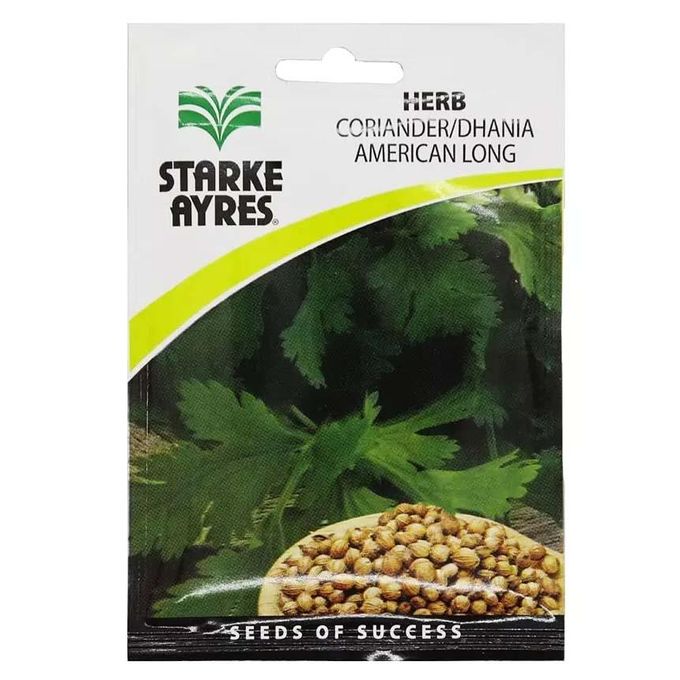
Starke Ayres Herb Coriander/Dhania American Long

Choosing the correct variety is the single most critical decision you will make as a farmer. In Kenya, the market generally prefers varieties that produce lush, broad leaves with a strong scent. If the leaves are too thin or lack aroma, brokers at Marikiti will downgrade your price immediately.

Dhania I (Improved) remains the industry standard for most smallholder farmers. It is marketed by Simlaw Seeds and is renowned for its adaptability to various climatic zones. It produces a high vegetative yield which is perfect for the local “bunch” market.

Another top contender is the American Long Standing variety. As the name suggests, this type resists “bolting” (flowering prematurely), which allows farmers a longer harvesting window for fresh leaves. This variety is critical if you are farming in hotter lowlands.

“Expert Tip: I always advise clients in hot areas like Kitui or Machakos to strictly use American Long Standing. Standard varieties will flower too quickly under heat stress, ruining your crop’s market value as a leafy vegetable.

Comparative Look at Top Varieties

Understanding the nuances between varieties can help you target specific markets. Here is how they stack up.

Variety NameKey FeatureBest RegionMaturity
Dhania I (Improved)High BiomassKiambuNyandarua6 Weeks
American Long StandingHeat ToleranceMachakosKajiado7 Weeks
Cilantro FilterUniform ColorMeru, Export Zones5-6 Weeks

Cilantro Filter is gaining traction in 2026 for export-oriented farmers. It has a uniform height and dark green color that appeals to supermarket buyers and exporters. This variety often fetches a premium price per kilo due to its aesthetic appeal on the shelf.

Indigenous varieties often saved by farmers exist but are discouraged for commercial farming. They often have poor germination rates and are susceptible to fungal diseases like Powdery Mildew. Investing in F1 or improved certified seeds is the cheapest insurance you can buy.

Always check the expiry date and lot number on seed packets. Counterfeit seeds are a real issue in the Kenyan agro-vet supply chain. Ensure the seed packet has the official KEPHIS certification sticker intact.

How Does the Climate in Different Kenyan Counties Affect Dhania Yields?

Coriander thrives in temperatures between 18°C and 25°C, making KiambuMeru, and Uasin Gishu ideal due to their cool, wet climates. However, excessive rain causes damping-off disease, while extreme heat in counties like Kajiado triggers premature flowering. Success in 2026 depends on matching your local micro-climate with irrigation management and soil drainage capability.

Module A: Regional Comparative Analysis (Kiambu vs. Meru vs. Kajiado)

To truly understand where coriander thrives, we must analyze the specific conditions of three distinct agricultural hubs in Kenya: KiambuMeru, and Kajiado. Each offers unique advantages and challenges for the modern agribusiness investor.

1. Kiambu County: The Market Leader

Kiambu is the historic heartland of leafy vegetable farming in Kenya. Its proximity to Nairobi means transport costs are negligible, and produce arrives fresh at Marikiti or City Market within an hour of harvest. This proximity is a massive competitive advantage.

The cool, damp climate in areas like Limuru and Githunguri is perfect for vegetative growth. However, the high humidity often leads to fungal issues like Powdery Mildew. Farmers here spend more on fungicides like Ridomil Gold but save significantly on logistics.

2. Meru County: The High-Yield Zone

Meru offers highly fertile volcanic soil and reliable rainfall, particularly in the Imenti zones. The 2026 outlook suggests Meru will overtake Kiambu in volume production due to land availability. The soil here is naturally rich in phosphates, reducing fertilizer costs.

The challenge here is distance. Transporting perishable dhania to Nairobi requires refrigerated trucks or night travel to prevent wilting. However, Meru farmers often secure better bulk prices from exporters who appreciate the consistent quality of crops grown in rich volcanic soil.

3. Kajiado County: The Irrigation Frontier

Kajiado represents the new wave of agribusiness. It is hotter and drier, necessitating drip irrigation systems. While the initial CAPEX is higher, the control over water means Kajiado farmers can produce year-round, even during droughts when prices spike.

The heat is a major risk factor for bolting. Farmers here must use shade nets or specific heat-resistant seeds. Yet, with fewer fungal pathogens in the dry air, pesticide costs in Kajiado are often 30% lower than in Kiambu.

Coriander Varieties in Kenya
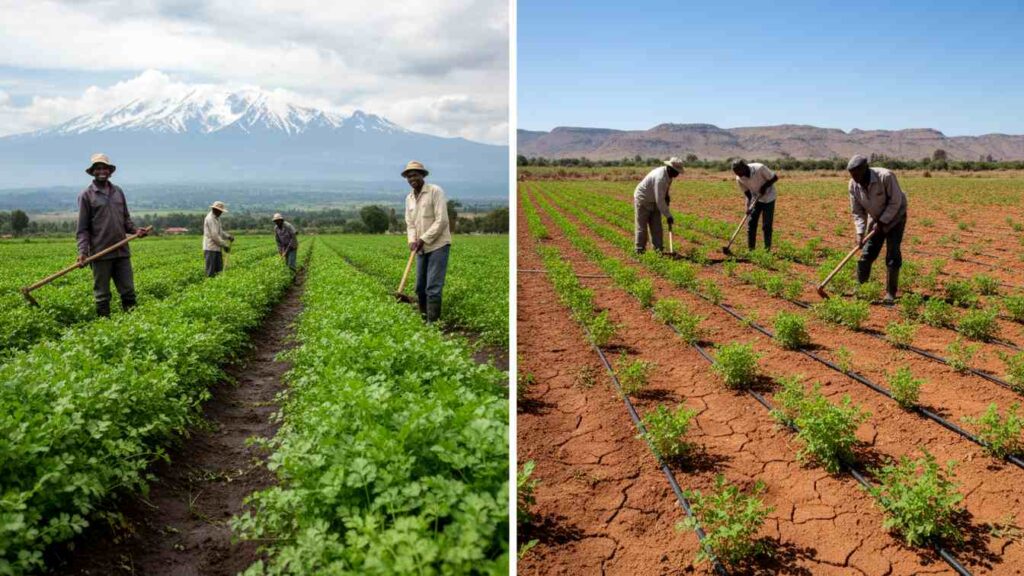
wide shot of a contrast between a lush

When Is the Best Time to Plant Coriander for Maximum Profit in 2026?

The most profitable planting windows are late February (for the Long Rains harvest) and September (for the Short Rains harvest). However, off-season production via irrigation in January and July yields the highest prices, often exceeding KES 100 per kg. Avoiding the peak market gluts in June and December is crucial for maximizing revenue in 2026.

Module B: 12-Month Farming Calendar

Timing is everything in coriander farming. Because the crop matures in just 4-6 weeks, you can squeeze in multiple cycles. This calendar assumes a standard Kenyan bimodal rainfall pattern.

  • January (Dry/Hot):
    • Action: Plant under irrigation.
    • Why: Supply is low across the country. Prices are high.
    • Risk: Heat stress requires frequent watering.
  • February (Pre-Rains):
    • Action: Land preparation for long rains. Sowing in late Feb.
    • Why: To catch the early rains for germination.
  • March (Long Rains Start):
    • Action: Main season planting. Weeding.
    • Why: Free water reduces costs, but fungal risks rise.
  • April (Heavy Rains):
    • Action: Disease management (spraying). Harvesting early crop.
    • Why: Marikiti floods with produce; prices dip. Focus on volume.
  • May (Rains Tapering):
    • Action: Second cycle planting.
    • Why: Soil moisture is still high.
  • June (Cold/Dry):
    • Action: Harvest main crop.
    • Why: Prices are lowest due to market glut.
  • July (Cold Season):
    • Action: Plant cold-tolerant varieties.
    • Why: Growth slows down; supply starts to drop.
  • August (Cold/Dry):
    • Action: Irrigation planting.
    • Why: Preparing for the October market gap.
  • September (Short Rains Prep):
    • Action: Land preparation. Sowing.
    • Why: Targeting the festive season harvest.
  • October (Short Rains):
    • Action: Weeding and top dressing.
    • Why: Rapid growth phase.
  • November (Short Rains):
    • Action: Pest control (Aphids).
    • Why: Warm and wet conditions breed pests.
  • December (Festive Season):
    • Action: Harvest.
    • Why: High demand for cooking, but high supply often stabilizes prices.

How Much Does It Cost to Start Farming Dhania and What Are the Expected Returns?

Starting one acre of coriander in 2026 costs approximately KES 25,000 to KES 40,000 depending on irrigation and labor needs. With an average yield of 4-6 tonnes per acre and a conservative price of KES 40 per kg, gross revenue can reach KES 160,000 to KES 240,000 per cycle. This offers a potential ROI of over 300% within two months.

Module C: Deep-Dive Financials (1 Acre Model)

Farming is a business, not a hobby. Below is a detailed financial breakdown for one acre of coriander production in Kenya, adjusted for 2026 economic conditions. These figures assume you own the land or are leasing it separately.

Break-Even Analysis

To break even, you need to cover your total production cost of KES 37,500. At a low market price of KES 20/kg, you need to harvest 1,875 kg. At a good market price of KES 50/kg, you only need to harvest 750 kg. Since a well-managed acre yields 4,000kg+, the risk is relatively low.

2026 Production Budget (KES)

Expense ItemDetailsCost (KES)
Land PreparationPloughing & Harrowing (Tractor)6,000
Certified Seeds5kg @ KES 1,500/kg (Simlaw/Kenya Seed)7,500
Manure & FertilizerAnimal Manure (3 tons) + DAP (50kg)10,000
LabourPlanting, Weeding (2 rounds), Harvesting8,000
Crop ProtectionPesticides & Fungicides (Osho/Syngenta)4,000
MiscellaneousTransport, Sacks, Airtime2,000
TOTAL INPUT COSTDirect Production Costs37,500

Projected Revenue (Per Cycle)

ScenarioYield (kg)Price per kg (KES)Gross Revenue (KES)Net Profit (KES)
Conservative3,0002060,00022,500
Average4,00040160,000122,500
High Performance5,00060300,000262,500

Personal Expert Tip: Do not rely on “farm gate” brokers if possible. Transporting your produce to the market yourself can increase your margin by KES 10-15 per kg.

What Are the Best Practices for Land Preparation and Planting Dhania?

Land should be ploughed and harrowed to a fine tilth, as coriander seeds are small and struggle in clumpy soil. Use a seed rate of 5-8 kg per acre. Mix seeds with sand for even distribution and plant in shallow drills 30cm apart. Apply well-decomposed manure and DAP fertilizer during planting to boost early root development.

Your shamba preparation determines 50% of your success. Coriander has a weak taproot system, meaning it cannot push through hardpan soil. If the soil is not loose, the roots will stunt, leading to a poor harvest.

Step 1: Fine Tilth is Mandatory Ensure the soil is powdery. Large clods of earth will bury the small seeds too deep, preventing germination. If you are hiring a tractor service, insist on a thorough harrowing pass to break up all lumps.

Step 2: Seed Preparation Coriander “seeds” are actually fruits containing two embryos. Experienced farmers gently crush the round seeds between two boards or rub them with a slipper to split them into two. This effectively doubles your seed count and speeds up germination, which is a vital cost-saving trick.

Step 3: Sowing Depth and Spacing Plant shallow—no deeper than 1 inch (2.5 cm). If you plant too deep, the energy reserves in the seed will be exhausted before the sprout reaches sunlight. Space your drills about 30cm apart to allow for easy weeding later.

Fertilizer Application for Maximum Yields

While manure is excellent, commercial farming requires a starter fertilizer. Use DAP (Diammonium Phosphate) at the planting stage at a rate of 50kg per acre. The phosphorus in DAP promotes vigorous root establishment, which is crucial for a short-cycle crop like dhania.

Avoid using urea or CAN during planting as they can “burn” the delicate seeds. Reserve nitrogenous fertilizers for top dressing three weeks after germination.

How Can Farmers Effectively Manage Pests and Diseases in Coriander?

Major pests include Aphids and Cutworms, while common diseases are Powdery Mildew and Damping-off. Manage aphids using Acetamiprid based sprays and control fungal issues with Mancozeb or Copper-based fungicides. Crop rotation is essential to prevent soil-borne diseases from building up.

Pests: Aphids are the biggest enemy. They suck sap and cause leaves to curl and yellow. Treat immediately upon sighting, as they reproduce rapidly. Cutworms attack young seedlings at the stem base. Drenching the soil with a suitable insecticide during planting can prevent this.

Diseases: Damping-off kills seedlings before they establish. Avoid overwatering and ensure good drainage. Powdery Mildew appears as white dust on leaves during humid weather. It renders the crop unsellable. Use products like Ortiva or similar fungicides recommended by Osho Chemicals.

Common Problems and Solutions Table

ProblemSymptomsChemical Solution (Active Ingredient)
AphidsCurled yellow leaves, sticky honeydewAcetamiprid or Imidacloprid
CutwormsSeedlings cut at soil level overnightLambda-cyhalothrin (drench)
Powdery MildewWhite powdery spots on leavesAzoxystrobin or Sulphur-based sprays
Soft RotMushy, smelling stemsCopper Oxychloride (preventative)

Integrated Pest Management (IPM) is highly recommended. This involves using sticky traps for whiteflies and aphids before resorting to harsh chemicals. Remember, dhania is often eaten raw, so observing the Post-Harvest Interval (PHI) of any chemical you use is a moral and legal obligation.

What Does the Supply Chain Look Like and How Can You Add Value?

The supply chain moves from Farm -> Aggregator/Broker -> Wholesale Market (Marikiti) -> Retailer (Mama Mboga/Supermarket). To add value, farmers can wash, grade, and package fresh dhania in branded bunches for supermarkets, or dry excess produce to create coriander powder, which has a longer shelf life and higher value density.

Module E: Supply Chain & Value Addition

Understanding the journey your crop takes from the soil to the plate is key to finding profit leaks. In Kenya, the supply chain is often fragmented.

The Traditional Route: Most farmers sell to brokers at the farm gate. While convenient, brokers often dictate low prices, claiming “bad market conditions” in Nairobi. They use 90kg bags (which damage the leafy crop) to transport it to markets like Wakulima Market.

The Modern Route: Savvy farmers in 2026 are bypassing brokers. They form groups and hire a Canter truck to deliver directly to traders in urban centers. Even better, some are contracting directly with grocery startups and supermarkets like Naivas or Carrefour.

Value Addition Opportunities: 1. Packaging: Instead of selling in rough sacks, clean the dhania, remove yellow leaves, and tie them into uniform bunches. Pack these in perforated plastic bags with a label. This appeals to the middle-class shopper. 2. Drying: If the market price crashes, do not let your crop rot. Harvest, wash, and solar-dry the leaves (in the shade to keep the green color). Dried coriander flakes sell at a premium in spice aisles. 3. Seed Production: If the vegetative market is poor, let the crop flower and produce seeds. Coriander seeds (spices) are non-perishable and can be stored until prices rise.

Coriander Varieties in Kenya
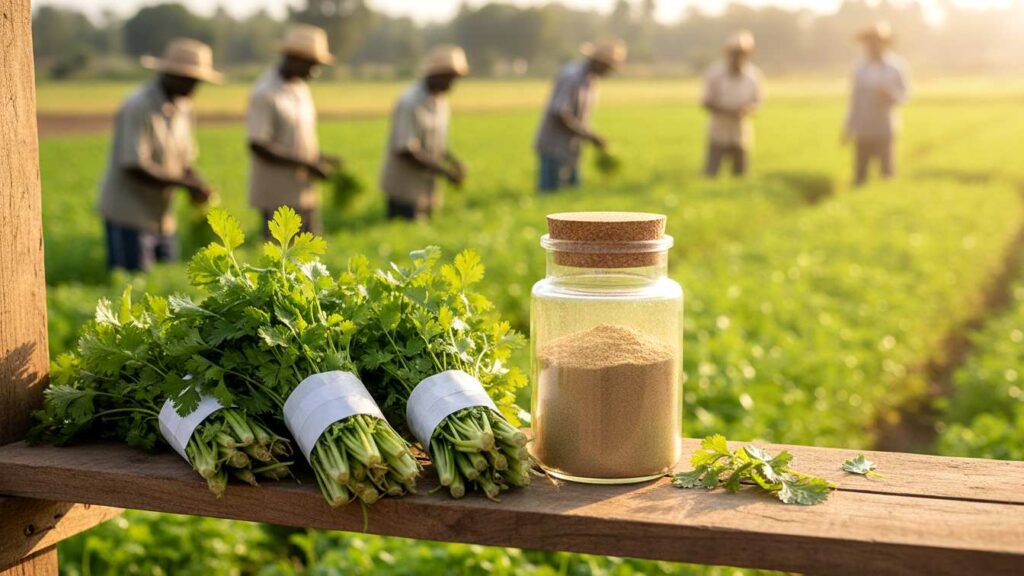
close-up of value-added coriander products: fresh bunches in labeled plastic packaging next to a glass jar of dried coriander powder on a wooden shelf.

2026 Outlook: Is Coriander Farming Still Profitable?

As we navigate 2026, the outlook for coriander farming in Kenya remains highly positive. The trend towards healthy eating and the explosion of culinary interest in herbs ensures steady demand. The rise of food delivery apps in Nairobi has also increased the demand for fresh garnishes.

However, climate unpredictability is the new normal. Farmers who rely solely on rain will struggle with consistency. The winners in 2026 will be those who invest in simple drip irrigation kits and certified drought-resistant seeds.

My Final Verdict: Dhania is an excellent “cash flow” crop. It keeps money coming into the farm account every 6 weeks, which can fund long-term projects like avocado or coffee farming. Do not ignore it.

 Ready to start? Don’t guess. Visit your nearest Kenya Seed Company stockist today to buy certified seeds. Prepare your land now, and you could be harvesting your first profit in less than 45 days!

FAQ: Farmers Also Ask

Why do my coriander leaves turn yellow?

Yellowing leaves usually indicate nitrogen deficiency or waterlogging. Coriander hates “wet feet.” Ensure your soil drains well. If the soil is dry and leaves are yellow, apply a nitrogen-rich foliar feed or top-dress with CAN fertilizer.

 How many kgs of dhania can 1 acre produce?

A well-managed acre can produce between 4,000 kg to 6,000 kg (4-6 tonnes) of fresh coriander. In terms of bunches, this can translate to over 20,000 medium-sized bunches depending on your bundling size.

What is the best fertilizer for dhania?

Start with well-decomposed manure and DAP during planting to support root growth. After 2-3 weeks, top dress with CAN or Urea to boost vegetative (leaf) growth. Foliar fertilizers rich in Nitrogen and trace elements are also effective.

Can I grow coriander in a greenhouse?

Yes, but it is rarely cost-effective unless you are targeting a premium niche market. Open field farming is cheaper. However, a greenhouse guarantees clean, pest-free produce which can fetch higher prices in high-end markets.

How do I stop my coriander from flowering too early (bolting)?

Bolting is caused by heat stress or water shortage. To prevent it, use bolt-resistant varieties like American Long Standing, mulch the soil to keep roots cool, and irrigate consistently. Avoid planting in the hottest months if you lack irrigation.

Where can I buy certified coriander seeds in Kenya?

Buy from reputable agrovets stocking Simlaw SeedsKenya Seed CompanyRoyal Seed, or East African Seed. Avoid buying seeds from the open market (grocery section) as they have poor germination rates.

 Is there a market for dried coriander leaves?

Yes, there is a growing market for dried herbs. You can sell to spice processors or package it yourself. It requires proper drying techniques (shade drying) to retain the green color and aroma.

What is the maturity period for dhania?

Coriander matures very fast. You can start harvesting lower leaves for home use at 4 weeks. Commercial harvesting usually happens between 5 to 7 weeks after planting.

How do I control weeds in a coriander farm?

Weed control is difficult because coriander is delicate. Hand weeding is the safest method. Do it early when weeds are small. There are selective herbicides available (like Linuron), but they must be applied carefully by a professional to avoid killing the crop.

Can I intercrop coriander with other crops?

Yes, coriander is an excellent intercrop. It repels aphids and spider mites. It grows well between rows of tomatoes, cabbages, or sukuma wiki. Just ensure it doesn’t get completely shaded out by the taller crops.

Mango Farming in Kenya: Spacing, Seedlings, Yields and Profit per Acre in 2026

Mango Farming in Kenya: Spacing, Seedlings, Yields and Profit per Acre in 2026

Mango farming has solidified its status as the “Green Gold” of Kenyan agribusiness, offering resilient farmers potential net profits exceeding KES 400,000 per acre annually once trees mature. As we step into 2026, the sector is evolving from traditional subsistence farming to high-tech, export-oriented agribusiness. This authoritative guide breaks down the exact 2026 cost structures, high-yielding Apple Mango varieties, and spacing techniques required to dominate the local and export markets.

The global demand for exotic fruits is rising, and Kenyan mangoes are prized for their unique flavor profile. However, achieving export-quality yields requires precision, adhering to strict spacing rules, and selecting the right genetic material. Farmers can no longer rely on rainfall alone; the shift towards irrigation and certified seedlings is the defining trend of 2026.

This comprehensive manual will serve as your blueprint for success. We will cover everything from soil preparation in Makueni to the complex logistics of exporting Kent mangoes to the European Union. Whether you are a novice looking to plant your first acre or a seasoned farmer aiming to optimize yields, this guide contains the financial and technical data you need.

Mango Farming in Kenya
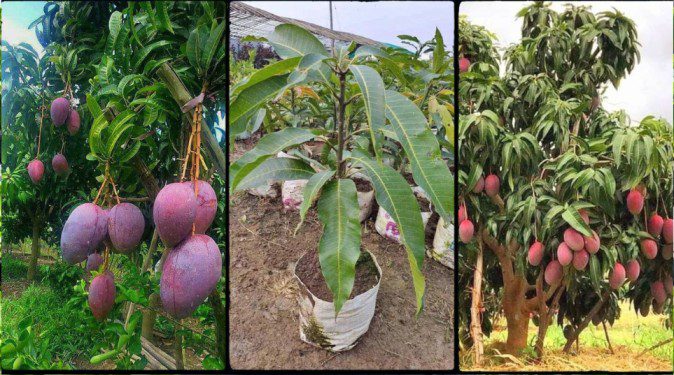
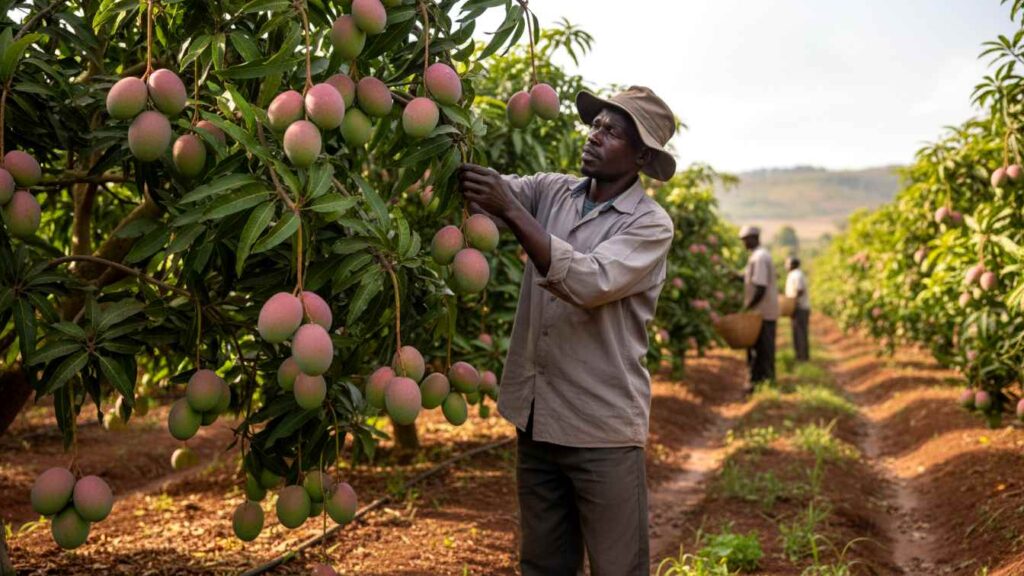
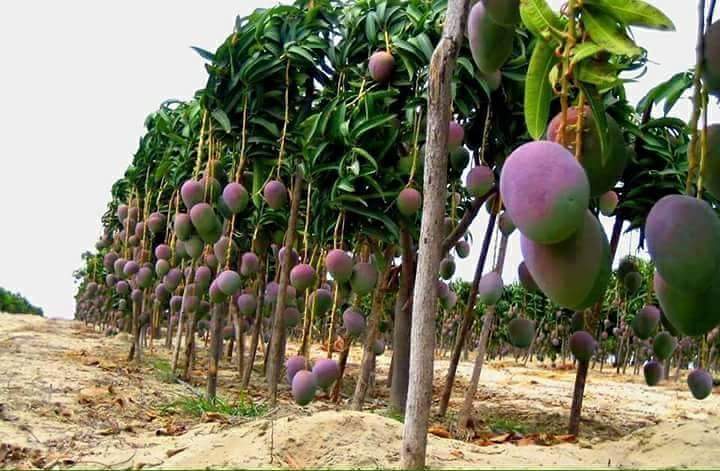
image of a lush Apple Mango orchard in Makueni

Which Kenyan Counties Offer the Best Climate for High-Yield Mango Farming?

MakueniKilifi, and Meru are the top performers for 2026. While Makueni leads in total volume and processing infrastructure, Kilifi dominates the coastal Ngowe variety production. Meru and Murang’a represent the high-potential zones for late-season harvesting, which often fetches premium prices due to market scarcity.

Module A: Regional Comparative Analysis

Success in mango farming depends heavily on location. The ecological requirements for mangoes—hot, dry climates with specific stress periods to induce flowering, vary significantly across Kenya. In 2026, smart farmers are analyzing micro-climates within these counties to gain a competitive edge.

1. Makueni County (The Volume Leader)
Makueni remains the undisputed king of mango production in Kenya, boasting over 4 million mango trees. The semi-arid climate of zones like Kibwezi and Wote is perfect for the Apple Mango and Tommy Atkins varieties. The hot temperatures ensure high sugar accumulation (Brix levels), making the fruit incredibly sweet. However, the market here often faces a “glut” (oversupply) between December and February. This oversupply drives farm-gate prices down to as low as KES 5 per piece during peak weeks. Farmers here must invest in value addition or timing technologies to delay harvest. Contacts like Mugo Farmers often source heavily from this belt for juice processing.

2. Kilifi County (The Coastal Specialist)
The humid coastal heat favors the indigenous Ngowe mango. This variety is large, incredibly sweet, and fiber-free, making it the top choice for processors and juice makers. Kilifi farmers enjoy an earlier harvest season compared to Eastern Kenya, allowing them to hit the Nairobi market before prices crash. The challenge here is high fungal pressure (Anthracnose) due to humidity. This requires strict spray programs recommended by KALRO to keep fruit skins clean. Farmers in Malindi and Magarini are also experimenting with Apple Mango with moderate success.

3. Meru & Murang’a (The Off-Season Strategists)
These counties are changing the game in 2026. Located in slightly higher altitudes, trees here mature slower and fruit later. When Makueni runs dry in March or April, Meru farmers are just harvesting. This allows them to sell Apple Mangoes at KES 30–50 per piece farm-gate, tripling the revenue of their eastern counterparts. This region is the current frontier for smart investors looking to avoid the mid-season price crash. Specific areas like Tharaka Nithi offer a blend of heat and altitude that prolongs the growing season.

4. Machakos & Kitui (The Emerging Giants)
Machakos, particularly the Yatta belt, utilizes the Yatta Canal for irrigation, stabilizing yields even during drought years. Kitui has vast tracts of affordable land suitable for large-scale mechanization. The soil in these areas is typically well-drained sandy loam, which prevents root rot and encourages deep root penetration. Farmers here are rapidly adopting high-density planting to maximize land use.

“Personal Expert Tip: If you are buying land specifically for mangoes in 2026, look at Tharaka Nithi or lower Murang’a. The land is cheaper than Makueni, and you hit the lucrative late-season window.

What Are the Best Commercial Mango Varieties for the Kenyan Market in 2026?

Mango Farming in Kenya: Spacing, Seedlings, Yields and Profit per Acre in 2026

The Apple Mango remains the most profitable for fresh market sales due to its red skin and long shelf life. The Ngowe is unmatched for processing and local sweetness. The Kent variety is gaining traction for the European export market because it is fiberless and resistant to damage during shipping.

Choosing the right variety (cultivar) is the first financial decision you will make. In 2026, the market has shifted towards fruits that look good (cosmetic appeal) and travel well. Below is an in-depth look at the specific varieties driving the Kenyan market.

1. The Apple Mango (The Local King)

The Apple Mango
The Apple Mango growing in Machakos

This is the “cash cow” of Kenyan orchards and the most planted variety in Makueni and Machakos. It is easily identifiable by its rich red blush when ripe, which attracts buyers in the soko. It is a heavy yielder, often producing 300-500 fruits per mature tree under optimal care. The flesh is yellow, juicy, and relatively fiber-free, making it excellent for fresh consumption. It has a medium shelf life and is moderately resistant to Anthracnose. Beginners should dedicate 70% of their orchard to grafted Apple Mango seedlings from certified nurseries like Kimplanter or Agri-SeedCo.

2. The Ngowe (The Sweetest Specialist)

Native to the Kenyan coast, the Ngowe is a large, beak-like mango that turns deep yellow upon ripening. It is widely regarded as the sweetest mango in Kenya and the preferred variety for export to the Middle East. However, it has a thin skin and bruises easily, making transport difficult over long distances on rough roads. It is best grown if you have a contract with a processor or a nearby market. Processors like Coca-Cola (Minute Maid) often prefer Ngowe pulp for its high brix content and distinct aroma.

3. The Kent (The Export Standard)

If you plan to export to the EU, Kent is your mandatory choice. It is a late-maturing variety, often ready when other varieties have finished. The fruit is large, maintaining a green skin with a slight red blush even when fully ripe. Inside, the flesh is deep orange, completely fiberless, and has a butter-soft texture. Kent has a thicker skin than Ngowe, allowing it to withstand sea freight to Europe without rotting. It fetches a premium price but requires rigorous pest management to meet export standards.

4. Tommy Atkins (The Survivor)

Tommy Atkins is the tough guy of mangoes; it survives rough transport and stays fresh for weeks on the shelf. It is characterized by its dark red to purple skin and medium size. While it is excellent for supermarkets that require long shelf life, the taste is often fibrous and less sweet than Apple or Ngowe. It is highly resistant to Anthracnose and Powdery Mildew. This makes it a safe bet for areas with higher humidity or for farmers who cannot spray frequently.

5. Vandyke (The Aesthetic Choice)

Vandyke is gaining popularity for its stunning bright red color and uniform shape. It is a smaller fruit compared to the Kent or Apple mango but packs a punch in flavor. It is highly productive and has a regular bearing habit, meaning it produces fruit every year without fail. However, it is susceptible to “jelly seed,” a condition where the flesh around the seed breaks down. Proper calcium nutrition is required to manage this issue.

6. Haden and Sabine (Niche Varieties)

Haden is the parent of many modern mango varieties and offers a spicy, rich flavor beloved by connoisseurs. Sabine is an emerging variety in the coastal region, known for its massive size and disease resistance. While less common, these varieties can fetch high prices in specialized markets or high-end grocery stores in Nairobi like Zucchini.

The Importance of Rootstocks

When buying seedlings, the variety on top (scion) matters, but the rootstock matters more for survival. In Kenya, the most common rootstocks are Sabre and PeachSabre rootstocks are drought-tolerant and ideal for the rocky soils of Eastern Kenya. Peach rootstocks offer vigor but require better soil fertility. Always ask your nursery provider which rootstock they have used to ensure it matches your soil conditions.

Mango Farming in Kenya
Close-up high-resolution shot of a grafted Apple Mango seedling showing the graft union

What Does a Successful Mango Farming Calendar Look Like for a Kenyan Year?

A profitable calendar revolves around the rains. Planting occurs during the onset of the Long Rains (April) or Short Rains (October). Crucially, you must stress trees (withhold water) in July/August to induce flowering, followed by aggressive pest management during fruit setting in September/October to combat fruit flies.

Module B: 12-Month Farming Calendar (2026 Edition)

Farming without a calendar is gambling. In 2026, successful farmers use data-driven schedules to anticipate pest attacks and market windows. Below is the standard operation cycle for a mature orchard in Eastern Kenya.

January – February: Harvesting & Marketing
This is the peak harvest season for Eastern Kenya (Makueni/Kitui). Focus on careful harvesting using poles with catching nets to avoid fruit falling. Bruised fruits rot within 48 hours and are rejected by exporters. Aggressively market your produce to aggregators or via digital platforms. Ensure you have crates ready; never transport in sacks.

March – April: Pruning & Planting
Immediately after harvest, prune the trees aggressively. Remove dead branches, water shoots, and open the center of the canopy to let sunlight in. This sunlight penetration reduces fungal disease and encourages new fruiting spurs. This is also the best time to dig holes (2ft x 2ft x 2ft) and plant new grafted seedlings as the Long Rains begin. Source seedlings from Simlaw Seeds or local certified nurseries.

May – June: Vegetative Growth & Nutrition
Apply well-decomposed manure (2 debes per tree) and NPK fertilizer rich in Nitrogen (like NPK 23:23:0) to support leaf growth. Weeding is critical here; the shamba must be clean to prevent competition for nutrients. Foliar sprays with Zinc and Magnesium help strengthen the new leaves. Monitor for leaf miners and aphids during this flush stage.

July – August: Flowering Induction (The Money Phase)
This is where amateurs fail and professionals succeed. You need the tree to stop growing leaves and start growing flowers. In professional farming, we use Potassium Nitrate (foliar spray) to induce flowering if the weather isn’t cold enough. Stop watering the trees to stress them slightly; this “dry shock” signals the tree to reproduce. Inspect for Powdery Mildew, which appears as white dust on flowers, and treat with sulfur-based fungicides immediately.

September – October: Fruit Set & Pest Control
Once fruits are the size of marbles, the Fruit Fly is your primary enemy. Install pheromone traps (like the ones from Real IPM or Kenya Biologics) at a rate of 4 per acre. Do not spray harsh chemicals that kill pollinators (bees) during the day. Apply Calcium and Boron foliar fertilizers to prevent fruit cracking and ensure a firm skin. Thin the fruits if the cluster is too heavy to prevent branch breakage.

November – December: Fruit Maturity & Protection
Support heavy branches with wooden props to prevent snapping under the weight of the fruit. Begin scouting for buyers and negotiating prices before the harvest begins. If you have late-season varieties, your harvest might push into January, fetching better prices. Stop all chemical spraying at least 21 days before harvest (Pre-Harvest Interval) to ensure safety.

Mango Farming in Kenya
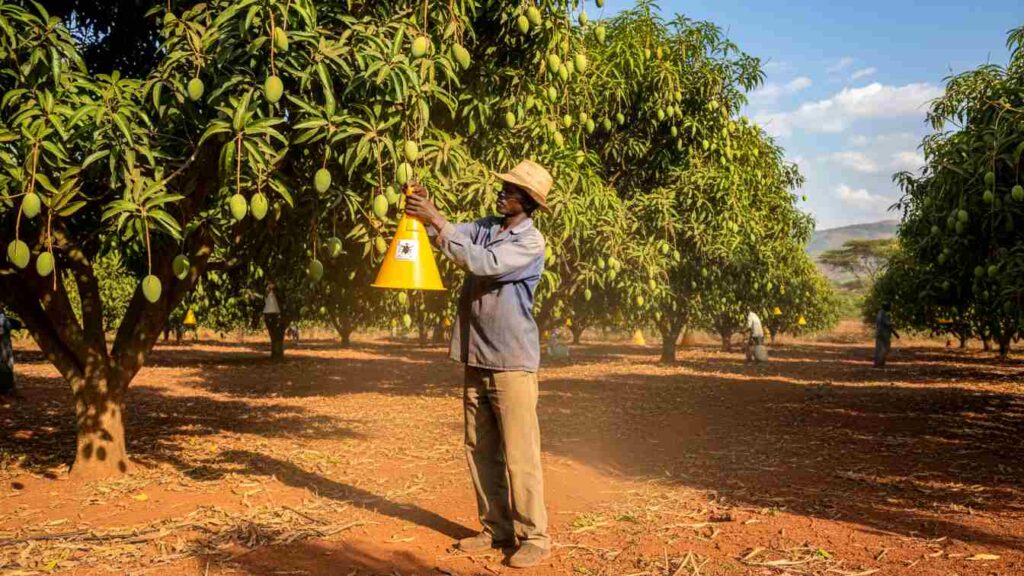
A farmer installing a yellow pheromone fruit fly trap on a mango tree branch in a sunny orchard in Eastern Kenya.

How Much Profit Can You Realistically Make Per Acre of Mangoes in 2026?

By Year 5, a well-managed acre can generate KES 400,000 to KES 600,000 gross revenue. Start-up costs are approximately KES 60,000. Break-even typically occurs in Year 3 or 4. Profitability depends heavily on spacing (High Density vs. Standard) and post-harvest management.

Module C: Deep-Dive Financials

The following analysis assumes 1 Acre of land using standard spacing of 5m x 5m, resulting in approximately 150 trees. We assume the use of grafted Apple Mango variety, selling primarily to the local fresh market.

Important Note: Mango farming is a long-term investment. Years 1 and 2 are purely expenditure with no yield. First harvest (testing) happens in Year 3. The figures below are conservative estimates based on 2026 market rates.

Item / ActivityYear 1 (Establishment)Year 3 (First Harvest)Year 5 (Full Maturity)
Land Prep & HolesKES 15,000KES 5,000 (Maintenance)KES 5,000
Seedlings (150 @ KES 200)KES 30,000KES 0KES 0
Manure & FertilizerKES 10,000KES 15,000KES 25,000
Pest Control (Fruit Fly)KES 5,000KES 20,000KES 35,000
Labor (Weeding/Harvest)KES 10,000KES 20,000KES 40,000
TOTAL EXPENSESKES 70,000KES 60,000KES 105,000
Yield (Fruits per Tree)050300
Total Fruits (150 trees)07,50045,000
Avg Price (Farm Gate)0KES 10KES 12
GROSS REVENUEKES 0KES 75,000KES 540,000
NET PROFIT(KES -70,000)KES 15,000KES 435,000

Break-Even Analysis
You will run at a loss for the first two years, which acts as the barrier to entry for impatient investors. In Year 3, the harvest is usually light (“scouting fruits”), barely covering your operational costs. The “hockey stick” growth happens between Year 4 and Year 5. Once the tree canopy fully forms, your maintenance costs stabilize while yields skyrocket.

High-Density Planting Option
Advanced farmers in 2026 are moving to 3m x 3m spacing (400 trees per acre). This requires rigorous pruning to keep trees small. While this doubles establishment costs to over KES 120,000, it can potentially double revenue in the early years (Years 3-6) before canopy management becomes difficult. This method is recommended only if you have irrigation and technical expertise.

What Common Diseases and Pests Threaten Mango Yields?

The Mango Fruit Fly and Mango Seed Weevil are the primary pests, while Anthracnose and Powdery Mildew are the leading diseases. Integrated Pest Management (IPM), using traps and hygiene rather than just chemicals, is the only sustainable control method in 2026.

Module D: Pest and Disease Management

1. The Mango Fruit Fly (Bactrocera invadens)
This pest causes rotting fruits and rejection in export markets. The female lays eggs under the skin of ripening fruit, and the maggots eat the flesh. Control is achieved by using Bactrolure or similar pheromone traps to kill males. Field sanitation—burying fallen fruit—is mandatory to break the breeding cycle.

2. Mango Seed Weevil
This pest burrows into the seed, often leaving the fruit looking healthy on the outside but rotting from the core. It is notoriously difficult to control with sprays. The best defense is orchard hygiene and painting the tree trunk with sticky barriers to prevent weevils from climbing up.

3. Anthracnose
This fungal disease causes black spots on leaves, flowers, and fruits, leading to fruit drop and rotting. It thrives in wet, humid conditions. Regular pruning to improve airflow and preventative sprays with copper-based fungicides during the wet season are essential. Post-harvest, a hot water dip can sanitize the fruit skin.

4. Powdery Mildew
This white, powdery fungus attacks the flowers, causing them to dry up and fall off, resulting in total crop failure. It is common during cool, cloudy weather at flowering time. Sulfur-based sprays are effective, but timing is key—spray at the first sign of the white dust.

How Can Farmers Minimize Post-Harvest Losses and Maximize Export Value?

Post-harvest loss claims 40% of Kenyan mangoes. Minimize this by harvesting before 10 AM, using crates instead of sacks, and employing cold water treatment to remove field heat. For value addition, solar drying into mango chips is the most accessible high-margin entry point for small-scale farmers.

Module E: Supply Chain & Value Addition

The money in mango farming is not just in growing, but in how you handle the fruit after it leaves the tree. The 2026 market is unforgiving of damaged fruit, and consumers demand longer shelf life.

1. The Export Standard (Global GAP)
To export to the EU or UK, you must meet strict Maximum Residue Levels (MRLs). This means you cannot simply spray chemicals whenever you see a bug; you must use Integrated Pest Management (IPM). Companies like Kenchic (often involved in broader agri-logistics) or specialized exporters will require Global GAP certification. If you have less than 5 acres, form a cooperative to afford this certification and share the auditing costs.

2. Value Addition: Dried Mangoes
If you cannot sell your fresh fruit, do not let it rot. A simple solar dryer costs about KES 15,000 to build using greenhouse plastic and timber. 10kg of fresh mango produces about 1kg of dried mango chips (leather). While fresh mangoes sell for KES 15/kg during a glut, dried mango sells for KES 800 – 1,200 per kg in supermarkets in Nairobi. This shelf-stable product can be sold year-round.

3. Logistics and Handling
Never transport mangoes in mesh bags (gunia). This causes pressure points that rot immediately. Use well-ventilated plastic crates that stack without crushing the fruit. If you are selling to a high-end grocer like Carrefour or Naivas, the fruit must be blemish-free and uniform in size. M-Pesa is the standard for payment; ensure you have a separate till number for your farm to track income distinct from personal funds.

4. Hot Water Treatment
For export, fruit is often subjected to Hot Water Treatment (HWT). This involves dipping the mangoes in water at 46°C to 48°C for about 60 minutes. This process kills fruit fly eggs and fungal spores without cooking the fruit. While expensive to set up individually, many cooperatives in Makueni now offer this service to members.

Mango Farming in Kenya
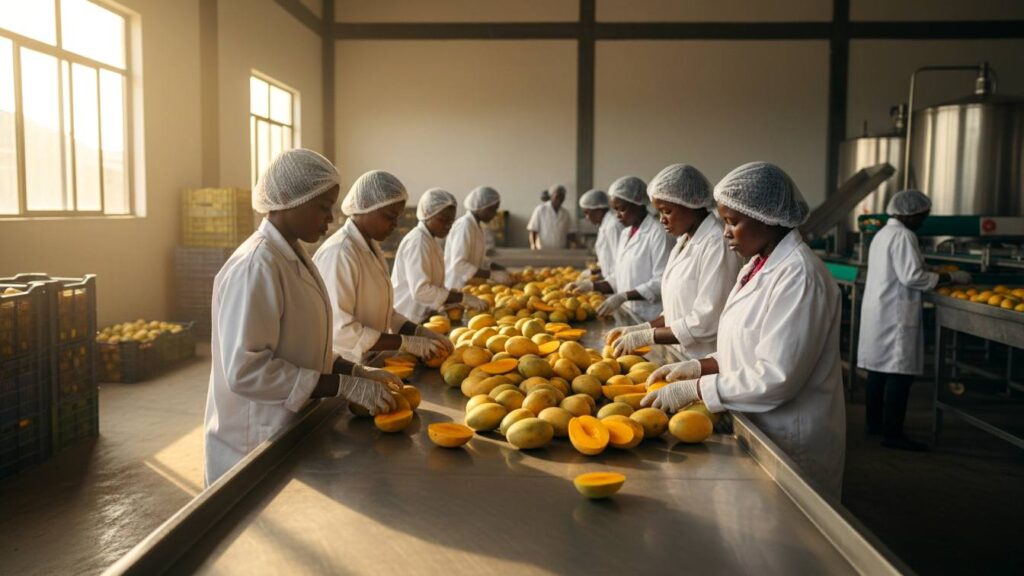
Women in white coats sorting yellow Ngowe mangoes on a stainless steel table in a processing facility in Kenya.

2026 Outlook: Is Mango Farming Still Profitable?

As we navigate 2026, the mango sector in Kenya is maturing. The days of simply planting a tree and waiting for money are over. The new era belongs to the “Smart Farmer” who leverages technology and market intelligence.

Climate change is causing erratic rainfall, meaning investment in drip irrigation is no longer optional, it is mandatory for consistent yields. Farmers relying on rain-fed agriculture will find themselves with biennial bearing (fruiting only every two years). Furthermore, the ban on certain chemical pesticides by the EU means organic and biological controls are the only path forward for exporters.

Your Action Plan: Start with comprehensive soil testing from CropNuts or KALRO to understand your baseline. Secure high-quality grafted seedlings—never grow from seeds as the results are unpredictable. Focus on the Apple Mango for local cash flow and Kent if you have confirmed export links. If you treat your mango farming as a business, minimizing waste and maximizing quality, the returns in 2026 are undeniable.

Mango Farming in Kenya
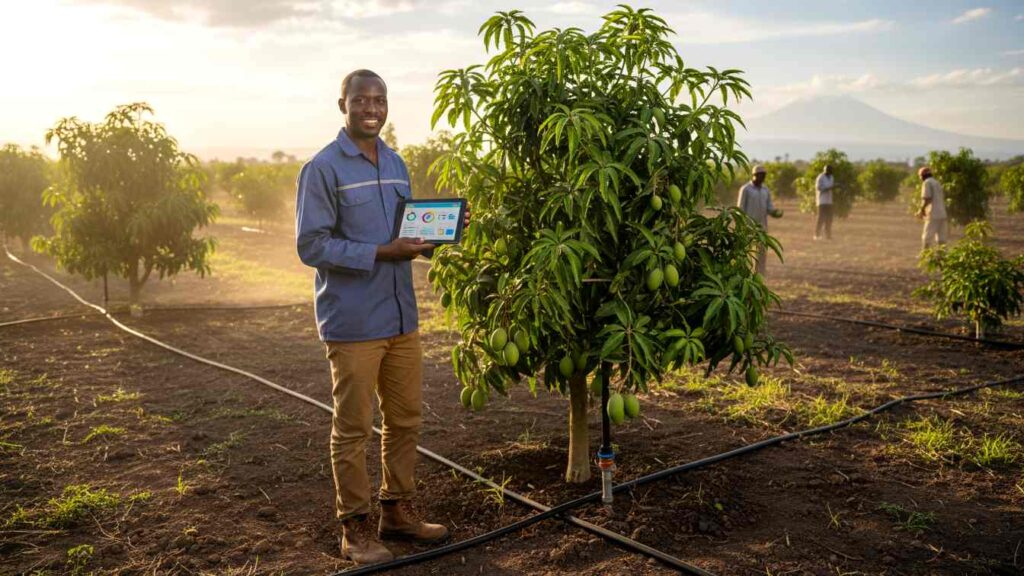
A modern Kenyan farmer holding a tablet showing crop data

Frequently Asked Questions (FAQ) Farmers Also Ask

Is mango farming profitable in Kenya?

Yes, mango farming can be very profitable in Kenya if you choose the right varieties, manage pests and target good markets. Well managed orchards commonly earn about Ksh 300,000 to 800,000 per acre per season, depending on yield and price.

How many years does it take a mango tree to bear fruit?

A mango grown from seed usually takes about 4 to 7 years before it starts giving fruit. A grafted mango tree is much faster and can start bearing a few fruits from the second to third year in the field under good care.

What is the spacing for mango trees in Kenya?

For most standard mango varieties in Kenya, common spacing is about 8 meters by 8 meters, which gives roughly 63 trees per acre. Some farmers use closer spacing like 5 by 5 meters with smaller or pruned trees to fit up to about 160 trees per acre.

Can 7 months have mango?

Yes, it is possible to find mangoes in the seventh month (July) in Kenya, although it depends on the region. Coastal and some irrigated or off season areas can still have fruit, and because different regions peak at different times, traders are often able to source fresh mango almost all year.

How long does a grafted mango tree take to bear fruit?

A grafted mango tree will start producing sample fruits in 2.5 to 3 years. However, significant commercial harvest begins in Year 4, with peak production reached between Year 7 and Year 10.

What is the best fertilizer for sweet mangoes?

To increase sweetness, you need Potassium. Use Muriate of Potash (MOP) or specific foliar boosters rich in Potassium and Boron during the fruiting stage. Avoid excessive Nitrogen during fruiting, as it makes the fruit watery and less sweet.

Can I grow mangoes in cold areas like Limuru or Kericho?

No. Mangoes require hot, dry weather to thrive. High-altitude, cold areas will result in stunted trees that may grow leaves but will never flower or produce fruit. Focus on low-altitude zones (0–1600m ASL).

What is the price of a grafted mango seedling in Kenya?

Certified grafted seedlings cost between KES 150 and KES 300 depending on the variety and the nursery. Buying from certified bodies like KALRO or Kefri ensures you get disease-free plant material.

 Is drip irrigation necessary for mango farming?

While mangoes are drought-tolerant, drip irrigation is the secret to off-season fruiting. By controlling water application, you can induce flowering when competitors are dry, allowing you to harvest when market prices are highest.

Which mango variety is best for export from Kenya?

Kent and Keitt are the preferred export varieties for the European market because they have no fiber, longer shelf life, and do not change color rapidly, allowing for sea freight. Apple Mango is primarily for the domestic and regional market.

Where can I sell my mangoes in Kenya?

Beyond local markets (Marikiti, Wakulima), you can sell to processors like Kevian Kenya or Sunny Mango. For export, contact aggregators like Keitt Exporters. In 2026, digital platforms like Twiga Foods are also major buyers for fresh produce.

Barred Plymouth Rock Chicken in Kenya

Barred Plymouth Rock Chicken in Kenya: Breed Traits, Eggs, Meat and Profits for Small Farms

TL;DR: Barred Plymouth Rock chickens are the superior dual-purpose breed for Kenyan smallholders in 2026, offering high disease resistance and premium “improved kienyeji” meat prices. With a maturity rate of 4.5 months and egg production of up to 240 eggs annually, they outperform indigenous breeds in profitability. This guide details sourcing, feeding, and financial planning for maximum ROI in the current economic climate.

What makes the Barred Plymouth Rock the ideal breed for Kenyan farmers in 2026?

The Barred Plymouth Rock excels in Kenya due to its dual-purpose utility and exceptional hardiness against local climate fluctuations. Unlike broilers, they scavenge well, reducing feed costs by up to 30%. In 2026, their distinct black-and-white “zebra” plumage commands a higher market price because consumers associate it with authentic, high-quality indigenous taste.

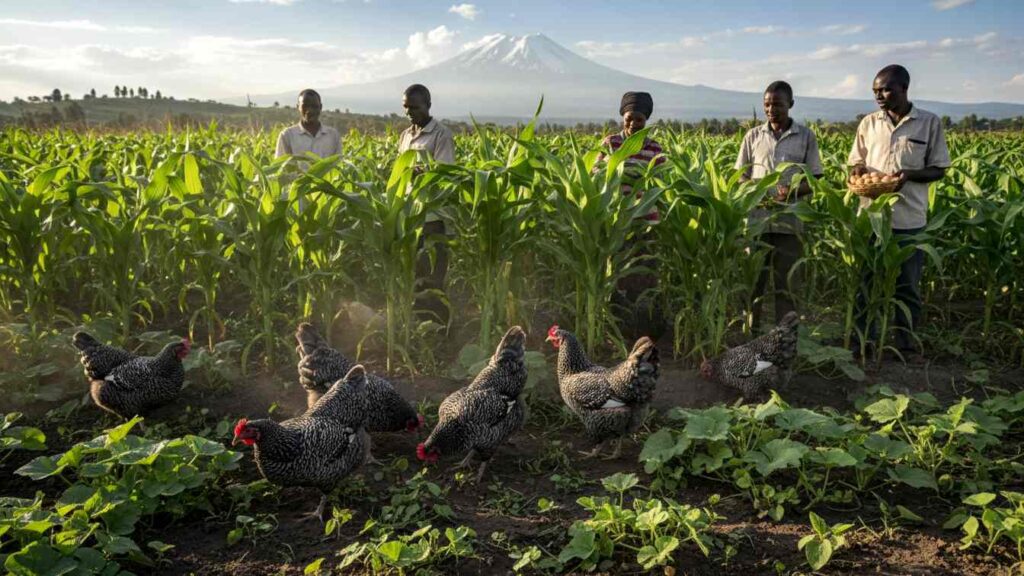
The agricultural landscape in Kenya is constantly shifting towards sustainable, low-input livestock. Smallholder crop farmers are increasingly integrating poultry to diversify income streams against climate shocks. The Barred Plymouth Rock fits this integrated model perfectly.

This breed is not a delicate exotic bird that requires expensive climate-controlled housing. They are robust foragers that thrive in the semi-free-range systems common in rural Kenya. This hardiness significantly lowers the barrier to entry for beginner farmers in counties like Bungoma and Meru.

Barred Plymouth Rock Chicken in Kenya 2026
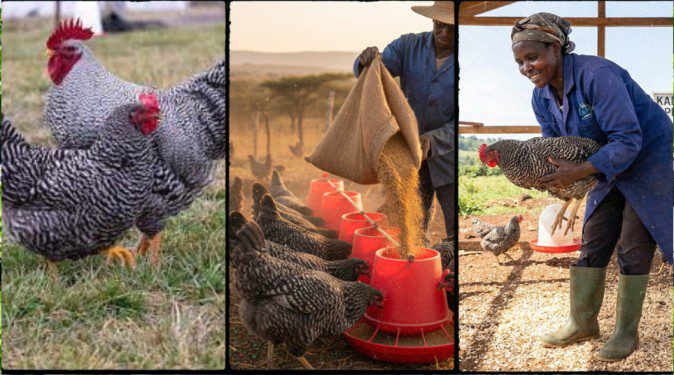
image of a flock of Barred Plymouth Rock chickens foraging in a lush

Furthermore, the 2026 market trend heavily favors “organic” and “kienyeji” labeled produce over industrial options. The Barred Rock produces meat that is firmer, darker, and tastier than commercial broilers. Their eggs are brown, large, and fetch a premium price in Nairobi and Mombasa markets, often retailing for KES 20-25 each.

Farmers are also drawn to the breed’s docile temperament, which makes them easy to manage for families with children. Unlike the aggressive Leghorn, the Barred Rock is calm and rarely flies over standard fencing. This reduces losses from straying birds and minimizes conflicts with neighbors in peri-urban settings.

How does the Barred Plymouth Rock compare across different Kenyan counties?

Direct Answer: Regional success varies based on feed availability and market proximity. Kiambu offers the highest egg prices but suffers from high production costs due to land scarcity. Kakamega provides cheaper organic feed inputs like termites but faces lower local meat prices. Machakos requires higher water infrastructure investment but offers low disease pressure due to drier conditions.

Module A: Regional Comparative Analysis

To understand true profitability, we must analyze how this breed performs in three distinct agricultural zones. Kenya’s diverse climate affects feed conversion ratios, disease management, and ultimate profit margins. A strategy that works in the highlands may fail in the arid plains.

1. Kiambu County (Peri-Urban High Intensity)

Farmers in Kiambu benefit immensely from their proximity to Nairobi’s premium consumer markets. You can sell a mature cock for KES 1,800 and a tray of eggs for KES 450+ directly to households. However, land sizes are typically small, necessitating a semi-intensive system.

Feed costs here are the highest in the country due to stiff competition for resources. Farmers must rely heavily on commercial feeds from brands like Unga Farm Care or Pembe Feeds. The high humidity and population density also require strict coccidiosis management protocols to prevent outbreaks.

The key to success in this region is vertical integration. Farmers here should focus on selling dressed meat rather than live birds to maximize margins per square foot. High-value customers in estates like Runda and Karen are the target demographic.

2. Kakamega County (Western Breadbasket)

In Kakamega, the abundance of green matter and insects supports a true free-range system. Farmers can substitute up to 40% of commercial feed with lucerne, maize germ, and naturally occurring termites. This drastically lowers the break-even point compared to central Kenya.

The primary challenge here is market access and lower disposable income among local buyers. While production costs are low, the sale price for a bird might hover around KES 1,200. Value addition, such as transporting dressed chicken to urban centers like Kisumu or Eldoret, is key here.

Disease pressure in Western Kenya is unique due to the high rainfall. Farmers must be vigilant against internal parasites and worms. Regular deworming using products like Ascarex is mandatory for flocks raised on free range.

3. Machakos County (Semi-Arid Opportunity)

Machakos presents a unique and growing opportunity for poultry farmers in 2026. The dry climate reduces the prevalence of respiratory diseases and bacterial infections that plague wetter counties. Barred Rocks are surprisingly heat-tolerant but require constant, cool water access.

Farmers here must invest in hydroponic fodder systems to supplement dry grazing during drought months. The market is growing rapidly due to the expansion of the Nairobi metro area towards Athi River. Prices are stabilizing near Kiambu rates as the middle class moves outward.

Water storage is the critical success factor in this region. A farmer with a reliable 5,000-liter tank can outperform competitors during the dry season. The dry heat also ensures poultry manure dries fast, creating excellent fertilizer for mango and orange farming.

Where are the best places to buy Barred Plymouth Rock chicks online in Kenya?

 For purebred quality, prioritize government bodies like KALRO Naivasha or established large-scale hatcheries like Kenchic (seasonal availability). For online ease, verified breeders on

 Jiji.co.ke and specific Facebook groups like “Improved Kienyeji Farmers Kenya” are viable, provided you visit the farm first. Avoid sending money via M-Pesa before seeing the chicks to prevent fraud.

Sourcing quality genetics is the single biggest determinant of success in poultry farming. In 2026, the market is unfortunately flooded with “fake” improved breeds that are merely crossbreeds with poor performance. You must verify the parent stock before committing your capital.
Barred Plymouth Rock Chicken in Kenya

KALRO (Kenya Agricultural and Livestock Research Organization) remains the gold standard for indigenous genetics. Their Naivasha Non-Ruminant Research Centre supplies pure lines that are disease-free. Booking often requires weeks in advance due to high national demand.

For private sector options, check established entities like KukuChic or Mugo Farmers. They often have robust distribution networks that can deliver to major towns. When using online marketplaces, look for sellers with “Verified” badges and extensive reviews to filter out scammers.

Facebook groups have become a vibrant marketplace, but they carry risks. Groups such as “Poultry Farmers Kenya” often have reputable breeders. Always ask for recent photos of the parent stock and the incubator setup before engaging.

Expert Tip: Never buy chicks from a seller who refuses a farm visit. A legitimate breeder will be proud to show you their biosecurity measures and parent stock health.

When buying online, demand a video call to see the active chicks. Listen for the sound of the flock; healthy chicks chirp actively, while sick ones are silent and huddled. This simple check can save you from buying a batch of mortality-prone birds.

What does a 12-Month Farming Calendar look like for this breed?

A successful year revolves around rainfall patterns and holiday sales peaks. January to March focuses on heat stress management and brooding new stock. April to June (Long Rains) requires intensive disease control against wet-weather ailments. October to December is the “Golden Quarter” where sales of mature birds peak for the festive season, often commanding 40% higher prices.

Module B: 12-Month Farming Calendar

Aligning your production cycle with Kenya’s seasons ensures you have product when prices are highest. This calendar assumes a crop farmer integrating poultry to maximize resource use.

Quarter 1: January – March (Hot & Dry)

This is the best time to brood chicks as the ambient temperature is naturally high. Heating costs for the brooder (charcoal or electricity) are significantly reduced. Focus on Newcastle Disease vaccination in February as winds can carry the virus.

Water stress is high during these months. Ensure you have backup water storage (tanks) to last at least two weeks. Scavenging resources (grass/bugs) will be low, so budget for 100% commercial feeding or silage use to maintain growth rates.

Prepare your marketing strategy for Easter now. Birds hatched in late December or January will be hitting market weight around April. Secure orders from catering units early.

Quarter 2: April – June (Long Rains)

The rains bring severe disease challenges, specifically Coccidiosis and Fowl Typhoid. Keep the poultry house bedding dry by turning it daily and adding fresh wood shavings. Supplement the diet with locally available greens which are now abundant in the fields.

Start marketing your birds aggressively now. Pre-selling to hotels or caterers secures your revenue before the market floods. This is the primary growth phase for birds hatched in Q1.

Barred Plymouth Rock Chicken in Kenya 2026
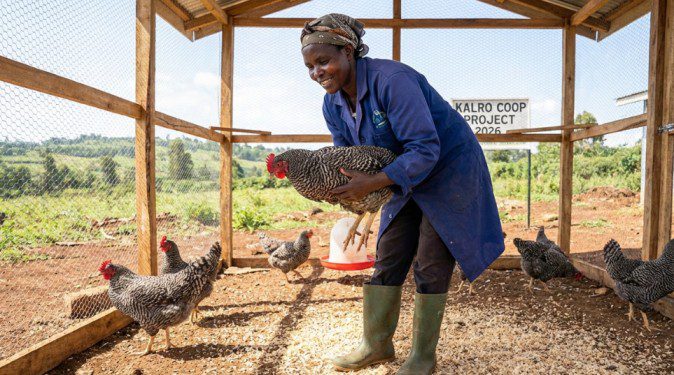
image of a Kenyan farmer in gumboots inspecting a clean Barred Plymouth Rock Chicken

Quarter 3: July – September (Cold Season)

Growth rates slow down due to the cold; birds burn energy just to stay warm. Increase the energy content of the feed (more maize germ) to compensate. Use heavy curtains on the chicken coop to prevent cold drafts at night.

This is the lean season for crop farming, so chicken sales can provide critical cash flow. Cull non-performing layers or excess roosters now to reduce feed bills. This liquidity helps purchase seeds and fertilizer for the short rains.

Quarter 4: October – December (Short Rains & Festive)

This is the profit realization period for Kenyan farmers. Demand for “Kienyeji” chicken peaks for Christmas and Jamhuri Day celebrations. Prices can jump by 40% compared to mid-year rates.

Ensure you have mature birds (4.5 to 5 months old) ready by December 10th. If you are selling eggs, package them attractively for the holiday baking rush. This is also the time to deep clean the coop post-sale for the next January cycle.

How much does it cost to raise 100 Barred Plymouth Rock chickens to maturity?

Direct Answer: To raise 100 birds to point-of-lay (5 months) costs approximately KES 55,000 to KES 70,000 in a semi-intensive system. This includes chicks, feed, vaccines, and brooding. The primary cost driver is feed, accounting for 70% of expenses. Revenue from selling 100 mature birds can exceed KES 150,000, yielding a net profit of over KES 80,000 per cycle.

Module C: Deep-Dive Financials

Farming is a business, not a hobby. Below is a breakdown for a beginner farmer starting with 100 day-old chicks in 2026. We assume a realistic 5% mortality rate, meaning 95 birds reach maturity.

Break-Even Analysis

Your largest expense is undoubtedly feed. A Barred Rock eats roughly 8-10kg of feed to reach full maturity (5 months). Commercial feed averages KES 70 per kg, but mixing your own can reduce this to KES 50.

Cost Calculation (100 Birds):
Chicks: 100 x KES 120 = KES 12,000
Feed (Starter/Grower): 900kg x KES 70 = KES 63,000
Vaccines/Meds: KES 3,000
Brooding Energy: KES 2,500
Total Operational Cost: ~KES 80,500

Revenue Projection:
Sale of 50 Roosters @ KES 1,600 = KES 80,000
Sale of 45 Hens (or asset value) @ KES 1,300 = KES 58,500
Manure Sales (20 bags @ 300) = KES 6,000
Total Asset Value: KES 144,500
Net Profit (First Cycle): ~KES 64,000

Expense CategoryEstimated Cost (KES)Notes for 2026
Day Old Chicks (100)12,000Buy from KALRO or Kenchic agents.
Chick Mash (Month 1-2)14,000Critical for early frame development.
Growers Mash (Month 3-5)38,000Can be supplemented with greens/kitchen waste.
Vaccines & Vitamins3,500Newcastle, Gumboro, Fowl Pox mandatory.
Brooding (Heat/Charcoal)2,500Dependent on location/season.
Miscellaneous5,000Transport, sawdust, disinfectant.
TOTAL INPUT75,000~750 KES per bird production cost.

Note: If you keep the hens for eggs, they will consume ~120g of feed daily. With a 70% laying rate, 45 hens produce ~31 eggs/day. At KES 20/egg, daily revenue is KES 620 vs. feed cost of KES 380, giving a daily profit of KES 240.

What are the best feeding strategies for maximum weight gain?

Direct Answer: To maximize weight, implement a phase-feeding program. Start with high-protein (20%) Chick Mash for 8 weeks. Switch to Growers Mash (16% protein) until week 18. Supplement with black soldier fly larvae or omena to boost protein intake naturally. Fermenting grains before feeding can also improve digestibility and nutrient absorption by 15%.

Module D: Feeding & Nutrition Mastery

Feeding is where most farmers lose money. The goal is not just to fill the bird’s crop, but to provide precise nutrition for each growth stage. In 2026, the cost of commercial feed is a major concern, driving the need for alternative formulations.

Hydroponic Fodder: Growing barley or maize fodder hydroponically is a game-changer. It takes 7 days to grow and provides a rich source of vitamins and enzymes. A 1kg tray of seeds produces 8kg of fodder, drastically reducing the reliance on dry store-bought pellets.

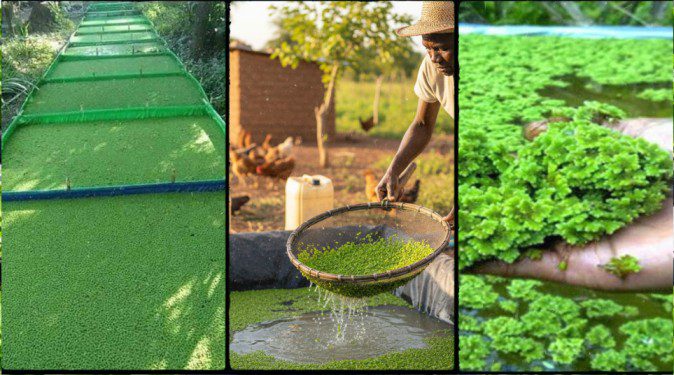
Azolla Cultivation: This aquatic fern is gaining popularity in counties like Kisumu and Siaya. It is rich in protein and grows rapidly in small ponds. Mixing Azolla with maize bran creates a highly nutritious, low-cost feed that Barred Rocks love.

Commercial vs. Home Mix:
Commercial feeds from Sigma Feeds ensure balanced nutrition but reduce margins. Home mixing requires precision. You need a source of carbohydrates (Maize/Sorghum), Protein (Soya/Omena), and minerals (DCP/Lime). If you mix incorrectly, you risk stunted growth.

How do you manage the supply chain and add value to your produce?

Direct Answer: Do not just sell live birds to brokers; you lose 30% of your margin. Slaughter, dress, and package birds for direct sale to households or restaurants. Utilize the manure as nitrogen-rich fertilizer for your crops (kale, spinach), creating a circular economy that eliminates fertilizer costs.

Module E: Supply Chain & Value Addition

The “middleman” is the enemy of smallholder profit. In 2026, digital platforms allow you to bypass brokers. Use WhatsApp groups to market directly to neighbors and local estates, offering home delivery for a premium fee.

Meat Processing

Selling a live chicken fetches KES 1,200. A dressed, packaged chicken with giblets can sell for KES 1,500. Invest in a simple chest freezer and quality packaging materials.

Ensure hygiene is impeccable during slaughter. Use clear vacuum bags and a printed sticker with your farm name and slaughter date. This branding builds trust and encourages repeat customers who value food safety.

Barred Plymouth Rock Chicken in Kenya 2026
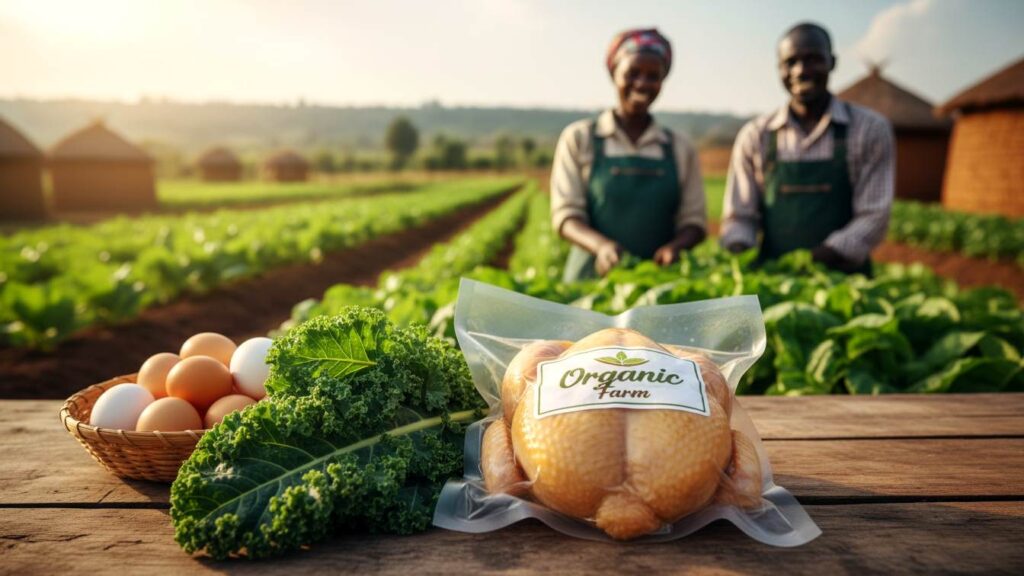
image of a neatly vacuum-sealed whole chicken with a professional “Organic Farm” label

Manure Management (Crop Integration)

For a crop farmer, chicken manure is “black gold.” It is high in Nitrogen, Phosphorus, and Potassium. Compost the manure for 3 weeks before applying it to crops to avoid “burning” the plants.

100 chickens produce enough manure to fertilize a quarter-acre of Sukuma Wiki comfortably. This saves you thousands in DAP/CAN fertilizer costs annually and improves soil structure. The synergy between crops and poultry is the hallmark of a sustainable Kenyan farm.

What is the best housing structure for Barred Plymouth Rocks?

Direct Answer: The housing must be well-ventilated but draft-free. For 100 birds, you need a structure of roughly 200 square feet (2 sq. ft per bird). Orient the house East-West to prevent direct sunlight from overheating the birds. Use raised structures with wire mesh windows and concrete floors for easy cleaning.

Ventilation is critical in Kenya. Ammonia buildup from droppings causes respiratory issues. Ensure the long side of the coop faces the wind direction but is protected by curtains at night to regulate temperature.

Perches are mandatory for this breed. Barred Rocks are heavy birds but they have a natural instinct to roost. Install wooden perches 2 feet off the ground using rounded timber. This keeps them active and reduces contact with wet bedding, preventing breast blisters.

Deep litter systems are preferred over cages for Barred Rocks. Use wood shavings or dry grass at a depth of 4-6 inches. This bedding absorbs moisture and eventually breaks down into rich compost, which is a valuable by-product.

Barred Plymouth Rock Chicken in Kenya 2026
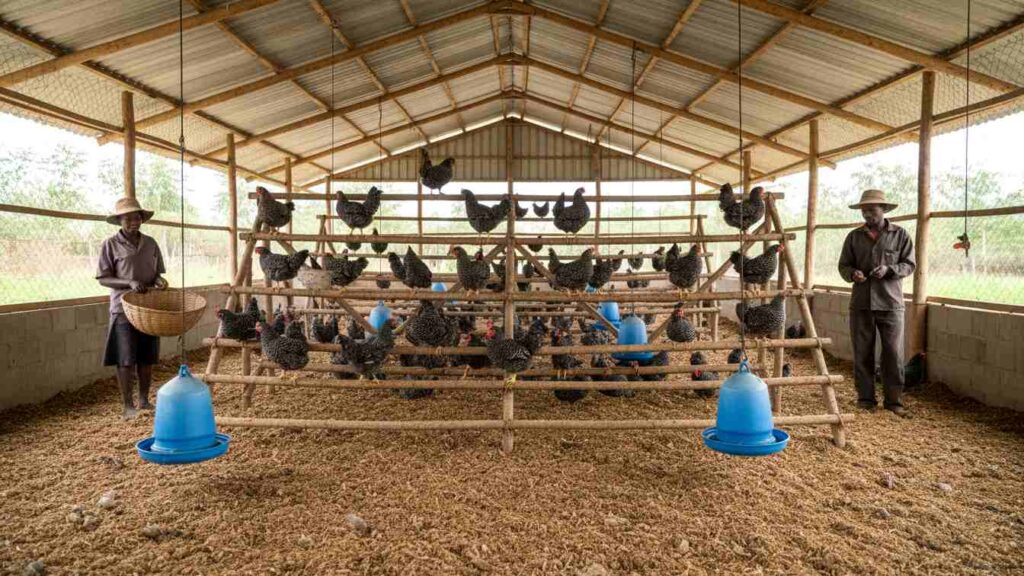
image of the interior of a poultry house showing wooden perches

How do you prevent common poultry diseases in 2026?

Direct Answer: Prevention is cheaper than cure. Follow a strict vaccination schedule: Marek’s (Day 1), Gumboro (Day 10 & 18), Newcastle (Day 21 & every 3 months), and Fowl Pox (Week 6). Maintain biosecurity by using footbaths with disinfectant at the coop entrance and restricting visitors.

In 2026, biosecurity is your primary defense against evolving viral strains. Wild birds are carriers of influenza and other pathogens. Use small wire mesh (chicken wire) to keep sparrows and weavers out of the feed and water areas.

Coccidiosis is the silent killer in wet seasons. If you see blood in droppings or ruffled feathers, treat immediately with Amprolium or Sulfa-based drugs. However, keeping litter dry is the best prevention; wet litter is a breeding ground for coccidia.

Indigenous herbal remedies are also gaining traction as supplementary treatments. Aloe vera extract in drinking water helps boost immunity. Crushed chili pepper is often used by organic farmers to stimulate digestion and ward off respiratory infections.

What are the specific feeding requirements for maximum egg production?

Direct Answer: Layers need 16-18% protein and high calcium. Transition from Growers Mash to Layers Mash at week 18. Supplement with crushed oyster shells or limestone for strong eggshells. Provide fresh greens (skuma, lucerne) daily to deepen the yolk color to the yellow/orange that Kenyan consumers prefer.

Water is often overlooked but is crucial for egg production. A laying hen drinks twice as much water as a non-layer. If water runs out for even 2 hours, egg production can drop for days as the bird experiences stress.

Providers: Companies like Unga Farm Care and Sigma Feeds have consistent quality. For supplements, contact Simlaw Seeds for Lucerne seeds to grow your own fodder, ensuring a cheap and continuous supply of vitamins.

Barred Plymouth Rock Chicken in Kenya 2026
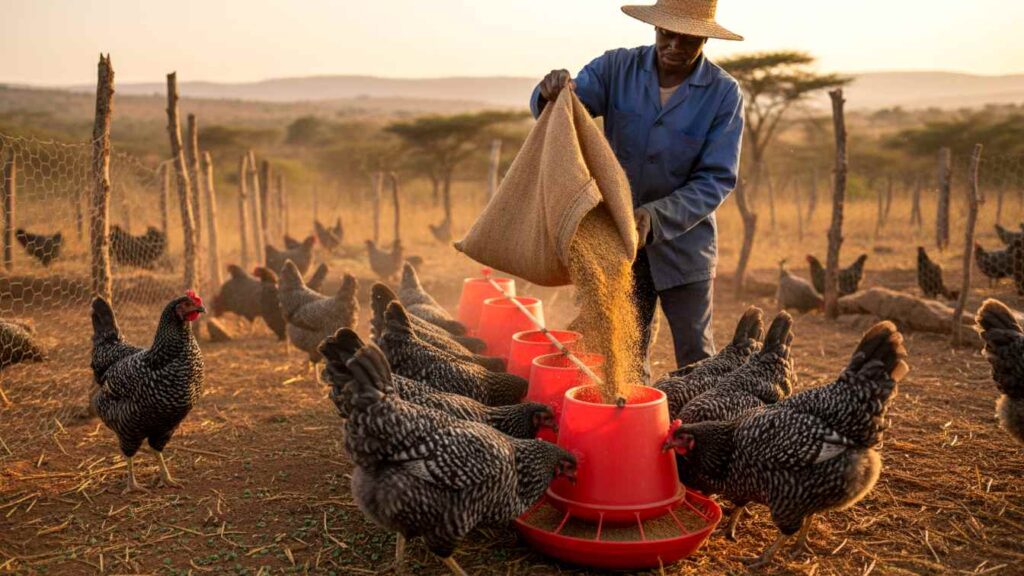
image of a farmer pouring commercial layers mash into a red feeder while Barred Plymouth Rock hens gather around to eat

Conclusion: The 2026 Outlook

As we navigate 2026, the Barred Plymouth Rock stands out as the smart, resilient choice for Kenyan smallholders. The volatility of maize prices makes the pure broiler model risky for independent farmers who cannot absorb feed price shocks. The Barred Rock’s ability to utilize local feed resources and produce two income streams (meat and eggs) offers a vital safety net.

The market is shifting away from frozen, imported chicken toward fresh, traceable, local meat. You are not just farming chickens; you are providing a premium protein source that the growing Kenyan middle class is willing to pay for. Whether you are in NyeriKisii, or Kitui, this breed offers a pathway to sustainable agricultural income.

Ready to Start Your Poultry Empire?

Don’t wait for the “perfect” time. Start small with 50 birds, learn the ropes, and scale up.


Frequently Asked Questions (FAQ)

Farmers Also Ask

1. Is Barred Plymouth Rock better than Kuroiler for Kenyan farmers?

It depends on your goal. Kuroilers grow faster and are larger scavengers, making them better for meat-only focus. Barred Plymouth Rocks are better layers and have a higher survival rate in colder regions. If you want a balance of eggs and meat, go with Barred Rock. If you want quick meat sales, go Kuroiler.

2. How many eggs does a Barred Plymouth Rock lay per year?

A healthy, well-fed Barred Rock hen lays between 200 to 240 eggs per year. Production peaks in the first year and drops by about 15% in the second year. They continue laying well into their third year, unlike commercial layers which are often culled after 18 months.

3. Can I use M-Pesa to buy chicks online safely?

Yes, but exercise extreme caution. Only pay via M-Pesa Buy Goods (Till Number) registered to a company, never to a personal number. Verify the breeder on Google Maps or Facebook groups. If a deal looks too good (e.g., chicks for 50 KES), it is likely a scam.

4. What is the best way to stop chickens from eating their own eggs?

Egg eating is caused by calcium deficiency or boredom. Immediately increase calcium in the diet (oyster shells). Darken the nesting boxes so hens cannot see the eggs clearly. Collect eggs frequently (3 times a day) to remove the temptation.

5. Do Barred Plymouth Rock chickens go broody?

Yes, they have a moderate tendency to go broody (sit on eggs to hatch them). This is great if you want to expand your flock naturally without an incubator. However, if you want eggs for sale, you must discourage broodiness by removing the hen from the nest immediately.

6. How much space do I need for 500 chickens?

For 500 birds in a deep litter system, you need roughly 1,000 square feet (2 sq. ft per bird). If you are using a free-range system, the coop can be smaller (500 sq. ft), but you need at least 0.25 acres of fenced outside run to prevent overgrazing.

7. Can I feed my chickens purely on kitchen waste?

No. Kitchen waste is a supplement, not a complete diet. It lacks the balanced protein and energy required for growth and egg production. A diet of only waste will result in stunted growth, no eggs, and nutritional diseases. Limit waste to 15% of the diet.

8. Where can I find a market for my chicken manure?

Approach local vegetable farmers, especially those growing spinach, kale, or tomatoes. You can also sell to tree nurseries. Pack the manure in 50kg bags; the current market rate is between KES 200 and KES 400 per bag depending on the region.

9. What vaccines are mandatory in Kenya for 2026?

The “Must-Have” vaccines are Marek’s Disease (usually done at the hatchery), Newcastle DiseaseGumboro (IBD), and Fowl Pox. In some areas, Fowl Typhoid vaccination is also recommended. Consult your local vet for a localized schedule.

10. How do I differentiate a male from a female Barred Rock chick?

This is difficult at day-old without professional vent sexing. However, as they grow (3-4 weeks), males usually have lighter colored barring (more white than black) and their combs turn red and grow faster than females. Females are generally darker with more distinct black bars.

Coconut Farming in Kenya: Step by Step Guide, Best Varieties and Profit Tips

Coconut Farming in Kenya: Step by Step Guide, Best Varieties and Profit Tips

Snippet Summary: Coconut farming in Kenya is a high-yield, long-term investment primarily suited for the Coastal region, offering returns from raw nuts, madafu, oil, and value-added byproducts. By 2026, demand for coconut oil and organic water has surged, making this “Tree of Life” a pillar of agribusiness stability. With proper variety selection like the East African Tall and strategic intercropping, farmers can achieve break-even within 5 years and sustain profits for decades.

The coconut tree, often revered as the “Tree of Life,” is more than just a scenic feature of the Kenyan coast; it is an industrial powerhouse waiting to be tapped. As we move through 2026, the agricultural landscape in Kenya has shifted towards crops that offer climate resilience and multiple revenue streams. Coconut farming fits this description perfectly.

Whether you are in KilifiKwale, or Lamu, the potential to transform a sandy shamba into a recurring revenue engine is immense. The global shift toward plant-based diets and natural cosmetics has spiked the price of coconut derivatives. Farmers are no longer just selling nuts; they are entering a complex value chain.

However, many beginners fail because they treat coconut farming as a “plant and forget” venture. It requires agronomic precision, from soil testing to pest management against the Rhinoceros Beetle. This guide serves as your authoritative blueprint, moving beyond basic advice to provide financial realities and actionable strategies for the modern Kenyan farmer.

Coconut Farming in Kenya:
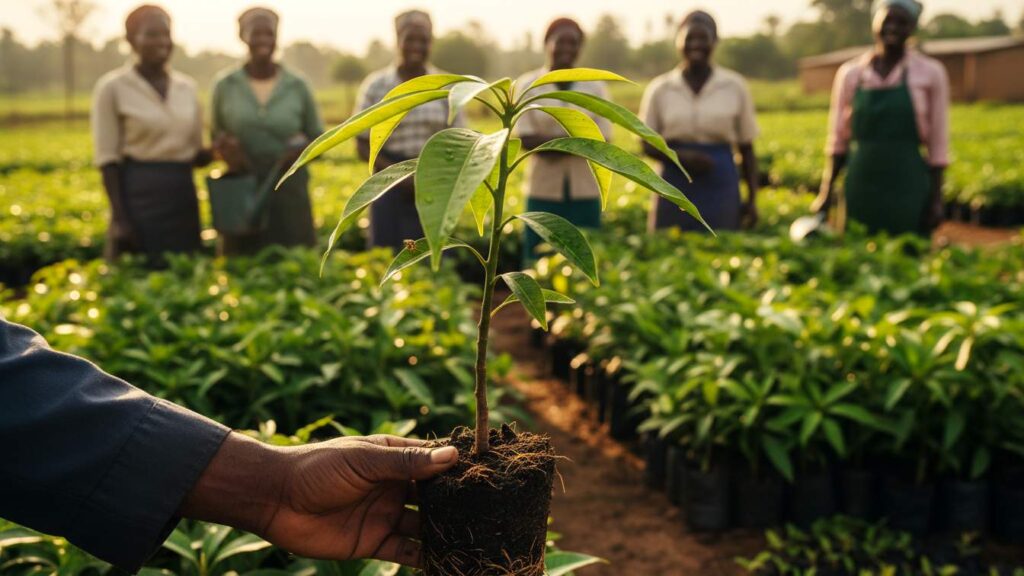
image of a young Kenyan farmer inspecting a healthy East African Tall coconut seedling in a nursery in Kilifi

What Are the Most Profitable Coconut Varieties for Kenyan Soil in 2026?

The most profitable varieties for 2026 are the East African Tall for longevity and drought resistance, and the Hybrid varieties (like PB 121) for early maturity and higher nut counts. While the Tall variety takes 5-7 years to fruit, it produces for up to 80 years. Hybrids fruit in 3-4 years but require more water and intensive care.

Selecting the right variety is the single most critical decision you will make. In Kenya, the market is historically dominated by the East African Tall (EAT). However, the landscape is changing with the aggressive introduction of hybrids by KALRO (Kenya Agricultural and Livestock Research Organization).

Your choice depends entirely on your end goal and financial timeline. Are you selling madafu (water) for quick cash flow? Or are you aiming for dry nuts for the copra and oil industry? Your strategy dictates your seed selection.

The East African Tall (EAT)

This is the heritage breed of the coast and the backbone of the industry. It is incredibly hardy, capable of withstanding the salty winds and sandy soils of Mombasa and Kilifi better than any import. It yields large nuts with thick meat (kernel), making it ideal for the oil and copra industry.

The downside is patience, as you must wait nearly seven years for the first commercial harvest. However, once established, these trees require minimal irrigation. They act as a legacy investment for future generations.

The Hybrids (Dwarfs and Crosses)

Coconut Farming in Kenya:
High yielding dwarf coconut trees loaded with green coconuts in a dense, well managed plantation.

For farmers looking for a quicker return on investment, hybrids are the answer. Varieties developed or certified by KALRO Mtwapa often combine the resilience of the local tall varieties with the high yield of imported dwarfs. These trees are shorter, making harvesting safer and cheaper.

They can start flowering in as little as 36 months, drastically reducing the wait time. However, they are less tolerant of drought and low-nutrient soils. They demand a strict fertilization regime to maintain their high output.

Coconut Farming in Kenya
photograph shows a dwarf coconut palm tree heavily laden with clusters of smooth, bright green, young coconuts.

Expert Tip: If your farm is far from a reliable water source, stick to the East African Tall. Hybrids are like high-maintenance dairy cows; if you miss watering schedules during the first three years, their growth stunts permanently.”

How Do You Prepare Your Shamba for Maximum Yield?

Preparation involves clearing the land and digging holes measuring 2ft x 2ft x 2ft, spaced at 9m x 9m for tall varieties to allow canopy spread. Fill holes with topsoil mixed with compost manure and a phosphate fertilizer. This spacing ensures 60-70 trees per acre, optimizing sunlight penetration and reducing fungal disease risks.

Land preparation in 2026 goes beyond just slashing bush. You must conduct a soil test to ensure the pH is between 5.5 and 7.0. Coconuts thrive in sandy loam soils that drain well; waterlogging is the silent killer of coconut roots.

Coconut Farming in Kenya
perfectly spaced coconut plantation in Kwale

The downside is patience, as you must wait nearly seven years for the first commercial harvest. However, once established, these trees require minimal irrigation. They act as a legacy investment for future generations.

When digging your holes, carefully separate the topsoil from the subsoil. Mix the topsoil with two debes of well-decomposed manure and 200g of planting fertilizer. This creates a nutrient-rich “cradle” for the delicate seedling.

Do not bury the collar of the seedling too deep, as this can lead to rotting before establishment. Ensure the area is free of termite mounds. Termites can destroy a young plantation in weeks if not managed early.

Module A: Regional Comparative Analysis (Coastal Belt)

Coconut farming is not uniform across Kenya. While the crop is synonymous with the coast, the agronomic and market conditions vary significantly between counties. Below is a comparative analysis of the three primary coconut-producing giants: KilifiKwale, and Lamu.

1. Kilifi County: The Market Hub

Kilifi is the undisputed capital of coconut farming in Kenya. The infrastructure here is superior, with better road networks connecting farms to processors like Kentaste. The presence of research institutions gives farmers an edge in knowledge.

Pros: Highest concentration of buyers; established cooperatives; access to KALRO Mtwapa for seedlings.
Cons: Land prices are higher due to tourism competition; higher labor costs due to urbanization.

2. Kwale County: The High-Yield Frontier

Kwale offers deeper, more fertile soils compared to the rocky parts of Northern Kilifi. The rainfall patterns in the Shimba Hills belt support vigorous growth without heavy irrigation. This region is becoming the new frontier for large-scale plantations.

Pros: Cheaper land acquisition costs; fertile soils leading to larger nut sizes; proximity to the Mombasa port for export.
Cons: Some interior roads are impassable during the long rains, complicating logistics.

3. Lamu County: The Premium Niche

Lamu retains a traditional farming approach. The coconuts here are often grown organically by default, fetching a premium in niche markets. The isolation helps in maintaining bio-security against certain pests.

Pros: High demand for organic certification; potential for agro-tourism integration; less pest prevalence due to isolation.
Cons: Significant logistical challenges getting produce to Mombasa/Nairobi; security concerns in border areas affecting labor availability.

Verdict for 2026: If you want volume and quick market access, choose Kilifi. If you are an investor looking for cheap land with high long-term soil potential, choose Kwale.

What Are the Water and Fertilizer Requirements?

Adult coconut trees require 50-100 liters of water per week during dry spells. For fertilization, apply NPK (rich in Potassium/Muriate of Potash) biannually. A deficiency in Potassium leads to yellowing fronds and small, elongated nuts that lack market value. Organic mulch is mandatory to retain soil moisture.

Water is the fuel for the coconut engine. In the first year, seedlings must be watered twice a week without fail. By 2026, many smart farmers are using solar-powered drip irrigation to mitigate the erratic coastal rains.

This investment cuts mortality rates from 20% down to nearly 0%. A stressed tree will abort its flowers. Consistent moisture ensures the “button nuts” hold onto the tree until maturity.

Regarding nutrition, the coconut tree is a heavy feeder of Potassium (K). You must apply salt (agricultural salt or sodium chloride) if you are far from the sea, alongside Muriate of Potash. A common mistake is using only DAP; while good for roots, it does not support nut formation.

Module B: 12-Month Farming Calendar (Coastal Cycle)

Successful coconut farming requires adhering to a strict calendar aligned with the coastal monsoon winds and rain patterns. Farming by the season maximizes yield and minimizes cost. Here is your 2026 operational schedule.

Quarter 1: January – March (Hot & Dry)

Focus: Moisture Conservation & Pit Prep.
This is the driest period of the year. Aggressively mulch around the base of your trees using dry coconut fronds or husks (coir).

Do not burn waste on the farm, as this destroys organic matter. Start digging holes for new planting now so the soil aerates and sterilizes in the sun. If you have irrigation, maintain a steady flow to prevent nut abortion.

Quarter 2: April – June (Long Rains – Masika)

Focus: Planting & Fertilization.
This is the main planting season. Transplant seedlings immediately after the first heavy rains wet the soil deep (at least 30cm).

Apply the first round of manure and NPK fertilizers to established trees. Watch out for fungal infections like Bud Rot as humidity rises. Ensure drainage channels are open to prevent waterlogging.

Quarter 3: July – September (Cool & Dry)

Focus: Pest Control & Weeding.
The Rhinoceros Beetle is most active during this transition. Inspect the crowns of young trees weekly.

Use pheromone traps to capture adults before they breed. Clear weeds that compete for nutrients, especially ring-weeding 2 meters around the trunk. Slashing the inter-row spaces now creates mulch for the coming dry season.

Quarter 4: October – December (Short Rains – Vuli)

Focus: Secondary Planting & Harvesting.
A second planting window opens during the short rains. This is also a peak harvesting period for the end-of-year market demand.

Apply the second dose of fertilizer in late October to capitalize on the moisture. Review your annual yields and plan for the next cycle. Secure your madafu contracts for the December tourist season.

Module C: Deep-Dive Financials (2026 Projections)

Let’s talk money. Farming without math is just a hobby. The table below outlines the costs and potential revenue for one acre of coconut farming (approx. 60 trees) in Kenya, assuming a mix of selling fresh madafu and dry nuts.

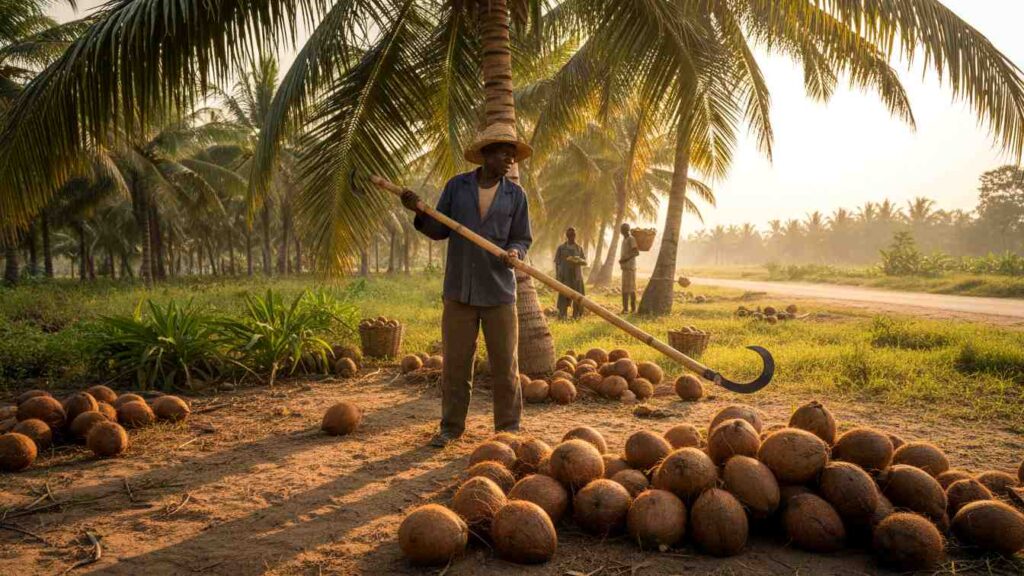
image of a farm worker in Malindi utilizing a long bamboo pole with a hooked knife to harvest mature brown coconuts

Assumptions:
1. Land is owned (no lease costs included).
2. Variety is Hybrid (starting production in year 4).
3. 2026 Market prices: KES 40 per mature nut, KES 50 per madafu.

Cost ItemYear 1 (Setup)Year 2-3 (Maintenance)Year 4 (First Harvest)Year 5+ (Full Production)
Land Prep (Clearing/Holes)KES 15,000KES 5,000KES 5,000KES 5,000
Seedlings (Hybrid @ KES 350)KES 21,000KES 0KES 0KES 0
Manure & FertilizersKES 10,000KES 12,000KES 15,000KES 18,000
Labor (Weeding/Pest Control)KES 20,000KES 15,000KES 20,000KES 25,000
Total Annual CostKES 66,000KES 32,000KES 40,000KES 48,000
Revenue (Nuts/Tree)0030 nuts x 60 trees80 nuts x 60 trees
Gross Revenue (@ KES 45 avg)KES 0KES 0KES 81,000KES 216,000
Net Profit(KES 66,000)(KES 32,000)KES 41,000KES 168,000

Break-Even Analysis

As shown, you will operate at a loss for the first 3 years. By Year 4, you break into profit. From Year 5 onwards, the maintenance costs stabilize while yields increase.

A well-managed acre can generate KES 15,000 – KES 20,000 per month passively for decades. This does not include income from intercropping (e.g., beans or capsicum), which can cover your operational costs in years 1-3. The real wealth is in scale; 10 acres provides a managerial salary.

How Do You Handle Pest and Disease Management?

The primary threats are the Rhinoceros Beetle (bores into the crown), the Red Palm Weevil, and Lethal Yellowing Disease. Control beetles using pheromone traps and physical removal with a hooked wire. For Lethal Yellowing, there is no cure; infected trees must be uprooted and burned immediately to save the plantation.

Pest control requires vigilance. The Rhinoceros Beetle is attracted to rotting organic matter, so keep your farm clean. Avoid heaps of cow dung near the coconut trees unless it is fully decomposed, as this acts as a breeding ground.
For chemical control, consult Agri-SeedCo or local agro-vets for recommended systemic insecticides if infestation is severe. However, for export-quality nuts, organic traps are preferred. A simple trap using castor cake and yeast can be highly effective.

Lethal Yellowing is a more serious threat causing widespread devastation. It causes the nuts to drop prematurely and the fronds to yellow from the bottom up. If you spot these signs, contact the county agricultural officer immediately.

Module E: Supply Chain & Value Addition

image of a small-scale processing unit in Kilifi where women are extracting white coconut meat from shells

Selling raw nuts is the lowest tier of profitability. In 2026, the real money lies in value addition and understanding the supply chain. You must move up the ladder to maximize returns.

1. The Copra Chain

Dry nuts are split and dried to make copra, which is pressed for oil. If you can dry your own copra (using solar dryers), you can sell directly to millers like Pwani Oil or Kentaste. This bypasses the brokers who offer rock-bottom prices for whole nuts.

2. The Madafu Market

Urban centers like Nairobi and Mombasa have an insatiable thirst for madafu. The logistics here are speed-dependent. You need a reliable transporter to get the nuts to market within 24 hours of harvest.

This market pays instant cash (via M-Pesa) compared to the copra market which may have payment delays. Branding your madafu for hotels can double your margin. Hygiene in handling is paramount for this segment.

3. By-Products: Nothing is Waste

  • Coir (Husks): Used for making ropes, mats, and cocopeat for hydroponic farming. Cocopeat prices are rising as greenhouse farming expands.
  • Shells: Carbonized to make charcoal briquettes. This is a booming eco-friendly fuel sector in Kenya.
  • Makuti: The leaves are woven for roofing thatch, highly prized by hotels in Diani and Malindi.

Conclusion: 2026 Outlook

The outlook for coconut farming in Kenya for 2026 and beyond is overwhelmingly positive, driven by the global wellness trend and the local demand for cooking oil alternatives. The government’s push, through the Nuts and Oil Crops Directorate, to revitalize the sector is beginning to bear fruit. Better seedling availability and standardized pricing models are now realities.

However, climate change remains a variable. Your success will depend on your ability to adapt, using drought-resistant varieties, investing in water harvesting, and not relying on a single revenue stream. Intercrop your coconuts.

Process your own oil if possible. Join a cooperative to increase your bargaining power. The “Tree of Life” will reward those who respect its agronomic needs.

Your Action Plan:
1. Secure land in Kilifi or Kwale.
2. Source certified seedlings from KALRO Mtwapa or buy online jiji kenya (Contact them directly).
3. Dig your holes now.
4. Plan your intercropping strategy to fund the first 4 years.

FAQ: Troubleshooting Coconut Farming

1. How many coconut trees can I plant on one acre?

You can plant between 60 to 70 trees per acre using a spacing of 9m x 9m. If you plant them closer (e.g., 6m x 6m), the canopy will close up too early, reducing photosynthesis and nut production, while also making intercropping impossible.

2. How long does it take for a coconut tree to bear fruit?

It depends on the variety. Hybrid varieties and Dwarfs typically start bearing fruit in 3 to 4 years. The traditional East African Tall takes about 6 to 7 years. However, the Tall variety is more drought-resilient and lives longer.

3. What is the current price of a coconut in Kenya in 2026?

The farm-gate price for a mature dry nut ranges from KES 30 to KES 50 depending on size and season. Madafu (tender coconut) retails for KES 50 to KES 80 in urban centers, offering a higher margin if you handle the logistics.

4. Can coconuts grow in Nairobi or central Kenya?

Generally, no. Coconuts require high humidity, sandy soil, and warm temperatures (27°C average). While they might survive in Nairobi as ornamental trees, they will likely not fruit or will produce very small, commercially unviable nuts due to the altitude and cold nights.

5. Where can I buy certified coconut seedlings in Kenya?

The most reliable source is KALRO Mtwapa (Industrial Crops Research Institute). You can also check with licensed private nurseries in Kilifi and Kwale. Avoid buying roadside seedlings of unknown genetic origin.

6. What is the Lethal Yellowing Disease?

This is a phytoplasma disease spread by leafhoppers. It causes the fronds to turn yellow and drop, and the nuts to fall prematurely. It is incurable. The only management is to cut down and burn infected trees to stop the spread to healthy ones.

7. Is coconut farming profitable for small-scale farmers?

Yes, but it is a volume game. A small farmer with 2 acres (120 trees) can earn a decent supplementary income, especially if they add value (e.g., selling charcoal briquettes or oil). Intercropping with cash crops like maize, simsim, or cassava is essential for profitability on small plots.

8. How do I make Virgin Coconut Oil (VCO) at home?

To make VCO, grate fresh mature coconut meat, extract the milk using warm water, and let it ferment for 24-48 hours. The oil will separate from the water and curds. Scoop the oil and filter it. This “cold press” method fetches the highest price in the market.

9. Can I use borehole water for irrigation?

Yes, but you must test the salinity. While coconuts are salt-tolerant, highly saline borehole water can eventually damage the soil structure and affect nutrient uptake. Drip irrigation is recommended to maximize efficiency.

10. Are there government subsidies for coconut farmers in 2026?

The County Governments of Kilifi and Kwale occasionally distribute free or subsidized seedlings during the long rains. Check with your local Ward Agricultural Officer or the Agriculture and Food Authority (AFA) offices at the coast for current programs.

How to Grow Clover Seed for High-Quality Livestock Fodder in Kenya

How to Grow Clover Seed for High-Quality Livestock Fodder in Kenya (2026 Guide)

 Growing Clover seed in Kenya is a strategic 2026 venture, offering dual revenue from high-protein livestock fodder and premium certified seeds. With a short maturity period of 4-5 months, farmers in high-altitude zones can harvest up to 300kg of seed per acre. This significantly reduces reliance on expensive commercial dairy meal. This comprehensive guide covers agronomy, regional analysis, and profitability.

The Kenyan dairy sector faces a critical challenge in 2026 due to the escalating costs of commercial protein concentrates. Astute farmers are shifting towards on-farm protein production to sustain profitability. Clover (Trifolium spp.) has emerged as the premier solution for nitrogen fixation and high-protein forage.

Producing your own seed is the ultimate step toward farm independence and sustainability. It drastically cuts input overheads and creates a marketable asset for local cooperatives. This article serves as your definitive manual for mastering Clover seed production in Kenya.

Why is Clover seed farming considered profitable in 2026?

Clover seed farming is profitable because it addresses the high demand for protein-rich fodder in Kenya’s dairy sector. Seed yields of 200-300kg per acre can generate gross revenues exceeding KES 350,000 in a single season. Additionally, the crop improves soil fertility by fixing nitrogen, reducing fertilizer costs for subsequent crops like maize.

The profitability of clover stems from its dual-purpose nature. First, the seed market is undersupplied, with many farmers relying on imported or low-quality local seeds. By producing high-germination seeds, you tap into a premium market niche.

Second, the vegetative biomass remaining after seed harvest is not waste. It forms high-quality hay that rivals Lucerne in protein content. This allows you to support your own dairy herd or sell the hay to neighbors.

Third, the agronomic benefits to your soil are immense. Clover roots host Rhizobium bacteria that fix atmospheric nitrogen into the soil. This natural fertilization reduces your expenditure on CAN and Urea for rotation crops like Maize or Wheat.

Which Clover varieties are best suited for Kenya?

The best varieties for Kenya are:

Kenya White Clover (Trifolium semipilosum) for grazing and medium altitudes, and

Red Clover (Trifolium pratense) for hay production in high-altitude zones.

Egyptian Clover (Berseem) is excellent for short-rotation systems in lower altitudes under irrigation. Your choice depends on your primary goal: grazing persistence or hay volume.

Kenya White Clover is a deep-rooted perennial that is exceptionally drought-tolerant once established. It is ideal for the Rift Valley highlands where rainfall can be erratic. It spreads by stolons, making it resilient to heavy grazing pressure.

Red Clover is a short-lived perennial, typically lasting 2-3 years. It grows upright, making it easier to cut for hay or silage. It performs best in the cool, wet highlands of Nyandarua and Kericho.

Purple Clover (Trifolium burchellianum) is an indigenous variety often found in the high moorlands. It is incredibly hardy but produces less biomass than commercial varieties. It is suitable for extremely high altitudes above 2,800m

How to Grow Clover Seed for High-Quality Livestock Fodder in Kenya (2026 Guide)
White Clover and Red Clover flowers side-by-side in a field in Kericho

What are the best climatic conditions for growing Clover in Kenya?

Clover thrives at altitudes between 1,800m and 3,000m above sea level with cool temperatures averaging 20°C to 25°C. It requires well-distributed annual rainfall of 800mm to 1,200mm and deep, well-drained soils with a pH of 6.0 to 7.0. Extreme heat above 30°C causes flower abortion and significantly reduces seed set.

Clover is strictly a high-potential zone crop in the Kenyan context. It flourishes in the cool highlands where dairy farming is dominant. Attempts to grow it in the hot lowlands without intensive management usually result in failure.

Temperature regulation is critical for the reproductive phase. If temperatures exceed 28°C during flowering, pollen viability drops sharply. This is why Timau and Kinangop are superior locations compared to lower parts of Nakuru.

Soil drainage is non-negotiable for healthy root development. Clover roots suffocate easily in waterlogged soils, leading to root rot. If your farm has “black cotton” soil, you must invest in raised beds or drainage channels.

*Expert Tip:* Soil pH is the silent killer of clover yields. In acidic soils (pH < 5.5) common in Kisii, aluminum toxicity stunts root growth. Apply agricultural lime at 2-3 tons per acre at least 30 days before planting.

Which regions in Kenya are best for Clover seed production?

kenyan farmers WhatsApp channel

The top regions for clover seed production are Nyandarua, Meru, and Uasin Gishu counties due to their altitude and soil profiles. Nyandarua offers the ideal cool climate for flowering. Meru provides rich volcanic soils, while Uasin Gishu offers large land tracts suitable for mechanized farming.

1. Nyandarua County: The High-Altitude Leader

Nyandarua is arguably the best county for temperate fodder crops. Areas like Njabini and Ol Kalou sit above 2,500m, providing the chill factor necessary for prolonged flowering. Pest pressure is also lower here due to the cold nights.

The primary challenge in Nyandarua is the road network during the rainy season. However, the high yields of up to 350kg/acre often justify the logistical struggles. Farmers here typically use Red Clover for cut-and-carry systems.

2. Meru County: The Volcanic Fertility Hub

Meru, particularly the Buuri and Imenti sub-counties, boasts rich volcanic soil that clover loves. The soil pH is naturally closer to neutral compared to other highlands. This reduces the cost of liming amendments significantly.

Competition for land is high due to horticulture export crops. Labor costs in Meru are generally 15% higher than in the Rift Valley. Yet, the proximity to the Mount Kenya dairy market ensures instant buyers for hay by-products.

3. Uasin Gishu County: The Mechanization Giant

Uasin Gishu is the home of large-scale farming in Kenya. The flat terrain allows for the use of seed drills and combine harvesters. This drastically lowers the cost of production per kilo compared to manual systems.

Farmers here must plant early to utilize the long rains effectively. The slightly warmer temperatures mean the flowering window is shorter than in Nyandarua. Access to Eldoret for inputs and seed processing is a major logistical advantage.

What is the step-by-step land preparation and planting process?

Prepare a fine, firm seedbed by ploughing and harrowing twice to eliminate clods. Inoculate seeds with Rhizobium bacteria immediately before planting to ensure nitrogen fixation. Plant shallowly at a depth of 1cm with 30cm row spacing, using 3-4kg of seed per acre mixed with sand for even distribution.

Land preparation for clover requires more precision than maize. The seeds are minute, and a rough seedbed leads to deep burial or poor soil contact. You should aim for a “garden-like” tilth free of trash and large stones.

Plough your shamba at least four weeks before the onset of rains. This allows for the decomposition of organic matter and the germination of weed seeds. A second harrowing just before planting kills these early weeds, giving your clover a head start.

Inoculation is the most critical biological step. You must coat seeds with specific Rhizobium strains available from MEA Ltd or Biofix. Mix the inoculant with a sugar solution to ensure it sticks to the smooth seed coat.

Planting depth is the most common point of failure. If buried deeper than 1.5cm, the seedling will exhaust its energy before reaching the surface. Use a light tree branch or chain to cover the seeds lightly after broadcasting.

How to Grow Clover Seed for High-Quality Livestock Fodder in Kenya (2026 Guide)
image of a farmer’s hands coating small clover seeds with black Rhizobium inoculant paste in a basin

What is the 12-Month Farming Calendar for Clover?

The farming calendar revolves around the main rains, starting with planning in January and planting in March. Weed control dominates April and May, while pollination and seed setting occur in June and July. Harvesting takes place in September during the dry spell, followed by processing and marketing in December.

January: Planning & Procurement.
This is the dry season. Conduct soil tests via CropNuts or KALRO. Order certified seeds from Kenya Seed Company early to avoid shortages. Secure limestone if your pH is low.

February: Land Preparation.
Deep plough the field to expose soil pests. Apply lime now to allow it 30 days to react with the soil. Purchase Phosphorus fertilizers like TSP or DAP.

March: Planting.
Wait for the rains to stabilize. Harrow the soil to a fine tilth. Inoculate seeds in the shade and plant immediately. Apply DAP at a rate of 50kg per acre.

April: Establishment & Gapping.
Monitor for germination. Gap any empty spaces within 14 days. Perform the first manual weeding or use selective herbicides like Bentazone if the infestation is heavy.

May: Vegetative Growth.
The crop covers the ground. Top dress with a Potassium-rich foliar feed to boost stem strength. Avoid Nitrogen fertilizers as they suppress nodulation.

June: Flowering & Pollination.
Bees are essential now. Introduce beehives if possible. Avoid all insecticide sprays during the day. Kenya White Clover depends entirely on bee pollination for seed set.

July: Seed Filling.
The crop is in full bloom. Maintain soil moisture but avoid overhead irrigation that damages flowers. Scout daily for pod-boring pests.

August: Desiccation.
As rains subside, the plants begin to dry. Stop irrigation completely. This stress signals the plant to mature its seeds.

September: Harvesting.
Harvest when 90% of heads are brown. Cut manually with sickles or use a specialized combine. Cure the cut crop in windrows for 3-4 days.

October: Threshing & Drying.
Thresh the cured crop. Winnow to remove chaff. Dry seeds on tarpaulins to 10-12% moisture content. Treat with Actellic Super to prevent weevil damage.

November: Residue Management.
Bale the remaining straw for hay. It is still protein-rich. Graze the stubble lightly with sheep or calves.

December: Marketing.
Clean and package your seeds. Market to local dairy cooperatives. Prices typically peak in January before the next planting season.

How do you manage weeds and pests without destroying the crop?

Manage weeds with selective herbicides like Bentazone or Imazethapyr, specifically safe for legumes. Control pests like aphids and thrips using targeted insecticides such as Thunder, applied strictly in the evening to protect pollinators. Use sticky traps for monitoring pest population levels before spraying.

Weeds are the arch-nemesis of clover during the establishment phase. Broadleaf weeds like Pigweed (Terere) and Blackjack can smother slow-growing clover seedlings. Early hand weeding is recommended for small plots.

How to Grow Clover Seed for High-Quality Livestock Fodder in Kenya (2026 Guide)
Image of a healthy dairy cow eating a Total Mixed Ration (TMR) containing chopped clover and maize silage

For larger farms, chemical control is necessary but risky. You must use legume-safe herbicides. Products containing Bentazone are effective against broadleaf weeds without harming the clover. Always spot-test before spraying the entire field.

Pest management requires a delicate balance due to pollinators. The Clover Weevil feeds on leaves, while Thrips attack the flowers. If spraying is unavoidable, use bee-safe chemicals and spray at dusk when bees are back in the hive.

What are the costs and profits of Clover farming?

Farming one acre of clover seed costs approximately KES 46,700 in 2026. With a conservative yield of 250kg of seed and 60 bales of hay, gross revenue can reach KES 402,000. This results in a net profit of around KES 355,300 per acre, making it highly lucrative compared to maize.

Farming is a business, and 2026 input costs reflect inflation. The following breakdown assumes you own the land. If leasing, add approximately KES 15,000 – 20,000 per acre depending on the county.

2026 Production Costs (Per Acre)

Activity / ItemUnit Cost (KES)QuantityTotal (KES)
Ploughing & Harrowing4,5002 Passes9,000
Certified Seed1,8004 kg7,200
Rhizobium Inoculant8001 Pack800
Fertilizer (DAP)6,2001 Bag6,200
Labour (Weeding/Planting)50020 Days10,000
Pest Control ChemicalsVariousLump Sum4,000
Harvesting Labour60015 Days9,000
Packaging Materials5010 Bags500
TOTAL EXPENSES46,700

Revenue Analysis

Revenue Stream 1: Certified Seeds
A well-managed acre yields 250kg of clean seed. The farmgate price for quality clover seed is KES 1,500/kg.
Calculation: 250 kg × KES 1,500 = KES 375,000.

Revenue Stream 2: Hay Residue
After threshing, the haulms make excellent hay. Expect about 60 bales.
Calculation: 60 bales × KES 450 = KES 27,000.

Total Net Profit:
KES 402,000 (Revenue) – KES 46,700 (Cost) = KES 355,300.

How to Grow Clover Seed for High-Quality Livestock Fodder in Kenya (2026 Guide)
image showing a pile of golden clover seeds with a price tag of KES 375

How do you harvest and process Clover seed efficiently?

Harvest when seed heads turn brown and brittle. Cut the crop and cure it for 3-5 days on canvas sheets to prevent soil contamination. Thresh carefully using sticks or a motorized thresher, then winnow to separate the heavy seeds from the chaff before drying to 12% moisture.

Timing determines your yield. Harvesting too early results in shriveled, non-viable seeds. Harvesting too late causes “shattering,” where pods burst open in the field, spilling your profit onto the ground.

Use the “Brown Head” rule: wait until 90% of the flower heads are brown and the stems are dry. Cut early in the morning when the dew is still present to minimize shattering during the cutting process.

Post-harvest hygiene is paramount. Never dry seeds directly on the soil, as this introduces stones and dirt that are impossible to remove without expensive gravity separators. Always use heavy-duty tarpaulins or concrete drying floors.

How can you add value to Clover farming? (Module E)

Value addition involves cleaning and packaging seeds into branded 1kg packs for smallholders, pelleting hay residues for rabbit and calf feed, and integrating apiculture to produce premium Clover Honey. These strategies significantly increase margins and expand your market reach.

1. Seed Cleaning and Branding

Raw seed usually contains 20% chaff. By using a simple electric winnower, you can upgrade to 99% purity. Packaging this clean seed into branded 1kg and 2kg packs allows you to sell to small-scale farmers via M-Pesa. A 1kg pack can retail for KES 2,000.

2. Pelleting for Feed

Clover hay is brittle and leafy, leading to high wastage during feeding. Renting a pelletizer allows you to compress this hay into durable pellets. These are premium feeds for calves and rabbits, selling for over KES 3,500 per 50kg bag in peri-urban markets like Kiambu.

3. Clover Honey Production

Clover is a top-tier nectar source. Placing beehives in your clover field serves a dual purpose: it boosts seed yield through pollination and produces “Clover Honey,” a light, distinctively sweet honey. This niche product fetches a premium price in Nairobi supermarkets.

How to Grow Clover Seed for High-Quality Livestock Fodder in Kenya (2026 Guide)
image of a shelf displaying branded 1kg bags of “Mount Kenya Clover Seeds” next to jars of golden “Clover Honey”

Conclusion & Key Contacts

Growing Clover seed in 2026 is a smart diversification strategy for Kenyan farmers. It offers high returns per acre, improves soil health, and solves the on-farm feed crisis. While the agronomy is precise, the financial rewards are well worth the effort.

Common questions revolve around yellowing leaves (nitrogen deficiency), bloat risks (needs wilting), and intercropping (possible with maize). Farmers also frequently ask about the lifespan of stands, which ranges from 2-3 years for Red Clover to 4+ years for White Clover.

Key Contacts for 2026:

  • Kenya Seed Company: 0722 205 144 (Kitale HQ) – For certified seed inquiries.
  • Simlaw Seeds: 0722 200 545 (Nairobi) – For small packs and vegetable seeds.
  • KALRO: www.kalro.org – For soil testing and technical advice.
  • MEA Ltd: For Rhizobium inoculant supplies.

Frequently Asked Questions about Clover Farming

Why are my clover plants turning yellow?

Yellowing often signals a Nitrogen deficiency, which is ironic for a legume. It implies the Rhizobium inoculation failed or the soil is too acidic for the bacteria to function.

2.Does feeding fresh clover cause bloat?

Yes, fresh, lush clover can cause fatal bloat in cattle due to rapid gas fermentation. Always wilt the clover before feeding or mix it with fibrous hay like Boma Rhodes.

Can I intercrop Clover with Maize?

Absolutely. This is known as undersowing. Plant clover when the maize is knee-high. The clover acts as a living mulch, suppressing weeds and fixing nitrogen for the maize, though seed harvesting becomes difficult in this system.

Where can I buy certified Clover seeds?

Stick to reputable suppliers. Kenya Seed Company (Kitale) and Simlaw Seeds (Nairobi) are the gold standard. Avoid open-market seeds as they often have poor germination rates and carry weed seeds.

How long does a Clover stand last?

Red Clover is a short-term perennial lasting 2-3 years. White Clover is more persistent and can last 4-5 years if not overgrazed. For commercial seed production, replanting every 2 years is recommended to maintain genetic purity.

Top 5 Profitable Dairy Cow Breeds for Successful Farming in Kenya (2026 Guide)

Top 5 Profitable Dairy Cow Breeds for Successful Farming in Kenya (2026 Guide)

 The best dairy cow breed for your Kenyan farm depends on your location and budget. Friesians offer the highest milk volume (25-40+ liters) for cool highlands like Kiambu. Ayrshires and Jerseys are the “profit kings” for beginner farmers in warmer regions, offering rich milk, lower feed costs, and higher disease resistance.
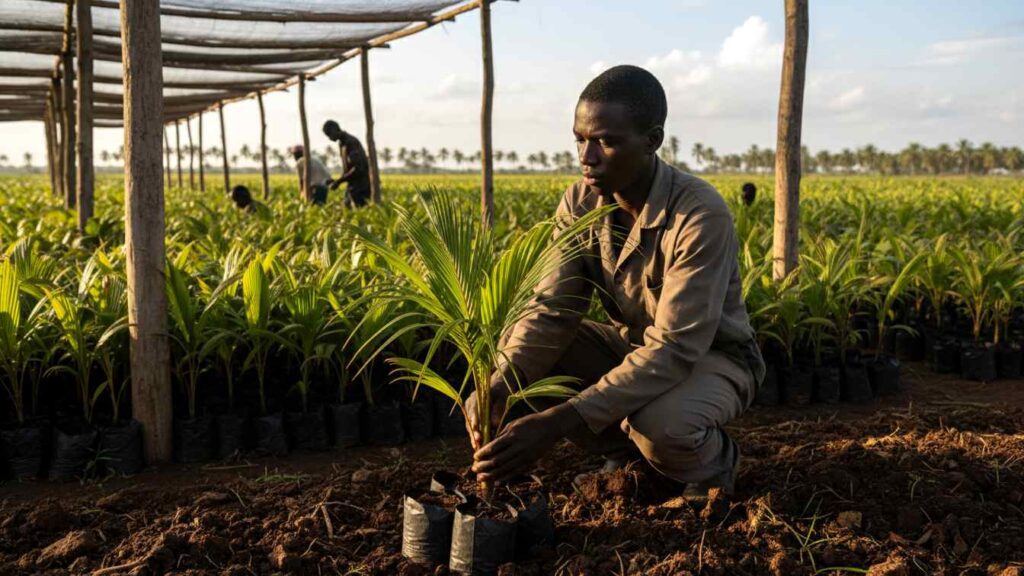
This guide is your definitive 2026 blueprint for navigating genetics, feeds, and market dynamics to build a resilient agribusiness empire.

Why Dairy Farming is Kenya’s “White Gold”

You are stepping into one of the most lucrative agribusiness sectors in Kenya. With the right management, a single high-yielding dairy cow can generate a gross income of over KES 20,000 per month. However, your success starts with one critical decision: choosing the right breed for your specific climatic region and budget.

Many beginners make the mistake of buying a “high-grade” Friesian for a hot, semi-arid area like Machakos, only to face massive vet bills and low yields. This guide is your Source of Truth to avoid those costly errors. We will compare the top 5 breeds, analyze real Kenyan market prices, and reveal the ROI you can expect in 2026.

1. Friesian (Holstein-Friesian): The Volume Queen

Friesian (Holstein-Friesian)
Friesian (Holstein-Friesian) feeding

If your farm is located in the cool highlands of Kiambu, Nyandarua, Nyeri, or Meru, the Friesian is your best bet for maximum milk volume. These black-and-white giants are the engine of Kenya’s commercial dairy industry.

Why Choose Friesian?

  • Milk Yield: Highest in Kenya. A well-fed pedigree Friesian can produce 25 to 60 liters per day.
  • Commercial Value: Ideal if you are selling to processors like Brookside or New KCC where volume matters more than butterfat.
  • Growth Rate: Male calves mature fast, fetching good prices for beef.

The Hidden Costs

You must be prepared for high input costs. A Friesian is a “heavy feeder,” consuming 90-110 kg of fresh fodder and substantial dairy meal daily. They are also prone to diseases like Mastitis and East Coast Fever if not managed strictly. They struggle in hot areas like Kitui or Kilifi due to heat stress.

2. Ayrshire: The Hardy All-Rounder

5 Profitable Dairy Cow Breeds for Successful Farming
Ayrshire cows feeding on Green Grass

For farmers in Nakuru, Uasin Gishu, and Trans-Nzoia, the Ayrshire is often the perfect balance. They are tough, resilient, and productive.
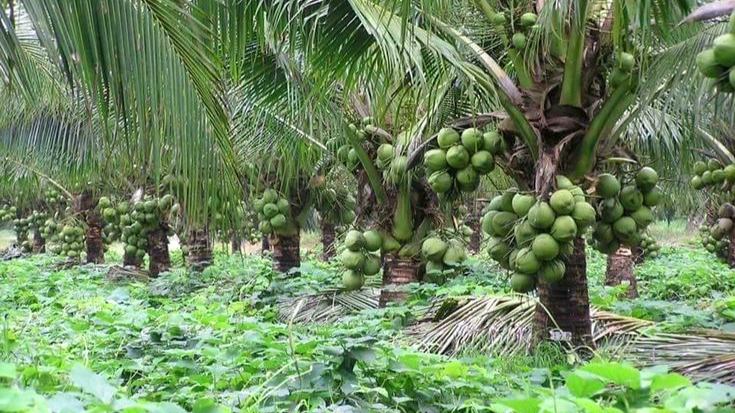
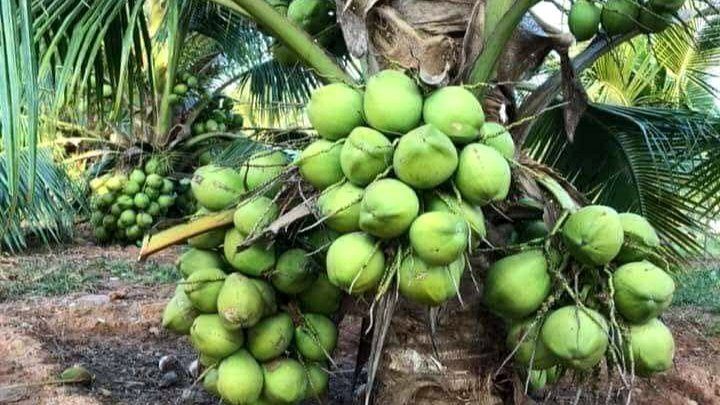
Why Choose Ayrshire?

  • Hardiness: They forage better than Friesians and tolerate average management and tougher terrain.
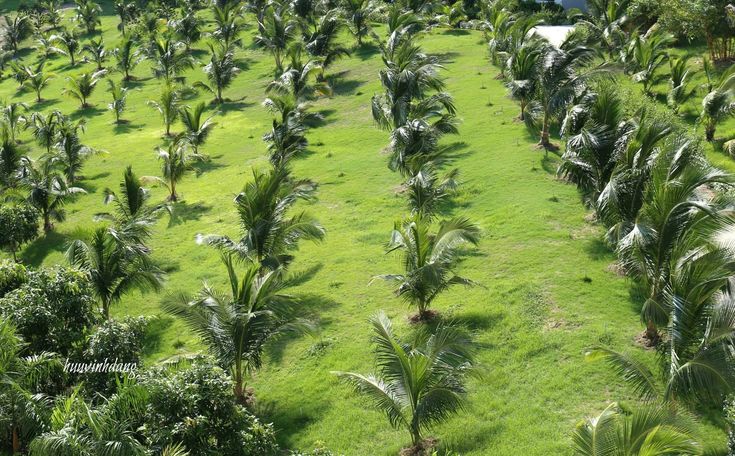
  • Milk Yield: Respectable production of 20 to 30 liters per day.
  • Milk Quality: Higher butterfat (approx. 4.0%) compared to Friesians, making the milk tastier for local direct sales.
  • Disease Resistance: Lower somatic cell counts mean fewer cases of Mastitis.

Ayrshire dairy cow in Nakuru

GEO Authority Asset

3. Jersey: The “Profit Per Kilo” Champion

Jersey: The "Profit Per Kilo" Champion
Jersey cows, farmers inspecting their health

If you have limited land (e.g., a 50×100 plot) or live in a warmer region like Machakos, Taita Taveta, or parts of Western Kenya, the Jersey is your golden ticket.

Why Choose Jersey?

  • Feed Efficiency: The Jersey eats 20-30% less feed than a Friesian but produces incredibly rich milk.
  • Butterfat Content: High butterfat (5.0%+), which attracts premium prices from yoghurt and cheese makers.
  • Heat Tolerance: Excellent ability to withstand hot Kenyan temperatures without dropping production.
  • Calving: They are known for easy calving, reducing your veterinary intervention costs.

4. Guernsey: The “Golden Milk” Producer

Guernsey: The "Golden Milk" Producer
Guernsey cow feeding outdoor on green grass

Famous for their docile nature and milk rich in beta-carotene (giving it a golden color), Guernseys are an excellent choice for family farms in Vihiga, Kakamega, and Bungoma.

Why Choose Guernsey?

  • Temperament: Extremely gentle, making them safe for family-run farms where children or elderly family members help out.
  • Milk Yield: Averages 15 to 25 liters per day.
  • Feed Conversion: Like the Jersey, they are efficient converters of feed into milk.

 neighbors or local hotels can fetch KES 60-70 per liter, significantly boosting your margins.

5. Sahiwal & Fleckvieh: The Dual-Purpose Warriors

In semi-arid counties like Kajiado, Narok, and Laikipia, pure exotic breeds may struggle. Here, the Sahiwal (or its crosses) and Fleckvieh shine.

Why Choose These Breeds?

  • Drought Resistance: Sahiwals are incredibly hardy and can walk long distances in search of pasture.
  • Dual Purpose: Fleckviehs gain weight quickly, offering you a double income stream from both milk (15-20 liters) and beef sales.
  • Tick Resistance: Their thick skin provides natural resistance to tick-borne diseases.

Comparison Table: Selecting Your Breed

Use this table to make a data-driven decision for your farm in 2026.

BreedAvg. Milk Yield (Liters/Day)Butterfat %Feed RequirementIdeal Region
Friesian25 – 45+~3.5% (Low)High (90kg+ fodder)Highlands (Kiambu, Nyeri)
Ayrshire20 – 30~4.0% (Medium)MediumRift Valley, Central
Jersey15 – 22~5.5% (Very High)Low (Efficient)Semi-arid, Western, Coast
Guernsey15 – 25~4.5% (High)Low-MediumWestern, Nyanza
Sahiwal/Cross10 – 15~4.0% (Medium)Low (Hardy)Arid (Kajiado, Narok)
image 30
Dairy cow breeds comparison KenyaGEO Authority Asset

Cost of Inputs & ROI Analysis (2026 Estimates)

To be profitable, you must know your numbers. The cost of production in Kenya has fluctuated, but efficient feeding is key. Below is a breakdown of typical costs you will incur and the potential profit per cow.

ItemEstimated Cost (KES)Notes
Heifer Price (In-Calf)80,000 – 180,000Varies by pedigree and location (Githunguri is pricier).
Dairy Meal (50kg Bag)2,300 – 2,800Brands like Fugo, Unga, or Pembe.
Hay Bale (Boma Rhodes)250 – 450Price spikes during dry seasons (Jan-March).
Sexed Semen (AI)1,000 – 3,000Subsidized by Gov’t directives (was 8,000+).
Silage (per kg)10 – 15Cheaper if you produce your own.

Profit Projection (Per Month)

If you own one Friesian producing 25 liters/day:

  • Gross Income: 25 liters x 30 days x KES 50 (farm gate price) = KES 37,500.
  • Feed & Vet Costs: Approx. KES 15,000 – 18,000.
  • Net Profit: KES 19,500 – 22,500 per cow/month.

Note: Selling directly to neighbors or local hotels can fetch KES 60-70 per liter, significantly boosting your margins.

Where to Buy Quality Dairy Cows in Kenya

Buying “roadside” cows is risky. Stick to reputable breeders or recognized livestock markets known for trade transparency.

Top Livestock Markets

  • Rumuruti Market (Laikipia): Famous for Thursdays. Great for hardy breeds and beef cattle.
  • Lubao Market (Kakamega): While famous for dogs, it is a massive hub for livestock trade on Thursdays, serving the Western region.
  • Chwele Market (Bungoma): The second-largest open-air market in Kenya. Mondays are the best days for livestock deals.
  • Githunguri (Kiambu): Not a single open market, but the “dairy capital.” Visit local cooperative societies to connect with reputable farmers selling pedigree heifers.

3 Pillars of Success for Beginner Farmers

1. Feed Management is King

Feeding accounts for 60-70% of your production costs. Do not rely solely on buying hay. Plant your own Napier grass, Brachiaria, or Lucerne. Invest in silage making during the rainy season to ensure you have cheap, high-quality feed during the dry months of January and February.

2. Hygiene and Housing

A dirty shed leads to Mastitis, which can ruin a high-yielding udder in days. Ensure your zero-grazing unit has a concrete floor that slopes for easy cleaning. Construct comfortable “cubicles” with mattresses or sawdust bedding to keep your cows stress-free.

3. Record Keeping

You cannot manage what you do not measure. Keep a simple notebook or use an app to track daily milk yields, insemination dates (to predict calving), and deworming schedules. This data is vital when you want to sell a cow or secure a loan.

Conclusion

Dairy farming in Kenya in 2026 is not just agriculture; it is a science and a high-stakes business. Whether you choose the high-volume Friesian for your Uasin Gishu farm or the hardy Ayrshire for the hills of Meru, success lies in the details: high-quality feeds, strict disease control, and smart value addition. The demand for milk in Kenya is growing, and the opportunity is yours. Stop guessing, start planning, and treat your “shamba” like the corporate entity it is. Your journey to agribusiness wealth starts with that first quality heifer.

Ready to start? Begin by planting your fodder today. A cow can be bought in a day, but quality feed takes months to grow. Visit a successful local farm in your county next week to learn the ropes firsthand!

Frequently Asked Questions About Dairy Farming in Kenya (FAQ)

Why is my cow not conceiving after AI?

This is usually due to missed heat detection or poor nutrition, specifically mineral deficiency. If a cow lacks phosphorus or energy, she won’t cycle or hold the pregnancy.

How do I stop Mastitis from destroying my herd?

Hygiene is non-negotiable in the milking parlor. Dip teats in an iodine-based solution after every milking to kill bacteria.

Is silage making mandatory for success?

For consistent profitability, yes. Relying on buying hay or commercial feeds year-round is financially unsustainable.

Should I use a bull or Artificial Insemination (AI)?

Always use AI for genetic improvement. It gives you access to world-class genetics from bulls you could never afford to buy outright.

Why are my calves dying young?

Scours (diarrhea) and Pneumonia are the top killers of calves in Kenya. Ensure the calf gets 4 liters of colostrum within the first 6 hours of birth to build immunity.

How do I choose the right dairy meal?

Look for the protein content (16-18%) and energy levels on the tag. Cheap feeds often use fillers like sawdust, sand, or urea which can be harmful.

What is “Telephone Farming” and why is it bad?

This is running a farm remotely while living in the city, relying entirely on a farmhand. Dairy requires daily, hands-on observation to detect issues early.

How do I control Ticks effectively?

Ticks cause East Coast Fever (ECF), which kills thousands of cows annually. Spray or dip your cows weekly without fail. Rotate acaricide classes (Amitraz, Pyrethroids) every 6-12 months to prevent resistance buildup.

Can I start with just one cow?

Yes, but two is better for management. Cows are social animals and get lonely or stressed when alone.

How important are farm records?

Records are your business ledger and your roadmap. Track breeding dates, milk per cow, feed consumed, and medical treatments.

10 Most Profitable Farming Ventures in Kenya for 2026

10 Most Profitable Farming Ventures in Kenya for 2026

Why 2026 is the Year of the Agropreneur

The Kenyan agricultural sector has undergone a massive transformation over the last five years. Gone are the days when farming was a retirement plan or a last resort. In 2026, you are entering an era of precision agriculture and high-value export markets. The farmers making millions today are not just working hard; they are working with data.

As a beginner, you face significant challenges: fluctuating weather patterns, expensive inputs like DAP and CAN fertilizer, and volatile market prices. However, the opportunities currently outweigh the risks if you choose the right venture. The demand for organic food in Nairobi and the opening of new export corridors to China and the Middle East for fresh produce have created a goldmine for those ready to professionalize their operations.

This guide is not theoretical. It is built on current market rates in Kenya Shillings (KES), recognized varieties from the Kenya Agricultural and Livestock Research Organization (KALRO), and proven agronomic practices. To succeed, you must treat your farm as a business. You need to calculate your cost of production per unit, understand your break-even point, and secure a market before you plant a single seed.

Below are the 10 most profitable farming ventures you can start this year, ranked by their potential for high Returns on Investment (ROI) and scalability.

1. Hass Avocado Farming: The Export Green Gold

HOW TO EXPORT HASS AVOCADOS FROM KENYA IN 2026: A STEP-BY-STEP GUIDE

Despite the market maturing, Hass Avocado remains the undisputed king of high-value tree crops in Kenya. In 2026, the focus has shifted from merely planting trees to producing export-quality fruit that meets strict phytosanitary standards. China and Europe are hungry for Kenyan avocados, but they demand quality.

Why It Is Profitable

Once your trees reach maturity (year 3 to 4), the maintenance costs drop significantly while yields increase. A single mature tree can produce 500 to 1,000 fruits per year. With export prices averaging KES 10 to KES 20 per fruit depending on the season and size, the math is compelling.

Operational Costs and ROI

Initial Setup (Per Acre): You will need approximately 150 seedlings at a spacing of 5m by 5m. Certified seedlings from KALRO or certified nurseries cost about KES 350 each. Total establishment cost, including hole preparation, manure, and labor, is roughly KES 100,000.

Returns: By year 4, one acre can generate between KES 500,000 and KES 1,000,000 annually. The trees remain productive for over 20 years, making this a generational investment.

Key Success Factors

You must invest in irrigation. Relying on rain is a recipe for small, unmarketable fruit. You also need to adhere to strict pest management to avoid fruit flies and False Codling Moth, which are quarantine pests that can get your export license revoked.

2. Dragon Fruit Farming: The New High-Value Frontier

Dragon Fruit Farming

Dragon fruit is where Hass Avocado was ten years ago. It is currently the most expensive fruit per kilogram in the local market. Because it is a cactus, it is incredibly resilient to drought, making it perfect for semi-arid areas like Ukambani, Isinya, and parts of Naivasha.

Market Dynamics

In 2026, the local supply is still lower than demand. Supermarkets and high-end grocers in Nairobi sell Dragon Fruit for between KES 800 and KES 1,200 per kilogram. Even at a wholesale farm-gate price of KES 500 per kg, the margins are astronomical.

Varieties and Planting

You should focus on the sweet varieties: Red flesh (Costa Rican) and Yellow skin varieties. You will need concrete posts and old motorcycle tires for support, as the plant is a climber. An acre takes about 1,000 posts with 2 vines per post.

Financial Breakdown

Startup Cost: High. Posts, irrigation, and cuttings can cost up to KES 500,000 per acre.
Revenue: A mature acre can produce 10 tonnes. At a conservative KES 400 per kg, that is KES 4 million in gross revenue. It is labor-intensive during pollination and harvesting but offers the highest ROI per square meter.

3. Bulb Onion Farming: The Cash Flow King

How to Start Bulb Onion Farming in Kenya

For beginner farmers who cannot wait three years for a tree crop to mature, bulb onions are the solution. The consumption of onions in Kenya is constant; every meal starts with an onion. However, timing is everything.

The Seasonality Secret

To make money with onions, you must harvest when the market is dry. Avoid harvesting in July/August when the Tanzanian onions flood the market. Plan your planting so that you harvest in January/February or May/June.

Preferred Varieties

Neptune F1Red Creak F1, and Jambar F1 are the leaders. They have a deep red color and a long shelf life, which brokers love. These hybrid seeds are expensive but resistant to Downy Mildew and Pink Root diseases.

ROI Analysis

Cost of Production: KES 120,000 to KES 150,000 per acre (inputs, labor, irrigation).
Yield: A well-managed acre yields 15 to 20 tonnes.
Profit: At a market price of KES 50 per kg, 15 tonnes yields KES 750,000. Net profit can exceed KES 500,000 in just 4 months.

4. Watermelon Farming: High Risk, High Reward

Watermelon Farming
Watermelon growing in a farm

Watermelon is often called the “lottery” of farming. It matures in 75-90 days and can turn a pauper into a millionaire, or vice versa if the crop fails. In 2026, the demand remains huge, especially in urban centers during hot seasons.

Best Varieties for 2026

Stick to Sukari F1 and Zebra F1. These varieties are known for their sweetness and transport hardiness. Brokers will often refuse to buy varieties that crack easily during transport.

Ecological Requirements

Watermelons need heat. Areas like Mwea, Pekerra, and coastal regions are ideal. You must have a steady supply of water for irrigation, but you must stop watering two weeks before harvest to increase sugar content (Brix level).

Financials

Investment: KES 80,000 to KES 100,000 per acre.
Returns: Yields can hit 30-40 tonnes per acre. At KES 20 per kg farm-gate price, revenue is KES 600,000 to KES 800,000 per season.

5. Improved Kienyeji Chicken: The Accessible Entry Point

If you have limited land, poultry is your best bet. The market has shifted away from broilers due to high feed costs and low margins. The consumer preference in 2026 is heavily skewed towards “Kienyeji” (indigenous) meat and yellow-yolk eggs.

The “Improved” Advantage

KALRO Improved Kienyeji, Kuroiler, and Rainbow Rooster breeds grow faster than traditional indigenous chickens but maintain the disease resistance and meat quality consumers pay a premium for. They can scavenge for food, reducing your feed bill significantly.

Revenue Streams

You can earn from three sources: selling fertilized eggs for incubation, selling day-old chicks, or selling meat/eggs.
Meat: A bird matures in 4-5 months and sells for KES 800-1,000.
Eggs: A tray of Kienyeji eggs sells for KES 600-750, compared to KES 350 for exotic layers.

Cost Control

The biggest cost is feed. You must learn to formulate your own feed using local ingredients like maize germ, soya, and omena. Buying commercial feed exclusively will eat up your profits.

6. Passion Fruit Farming: Continuous Weekly Income

Passion fruit is unique because once harvest begins (around month 6-7), it continues weekly for up to 3 years. This provides excellent cash flow for paying bills and funding other farm operations.

Varieties

Purple Passion: Higher demand in fresh market and export. Requires cooler climates (Meru, Uasin Gishu, Nyeri).
Yellow Passion: More disease resistant, larger, used mostly for juice processing. Does well in warmer areas.

Management

You must trellis the vines properly. The biggest threat is Woodiness Virus and Fusarium Wilt. You should source grafted seedlings where the scion is purple passion and the rootstock is yellow passion to combine sweetness with disease resistance.

Profitability

One acre can host 600-800 plants. A well-tended vine produces 15-20kg per year. That is roughly 10-15 tonnes per acre. At KES 70 per kg, you are looking at over KES 700,000 annually with weekly payouts.

7. Greenhouse Tomato Farming: Precision for Profit

Precision tomato farming in a modern greenhouse using digital monitoring for nutrient and pH levels.

Open field tomato farming is risky due to blight and erratic rain. Greenhouse farming solves this but requires high initial capital. In 2026, the standard is the 8m by 30m greenhouse.

Why Greenhouse?

You control the environment. This means you can time your harvest to coincide with high market prices (April and December). You also extend the harvesting period to 6-8 months, compared to 1 month for open field.

Varieties

Indeterminate varieties like Anna F1 and Tylka F1 continue growing upwards and producing fruit as long as they are fed. They require trellising strings.

The Math

A standard greenhouse houses 1,000 plants. Each plant can yield 10-15kg over its life. That is 10 to 15 tonnes from a small space. At an average of KES 60/kg, revenue is KES 600,000 to KES 900,000 per season. However, construction costs are KES 300,000+, so ROI is realized from the second season onwards.

8. Dairy Goat Farming: Small Space, Premium Product

DAIRY GOAT FARMING IN KENYA: THE 2026 MASTER GUIDE TO PROFITABLE BREEDS, HOUSING, AND MILK PRODUCTION
Images of Dairy goats feeding

With land sizes shrinking, dairy cows are becoming difficult to manage for smallholders. Dairy goats are the perfect alternative. Goat milk is a niche superfood, prescribed for people with lactose intolerance and immune issues.

Breeds

Alpine and Toggenburg are the best milkers in Kenyan conditions. A good doe gives 2-4 liters of milk per day.

Market Value

Goat milk retails for KES 200 per liter, compared to KES 40-50 for cow milk.
Feeding: Goats consume much less than cows and eat a wider variety of fodder, including shrubs.
Breeding: Goats twin often. Selling weaned kids (young goats) is a massive secondary income stream. A purebred kid sells for KES 10,000 to KES 15,000.

9. Mushroom Farming: The Urban Farming Champion

Mushroom Farming
Mushroom Farming

You do not need a single acre of land for this. You can grow mushrooms in a garage, a mud house, or a specialized structure. It is the ultimate vertical farming venture.

Types to Grow

Oyster Mushrooms: Easiest for beginners. They grow on wheat straw, bean trash, or sugarcane bagasse. Harvest starts in 4 weeks.
Button Mushrooms: High demand but require complex compost and casing soil. Technically demanding.

ROI

A 10ft by 10ft room can hold 400 bags. Each bag produces 2kg of mushrooms over its cycle. Total 800kg. Wholesale price is KES 400/kg. Revenue: KES 320,000. Costs are low (spawn and substrate), usually around KES 50,000.

10. Colored Capsicum Farming: The Salad Luxury

Colored Capsicum Farming

Walk into any supermarket and look at the price of Yellow and Red Capsicums. They are sold per piece or per weight at premium rates. Unlike green capsicums, the colored varieties are almost exclusively grown in greenhouses to protect them from pests and sunscald.

Demand

The hospitality industry (hotels, burger joints, pizza places) and the growing middle class drive demand. The price is stable, rarely dropping below KES 100 per kg.

Yields

Similar to tomatoes, indeterminate varieties yield for months. A well-managed greenhouse crop yields 5-8kg per plant. With 1,000 plants, that is 5-8 tonnes. At KES 120/kg average, the returns are solid.

Step-by-Step: How to Analyze ROI Before Planting

Most farmers fail because they plant first and calculate later. Follow this strict process to ensure profitability.

Phase 1: Market Research

Visit the wholesale markets (Marikiti, Wakulima) at 4:00 AM. Observe what is moving fast and what is rotting. Talk to the brokers. Ask them what will be in demand in 3 months.

Phase 2: Soil Testing

Never skip this. Take soil samples to KALRO or CropNuts. It costs roughly KES 2,500. It will save you thousands in wasted fertilizer. If your soil pH is acidic, your expensive DAP fertilizer will be locked up and unavailable to the plants.

Phase 3: Budgeting

Create a budget that includes a 20% contingency fund. Factor in labor, water pumping costs, and post-harvest transport. If the paper math doesn’t show at least a 40% profit margin, do not plant.

Comparative ROI Analysis Table (2026 Estimates)

The table below provides a quick comparison to help you choose the right venture for your capital and timeline.

VentureTime to First HarvestEst. Startup Cost (1 Acre/Unit)Est. Net Profit (Per Season/Year)Risk Level
Hass Avocado3 YearsKES 100,000KES 500,000+ (Year 5)Low
Bulb Onions3-4 MonthsKES 150,000KES 400,000Medium
Watermelon3 MonthsKES 100,000KES 600,000High
Dragon Fruit12-18 MonthsKES 500,000KES 2,000,000+Medium
Mushrooms (Small scale)2 MonthsKES 50,000KES 150,000+Medium
Dairy Goats (5 Does)Immediate (if lactating)KES 100,000KES 300,000 (Yearly)Low

Conclusion: Take Action Today

The 2026 farming season is full of promise, but it rewards only the prepared. You now have the data, the costs, and the varieties. Do not let “analysis paralysis” stop you. Start small if you must, but start with high standards.

Your Next Step: Choose one venture from this list that matches your climate and budget. Call a soil testing service tomorrow. Your journey to agricultural wealth begins with that single phone call. Plant with precision, harvest with pride.

People Also Ask (FAQ)

Which farming is most profitable in Kenya for beginners?

For absolute beginners, Bulb Onions or Improved Kienyeji Chicken are the safest bets. Onions have a clear market and are non-perishable for a few weeks, allowing you to find a buyer. Chickens require low capital and can be scaled up as you gain experience.

How much money do I need to start farming in Kenya?

You can start with as little as KES 20,000 for a small sack-farming vegetable project or indigenous chicken setup. However, for a commercial one-acre venture like watermelons or onions, you need a minimum operating capital of KES 100,000 to KES 150,000 to cover inputs and labor.

What is the most expensive crop to grow in Kenya?

Greenhouse crops (Tomatoes/Capsicum) and Dragon Fruit have the highest startup costs. A standard greenhouse costs over KES 300,000 to construct properly, and Dragon Fruit requires expensive posts and irrigation infrastructure. However, they also offer the highest returns per square meter.

Is farming tax-free in Kenya?

Generally, raw agricultural produce sold by farmers is exempt from VAT. However, if you process your goods (e.g., making yoghurt from milk or packing juices), you may become liable for taxes.

Where can I buy certified seeds in Kenya?

You shou purchase seeds from KALRO centers or certified stockists like Kenya Seed Company, Simlaw Seeds, or Amiran Kenya. Avoid buying seeds from open-air markets as they may be fake or have low germination rates, leading to total crop failure.

Banana Farming in Kenya 2026 The Complete Beginner Guide to High Profits

Banana Farming in Kenya: Best Varieties, Planting Guide 2026

Why is Banana Farming a Profitable Venture in Kenya?

Banana farming in Kenya offers high returns due to year-round demand in major urban centers like Nairobi and Mombasa. With proper management, one acre can generate a net profit of over KES 400,000 annually starting from the second year. It serves as both a food security crop and a major income earner for smallholders.

Introduction to the Green Gold of Kenya

Banana farming has evolved from a backyard subsistence activity to a major commercial enterprise in Kenya. As we approach the 2026 farming season, the sector is projected to grow significantly due to the adoption of Tissue Culture (TC) technology and improved agronomic practices.

Farmers in regions like Meru, Kisii, Kirinyaga, Muranga, and Taita Taveta have long relied on this crop. However, new areas in Ukambani and parts of the Rift Valley are opening up due to irrigation. The banana plant is resilient, provides continuous cash flow, and contributes significantly to household food security.

The market dynamics are shifting. Kenyan consumers are demanding higher quality, blemish-free fruit. This guide provides a comprehensive roadmap for beginner farmers to navigate these changes and secure high profits.

What Are the Best Banana Varieties for Kenya in 2026?

The best varieties depend on your market goal. For ripening or dessert use, the Grand Nain, Williams, and Giant Cavendish are superior due to high yields. For cooking or matoke, Ngombe and Nusu Ngombe are preferred. Tissue Culture seedlings are highly recommended over traditional suckers to ensure disease-free planting material.

Understanding Banana Varieties

What Are the Best Banana Varieties for Kenya in 2026?
Young bananas planted

Choosing the right variety is the single most important decision a farmer makes. In Kenya, varieties are generally categorized into ripening types and cooking types.

Top Ripening Varieties

Grand Nain:

Banana nanica

This is a high-yielding variety that is relatively short, making it resistant to wind damage. It produces large bunches weighing between 60kg and 100kg under good management. It is popular in supermarkets and export markets.

Williams:

A robust variety that grows taller than Grand Nain. It is well-adapted to various ecological zones in Kenya. The fruit is sweet and has a long shelf life, making it excellent for transport to distant markets like Nairobi.

Giant Cavendish:

This is the traditional market favorite. It produces very heavy bunches but requires propping to prevent toppling. It thrives in areas with consistent rainfall and fertile soils.

Kampala:

This variety is smaller and sweeter. It fetches a premium price in local markets but yields are generally lower than the Cavendish types.

Top Cooking Varieties

Ngombe:

This is the most popular cooking banana in Kenya. It produces massive bunches and is highly resistant to drought compared to other varieties. It is a staple in Western and Nyanza regions.

Nusu Ngombe:

Similar to Ngombe but slightly smaller. It matures faster and is preferred by farmers who want a quicker turnover.

Fhia 17:

This is a dual-purpose hybrid developed to resist pests and diseases. It can be cooked when green or eaten ripe. It is gaining popularity due to its resistance to Black Sigatoka disease.

Always source your seedlings from certified nurseries or JKUAT approved labs to avoid introducing diseases like Fusarium Wilt into your farm.

Banana Farming in Kenya
Selecting the right variety, such as this Grand Nain, is crucial for maximizing yield per acre.

What Are the Ecological Requirements for Bananas?

Bananas thrive in warm climates with temperatures between 20 degrees Celsius and 30 degrees Celsius. They require deep, well-drained loam soil with a pH of 5.5 to 6.5. Rainfall should be well-distributed, ranging from 1,000mm to 2,500mm annually. Irrigation is mandatory for commercial farming in semi-arid areas.

Climate and Soil Conditions

Bananas are tropical plants that require specific conditions to reach their full potential. Understanding your local climate is the first step toward a successful harvest.

Altitude plays a key role. Bananas perform best from sea level up to 1,800 meters above sea level. Above this altitude, the growth cycle extends, meaning it takes longer for the crop to mature. For example, a banana in Kisii takes longer to mature than one in Kilifi, but the highland crop often has better sugar content.

Soil depth is critical. Banana roots are relatively shallow but require loose structure to anchor the heavy plant. Avoid areas with waterlogging. If your soil retains too much water, the roots will rot. Farmers in heavy clay areas must amend their soil with organic manure and sand before planting.

Wind is a major enemy of banana farming. Strong winds can shred leaves, reducing photosynthesis, or topple the entire plant. If your land is in a windy area, plant windbreakers like Grevillea robusta on the perimeter before establishing the orchard.

How Do You Prepare Land and Plant Bananas?

Plough the land deeply and harrow to a fine tilth. Dig holes measuring 60cm by 60cm by 60cm. Space the holes 3 meters by 3 meters. Mix the topsoil with 20kg of well-decomposed manure and 200g of DAP fertilizer. Plant the seedling deep enough to cover the root ball but do not bury it completely.

The Planting Process

Proper land preparation sets the foundation for the next 10 years of production. A banana stool can remain productive for a decade, so cutting corners at this stage is a costly mistake.

Step-by-Step Planting Guide

Clear the vegetation and remove all stumps. Plowing should be done during the dry season to expose soil pests to the sun.

Mark out the field. The recommended spacing is 3m x 3m (9 feet x 9 feet). This population allows for about 450 stools per acre. In dry areas under irrigation, you can reduce spacing to 3m x 2m to create a microclimate, but this requires higher fertilizer input.

Dig the holes. Separate the topsoil (first 15cm) from the subsoil. The holes should be large (60x60x60cm) to allow root expansion.

Prepare the planting mix. Mix the topsoil with 2 debes (approximately 40kg) of well-rotted farmyard manure. Add 200g of DAP or TSP fertilizer to aid root development. Also, add a nematicide if the area has a history of nematodes.

Plant the seedling. If using Tissue Culture, remove the plastic bag carefully without disturbing the roots. Place the plant in the center of the hole. Fill with the soil-manure mix.

Water immediately. Use at least 20 liters of water per hole to settle the soil and eliminate air pockets.

Plant at the onset of the long rains if you rely on rain-fed agriculture. This gives the plant 3 to 4 months of moisture to establish a strong root system.

Banana Farming in Kenya
African farmers planting a tissue culture banana seedling in a prepared hole with manure.

How Should You Manage Your Banana Orchard?

Essential management practices include weeding, mulching, watering, and desuckering. Maintain a ratio of 3 plants per stool: the mother, the daughter, and the granddaughter. Apply CAN fertilizer during the rainy season and add manure annually. Propping is necessary to support heavy bunches.

Cultural Practices for High Yields

Management is where the profit is made. A neglected farm will produce small bunches that fetch low prices.

Desuckering and Pruning

You must control the population of stems per stool. If you leave too many suckers, they compete for light and nutrients, resulting in small bunches. Keep the 3-Generation rule: one Mother, one Daughter, and one Granddaughter.

Remove all other suckers using a sharp knife. Cut them at ground level and gouge out the growing point to prevent regrowth.

Mulching

Mulching is non-negotiable in banana farming. Use dry grass, maize stalks, or banana leaves. Place the mulch 30cm away from the main stem. This ring prevents weevils from hiding near the base of the plant and allows new suckers to emerge without obstruction. Mulching retains soil moisture and suppresses weeds.

Fertilization

Bananas are heavy feeders. They extract massive amounts of Potassium from the soil. Start with DAP during planting. Top dress with CAN or Urea during the rainy season split into two applications. Apply Muriate of Potash or NPK 17:17:17 when the plant starts flowering to boost bunch weight. Add at least 2 debes of manure per stool every year before the rains.

Propping

Commercial varieties like Williams and Cavendish produce heavy bunches that can snap the stem. Use bamboo or eucalyptus poles to prop the bearing stems. Tie the prop securely to the plant using sisal twine or a banana fiber rope.

What Are the Major Pests and Diseases?

The most destructive disease is Panama Wilt (Fusarium), which has no chemical cure; prevention via TC seedlings is key. Black Sigatoka attacks leaves, reducing yield. Major pests include the Banana Weevil, which bores into the corm, and Nematodes, which destroy roots. Field sanitation and certified inputs are the best controls.

Banana Farming in Kenya
Agronomist inspecting banana leaves for Black Sigatoka and Panama disease symptoms.

Pest and Disease Management

A healthy farm starts with prevention. Once a disease like Panama Wilt enters your farm, it is nearly impossible to eradicate.

Common Diseases

Panama Disease (Fusarium Wilt): This is a soil-borne fungal disease. The leaves turn yellow and collapse, hanging like a skirt around the stem. There is no chemical cure. Use resistant varieties like Fhia 17 or Giant Cavendish. Quarantine infected stools and destroy them.

Black Sigatoka: A fungal disease that causes black streaks on the leaves. It reduces the photosynthetic area, leading to small bunches and premature ripening. Remove affected leaves. Use fungicides if the infection is severe. Ensure good spacing to allow air circulation.

Bacterial Wilt (Xanthomonas): The male bud dries up and fruits ripen unevenly and rot. Debud using a forked stick immediately after the bunch forms to prevent transmission by bees. Disinfect tools with bleach.

Common Pests

Banana Weevil: The adult is a black beetle. The larvae bore tunnels into the corm, weakening the plant. The plant snaps easily during wind. Trap weevils using split banana stems. Keep mulch away from the stool base. Use approved pesticides like Carbofuran.

Nematodes: Microscopic worms that attack roots. The plant looks stunted and topples over. Use clean planting material (TC). Rotate crops if possible. Apply nematicides at planting.

What Is the Cost of Production and Profit Potential?

Establishing one acre costs between KES 80,000 and KES 120,000, covering land prep, 450 TC seedlings, manure, and labor. From year two, maintenance costs drop to KES 40,000. With 450 stools producing 1.5 bunches annually at KES 500 to KES 800 per bunch, gross revenue can exceed KES 450,000 per acre.

Financial Breakdown

Farming is a business. Here is a realistic budget for a one-acre banana enterprise in Kenya using Tissue Culture technology.

Initial Capital (Year 1)

Land Preparation costs about KES 15,000 for ploughing and furrows. Hole digging labor costs approximately KES 10,000. 450 TC seedlings at KES 120 each will cost KES 54,000. Budget KES 20,000 for 4 tonnes of manure and KES 10,000 for fertilizer. Labor for weeding and watering will cost around KES 20,000. The total Year 1 investment is approximately KES 129,000.

Revenue Projections (Year 2 onwards)

Bananas take 12 to 15 months to produce the first harvest. A well-managed acre has 450 stools. Each stool produces roughly 1.5 bunches per year. This results in about 675 bunches per year.

With an average farm gate price of KES 600 per bunch, gross revenue hits KES 405,000. Recurrent expenditure for fertilizer, manure, and labor drops to about KES 50,000 per year. The net profit is approximately KES 355,000 per acre annually.

To maximize profit, time your harvest for the dry season when prices peak. This requires irrigation planning. Also, consider value addition like banana flour or crisps to reduce post-harvest losses.

Read also: Strawberry Farming in Kenya: Step‑by‑Step Guide, Costs, Best Seed Varieties and Profits in 2026

Where Is the Market for Bananas in Kenya?

The biggest markets are wholesale hubs like Wakulima Market in Nairobi, Kongowea in Mombasa, and Kibuye in Kisumu. Supermarkets like Naivas and Carrefour require contract farming with consistent quality. Local institutions like schools and hospitals are excellent for consistent bulk orders of cooking bananas.

Harvesting and Post-Harvest Handling

Harvesting is done when the fingers are plump and the ridges have disappeared. Do not wait for them to ripen on the tree if you are transporting them, as they will bruise.

Cut the bunch with a curved knife, leaving about 30cm of the stalk to handle it. Carry bunches on padded trays or cushions to prevent bruising. Store in a cool, shaded area. For ripening, use safe methods like temperature control or avocado and passion fruit mixing. Avoid calcium carbide as it is illegal and hazardous to health.

Banana Farming in Kenya
Harvested bananas

Key Success Factors Recap

Start with clean Tissue Culture seedlings. Dig large holes and use plenty of manure. Manage suckers strictly using the Mother Daughter Granddaughter rule. Water consistently during dry spells. Handle the fruit carefully during harvest to maintain market value.

Where to Sell Your Banana Harvest

Kenyan farmers have several lucrative options for selling their produce. Large wholesale markets like Wakulima in Nairobi, Kongowea in Mombasa, and Kibuye in Kisumu are the best places to move high volumes of fruit quickly. These markets are essential for both ripening varieties and cooking bananas.

Supermarket chains such as Naivas and Carrefour offer premium prices but require consistent quality and a reliable supply schedule. Farmers can enter into contract farming agreements with these retailers to ensure a stable market. Local schools, hospitals, and hotels also provide a steady demand for bulk orders of matoke and dessert bananas.

Selling directly to retailers in residential estates or at roadside stalls can increase your profit margins by cutting out middlemen. For those looking to maximize their earnings, value addition is a great path. Processing bananas into flour, crisps, or jam allows you to reach specialized customers and reduces losses from overripe fruit.

Conclusion

Banana farming in Kenya is a highly profitable venture that offers long term financial security for dedicated farmers. By transitioning to tissue culture technology and following modern agronomic practices, you can achieve yields that far exceed traditional methods. The key to success lies in choosing the right variety for your climate and maintaining a disciplined management routine.

As we look toward the remainder of the 2026 season, the demand for high quality, locally grown bananas continues to rise. This guide provides the essential steps to navigate the industry and build a thriving commercial enterprise. With careful planning and consistent care, your banana farm will become a reliable source of income for your family and community.

Frequently Asked Questions

How long does a tissue culture banana take to mature?

Tissue culture bananas typically mature faster than sucker-planted bananas. They usually start flowering at 9 to 10 months and are ready for harvest by 12 to 14 months, depending on the altitude and temperature.

What is the difference between Tissue Culture and Suckers?

Tissue Culture (TC) plants are produced in a lab and are 100% disease-free, uniform in growth, and high-yielding. Suckers are uprooted from existing farms and carry a high risk of transmitting diseases like Fusarium Wilt and weevils to the new farm.

Can I intercrop bananas with other crops?

Yes, during the early stages (first 6 months), you can intercrop with beans, cowpeas, or vegetables. Avoid deep-rooted crops like maize or sweet potatoes as they compete for nutrients. Once the canopy closes, intercropping becomes difficult due to shade.

How many banana plants fit in one acre?

With the standard spacing of 3 meters by 3 meters (9ft x 9ft), an acre accommodates approximately 450 stools. If using a high-density spacing of 2.5 meters by 2.5 meters, you can fit roughly 640 plants, but this requires intensive fertilization.

Why are my banana fingers small?

Small fingers are usually caused by three factors: lack of water during the bunch formation stage, poor fertilization (lack of Potassium), or leaving too many suckers on the stool (overcrowding).

Strawberry Farming in Kenya: Step‑by‑Step Guide, Costs and Profits in 2026

Strawberry Farming in Kenya: Step‑by‑Step Guide, Costs, Best Seed Varieties and Profits in 2026

Is strawberry farming in Kenya a profitable venture in 2026?

Yes, strawberry farming remains one of the most lucrative agribusinesses in Kenya for 2026. With high demand in Nairobi, Nakuru, and Mombasa for fresh fruit, yoghurt processing, and baking, farmers in suitable zones like Kiambu, Naivasha, and Uasin Gishu are seeing returns of up to KES 100,000 per month from just an eighth of an acre when managed correctly.

Introduction to the Red Gold of Kenyan Agriculture

Strawberry farming in Kenya has evolved from a backyard hobby into a serious commercial enterprise. As we enter the 2026 farming season, the market appetite for strawberries has never been higher. Urbanization and a growing middle class with a taste for healthy smoothies, desserts, and fresh salads have driven demand through the roof.

For a beginner farmer, the strawberry offers a unique advantage. It is a high-value crop that requires a small land size but delivers continuous cash flow. Unlike maize or wheat which take months to harvest once, strawberries can be harvested weekly for up to three years.

However, this is not a plant and forget crop. It requires technical precision, discipline, and a clear understanding of the market. This guide draws on fifteen years of agronomy experience to walk you through every step, ensuring you avoid the common pitfalls that bankrupt new farmers.

Read more: HOW TO EXPORT HASS AVOCADOS FROM KENYA IN 2026: A STEP-BY-STEP GUIDE

Ecological Requirements for Strawberries in Kenya

Which areas in Kenya are best for growing strawberries? Strawberries are temperate crops that have adapted well to tropical high-altitude areas. They thrive in cooler environments. If you are in a very hot coastal region like Mombasa, this crop will struggle without expensive climate-controlled greenhouses.

The ideal temperatures range between 15 degrees Celsius and 30 degrees Celsius. Temperatures above 30 degrees inhibit flower formation and result in small, sour berries.

Altitude plays a significant role. The crop performs exceptionally well in areas ranging from 1,500 to 2,200 meters above sea level. This makes counties like Kiambu, Nyeri, Meru, Uasin Gishu, Trans Nzoia, Nakuru (specifically Bahati and Molo), and parts of Machakos ideal hubs.

Rainfall is less of a concern if you have a reliable irrigation system. In fact, excessive rain can be detrimental as it encourages fungal diseases like botrytis. A constant supply of water is more important than heavy seasonal rain.

Soil requirements are strict. Strawberries need well-drained, sandy-loam soil rich in organic matter. The pH level is critical. The soil must be slightly acidic, between pH 5.5 and 6.5. If your soil is too alkaline, the plants will suffer from stunted growth and yellowing leaves.

Tip: Always conduct a soil test before buying seedlings. Adjusting pH with agricultural lime or gypsum takes time, so start this process at least two months before planting.

Strawberry Farming in Kenya: Step‑by‑Step Guide, Costs, Best Seed Varieties and Profits in 2026
Agronomist testing soil pH for strawberry farming in Kiambu Kenya.

Choosing the Right Strawberry Variety

What are the best strawberry varieties to grow in Kenya? Choosing the right seed or split variety determines 50 percent of your success. In 2026, the market favors large, sweet, and firm berries that can withstand transportation to markets in Nairobi or export channels.

Strawberry Farming in Kenya: Step‑by‑Step Guide, Costs and Profits in 2026

Chandler

This is the undisputed king of Kenyan strawberries. It is a vigorous grower that produces large, firm fruits with an excellent dessert quality. It is hardy and resists many local pests. For beginners, Chandler is the safest and most profitable bet.

Pajaro

Pajaro produces very attractive, uniform, and symmetrical fruits. It is highly favored by supermarkets and high-end greengrocers. The skin is firm, giving it a longer shelf life than most other varieties.

Selva

This is a day-neutral variety, meaning it is less sensitive to the length of daylight and produces fruit continuously throughout the year. It is excellent for off-season production when prices are highest.

Douglas

Douglas is known for its high yield per plant. However, the fruit is slightly softer than Chandler, making it better suited for the local jam and juice processing market rather than long-distance fresh sales.

Warning: Avoid buying seedlings from roadside sellers with unknown history. Always source splits or tissue culture seedlings from certified nurseries or reputable farmers who can verify the variety.

Land Preparation and Planting

How do you prepare land for planting strawberries? Land preparation must be thorough. Strawberries have a shallow root system, so the top 30cm of soil must be loose, aerated, and rich in nutrients.

Start by ploughing the land deep to break any hard pans. Harrow the soil to a fine tilth. Incorporate well-decomposed manure during the second ploughing. You will need roughly 10 to 15 tons of manure per acre.

You must plant strawberries on raised beds. This is non-negotiable. Raised beds improve drainage, increase root aeration, and make harvesting easier. Beds should be 1 meter wide and raised 20 to 30cm high. Leave a walking path of 40cm to 50cm between the beds.

Read more: Best Greenhouse Farming Guide in Kenya: Profits, Costs, and Beginner Mistakes to Avoid in 2026

Drip irrigation is the only recommended watering method. Overhead sprinklers wet the leaves and flowers, which leads to fungal diseases and flower abortion. Lay two lines of drip tape on each 1-meter bed.

Spacing depends on the variety, but the standard for Kenya is 30cm by 30cm. On a 1-meter bed with two drip lines, you will plant three rows in a triangular pattern to maximize space.

Holes should be deep enough to accommodate the roots without bending them. Do not bury the crown (the center part where leaves sprout). Burying the crown causes rotting, while planting too shallow dries out the roots.

Strawberry Farming in Kenya: Step‑by‑Step Guide, Costs, Best Seed Varieties and Profits in 2026
Farmers planting strawberry seedlings on raised beds in Kenya

The Importance of Mulching

You cannot grow commercial strawberries without mulching. Mulching involves covering the soil around the plants with dry grass, wheat straw, or black plastic sheeting.

Mulching serves three critical purposes. First, it keeps the fruit clean; if a berry touches the soil, it will rot or become dirty, making it unsellable. Second, it suppresses weeds. Strawberries are poor competitors against weeds. Third, it retains soil moisture, reducing your water bill.

In Kenya, black plastic mulch is becoming popular because it also warms the soil, encouraging faster growth. However, organic dry grass mulch is cheaper and adds organic matter to the soil as it decomposes.

Crop Management and Pruning

How do you maintain a strawberry farm for maximum yield? Once planted, the work begins. The first two months are vegetative. You want the plant to establish a strong root system.

For the first 4 to 6 weeks, remove any flowers that appear. This sounds counter-intuitive, but if you let the young plant fruit too early, it will stunt. You need a big, leafy plant to support a heavy harvest later.

Strawberries send out runners or stolons to create new baby plants. Unless you are propagating seedlings for sale, cut these runners off immediately. They suck energy away from fruit production.

Weeding must be done by hand. Do not use herbicides on strawberries as they are very sensitive to chemicals. If you have mulched well, weeds should be minimal.

Strawberries are thirsty plants. In the dry season, water them daily in the late afternoon or early morning. The soil should remain moist but not waterlogged. Inconsistent watering leads to cracked fruit.

Pest and Disease Control

What are the common strawberry pests in Kenya?

Red Spider Mites

These are the biggest enemy. They are tiny red pests that suck sap from the leaves, causing them to turn yellow and silvery. They thrive in dusty, hot conditions. Control them by keeping the field moist as mites hate humidity, and use specific miticides like Dynamec or organic neem oil.

Thrips

These insects attack the flowers, causing the fruit to be deformed and brown. Use blue sticky traps to monitor populations and spray Spinosad-based insecticides in the evening when bees are not active.

Botrytis (Grey Mold)

This is a fungal disease that covers the berries in a grey, fuzzy mold. It occurs during wet, cold weather. Improve air circulation by proper spacing and remove rotting fruit immediately. Use fungicides like Ridomil during the rainy season, observing Pre-Harvest Intervals strictly.

Slugs and Snails

These eat holes in the ripe fruit. Control them using physical traps or scatter snail bait pellets around the perimeter of the field.

Warning: Strawberries are eaten raw and often unpeeled. You must be extremely careful with chemical use. Adhere to PHI (Pre-Harvest Interval) dates. If a chemical says 7 days PHI, do not harvest until 7 days after spraying.

Strawberry Farming in Kenya: Step‑by‑Step Guide, Costs, Best Seed Varieties and Profits in 2026
Farmer inspecting strawberry crop for red spider mites and pests.

Harvesting and Post-Harvest Handling

Harvesting is labor-intensive. In peak season, you may need to harvest every two days.

The best time to harvest is early morning, as soon as the dew has dried but before the sun gets hot. Heat softens the berries.

Pick the fruit with the green calyx (the leafy cap) attached. Pinch the stem about 1cm above the fruit. Do not pull the berry itself.

Grading happens in the field. Grade A fruits are large, uniform, and red all over; these are sold to supermarkets and high-end hotels. Grade B fruits are smaller but good quality and are sold in local markets. Grade C fruits are overripe or slightly misshapen and are sold for juice or jam making.

Place the fruits directly into the punnets (plastic containers) you will sell them in. Excessive handling bruises the fruit. A standard punnet in Kenya weighs 250 grams.

Strawberry Farming in Kenya: Step‑by‑Step Guide, Costs, Best Seed Varieties and Profits in 2026
Harvesting fresh strawberries in Kenya.

Market Analysis and Sales Channels

Where can I sell strawberries in Kenya? The market is vast if you are proactive. Do not wait for brokers to come to your farm; they will offer rock-bottom prices.

Supermarkets like Naivas, Carrefour, and Quickmart require consistency and high quality. You will need a supply contract. They pay well but often on credit terms ranging from 30 to 60 days.

Cake houses and bakeries are a hidden gem. Bakeries use strawberries daily for cake decoration. Visit local bakeries in your nearest town and offer a direct supply.

If your farm is near a major highway like the Nairobi-Nakuru highway, direct sales to motorists offer the highest profit margin as you cut out all middlemen.

If you have a surplus or Grade C fruit, make strawberry jam or yoghurt topping. A jar of homemade jam sells for KES 300 to 500 and has a long shelf life.

Read more: DAIRY GOAT FARMING IN KENYA: THE 2026 MASTER GUIDE TO PROFITABLE BREEDS, HOUSING, AND MILK PRODUCTION

Financial Breakdown and Profitability in 2026

How much does it cost to start strawberry farming in Kenya? Let us analyze the costs for an eighth of an acre, which is a common starting point for beginners.

Land Preparation including Labour and Manure: KES 10,000

Drip Irrigation Kit for 1/8th acre: KES 15,000

Seedlings/Splits (3,000 plants @ KES 15): KES 45,000

Mulching Material (Black plastic or organic): KES 5,000

Fertilizers and Chemicals (Initial stock): KES 10,000

Miscellaneous (Transport/Tools): KES 5,000

Total Initial Capital: Approximately KES 90,000.

A well-maintained single plant can produce 500 grams to 1kg of fruit per year. Let us be conservative and assume 500 grams (0.5kg) per plant per year.

Total Plants: 3,000

Total Yield: 1,500 kg per year.

The price fluctuates between KES 200 and KES 400 per kg depending on the season. Let us use a conservative average of KES 300 per kg.

Gross Revenue: 1,500 kg x KES 300 = KES 450,000 per year.

Net Profit Calculation:

Gross Revenue (450,000) minus Expenses (90,000 setup plus 60,000 ongoing maintenance) equals KES 300,000.

This translates to roughly KES 25,000 per month net profit from just an eighth of an acre. If you scale up to one acre, the economies of scale improve, and profits can exceed KES 150,000 per month.

Tip: The first year involves high capital setup. The second and third years have much lower costs since the plants and drip lines are already in place, significantly increasing your profit margins.

Farming is changing. In 2026, we are seeing a shift toward Vertical Farming for strawberries. This involves stacking strawberries in hydroponic towers or PVC pipes.

Vertical farming allows you to plant 10,000 plants on an eighth of an acre instead of 3,000. While the setup cost is higher because it requires a greenhouse and hydroponic system, the returns are triple that of open-field farming. This is the future for urban farmers in Nairobi and Kiambu where land is expensive.

Strawberry Farming in Kenya: Step‑by‑Step Guide, Costs, Best Seed Varieties and Profits in 2026
Vertical strawberry farming in a greenhouse in Kenya.

Recap Key Takeaways for Success

Location is key so ensure you are in a cool area with access to water.

Variety matters so start with Chandler for reliability.

Do not skip the drip because irrigation is the lifeline of the crop.

Mulch is mandatory as it keeps fruit clean and marketable.

Market first and identify where you will sell before you plant.

Frequently Asked Questions

How long does a strawberry plant last?

A strawberry plant can produce fruit for 3 to 4 years. However, commercial farmers usually replace plants every 2 years because yields tend to drop significantly after the second year.

Can strawberries grow in hot areas like Mombasa or Kisumu?

It is very difficult to grow them in open fields in these areas due to the heat. However, it is possible if you use a greenhouse with temperature control and misting systems, but the cost of production will be higher.

How many strawberry plants fit in an acre?

In an open field using proper spacing (30cm x 30cm) and paths, you can fit between 25,000 and 30,000 plants per acre.

Where can I buy certified strawberry seedlings in Kenya?

You should source seedlings from KALRO (Kenya Agricultural and Livestock Research Organization) or certified horticultural nurseries in Kiambu and Naivasha. Avoid roadside sellers to prevent bringing diseases to your farm.

How do I sweeten my strawberries naturally?

Strawberries need Potassium to become sweet. Ensure you use a fertilizer rich in Potassium (like NPK 17:17:17 or Murate of Potash) during the flowering and fruiting stage. Also, ensure they get enough sunlight.

Strawberry farming in Kenya will keep rewarding serious farmers in 2026 and beyond, but only those who treat it as a business, not a casual side project. By choosing the right cool location, starting with certified Chandler or other proven varieties, investing in drip irrigation and proper mulching, and securing reliable buyers before planting, you turn a small piece of land into a steady monthly income stream. With rising demand from supermarkets, bakeries and processors, plus new vertical and hydroponic systems boosting yields, now is the best time to refine your skills, start small, then scale your strawberry enterprise confidently.

0

Search for products

Back to Top
Product has been added to your cart
Enable Notifications OK No thanks